
Short wavy hair has a built-in contradiction: cut it too uniformly and it can sit like a block; cut it too aggressively and the wave loses enough length to form. Layering works when it redistributes weight without thinning every bend into frizz.
It also has separate layered-hair guides for thick hair and men over 40. This article therefore focuses on what the layers themselves do inside a genuinely short wavy haircut.
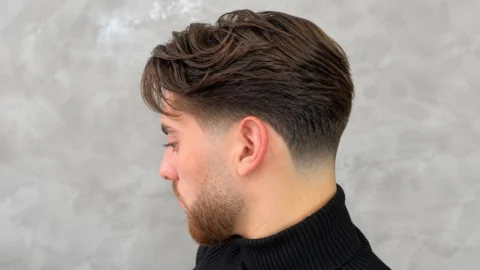
That focus matches 2026 barber trends. Current professional coverage favors textured crops, point-cut layers, softer low or mid tapers and natural movement over rigid high-contrast styling.
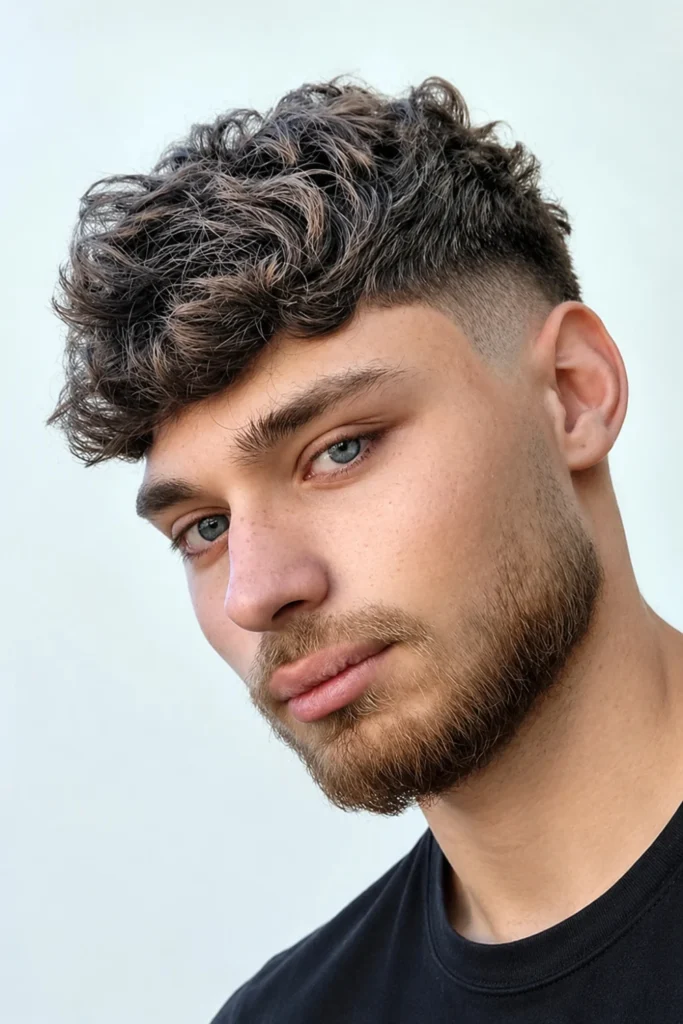
1. Point-Cut Wavy Crop
Keep the top short but long enough for at least one visible bend, then point-cut the ends to create separation without shredding the density. Let the fringe move slightly forward and keep the sides softly tapered.
Best for: 2A–2B waves, medium density, low-effort styling.
 Save
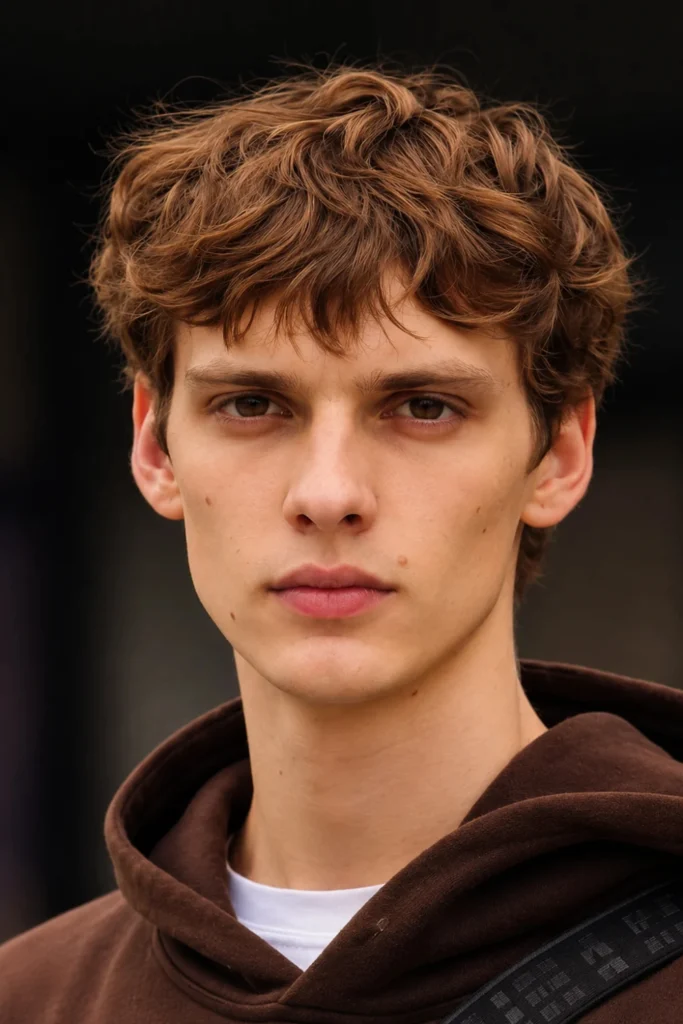
2. Layered Wavy Fringe
Leave roughly 2–3 inches through the front and graduate it into shorter crown layers. Break the fringe into soft irregular pieces instead of cutting one blunt horizontal line.
Best for: 2B waves, larger foreheads, casual styling.
 Save
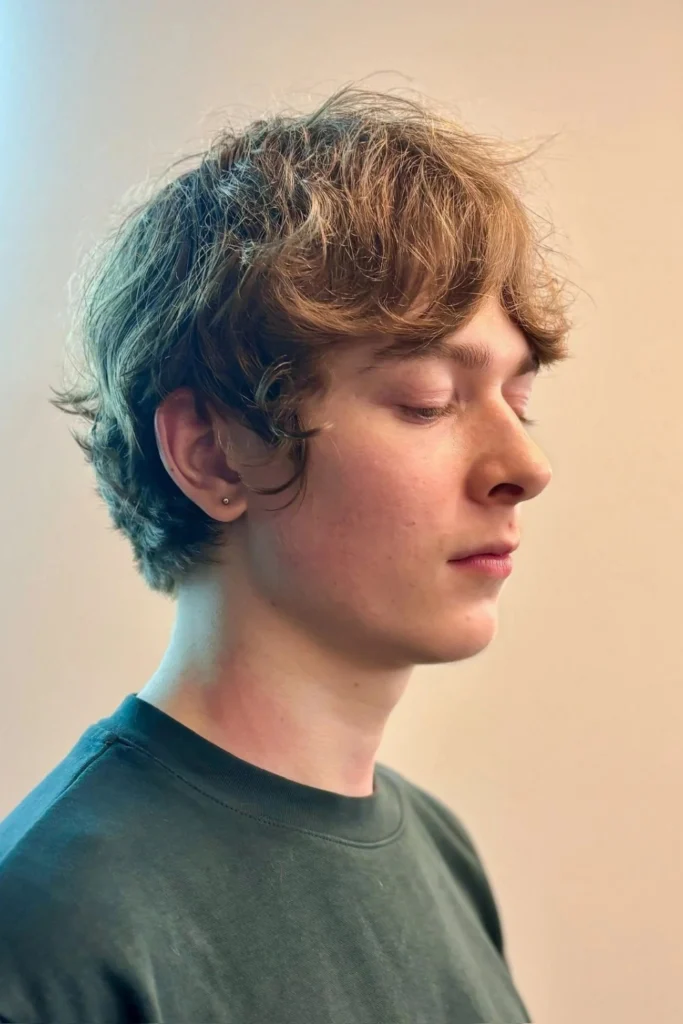
3. Short Scissor-Layered Waves
Use scissors through the sides and top so the whole cut stays connected. Layer around the natural bends rather than clipping the sides dramatically shorter than the top.
Best for: men avoiding fades, 2A–2C waves, softer professional cuts.
 Save
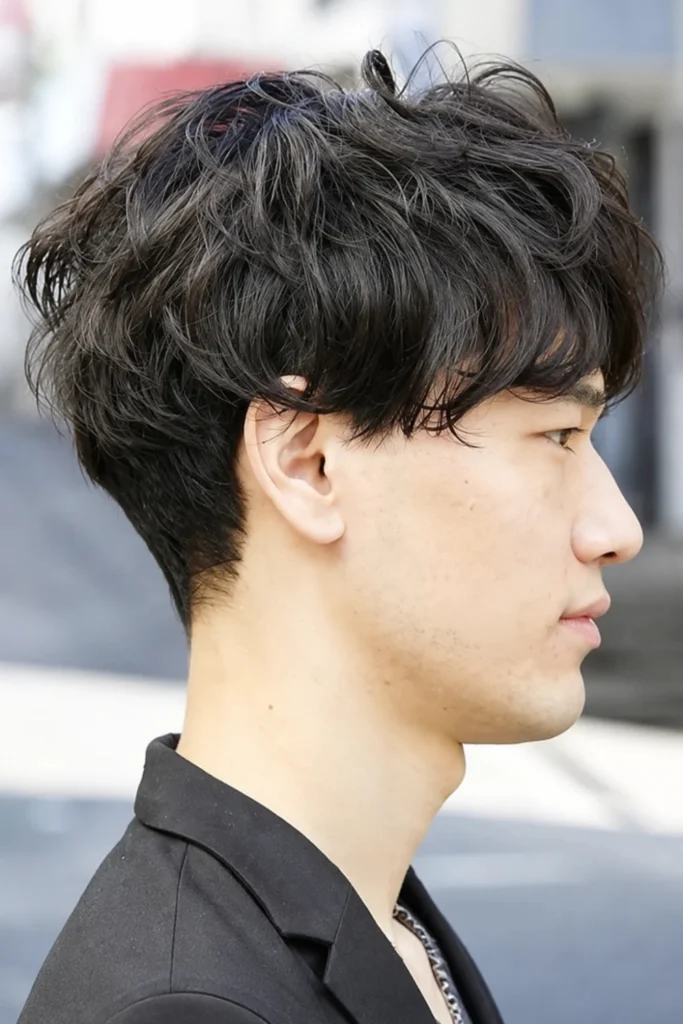
4. Graduated Crown Wavy Cut
Build subtle graduation through the crown while leaving the front slightly longer. The goal is to prevent the crown from collapsing without turning the top into spikes.
Best for: flat crowns, 2A–2B hair, compact volume.
 Save
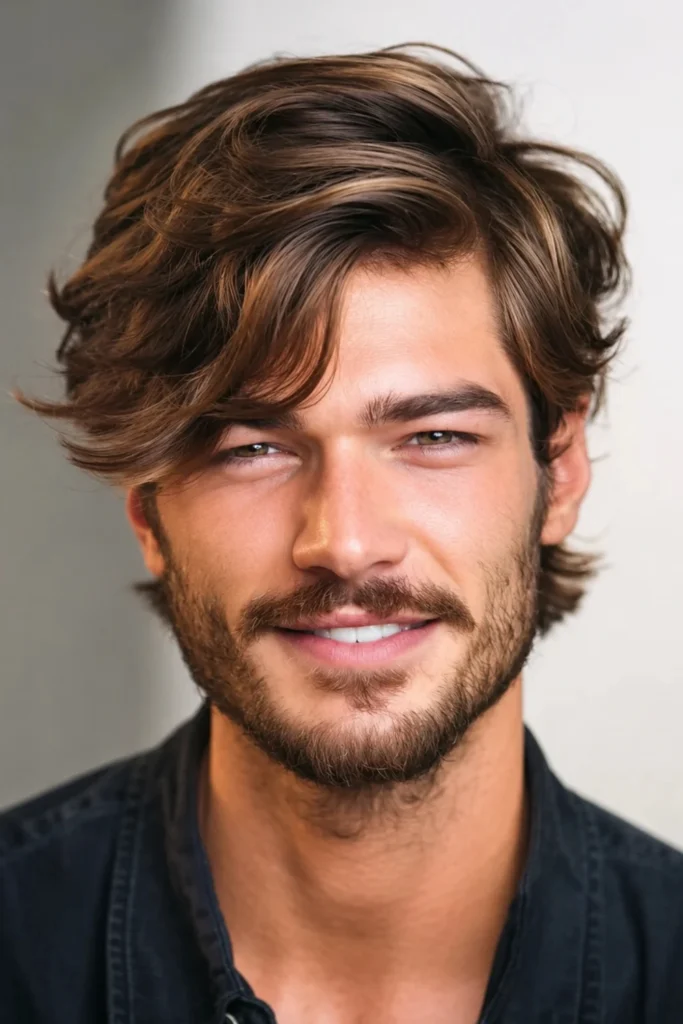
5. Short Wavy Side Sweep
Keep enough weight through the wave ridge that it does not separate into flyaways.
Best for: professional settings, 2A–2B waves, natural side growth.
 Save
6. Soft-Taper Layered Crop
Keep short point-cut layers across the top and use a low soft taper only around the temples and neckline. Avoid taking the sides to skin if you want a quieter silhouette.
Best for: 2026 styling, most face shapes, men wanting clean edges without hard contrast.
 Save
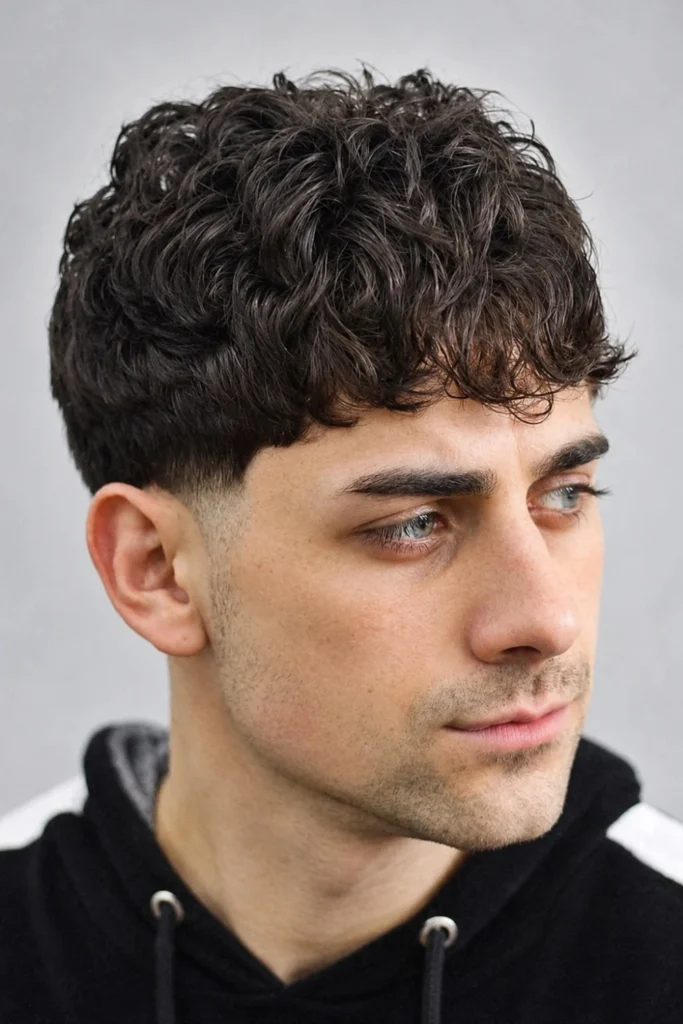
7. Layered Wavy Caesar
Keep the overall top compact and direct it forward, but layer the fringe so individual bends remain visible. The front edge should look textured rather than ruler-straight.
Best for: 2A–2B waves, short-hair fans, easy mornings.
 Save
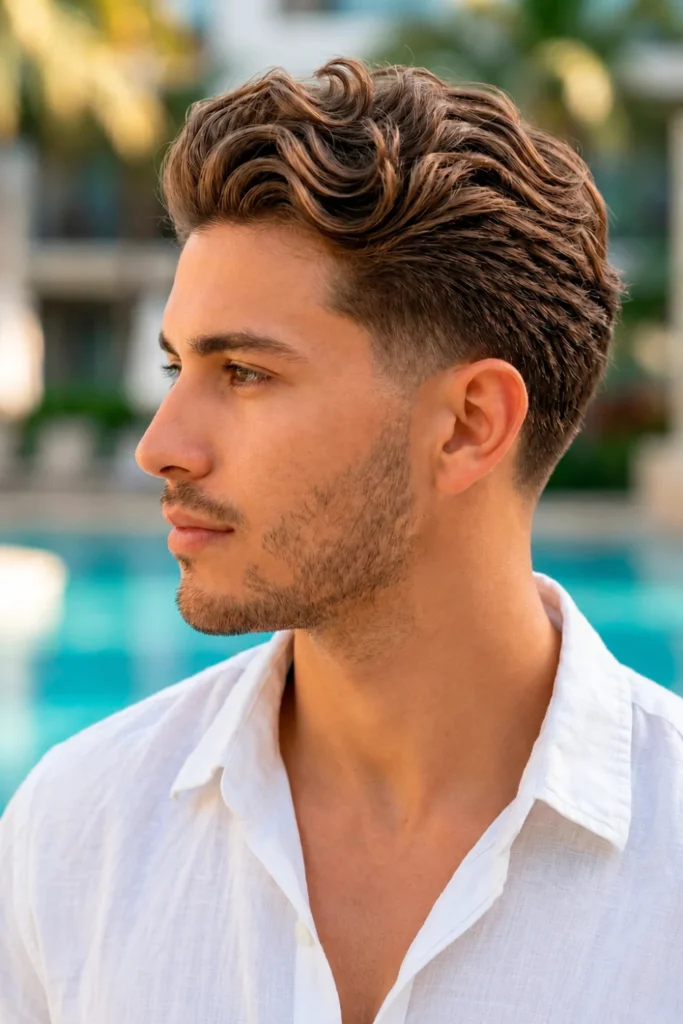
8. Short Wavy Quiff Layers
Leave the front around 2–3 inches and use graduated internal layers behind it so the wave can lift and fall backward naturally. Keep the quiff shorter than older pompadour-style versions.
Best for: medium/thick wavy hair, round/oval faces, polished texture.
 Save
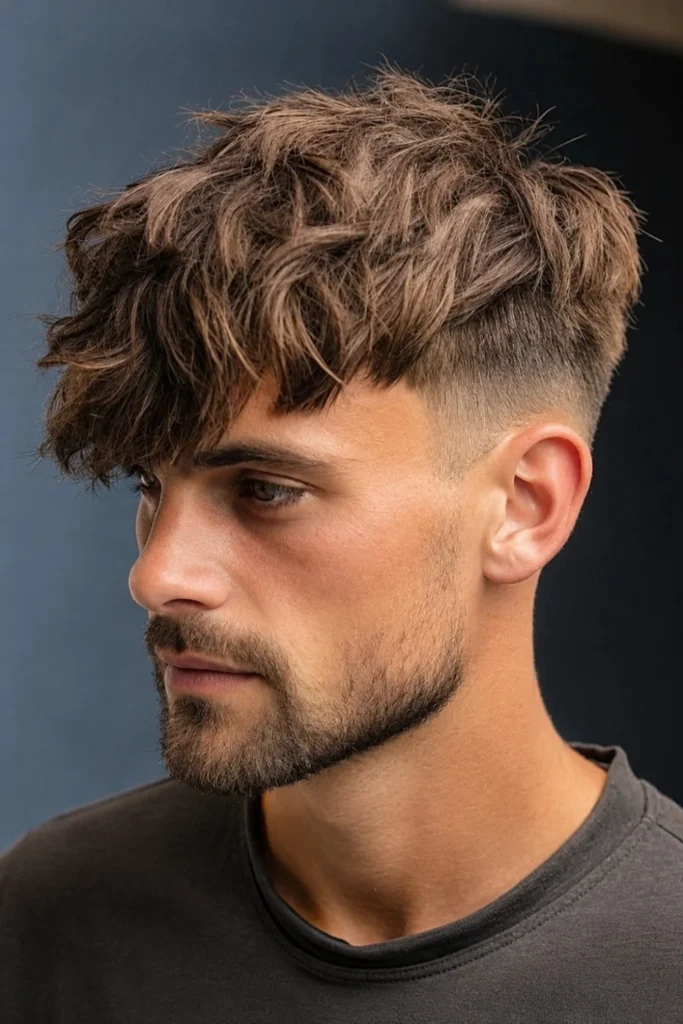
9. Broken-Fringe Wavy Crop
Cut the fringe into separated short pieces of slightly different lengths, connecting them into internal top layers. Let the natural wave decide which pieces kick forward or sideways.
Best for: 2B–2C waves, casual cuts, strong natural texture.
 Save
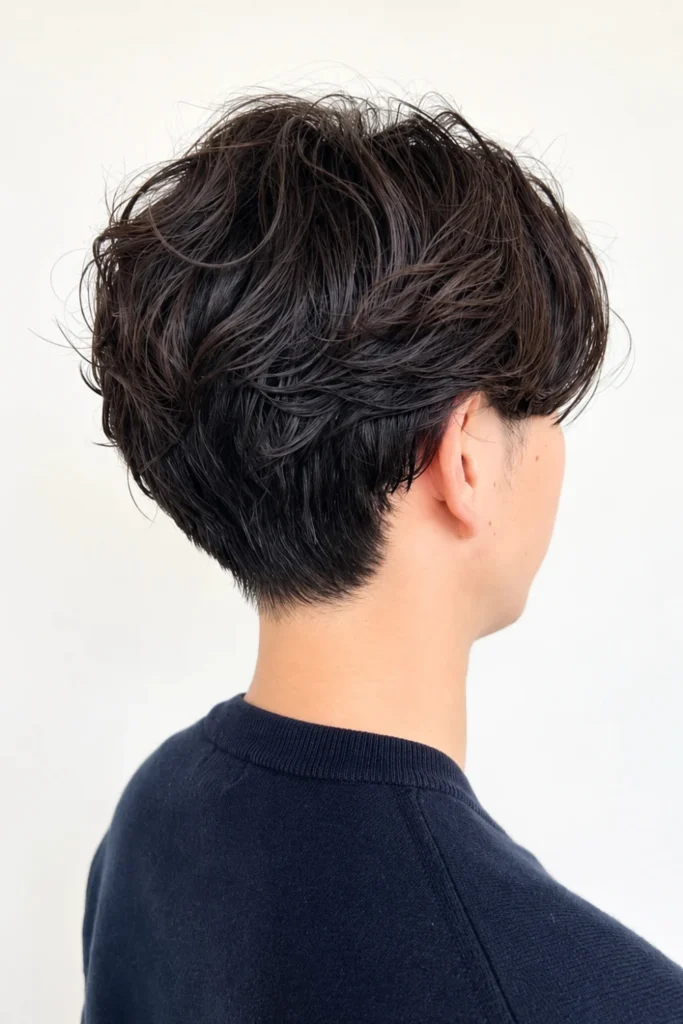
10. Rounded Short Wavy Layers
Use connected layers across the top and upper sides to create a balanced rounded silhouette. Keep the side length long enough for the wave to soften the outline.
Best for: thick 2B hair, men avoiding boxy shapes, scissor-cut fans.
 Save
11. Short Layered Curtains
Keep the cut short overall but leave enough front length to split loosely at the center.
Best for: 2A–2B waves, recession points, younger or fashion-forward styling.
 Save
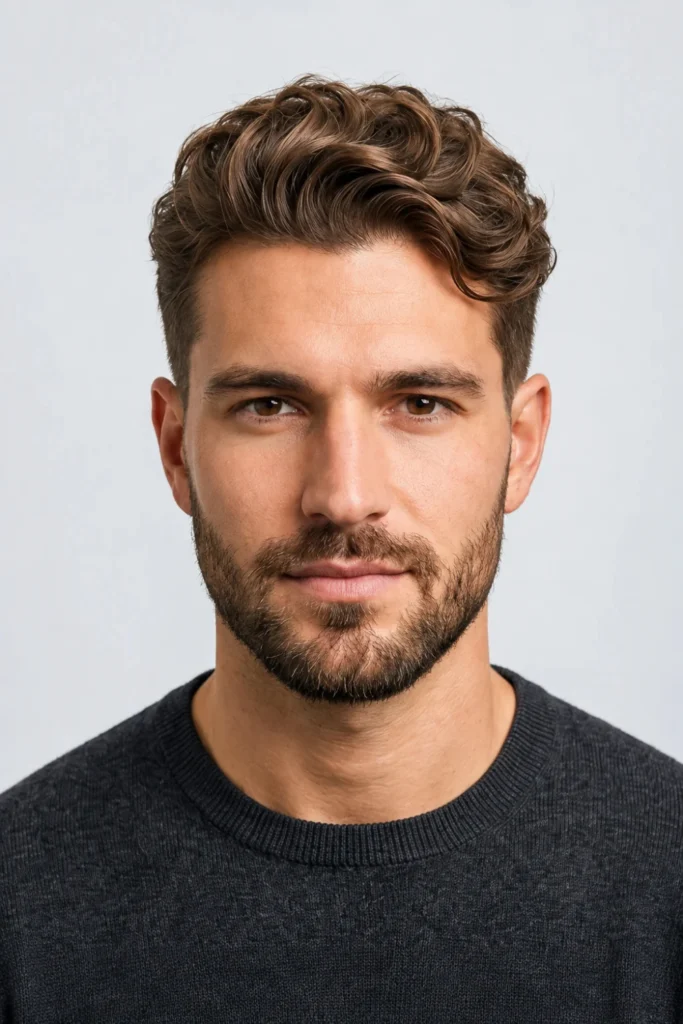
12. Temple-Taper Wavy Layers
Layer the top and upper sides while limiting the taper to the temple and nape. This preserves more side weight than a full fade and keeps the wave pattern connected.
Best for: dense wavy hair, softer grow-out, men who dislike exposed sides.
 Save
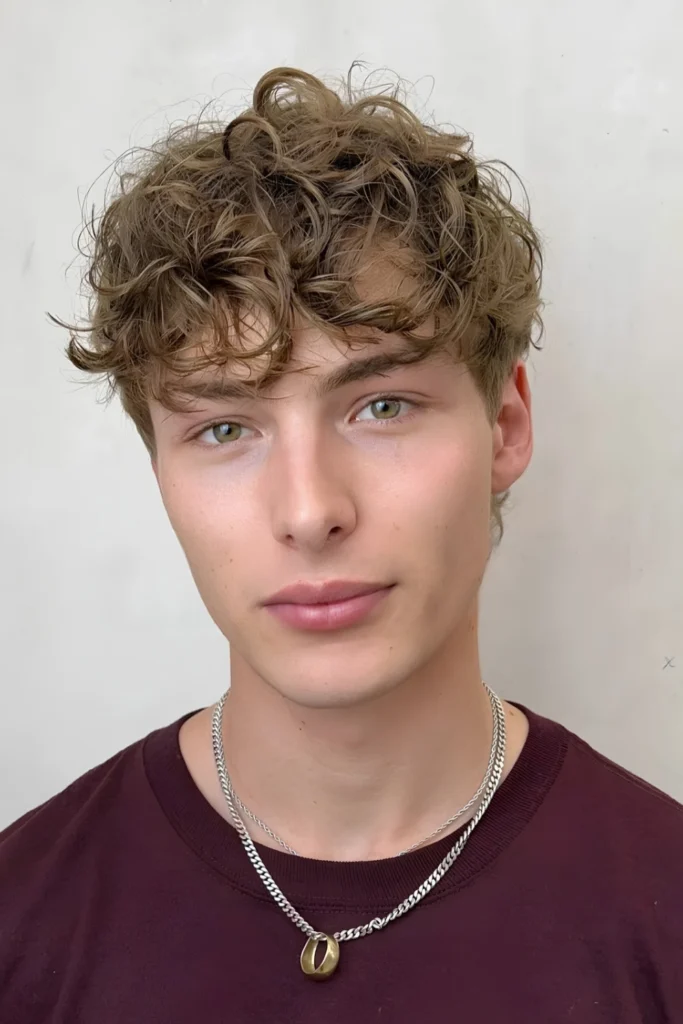
13. Short Wavy Shag Crop
Use connected crown and fringe layers with slightly irregular movement, but keep the perimeter short around the ears and nape. Avoid extending the back into mullet territory.
Best for: 2B–2C waves, casual style, air-drying.
 Save
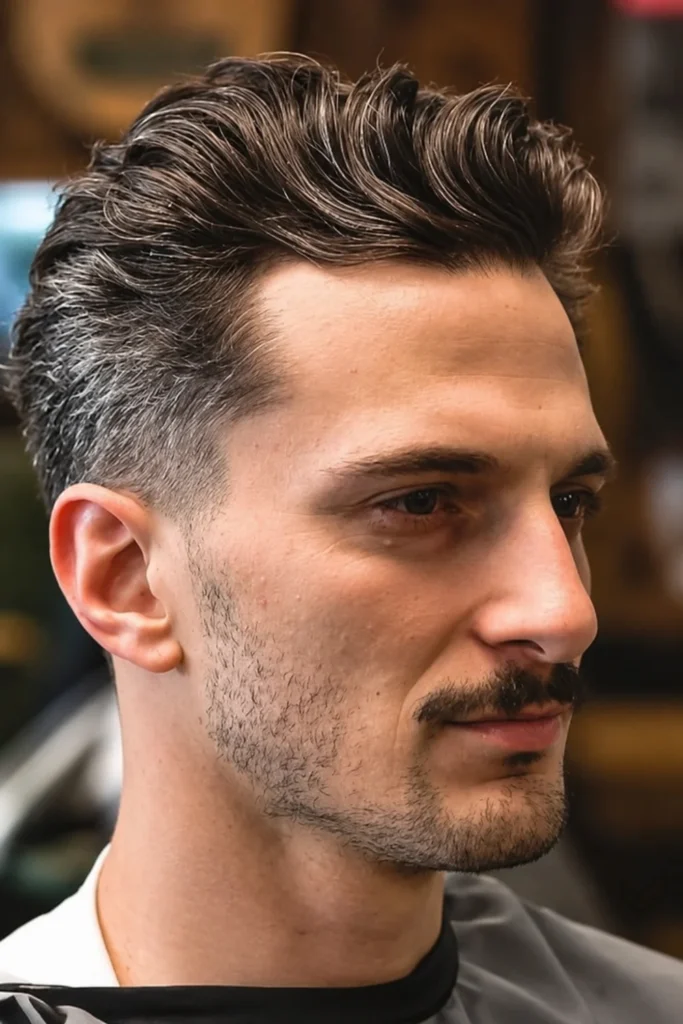
14. Layered Wavy Brush-Back
Cut short graduated layers that naturally travel backward, then style with fingers instead of combing the hair flat. Leave enough length for the wave to bend rather than stand straight up.
Best for: 2A–2B waves, mature/professional styling, open foreheads.
 Save
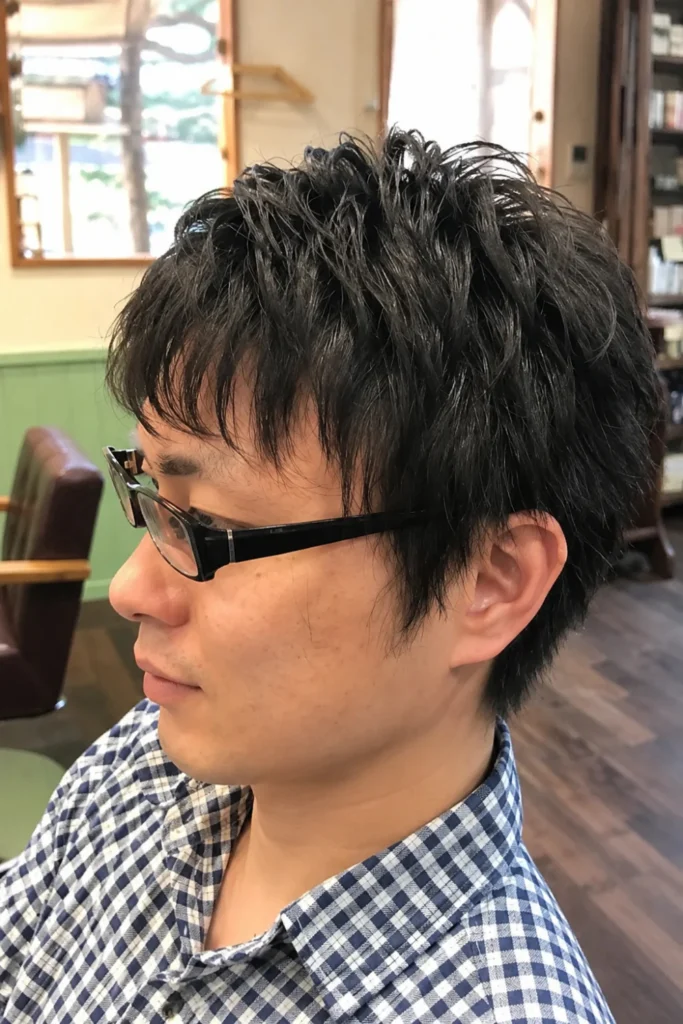
15. Short Thick-Wave Debulk Cut
Remove internal bulk selectively with scissor layering while preserving the outer perimeter and strongest wave ridges. Avoid aggressive thinning shears through every section.
Best for: dense 2B–2C hair, bulky sides, men who still want visible thickness.
 Save
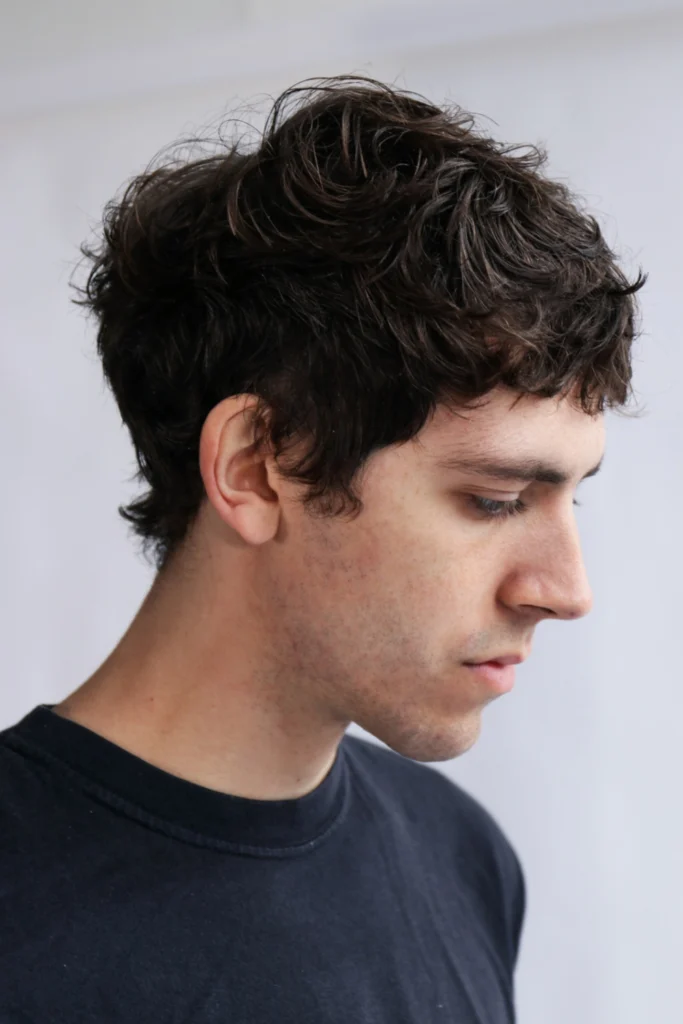
16. Air-Dry Short Layered Waves
Build the haircut around where the waves settle naturally when damp hair dries with minimal manipulation. Keep layers connected and the perimeter soft enough that slight irregularity looks intentional.
Best for: low-maintenance routines, 2A–2C hair, men avoiding daily heat.
 Save
Quick Guide: Layer Short Wavy Hair Without Killing the Pattern
| Hair situation | Strong cuts | Layer goal | Avoid |
| 2A loose waves | Crop, side sweep, brush-back | Create separation | Cutting top too short |
| 2B defined waves | Fringe, rounded layers, shag crop | Release bends | Uniform block |
| 2C strong waves | Broken fringe, debulk cut | Preserve S-pattern | Aggressive thinning |
| Flat crown | Graduated crown, quiff | Controlled lift | Random short crown pieces |
| Very dense hair | Debulk, temple taper | Remove internal weight | Thinning every section |
| Low styling | Air-dry, Caesar, soft taper | Work with growth pattern | Heat-dependent shape |
Why Short Layers Work Differently on Wavy Hair
Wavy hair needs enough length for an S-bend to form. The Fashionuer summer guide notes that short cuts can hide wave and that 2B layering works best where the wave actually begins rather than automatically cutting the crown shorter.
That means ‘more layers’ is not automatically better. The barber needs to see where your wave starts, where density stacks, and which sections need weight removed.
Point Cutting vs. Thinning
Point cutting can break up a heavy edge and create controlled separation. Thinning or texturizing tools remove density more aggressively and can be useful in selected areas, but overuse may make some wavy hair look fuzzy or weak.
Fashionuer’s current wavy-hair guide specifically warns against indiscriminate thinning for stronger 2C waves. Ask the barber what tool is being used and what problem it is solving.
2026 Short Men’s Hair Is Softer and More Textured
Current barber reporting places the textured crop among 2026’s most requested cuts and emphasizes softer blends, point-cut texture and natural movement. Salon Magazine’s A/W 2026 forecast similarly describes the modern textured crop with choppy point-cut layers and a soft low or mid taper.
GQ’s 2026 short-hair guide also describes shorter men’s hair as quieter and more tailored, with shorter curtain fringes and carefully textured shapes returning.
What to Tell Your Barber
Say that you want the wave pattern visible, not thinned away. Show the barber your hair dry if possible and point out where the strongest bends form, where the crown goes flat, and where the sides become bulky.
Useful phrases include ‘connected scissor layers,’ ‘point-cut texture,’ ‘preserve weight through the wave,’ ‘soft taper rather than skin fade,’ and ‘keep enough top length for the S-bend to form.’
Related Guides
Summer haircuts for men with wavy hair
Men’s layered haircuts for thick hair
Low-maintenance haircuts for men
FAQ
Are layers good for short wavy hair on men?
Layers can remove blocky weight and create movement, but cutting every section too short can reduce visible wave.
What is the best short layered haircut for wavy hair?
Point-cut crops, layered fringes, soft-taper crops, short scissor layers and compact wavy quiffs are strong options. The best choice depends on whether your waves are closer to 2A, 2B or 2C and on hair density.
How short can wavy hair be and still look wavy?
There is no universal minimum because wave pattern varies. In general, the hair needs enough length for at least part of its natural bend to form; very short cuts can make wavy hair appear straighter.
Should wavy hair be thinned out?
Sometimes selective internal bulk removal helps dense hair, but indiscriminate thinning can weaken wave definition or create fuzziness. Ask the barber to preserve the strongest wave ridges.
What should I ask my barber for with short wavy hair?
Ask for connected layers, point-cut texture, enough top length for the wave to form, and a soft taper if you want clean edges without a harsh fade.
Is a textured crop good for wavy hair in 2026?
Yes. Current 2026 barber reporting identifies the textured crop as one of the year’s strongest men’s cuts, and natural wave gives the crop built-in movement.
Can men with wavy hair wear short curtains?
Yes. GQ’s 2026 short-hair coverage notes that curtain bangs are returning even at shorter lengths. Wavy hair can add natural bend to the parted fringe.
How do I style a short layered wavy haircut?
Start with damp hair and use a lightweight cream, mousse or texture product appropriate to your hair. Scrunch or finger-shape the waves and air-dry or diffuse gently rather than brushing the dry pattern flat.
The One-Bend Test
Before leaving the barber, look at the top and fringe without forcing them into place. Can you still see at least one natural ridge, bend, or S-shape in the sections that are supposed to look wavy?
If yes, the layering has preserved the texture. A successful short layered wavy cut should make the wave easier to see and control, not cut so much weight away that the hair behaves like a different texture.