
A side part can give flow hair a cleaner starting point without turning it into a stiff comb-over. The part establishes direction; the length and layering determine whether the hair actually travels backward through the sides and toward the rear.
Its Side-Swept Hairstyles article covers long sweeps, quiffs and layered side styling, while Flow Haircuts With Bangs already includes soft side-swept and off-center flow. A new article therefore has to require both a visible part and genuine connected flow.
That combination is particularly relevant in 2026. GQ says the side part is back on red carpets and runways, while its wider trend coverage favors longer layers and texture that let hair move naturally. The modern version can be polished without being rigid.
1. Soft Side-Part Bro Flow
Create a subtle part a little off center and let the heavier section travel diagonally backward. Keep medium connected length around the ears so the sides participate in the movement instead of sitting tight.
Best for: straight/wavy hair, oval/square faces, everyday styling.
 Save
2. Deep Side-Part Wavy Flow
Place the part farther to one side and preserve enough length for the heavier section to lift before following the natural wave backward. Keep the lighter side controlled but not flattened.
Best for: 2A–2C waves, thick hair, formal-to-casual wear.
 Save
3. Off-Center Natural Flow
Use a part only slightly away from center so the two front sections remain relatively balanced. Let both sides move backward, with one carrying slightly more volume.
Best for: cowlicks, straight/wavy hair, softer face framing.
 Save
4. Side-Part Flow With Low Taper
Keep medium flow through the top and upper sides, then taper only the lowest temple and neckline. The part provides structure while the taper cleans the perimeter.
Best for: work, dense hair, men wanting barbered edges without losing flow.
 Save
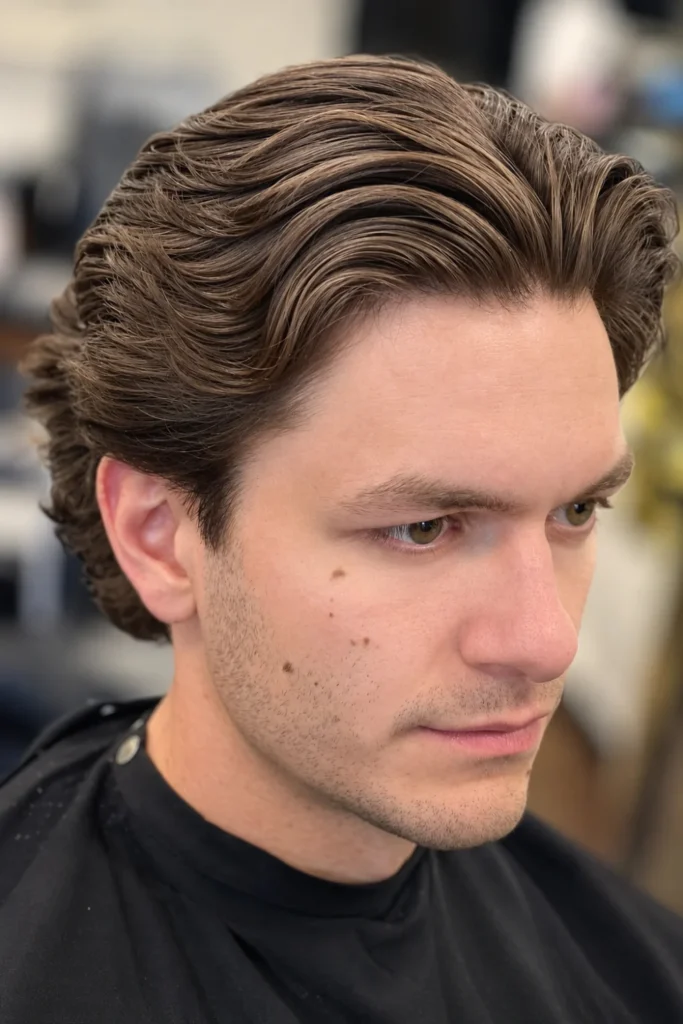
5. Scissor-Cut Side-Part Flow
Shape the top, sides and back primarily with scissors so the length stays connected. Use a natural side part and graduate the sides gently around the ears.
Best for: men avoiding fades, straight/wavy hair, classic softness.
 Save
6. Curly Side-Part Flow
Follow the curl pattern to establish a natural part, then let the heavier curl section move backward while maintaining definition. Avoid combing curls flat to force a ruler-straight line.
Best for: loose curls, medium length, natural-texture styling.
 Save
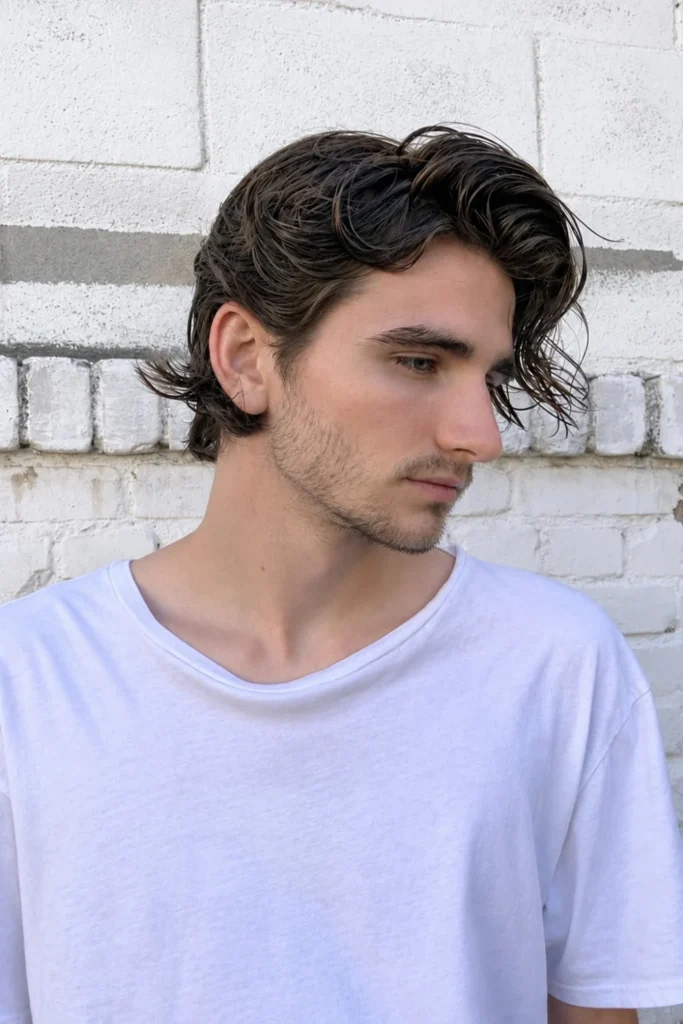
7. Side-Part Hockey Flow
Use a side part to control the front while preserving fuller medium length through the sides and rear. Let the back kick outward subtly instead of growing into a dramatic tail.
Best for: thick straight/wavy hair, sporty styling, casual wardrobes.
 Save
8. Layered Side-Part Flow
Add connected internal layers through the top and sides so the heavier side can separate into moving pieces. Preserve the outer perimeter so the flow still looks full.
Best for: thick hair, bulky sides, medium lengths.
 Save
9. Professional Side-Part Flow
Keep the part clean but soft, the neckline neat, and the medium layers controlled enough to tuck or sweep behind the ears. Use flexible styling product rather than hard gel.
Best for: offices, weddings, business-casual settings.
 Save
10. Side-Part Flow With Ear Tuck
Part the hair to one side, tuck the lighter side behind the ear, and let the heavier side move naturally backward. Keep enough length around the ear for the tuck to look intentional.
Best for: medium-long straight/wavy hair, formal events, sharper face exposure.
 Save
11. Voluminous Side-Part Flow
Build root lift on the heavier side of the part, then direct that volume backward rather than straight upward. Keep the height broad and touchable instead of pompadour-like.
Best for: thick hair, round/oval faces, statement styling.
 Save
12. Fine-Hair Side-Part Flow
Use restrained long layers and a soft part while preserving density through the outline. Establish direction with lightweight drying rather than aggressive thinning.
Best for: fine straight/wavy hair, airy movement, low-product routines.
 Save
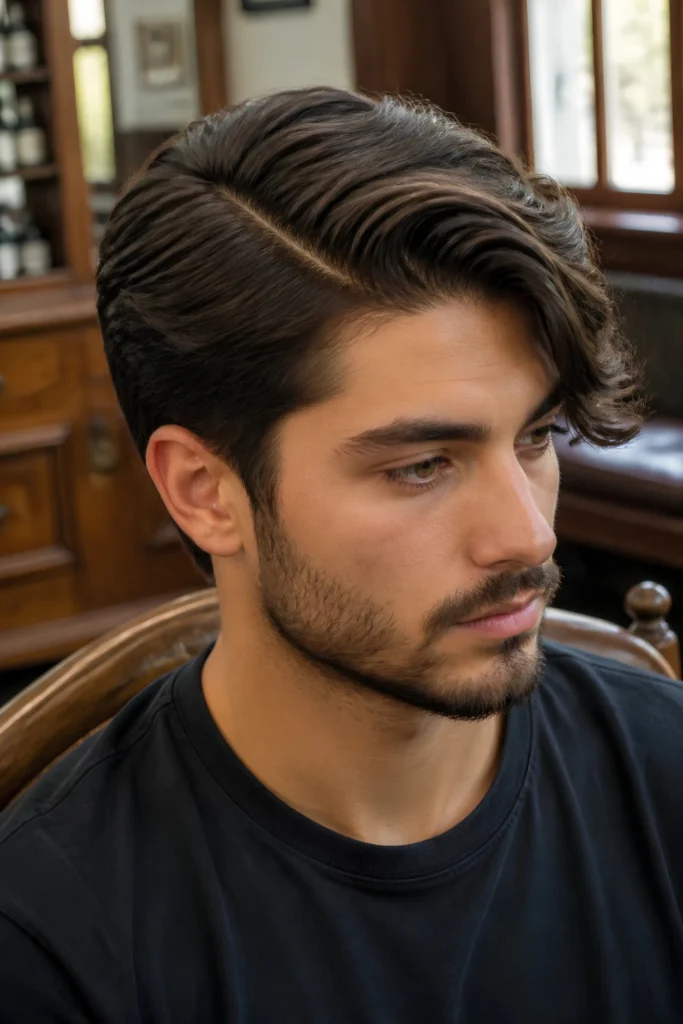
13. Thick-Hair Side-Part Flow
Remove internal bulk selectively beneath the top layers, then let the heavy side of the part sweep backward. Keep the surface and perimeter substantial.
Best for: dense straight/wavy hair, bulky crowns, controlled volume.
 Save
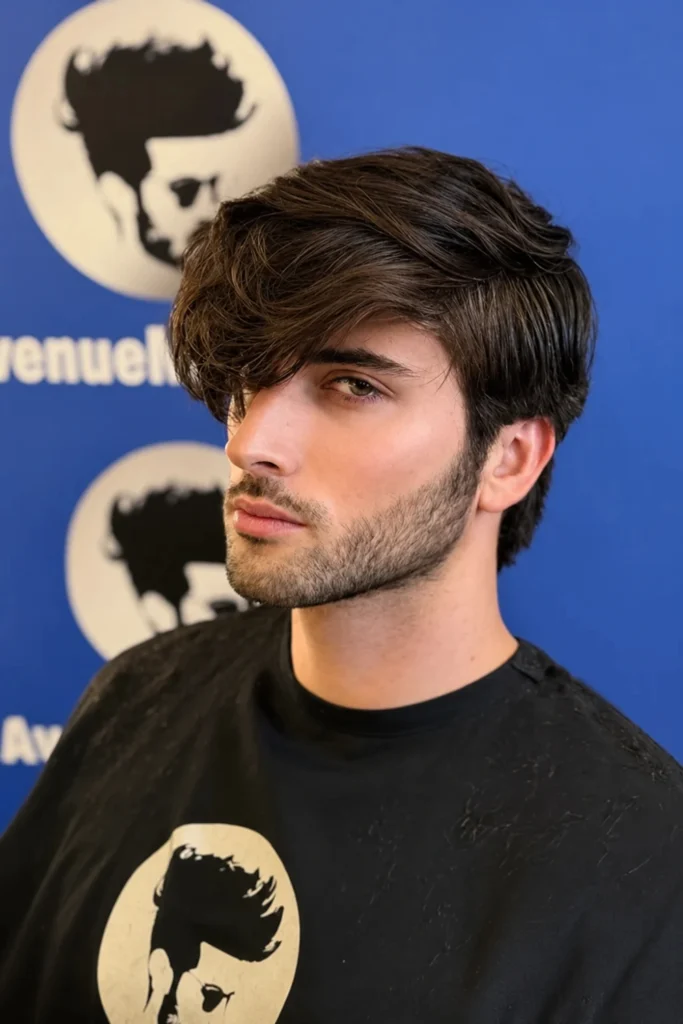
14. Side-Part Flow With Swept Fringe
Keep one front section long enough to sweep diagonally across part of the forehead before bending outward and joining the side flow. Avoid cutting it into a separate short fringe.
Best for: straight/wavy hair, higher foreheads, softer side-part styling.
 Save
15. Grown-Out Side-Part Flow
Use a relaxed natural part with ear-skimming sides and a back approaching the collar. Trim the perimeter and add only enough layering to prevent the shape from becoming heavy.
Best for: men growing hair longer, straight/wavy texture, low-maintenance flow.
 Save
Quick Guide: Choose the Side Part by the Movement You Want
| Part style | Strong cuts | Effect | Watch for |
| Soft side part | Bro flow, professional | Natural structure | Over-combing |
| Deep side part | Wavy, voluminous | More asymmetry/lift | Pompadour height |
| Off-center | Natural flow | Balanced movement | Drifting into center part |
| Natural curl part | Curly flow | Texture-led direction | Forcing curls flat |
| Part + taper | Low-taper flow | Cleaner perimeter | Taper climbing too high |
| Long relaxed part | Grown-out, ear tuck | More visible length | One-length bulk |
Why the Side Part Is Back in 2026
GQ’s 2026 men’s hair-trend guide explicitly says the side part is back, noting its formal Old Hollywood history and renewed presence on red carpets and runways. British GQ likewise lists side parting among the year’s major men’s hair trends.
The modern flow version uses less rigid combing than the traditional side part. The part establishes direction, while layering and natural texture keep the hair touchable.
Side Part vs. Side Sweep
A side part describes where the hair is divided at the scalp. A side sweep describes the direction the hair travels. You can have one without the other.
For this article, the strongest styles use both: a visible or natural side division plus hair that continues backward through connected medium-length sections.
How Deep Should the Part Be?
A subtle off-center part gives a softer, more balanced flow. A deeper side part shifts more weight to one side and creates stronger lift and asymmetry.
Follow the natural growth pattern where possible. A part that constantly fights a cowlick will require more heat and product than one placed near the hair’s preferred separation.
What to Tell Your Barber
Ask for medium connected length, a side or off-center part that follows your growth pattern, and layers that allow the heavy side to move backward. Specify whether you want scissor-cut sides, a low taper, or a longer ear-tuck perimeter.
Useful boundaries are equally important: no hard part unless requested, no high skin fade, no short comb-over, and enough top/side length to keep the flow visible.
Related Guides
Flow haircuts with bangs for men
Professional business hairstyles
FAQ
Can a flow haircut have a side part?
Yes. A side part can give the front a clear direction while medium connected length through the sides and back preserves the movement that defines a flow haircut.
Are side parts trending for men in 2026?
Yes. Both GQ and British GQ identify the side part as a returning men’s hair trend for 2026, including more formal and runway-influenced styling.
What is the difference between a side-part flow and a comb-over?
A comb-over usually emphasizes controlled hair directed across the top. A side-part flow keeps more connected medium length and allows the hair to travel backward through the sides with natural movement.
Can wavy hair wear a side-part flow?
Yes. Waves add natural movement. Place the part where the hair separates comfortably and keep enough length for the wave to bend backward.
Can curly hair wear a side-part flow?
Loose curls can. Use a natural curl separation rather than forcing a sharp combed part, and keep enough length for curls to fall backward.
Should a side-part flow have a fade?
It can, but it does not need one. Scissor-cut sides, a temple taper or a low taper often preserve more connected movement. If using a fade, keep it low.
How do I style a side-part flow haircut?
Establish the part while damp, direct the heavier section backward with fingers or a wide-tooth comb, and use a lightweight cream, mousse or flexible product appropriate to your texture.
What should I ask my barber for?
Ask for medium connected layers, a natural side or off-center part, enough length around the upper sides for backward movement, and no high fade or short comb-over unless you specifically want one.
The Part-and-Flow Test
Create the part, then push the heavier side backward with your fingers. Does the hair continue moving through the temple and side instead of stopping abruptly above a short disconnected section?
If yes, the haircut is doing both jobs. The part gives it structure; the connected length gives it flow.