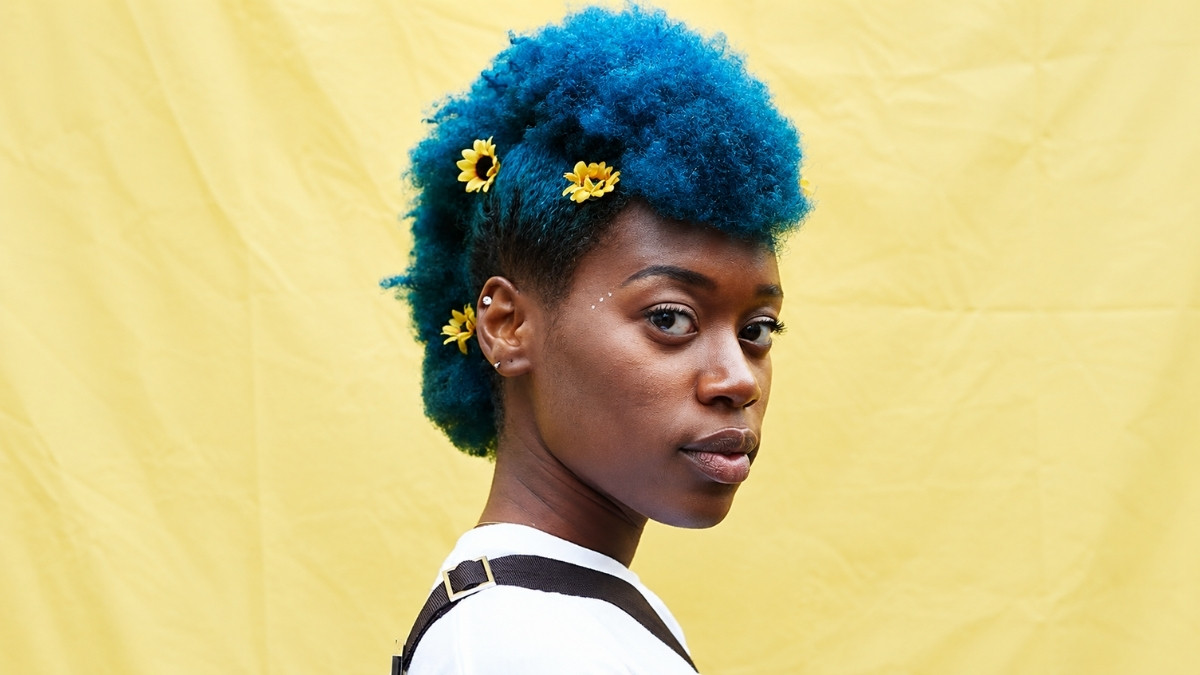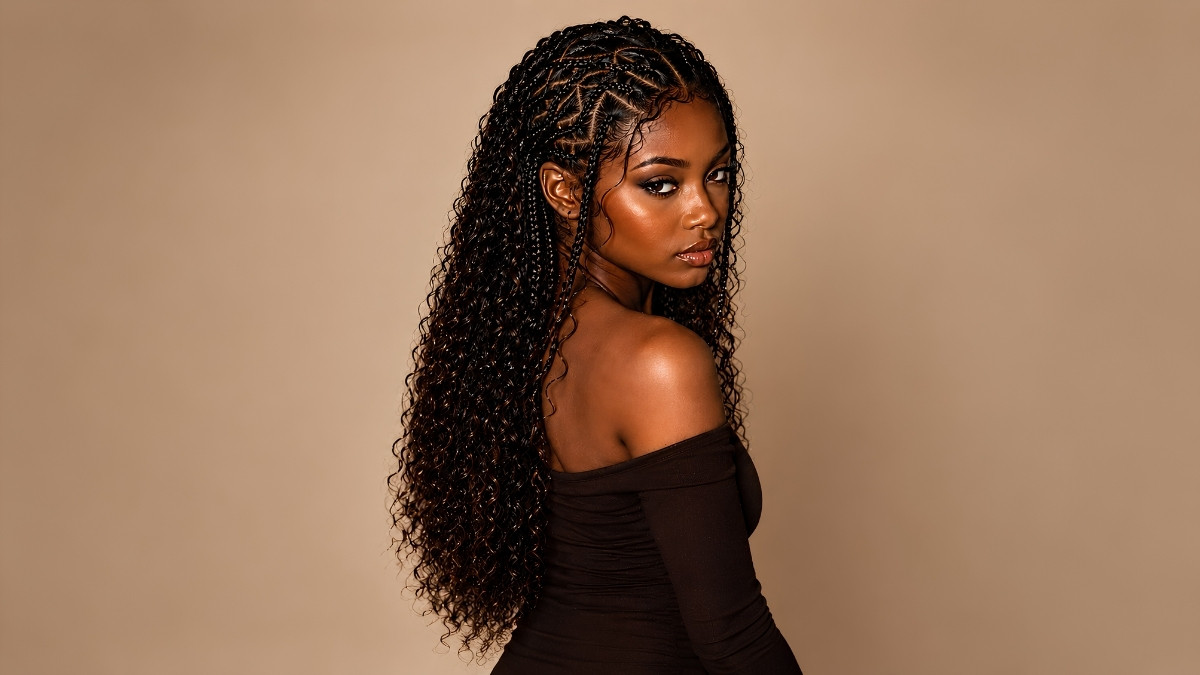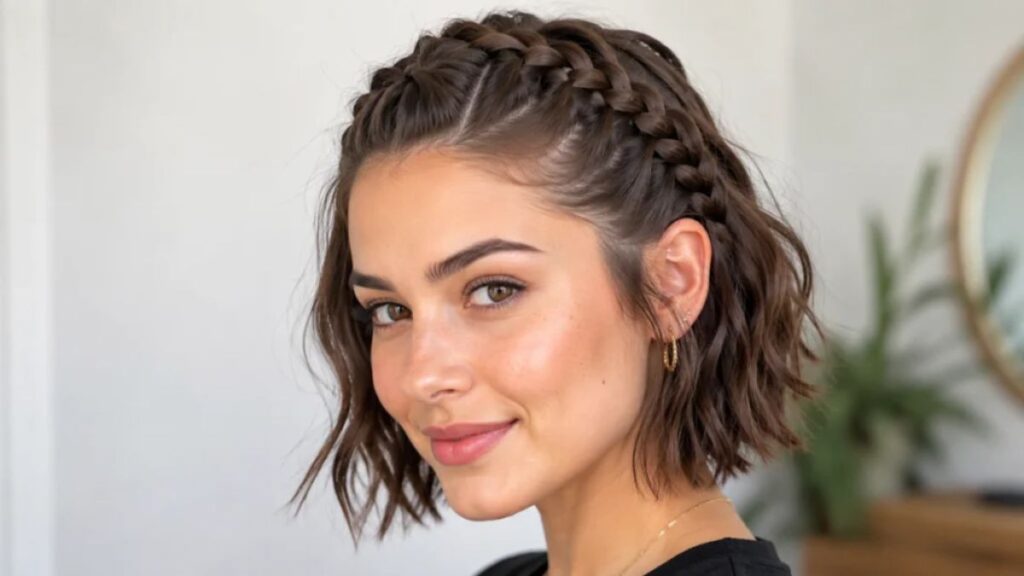
Short hair and Dutch braids are not mutually exclusive. John Frieda’s braided hairstyle guide confirms the Dutch braid is much more defined on short hair than a French plait, noting that the clear raised structure means it does not matter as much where you start. The definition that Dutch braiding creates is visible even on hair as short as two to three inches.
StyleCraze’s 2026 Dutch braid guide gives the key short hair technique: once sections run out, finish with a regular braid rather than stopping. The Dutch-to-regular transition blends naturally because the raised structure at the scalp does the visual work. The regular braid tail is a continuation, not a compromise.
These 17 Dutch braids for short hair cover pixie-length through bob-length styles, across straight, wavy, and natural textures, for everyday, athletic, and occasion wear.
Single Dutch Braid Styles for Short Hair
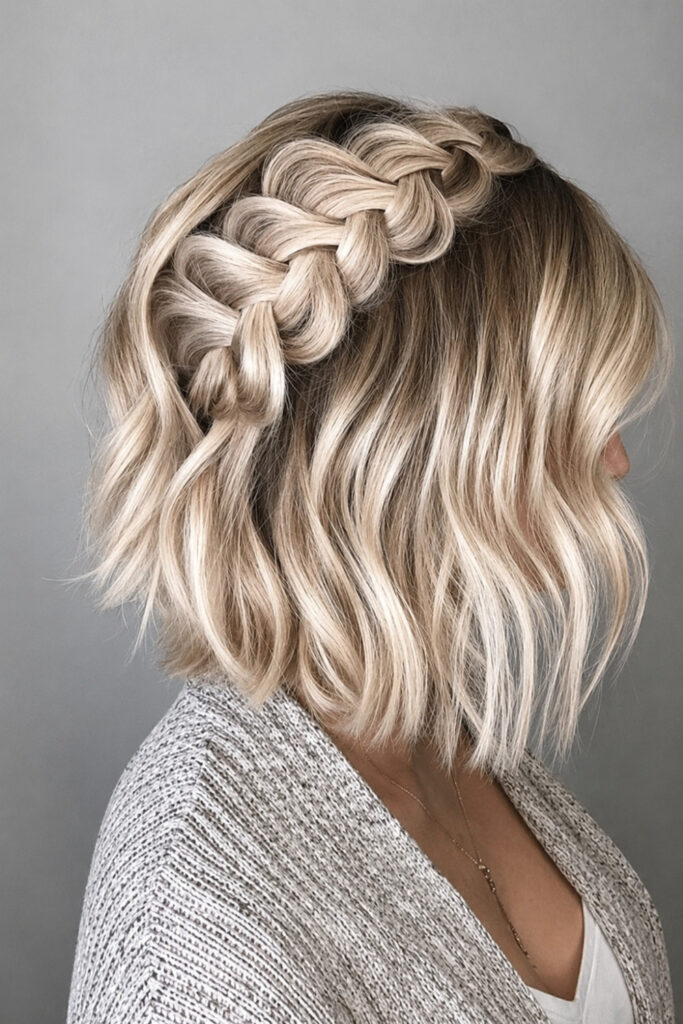
Centre Single Dutch Braid on a Bob
A single Dutch braid starting at the crown centre, pulling back through the length of a chin-to-collarbone bob, finishing at the nape with a small clear elastic.
The bob length is the sweet spot for a single Dutch braid on short hair. There is enough length to create a visible scalp braid section and a small tail at the nape. Homyglow confirms two Dutch braids on this length track cleanly from hairline to nape with zero flyaways.
Start at the crown with three small sections and braid tightly for the first two crossings before loosening to 80 percent tension. The tighter start anchors the braid against the scalp. Loosening after the first two crossings prevents the scalp tension that causes discomfort within two hours.
 Save
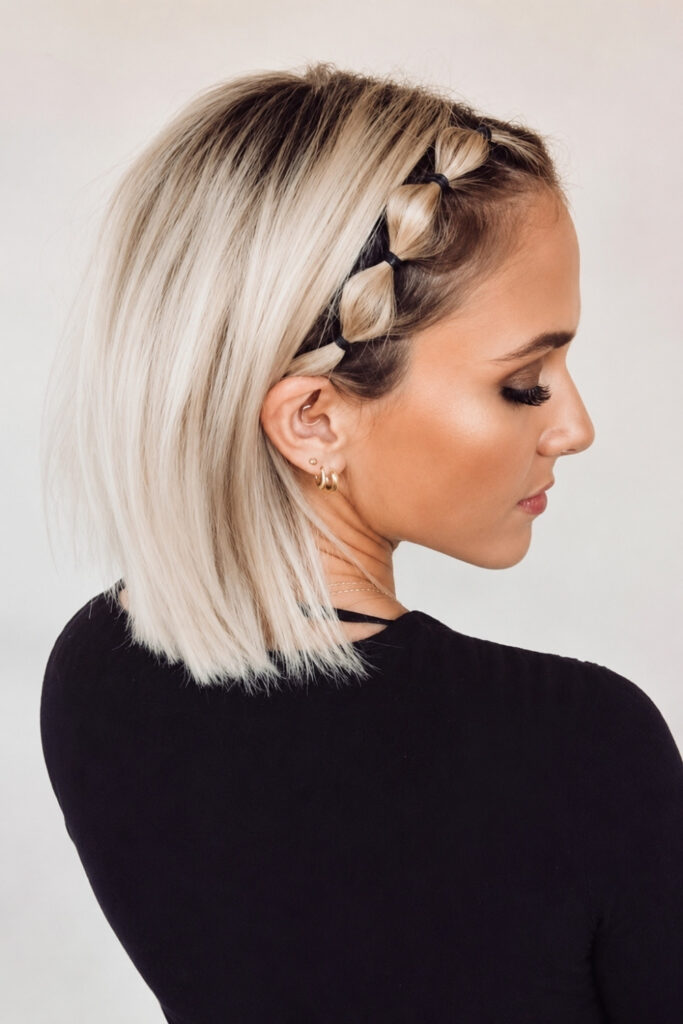
Dutch Braid Headband on Short Hair
A single Dutch braid starting above one ear, running across the hairline like a headband, and ending above the opposite ear where it is pinned behind the ear.
The Right Hairstyles confirms two braids wrapping around the head like a headband while the rest of the hair flows freely as a romantic half-up approach. On short hair, a single braid running the hairline achieves the same headband effect with less hair required.
Pin the end behind the ear with two crossed bobby pins rather than a single pin. The crossed pin grip holds a short braid end securely through a full day. A single pin on a short tail allows the end to slip free within hours.
 Save
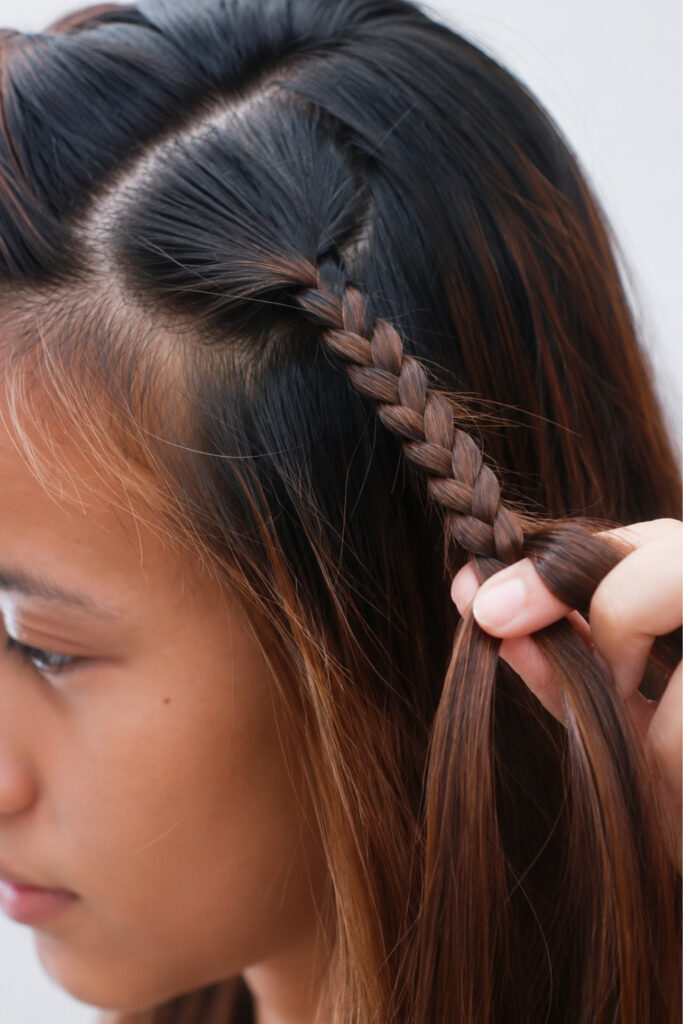
Side Dutch Braid on Short Hair
A single Dutch braid starting at the front hairline on one side and braiding diagonally across the head toward the opposite ear, with the remaining hair flowing freely on the unbraided side.
The diagonal direction gives a short braid more visible length than a straight-back braid because the diagonal path covers more scalp distance. On hair between the ear and chin, a diagonal braid reaches from temple to nape rather than the shorter straight-back route.
Leave the unbraided side loose with its natural texture. The contrast between the structured diagonal braid and the loose free side is the design. Do not tuck or pin the free side. Let it fall naturally.
 Save
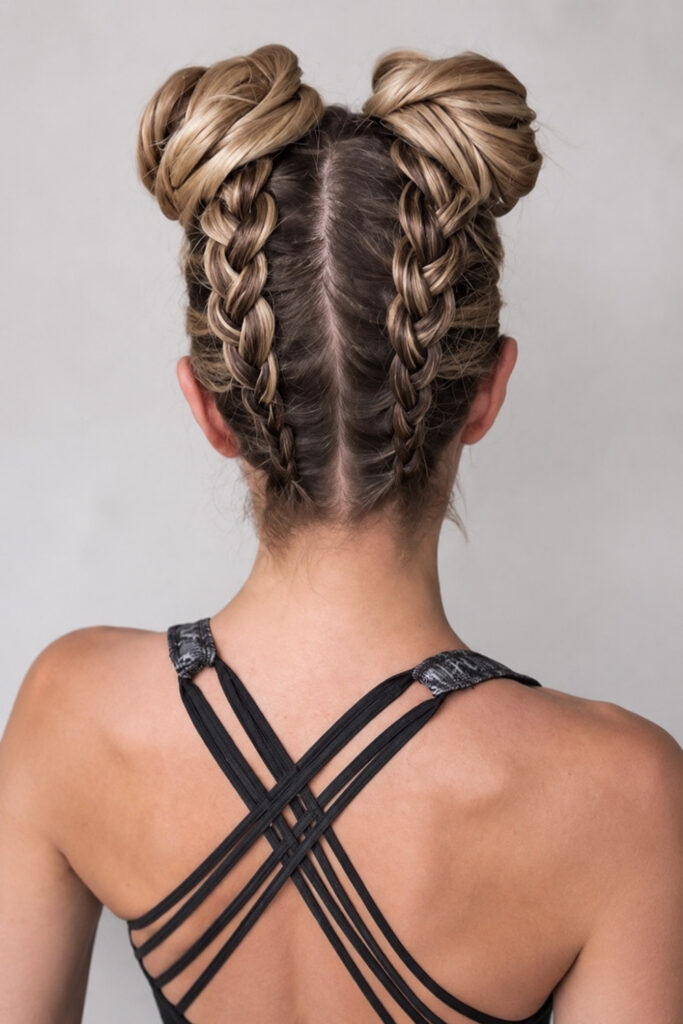
Dutch Braid into Mini Bun
A single Dutch braid from the hairline to the nape on bob-length hair, with the braid tail coiled into a small bun at the nape and secured with pins.
The mini bun finish turns the Dutch braid into a complete updo on short hair rather than leaving a small tail that reads as unfinished. Roll the tail into a flat coil and press against the nape with four bobby pins pushed horizontally into the base.
Apply Bumble and bumble Hairdresser’s Invisible Oil Primer to damp hair before braiding. The primer adds slip that makes section additions easier on short hair where sections are necessarily small.
 Save
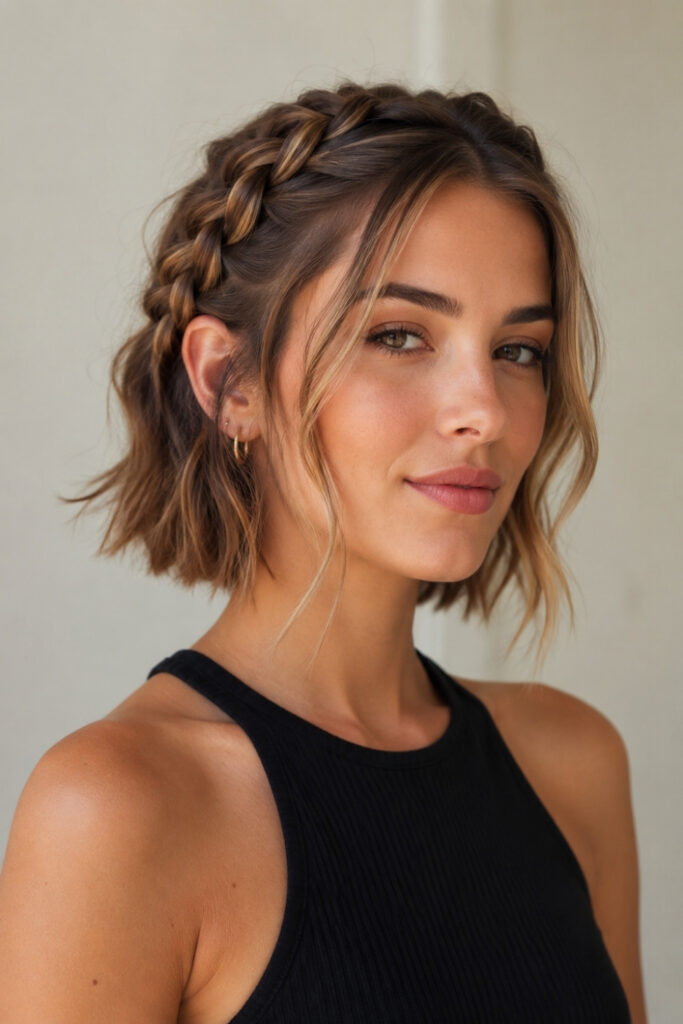
Dutch Braid with Face-Framing Pieces
A Dutch braid pulling back from the crown with two small face-framing sections left out at the temples, falling forward on both sides of the face.
StyleCraze confirms Dutch braids frame the face while keeping hair out of it. On short hair, leaving small pieces out at the temples softens the pulled-back look and makes the braid feel less severe than a full slick-back braid.
Leave sections no wider than one centimetre on each side. Wider pieces look unintentional rather than styled on short hair. Curl the face-framing pieces forward slightly with a small barrel iron or fingers after the braid is complete.
 Save
Double Dutch Braid Styles for Short Hair
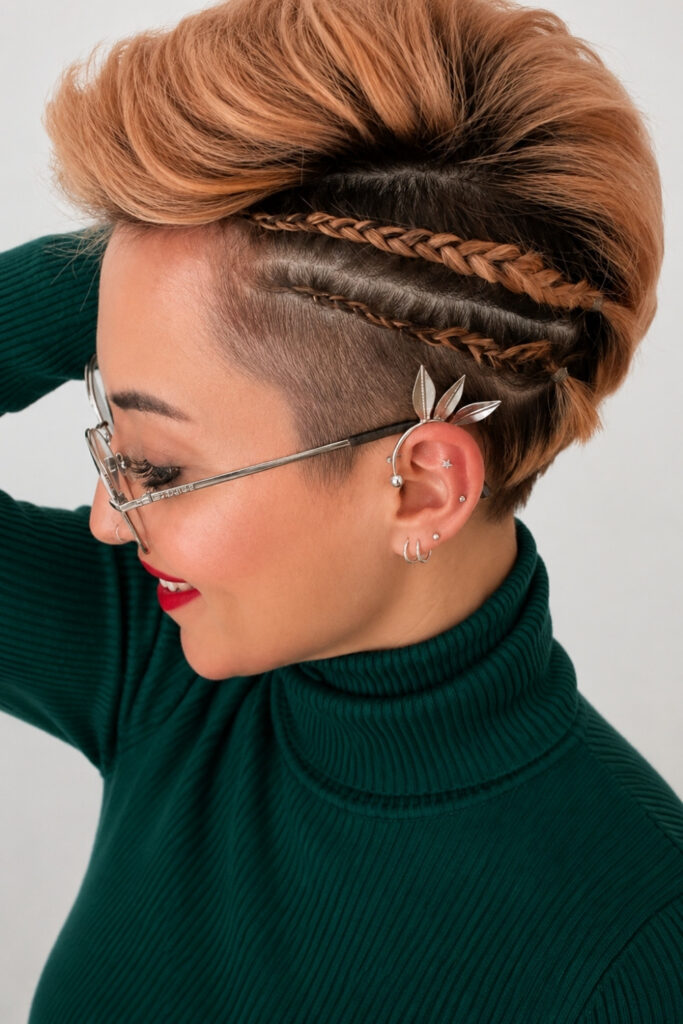
Double Dutch Braids on a Pixie
Two small Dutch braids on a pixie cut, starting at the temple on each side and braiding back toward the nape, using only the hair in each half section.
A pixie cut has as little as two to three inches on top and one inch on the sides. Dutch braids at this length run only a few crossings before sections run out. StyleCraze confirms finishing with a regular braid once sections are exhausted is the correct short hair technique.
Use Eco Styler Gel at the hairline before starting. The gel gives short pixie hair the grip it needs to hold in a braid rather than slipping free from the crossing sections within the first hour.
 Save
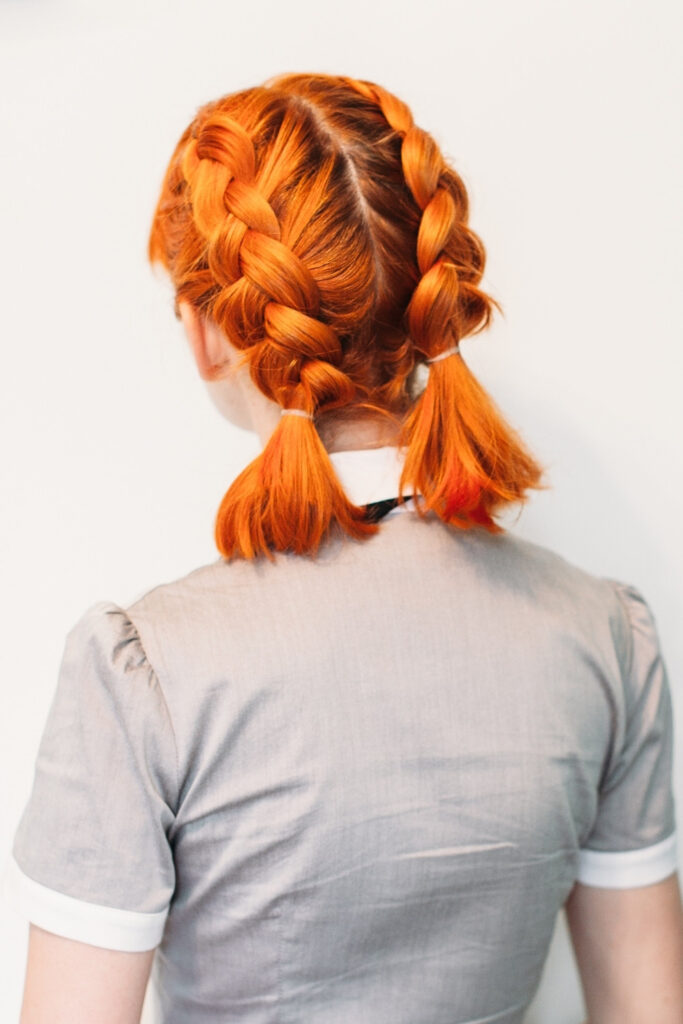
Double Dutch Braids on a Bob
Two symmetrical Dutch braids starting at the hairline on each side of a centre part on bob-length hair, braiding from hairline to nape on each side.
Homyglow confirms double Dutch braids on this length track cleanly from hairline to nape, describing them as zero flyaways once set, gym-proof, and genuinely quick to DIY. The bob is the ideal short length for double Dutch braids because the braid has visible length before the sections run out.
For more double Dutch braid techniques including the pancaking method that widens each braid for a fuller result, the braided sporty hairstyles guide covers the underhand crossing technique step by step.
 Save
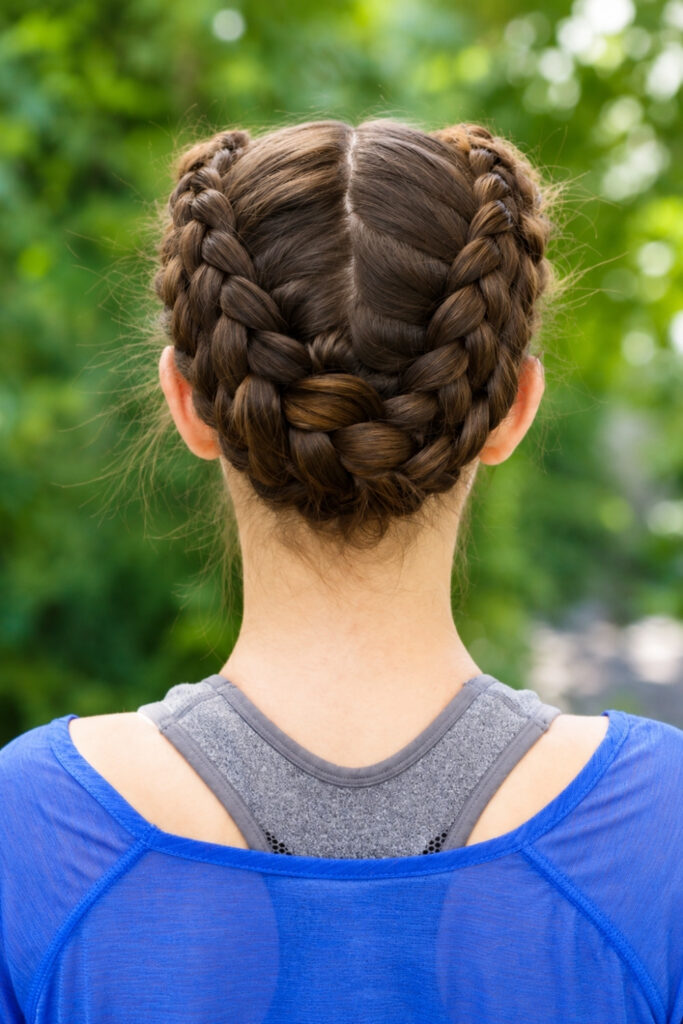
Boxer Braids on Short Hair
Two tight Dutch braids lying flat and close to the scalp from hairline to nape, with the braid sections kept small and the crossings made under rather than over.
Best Hairstyle Ideas confirms boxer braids as a 2026 trend, specifically identifying boxer braids with undercuts for an athletic edge. On short hair, the boxer braid sits completely flat against the scalp rather than raising above it like a standard Dutch braid, because the short sections do not generate enough braid height.
The flat profile of a short-hair boxer braid is an advantage at the gym or under a hat. Applies to hair from two inches on top. Less than two inches will not sustain a full hairline-to-nape boxer braid.
 Save
Double Dutch Braids into Space Buns
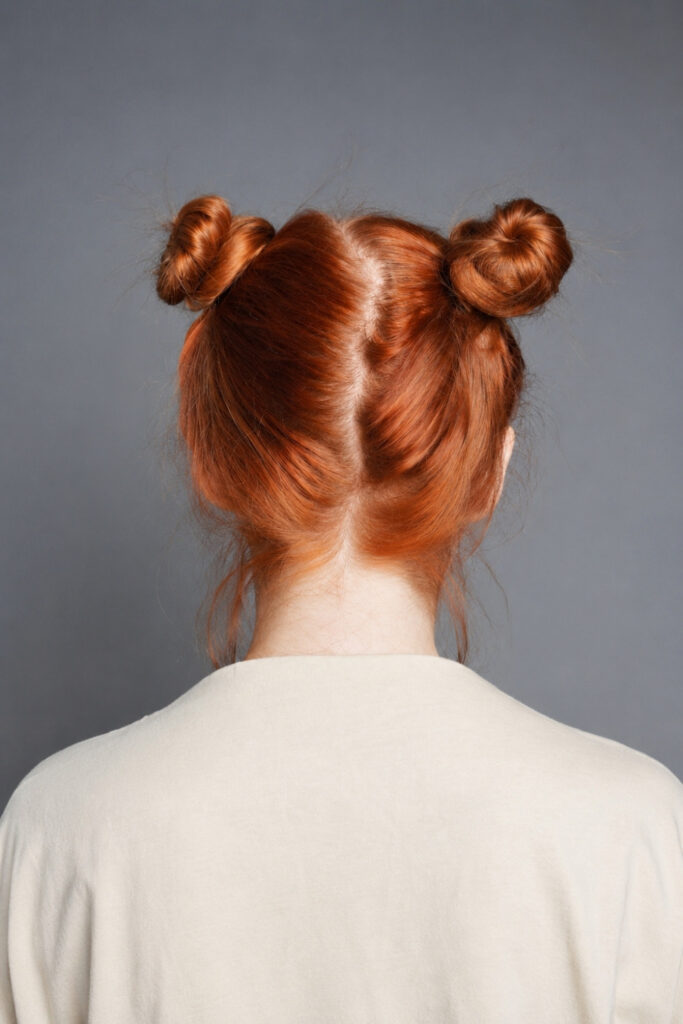
Two Dutch braids on bob-length hair braiding from the hairline to mid-shaft, with the remaining tail on each side wrapped into a small bun at the crown.
The space bun finish gives double Dutch braids on short hair a complete updo result rather than two small trailing tails. Wrap each tail into a tight flat coil and pin against the scalp at the crown. Two buns, one on each side, above the ears.
Keep the buns small and tight. Large, loose buns on short hair unravel within two hours because the tail length is insufficient to anchor the structure. A tight, flat coil pinned with four pins holds all day.
 Save
Double Dutch Braids with Ribbon
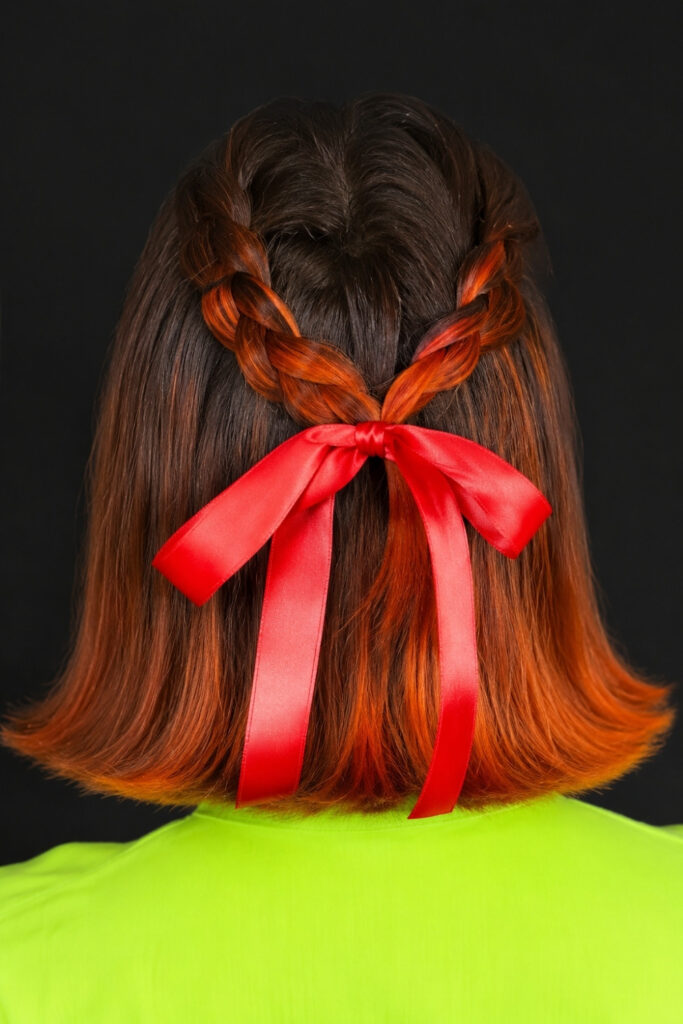
Two Dutch braids on bob-length hair with a thin satin or grosgrain ribbon woven through each braid from the starting section, running the full visible braid length.
Homyglow confirms swapping elastics for ribbon to dress up double Dutch braids for brunch. On short hair, the ribbon adds colour and visual interest that compensates for the shorter braid length. The ribbon makes a two-inch braid look as intentional as a six-inch one.
Thread the ribbon as a fourth strand from the start. Carry it alongside the centre strand through each crossing. Use a ribbon cut to 50 centimetres even for short hair. The excess at the end ties into a small bow at the elastic.
 Save
Crown and Half-Up Dutch Braids for Short Hair
Dutch Braid Crown on Short Hair
Two Dutch braids wrapping around the head from opposite temples, meeting at the back, creating a crown effect on hair at chin length or longer.
Nakuru Braiding confirms short hair crown braids are possible using mini braids, cornrows, or feed-in techniques. The Dutch crown on short hair requires the braids to start immediately at the temple rather than in from the hairline, maximising the wrap distance available.
On chin-length hair, the braids will meet roughly behind the ear rather than at the nape. Pin at the meeting point with four crossed pins. Add a decorative barrette or clip over the pins at the meeting point. The clip covers the pin and becomes a styling element.
 Save
Half-Up Dutch Braid on Short Hair
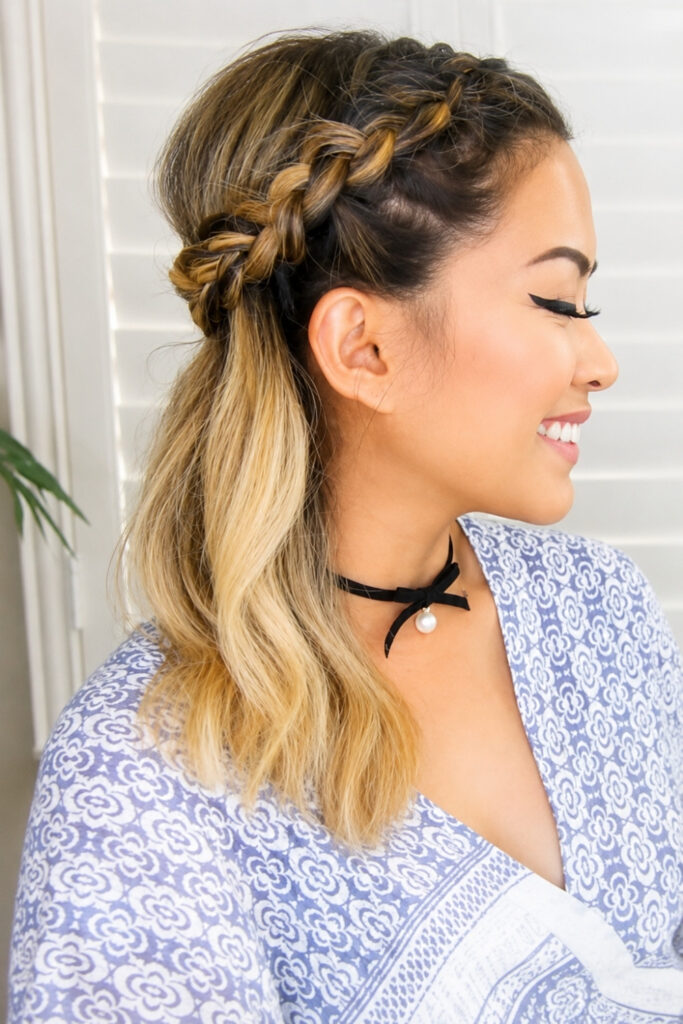
Two small Dutch braids starting at the temples on each side, meeting at the back centre crown and secured with an elastic, leaving the lower hair to fall freely.
The Right Hairstyles confirms the half-up approach with two braids as a romantic style that frames the face while the remaining hair flows freely. On short hair, the half-up Dutch braid is the most accessible version because the braids only need to reach the back crown rather than wrapping the full head.
Secure the meeting point with a small clear elastic first, then add a decorative clip, ribbon, or claw clip over it. The decorative element covers the elastic and elevates the meeting point from functional to styled.
 Save
Dutch Braid Headband with Loose Short Hair
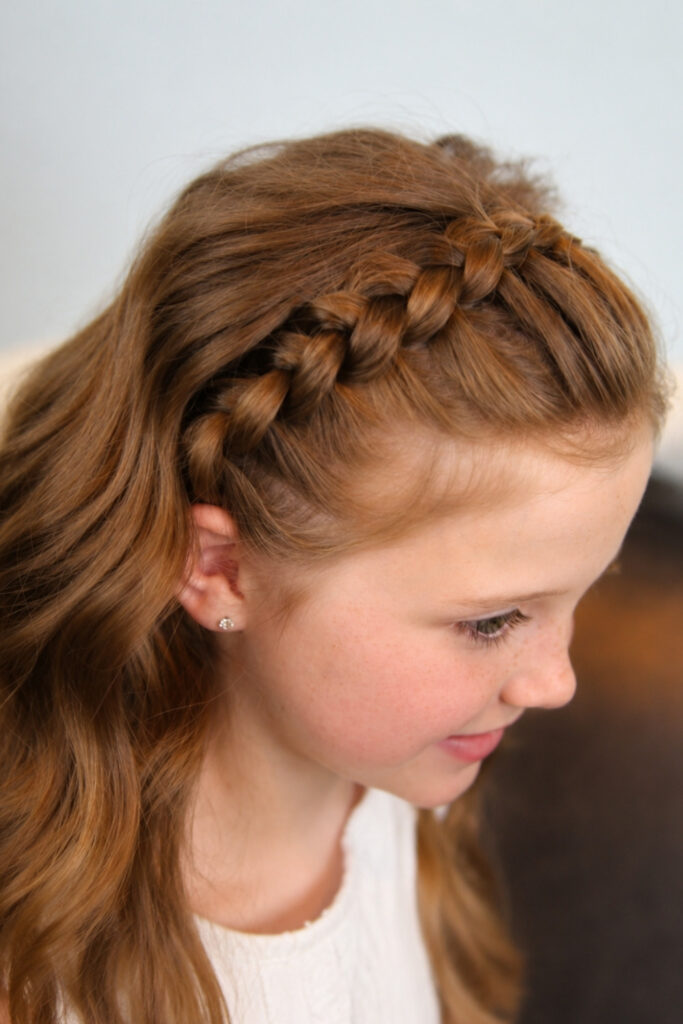
A single Dutch braid running from above one ear across the top of the head to above the opposite ear, with all remaining hair left loose beneath it.
The Right Hairstyles identifies the headband braid approach as a romantic half-up option. On very short hair between the ear and jaw, this is often the only full-scalp Dutch braid option available because the hair length does not support a full back braid.
Bring the braid tightly against the hairline at the forehead. A headband braid that sits back from the hairline looks like a regular side braid rather than a headband. The hairline contact is what creates the headband silhouette.
 Save
Dutch Braid Techniques Specific to Short Hair
Feed-In Dutch Braid on Short Hair
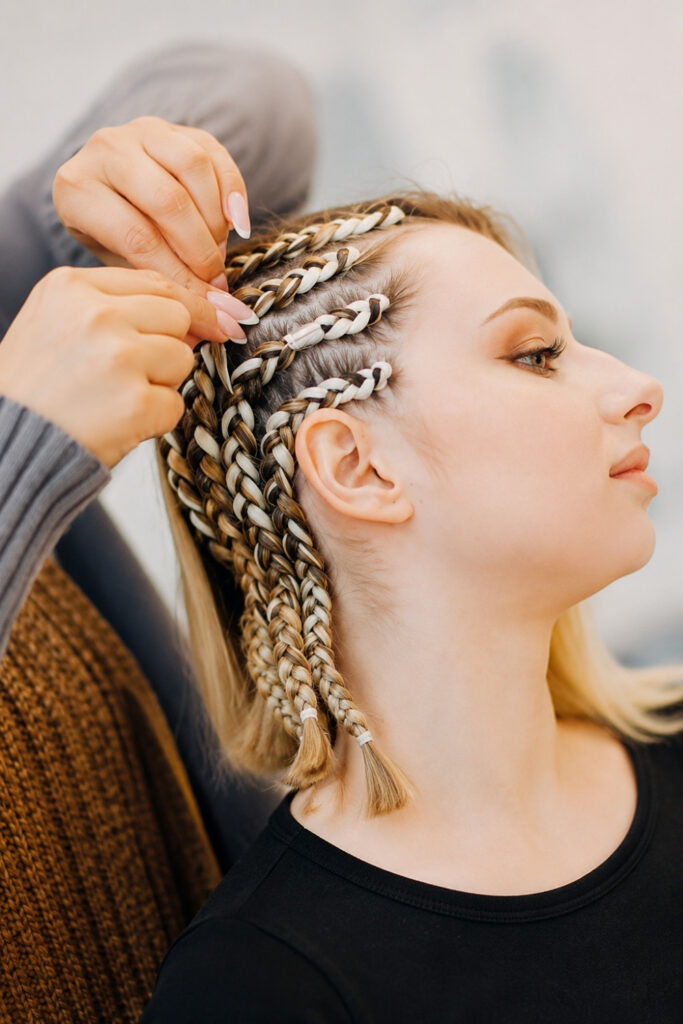
A Dutch braid on short hair where small pieces of braiding extension hair are fed into the sections as they are incorporated, adding length and volume to sections that would otherwise be too small to hold.
Nakuru Braiding confirms feed-in techniques work for crown braid looks on short-haired clients. The feed-in method allows Dutch braids on hair as short as one to two inches at the crown by building section size artificially through the extension additions.
Use Sensationnel pre-stretched braiding hair cut into two-centimetre pieces. Feed one small piece into each new section addition as you braid. The added hair thickens each section enough to hold the crossing tension that short natural-only sections cannot sustain.
 Save
Dutch Braid on a Textured Pixie
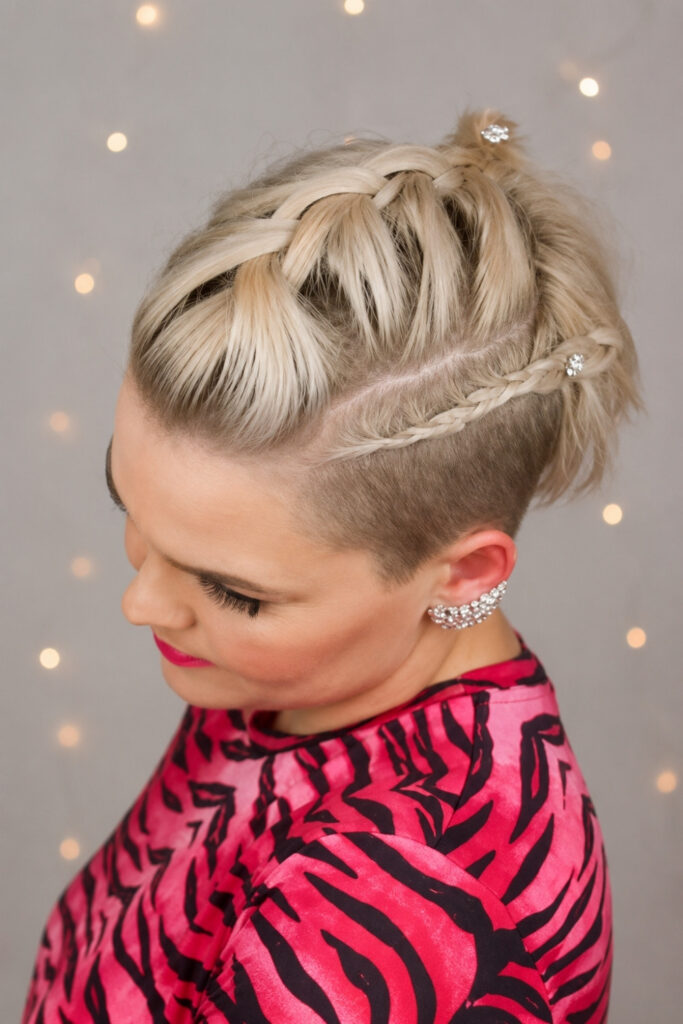
A Dutch braid on a textured or layered pixie cut using the longer top sections only, braiding from the front hairline toward the crown before sections run out.
Most pixie cuts have longer hair on top, often three to four inches, and shorter sides. The Dutch braid on a textured pixie uses only the top section and stops when it runs out of length, typically at the mid-crown. John Frieda confirms the Dutch braid is more defined than the French plait on short hair, so the short visible section still reads clearly.
Stop the braid when sections run out and finish with three regular crossings to secure. Pin the end flat against the scalp. Do not attempt to reach the nape. A short, defined Dutch braid at the crown is a complete style, not an incomplete one.
 Save
Dutch Braid on Natural Short Hair
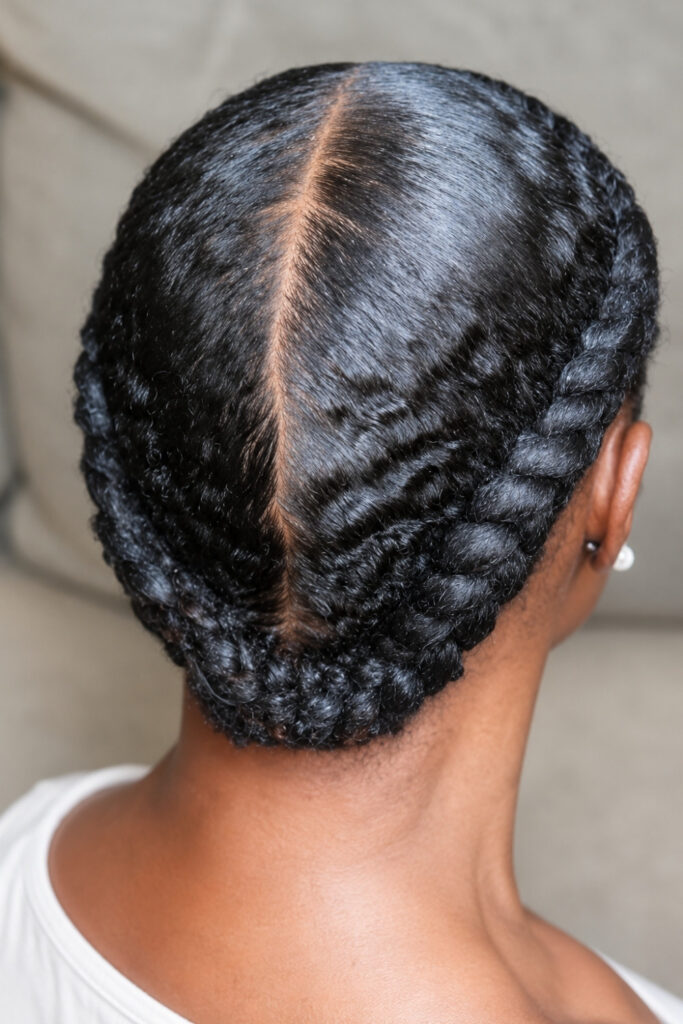
A Dutch braid on natural hair at a TWA or short afro length, using Eco Styler Gel at each section to smooth the hair before crossing and a rattail comb to take precise, clean sections.
Natural short hair requires more preparation per section than straight or wavy hair. Apply gel to each new section before incorporating it into the braid rather than applying product to the full head at the start. Section-by-section application keeps each section smooth enough to grip through the crossing.
Take sections with the pointed end of a rattail comb rather than fingers. Finger sections on natural hair pull multiple curl groups together creating uneven braid thickness. Comb sections create clean, consistent size throughout the braid.
 Save
Dutch Braid into Faux Bob
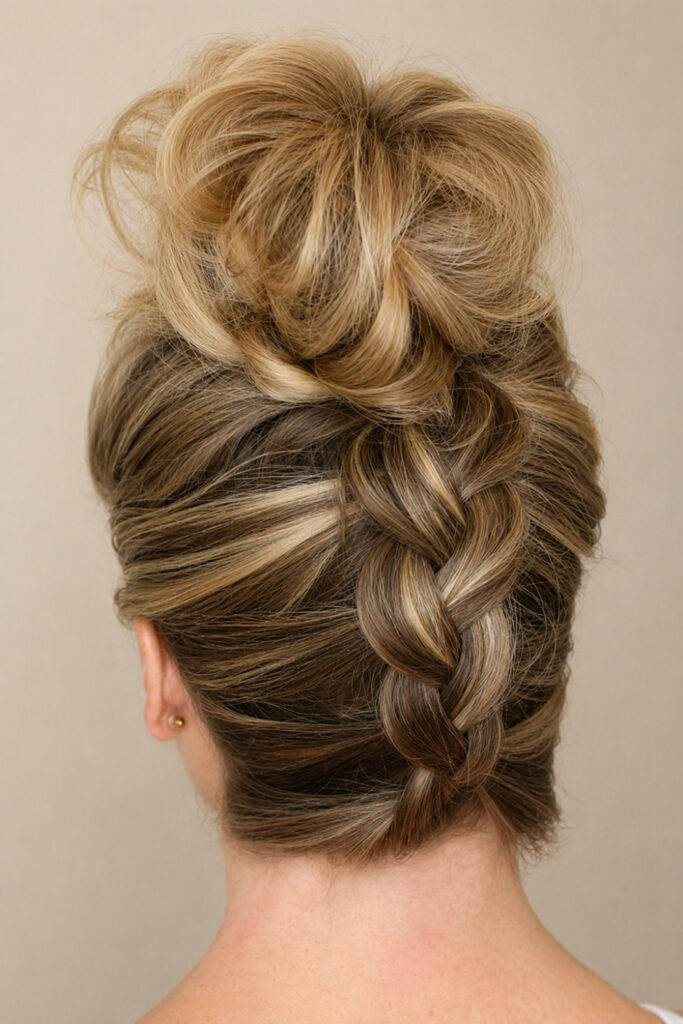
A Dutch braid starting at the nape on longer hair, braiding upward toward the crown, creating a raised braid that sits at the back of the head while the hair appears short from the front.
The faux bob Dutch braid works in reverse: start at the nape, braid upward, and tuck the remaining length into the braid structure at the crown. The braid holds the length up and away, making longer hair appear as short as a bob from the front and sides.
This technique requires hair at least at shoulder length to work. The faux bob illusion only holds if the braid covers enough length to be fully contained at the back of the head. Use six to eight bobby pins to secure the tucked end.
 Save
How to Dutch Braid Short Hair
The Short Hair Starting Technique
Short hair requires smaller starting sections than long hair. Begin with three sections no wider than one centimetre each. Sections wider than one centimetre on short hair produce a braid that runs out of hair to add within the first four crossings.
Hold all three starting sections between the thumb and first two fingers. The pinch hold is tighter on short hair than long because the sections have less weight anchoring them. A loose hold on short sections drops sections before the first crossing.
Product Choice Determines Short Braid Longevity
Dry, slippery short hair falls out of braid sections faster than textured or product-coated hair. Apply Amika Perk Up Dry Shampoo to second-day hair before braiding. The residue from dry shampoo adds grip that fresh clean hair does not have.
For fine short hair, a light application of Oribe Dry Texturizing Spray through the sections before starting builds the same grip. Never braid freshly washed fine short hair without a texture product. The braid begins unravelling before it is finished.
Finish Every Short Braid with the Right Elastic
Short braid tails are one to two centimetres long after the last crossing. A standard elastic loop doubles around this tail and creates a bulky knot that pushes the braid end away from the scalp.
Use a Scunci No Damage Mini Elastic on short braid tails. The smaller circumference grips the tail without the excess loop that standard elastics create. One loop only. Double-looping a mini elastic on a short tail cuts into the hair at the end point.
For more ideas, see our christmas braids hairstyles that shine with holiday charm, halloween braids looks and stunning dutch braid hairstyles for every occasion.
Frequently Asked Questions
Can you Dutch braid short hair?
Yes. John Frieda’s braided hairstyle guide confirms the Dutch braid is much more defined on short hair than a French plait, noting the raised structure means placement is flexible. StyleCraze confirms the correct technique for short hair: once sections run out, finish with a regular braid rather than stopping. Dutch braids work on hair as short as two to three inches at the crown with the right product preparation.
How short is too short for a Dutch braid?
One inch of hair is the minimum for any scalp braid. Below one inch, there is not enough length to hold three crossing sections without them pulling free. At one to two inches, a feed-in Dutch braid using extension hair pieces fed into each section can create a braid on hair that would not otherwise hold. At two to three inches, a standard Dutch braid with product preparation works without extensions.
What products help Dutch braids stay in short hair?
Second-day hair with dry shampoo residue grips better than freshly washed hair. Amika Perk Up Dry Shampoo adds grip texture before braiding. Eco Styler Gel applied section by section is the standard product for natural short hair. Oribe Dry Texturizing Spray works for fine straight or wavy short hair. Bumble and bumble Hairdresser’s Invisible Oil Primer adds slip for easier section additions without reducing grip.
What Dutch braid styles work best on a pixie cut?
A front-to-crown Dutch braid using only the longer top sections, a Dutch braid headband running across the hairline, and a feed-in Dutch braid using extension hair are the three options that work on pixie-length hair. The braid stops when sections run out rather than reaching the nape. John Frieda confirms the raised Dutch structure reads as a complete style even on a short braid section.
How do you keep a Dutch braid from unravelling on short hair?
Start with textured or product-coated hair, not freshly washed. Use a Scunci No Damage Mini Elastic rather than a standard elastic at the end. Keep starting sections small, under one centimetre wide. Apply Eco Styler Gel or a dry texturizing spray to each new section before incorporating it into the braid. Braid at firm tension throughout without loosening the hold on crossing sections.
Can you do a Dutch braid crown on short hair?
Yes. Nakuru Braiding confirms short hair crown braids are possible using mini braids, cornrows, or feed-in techniques. On chin-length hair, the braids wrap from the temple to behind the ear rather than the full crown-to-nape route. A decorative clip placed at the meeting point covers the pin and completes the look. On pixie-length hair, a Dutch braid headband running across the hairline creates a partial crown effect.
Final Thoughts
Dutch braids on short hair are possible at every length from a pixie to a bob. The technique adapts to what the hair can do rather than requiring a specific length to work.
Start small sections. Use a texture product before braiding. Finish with a mini elastic. When sections run out, switch to a regular braid and stop. That is the complete short hair Dutch braid formula.