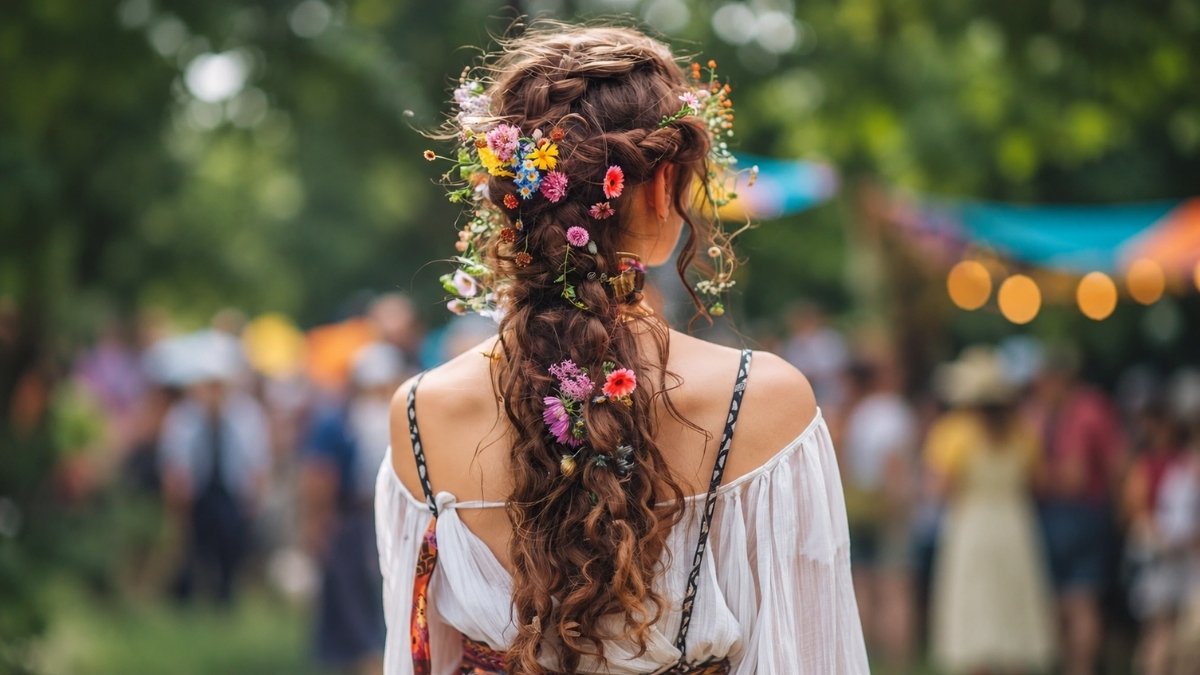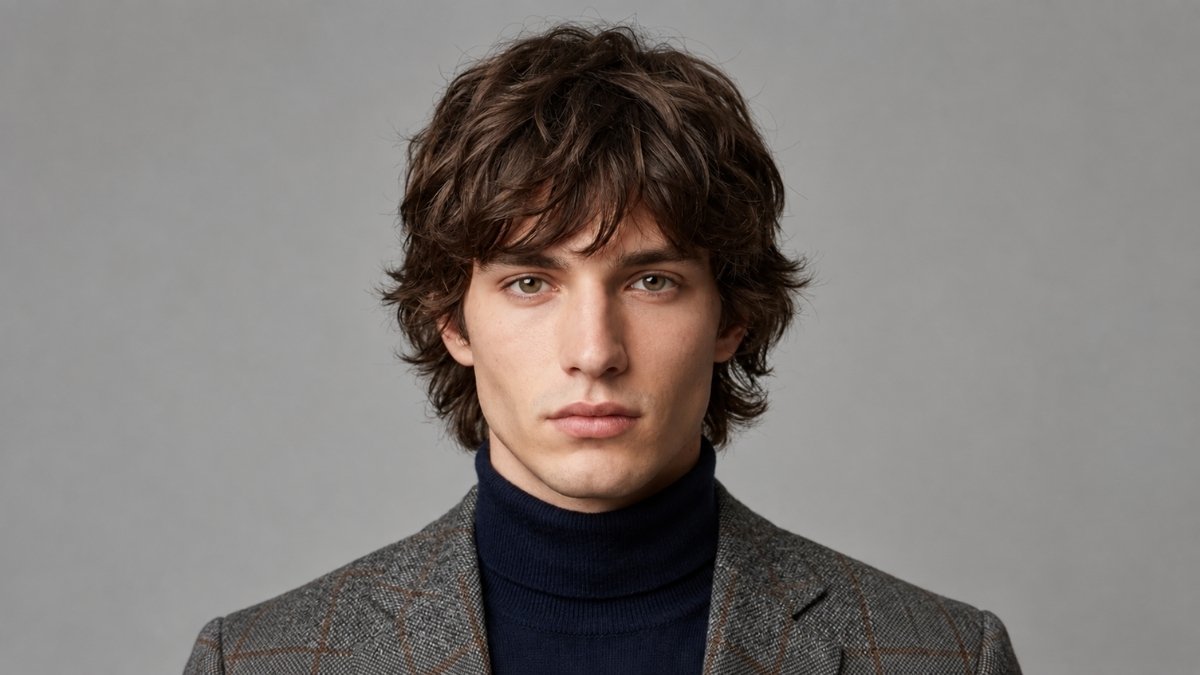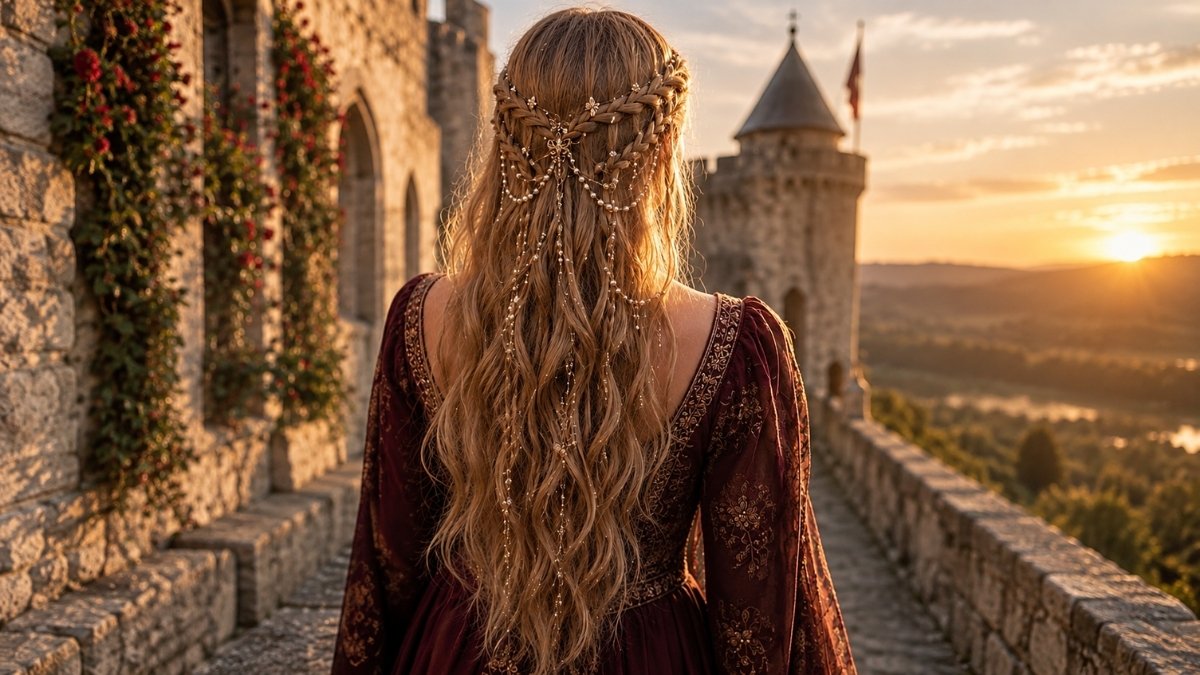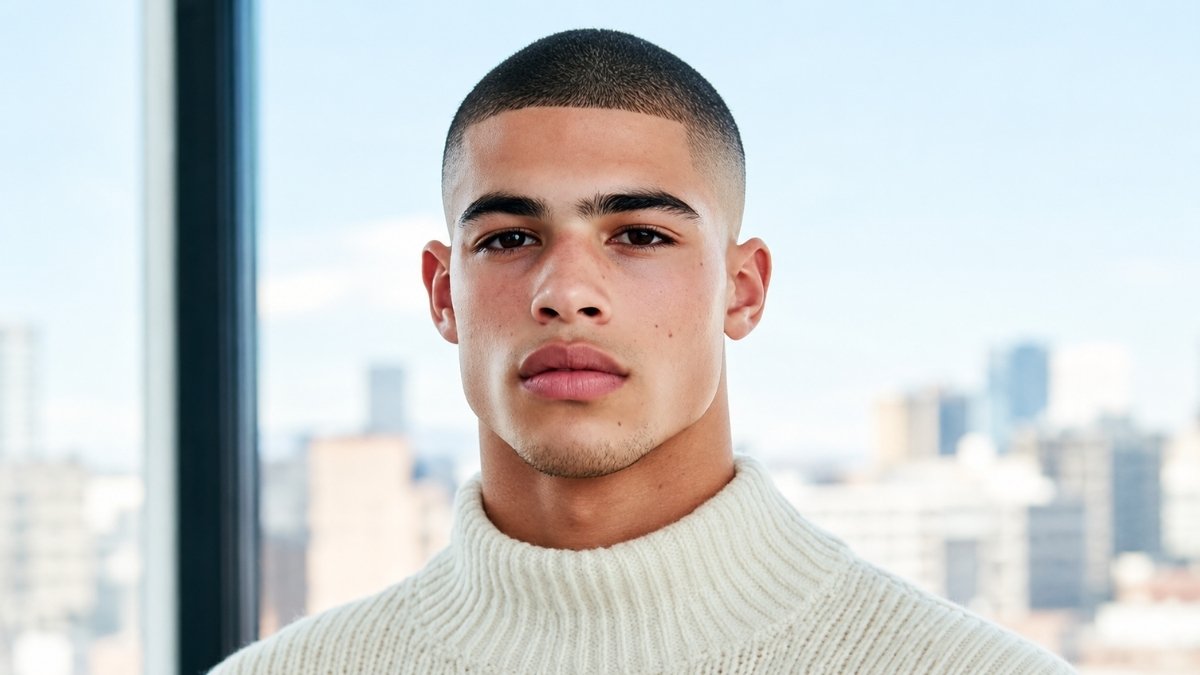
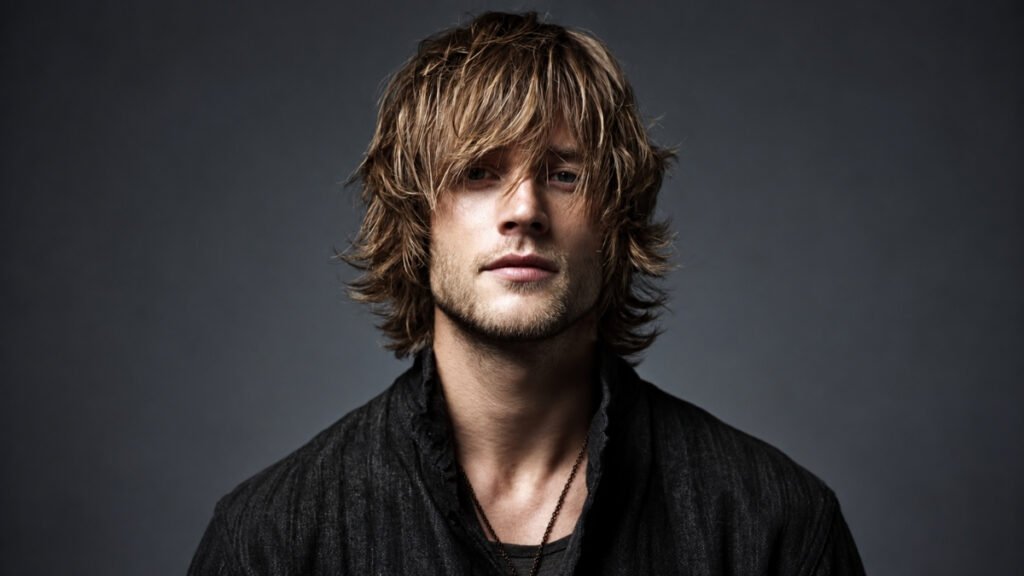
A flow haircut normally wants to move away from the face. Bangs do the opposite. Put them together well and you get a medium-length cut with movement through the sides and back but enough fringe left forward to frame the forehead.
That distinction matters because a flow with bangs is more than overgrown hair. A flow has connected medium length, soft layering and natural direction. The fringe versions keep part of the front section forward while the rest sweeps outward or back.
Below are fifteen ways to change the bang shape without losing the movement that makes a flow a flow. For the shorter end of the family, see our fringe haircuts for men.
15 Flow Haircuts With Bangs for Men
1. Curtain-Bang Flow
Part the front through the middle and let the bangs bend away from the face around brow or cheekbone level. The side layers should continue that outward direction toward the ears.
This is one of the cleanest ways to combine bangs with flow because the fringe frames the face without blocking the haircut’s backward movement.
See more center-part options in our middle-part hairstyles for men.
Best for: straight/wavy hair, medium length, oval or square faces.
 Save
Save2. Soft Side-Swept Flow
Keep the fringe long enough to sweep diagonally across the forehead while the sides travel backward. The transition should feel continuous rather than like bangs attached to a separate haircut.
Use the natural growth pattern as your guide. Fighting a strong cowlick every morning is not effortless flow; it is unpaid labor.
Best for: straight/wavy hair, off-center parts, smart-casual styling.
 Save
Save3. Wavy Fringe Flow
Natural waves can fall forward at the brow while the sides and back curve away. Light layering keeps the front from becoming a heavy shelf and releases the wave through the perimeter.
Avoid brushing the fringe flat. The irregular bend is what stops medium hair from looking helmet-like.
Best for: Type-2 waves, medium-to-thick density, air-dried styling.
 Save
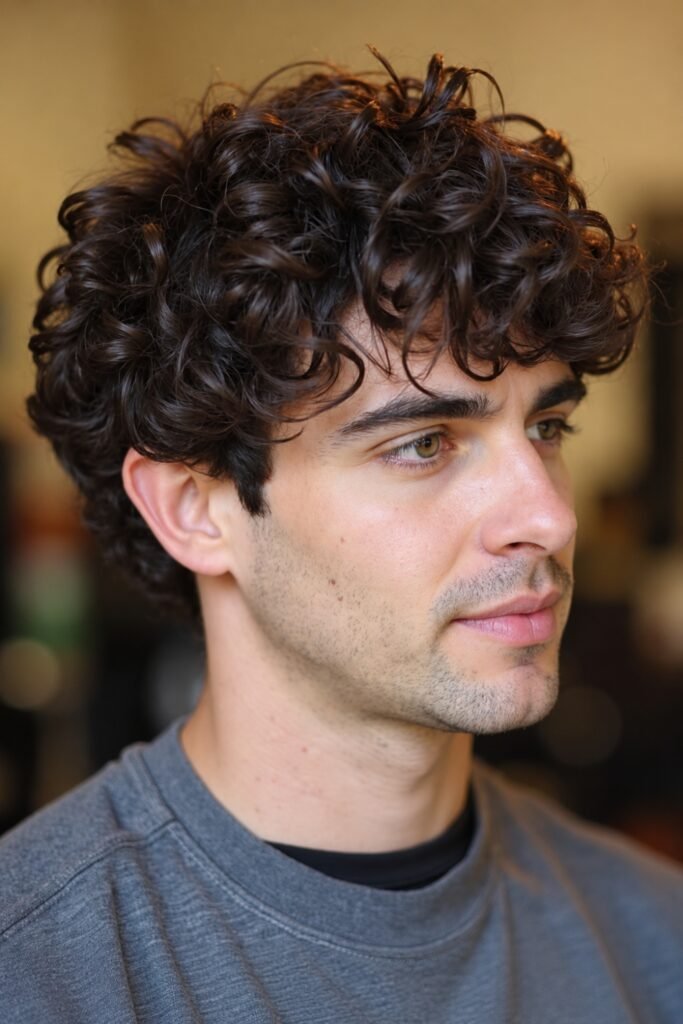
Save4. Curly Bangs With Flow
Let several curls fall toward the forehead while the remaining curls build movement around the temples, ears, and neck. The front should look like part of the same curl system.
Cut for the dry shape and account for shrinkage. A fringe that looks eyebrow-length when wet may have completely different plans once dry.
Best for: curly hair, medium length, natural texture.
 Save
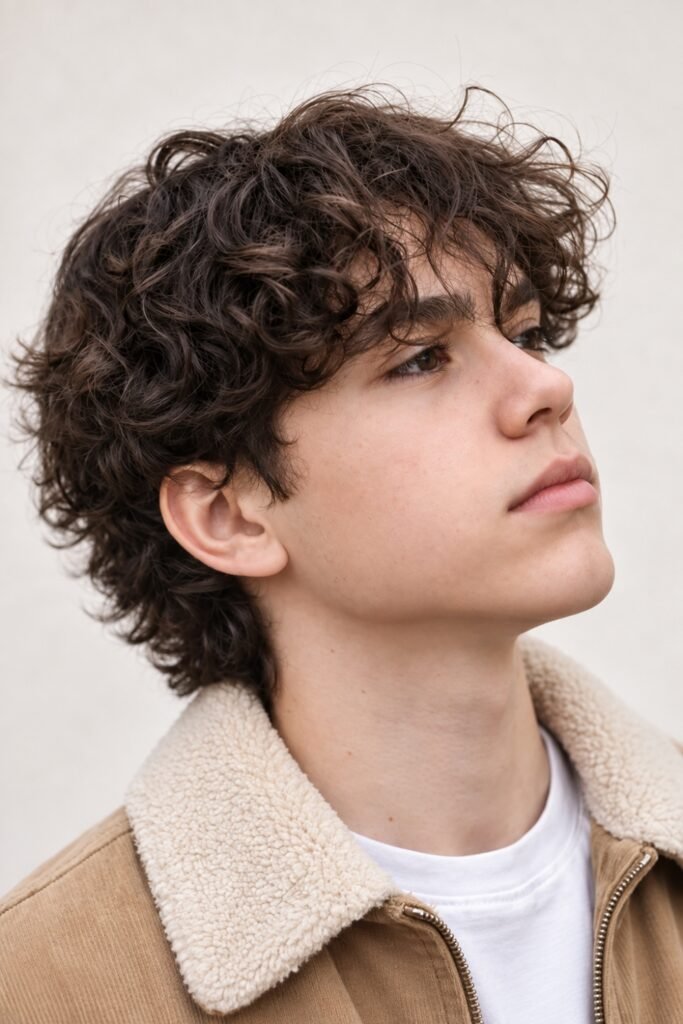
Save5. Textured Fringe Flow
Use point-cutting and soft internal layers to create a piece-y fringe instead of one blunt line. Continue the separation through the sides so the whole haircut feels mobile.
Internal layering keeps this version light, so the front separates into pieces and still connects to the sides.
Our textured haircuts for men show the same technique at other lengths.
Best for: straight/thick hair, contemporary styling, matte finishes.
 Save
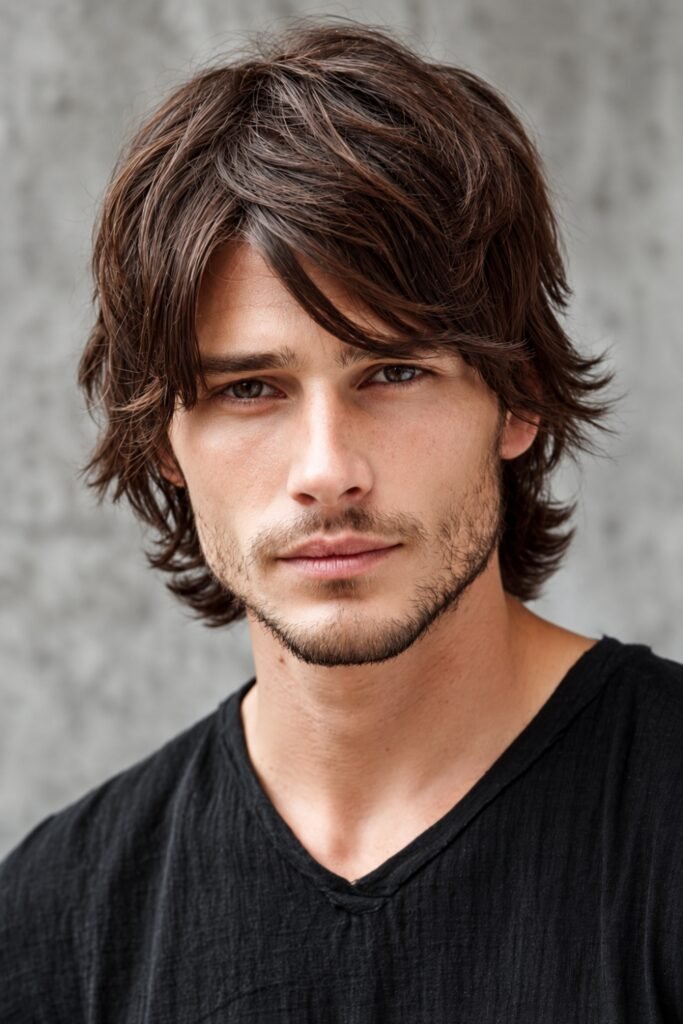
Save6. Feathered Bangs Flow
Feather the fringe and front layers so the ends taper softly and flick away around the temples. Keep the back connected rather than carving out a separate mullet section.
This works particularly well when straight hair needs movement but heavy texturizing would make it frizz.
Best for: straight-to-wavy hair, fine-to-medium density, softer styling.
 Save
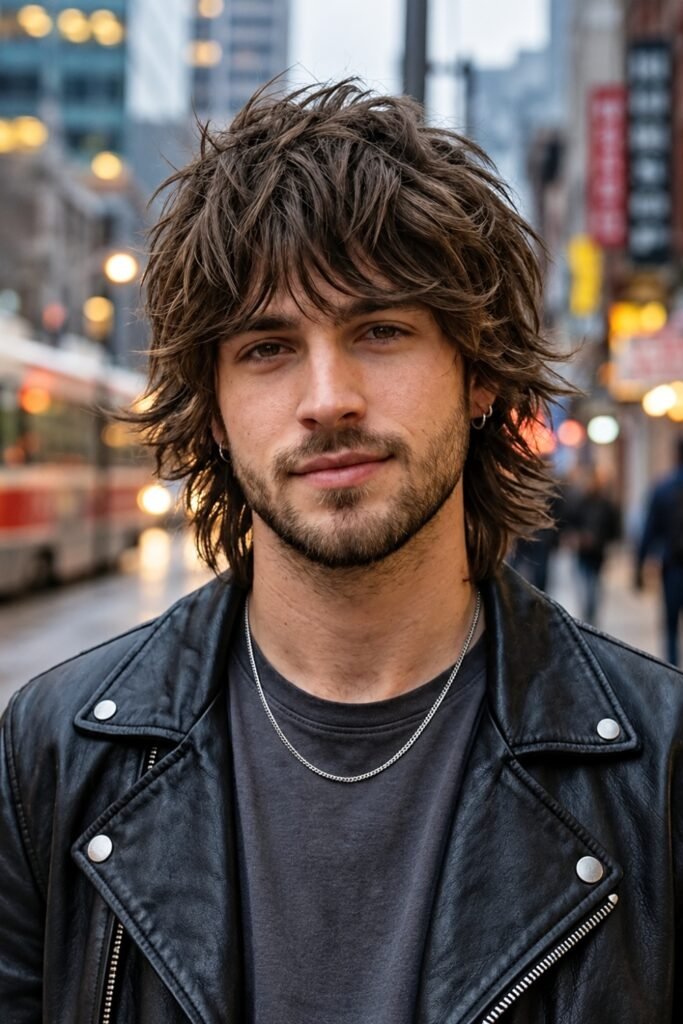
Save7. Shag Flow With Bangs
Add visible crown layers and a feathered fringe while maintaining enough connected length around the ears and neck for the hair to flow as one shape.
The shag influence should create texture, not a disconnected tail. If all the length lives at the back, the haircut has crossed into mullet territory.
Best for: thick/wavy hair, rock-inspired style, lived-in texture.
 Save
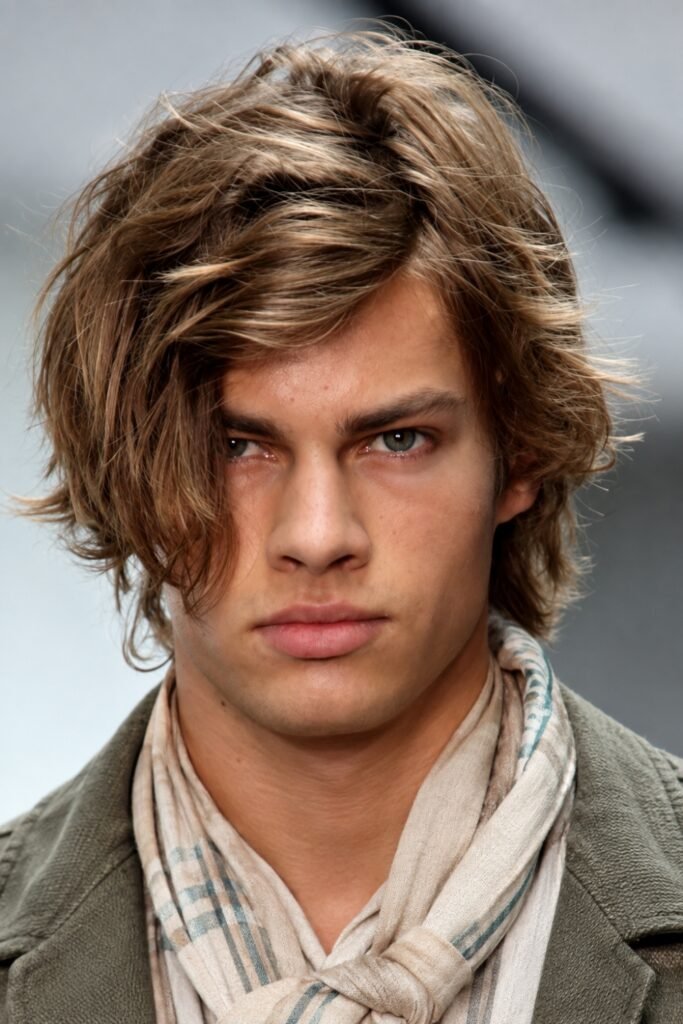
Save8. Hockey Flow With Loose Bangs
Keep fuller medium length through the sides and back, then allow a loose front section to fall forward before it naturally sweeps away during movement.
The hockey association is part of flow history, but the modern version still needs shape. Clean ends and controlled bulk separate it from simply skipping haircuts.
Best for: thick hair, active men, relaxed wardrobes.
 Save
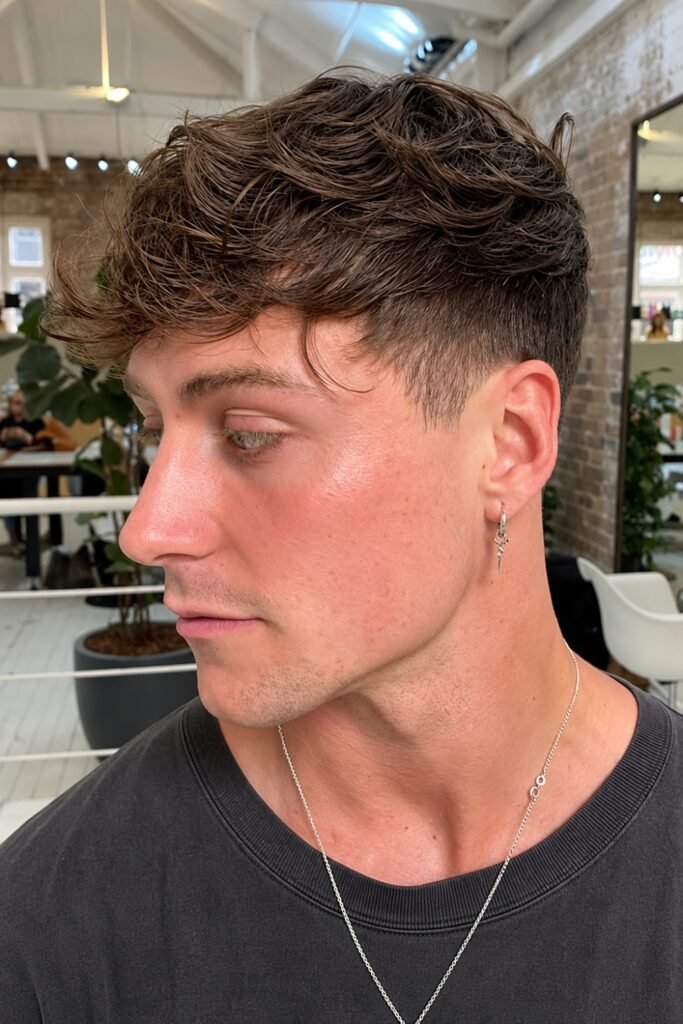
Save9. Tapered Flow With Fringe
Use a subtle temple and neckline taper while preserving medium length through the top, sides, and bangs. The taper makes the perimeter neater without destroying the connected silhouette.
This is the safer choice when you want barbered edges but still want genuine flow around the ears.
Best for: work, thick hair, men growing out shorter cuts.
 Save
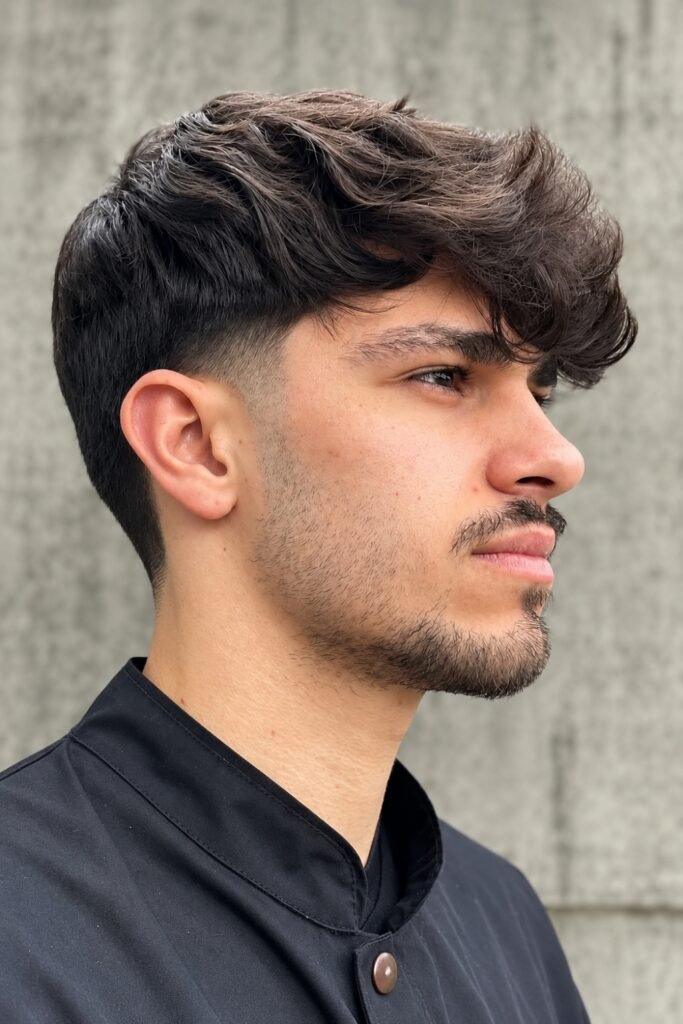
Save10. Low-Fade Flow With Bangs
Keep the fade low around the ears and neckline while leaving enough side length above it to connect visually with the flowing top and fringe.
A high fade removes too much of the side movement and can turn the haircut into long-top-with-fade rather than flow. Keep the contrast low if movement is the priority.
Best for: modern barbered looks, dense hair, cleaner sides.
 Save
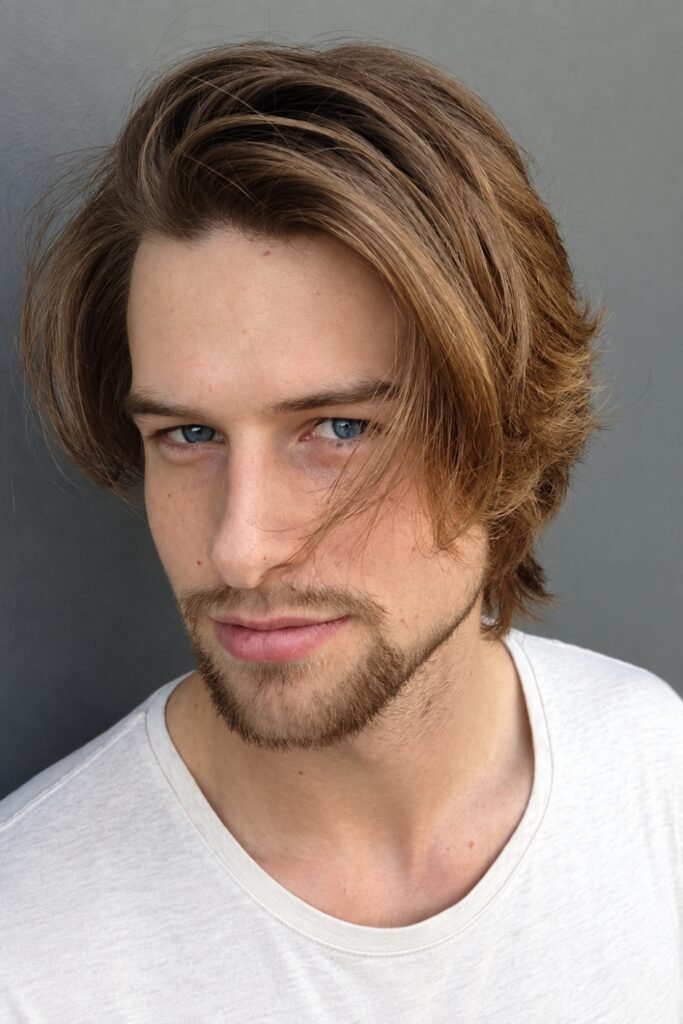
Save11. Off-Center Flow With Long Bangs
Split the front slightly away from center so one bang section falls closer to the brow and the other opens the forehead. The imbalance makes medium hair look less staged.
This is useful when a true middle part fights the natural growth pattern or makes the face feel too symmetrical.
Best for: straight/wavy hair, cowlicks, softer face framing.
 Save
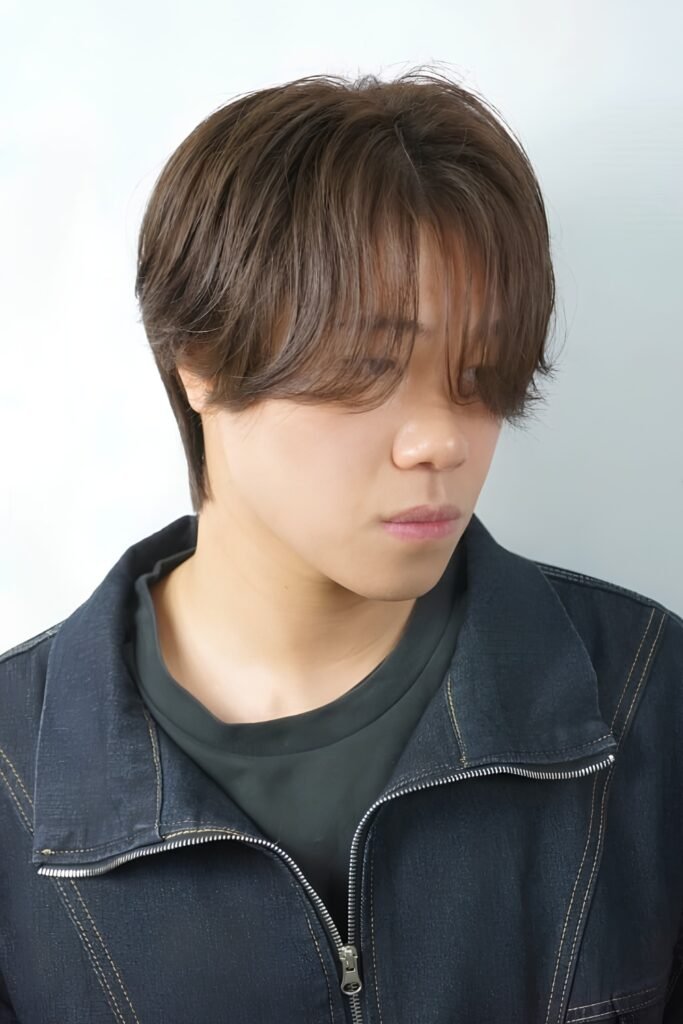
Save12. Fine-Hair Airy Flow With Bangs
Fine hair needs restraint. Use long, subtle layers and a wispy fringe while keeping enough density through the outline so the ends do not become transparent.
Do not solve flatness by aggressively thinning fine hair. Lightweight styling and directional drying usually create more believable movement.
Best for: fine straight/wavy hair, softer volume, low product.
 Save
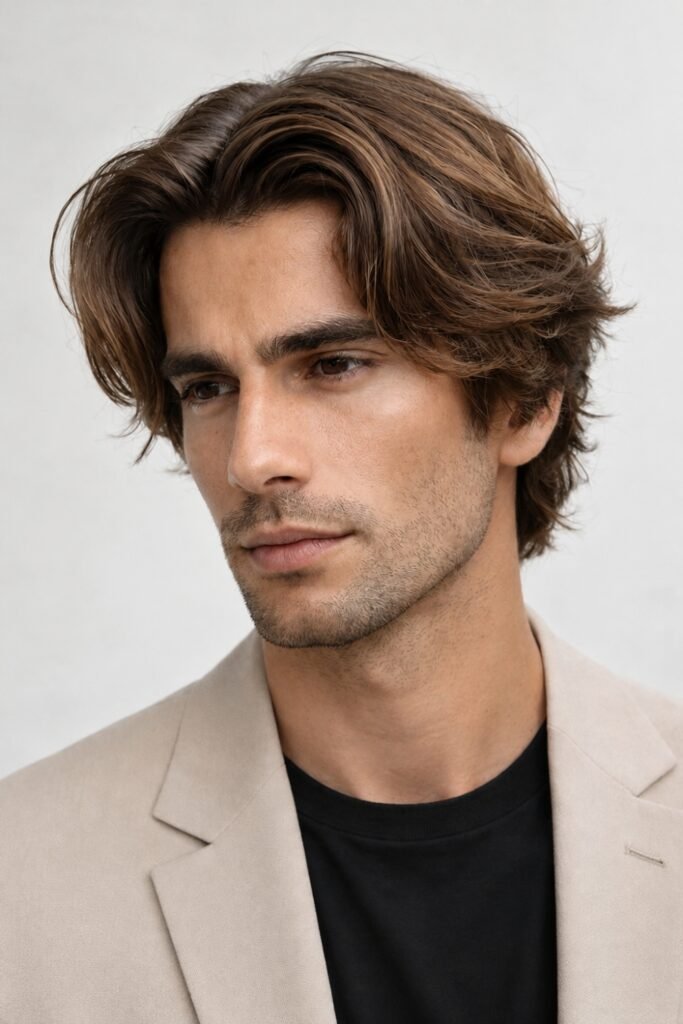
Save13. Thick-Hair Layered Flow With Bangs
Dense hair needs internal weight removal so the fringe can separate and the sides can move. Keep the outer length substantial while taking bulk from inside the shape.
Weight removal matters more than length here. Ask for it through the interior so the outline stays full.
Best for: thick straight/wavy hair, bulky sides, medium length.
 Save
Save14. Professional Flow With Side Bangs
Use a soft side fringe, connected medium layers, and a clean neckline. Tuck or sweep the sides when needed rather than slicking the entire haircut into submission.
A light styling cream can give direction without freezing the fringe. The goal is polished movement, not corporate helmet hair.
Best for: offices, dates, straight/wavy hair.
 Save
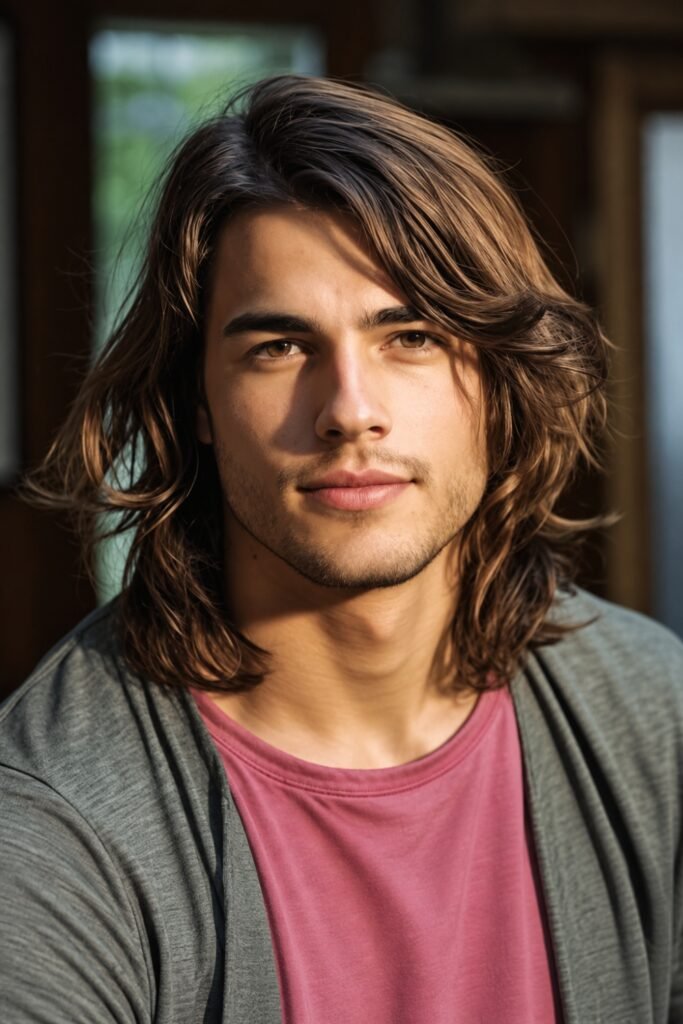
Save15. Long Flow With Cheekbone Bangs
Grow the front to cheekbone length and let it sweep outward into longer side layers. The bangs become face-framing pieces rather than a short line across the forehead.
This is the longest version in the guide and the easiest to tuck behind the ears. It also grows out more gracefully because the fringe already connects to the rest of the cut.
For longer versions, see our long layered haircuts for men.
Best for: long medium hair, straight/wavy texture, men growing toward collar length.
 Save
SaveQuick Guide: Choose the Bang Shape First
| Bang goal | Strong options | Best hair type | Watch for |
| Open the center | Curtain, off-center | Straight/wavy | Heavy panels collapsing inward |
| Cover some forehead | Side-swept, textured | Straight/wavy | Blunt shelf-like fringe |
| Use natural texture | Wavy, curly | Wavy/curly | Cutting only for wet length |
| Add edge | Shag, hockey | Thick/wavy | Turning into a mullet |
| Keep sides cleaner | Tapered, low-fade | Dense hair | Fade climbing too high |
| Grow longer | Cheekbone bangs | Straight/wavy | One-length bulk around sides |
What Is a Flow Haircut With Bangs?
A flow haircut with bangs keeps the medium-length, connected movement of a traditional flow but leaves some front hair directed toward or across the forehead. The sides and back still need enough length and layering to move naturally.
If the entire haircut falls forward, it is closer to a fringe haircut. If the front is fully swept back, it is a classic flow. The hybrid lives between those two directions.
How Long Does Hair Need to Be?
Most modern flow cuts start becoming convincing once the top has several inches of usable length and the sides can move around or behind the ears. Bangs can be shorter, but they should connect into the side layers.
Expect an awkward stage on the way. A light trim to clean the edges keeps the cut presentable while the length comes in.
What to Tell Your Barber
Ask to keep medium length through the top and sides, preserve connected movement around the ears, and shape the fringe separately according to the version you want: curtain, side-swept, textured, curly, or cheekbone-length.
For thick hair, ask for internal weight removal rather than simply thinning the surface. For fine hair, ask to preserve perimeter density and use softer layering.
How to Style Flow Bangs Without Making Them Stiff
Start damp and establish direction first. Use fingers or a wide-tooth comb while blow-drying on low-to-medium heat, then let the sides move backward while the fringe settles forward or outward.
Finish with a small amount of lightweight cream, mousse, or matte product depending on texture. If the bangs cannot move after styling, the product has defeated the haircut.
How Often Should You Trim the Bangs?
The fringe usually loses its intended length before the rest of a flow loses shape. A light bang cleanup may be useful around every three to six weeks, while the overall layered shape can often go longer.
Do not automatically shorten the sides every time the fringe is trimmed. Repeatedly cutting the side length is how a planned flow quietly turns back into a conventional short haircut.
Frequently Asked Questions
What is a flow haircut with bangs?
It combines medium-length connected flow through the sides and back with a front section that stays forward, split, or side-swept instead of being completely brushed away from the face.
Can a flow haircut have a fringe?
Yes. Keep part of the front section forward as a fringe and let the sides and back sweep outward or back.
What hair type is best for flow haircuts with bangs?
Straight, wavy, and curly hair can all work. Waves create movement naturally, straight hair benefits from layering, and curls need shaping that accounts for shrinkage.
How long should bangs be with a flow haircut?
It depends on the style. Short textured fringe may sit above the brows, curtain bangs can reach the brows or cheekbones, and long flow bangs can blend into ear-length side layers.
Is a flow with bangs good for thick hair?
Yes. Thick hair often benefits from internal layering that removes bulk while preserving the outer length. Without weight control, the fringe and sides can become heavy.
Can fine hair wear a flow with bangs?
Yes, but keep layering restrained. Fine hair usually needs perimeter density, an airy fringe, and lightweight styling rather than aggressive thinning.
Is a flow haircut with bangs high maintenance?
Usually not, but bangs need more frequent attention than the rest of the cut. The fringe may need a small cleanup before the medium-length flow needs a full shape trim.
What is the difference between flow with bangs and a shag?
A flow prioritizes connected directional movement through the sides and back. A shag usually shows more obvious crown layering and broken texture. Some cuts deliberately combine both.
The Movement Test
Push the bangs away from the face, shake the hair once, and let it settle. Does the fringe return to its intended position while the sides still move outward or backward as one connected shape?
If yes, you have flow with bangs. If every section drops straight down like one heavy curtain, the haircut needs better layering, less weight, or a clearer direction.