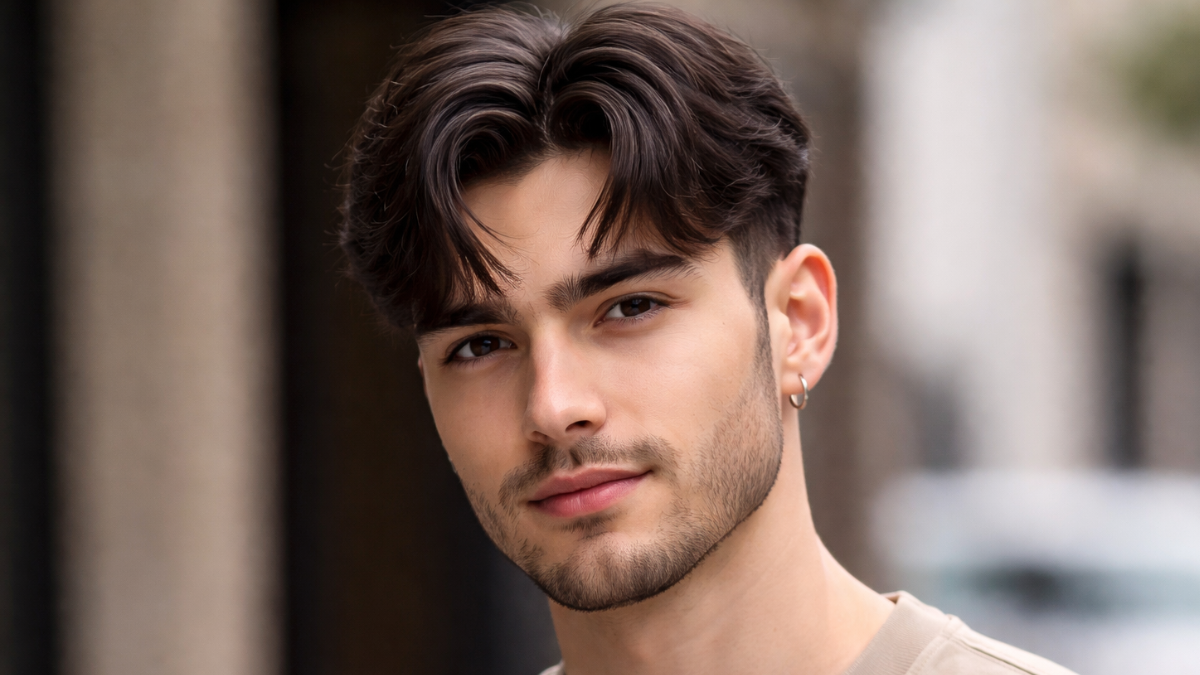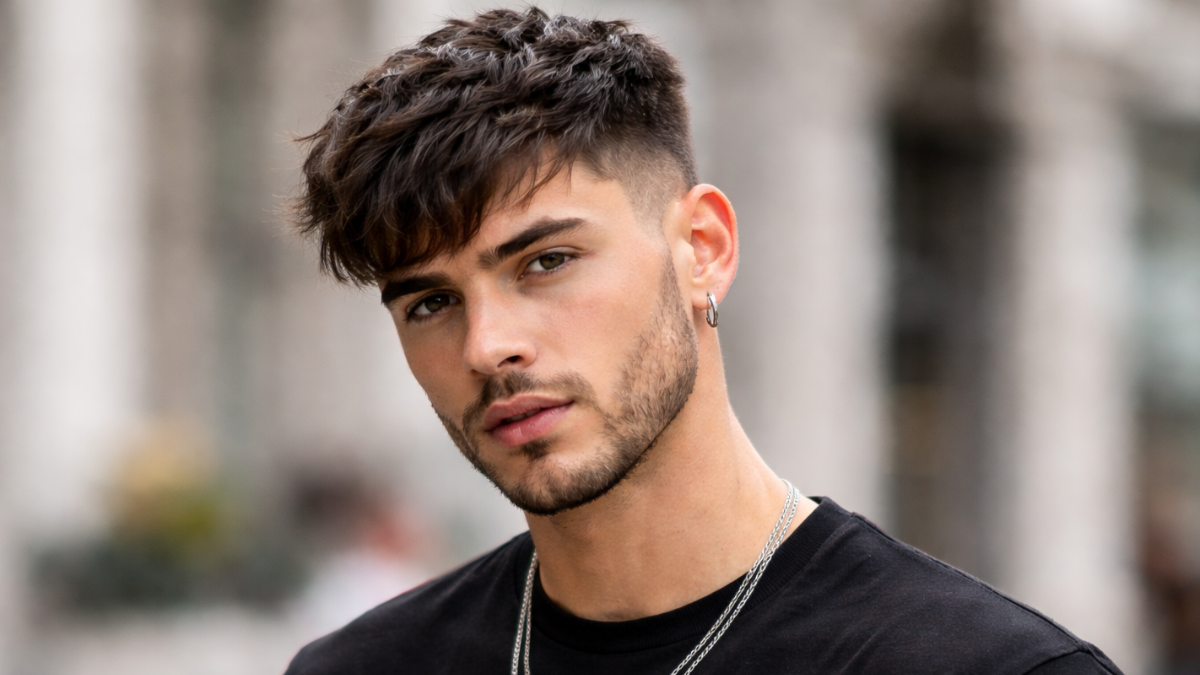
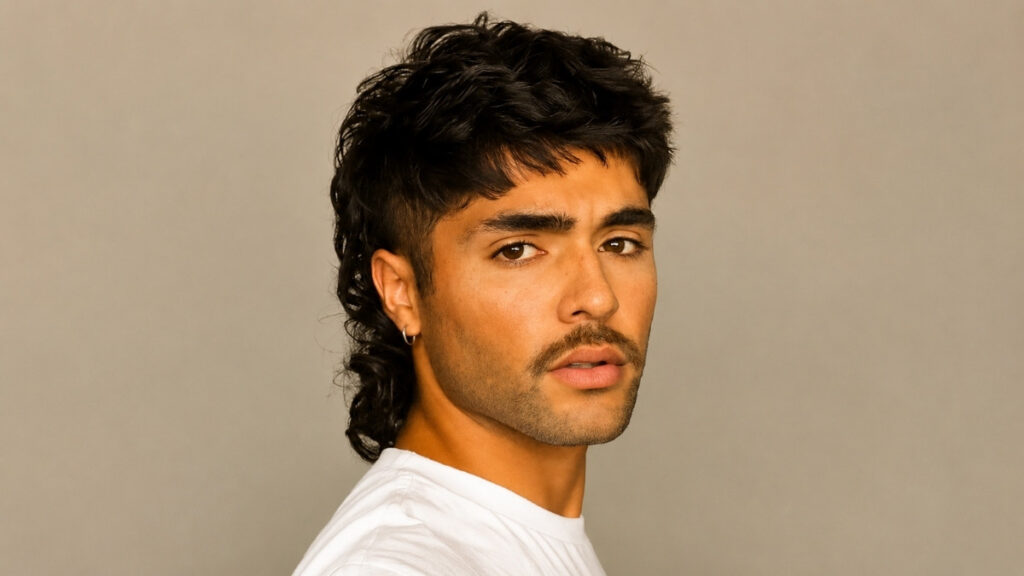
The mullet is one of the most requested cuts in barbershops in 2026. Zayn Barber, professional barber and founder of Best Haircut for Men, confirms that short mullets, textured mullets, and French crop mullets work especially well for thin hair. They create the appearance of fullness through strategic layering, texture, and the right styling products.
The key principle for a thin hair mullet differs from a thick hair mullet on every count. You want layers that add the illusion of density rather than exposing flat individual strands. You want a taper rather than a skin fade, so the contrast between short sides and thin scalp skin is less stark.
These 14 thin hair mullet styles cover the full range of modern mullet directions confirmed for 2026. Each comes with the specific cutting instruction, styling approach, and product guidance that makes it work on fine or thinning hair.
Thin Hair Mullet Rules Before the Cut
Tell your barber your hair is fine or thin before the cut begins. HairLovez confirmed two days ago that more barbershops now offer a pre-cut consultation checking natural hair texture and growth pattern first. This step saves a lot of regret later.
Avoid skin fades on the sides when your hair is thin. A skin fade on thin hair produces a hard visible line where the scalp shows through, drawing attention to the thinness rather than redirecting it. Apex Haircuts May 2026 specifically confirms a low or mid taper as the right approach for fine hair.
Keep the back length shorter than you think you need. Fine hair at the back drops faster and sits flatter against the neck than thick hair does. Shorter back length gives fine hair a better chance of holding its shape between washes.
Short and Textured Thin Hair Mullets
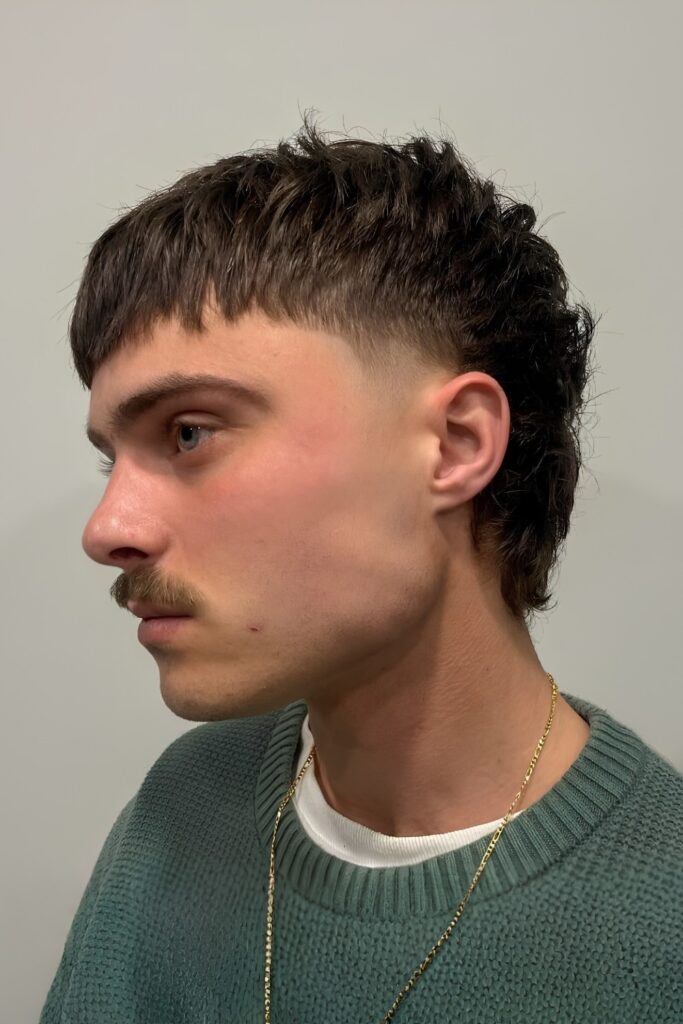
Textured Crop Mullet
A short, textured crop on top with point-cut or razor-cut texture throughout the fringe and mid-top sections, and a modest mullet length at the back sitting at or just below the collar. Zayn Barber confirms the textured mullet as one of the three styles that work especially well for thin hair. The texture through the top creates the appearance of fullness that flat fine hair cannot produce on its own.
Ask your barber for point-cutting through the top rather than scissor-over-comb. Point-cutting removes weight from individual strands without taking length, producing the spiky, separated texture that makes thin hair look denser. Fabbon March 2026 confirms that razor cuts and point-cutting create uneven layers that add body and a dishevelled finish to hair that would otherwise sit flat.
Style with a matte clay applied to damp hair, worked through the roots first before the ends. The roots are where thin hair needs the most product support. Applying product at the tips first and working inward weighs the ends down without providing any lift at the scalp.
 Save
French Crop Mullet
A short fringe cut straight across at or just above the brow, a textured cropped top, and a mullet tail at the back. The French crop provides a defined front section that adds visual density at the forehead, the most visible zone for thin hair. Zayn Barber specifically names the French crop mullet as one of three mullet styles that work best for thin hair.
The straight fringe across the forehead creates a horizontal line that makes the hair above it appear denser. The fringe anchors the front section rather than letting it part and separate. Men with a receding hairline should discuss fringe placement with their barber before committing to a French crop length.
Blow-dry the fringe forward and the crown section backward simultaneously to produce the lift at the roots that fine hair needs. Apply texture powder rather than clay for even lighter hold that still produces separation.
 Save
Short Messy Mullet
A deliberately undone, slightly dishevelled mullet kept short overall, the top and crown styled with rough finger-drying, the back length finishing just below the hairline at the nape. Fabbon March 2026 confirms the messy mullet as best left with a messy finish and slight volume.
For thin hair, the messy approach is specifically beneficial because irregular strand direction breaks up the flat, uniform surface that fine hair naturally produces. A perfectly smooth thin mullet shows every gap between strands. A deliberately textured one uses those gaps as intentional texture rather than exposing thinness.
Rough-dry with a diffuser or fingers rather than a paddle brush. Apply sea salt spray to damp hair before drying for the most natural texture lift on fine strands without product weight.
 Save
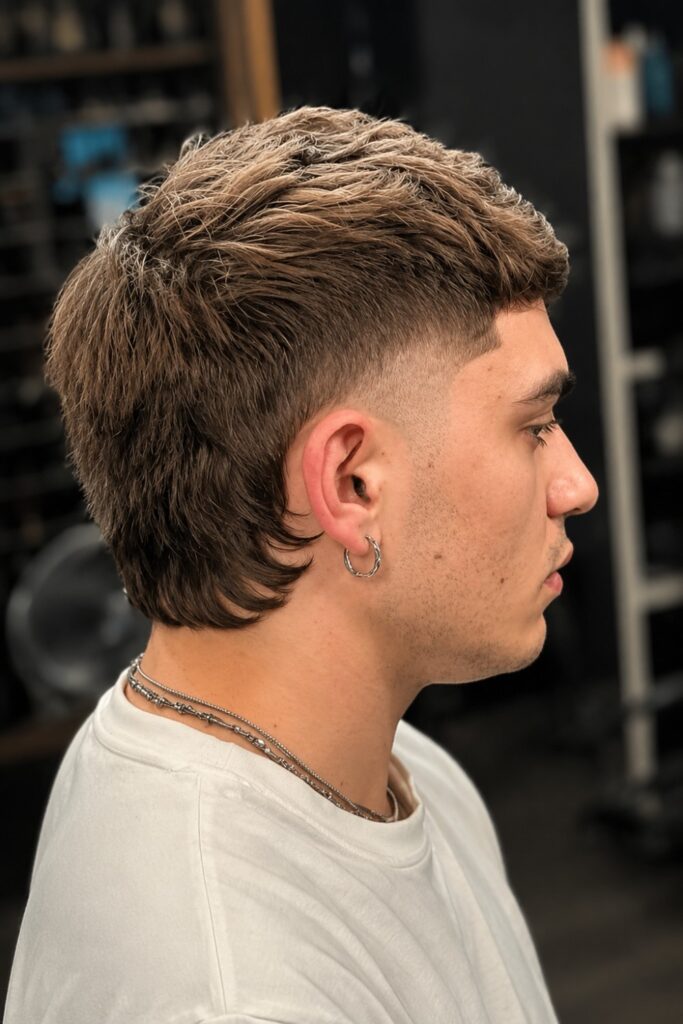
Tapered Mullet with Blended Sides
A mullet with a low or mid taper on the sides that fades gently to shorter length without reaching skin, the top at medium texture, and the back at a moderate length below the collar. Apex Haircuts May 2026 specifically confirms the taper mullet as working great for thin hair, with blended sides creating cool dimension.
A taper on thin hair produces a significantly more flattering result than a fade. The graduated blend preserves some hair coverage on the sides throughout the transition rather than exposing a band of scalp. Blended sides also make the top section appear denser by contrast without a dramatic length difference between the two zones.
Apex Haircuts recommends styling with a round brush and adding subtle highlights for depth. Highlights placed only at the top surface and mid-section add the appearance of texture and layering without the weight of a full colour.
For the layer placement and side taper techniques that create the most volume and dimension on fine or thin hair, the long layered haircuts for men guide covers the internal layering, weight removal, and blow-dry approaches that apply directly to building the fullest mullet structure on thin hair.
 Save
Curtain and K-Pop Inspired Thin Hair Mullets
Curtain Mullet
A centre-parted fringe falling on each side of the forehead, the sides at a mid or low taper, and the back at mullet length. Brothers Barber confirms the curtain mullet as K-pop and Korean-inspired, giving a soft, effortless look with natural flow. It is one of the best low-maintenance mullet styles for men who want a trendy result without significant daily effort.
The curtain fringe is specifically flattering for thin hair because the centre part distributes hair evenly from the middle and covers more of the scalp surface with less total hair. A side part on thin hair can expose the scalp at the parting line. The centre curtain part avoids that exposure entirely.
Brothers Barber confirms the curtain mullet works best for straight or slightly wavy hair. Apply a light serum or light cream to the fringe sections on damp hair and let air dry for the most natural result.
 Save
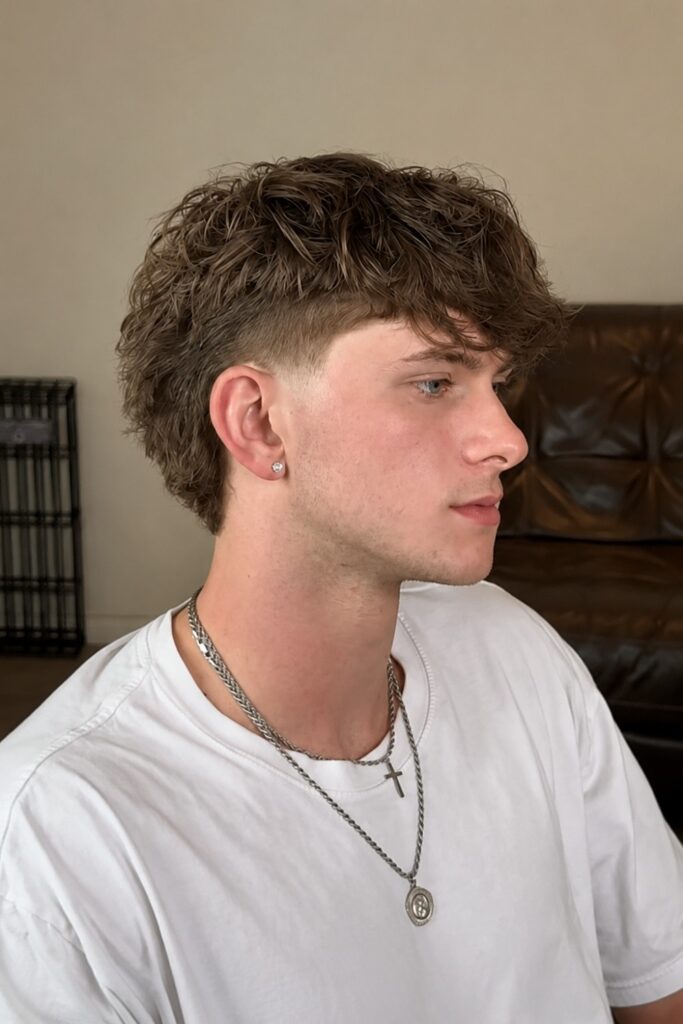
Messy Fringe Mullet
A textured, slightly forward-falling fringe with a tapered mullet behind it, the fringe styled in an irregular, loose direction rather than a precise curtain or crop line. Fabbon March 2026 names the messy tapered mullet with fringe as putting volume and movement into the top while keeping the recognisable mullet tail at the back.
For thin hair, the messy fringe approach disguises the fine density of the front section better than a smooth flat fringe. Irregular movement within the fringe creates the visual impression of more strands. A perfectly flat front section on thin hair does the opposite.
Blow-dry the fringe section toward the face first, then redirect it with the fingers in a slightly different direction while still warm. The slight misdirection within the fringe is the styling decision that produces this look.
 Save
Wolf Cut and Hybrid Thin Hair Mullets
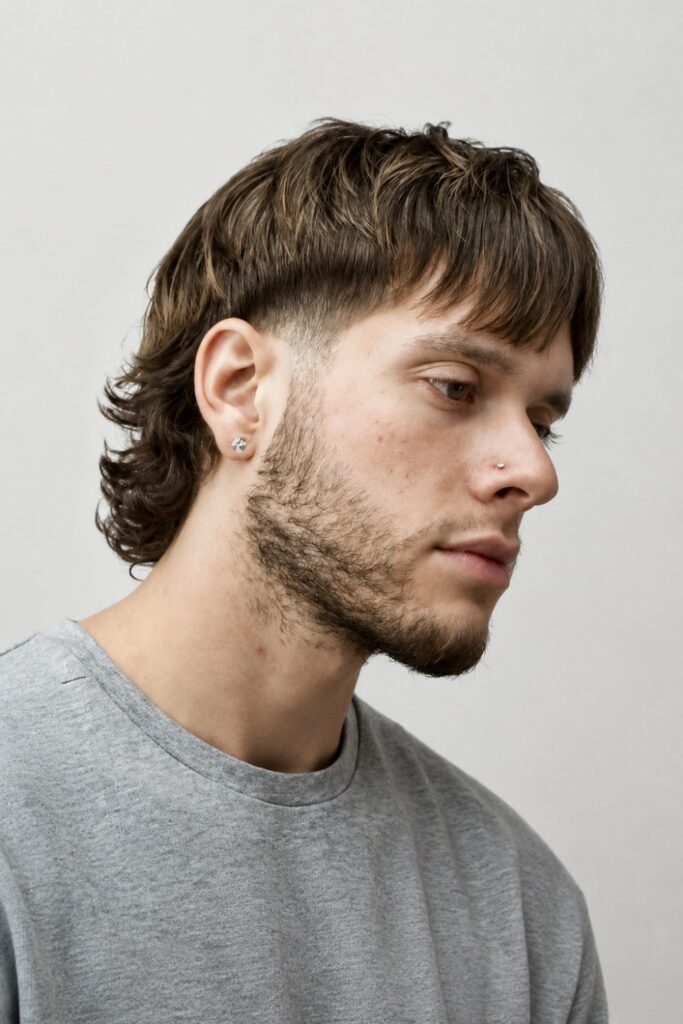
Wolf Cut Mullet
A hybrid combining choppy face-framing layers at the front and sides with the deliberate back length of a traditional mullet, the crown section fuller, the overall shape shaggy and layered. Forte Series confirms the wolf cut mullet as a stylish mix with a fuller crown and soft layers.
The wolf cut mullet is the thin hair option that provides the most structural volume because the face-framing layers add widening effect at the cheekbones and temples. That apparent width at the head is where thin hair looks most flat. The layered structure distributes shorter face-framing pieces across the front where a fuller appearance matters most.
Forte Series confirms blow-drying the top and using sea salt spray or texture powder for natural lift. Both products provide hold with minimal weight. Never use a pomade or oil-based product on a wolf cut mullet with thin hair.
 Save
Shaggy Layer Mullet
A mullet with multiple soft layers cut throughout the full length, the layers visible as distinct lengths at the crown, mid, and back sections, the overall silhouette shaggy and deliberately undone.
Multiple layers on thin hair is the cutting technique that produces the most dramatic improvement in apparent density. Each layer sits at a different length, so the hair catches light at multiple heights and depths simultaneously. Single-length thin hair catches light at one flat plane. Layered thin hair catches light at five or six depths and reads as textured and full.
Ask your barber for significant internal layering with the longest layer at the mullet back and progressively shorter layers moving forward to the crown. The shortest layer at the crown is what produces the volume at the top that thin hair cannot generate without structural support from the cut.
 Save
Fade and Structured Thin Hair Mullets
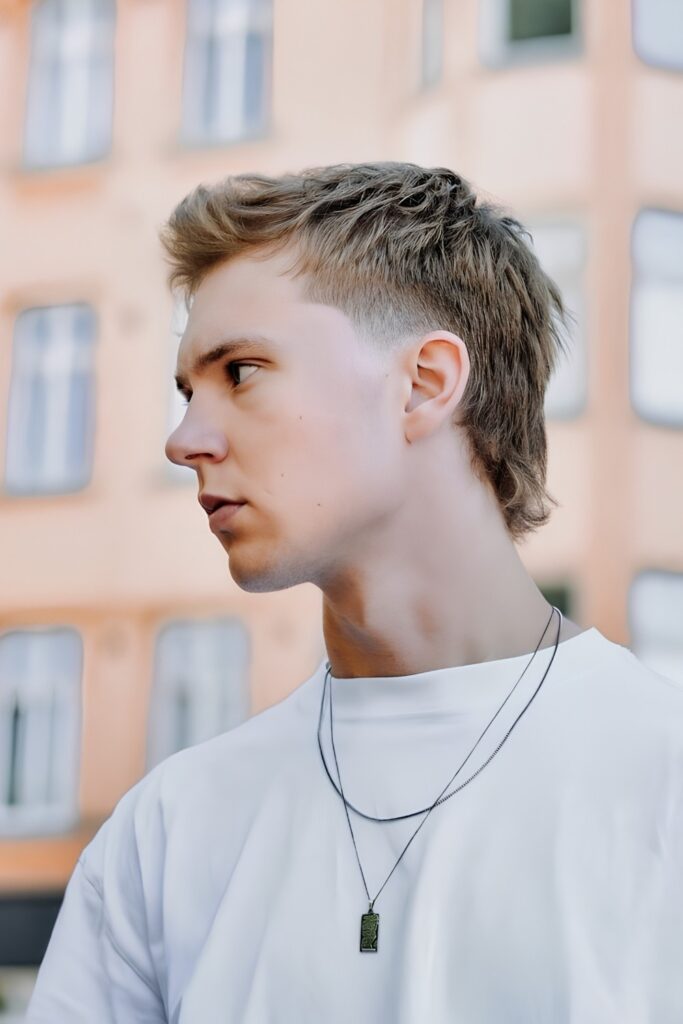
Low Taper Fade Mullet
A low taper fade on the sides that fades only near the ears and neckline rather than climbing to a mid or high fade, the top at moderate texture, and the back at mullet length. HairLovez (two days ago) confirms the low taper mullet as genuinely low maintenance while still reading as intentional and current.
For thin hair, keeping the fade as low as possible is the most important instruction to give your barber. A low fade restricts the transition to the lower ear and neckline zone, preserving enough coverage on the upper sides to prevent visible scalp exposure. The clean taper at the neckline also makes the mullet back length appear intentional rather than simply overgrown.
For the face shape and taper height considerations that determine the most flattering fade and mullet proportions for different head shapes, the haircuts for men with round faces guide covers the fade heights, side lengths, and top proportions that suit different facial structures, applicable directly to choosing the right mullet taper for your face shape.
 Save
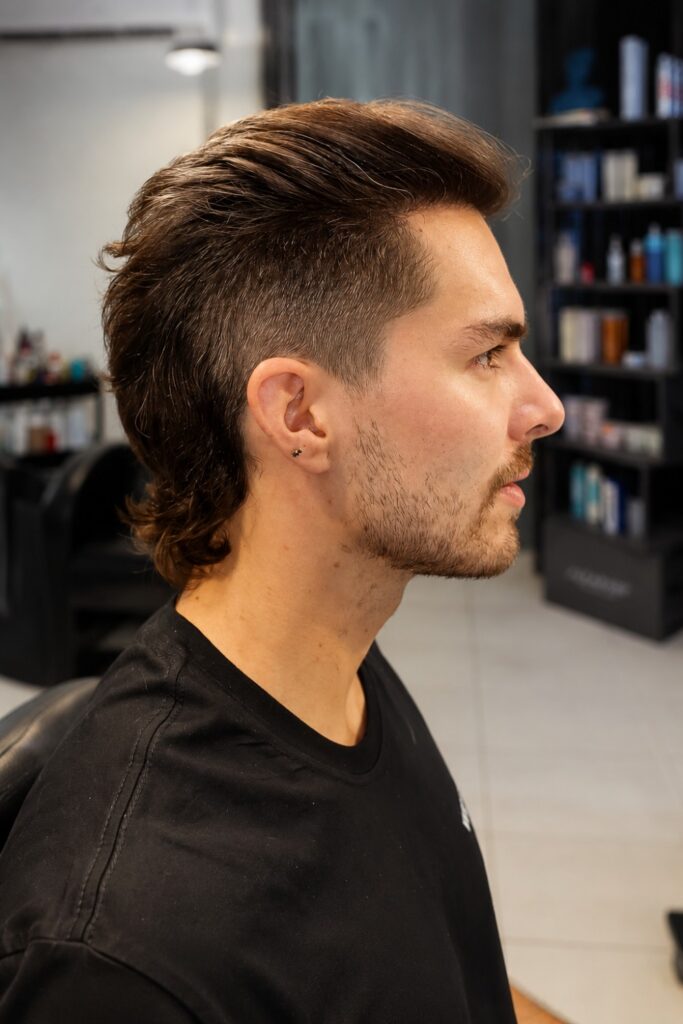
Burst Fade Mullet
A fade that curves around the ear in a semicircular burst pattern rather than graduating straight up the side, keeping the back length fully intact while the fade curves dramatically behind and below the ear. Brothers Barber confirms the burst fade mullet adds sharp and modern contrast without looking too extreme.
On thin hair, the burst fade works better than a standard skin fade because the curved transition draws the eye to the shape of the fade itself rather than the exposed scalp above it. The burst shape behind the ear is a deliberate graphic element that reads as a design decision. Use a low guard length at the shortest point rather than a skin fade to preserve some coverage throughout the transition.
 Save
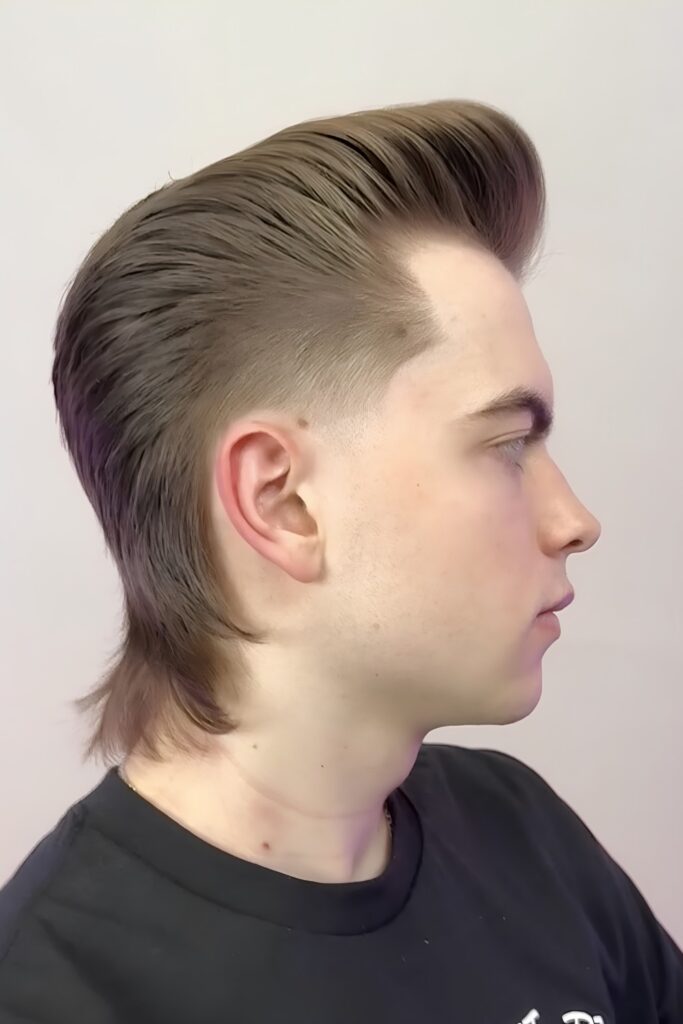
Classic Side Part Mullet
A deep side part at the front with the hair combed to one side, neatly blended sides, and a controlled mullet back that does not extend below the collar. Faxhion Tips (one month ago) confirms this classy mullet as working in most professional settings, describing it as 1950s pompadour energy meeting modern barbering technique.
A side part on thin hair requires careful barber discussion about the part placement. The natural part, where the hair naturally divides, is always the most flattering position for thin hair because the hair falls in its natural direction rather than against it. Forcing a part against the natural growth on thin hair creates a visible gap at the part line.
For the professional mullet and blended side lengths that suit a workplace environment, the professional business hairstyles guide covers the lengths, side proportions, and styling approaches that keep any mullet variation within a professional and workplace-appropriate register.
 Save
Colour and Finish Approaches for Thin Hair Mullets
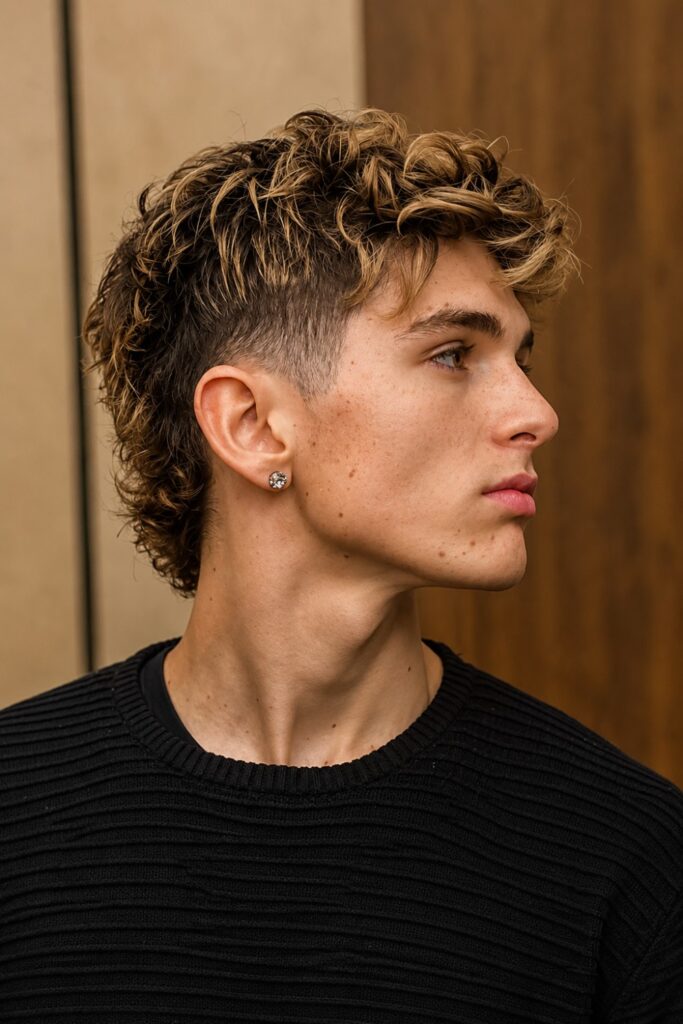
Subtle Highlight Mullet
A standard thin hair mullet in the natural hair colour with subtle highlights placed only at the surface layer of the top and crown. The highlights add the appearance of depth and texture without the weight or maintenance commitment of a full colour.
Andre Hill, colorist and stylist at Blackline Barbers LA, confirmed to Fabbon March 2026 that two-tone colouring draws attention to the silhouette of a mullet cut rather than to the hair’s density. On thin hair a subtle version of this principle applies: surface highlights redirect the eye to the texture of the cut. That visual redirection is what thin hair benefits from most.
Ask for balayage or surface foiling at the top layer only, keeping highlights within two shades of the natural colour. Highlights too contrasting on thin hair create the opposite effect, drawing attention to the gaps between individual strands rather than the overall shape.
 Save
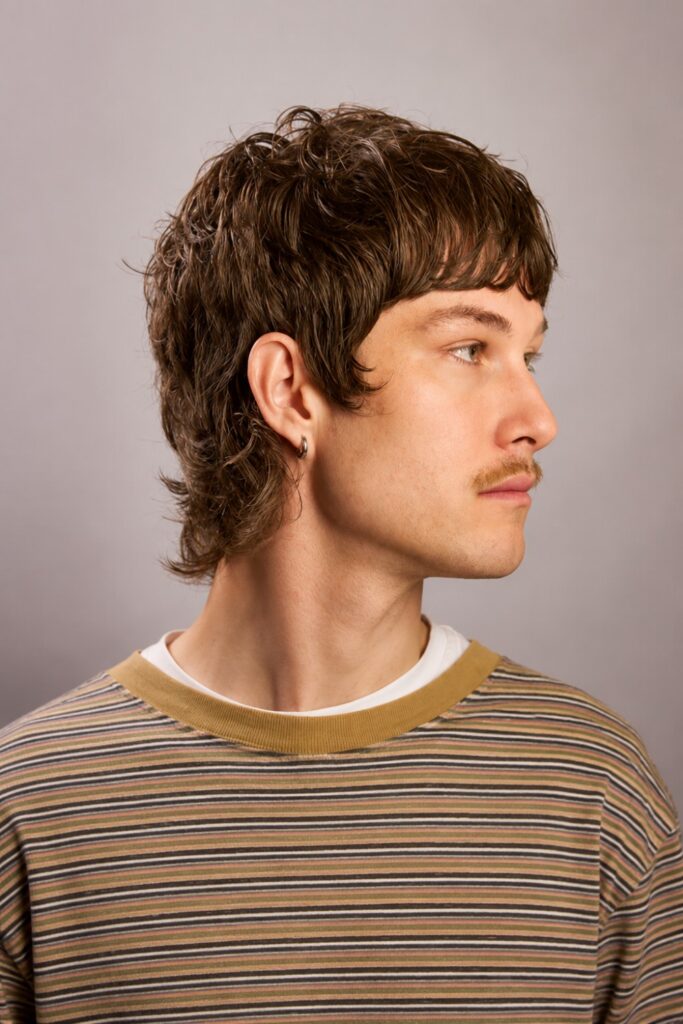
Sea Salt Texture Mullet
Any of the above mullet styles finished with a sea salt spray applied to damp hair and air-dried or diffused. The salt formula adds grip and texture to fine hair without product weight. This is the styling finish that produces the best result on thin hair across the widest range of mullet shapes.
Barberfriends March 2026 confirms sea salt spray as one of the two most popular men’s hair products of 2026 alongside matte clay. Both give texture and movement without making the hair stiff. On thin hair, the salt formula grips the shaft slightly and prevents individual strands from lying flat against each other.
Apply sea salt spray through four sections of the hair length, working it in with the fingers rather than a brush. Diffuse on low heat or let air-dry. Do not apply additional product over the sea salt finish — it achieves everything thin hair needs from a styling step on its own.
 Save
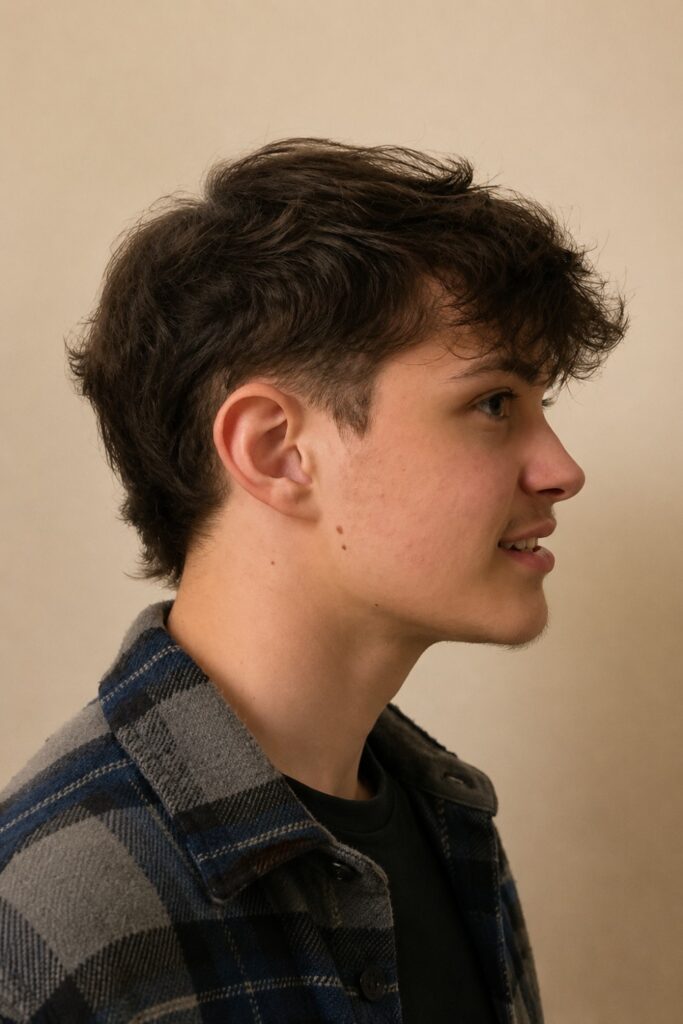
Natural Growth Pattern Mullet
A mullet shaped specifically around the natural growth direction of the individual hair, the barber following cowlicks, natural parts, and growth pattern rather than imposing a fixed shape. The result holds its form longest on thin hair because it works with the hair rather than against it.
HairLovez confirmed two days ago that more barbershops now offer a pre-cut consultation checking natural hair texture and growth pattern first. For thin hair mullets specifically, this consultation is the most valuable pre-cut step available. A mullet shaped to the natural growth pattern requires no product to maintain its basic form because the hair wants to fall in that direction already.
Ask your barber to build the mullet around your natural growth pattern rather than a specific reference photo shape. Bring the reference photo for the overall concept, but allow the barber to adjust proportions, part placement, and layer positions to suit where your hair naturally falls.
 Save
Products for Thin Hair Mullets
Matte clay is the primary product for thin hair mullets. It provides hold and separation without the shine that pomade and wax add, which draws attention to the gaps between fine strands. Apply a pea-sized amount to slightly damp hair and work through the roots first, then the mid-lengths, before touching the ends.
Texture powder shaken directly onto the roots and massaged in with the fingertips provides lift without any product residue visible in fine hair. It is the highest-lift, lowest-weight product available for thin hair and produces the most immediate visible improvement in apparent density. Use it alone on days when the mullet needs a refresh between washes.
Sea salt spray on damp hair before drying suits a thin hair mullet from casual to workplace contexts. Never use oil-based products, pomades, or heavy waxes on fine hair. All three flatten the hair shaft against the scalp within two hours and eliminate the texture the cut was designed to produce.
Frequently Asked Questions
Can men with thin hair get a mullet?
Yes. Zayn Barber, professional barber and founder of Best Haircut for Men, specifically confirms that short mullets, textured mullets, and French crop mullets work especially well for thin hair. They create the appearance of fullness through strategic layering, texture, and the right styling products. The key difference from a thick hair mullet is the cutting technique: point-cutting and internal layering add the volume that fine hair cannot provide through density alone, and a low taper rather than a skin fade keeps the sides from exposing the scalp.
What is the best mullet style for thin hair?
The textured crop mullet, the French crop mullet, and the curtain mullet are the three styles confirmed by Zayn Barber as most effective for thin hair. The tapered mullet with blended sides is confirmed by Apex Haircuts May 2026 as specifically suited to fine hair types. The wolf cut mullet is the strongest option for very fine hair as the layered shaggy structure adds apparent density at every length from crown to back.
What products should men with thin hair use for a mullet?
Matte clay, texture powder, and sea salt spray are the three products confirmed across 2026 barber sources as most effective for thin hair mullets. Barberfriends March 2026 confirms matte clay and sea salt spray as the most popular men’s styling products of 2026. Avoid pomades, oil-based waxes, and heavy hold gels on thin hair. All three flatten fine hair against the scalp and eliminate the separation and texture that make thin mullets look full rather than sparse.
Should men with thin hair get a fade or a taper for a mullet?
A taper is almost always the better choice for thin hair. A skin fade produces a visible line where the scalp shows through on the sides, drawing attention to the thinness. A low or mid taper fades more gently to shorter length, preserving coverage on the sides throughout the transition. Apex Haircuts May 2026 confirms the taper mullet as specifically suited to thin and fine hair types. HairLovez confirms the low taper mullet as genuinely low maintenance while still reading as intentional and current.
How often should you trim a thin hair mullet?
Brothers Barber confirms every three to four weeks to keep the mullet shape clean. For thin hair the trim schedule is more important than for thick hair because the thinner back section drops and loses its shape faster as it grows. A thick mullet tail at three weeks still holds shape. A thin mullet tail at three weeks sits flat and wispy against the neck. If your hair is very fine, book at three weeks rather than four for the back and neckline trim.
Final Thoughts
Thin hair mullets in 2026 are not a compromise on the style. Zayn Barber’s confirmation that short, textured, and French crop mullets work especially well for thin hair means the category is built for fine hair rather than simply tolerant of it. The cutting technique does the density work. The product does the texture work. The taper does the coverage work.
Book a barber who asks about your hair texture before cutting. Tell them your hair is fine, ask for point-cutting through the top, request a low taper rather than a skin fade, and ask them to build the shape around your natural growth pattern. Those four instructions are the complete brief for a thin hair mullet that looks intentional rather than accidental.