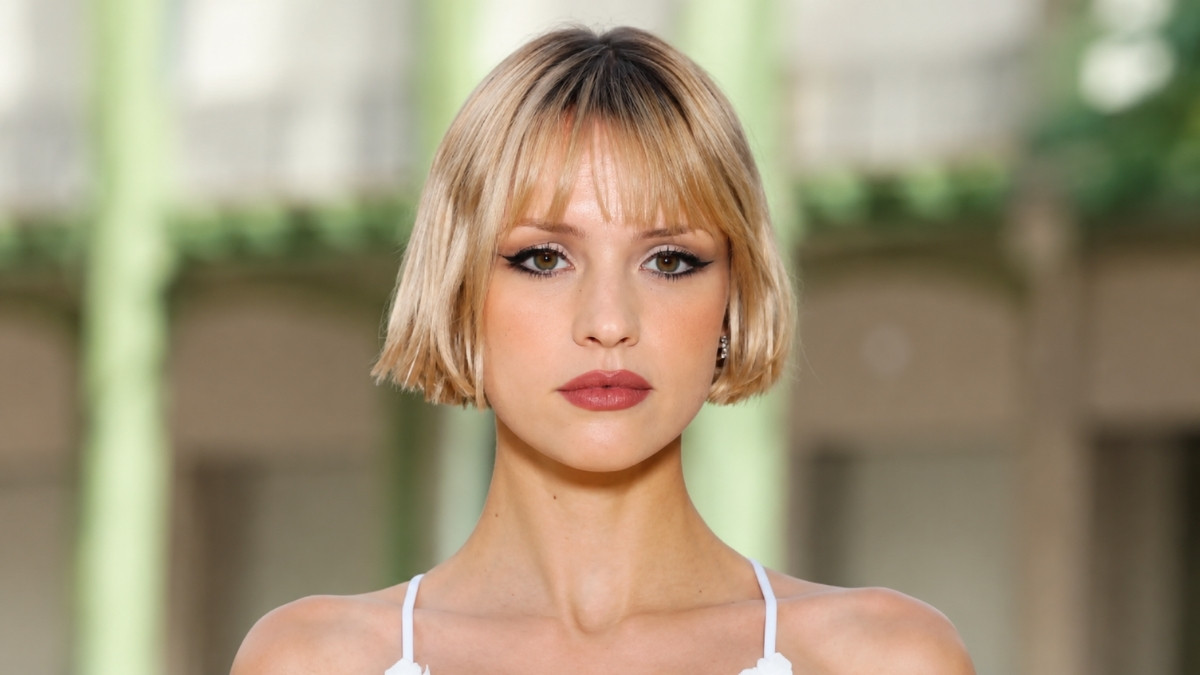
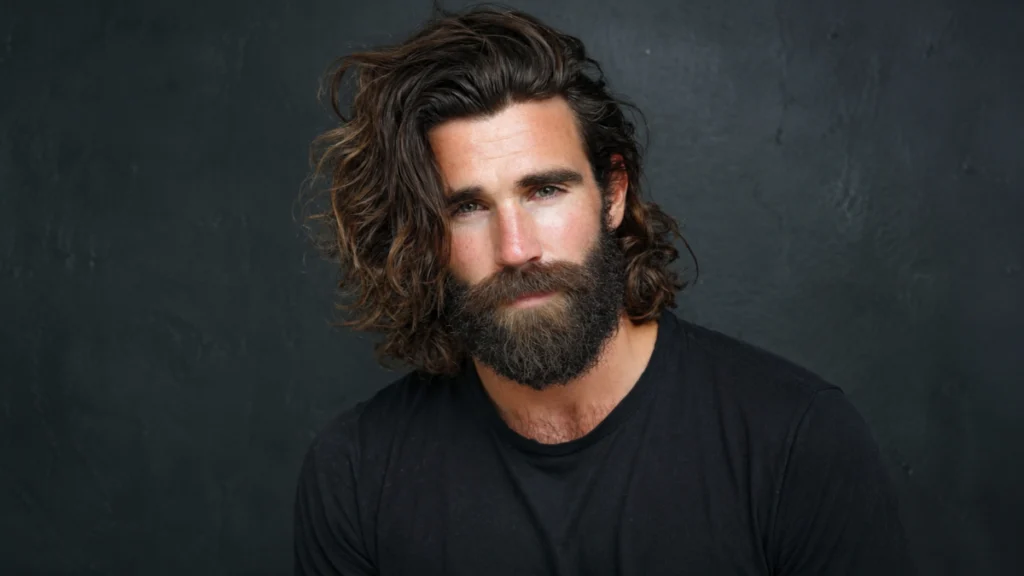
A flow haircut and beard can balance each other exceptionally well because both add visual weight around the face. The problem starts when they compete: a compact flow under a huge beard can look bottom-heavy, while very long hair with barely shaped facial hair can make the lower face feel unfinished.
Fashionuer’s Flow Haircuts With Bangs page focuses on fringe structure. This guide has a different job: matching the length, texture and side treatment of a flow haircut to the volume and outline of a beard.
That pairing is current in 2026. Barber coverage identifies mid-length flow and connected haircut-and-beard finishing among current requests, while contemporary flow guides repeatedly emphasize proportion: shorter facial hair keeps attention on the haircut, while a fuller beard generally needs enough hair volume above to balance the jaw.
1. Classic Bro Flow + Short Boxed Beard
Keep medium hair swept naturally backward with connected length around the ears. Pair it with a short boxed beard that follows the jaw without adding excessive width through the cheeks.
Best for: straight/wavy hair, square/oval faces, everyday polished style.
 Save
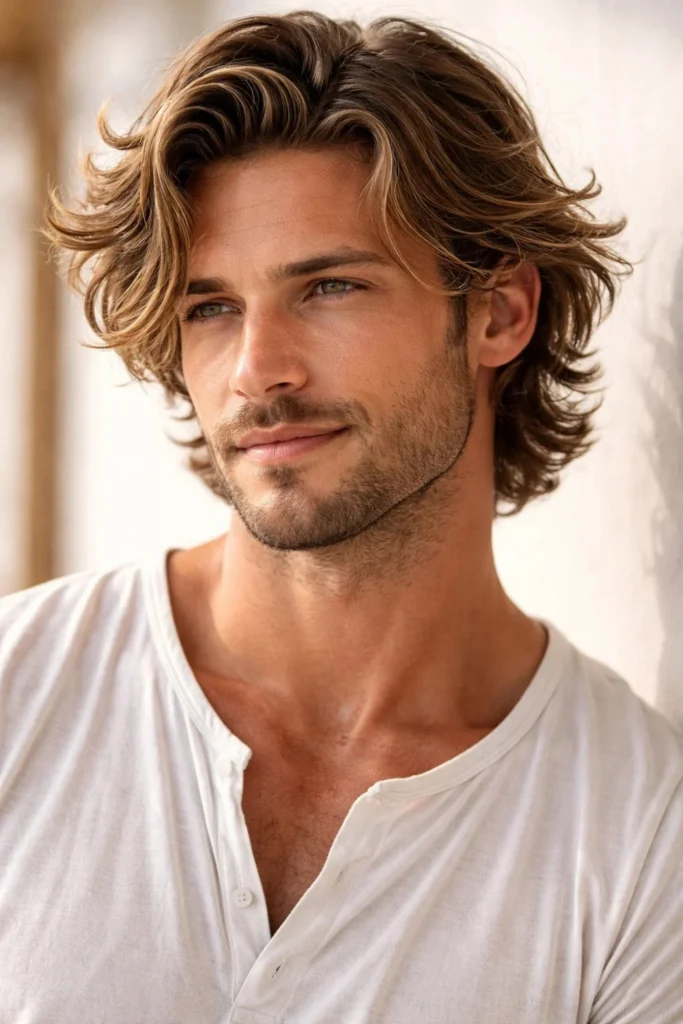
2. Wavy Flow + Designer Stubble
Let natural waves provide most of the hair volume and keep the facial hair to even designer stubble. Clean the neckline so the stubble reads deliberate rather than simply unshaven.
Best for: 2A–2B waves, men wanting low beard maintenance, strong jawlines.
 Save
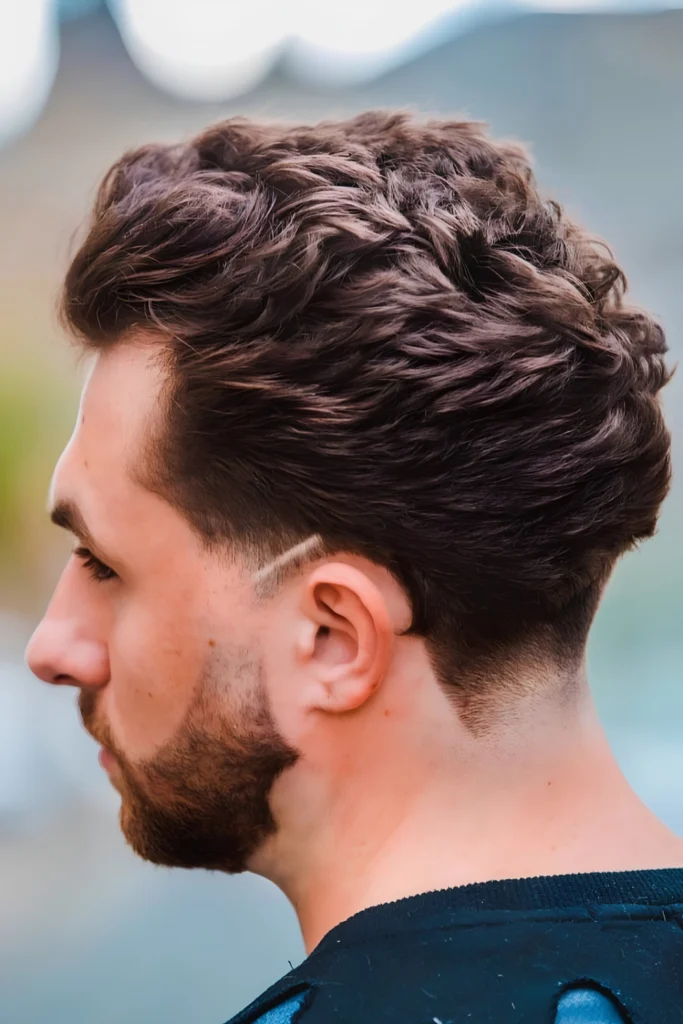
3. Textured Flow + Tapered Beard
Point-cut the medium flow for separated movement, then taper the beard from shorter sideburns and cheeks toward slightly more length at the chin. Keep the transition around the sideburn clean.
Best for: thick hair, round/oval faces, modern barbered styling.
 Save
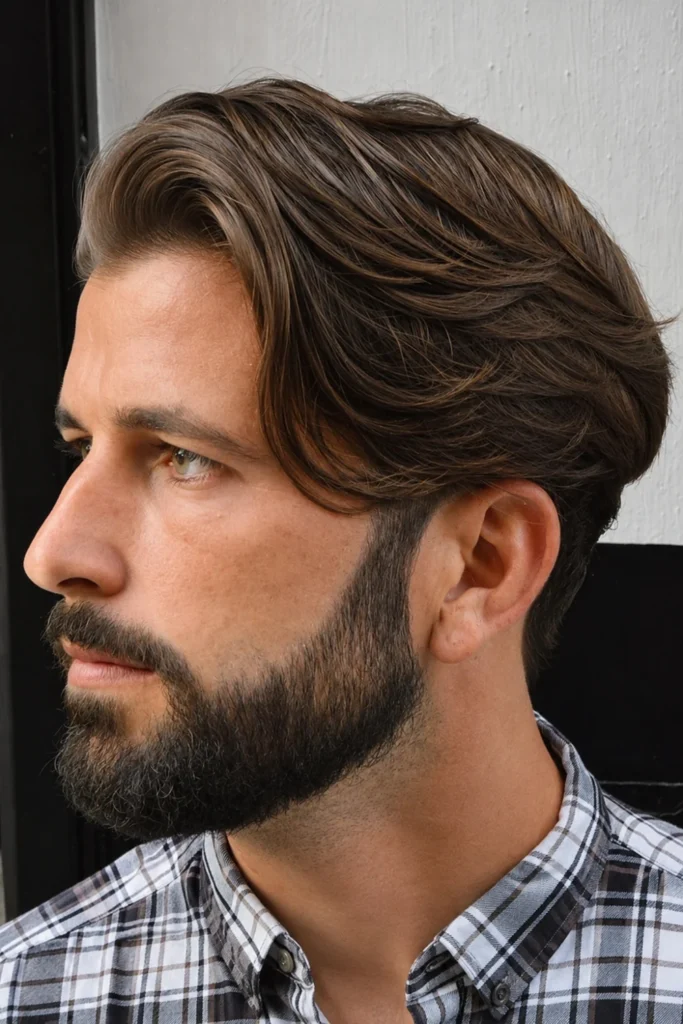
4. Side-Part Flow + Full Groomed Beard
Use a soft side part to open one side of the face and direct the heavier section backward. Keep the full beard shaped at the cheeks and neck so its density looks intentional beside the flowing hair.
Best for: thick straight/wavy hair, full beard growth, mature styling.
 Save
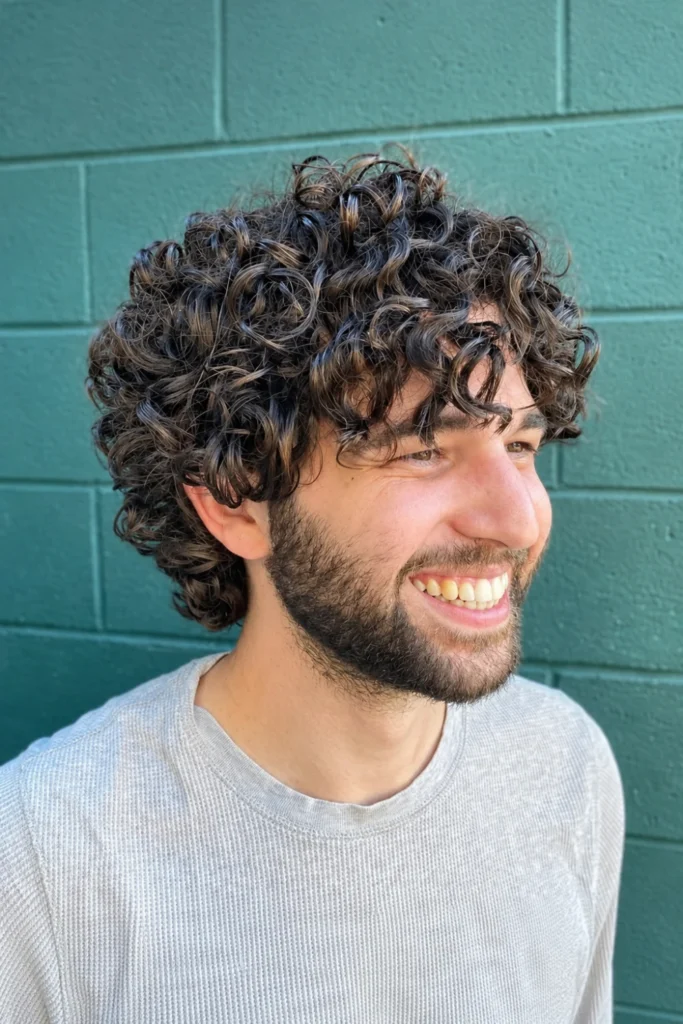
5. Curly Flow + Short Beard
Preserve loose curls through the top and sides so they can move backward, then keep the beard compact. A shorter beard prevents the combination of curl volume above and facial-hair volume below from overwhelming the face.
Best for: loose curls, medium beard density, natural-texture styling.
 Save
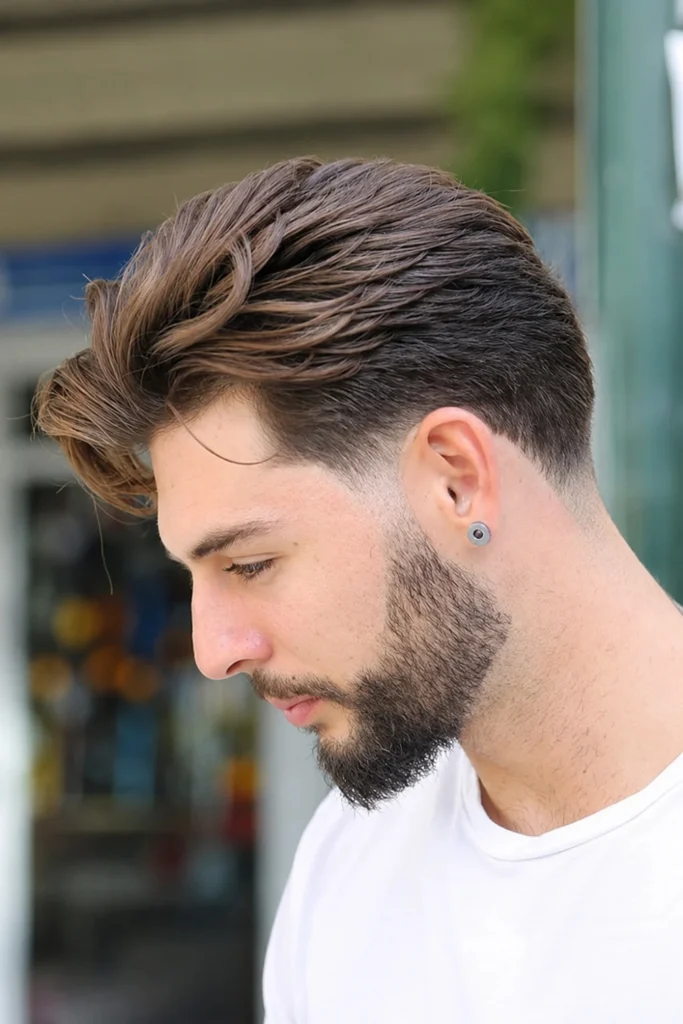
6. Low-Taper Flow + Connected Beard
Use a low taper at the temple and sideburn so the medium flow transitions gradually into facial hair. Keep the beard medium-short and let the taper act as the bridge between the two.
Best for: dense hair, connected beard growth, men wanting clean edges.
 Save
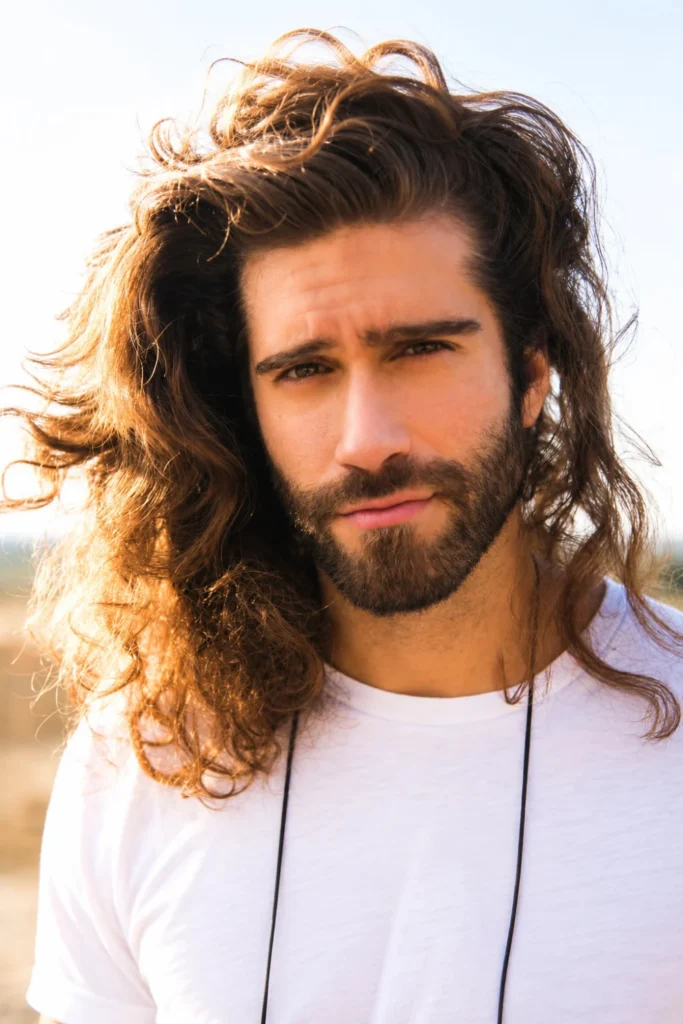
7. Long Wavy Flow + Thick Beard
Keep enough length and broad movement in the hair to visually balance a dense beard. Shape the beard’s cheek and neckline and remove unnecessary side bulk if the face becomes too wide.
Best for: thick wavy hair, strong beard growth, rugged long-hair styling.
 Save
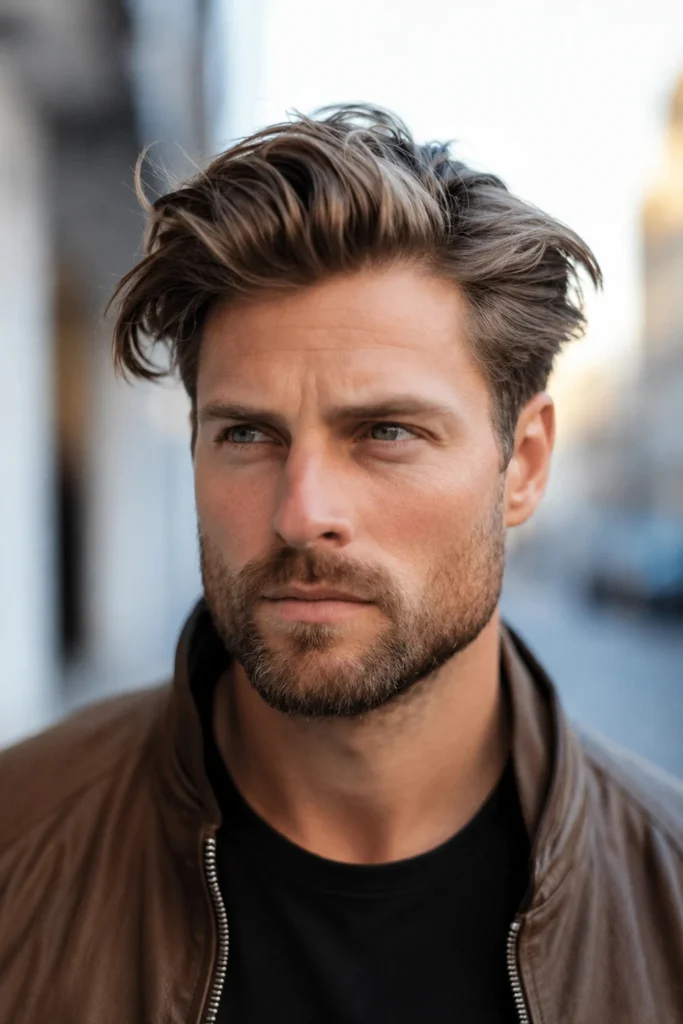
8. Brush-Back Flow + Heavy Stubble
Finger-brush medium hair backward with flexible product and pair it with heavier stubble rather than a full beard. The contrast keeps the haircut polished while the facial hair adds texture.
Best for: straight/2A hair, low-maintenance beard routines, casual-professional wear.
 Save
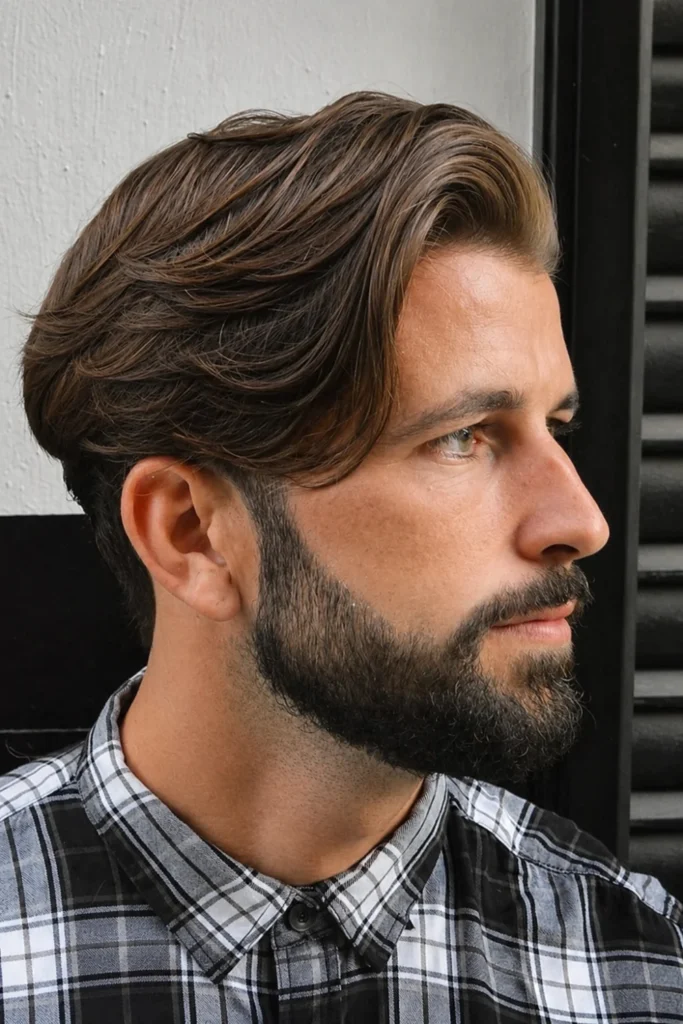
9. Curtain Flow + Tapered Full Beard
Open the front through a loose center part and let both sections flow backward. Taper the beard near the sideburns before allowing more density toward the jaw and chin.
Best for: straight/wavy hair, fuller beards, men wanting face-framing hair.
 Save
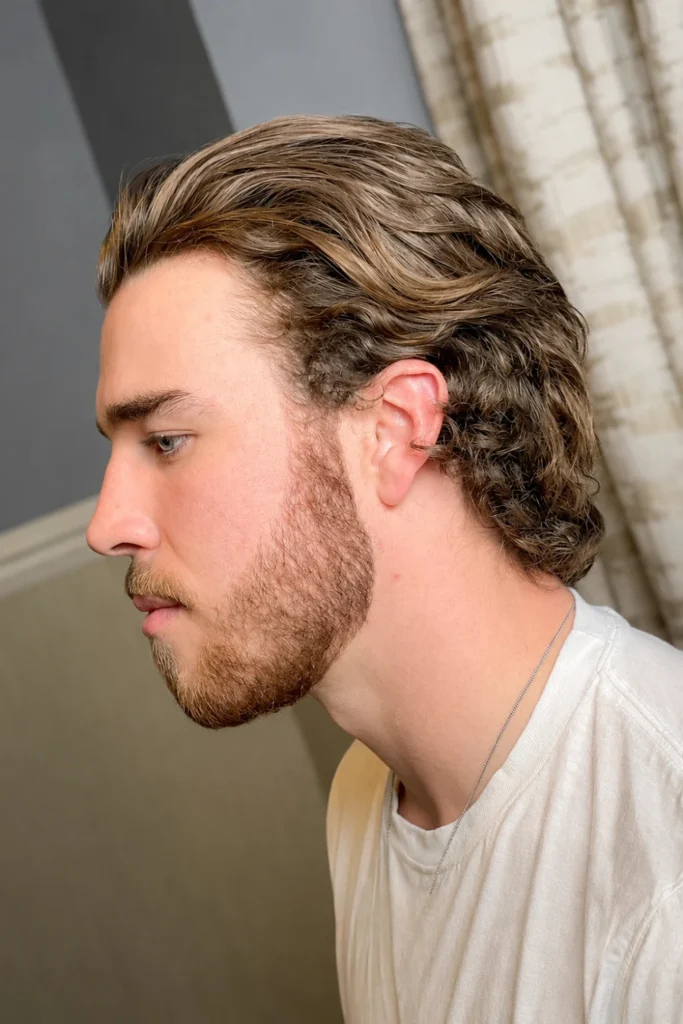
10. Hockey Flow + Short Beard
Preserve the medium rear kick and movement of hockey flow while keeping the beard short and neat. The shorter facial hair stops the overall look from becoming visually heavy at both ends.
Best for: straight/wavy hair, sporty styling, active lifestyles.
 Save
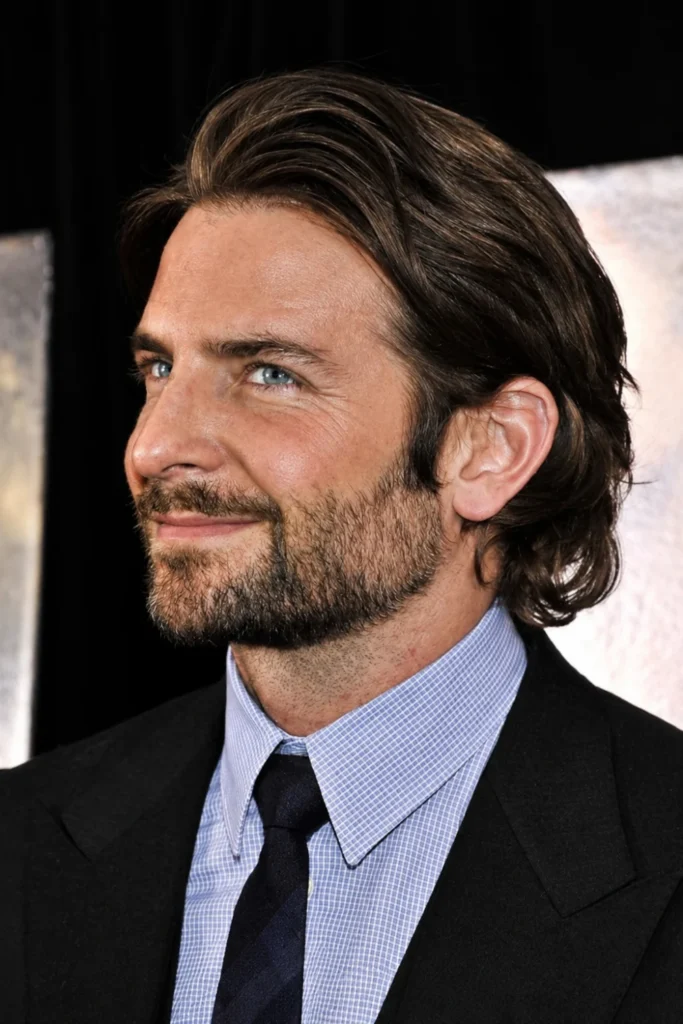
11. Professional Flow + Corporate Beard
Control the flow around the ears and neckline without removing its movement. Pair it with a neatly maintained short-to-medium beard, avoiding extremely sharp drawn-on lines if that is not your normal style.
Best for: offices, client-facing work, business-casual wardrobes.
 Save
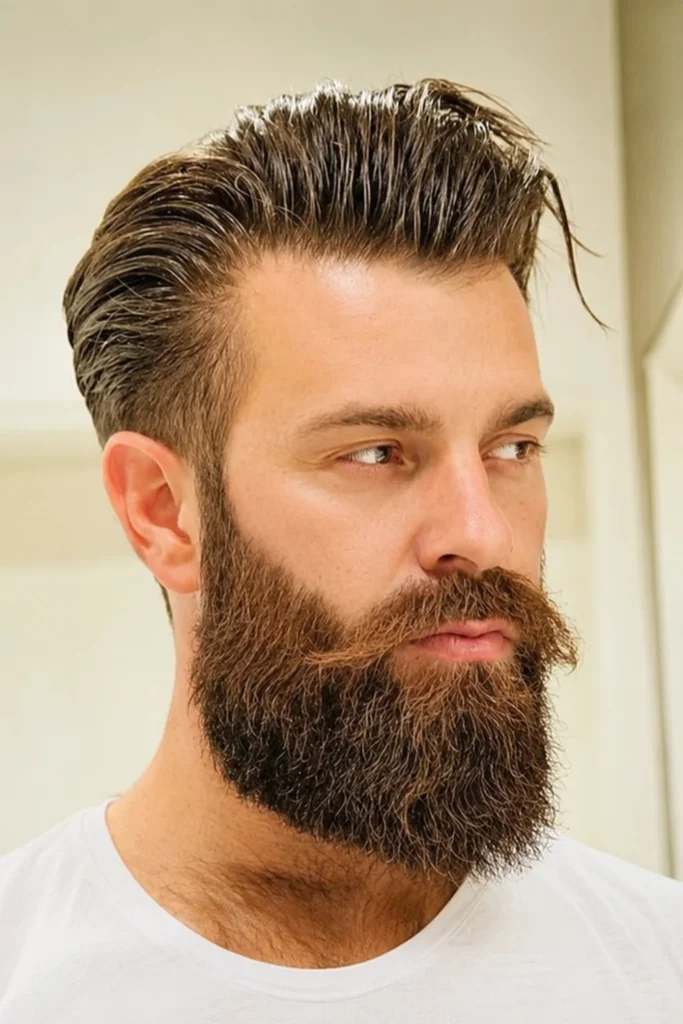
12. Voluminous Flow + Ducktail Beard
Use broad crown and side volume in the flow, then shape the beard so it narrows toward a modest point at the chin. Keep cheek bulk controlled so the silhouette gains length rather than width everywhere.
Best for: round/square faces, thick hair, strong chin growth.
 Save
13. Fine-Hair Flow + Light Stubble
Preserve density with restrained layering and lightweight styling. Keep facial hair to light or medium stubble so a dark, bulky beard does not visually overpower a finer flow.
Best for: fine straight/wavy hair, lighter beard density, understated styling.
 Save
14. Thick-Hair Flow + Medium Beard
Remove internal bulk selectively from dense hair while keeping the outer flow full. Pair it with a medium beard whose cheek area is shaped rather than allowed to expand unchecked.
Best for: very thick hair, medium/full beard growth, balanced volume.
 Save
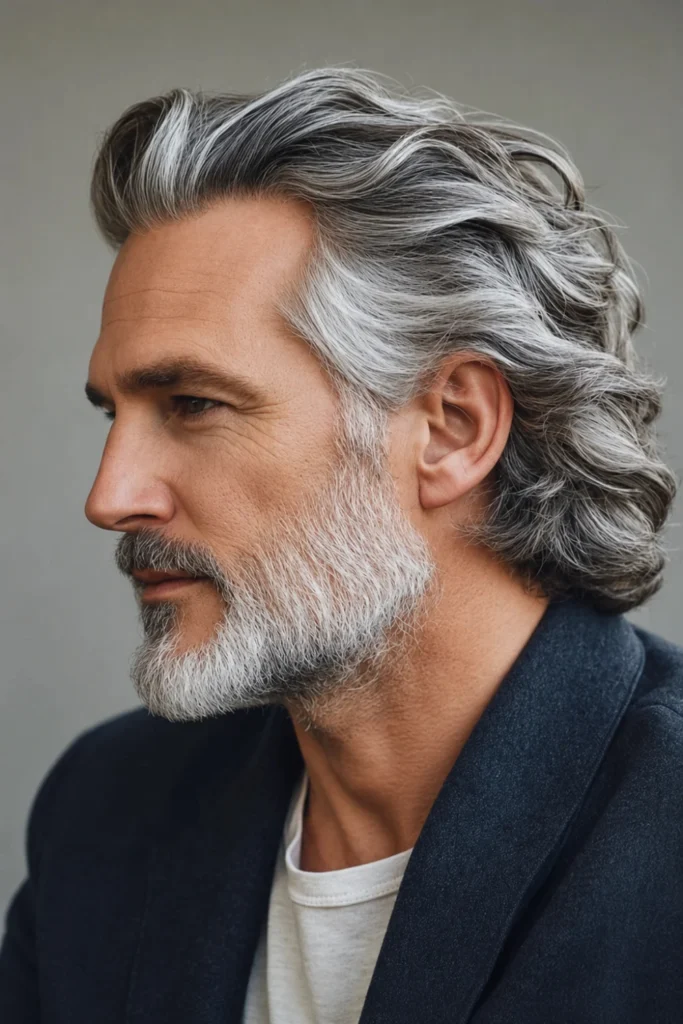
15. Salt-and-Pepper Flow + Mature Beard
Keep gray or salt-and-pepper hair in a controlled medium flow and coordinate it with a similarly tidy beard. Let natural color variation show instead of trying to make hair and beard artificially identical.
Best for: mature men, gray hair, professional or relaxed styling.
 Save
Quick Guide: Balance Flow Length With Beard Weight
| Beard weight | Strong pairings | Hair priority | Beard priority |
| Stubble | Wavy, brush-back, fine flow | Visible movement | Even density |
| Short beard | Bro, curly, hockey | Keep flow focal | Clean outline |
| Tapered beard | Textured, curtain, low taper | Connected sides | Smooth sideburn transition |
| Medium beard | Thick flow, professional | Enough top width | Control cheek bulk |
| Full/thick beard | Side-part, long wavy | More hair volume | Defined neck/cheeks |
| Pointed beard | Voluminous + ducktail | Broad crown | Chin length without side bulk |
Why Flow and Beard Proportion Matters
Contemporary flow guides consistently emphasize balance. Short beards or stubble keep visual attention on the haircut, while fuller beards generally pair better with enough hair length and volume to prevent the lower face from dominating.
That does not mean a formula based only on inches. Face shape, beard density, curl pattern and where your hair naturally expands all affect the final balance.
Connect the Sideburns or Keep Them Separate?
A low taper can create a clean transition from longer flow into a beard, particularly when both are dense. Scissor-cut sides can also connect naturally without exposing skin.
If your beard grows patchily near the sideburn, a deliberate separation may look cleaner than forcing a fade connection through sparse hair.
2026 Flow Hair Still Favors Natural Movement
Current 2026 flow coverage describes the haircut as medium-length hair built around natural movement, soft layering and a less engineered finish. Barber trend reporting likewise identifies mid-length flow among current men’s requests.
Use beard grooming to add structure rather than making the hair equally rigid. The flow should still move when you turn your head.
What to Tell Your Barber
Ask the barber to assess the haircut and beard together before cutting either one. Point out whether you want the flow to remain the focal point or whether you want equal visual weight from a full beard.
Useful requests include ‘keep enough flow volume to balance the beard,’ ‘taper the beard into the sideburn,’ ‘reduce cheek bulk,’ ‘keep the neckline clean,’ and ‘do not take the hair sides so short that the beard looks disconnected.’
Related Guides
Flow haircuts with bangs for men
FAQ
Does a flow haircut look good with a beard?
Yes. Medium flow can balance facial hair well, especially when the beard outline and hair volume are intentionally coordinated.
What beard works best with a flow haircut?
Short boxed beards, stubble, tapered beards, medium beards and full beards can all work. The best choice depends on hair length, density, face shape and beard growth.
Should a full beard be paired with longer flow hair?
Often, more hair volume can visually balance a fuller beard, but the exact proportion depends on your face and density. A well-shaped beard can also reduce unnecessary bulk.
Can curly flow work with a beard?
Yes. Keeping the beard shorter or tapered can balance strong curl volume, while fuller beards can work when the hair has enough length and width.
Can fine hair wear a flow haircut with a beard?
Yes. Preserve hair density with restrained layering and consider lighter stubble or a shorter beard if a very full beard visually overwhelms the hair.
Should the sideburn blend into the beard?
It can. A low taper or gradual sideburn transition creates a connected look, but a deliberate separation may be cleaner when beard growth near the sideburn is sparse.
How do I style flow hair with a beard?
Use lightweight hair product that preserves movement, then groom the beard separately with appropriate trimming and conditioning. Avoid making both hair and beard overly stiff.
What should I ask my barber for?
Ask the barber to evaluate the haircut and beard together, preserve enough flow length to balance the facial hair, and shape the beard’s cheeks, sideburns and neckline according to your desired proportion.
The Balance Test
Look at your face straight on and in profile after both the haircut and beard are finished. Does either the hair or beard dominate so strongly that the other looks undersized or unfinished?
If the eye moves naturally between the flow above and the beard below, the proportions are working. The strongest combination looks like one grooming decision rather than two separate trends.