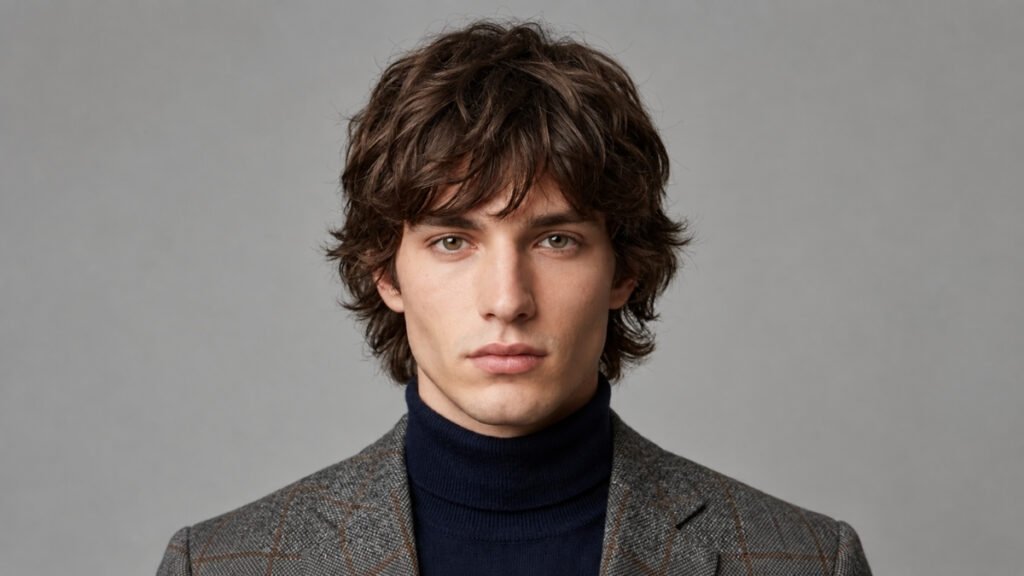
Thick hair is usually described as a gift by people who have never tried to make it lie flat at the sides. The density gives you volume, shape, and styling options, but it can also turn a medium cut into a helmet and a long cut into a curtain with its own gravitational field.
Layers are useful because they redistribute that weight. They can break up a dense surface, let waves bend instead of stacking, remove internal bulk from medium and long hair, and give the crown movement without shaving the sides down to nothing.
The goal is not to make thick hair thin. That would waste the advantage. The goal is to decide where the density looks good and where it is making the haircut harder than it needs to be.
16 Layered Haircuts for Men With Thick Hair
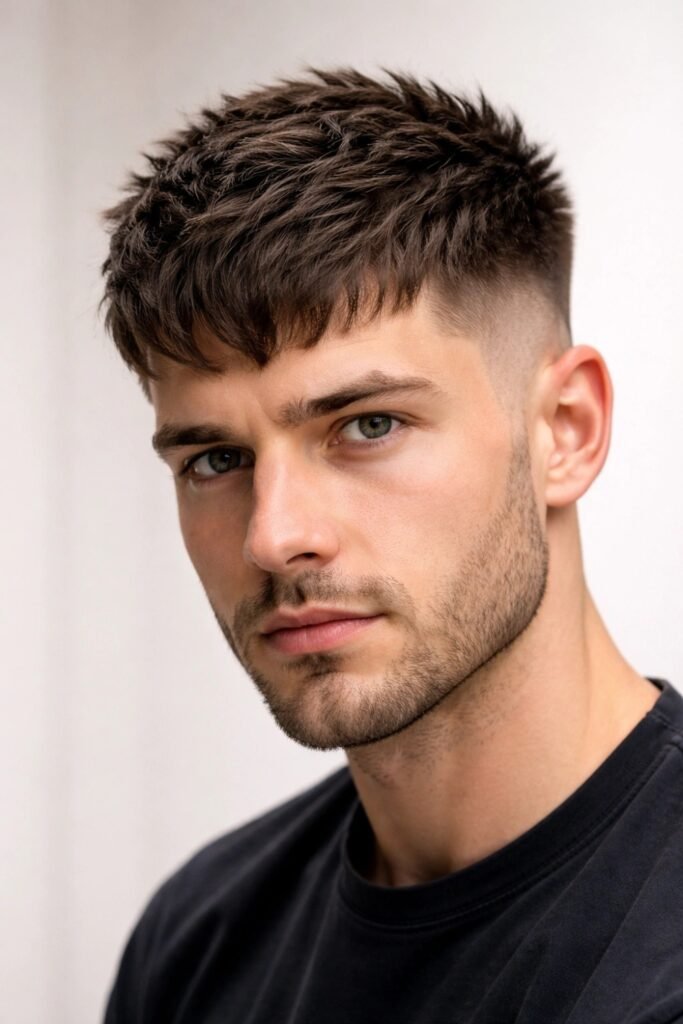
1. Short Layered Textured Crop
A short crop can feel heavy when thick hair forms one solid cap. Point-cut or scissor-cut layers through the top create separation while the outer shape stays compact.
Ask for texture without aggressive thinning. You want individual pieces to move; you do not want the barber excavating the top until daylight appears.
Best for: short thick hair, straight or slightly wavy texture, low styling time.
 Save
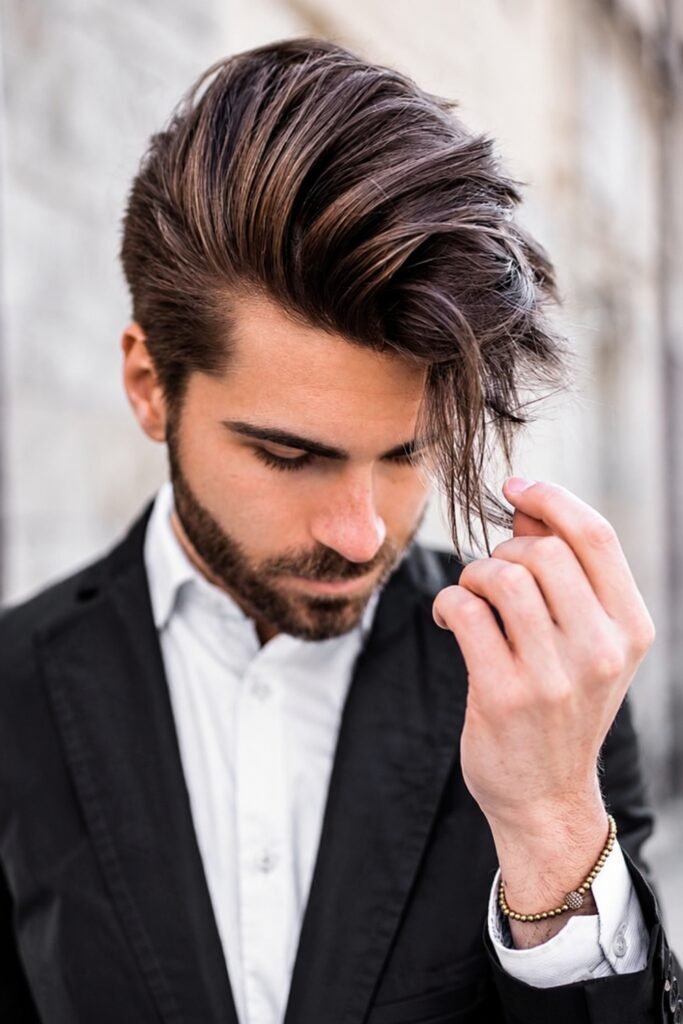
Save2. Layered Side Sweep
Thick hair becomes easier to control when the layers support one clear direction. A side-swept cut uses graduated top lengths so the hair moves diagonally rather than expanding equally in every direction.
Keep enough weight near the part so the sweep stays connected. Over-thinning can turn a strong side sweep into several lonely strands pointing east.
Best for: medium-short thick hair, straight or wavy texture, professional styling.
 Save
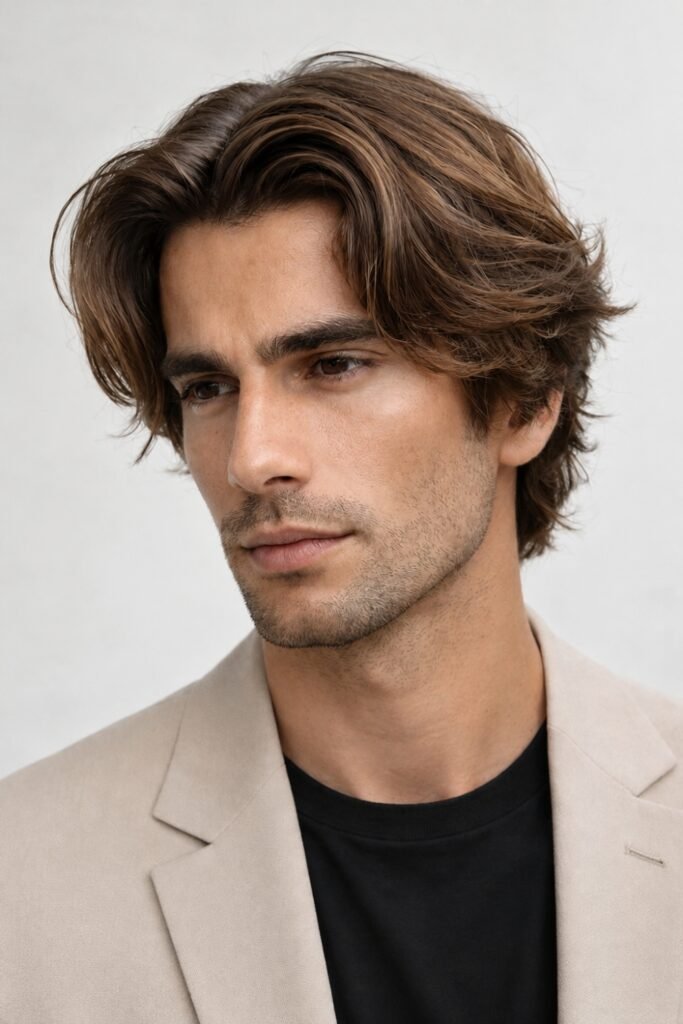
Save3. Layered Middle Part
A center part works beautifully on thick hair when the front and side layers keep both halves from hanging like solid panels. Connected graduation lets the hair bend around the face and tuck more naturally.
The layers should remove heaviness, not create a mushroom above the ears. If the sides are still exploding outward, the weight distribution needs another look.
Best for: medium thick hair, straight or wavy texture, curtain-style cuts.
 Save
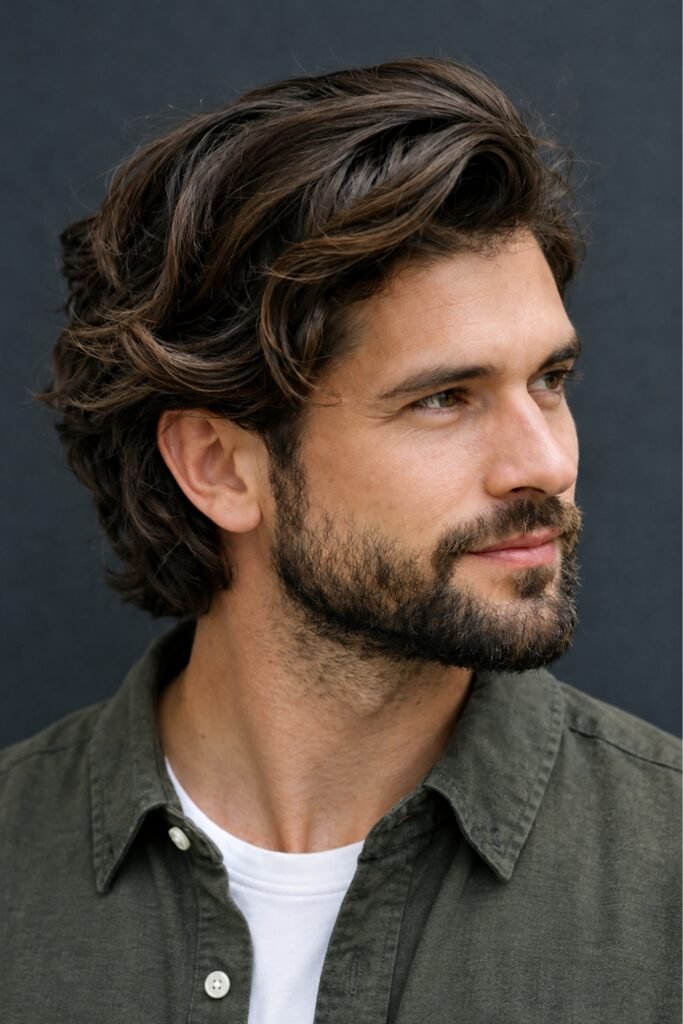
Save4. Thick Wavy Layers
Wavy thick hair already has movement; layers simply give that movement room. Internal weight removal can stop the lower sides from becoming triangular while shorter upper layers help the wave appear higher.
Do not cut every wave to a different random length and call it texture. The layers need connection or the result becomes frizz with paperwork.
Best for: naturally wavy thick hair, medium length, air-dried styling.
 Save
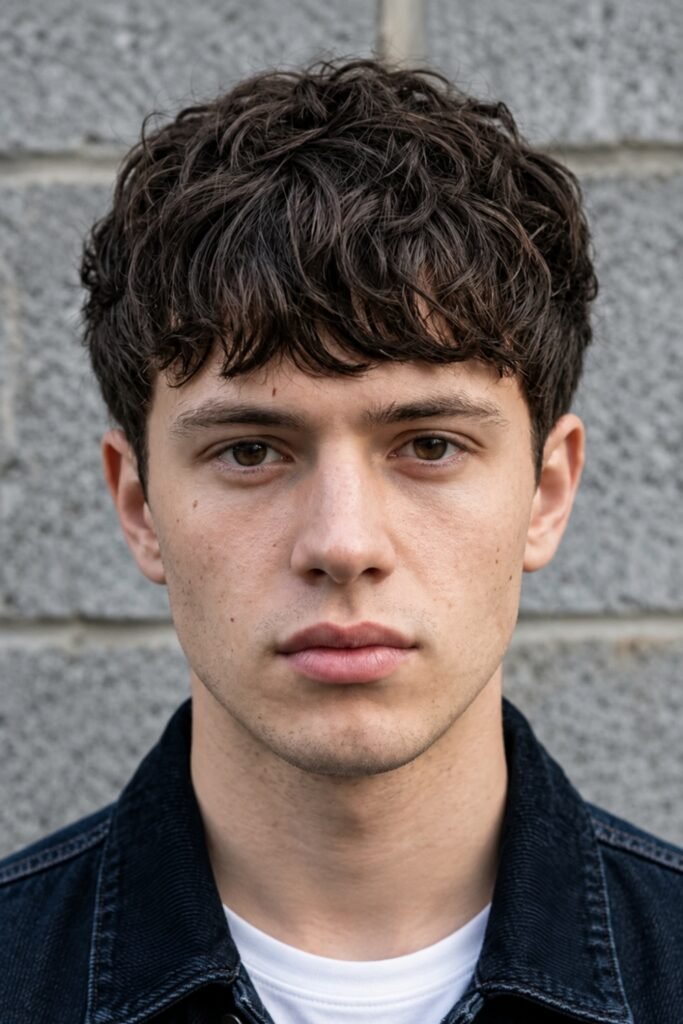
Save5. Layered Fringe
A thick fringe can become a heavy shelf across the forehead. Graduated front layers reduce that block and let sections fall at slightly different lengths.
Keep the shortest pieces long enough to behave with your growth pattern. Thick hair has enough force to make an overly short fringe stand straight up and reconsider your plans.
Best for: dense straight or wavy hair, larger foreheads, forward styling.
 Save
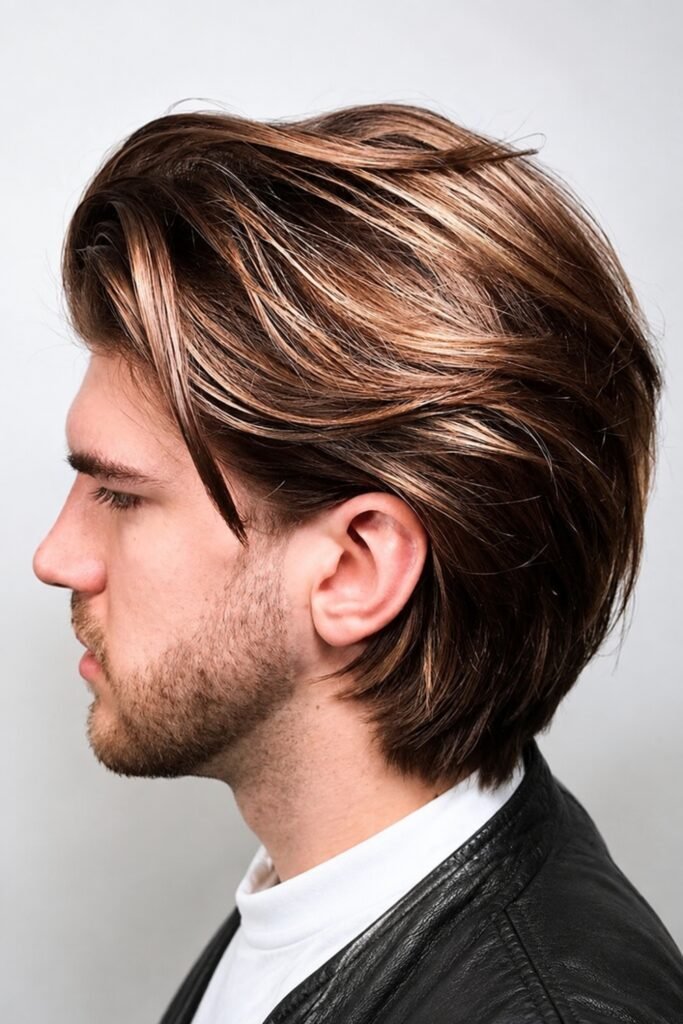
Save6. Classic Medium Layered Cut
Medium thick hair often needs less drama and better internal structure. A classic scissor cut with connected layers can reduce bulk through the crown and sides while preserving a clean, substantial outline.
This is the haircut for men who want movement without looking deliberately shaggy. The layers should be felt when the hair moves, not counted from across the room.
Best for: thick straight or wavy hair, office-to-weekend versatility.
 Save
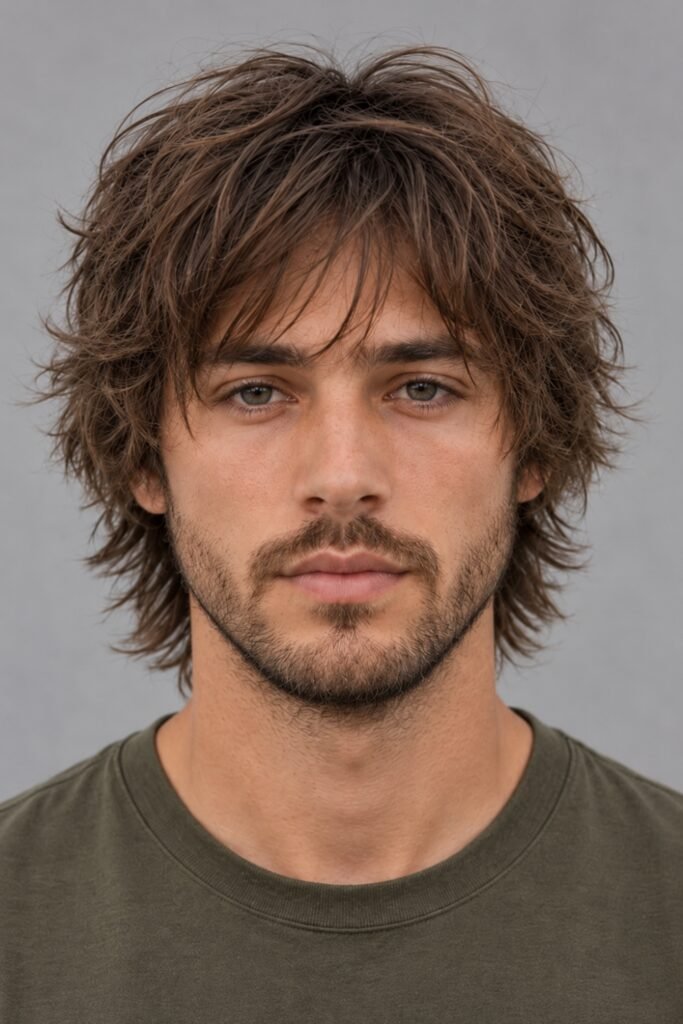
Save7. Textured Shag
A shag turns thick hair’s natural volume into the point of the cut. Shorter crown layers create lift while longer pieces through the perimeter keep the shape loose and mobile.
The danger is over-layering. If the crown becomes enormous and the ends become transparent, you have moved all the bulk upstairs instead of controlling it.
Best for: thick wavy hair, medium lengths, relaxed or alternative style.
 Save
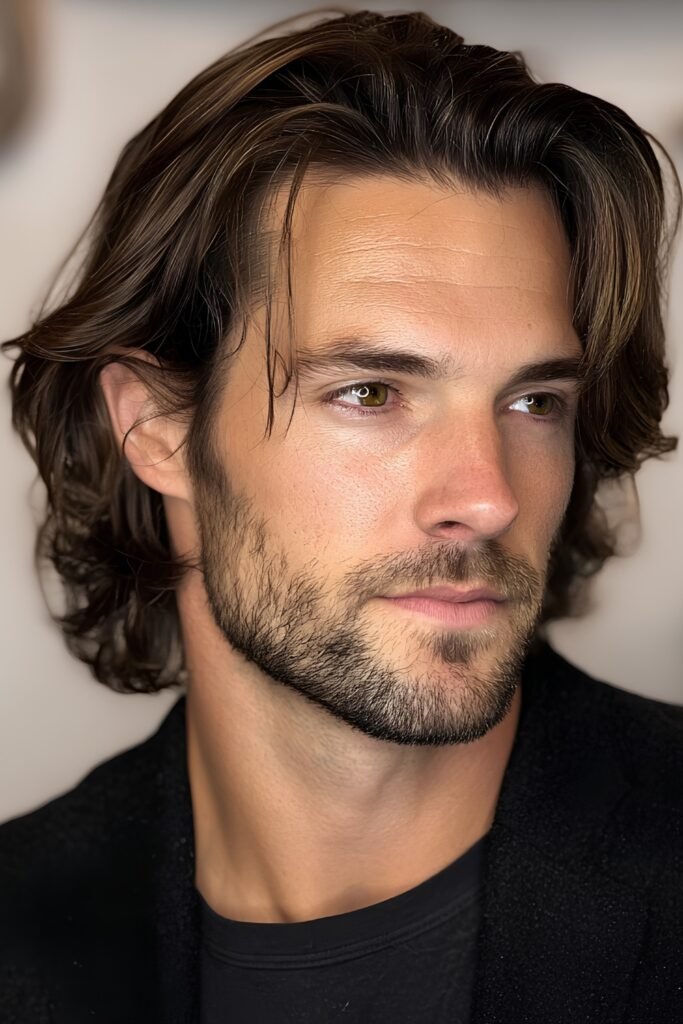
Save8. Layered Bro Flow
Bro flow needs enough length to travel away from the face, and thick hair gives it plenty of material. Long connected layers stop the sides from stacking while keeping the overall silhouette full.
The test is simple: run your hand back through it. If the hair falls into a reasonable shape afterward, the cut is working. If it stays frozen, that is a product problem.
Best for: medium-to-long thick hair, waves, men growing out shorter cuts.
 Save
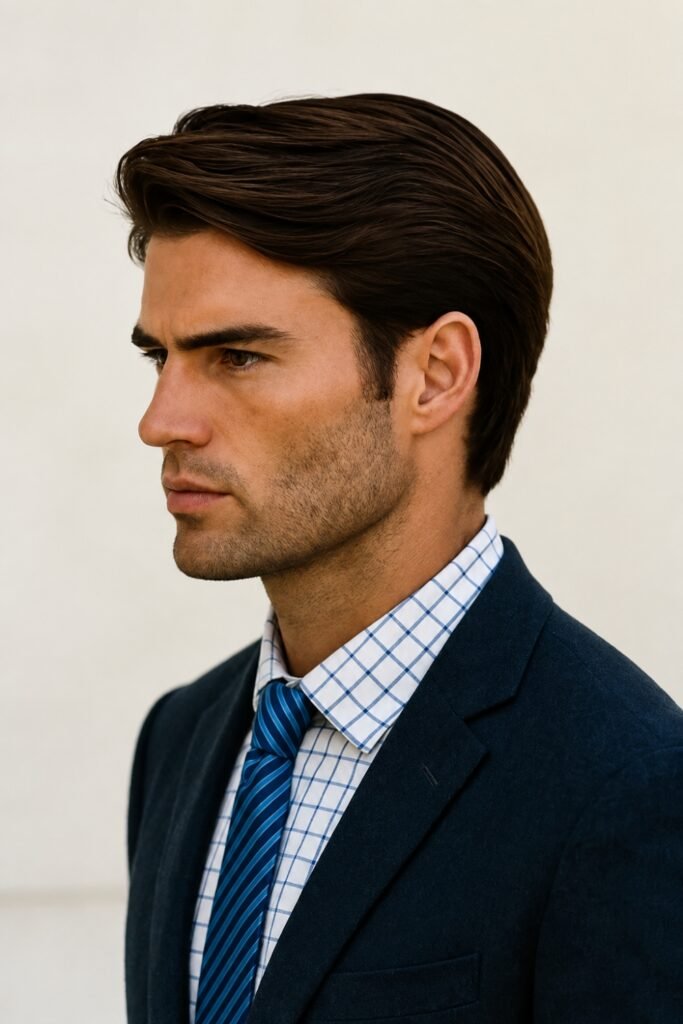
Save9. Business-Casual Layers
Subtle medium layers can make dense hair easier to part, sweep, or push back without turning it into a formal helmet. Keep the perimeter neat and the internal weight lighter.
Use a small amount of flexible cream or paste. Thick hair already brings volume to the meeting; it does not need a three-inch quiff to introduce itself.
Best for: professional settings, medium thick hair, straight or wavy textures.
 Save
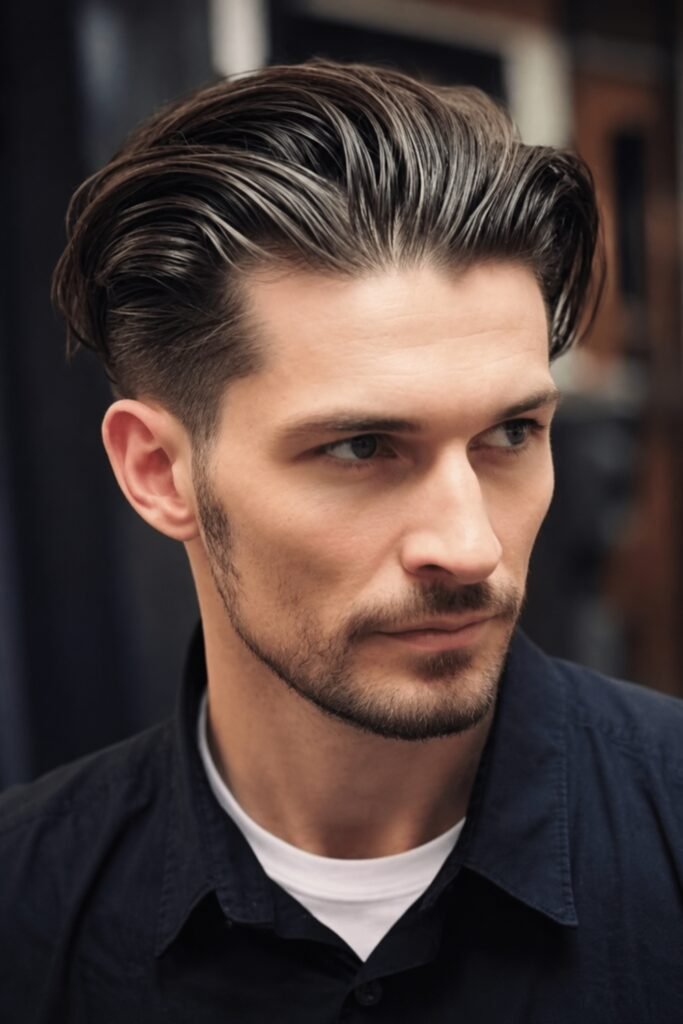
Save10. Slicked-Back Layers
Slicking dense one-length hair backward can create a heavy wall. Long internal layers allow the sections to overlap and move while still giving you a polished backward direction.
Choose flexible control over a hard wet finish. The hair should separate when it moves. If the entire top shifts as one object, you used too much product.
Best for: medium-to-long thick hair, formal styling, strong natural volume.
 Save
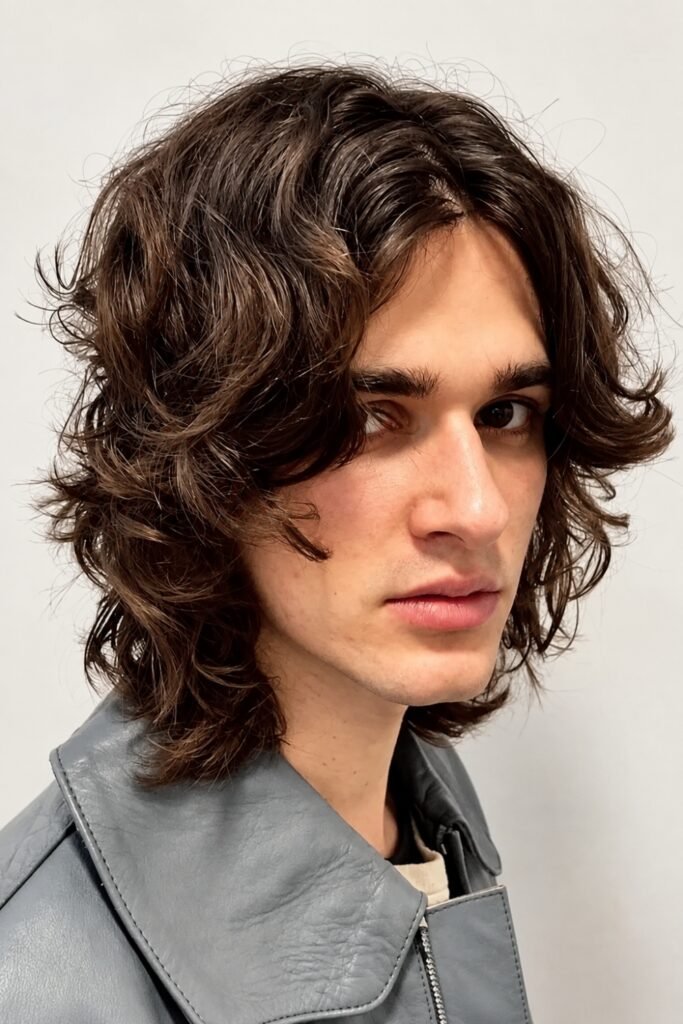
Save11. Shoulder-Length Layers
Shoulder-length thick hair can become exhausting when every strand ends at roughly the same level. Long layers remove internal heaviness and encourage movement while a fuller perimeter keeps the cut looking substantial.
Avoid aggressive razor-thinning through dry or frizz-prone hair if it leaves the ends fuzzy. Bulk control is useful; damaged-looking ends are not.
Best for: thick straight or wavy hair, shoulder length, men committed to longer hair.
 Save
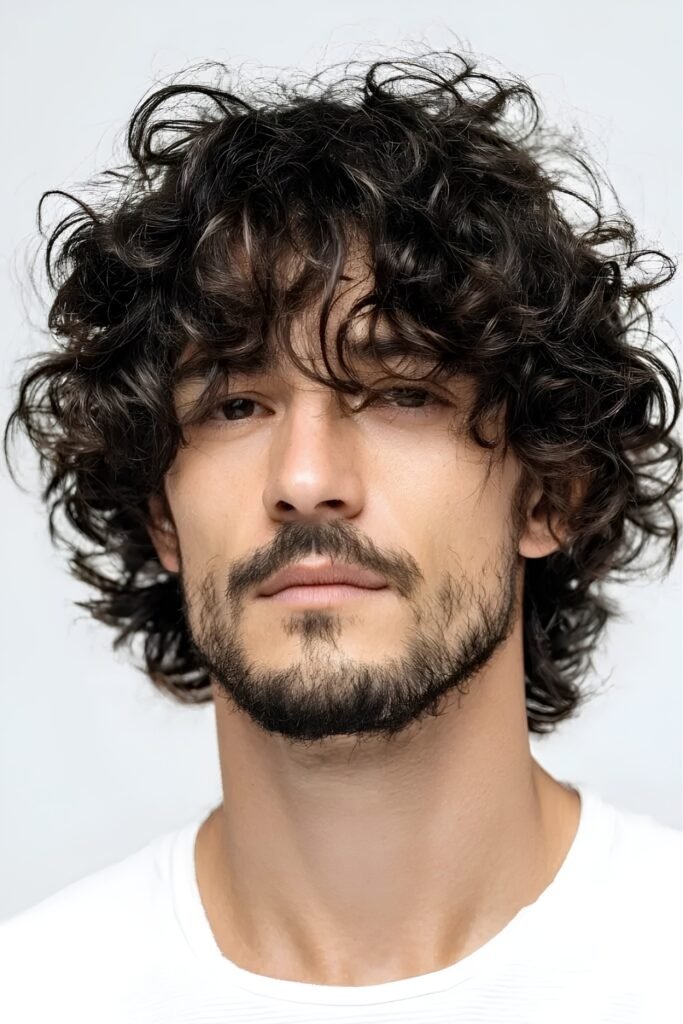
Save12. Thick Curly Layers
Dense curls benefit from layers when they distribute volume through the crown, sides, and lower perimeter. The exact lengths need to account for shrinkage and how different curl sections spring.
Do not ask to ‘thin it all out.’ Curly density supports clumping and shape. Remove the wrong weight and defined curls can become a cloud sitting over weak ends.
Best for: thick curly or coily hair, medium-to-long length, natural texture.
 Save
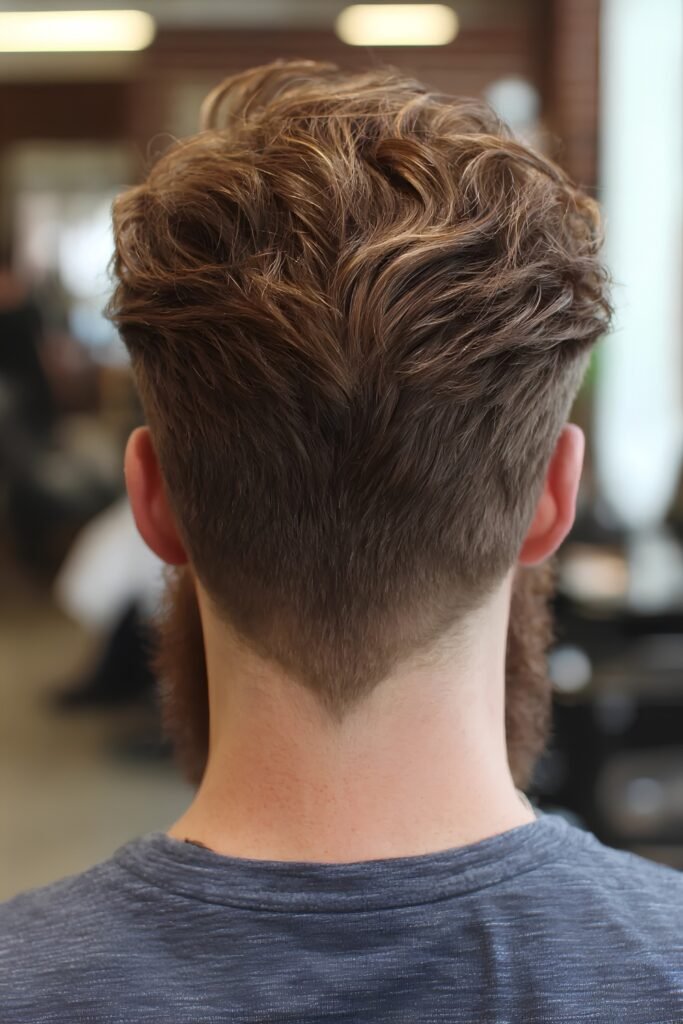
Save13. Layered V-Shape Cut
A V-shaped perimeter gives long thick hair a clear finish at the back, while layers through the upper lengths keep the cut from becoming a single dense sheet.
Keep the V proportional. An extremely sharp point with heavy side layers can make the back look like two different haircuts negotiated a ceasefire.
Best for: medium-to-long thick hair, straight or wavy texture, defined back shape.
 Save
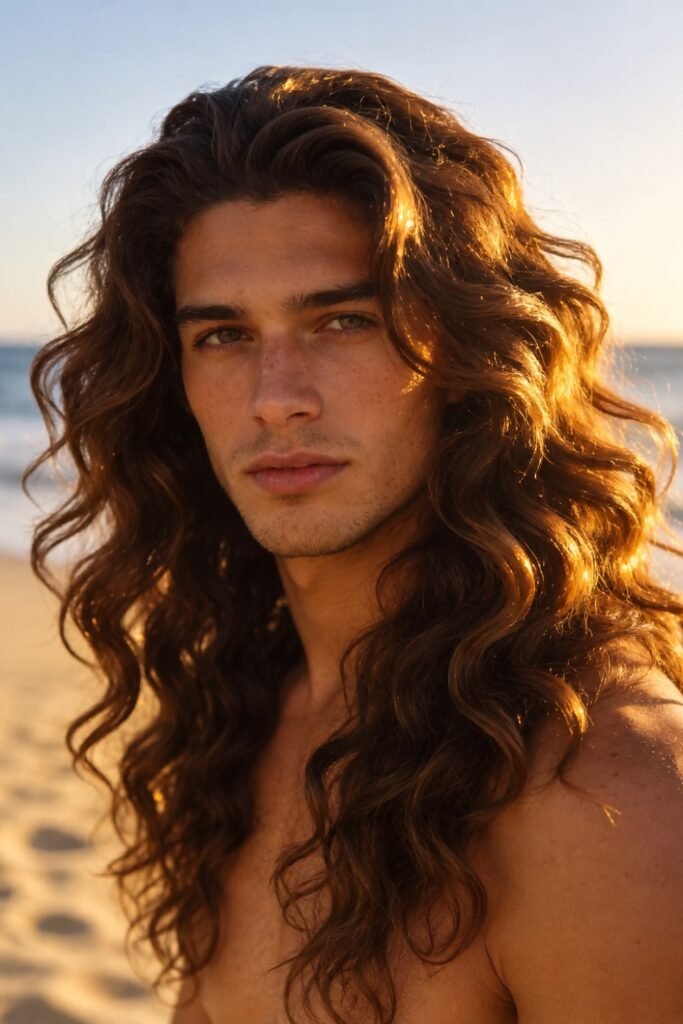
Save14. Long Surfer Layers
Long surfer-style layers work because they do not try to polish every strand. Connected lengths reduce heaviness while preserving enough density for broad waves and natural movement.
This cut should look better after a little movement, not worse. If every section needs to be individually arranged, the haircut is fighting the texture.
Best for: long thick wavy hair, casual styling, natural volume.
 Save
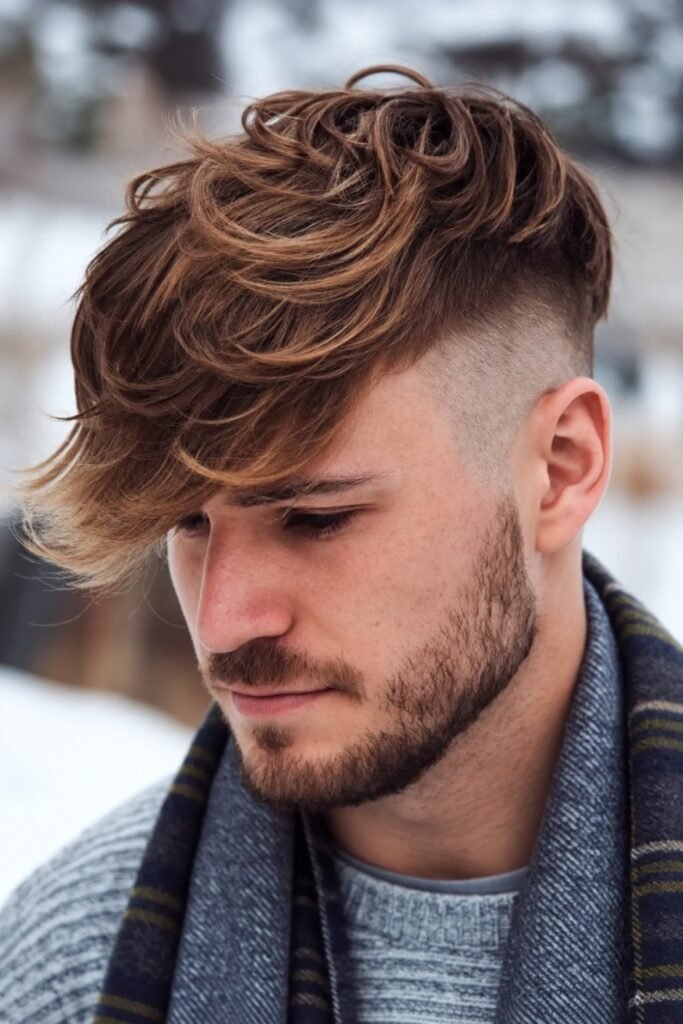
Save15. Layered Undercut
An undercut removes side weight completely or nearly completely while the longer top is layered to manage its own density. It creates far more contrast than a taper or scissor cut.
The tradeoff is grow-out. When the short sides start returning under a dense top, the transition can become bulky quickly. Strong contrast comes with stronger maintenance.
Best for: extremely thick hair, bold contrast, men comfortable with frequent reshaping.
 Save
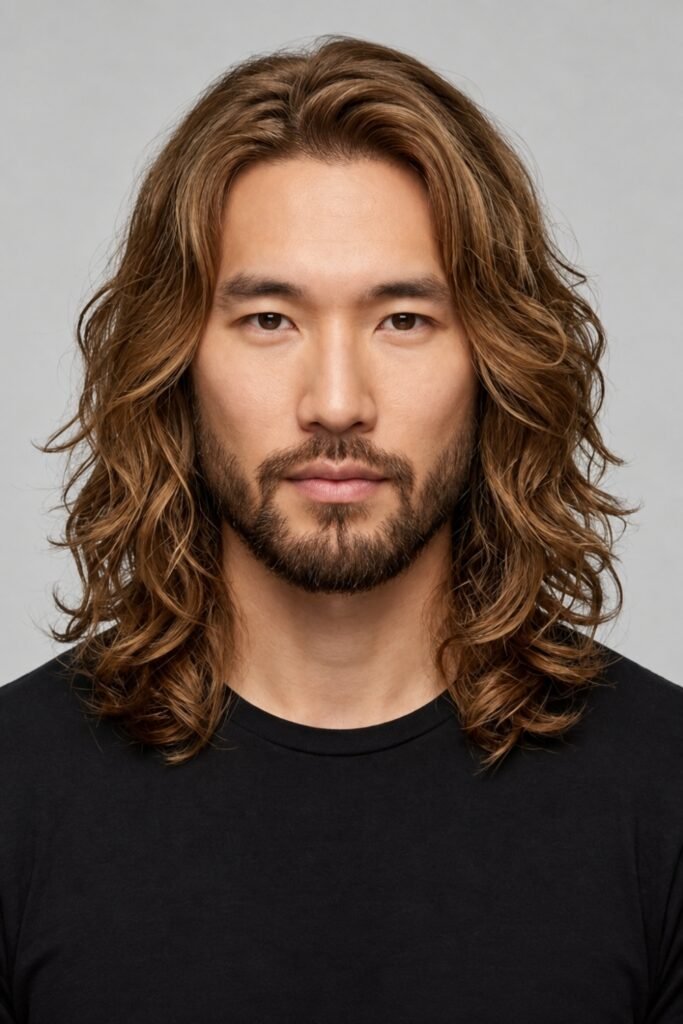
Save16. Long Flowing Layers
For long thick hair, broad connected layers can stop the lengths from moving as one heavy mass without sacrificing the full appearance that makes thick hair desirable.
The best long layers are selective. If the stylist keeps removing hair simply because there is plenty of it, eventually there will not be.
Best for: long dense hair, straight-to-wavy texture, men who want maximum movement.
 Save
SaveQuick Guide: Where Is Your Thick Hair Too Heavy?
| Problem | Strong choices | What the layers do | Avoid |
| Top feels like a solid cap | Textured crop, side sweep | Breaks surface weight and creates separation | Thinning until scalp shows |
| Sides puff outward | Middle part, scissor layers, bro flow | Removes internal side bulk | Shaving sides by default |
| Waves form a triangle | Wavy layers, shag | Redistributes volume vertically | Removing only the ends |
| Medium hair feels immovable | Classic layers, business-casual layers | Creates overlap and direction | Heavy one-length perimeter everywhere |
| Long hair feels too heavy | Shoulder layers, flowing layers | Removes internal weight selectively | Short disconnected layers |
| Very dense curls | Curly layers | Balances crown, sides, and perimeter | Treating density as a defect |
Why Thick Hair Needs Weight Control, Not Automatic Thinning
Thick hair can mean many strands, thick individual strands, or both. Those heads do not all need the same cutting technique. Layers change length and shape; thinning techniques reduce density. They can be combined, but they are not interchangeable.
If your complaint is that the sides balloon out, strategic internal layering may solve it while keeping the ends strong. If the hair is too dense to manage, selective weight removal can help. The mistake is attacking every thick section simply because it exists.
Thick hair is an advantage that needs proportion and texture management. Flattening it completely wastes it. Control the bulk and keep the body.
Short vs. Medium vs. Long Layers for Thick Hair
Short layers create separation and stop a dense top from becoming a helmet. Medium layers give the widest range of options because they can sweep, part, flow, or form waves while still allowing the stylist to remove internal bulk.
Long layers need more restraint. Thick long hair can tolerate weight removal, but the perimeter should still look healthy and intentional. Once the ends become see-through, the haircut has solved a problem you did not have by creating one you do.
Our long layered haircuts for men guide covers classic layers, waves, shags, shoulder-length cuts, slicked-back layers and flow styles. Men who prefer a parted medium cut can compare the middle-part hairstyles guide, and the side-swept hairstyles guide includes a layered side sweep suited to thick hair. For dense curls, see our curly haircuts for men.
What to Tell Your Barber or Stylist
Do not say only, ‘My hair is too thick.’ Point to the area that causes trouble. Is the crown heavy? Do the sides expand? Does the fringe fall as one block? Does long hair take forever to dry? The location of the problem determines where weight should be removed.
Ask to preserve density at the perimeter if you like the full look. For medium and long hair, discuss internal layering rather than assuming every layer needs to be obvious on the surface.
Bring reference photos with similar density and texture. A cut photographed on fine hair may rely on styling to create volume that your hair produces before the dryer is plugged in.
How to Style Thick Layered Hair Without Making It Bigger
Start with product quantity. Thick hair can require more product than fine hair, but applying a heavy wax from roots to ends can turn natural body into a solid mass. Work a flexible cream, paste, or appropriate curl product through selected areas instead.
Use the dryer to direct bulk rather than simply inflate it. For side sweeps and flow cuts, dry in the direction you want the hair to travel. For waves and curls, avoid rough handling that breaks the pattern into unnecessary frizz.
If the haircut needs heroic styling every morning to stop the sides from exploding, the next appointment should address the cut. Product is not a substitute for weight distribution.
Frequently Asked Questions
Are layered haircuts good for men with thick hair?
Yes. Layers can redistribute weight, create movement, reduce a blocky silhouette, and help thick straight, wavy, or curly hair sit more naturally.
Do layers make thick hair thinner?
Layers change the lengths and weight distribution, but they do not necessarily remove overall density. Thinning or texturizing techniques specifically remove hair and should be used selectively.
What is the best layered haircut for short thick hair?
A textured crop, layered side sweep, or short scissor cut can break up a dense top while keeping enough weight for a strong shape.
What layered haircut works for thick wavy hair?
Medium wavy layers, a shag, bro flow, surfer layers, or shoulder-length layers can all work. The best choice depends on where the hair becomes bulky.
Can men with thick hair wear a middle part?
Yes. Connected front and side layers can stop a middle part from hanging as two heavy curtains and make thick hair easier to tuck or sweep.
Should thick hair be thinned with thinning shears?
Sometimes, but not automatically. Excessive thinning can create weak ends, frizz, or short internal hairs that expand. Ask what problem the technique is solving before removing density.
Are long layers good for very thick men’s hair?
Yes. Long connected layers can reduce internal heaviness and improve movement while preserving a full perimeter. Avoid over-layering if you want substantial ends.
How do I stop thick layered hair from puffing at the sides?
Ask for strategic internal weight control, direct the hair while drying, and use a flexible product. If the sides still balloon despite styling, the haircut may need better weight distribution.
The Bulk Test
Before your next haircut, let your hair dry in its normal routine and identify the exact place where it becomes too heavy. Crown, temples, above the ears, lower sides, or ends: pick the problem instead of declaring the entire head guilty.
A strong layered cut for thick hair should make the density easier to use, not less visible. Keep the volume that gives the haircut presence, remove the weight that stops it moving, and leave the rest alone.