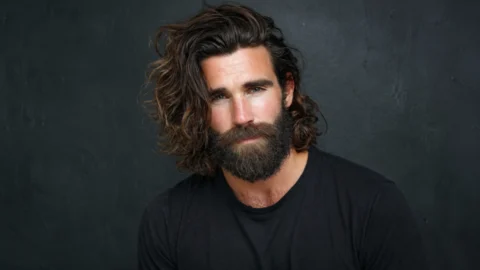
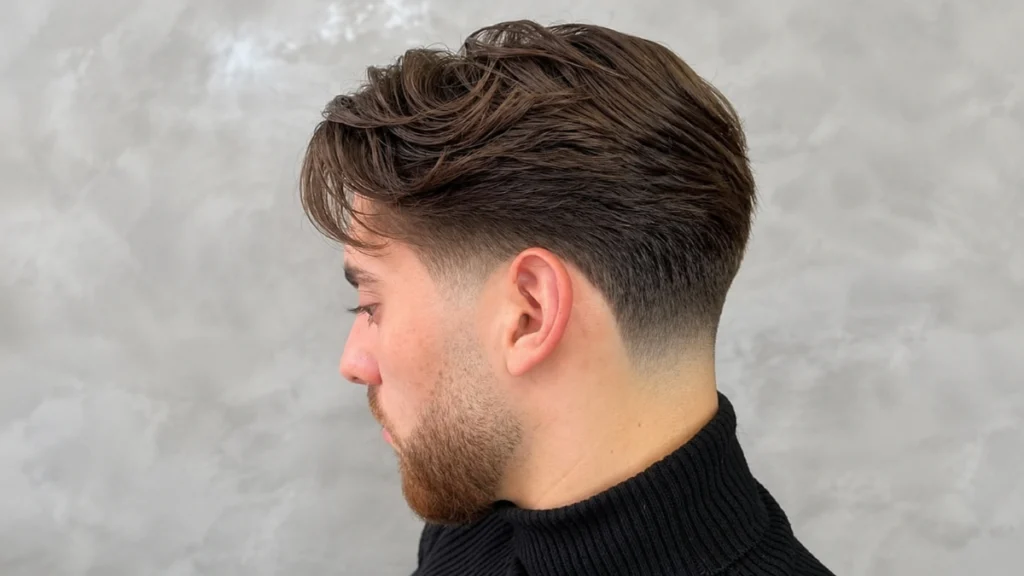
A taper can make a flow haircut look intentional without removing the length that gives it movement. The best versions keep the shortest hair close to the temples, sideburns, ears, or neckline while preserving enough connected weight above for the top and sides to sweep backward.
This article therefore does not treat every fade with a longer top as flow. The medium-length movement has to survive the taper.
That distinction fits 2026. GQ’s current short-hair reporting says extreme fades and sharp disconnects are giving way to softer tapers and natural necklines, while British GQ’s 2026 trend guide continues to favor longer, volumized movement on top with cleaner sides.
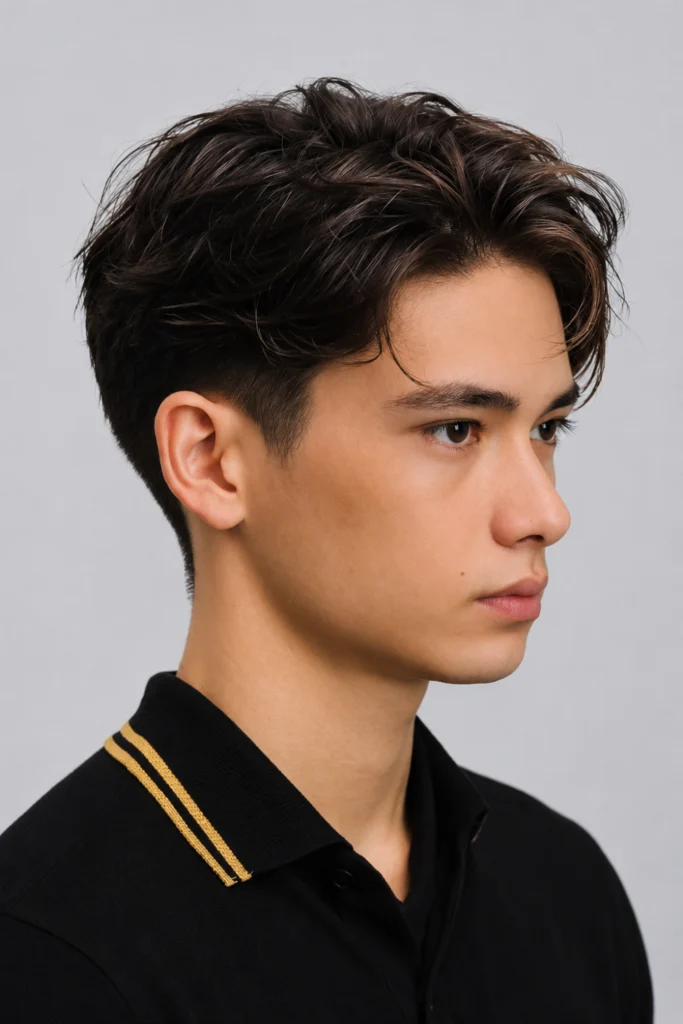
1. Classic Low-Taper Bro Flow
Keep roughly medium length through the top and upper sides and direct it backward naturally. Taper only the lowest temple and neckline so the haircut stays connected around the ears.
Best for: straight/wavy hair, oval or square faces, everyday flow.
 Save
2. Temple-Taper Wavy Flow
Let natural waves create the backward movement and taper only the temple and sideburn zone. Preserve enough side length for at least part of the wave to remain visible above the ear.
Best for: 2A–2C waves, thick hair, subtle barbered edges.
 Save
3. Nape-Taper Flow
Leave the temples and upper sides relatively natural while gradually shortening only the neckline. This keeps the front and side silhouette soft while making the back look deliberate.
Best for: men growing hair longer, straight/wavy hair, low-contrast styling.
 Save
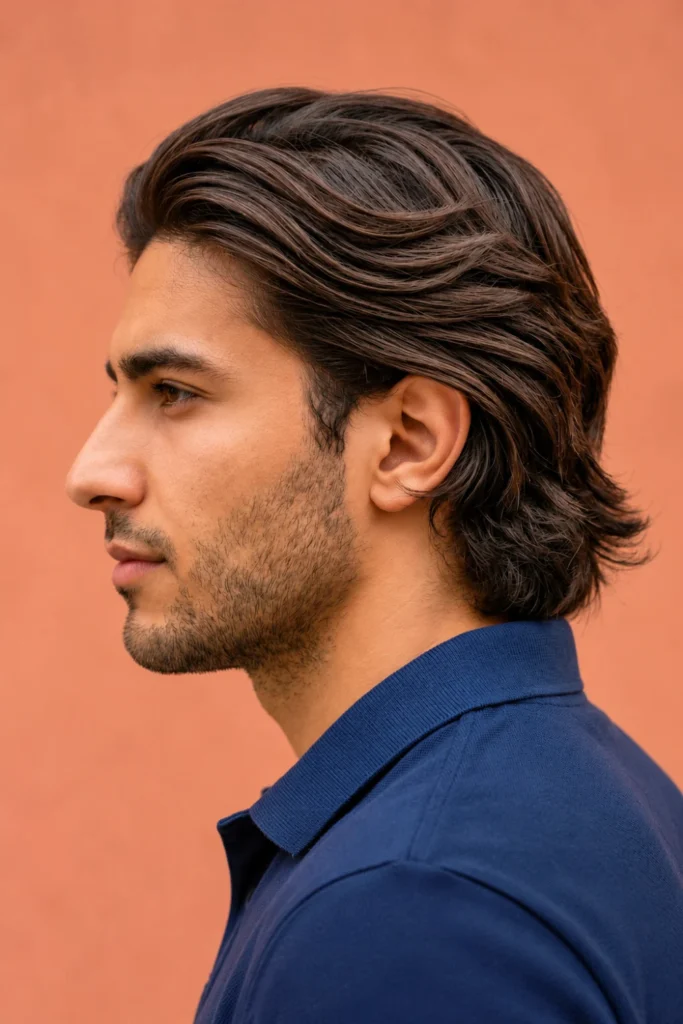
4. Scissor-Taper Flow
Use scissors to graduate the sides from shorter around the ears into longer upper sections, avoiding a skin transition. Keep the back and top connected for continuous movement.
Best for: professional settings, men avoiding clippers, softer grow-out.
 Save
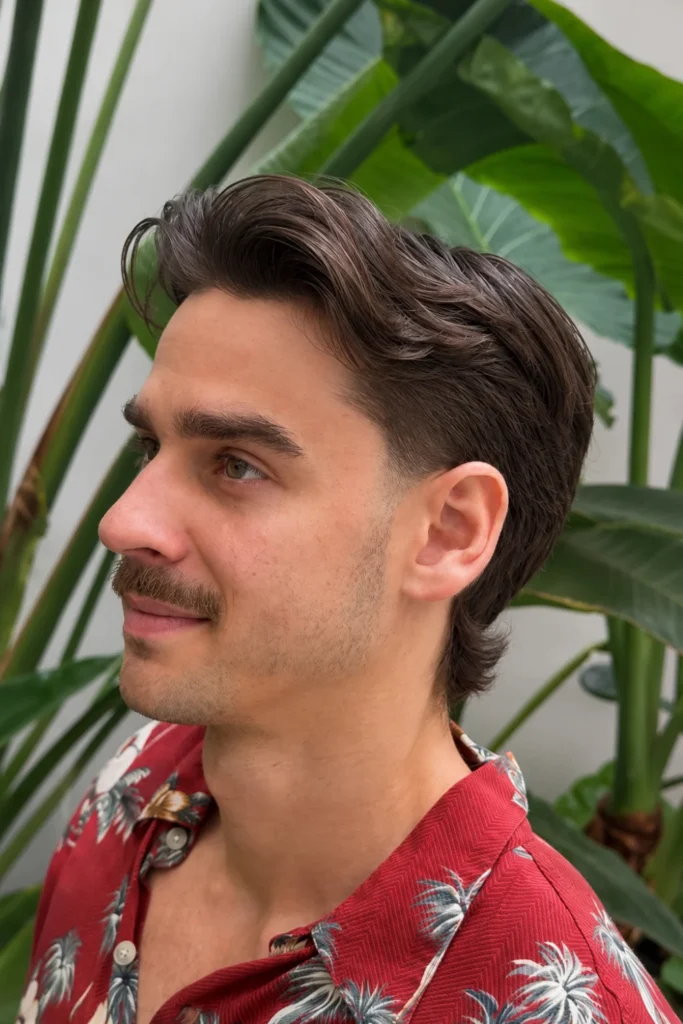
5. Curtain Flow With Low Taper
Split the front loosely through the center and let both curtain sections curve outward before joining the backward flow. Add a low taper at the sideburns and nape only.
Best for: straight/wavy hair, longer foreheads, current curtain styling.
 Save
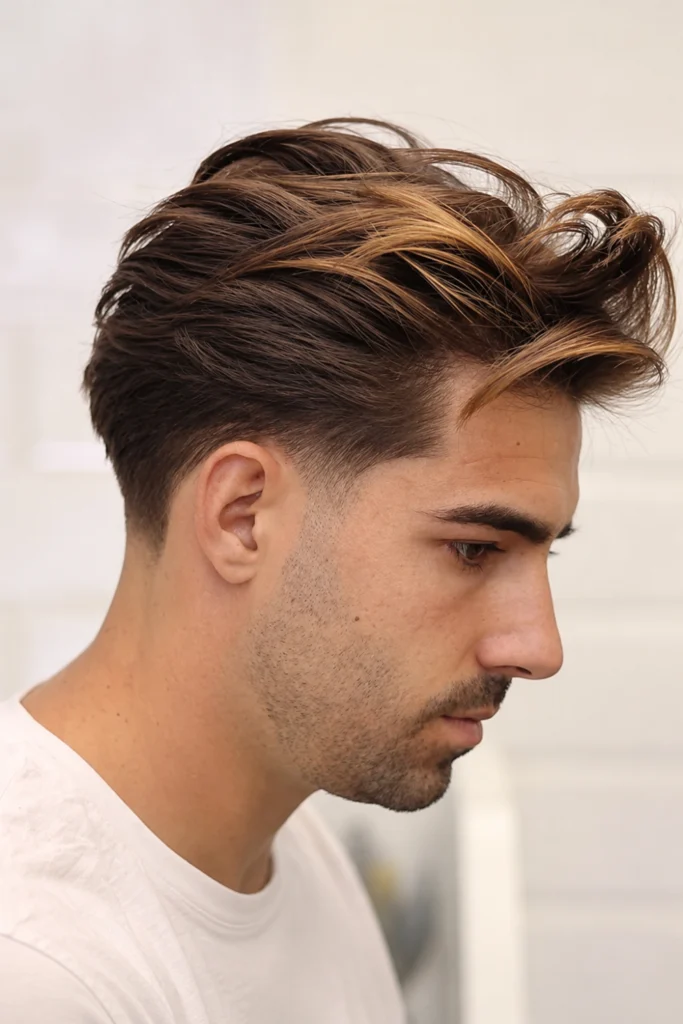
6. Side-Part Flow With Temple Taper
Use a soft side part to direct the heavier section diagonally backward, then taper the temple to sharpen the perimeter without creating a hard disconnected side.
Best for: business-casual wear, 2A–2B hair, oval/square faces.
 Save
7. Curly Flow With Soft Taper
Keep loose curls long enough to move backward and around the head, then taper the temple and neckline gradually. Avoid taking the taper into the area where curl volume begins.
Best for: loose curls, medium/thick density, natural-texture styling.
 Save
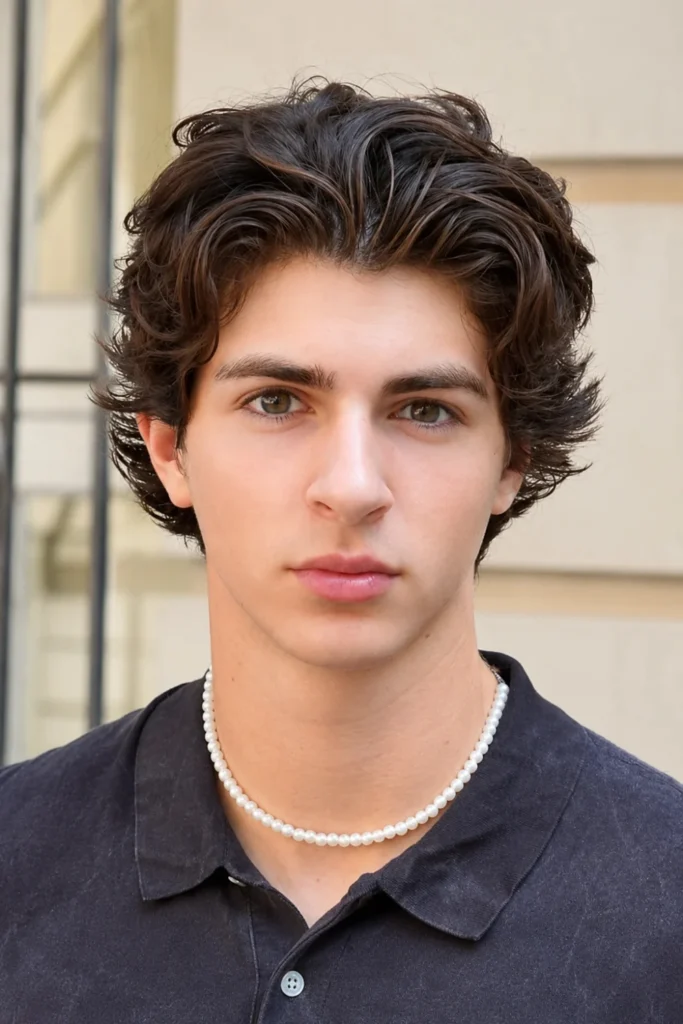
8. Textured Flow With Low Taper
Point-cut the medium top and sides for separated movement, then use a low taper to clean the bottom edge. Style with a lightweight matte or natural-finish product.
Best for: thick straight/wavy hair, casual styling, visible texture.
 Save
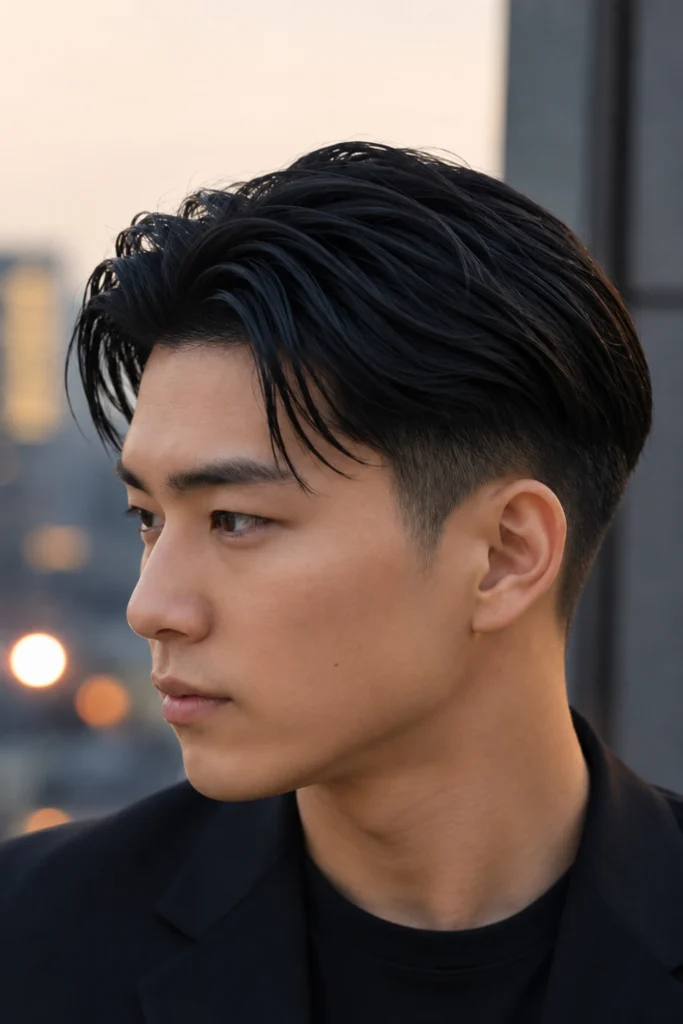
9. Hockey Flow With Ear Taper
Preserve medium length through the top and rear so the ends can kick outward, but taper the sideburn and ear area to prevent the shape from looking overgrown.
Best for: thick straight/wavy hair, sporty style, medium lengths.
 Save
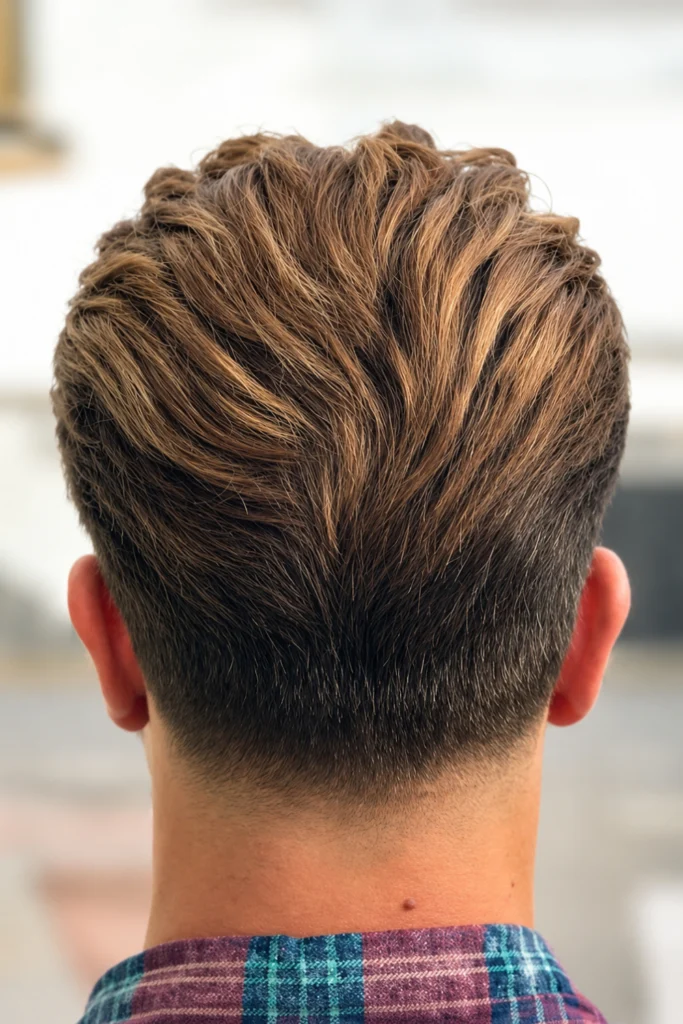
10. Brush-Back Flow With Nape Taper
Finger-brush the medium top backward and keep the side length connected. Taper the nape so the rear edge looks clean without shortening the flow above it.
Best for: straight/2A hair, mature styling, men who dislike faded sides.
 Save
11. Thick-Hair Flow With Low Taper
Remove internal bulk selectively from dense hair while preserving the outer perimeter, then taper low around the ears and nape. The taper should solve side bulk without hollowing the silhouette.
Best for: very thick hair, bulky sides, strong natural volume.
 Save
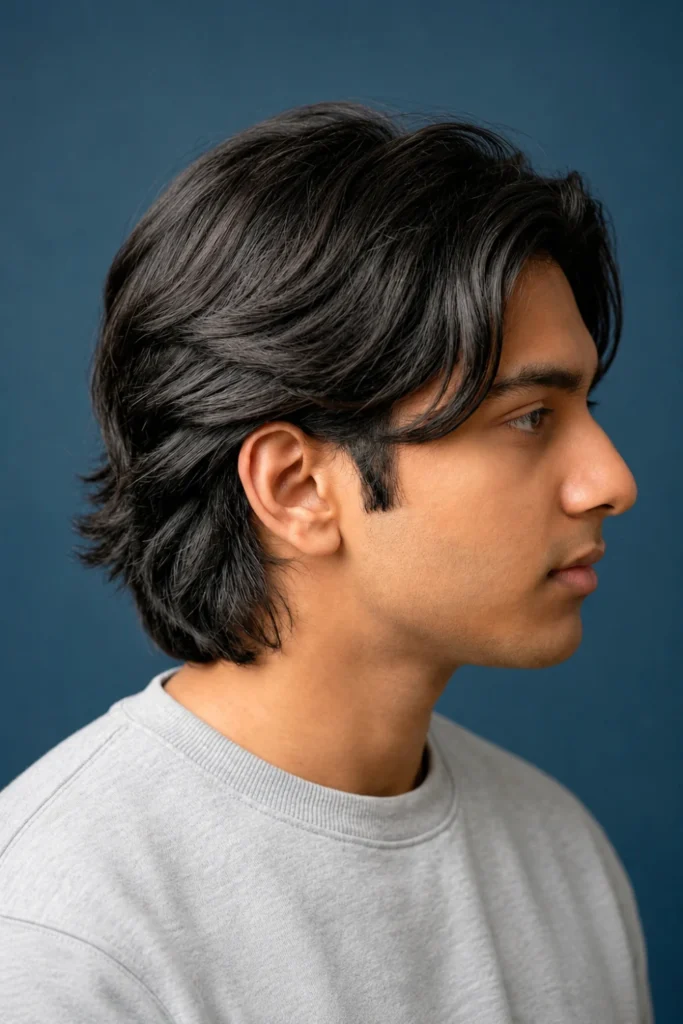
12. Fine-Hair Flow With Soft Taper
Use restrained layering and a subtle taper so the haircut looks neat without sacrificing density. Avoid taking the sides excessively short because contrast can make fine top hair appear thinner.
Best for: fine straight/wavy hair, airy flow, understated styling.
 Save
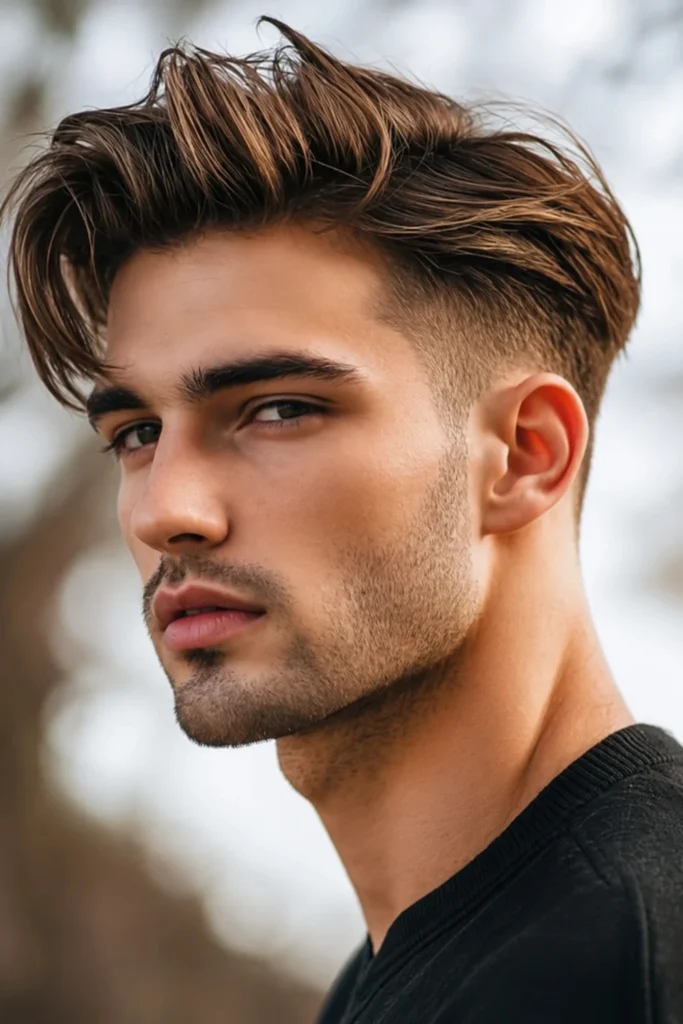
13. Off-Center Flow With Temple Taper
Part the front slightly away from center, allowing one side to carry more movement. Use a temple taper to define the sideburn while leaving the upper side connected.
Best for: natural cowlicks, straight/wavy hair, softer asymmetry.
 Save
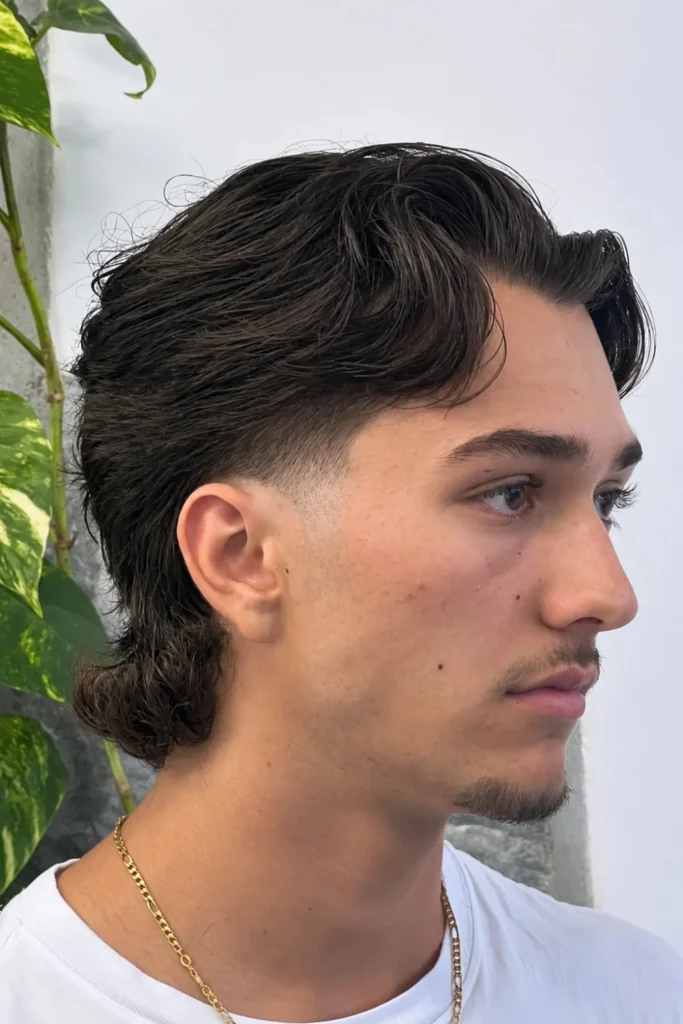
14. Soft Mullet Flow With Tapered Temples
Keep medium movement through the top and modest extra length at the back, while tapering only the temples. The rear should remain controlled rather than extending into a dramatic tail.
Best for: wavy hair, fashion-forward styling, men testing longer rear length.
 Save
15. Grown-Out Flow With Natural Taper
Let the sides skim the ears and the back approach the collar, then lightly taper the sideburn and neckline to show that the grow-out is deliberate. Keep layers connected and soft.
Best for: men transitioning to longer hair, wavy texture, low-maintenance flow.
 Save
Quick Guide: Pick the Taper by What You Want to Clean Up
| Taper placement | Strong styles | What it cleans | What it preserves |
| Temple | Wavy, side-part, off-center | Sideburn / temple | Nape + upper sides |
| Nape | Nape flow, brush-back | Neckline | Temple + ear length |
| Low taper | Bro, curtain, textured | Temple + neckline | Upper-side flow |
| Scissor taper | Professional flow | Ear perimeter | Soft connection |
| Ear-focused taper | Hockey flow | Bulk around ears | Rear kick |
| Very soft taper | Fine/grown-out flow | Untidy edges | Maximum density |
Taper vs. Taper Fade for Flow Hair
A taper gradually shortens hair around selected perimeter areas such as the sideburns and neckline. A taper fade usually takes those areas shorter and may expose more skin depending on the barber’s interpretation.
For flow, a softer taper often preserves more upper-side weight. If you request a fade, specify how low you want it and show the barber where the flowing length should begin.
Why Softer Tapers Fit 2026
GQ’s 2026 short-hair guide says the year is moving away from extreme fades and sharp disconnects toward softer tapers, natural necklines, and cuts that grow out well.
British GQ’s broader trend report likewise shows continued interest in longer, volumized movement paired with cleaner shorter areas, making taper-plus-flow a natural combination.
How High Should a Taper Go on Flow Hair?
Keep the taper below the point where you need side weight for movement. For many flow cuts, that means concentrating the shortest transition near the sideburn, temple, ear edge, or nape rather than carrying it high into the parietal ridge.
Hair texture and density change the answer. Curly and wavy hair may need more side length than straight hair to keep the flow connected.
What to Tell Your Barber
Say that flow is the priority and tapering is only for perimeter cleanup. Useful requests include ‘low taper only,’ ‘temple and nape taper,’ ‘keep weight above the ears,’ ‘connected medium top and sides,’ and ‘no high skin fade.’
Bring front and side references. A flow haircut can look correct from the front but lose its movement if too much side length is removed behind the temple.
Related Guides
Flow haircuts with bangs for men
FAQ
Can a flow haircut have a taper?
Yes. A taper can clean the sideburns, temples, ears, or neckline while preserving the medium connected length needed for backward flow.
What taper is best for a flow haircut?
A low taper, temple taper, nape taper, or soft scissor taper usually works well because each can clean the perimeter without removing too much upper-side weight.
What is the difference between a taper and a taper fade?
Both gradually shorten hair, but a taper is often concentrated around the perimeter while a taper fade may transition shorter and expose more skin. Terminology varies between barbers, so use reference photos.
Is a low taper good with flow hair?
Yes. It keeps the shortest hair low around the temple and neckline, allowing the top and upper sides to remain long enough to move naturally.
Can wavy hair wear a taper flow?
Yes. Wavy hair naturally supports flow, but the taper should stay below the strongest side-wave sections so the movement remains connected.
Can curly hair have a flow haircut with a taper?
Loose curls can. Keep enough length for curls to fall backward and taper only the lower perimeter rather than cutting into the main curl volume.
Are taper flow haircuts trending in 2026?
The exact label varies, but the underlying elements are current: GQ reports softer tapers and natural necklines for 2026, while longer textured movement remains prominent in men’s hair.
What should I ask my barber for?
Ask for medium connected flow with a low, temple, or nape taper; preserve weight above the ears; and avoid a high skin fade or sharp disconnect unless you specifically want one.
The Taper Boundary Test
Look at the haircut from the side. Can you clearly see where the taper cleans the lower perimeter while the hair above it remains long enough to sweep backward?
If yes, the taper is supporting the flow rather than replacing it. The best version looks cleaner at the edges without making the medium-length movement feel disconnected.