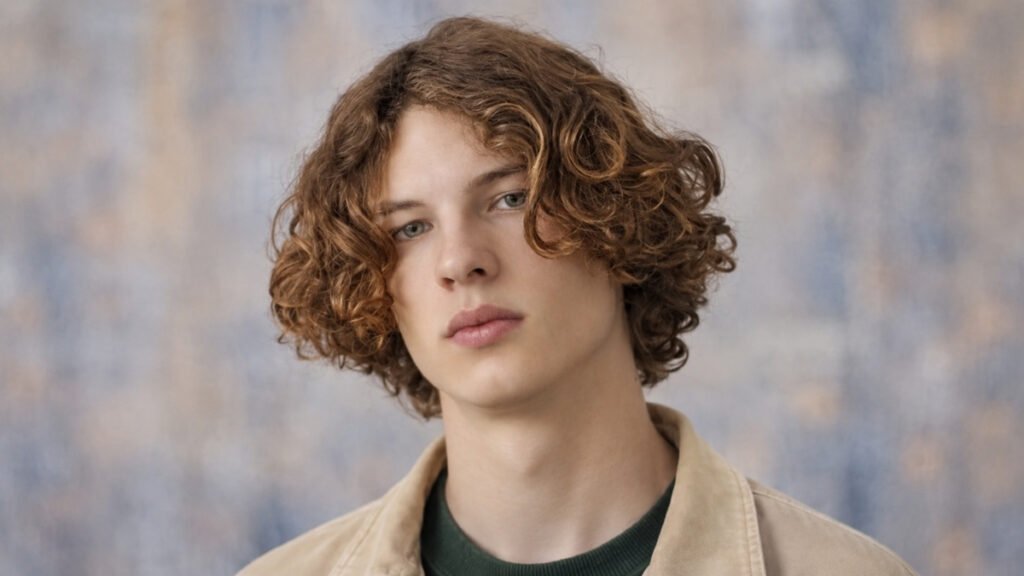
Curly hair does not need layers because layers are fashionable. It needs them when weight is sitting in the wrong place. A heavy perimeter can turn medium curls into a triangle. Too much crown weight can flatten the top. Random thinning can do the opposite and leave a cloud of frizz over transparent ends.
Good layering is structural. Different lengths let curls spring at different levels, spread bulk through the shape and stop one dense section from crushing the curl beneath it.
These 14 layered haircuts for men with curly hair focus on the cut itself: where the layers sit, what problem they fix, and when your barber should leave weight alone. For more textures and lengths, see our curly haircuts for men.
14 Layered Haircuts for Men With Curly Hair
1. Short Layered Curly Crop
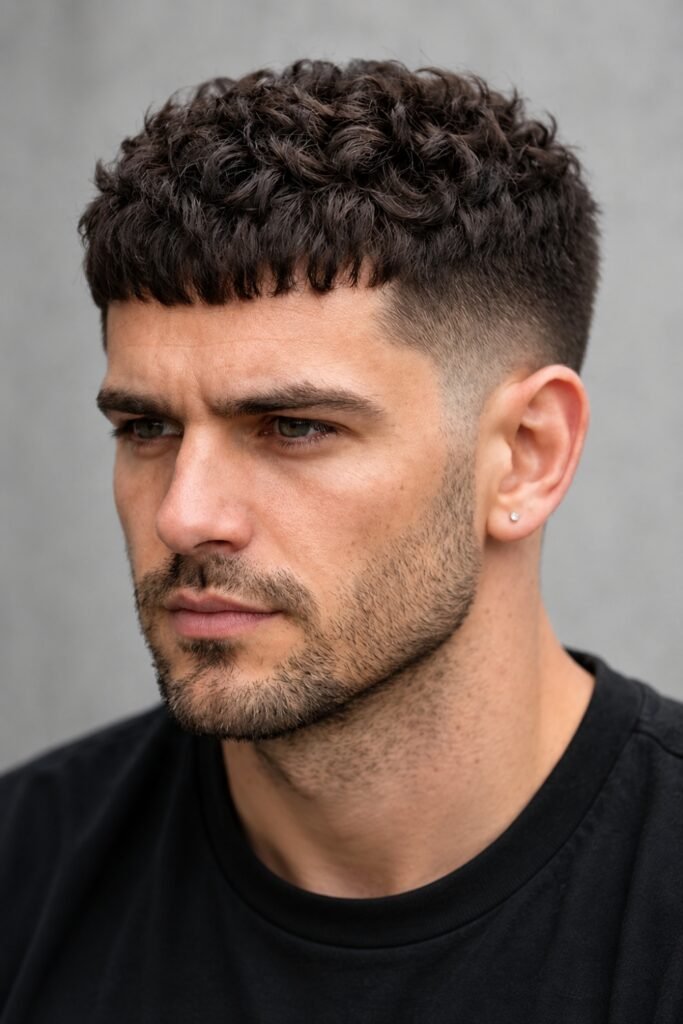
A short crop can still be layered as long as the top remains long enough for the curl pattern to form. Small differences in length create separation and prevent the top from becoming one rounded block.
Do not confuse texture with thinning. If the barber removes too much density, short curls can turn fuzzy rather than defined.
Best for: loose to medium curls, short hair, low styling time.
 Save
Save2. Layered Curl Cut With a Tapered Shape
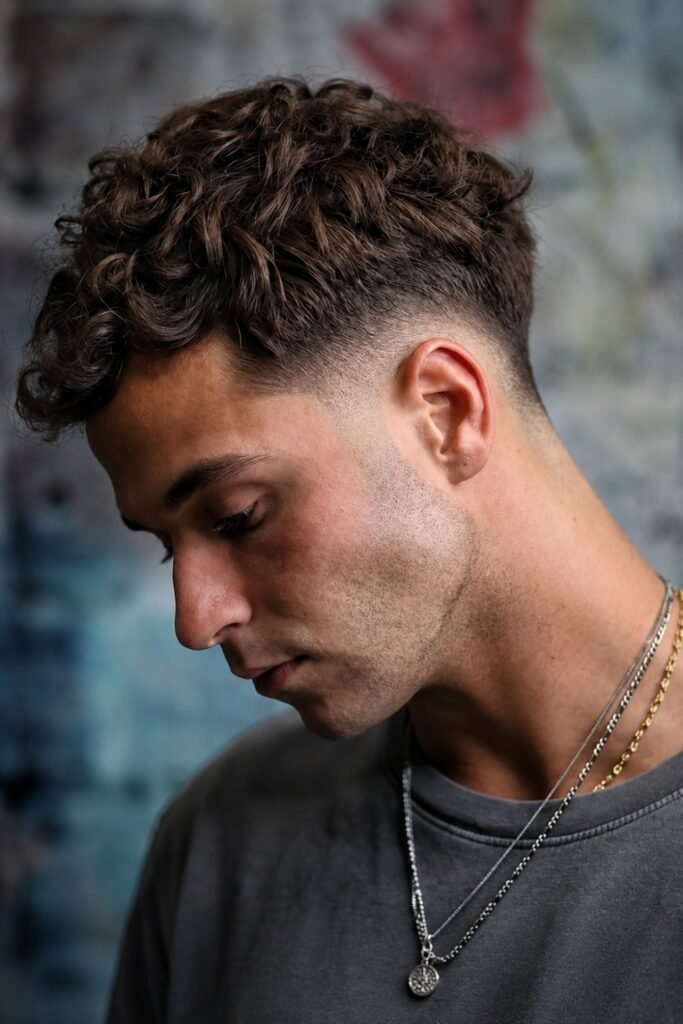
This is the most practical option for thick curls that widen heavily toward the bottom. Layers remove selected internal weight while a tapered silhouette gradually narrows the perimeter.
The instruction is not ‘thin it out everywhere.’ You want weight removed where the shape needs it and retained where the curl needs support.
Best for: thick curls, medium lengths, pyramid-shaped grow-out.
 Save
Save3. Medium Curly Layers
Medium curls often become awkward when the crown lies flat and the lower sides carry all the volume. Graduated layers let upper curls spring higher while longer curls maintain the perimeter.
The shortest layer should be planned around shrinkage. A curl cut wet to eyebrow length can have very different plans once it dries.
Best for: medium curly hair, balanced volume, men growing hair longer.
 Save
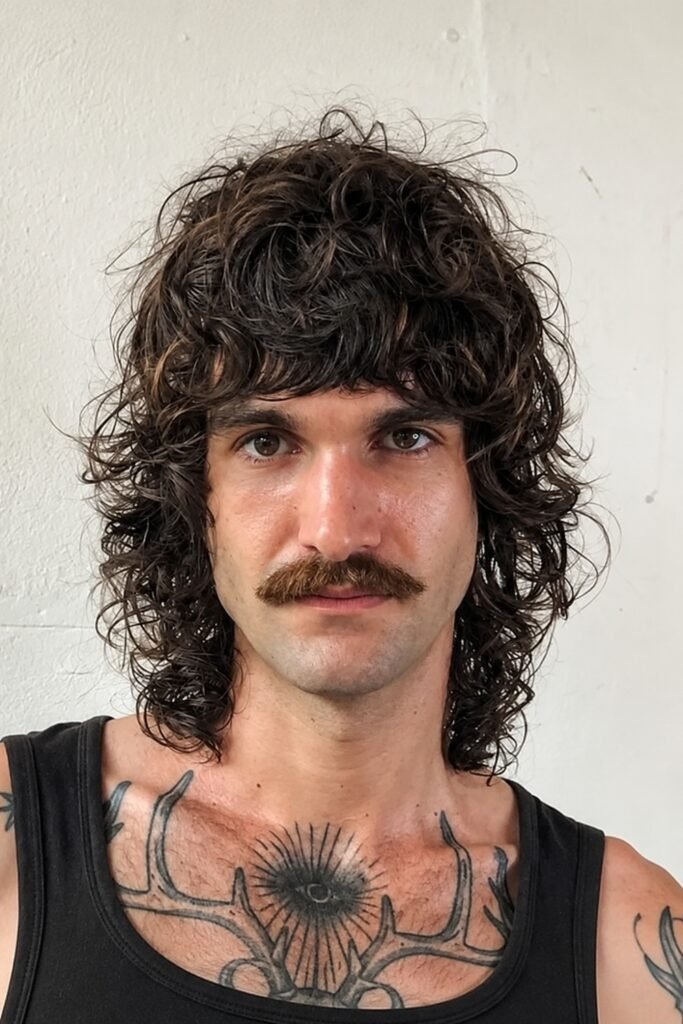
Save4. Curly Shag With Layered Fringe
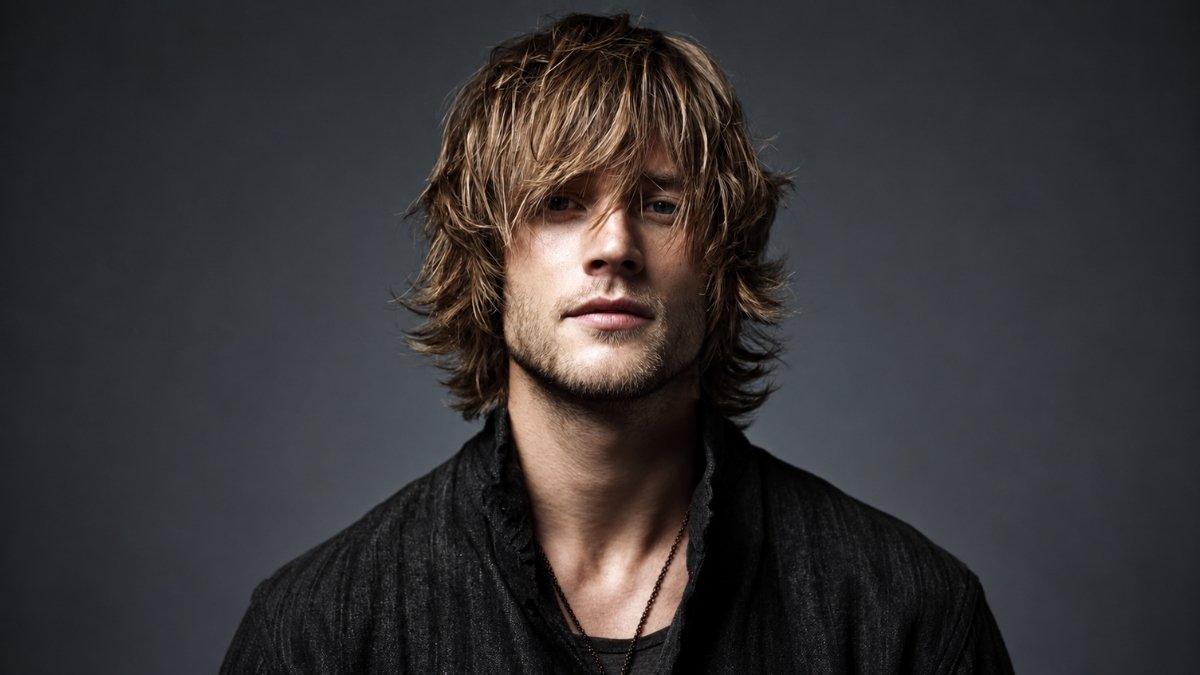
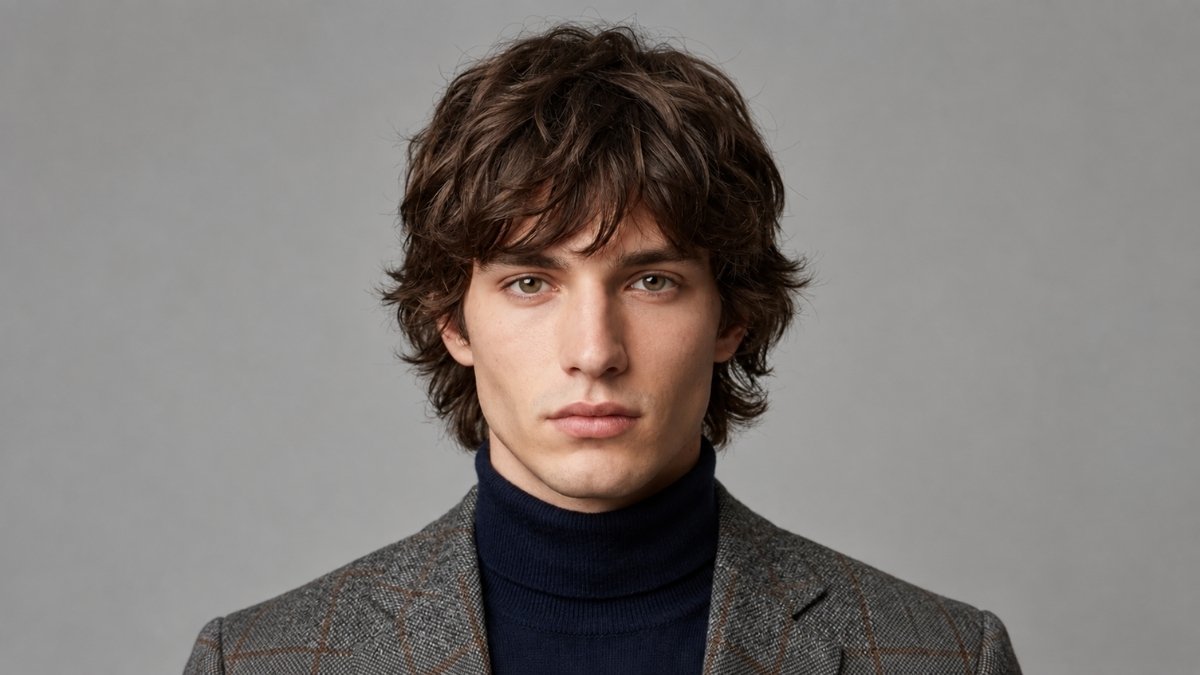
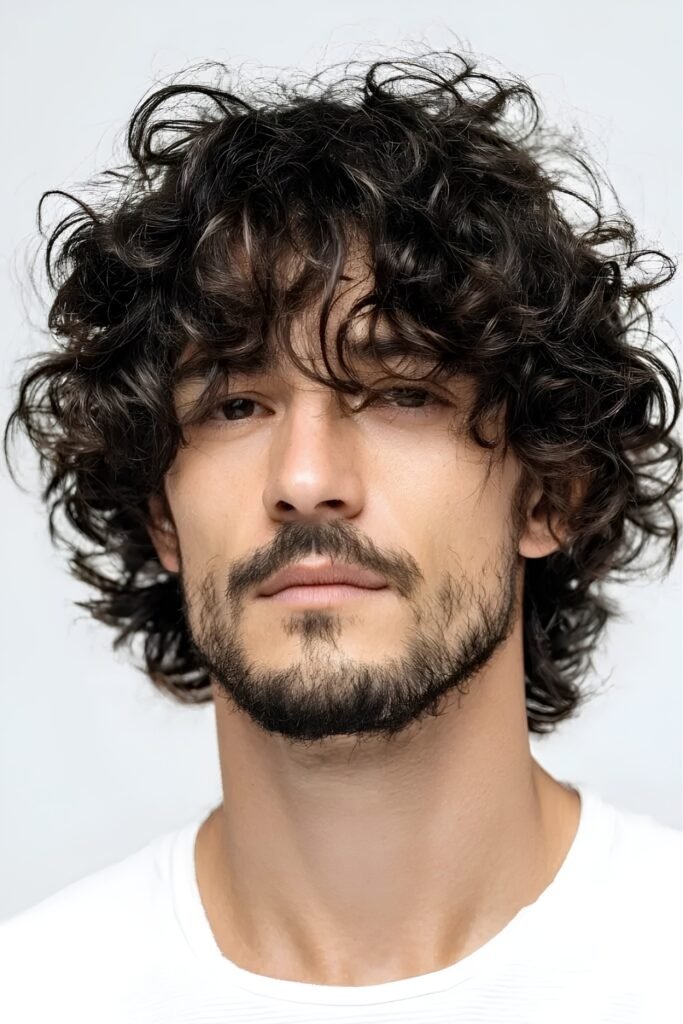
A curly shag deliberately uses shorter crown layers, a broken fringe, and longer sections around the perimeter. Curls make the separation look natural rather than manufactured.
Keep the crown lively but not hollow. Over-layering the top can create a mushroom of frizz sitting over thin ends.
Best for: medium curls, high texture, relaxed or alternative styling.
 Save
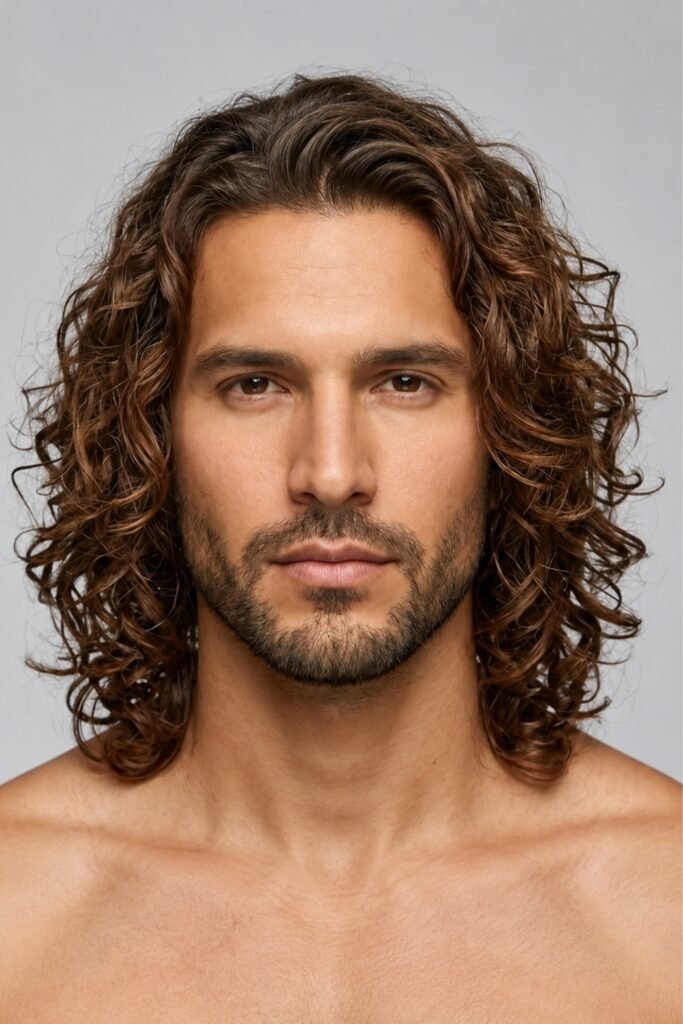
Save5. Shoulder-Length Layered Curls
At shoulder length, curls have enough weight to stretch while still expanding through the sides. Long, restrained layers can stop the cut from becoming one heavy triangular mass.
Preserve the bottom. If every layer is aggressively shortened, shoulder-length hair can end with five curls pretending to be a perimeter.
Best for: medium-to-thick curls, longer hair, men who want movement without a shag.
 Save
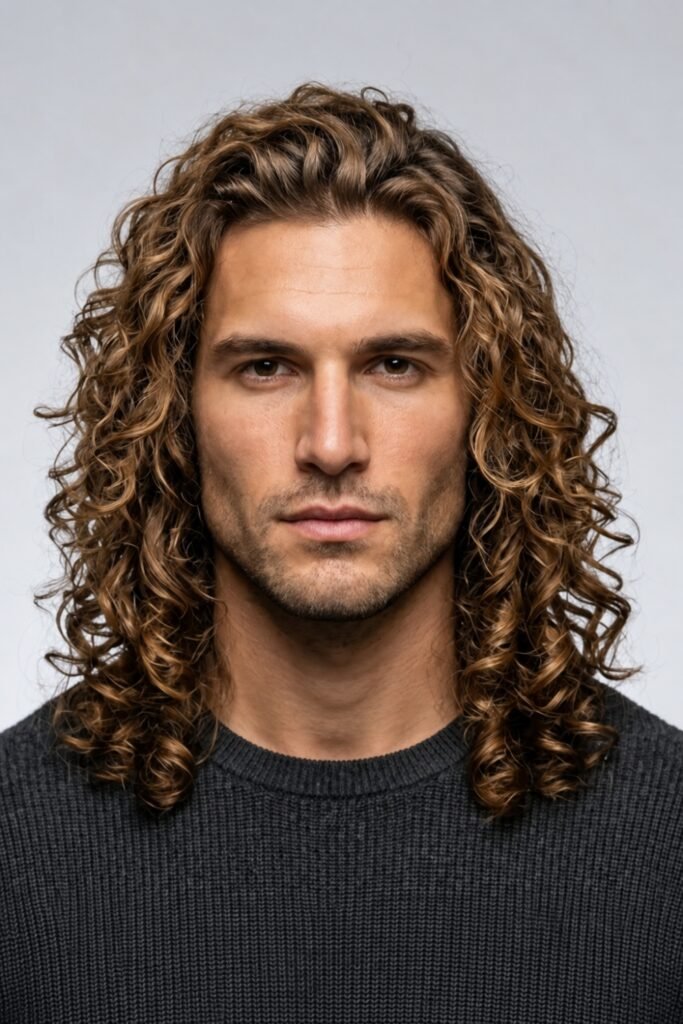
Save6. Long Curly Hair With Layers
Long curls often need some weight because it helps control expansion and elongate the pattern. The goal is not to remove that advantage; it is to stop all the weight from collecting at one level.
Use connected long layers through the mid-lengths. If the ends already look fine or fragile, ask for less removal, not more.
Best for: long curly hair, dense curls, men committed to length.
 Save
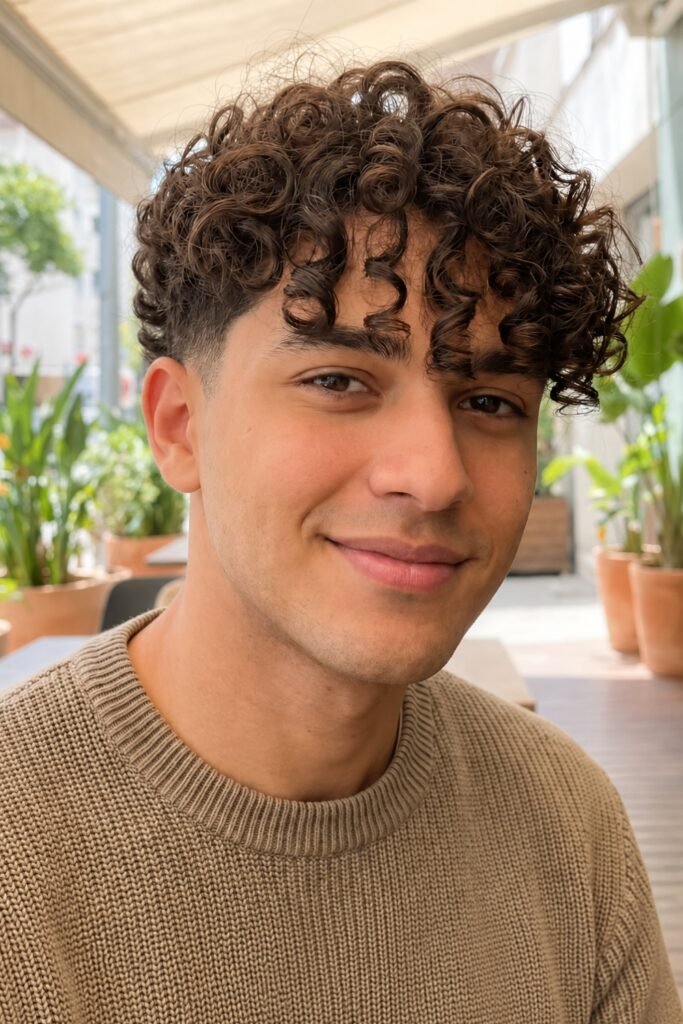
Save7. Layered Curly Fringe
A curly fringe works when its pieces finish at slightly different points and fall naturally rather than forming one blunt shelf across the forehead. Layers also help connect the fringe into the sides.
Cut it for the dry result. Curly fringe has a habit of moving north after the appointment, and optimism is not a measurement system.
Best for: medium-short curls, larger foreheads, forward styling.
 Save
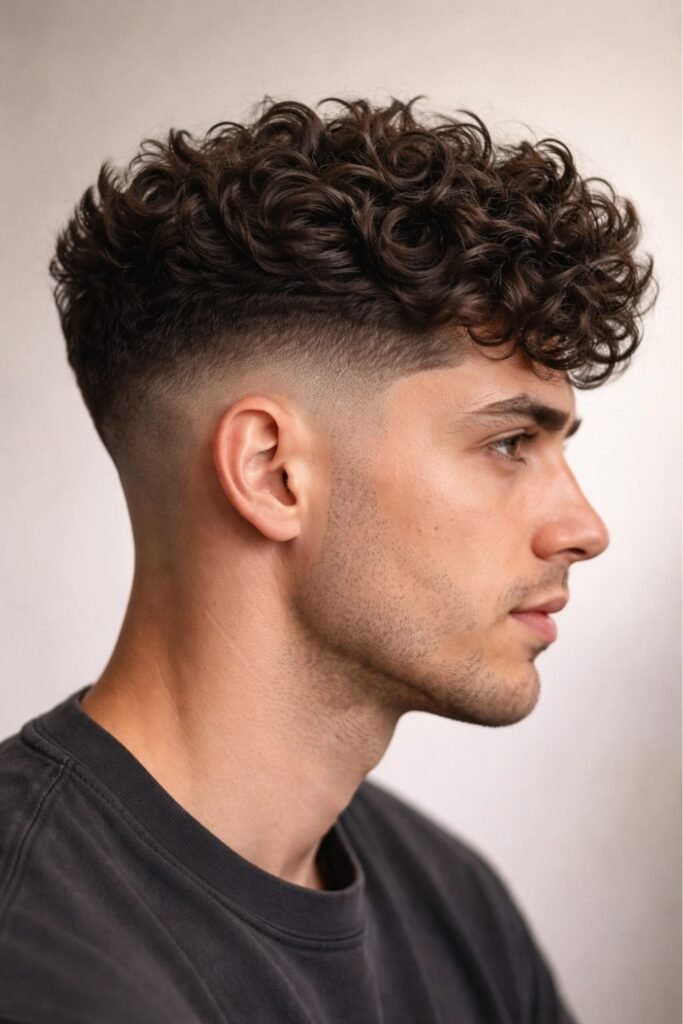
Save8. Tapered Sides With a Layered Curly Top
A taper keeps the perimeter neat while the layered top controls bulk through the curls themselves. It gives structure without requiring a high skin fade around every curly haircut.
Leave enough connection at the upper sides if you want a natural silhouette. Bare sides under a wide curly top can turn balance into a mushroom very quickly.
Best for: short-to-medium curls, work-friendly cuts, men who want clean edges.
 Save
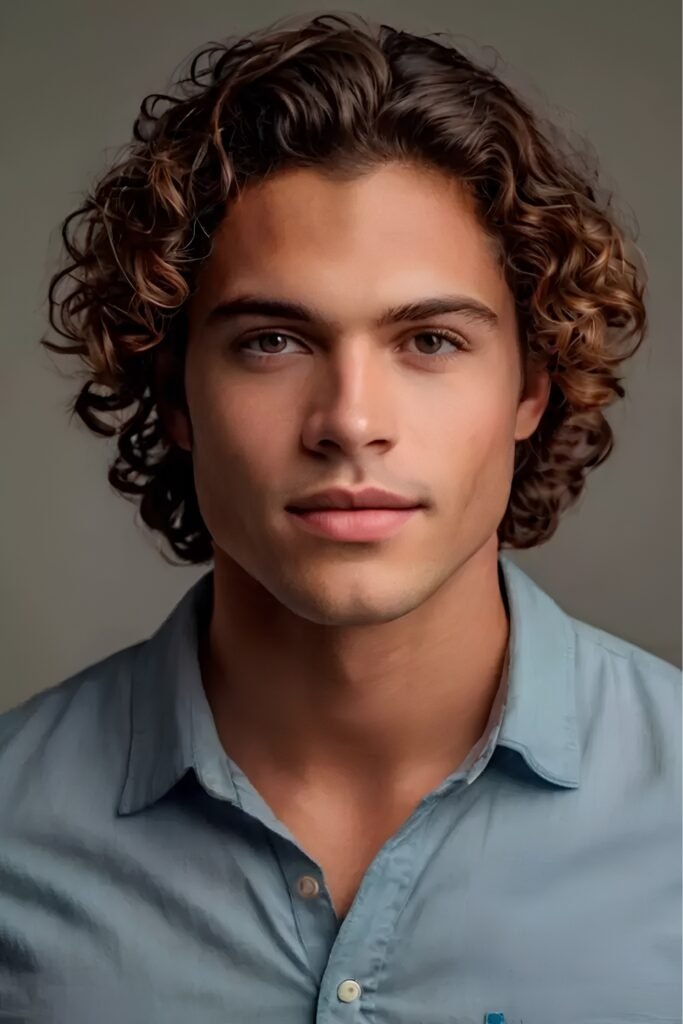
Save9. Layered Curly Middle Part
A center or near-center part can work beautifully with medium curls when front and side layers stop each half from hanging as one heavy block. The layers create staggered movement around the face.
Do not force a perfectly straight part if your growth pattern disagrees. Curly hair already has opinions; there is no need to start an argument before breakfast.
Best for: medium curls, loose ringlets, men growing out a fringe.
 Save
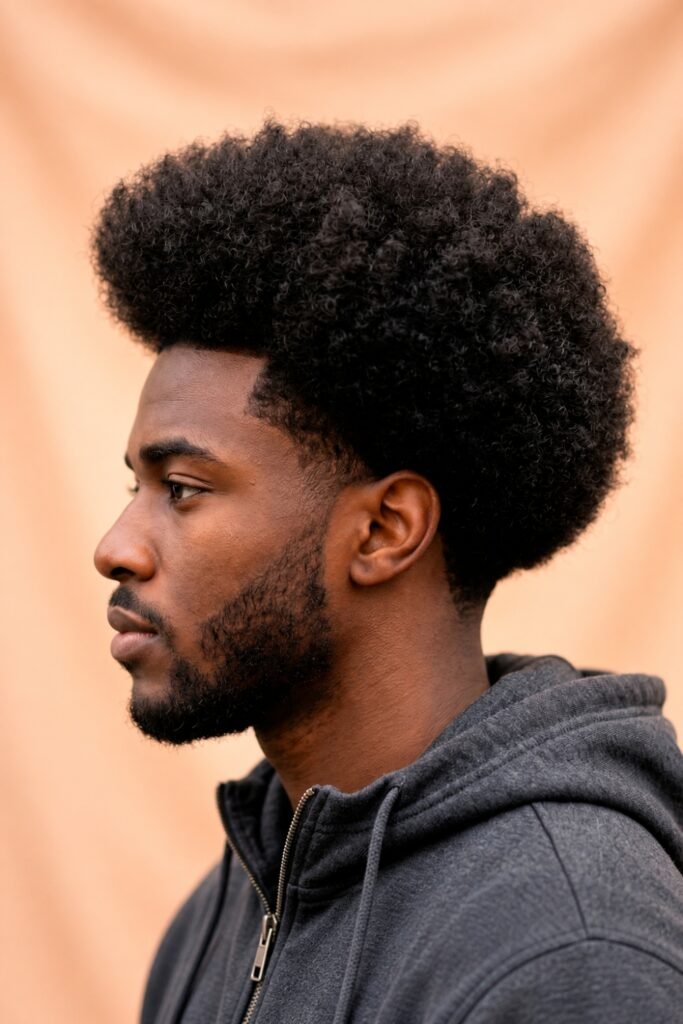
Save10. Rounded Layered Afro
Tightly curled and coily hair can use graduated shaping to distribute volume around the head while maintaining density. The objective is a deliberate silhouette, not making the texture smaller.
Ask for the shape you want from the front, sides, and back. ‘Take some weight out’ is too vague when every removed curl changes the outline.
Best for: tight curls and coils, high density, rounded silhouettes.
 Save
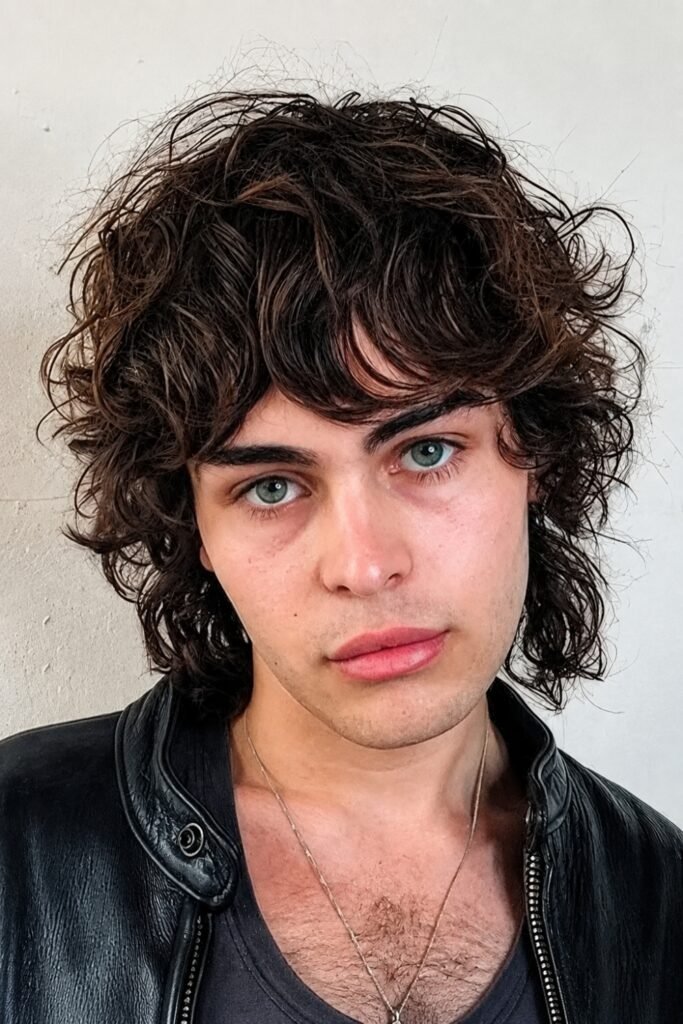
Save11. Curly Wolf Cut
The curly wolf cut pushes the shag idea further with shorter movement around the crown and face plus visible length toward the back. Natural curls make the disconnected levels feel cohesive.
This is not the choice if you want invisible layering. The layers are supposed to show. Just keep enough density at the ends that the haircut looks intentional rather than unfinished.
Best for: medium-to-long curls, bold texture, men who like shag/mullet influence.
 Save
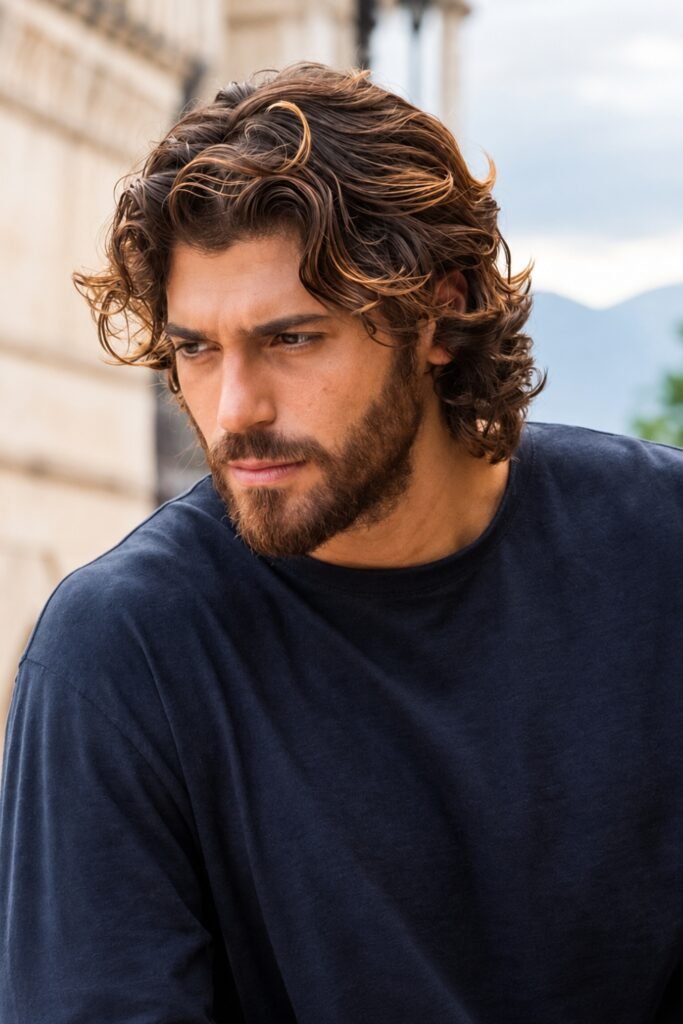
Save12. Layered Curly Bro Flow
Long layers can help medium curls flow away from the face without being slicked flat. The shape works best when the sides retain enough length to join the movement.
Use a light curl cream or leave-in and let the pattern stay touchable. Bro flow loses the point when every curl is glued backward like a wet helmet.
Best for: medium-long loose curls, thick hair, relaxed styling.
 Save
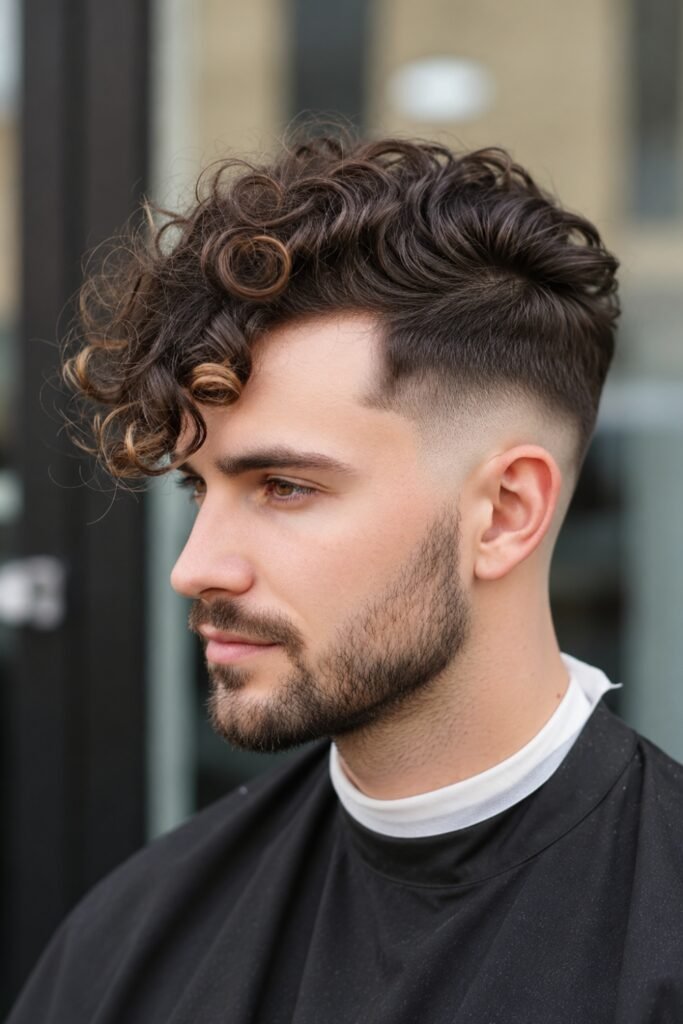
Save13. Layered Curly Undercut
An undercut removes most side bulk while the longer top can be layered to control its own volume. The contrast is much stronger than a taper and makes the curly top the entire focal point.
Because the sides are disconnected, top shape matters more. Too much width with no side connection can make the haircut look like it is hovering.
Best for: thick curls, bold contrast, men who want easier side maintenance.
 Save
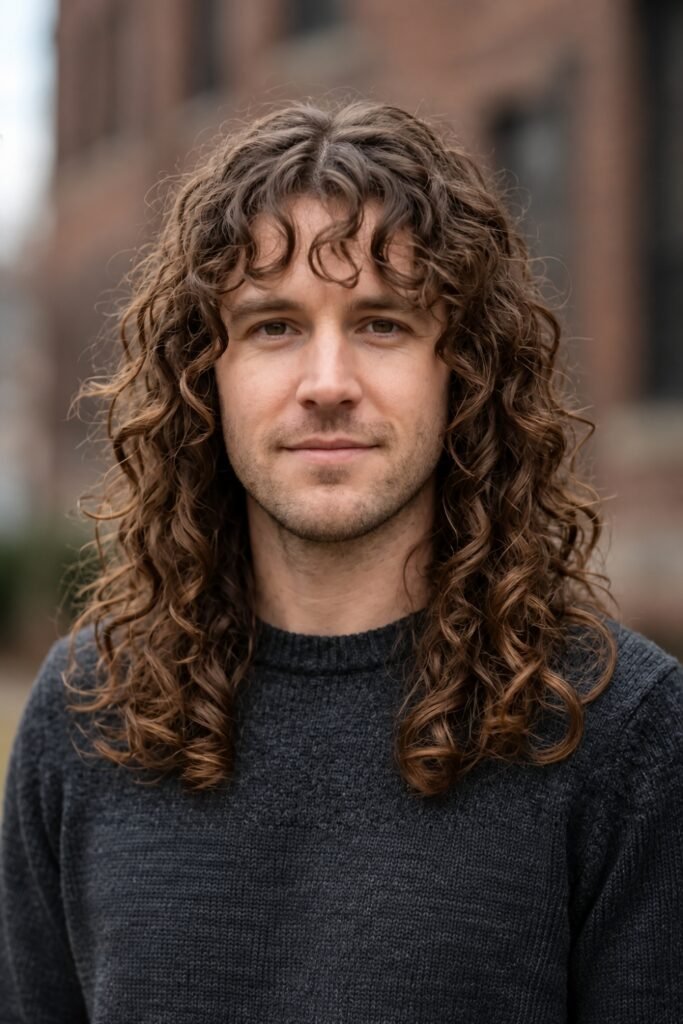
Save14. Long Layered Curls With Face-Framing Pieces
Long curls can use shorter pieces around the face while the back remains substantially longer. This adds movement without forcing the entire haircut into a shag.
Start conservatively around the front. A face-framing curl can spring several inches shorter than expected, and there is no styling product that negotiates it back down.
Best for: long curls, men who wear hair loose, softer face framing.
 Save
SaveQuick Guide: Match the Layers to the Curl Problem
| Curl problem | Try | What the layers do | Avoid |
| Triangle / pyramid shape | Tapered layered cut, medium layers | Redistributes lower-side bulk | Thinning only the ends |
| Flat crown | Curly shag, medium layers | Lets upper curls spring higher | Very heavy one-length top |
| Too much side bulk | Tapered top, undercut | Controls perimeter weight | Random thinning |
| Long hair feels heavy | Long layers, shoulder layers | Removes internal weight selectively | Short disconnected crown layers |
| Fringe feels like one block | Layered curly fringe | Creates staggered curl lengths | Cutting fringe too short while wet |
| Coils need clearer shape | Rounded layered afro | Builds a deliberate silhouette | Treating density as a problem |
Why Layers Behave Differently on Curly Hair
Straight layers fall. Curly layers spring. That sounds obvious until a wet haircut loses several inches of apparent length after drying. Curl pattern, shrinkage, density, porosity, previous damage, and even different textures on the same head can change where a layer finally sits.
That is why curl-aware cutting matters more than memorizing one layering diagram. Some stylists cut curls dry; others use wet or hybrid methods. The useful question is not which method wins the internet. It is whether the stylist understands how your particular curl pattern changes between wet and dry states.
Layers vs. Thinning: They Are Not the Same Thing
Layers create different lengths to alter shape and movement. Thinning removes density. A haircut can use one, both, or neither. Asking for layers when your actual complaint is extreme density may not solve the problem, while asking to ‘thin it out’ can damage the silhouette if too much weight disappears from the wrong area.
For curls that already have fine ends, aggressive thinning can increase flyaway texture and reduce clumping. For extremely dense curls, carefully placed internal weight removal may be exactly what makes the haircut manageable. The technique should follow the problem.
Want something longer or a sharper fade? Our long layered haircuts for men and fade haircuts for men cover more shapes.
What to Tell Your Barber or Curl Stylist
Start with the problem, not the technique. Say, ‘My crown goes flat,’ ‘the sides become triangular,’ ‘the ends feel too heavy,’ or ‘I want to keep shoulder length but create movement.’ That tells the stylist what the layers are supposed to accomplish.
Explain how much shrinkage you normally get and show the hair in its usual state if possible. If you routinely wear it air-dried, a reference styled with a diffuser and stretched curls may not represent your daily result.
Ask how the shortest layer will sit when dry. That single question is especially important for fringes, crown layers, and tighter curl patterns.
How to Style Layered Curly Hair
Layering only creates the structure. Definition still depends on how the curls dry. Apply a suitable leave-in, cream, mousse, or gel according to your texture and desired hold, distribute it without roughing up the pattern, and let curls form in clumps.
Air-drying can work well when the cut is designed for it. A diffuser can add lift and speed drying, but aggressive high heat and constant handling can increase frizz. Once the curls begin setting, touching them every thirty seconds is rarely an improvement.
If the haircut looks good only after you individually rebuild every curl, tell your stylist next time. A useful layered cut should make your normal routine easier, not create a second occupation.
Frequently Asked Questions
Are layers good for men’s curly hair?
Yes, when they solve a specific shape or weight problem. Layers can distribute volume, reduce a heavy perimeter, add crown movement, and help curls sit at different levels.
Do layers make curly hair more curly?
Layers do not change your biological curl pattern, but removing excess weight can allow some curls to spring more freely, making the existing pattern appear more defined or compact.
Should thick curly hair be layered?
It often benefits from strategic layering or internal weight removal, but excessive thinning can create frizz and weak ends. The technique should match density and desired silhouette.
Are layers good for fine curly hair?
They can be, but fine curls usually need more weight preserved. Too many short layers may make the perimeter look sparse, so use fewer, longer, connected layers.
Should curly hair be layered wet or dry?
Both methods are used professionally. Dry cutting shows the curl in its sprung state, while wet cutting can provide control and consistency. Choose a stylist experienced with your curl type and routine.
What layered cut is best for medium curly hair?
Medium graduated layers, a curly shag, layered fringe, or tapered layered shape can work well. Choose based on whether you need crown lift, side-bulk control, or a more textured silhouette.
Can long curly hair have layers without looking thin?
Yes. Use longer connected layers and preserve a substantial perimeter. Avoid removing excessive weight from ends that are already fine or fragile.
What should I ask my barber for if my curly hair looks triangular?
Explain that the lower sides carry too much width and ask about a tapered silhouette, curl-aware layers, or strategic internal weight removal rather than simply thinning the ends.
The Dry-Shape Test
Judge a curly layered haircut after it is fully dry and settled, not while it is wet and hanging several inches longer. Look at the crown, widest point, and perimeter. Is the volume distributed where you wanted it, or did the layers simply move the problem somewhere else?
Good layers should make the curl pattern easier to live with. If the crown has movement, the sides no longer form an unwanted triangle, and the ends still look substantial, stop cutting. Curly hair does not earn bonus points for having more layers.