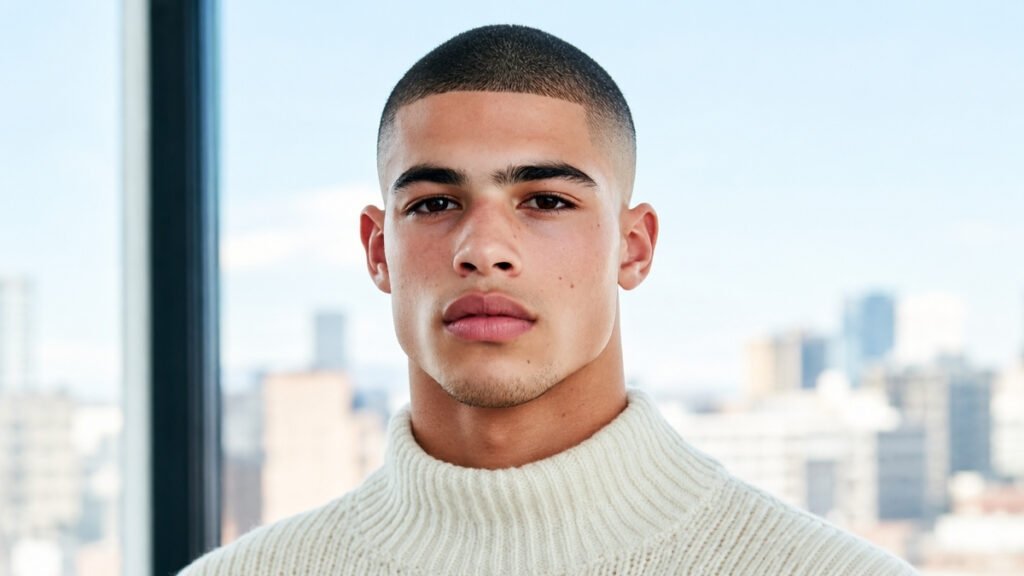
A buzz cut removes most of the styling. A fade decides whether the result looks merely short or deliberately shaped. That small gradient around the sides can make a #2 or #3 buzz feel cleaner, sharper, softer, or more aggressive without asking you to touch a comb in the morning.
The important choices are not complicated, but they matter: top length, fade height, how close the fade goes to skin, and whether the hairline stays natural or gets a line-up. Change one of those variables and the same basic buzz can look completely different.
Below are fifteen ways to combine the two, what each variation changes, and exactly what to ask your barber for.
15 Buzz Cut Fade Ideas for Men
1. Classic Buzz Fade
Keep the top evenly clipped and use a moderate fade through the sides and back. It gives the buzz cut enough structure to look intentional without turning the fade itself into the main event.
Ask for a #2 or #3 on top if this is your first very short cut. You can always go shorter next visit. Hair is excellent at growing back, but not before dinner.
Best for: first-time buzz cuts, straight or textured hair, simple everyday grooming.
 Save
Save2. Low Fade Buzz Cut
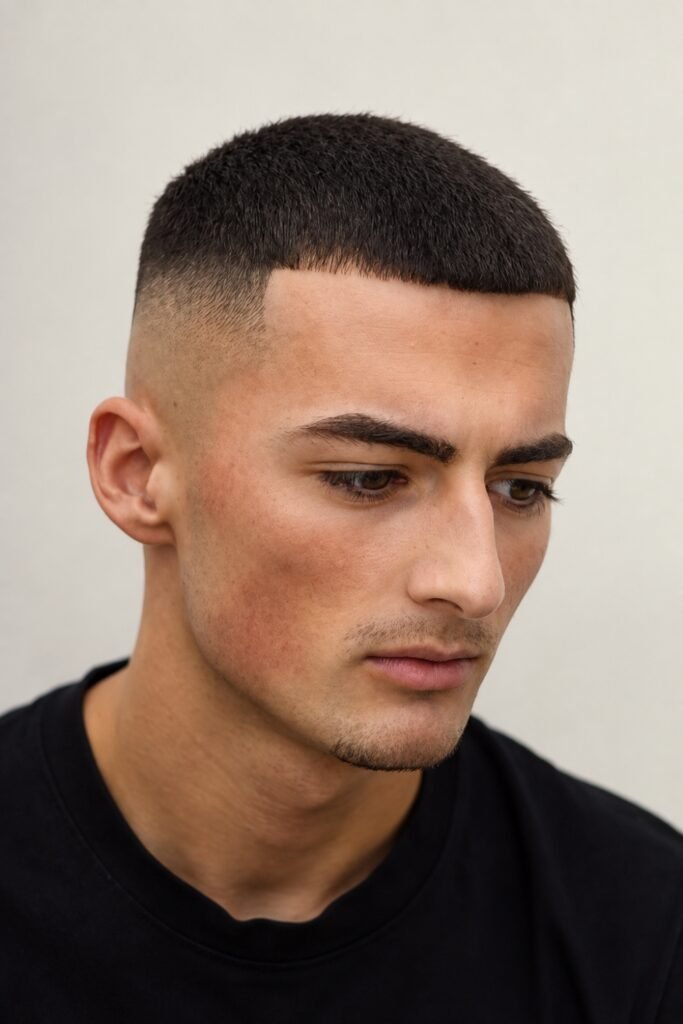
A low fade begins close to the ears and neckline, leaving more visible hair through the upper sides. That makes it the quieter option and preserves more of the head’s natural shape.
This is useful if a high fade feels too exposed or if you want a buzz cut that can sit comfortably in conservative work settings. The fade is present; it just does not introduce itself first.
Best for: subtle contrast, professional settings, first-time fades.
 Save
Save3. Mid Fade Buzz Cut
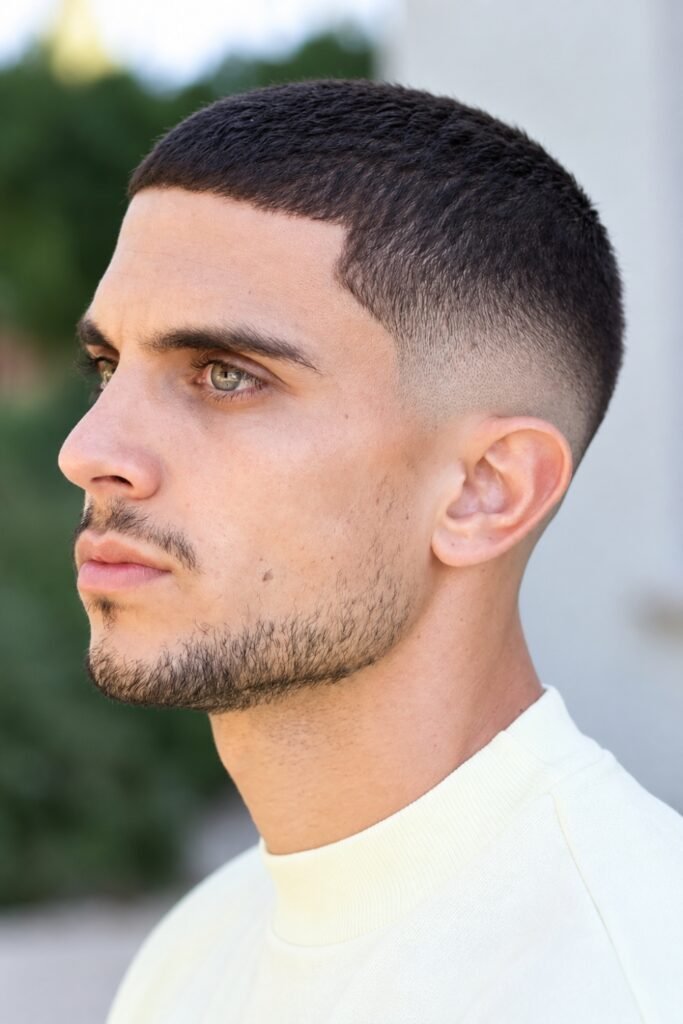
The mid fade begins around the middle of the sides, giving more contrast than a low fade without removing as much side weight as a high fade. On a short buzz, that balance is easy to see.
Keep the top slightly fuller if you want the gradient to read clearly. A skin-close top and skin-close sides can erase the difference you paid the barber to create.
Best for: balanced contrast, oval or square faces, dense hair.
 Save
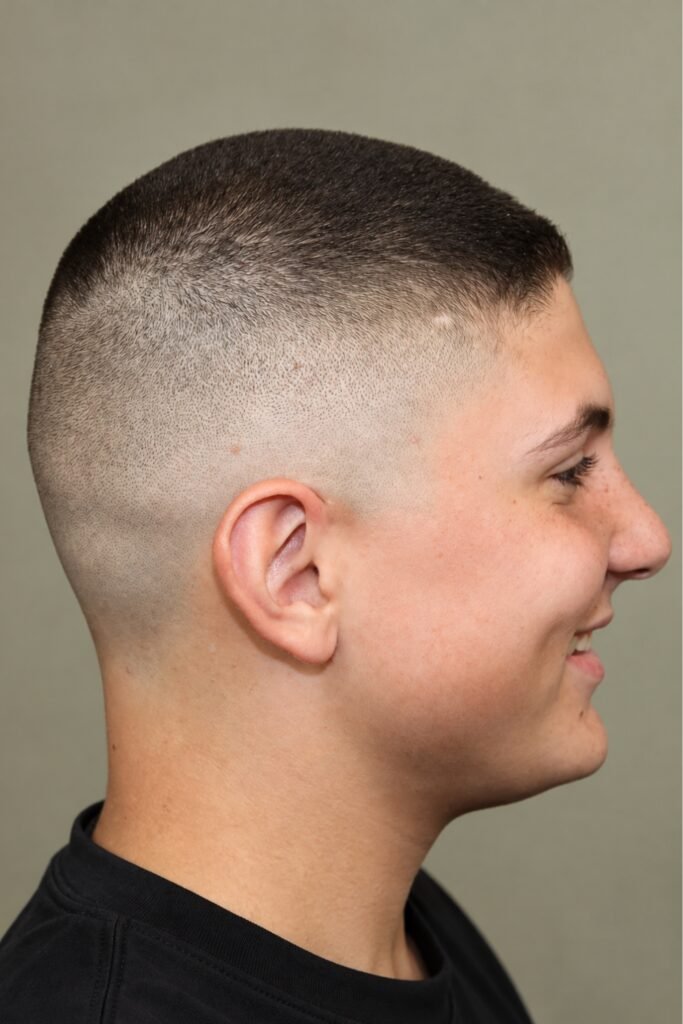
Save4. High Fade Buzz Cut
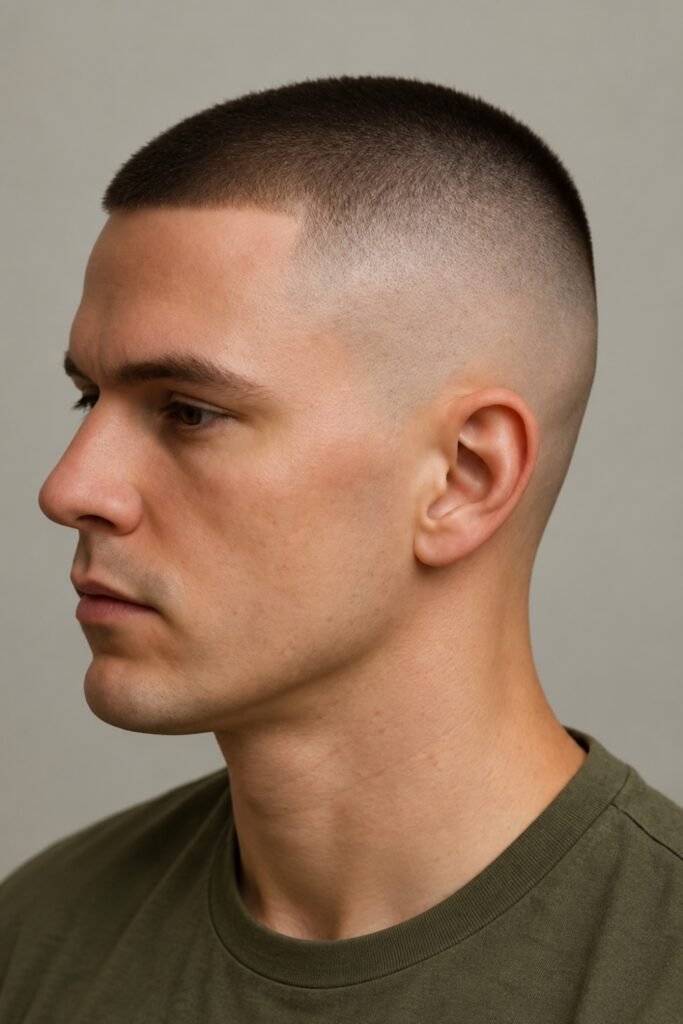
A high fade removes side weight near the temples and leaves the buzzed top visually isolated. It is sharper, more exposed, and less forgiving of a head shape you were hoping the hair would quietly soften.
That is not a warning against it. It is simply the haircut being honest. If you like strong contrast and minimal coverage, this is one of the cleanest versions.
Best for: bold short cuts, thick hair, men who like exposed sides.
 Save
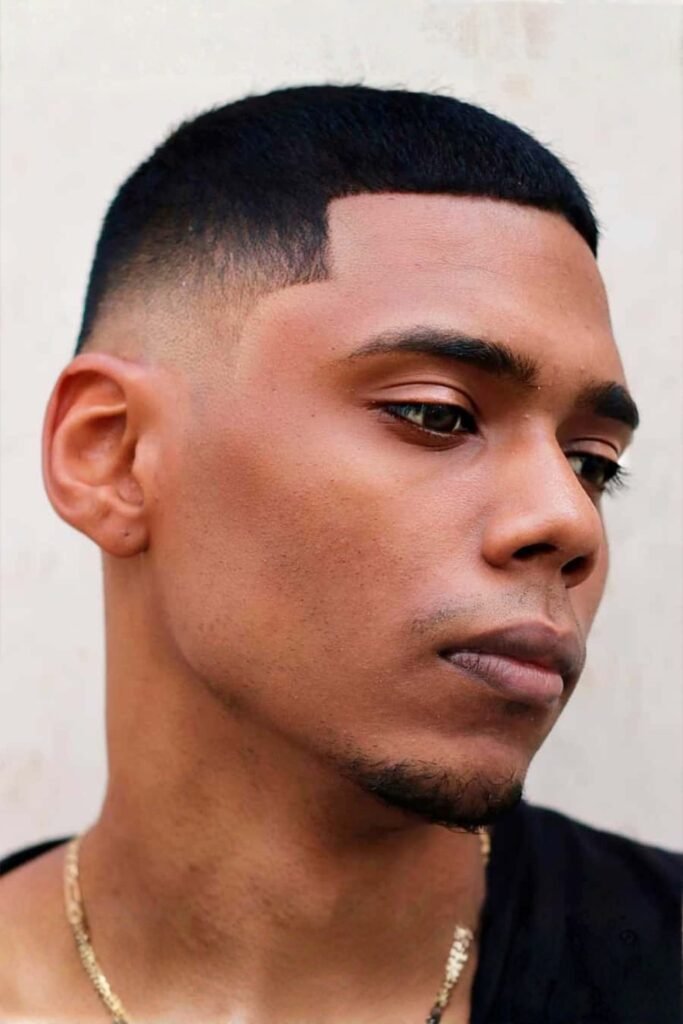
Save5. Skin Fade Buzz Cut
A skin fade takes the lower sides down to bare or nearly bare skin before blending upward. Against a #1-to-#3 buzzed top, the contrast looks precise and modern.
The catch is freshness. A skin fade shows regrowth quickly because the starting point is zero. Low styling does not mean low barber maintenance; those are different bills.
Best for: sharp finishes, hot weather, men who visit the barber regularly.
 Save
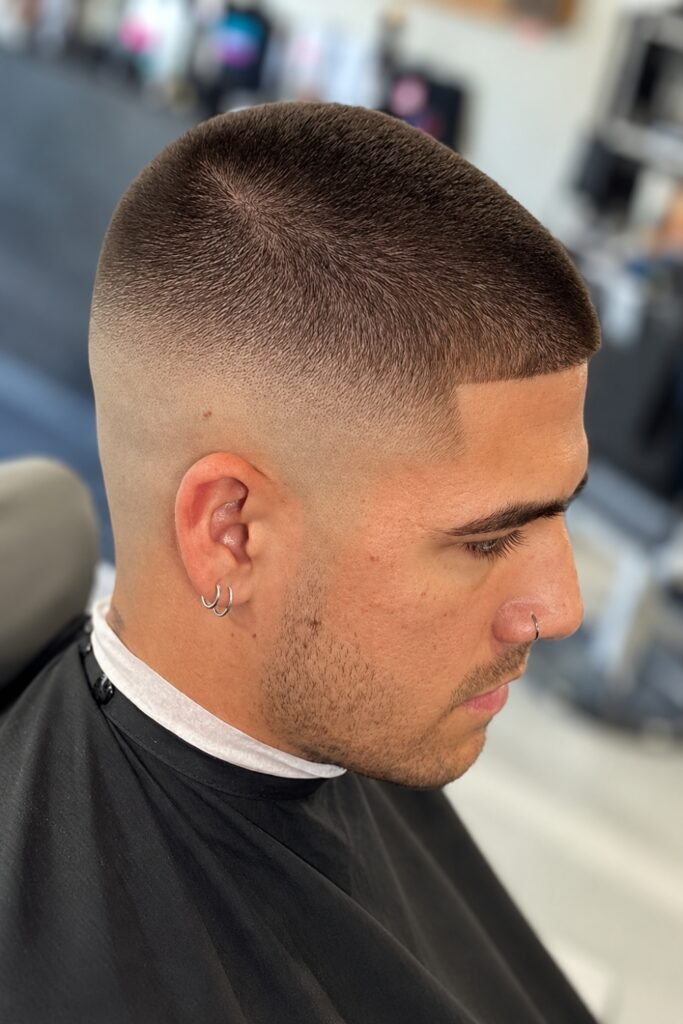
Save6. Taper Fade Buzz Cut
A taper focuses the shortest transition around the temples, sideburns, and neckline instead of stripping the entire side panel. It keeps the buzz neat while preserving more natural density.
If you want the practicality of a buzz but dislike the white-wall effect of a skin fade, this is the sensible compromise. Sensible does not have to mean boring.
Best for: office wear, conservative grooming, softer grow-out.
 Save
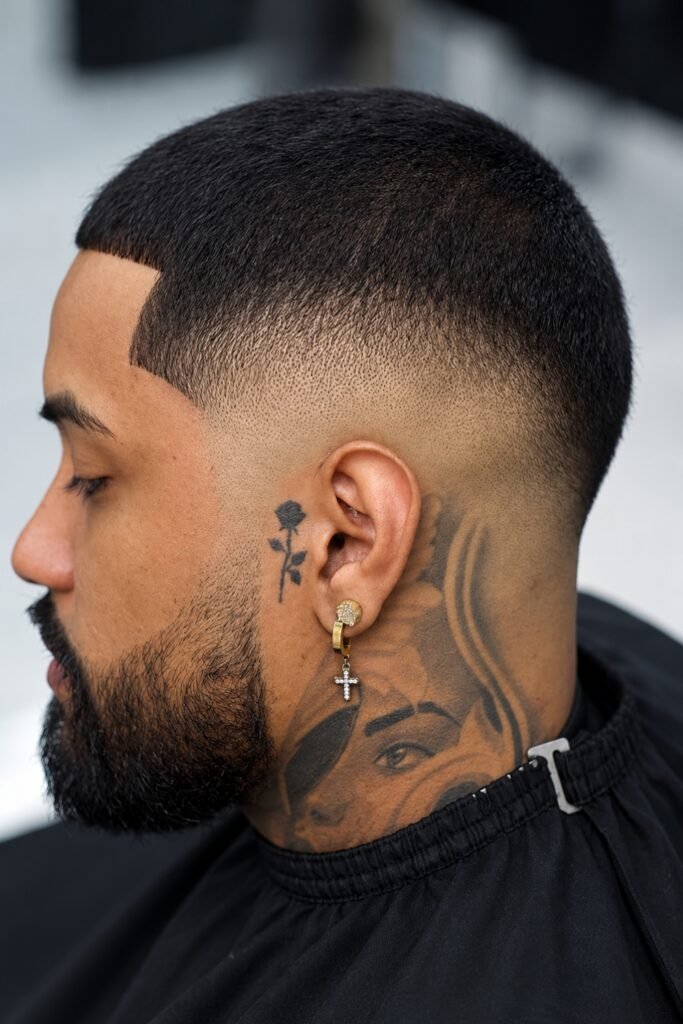
Save7. Drop Fade Buzz Cut
A drop fade curves downward behind the ear, following the head’s contour rather than maintaining one horizontal height. On a buzz cut, that curve becomes the main piece of design.
Ask the barber to keep the drop smooth and proportional. A dramatic dip with almost no top length can make the back of the haircut look busier than the front.
Best for: men who want shape at the back, rounder head contours, modern fades.
 Save
Save8. Burst Fade Buzz Cut
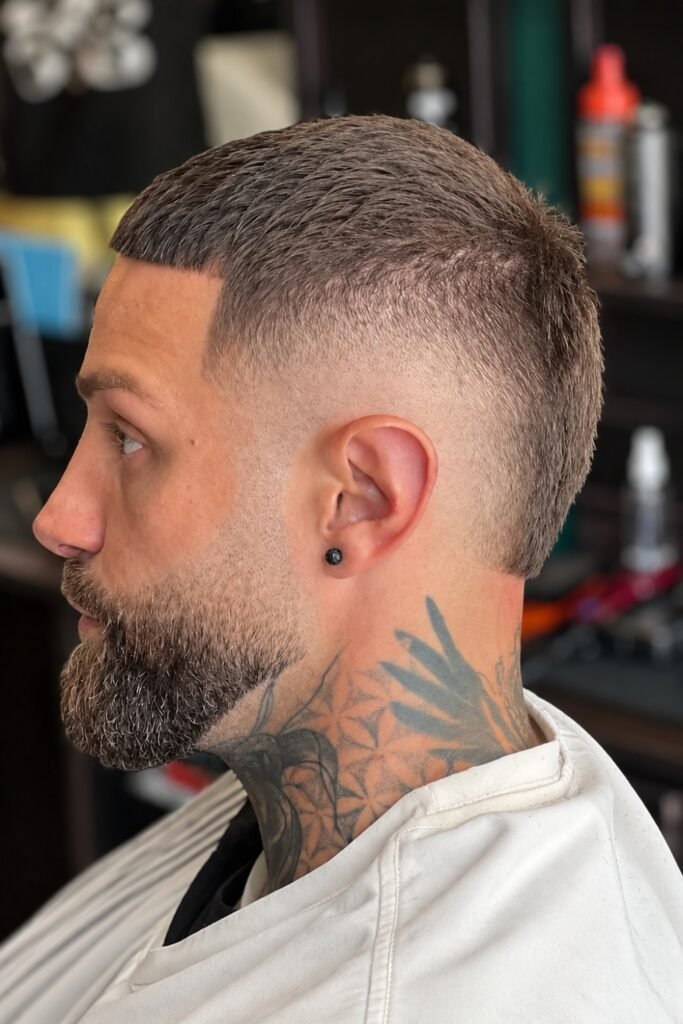
The burst fade creates a rounded gradient around the ear while leaving more hair toward the back. Paired with a buzzed top, it is less conventional than a low or mid fade without requiring longer hair.
This one depends heavily on execution. The curve should look deliberate, not like the barber stopped halfway through a normal fade.
Best for: distinctive short cuts, textured hair, men bored with standard fade lines.
 Save
Save9. Buzz Fade With Line-Up
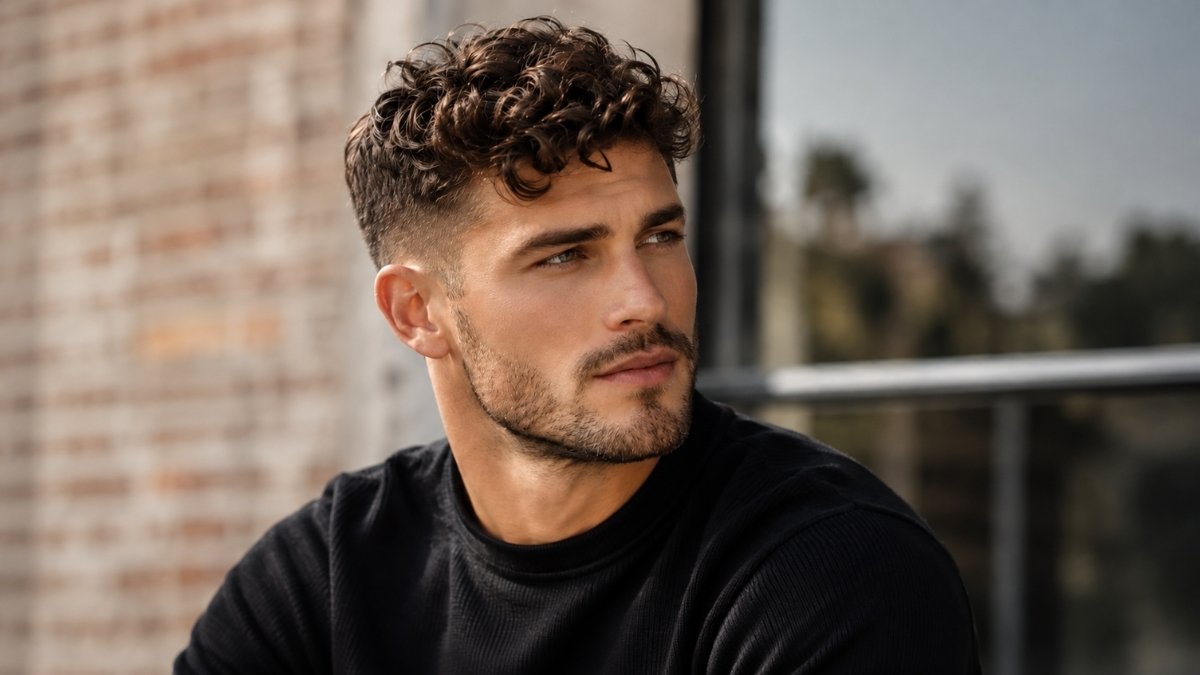
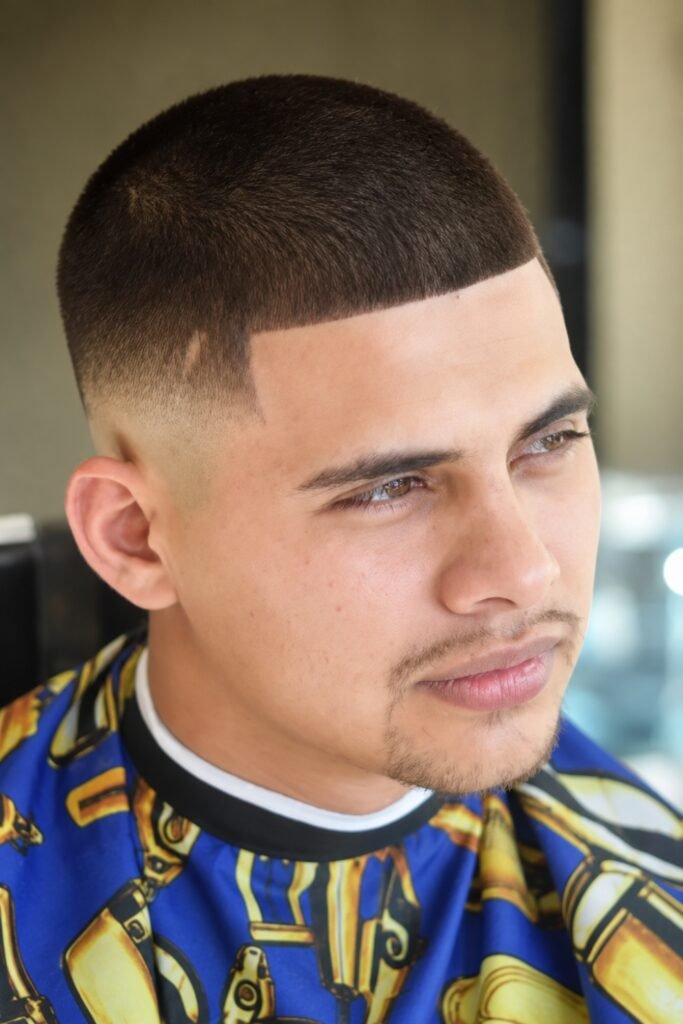
A line-up sharpens the forehead and temple edges while the fade cleans the sides. On coarse, curly, or tightly textured hair, the combination can make an extremely short haircut look highly structured.
Keep the edge-up compatible with your natural hairline. Pushing the line backward for temporary perfection can create an awkward grow-out that no amount of confidence fixes.
Best for: coarse or tightly textured hair, crisp geometric finishes.
 Save
Save10. Textured Buzz Fade
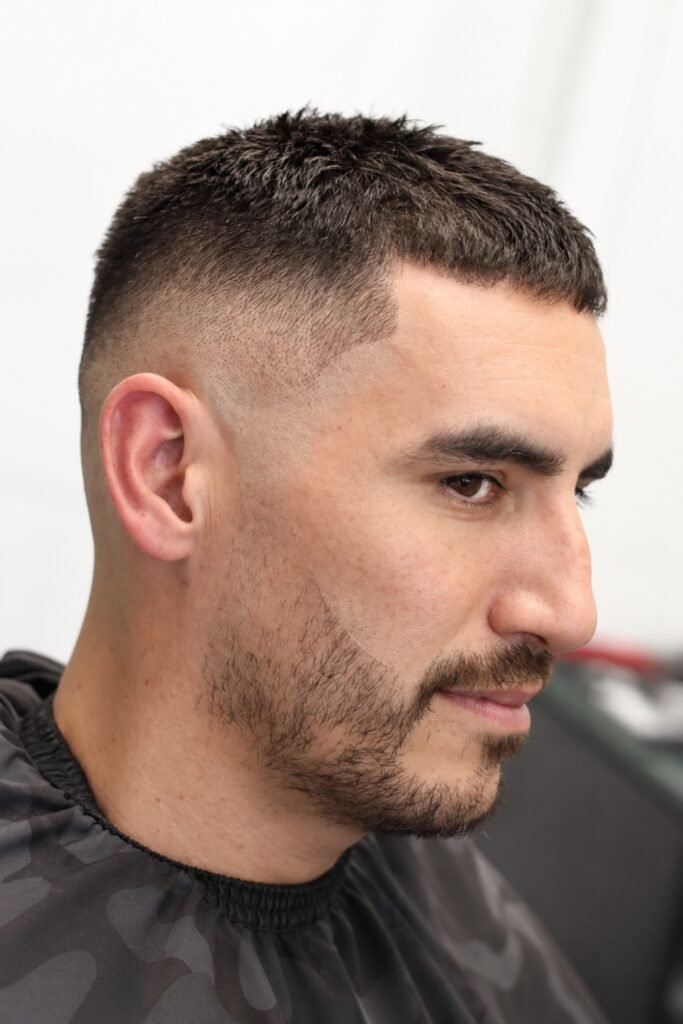
A textured buzz keeps the top long enough for natural bend, curl, or separation to remain visible. The faded sides make that small amount of movement look more deliberate.
There is a minimum length where ‘textured buzz’ stops meaning anything. If the top is nearly skin-close, product cannot invent waves that the clippers removed.
Best for: thick, wavy, or lightly curly hair, #3-and-longer buzzes.
 Save
Save11. Buzz Fade With Waves
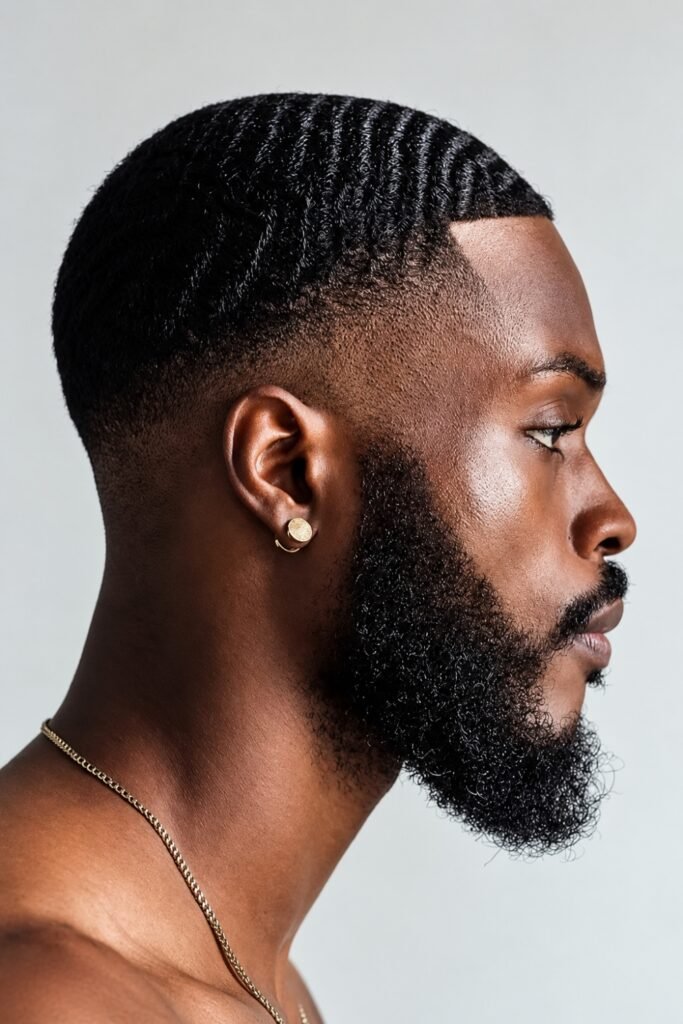
For men who wear 360-style waves or visible short wave patterns, a low or mid fade can clean the perimeter while preserving the pattern across the top.
Tell your barber exactly where you want the fade to begin so it does not eat into the wave area. The pattern needs enough hair and consistent brushing; the fade only frames it.
Best for: wave patterns, textured hair, low or mid fades.
 Save
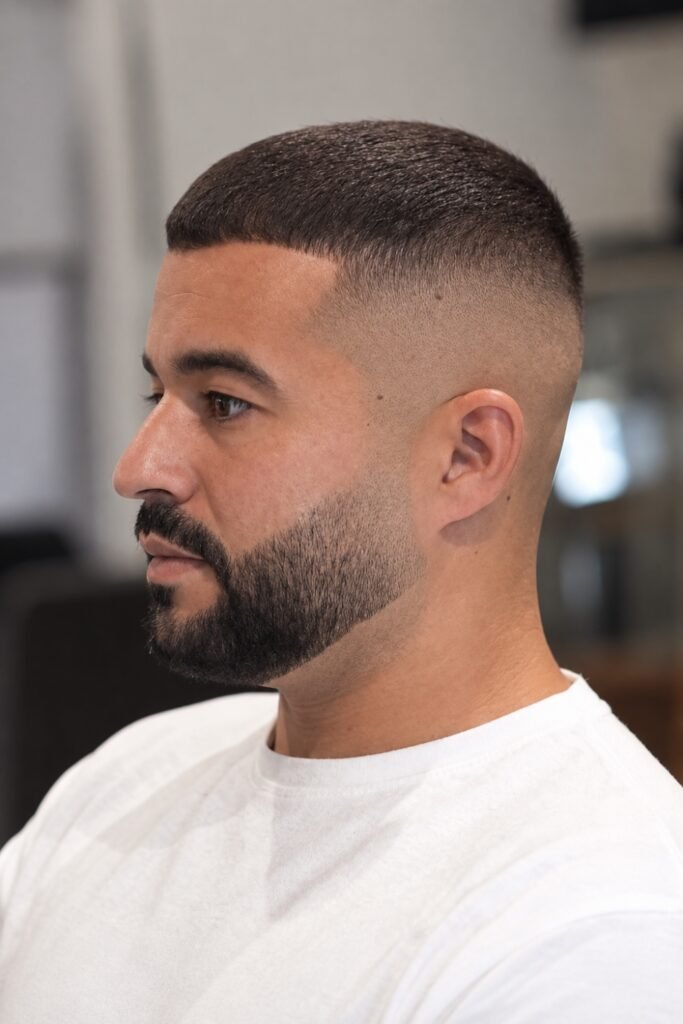
Save12. Buzz Fade With Beard
Facial hair can add visual weight below a very short haircut, especially when the sides are faded close. The cleanest versions connect or intentionally separate the sideburn and beard transition.
Do not assume a bigger beard automatically improves the haircut. Match beard volume to your face and keep the neckline deliberate. Two low-maintenance choices can still become one untidy result.
Best for: men who wear stubble or beards, strong jaw emphasis.
 Save
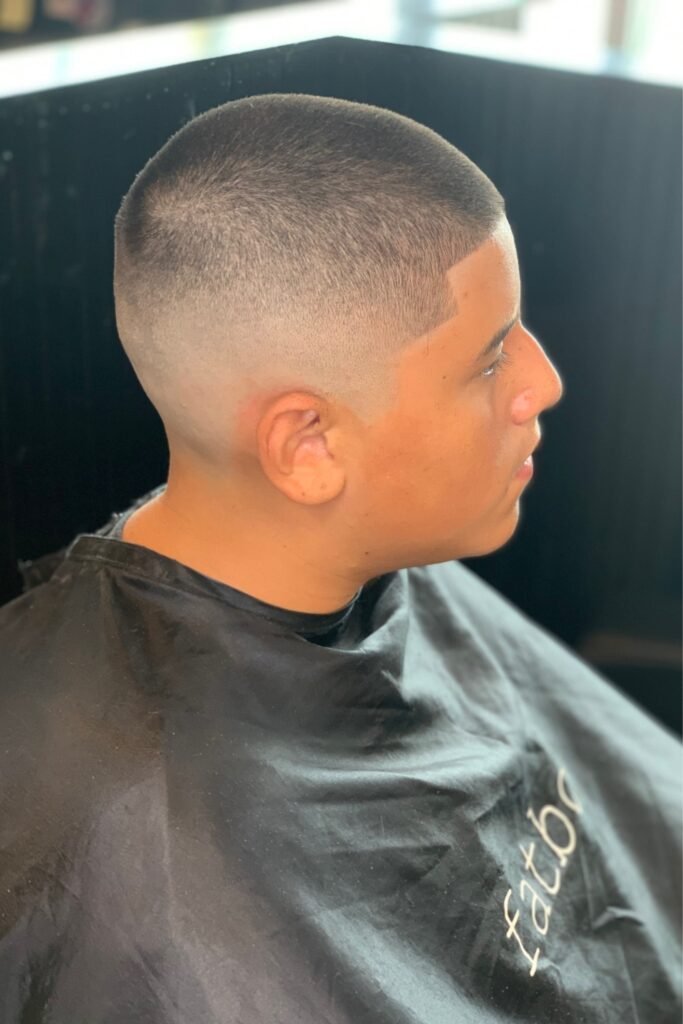
Save13. Military Buzz Skin Fade
This is the shortest, most disciplined option: a very close buzz on top with an aggressive skin fade around the sides. There is almost no styling decision left after the haircut.
Because coverage is minimal, scalp condition and head shape are visible. If that is exactly the point, commit. Trying to hide everything with a microscopic extra millimeter is not a strategy.
Best for: very short-hair fans, athletic routines, maximum simplicity.
 Save
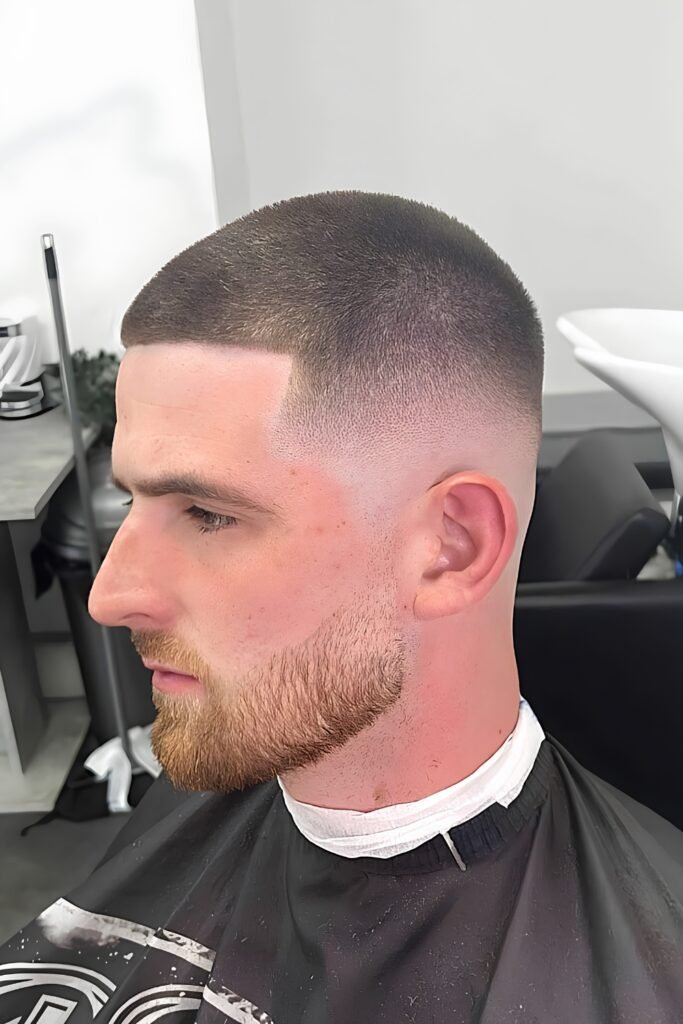
Save14. Thick #3 Buzz With Mid Skin Fade
A #3-style top leaves enough density to feel plush rather than severe, while a mid skin fade supplies the sharp contrast. It is one of the easiest ways to make a buzz feel substantial rather than military.
This is also a forgiving starting point for men unsure about scalp visibility. The fade can be close without forcing the entire haircut to be.
Best for: thick hair, first-time short cuts, men wanting contrast with coverage.
 Save
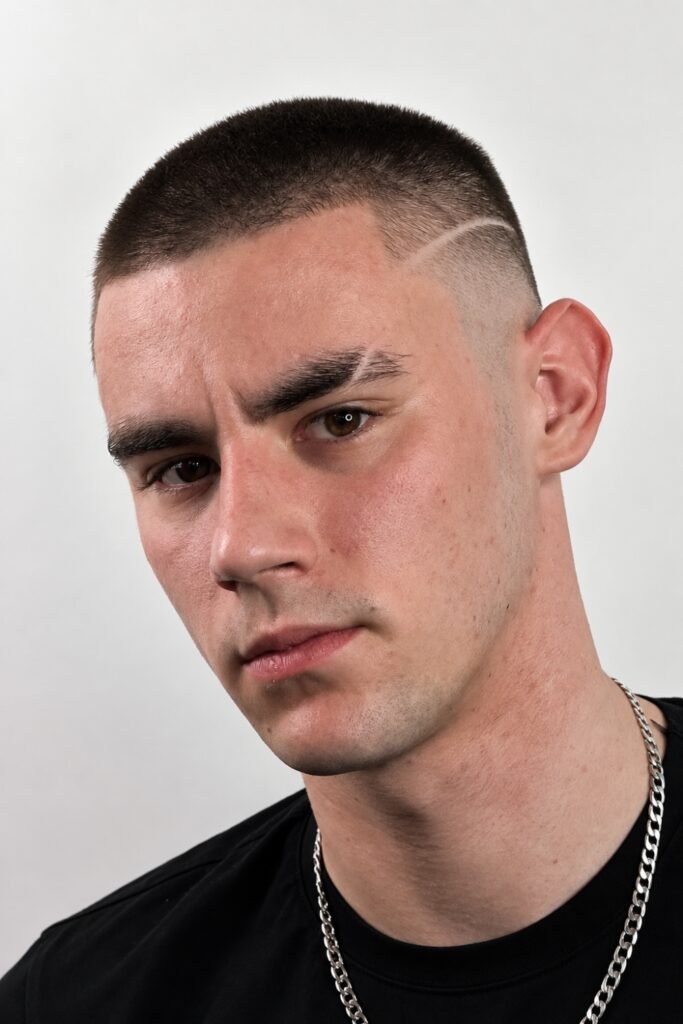
Save15. Buzz Fade With a Subtle Design
A shaved line or small geometric detail can turn the faded panel into a feature. Because the buzz cut is so simple, even a restrained design becomes highly visible.
Stop before the haircut becomes a sketchbook. One clean detail works because the rest of the cut is disciplined.
Best for: statement cuts, younger styling, men who want a small custom detail.
 Save
SaveQuick Guide: Choose Your Buzz Fade
| If you want | Choose | Why | Watch for |
| Subtle sides | Low fade or taper | Keeps more side weight | Fade may look softer sooner |
| Balanced contrast | Mid fade | Clear gradient without extreme exposure | Placement must suit head shape |
| Strongest contrast | High or skin fade | Removes maximum side weight | Regrowth becomes obvious quickly |
| More coverage on top | #3-style thick buzz | Shows less scalp | Needs enough density for the effect |
| Natural texture | Textured buzz or waves | Keeps visible movement | Do not cut top too short |
| Custom shape | Drop or burst fade | Changes the fade silhouette | Requires precise barbering |
Buzz Cut Guard Lengths: Know What You Are Asking For
Guard numbers are useful shorthand, but clipper systems and barber technique can vary. In common US barbering, a #1 is very close, a #2 is still clearly buzzed, a #3 gives noticeably more coverage, and a #4 begins to look softer and fuller.
If scalp visibility worries you, do not choose a guard number because a photo caption told you to. Show the barber the amount of coverage you want. A #2 on very dense dark hair can look fuller than a longer guard on fine light hair.
The safest first move is usually leaving the top slightly longer. You can remove another guard length in sixty seconds. Reattaching it remains outside the standard barber service.
Low vs. Mid vs. High Buzz Fade
Fade height changes the silhouette more than most men expect. A low fade preserves side weight and looks quieter. A mid fade creates a balanced transition. A high fade exposes more temple and side area, making the top look more separate and the overall cut more aggressive.
None is universally better for a face shape. Head shape, temple recession, hair density, beard, and personal taste matter. Use face-shape advice as a starting point, then look at the haircut from the side and back, not just the front-facing reference.
For the wider family, our buzz cut guide covers induction, burr and butch cuts. To compare gradients, see fade haircuts for men. Going closer? Compare skin fade hairstyles, and the drop fade guide shows how a curved fade changes the back and sides.
What to Tell Your Barber
Do not walk in and say only ‘buzz fade.’ Give four pieces of information: how much hair you want left on top, where the fade should start, whether it should go to skin, and whether you want a natural hairline or line-up.
A useful request sounds like: ‘Keep a #3 on top, give me a low fade down to skin, leave the front hairline natural, and keep the neckline clean.’ That is far more useful than showing a celebrity photo with completely different density and hoping the clippers translate the mood.
If you are unsure, ask the barber to start longer and lower. Both decisions can be made more aggressive during the same appointment. The reverse requires several weeks.
How Much Maintenance Does a Buzz Fade Need?
Daily styling is minimal, but the haircut itself is precision-dependent. Skin and high fades lose their crisp contrast faster as hair grows, while tapers and low fades generally soften more quietly.
There is no universal appointment schedule. Hair growth rate, fade height, hair color, scalp contrast, and how sharp you like the outline all affect when the cut starts feeling overdue. If you need the fade to look freshly cut every day, you are choosing frequent barber maintenance even if morning styling takes ten seconds.
Between cuts, keep the scalp clean and comfortable, use sun protection on exposed scalp when appropriate, and resist the urge to redraw a professional line-up with a shaky bathroom trimmer five minutes before leaving the house.
Frequently Asked Questions
What is a buzz fade haircut?
A buzz fade combines a very short clipper-cut top with sides and back that gradually transition to shorter hair, sometimes down to skin. Fade height can be low, mid, or high.
What is the best buzz fade for a first-timer?
A #2 or #3 top with a low or mid fade is a practical starting point because it keeps some coverage and avoids the extreme exposure of a high skin fade.
Is a buzz fade low maintenance?
It requires almost no daily styling, but sharp fades may need regular barber touch-ups. A taper or low fade generally grows out more softly than a high skin fade.
What is the difference between a buzz fade and a taper buzz cut?
A fade usually removes more side hair and can transition to skin across a larger area. A taper is typically more localized around the temples, sideburns, and neckline.
Can curly hair wear a buzz fade?
Yes. Leave enough top length if you want curl or wave texture to remain visible. Very short guard lengths reduce the visible pattern regardless of hair type.
Does a buzz fade work with a receding hairline?
It can. Keeping the top uniformly short may reduce contrast between thinner and denser areas, but hairlines vary. Ask for a natural edge if a hard line-up would exaggerate recession.
Should I get a low, mid, or high fade with a buzz cut?
Choose low for subtlety and more side weight, mid for balanced contrast, and high for a sharper exposed look. Head shape and personal preference matter more than a universal rule.
Can I pair a buzz fade with a beard?
Yes. A beard can add weight around the jaw and balance very short sides. Ask the barber whether you want the sideburn transition blended into the beard or deliberately disconnected.
The Two-Number Test
Before the clippers start, you should be able to answer two questions: how long do you want the top, and how high do you want the fade? Those two decisions control most of what the haircut becomes.
If you cannot answer, start longer on top and lower on the sides. A buzz fade is supposed to simplify grooming. There is no prize for making the first version the most extreme one.