Snow boots change the proportions of an outfit. A trouser leg that sits neatly over a sneaker can catch on an insulated shaft, while a long hem can drag through slush. Getting dressed becomes easier when you choose the boot first and build the trousers and outer layers around it.
These 17 men’s snow boot outfits cover town errands, commutes, winter visits and casual resort plans. The dressier looks suit short, maintained routes; the shell-and-snow-trouser option offers more coverage for time in falling snow. Match the clothing to the forecast and the time outside.
What to Wear With Snow Boots
Straight jeans, roomy chinos, technical cargos and wool trousers can all work with snow boots. Choose a leg opening that clears the shaft and a hem that stays off the ground. Pair substantial boots with a puffer, parka or layered coat, then choose socks that fit inside the boot without squeezing your foot.
For broader cold-weather combinations, explore our winter outfits for men. Here, the focus is the relationship between insulated boots, trouser cuffs and outdoor coverage.
Choose the Boot Before the Outfit
Look for waterproof protection for slush, insulation appropriate to your conditions, and an outsole intended for winter use. A lugged fashion boot or an unlined duck boot is not automatically a snow boot. Check the exact model’s specifications, including how far its waterproof protection extends. Columbia’s winter boot guide explains the separate roles of warmth, comfort and traction.
Snow and smooth ice present different grip problems. Do not treat any outfit or chunky sole as a guarantee against slipping. Where conditions require them, use traction aids compatible with your boots and follow the maker’s directions.
1. Navy Puffer With Dark Straight Jeans
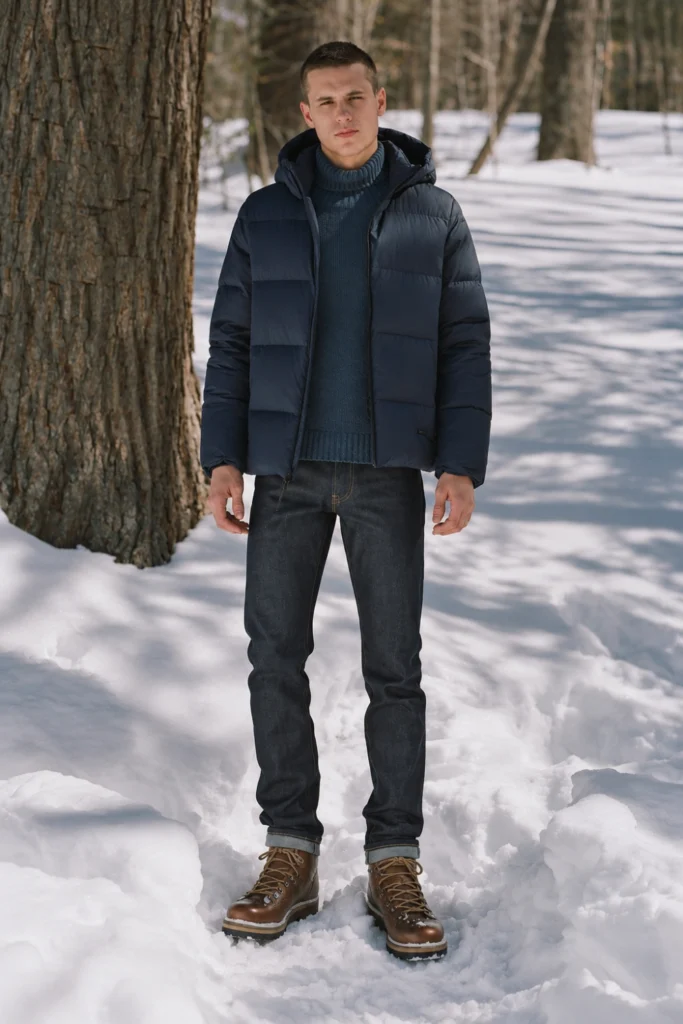
Dark straight jeans give bulky snow boots enough room without making the whole outfit oversized. Wear a navy hooded puffer, a grey wool knit and charcoal insulated lace-up boots, with a beanie that covers your ears.
Let the jeans overlap a compact shaft or tuck a genuinely narrow hem into a taller boot. Avoid a thick roll at the opening: it can crowd the ankle and collect snow. Add thermal bottoms when the conditions call for them.
Best for: everyday town trips and dark denim.
 Save
2. A Navy Peacoat With Cream Knitwear
A double-breasted navy peacoat gives brown-and-black snow boots a sharper setting. Add an ecru crew neck and dark indigo jeans, keeping the knit simple enough for the coat buttons and boot laces to carry the detail.
The coat should close comfortably over the sweater. Choose a winter-lined duck boot with documented waterproof protection rather than assuming that every rubber-bottomed pair is warm. This is a town outfit with shelter nearby.
Best for: casual dinners and classic outerwear.
 Save
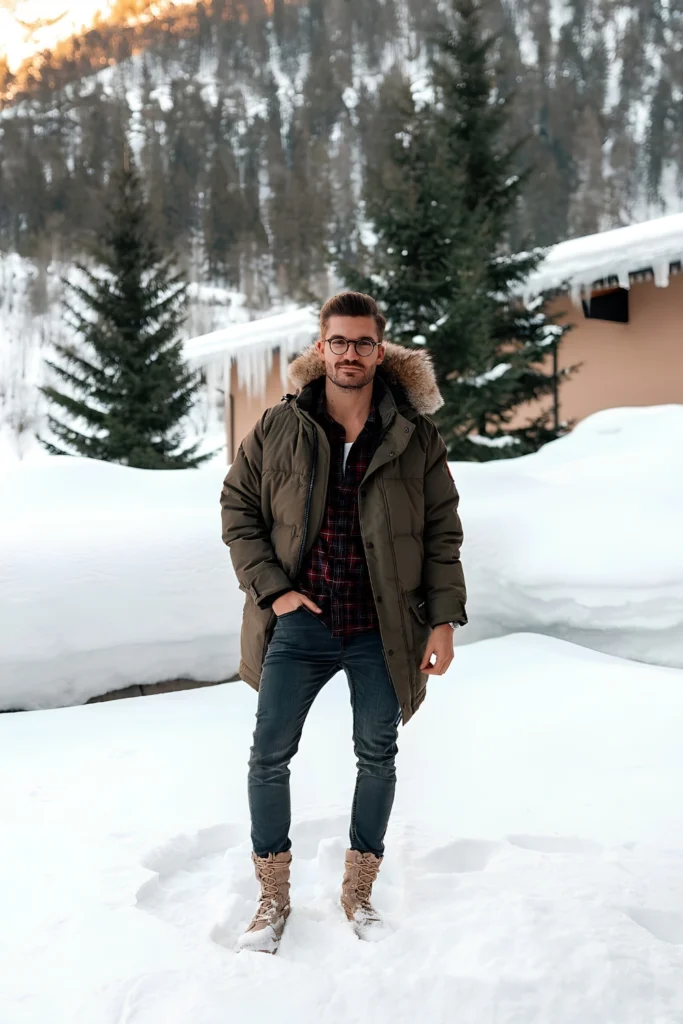
3. Red Flannel Under an Olive Parka
Red-and-black checks bring colour close to the face while an olive parka keeps the silhouette grounded. Pair them with charcoal jeans and black snow boots. A plain dark base layer keeps the shirt from competing with another pattern.
Wear the flannel as an indoor layer beneath the coat. Cotton denim and cotton flannel belong on short urban outings with suitable outer protection, rather than prolonged wet or active trips. Keep the shirt hem inside the parka.
Best for: weekend errands with indoor stops.
 Save
Our flannel shirt outfits for men offer more shirt-and-trouser combinations for the indoor part of the day.
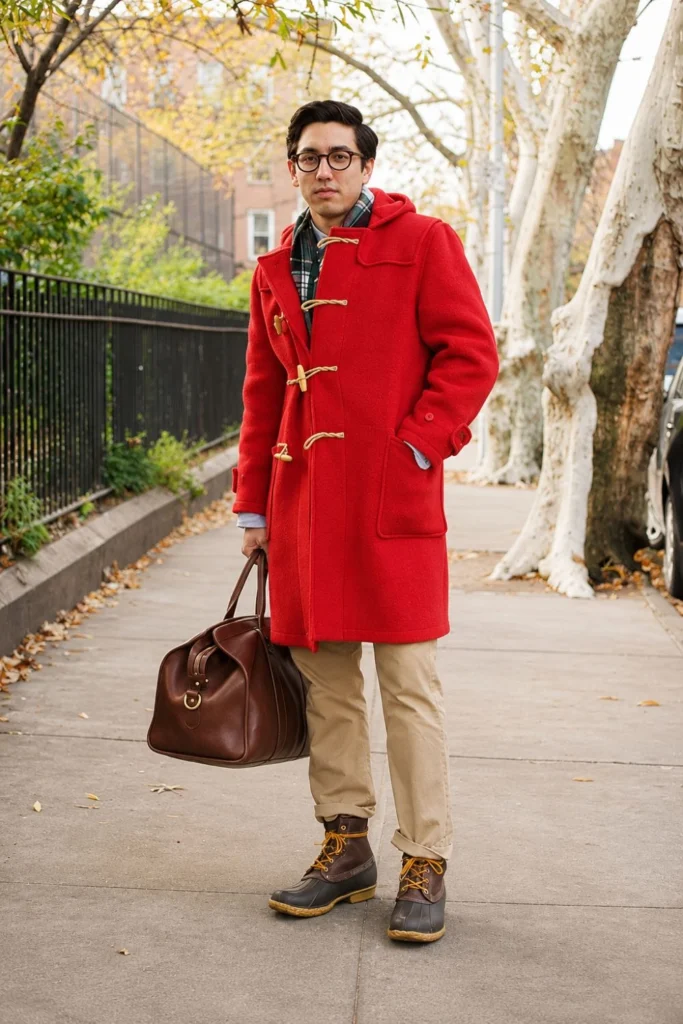
4. A Red Duffle Coat With Sand Chinos
A red duffle coat feels less predictable beside sand chinos than another pair of black jeans. Add a fine navy knit and brown insulated duck boots. The toggles, rubber lower and warm neutral trousers give each part a clear shape.
Select straight chinos that pass over the shaft without stretching across it. Keep pale hems away from dirty slush by choosing the right length, rather than turning them up several times. Reserve this combination for maintained routes.
Best for: colourful town dressing and short walks.
 Save
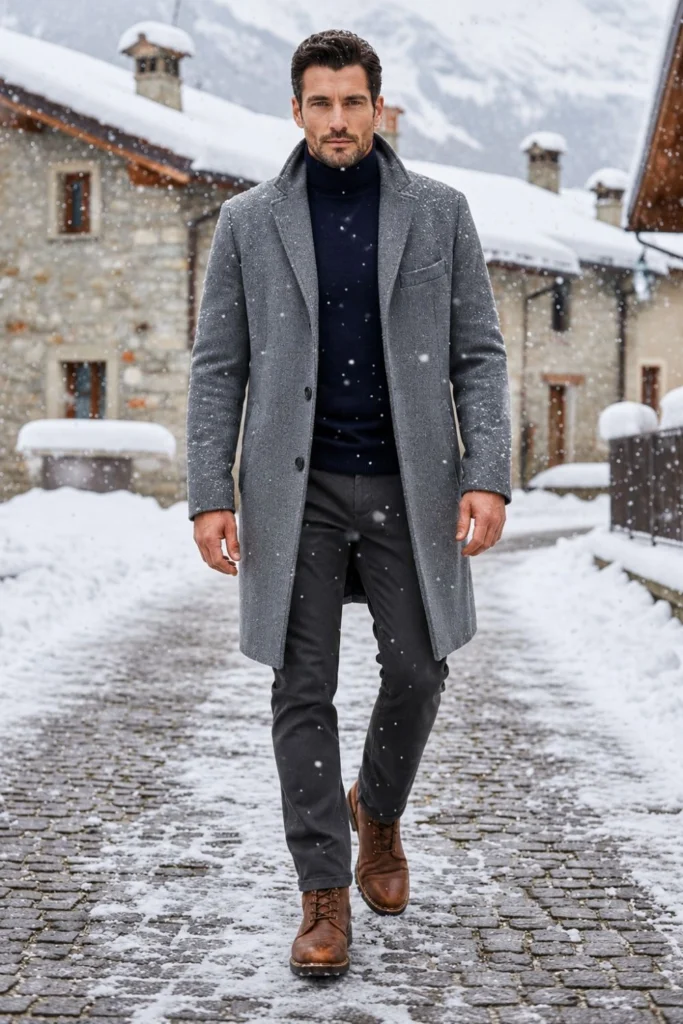
5. A Charcoal Coat With Wool Trousers
Wool trousers can work with snow boots when the leg opening accommodates the footwear. Try charcoal trousers, a black roll neck and a long grey coat, with plain black insulated boots that have a relatively compact upper.
Have the trousers checked while wearing the boots. The back hem should stay off the ground and the front should fall without a deep pile of fabric. Carry indoor shoes if your destination requires a more formal finish.
Best for: office commutes with a shoe change.
 Save
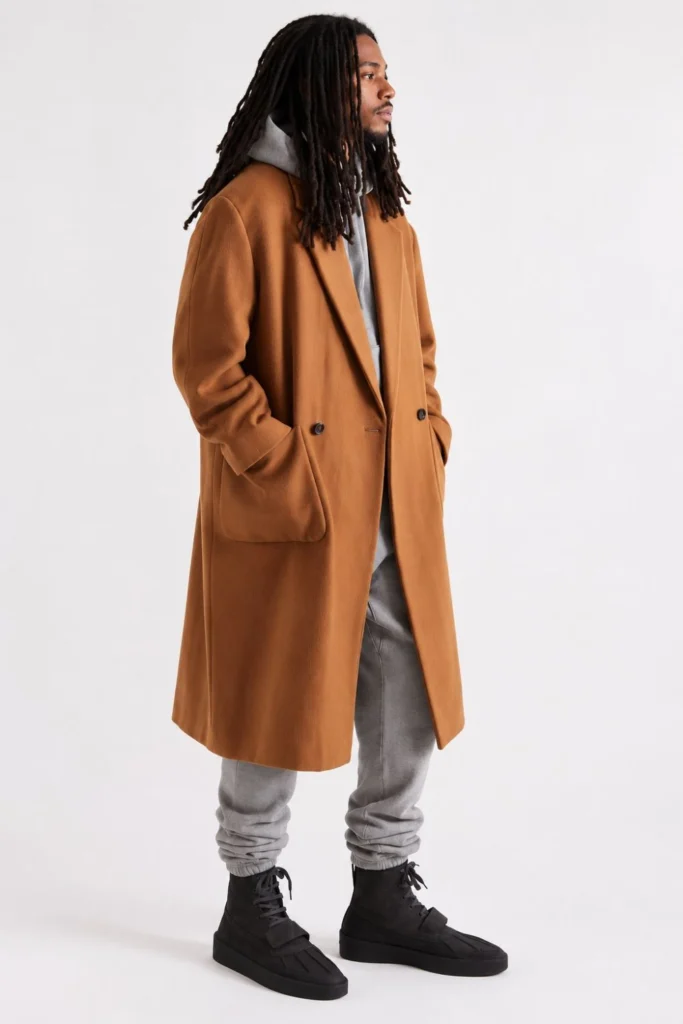
6. A Camel Coat Over a Grey Tracksuit
A grey sweatshirt and joggers become an easy travel outfit beneath a camel coat. Black snow boots give the soft separates a firmer base. Choose a coat with room through the upper arms so the sweatshirt does not pull the lining.
Let jogger cuffs rest above the boot collar, with socks covering any gap. Do not jam thick elastic into a closely fitted boot. Add a weatherproof outer layer if precipitation would soak the coat or sweat fabric.
Best for: short transfers and travel days.
 Save
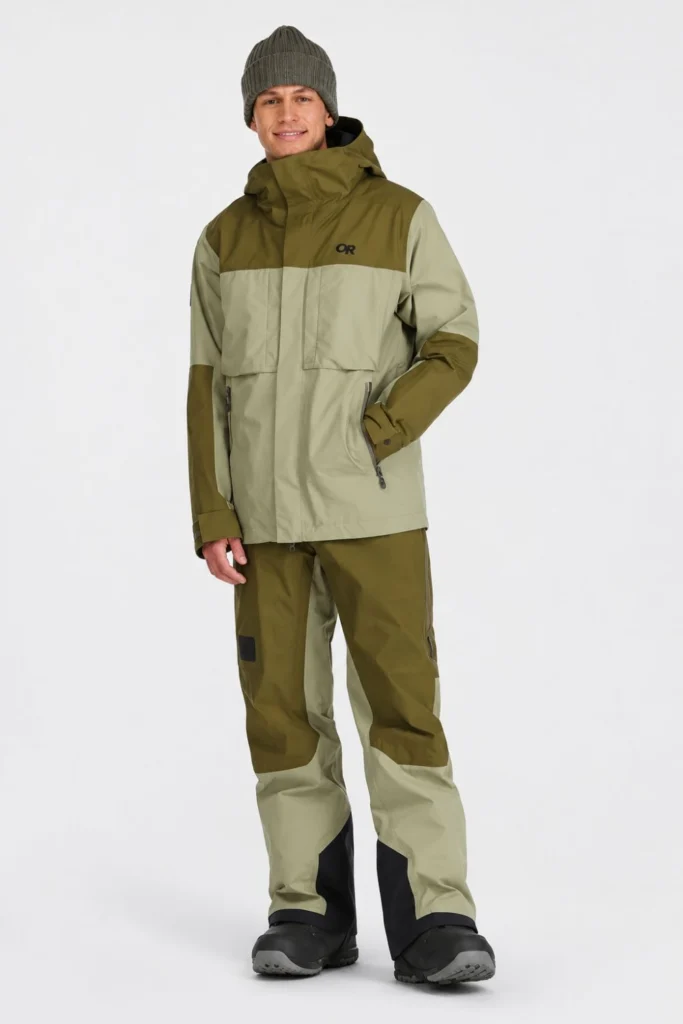
7. A Shell Jacket With Snow Trousers
For time spent in falling snow, build the outfit around coverage. Wear a forest-green waterproof shell over an insulating midlayer and a moisture-managing base layer, then add black snow trousers and tall insulated boots.
Arrange the trouser gaiters as the garment maker directs, normally over the boot opening. The cuffs must clear the ground without exposing the collar. This is the practical option for playing in snow; technical mountain trips need activity-specific equipment.
Best for: snowy outdoor time near town or a resort.
 Save
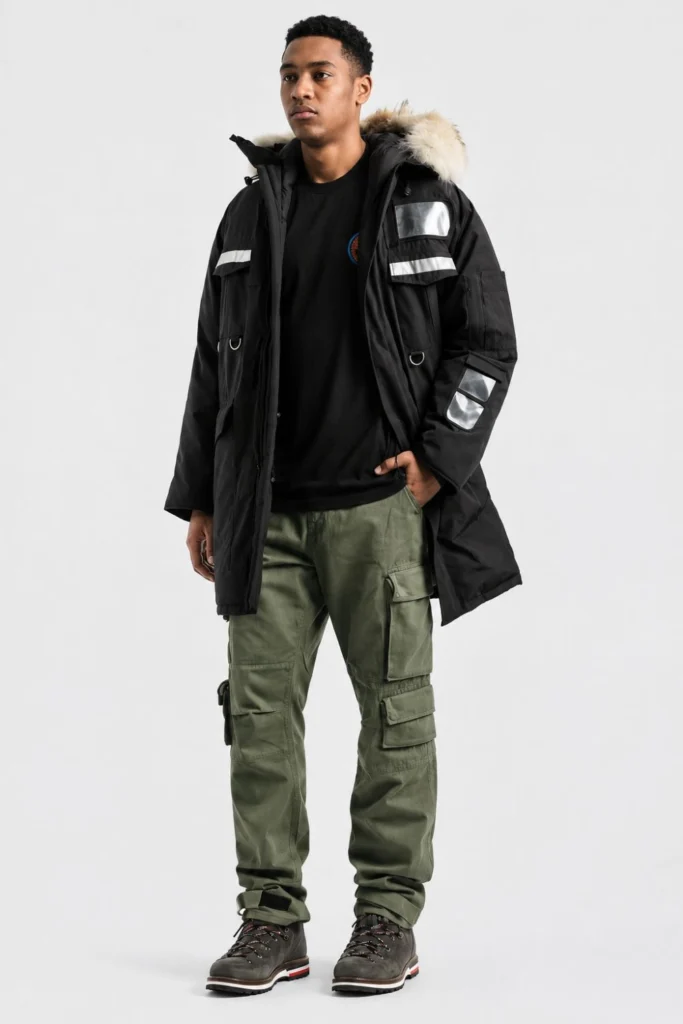
8. A Long Parka With Technical Cargo Trousers
A long black parka balances grey technical cargos and substantial mid-calf boots. Choose trousers with low-profile pockets so the leg keeps a clear line, then keep the fleece and base layer underneath in the same muted palette.
Fit the trouser opening over the shaft before buying. A narrow cargo cuff may need a different boot rather than a forced tuck. For loose snow, add compatible gaiters if the trousers do not seal the opening.
Best for: longer everyday outdoor spells.
 Save
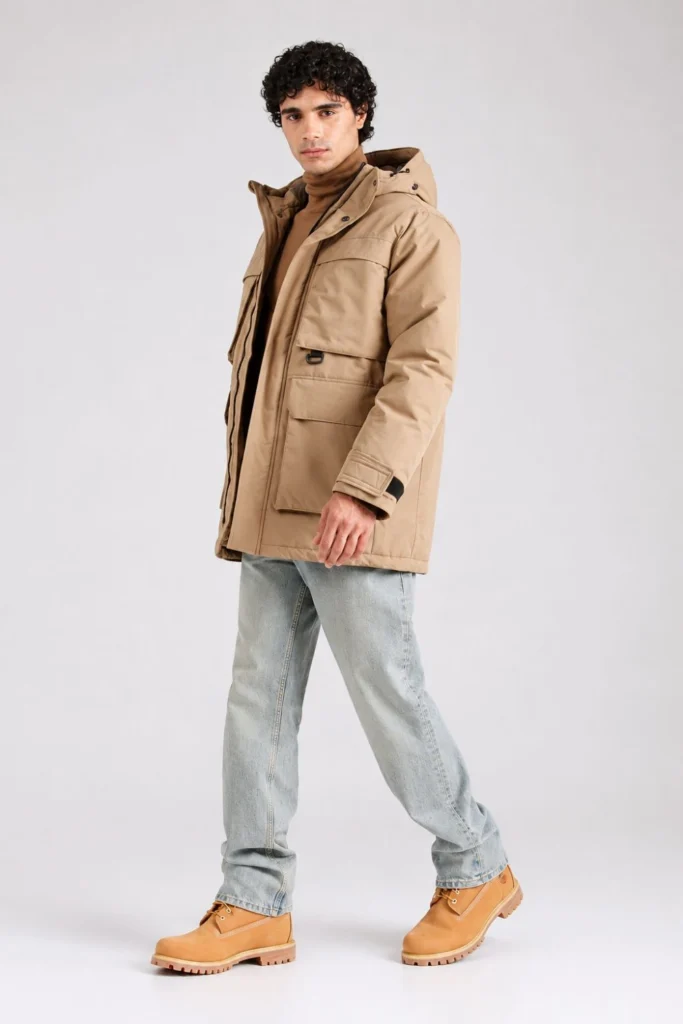
9. Light Denim With a Stone Parka
Light-wash jeans can look crisp with a stone parka and grey knit. Finish with dark brown insulated boots so the footwear remains distinct from the pale layers. A charcoal beanie adds definition without another bright colour.
Choose an unbroken straight hem over the upper instead of cropped jeans that expose the leg. This lighter palette works best on cleared streets where muddy spray is limited. Leave distressed denim for another day.
Best for: bright daytime city outings.
 Save
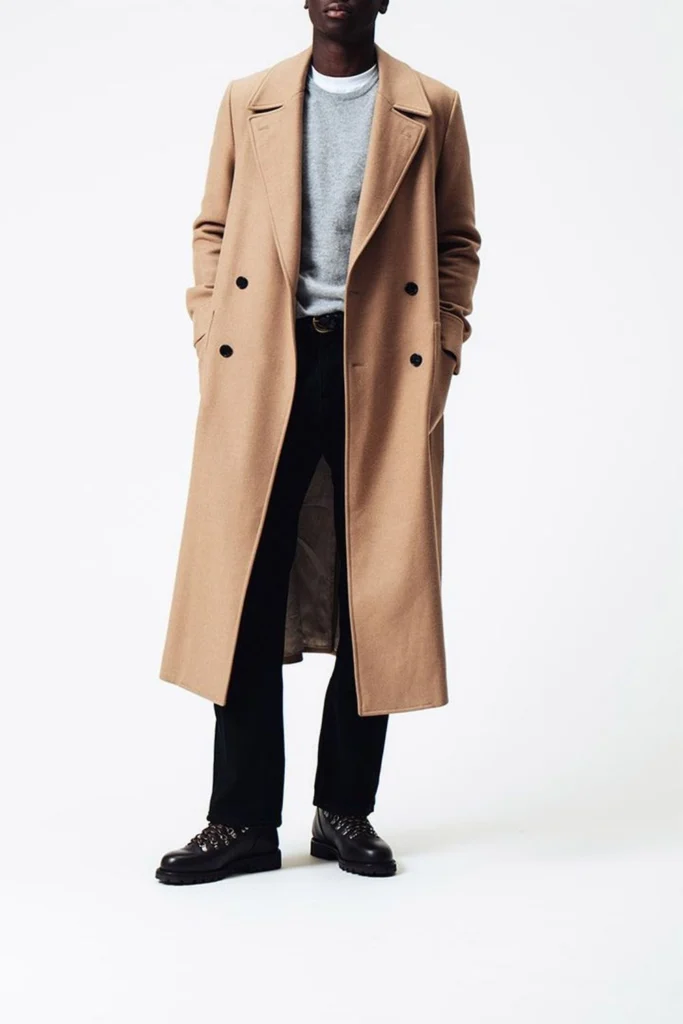
10. Black Denim With a Camel Overcoat
A camel overcoat is enough colour for an otherwise black outfit. Wear a black knit, straight black jeans and plain black snow boots, allowing the boot toe and lower shaft to remain visible beneath the denim.
The coat needs sufficient insulation for the time you will spend outside; a fashion overcoat alone is not automatically enough. Keep hems clear of the heel and use this look for short, maintained routes.
Best for: evening plans with a casual dress code.
 Save
11. A Shearling Jacket With Brown Corduroy
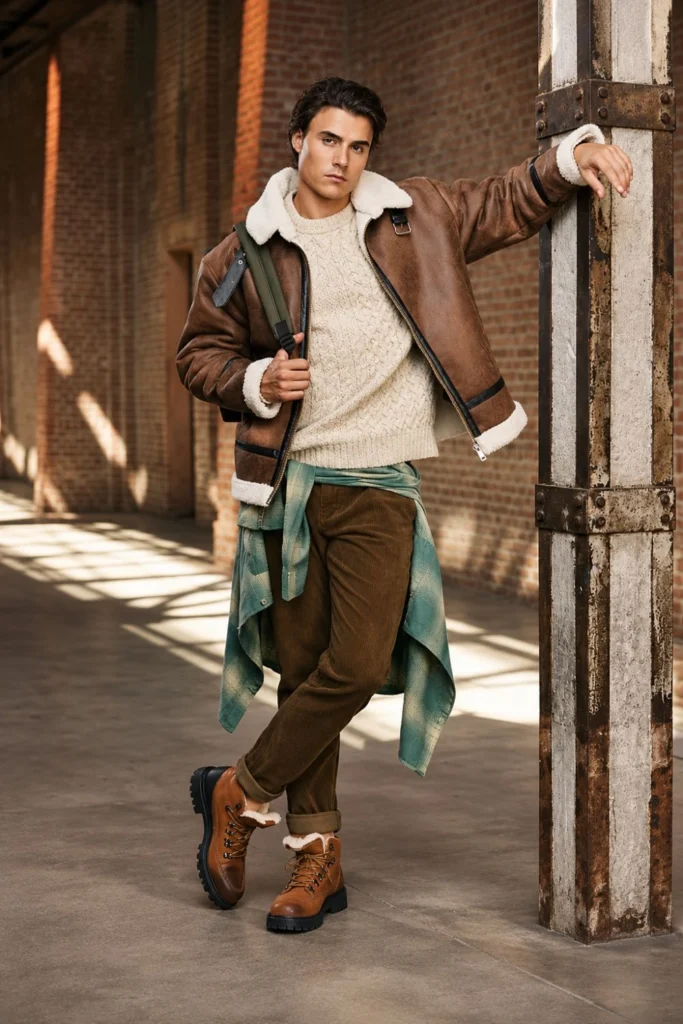
Corduroy gives a broad snow boot something textured to sit beneath. Choose dark brown straight cords, an oatmeal sweater and a brown shearling or faux-shearling jacket. Tan insulated boots lift the bottom of the outfit.
Keep the cords outside the shaft if the opening allows it. The ribs should fall vertically rather than bunching in a thick ring. This textured outfit is better suited to dry, cold town conditions than wet snow.
Best for: textured casual outfits and dry cold days.
 Save
12. A Striped Knit With a Black Insulated Jacket
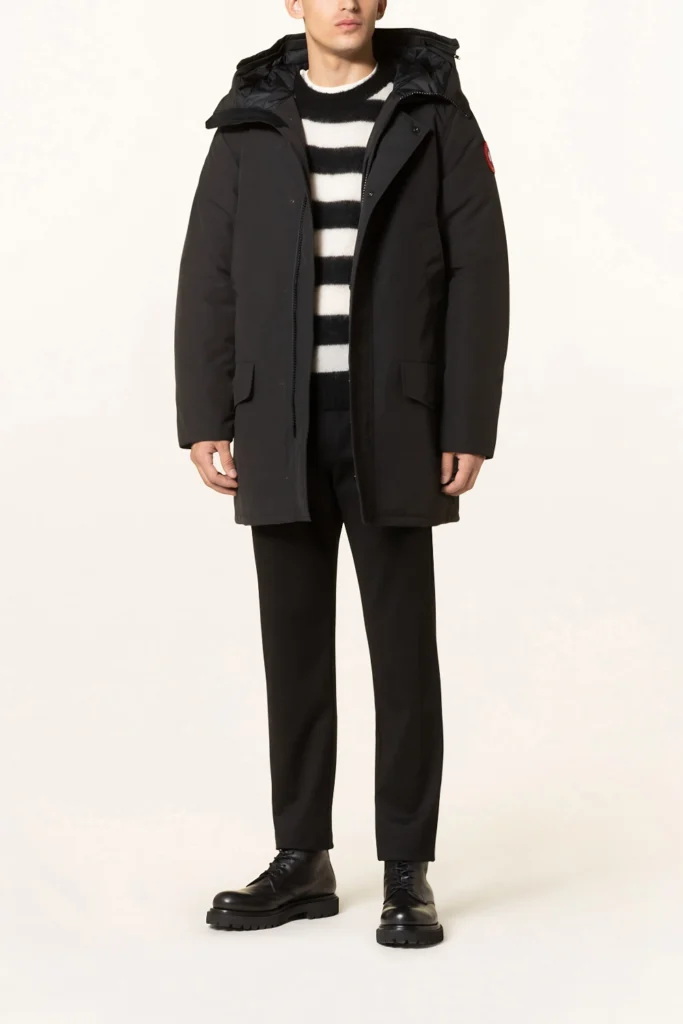
A navy-and-cream striped sweater makes a simple black jacket and navy trousers feel considered. Black insulated lace-up boots keep the lower half quiet. Use broad, readable stripes rather than adding a second small pattern.
Choose straight trousers with a little room at the ankle. A sweater hem that finishes around the hip works neatly beneath a shorter jacket; a long shirt tail can make this compact combination look crowded.
Best for: casual lunches and simple patterned knitwear.
 Save
13. Green Trousers With a Navy Coat
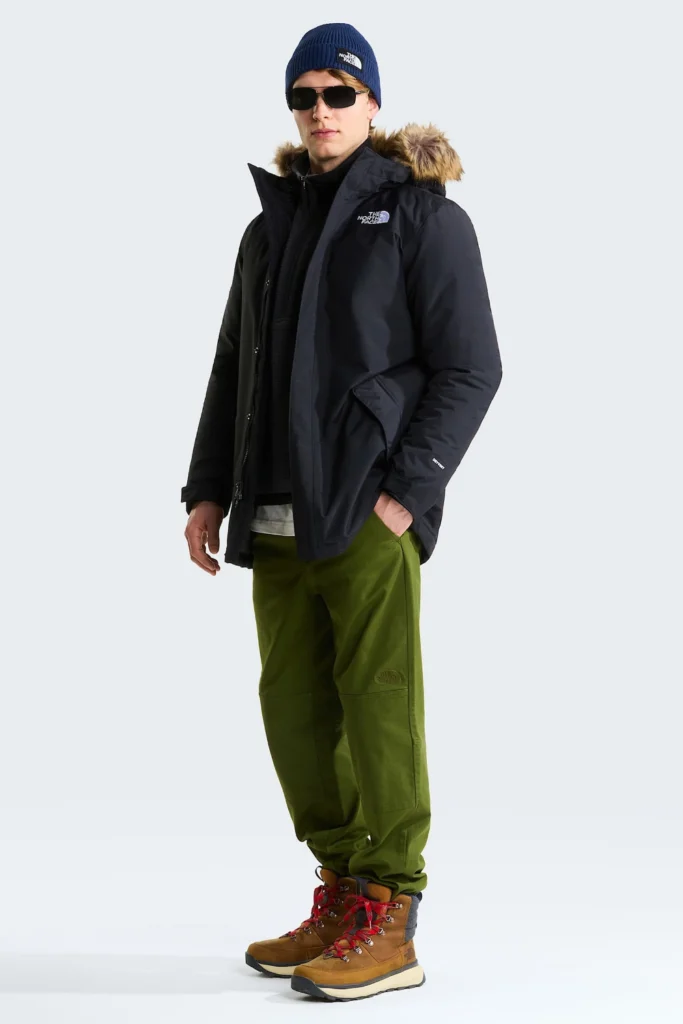
Deep green trousers offer colour without demanding a bright coat. Wear them with a navy sweater, navy overcoat and dark brown insulated boots. The two dark blues leave the green visible while the boots add warmth to the palette.
Keep the trousers straight through the calf so their colour reads as one clear block. A bulky snow boot under very tight trousers creates an abrupt change in width; roomier hems make the transition easier.
Best for: understated colour and daytime plans.
 Save
14. A Quilted Vest With a Checked Shirt
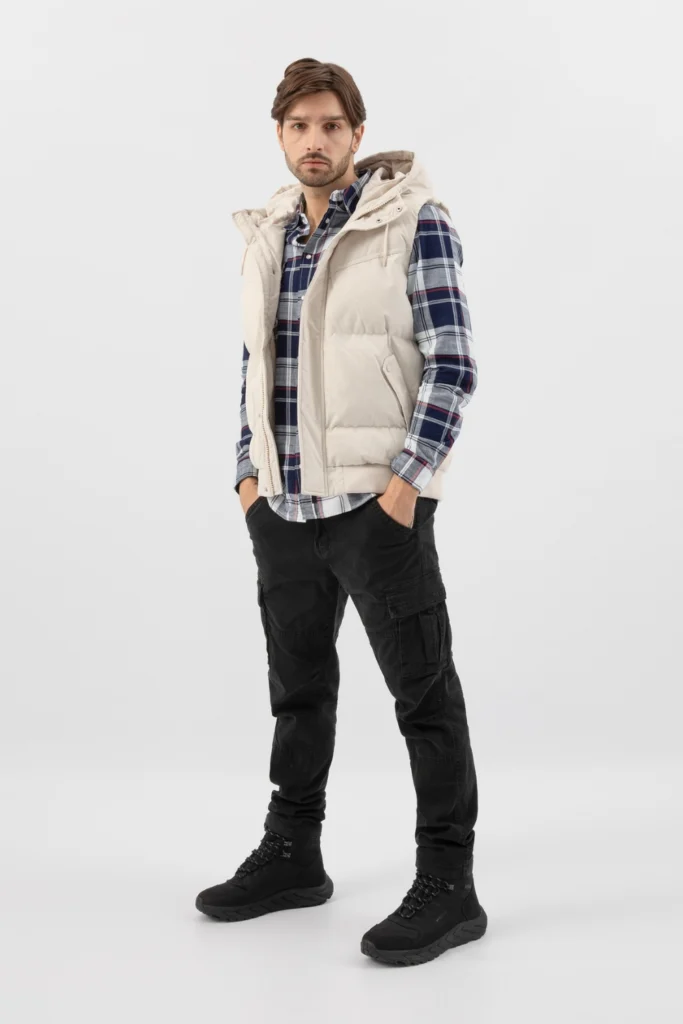
On a mild, dry day, a quilted vest over a checked wool shirt creates a less bulky top half. Pair it with dark straight jeans and brown insulated duck boots. Add a plain beanie rather than another checked accessory.
A vest leaves the arms less protected, so keep a full coat available and change layers when the weather turns. This outfit suits brief outings between warm places, not a long wait outdoors or a snowfall.
Best for: milder winter days and quick errands.
 Save
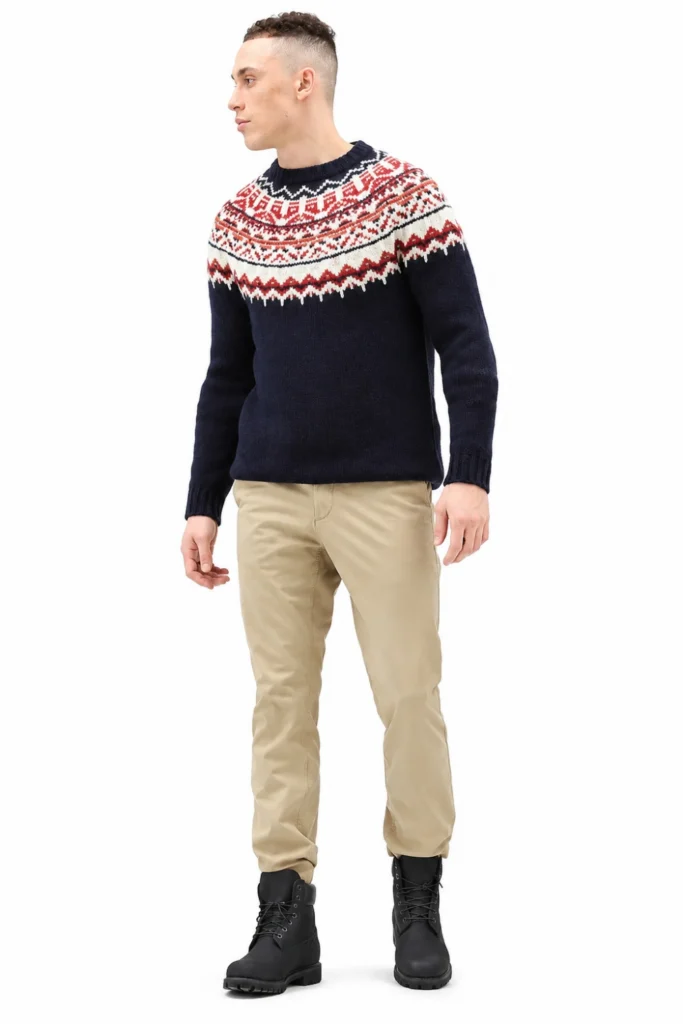
15. A Fair Isle Sweater With Navy Snow Boots
A Fair Isle knit can supply the festive detail without a novelty print. Use a cream-and-navy sweater, dark blue trousers and navy insulated snow boots, then add a navy parka for the outdoor part of the day.
Take the parka off indoors rather than relying on the sweater as your only protection outside. Keep the pattern on the upper body and the boot laces plain, especially if the knit includes several colours.
Best for: holiday visits and casual après-ski meals.
 Save
For the gathering itself, our Christmas outfit ideas for men include more festive knitwear and smarter alternatives.
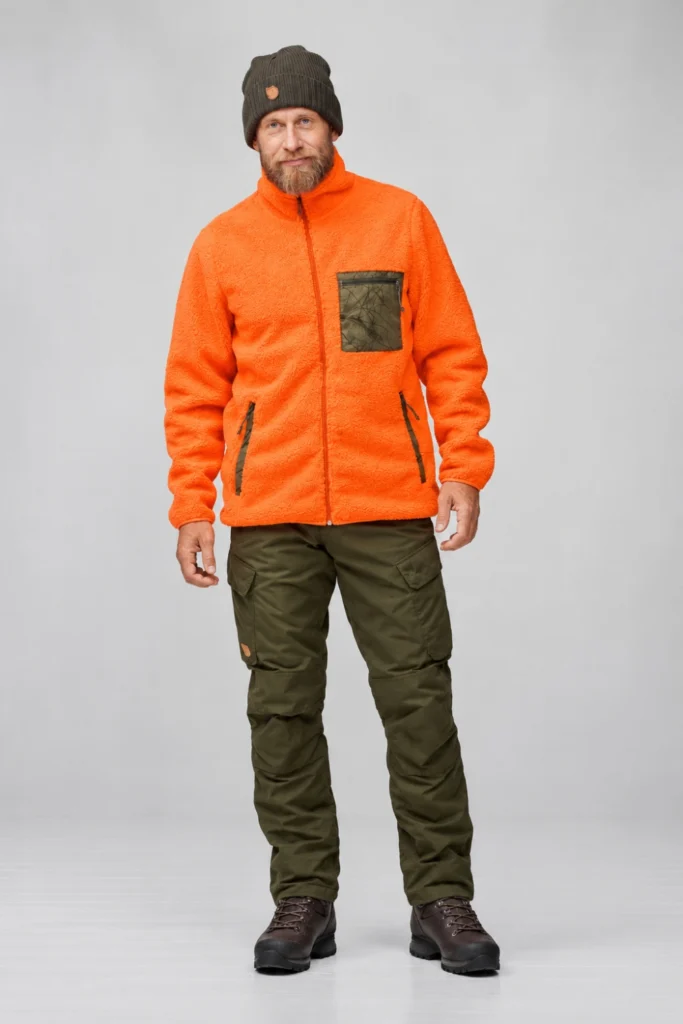
16. Olive Cargos With an Orange Midlayer
A small area of burnt orange livens up olive cargos and a dark parka. Wear the colour in a fleece zip neck, with black insulated boots below. Flat cargo pockets and plain gloves keep the useful details from turning into clutter.
Use a fleece weight that fits beneath the coat without compressing your shoulders. Keep cargo hems over the boot collar where possible, and check that the pocket contents do not interfere with bending your knees.
Best for: relaxed outdoor dressing and a warm colour accent.
 Save
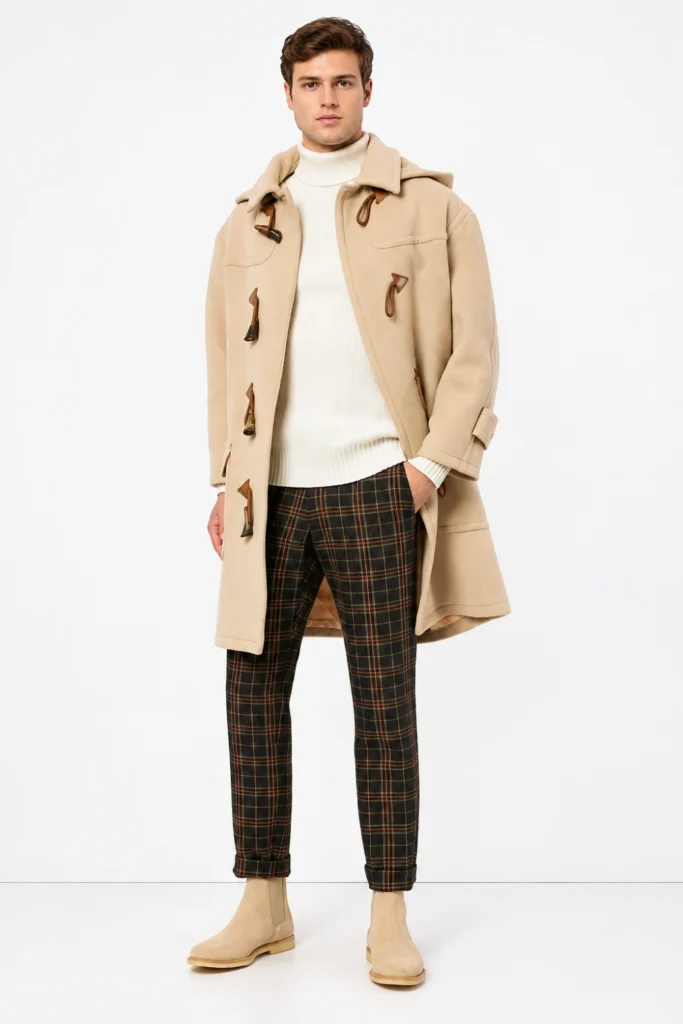
17. A Duffle Coat With Checked Wool Trousers
Subtle checked trousers give a plain duffle coat a different finish from denim. Choose a dark olive coat, charcoal-and-brown wool trousers and a cream roll neck, with brown insulated boots that have a restrained upper.
Leave enough width for the trouser check to hang straight over the boot. A long patterned scarf would compete with the trousers, so use a solid scarf tucked inside the coat. Bring indoor shoes for a dressier destination.
Best for: smart casual winter visits.
 Save
Quick Guide to Snow Boots and Trouser Hems
| Bottoms | Useful boot shape | Hem approach | Best setting |
| Straight jeans | Compact insulated lace-up | Overlap freely; no dragging | Short town outings |
| Chinos | Winter-lined duck boot | Straight opening over shaft | Maintained streets |
| Wool trousers | Plain compact snow boot | Clean break with ground clearance | Commute and indoor shoe change |
| Joggers | Mid-height insulated boot | Cuff above collar; socks cover gap | Brief transfers |
| Technical cargos | Mid or tall snow boot | Overlap or add suitable gaiters | Longer everyday outdoor time |
| Snow trousers | Tall insulated boot | Gaiter over opening as directed | Falling snow and snow play |
Socks Layers and the Boot Opening
Try boots with the socks you plan to wear. Your toes should move comfortably, the heel should stay reasonably secure, and the fastening should hold without painful pressure. A thicker sock is useful only if the boot has room for it. Timberland’s snow boot fit guidance recommends checking the fit in your intended socks.
For extended outdoor time, use a wool or synthetic moisture-managing base layer, an insulating middle layer and weather protection suited to the conditions. Cotton denim, sweatshirt fabric and flannel are casual town choices, not substitutes for protective snowwear. REI’s cold-weather layering guidance also recommends covering boot tops with shell trousers or gaiters to help keep snow out.
Keep the outer cuff over the opening when snow could fall inside. Tucking jeans into boots can reveal the shaft for a town look, but it does not seal the opening against loose snow. Test the arrangement by taking a high step and sitting down; it should stay in place without tightening around the ankle.
For more ideas on combining clothing lengths and accessories, see our winter layering guide.
Frequently Asked Questions
Can men wear snow boots with jeans?
Yes. Straight jeans with enough room at the ankle are an easy casual option. Keep the hem above the ground and avoid distressed areas that expose skin. For prolonged wet or active outdoor use, choose suitable technical trousers instead.
Should trousers go inside or outside snow boots?
Outside is a useful starting point when the hem clears the shaft, especially when an outer cuff or gaiter needs to cover the opening. A slim hem can tuck into a roomy boot for a town outfit. Avoid stuffing thick folds against your ankle.
Are duck boots the same as snow boots?
Not necessarily. Duck boots describe a rubber-bottomed design, and versions vary in insulation and waterproof construction. Choose an explicitly winter-insulated model for cold conditions and check its specifications. A thick sock does not make every unlined pair suitable for snow.
Can snow boots look smart casual?
Yes. Plain boots with a compact upper can sit beneath straight wool trousers, a fine knit and a tailored coat. They still look practical and substantial. Carry indoor shoes when the venue or workplace calls for more formal footwear.
What socks should you wear with snow boots?
Wool or synthetic winter socks are useful options. Select thickness for the boot’s available room rather than choosing the thickest pair automatically. Try the socks and boots together, and change damp socks when possible.
Should you buy snow boots a size bigger?
Follow the specific model’s sizing guidance and try them with your intended socks. Automatic sizing up can create heel slip, while a tight fit can cause pressure. Check toe room, heel hold and comfort while standing and walking.
Can you wear joggers with snow boots?
Yes, for short casual outings or transfers. Let the cuff sit above the collar and cover any gap with socks. Cotton joggers can soak through in wet snow, so use protective trousers for longer exposure.
Do chunky snow boot soles stop slipping on ice?
A chunky appearance alone does not establish ice grip. Check the outsole’s intended use and consider compatible traction aids where conditions require them. Walk cautiously and avoid assuming that snow performance guarantees grip on smooth ice.
Can you wear snow boots for après ski?
Yes, for walking around a resort and casual meals. Pair them with a knit, suitable trousers and outdoor layers. Snow boots are not ski boots, and a casual après-ski outfit is not equipment for skiing or technical winter terrain.
Check the Outfit at the Door
Put on your socks, boots, trousers and coat together. Walk, sit and take a high step. Check for a dragging hem, an exposed ankle, a cuff that catches on the boot or pressure from a forced tuck. Then compare the outfit with the forecast and your plans. Adjust the coverage before adding another accessory.