The same pair of snow boots can work with leggings for an early errand, wide jeans for lunch and wool trousers for the trip to work. The useful adjustment happens where the clothes meet the boot: a smooth tuck, a free-moving trouser opening or a skirt hem that stays clear of the collar.
These 16 snow boot outfits for women give you different ways to make that connection work. Most are everyday town combinations for short routes with warm indoor stops. Look 15 adds shell layers and snow trousers for longer outdoor time. Choose the coverage for your plans before choosing the colour palette.
The Easiest Clothes to Pair With Snow Boots
Leggings and slim jeans fit inside roomy shafts, while straight or wide trousers can fall over compact boots. Knit dresses and midi skirts work for short town outings with suitable tights and outer layers. Keep every hem off the ground and avoid forcing thick fabric into the boot.
Our broader winter outfits for women guide covers more cold-weather clothing combinations. Here, each look starts with insulated footwear and the fit around it.
1. A Navy Long Puffer With Black Leggings
For mornings when you want to get dressed quickly, start with black winter leggings, a hip-length black knit and a navy hooded puffer. Tan insulated snow boots make the footwear easy to see against the dark base.
Let a smooth legging hem sit inside the boot without folds behind the ankle. If you show a sock edge, keep it narrow rather than stacking several thick cuffs. Choose leggings for the actual conditions; a fleece lining alone does not establish wind or water protection.
Best for: everyday errands with indoor stops.
For other jacket lengths and silhouettes, see our puffer jacket outfit ideas. Keep the boot collar and coat stride in mind when adapting them.
 Save
2. A Taupe Wool Coat With Slim Black Jeans
A taupe coat and cream high-neck sweater give black jeans a softer setting. Add black insulated lace-up boots and a plain black beanie. The light upper layers keep the outfit readable without introducing another colour.
Tuck only a slim, comfortable jean hem into the boot. If the seam presses against the ankle, switch to a wider leg worn outside. This is a short city-route outfit: choose enough underlayers for the weather and a more protective coat when precipitation demands it.
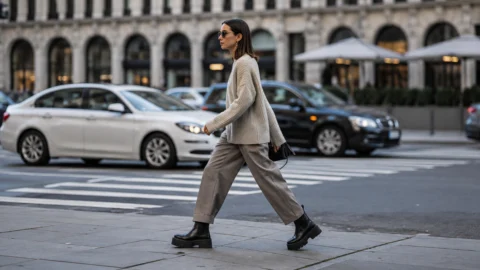
Best for: coffee dates and maintained town routes.
 Save
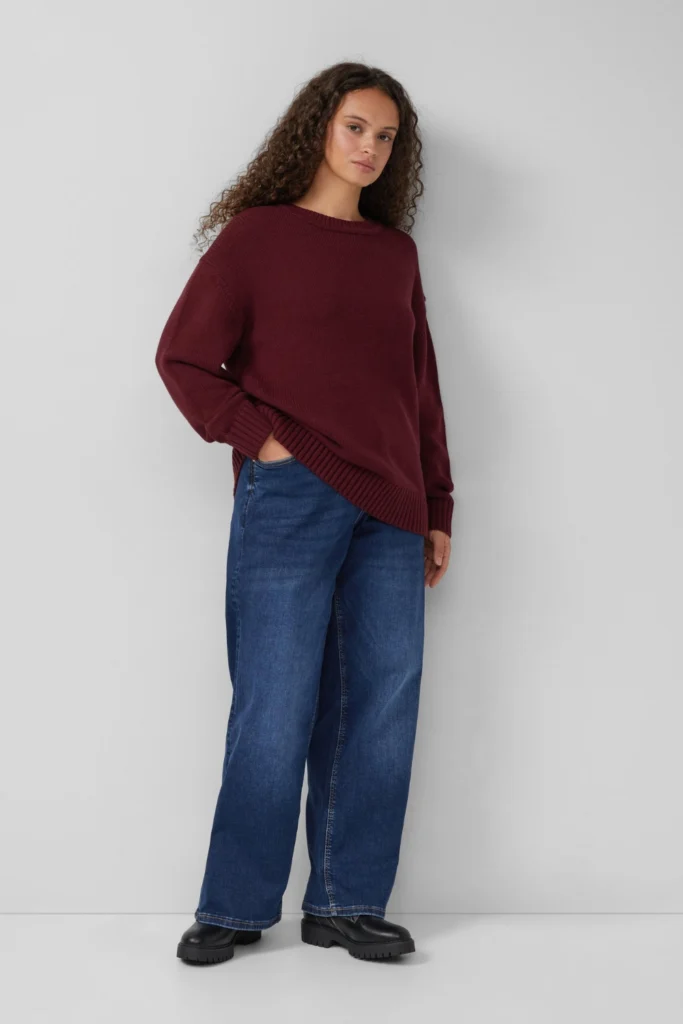
3. Wide Blue Jeans With a Burgundy Knit
Wide jeans let a shorter snow boot sit beneath the hem rather than making the ankle the focal point. Wear dark blue denim, a burgundy sweater and a hip-length charcoal puffer with grey insulated boots.
Set the denim length while wearing the boots. The back must clear the pavement and the front should not hide the entire toe in a pile of fabric. Keep this cotton-denim combination for town outings where you can avoid prolonged wet exposure.
Best for: roomier denim and casual lunches.
 Save
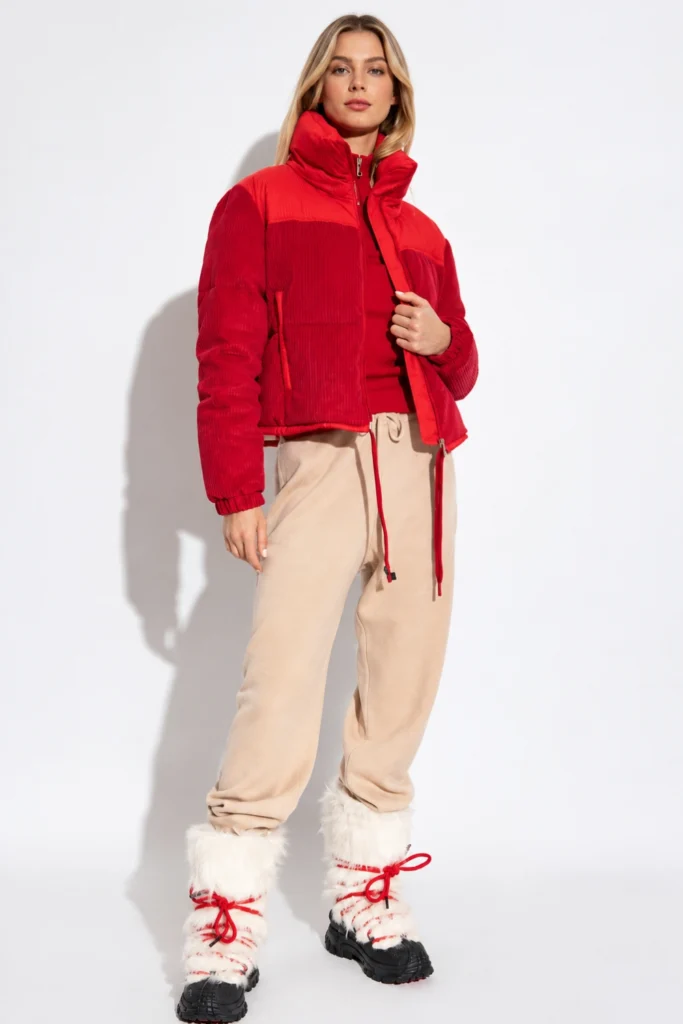
4. A Tan Lounge Set With a Red Puffer
A red coat gives a plain tan lounge set a clear focal point. Choose joggers and a matching crew neck, then add black snow boots and dark socks. The warm neutral separates make the bright outer layer feel easy to wear.
Rest the jogger cuff above the collar, with the sock covering the gap. Thick elastic pushed inside a tight shaft can create pressure. A full puffer offers more arm coverage than a vest; save this soft outfit for short transfers and nearby plans.
Best for: travel days and quick outdoor transfers.
 Save
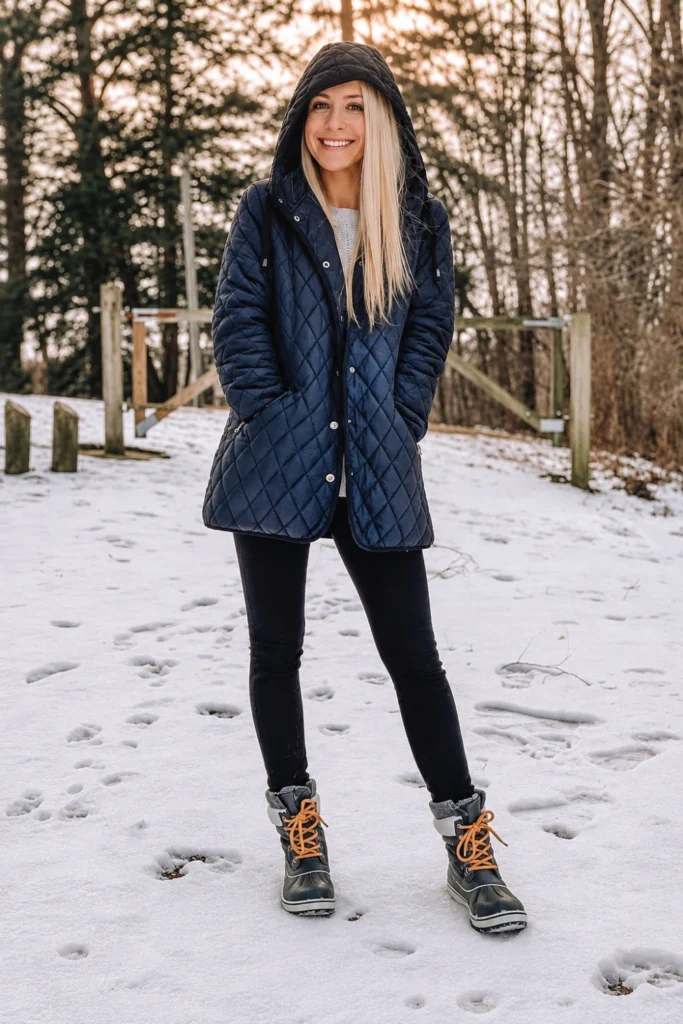
5. An Insulated Barn Jacket With Dark Leggings
A brown barn-style jacket offers a less sporty outline than a quilted coat. Wear it over a cream wool sweater with dark leggings and brown insulated boots. A corduroy collar provides texture without another pattern.
Choose a winter-insulated version of the jacket and verify its weather protection. An unlined work jacket is a different garment. Leave room through the shoulders for the sweater, and add a protective shell or change coats if wet conditions call for it.
Best for: casual town dressing and workwear details.
 Save
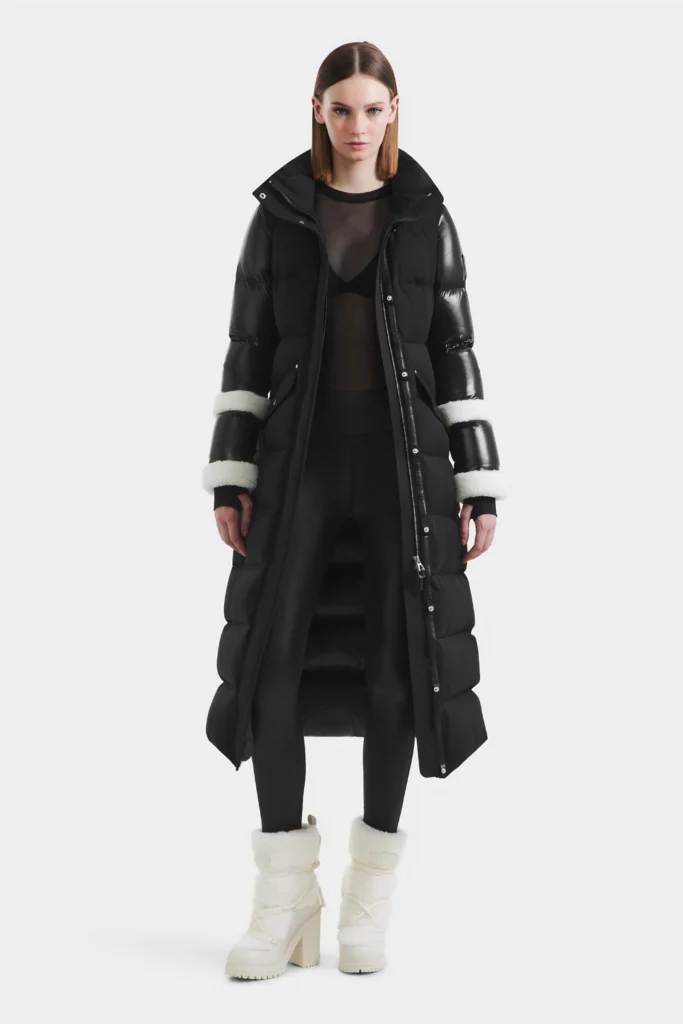
6. A Black Maxi Puffer With Ivory Snow Boots
Ivory boots can carry the whole contrast in a black outfit. Pair them with black slim trousers, a black zip-neck knit and a long black puffer. A dark hat keeps attention near the footwear rather than adding another competing accent.
Check the coat stride before leaving: the hem should not catch on the boot or restrict a normal step. Use the two-way zip if your coat provides one. Pale uppers will show dirty spray, so clean them according to the manufacturer’s instructions.
Best for: a simple dark outfit with contrasting footwear.
 Save
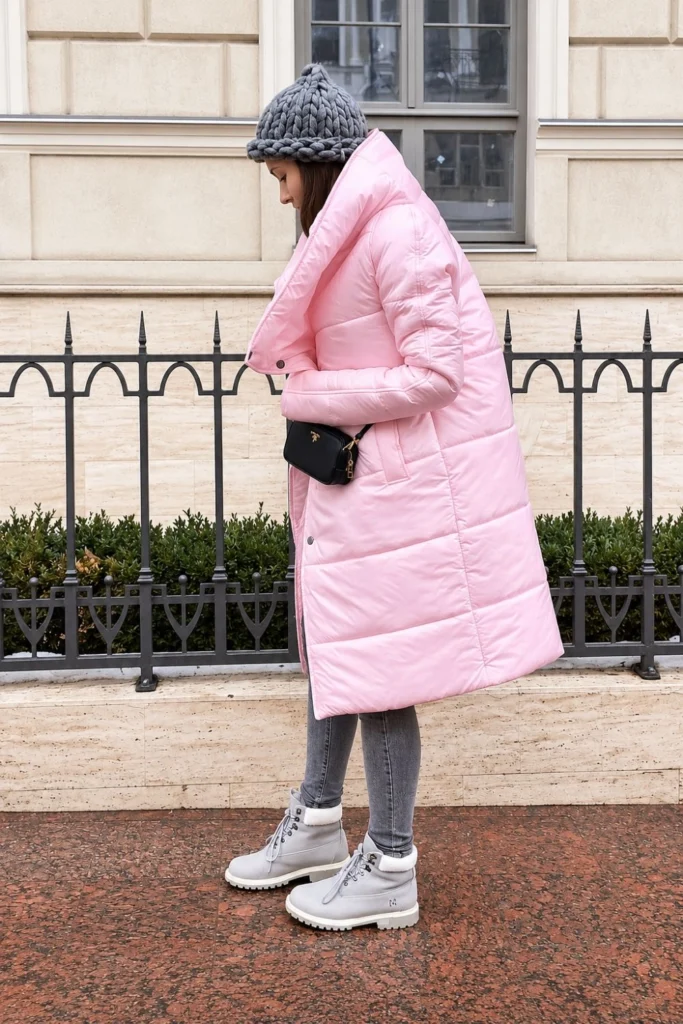
7. A Dusty Pink Puffer With Grey Denim
Dusty pink looks restrained beside charcoal denim and grey snow boots. Use a grey knit beneath a hip-length puffer and finish with a plain cream beanie. The soft colour works without matching every accessory to the jacket.
Pick straight jeans with enough width to pass over the shaft. If the coat is short, keep the sweater and waistband overlapping when you reach forward. A cropped shape should not leave an exposed strip of skin in cold weather.
Best for: soft colour and casual daytime plans.
 Save
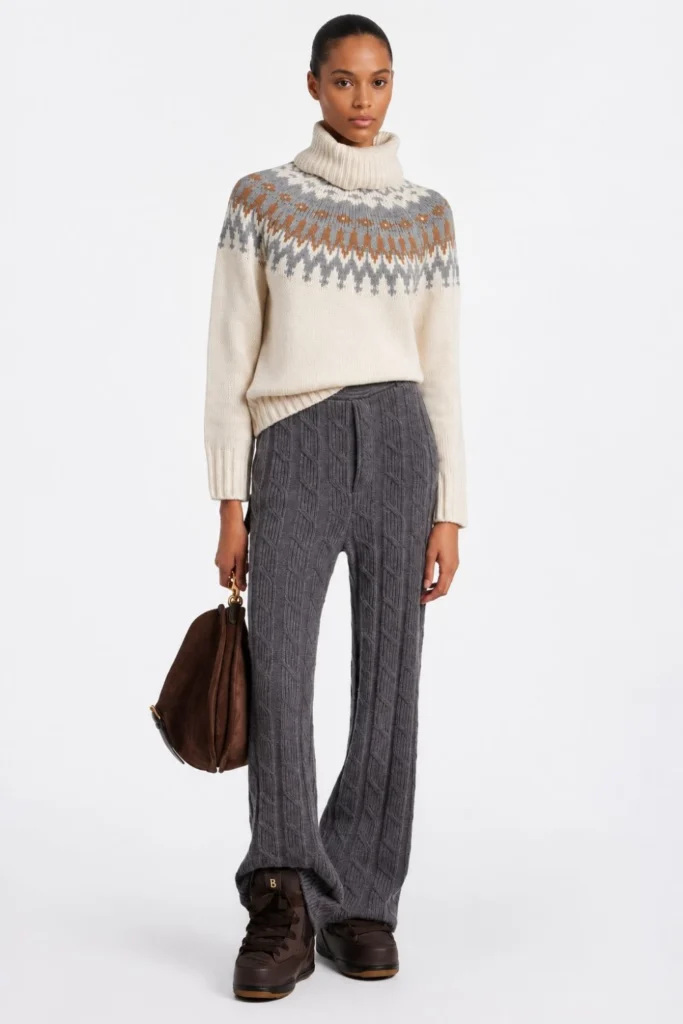
8. A Fair Isle Knit With Charcoal Trousers
A patterned sweater gives plain trousers and boots a clear point of interest. Try a cream-and-navy Fair Isle knit with charcoal trousers and white insulated boots, then wear a navy parka outdoors.
Let the trousers overlap a compact shaft and keep the hems off the ground. Choose a straight or gentle flare that moves freely. Keep the scarf solid so the sweater remains the only busy pattern.
Best for: festive daytime visits.
 Save
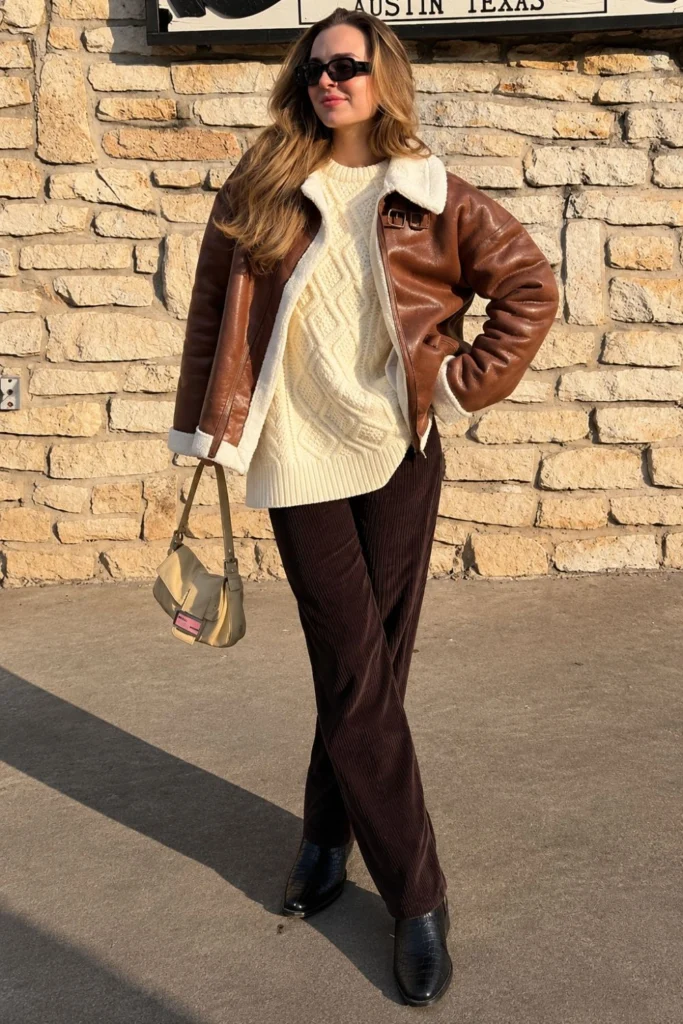
9. A Brown Shearling Jacket With Corduroy
Chocolate corduroy, an oatmeal knit and a brown shearling or faux-shearling jacket give tan boots a textured setting. Keep the cords straight through the calf so the ribs remain visible above the boot.
Wear the hem outside the shaft when it clears the opening. Forcing thick corduroy into the boot can make the ankle uncomfortable. Choose dry, maintained streets for this outfit; delicate jacket finishes and cotton trousers need a different plan in wet snow.
Best for: dry cold days and textured separates.
 Save
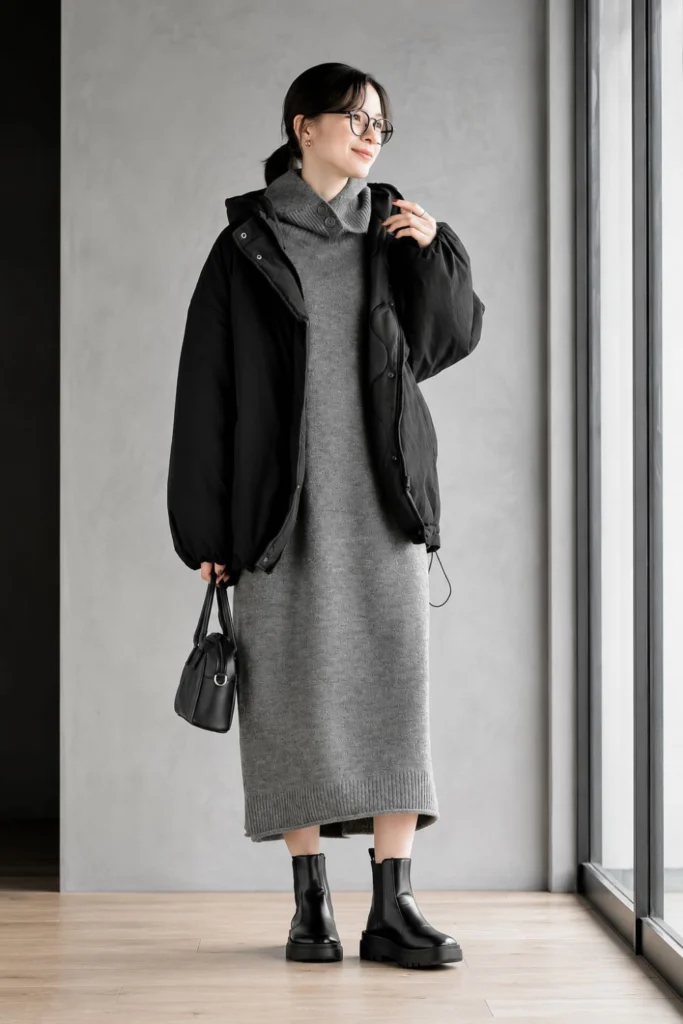
10. A Ribbed Midi Dress With a Long Puffer
A charcoal ribbed dress can sit comfortably above substantial black snow boots. Add opaque thermal tights and a long olive puffer, keeping the dress hem well above the ground. A simple rib gives the outfit texture without a print.
Try the dress while sitting and walking; it needs enough ease to move without riding up. Tights and a knit dress are not a substitute for protective snow trousers. Choose this for a brief walk to an indoor destination, with sufficient layers for the conditions.
Best for: casual meals reached by a short cleared route.
 Save
Our plus-size winter outfits offer more clothing options. Across every look here, choose enough room for your intended layers and comfortable movement.
11. A Pleated Midi Skirt With a Cream Roll Neck
A charcoal pleated wool-blend skirt brings movement to a practical boot. Wear it with a cream roll neck, dark thermal tights, a navy coat and compact black snow boots. The skirt should finish high enough to avoid the ground when you step.
Test the lining against the boot collar: pleats need space to fall back into place. Keep the boots relatively plain so hardware does not catch the fabric. This is another short-route town option, with indoor time doing most of the work.
Best for: skirt outfits for short winter outings.
 Save
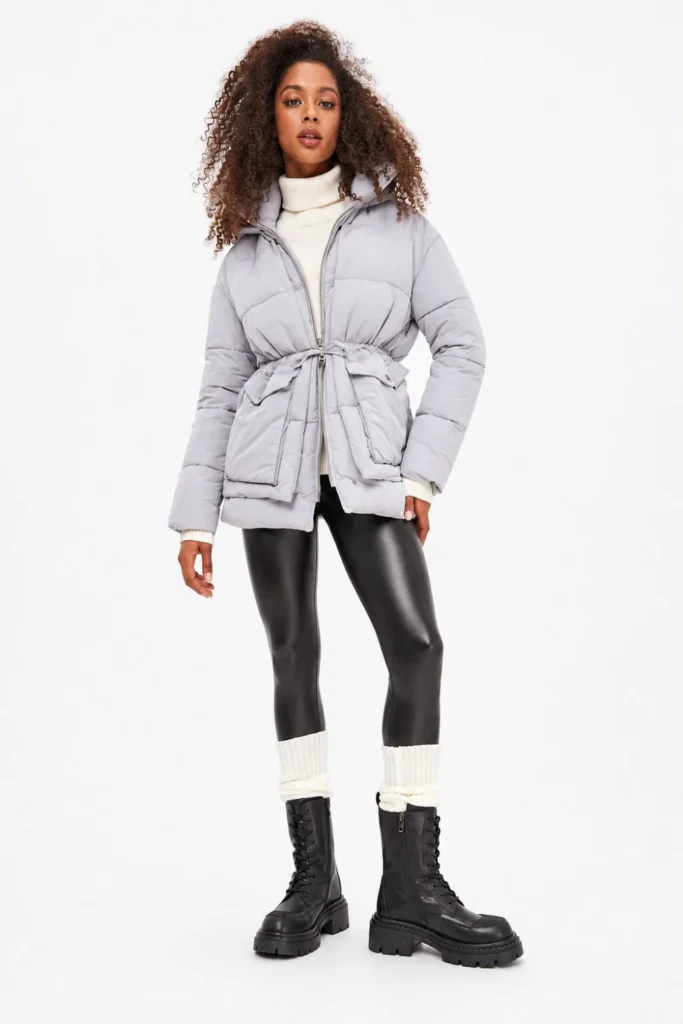
12. Faux Leather Leggings With a Matte Puffer
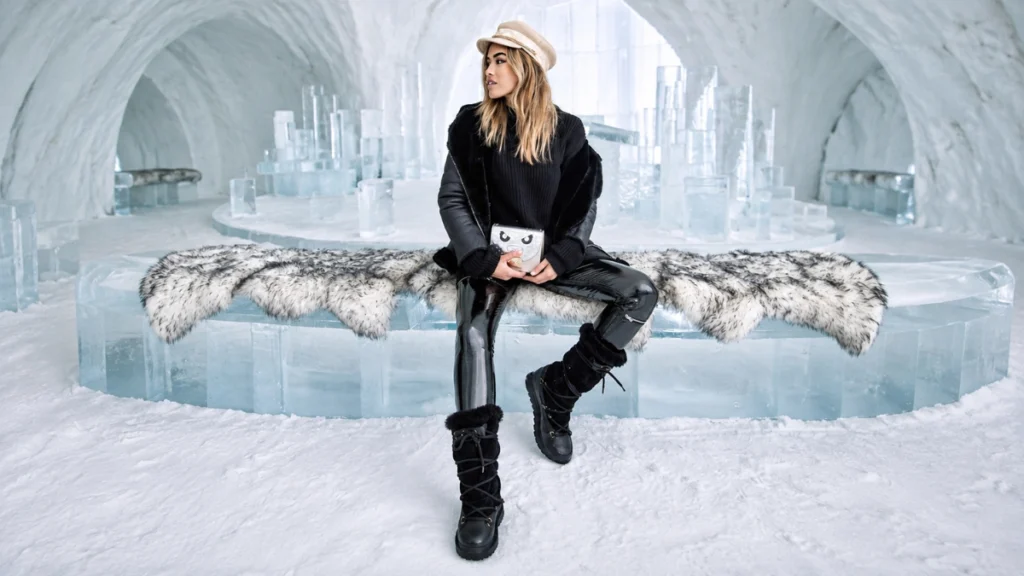
Matte quilting gives glossy leggings a useful contrast. Wear black faux-leather leggings, a soft grey sweater and an oversized matte black puffer with black insulated lace-up boots. The different surfaces keep an all-black lower half readable.
Leave room for the leggings to bend behind the knee and at the boot opening. A thick folded cuff can rub against the lining. Do not assume a coated finish makes the garment breathable, insulated or waterproof; use it for short casual outings.
Best for: evening errands and contrasting textures.
 Save
13. A White Puffer With Grey Winter Leggings
A white jacket, pale grey knit and charcoal leggings give tan snow boots a lighter backdrop. Choose a puffer that covers the waistband, and keep the beanie grey so the boots remain the warmest colour in the outfit.
The jacket should close easily over the sweater without compressing the shoulders. A close legging hem is straightforward inside the boot, but smooth out any seams before fastening. Add shell trousers when falling snow or longer exposure requires more leg protection.
Best for: light outerwear with a darker practical base.
 Save
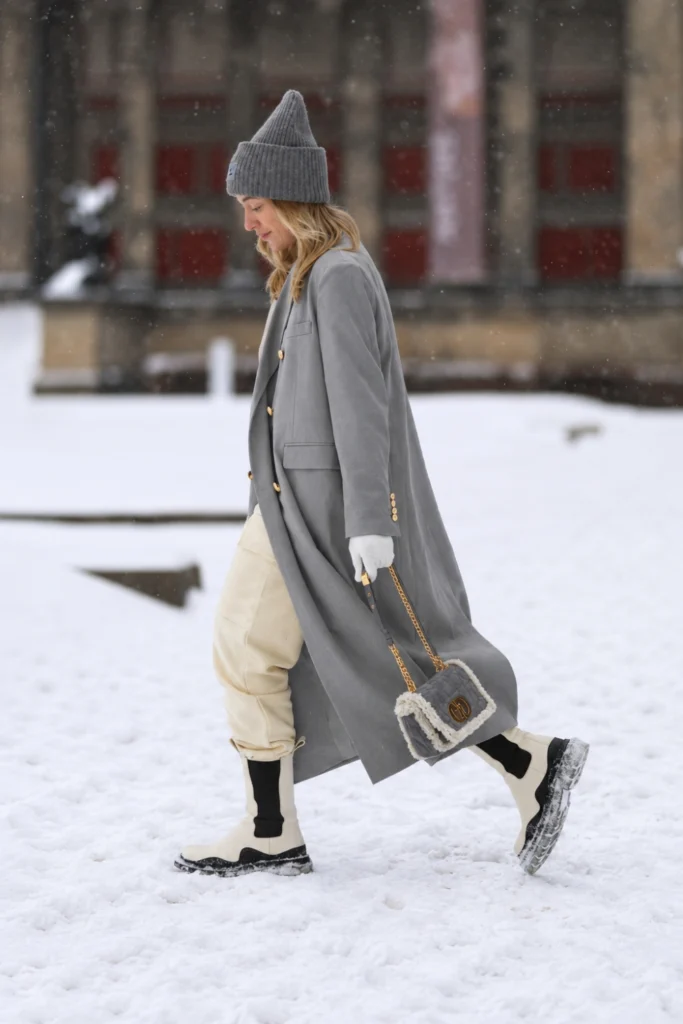
14. Wool Trousers With a Charcoal Coat
Straight navy wool trousers and a fine grey knit give a compact snow boot a quieter role. Add a charcoal coat and plain black insulated boots for a commute, then change shoes indoors if the office dress code calls for it.
Allow enough width at the hem for the boot collar, and check the back length on both feet. A clean trouser break matters more than disguising the entire boot. Keep this combination to maintained routes and add weather protection when needed.
Best for: workday travel with an indoor shoe change.
 Save
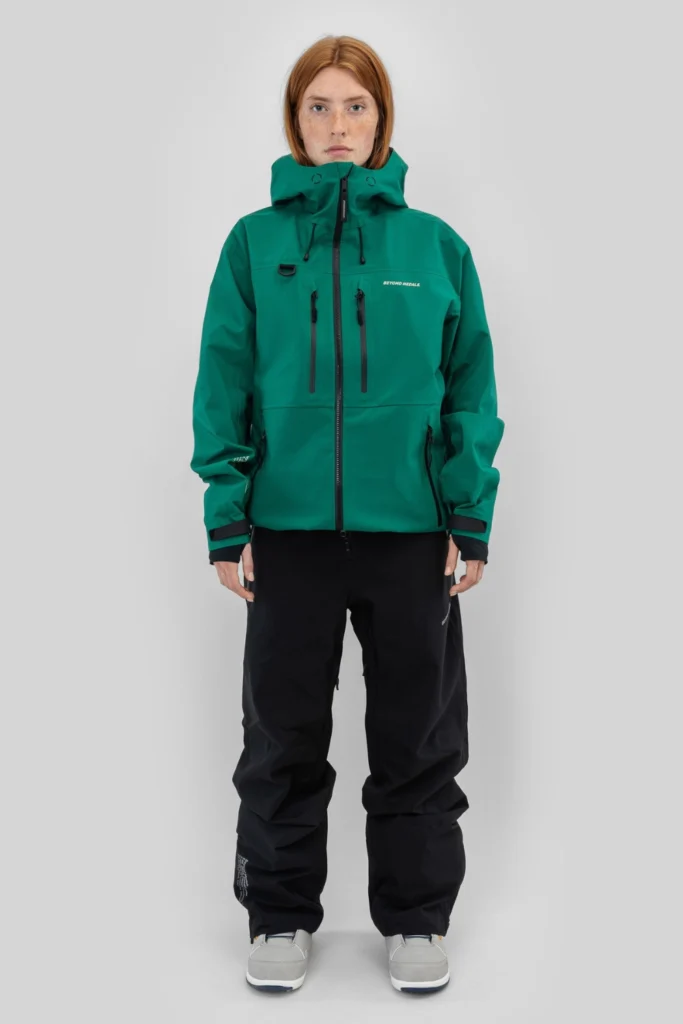
15. A Green Shell With Black Snow Trousers
For a day that actually involves time in snow, choose a green waterproof shell over an insulating midlayer and a moisture-managing base layer. Black snow trousers and tall insulated boots make the lower half easy to coordinate.
Place the trouser gaiters over the boot opening as directed by the garment maker, then check the cuff length. A high step should not expose the collar or pull the trousers tight. Select equipment for the activity; technical winter terrain needs more than an outfit formula.
Best for: snow play and longer outdoor time near shelter.
 Save
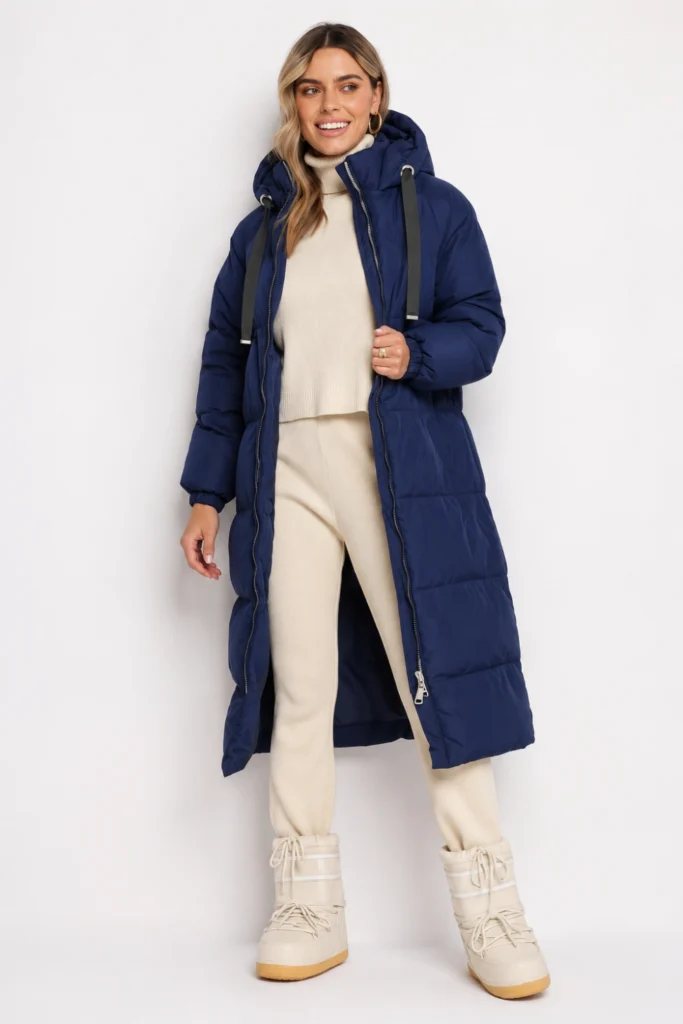
16. A Mocha Knit Set With a Long Navy Coat
A matching mocha sweater and straight knit trousers make snow boots feel like part of a relaxed outfit. Add a long navy coat and dark brown insulated boots. Keep the scarf slim enough to tuck inside the coat.
Knitted hems can stretch and gather, so choose a length that clears the ground after wearing the set for a while. This works for short resort transfers and indoor lounging. Change into protective trousers for prolonged time in wet snow.
Best for: casual resort transfers and cosy indoor plans.
 Save
For more lodge and post-slope combinations, explore our après-ski style for women. Snow boots are walking footwear, so change into activity-specific equipment for skiing.
Quick Guide to Bottoms and Boot Shafts
| Clothing | Boot starting point | Fit detail | Suitable use |
| Leggings | Roomy mid-height shaft | Smooth hem inside without folds | Short town errands |
| Slim jeans | Adjustable taller boot | Tuck only if seams stay comfortable | Maintained routes |
| Wide jeans | Compact insulated boot | Hem clears ground and moves freely | Casual city plans |
| Wool trousers | Plain compact upper | Opening clears collar; clean break | Commute with indoor shoes |
| Dress or midi skirt | Uncluttered shaft | Lining moves freely; tights cover legs | Brief route to an indoor venue |
| Snow trousers | Tall insulated boot | Gaiter covers opening as directed | Longer time in snow |
Check What the Boot Can Actually Do
An insulated boot, a waterproof boot and a chunky fashion boot can look similar in a photograph. Check the exact model for waterproof construction, insulation, outsole use and fit. A rubber lower does not establish protection above the shell, and a fuzzy collar does not tell you how warm the whole boot will be. Columbia’s winter boot guide separates warmth, comfort, traction and intended use.
Try the pair with your planned socks. Keep enough room to move your toes and fasten the boot without painful pressure. A thicker sock is not helpful if it makes the fit too tight. Follow the model’s sizing advice rather than automatically buying a larger size.
For prolonged outdoor use, REI’s cold-weather guidance recommends a moisture-managing base, insulation and protection from the weather. Cover the boot opening with suitable trousers or gaiters when loose snow could enter. Town clothes such as denim and knitted lounge trousers need a different approach when exposure becomes wet or extended.
Snow grip and smooth-ice grip are different requirements. A thick outsole alone does not guarantee traction. Use suitable traction aids when conditions require them, checking compatibility and following the maker’s instructions.
Frequently Asked Questions
What outfits look good with snow boots?
Start with leggings and a long puffer, wide jeans and a shorter jacket, or slim jeans with a wool coat. Choose a trouser opening that fits the shaft comfortably. A skirt or dress is an option for short town routes with enough leg coverage.
Should leggings go inside snow boots?
Usually, a smooth legging hem can sit inside a roomy shaft. Remove folds and check that seams do not press into your ankle. For loose or falling snow, leggings alone do not cover the boot opening; use suitable outer trousers or gaiters.
Can you wear wide leg jeans with snow boots?
Yes. A compact boot upper can sit beneath a wider hem. Try the jeans with the actual boots and check the length at the back as well as the front. Avoid hems that drag or soak up slush.
Can you wear a dress with snow boots?
Yes, for a short route to an indoor destination when the conditions allow it. Choose a dress with walking ease, suitable tights and protective outerwear. A dress-and-tights outfit is not equivalent to snow trousers for longer exposure.
What socks work best with snow boots?
Wool or synthetic winter socks are useful options, with thickness chosen for the available room. Try the complete sock-and-boot combination. Avoid folds, painful pressure and damp socks, and do not assume two pairs will fit better than one.
Are all shearling boots suitable for snow?
No. A warm lining does not establish waterproof protection or winter traction. Check the exact model’s specifications and intended use. Some shearling styles are designed mainly for dry conditions.
How can petite women style bulky snow boots?
Check coat length, trouser hems and stride together. A shorter jacket with full-length trousers or a long coat over a simple slim base can both work. Choose the boot for fit and conditions, then adjust clothing proportions; you do not need a heel.
How should snow boots fit around the calf?
The shaft should fasten comfortably over your intended socks and any tucked clothing without painful pressure. Check the opening and calf measurements when available, including for wider calves. Walk, sit and bend your knee before deciding.
Can you wear snow boots to work?
They can be practical for the commute. Pair a plain compact style with trousers that clear the shaft, then change footwear indoors if your office dress code or comfort calls for it. Keep wet boots where they can dry according to their care instructions.
Choose the Outfit for the Route
Lay out the boots, socks and bottoms together, then try the coat over your actual layers. Sit down, reach forward and take a few high steps. Fix exposed gaps, dragging hems and tight cuffs before leaving. A café visit, a work commute and an afternoon in falling snow ask different things of the same wardrobe. Dress for the longest part of the day you will spend outside.