Fashion surplus often has less to do with poor product than people assume. A style can have the right handfeel, a clean fit, solid construction and a recognizable brand behind it, yet still end up sitting in cartons because the delivery ran late, the buyer cut units, the colour mix changed or the season moved faster than the production calendar. That is usually where the second conversation starts.
Read the fabric before you judge the garment
The first thing worth looking at is the cloth itself, because fabric often tells you whether a style still has commercial life. A brushed poly-spandex jersey with a soft hand may still work beautifully for sleepwear, even if the original print is no longer exciting, while a heavier fleece with good recovery and a clean surface can still move into hoodies, joggers or cold-weather pullovers. Fabric weight, drape, stretch, finish and wash all influence what the product can become next.
Recheck the proportions
Sometimes the problem sits in the fit rather than the whole garment. A sleeve may feel too wide, the rise may sit too high, the body may be slightly long, or a neckline may make a perfectly decent style feel older than it is. Small proportion changes can completely alter hanger appeal, especially in categories like sleepwear, fleece, knit tops and casual bottoms where silhouette matters as much as fabrication. The garment does not always need a full redesign. It may only need a cleaner shape.
Edit the colour story
Colour has a habit of dating stock very quickly. A fleece program can feel heavy when too many muted fashion shades sit together, while a sleepwear assortment can lose appeal if the print grounds feel too dark or the scale looks too busy. Tightening the palette, pulling out weaker colours and grouping the strongest tones together can make an assortment look far more current without changing the garment itself.
Match the brand to the right retail door
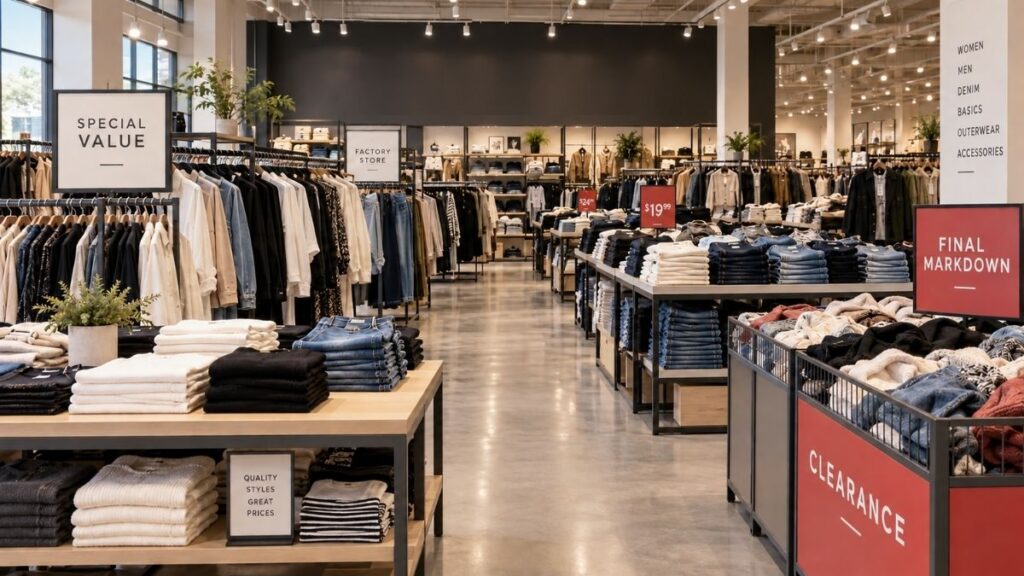
Brand recognition helps, but only when the product lands in the right environment. A branded polo, sweatshirt, legging or five-pocket jean may carry immediate customer familiarity, yet the ticket still has to make sense, the neighboring labels still matter and the store profile still shapes how the garment is perceived. Off-price buyers understand this particularly well because they are constantly balancing brand equity with value, availability and assortment flow. Placement is part of the fashion decision.
Work with the size run you actually have
Surplus rarely arrives in textbook ratios. You may have too many smalls, a shortage of mediums, a heavy plus-size run or a few colours that only exist in selected sizes. Trying to force that inventory into one clean program can make the problem worse, while breaking it into more thoughtful assortments can create stronger groups for different stores, regions or customer profiles. That is where merchandising becomes very practical.
Change the fashion read without changing the whole garment
One large fleece project involved tens of thousands of sweatshirts in colourways that had lost relevance for their original program, even though the fleece weight, fit and construction were still commercially sound. The stock was shifted into a holiday-driven assortment with seasonal graphics and a tighter colour edit, which gave the same sweatshirt a completely different presence on the rack. The body stayed familiar. The fashion story changed. That kind of move can rescue a basic far more effectively than simply discounting it again.
Let excess fabric lead the product
Factories often sit on usable rolls after order reductions, cancellations or last-minute production changes, and that fabric can become the beginning of another style rather than the end of the first one. A soft stretch jersey may naturally fall into lounge sets or pajama separates. A printed woven can become relaxed pants, easy shirts or simple daywear. Fleece, rib and brushed knits can shift into casual categories depending on weight, yield and season. Good product development does not always begin with a trend board. Sometimes it begins with what is already sitting on the rack in the cutting room.
Keep the quality level intact
Off-price should never become shorthand for lower garment standards. Shrinkage, pilling, seam quality, measurement tolerance, colourfastness, stitching and AQL inspection still matter because the customer will feel the fabric, look at the finish, try on the fit and decide very quickly whether the garment earns its ticket. Surplus fashion works best when the product still feels intentional. A style may miss its original floor date, lose its first buyer or fall outside the initial colour story, but if the fabric, fit, brand and construction still hold up, there is usually more fashion life left in it than the carton label suggests.