Long hair is the only length where the hair itself is a load you carry.
It has weight, which pulls on your scalp for hours. It has mass, which traps heat against your neck on a climb. And it has length, which catches on branches, zips, and pack straps. One hiker describes being brought up short mid-stride when her hair snagged under a shoulder strap and snapped her head back.
That is why a single tight ponytail, which is what most people default to, is usually the worst available option. It concentrates all that weight at one point on your scalp and leaves the length loose to tangle. Almost everything in this article is a variation on the same fix: spread the tension out, and enclose the length.
Why Your Ponytail Gives You a Headache
This is a documented phenomenon rather than a complaint. A tight ponytail produces an external compression headache, caused by pressure from outside the head. The nerves beneath your hair follicles register sustained tightness, and past a certain threshold that registers as pain.
The occipital nerves at the back of the head and the trigeminal nerves around the face are the ones typically affected by compression from headwear and tight styles, according to the Mayo Clinic. Add six hours of a heavy ponytail and a hat band on top, and the arithmetic is not in your favour.
The immediate fix is to take it down and gently massage the area, and the headache should clear within an hour. The structural fix is a style that ties at the end rather than pulling from the root, which is precisely what a braid does.
Braids Beat Ponytails, and Not for Aesthetic Reasons
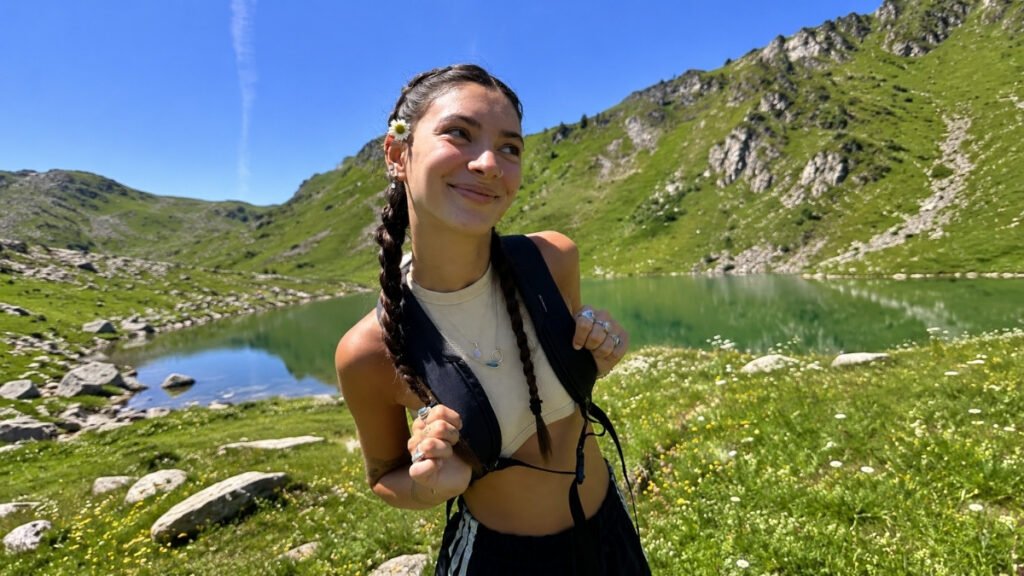
Hikers interviewed across every hair type agreed on this: braids are the best way to protect long hair in the backcountry.
The reason is mechanical. A braid holds the hair together from root to tip, so there is no loose length to tangle with itself or wrap around your pack. A ponytail secures at one point and leaves everything below it free to knot, which is why long hair mats at the nape specifically.
Braids also distribute tension along their length rather than concentrating it at the elastic. Less pressure at the roots means a tender scalp and an end-of-day headache both become far less likely.
For Day Hikes
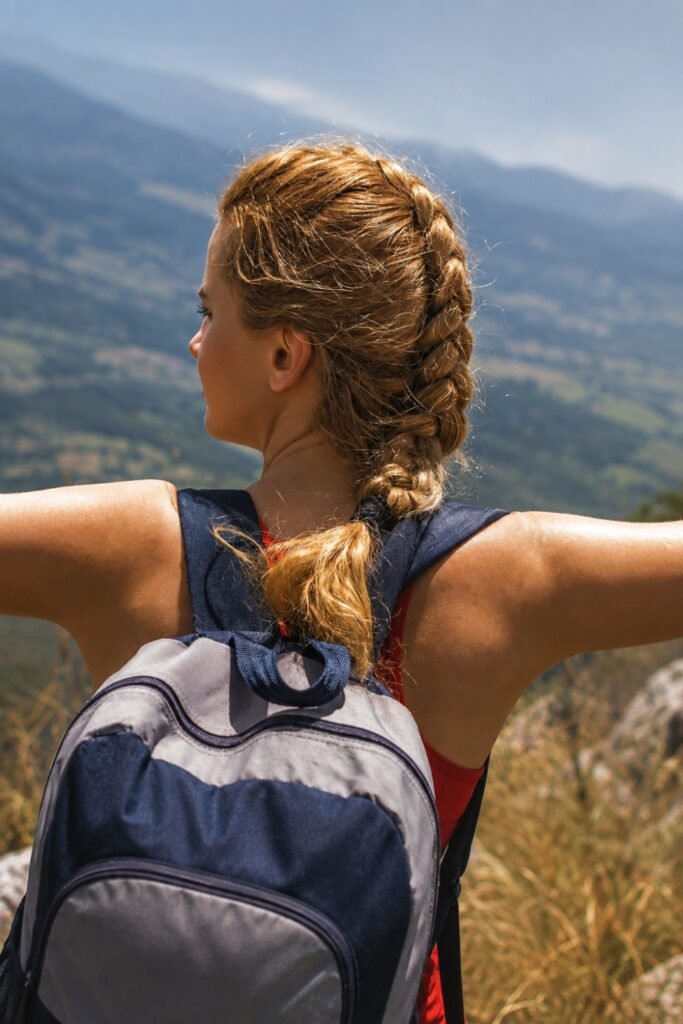
1. Single French Braid
A French braid taken from the crown down the back, incorporating hair as it goes.
The default long-hair trail style, and it earns that position. Because it starts at the crown and takes hair in along the way, the weight is distributed across the whole head rather than hanging from one point.
It also stays put. No stopping every half hour to redo it, which a ponytail on long hair reliably requires.
 Save
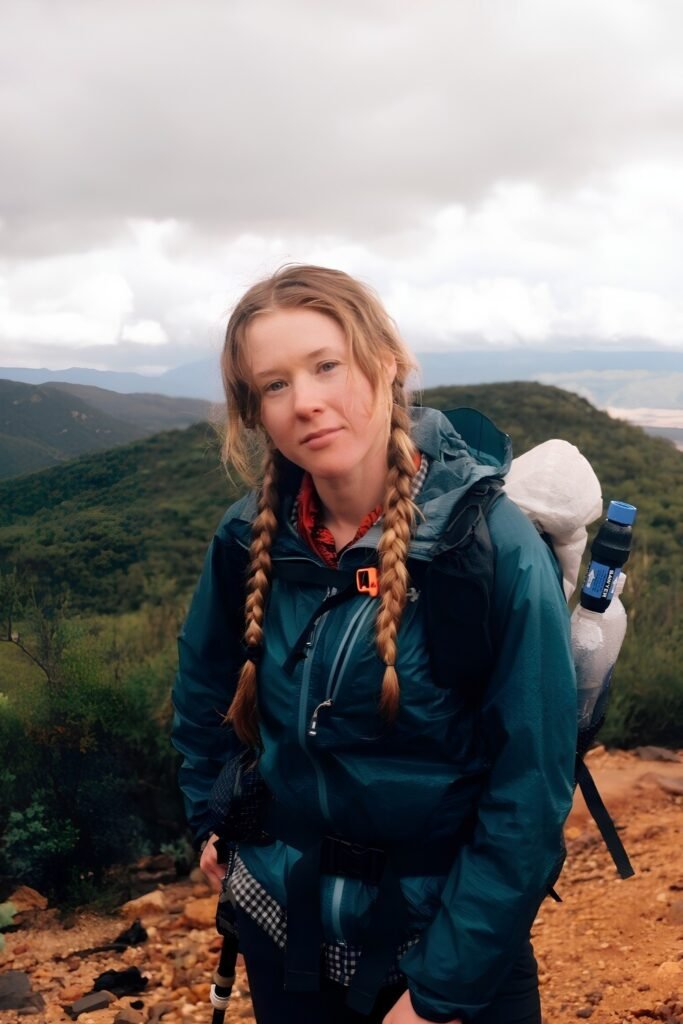
Save2. Double French Braids
Two French braids, one either side.
Splitting the hair halves the weight on each side and creates two lighter, more manageable sections. This is noticeably more comfortable than a single braid if your hair is thick.
The two braids also sit naturally either side of a pack strap rather than directly beneath it.
 Save
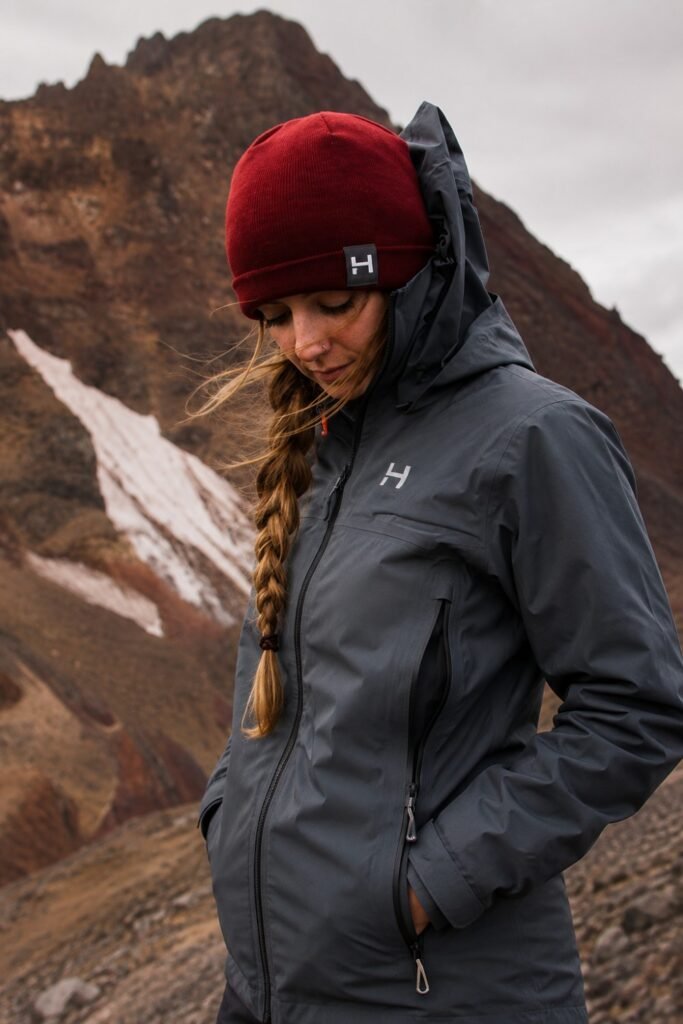
Save3. Dutch Braid
The same technique worked in reverse so the braid sits raised on the surface rather than flat.
Functionally near-identical to a French braid, with one practical advantage: because it sits proud of the head, it does not press into your scalp under a hat or a hood.
The better choice if you are wearing a beanie or a rain hood for any length of time.
 Save
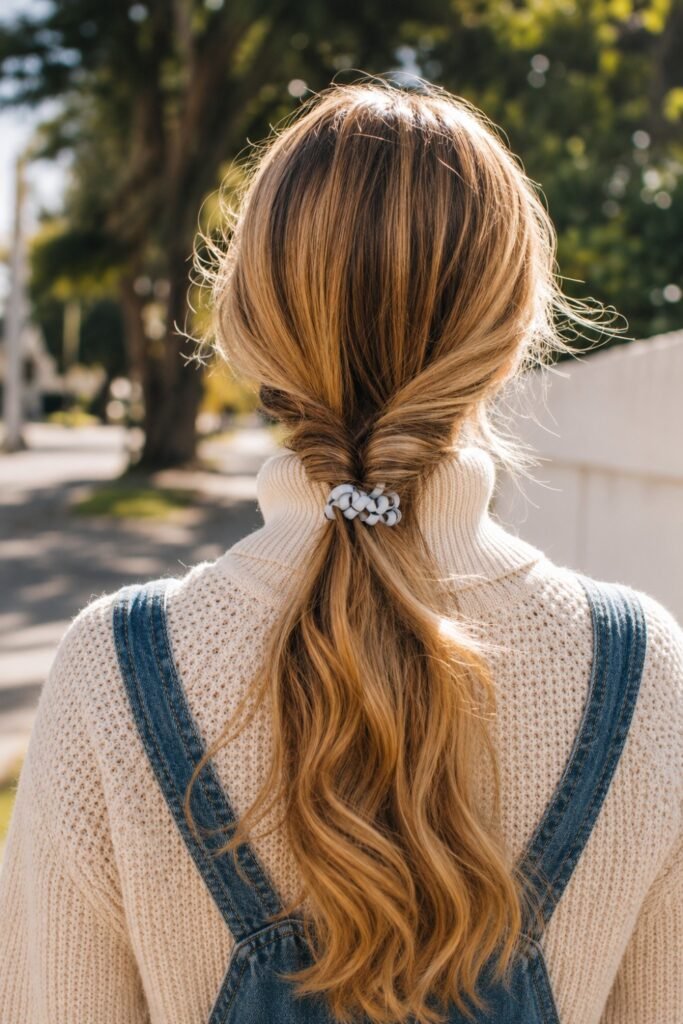
Save4. Low Loose Ponytail With a Coil Tie
A low ponytail secured with a spiral or coil-style tie rather than a fabric elastic.
If you want a ponytail, this is the version that does the least damage. Coil ties spread the pressure across a larger surface area than a standard elastic, which reduces both the dent and the headache.
Keep it low. A high ponytail on long hair concentrates the maximum weight at the most sensitive point.
 Save
Save5. Half-Up, Braid the Rest
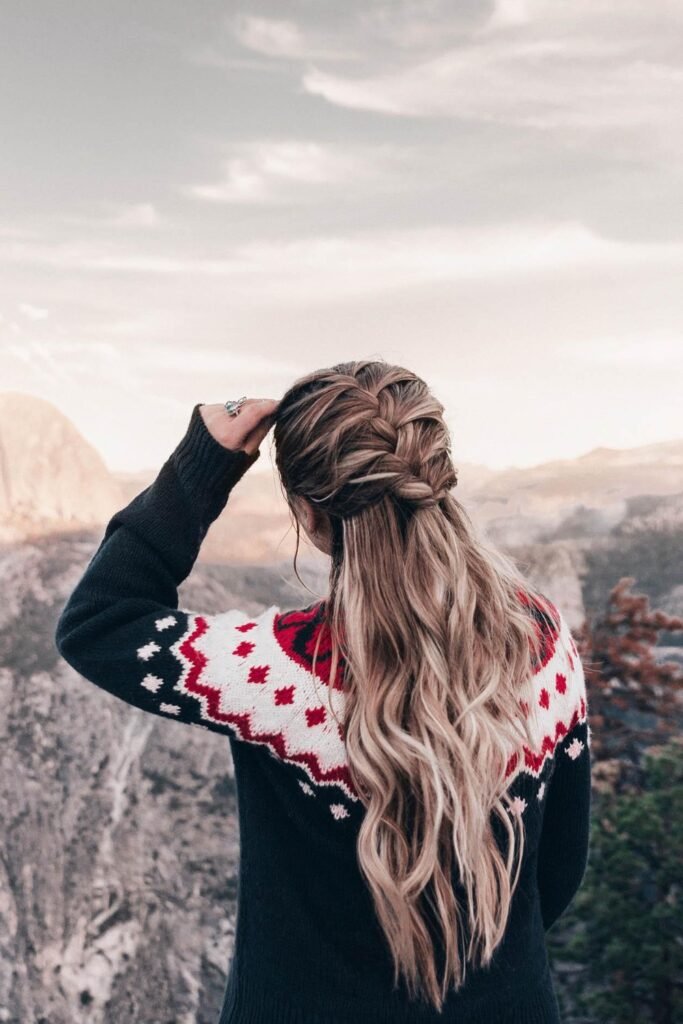
Front sections clipped back with the remaining length braided.
The compromise for a cooler day when you want some hair down. It handles the sections that blow into your face while keeping the bulk of the length enclosed and tangle-free.
Genuinely fast to do, including at a trailhead without a mirror.
 Save
SaveFor Heat and Long Climbs
6. Braid Under a Scarf
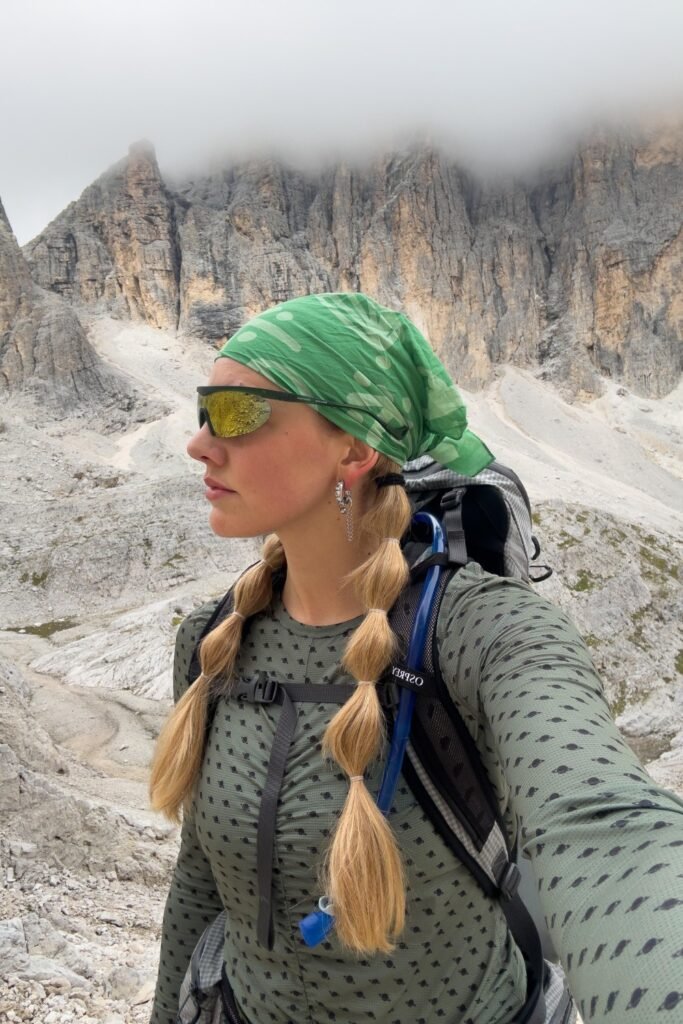
A braid worn with a light scarf over the head to reflect sun.
Buns and updos trap heat against the scalp, which is exactly wrong on a hot climb. A braid keeps the hair contained without creating an insulating mass on top of your head, and a light-coloured scarf reflects rather than absorbs.
The combination reported by hikers with thick hair in hot climates as the one that actually works.
 Save
Save7. Braided Crown Wrap
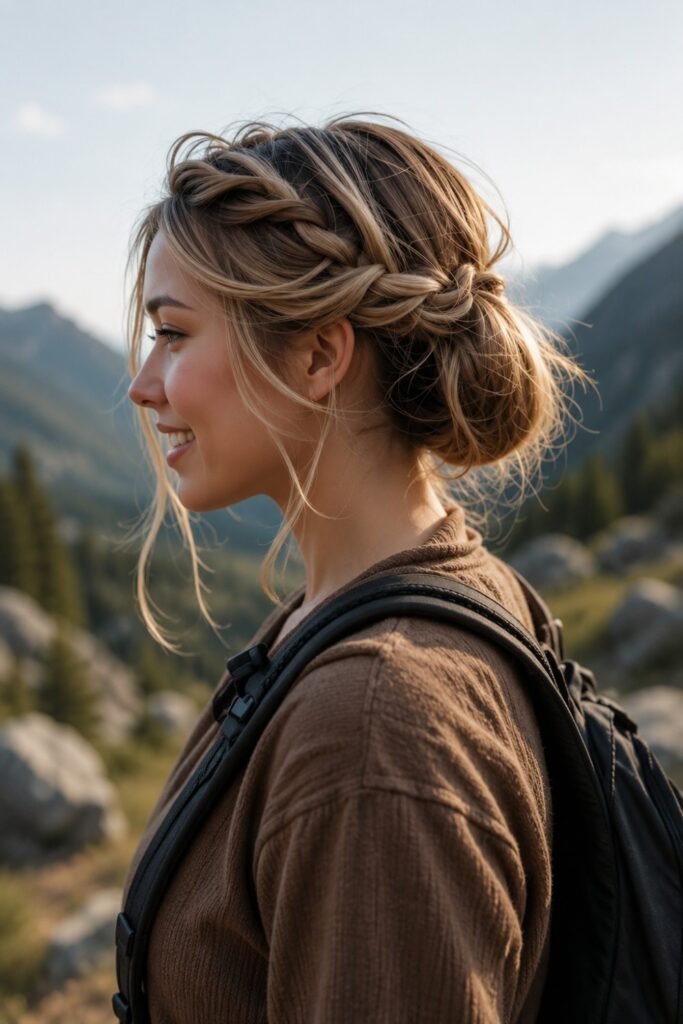
A braid taken around the head and pinned, keeping all the length off the neck.
The highest-clearance option for heat. Nothing touches the back of your neck, which is where sweat accumulates and where hair sticks.
Pin at the sides rather than the crown so nothing sits under a hat band.
 Save
Save8. Two Low Braids Under the Pack
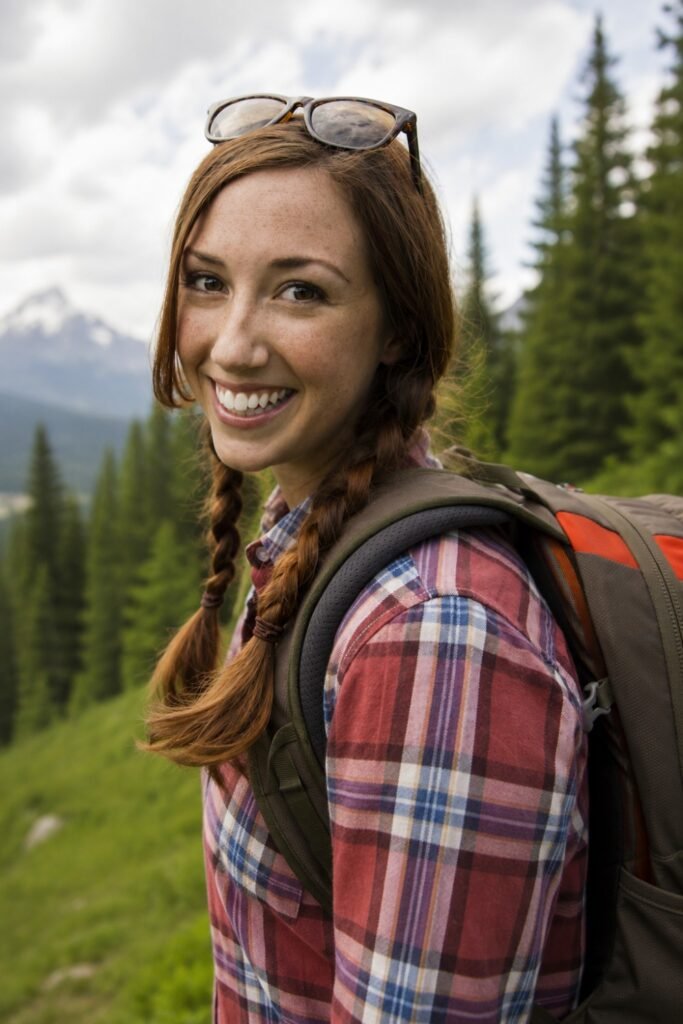
Two braids sitting low and forward over the shoulders, deliberately kept in front of the pack straps.
Bringing the braids forward removes the snagging problem entirely. Nothing can catch under a strap if nothing is behind one.
It also keeps the hair off your back, where a pack traps heat against the length.
 Save
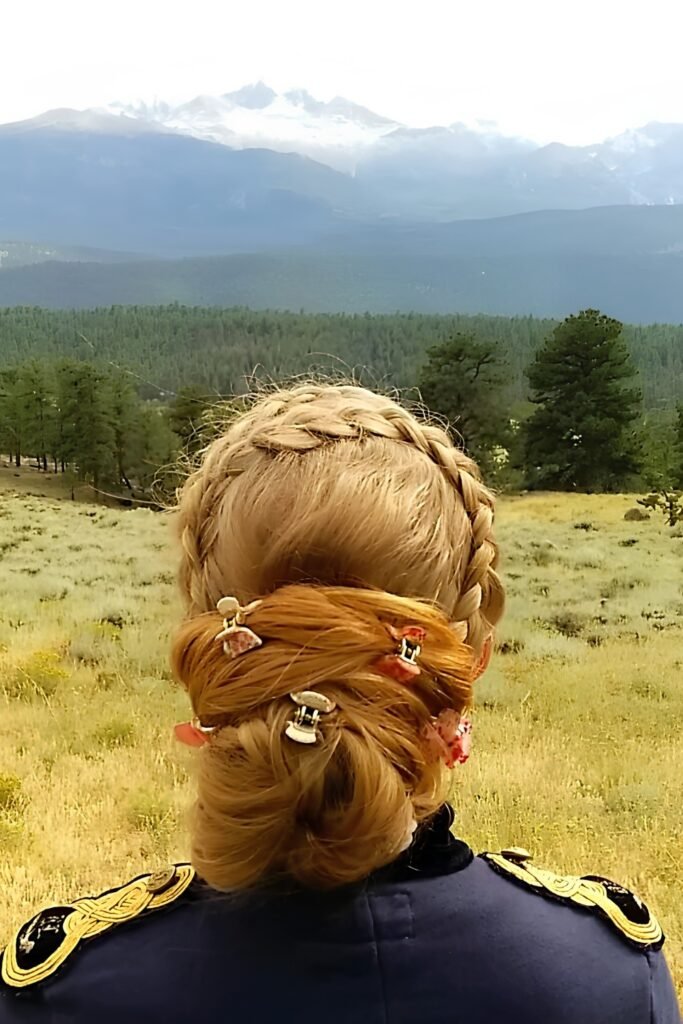
Save9. Loose Braided Bun
A braid coiled into a loose bun and pinned rather than wrapped tightly.
For when you want everything up but not the heat trap of a solid bun. Braiding first means the bun holds its shape at half the tension.
Pins rather than a thick elastic. A heavy elastic on a long-hair bun is a headache in waiting.
 Save
SaveFor Multi-Day Trips
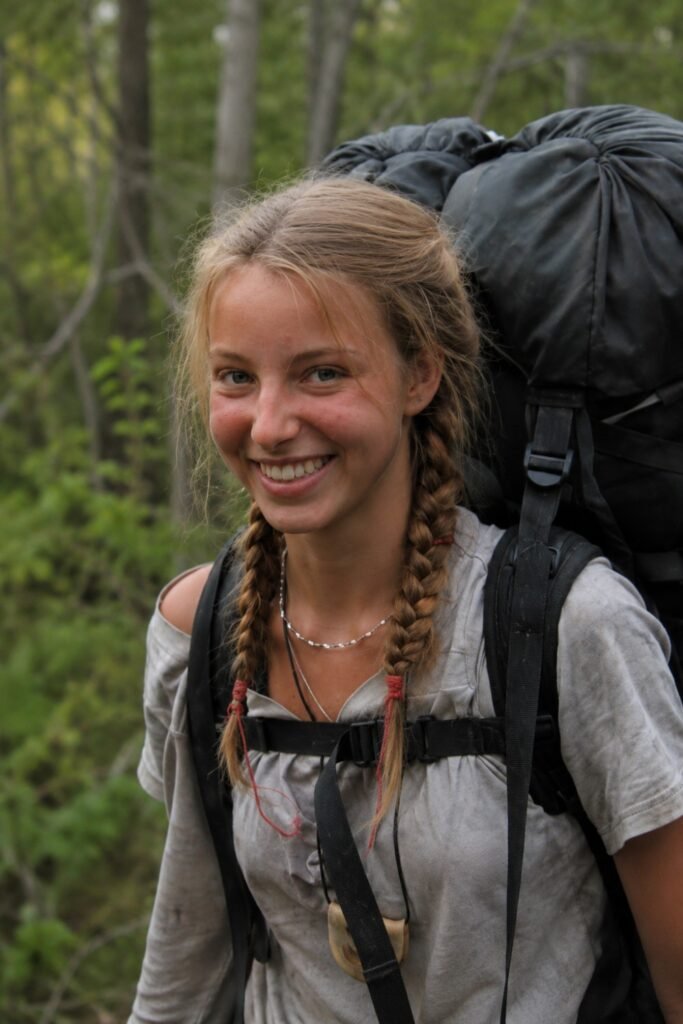
10. Two Braids, Left In
Two braids installed at the start and simply left, redone only when necessary.
For a multi-day trip, the goal is fewer interventions rather than a fresh style each morning. Two braids hold for days, protect the length continuously, and require no mirror.
The most practical option for a hut-to-hut or a long weekend.
 Save
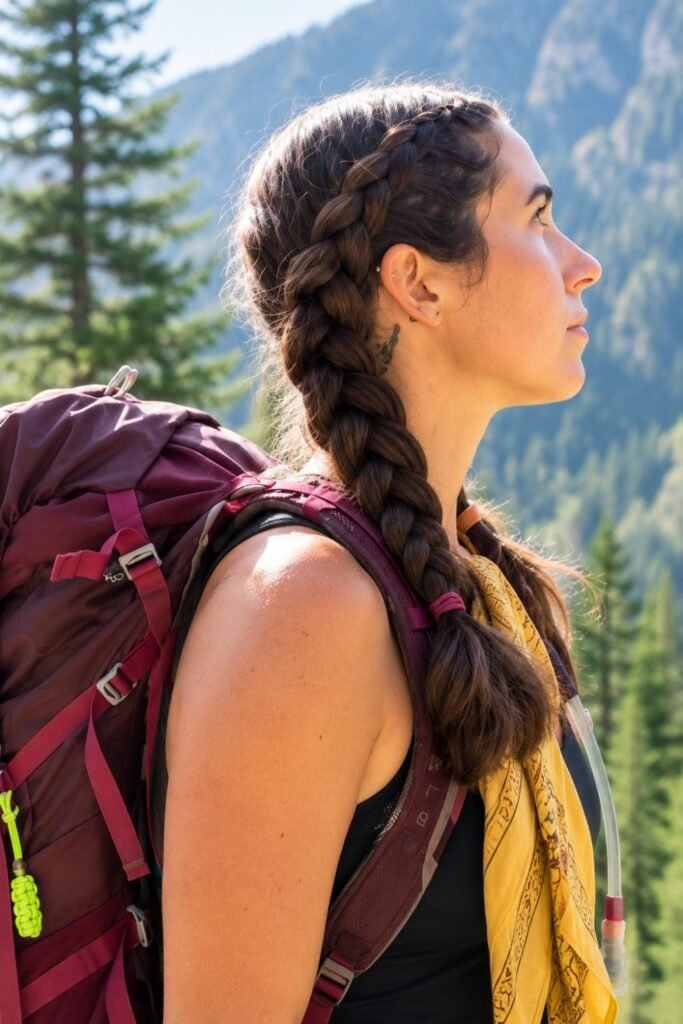
Save11. Braid Inside a Buff
A braid tucked into a tubular neck gaiter running down the back.
Full enclosure for genuinely rough conditions: scrub, wind, and rain. The braid is protected from snagging and the fabric keeps it from whipping about.
Also the answer for a day when your hair is at the point where you would rather not look at it.
 Save
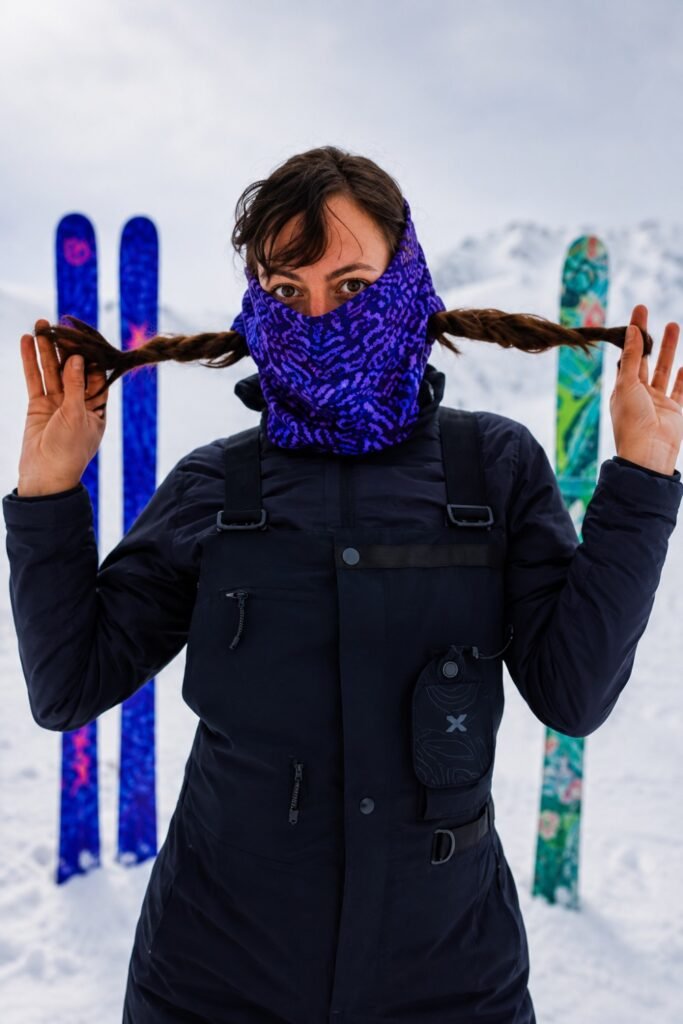
Save12. Low Bun Under a Hood
A low, flat bun sitting at the nape, worn under a rain hood.
Rain hoods have limited space and a high bun makes them sit wrong. Low and flat keeps the hood functional, which matters when the weather is the reason you have it up.
Wet long hair does not dry well on a humid trail. On the Appalachian Trail specifically, hikers report that wet hair dries about as well as wet gear, which is to say barely. Keep it enclosed and dry rather than exposed and damp.
 Save
Save13. Rope Braid or Twisted Rope
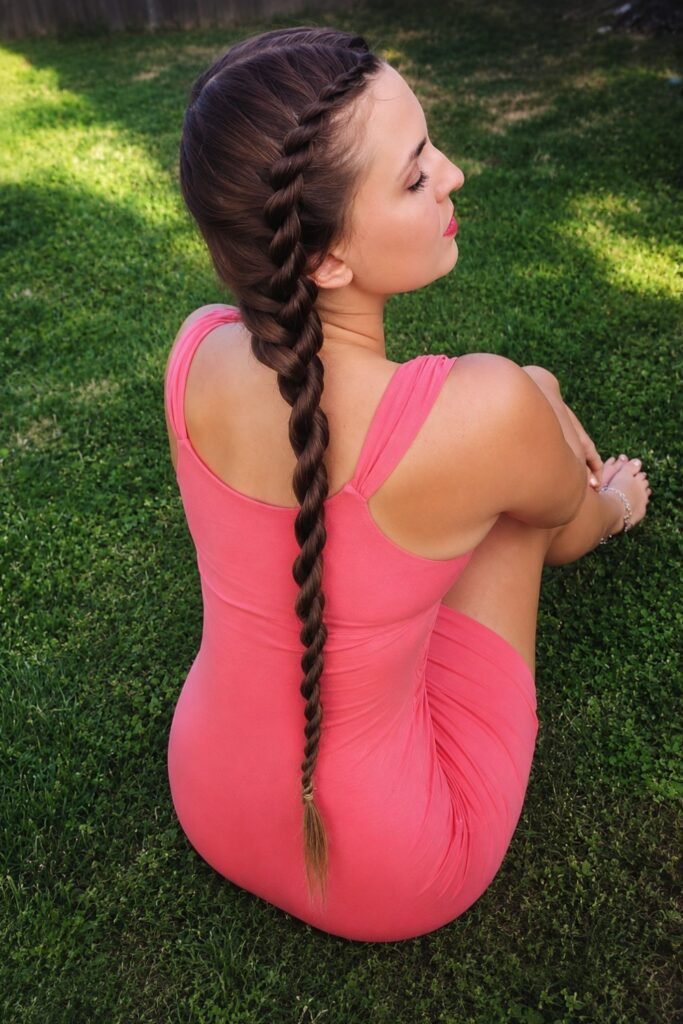
Two sections twisted around each other rather than plaited.
Faster than a three-strand braid and holds better than a twist, which makes it the sensible middle option when you are cold, tired, and doing it by feel at six in the morning.
It also unravels more easily at the end of the day, which is a small mercy when detangling.
 Save
SaveThe Two Long-Hair Specific Risks
14. Detangle Every Evening, Not Every Morning
Not a style, but the habit that determines whether the styles work.
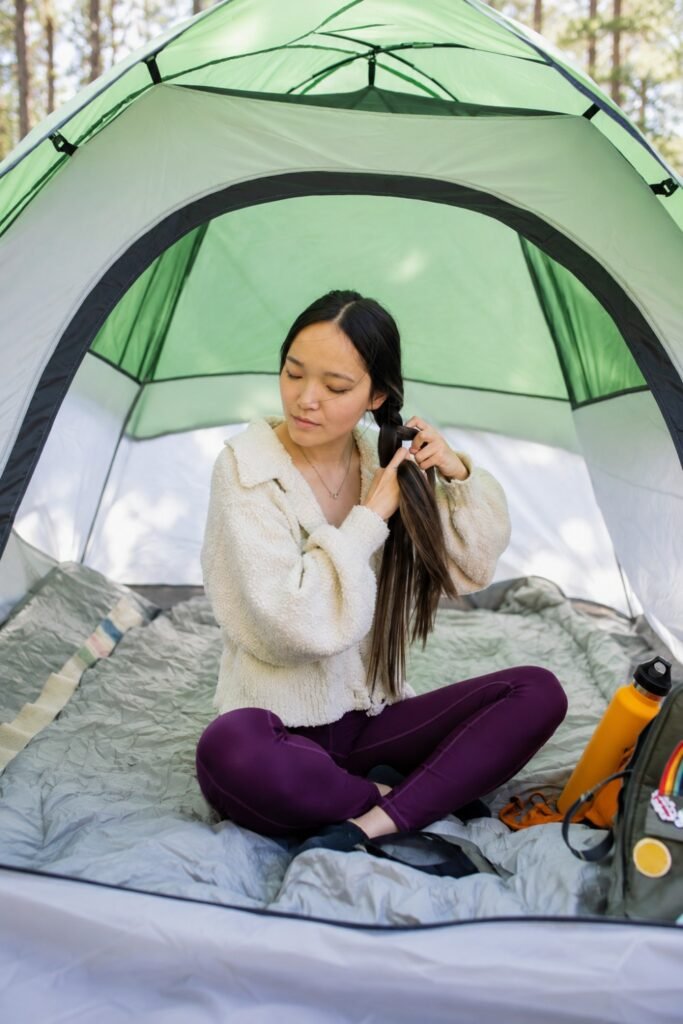
Long hair mats at the nape, and a mat that forms overnight is far harder to remove than tangles brushed out at camp. Detangling in the evening also means you start the next day with hair that will braid cleanly.
Pack a travel detangling brush or a wide-tooth comb designed for wet hair, so it does not pull or snag. It adds almost nothing to your base weight and saves genuine misery.
 Save
Save15. Check for Ticks, Properly
Long hair is significantly harder to check for ticks, and hikers who stop combing daily on trail have flagged this as a real consequence.
Ticks favour the hairline, behind the ears, and the nape, all of which are covered and hard to see on long hair. A daily comb-through is a tick check as well as a detangling session, which is a good reason to keep the habit even on a trip where you have stopped caring what your hair looks like.
Run your fingers along the hairline and the nape as well. Feeling for something that should not be there works better than looking.
 Save
SaveIf You Are Considering Cutting It
Some thru-hikers cut before a long trail and it is a legitimate calculation rather than a defeat. The trade is real: shorter hair removes the weight, the matting, and the tick difficulty, but it brings its own management problems.
Our guide to hiking hairstyles for medium hair covers what changes at shoulder length, where layers escaping a ponytail becomes the new complication. If you are considering going shorter still, hiking hairstyles for short hair covers the opposite problem, which is having nothing to tie back at all.
And if your long hair is curly or coily, the priorities are different again, because compression sets the curl pattern rather than just flattening it. Our guide to hiking hairstyles for curly hair covers that.
Common Questions
Why does my ponytail give me a headache on long hikes?
Because a tight ponytail causes an external compression headache. Sustained pressure on the nerves beneath the hair follicles registers as pain, typically affecting the occipital nerves at the back of the head and the trigeminal nerves around the face. Long hair makes this worse because there is more weight pulling on one point. Take it down, massage the area gently, and it should clear within an hour. Switch to a braid, which ties at the end rather than pulling from the root.
Why does my hair mat at the back of my neck?
Because a ponytail secures the hair at one point and leaves everything below it loose to rub against itself, your collar, and your pack. The nape is where friction is highest. A braid holds the hair together from root to tip, which removes the mechanism entirely.
What should I do with long hair on a multi-day hike?
Install two braids at the start and leave them, redoing only when necessary. Fewer interventions is the goal. Detangle each evening at camp rather than each morning, which prevents overnight matting and means you start the day with hair that braids cleanly.
Do I need to worry about ticks with long hair?
Yes, more than with shorter hair. Ticks favour the hairline, behind the ears, and the nape, which are harder to see and harder to reach on long hair. Hikers who stop combing daily on trail have flagged this specifically. A daily comb-through doubles as a tick check, and running your fingers along the hairline and nape is often more reliable than looking.
Should I just cut it before a long trip?
Only if you want to. Cutting removes the weight, the matting, and some of the tick difficulty, but shorter lengths bring different management problems rather than none. Plenty of thru-hikers complete long trails with long hair using two braids and an evening detangle.
Final Thoughts
Stop reaching for the single tight ponytail. It concentrates the weight where your scalp is most sensitive and leaves the length free to knot, which is both of long hair’s trail problems at once.
Braid it instead, split it into two if it is heavy, detangle at camp rather than in the morning, and use that comb-through as your tick check. Those four habits solve almost everything, and none of them costs pack weight worth mentioning.