Standard hiking hair advice has one goal: keep it out of your face. For curly hair that is the easy half of the problem.
The hard half is that you cannot undo a mistake. Straight hair that gets messy can be brushed out and retied at a rest stop. Curls cannot. Once the pattern is disturbed, restoring it needs water and product, and on a trail you have neither.
That changes the whole approach. The right style is not the one that looks best at the trailhead, it is the one that requires the least handling between then and the end of your trip. As one hiker put it to Backpacker: the less she messes with it, the less tangled and greasy it gets, and the more manageable it stays for multiple days on end.
Why Curls Behave Differently Outdoors
There is an actual mechanism behind this. Hair contains hydrogen bonds that break on contact with water, which is why wet hair behaves and dries differently from dry hair. Rain, river crossings, heavy mist, and sweat all trigger the same reaction, and the curl reforms according to whatever position it was in while drying.
That is why a hat put on damp curls produces a flattened section that does not recover, and why a night in a tent without protection produces a different curl pattern in the morning.
Two other things work against you. Sun exposure dries curls out and causes damage over a long day, and dry hair tangles considerably more readily than moisturised hair. And in humid conditions, the moisture in the air swells the hair shaft and disrupts definition, which is why the same style behaves differently on a coastal path than it does on a dry ridge.
The Governing Principle: Low Manipulation
Everything else follows from this. Choose the style before you leave, install it properly, and then leave it alone.
Detangle thoroughly before you set off, not on the trail. Starting with knots guarantees worse knots later, and untangling curls in a tent without conditioner is genuinely miserable.
Moisturise before you go, and carry a way to add moisture rather than a way to restyle. A small spray bottle with water and a little conditioner in it does more useful work on a multi-day trip than any styling product.
Styles That Protect Definition
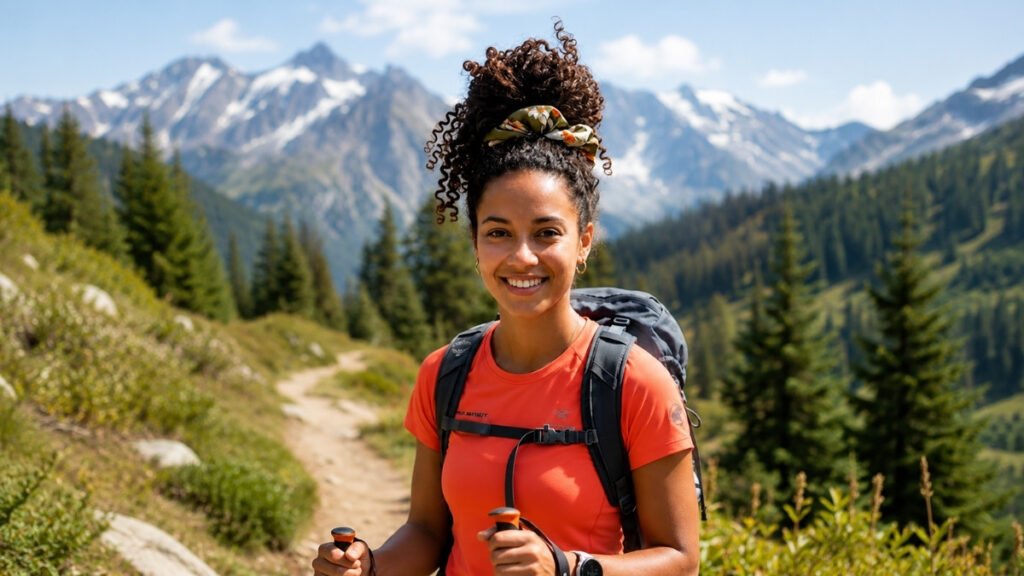
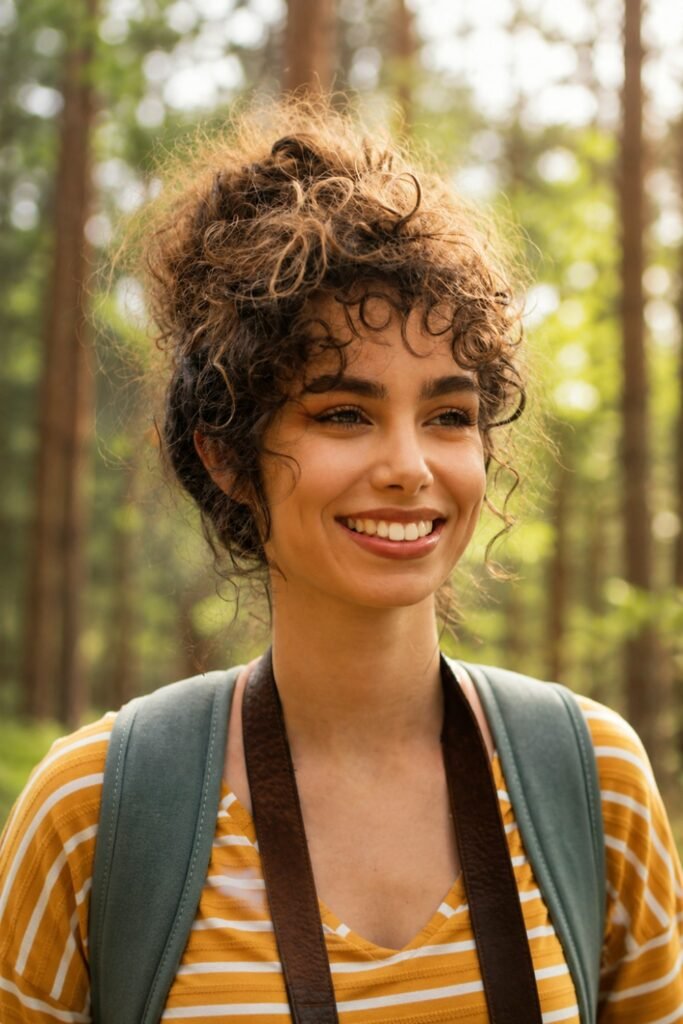
1. The Pineapple
Curls gathered loosely into a high ponytail at the very crown, so the length sits up and forward rather than being compressed.
The pineapple exists specifically to preserve curl definition, which is why it belongs at the top of any curly hiking list. Because the curls sit above the head rather than against it, nothing flattens and the pattern survives both a hat and a night’s sleep.
Use a loose scrunchie or a soft tie rather than an elastic. A tight tie at the crown creates a dent exactly where the definition matters most.
 Save
Save2. Loose High Bun
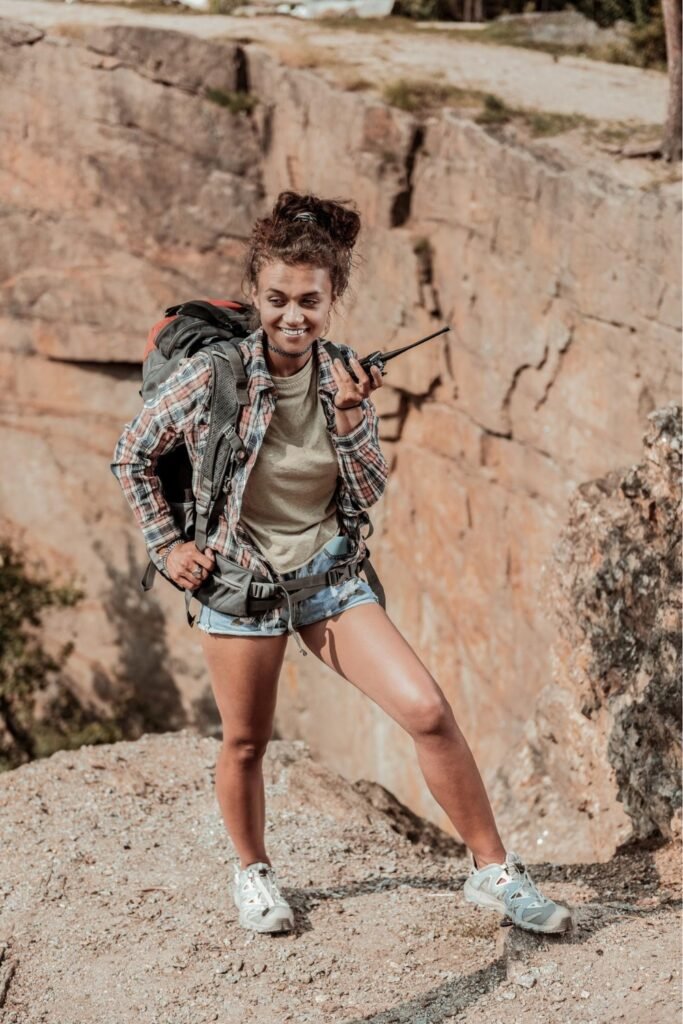
Curls gathered high and coiled loosely, secured without compressing.
The more contained version of the pineapple for windy days or dense scrub, where loose curls will catch on branches. It keeps the length off your neck and away from your pack.
Coil rather than twist tightly. A tight bun stretches the curl pattern and it will not spring back until the next wash.
 Save
Save3. Half-Up Pineapple
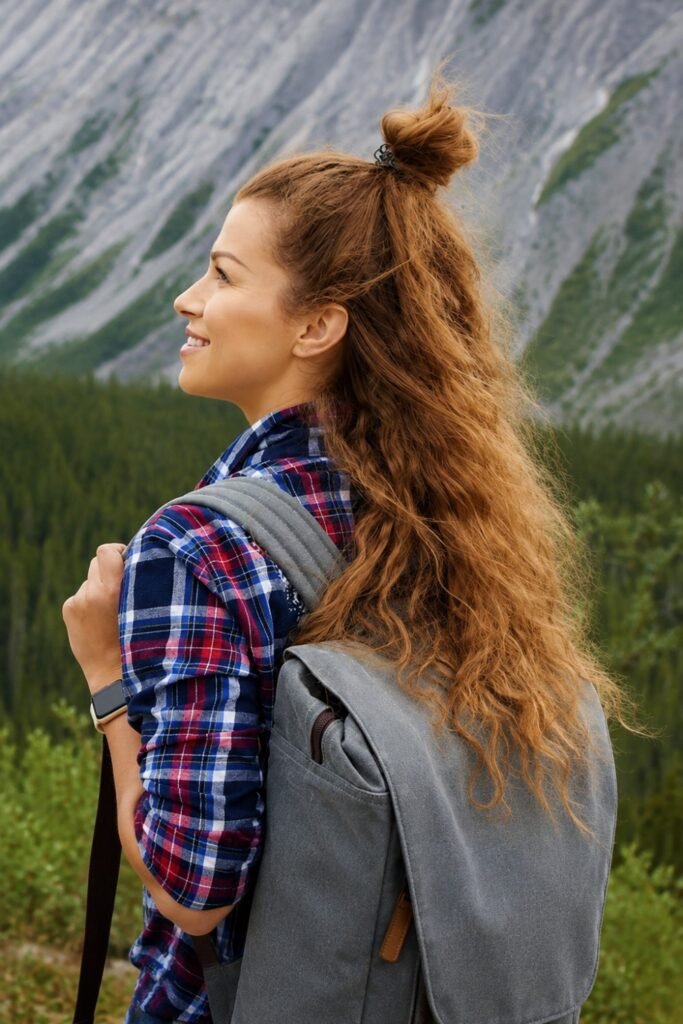
The top section gathered high at the crown with the rest of the length left loose.
The compromise for shorter hikes in calm conditions. It handles the front sections that fall into your eyes and preserves the crown definition, which is the part a hat would otherwise crush.
Not suitable for high wind or a full day with a pack. The loose length will tangle where it meets the strap.
 Save
Save4. Low Loose Ponytail With a Scrunchie
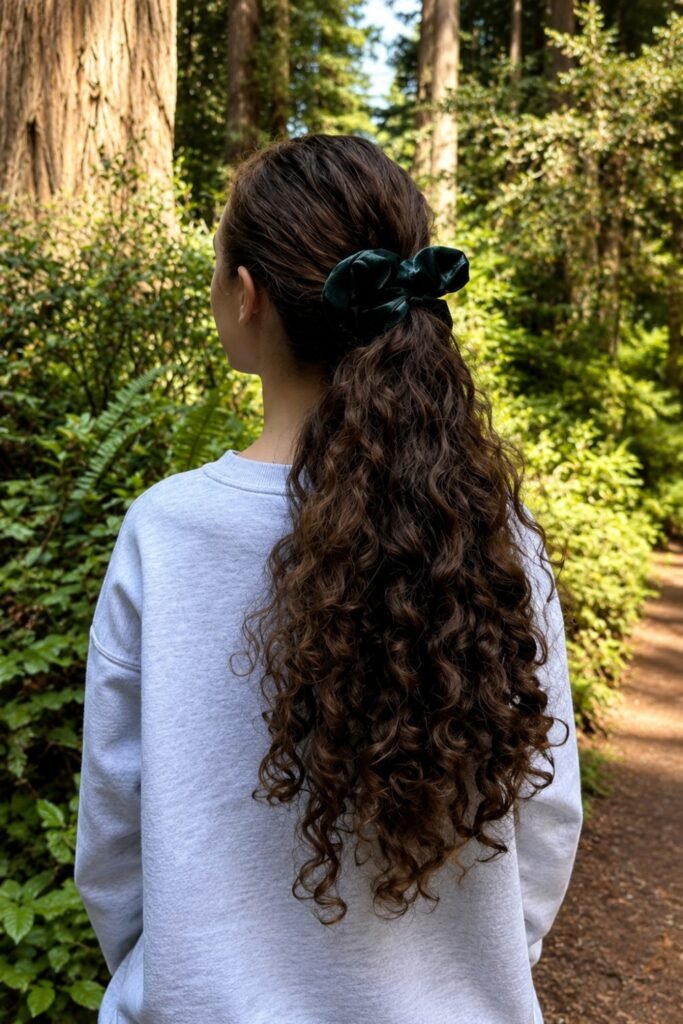
Everything gathered low at the nape with a fabric scrunchie rather than an elastic.
The low position sits underneath a pack strap rather than against it, and a wide fabric scrunchie distributes pressure across a larger area than a thin elastic, which reduces the dent and the breakage at the tie point.
Silk or satin scrunchies create less friction than cotton, which matters over several hours of movement.
 Save
SaveStyles Installed Before You Leave
5. Overnight Twists
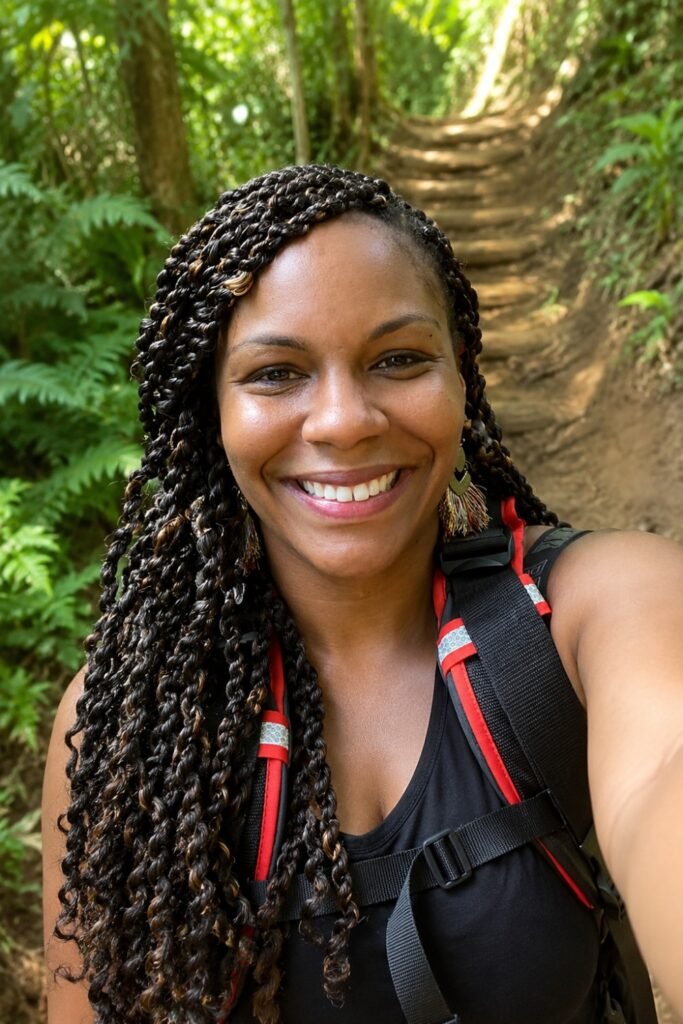
Hair twisted in sections the night before with a moisturising product, then either worn as twists or unravelled in the morning.
This is the single most practical approach for a hike, because all the work happens at home where you have water, product, and a mirror. Writing for The Trek, one backpacker recommends twisting the night before with a moisturiser and adding more in the morning, which keeps the curl pattern and the moisture intact through a hot day.
Worn as twists rather than unravelled, they also last several days without any attention.
 Save
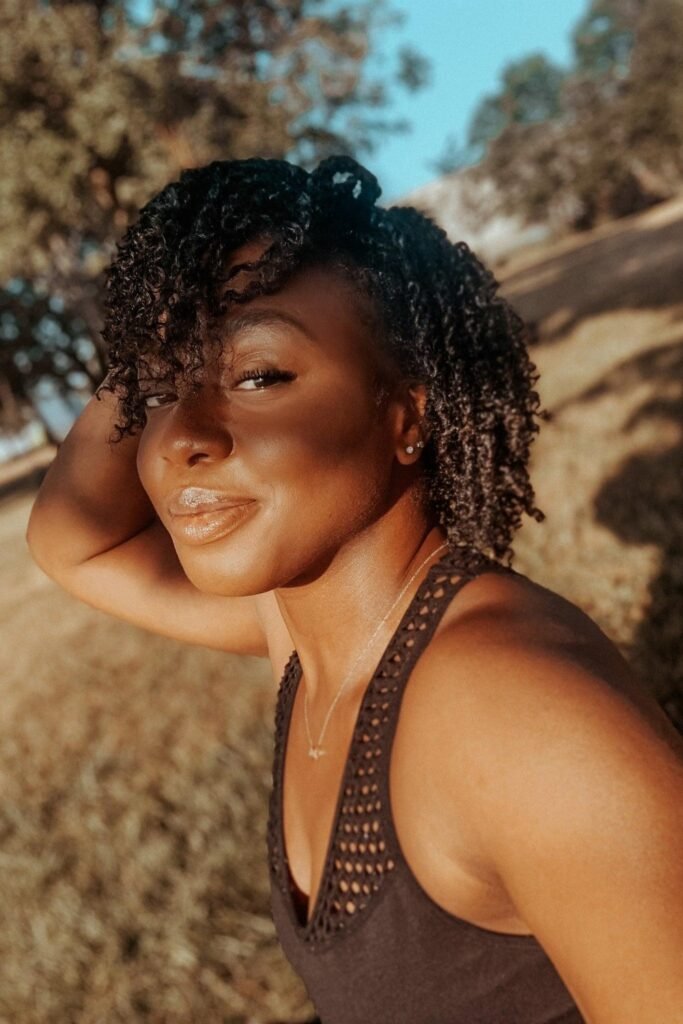
Save6. Mini Twists
Many small twists installed before a trip, worn as the style itself.
Mini twists last considerably longer than larger ones and involve almost no daily manipulation. For a trip of several days, this is one of the most reliable options available.
Installation takes time, so this is a decision made days ahead rather than the night before.
 Save
Save7. Flat Twists
Twists worked flat against the scalp, similar to cornrows but using a two-strand technique.
Flat twists sit close to the head, which means they survive a hat, a helmet, and a hood without disruption. They also come out faster than cornrows if you want the resulting texture afterwards.
Gentler on the hairline than tightly braided styles, which makes them a reasonable choice for anyone with fine edges.
 Save
Save8. Cornrows
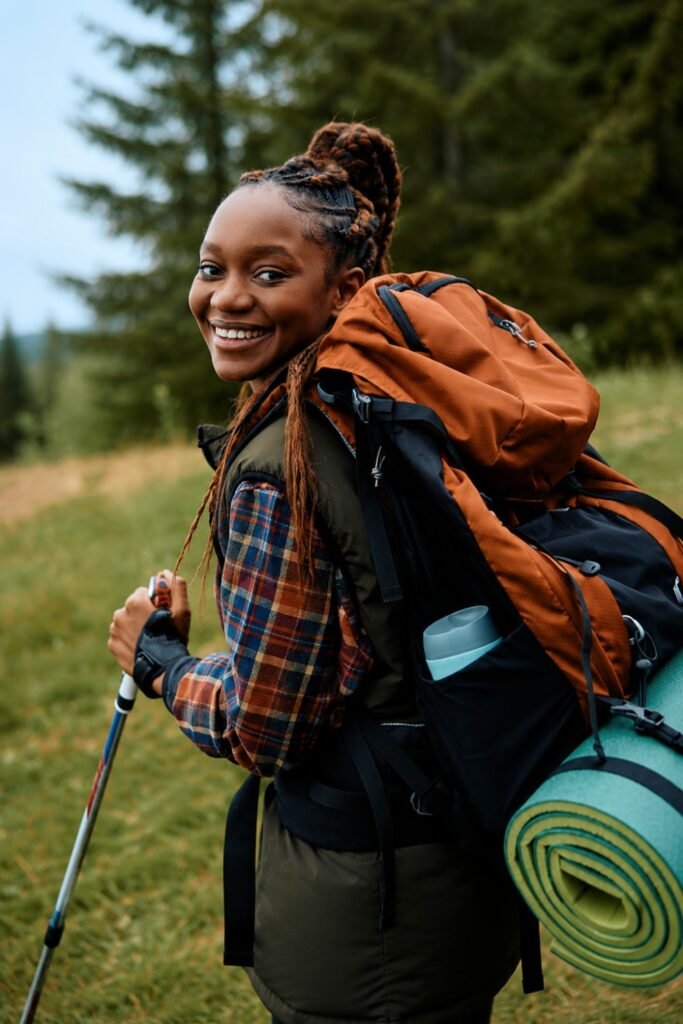
Braids worked flat to the scalp, installed before an extended trip.
For rigorous hiking and longer trips, cornrows are hard to beat. They reduce frizz, keep hair contained in humid or dusty conditions, and withstand hats, rain, and sun without needing to be redone.
The tension caution matters here. Braids installed too tightly cause traction alopecia, and a style you cannot loosen on the trail is one to get right at installation. Our guide to protective styles for Black hair covers the options and the wash and moisturise routine that keeps them comfortable while you are away.
 Save
Save9. Bantu Knots
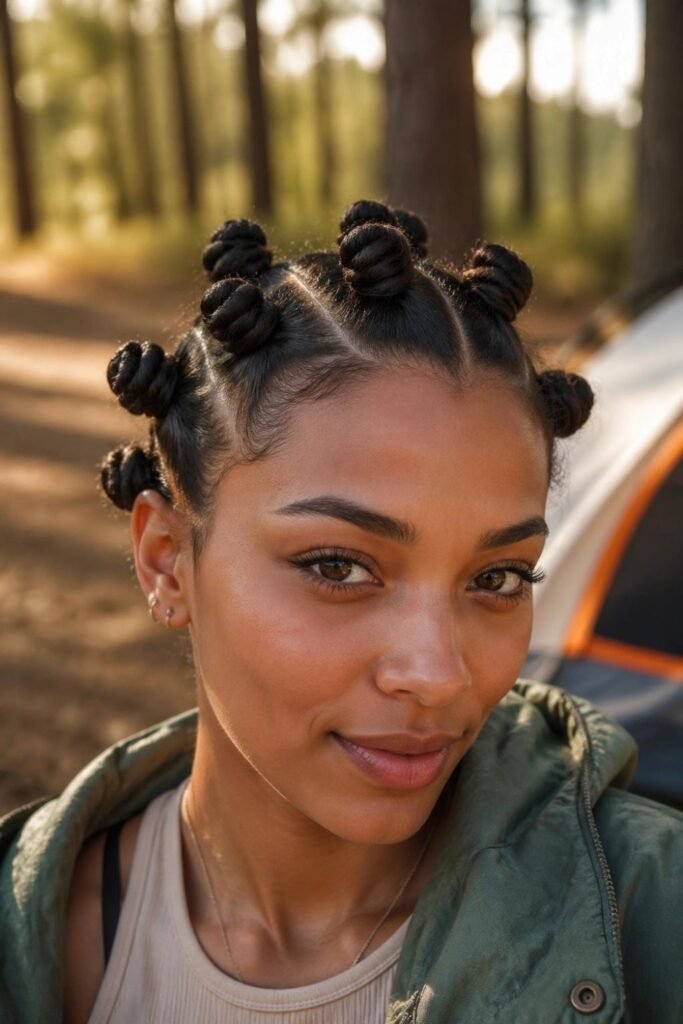
Sections twisted and coiled into small knots secured against the scalp.
Practical, secure, and low-manipulation, with the additional advantage that unravelling them produces defined curls if you want a different look partway through a trip.
They sit close enough to the head to work under a hat, though a helmet is less comfortable.
 Save
SaveWind, Rain, and Sun
10. Satin-Lined Cap or Beanie
A cap or beanie with a satin or silk lining, worn over any of the styles above.
Ordinary cotton and wool linings create friction, which produces frizz and breakage over hours of wear. A satin lining removes that entirely, and it is the single most useful piece of kit on this list.
If you cannot find a lined one, a thin satin scarf worn underneath your existing hat does the same job.
 Save
Save11. Head Wrap or Scarf
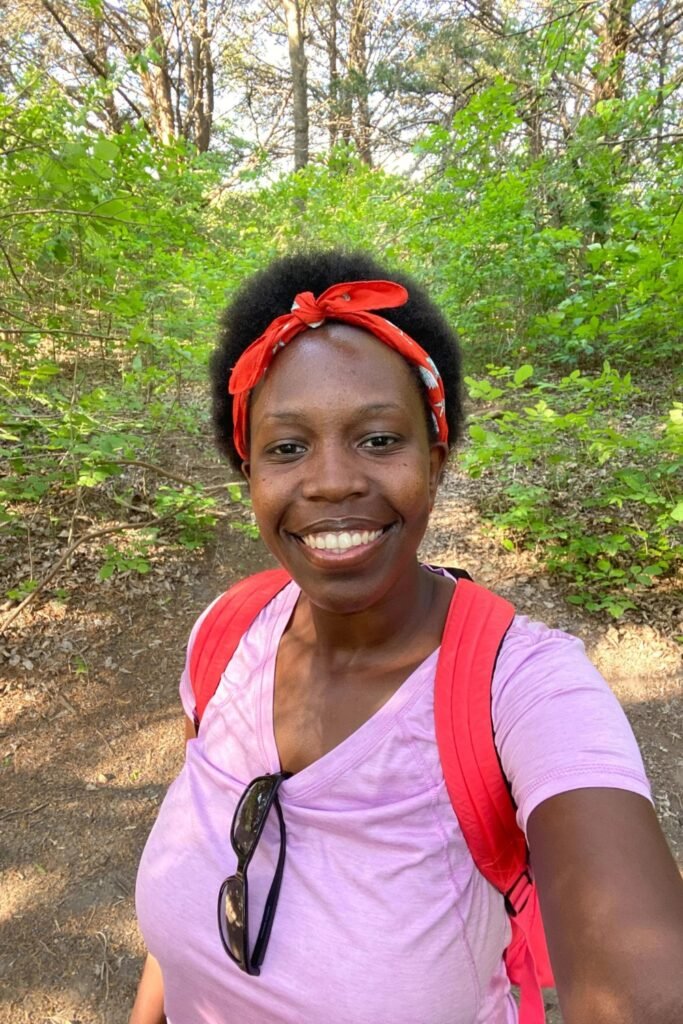
A scarf or wrap covering the hair completely, tied at the nape or the crown.
Full coverage handles sun, wind, dust, and rain in one move, and it protects the curl pattern underneath rather than compressing it the way a tight hat does.
Also the answer for a day when your hair is simply not cooperating and you would rather not think about it, which is a legitimate reason and one worth naming.
 Save
Save12. Buff Over a Pineapple
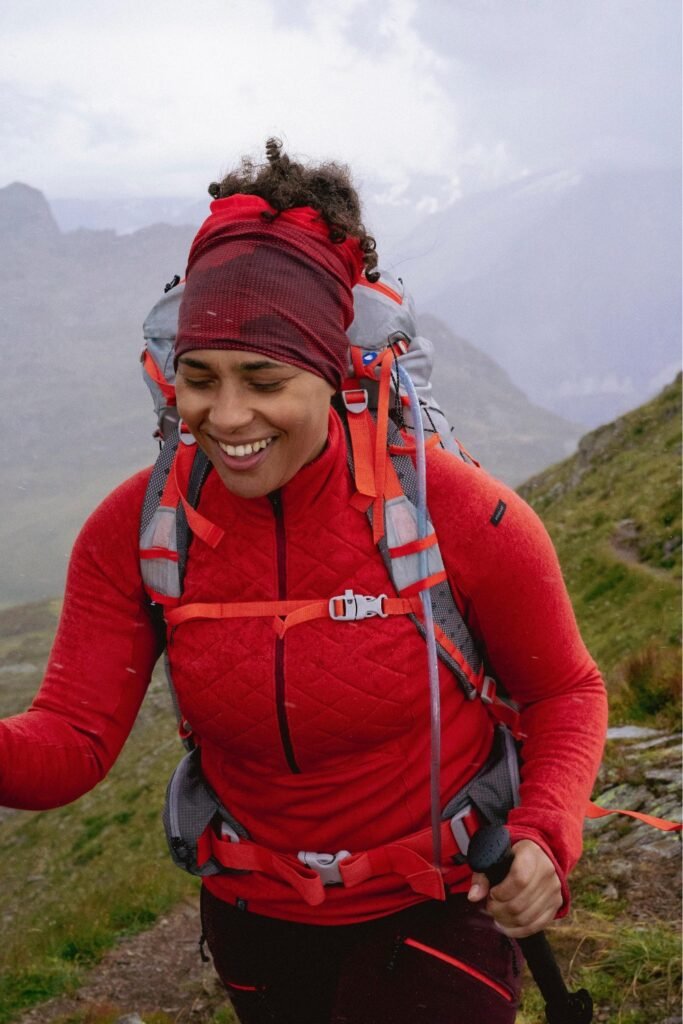
A tubular neck gaiter pulled over the head with the pineapple sitting inside it.
The combination that solves the hat-versus-definition conflict. The buff holds everything without pressing it flat, because the pineapple keeps the curls raised inside the fabric rather than crushed against the scalp.
Also converts to neck coverage, sun protection, and a warm layer, which is a lot of use for very little weight.
 Save
SaveMulti-Day and Camping
13. Satin Cap or Bonnet Overnight
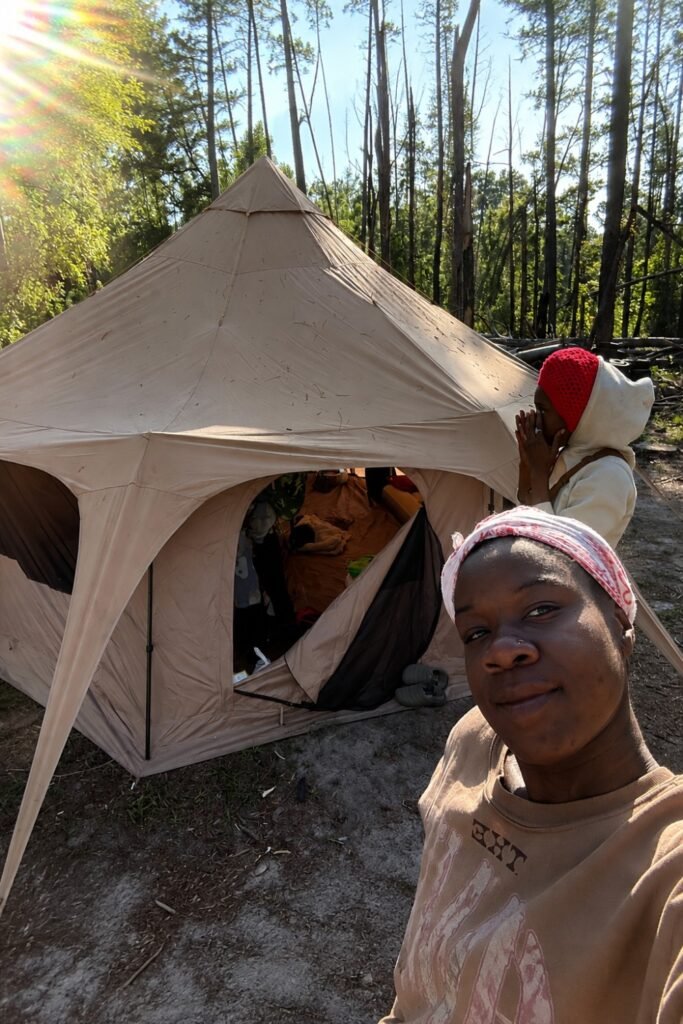
A satin cap or bonnet worn in the tent or hut every night.
Protecting hair at night matters more on a trip than at home, because sleeping bags and camping pillows are far more abrasive than a bed. Writing for The Trek, one backpacker notes that she left her satin cap behind on more than one occasion because she was worried what others would think, and that protecting hair at night is crucial both on and off the trail.
Negligible weight and it is the difference between three good hair days and one.
 Save
Save14. Refresh, Do Not Restyle
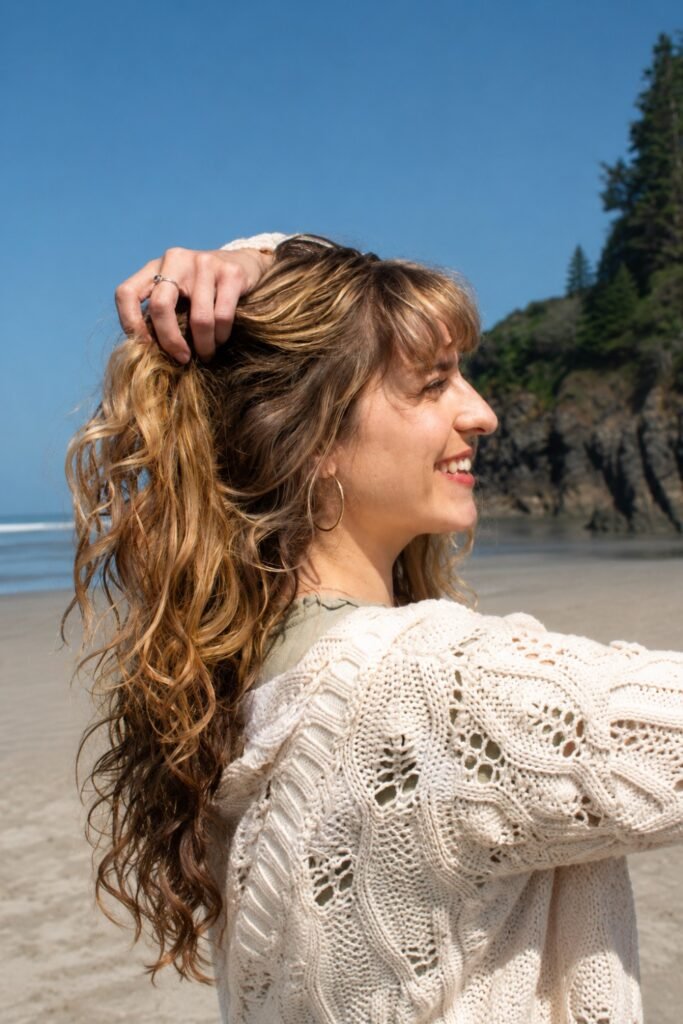
A small spray bottle containing water with a little conditioner mixed in, used to revive curls between washes.
The practical alternative to washing on a multi-day trip. A light mist plus scrunching restores definition without the full water access a wash requires, and regular conditioner has more hold than leave-in when used this way.
Spacing washes out by a day or two is entirely normal on trail. Do not carry shampoo you will not use.
 Save
Save15. Loose and Free
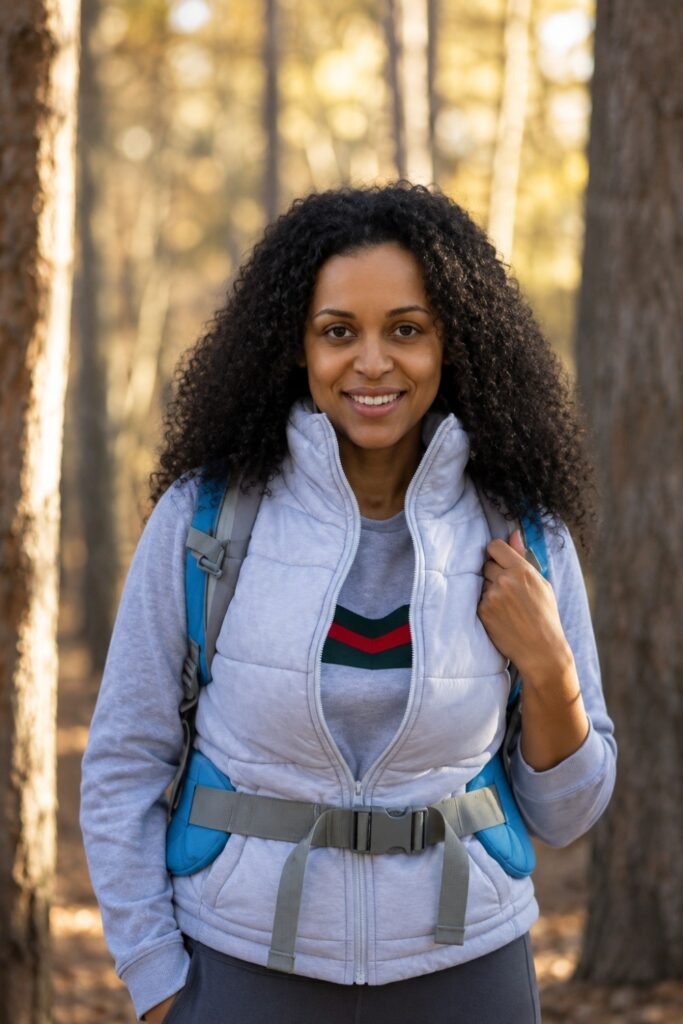
Curls worn down and unstyled, on short walks in calm conditions.
Not every hike needs a strategy. For a couple of hours in still weather with no pack, the lowest-manipulation option is genuinely to do nothing at all, and the writers at Melanin Base Camp and The Trek both make the point that there is something freeing about letting natural hair be natural outdoors.
Detangle beforehand, accept that it will move, and take the photos anyway.
 Save
SaveWhat to Actually Carry
A small spray bottle with water and conditioner. A satin cap. A wide-tooth comb or nothing at all, since fingers work better on curls than combs do on a trail.
For humid conditions, a stronger-hold gel applied before you leave does more than anything you can carry with you. In dry or cold conditions, prioritise moisture instead. The environment determines the product, not the other way round.
Sample sachets beat travel bottles for weight and for the risk of leaking in a pack. And UV protection matters more than most people account for, since prolonged sun exposure dries curls and causes damage over a long day.
If You Have Shorter Curls
Short curly hair is considerably easier on a trail, because there is less length to tangle and it dries in minutes. Most of the preservation logic still applies, particularly the satin lining and the no-touching rule.
Our guide to short graduated bob haircuts covers how nape length affects comfort in the heat, which is worth knowing if you are considering a cut before a trip.
Common Questions
Why does my hair look completely different after a hike?
Because hydrogen bonds in the hair break on contact with water and reform as the hair dries, in whatever position it was held. Rain, sweat, and humidity all trigger this, so curls dried under a tight hat or against a pack will set in that flattened shape rather than in their natural pattern.
How do I stop frizz in humid conditions?
Prepare before you go rather than trying to fix it on the trail. Humid conditions call for stronger-hold products applied at home, since gels and firmer stylers create a barrier that helps hold definition against moisture in the air. In dry or cold conditions the opposite applies and moisture matters more.
Can I wear a hat with curly hair?
Yes, with two adjustments. Choose something satin-lined to remove friction, and put your hair in a pineapple first so the curls sit raised inside the hat rather than pressed flat against your scalp. A buff over a pineapple is the most reliable version of this.
How do I refresh curls without washing on a multi-day trip?
Carry a small spray bottle with water and a little conditioner mixed in. A light mist and some scrunching restores definition without needing a full wash. Regular conditioner holds better than leave-in for this. Spacing washes out by a day or two on trail is normal and expected.
What is the best style for a week-long trip?
Something installed before you leave. Mini twists, flat twists, or cornrows all last for days with minimal handling, which is exactly what a long trip requires. Install them a few days before you travel rather than the night before, so any initial tension settles at home.
Final Thoughts
The instinct on a trail is to keep adjusting your hair. For curls, that instinct is the problem, because every adjustment costs definition you cannot restore without water.
Detangle and moisturise before you leave. Choose a style that holds for the length of your trip rather than one you maintain each morning. Take a satin cap, take a spray bottle, and then leave it alone and go and look at the view.