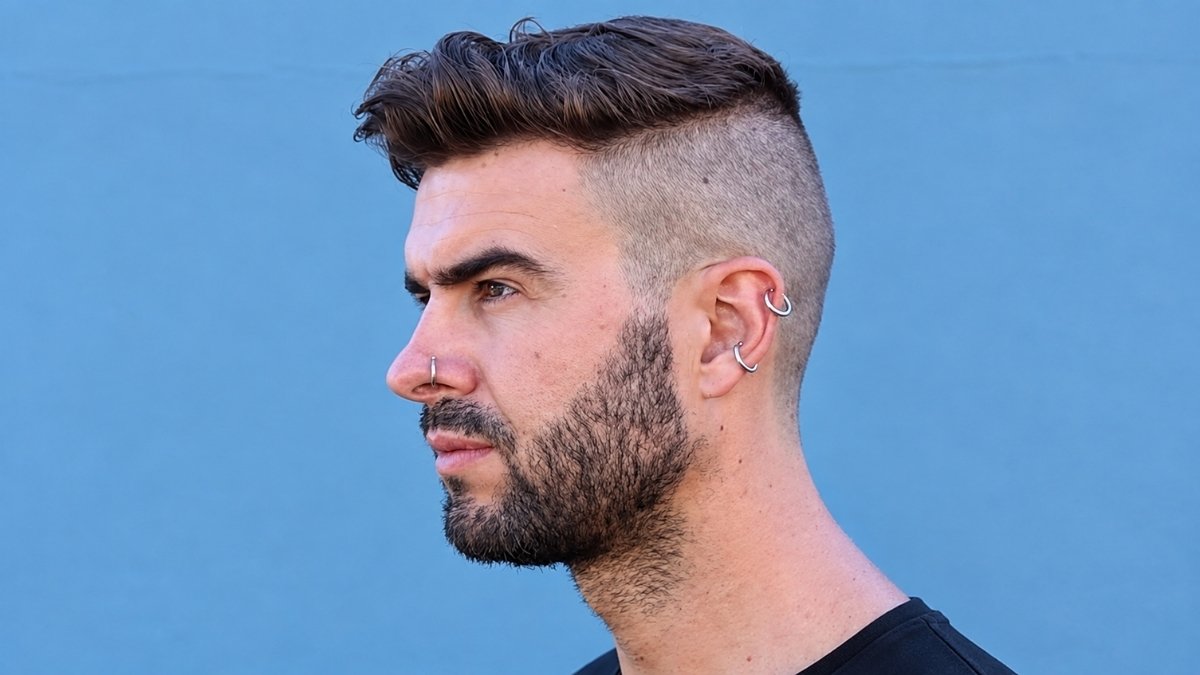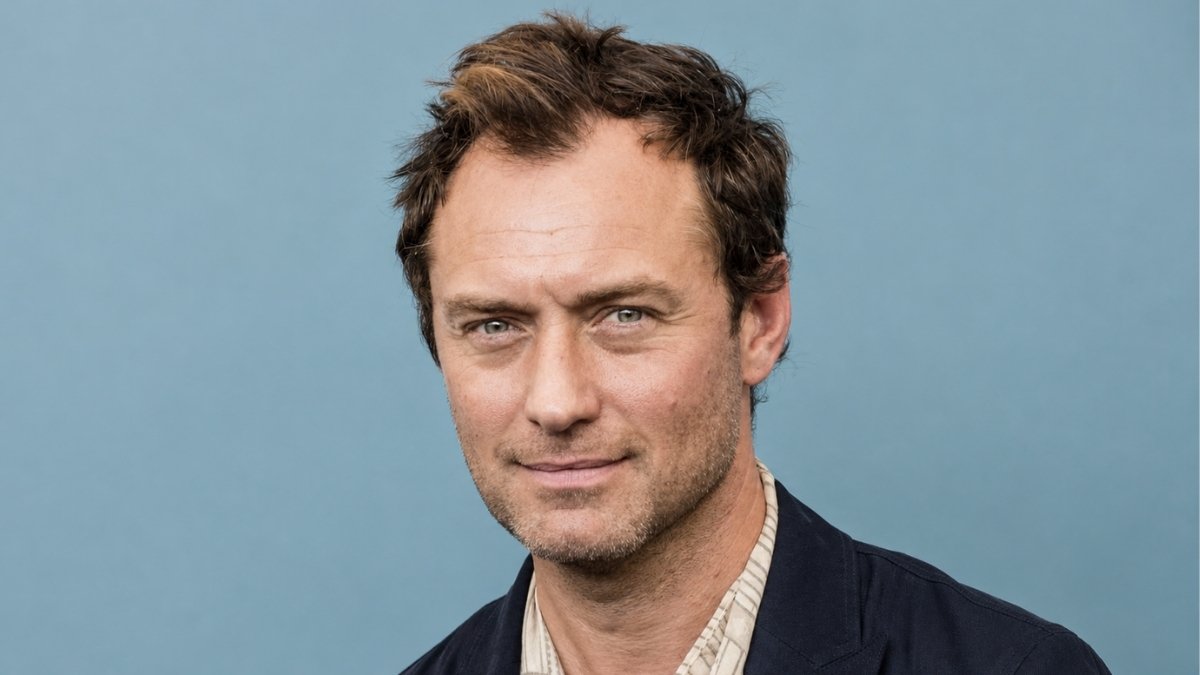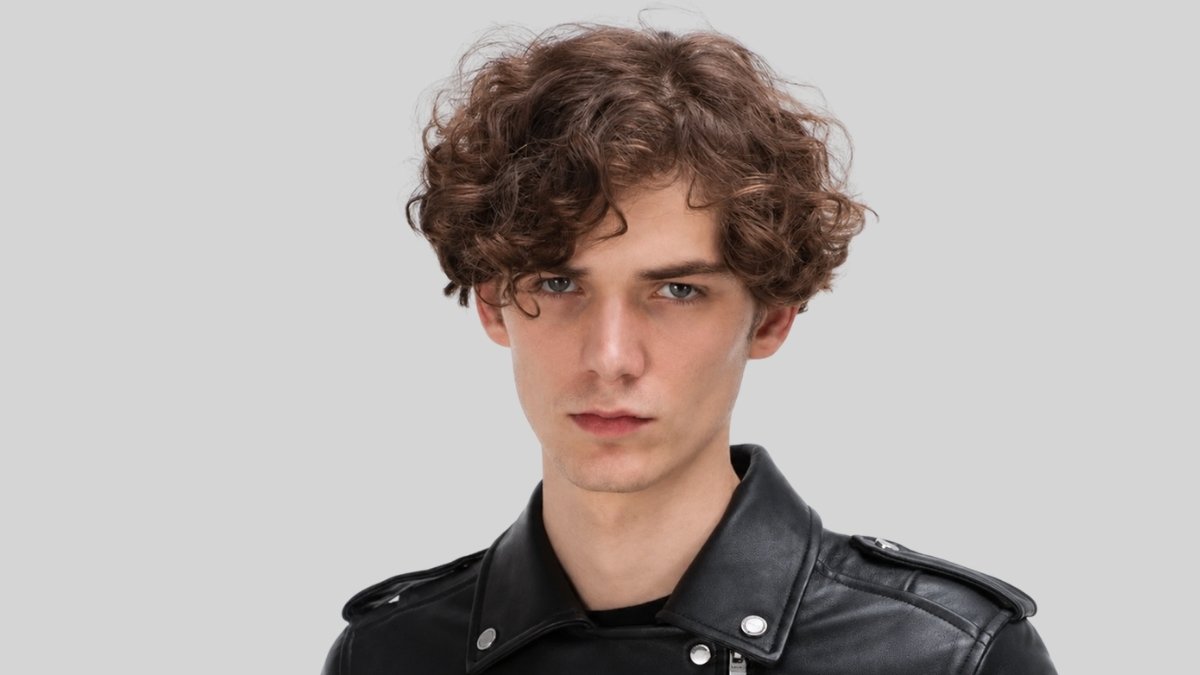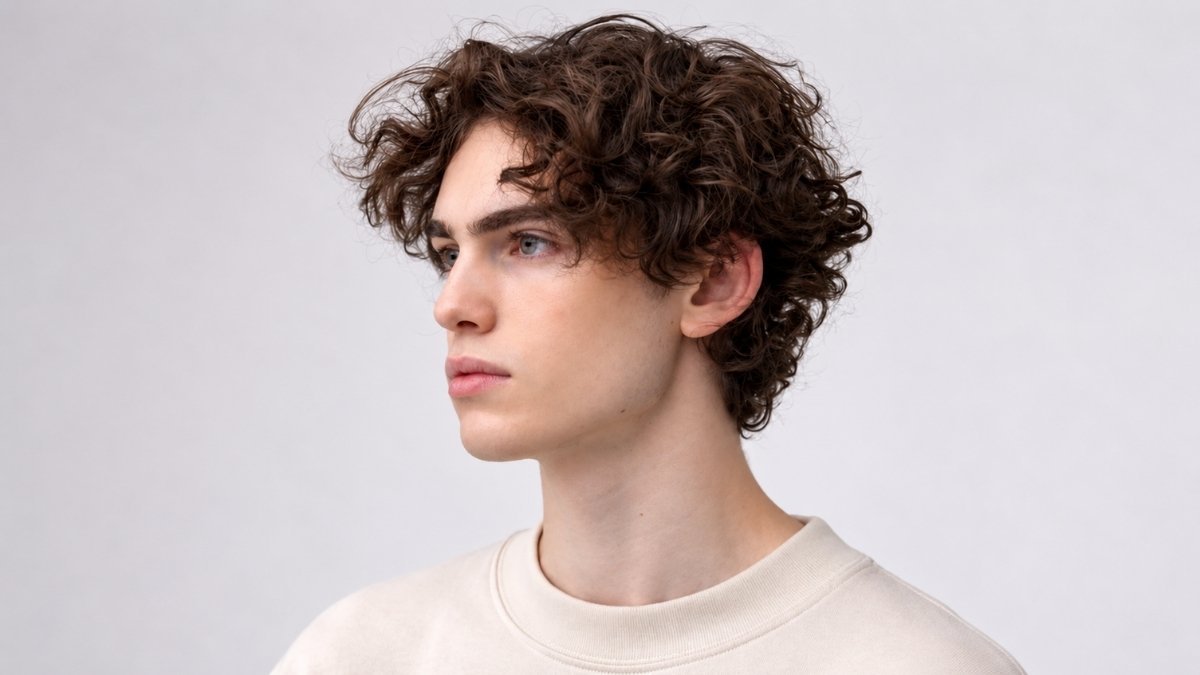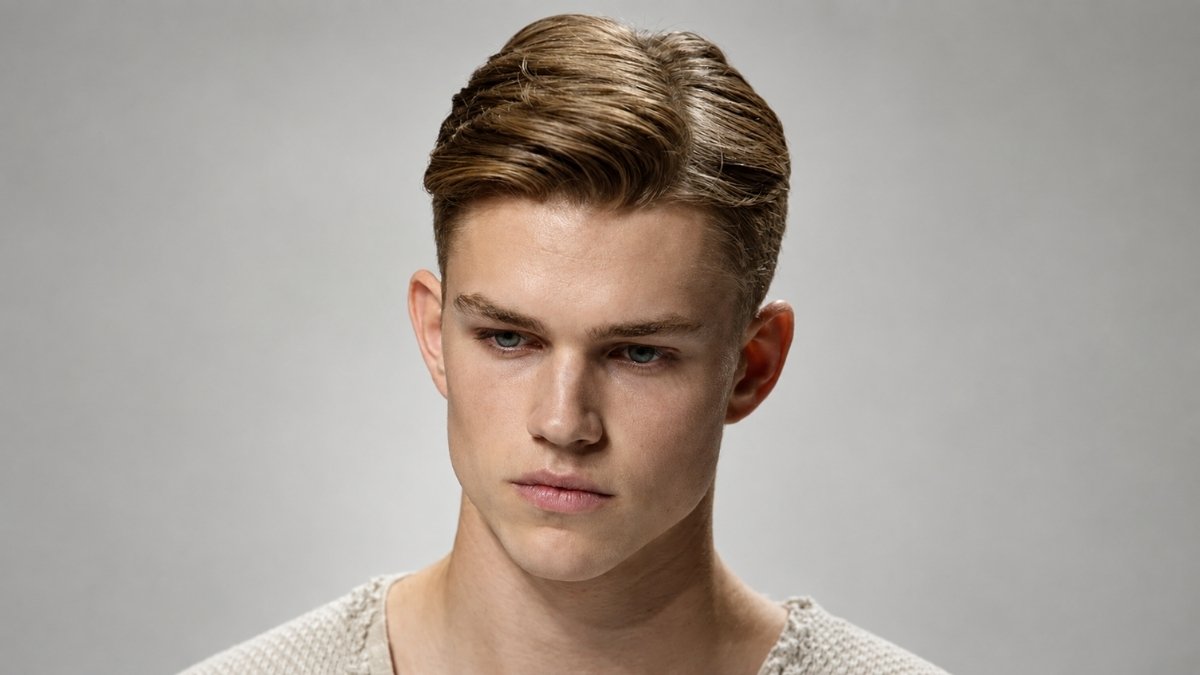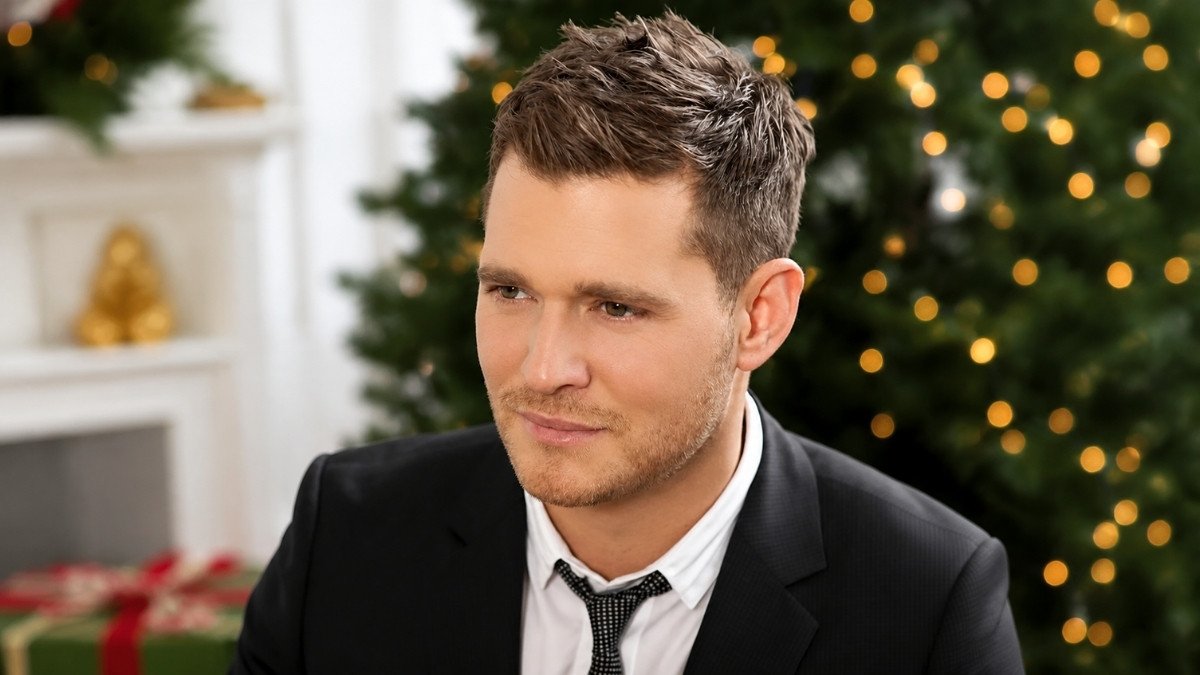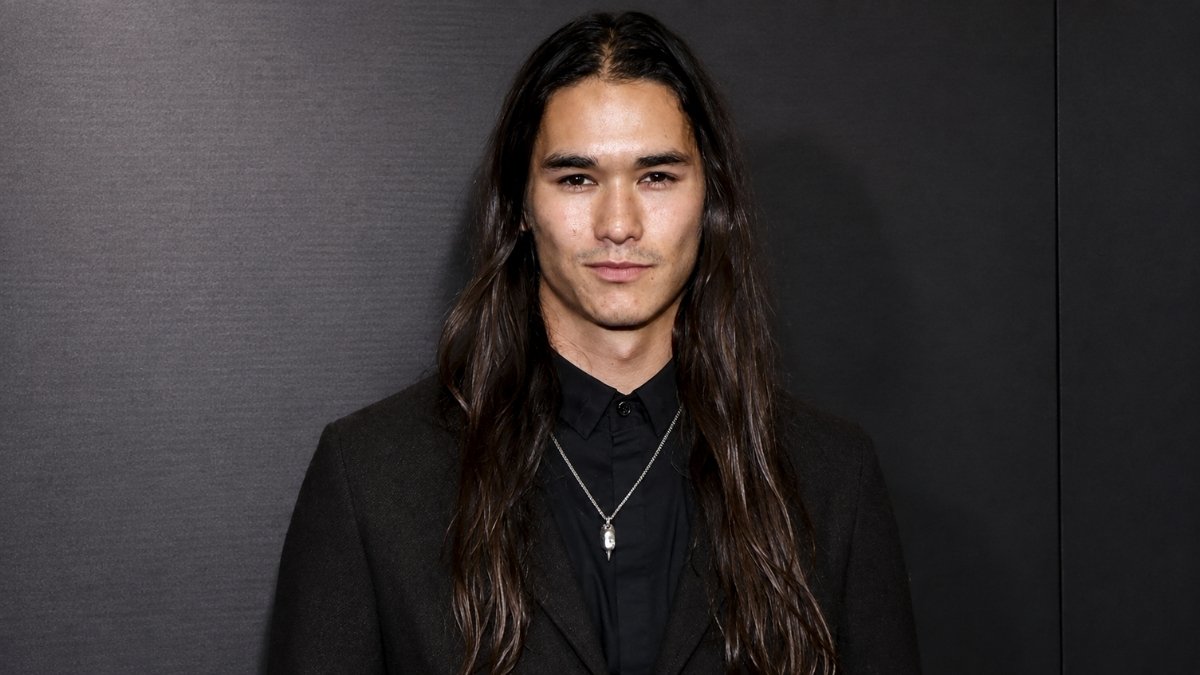
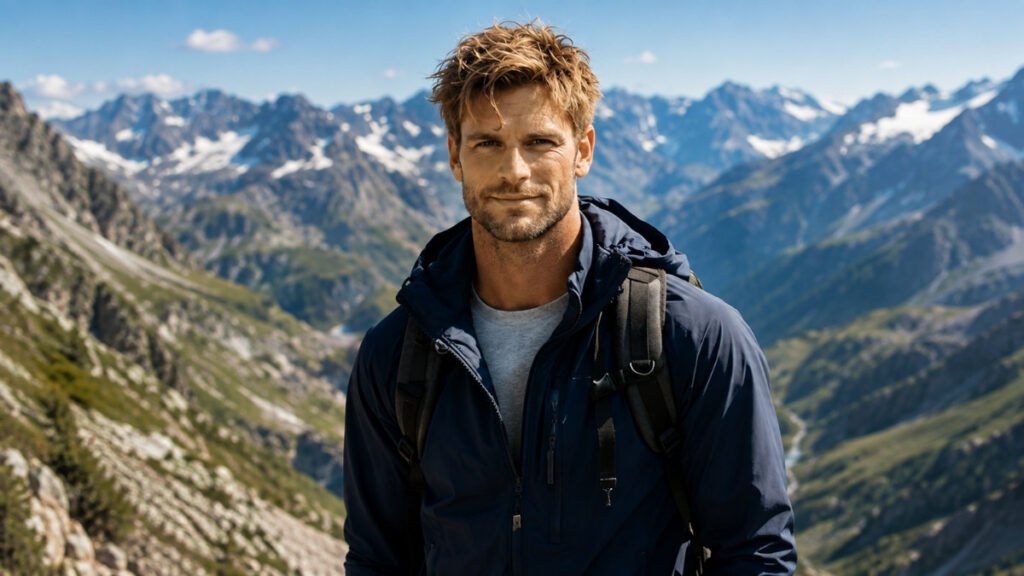
Search for hiking hairstyles, and you will find braids, buns, and ponytails. Useful if you have long hair. Less useful if you have a number two on the sides and a beard.
For most men on a trail, the hair question is genuinely easy, and two other things matter more. The first is your scalp, which a short cut leaves exposed to overhead sun in a way that longer hair simply does not. Scalp sunburn is common, surprisingly painful, and worse at altitude. The second is your beard, which no hiking hair article seems to cover despite being the thing you will actually be dealing with at the end of day three.
Both are solvable. Neither requires anything you would call a hairstyle.
Two Things Before the Cuts
Your scalp needs sunscreen. If your hair is very short, thinning, or you have a visible parting, the scalp is exposed, and it burns. One barber writing about summer hiking puts it bluntly: at altitude, SPF on your scalp is mandatory when you are not wearing a hat. Apply it before you set off, along the parting and anywhere the hair is thin.
Your beard is doing more than you think. Research from the University of Southern Queensland, cited widely in hiking circles, found that a beard blocks up to 95 percent of the sun’s harmful UV rays. That is a genuine functional benefit on an exposed trail, though it only covers the skin the beard actually covers. If your growth is patchy, the skin underneath still needs sunscreen.
Short Cuts
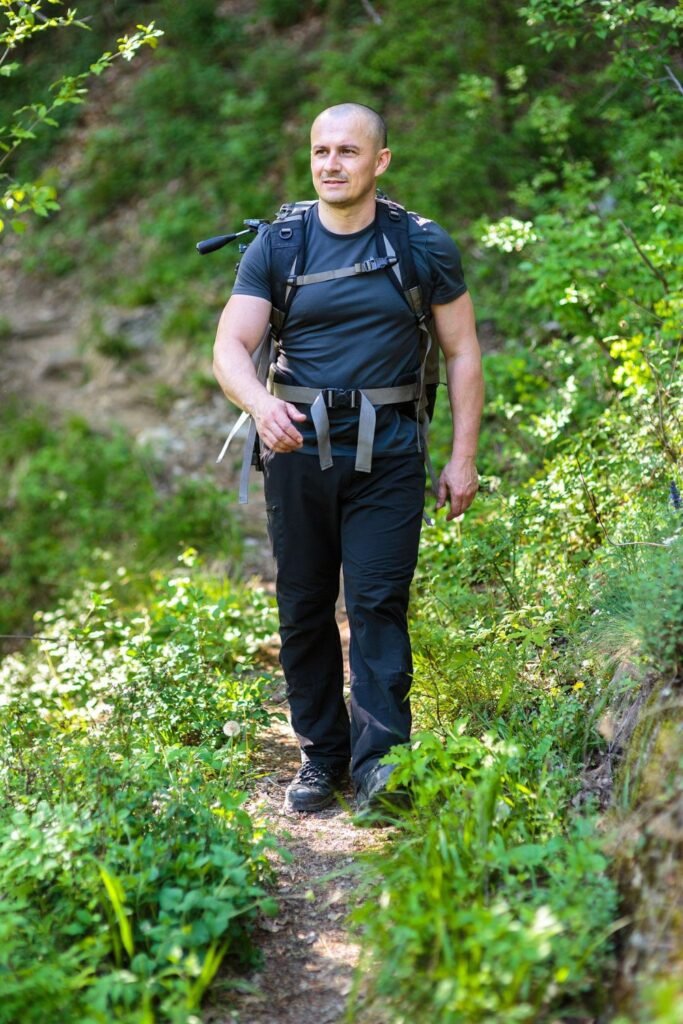
1. Buzz Cut
Uniform short length all over. The lowest-maintenance option that exists.
Nothing to style, nothing to wash properly, dries in seconds, and no hat hair because there is no hair to flatten. For a multi-day trip it removes the problem entirely.
The trade-off is total scalp exposure. A buzz cut without a hat or sunscreen on a long sunny day is a burn waiting to happen, and it is worth knowing that before you commit rather than after.
 Save
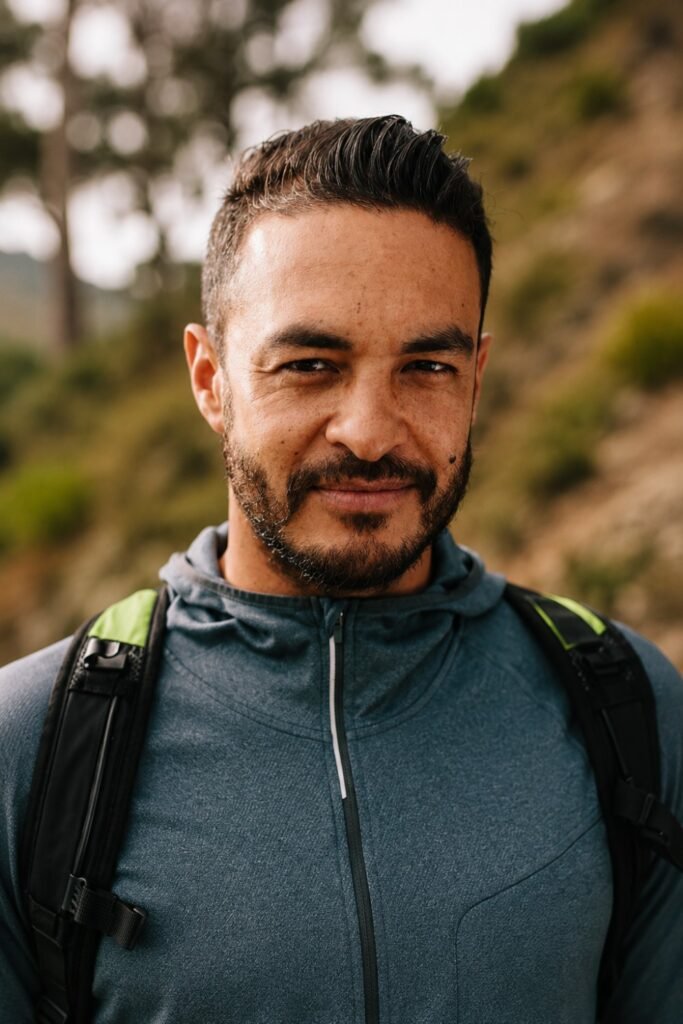
Save2. Tapered Crop
Short and uniform with a gradual taper at the sides and neck. Close to a buzz but not quite.
The taper gives it a shape a buzz does not have, which matters if you want the cut to work off the trail as well as on it. Product optional, and a small amount of matte paste is all it would need.
Worth knowing: a barber writing specifically about summer and hiking flags that very even short lengths can expose the scalp on fine or thinning hair. If that describes you, keep some length on top.
 Save
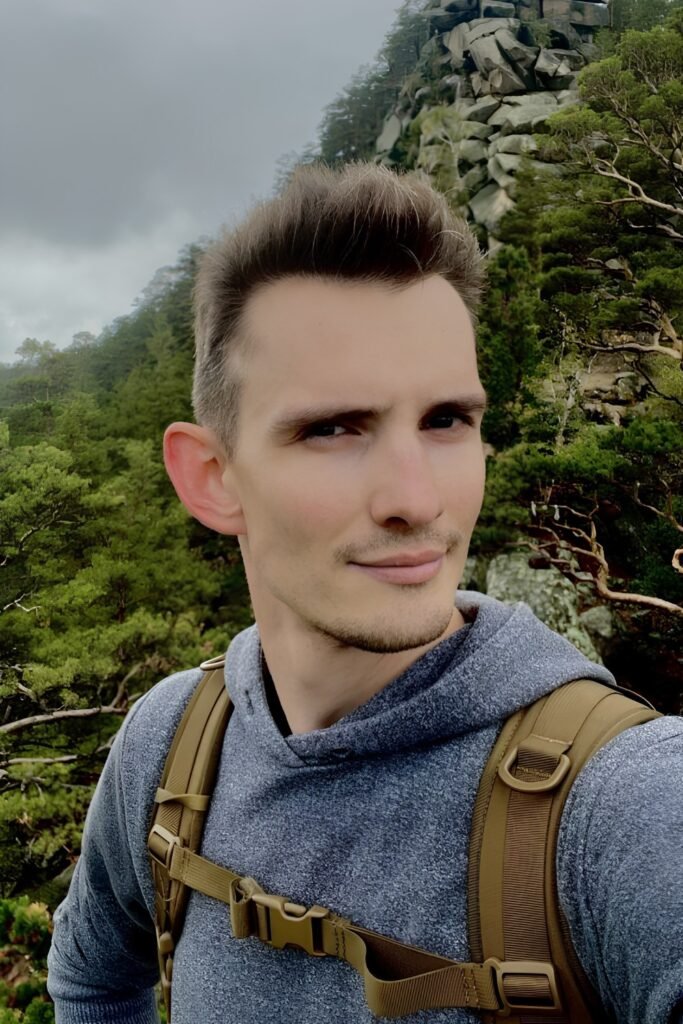
Save3. Short Back and Sides With Length on Top
Classic proportions, short at the sides with enough on top to have direction.
The most practical short cut for anyone with thinning at the crown, since the length on top provides coverage that a uniform cut does not. It also survives a hat better, because there is something to reshape afterwards.
A matte paste rather than a gel. Gel plus sweat plus dust is unpleasant by mid-afternoon.
 Save
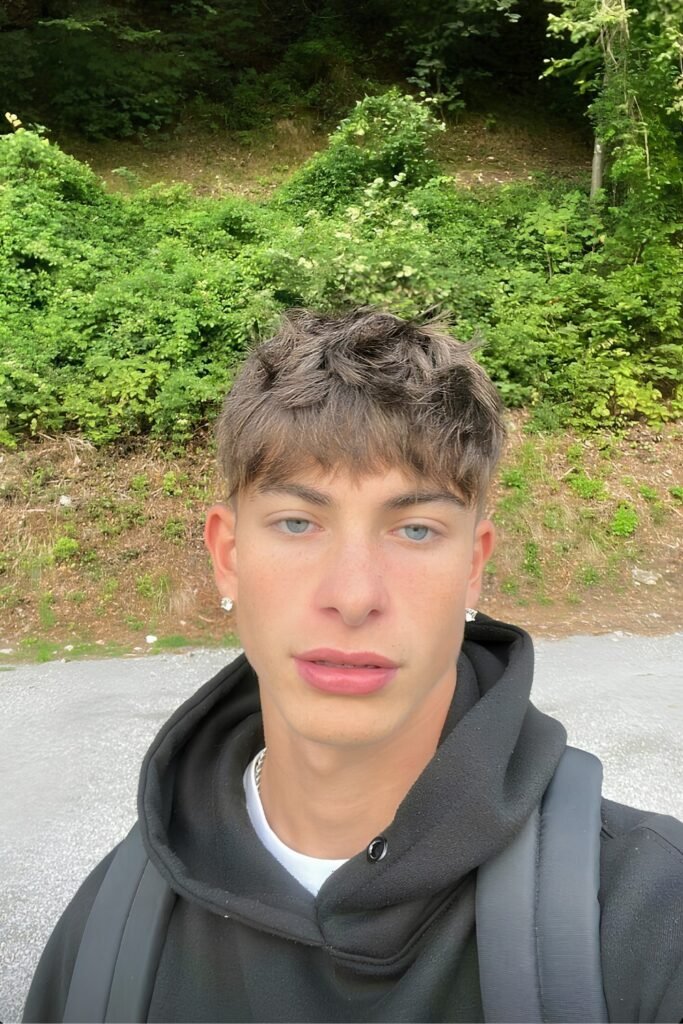
Save4. Textured Crop With a Short Fringe
Short all over with texture through the top and a short fringe forward.
The fringe keeps sun off the forehead and, more usefully, stops sweat running directly into your eyes on a climb, which a swept-back style does not.
Point cut rather than blunt. A blunt fringe holds sweat at the edge; a textured one lets it disperse.
 Save
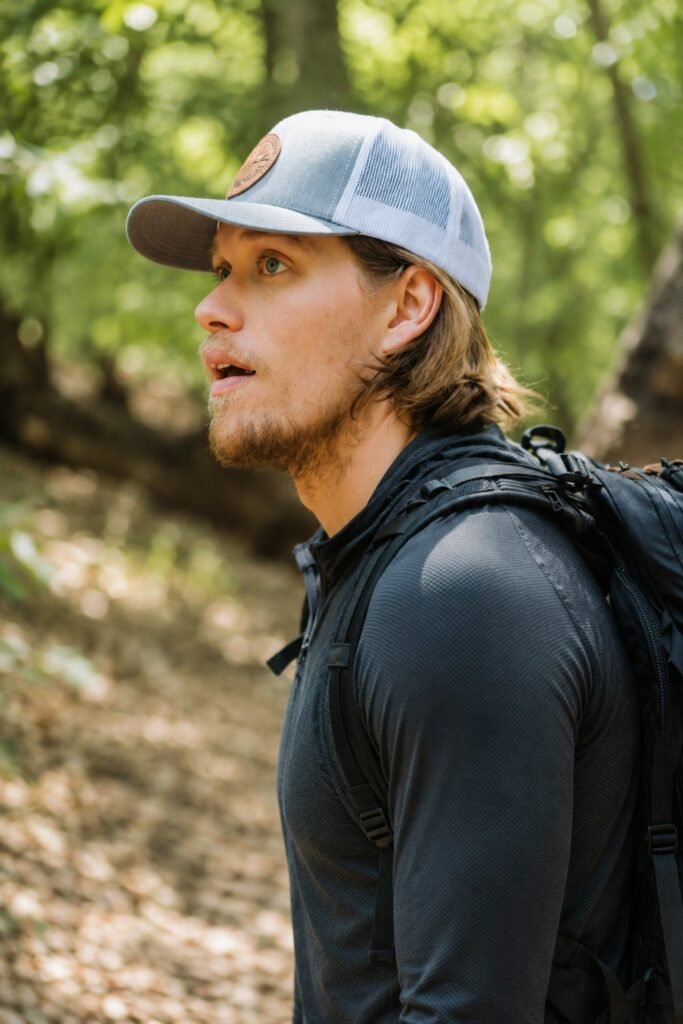
Save5. Grown-Out Crop Under a Cap
Slightly longer than a crop, worn primarily under a cap with the front left visible.
The practical answer for anyone in the awkward growing-out stage before a trip. Decide which section stays outside the hat and style that; everything else can be flattened and it will not matter.
The one length where a hat genuinely improves the situation rather than complicating it.
 Save
SaveLonger Hair
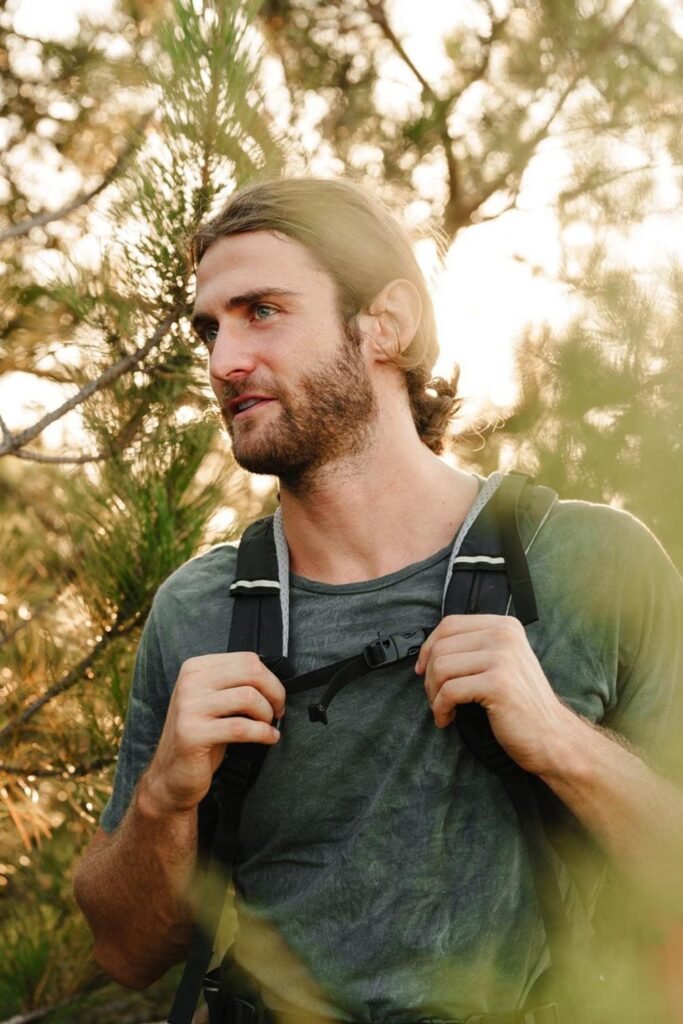
6. Low Ponytail
Hair gathered low at the nape and tied.
The default for men with length, and the low position matters for the same reason it does for everyone: a mid-height ponytail lands directly on a pack strap. Low sits underneath it.
A fabric tie rather than a thin elastic. Thin elastics snap and they pull.
 Save
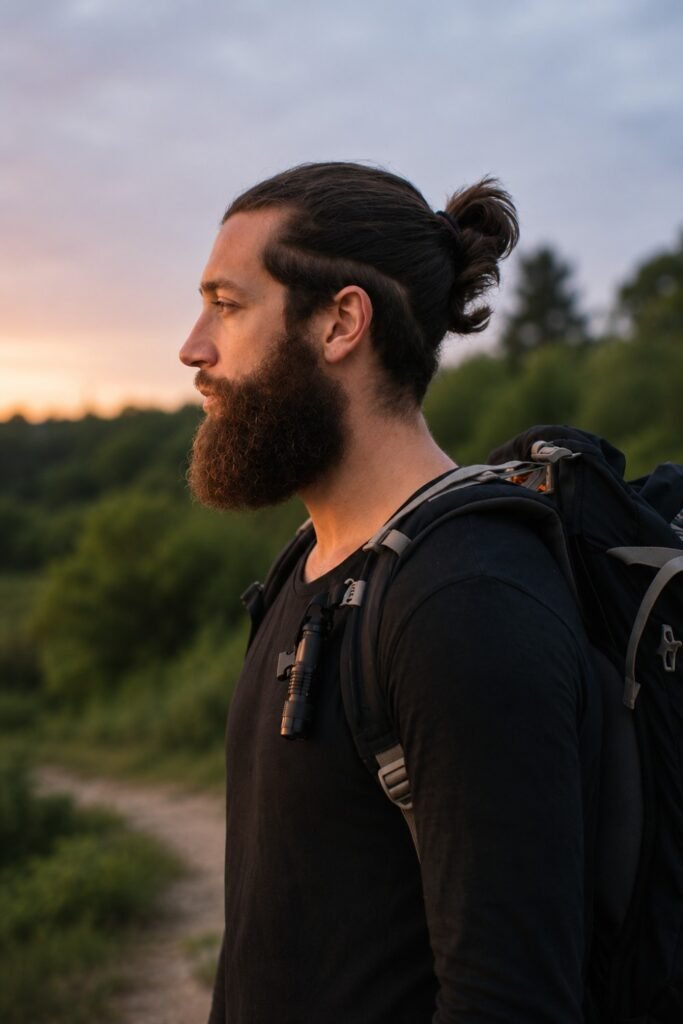
Save7. Low Bun
Everything gathered and coiled low at the nape.
More contained than a ponytail, which is the point in wind or dense scrub. Nothing hangs, nothing catches, and it keeps hair entirely off the neck on a hot climb.
Also the option that fits best under a hood, which a ponytail does not.
 Save
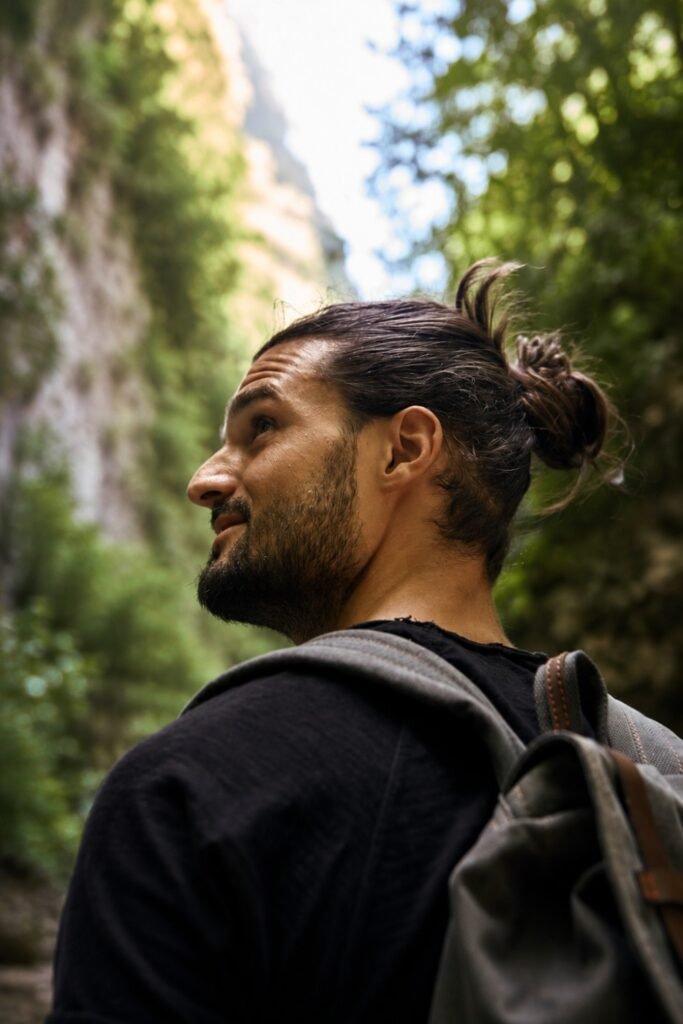
Save8. Half-Up
The top section tied back with the rest left down.
Handles the sections that fall into your face while keeping the neck coverage, which is useful in cold weather when you actually want hair against your neck.
The compromise option for shorter long hair that will not fully gather yet.
 Save
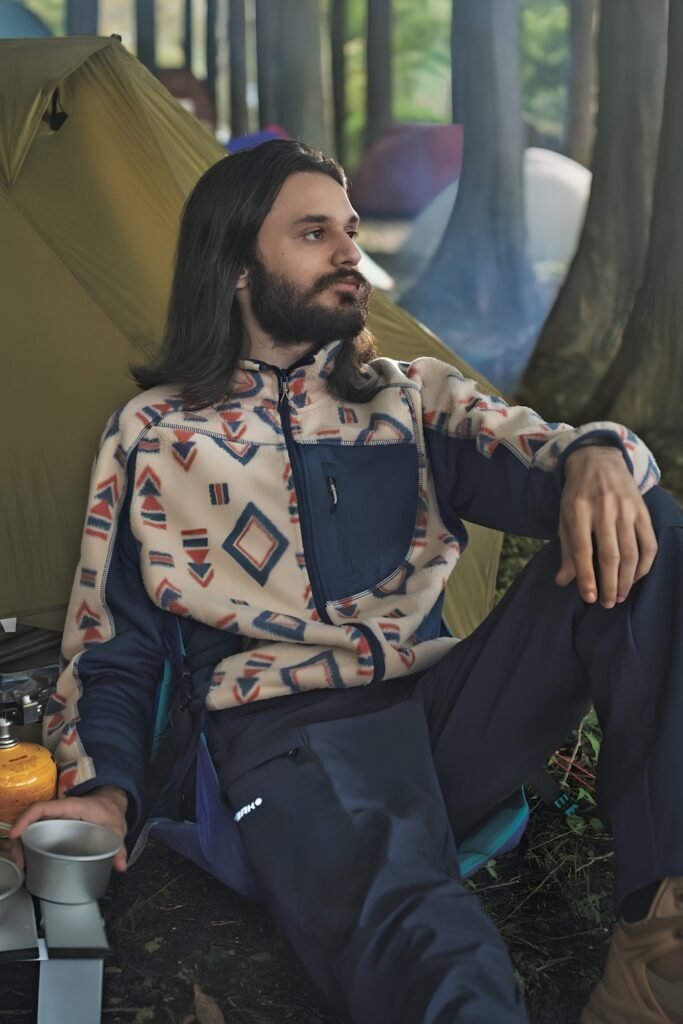
Save9. Tied Back Day, Down at Night
Not a style so much as a routine: up during the walk, down at camp.
Worth naming because it is what most men with long hair actually do, and it is the correct approach. Hair tied back all day and released in the evening tangles considerably less than hair left loose.
Dry air is hard on long hair. A leave-in conditioner through the mid-lengths and ends, and a little oil on the ends, is the whole maintenance routine.
 Save
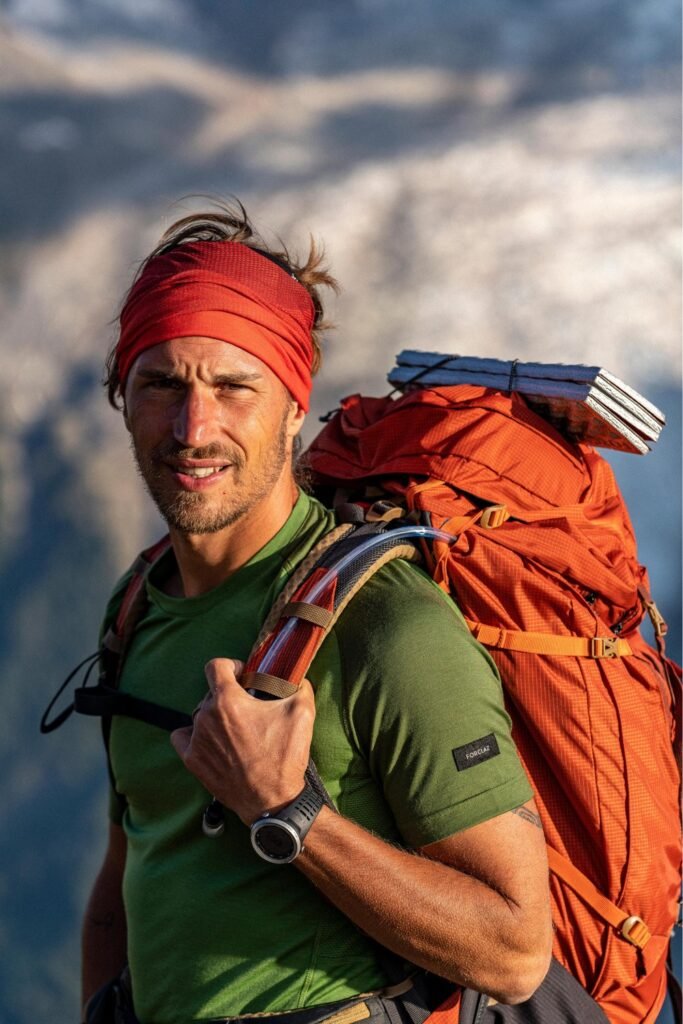
Save10. Bandana or Buff Over Any of the Above
A bandana or neck gaiter worn over the head, covering the crown.
Solves the scalp problem, the flyaway problem, and the sweat problem simultaneously, and it works over a ponytail, a bun, or a buzz cut equally well.
Lightweight synthetic dries faster than cotton after a sweaty climb, which matters on a multi-day trip.
 Save
SaveThe Beard
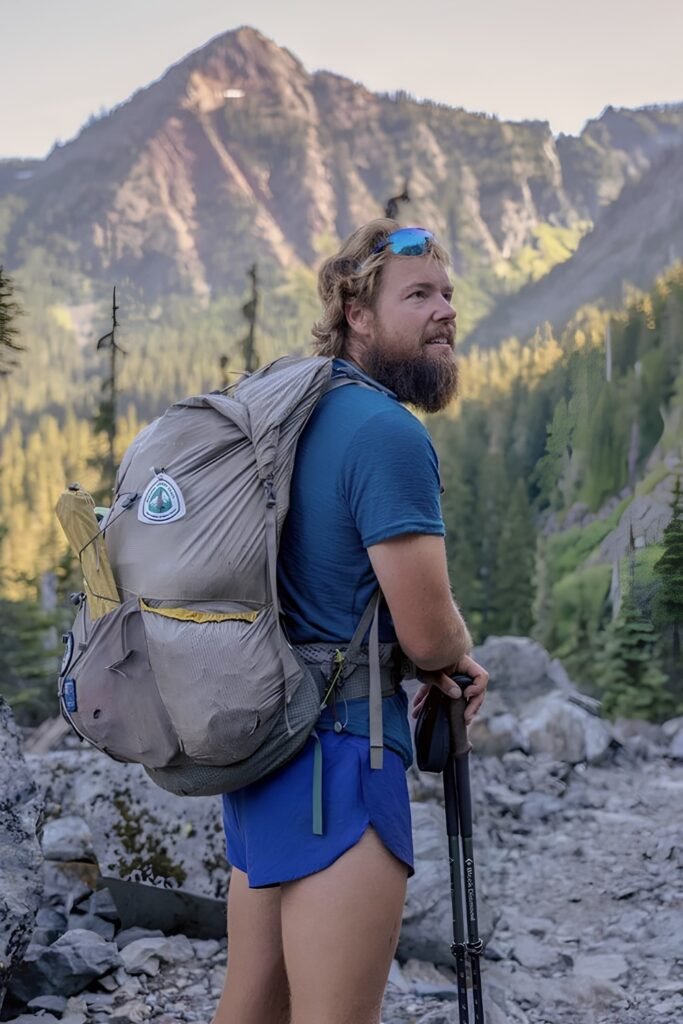
11. Full Beard, Left Alone
The thru-hiker default, and there is a reason for it.
It requires nothing, it covers a substantial area of skin that would otherwise need sunscreen, and it insulates in cold weather. Writers on long trails describe it as a badge of the trip, which is not a practical argument but is an honest one.
The practical case is the UV coverage. The practical cost is that it needs washing more than people expect, which is the next entry.
 Save
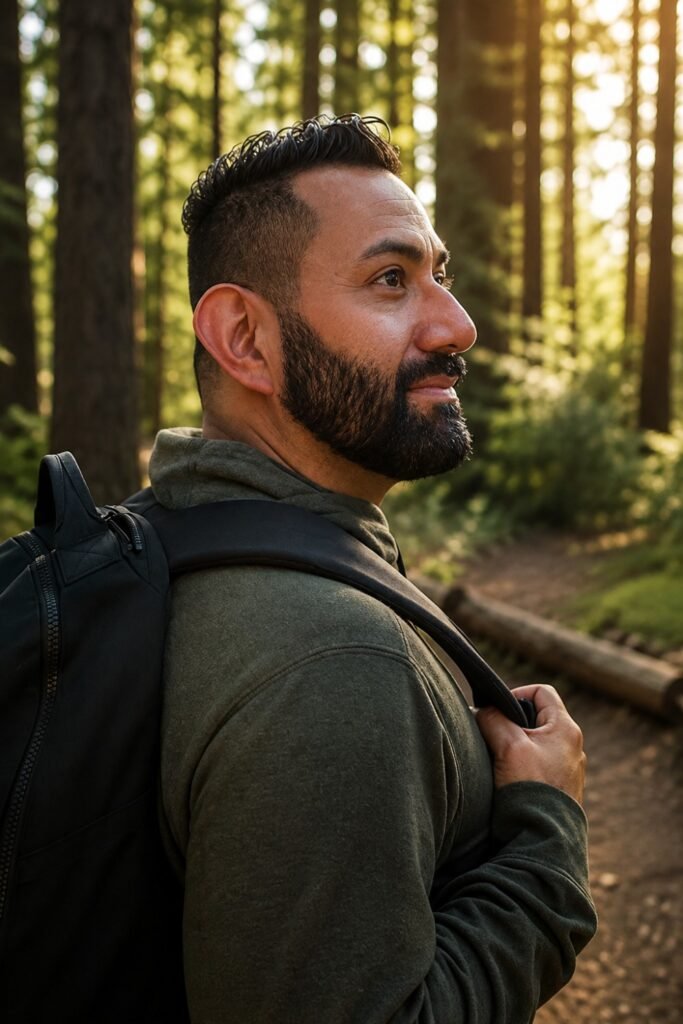
Save12. Trimmed Beard With a Defined Neckline
A beard kept to a controlled length with the neckline maintained.
Shorter beards trap less sweat, dry faster, and are considerably easier to keep clean on trail. For anyone doing multi-day trips regularly rather than one long thru-hike, this is the more sustainable option.
A compact trimmer is real pack weight for a marginal benefit. Most people are better off trimming before they leave and letting it grow during the trip.
 Save
Save13. Short Stubble
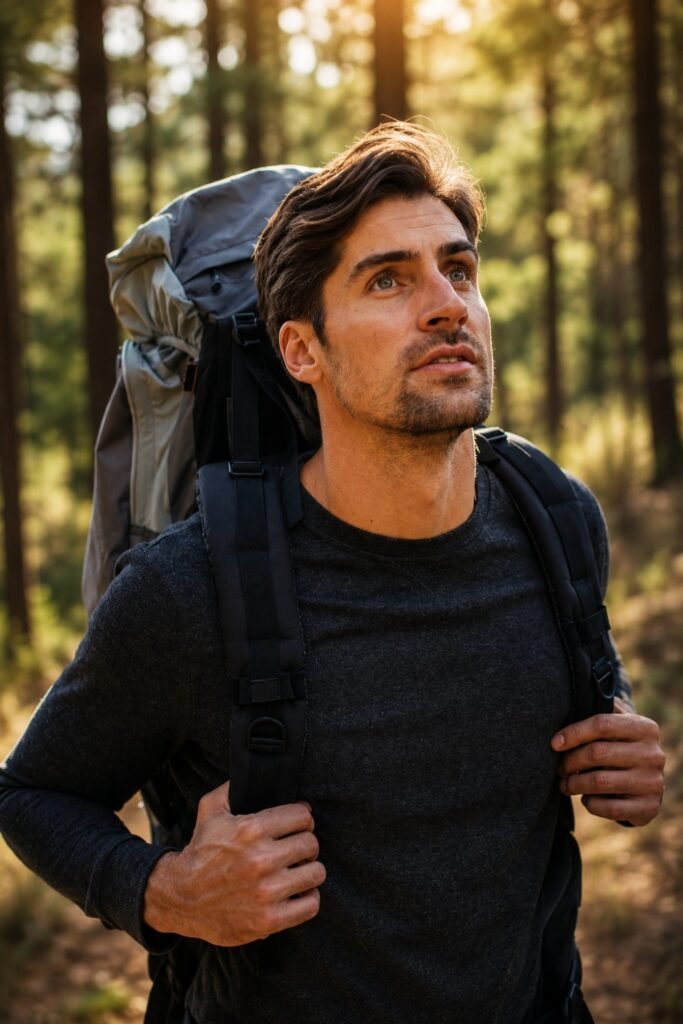
A few days of growth, maintained or simply allowed.
The middle ground. Enough to provide some sun coverage without the maintenance or the sweat retention of a full beard.
Worth noting that patchy stubble provides patchy protection. The skin under a thin beard still needs sunscreen, which is a detail almost everyone misses.
 Save
Save14. Clean Shaven
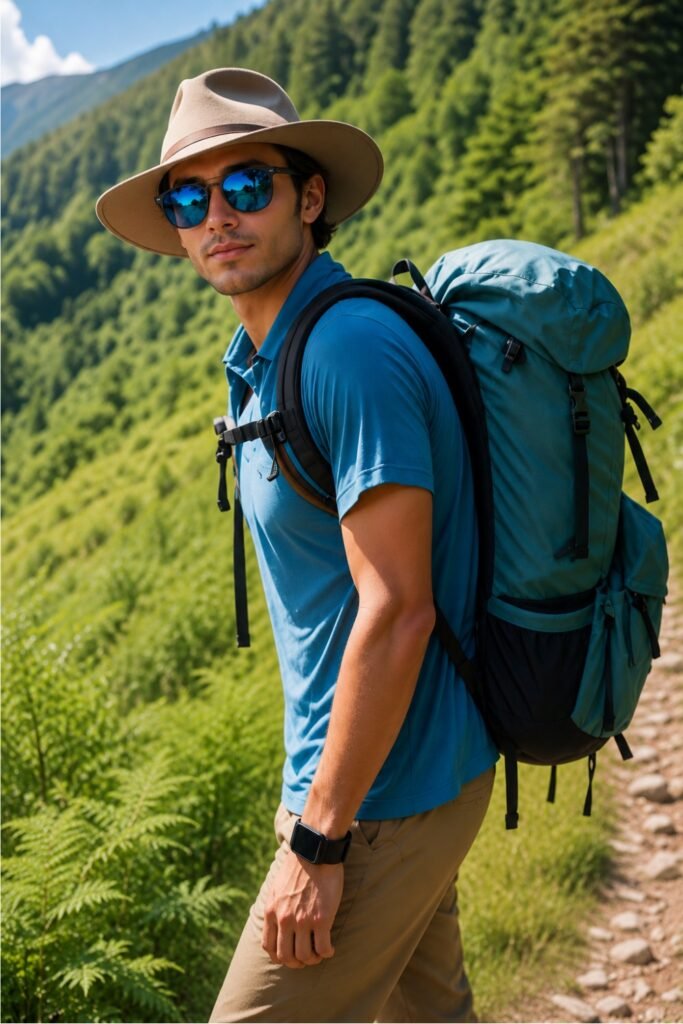
No facial hair, which is a legitimate choice and has its own logistics.
Shaving on trail is more hassle than most people want, so this generally means shaving before you leave and accepting growth during the trip, or carrying a razor and dealing with water and waste.
The main consideration is that you lose the UV coverage entirely. A clean-shaven face on an exposed trail needs full sunscreen coverage and reapplication.
 Save
Save15. Moustache Only
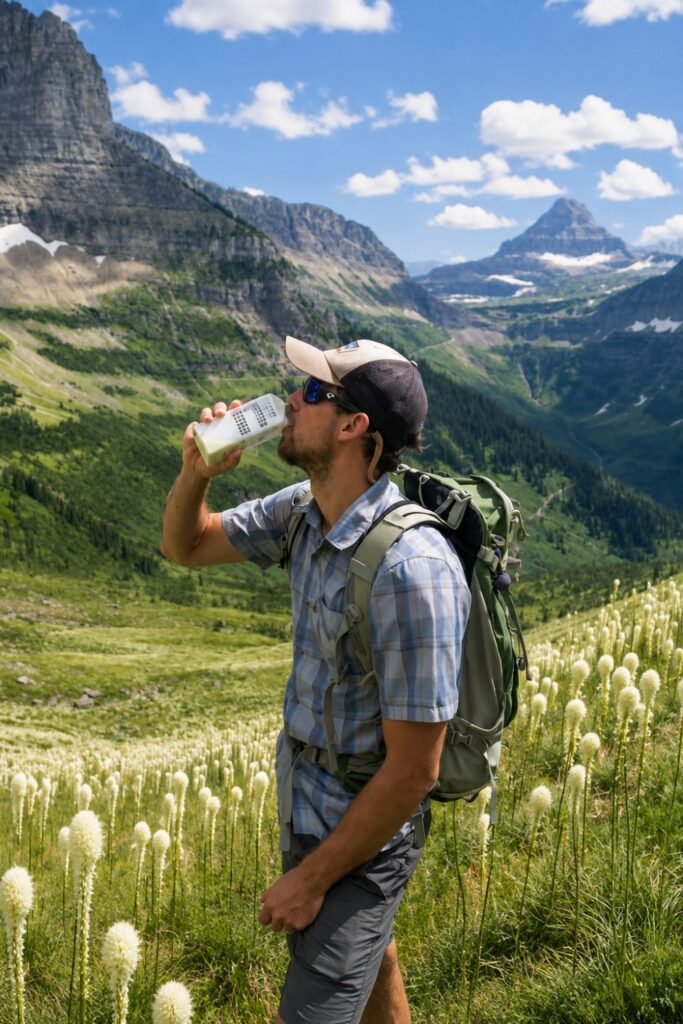
Kept separate because it has a specific practical quirk.
A moustache sits directly above your mouth, which means it collects everything you drink and eat. On a trail where you are drinking constantly from a bottle or a hose, this is more noticeable than it is in normal life.
A little balm keeps it out of the way. Some people trim the centre section shorter for exactly this reason.
 Save
SaveBeard Care That Actually Fits in a Pack
The important thing about beard washing on trail is that the problem is not the hair. Sweat and bacteria build up on the skin underneath, which is why rinsing the surface achieves very little.
Work a small amount of product into the skin under the beard first, then through the hair, then rinse with a small amount of water or wipe off with a damp cloth. A drop or two of oil afterwards, concentrated at the chin and moustache where food and sweat collect.
Two rules that are not optional. Keep wash water at least 200 feet from rivers, lakes, and streams, and follow whatever local regulations apply. And choose subtle or unscented products, because strong scents attract insects and, in some places, wildlife.
For a day hike, none of this is necessary. For anything over three days, a small bottle of oil and a wipe is the difference between comfortable and itchy.
What to Actually Carry
Sunscreen, and use it on your scalp and your parting before you set off. This is the item most likely to prevent an actual problem.
A hat. It handles the scalp, the sweat, and the hair simultaneously, and it is more effective than anything you can put in your hair.
For longer trips: a small bottle of beard oil if you have a beard, a leave-in conditioner if you have length, and a shampoo bar rather than a bottle since it is lighter, lasts longer, and can handle hair, skin, and beard.
That is the entire kit. Anything else is optional.
Common Questions
Do I need to do anything with short hair on a hike?
Very little with the hair itself, but the scalp is the real consideration. Short cuts leave the scalp exposed to overhead sun, and scalp sunburn is common and painful, particularly at altitude. Apply sunscreen to the scalp and any visible parting before setting off, or wear a hat, or both.
Does a beard actually protect against the sun?
Research from the University of Southern Queensland, widely cited in hiking circles, found a beard blocks up to 95 percent of harmful UV rays. That applies only to the skin the beard actually covers, so patchy growth gives patchy protection and the skin underneath still needs sunscreen. A clean-shaven face needs full coverage and reapplication.
How do I keep a beard clean on a multi-day hike?
Focus on the skin underneath rather than the hair, since that is where sweat and bacteria build up. Work a small amount of product into the skin, then the hair, then rinse with minimal water or wipe off. Keep all wash water at least 200 feet from rivers, lakes, and streams, and use unscented or subtly scented products so you do not attract insects or wildlife.
What should I do with long hair while hiking?
Tie it low, either in a ponytail or a bun, so it sits underneath a pack strap rather than on it. Up during the day and down at camp is the routine most men with length settle on, and it tangles far less than leaving it loose. Dry air is hard on longer hair, so a leave-in conditioner through the mid-lengths and a little oil on the ends is worth the pack weight.
Should I cut my hair before a long trip?
Only if you want to. Shorter removes tangling and drying time but increases scalp exposure, which means more sunscreen discipline rather than less. Longer takes more management but protects your head. Neither is objectively better and plenty of thru-hikers finish long trails with either.
Final Thoughts
The hair itself is rarely the problem. Put sunscreen on your scalp, wear a hat, and tie it back low if you have length. That covers almost everything.
The beard is where the actual attention goes on a longer trip, and the useful thing to know is that the skin underneath needs the care rather than the hair. A small bottle of oil and a wipe is a genuinely disproportionate improvement for the weight.