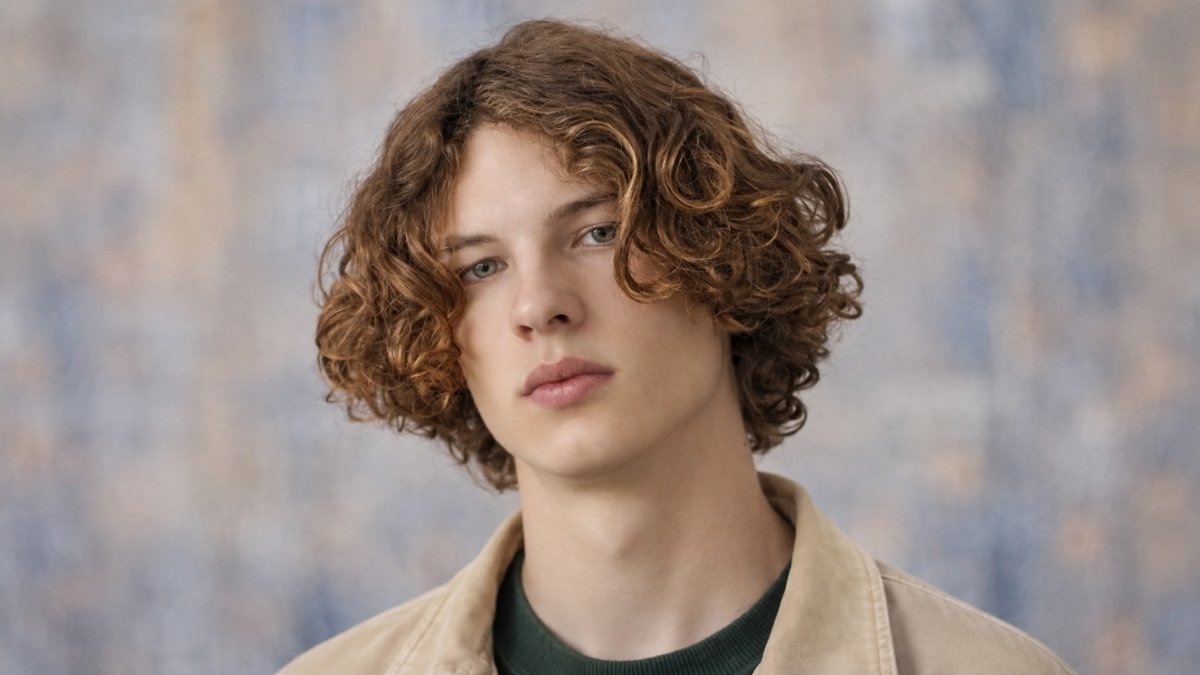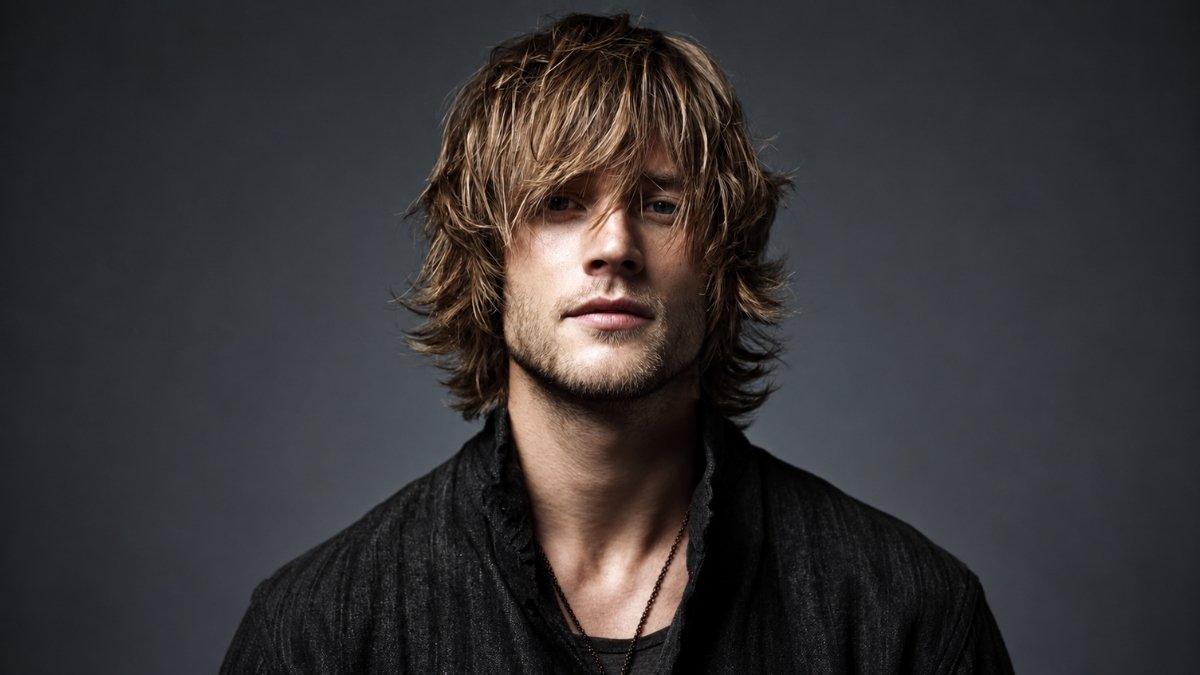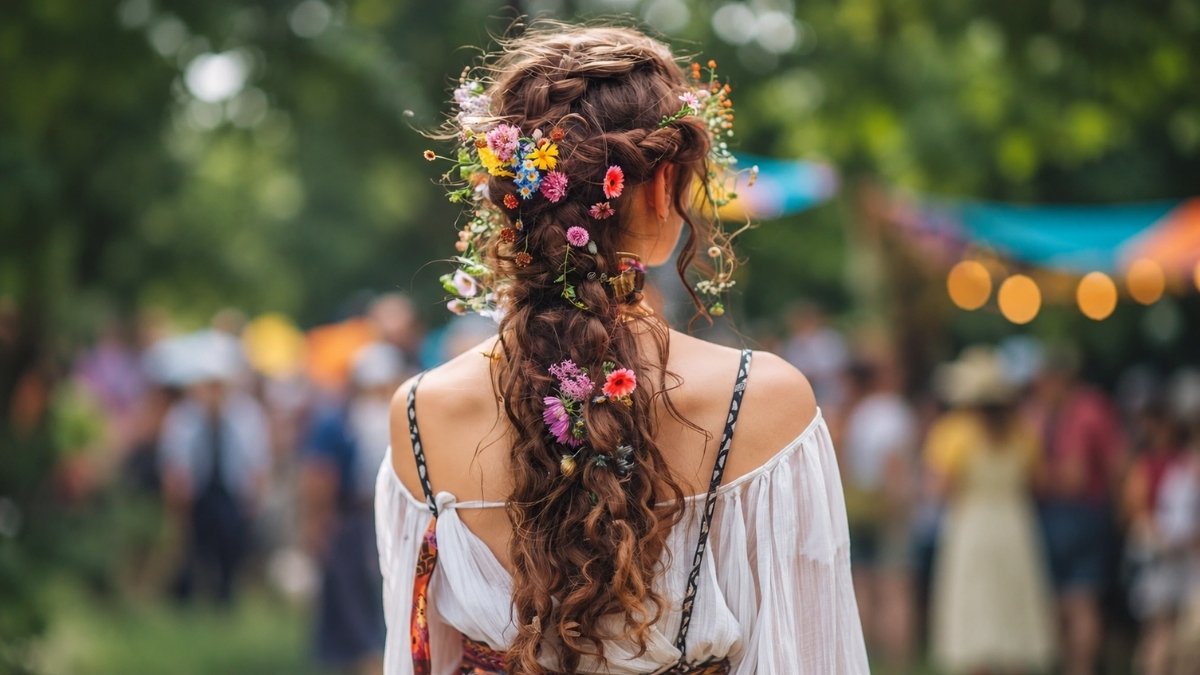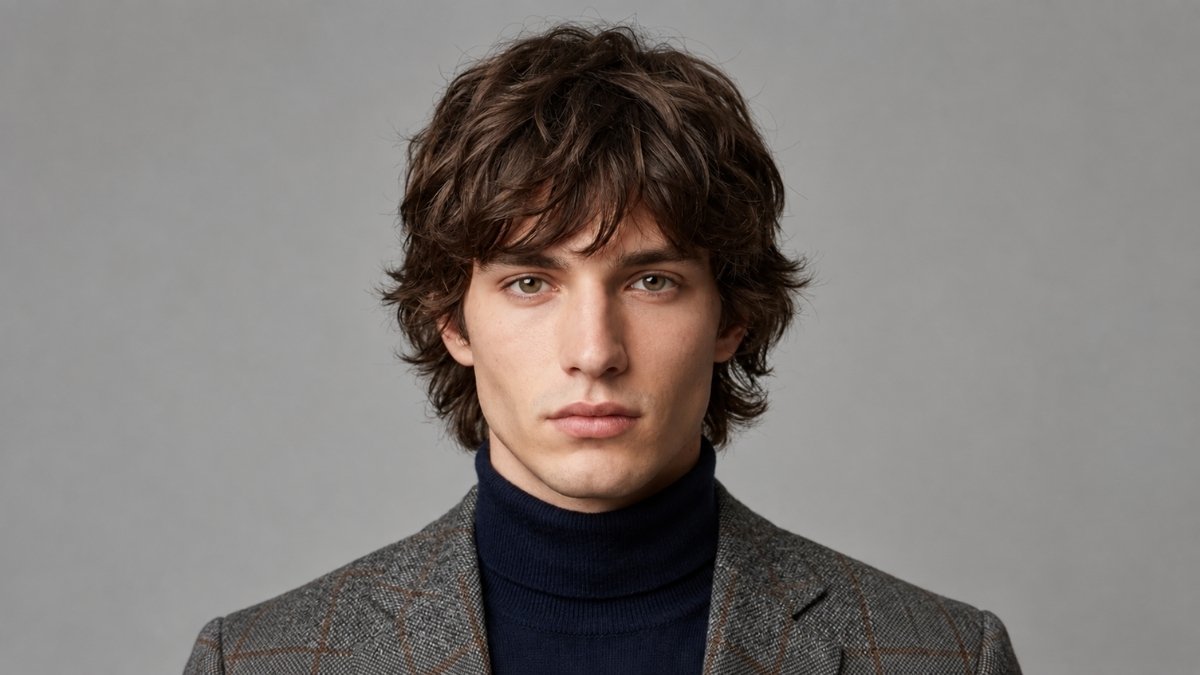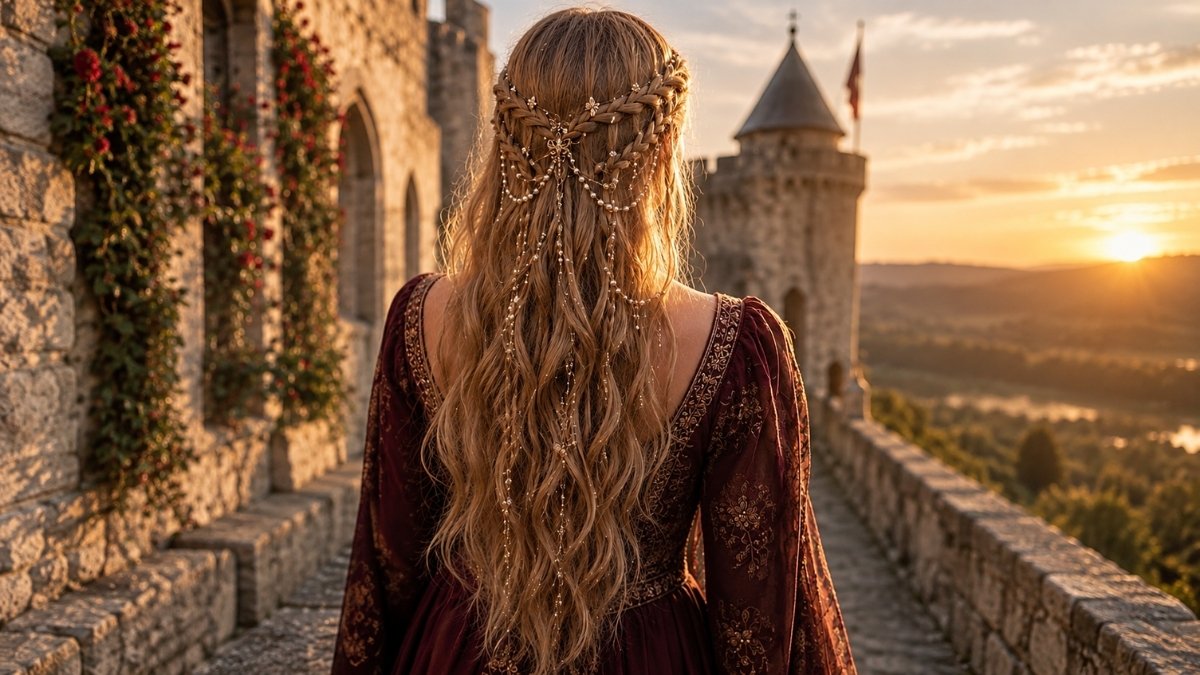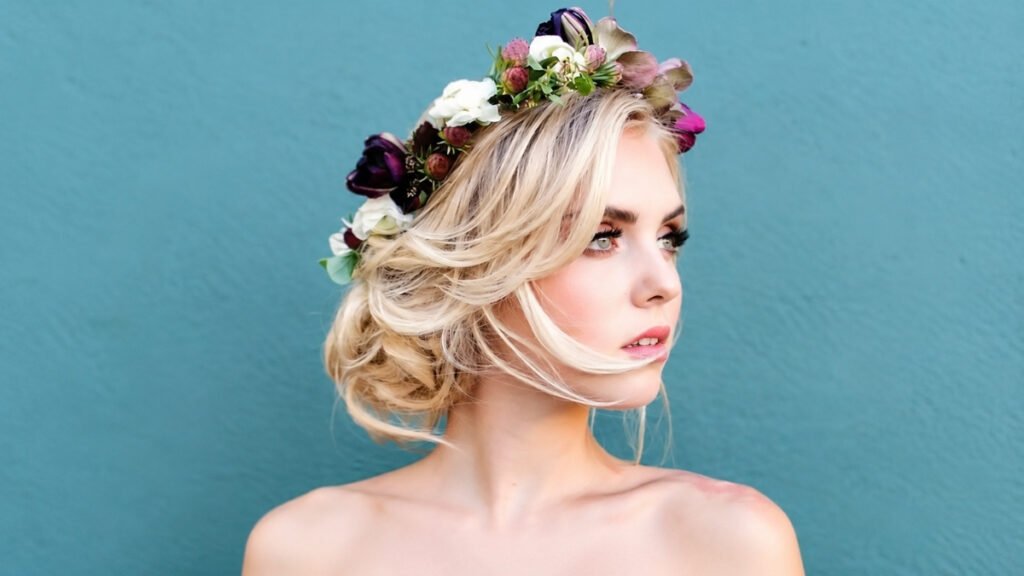
Short hair is the awkward truth most medieval-hair inspiration skips. The surviving historical silhouettes were largely built around length: braids could be coiled, wrapped, pinned flat, or hidden beneath veils and nets. A chin-length bob cannot magically produce that material.
The solution is not to pretend. Use the parts of medieval styling that short hair can carry: temple braids, rope twists, ribbons, fillets, circlets, veils, compact coils, and decorative nets. When extra hair is required for a full crown, call it a faux braid instead of passing it off as your bob’s hidden superpower.
These 14 medieval hairstyles for short hair use braids, bands, veils and circlets that work from pixie to shoulder length. For longer hair, see our medieval hairstyles for modern wear.
Historical Medieval Hair vs. Medieval-Inspired Short Hair
Medieval Europe covered roughly a millennium, so there was no single universal women’s hairstyle. Region, century, class, age, and marital status all mattered. Many adult women wore hair braided or coiled and covered, while loose hair and decorative bands appear in other contexts.
That creates a real limitation for modern short hair. A bob, bixie, or pixie is not the typical foundation behind the long coiled constructions seen in medieval art. The looks below therefore separate practical historical references from modern medieval-inspired adaptations.
If historical accuracy matters for reenactment, head coverings and compact pinned arrangements can often get closer to the period than inventing a waist-length braid on short hair. If the goal is a wedding, Renaissance fair, Halloween look, or fantasy styling, you have much more room to adapt.
14 Medieval Hairstyles for Short Hair
1. Mini Braided Crown on a Bob
A full crown braid normally wants length. A bob can fake the geometry more honestly by braiding a small section above each ear and pinning the two braids across the top or back of the head.
The join can disappear beneath a ribbon, small flower, or decorative pin. Keep the braids slim; oversized short braids tend to expose the trick rather than improve it.
Best for: chin-length bobs, straight or wavy hair, weddings and Renaissance-fair looks.
 Save
Save2. Temple Rope Twists With a Circlet
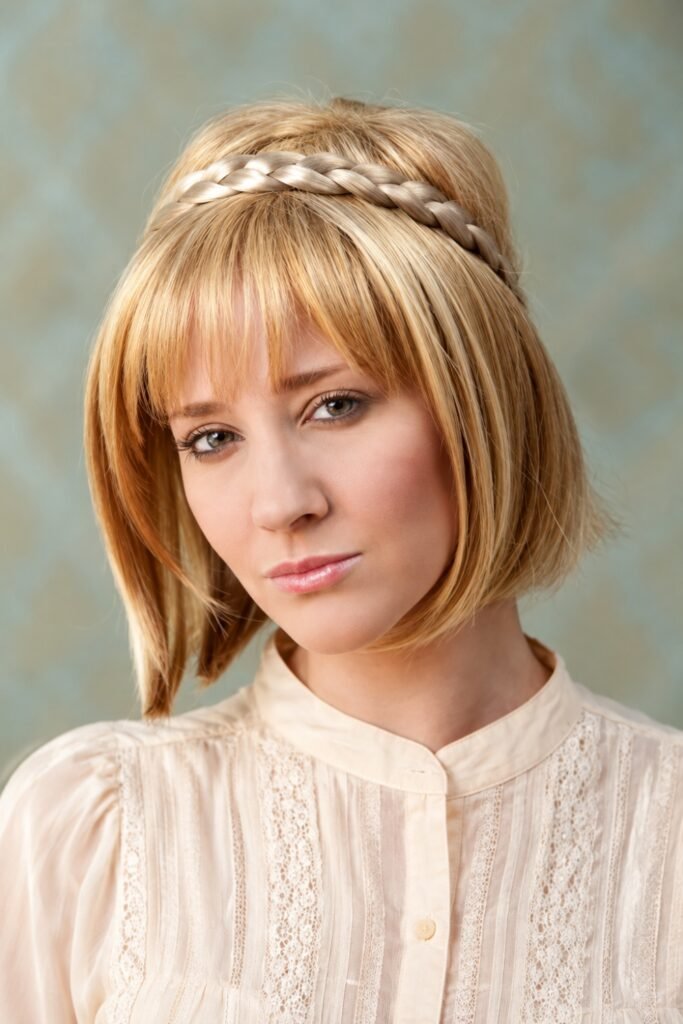
Rope twists are one of the best short-hair adaptations because they need less length than conventional braids. Twist both temple sections backward, pin them, then add a slim circlet.
The circlet supplies the period signal while the twists keep the front tidy. Do not pile on three more accessories. The headpiece has already made the point.
Best for: bobs, lobs, growing-out pixies, beginners.
 Save
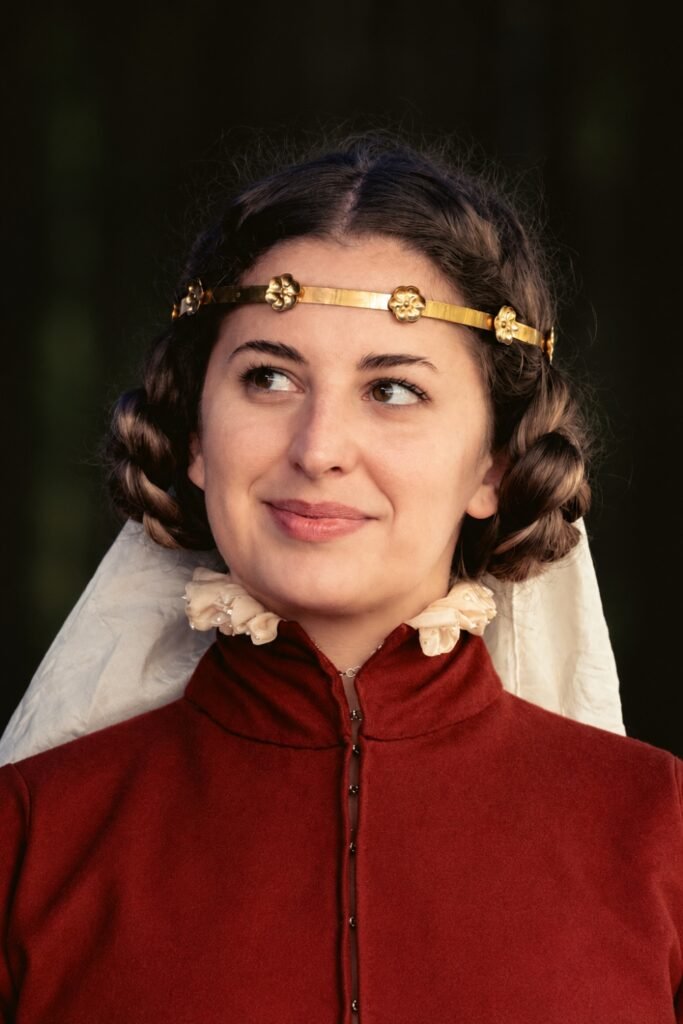
Save3. Half-Up Side Braids
Two small temple braids joined at the back translate easily to short hair and keep the face open without demanding a full updo. On a bob, the loose lower section becomes part of the design rather than leftover hair.
Use clear elastics or pins hidden beneath the join. A narrow ribbon can make the finish more medieval-inspired without turning it into a costume.
Best for: chin-to-shoulder hair, everyday fantasy styling, festivals.
 Save
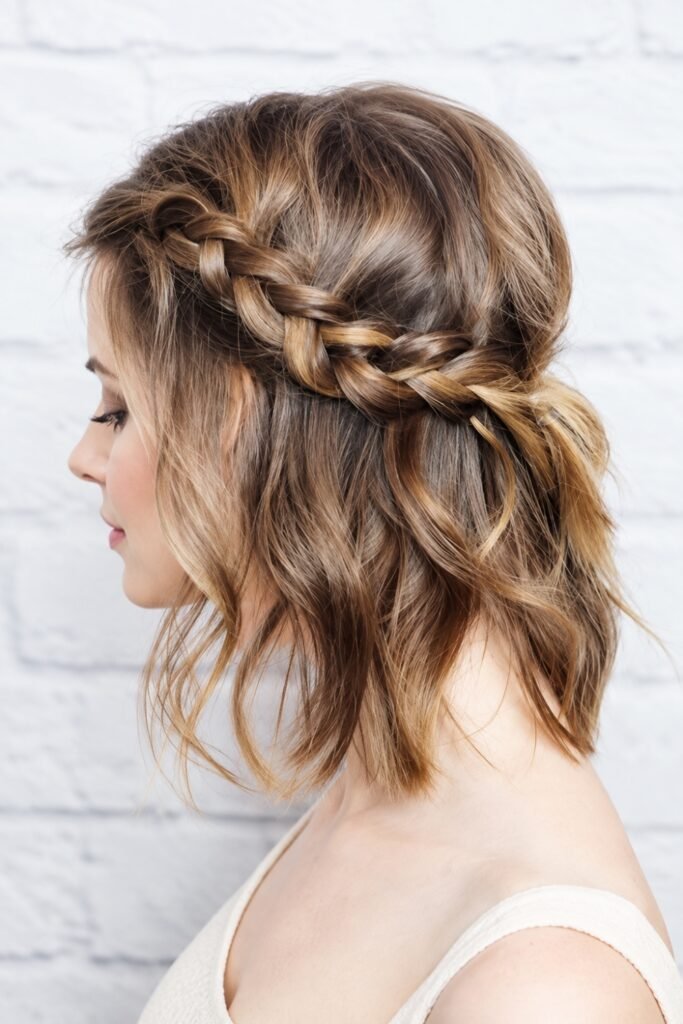
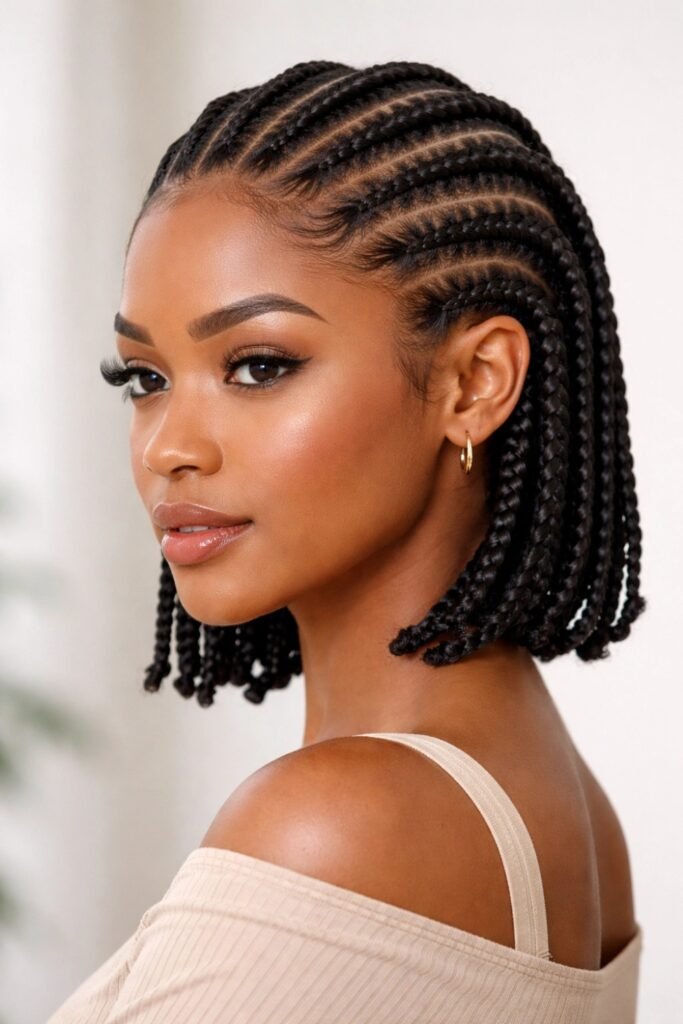
Save4. Feeder Braids on a Bob
Fine braids beginning near the hairline work because the front sections are often long enough even when the overall haircut is short. Run two or three small braids backward and pin them before the ends escape.
Small is important. Thick braids consume short hair too quickly and leave you with a braid that ends exactly where you hoped the design would begin.
Best for: bobs, layered short hair, straight to textured hair.
 Save
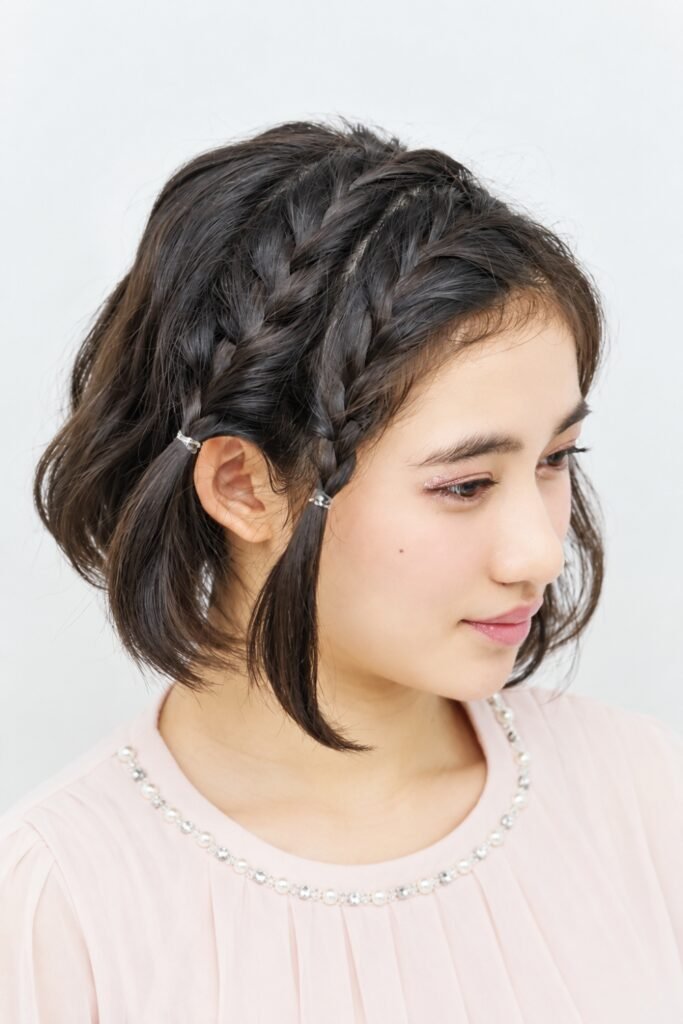
Save5. Ribbon-Woven Mini Braids
A narrow ribbon woven through a small braid adds color, grip, and visual continuity even when the braid itself is short. It is a smarter use of decoration than attaching a giant bow to two inches of plait.
Choose velvet, silk-like ribbon, or simple cord depending on how courtly or rustic you want the finish. Keep the ribbon narrow enough that the hair is still visible.
Best for: short side braids, fine-to-medium hair, themed events.
 Save
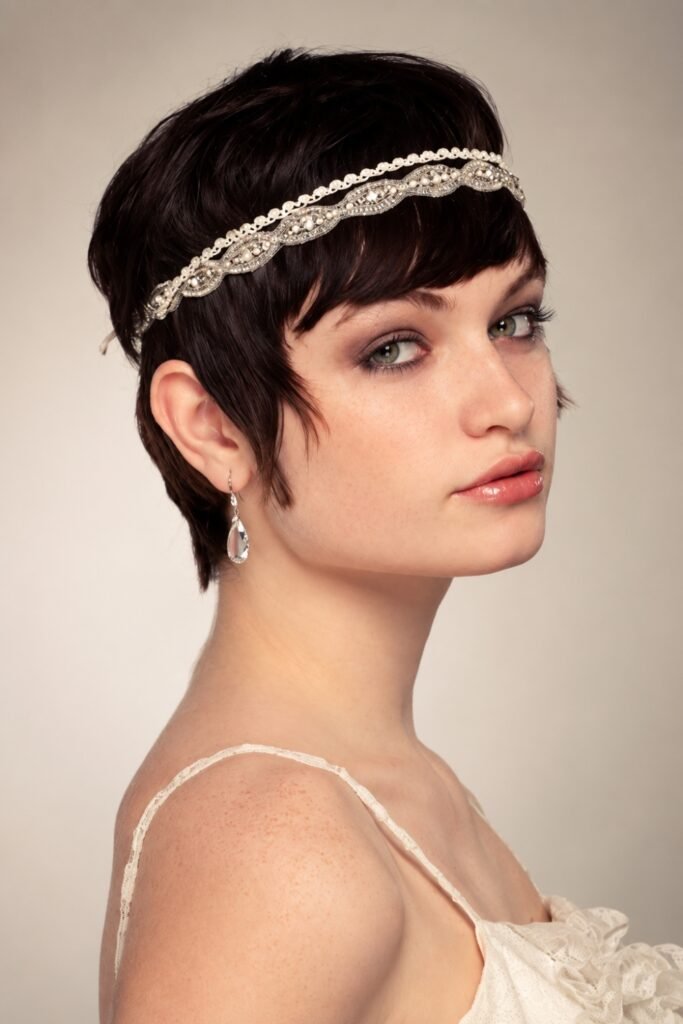
Save6. Short Hair With a Fillet
A fillet is essentially a narrow band worn around the head. On short hair, it can create a medieval reference without forcing the hair into a structure it cannot support.
Wear a pixie softly textured or smooth a bob close to the head, then place the band as the focal point. This is one of the rare options where doing less makes the result more convincing.
Best for: pixies, bixies, bobs, minimalist medieval styling.
 Save
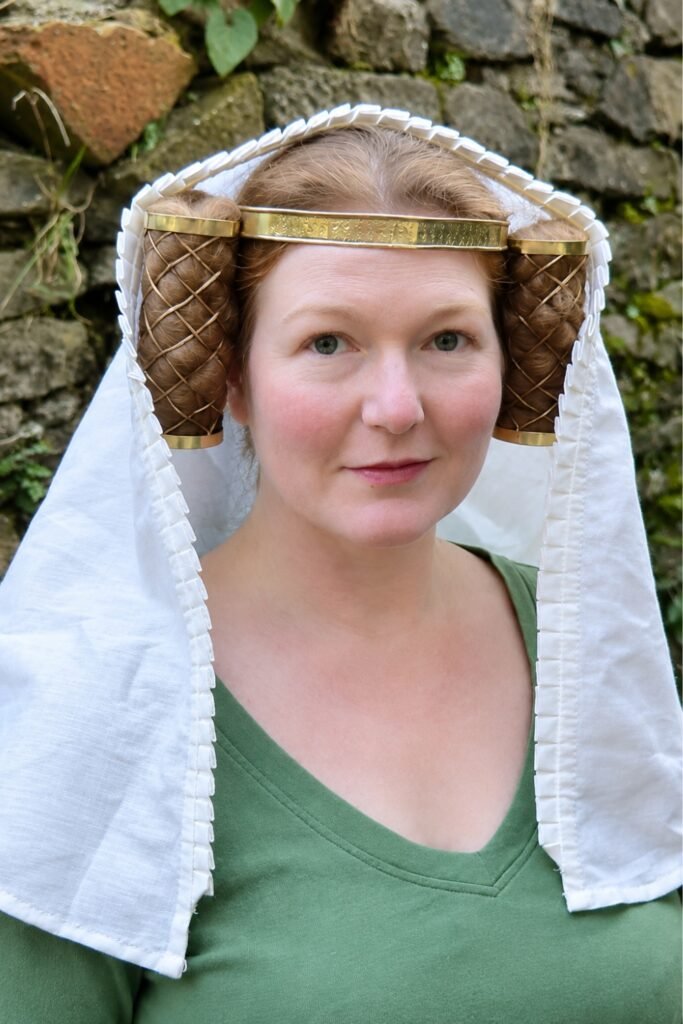
Save7. Tucked Bob Under a Veil
If you want a more period-minded silhouette, tuck the short hair close to the head and add a light veil or scarf. Historically, coverings were not just decorative extras; they were central to many adult women’s appearances.
For modern wear, secure the veil comfortably and keep the fabric light around the face. The hair underneath only needs to lie neatly; it does not need to perform a hidden architectural miracle.
Best for: all short lengths, reenactment-inspired styling, modest looks.
 Save
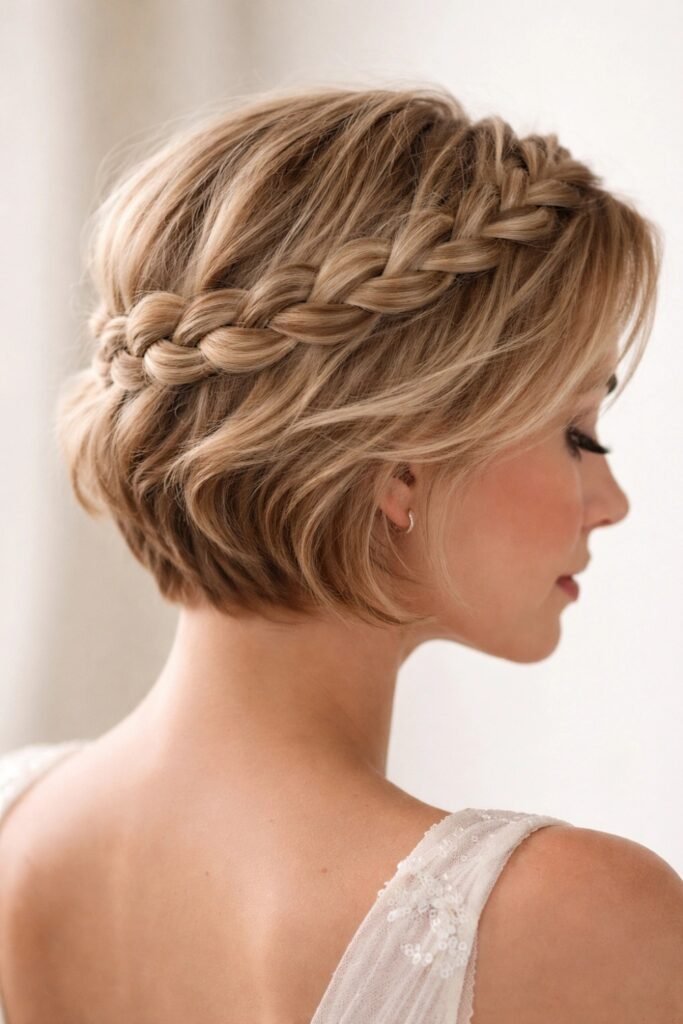
Save8. Faux Crown Braid
A pixie cannot grow a halo braid for Saturday. A color-matched pre-braided piece can. Pin it securely around the crown and blend the attachment points into the short natural hair.
This is fantasy/event styling, not a claim that the braid grew from a two-inch haircut. That honesty makes the recommendation more useful, especially for very short or fine hair.
Best for: pixies, fine bobs, weddings, fantasy costumes.
 Save
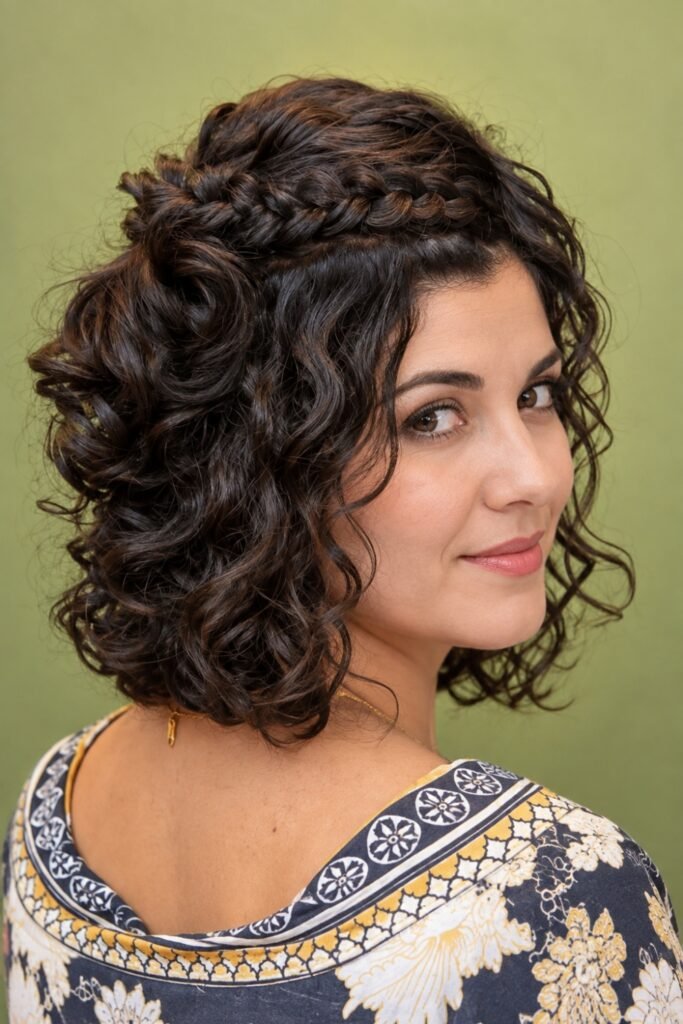
Save9. Short Curly Medieval Half-Up
Short curls already bring the softness that modern medieval-fantasy styling often tries to create with heat. Braid or twist only the front sections back and let the remaining curl pattern stay visible.
Use low tension around the hairline and enough moisture for curl definition. The goal is a framed face, not a braid tight enough to rewrite the hairline.
Best for: curly and coily bobs, natural texture, romantic styling.
 Save
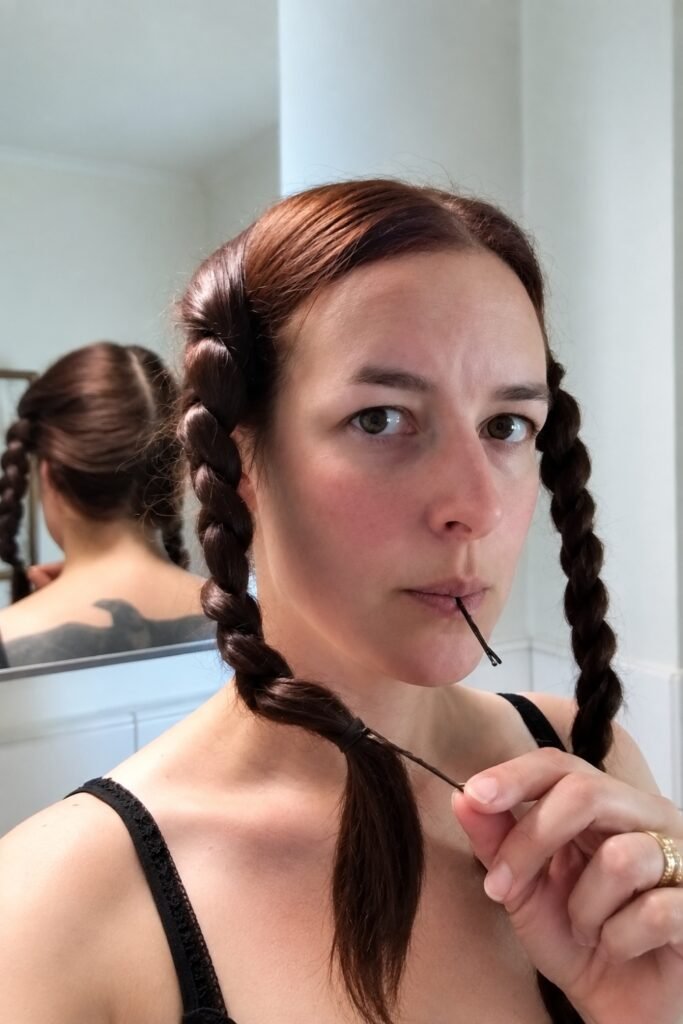
Save10. Mini Coiled Temple Braids
Coiled side braids read strongly medieval, but short hair cannot create the large coils possible with long plaits. Make two small braids and coil each one flat near the temple or above the ear.
Pin around the outside edge of the coil. If the braid is too short for even one full circle, turn the end under and treat it as a compact braided rosette.
Best for: longer bobs, dense hair, stronger historical silhouettes.
 Save
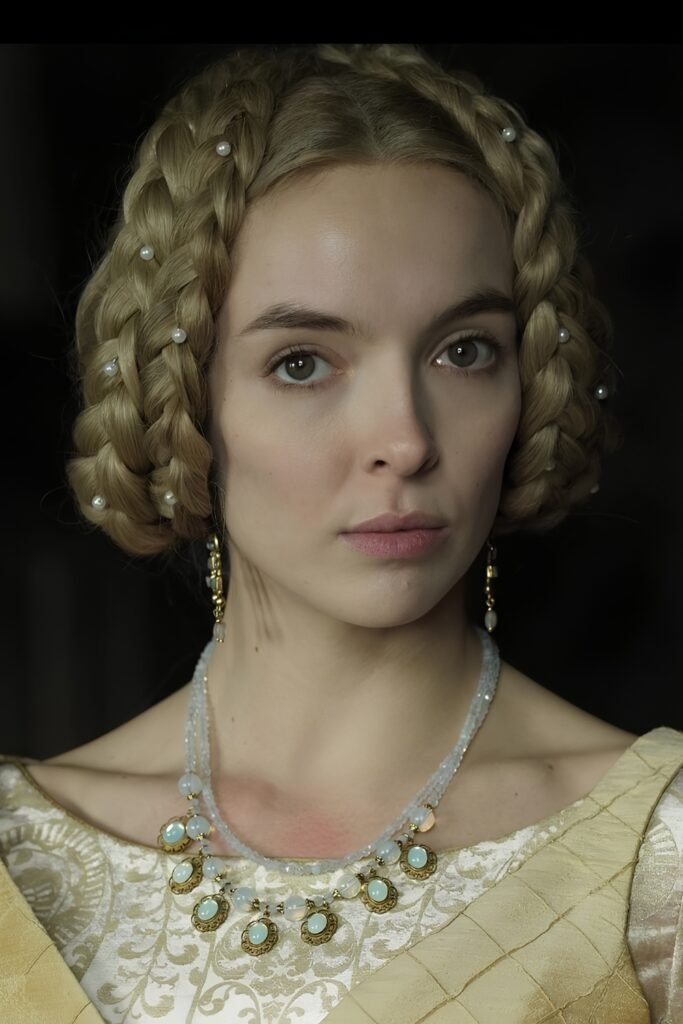
Save11. Pearl-Threaded Side Braids
Fine side braids can carry tiny pearls or beads even when the rest of the hair is short. The detail creates a late-medieval courtly mood without requiring a massive braided construction.
Use the pearls sparingly. Three carefully placed details look intentional; covering every inch can turn a delicate bob into a craft project.
Best for: bobs and lobs, bridal styling, formal fantasy looks.
 Save
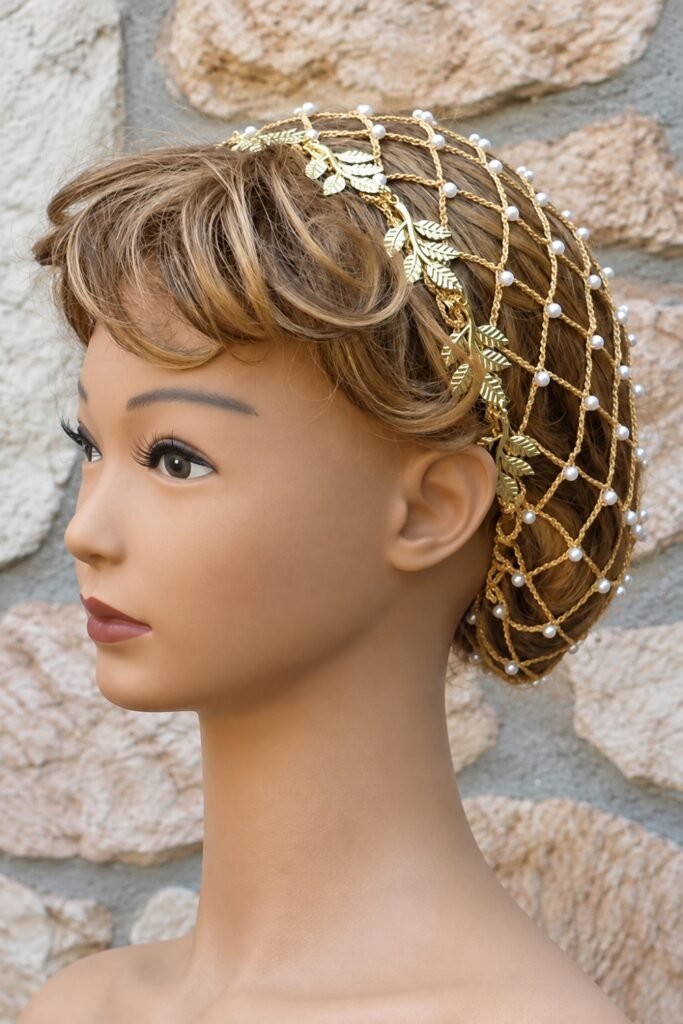
Save12. Short Hair Under a Decorative Snood
A small snood or decorative net can contain bob-length hair at the back and immediately shift the silhouette away from a modern loose cut. Historically inspired nets also solve the exact problem short layers create: escaping ends.
Choose a net scaled to the amount of hair you actually have. An enormous empty snood hanging behind a short bob defeats the illusion.
Best for: chin-length hair, vintage-medieval fusion, events.
 Save
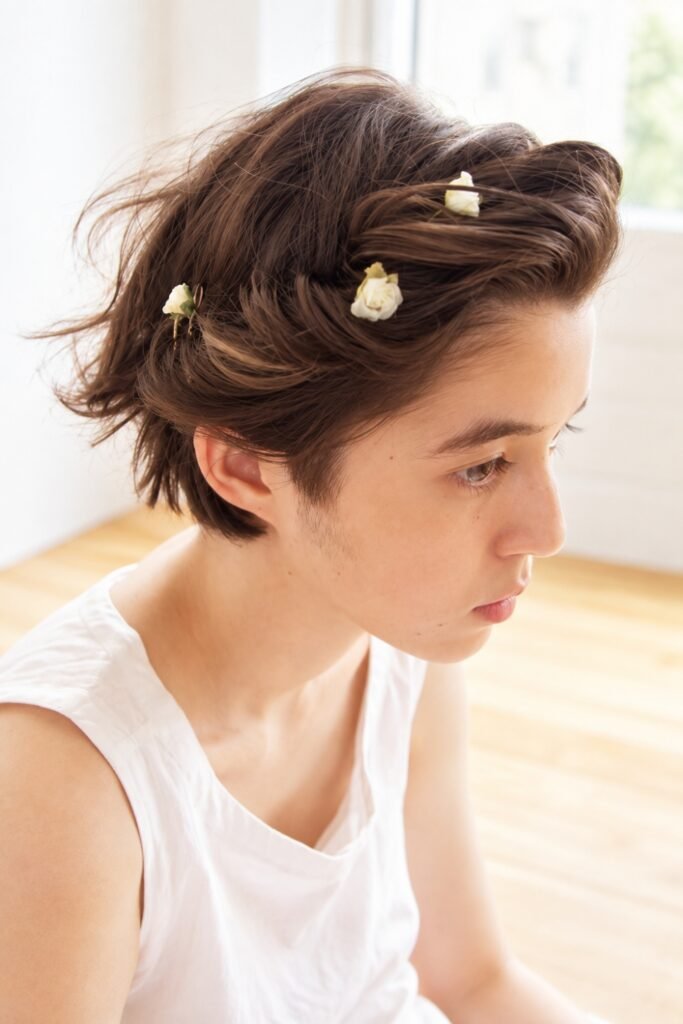
Save13. Twisted Bob With Floral Pins
Twist both sides of a short bob toward the back and secure them with small botanical pins. It is not a documented medieval hairstyle in this exact modern form, but it borrows the hand-built, heat-free structure effectively.
Use tiny flowers, leaves, or metal pins rather than a full flower crown if you want the twists to remain visible. This is where medieval inspiration can be romantic without pretending to be archival.
Best for: short weddings, festivals, fantasy costumes.
 Save
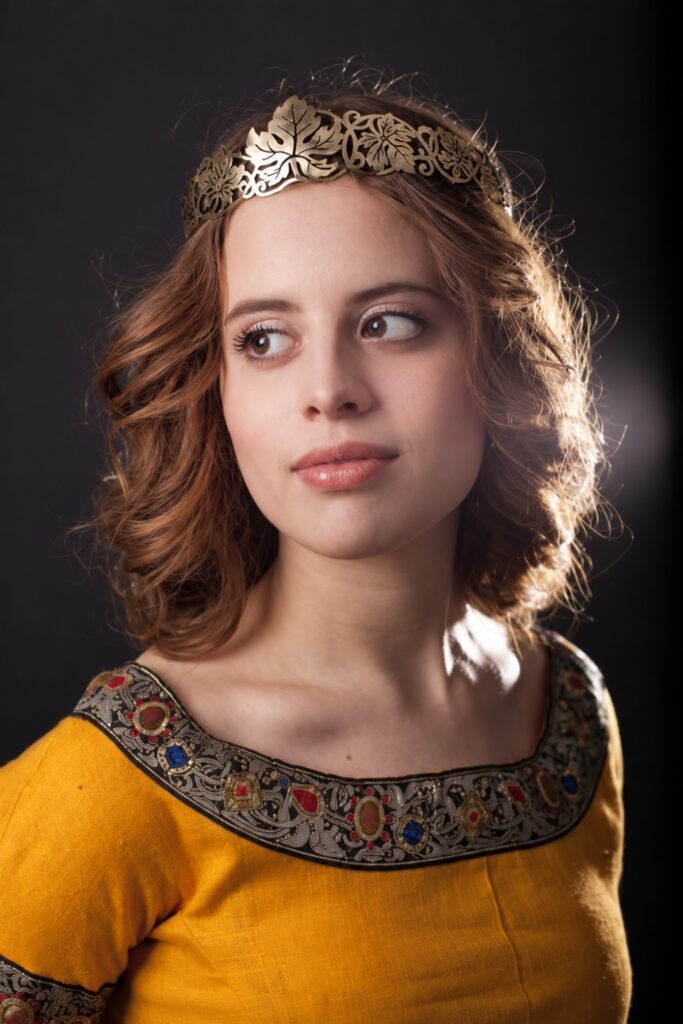
Save14. Short Wavy Bob With a Circlet
A circlet over loose short waves is the easiest style in the guide. The historical loose-hair silhouette depended on much greater length, but the accessory translates immediately to a bob for modern fantasy wear.
Let the natural wave stay soft and keep the band simple. Once the circlet is ornate, adding heavy braids, flowers, pearls, and ribbons usually weakens the look.
Best for: wavy bobs, last-minute styling, Renaissance fairs and costumes.
 Save
SaveQuick Guide: Medieval Looks by Short Hair Length
| Hair length | Best options | What you can realistically do | Skip unless using added hair |
| Pixie | Fillet, veil, faux crown | Accessories, surface texture, tiny twists | Natural full crown braid |
| Bixie | Fillet, rope twists, small side braids | Temple sections and pinned detail | Large coils |
| Chin-length bob | Half-up braids, feeder braids, mini crown | Small braids, twists, tucked shapes | Long wrapped braid |
| Long bob | Mini coils, ribbon braids, snood | More secure half-up and side work | Large braided chignon |
| Curly/coily short hair | Twisted half-up, feeder/flat-braid details | Natural texture plus low-tension sections | Forced straight historical imitation |
The Short-Hair Rule: Use the Front, Then Accessorize
The front and temple sections are the most useful real estate on short hair. They are long enough for small braids or twists on many bobs and bixies, and they sit where the detail is visible from the front.
Once those sections are secured, a fillet, ribbon, circlet, veil, or small net can carry the historical or fantasy reference. This works better than trying to force every short layer into one tiny bun.
How to Make a Short Medieval Style Hold
Short layers escape because they have less braid length and fewer turns around a pin. Start with hair that has some grip rather than an extremely slippery finish, use small sections, and cross pins where necessary.
For mini coils, pin around the outer edge rather than stabbing repeatedly through the centre. For rope twists, add hair gradually as you move backward if the length allows. For a faux braid, anchor it to a stable base rather than to a few loose surface strands.
Historical hairdressing also used ribbon, cord, thread, nets, and coverings as functional tools. Modern bobby pins are convenient, but the broader lesson is useful: the accessory can help hold the style instead of merely decorating it.
Growing your hair out? Our chin-length bob haircuts and side braids give you more ways to style the same length.
What to Tell Your Stylist
Start with the real length. Say you want a medieval-inspired style designed for a bob, bixie, or pixie and that you do not want hidden extensions unless they are necessary.
Bring a reference that shows short hair, not a waist-length crown braid. Ask which front sections can be braided, whether the nape can be tucked, and which accessory can provide the period silhouette without fighting the haircut.
If historical accuracy matters, say so. A stylist preparing a Renaissance-fair fantasy look and one recreating a specific fourteenth-century silhouette are solving different problems.
Frequently Asked Questions
Can women with short hair wear medieval hairstyles?
Yes, but most short-hair versions are adaptations. Temple braids, rope twists, fillets, circlets, veils, small coils, and nets work without requiring long hair.
What medieval hairstyle works best on a bob?
Half-up side braids are one of the easiest. Chin-length hair can also handle feeder braids, rope twists, ribbon details, mini crown constructions, and tucked styles.
Can a pixie cut look medieval?
Yes, mainly through accessories and small surface details. A fillet, circlet, veil, tiny twists, or a clearly identified faux crown braid can create the aesthetic without pretending the pixie is long.
Were short hairstyles common for medieval women?
Many familiar medieval women’s hairstyles and coverings were designed around longer hair. Modern pixies and bobs should therefore be treated as adaptations rather than assumed to be universal historical women’s cuts.
Can I make a crown braid with short hair?
A full natural crown usually needs more length. Bob-length hair can use two smaller braids pinned together, while pixies and very short bobs can use a color-matched faux braid.
Are medieval hairstyles historically accurate for Renaissance fairs?
Some can be historically informed, but many fair hairstyles mix medieval, Renaissance, Victorian revival, and fantasy elements. Decide whether you want period accuracy or simply the visual aesthetic.
What accessories make short hair look medieval?
Slim fillets, circlets, ribbons, veils, decorative nets, pearls, cord, and small botanical pins can create the reference while also helping secure short layers.
Can curly short hair wear medieval-inspired braids?
Yes. Use the natural texture and braid or twist smaller front sections at comfortable tension. There is no need to straighten curls before creating the style.
The Length-Honesty Test
Look at the finished style and ask one question: could this construction plausibly come from the amount of hair on your head? If yes, the adaptation is doing its job.
If not, either simplify it or use added hair openly. Short medieval-inspired hair looks strongest when the design respects the haircut instead of pretending it is not there.