Medieval hairstyles look elaborate and are mostly not. That is the useful thing about them.
They were built under constraints that have nothing to do with modern styling. No heat, no modern fastenings, frequently no mirror, and the requirement to survive a full day of physical work. On top of that, most adult women had to fit the entire arrangement neatly beneath a veil. Anything fussy or unstable simply would not have lasted the morning.
The result is a set of styles that are structurally simple beneath their apparent complexity, hold for hours without product, and require no heat at all. Which makes them considerably more practical for a modern week than most things in a contemporary tutorial.
What the Rules Actually Were
It is worth being straight about this, because the styles make far more sense once you know.
Hair signalled marital status. Unmarried women wore theirs loose or lightly braided, which signified maidenhood. Married women wore theirs up and covered, beneath a veil, wimple, coif, or kerchief. Totally uncovered hair was never the norm for adult women at any point in the period.
Those were not preferences. Hair was concealed after marriage because it was considered an erotic feature and was legally deemed the husband’s property, and by the late Middle Ages the Catholic Church had mandated veils for women generally. The fashionable high forehead was achieved by shaving the hairline. None of that is charming, and it is the actual reason the braids and coils exist: they had to sit flat and neat under fabric.
One more honest note. The period covers roughly a thousand years and varied enormously by century, region, and class. A great deal of what circulates online as medieval is Renaissance, Victorian medievalism, or outright fantasy. The styles below are grouped by what they actually were.
Loose and Lightly Bound
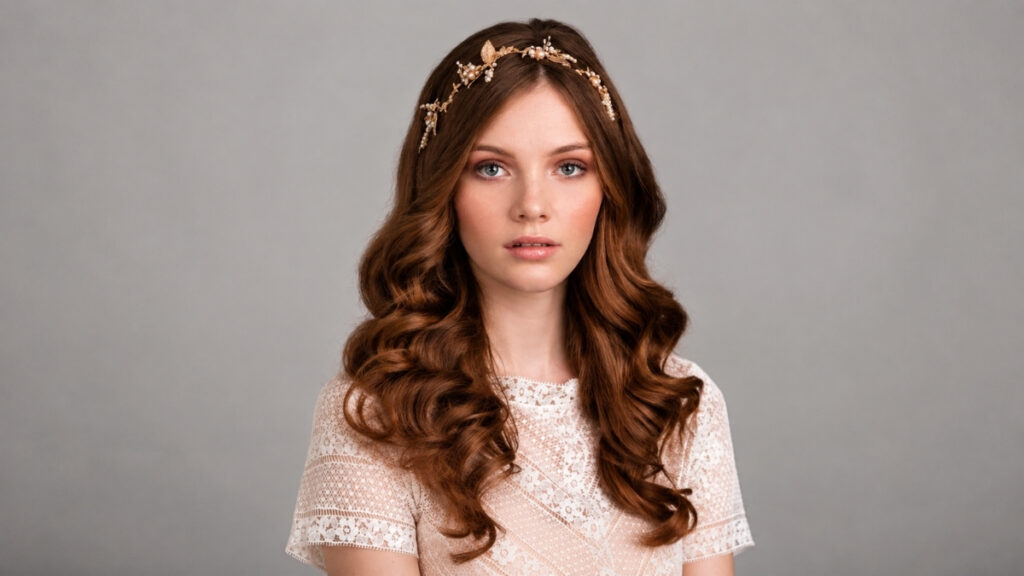
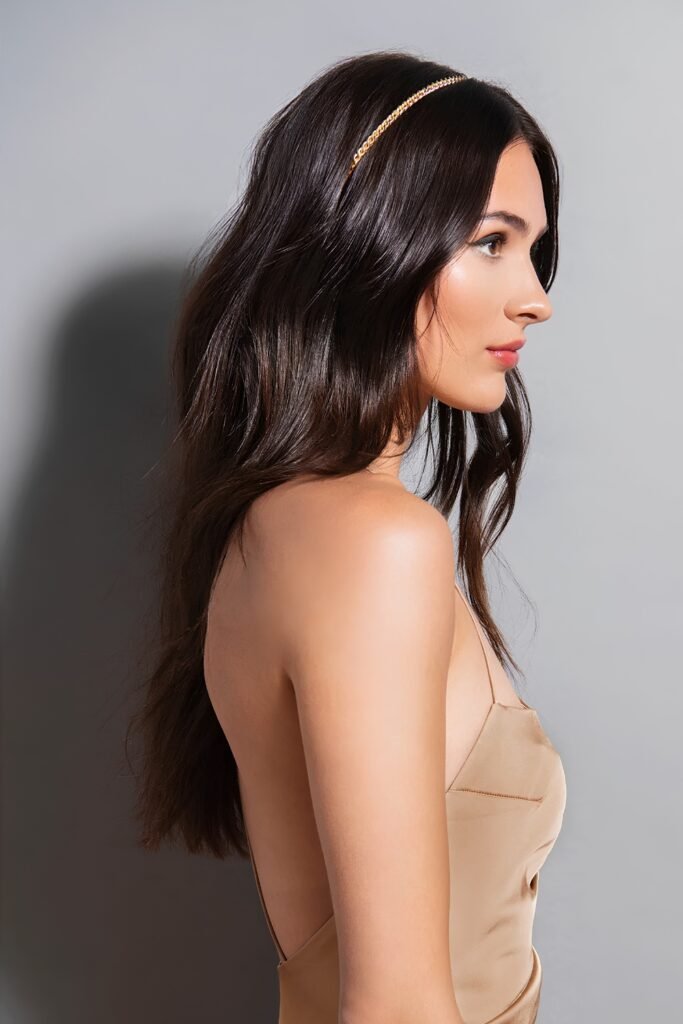
1. Long Loose Hair With a Circlet
Hair worn down with a simple metal band or ribbon across the brow.
The most straightforwardly historical of the loose styles, and one that signified an unmarried woman. In the early medieval period, women’s hair was often extremely long, sometimes reaching the knees.
For modern wear it needs almost nothing: brushed hair and a thin band. It is the entry point to the aesthetic and takes under a minute.
 Save
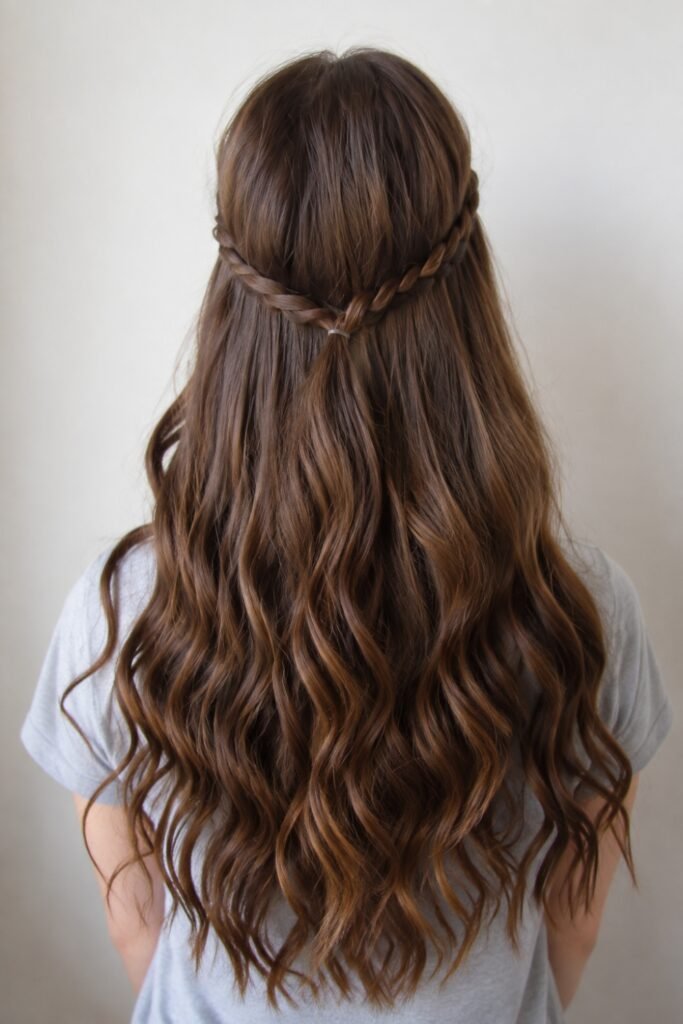
Save2. Half-Up With Side Braids
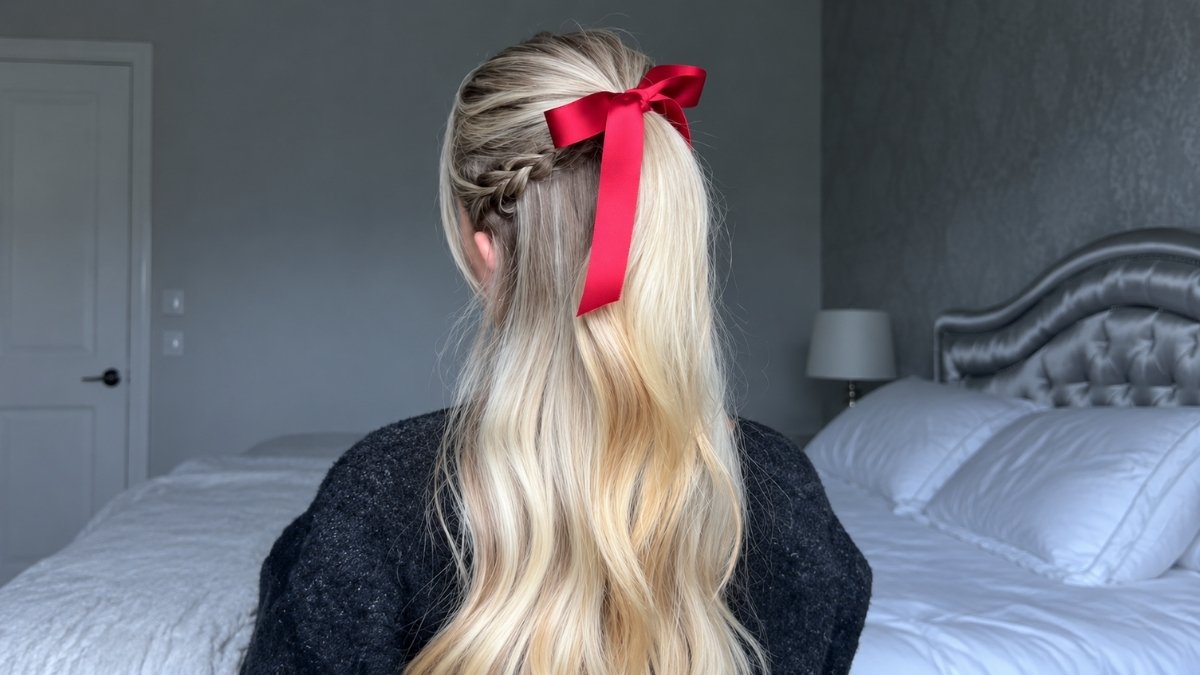
The front sections braided back and secured, with the rest left loose.
The most wearable style in the entire article and the one that translates most directly to a workday. It keeps hair off the face without committing to a full updo.
Two braids from the temples, secured at the back. No product required.
 Save
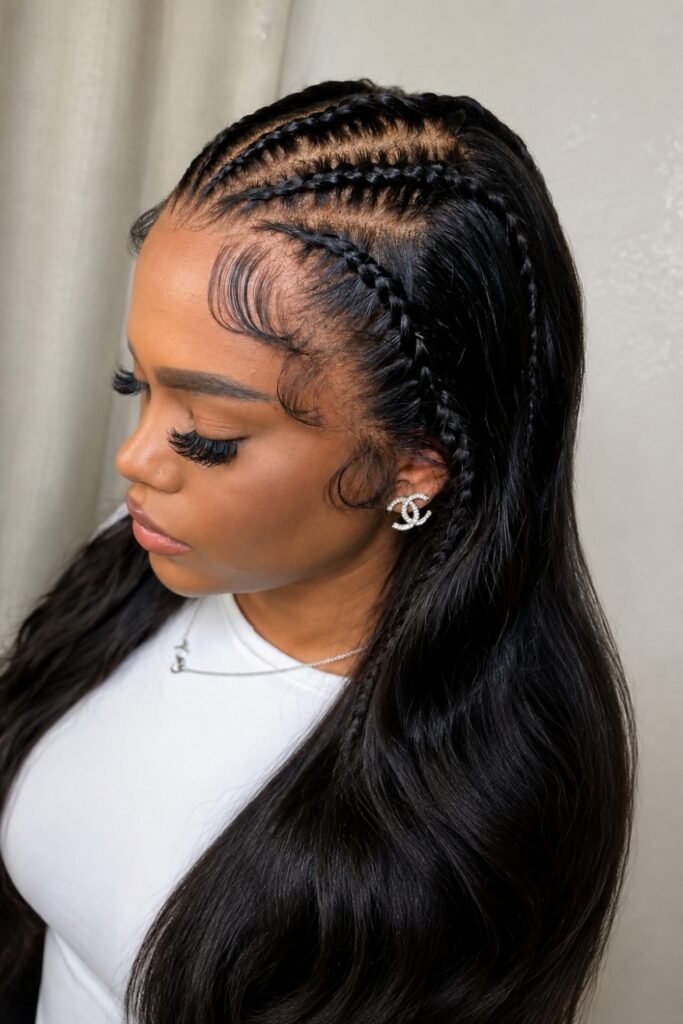
Save3. Loose Hair With Feeder Braids
Fine braids taken from the hairline back across the head, with the length left down.
Feeder braids that cleared the forehead were a documented medieval fashion, and they solve a genuinely modern problem: hair falling into your face when it is otherwise down.
Small sections are the trick. Fine feeder braids blend into loose hair; thick ones read as a separate style.
 Save
Save4. Rope Twist With Loose Length
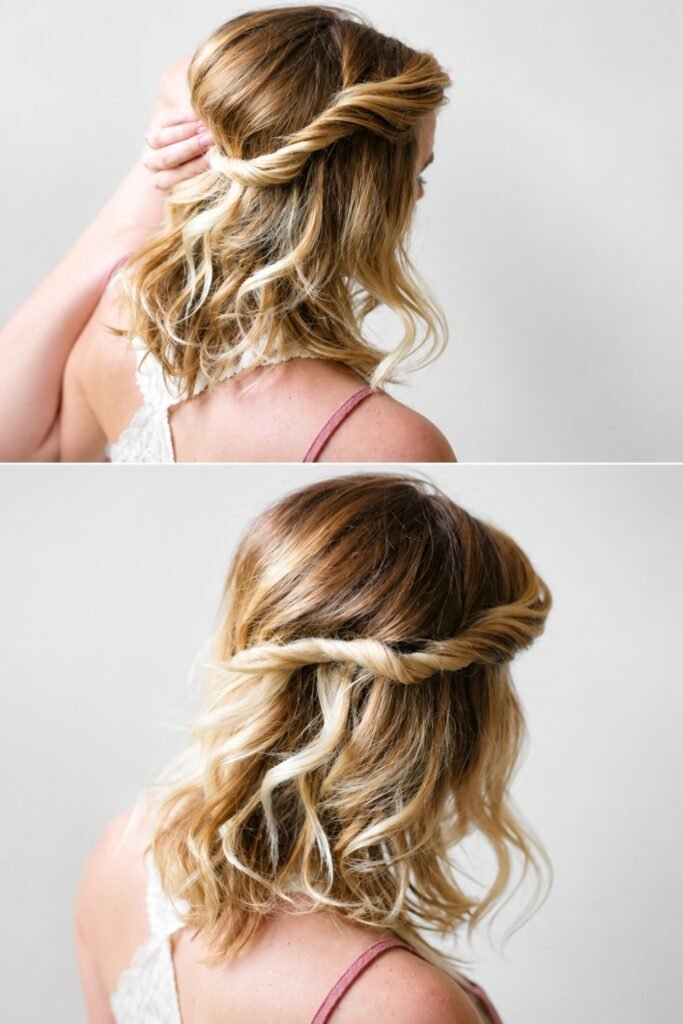
Two front sections twisted around each other and pinned back.
Faster than braiding and easier to do without a mirror, which was a real consideration then and remains one now. It gives the same effect as a braid in about a third of the time.
Genuinely the fastest style here.
 Save
SaveBraided and Structured
5. Crown Braid
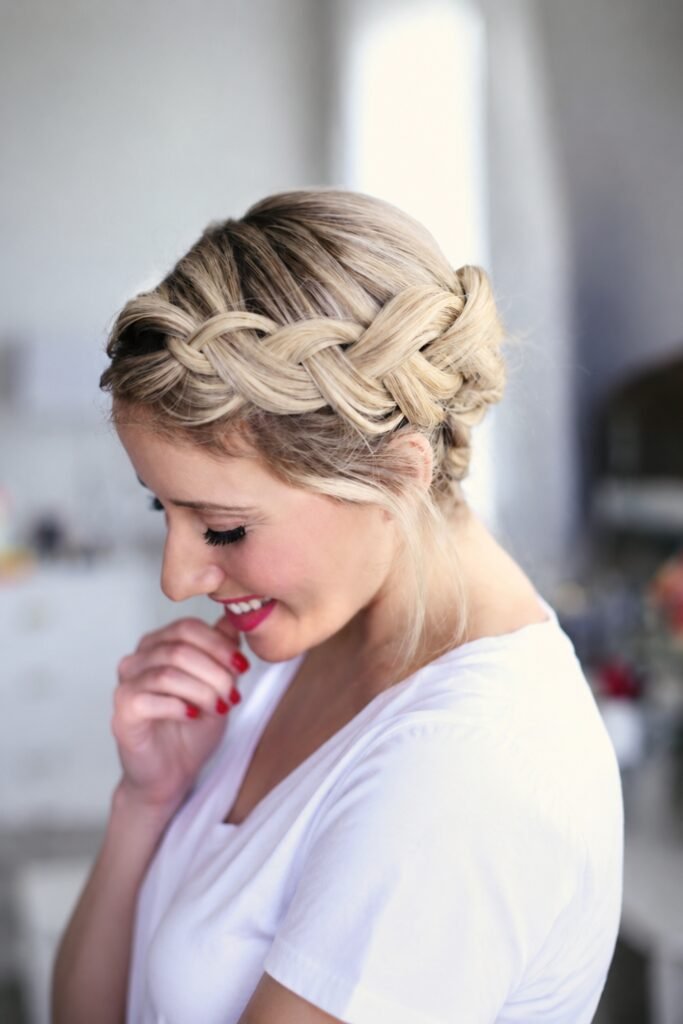
A braid taken around the top of the head like a halo, popular among noblewomen.
The most recognisable medieval style and the one most people picture. It also solves several practical problems at once: hair entirely off the neck and face, secure for hours, and no heat.
Takes practice to do on yourself. Worth learning at home rather than attempting before an event.
 Save
Save6. Braided Chignon Above the Ears
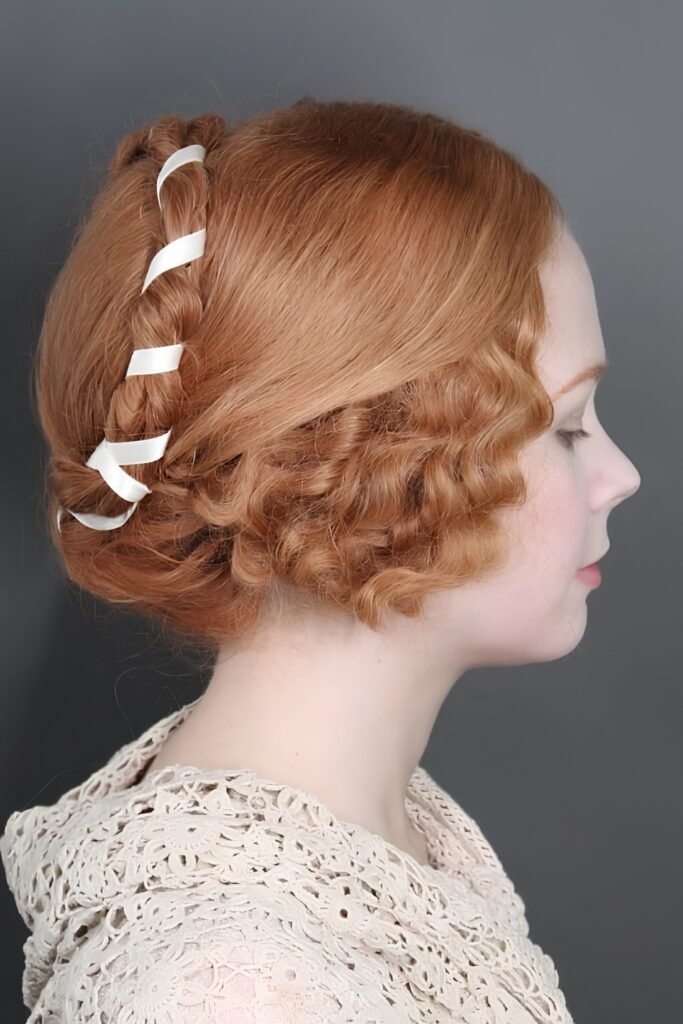
Braids coiled into chignons positioned above each ear, secured with silk or gold thread.
A documented late-medieval style and a striking one. The positioning above the ears rather than at the nape is what distinguishes it from a modern bun.
The thread is not decorative filler. It secured the coil, and a fine ribbon does the same job now.
 Save
Save7. Double Braids
Two braids, one either side, worn down or coiled.
The most universally practical medieval style and one that has never really gone away. Worn down it is casual; coiled and pinned it is formal.
Also the best option for a long day, since two braids distribute weight more comfortably than one.
 Save
Save8. Braided Bun at the Nape
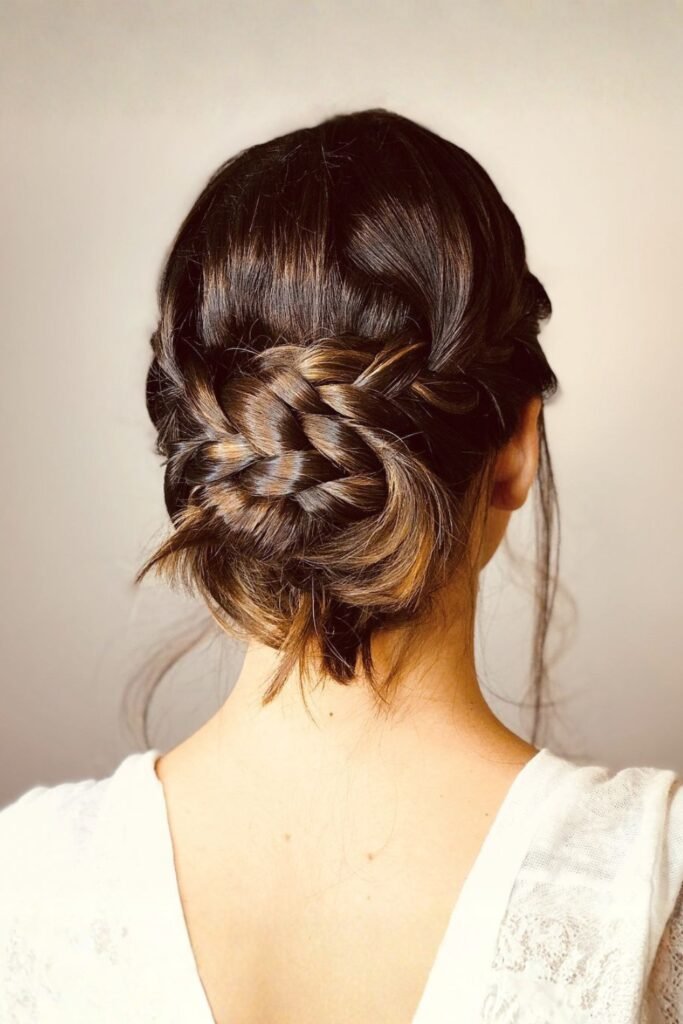
A braid coiled into a bun and pinned low.
Keeps hair entirely off the neck, which mattered for physical work and matters now for heat. Braiding before coiling means the bun holds its shape at far lower tension than a twisted one.
The most secure style in this article. It genuinely does not move.
 Save
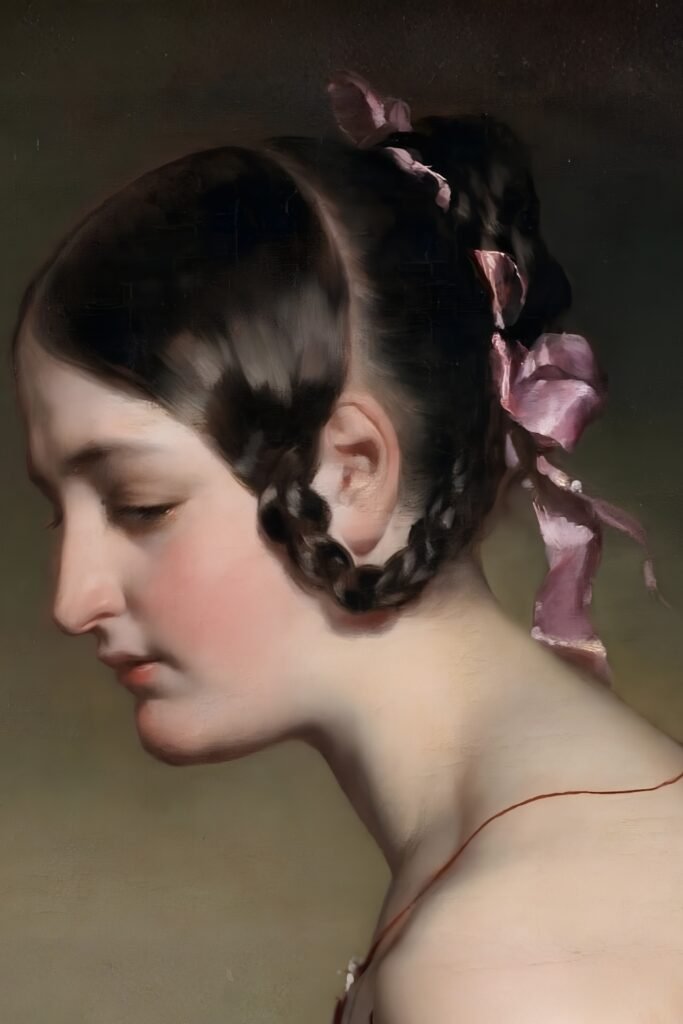
Save9. Coiled Side Braids
Braids coiled flat against the head on each side, in front of or over the ears.
Distinctly medieval rather than generically braided, and the shape that most immediately reads as historical. It also lies completely flat, which is why it worked under a veil.
Pins at the outer edge of each coil rather than the centre, which keeps the shape from collapsing inward.
 Save
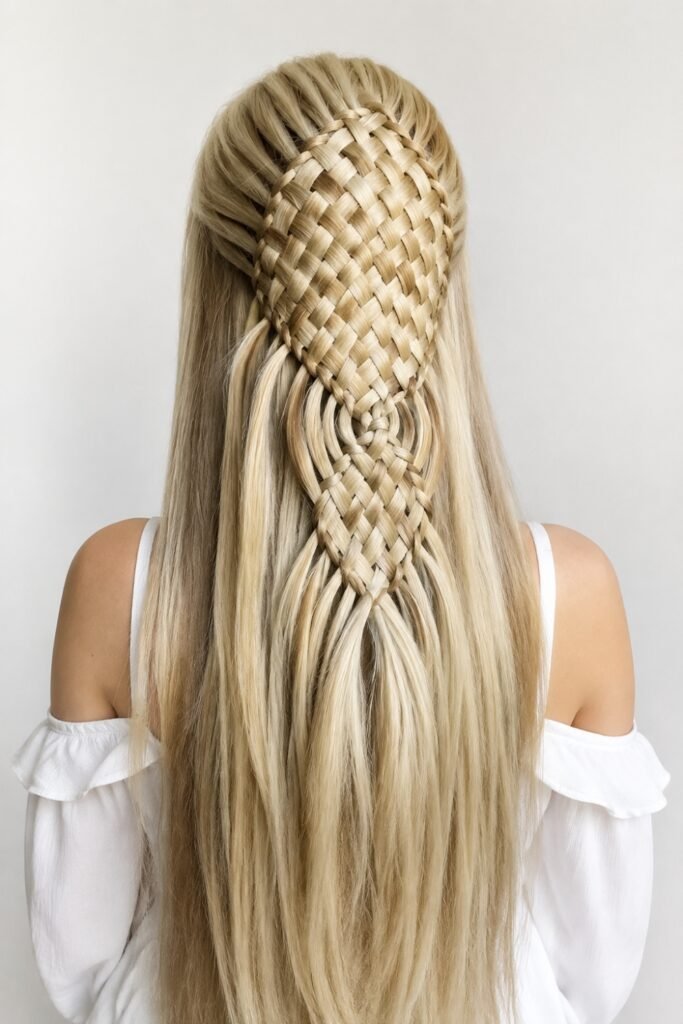
Save10. Woven and Lattice Braids
Hair worked into geometric or interlaced patterns, historically reserved for nobility and requiring considerable time.
The most elaborate option here and honestly the least practical. It belongs to occasions rather than to a Tuesday.
If you want the effect with less time, a lattice worked only across the back of the head gives most of the impression for a fraction of the work.
 Save
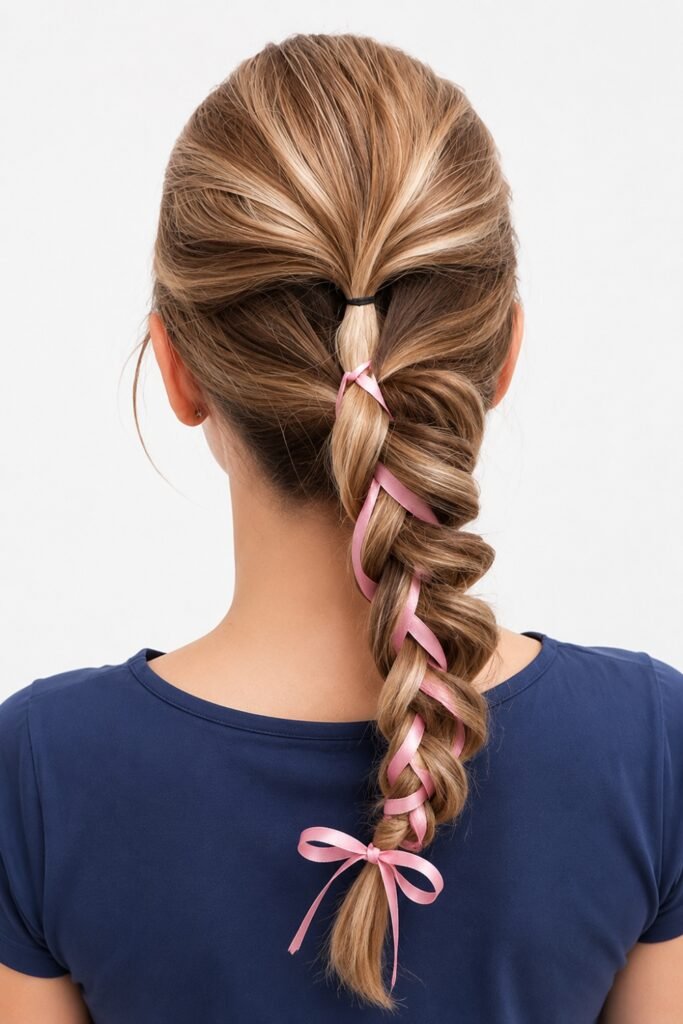
Save11. Long Single Braid With Ribbon
One thick braid down the back with ribbon woven through it.
Simple, historical, and effective. The ribbon is doing structural work as well as decorative: woven through, it grips the braid and slows it loosening.
The most low-effort formal option in this article.
 Save
SaveCovered and Accessorised
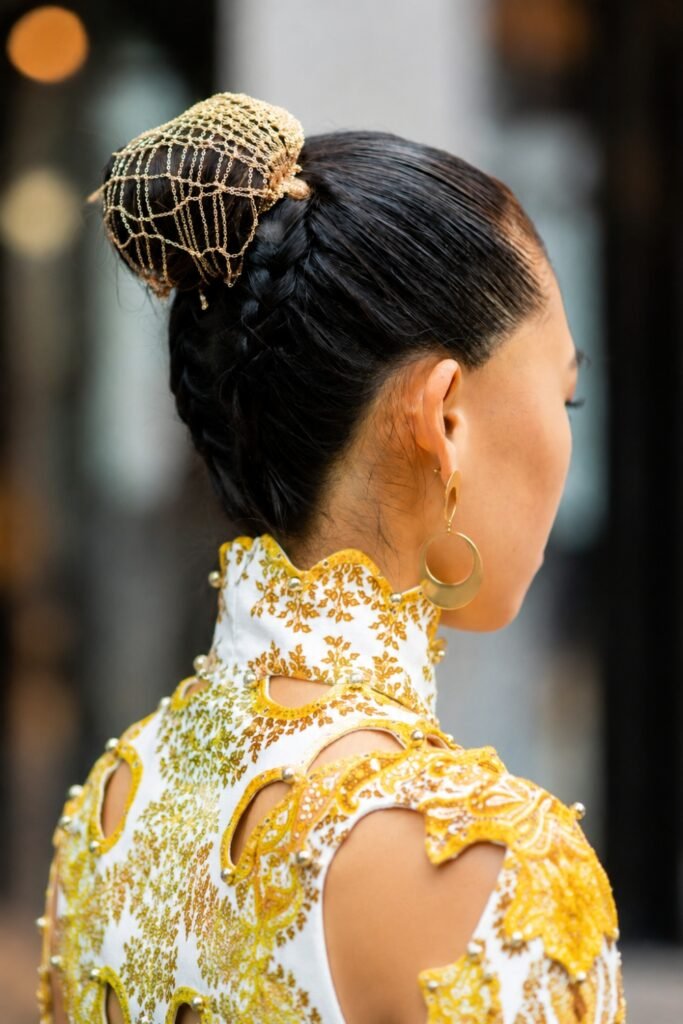
12. Braids Under a Hair Net
Braids or a bun contained within a fine net, historically plain for daily wear or jewelled for nobility.
Hair nets kept braids and buns neat and were genuinely functional. The jewelled versions, called crespinets, were a status marker rather than a different garment.
The modern version is a decorative snood, which is having a moment and works over any of the coiled styles here.
 Save
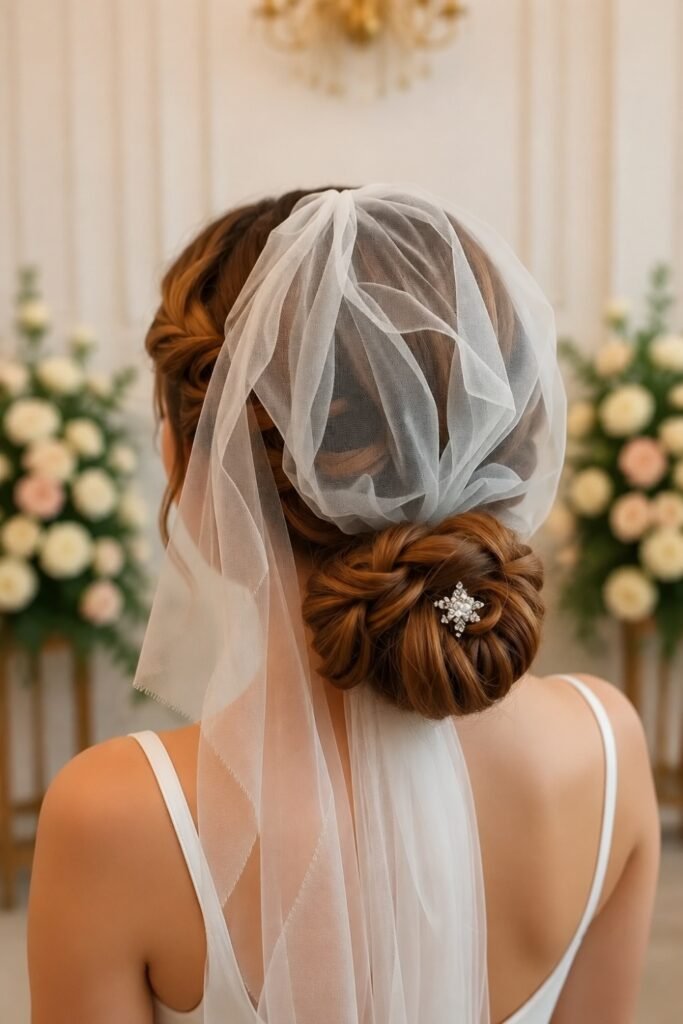
Save13. Coiled Hair With a Veil
Hair coiled or braided flat and covered with a light veil or scarf.
Historically compulsory for married women rather than optional, which is worth remembering while wearing it as an aesthetic choice. The styles beneath were designed specifically to sit flat under fabric.
For modern wear, this is a wedding or event style, and it also suits anyone who covers for religious reasons, since the underlying arrangements were built for exactly that.
 Save
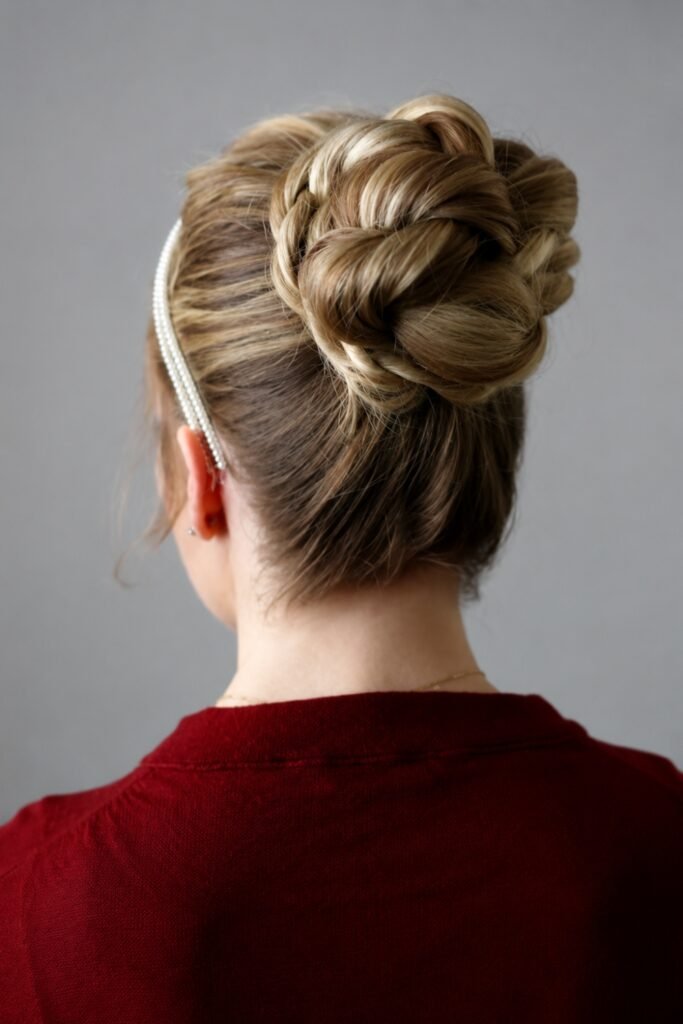
Save14. Braided Bun With a Fillet
A simple band worn around the head over a coiled or braided style.
The fillet is the least ornamental of the medieval headpieces and the most wearable now. It reads as a headband rather than a costume.
The most everyday-appropriate item in this section.
 Save
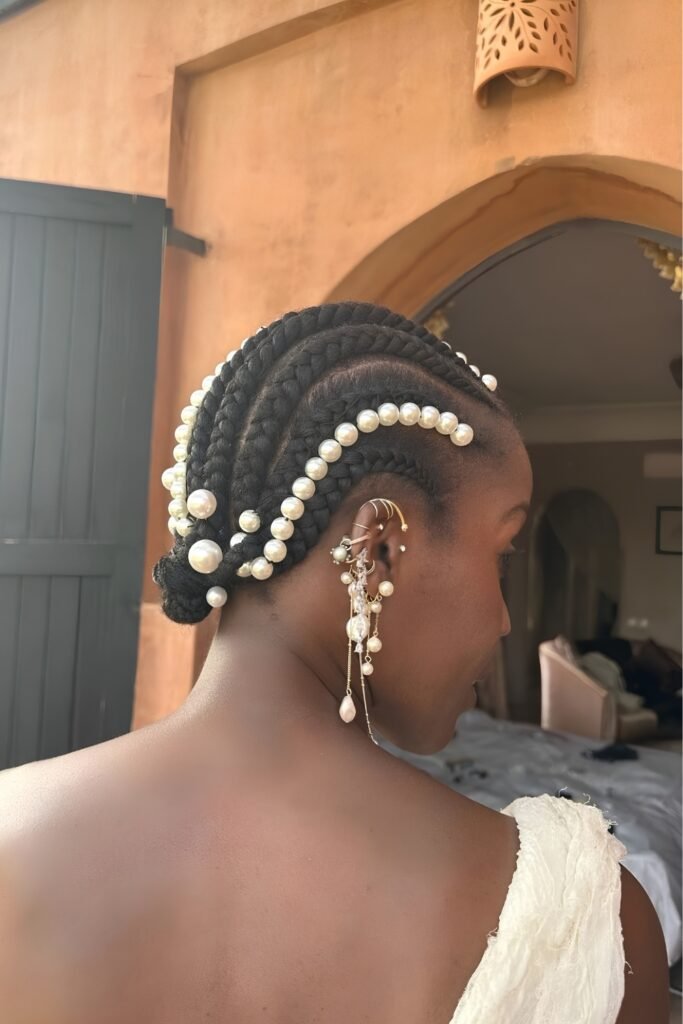
Save15. Pearl-Threaded Braids
Braids with pearls or beads woven through, referencing late-medieval Italian styling.
Italian women in the later Middle Ages were known for elaborately braided hair adorned with pearls, which makes this one of the better-documented decorative traditions.
Thread the pearls as you braid rather than pinning them on afterwards, which is both more secure and more historically consistent.
 Save
SaveAdapting Them for Now
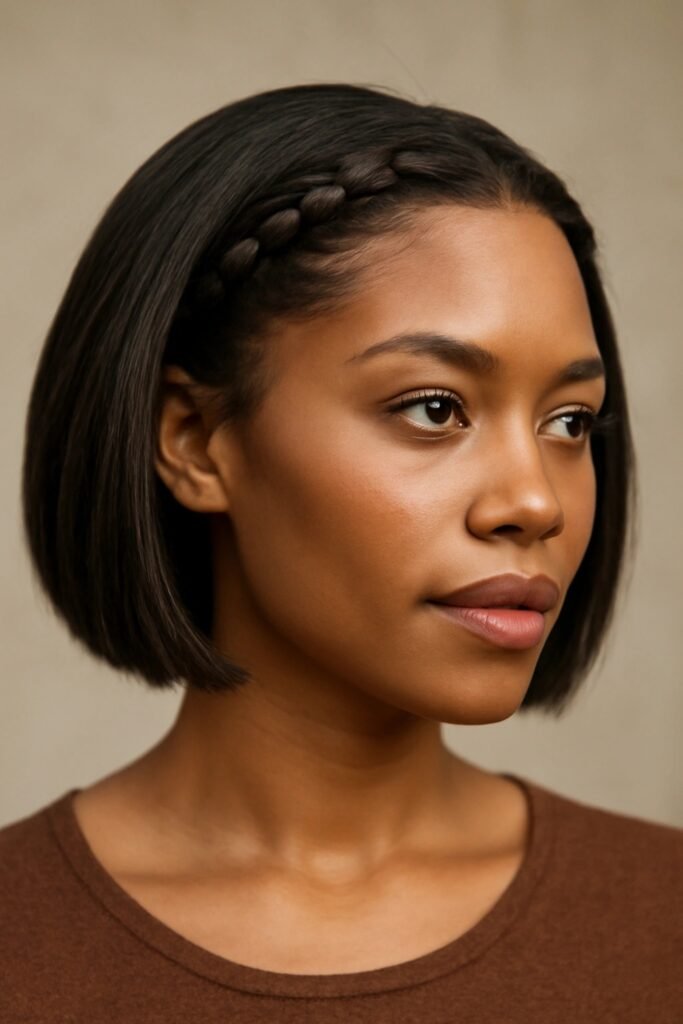
16. Medieval Styles on Short Hair
Rope twists, feeder braids, and a circlet on hair too short to coil or braid at length.
Most historical styles assume long hair, which is a real limitation. The adaptations that work are the ones using the front sections only, since those are usually long enough regardless of overall length.
For shorter lengths generally, our guide to chin-length bob haircuts covers what those lengths can carry.
 Save
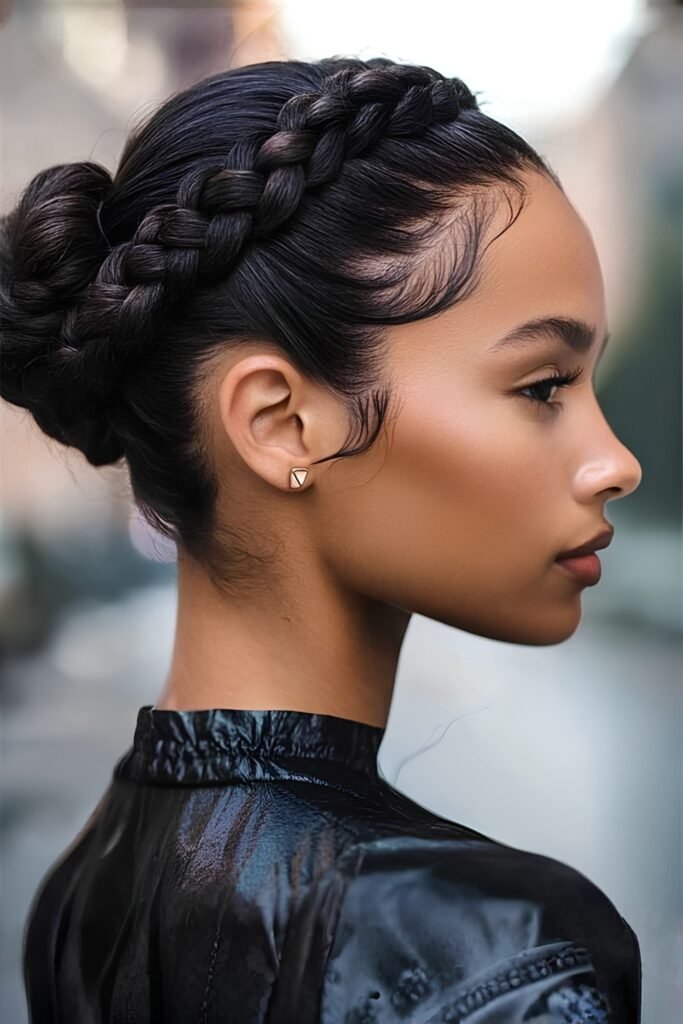
Save17. Medieval Styles on Textured Hair
Braided crowns, coiled braids, and flat twists on natural curl and coil.
These styles suit textured hair particularly well, because braiding and coiling are what textured hair does most naturally and most durably. They are also heat-free, which matters more here than anywhere.
The tension caution applies. Styles pulled too tight at the hairline cause traction alopecia, and a crown braid is exactly the kind of style where that happens. Our guide to protective styles for Black hair covers tension, installation, and the wash and moisturise routine that keeps braided styles comfortable.
 Save
SaveWhat These Styles Are Actually Good For
Three things, and none of them are historical.
No heat, ever. Every style here is achieved by hand. For anyone trying to reduce heat damage, or with colour-treated or fragile hair, that is the whole argument.
They last. These were built to survive a working day without modern products. A crown braid done in the morning is still a crown braid at nine in the evening, which very few modern styles manage.
They work when your hair is not clean. Braids and coils hold better on second or third day hair, which means these are the styles for the days you would otherwise reach for a hat.
For braiding technique specifically, our guide to Bo Derek braids covers cornrow-based work that shares its underlying method with several of the flat-coiled styles here.
Common Questions
What did medieval women actually do with their hair?
It depended on marital status. Unmarried women wore theirs loose or lightly braided, signifying maidenhood. Married women wore theirs braided or coiled and covered with a veil, wimple, coif, or kerchief. Totally uncovered hair was never the norm for adult women. Class mattered too: peasant women favoured simple functional styles, while noblewomen wore elaborate braids, nets, and ornamented headpieces.
Are these styles historically accurate?
The braided and coiled styles, the crown braid, the chignons above the ears, the hair nets and the veils are all documented. A great deal of what circulates online as medieval is actually Renaissance, Victorian medievalism, or fantasy, and this article distinguishes between them. The period also spans roughly a thousand years, so any single style belongs to a particular century and region rather than to the whole era.
Can I do these without heat tools?
Yes, and that is the point. Every style here was achieved by hand with no heat at all, which is why they suit anyone with colour-treated, fragile, or heat-damaged hair. They also hold better on second or third day hair than on freshly washed hair.
Do they work on short hair?
Partially. Most assume long hair, which is a genuine limitation. The adaptations that work use the front sections only, meaning rope twists, feeder braids, and a circlet, since those sections are usually long enough regardless of overall length.
How do I keep a crown braid from slipping?
Braid on second-day hair rather than freshly washed, since clean hair is slippery. Pin at the outer edge of the braid rather than through the centre, and use more pins than you think. Historically these were sometimes stitched into place with a needle and thread, which tells you something about how secure they needed to be.
Final Thoughts
The reason these styles have outlasted their period is that they were engineered rather than styled. They had to hold, they had to lie flat, and they had to be done by hand in poor light.
That makes them unusually well suited to now. Pick the half-up braids or the braided bun to start with, do them on unwashed hair, and expect them to still be there at the end of the day. They were built for exactly that.