Forty is not a haircut category. Hair density, texture, hairline, gray pattern, and styling tolerance matter far more than the birthday on your driver’s license. What does change for many men is that the same heavy one-length cut they wore years ago stops behaving the same way.
Layers can solve that without making the haircut look younger, trendier, or busier. Used well, they remove weight from thick hair, give waves and curls room to form, create separation in a short crop, and help medium hair move instead of collapsing into one solid shape.
The important phrase is used well. Fine hair does not need to be carved into fifteen wispy levels. Coarse gray hair does not need to be shellacked into submission. A good layered cut works with the material on your head now, not the hair you remember having at 28.
15 Layered Haircuts for Men Over 40
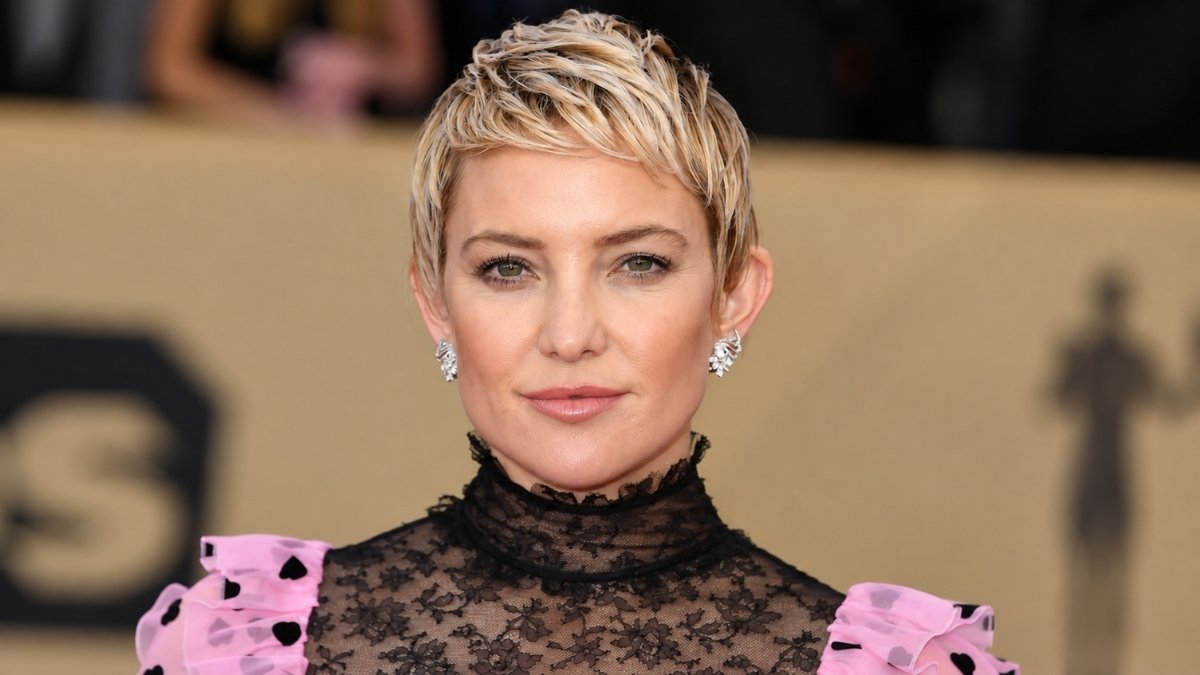
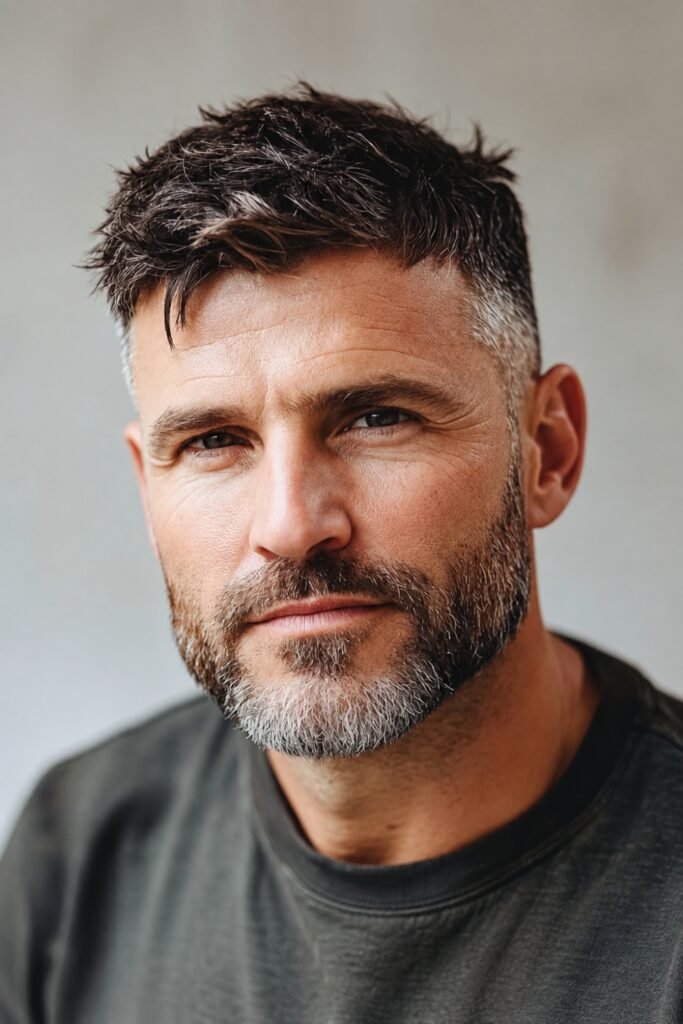
1. Short Layered Textured Crop
A short crop with subtle layers is one of the easiest ways to create movement without keeping much length. The top can be point-cut or textured so individual sections separate instead of lying as one flat sheet.
If density is reduced, ask the barber to preserve weight where you need it. Texture should make the top look intentional, not remove so much hair that the scalp becomes the main feature.
Best for: short hair, fine-to-medium density, receding temples, low styling time.
 Save
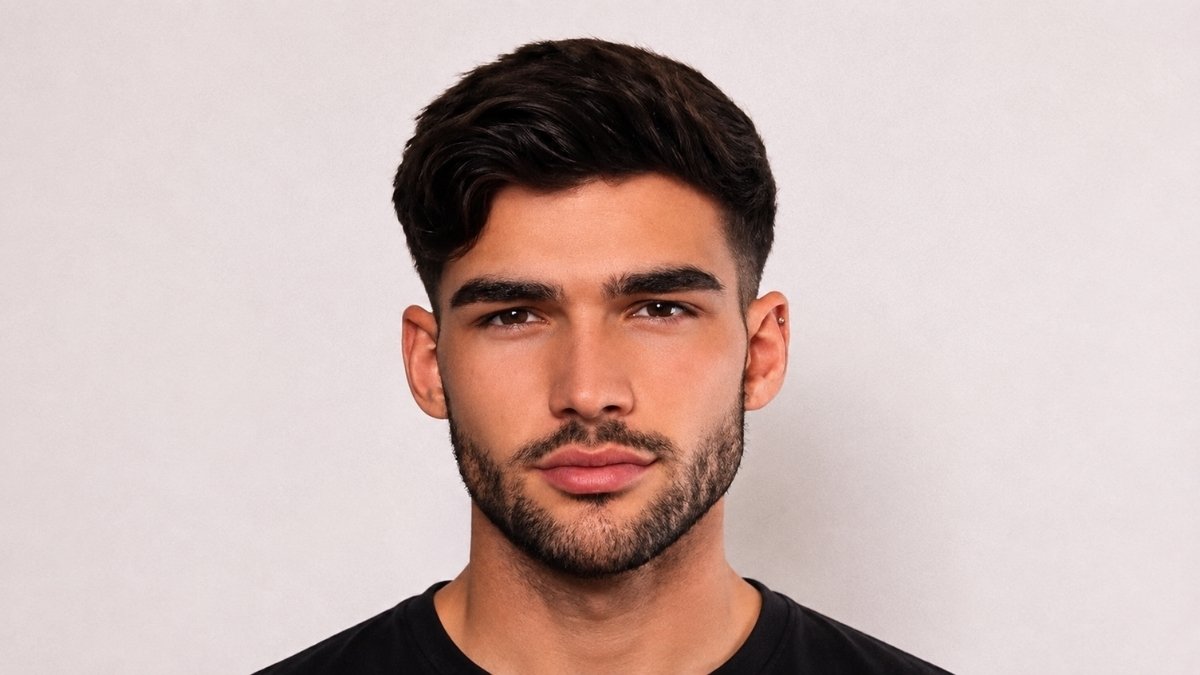
Save2. Classic Taper With Soft Layers
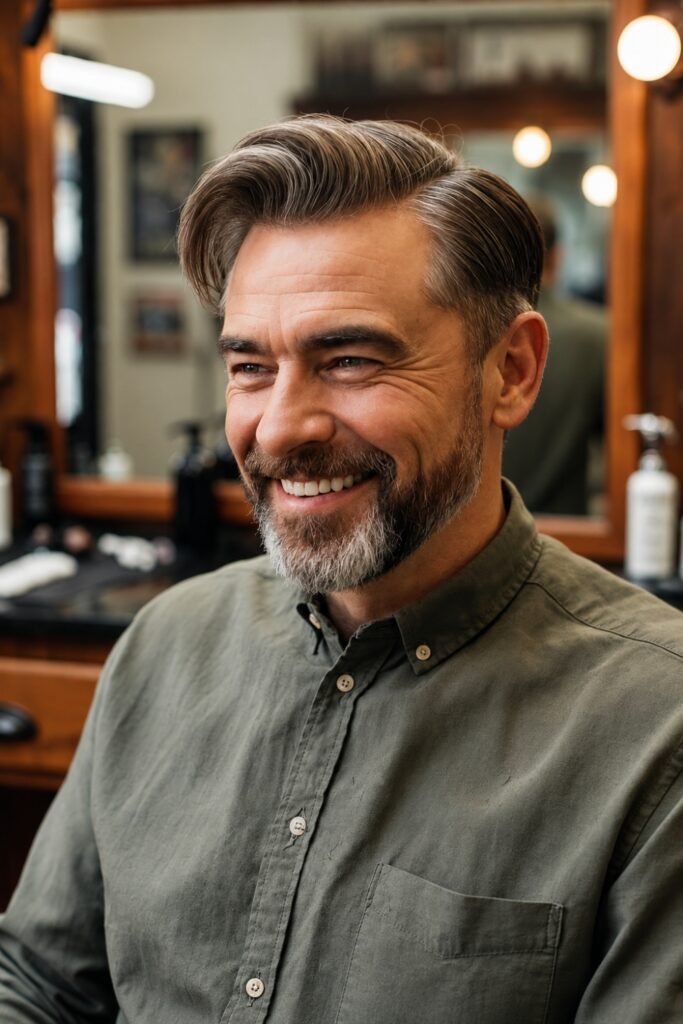
Keep the sides neatly tapered and leave enough scissor-cut length on top for soft layering. It reads professional without looking like you asked for the safest haircut in the building.
The layers should blend, not announce themselves. Use a small amount of cream or matte paste and let the natural direction of the hair do most of the work.
Best for: straight or wavy hair, office settings, men who want easy grow-out.
 Save
Save3. Side-Swept Layered Cut
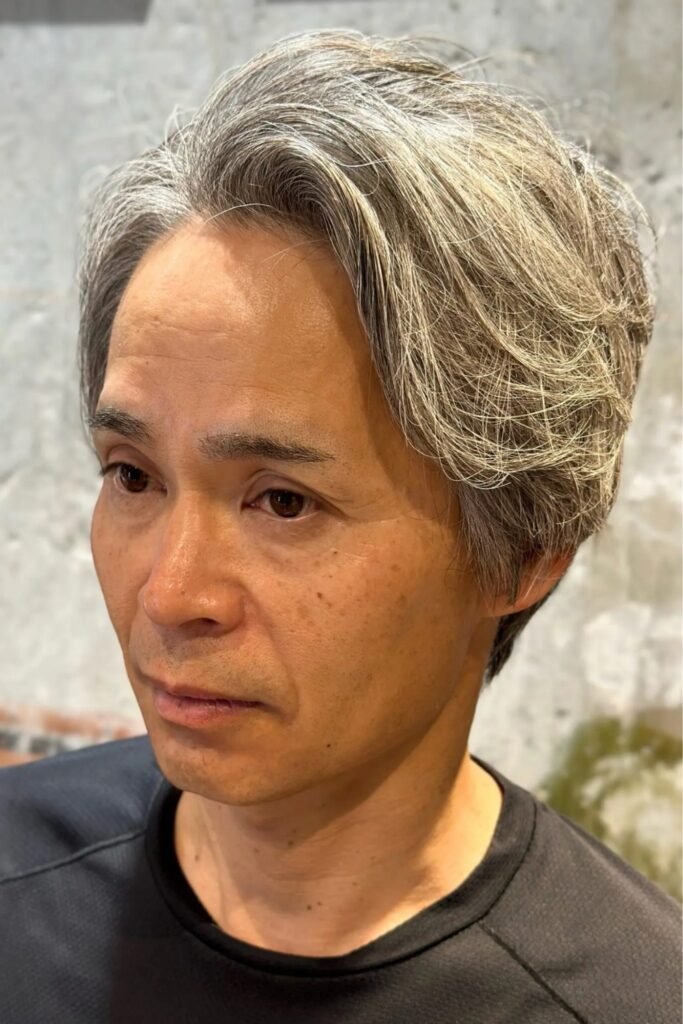
A layered top swept diagonally can work around temple recession while still looking modern. The difference is movement: the hair travels to the side instead of being stretched across the head in one defensive sheet.
Keep the front soft and slightly separated. If every strand is glued into the same direction, you have stopped styling and started laminating.
Best for: receding temples, straight or wavy hair, medium-short lengths.
 Save
Save4. Layered Ivy League
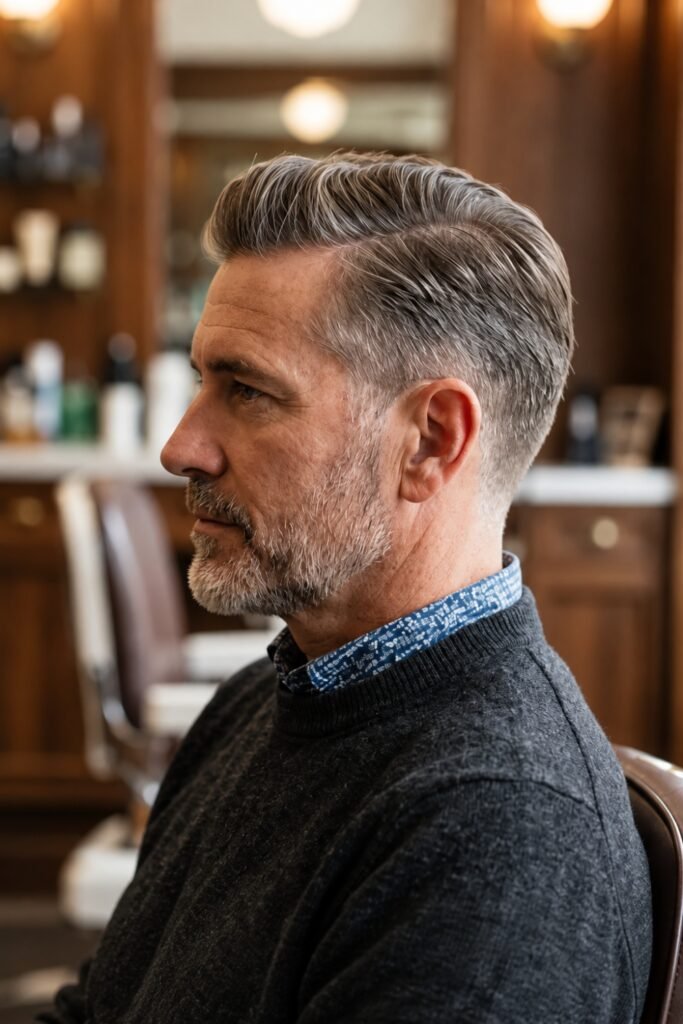
The Ivy League already has useful proportions: tidy sides, a longer top, and enough front length to part or lift. Adding subtle layers keeps that top from becoming a heavy cap.
This works particularly well if you want a haircut that can be neat for work and finger-styled on weekends. One cut, two personalities, neither requiring a tutorial.
Best for: straight to lightly wavy hair, professional wardrobes, short-to-medium tops.
 Save
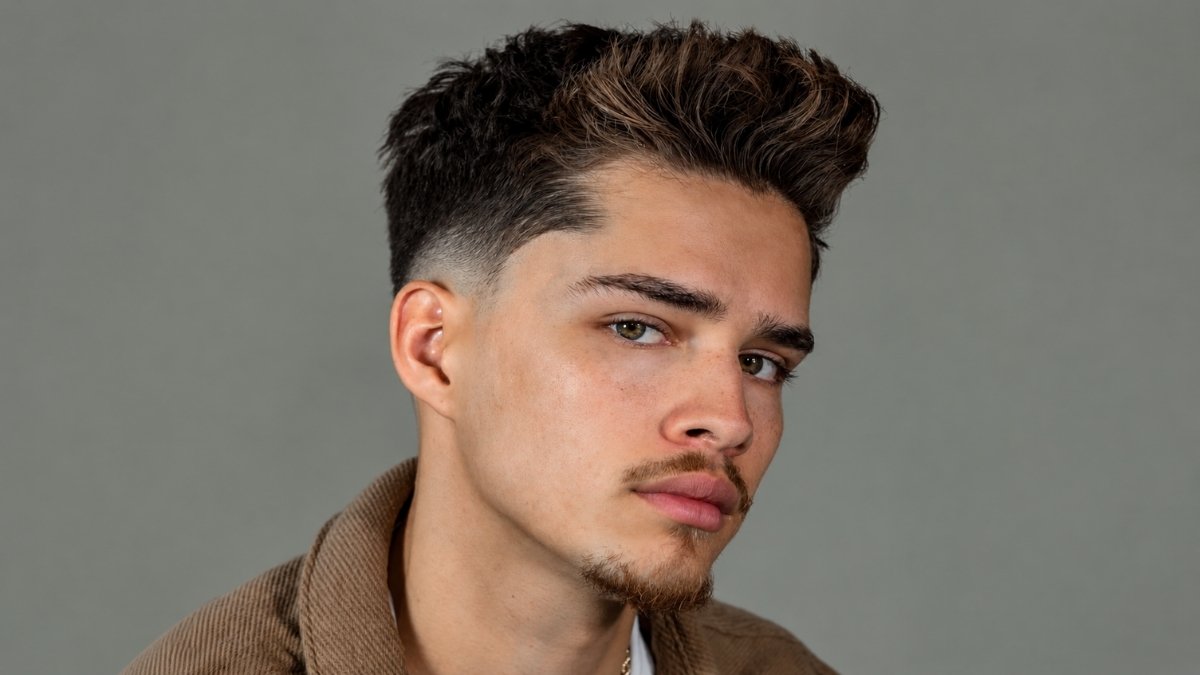
Save5. Layered Textured Volume
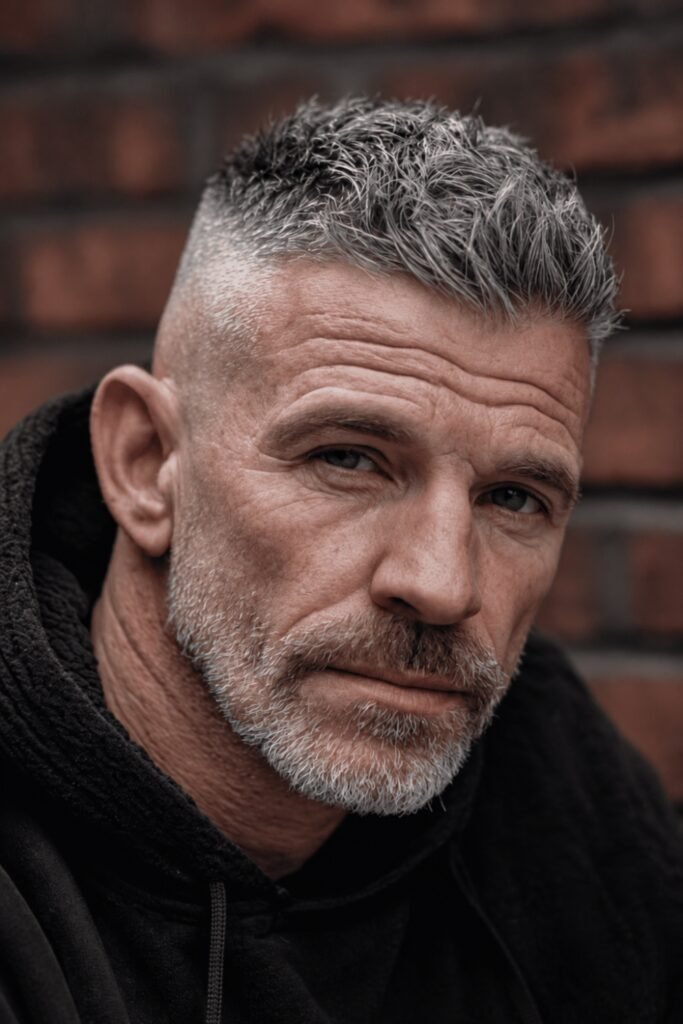
Strategic layers can give the top a little lift when hair tends to fall flat. Keep the volume low and broad rather than building one tall ridge at the hairline.
Two inches of controlled lift looks confident; a towering structure can make the hair work harder than the rest of the outfit.
Best for: fine-to-medium hair with enough coverage, square or oval faces, matte styling.
 Save
Save6. Soft Layered Quiff
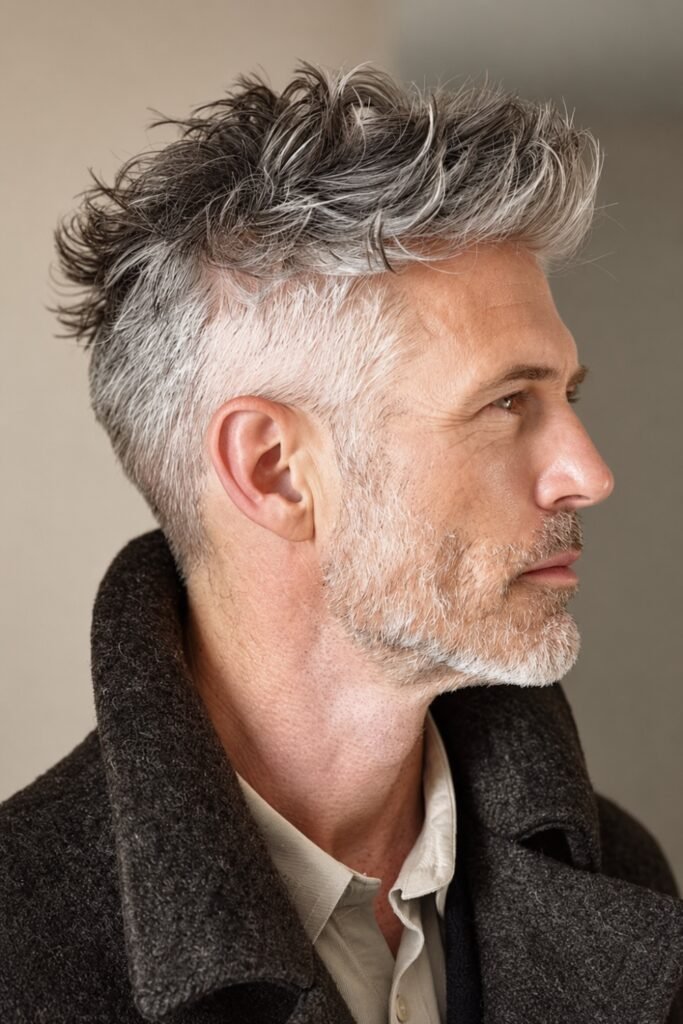
A mature quiff does not need to disappear. It simply benefits from less vertical ambition and more movement through the top. Layering keeps the front from becoming one thick block that has to be forced upward.
Blow-dry with your fingers, then use a flexible product. If the quiff cannot move when you turn your head, you have gone too far.
Best for: medium density, straight or wavy hair, men who like some front lift.
 Save
Save7. Medium Scissor Layers
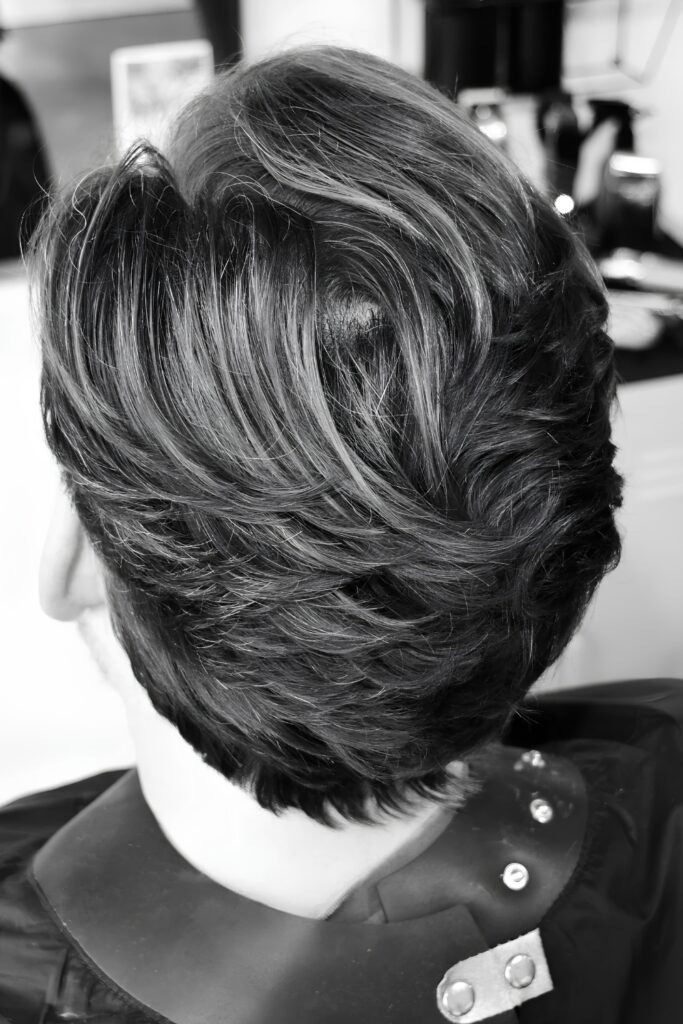
At medium length, scissors can create a softer outline than a clipper-heavy cut. Long internal layers remove bulk while preserving enough perimeter to look substantial.
This is especially useful when the sides puff out but you do not want a fade. Ask for weight control, not aggressive thinning. Those are not the same request.
Best for: medium hair, coarse or thick texture, men avoiding fades.
 Save
Save8. Layered Bro Flow
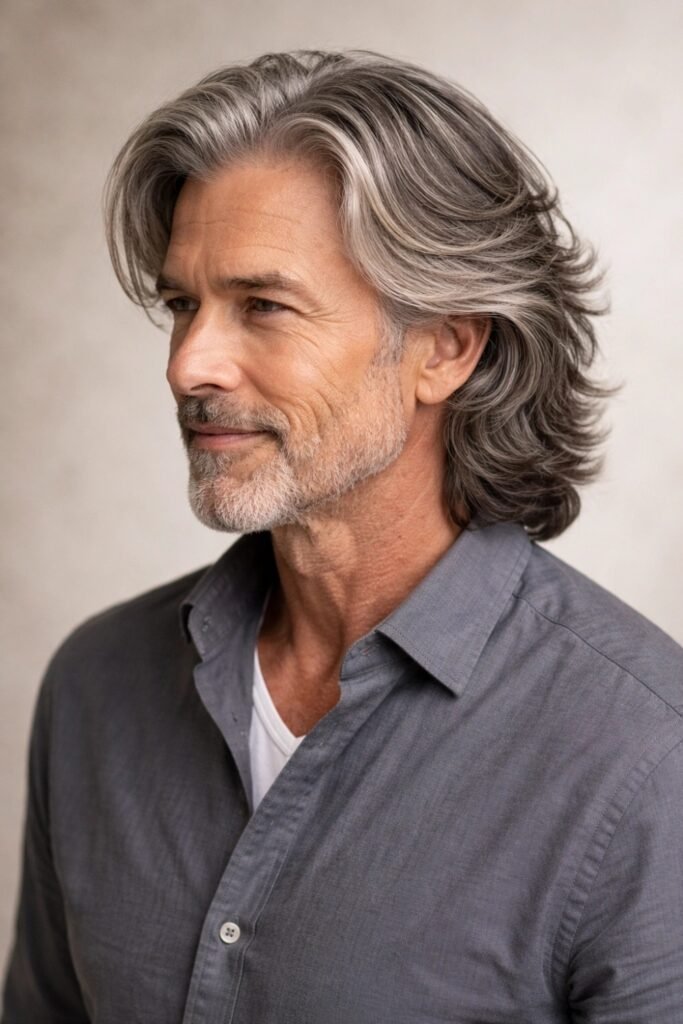
A bro flow uses medium length and long layers so the hair naturally travels back from the face. There is no need to slick it flat or carve the sides down to skin.
The haircut succeeds when it falls back into place after you run a hand through it. If it requires a hard helmet of product, the flow has missed the assignment.
Best for: medium-to-thick hair, waves, men growing out shorter cuts.
 Save
Save9. Layered Middle Part
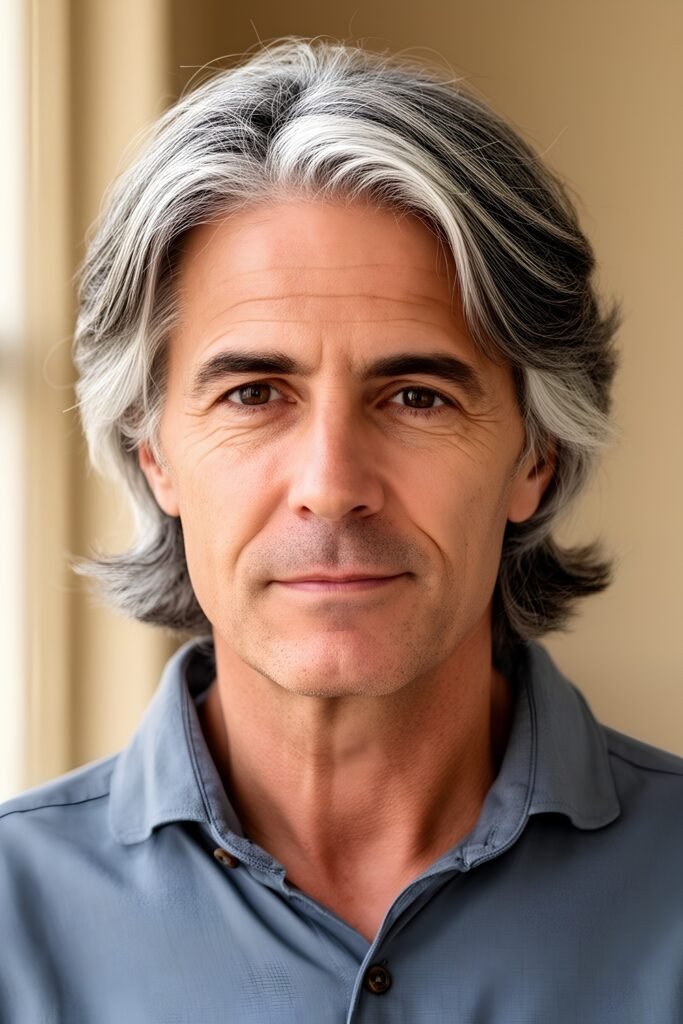
A middle part can look sharp after 40 when the hair has enough layering to avoid two heavy curtains hanging beside the face. Graduation around the front helps both sides bend and settle naturally.
If your hairline has changed, do not force a mathematically perfect center. Shift the part slightly if that works better with the growth pattern. Symmetry is not a moral obligation.
Best for: medium straight or wavy hair, fuller density, relaxed smart-casual style.
 Save
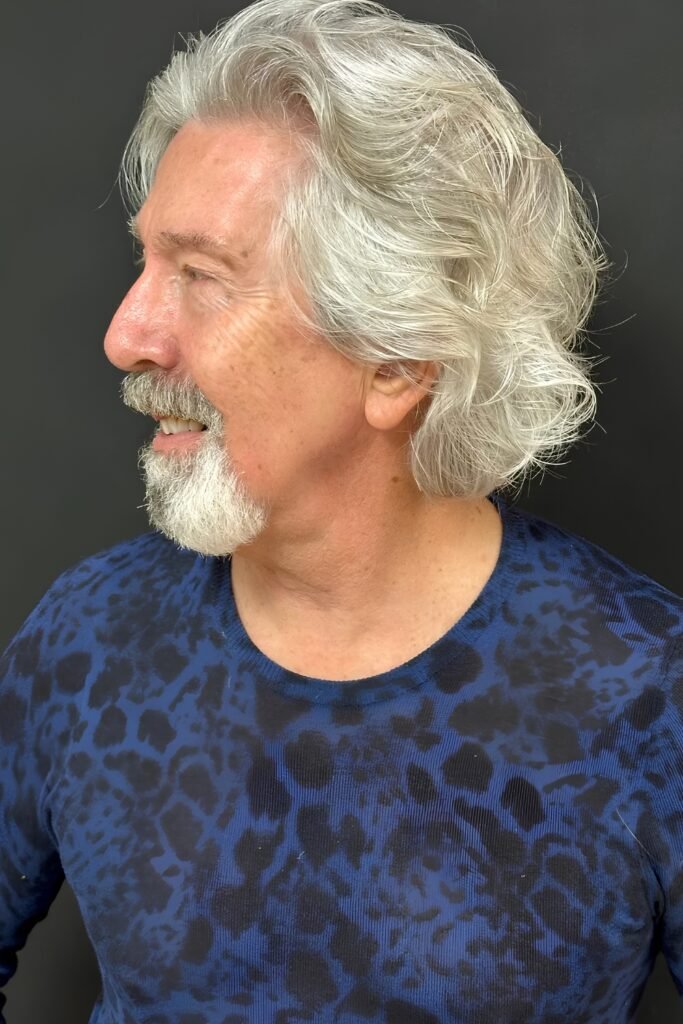
Save10. Natural Wavy Layers
Wavy hair often needs less styling than men think and better weight distribution than they receive. Layers can remove heaviness from the lower sections while preserving enough length for the wave pattern to appear.
Let the barber see how your hair dries naturally before deciding where every layer should sit. Wet hair can make a wave look much more obedient than it is.
Best for: naturally wavy hair, salt-and-pepper texture, medium lengths.
 Save
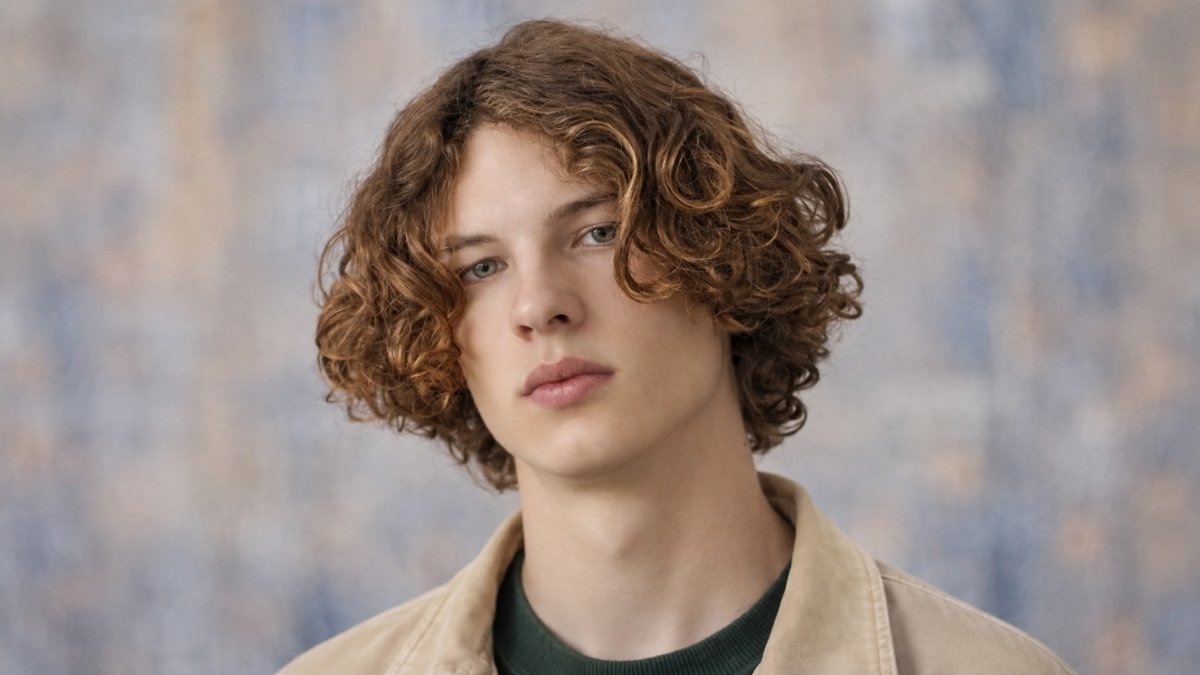
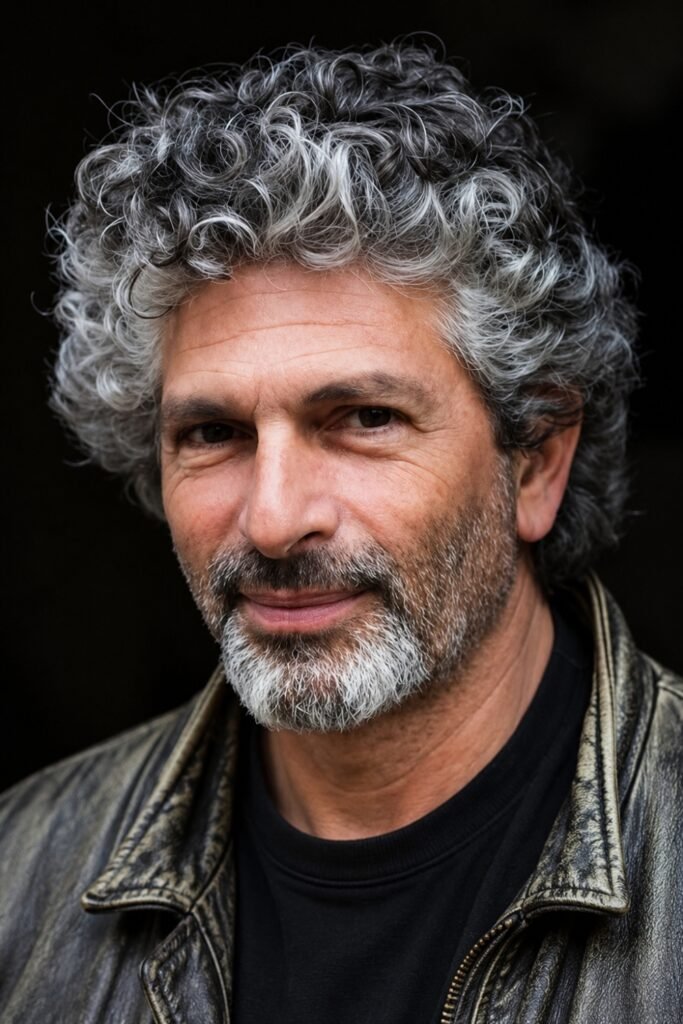
Save11. Layered Curly Cut
Curly hair benefits from layers when they distribute volume through the silhouette instead of leaving all the weight at the bottom. The exact layer pattern should respond to curl type, shrinkage, density, and how you actually wear it.
Do not request layers as shorthand for ‘make it thinner.’ Removing too much weight can turn defined curls into sparse ends and a wide crown.
Best for: curly or coily hair, medium length, men who wear natural texture.
 Save
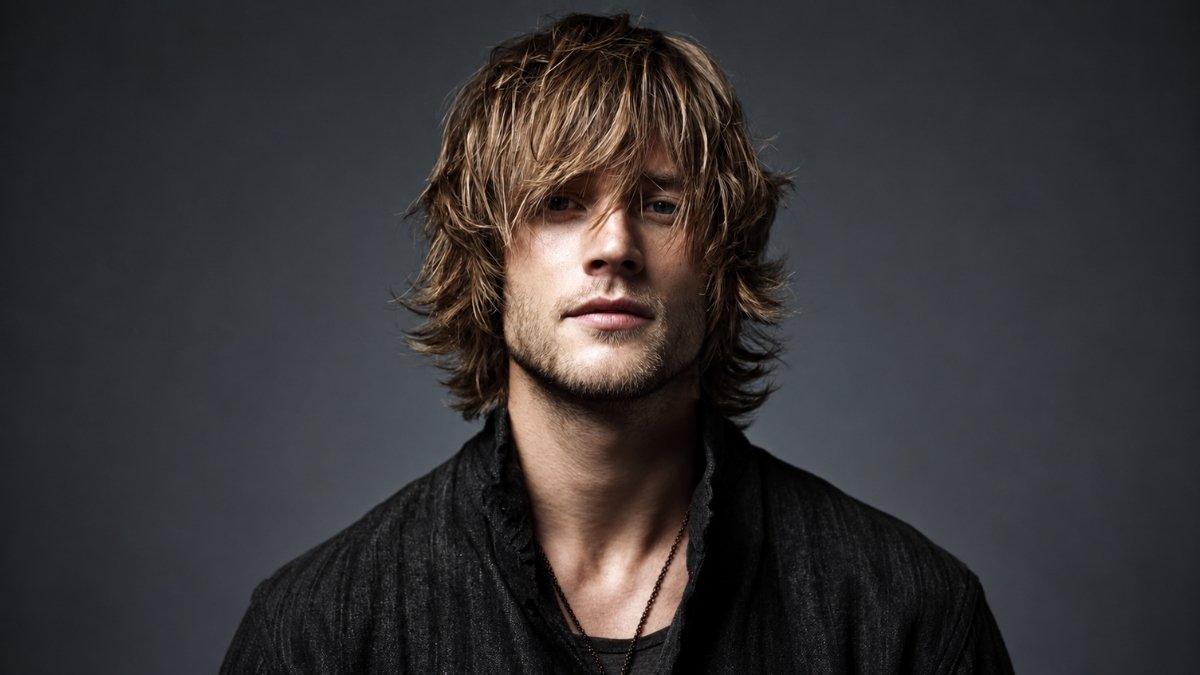
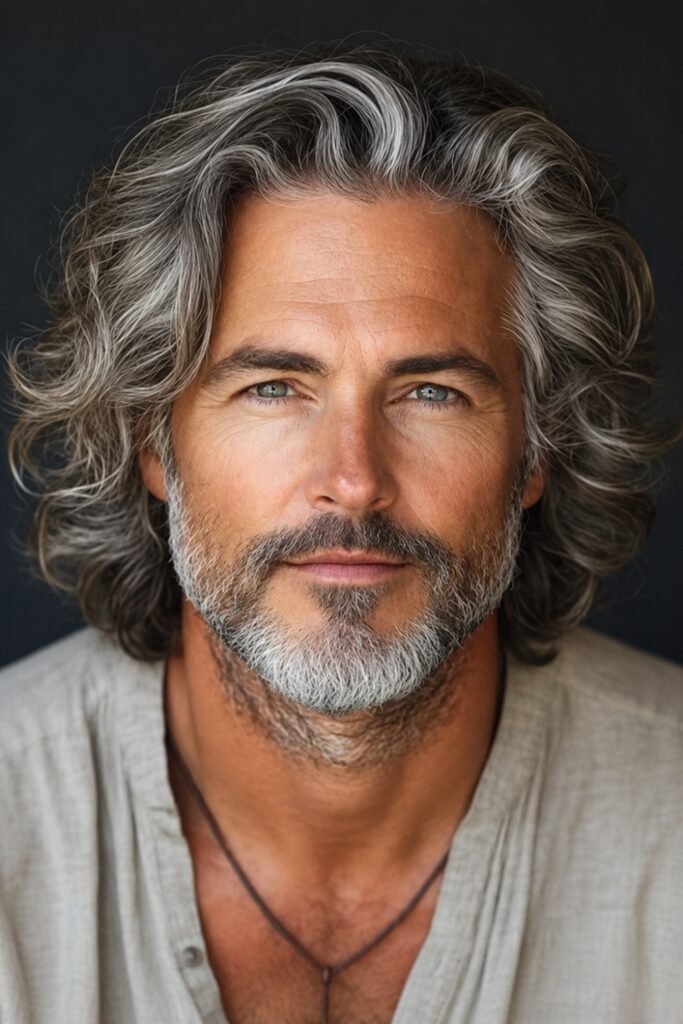
Save12. Refined Layered Shag
A shag uses shorter layers through the crown and longer pieces toward the perimeter. For a more refined version, keep the difference moderate and avoid an exaggerated tail unless you want mullet territory.
The cut should look relaxed, not neglected. Broken texture is useful; random holes in the density are not.
Best for: wavy or thick hair, creative professions, men who prefer an undone finish.
 Save
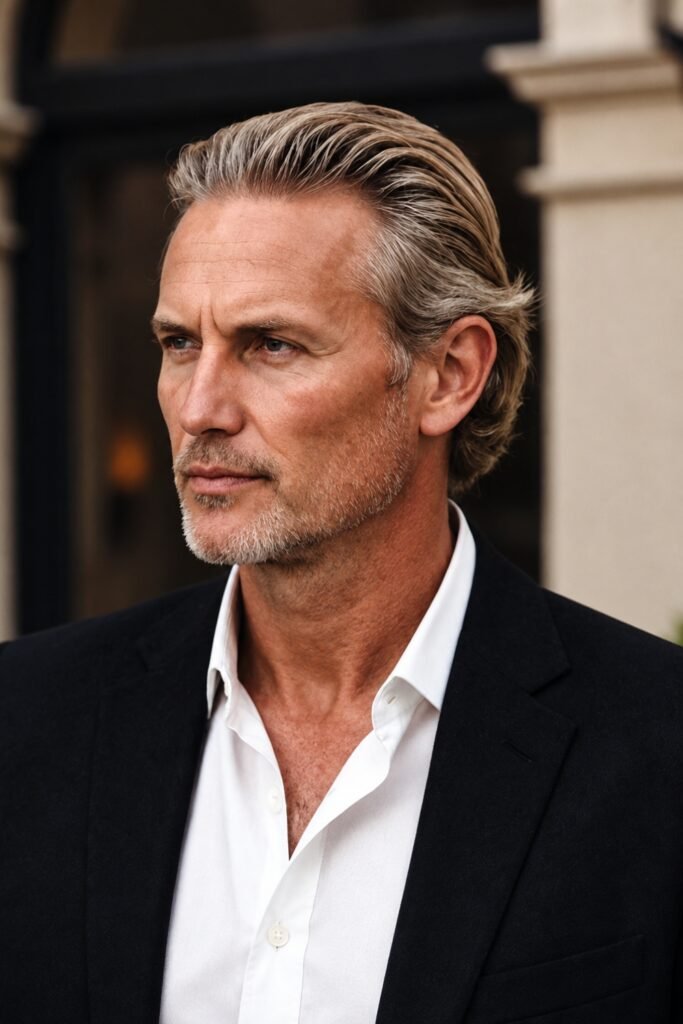
Save13. Slicked-Back Layers With Soft Ends
Medium layers can be directed backward for a polished look without flattening every strand into one shiny surface. The softened ends give the style movement and make gray or coarse texture look deliberate.
Use a cream or flexible pomade rather than enough wet gel to survive a thunderstorm. You want control, not waterproofing.
Best for: medium straight or wavy hair, formal wear, salt-and-pepper hair.
 Save
Save14. Shoulder-Length Layers
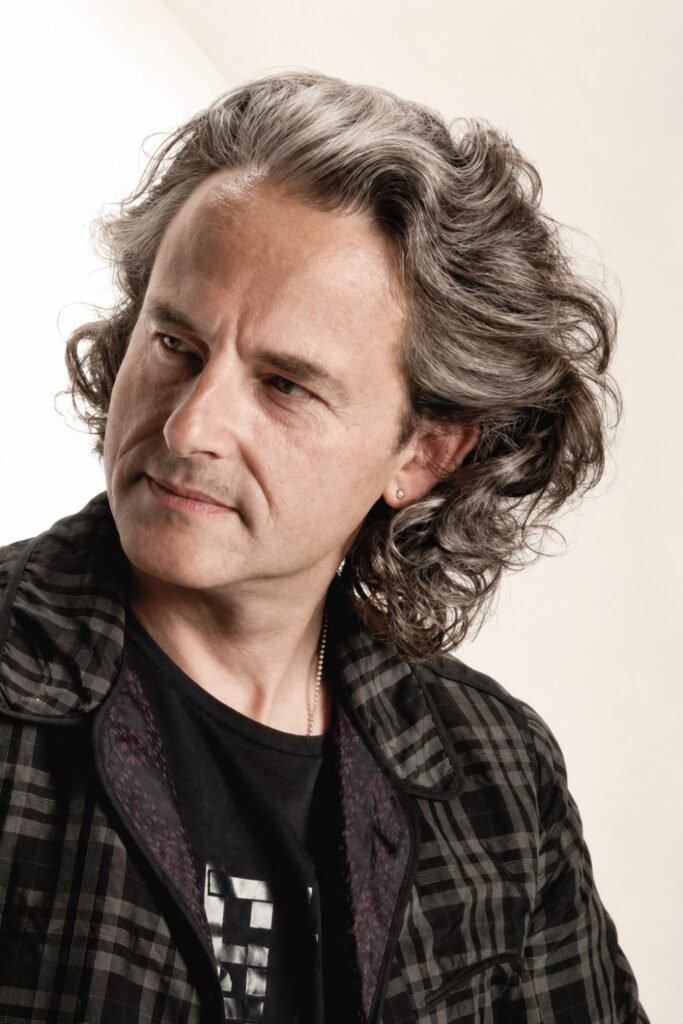
If your density supports it, shoulder-length hair can look excellent after 40. Long layers remove enough internal weight for movement while keeping the bottom from looking shredded.
Fine hair needs restraint here. Too many short layers can leave the ends transparent, so preserve the perimeter and layer only where the hair can afford it.
Best for: medium-to-thick hair, straight or wavy texture, men committed to longer length.
 Save
Save15. Salt-and-Pepper Flowing Layers
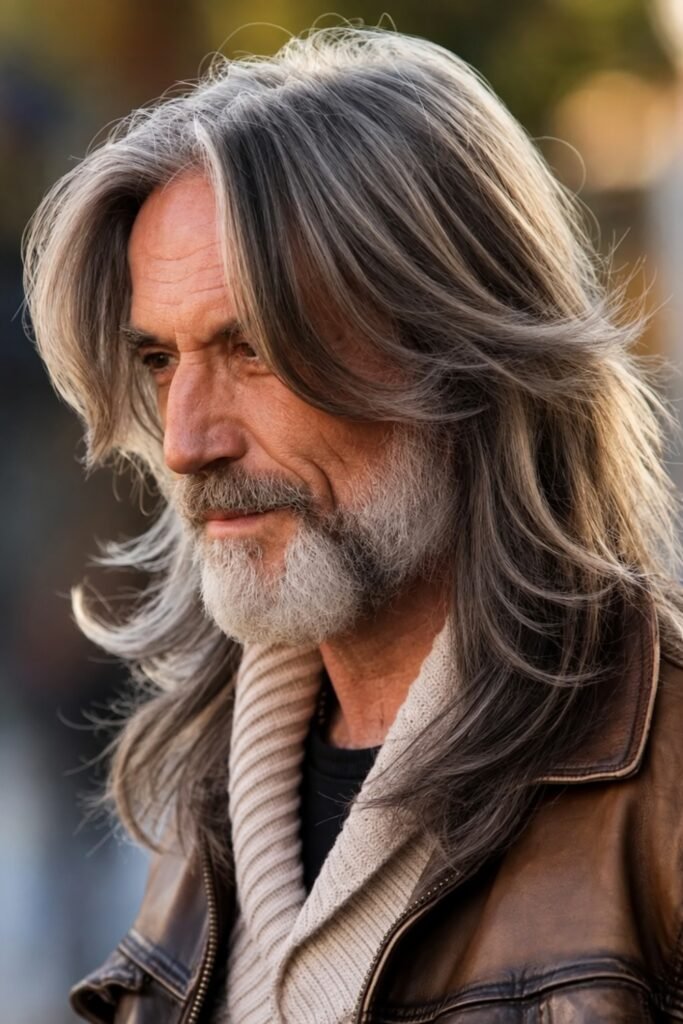
Longer flowing layers make natural gray variation more visible because different tones appear as the hair moves. The haircut does not need extra complexity when the color already supplies dimension.
Keep the ends healthy-looking and the layers connected. Salt-and-pepper hair can look distinguished without being polished into a single metallic surface.
Best for: longer gray or salt-and-pepper hair, waves, men who prefer natural movement.
 Save
SaveQuick Guide: Choose Layers for the Hair You Have Now
| Hair situation | Strong options | What the layers should do | Avoid |
| Fine or reduced density | Textured crop, Ivy League, soft quiff | Create separation while preserving weight | Aggressive thinning |
| Thick or coarse hair | Scissor layers, bro flow, shag | Remove internal bulk and improve movement | One heavy block |
| Wavy hair | Natural waves, bro flow, shoulder layers | Let bends form without triangle-shaped bulk | Cutting every wave too short |
| Curly hair | Layered curly cut | Distribute volume around the head | Using layers only to thin |
| Receding temples | Side-swept layers, crop | Work with the front direction | Long rigid comb-over |
| Gray / salt-and-pepper | Slicked-back layers, flowing layers | Show texture and tonal variation | Heavy wet-look product |
What Layering Actually Does After 40
Layering changes how weight is distributed. On thick hair, shorter internal sections can stop the whole cut from collapsing outward at the sides. On waves and curls, graduated lengths can help texture form at different levels. On shorter straight hair, point-cut layers create separation and movement.
The common mistake is treating layers as a universal volume button. Removing hair does not automatically create more hair. If density is already low, excessive layering or thinning can make the perimeter look weaker. The goal is shape, not subtraction for its own sake.
Short, Medium, or Long: Which Length Makes Sense?
Short layered cuts are easiest when you want minimal styling or need the haircut to work cleanly around a changing hairline. Medium lengths give you the most options because they can sweep, part, curl, or flow without requiring long-hair maintenance.
Long layered hair works best when the density and condition support the length. There is no age cutoff. The useful question is whether the ends still look substantial and whether the haircut has a clear silhouette.
Our haircuts for men over 40 cover crops, tapers and waves, and our long layered haircuts for men go further with shoulder-length cuts. For shorter movement, see our textured haircuts for men or try a middle part.
What to Tell Your Barber or Stylist
Do not ask for ‘layers everywhere.’ Explain the problem you want the layers to solve: flat top, bulky sides, heavy ends, undefined waves, or medium hair that refuses to move. That gives the stylist a design problem instead of a vague technique request.
If your hair is fine, say you want to preserve density. If it is thick, identify where it expands. If it is curly, show the stylist how you normally wear it and discuss shrinkage before too much length disappears.
Bring a reference with similar density and texture, not merely a similar face. A layered cut photographed on extremely thick hair may not translate literally to a finer head of hair.
Styling Layered Hair Without Making It Stiff
Layered hair usually looks best when the product lets the separation remain visible. A small amount of matte paste, light cream, mousse, or curl product can be enough depending on texture. Start with less; adding is easier than shampooing out a decision.
For medium and longer cuts, direct the hair while drying rather than trying to sculpt everything afterward. Finger-drying preserves movement. A brush can add polish when needed, but the finished cut should still look like individual strands can move.
Gray or coarse hair may benefit from conditioning and softer styling products if it feels dry or wiry. Choose products for your actual texture rather than assuming gray hair needs heavy shine.
Frequently Asked Questions
Are layered haircuts good for men over 40?
Yes. Layers can add movement, reduce bulk, shape waves or curls, and create separation in shorter cuts. The amount of layering should match your density, texture, and desired length.
Do layers make thinning men’s hair look fuller?
They can create texture and separation, but excessive layering can remove too much weight and make fine hair look thinner. Ask your barber to preserve density where coverage matters.
What is the best layered haircut for a receding hairline?
A short textured crop or soft side-swept layered cut can work well because both use direction and texture without requiring a rigid comb-over.
Can men over 40 wear long layered hair?
Yes. Long hair has no age limit. It works best when the density and condition support the length and the layers preserve a strong perimeter rather than leaving thin ends.
Are layered cuts good for gray hair?
Yes. Layers can show the tonal variation and natural texture of gray or salt-and-pepper hair. Soft creams and flexible styling often suit a natural finish better than a rigid wet look.
How should thick hair be layered?
Thick hair often benefits from internal weight removal and longer connected layers. The stylist should control bulk without creating disconnected shelves or overly thin ends.
Do curly men need layers?
Many curly cuts use layering to distribute volume and support curl shape, but the exact pattern depends on curl type, shrinkage, density, and desired silhouette.
How often should a layered men’s haircut be trimmed?
There is no single schedule. Short layered crops lose their shape faster than shoulder-length cuts. Rebook when the silhouette becomes bulky, flat, or difficult to style rather than following an arbitrary age-based rule.
The Density Test
Before approving more layers, look at the ends and the crown. If the perimeter already appears thin or the crown has reduced density, the haircut may need strategic texture rather than more removal.
The best layered haircut after 40 is not the one with the most visible layers. It is the one that makes the hair you have behave better: less bulk where it fights you, more movement where it falls flat, and enough weight left behind that the cut still looks substantial.