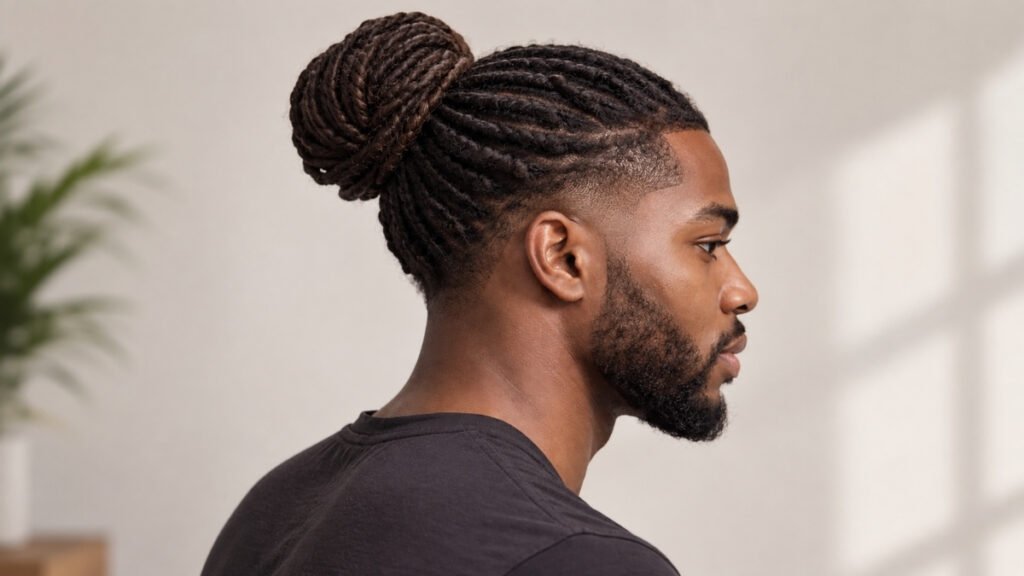
Dread buns come in more shapes than most men expect. Move the knot from the nape to the crown, leave half the locs down, add a taper, braid the roots or wrap the base with the locs themselves, and the silhouette changes completely.
These 17 dread bun hairstyles for men cover medium-to-long locs and change height, sides, root pattern, texture and finish. For loose styles, see our dread hairstyles for men and loc styles for men.
The practical advantage is obvious, long locs are off the neck and out of the face, but tension matters. A bun should feel secure, not painful. Repeatedly pulling mature locs very tight at the same points can put unnecessary stress on the roots.
17 Dread Bun Hairstyles for Men
1. Classic High Loc Bun
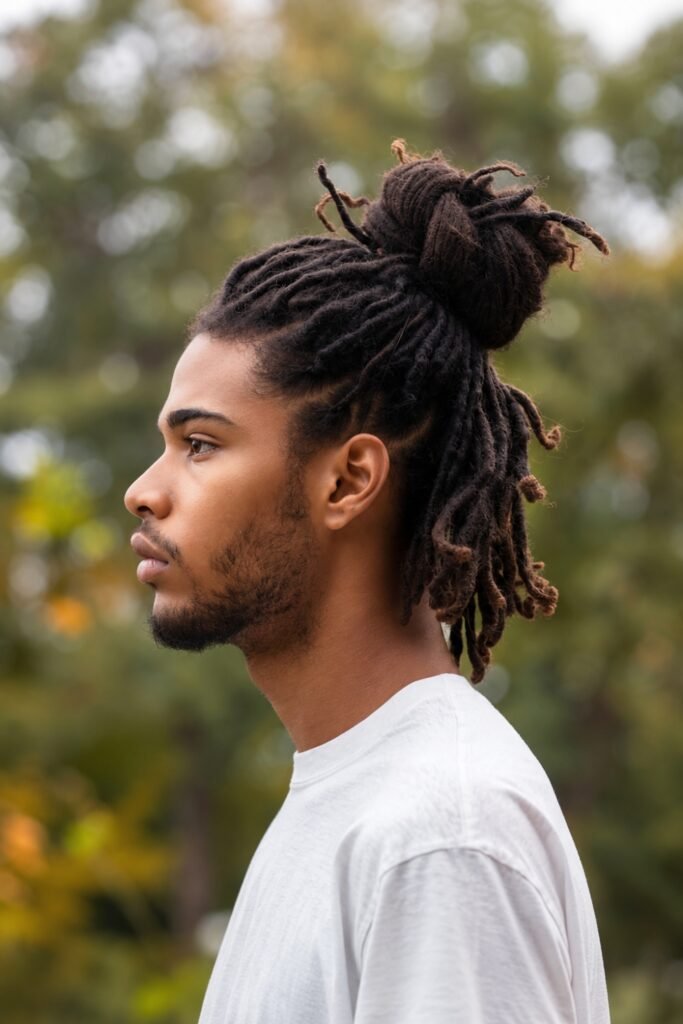
Gather long locs at the crown and wrap them into a broad, full bun. Keeping the sides natural makes the volume of the locs, not a fade, the main feature.
This is the cleanest starting point because it works without extra braiding or barbering. Rotate the tie position slightly between wears instead of pulling the same roots in exactly the same direction every day.
Best for: long mature locs, thick density, everyday wear.
 Save
Save2. Low Nape Dread Bun
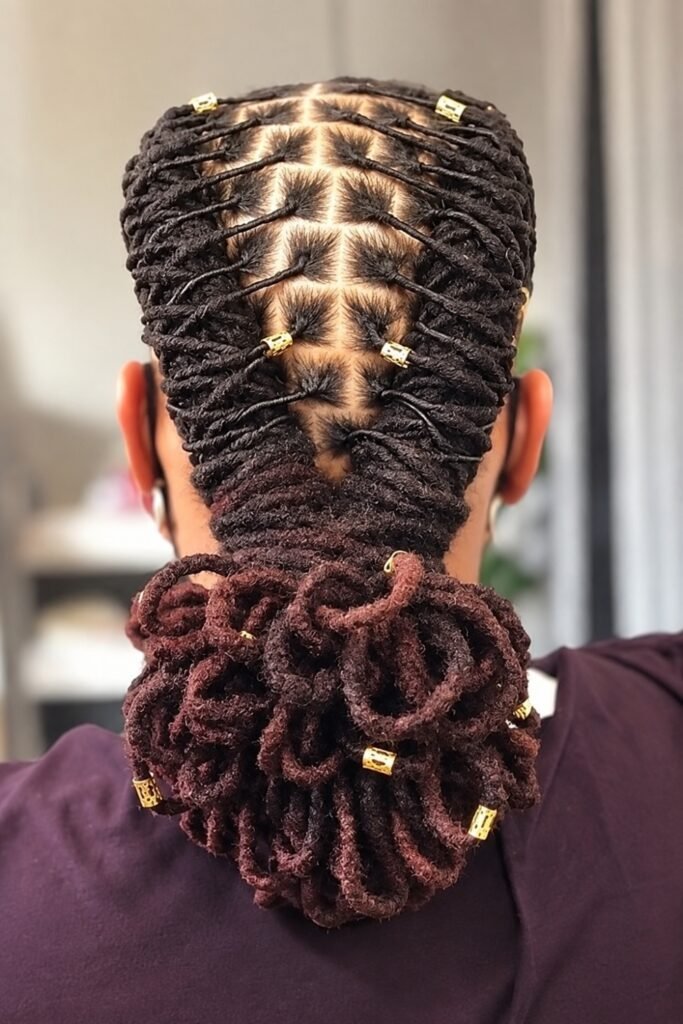
A low bun moves the visual weight to the back of the head and keeps the crown flatter. It looks less athletic than a high knot and can sit more comfortably under some hats or outerwear.
Keep the base secure but not painfully tight. Long locs already have weight; the nape does not need an elastic doing additional demolition work.
Best for: very long locs, formal-casual styling, men who dislike high buns.
 Save
Save3. Dread Bun With Taper Fade
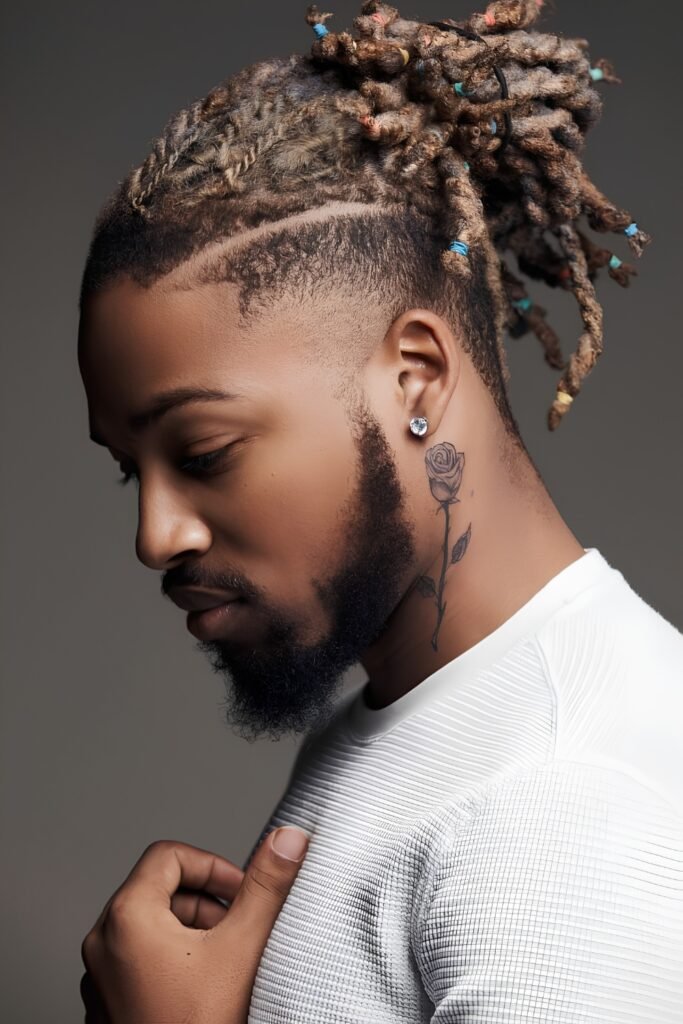
Use a temple and neckline taper to sharpen the perimeter while leaving enough side hair to connect naturally into the locs. Gather the length into a mid or high bun.
A taper keeps more hair at the sides than a skin fade, so the transition into the locs stays soft.
Best for: medium-to-long locs, professional grooming, softer grow-out.
 Save
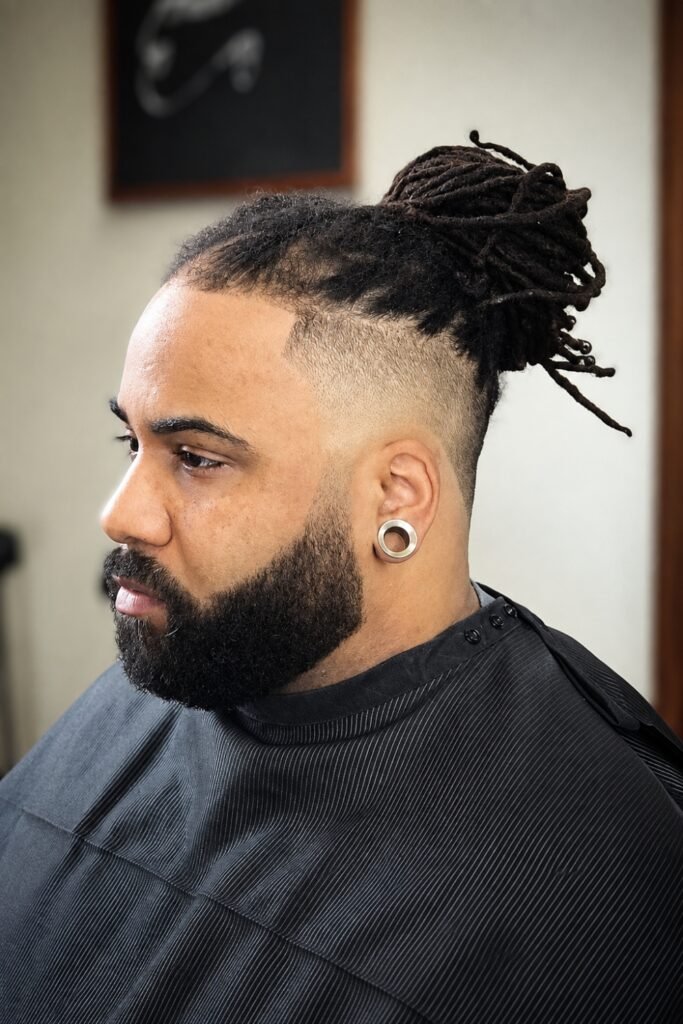
Save4. High Loc Bun With Skin Fade
Take the sides very close and place a substantial bun high on the crown. The fade makes the loc texture look even fuller because almost all visual weight sits above it.
This is low effort in the morning but higher barber maintenance. Once the skin fade grows, the contrast changes quickly.
Best for: bold barbered styles, thick locs, men who like frequent shape-ups.
 Save
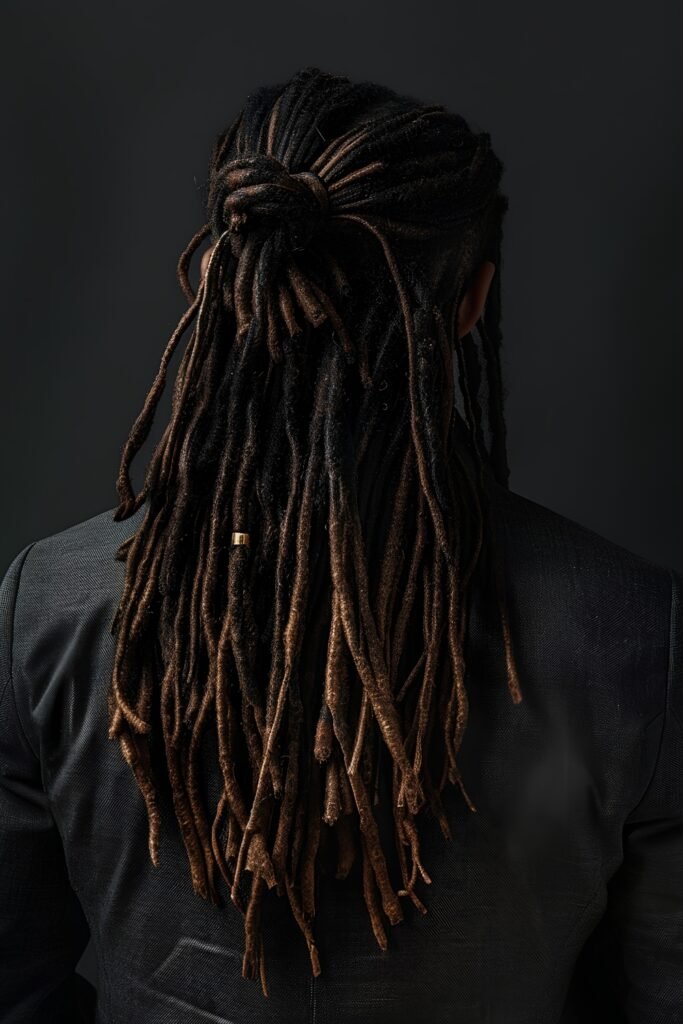
Save5. Half-Up Half-Down Loc Bun
Tie the upper section into a compact bun and let the lower locs hang naturally. You keep hair away from the face while still showing length and movement.
Do not make the upper section so large that the lower half looks accidental. The split should feel balanced from the side and back.
Best for: shoulder-length and longer locs, casual styling, men who want visible length.
 Save
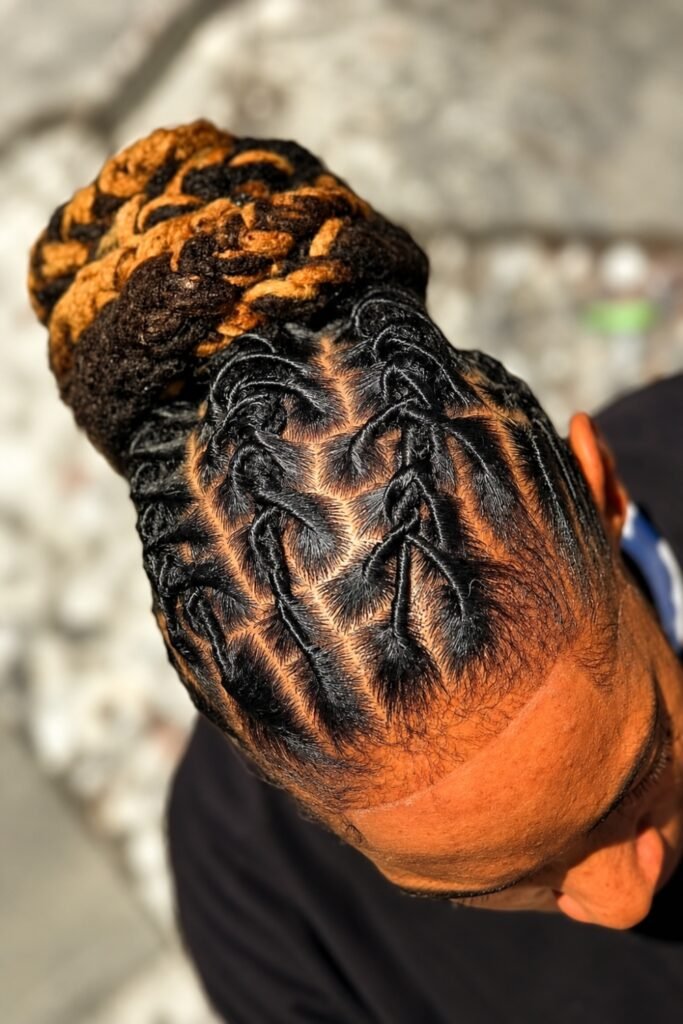
Save6. Cornrow-Root Loc Bun
Direct neat cornrow or braided root sections toward the crown, then gather the loc lengths into one bun. The scalp pattern becomes as important as the bun itself.
This style needs clean sectioning. If the root design is the focal point, fuzzy or uneven parting will be more visible than it would under loose locs.
Best for: retwisted locs, special events, detailed protective styling.
 Save
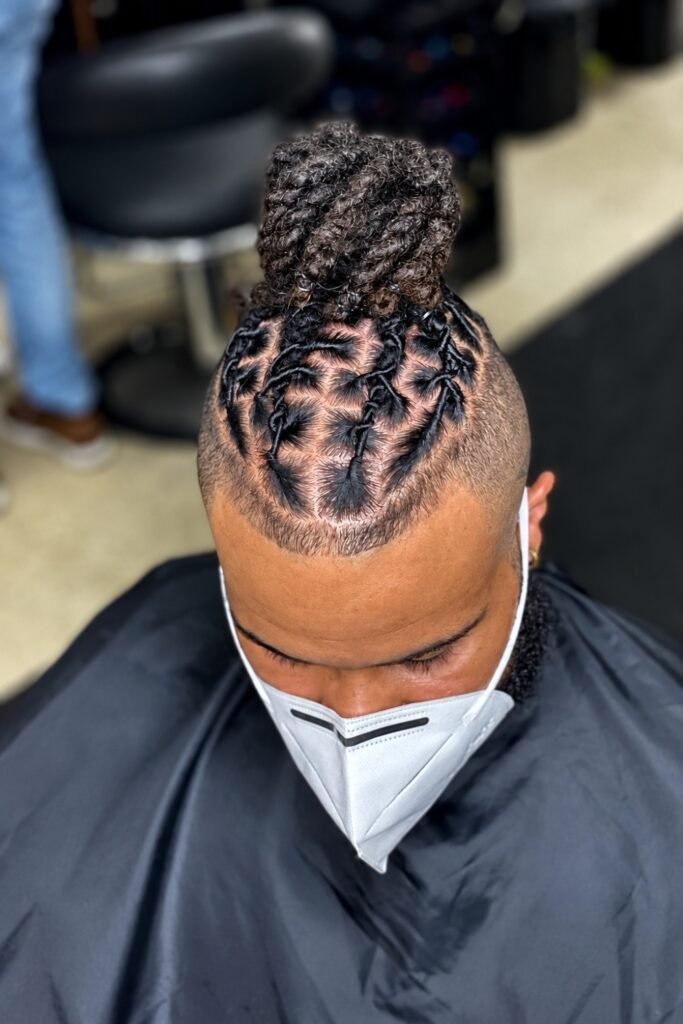
Save7. Barrel-Twist Bun
Group locs into barrel twists first, then fold or gather those sections into a bun. The result has thicker rope-like texture instead of dozens of individual loc lines.
Use this when you want that structured texture gathered up instead of hanging down. Our barrel twist dreads for men show the twist worn loose.
Best for: medium-to-long locs, neat styling, men who like defined sections.
 Save
Save8. Two-Strand Twist Loc Bun
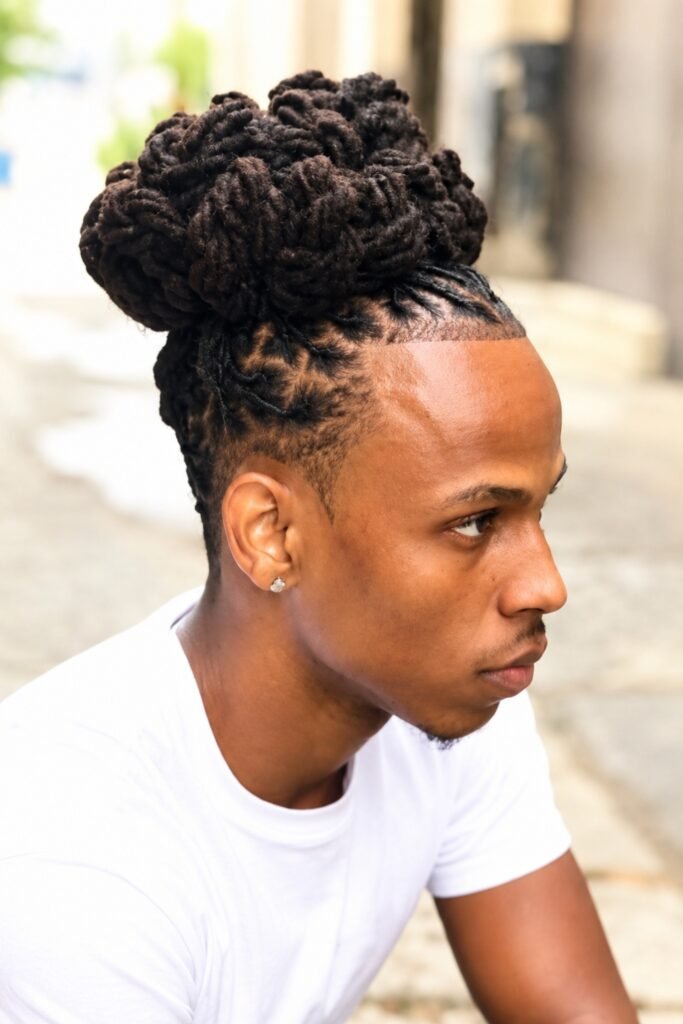
Pair mature locs into two-strand twists before wrapping them into a bun. The rope pattern remains visible around the coil and gives the bun a more sculpted surface.
Do not twist so tightly that the scalp feels pulled before the bun is even secured. Texture should not require discomfort.
Best for: medium/long locs, retwist appointments, textured formal looks.
 Save
Save9. Undercut Dread Bun
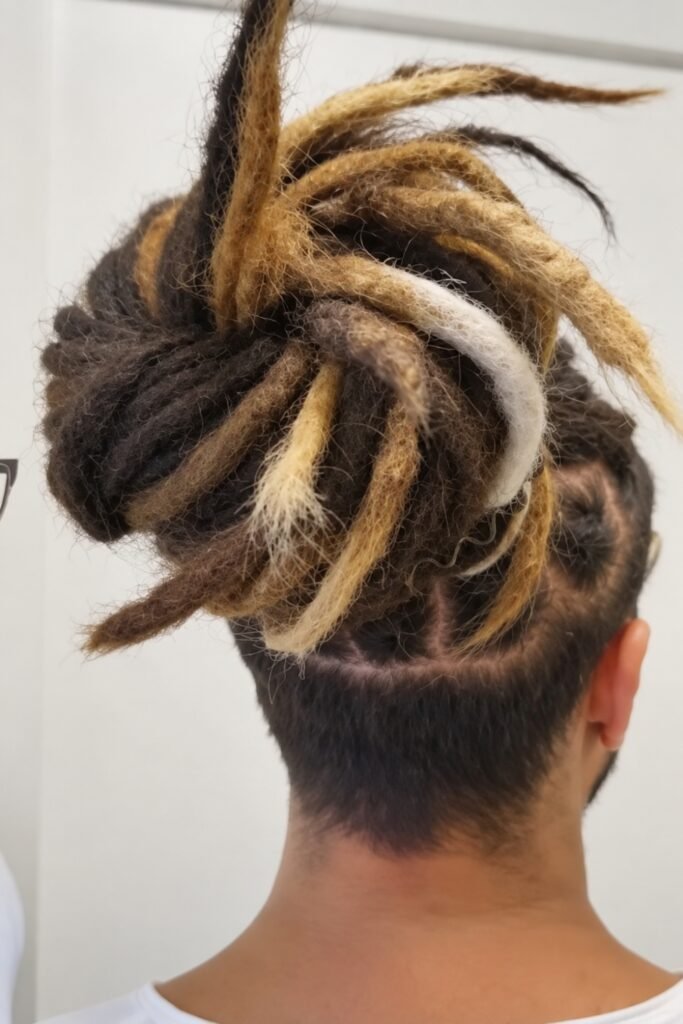
Keep long locs through the top while cutting the sides and lower back distinctly shorter. Once tied up, the undercut is fully exposed and becomes part of the design.
The grow-out is the tradeoff. A hidden undercut under loose locs is forgiving; a bun puts every stage of regrowth on display.
Best for: high contrast, hot weather, men comfortable with barber upkeep.
 Save
Save10. Dread Top Knot
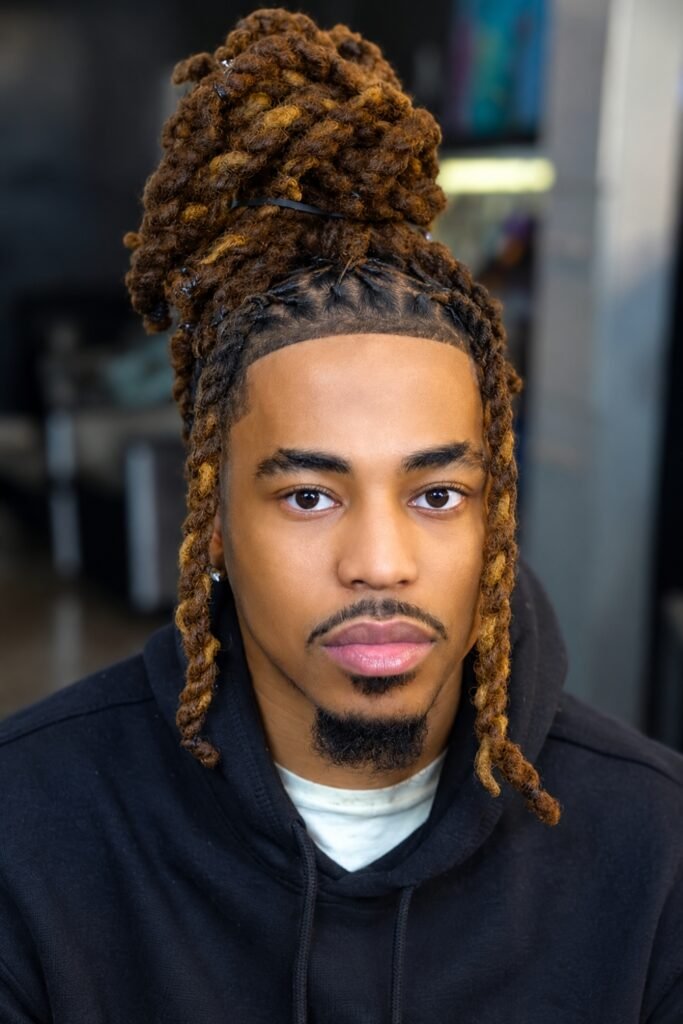
Instead of wrapping the locs into a wide bun, create a tighter knot high on the crown. The smaller footprint gives the style a sharper vertical profile.
This works especially well when the locs are long enough to wrap but not so heavy that the knot pulls uncomfortably at the front hairline.
Best for: medium-to-long locs, minimalist streetwear, compact styling.
 Save
Save11. Wrapped Loc Bun
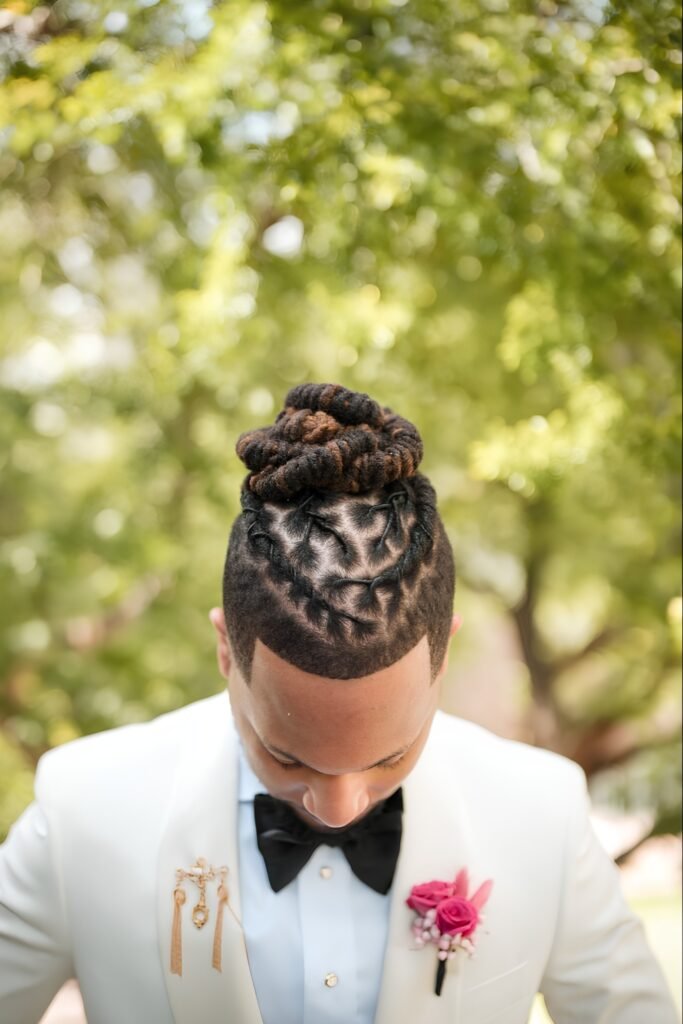
Build the bun normally, then reserve one or several locs to circle the base. Tuck or secure the ends discreetly so the locs themselves become the finish.
The wrap is a small detail, but it makes a practical bun look intentionally styled. Keep the wrapping locs relaxed enough that they are not sawing into the base.
Best for: formal events, clean finishes, long locs.
 Save
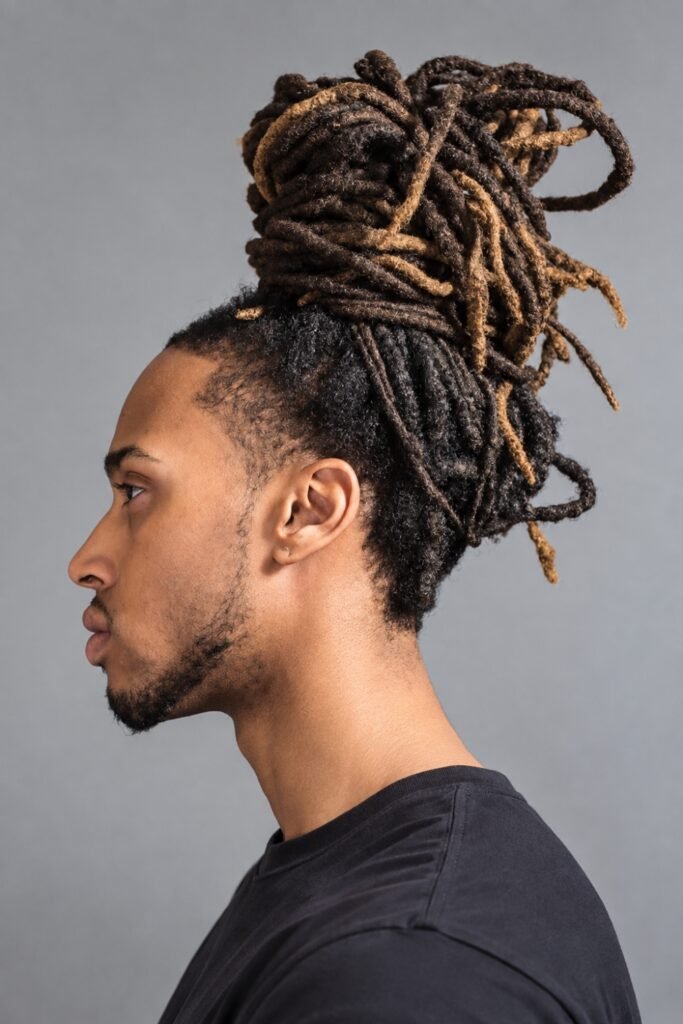
Save12. Freeform Loc Bun
Gather freeform locs without trying to force every section into identical thickness or direction. A loose bun lets the organic texture remain visible around the crown and perimeter.
The point is not to make freeform locs imitate a freshly retwisted set. Control the shape while leaving the character intact.
Best for: freeform locs, creative style, low-manipulation routines.
 Save
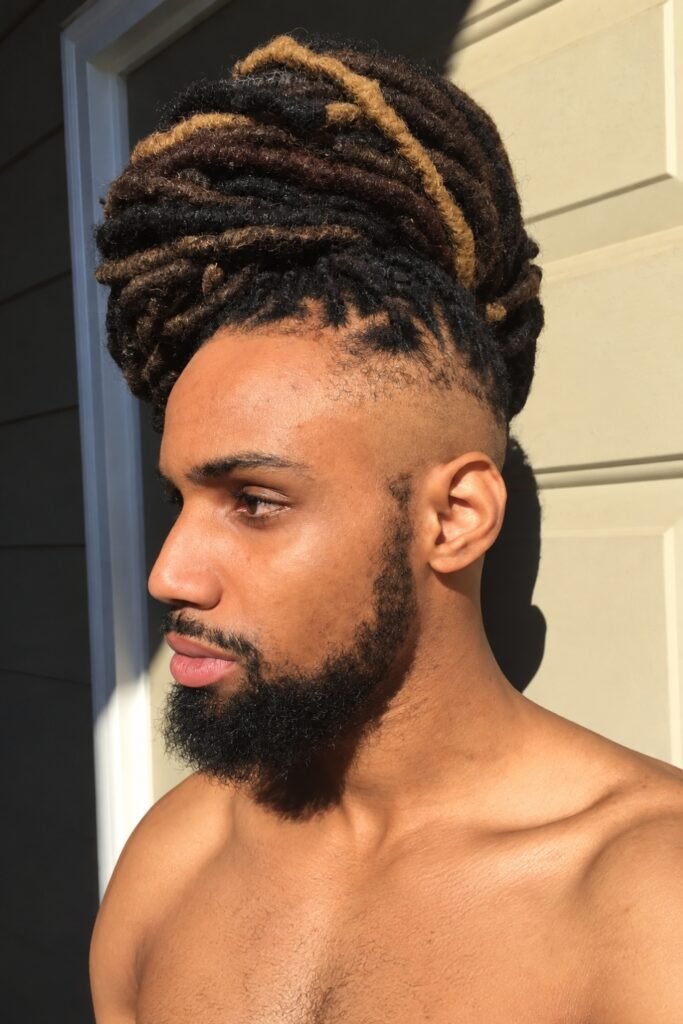
Save13. Blonde-Tipped Dread Bun
Locs with blonde, honey, copper, or lighter tips become more dimensional when wrapped into a bun because the color appears in bands through the coil.
You do not need every loc lightened. Partial color can create more depth and reduces the visual effect of one solid dyed mass.
Best for: colored locs, statement looks, long buns.
 Save
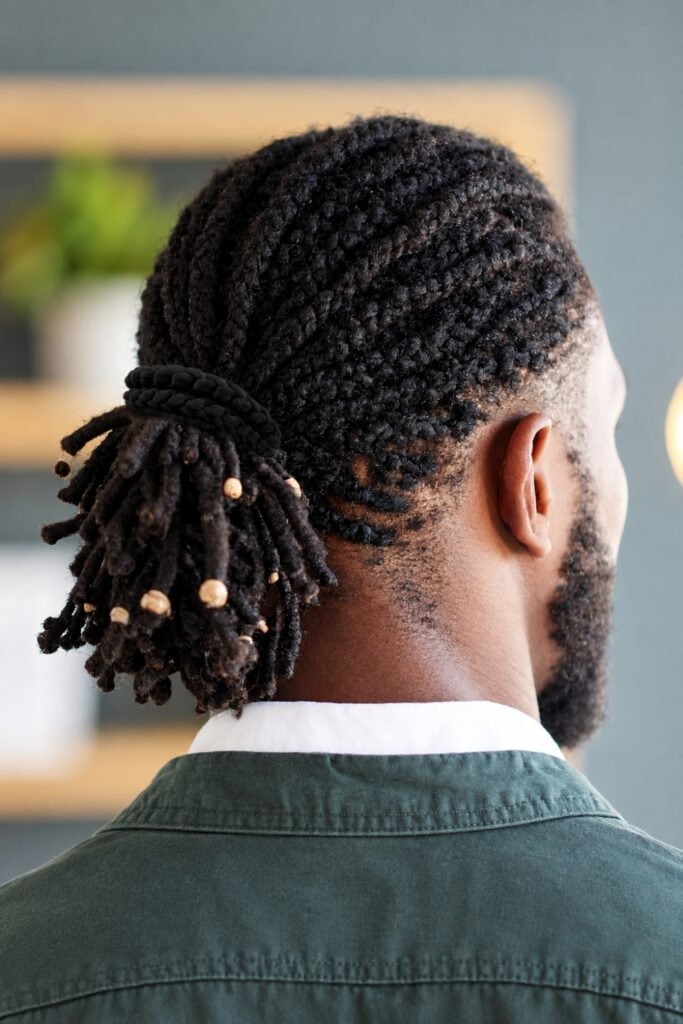
Save14. Loc Bun With Beads or Cuffs
Add a small number of cuffs, beads, or loc rings before tying the bun so a few metallic details remain visible around the outside.
Accessories add weight, so restraint is practical as well as visual. One or two deliberate placements can read better than decorating every loc.
Best for: festivals, events, personalized styling.
 Save
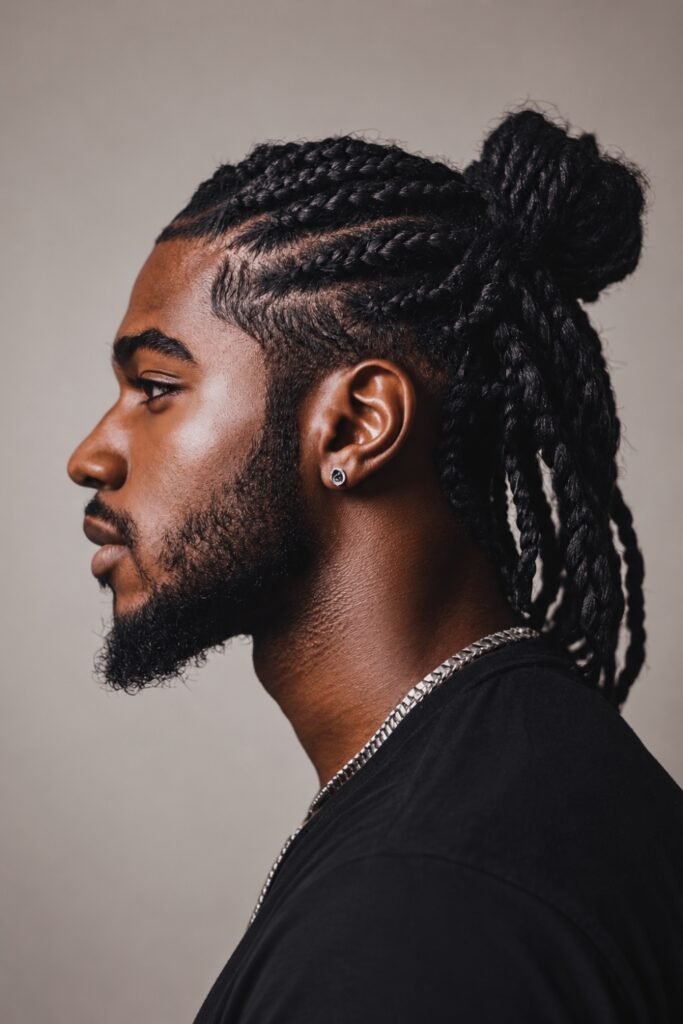
Save15. Braided Loc Bun
Braid groups of locs into thicker plaits and then wrap those braids into a bun. The larger braided sections create a different surface from barrel twists or individual locs.
Make sure the braids bend comfortably before forcing them into a tight coil. Mature locs can be substantial, and the bun needs enough room for that thickness.
Best for: long locs, thick density, formal or creative styling.
 Save
Save16. Loose Messy Dread Bun
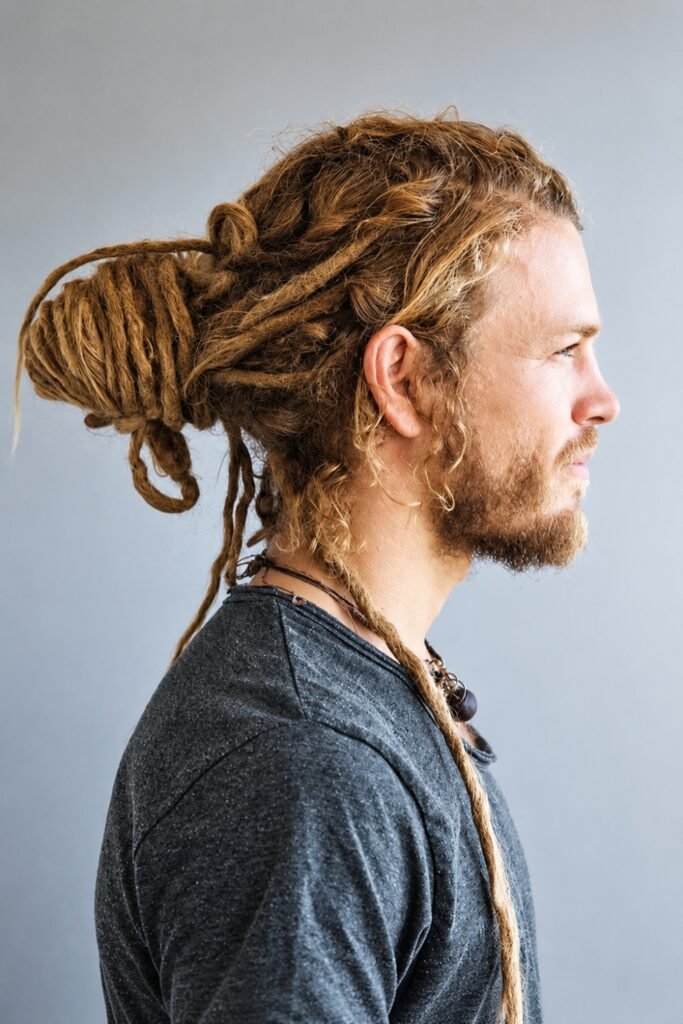
Gather the locs into a relaxed bun and deliberately leave several ends or shorter locs outside. The result feels less barbered and more spontaneous than a wrapped or braided bun.
Messy does not mean unstable. Anchor the main weight securely first, then decide which pieces can remain loose.
Best for: casual wear, long locs, softer silhouettes.
 Save
Save17. Double Dread Buns
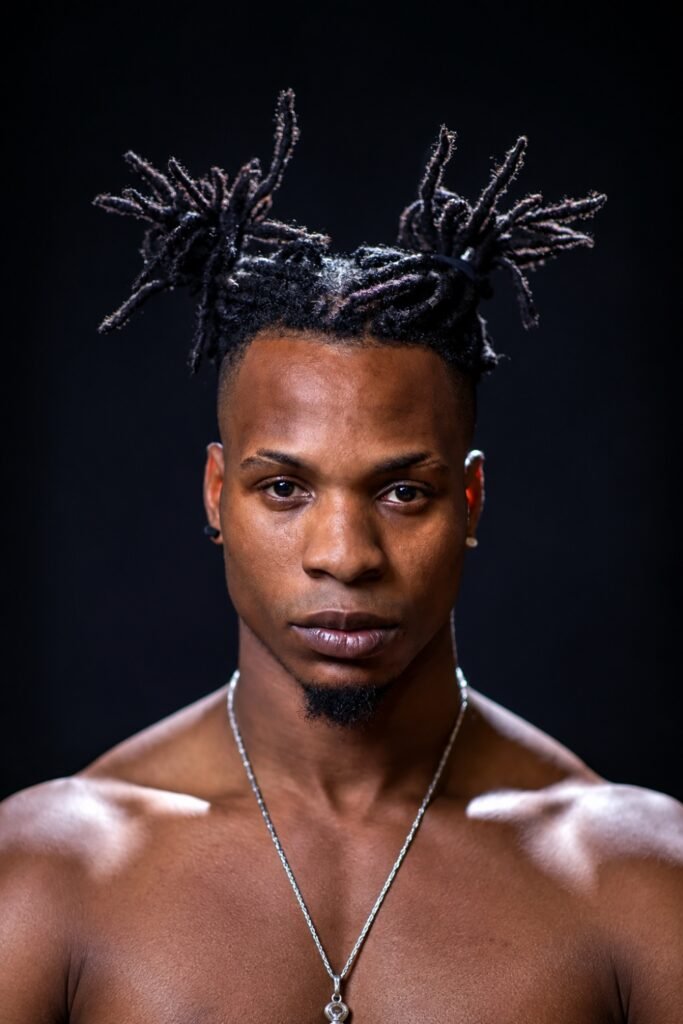
Divide the locs into two balanced sections and create two compact buns. Position them high for a bolder look or slightly farther back for a less playful silhouette.
This is the most visually distinctive option in the list, so keep the parting clean and the two buns reasonably balanced in size.
Best for: festivals, creative styling, men who want a statement look.
 Save
SaveQuick Guide: Choose Your Dread Bun
| Goal | Strong choices | What changes the look | Watch for |
| Simple everyday control | High bun, low bun, wrapped bun | Bun height and finish | Excessive daily tension |
| Show some length | Half-up bun | Loose lower locs | Top section too heavy |
| Sharper barbered look | Taper bun, skin-fade bun, undercut bun | Side treatment | Frequent shape-ups |
| More root detail | Cornrow-root, barrel-twist bun | Parting and retwist pattern | Over-tight roots |
| More texture | Two-strand, braided, freeform bun | How locs are grouped | Forcing thick sections |
| Statement style | Colored, accessorized, double buns | Color, jewelry, silhouette | Too much added weight |
How Long Do Locs Need to Be for a Bun?
The locs need enough usable length to gather securely without forcing short sections under heavy tension. A small top knot can work sooner than a full round bun, while a low or wrapped bun usually needs more length.
Thickness matters too. Very thick locs occupy more space and may need extra length before they can wrap comfortably. If several locs barely reach the tie, a half-up style may be the better stage of the grow-out.
High Bun vs. Low Bun vs. Half-Up
A high bun moves weight upward and makes fades or scalp patterns more visible. A low bun looks quieter and places the mass near the nape. Half-up styling distributes the locs between a bun and loose length.
Shorter hair that still ties back? See our man bun hairstyles.
There is no universally best placement. Choose based on loc length, weight, scalp comfort, the haircut underneath, and how long you plan to wear the style.
Do Dread Buns Damage Locs?
A bun itself is not automatically damaging, but repeated high tension, tight elastics, heavy accessories, or pulling the same roots in the same direction can create unnecessary stress. Pain, persistent tenderness, or obvious pulling at the hairline is not a styling goal.
Use a secure but comfortable tie, avoid tying wet locs tightly for long periods, and vary placement when possible. If the scalp or roots are already irritated or thinning, ask a qualified loctician or dermatologist for individualized guidance.
Frequently Asked Questions
What is a dread bun hairstyle for men?
A dread bun gathers medium or long locs into a secured coil, knot, or wrapped shape. It can sit high, low, half-up, or be combined with fades, braids, twists, undercuts, or accessories.
What is the best dread bun for long locs?
Classic high buns, low nape buns, wrapped buns, braided buns, and half-up styles all work well. The best choice depends on loc thickness, weight, scalp comfort, and the haircut underneath.
Can men wear a dread bun with a fade?
Yes. A taper fade gives a softer transition, while a skin fade creates stronger contrast. Remember that close fades require more barber upkeep if you want them consistently crisp.
Can freeform locs go into a bun?
Yes. Freeform locs can be gathered loosely while preserving their irregular thickness and organic texture. Avoid forcing them into an overly uniform shape if that is not how the locs naturally sit.
How do I keep a dread bun from pulling my hairline?
Avoid excessive tension, use a comfortable tie, do not force short locs into the bun, and vary bun placement. Pain or persistent root tenderness means the style is too tight.
Can I make a dread bun with medium-length locs?
Often, yes. A small high knot or half-up bun generally needs less length than a large wrapped bun. Loc thickness and how much length reaches the tie also matter.
What is the difference between a dread bun and a dread top knot?
A dread bun is usually broader and wrapped into a fuller coil. A top knot is typically smaller, tighter, and positioned higher on the crown.
Can I add beads or cuffs to a loc bun?
Yes. Use a restrained number of loc-safe accessories and consider their weight. Heavy jewelry combined with a tight bun can increase pulling on individual locs and roots.
The Tension Test
After tying the bun, move your eyebrows, turn your head, and gently press around the hairline and crown. Secure is fine. Sharp pulling, headache-like pressure, or persistent tenderness means the bun needs to be loosened.
A strong dread bun should control the length without making the roots pay for it. Choose the height and structure you like, then leave enough ease for the locs and scalp to move comfortably.