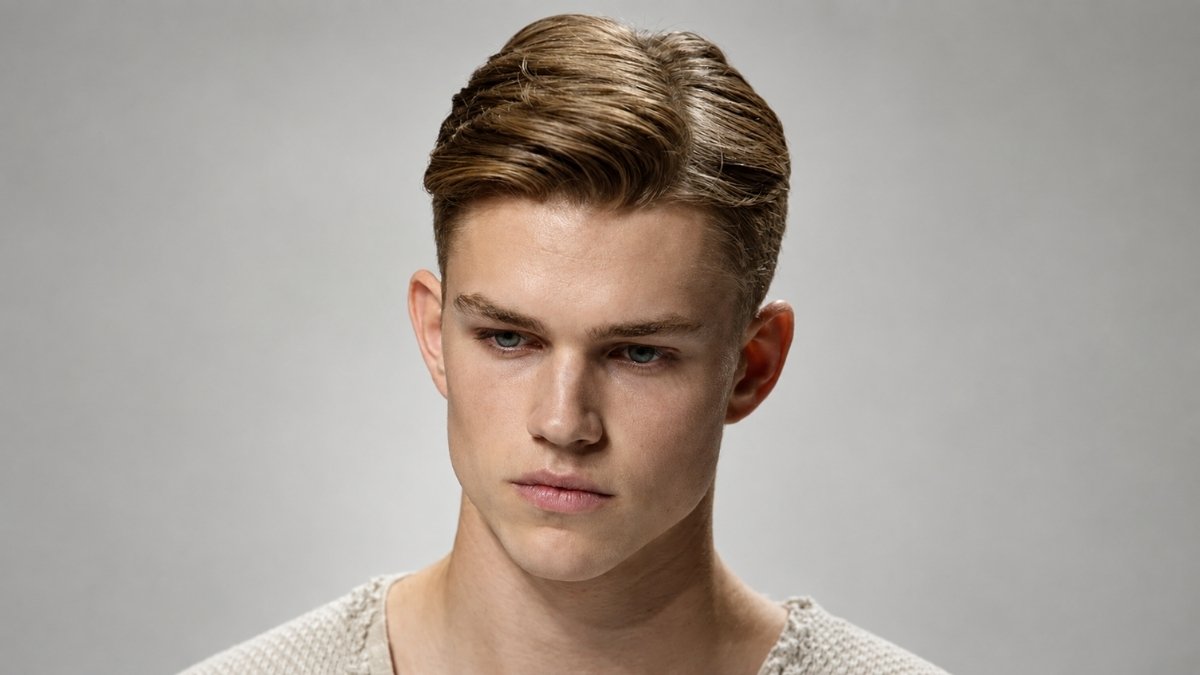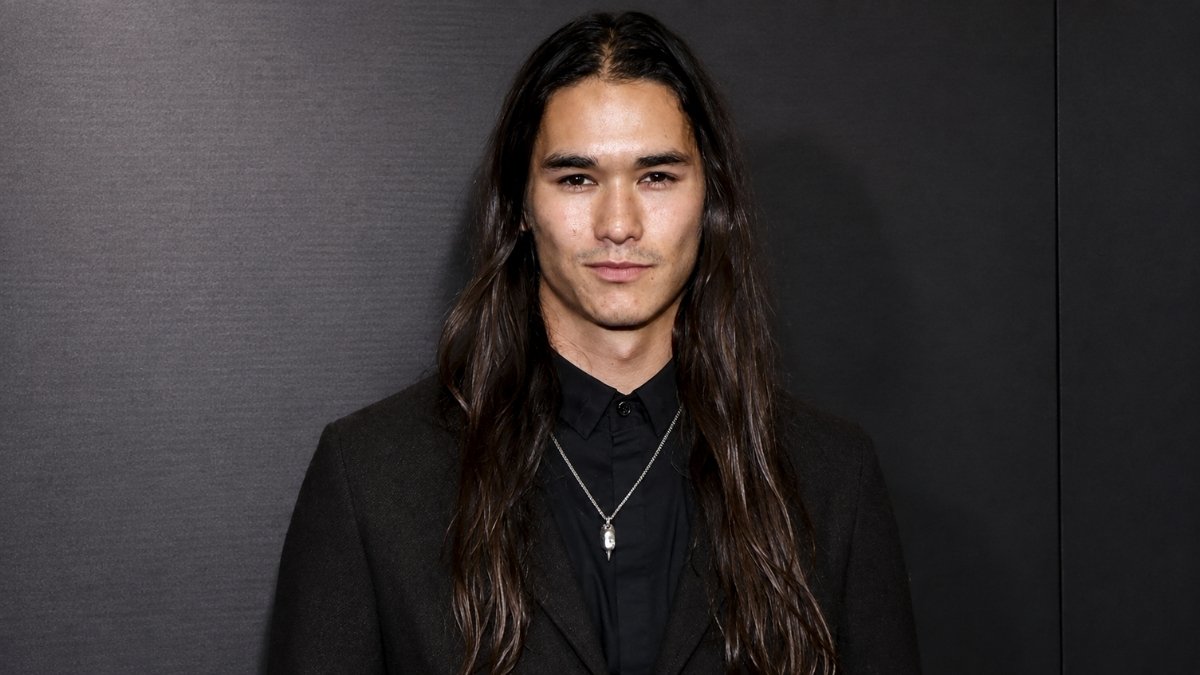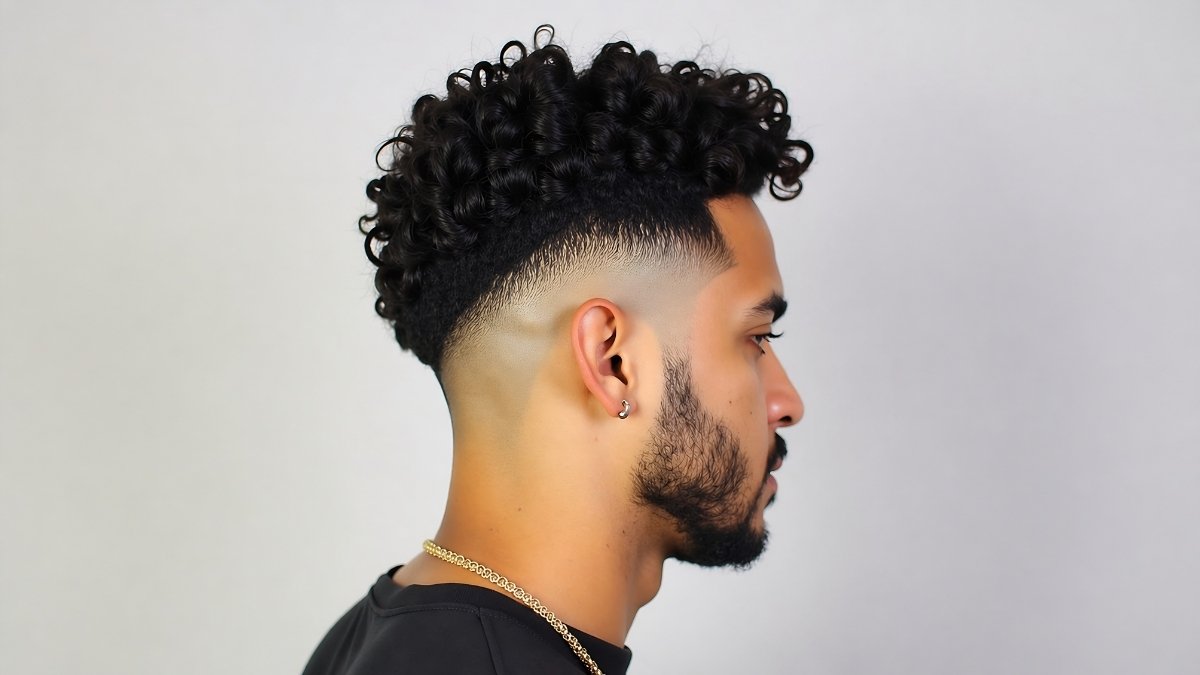

Nearly every article on this subject uses fine and thin interchangeably, and they are not the same thing. Getting them confused is why so much of the advice does not work.
Fine describes the thickness of each individual strand. Thin describes density, meaning how many strands you have on your scalp. You do not necessarily have both. Plenty of men have fine hair and a great deal of it. Others have low density with strands that are medium or thick.
The problems that follow are different. Fine hair goes limp and flat. Low-density hair shows scalp. A cut that solves one will frequently make the other worse, which is why men leave the barber with something that looked right in the photograph and wrong on them.
Worth saying once, plainly, before anything else: by the age of thirty-five, roughly two-thirds of men experience some degree of noticeable hair loss. It is common enough to be unremarkable, and this article is about getting a good haircut rather than about doing anything else.
Two Tests
Both take seconds and settle which advice applies to you.
For fineness, take a single strand and roll it between your thumb and forefinger. If you can barely feel it, your hair is fine. If you can feel it slightly, it is medium. If you can feel it easily, it is thick.
For density, look at your scalp in good light with dry hair. If you can see portions of scalp through the hair across the whole head, your density is low. If your scalp is only visible at the parting, it is not.
You can have both, and if you do, the low-density advice takes priority.
The Summer Layer
Two things happen to fine and thin hair specifically in summer.
Humidity makes it flat. Where curly hair absorbs moisture and expands, straight fine hair absorbs it and collapses, because the water weight pulls down whatever product was holding the style. That is the opposite of the curly problem and it needs the opposite solution.
Sweat separates it. This is the summer problem nobody names. Sweat clumps fine hair into distinct strands, and separated strands reveal scalp that was covered when the hair sat as a mass. A hairstyle that looked fine at nine in the morning shows scalp by two in the afternoon, and it is sweat rather than any change in your hair.
Both point the same way: shorter, drier, and with as little heavy product as possible.
If Your Hair Is Fine but Dense
The problem here is limpness rather than coverage. You have plenty of hair; it just will not hold anything.
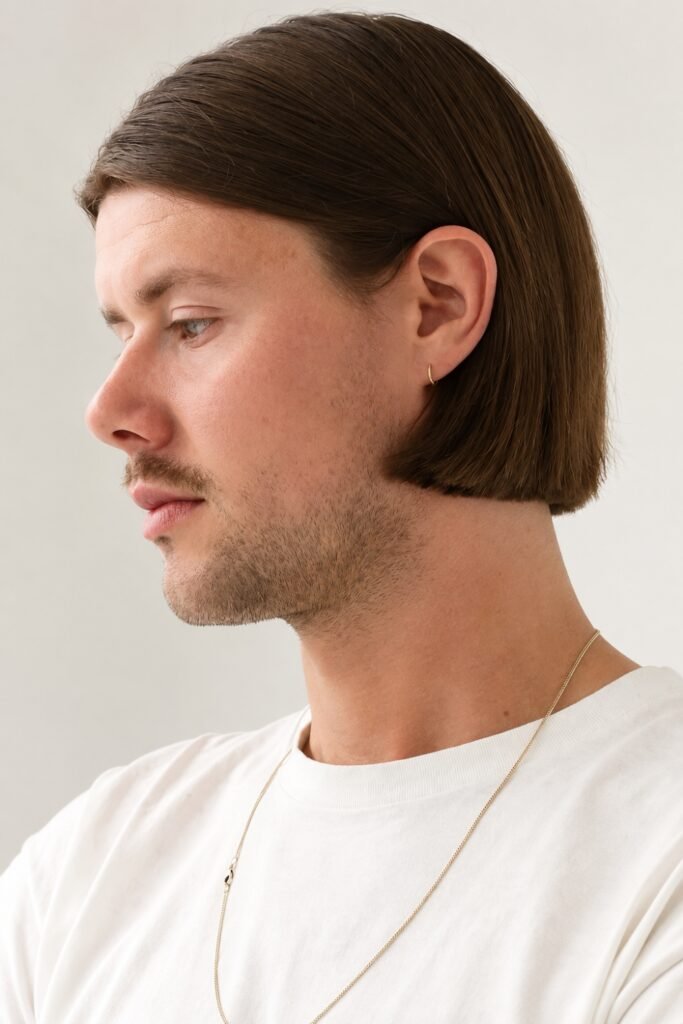
1. The Blunt Cut
Ends cut straight across rather than tapered or point-cut, creating a solid weight line.
Blunt ends read as denser than tapered ones because the hair terminates all at once rather than thinning out. It is the single most effective structural trick for fine hair.
Ask for blunt ends specifically. Many barbers point-cut by default, which softens the line and costs you the effect.
 Save
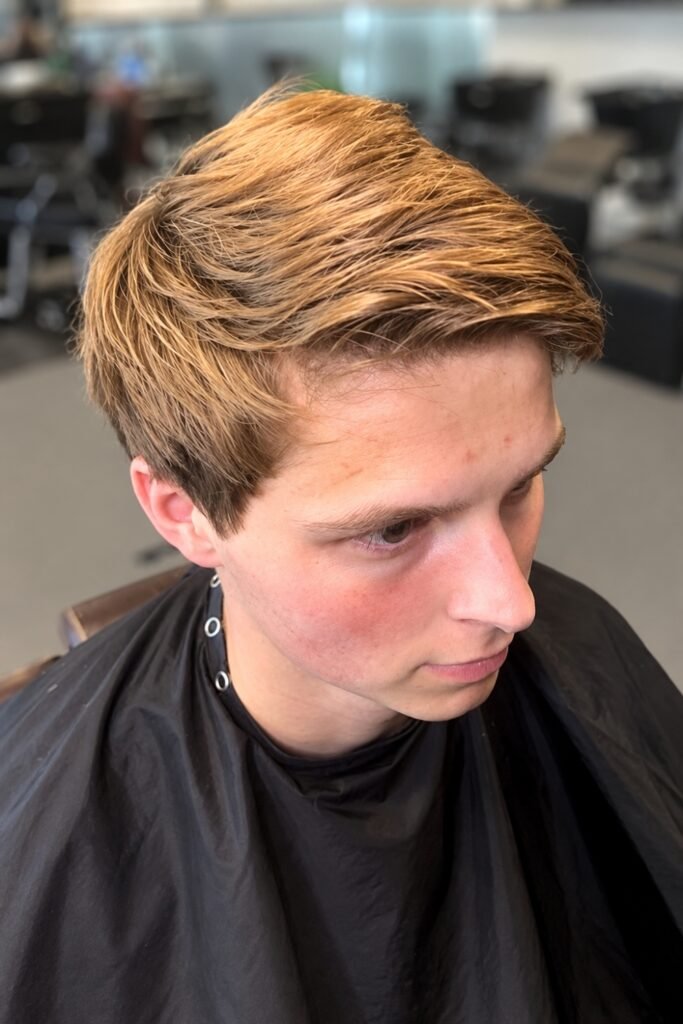
Save2. Texture Without Over-Layering
Light texturising through the top only, leaving the perimeter intact.
Here is the warning that matters: too many layers actually make hair appear thinner. Layering removes weight, and fine hair does not have weight to spare.
Some texture on top creates separation and movement. Layering throughout removes the density you are trying to display.
 Save
Save3. Short With a Matte Finish
A short cut styled with a matte clay or powder rather than anything with shine.
Shine reveals scalp; matte conceals it. That is a genuinely underused principle and it costs nothing to apply, since it is a product choice rather than a cut.
Avoid heavy wax, particularly at the roots, which is where weight does the most damage to fine hair.
 Save
Save4. Mid-Length With Movement
Enough length for the hair to move, cut to fall rather than to be styled into a shape.
Fine hair is not obliged to be short. If yours is dense enough, mid-length can work well, and movement reads as volume in a way that a static short cut does not.
The test is whether it holds any shape at the end of a hot day. If it does not, go shorter.
 Save
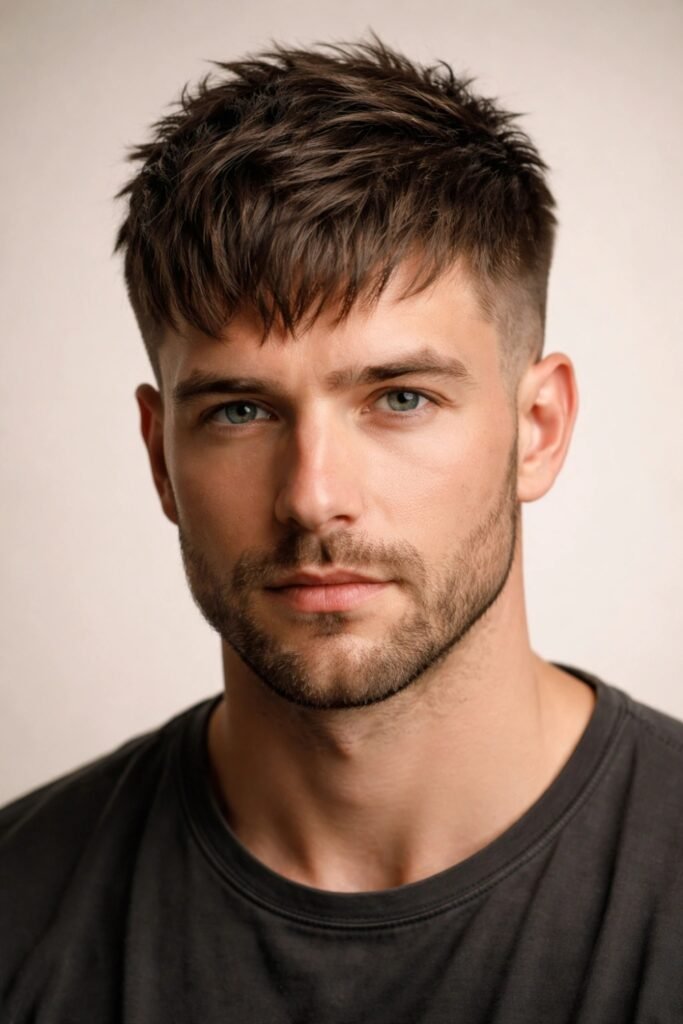
Save5. The Forward Fringe
Hair worn forward across the forehead rather than swept back or parted.
Forward-worn hair sits as a mass rather than separating, which means less scalp visible at the front. It also removes the parting, which is where scalp shows first.
Gel or a light clay at the roots adds height to the fringe if you want lift rather than flatness.
 Save
SaveIf Your Density Is Low
The problem here is scalp visibility, and the strategy is reducing contrast rather than adding volume.
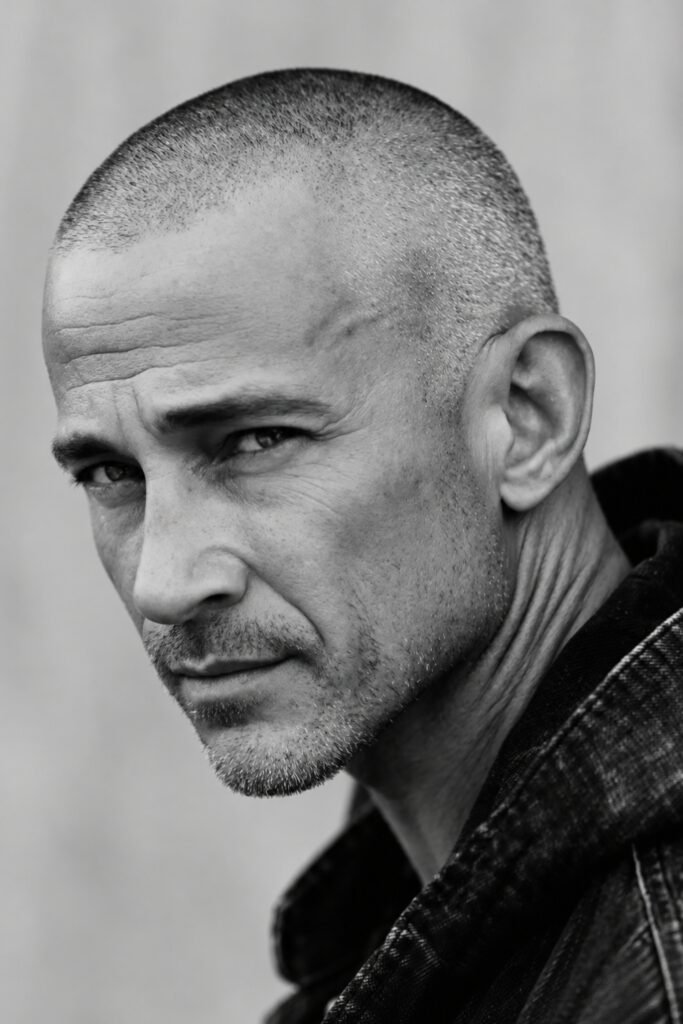
6. Very Short All Over
Clipper length throughout, short enough that the contrast between hair and scalp largely disappears.
The logic is sound and worth understanding: when hair is short and skin is partly visible anyway, thinning patches do not stand out the way they do under longer hair. You are removing the comparison rather than hiding anything.
It also handles a receding hairline well by reducing the contrast between forehead and hair.
 Save
Save7. The Caesar
Short and uniform with a straight fringe brushed forward across the forehead.
Specifically good for thinning at the crown while the front is intact. The forward fringe conceals a receding hairline, and a little gel adds height to the fringe so it does not sit flat.
Works on straight, wavy and curly hair, and it can be worn shorter or longer depending on what you have to work with.
 Save
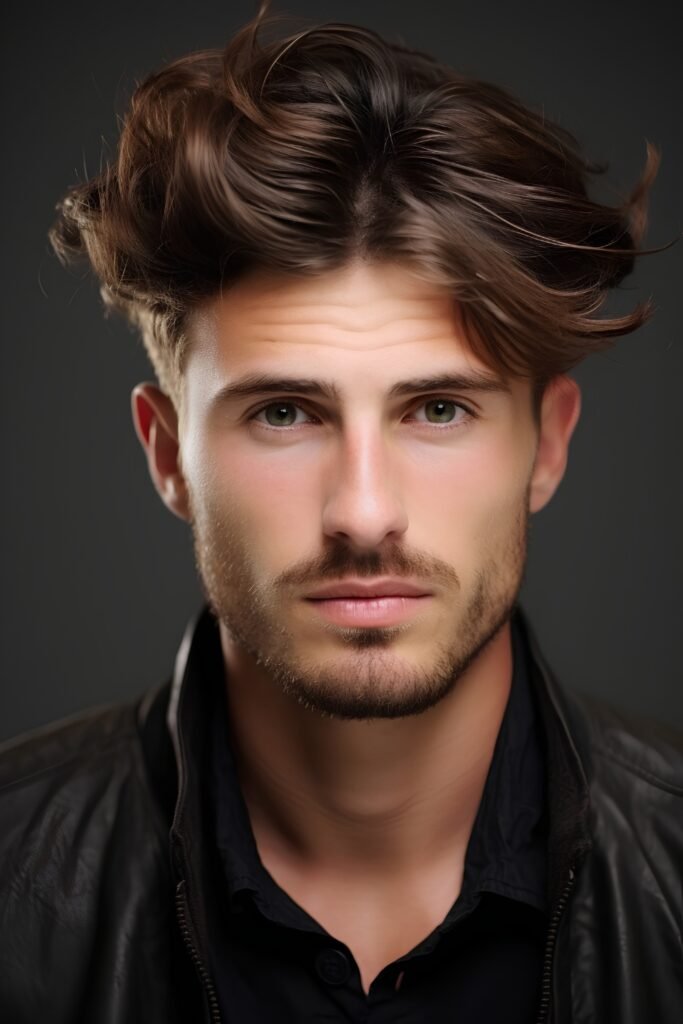
Save8. The Sweep-Over
A deep side part with the hair swept across, deliberately tousled rather than smoothed down.
Not a comb-over. The distinction is that a sweep-over looks lived-in, as though you ran your hands through it, rather than arranged. The deep part is what conceals a receding hairline.
Flipping your parting to the opposite side from your usual one is a free trick that makes hair look thicker regardless of the cut, because the hair lifts rather than lying in its trained direction.
 Save
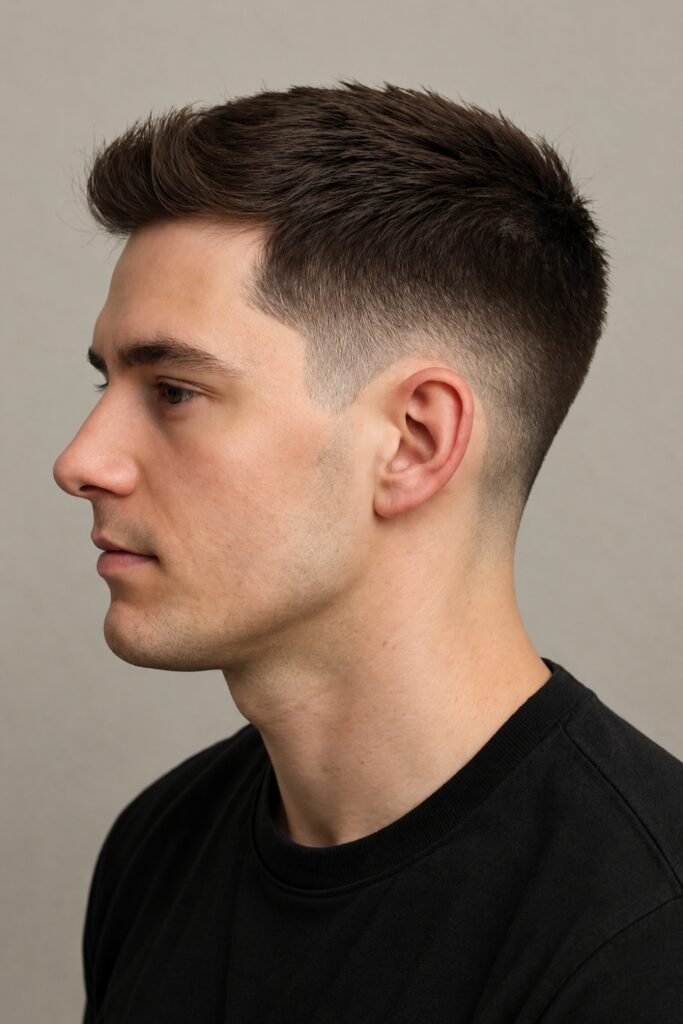
Save9. Short With a Soft Taper
Short throughout with a gradual taper rather than a hard fade line.
Hard lines create contrast, and contrast is what draws the eye to where density changes. A soft taper blurs the transition instead.
This is the more forgiving choice if your thinning is diffuse rather than patterned.
 Save
Save10. Longer as a Counterbalance
Deliberate length kept as a counterweight to thinning, rather than cropping close.
Worth including because the assumption runs the other way. Close-cropped works well for many men, but it is not the only answer, and a longer length can offer a counterbalance that makes hair look fuller.
Whether this works depends entirely on where your density is. Discuss it with someone who can see your head rather than deciding from an article.
 Save
SaveBy Where the Thinning Is
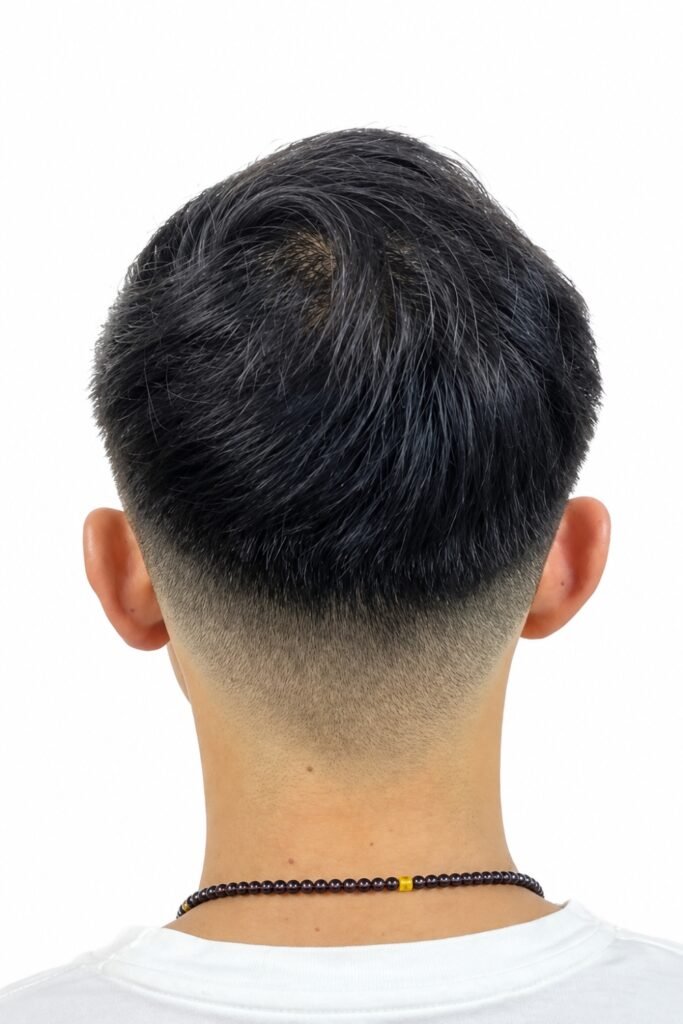
11. Crown Thinning
Density loss at the back with the hairline intact.
The Caesar and forward-worn styles suit this best, since they bring attention and mass toward the front. Avoid anything that flattens the crown, and avoid styling the top backwards, which exposes the area directly.
You cannot see your own crown, which is worth remembering when judging how noticeable it is.
 Save
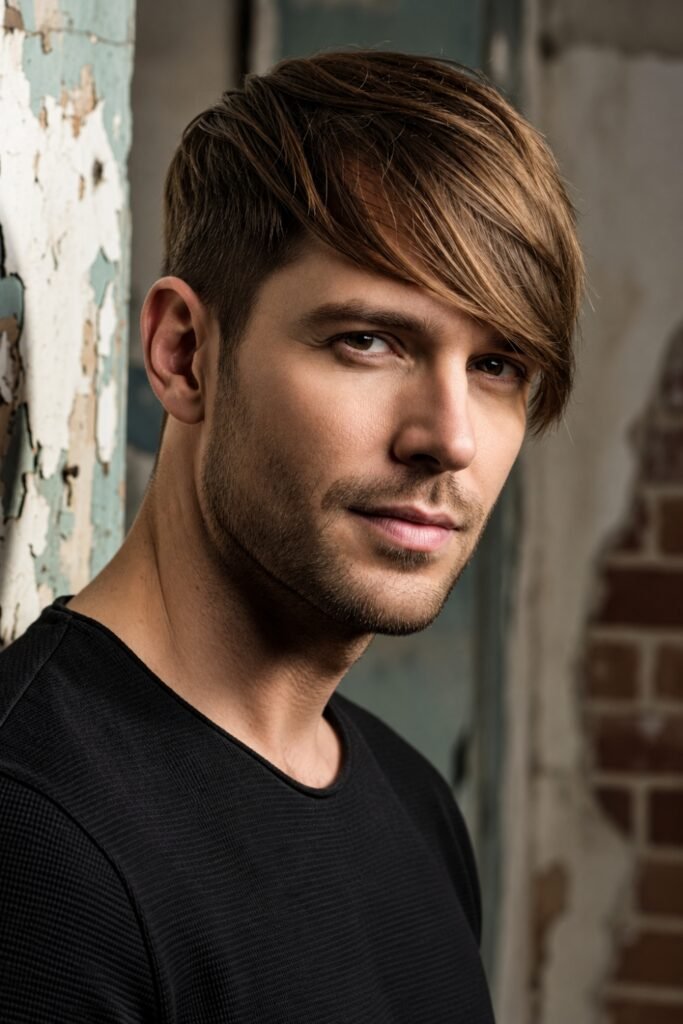
Save12. Temples and Hairline
Recession at the front corners with the rest intact.
A forward fringe or a deep side part both address this directly, and shorter overall lengths reduce the contrast between forehead and hairline.
Avoid slicking back, which puts the hairline on display, and avoid a hard line-up at the temples, which draws a border around exactly the area in question.
 Save
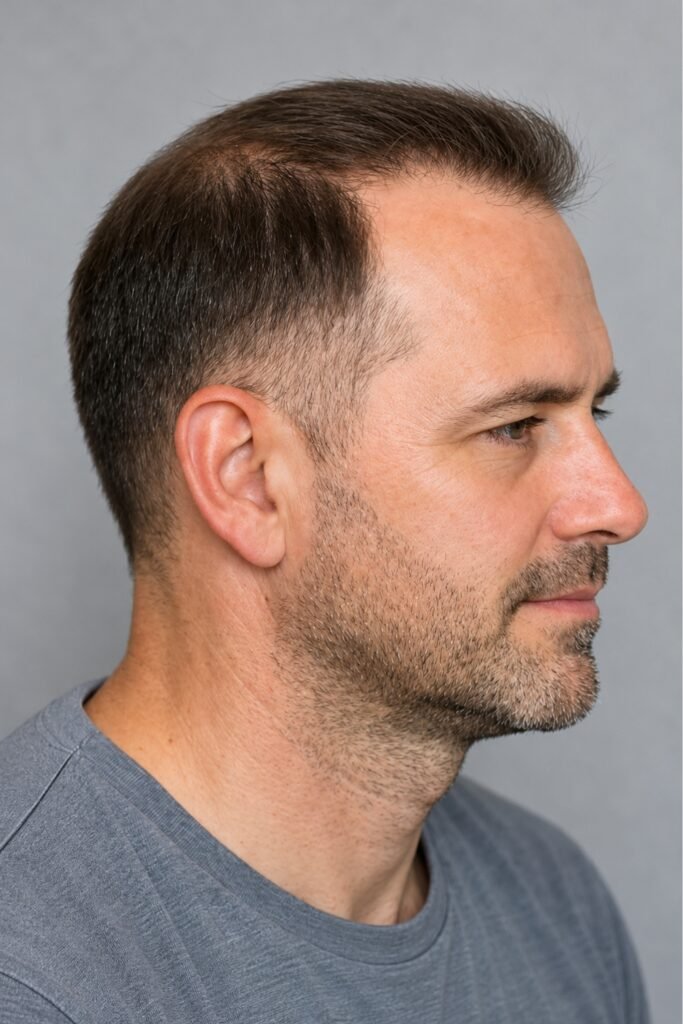
Save13. Diffuse Thinning
Density reduced fairly evenly across the whole head rather than in a pattern.
Short, even and softly tapered is the practical answer, since there is no dense area to redistribute toward.
This is also the pattern where matte product and blunt ends do the most work, because you are managing appearance across the whole head rather than in one region.
 Save
SaveThree Summer Specifics
14. The Sweat-Resistant Cut
Short enough that sweat cannot separate it into visible strands.
The direct answer to the summer problem described at the top. Longer fine hair separates as it dampens; short fine hair has less to separate.
If your hair looks noticeably thinner by mid-afternoon in summer and fine in winter, this is what is happening, and length is the variable.
 Save
Save15. Cut With Scalp Protection in Mind
Any of the above, chosen with the knowledge that your scalp is more exposed than most.
This matters practically. Thin hair and short cuts both mean more UV reaching the scalp, and the burn lands on the crown where you cannot see it developing.
Sunscreen on the scalp, or a hat, and both if you are outside for any length of time. A visible parting is a direct line to sunburn.
 Save
Save16. The Hat and Swim Cut
Short, quick-drying, and able to be reset with damp hands.
Hats flatten fine hair completely and it does not recover the way thicker hair does. A cut that relies on styling will not survive a cap; a cut that relies on shape will.
For swimming, short is simply easier. Wet fine hair clings to the scalp and reveals every bit of it, which is worth knowing before choosing a length for a beach holiday.
 Save
SaveProduct and Washing
Wash less, not more. Fine hair is prone to oil, and washing daily makes the scalp produce more, which leaves hair greasy and flat. Dry shampoo through the week absorbs oil and adds grip at the roots.
Go easy on conditioner. Too much over-moisturises fine hair and makes it lie flat. Condition the ends, not the roots.
Matte over shine. Clay, paste or powder rather than pomade or anything wet-look. Shine reveals scalp.
Nothing heavy at the roots. Thick wax at the root is the fastest way to flatten fine hair. If you use product there at all, use a powder.
Lift at the roots while damp. A round brush with low heat lifts the root, and a thermal spray protects while you do it. That root lift is most of where apparent volume comes from.
Volumising shampoos work by swelling the cuticle, which temporarily increases the apparent diameter of each strand. That is a real effect rather than marketing, and it is temporary rather than cumulative.
Talking to Your Barber
Say which problem you have. Fine but dense, or low density, or both. It changes the cut entirely and most barbers will not ask.
Ask for blunt ends rather than heavily point-cut ones if your hair is fine, and ask for a soft taper rather than a hard fade if your density is low.
Say no to aggressive thinning shears. They remove weight, which is the last thing fine hair needs, and some barbers reach for them by habit on any thick-looking head.
And if you are noticing change rather than working with something lifelong, say so. A barber who knows will cut for where your hair is rather than where it was, and that is a considerably better outcome than being cut for a head you no longer have.
Common Questions
What is the difference between fine hair and thin hair?
Fine describes the diameter of each individual strand; thin describes density, meaning how many strands you have. You can have fine hair and lots of it, or low density with thick strands. Fine hair goes limp; low-density hair shows scalp. They need different cuts, which is why so much general advice fails.
Does short hair look thicker?
Often, yes, particularly if your density is low. When hair is short and some scalp is visible anyway, thinning areas stand out less than they do under longer hair, because you have removed the contrast. But it is not the only answer, and a longer length can sometimes counterbalance thinning and read as fuller.
Why does my hair look thinner in summer?
Two reasons. Humidity adds water weight to fine hair and flattens it, since it absorbs moisture and collapses rather than expanding the way curly hair does. And sweat separates fine hair into distinct strands, which reveals scalp that was covered when the hair sat as a mass. Length is the main variable you control.
Do layers help thin hair?
In moderation, and too many actively hurt. Layering removes weight, and fine hair has none to spare, so heavy layering makes hair appear thinner. Light texture on top with the perimeter left intact gives movement without sacrificing the density you have.
Do I need to protect my scalp?
Yes, more than most people. Thin hair and short cuts both let more UV through, and the burn lands on the crown where you cannot see it coming. Sunscreen on the scalp or a hat, and be particularly careful along any visible parting.
Final Thoughts
Work out which problem you have before you choose a cut, because fine and thin are different and the advice for one frequently makes the other worse.
Then keep it shorter through summer, keep the product matte and light, and put something on your scalp before you go outside. That combination does more than any volumising product on a shelf.