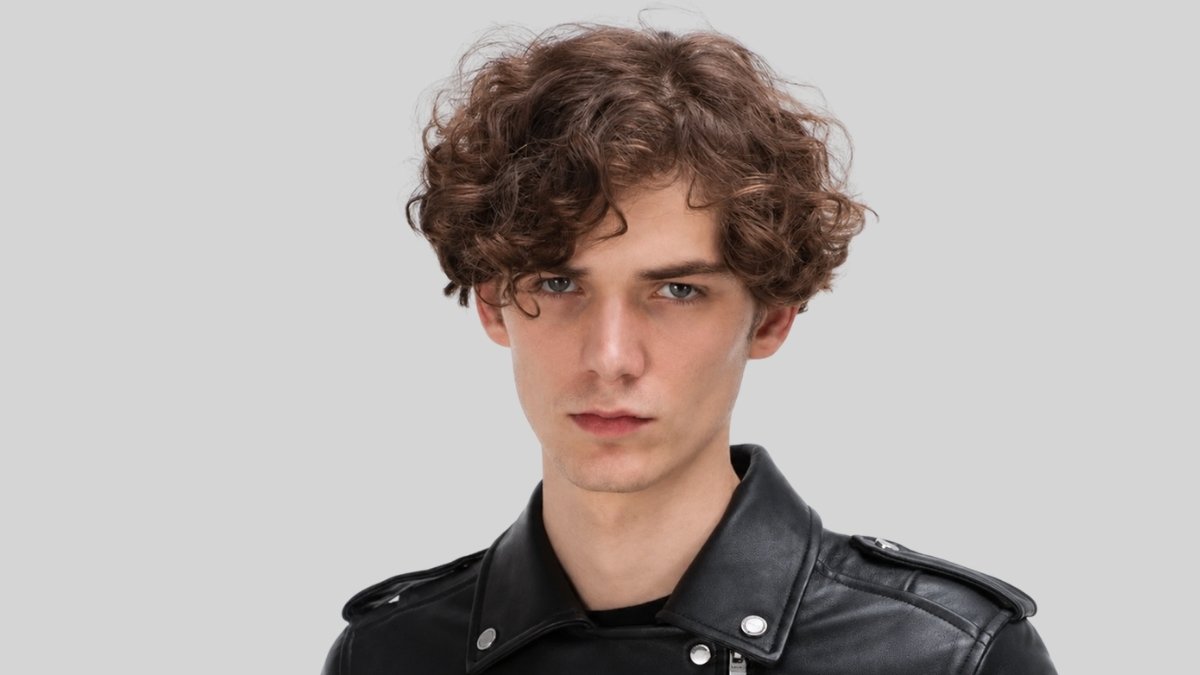
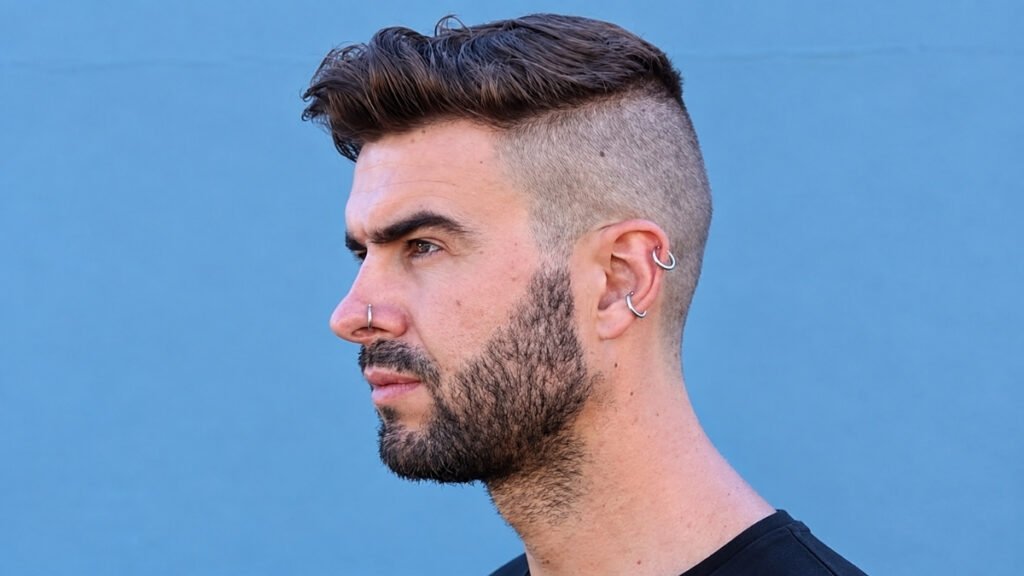
Men’s ear piercing is less about choosing one correct earring and more about composition. Studs, huggies, hoops and bolder pieces all work, and small coordinated stacks often look cleaner than one oversized stud.
The important distinction is placement versus jewelry. A helix, conch, tragus, rook, or lobe describes where the piercing sits. A stud, hoop, huggie, barbell, or chain describes what you wear in it. Get the placement right first; jewelry can change after healing.
These 15 men’s ear piercing ideas run from a single lobe stud to a fully curated ear, with notes on healing and jewelry along the way.
A shorter haircut shows off ear jewelry best, so browse our fade haircuts for men and textured haircuts for men before your appointment.
15 Men’s Ear Piercing Ideas
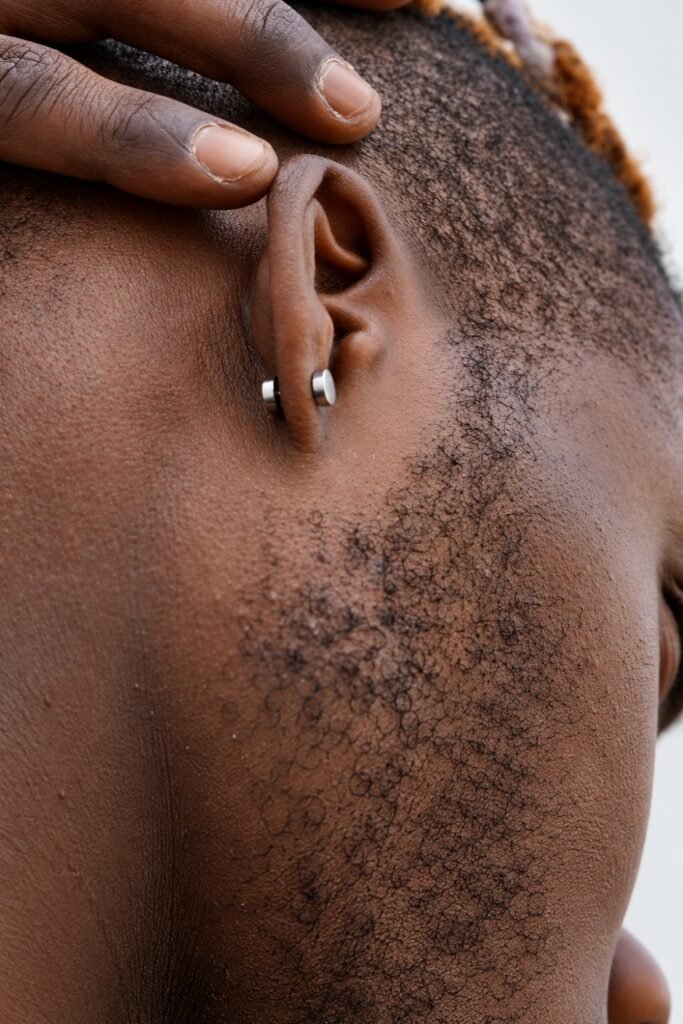
1. Single Lobe Stud
One lower-lobe piercing with a small stud is still the easiest entry point. In 2026, the update is scale: smaller polished studs, pearls, dark metal, and restrained stones look more deliberate than oversized iced-out solitaires.
Start simple if you are still learning which metal and jewelry scale suit your wardrobe.
Best for: first piercings, work-friendly styling, minimal jewelry.
 Save
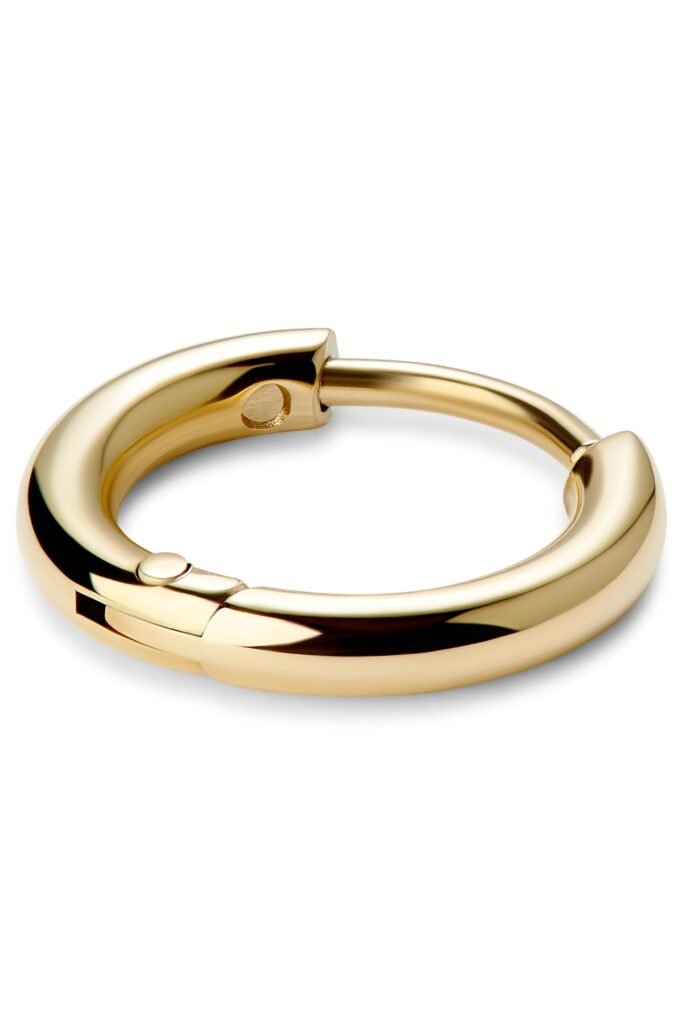
Save2. Small Lobe Huggie
A snug hoop follows the lower lobe instead of hanging below it. It adds shape without taking over the outfit.
For a fresh piercing, wear the initial jewelry selected for healing by your piercer rather than immediately swapping to the final fashion hoop.
Best for: everyday wear, minimalist streetwear, men who prefer hoops.
 Save
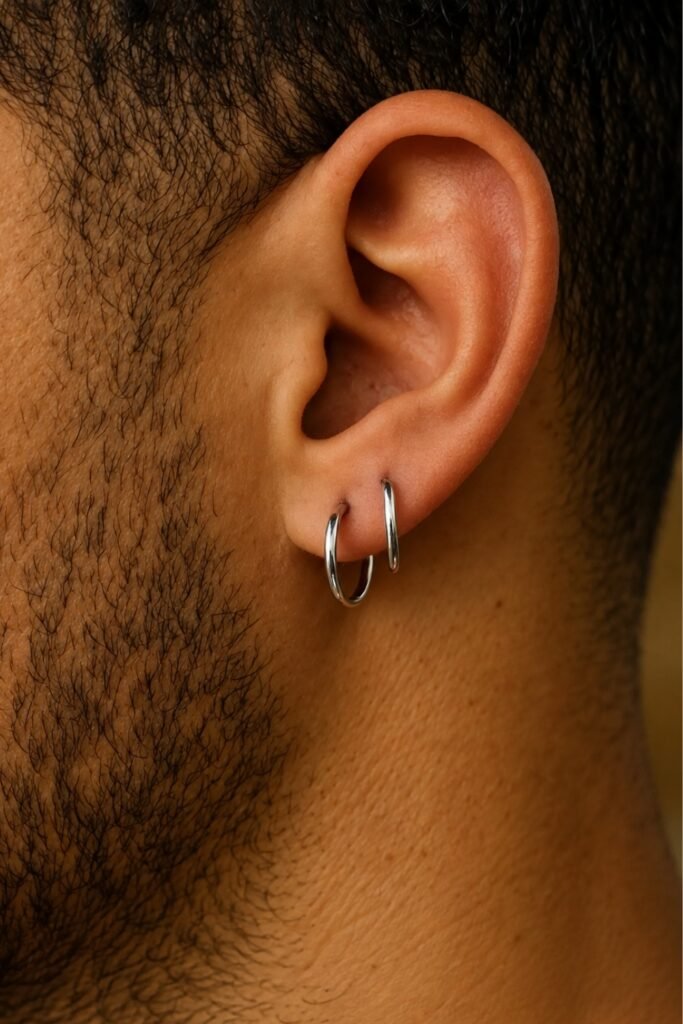
Save3. Double Lobe Stack
Add a second lobe piercing slightly above the first and keep the jewelry graduated: huggie plus micro stud, or a larger stud below a smaller one.
The stack works when the pieces share something, metal, finish, stone color, or scale. Two unrelated earrings can look accidental rather than curated.
Best for: easy ear stacking, healed first lobes, subtle asymmetry.
 Save
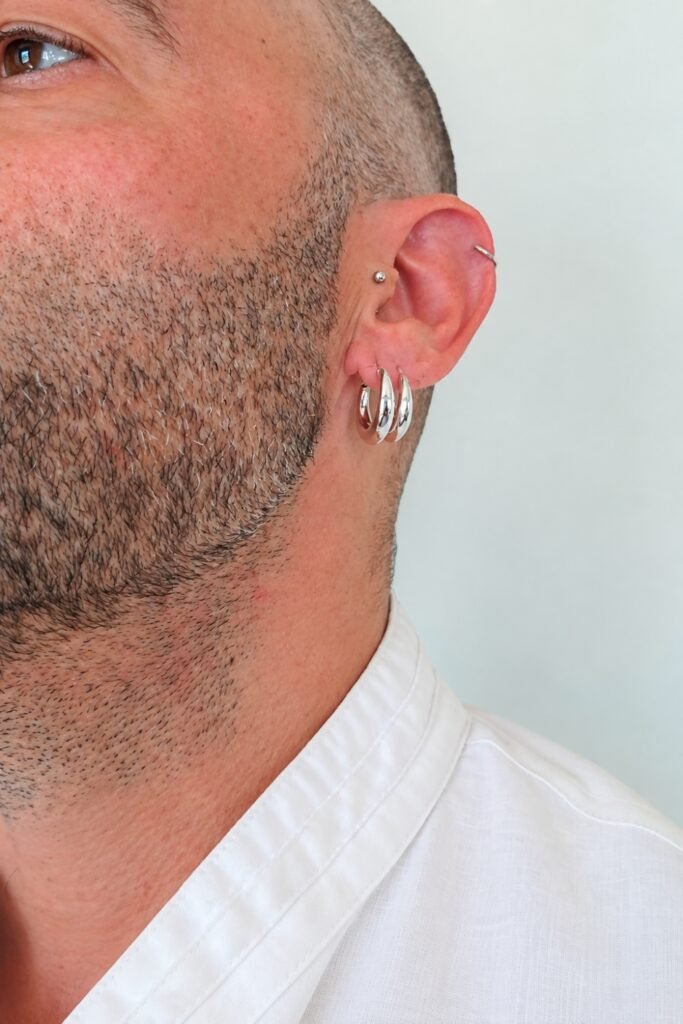
Save4. Triple Lobe Micro-Stack
Three closely spaced lobe/high-lobe piercings create a precise vertical composition without entering upper cartilage. Use small pieces that decrease in size as they rise.
Several close-fitting pieces often look cleaner than one oversized statement earring.
Best for: curated-ear styling, small jewelry, men avoiding upper cartilage.
 Save
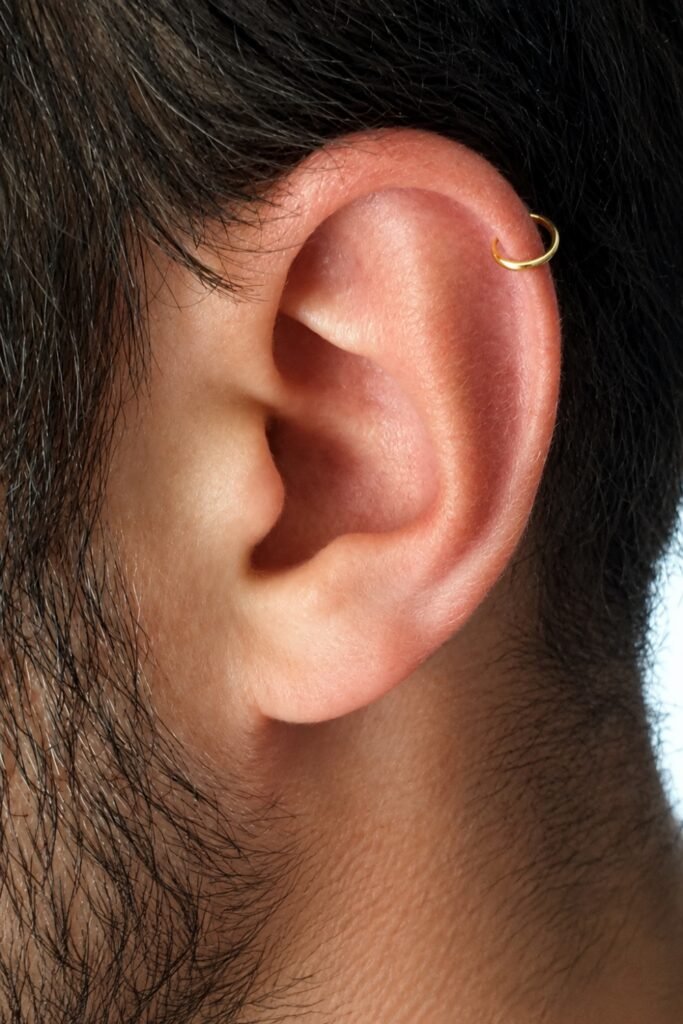
Save5. Single Helix Hoop
A helix sits on the upper outer cartilage, where one small hoop creates a clear outline against the ear. It can work alone or above a simple lobe piece.
Cartilage heals more slowly than the lobe, so do not plan the finished hoop look around an immediate jewelry change. Let a professional piercer choose suitable initial jewelry.
Best for: short hair, fades, ear-tucked longer hair, understated edge.
 Save
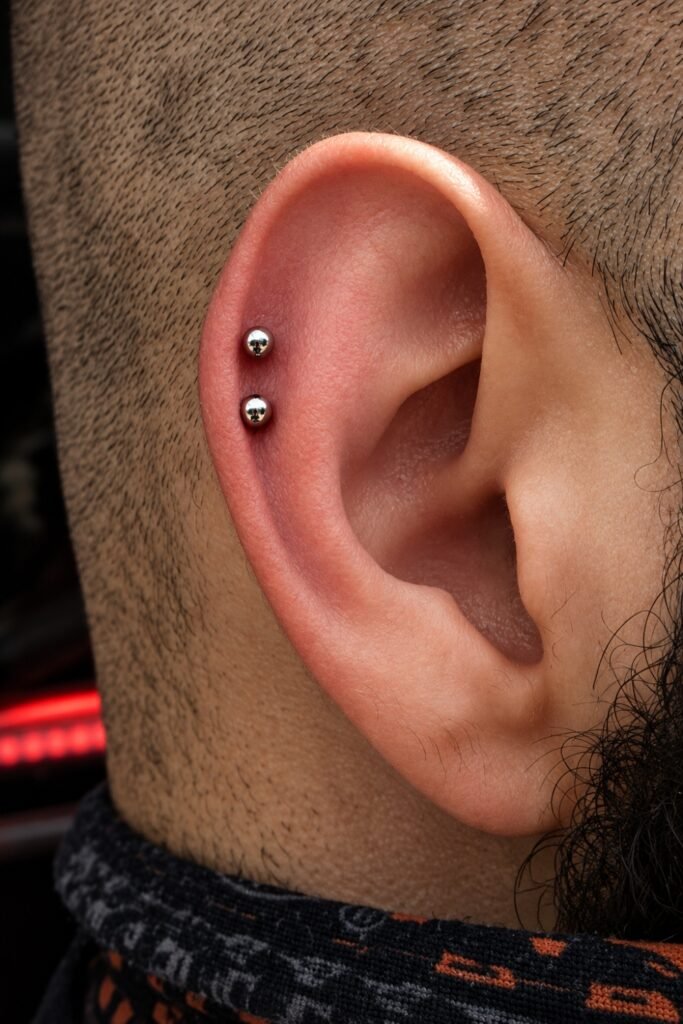
Save6. Double Helix Studs
Two small studs following the upper rim create a stronger line than one helix without needing large jewelry. Keep spacing deliberate and let the ear anatomy determine the angle.
A professional piercer should map both placements rather than copying spacing from someone else’s ear; cartilage shape varies.
Best for: precise stacks, minimal metal, visible upper ears.
 Save
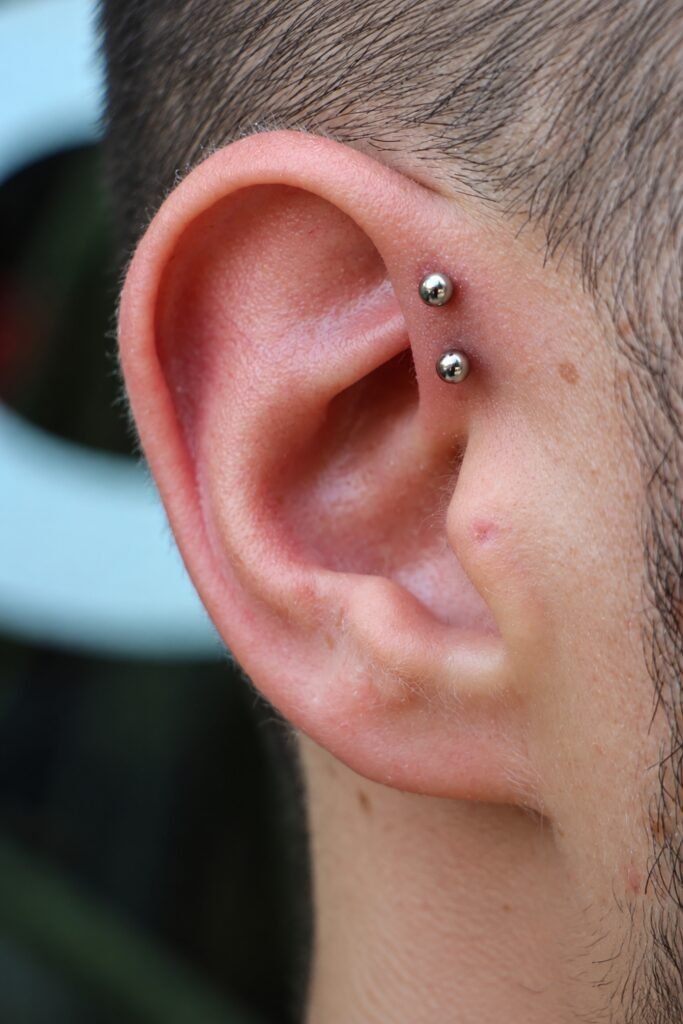
Save7. Forward Helix Stud
The forward helix sits toward the front of the upper ear where it meets the head. A tiny stud here adds detail without competing with a lobe hoop or stud.
Because the space is anatomy-dependent and close to hair, glasses, and headphones, placement should be assessed in person rather than chosen from a diagram alone.
Best for: minimalists, small flat-back jewelry, curated ears.
 Save
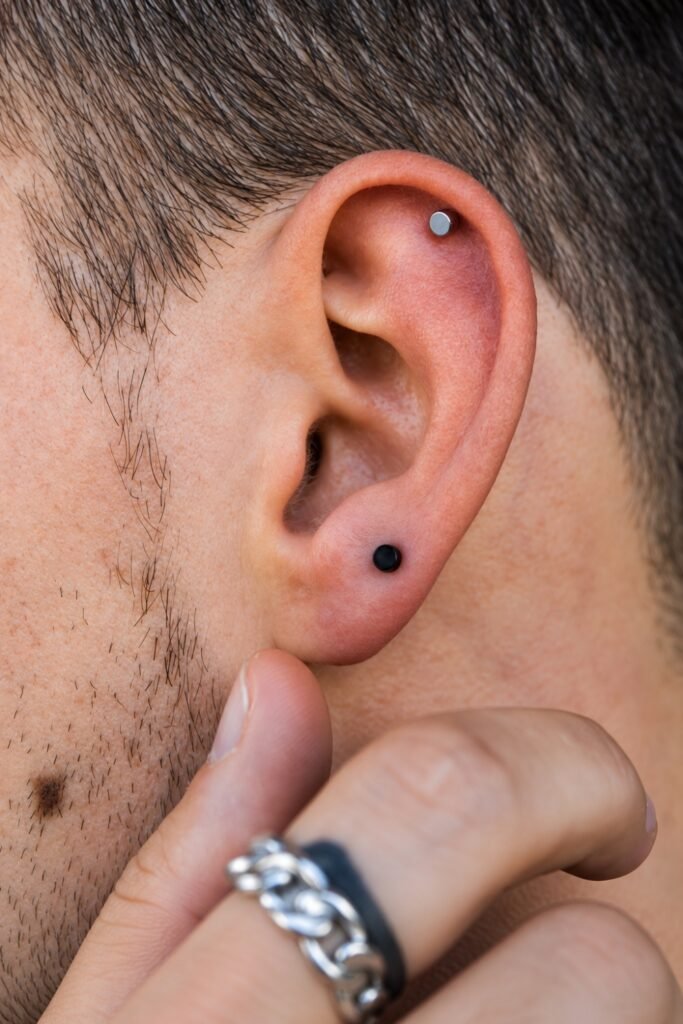
Save8. Flat Piercing
A flat piercing sits on the broader upper cartilage surface inside the helix rim. It works well with a small disk, geometric end, or subtle stone.
This is one of the placements where anatomy and jewelry footprint matter more than gender. Keep the end low-profile if headphones, helmets, or hair regularly contact the area.
Best for: geometric jewelry, modern stacks, men wanting something less common than helix.
 Save
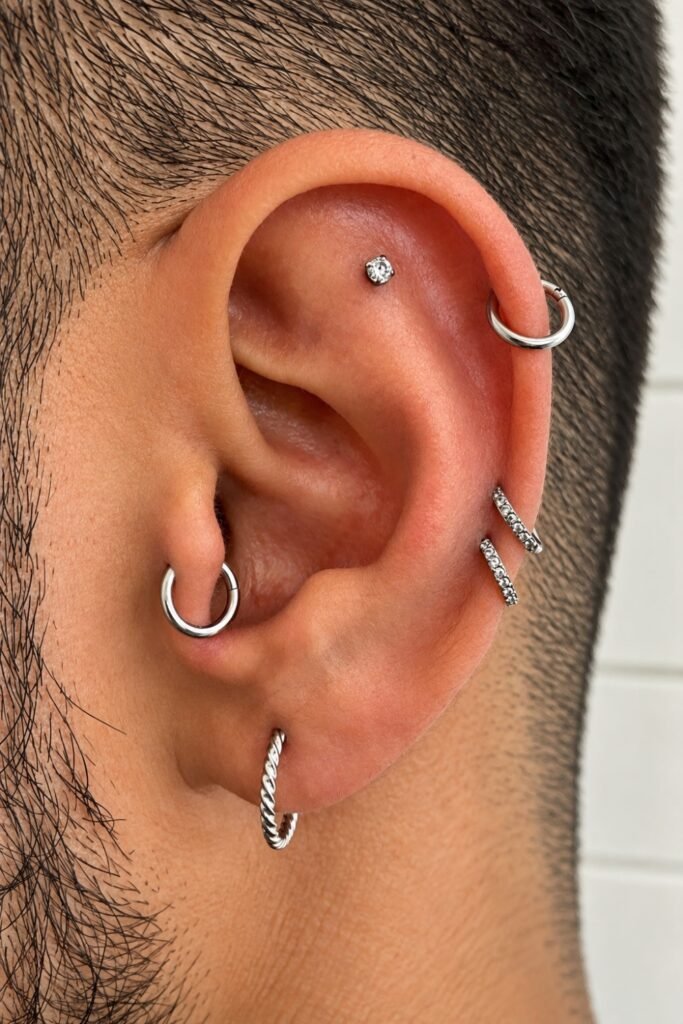
Save9. Conch Stud
A conch piercing sits in the central ear bowl, so even a small stud changes the visual balance of the whole ear. Pair it with simple lobe jewelry and let the center placement do the work.
Cartilage piercings such as conch can take many months to heal. Cleveland Clinic notes cartilage piercings commonly heal much more slowly than lobes.
Best for: bold placement with minimal jewelry, short hair, curated ears.
 Save
Save10. Conch Hoop
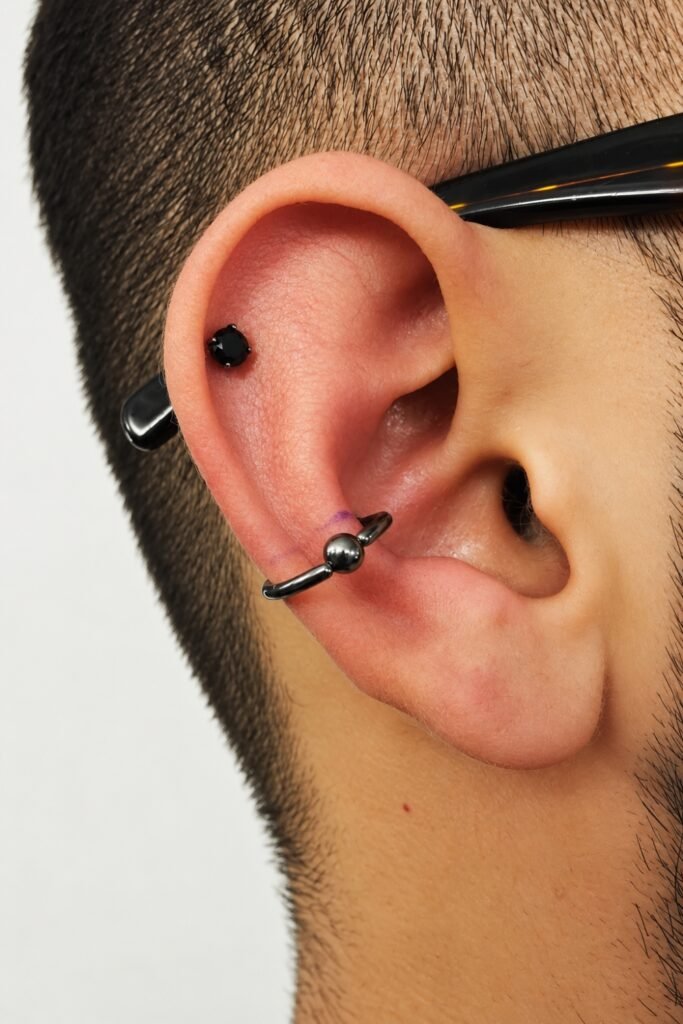
Once a conch is fully healed and a piercer confirms it is ready for suitable jewelry, a ring can create the visual effect of wrapping around the outer ear.
Do not size the hoop from an online photo. Ear thickness and conch placement determine diameter, and a ring that is too tight can create pressure.
Best for: healed conch piercings, strong single-piece styling.
 Save
Save11. Tragus Stud
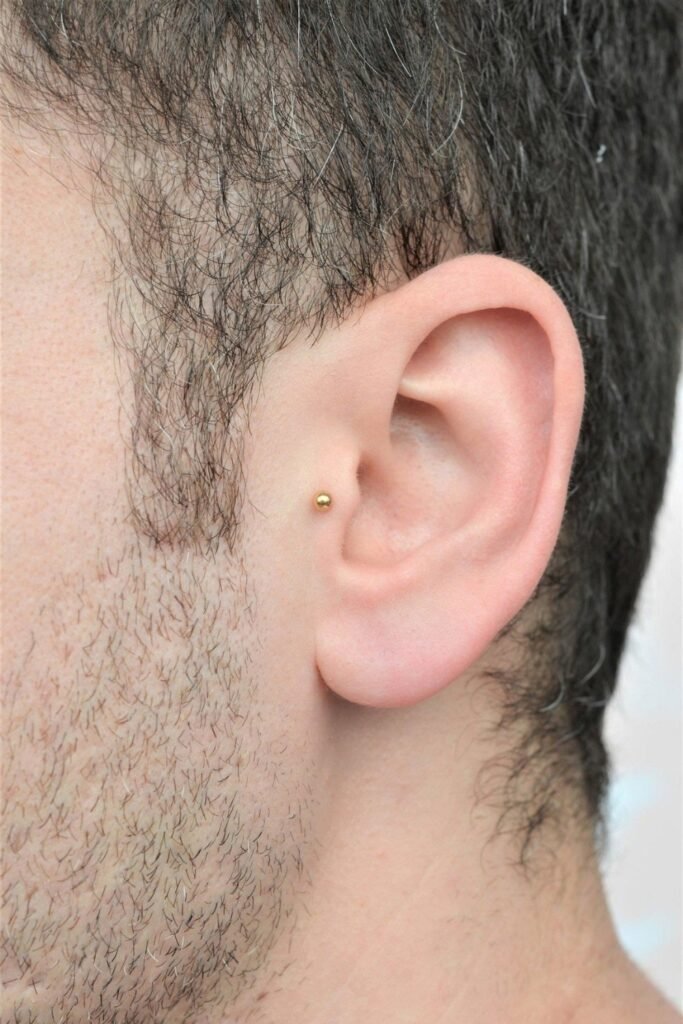
A tragus stud sits on the small cartilage projection in front of the ear canal. Because the placement is close to the face, a micro flat-back can read clearly without much size.
Think about earbuds before committing. A healing tragus and in-ear headphones may not be friendly roommates.
Best for: micro jewelry, clean stacks, men who rarely need in-ear devices during healing.
 Save
Save12. Rook Piercing
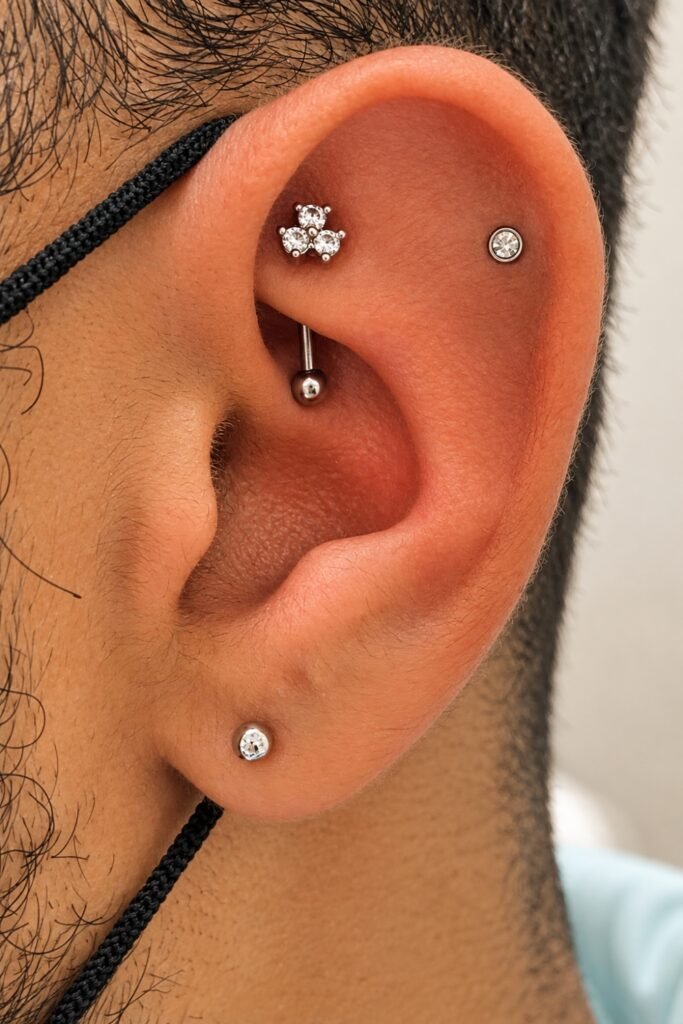
The rook sits in an upper inner cartilage fold and usually carries compact curved jewelry. It creates depth inside the ear instead of adding another piece around the outside edge.
Not every ear has suitable rook anatomy. This is exactly the kind of placement a qualified piercer should evaluate before jewelry is chosen.
Best for: anatomy-led styling, inner-ear detail, compact jewelry.
 Save
Save13. Industrial Bar
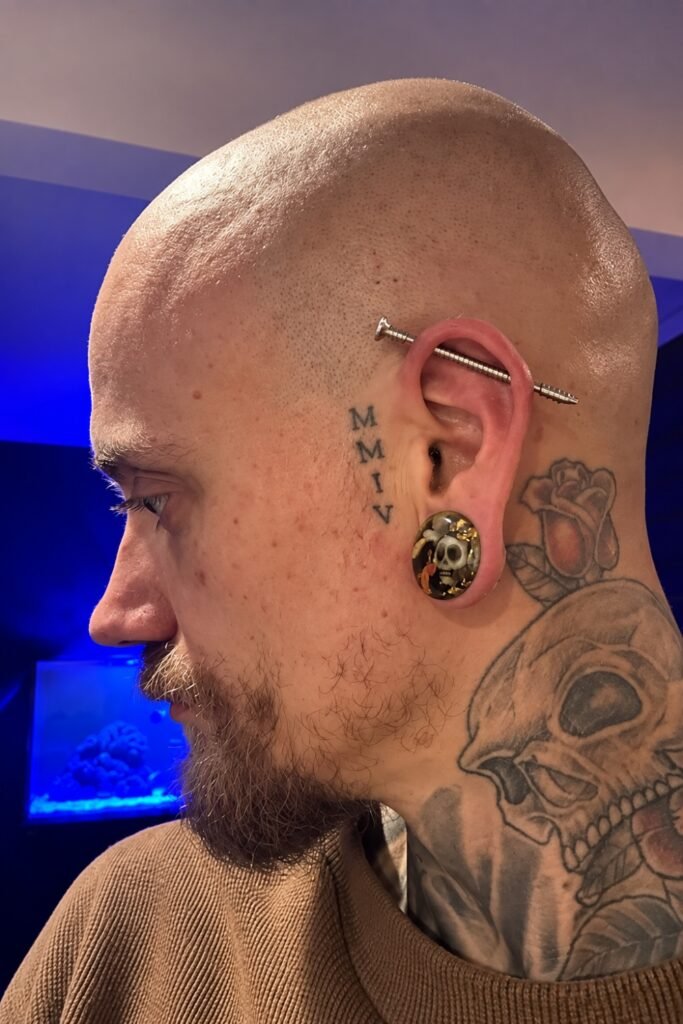
An industrial typically connects two upper-cartilage piercings with one straight bar. The alignment has to suit the ear’s anatomy so the bar does not press incorrectly against cartilage.
This is not a placement to force because you like the photo. Ask an experienced piercer whether your ear can safely support the geometry; alternative two-piece looks may suit incompatible anatomy better.
Best for: bold metal styling, visible ears, men comfortable with a longer healing commitment.
 Save
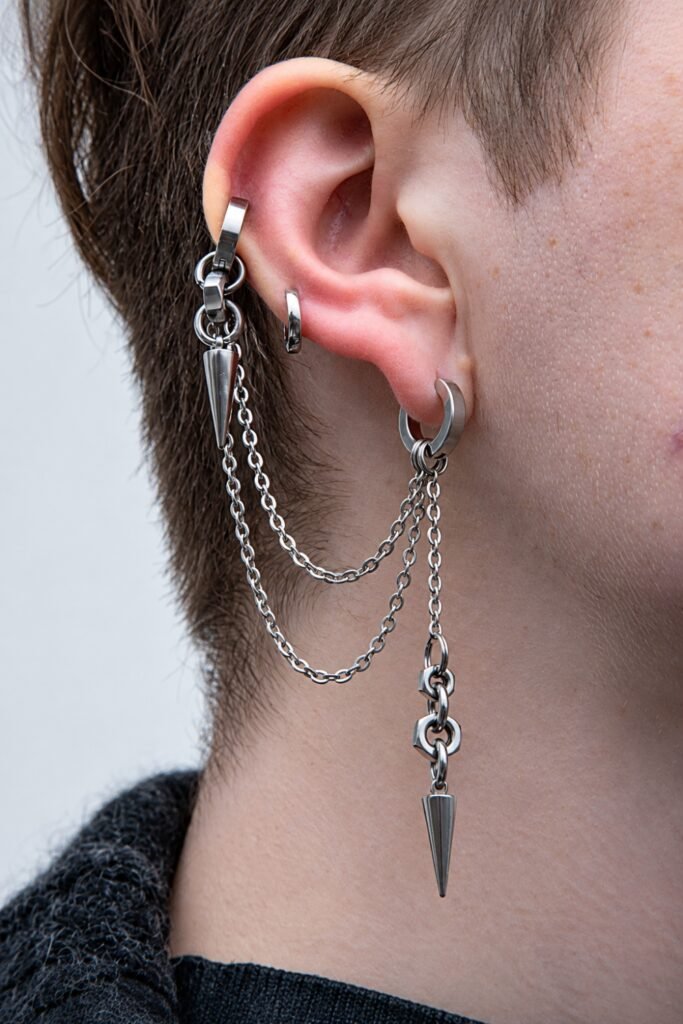
Save14. Lobe-to-Helix Chain
A fine chain between healed lobe and helix jewelry turns two simple piercings into one composition. It is one of the clearest 2026 curated-ear ideas because the chain adds movement without another hole.
The Association of Professional Piercers advises against hanging charms or objects from jewelry until a piercing is fully healed. Save the chain for the finished ear, not day one.
Best for: healed multi-piercing ears, fashion-forward styling, one-metal stacks.
 Save
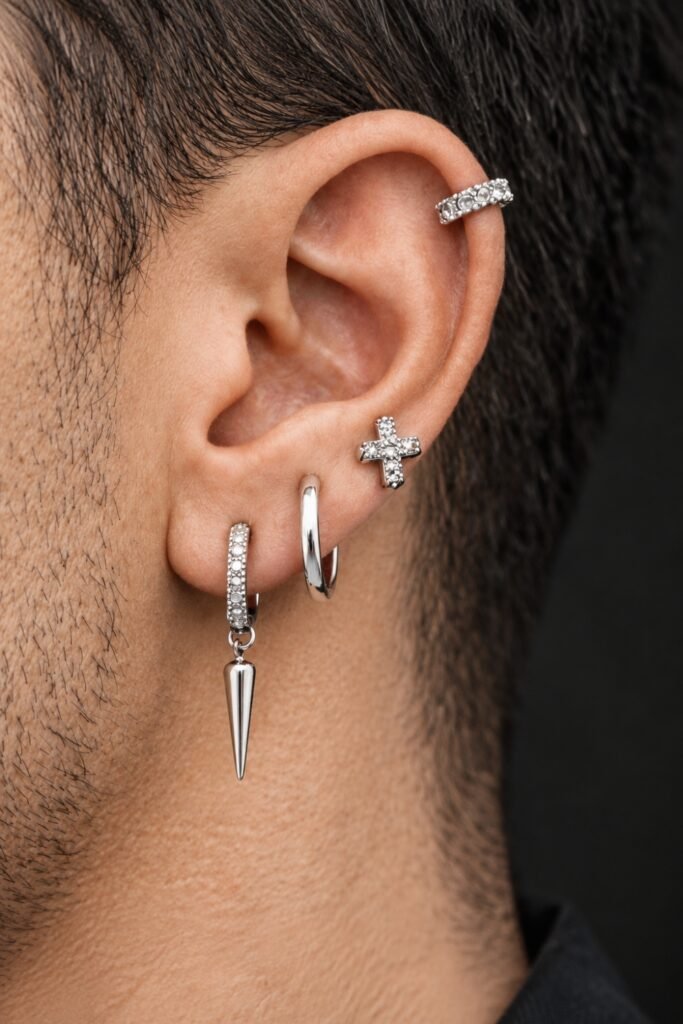
Save15. Asymmetric Curated Ear
Style one ear with a lobe huggie, high-lobe stud, and helix while keeping the other ear to one stud or hoop. The asymmetry looks intentional when the metal or design language still connects both sides.
Asymmetry looks deliberate. Your ears do not need identical pairs.
Best for: personal styling, mixed placements, men who want a custom ear rather than a matching set.
 Save
SaveQuick Guide: Choose a Men’s Ear Piercing by Commitment
| Goal | Good starting points | Visual effect | Main consideration |
| First piercing | Single lobe stud, lobe huggie later | Minimal | Healing before jewelry swaps |
| Build a stack | Double/triple lobe | Precise and layered | Spacing |
| Add cartilage | Helix, flat, conch | More architectural | Longer healing |
| Inner-ear detail | Tragus, rook | Subtle but distinctive | Anatomy/headphones |
| Bold statement | Industrial | Graphic metal line | Anatomy + healing |
| Fashion-led healed ear | Chain, asymmetric stack | Curated/personal | Use only healed placements |
Piercing Placement Comes Before Jewelry
A good piercer should inspect your anatomy, discuss jewelry, explain healing, and map the placement before piercing. The Association of Professional Piercers specifically recommends anatomy assessment and sterile single-use needles; it also advises against piercing guns.
For initial jewelry, APP guidance emphasizes appropriate size, gauge, design, and biocompatible materials. Implant-certified titanium and appropriate 14k–18k biocompatible gold are among the accepted options; plated or gold-filled jewelry is not suitable for fresh piercings.
Lobe vs. Cartilage: The Healing Difference Matters
Lobe tissue has stronger blood flow and generally heals faster. Upper-ear cartilage has less blood supply, so healing is slower and complications can be more serious.
Cleveland Clinic notes that cartilage piercings such as helix, conch, rook, daith, and tragus can take roughly six to twelve months to heal. Treat the finished jewelry in inspiration photos as the destination, not necessarily the starter jewelry.
Aftercare: Keep It Boring
APP aftercare recommends washing your hands before touching a healing piercing, using sterile saline wound wash, and leaving the jewelry alone rather than twisting or rotating it. Harsh products such as alcohol and hydrogen peroxide can irritate healing tissue.
Avoid pressure on healing cartilage, including sleeping directly on it. Keep phones, headphones, glasses, hats, and bedding clean where they contact the ear.
When a Piercing Needs Medical Attention
Some initial tenderness and swelling can be normal, but worsening redness, warmth, significant pain, pus-like discharge, fever, or an embedded earring needs attention. Cartilage infections deserve particular caution.
Cleveland Clinic warns that untreated upper-ear cartilage infection can progress to perichondritis and damage cartilage. If you suspect infection, contact a healthcare professional rather than trying to solve it by repeatedly removing or changing jewelry yourself.
Frequently Asked Questions
What is the best first ear piercing for men?
A standard lobe piercing is the simplest starting point because it offers many jewelry options and generally heals more easily than cartilage. A professional piercer can assess placement and initial jewelry.
Which ear should a man pierce?
There is no universal modern rule requiring men to pierce the left or right ear. Choose based on anatomy, hairstyle, sleeping habits, existing piercings, and the composition you want.
What men’s ear piercings are popular in 2026?
Small studs, huggie hoops, stacked lobes, helix jewelry, chains and asymmetric curated ears are all popular choices.
How long does an ear piercing take to heal?
Healing varies by person and placement. Earlobes usually heal faster, while Cleveland Clinic notes many cartilage placements can take roughly six to twelve months.
Can I get a hoop immediately after an ear piercing?
Initial jewelry should be selected for the anatomy and placement by a qualified piercer. Do not swap jewelry simply to match an inspiration photo before the piercing is ready.
How do I clean a new ear piercing?
APP guidance recommends clean hands, sterile saline wound wash, gentle drying, and avoiding unnecessary twisting or rotation. Avoid harsh products such as alcohol or hydrogen peroxide.
Are cartilage piercings riskier than lobe piercings?
Yes. Cartilage has less blood supply, heals more slowly, and upper-ear infections can be more serious. Proper sterile technique, jewelry, aftercare, and prompt medical care for infection signs matter.
Can every man get an industrial or rook piercing?
No. These placements depend on individual ear anatomy. A qualified piercer should inspect the ear and recommend an alternative if the anatomy cannot safely support the desired placement.
The Curated-Ear Test
Look at the ear as one composition rather than counting holes. Do the pieces share a metal, scale, shape, or visual rhythm? If yes, even three piercings can look cleaner than one oversized earring.
Build slowly. A good ear stack is easier to edit after each piercing has healed than to design five fresh cartilage piercings around a trend photo and discover your anatomy had other plans.