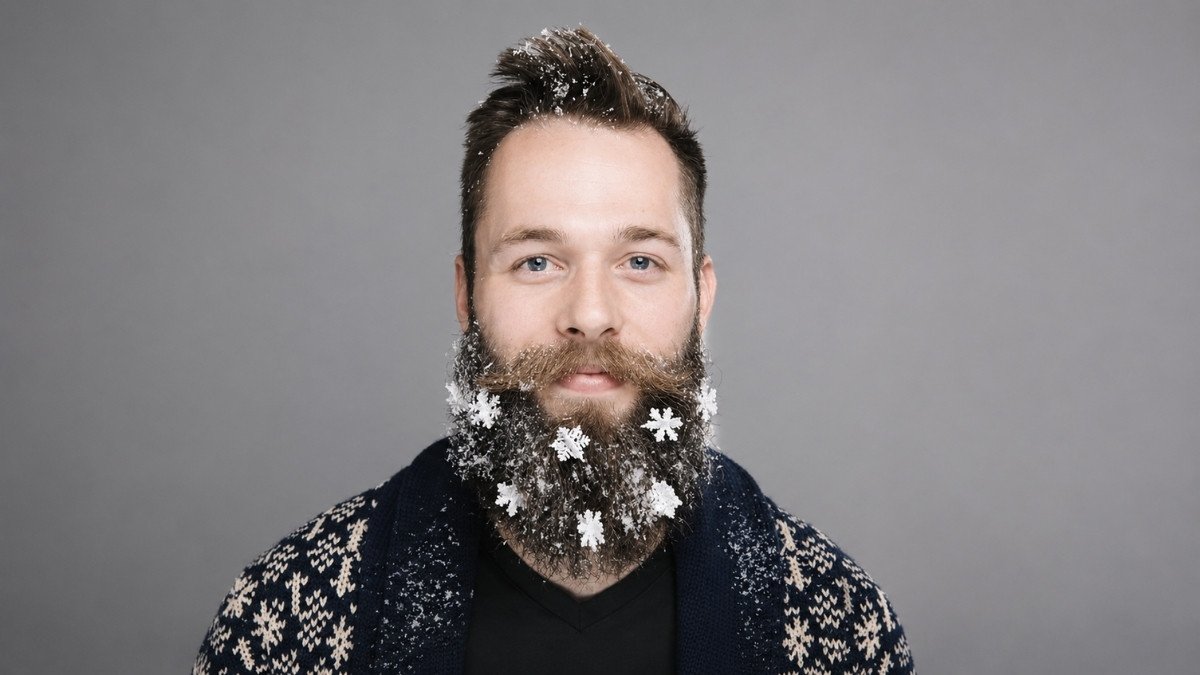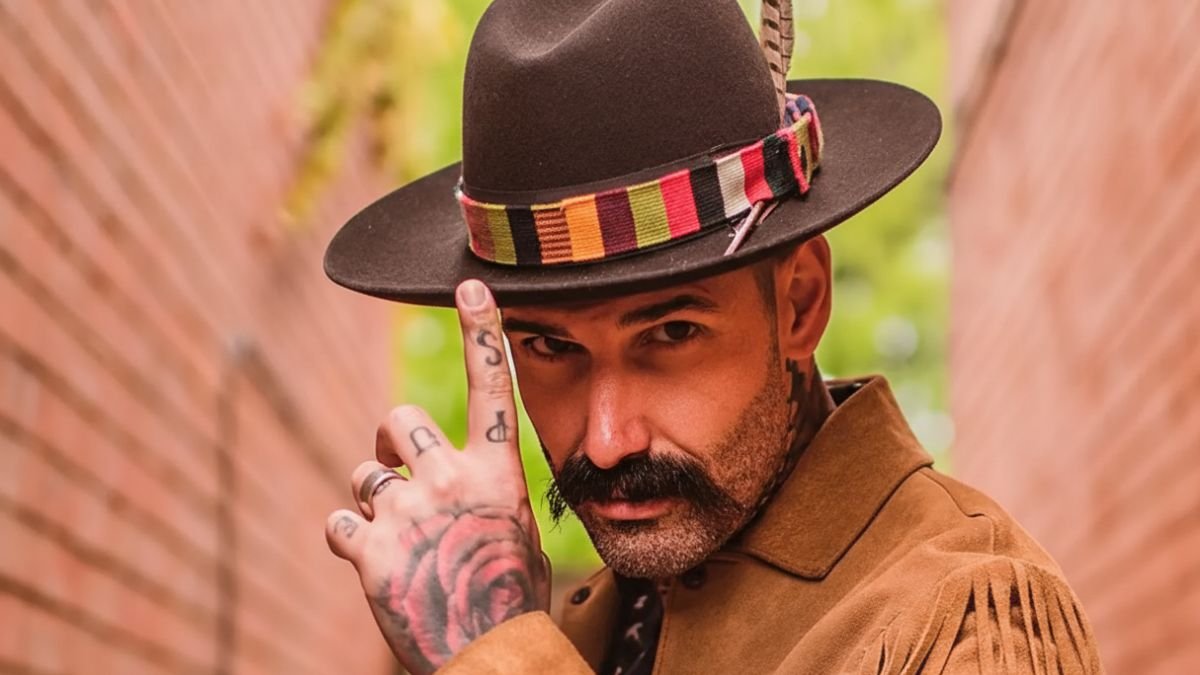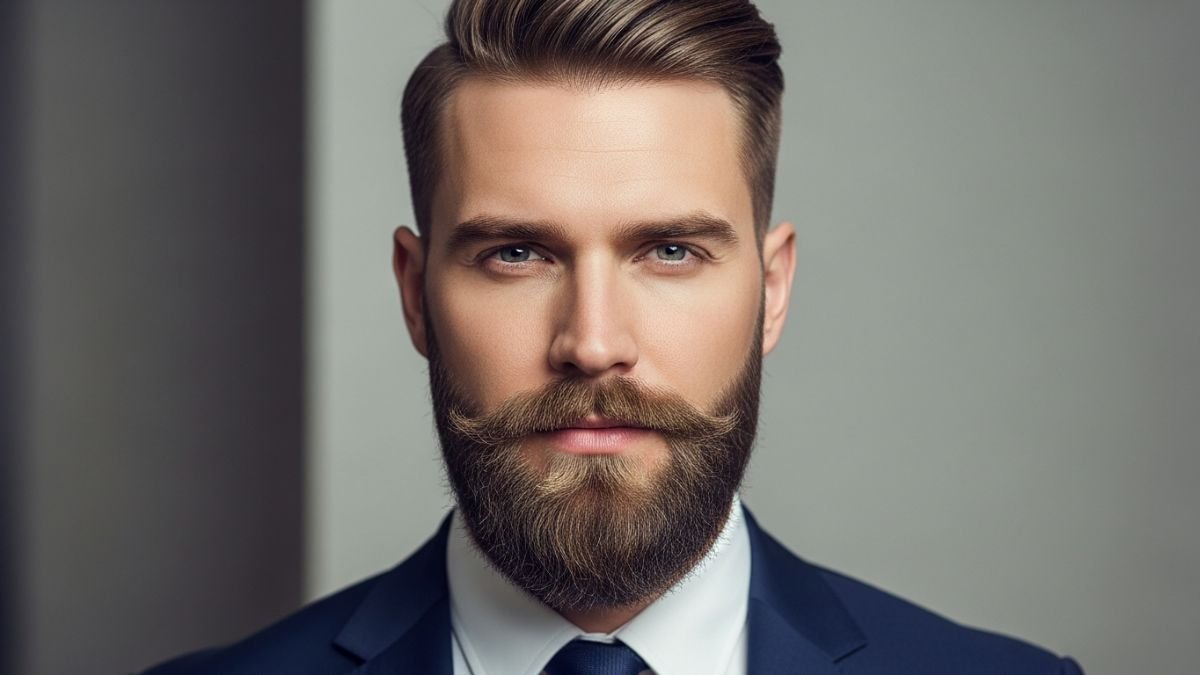

The Bandholz beard is named after Eric Bandholz, who founded Beardbrand in 2012 after leaving a corporate job specifically because his workplace would not accommodate his beard. The style he built his identity around is a fully connected beard and mustache left to grow freely past the Garibaldi‘s 20-centimetre limit, with the mustache blended into the beard rather than separated from it. It has since become one of the most recognised beards on the internet, and it remains one of the most requested long beard styles in 2026.
The 2026 version of the Bandholz is not the wild, unshaped lockdown beard. The shift is about intention: men want their beards to look intentional again. Lines. Structure. A beard that looks deliberate rather than accidental. The full beard of 2026 is textured, shaped, and confident. Applied to the Bandholz, this means a style that grows freely but is maintained with consistent oiling, conditioning, and selective trimming that keeps the shape without reducing the length.
These 15 Bandholz beard styles cover every variation within the category, from the six-month growth stage through to the full yeard, across face shapes, hair textures, and styling approaches. Every style includes the specific grooming detail that separates a maintained Bandholz from a neglected one.
What Makes a Bandholz Beard Specifically a Bandholz
Three things define a Bandholz and separate it from other long beard styles. First, the mustache is connected to the beard and blended into it rather than styled separately. Second, the beard is allowed to grow freely without a defined stopping length, unlike the Garibaldi which stops at 20 centimetres. Third, the cheek lines are natural or lightly groomed rather than sharply defined, giving the style its organic, urban character.
The difference between a Bandholz and a Viking beard sits in the mustache connection and the cheek line. A Viking beard often has a more dramatic, outward-flaring shape. The Bandholz stays closer to the face with a more cohesive connection between mustache and beard. The difference between a Bandholz and a Garibaldi is simply length: the Garibaldi stops, the Bandholz keeps going.
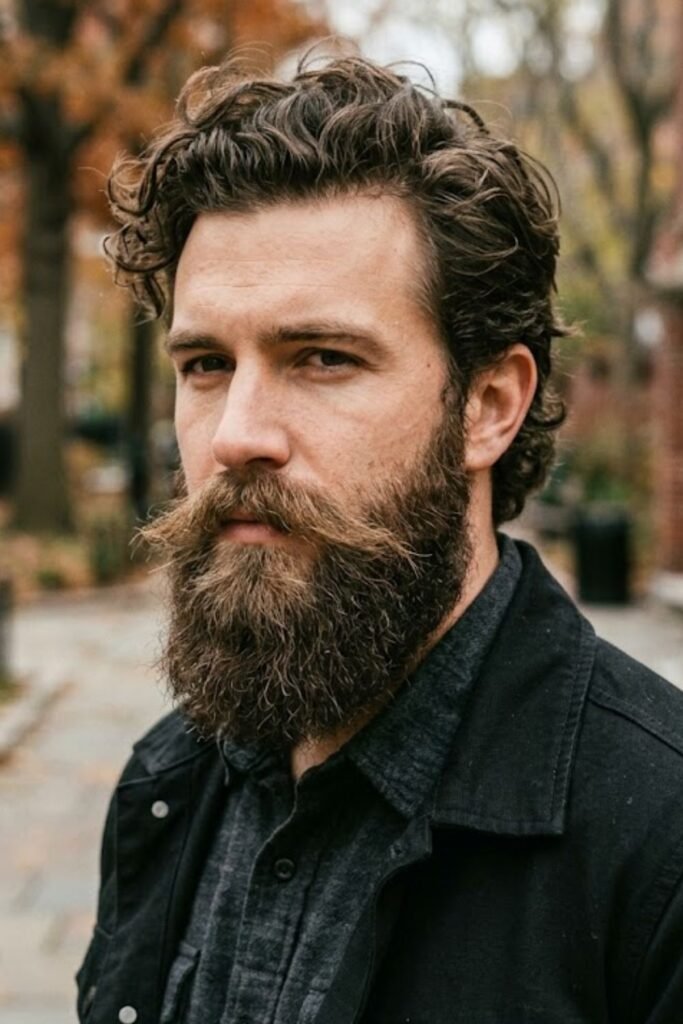
1. The Six-Month Bandholz
Six months of uninterrupted growth produces the entry-level Bandholz: a full beard reaching the upper chest with a connected mustache that has started to blend into the sides. Six months is the minimum growth time for a Bandholz, and while it can look unkempt during that phase, the finished result is worth the wait. At six months, begin applying Beardbrand Utility Balm daily to train the beard downward and prevent the mustache from covering the upper lip.
 Save
SaveThe six-month Bandholz suits oval and rectangular face shapes best. The added chin length elongates round faces and balances wide jaw structures. At this stage, trim the mustache every two weeks directly above the lip line so it stays connected to the beard without blocking the mouth.”
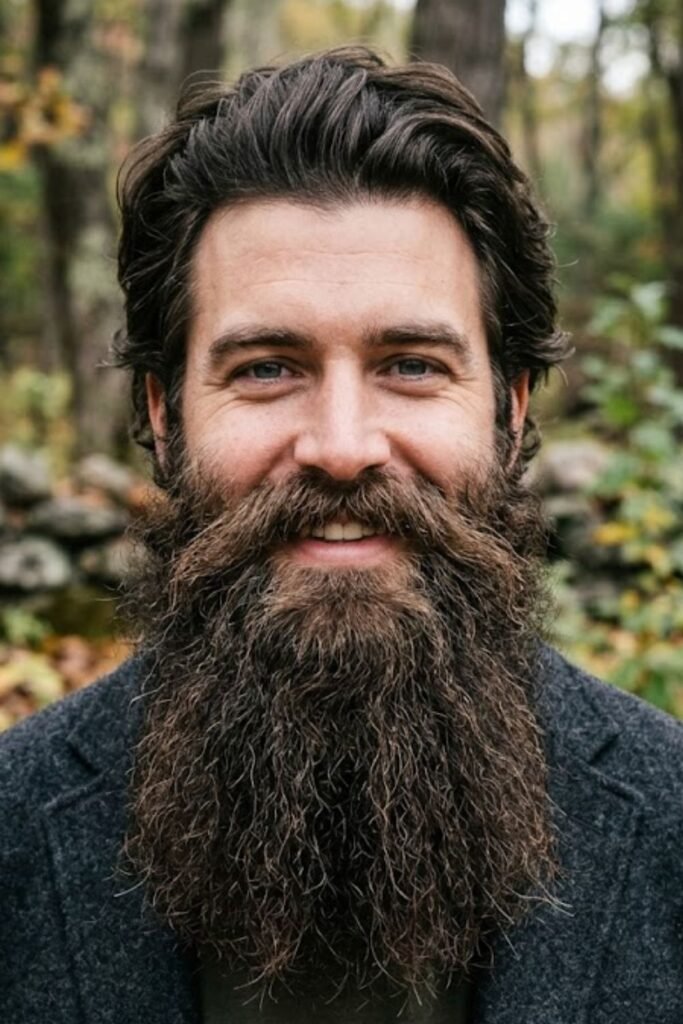
2. The Twelve-Month Bandholz
Twelve months produces the full Bandholz silhouette: a beard reaching mid-chest, wide at the cheeks, and with a mustache that has fully merged into the beard structure. This is the point where the Bandholz becomes distinct from other long beards, because the mustache integration is now complete and the beard’s weight creates a natural downward shape without external training. This is the length most commonly associated with Eric Bandholz himself.
 Save
SaveAt twelve months, the beard requires daily oiling with a carrier-oil-based beard oil, jojoba or argan, applied from root to tip to prevent the ends from drying and splitting. Dry ends on a twelve-month Bandholz are the single most visible grooming failure at this length. Beardbrand Tree Ranger Beard Oil is formulated specifically for beard lengths that require deep hydration through a dense, layered structure.
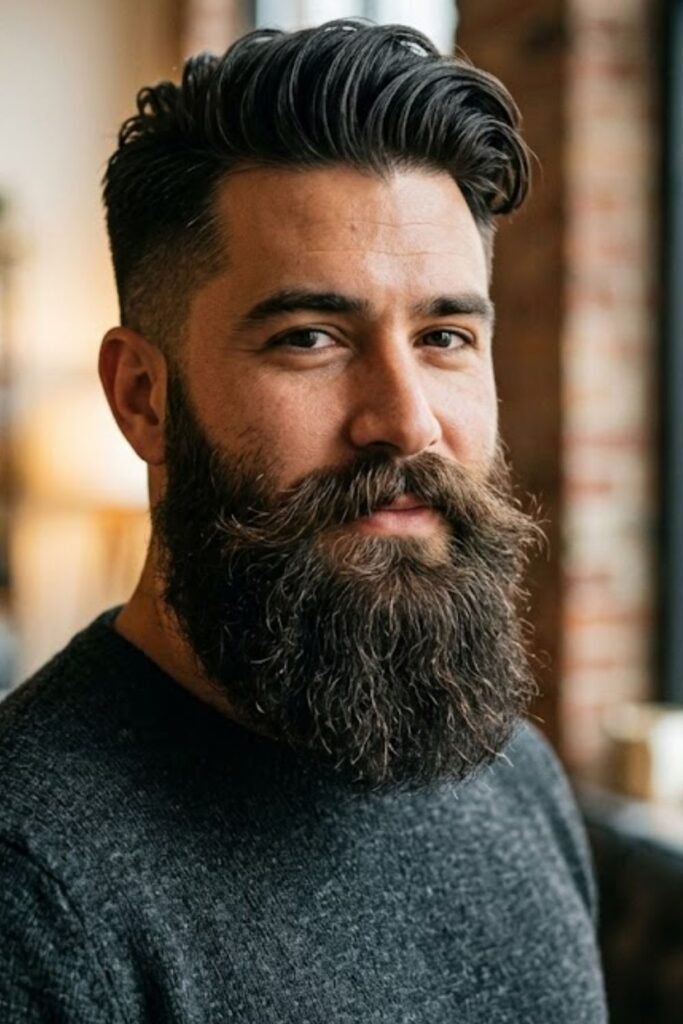
3. The Yeard Bandholz
A yeard is a beard grown for a full year without cutting any length. Applied to the Bandholz structure, a yeard produces a beard that sits well below the chest with significant width at the cheeks and a mustache that has naturally integrated into the full beard mass. The yeard is often treated as its own beard category, separated from the standard Bandholz by length and by the commitment the grow-out requires.
 Save
SaveThe yeard Bandholz requires a two-step daily routine: a beard wash with a dedicated beard shampoo three times per week to prevent product buildup in the dense length, and a beard balm applied after every wash to seal moisture and add enough hold to keep the shape manageable. Neglecting either step at yeard length produces a beard that mats and tangles at the mid-shaft where the mustache meets the cheek sections.
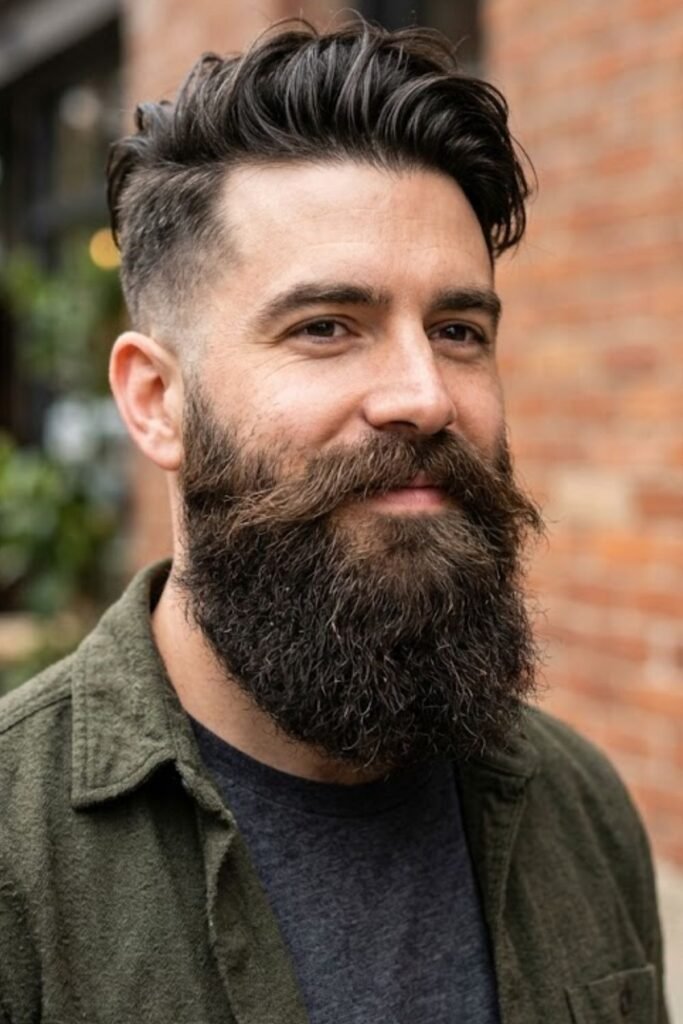
4. The Shaped Bandholz
A Bandholz grown to full length but selectively trimmed on the cheek lines and the outer perimeter to produce a more defined silhouette without reducing the overall length. Intentionality defines the best full beards right now: shaped, confident, lived-in. The shaped Bandholz applies this directly. The beard grows to full Bandholz length but the cheek line is taken down slightly and the outer shape is trimmed to a consistent point rather than left completely freeform.
 Save
SaveA Philips Norelco Multigroom Series 7000 handles the cheek line work with enough precision for the shaped Bandholz without requiring a barber visit every two weeks. Set the guard to the longest setting and run along the cheek line to remove only the highest-growing stray hairs. The shape should look like a natural growth pattern that has been lightly edited, not a sharp geometric line.
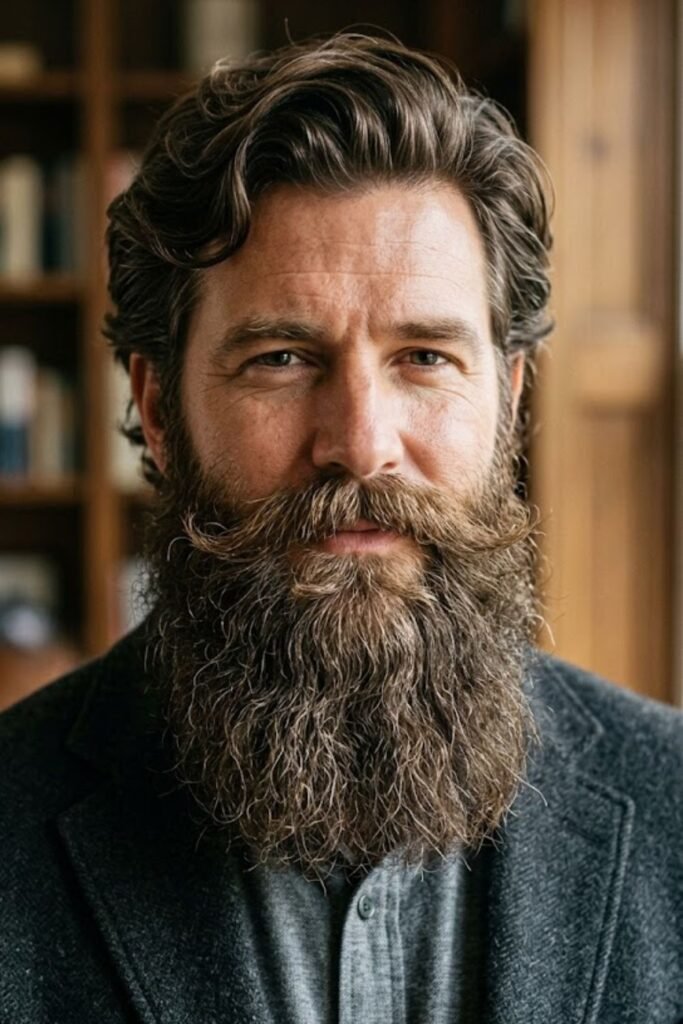
5. The Freeform Bandholz
The purist version. No trimming of any kind except the mustache above the lip line. The cheek hairs grow to their natural ceiling. The perimeter takes whatever shape the hair produces. The only maintenance is oiling, conditioning, and washing. This is the original Bandholz as Eric Bandholz himself described it: allowed to grow freely without defined lines or sculpting. This is the purest form of the Bandholz: a long, natural, unshaped full beard.
 Save
SaveThe freeform Bandholz is the most demanding style to make look intentional because the line between a maintained freeform Bandholz and an unkempt beard is entirely in the product routine. Daily beard oil, weekly deep conditioning, and consistent washing are what separate the two. Without this routine the freeform Bandholz reads as neglected. With it, it reads as a deliberate lifestyle choice.
6. The Bandholz for Oval Face Shapes
Oval faces have the most flexibility with the Bandholz because the balanced proportions of an oval face work with every beard length and width variation. Oval faces are one of the two strongest matches for a Bandholz. For oval faces, the Bandholz can grow to full yeard length without adding disproportionate width or length to the face. The cheek line can stay completely natural without creating visual imbalance.
 Save
SaveAn oval face with a Bandholz suits the freeform version better than any other face shape for this reason. The natural Bandholz shape complements the face without needing the selective trimming that other face shapes require to maintain proportion. Grow it, oil it, and let the face shape do the balancing work.
Image Alt Text: Bandholz beard oval face shape men 2026 Editor Image Search: “Bandholz beard oval face shape full natural men 2026”
7. The Bandholz for Round Face Shapes
The case for the Bandholz on round faces is simple: the style requires the chin hair to grow longer, which makes the face look longer and reduces the visual emphasis on width. For a round face, the Bandholz should be kept slightly narrower at the cheeks, with the emphasis on chin length rather than full-width growth. Trim the outermost cheek hairs by one centimetre every four weeks to prevent the beard from adding horizontal width that emphasises the round shape.
 Save
SaveA round face Bandholz pairs well with a slightly more defined cheek line than the oval face version. The defined line on the cheek creates a visual jaw angle that the round face shape does not naturally have. Keep the line soft rather than sharp: a hard geometric cheek line on a round face looks costume-like rather than groomed.
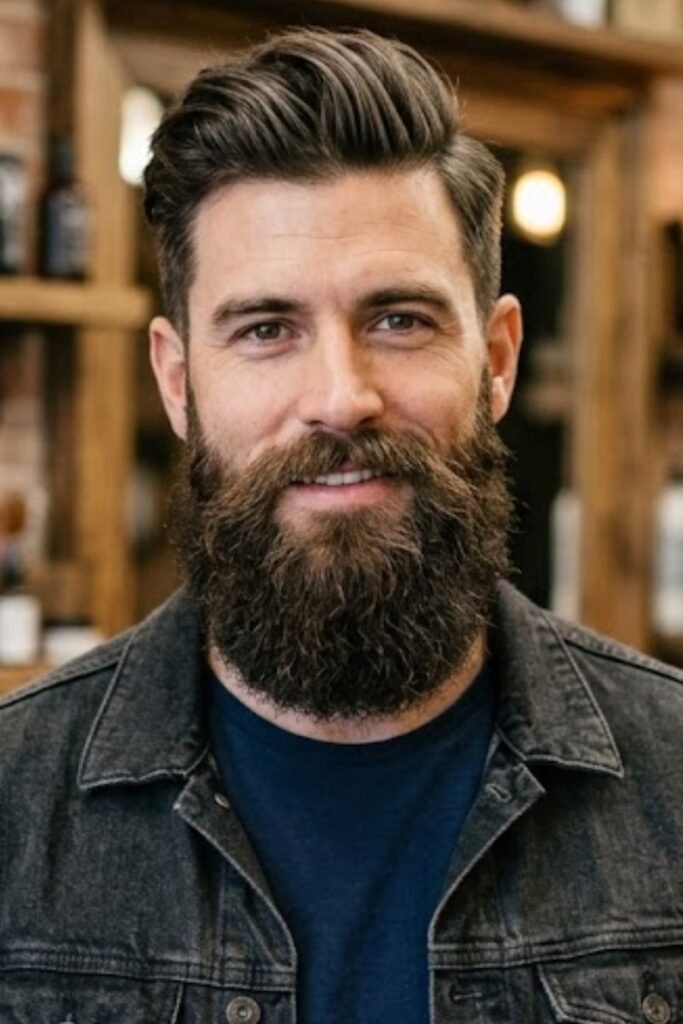
8. The Bandholz for Square Face Shapes
Square faces have a strong jaw and wide cheekbones. A full-width Bandholz adds even more width at the jaw, which can over-emphasise the squareness. The solution is a Bandholz grown with more length at the chin and kept narrower at the sides. This redirects the eye downward along the chin length rather than outward across the cheekbone width. The shaped Bandholz version works best on square faces for this reason: the selective cheek trim keeps the width in check while the chin length grows freely.
 Save
SaveA square face Bandholz also benefits from a slightly rounded chin point rather than a flat bottom edge. As the beard grows, use a small amount of beard balm to encourage the chin hairs to curl slightly toward a central point. This creates a subtle but effective visual rounding at the chin that softens the angular jaw without any cutting.
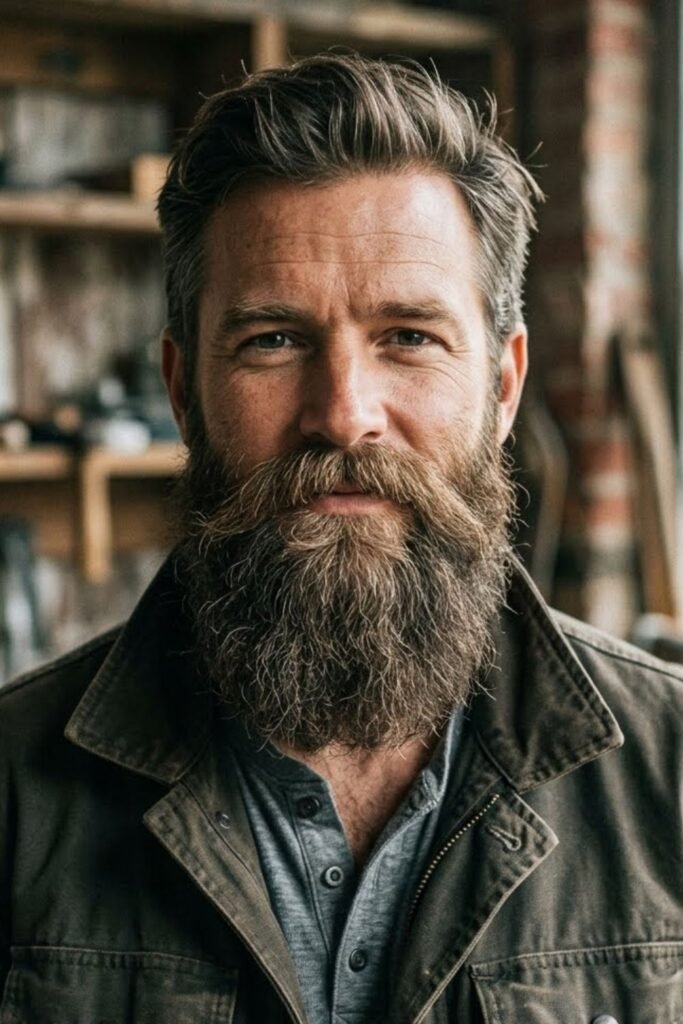
9. The Faded Bandholz
A Bandholz grown to full length at the chin and cheeks, combined with a tapered or faded sideburn that blends the beard into a skin fade or low fade haircut. The precise fade is the current flex in barbershops: a beard that melts into a fade sharpens the jawline and adds structure to the face. Applied to a Bandholz, the fade does not reduce the beard length. It cleans up the transition between the beard and the hairline, making the full beard look more deliberate against a sharp haircut.
 Save
SaveThe faded Bandholz requires a barber visit every three weeks to maintain the fade as the beard grows upward. The beard itself continues its standard Bandholz growth and maintenance between visits. The fade is the only component that needs professional attention on a regular schedule.
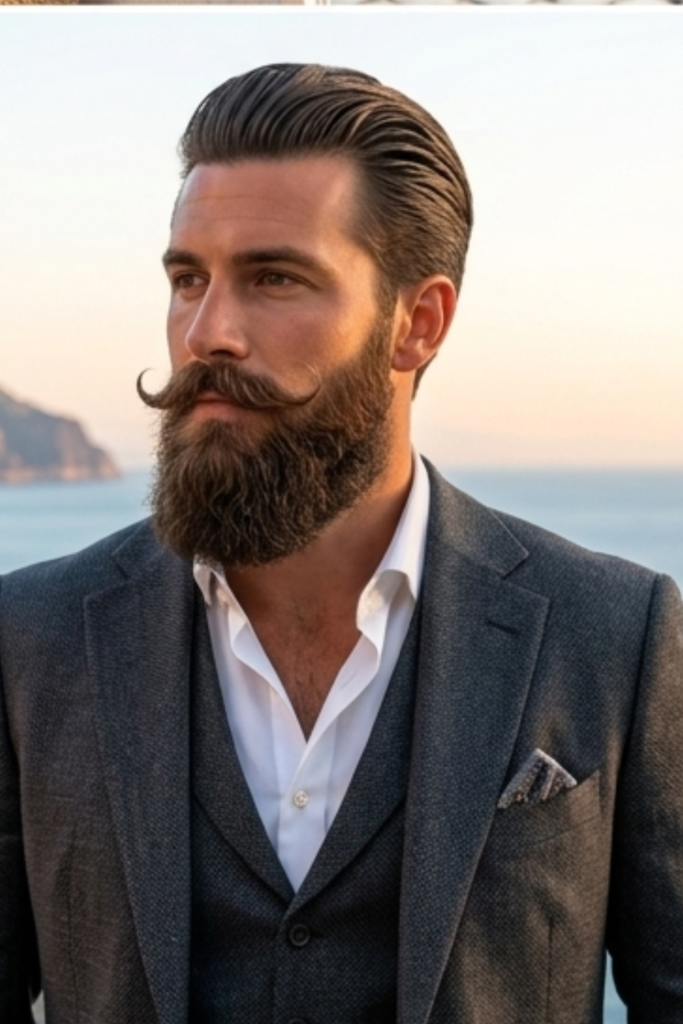
10. The Handlebar Mustache Bandholz
A Bandholz with the mustache styled independently into a handlebar shape rather than left to blend fully into the beard. The handlebar ends are waxed and curled upward while the rest of the beard grows in the standard connected Bandholz structure. This variation sits at the intersection of the Bandholz and the classic handlebar mustache tradition, creating a more elaborate facial hair composition without abandoning the full beard foundation. It is the highest-maintenance Bandholz variation because the handlebar requires daily waxing to hold its curl.
 Save
SaveFisticuffs Moustache Wax applied to the handlebar tips after the daily beard oil routine holds the curl through a full day. Apply a small amount to the fingertip, warm between thumb and forefinger, then shape the mustache tip outward and upward in a single smooth motion. The curl should be tight enough to hold shape but not so rigid that it looks theatrical.
11. The Greying Bandholz
A Bandholz with visible grey or salt-and-pepper colouration throughout the beard, worn without any colour treatment. The grey Bandholz is one of the most photographed beard variations in 2026 grooming content because the length of a Bandholz makes grey colouration more visually dramatic than on shorter beard styles. The contrast between dark and grey hairs within a full Bandholz creates a natural texture and depth that flat single-colour beards cannot replicate. The full beard is leaning into natural texture rather than forcing everything into a single perfect appearance.
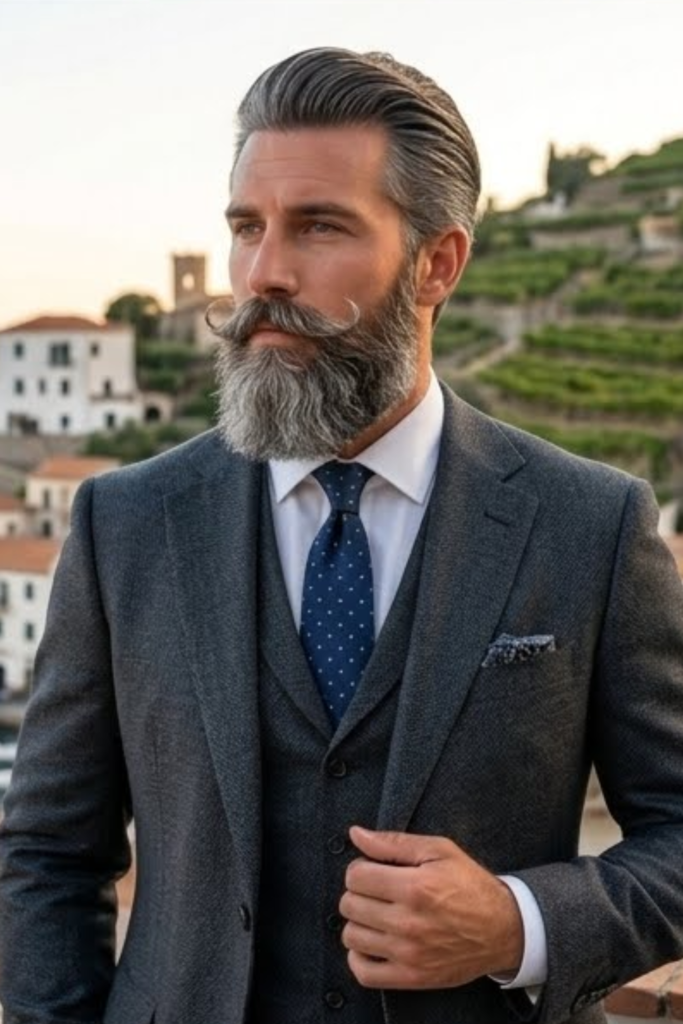 Save
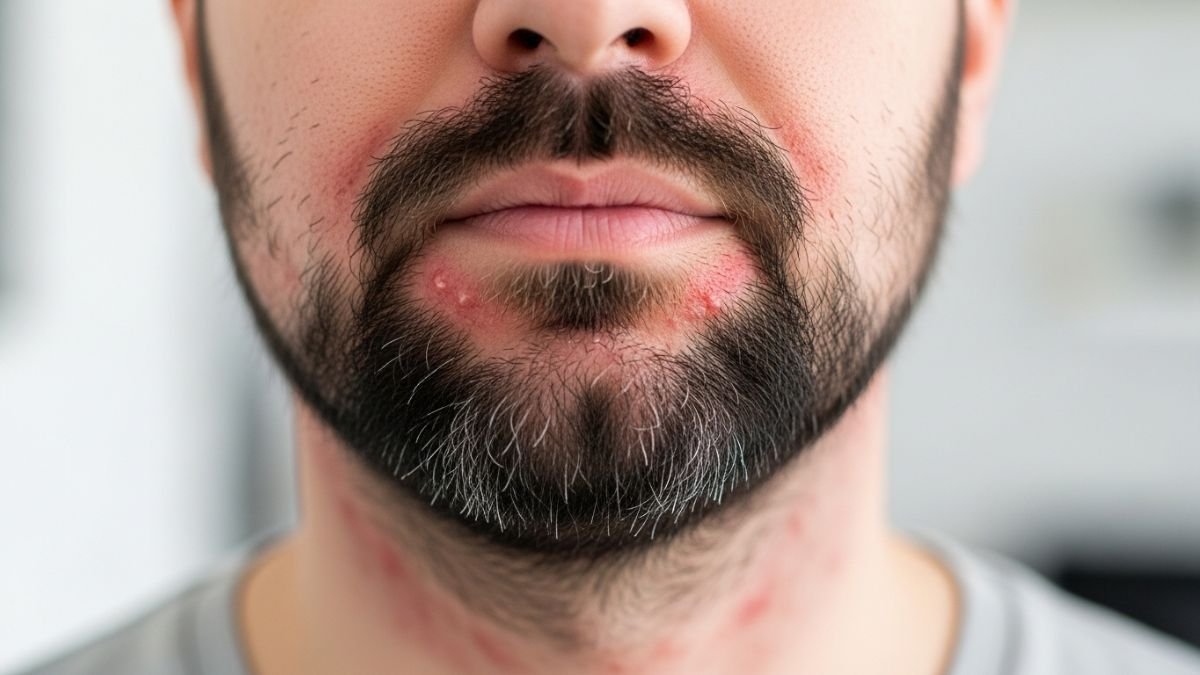
SaveGrey hair at Bandholz length requires more consistent conditioning than dark hair because grey hairs have less natural melanin and tend to be coarser and drier. Increase the beard oil application to twice daily, morning and night, when the beard is predominantly grey. A leave-in beard conditioner applied after washing prevents the coarse grey hairs from frizzing at the outer surface of the beard.
12. The Curly Bandholz
A Bandholz on naturally curly or coily facial hair. Curly facial hair behaves differently from straight hair at Bandholz length: the curls compress the apparent length significantly, which means a curly Bandholz at twelve months of growth appears shorter than a straight Bandholz at the same growth period. Different beard styles suit different hair textures, and curly hair produces distinct shapes within the same style. The curly Bandholz has more width and volume than the straight version and requires different maintenance to keep the curls defined rather than frizzy.
 Save
SaveA leave-in beard conditioner with a curl-defining formula keeps the curls in the curly Bandholz clumped and defined rather than expanding into frizz. Apply to a damp beard after washing, scrunch upward from the tips toward the roots, and allow to air-dry without touching. Combing a curly Bandholz while dry causes immediate frizz. Use a wide-tooth comb on a damp, conditioned beard only.
13. The Dark and Dense Bandholz
A Bandholz on thick, dark facial hair with high density throughout the cheeks, chin, and mustache. The dark dense Bandholz is the version most commonly associated with the style’s visual identity because the high contrast between dark beard and skin produces the most dramatic silhouette. The Bandholz is known for its long, thick appearance, with the mustache blending seamlessly into the full beard. Both characteristics are most visible and most impactful on thick, dark facial hair.
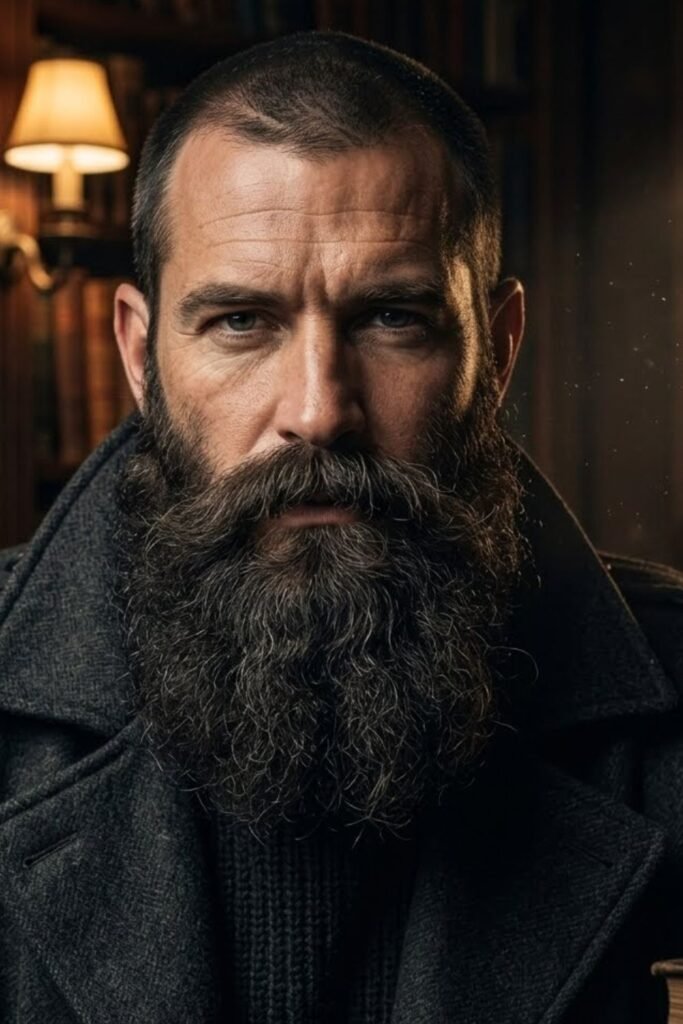 Save
SaveHigh-density beards at Bandholz length require more product volume than medium-density beards because the oil needs to penetrate more hair to reach the skin beneath. Apply beard oil in two stages: first distribute through the outer surface, then work a second application upward from underneath to reach the skin at the root. Dry, itchy skin beneath a dense long beard is the most common maintenance failure at this density level.
14. The Corporate Bandholz
A Bandholz grown to mid-chest length, maintained with a more defined cheek line and a consistently trimmed mustache, worn in professional environments. Eric Bandholz’s own origin story is the direct reference: he grew the beard in a corporate context and ultimately left to pursue it. In 2026, the corporate Bandholz represents men who have found workplaces that accommodate the style. Men are choosing styles that suit their lifestyle, and the corporate Bandholz is the Bandholz adapted for professional daily wear rather than the full freeform commitment.
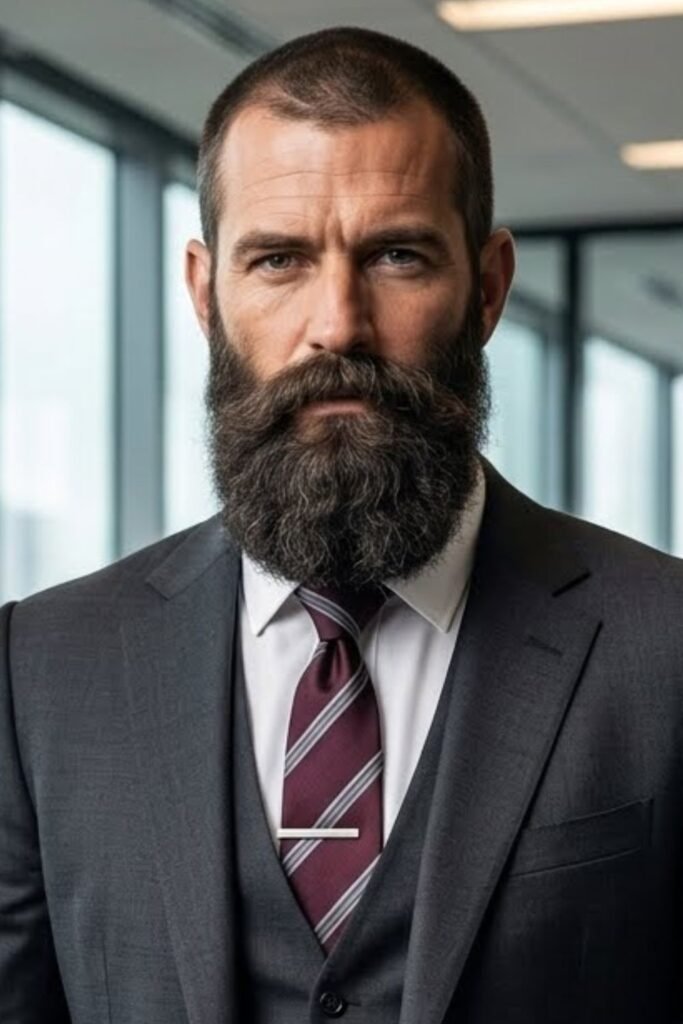 Save
SaveThe corporate Bandholz differs from the freeform version only in the frequency and precision of its maintenance. Trim the mustache every ten days rather than two weeks. Define the cheek line once per month rather than leaving it fully natural. Apply beard balm in the morning to give the beard a consistent shape throughout the work day. The length and the mustache connection remain fully Bandholz. The execution is simply more managed.
15. The Patchy Bandholz
A Bandholz attempted on facial hair with uneven density, thinner patches at the cheeks, and fuller growth at the chin and mustache. Patchy beards are increasingly embraced, and with proper grooming they can look fashionable and confident. A patchy Bandholz leans into the uneven density rather than fighting it. The thinner cheek sections read as a natural variation in the overall long beard shape rather than a deficit.
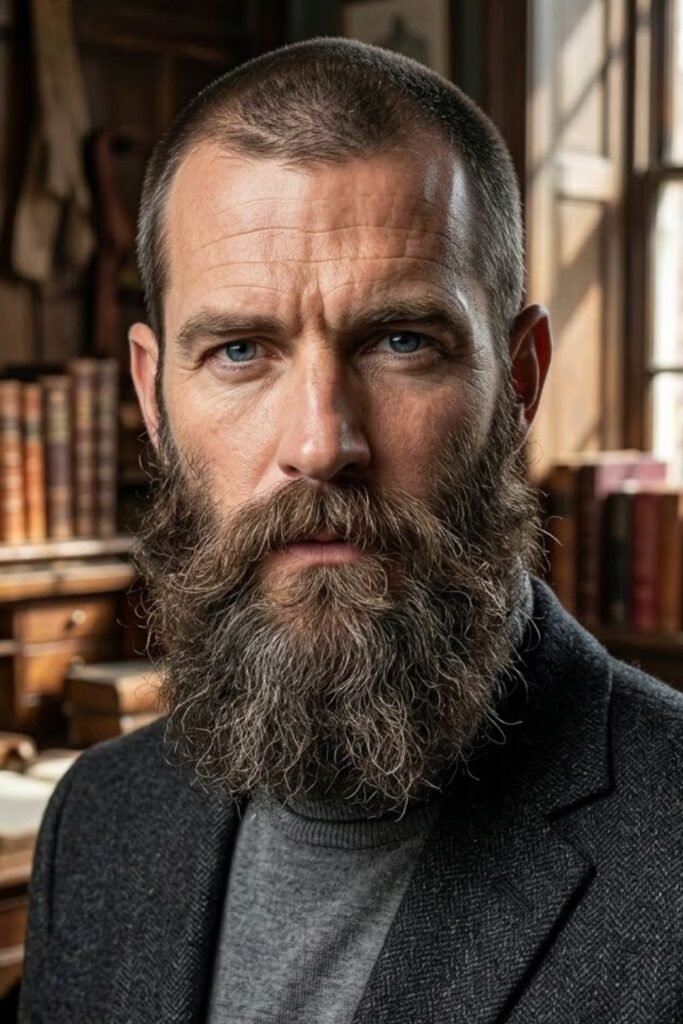 Save
SaveA patchy Bandholz requires longer growth time than a dense one because extra length adds weight that pulls patchy sections downward and makes them appear fuller than at shorter lengths. At six months a patchy Bandholz looks sparse. At twelve months the additional weight compresses the patches and the overall beard reads as more cohesive. Minoxidil applied topically to thin beard sections is the evidence-backed option for stimulating additional growth in persistently sparse areas if the patchy texture is unwanted.
Bandholz Beard Grooming: What the Routine Actually Looks Like
Daily Routine
Apply beard oil every morning without exception. At Bandholz length, the skin beneath the beard does not receive natural sebum distribution the way shorter beards do. The oil does two jobs: hydrating the skin to prevent itching and flaking, and conditioning the hair shaft to prevent dryness and split ends at the tips. Use four to six drops for a six-month Bandholz and eight to ten drops for a twelve-month or yeard length. Work from the skin outward, then from the tips upward, to coat the full length.
Follow with a beard balm to shape and hold. The balm contains butters and waxes that add a light hold the oil does not provide. Work the balm through with a boar bristle brush, stroking downward from the cheeks and upward from the chin to train the hair into the Bandholz’s characteristic full, connected shape. This step takes three minutes and is the difference between a Bandholz that looks maintained and one that does not.
Weekly Routine
Wash the beard with a dedicated beard shampoo two to three times per week. Standard shampoo strips the natural oils from beard hair faster than it does from scalp hair because beard hair is coarser and drier. Use a beard-specific formula, Beardbrand Utility Wash is built for this, and follow with a beard conditioner left on for two minutes before rinsing. After washing, apply oil while the beard is still slightly damp. Damp hair absorbs oil more efficiently than fully dry hair.
Monthly Routine
Trim the mustache above the lip line once every two to three weeks. This is the only regular cutting involved in a standard Bandholz. The mustache should stay just above the upper lip, connected to the beard at the corners, without covering the mouth. Everything else, the cheek hairs, the perimeter, the chin length, stays untouched in a freeform Bandholz or is lightly shaped in the corporate and shaped variations once per month.
Frequently Asked Questions
What is a Bandholz beard?
A Bandholz beard is a long, full beard with a connected mustache that is allowed to grow freely without a defined length limit. It is named after Eric Bandholz, who founded Beardbrand in 2012 after leaving a corporate job that would not accept his beard. The Bandholz differs from the Garibaldi by growing past the 20-centimetre mark and from the Viking beard by the mustache’s full connection and integration into the beard.
How long does a Bandholz beard take to grow?
Six months is the minimum growth time for a Bandholz beard, with twelve months producing the full silhouette most associated with the style. A yeard, twelve months of growth with zero cutting, produces the longest Bandholz variation. The growth phase requires patience because the beard may appear uneven and unkempt before the length and density reach the point where the Bandholz shape becomes apparent.
What face shapes suit a Bandholz beard?
Oval and rectangular face shapes suit the Bandholz best. Oval faces have the most flexibility because their balanced proportions work with every Bandholz length and width variation. Round faces benefit from a Bandholz grown with more chin length and slightly narrower cheeks to add visual face length. Square faces need the shaped Bandholz version with selectively trimmed cheek width to prevent over-emphasising the jaw angle.
How do you maintain a Bandholz beard?
Daily beard oil applied from skin to tip, a beard balm worked through with a boar bristle brush in the morning, beard shampoo and conditioner two to three times per week, and a mustache trim above the lip line every two to three weeks. That is the full Bandholz maintenance routine. The only cutting in a freeform Bandholz is the mustache trim. Everything else is product application and brushing.
What products are best for a Bandholz beard?
Beardbrand Tree Ranger Beard Oil for daily hydration at long lengths, Beardbrand Utility Balm for daily shaping and hold, Beardbrand Utility Wash as a dedicated beard shampoo, and Fisticuffs Moustache Wax for the handlebar Bandholz variation. A boar bristle beard brush is the tool that makes the daily balm routine distribute correctly through the full depth of a long beard. A wide-tooth comb handles detangling on curly and dense beard textures without causing frizz.
Can you grow a Bandholz beard with patchy facial hair?
Yes. Patchy beards are increasingly embraced and can look fashionable with proper grooming. A patchy Bandholz benefits from additional growth time because extra length adds weight that makes sparse sections appear fuller. At twelve months, a patchy Bandholz looks considerably more cohesive than at six months. Minoxidil applied topically is the evidence-backed option for stimulating growth in persistently sparse areas.
Final Thoughts
The Bandholz beard in 2026 is not the unkempt statement it might have been five years ago. It is a maintained, intentional, lifestyle-aligned beard choice that requires genuine commitment but rewards it with a look no shorter beard can produce. The style has fifteen variations covering every growth stage, face shape, hair texture, and professional context.
Start with the daily oil routine before the beard is long enough to need it. The habit built at two months makes the maintenance automatic at twelve. Pick the variation that matches your face shape, your workplace, and your patience level. Then grow it and maintain it without compromise.