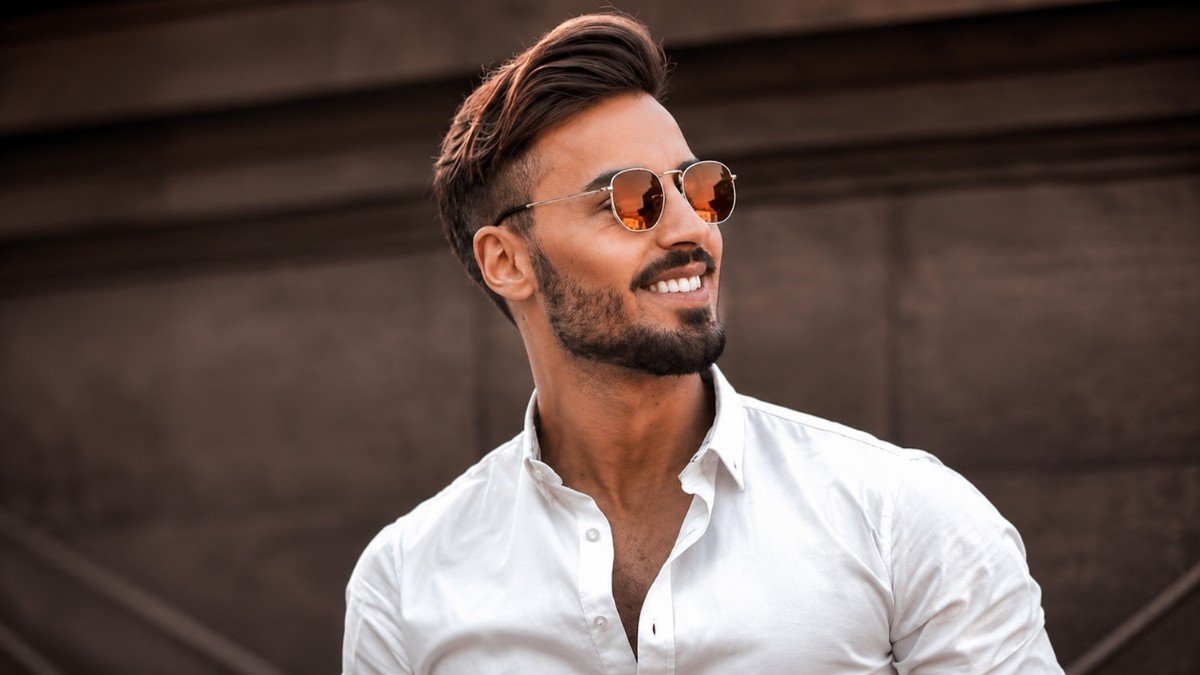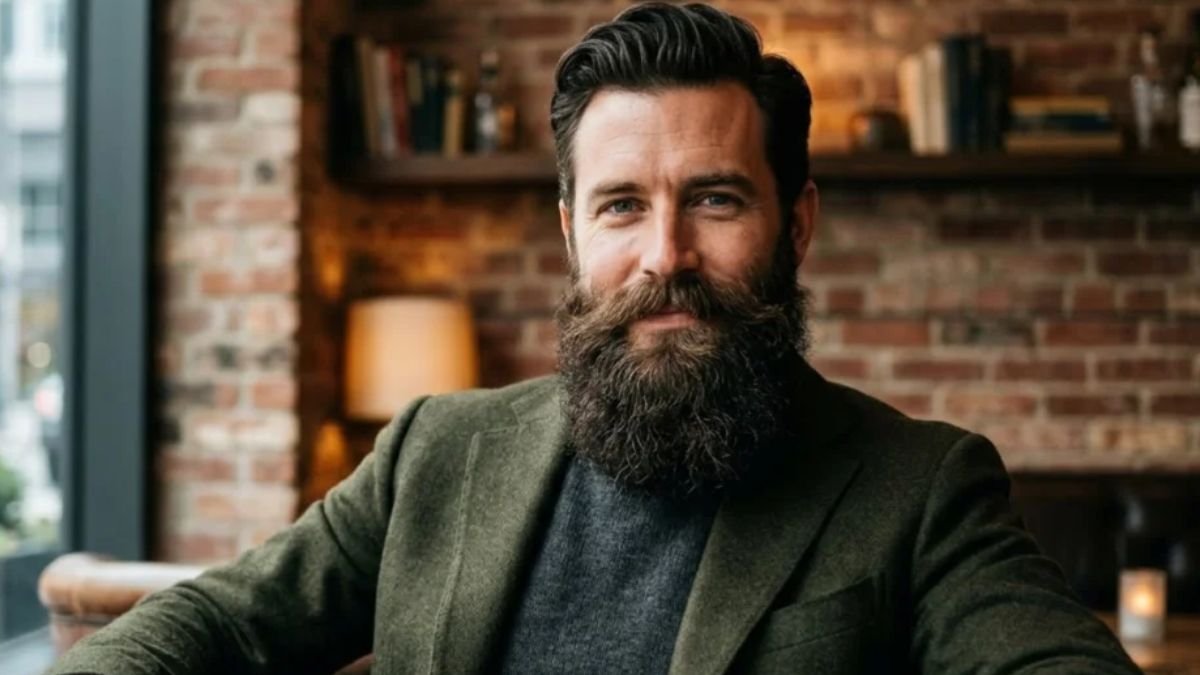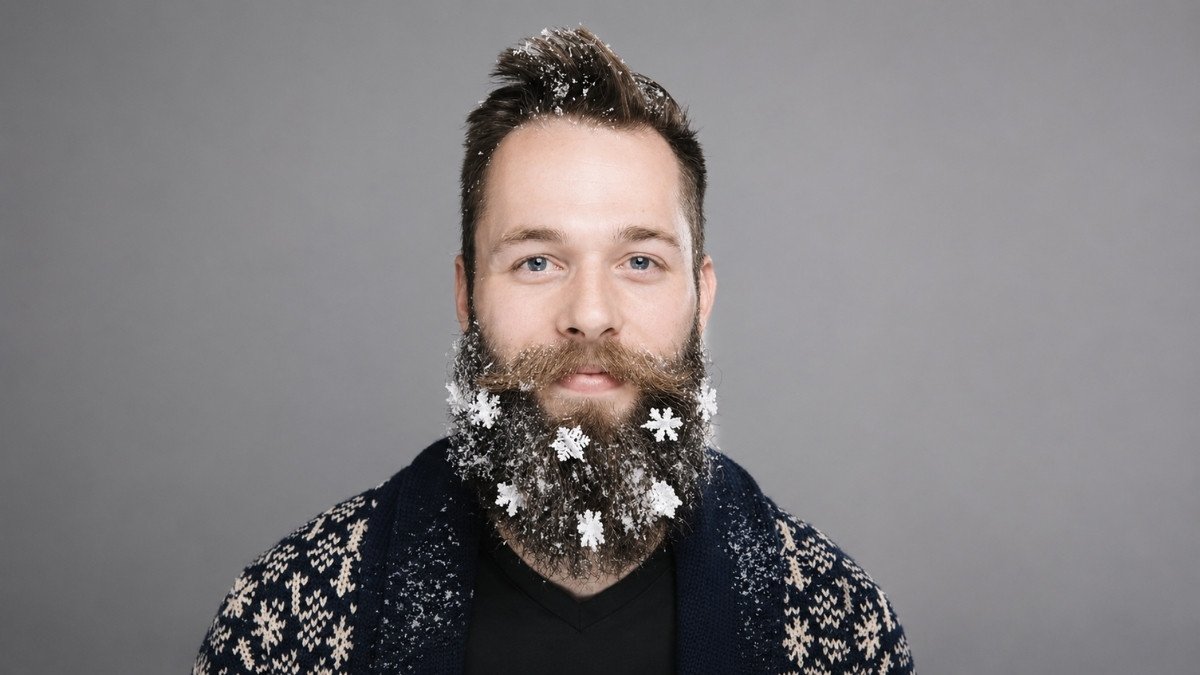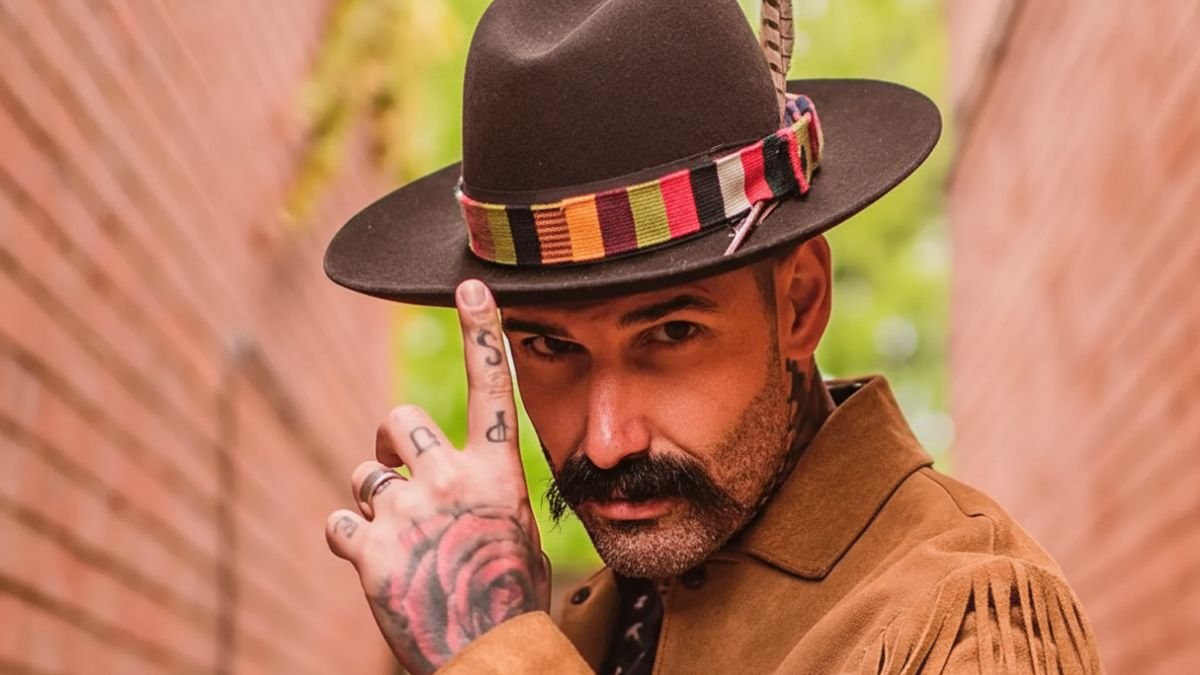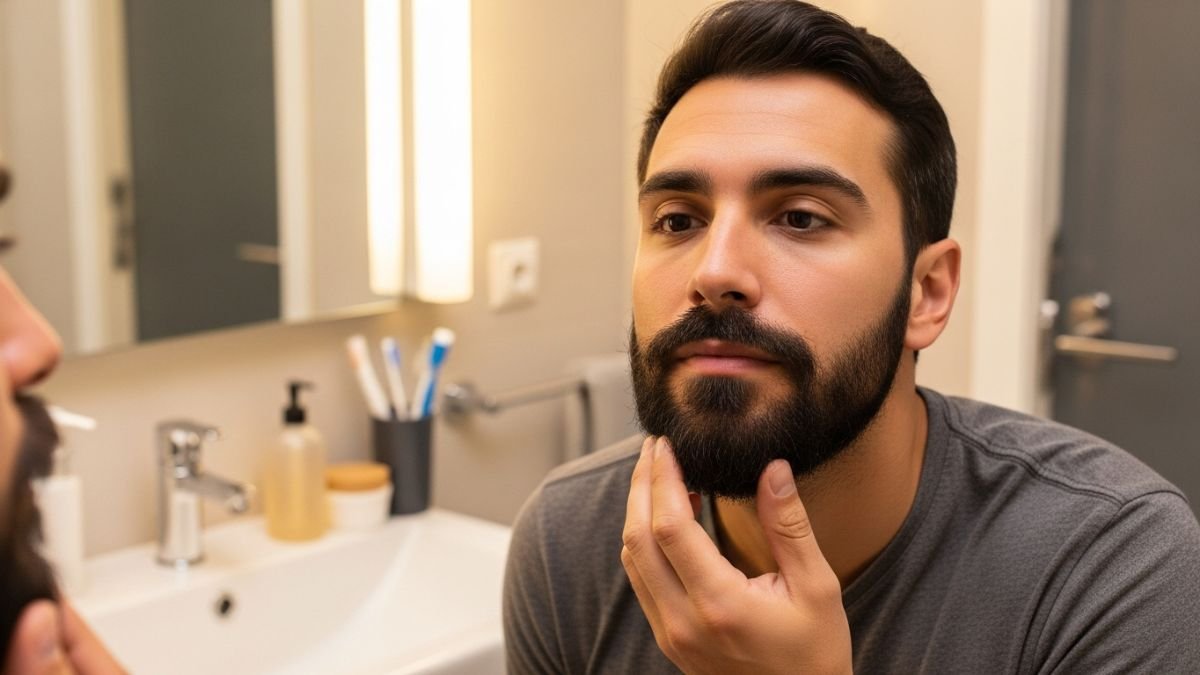

Here is the mechanical fact that everything else follows from. Short hair removes volume from the top of your head, which shifts the visual weight downward and makes the beard the focal point.
With a buzz cut, a fade or a crop, your beard becomes your main feature. It is the first thing people notice, so match it to your hair instead of choosing it in isolation.
There is a usefully specific rule for that proportion, and it is stated in clipper numbers: align beard thickness with your haircut length. A one or two guard suits light stubble. A three or four pairs with a thicker beard.
For haircuts to pair with these beards, see our fade and beard combos, buzz cut ideas and haircuts with a light beard.
Get that ratio right and almost anything works. Get it wrong and the face looks bottom-heavy or oddly bare, regardless of how well either element is groomed on its own.
Two Rules Before the Styles
Match the weights. One or two guard with stubble, three or four with something fuller. A heavy beard under a skin fade is a strong look but a deliberate one, and it needs sharp lines everywhere to stop it reading as unbalanced.
Mind the sideburn transition. This is where short hair and beards go wrong specifically. The point where the haircut meets the beard needs proportional blending, or the two read as separate things stuck to the same head. Ask your barber to blend the beard into the fade rather than treating them as two jobs.
You can also go the other way and disconnect them deliberately, with a hard line between hair and beard. That works, but it has to look chosen. The bad version is an accidental gap.
Minimal, for the Shortest Cuts
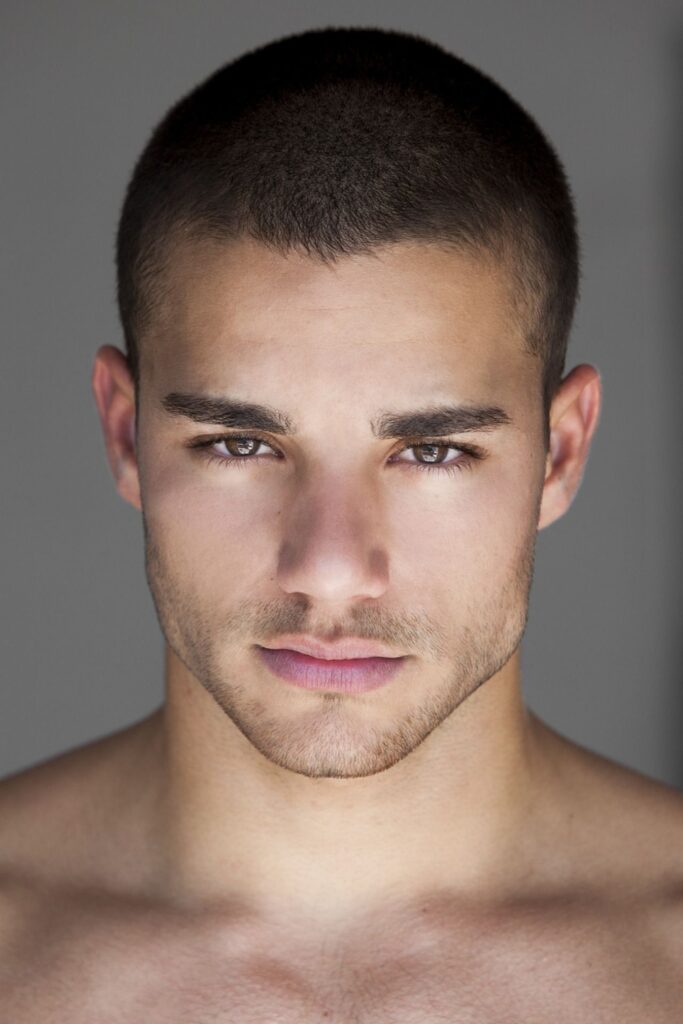
1. Five O’Clock Shadow
The lowest-commitment beard there is. Light, minimal stubble, shaved down in the morning and back by evening.
It suits almost every face shape and skin tone, and it is forgiving of uneven growth, which makes it the honest recommendation for anyone whose beard comes in patchy.
Keep the razor sharp and moisturise afterwards to avoid irritation. That is the entire routine.
 Save
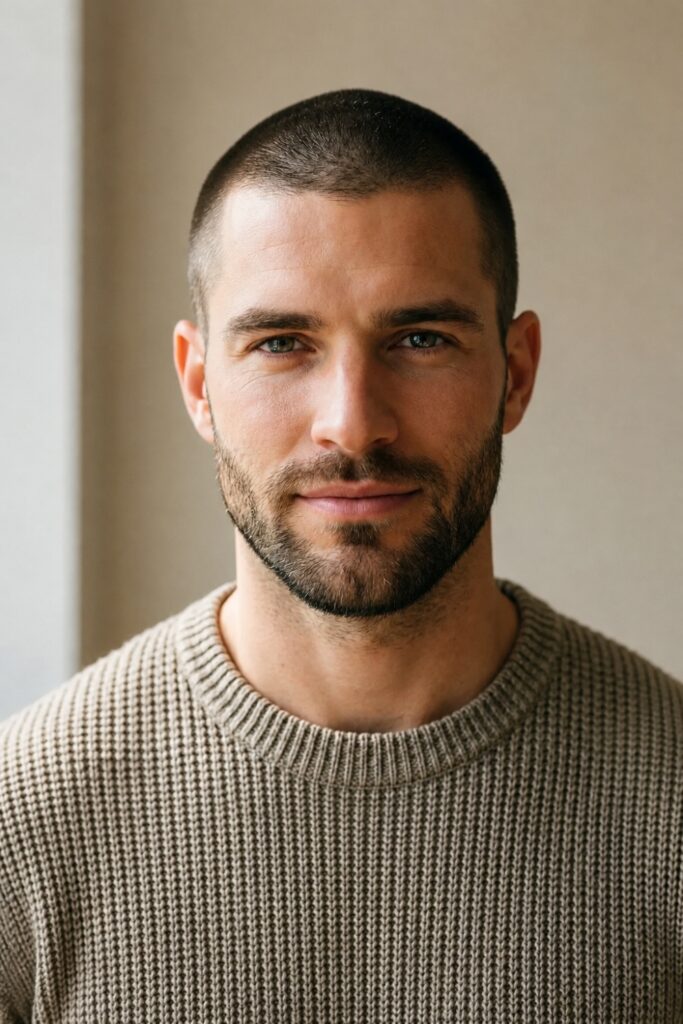
2. Heavy Stubble
A few days of growth, kept even with a guard.
The best single pairing for a one or two guard buzz, because the weights match. It adds definition to the jaw without adding bulk to a face that has no hair volume to balance it.
Tidy the neckline even at this length. An untidied neckline is what makes stubble read as unshaven rather than deliberate.
 Save
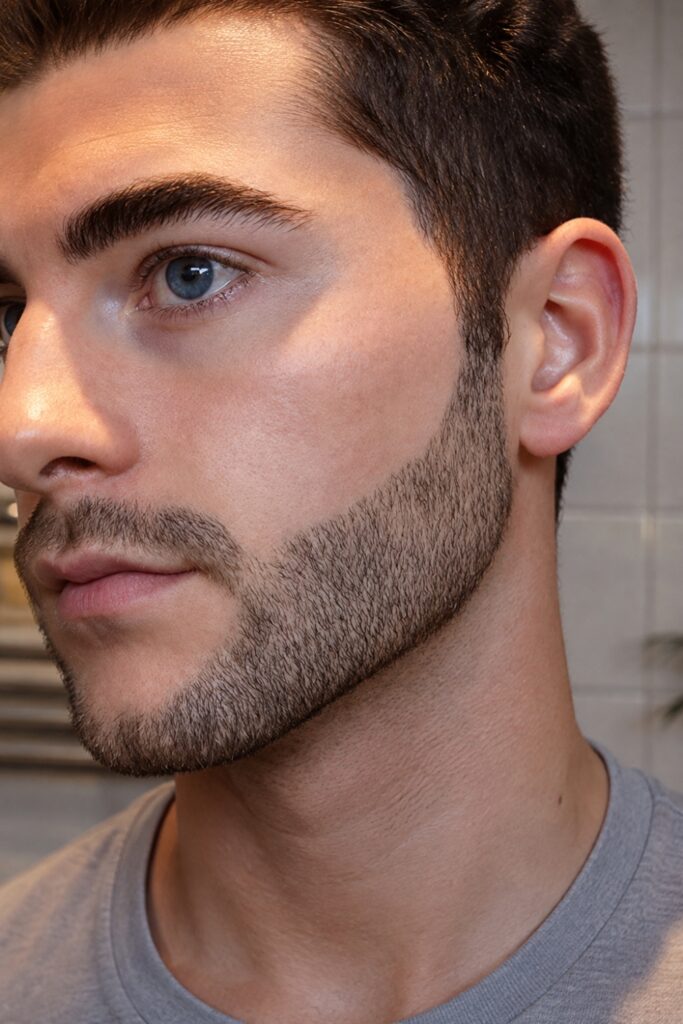
3. Stubble With Defined Cheek Lines
The same length with the cheek line cleaned up into a sharp edge.
The line is what turns stubble into a style. It costs two minutes and it is the difference between looking groomed and looking like you did not get round to shaving.
Follow your natural cheek line rather than raising it. A line drawn too high looks drawn.
 Save
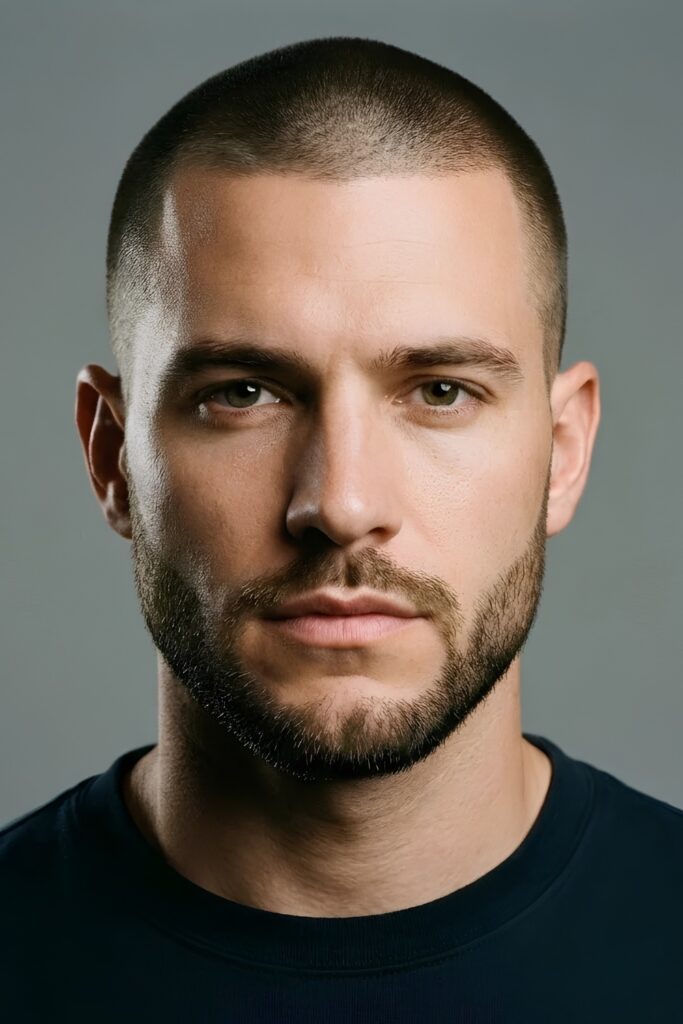
4. Chinstrap
A narrow band following the jawline, often with a connected moustache.
Precision meeting precision, since a buzz cut is already an exercise in clean lines. It highlights the jaw and cheekbones and delivers maximum definition for minimal bulk.
It suits defined jawlines specifically. On a softer jaw there is nothing for the line to follow.
 Save
Short and Structured
5. The Short Boxed Beard
Full but closely trimmed, with sharp cheek lines and a defined neckline holding a square shape.
The most professionally versatile beard here, and the one that puts to rest the idea that beards and formal settings do not mix. Short dark hair with a controlled boxed beard walks into a boardroom without comment.
Book regular trims. The boxed shape depends entirely on the lines staying exact.
 Save
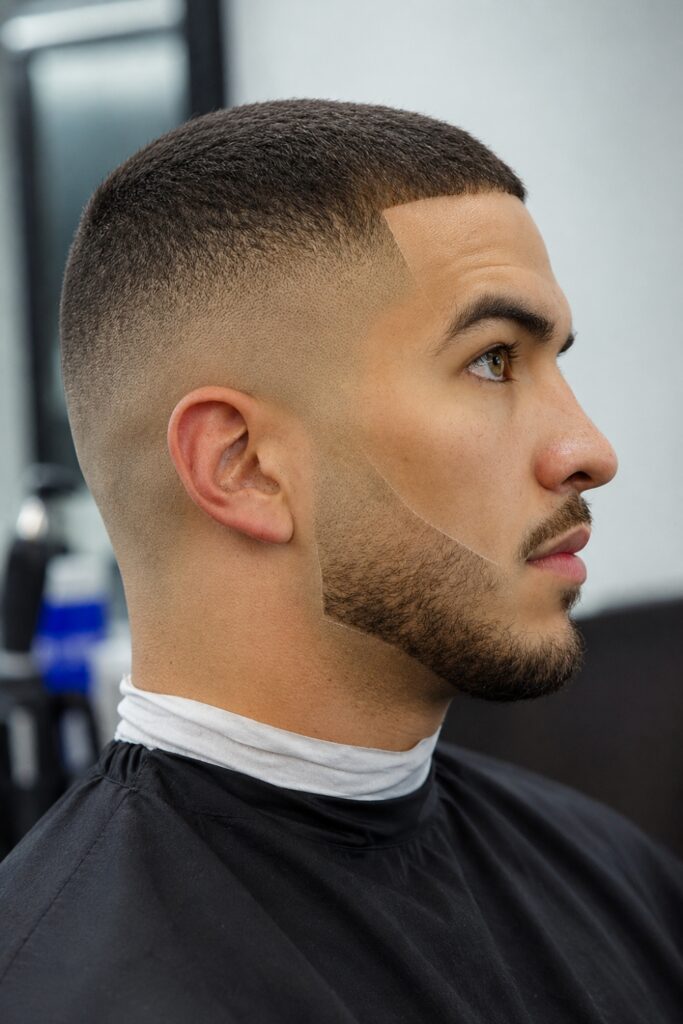
6. The Tapered Beard
Fuller at the chin, narrowing toward the ears.
The taper mirrors what a fade does on the head, which is why the two look coherent together. It highlights the jawline and keeps the sides from adding width.
The most naturally sympathetic beard to a fade haircut, and the easiest to blend at the sideburn.
 Save
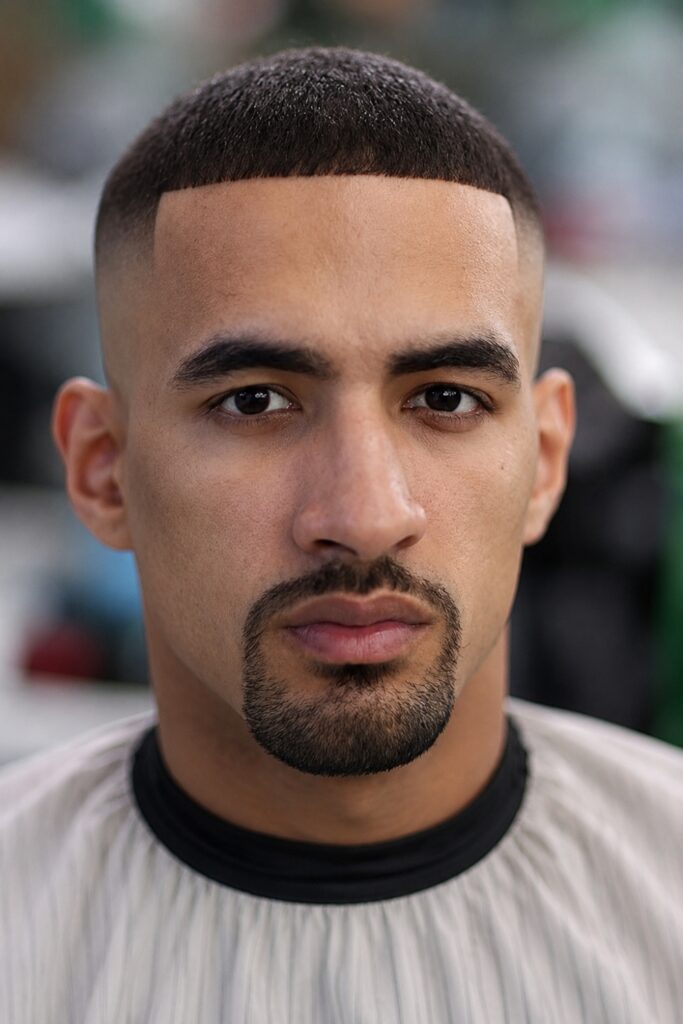
7. The Circle Beard
A chin patch and moustache forming a neat circle, cheeks clean.
Balanced proportions and versatile across professional and casual settings. It adds definition without the bulk that overwhelms a minimal haircut.
Suits square faces particularly, since the rounded shape softens a hard jawline rather than reinforcing it.
 Save
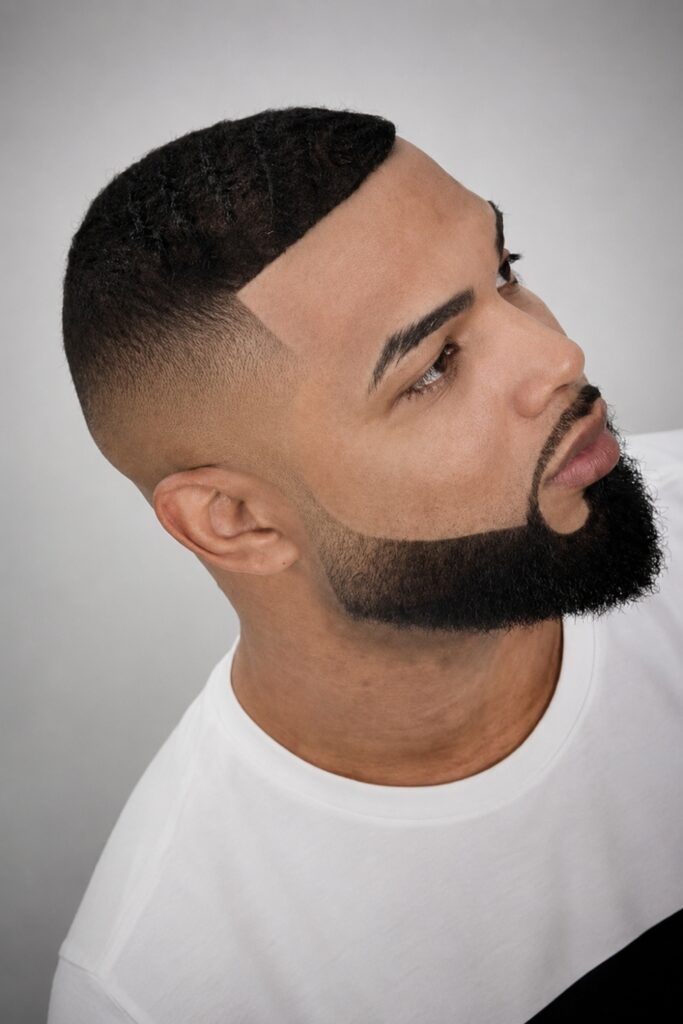
8. The Goatee
Chin only, with or without a connected moustache.
Adds definition to the chin specifically, which makes it useful on narrower or softer jawlines where a full beard has nothing to shape.
Pairs cleanly with a low fade for structure without bulk.
 Save
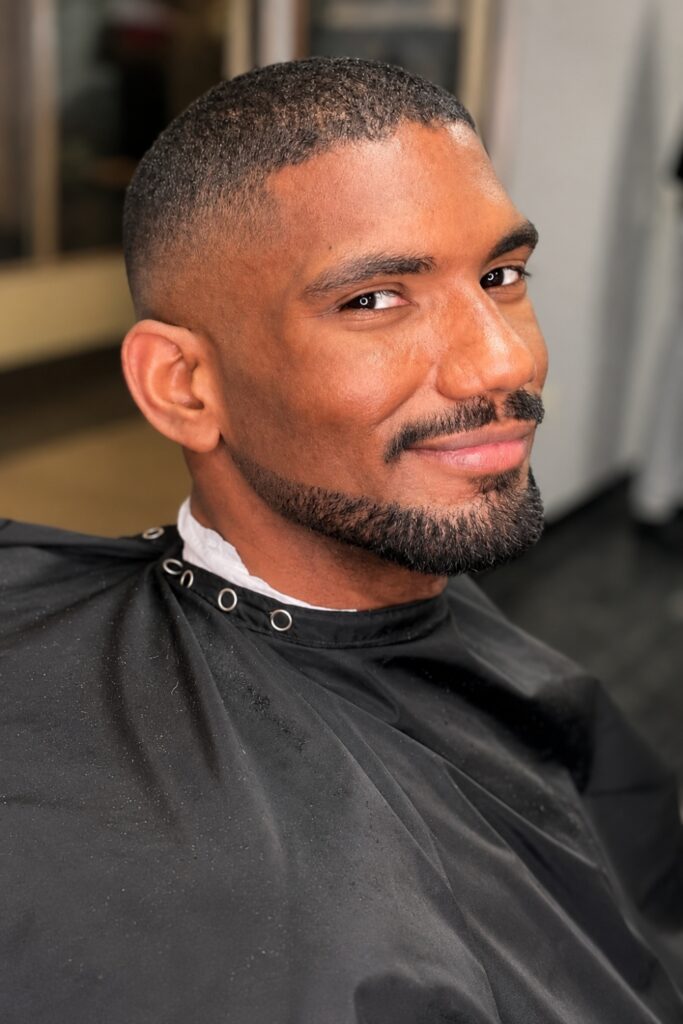
9. The Balbo
A moustache with a chin patch beneath it, cheeks clear, the moustache disconnected from the chin section.
Keeps the lower face open, which matters if your haircut has any height or volume at the front. A textured crop or a short quiff with a Balbo stays balanced where a full beard would make the whole face busy.
More distinctive than a goatee and considerably less common.
 Save
Fuller Beards
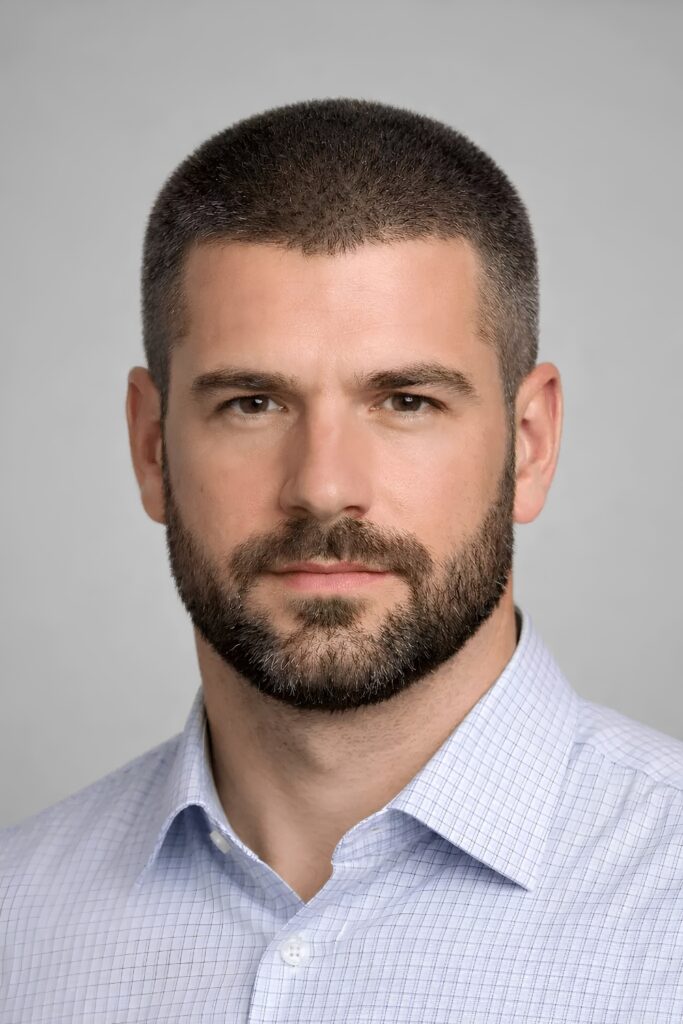
10. The Short Full Beard
Cheeks, jaw and chin covered, trimmed short and even throughout.
The classic buzz cut pairing. The cropped hair balances the fuller beard and the whole thing reads as clean and authoritative rather than heavy.
Low guard on the clippers for the head, short and even on the beard, sharp neckline. It suits most face shapes.
 Save
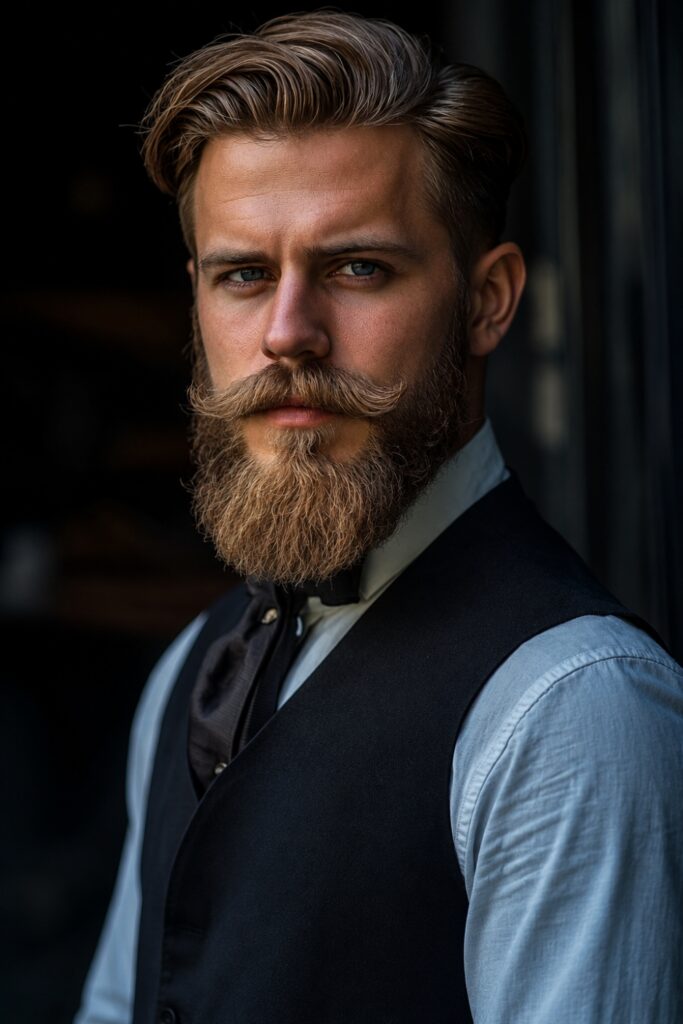
11. The Verdi
A rounded full beard with a separately styled moustache.
More elegant than a plain full beard and more work. The moustache is styled independently, which is what distinguishes it and what makes it read as considered rather than simply grown.
Strong contrast against a buzz cut, and it suits formal settings better than its bulk suggests.
 Save
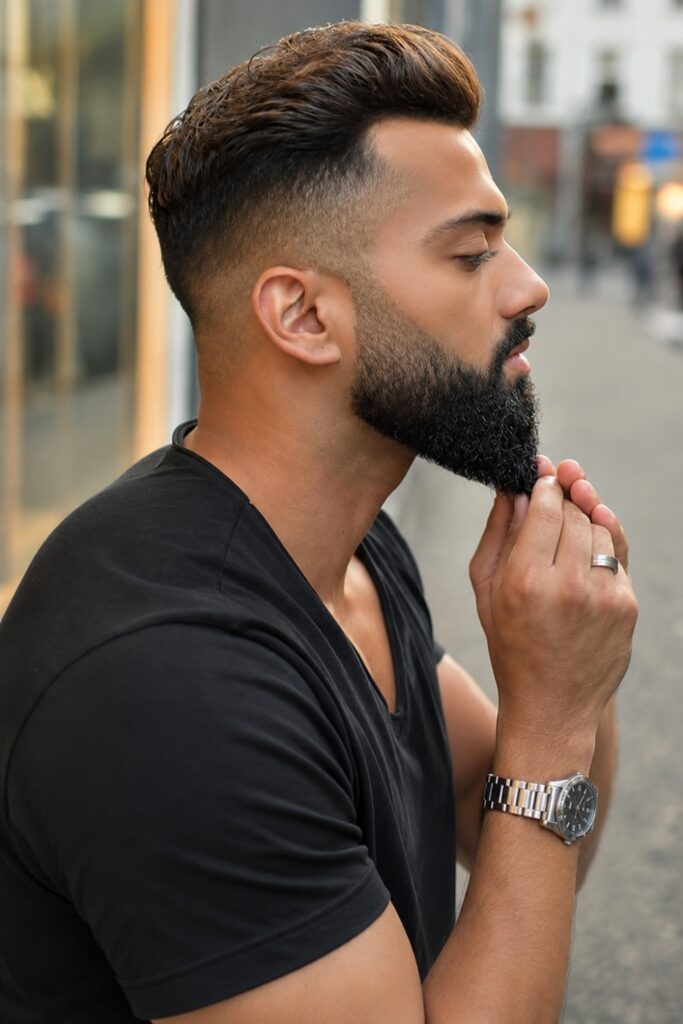
12. The Short Ducktail
Fuller at the chin, tapering to a point, kept short overall.
A shape rather than a length, and the pointed chin adds visual length to a round face, which is exactly what a buzz cut alone does not do.
The most interesting silhouette in this section without committing to a long beard.
 Save
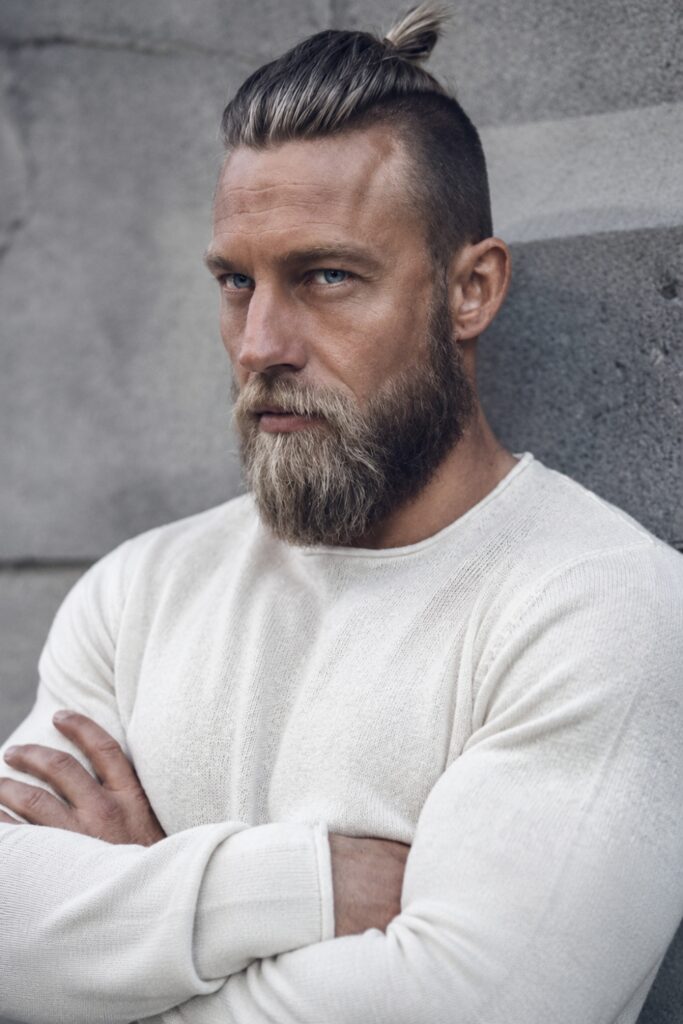
13. The Short Viking
Shorter at the cheeks, fading into slightly longer chin hair, with a strong horizontal jawline.
Rugged but groomed, and the horizontal emphasis at the jaw is the point. Sharp lines around the neck and cheeks are what keep it from looking neglected.
Best for anyone who wants weight and structure without length.
 Save
Long Beard, Short Hair
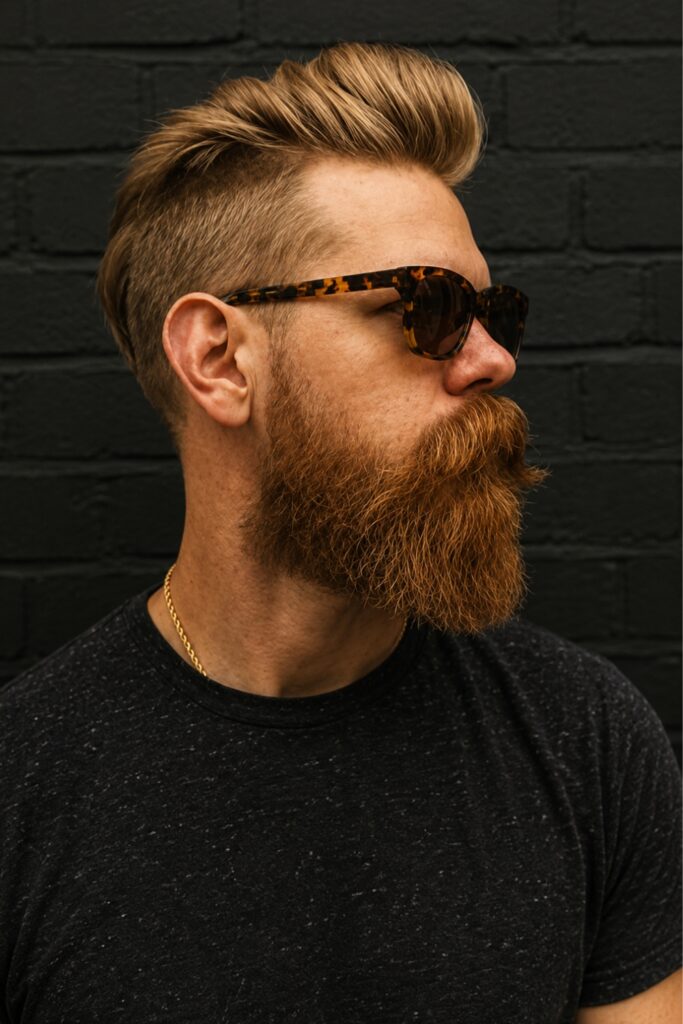
14. The Bandholz
Full, natural and long, with the sides of the head buzzed.
Long beards suit short hairstyles, because they offset one another without stealing focus. The buzzed sides create space between hair and beard so neither swamps the other.
Expect around three months of growth before shaping. There is no shortcut and trimming too early is how people abandon it.
 Save
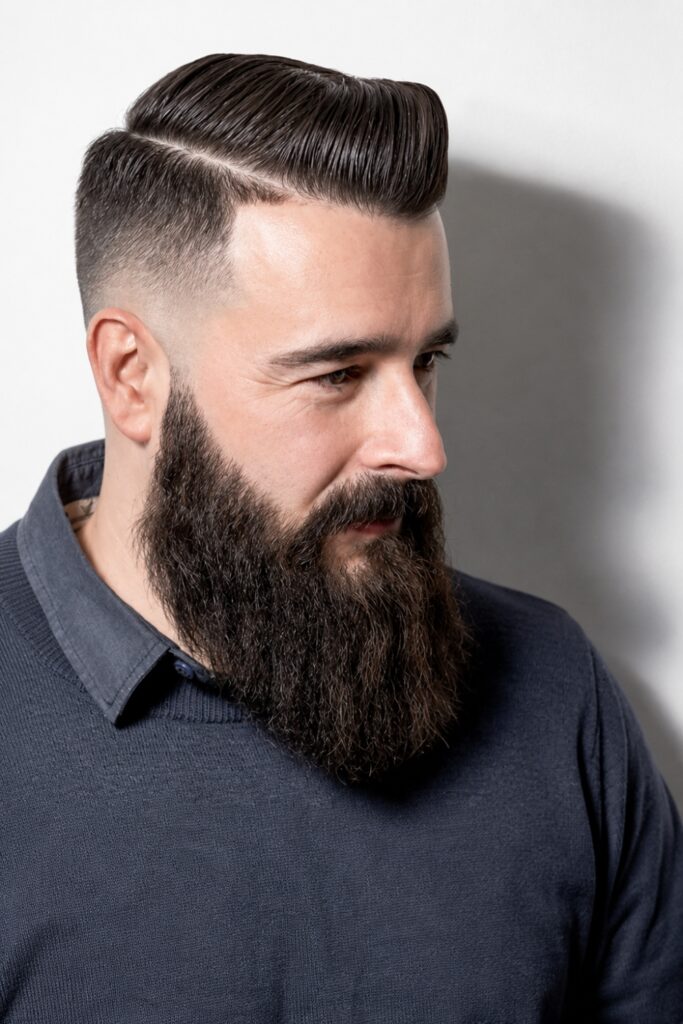
15. Long Beard With Short Back and Sides
Length on the face, minimal on the head, with a hard distinction between the two.
The maximum-contrast version of this article’s whole premise. All the visual weight sits below the jaw, deliberately.
Grooming becomes the whole job. A long beard with a short cut looks superb maintained and unmistakably unkempt when it is not.
 Save
Two Alternatives
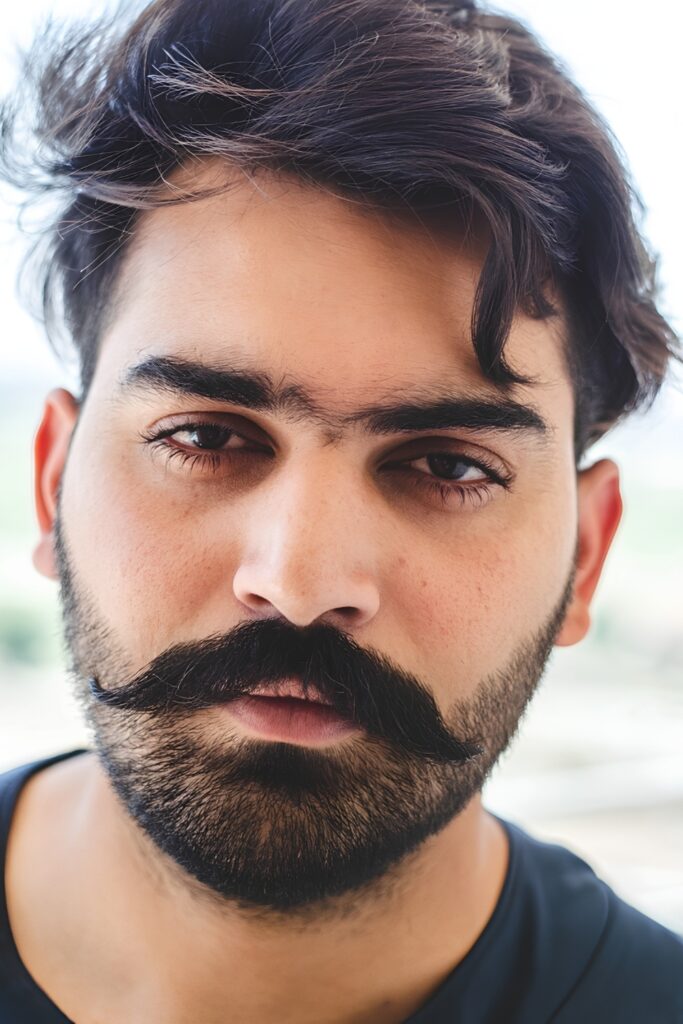
16. Moustache-Led
A short beard with a deliberately heavier moustache, so the moustache becomes the focal point.
An unusual and sharp balance. The idea is to let the moustache carry more weight than the beard without the two looking disconnected, which takes a little judgement at the trimmer.
Distinctive in a way that a standard short beard is not, and it works particularly well with a very short cut.
 Save
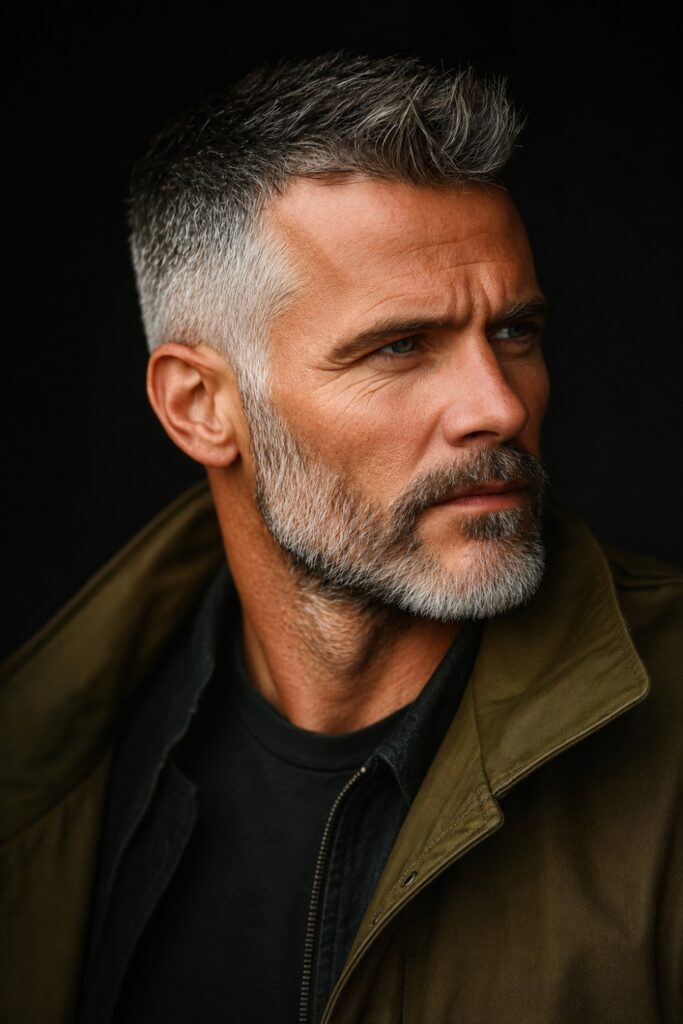
17. Salt and Pepper, Kept Short
Natural grey and dark mixed, worn short with sharp edges.
The mix of tones reads as denser than a single-colour beard of the same length, and the character is free. Keeping the cut clean and the edges sharp is what makes it read as distinguished rather than as neglected.
One of the few cases where age is a straightforward asset.
 Save
Choosing for Your Face Shape
Oval works with almost every pairing here. A fade with a tapered beard, or a short cut with a boxed beard, are both reliable starting points.
Round benefits from length at the chin and height on top, so a ducktail or anything with a pointed chin works, and a higher fade elongates the face vertically.
Square should keep the beard shorter at the sides and fuller at the chin to take advantage of the jaw. If you would rather soften it, a circle beard with rounded edges balances a strong jawline better than an angular shape does.
Heart shapes suit a balanced butch or crew cut at a three or four guard, which offsets a narrower chin. Avoid extreme contrast such as a high skin fade over a very short top.
Diamond and triangle are the honest exception. A buzz cut consistently struggles here, because a narrow forehead and chin combined with prominent cheekbones read uneven once the hair is gone. If you want it anyway, a four guard butch cut with a full beard is the workaround.
If you are unsure, start with stubble. It works for everyone and it is easy to maintain while you decide.
Before You Go Very Short
One thing worth knowing that has nothing to do with beards. Most men have small bumps, dips or asymmetries on the scalp that are completely hidden by hair, and once you buzz, every contour shows.
Run your hands over your head from front to nape and side to side before committing to a very short guard. It is not usually a problem, but it is better discovered in the mirror than in the barber’s chair.
Keeping It Right
Trim every ten to fourteen days. Symmetry drifts, particularly around the neckline, and that interval is what holds the shape.
Wash it, twice a week. A sulfate-free beard shampoo rather than whatever is in the shower. The skin underneath is the thing being cleaned, not just the hair.
Balm for texture and hold, a fine comb to train direction. Beard hair grows where it wants unless something persuades it otherwise, and combing daily in the direction you want is what does that over weeks.
Define the neckline and the cheek line, and stop there. The aim is balance rather than perfection, and over-shaping is more common than under-shaping.
If your hair is coarse or coiled, short beards are about controlling texture and keeping the lines even. Clean cheek and neck lines frame the face, and regular moisturising keeps the skin underneath comfortable, which matters more on textured growth than on straight.
Frequently Asked Questions
What beard goes with a buzz cut?
Match the weights. A one or two clipper guard suits light stubble or heavy stubble, and a three or four pairs with a thicker beard such as a short boxed beard or a short full beard. Because a buzz cut shifts visual weight downward, the beard becomes the focal point, so the proportion matters more than with longer hair.
Why does my beard look disconnected from my haircut?
Almost always the sideburn transition. The point where the hair meets the beard needs proportional blending, and a barber can fade the beard into the haircut rather than treating them as two separate jobs. Alternatively, disconnect them deliberately with a hard line, which works but has to look chosen.
What beard suits a round face with short hair?
Something with length or a point at the chin, such as a ducktail or a short boxed beard, since a structured shape adds vertical length that a round face and a buzz cut together do not provide. A higher fade also elongates the face. Avoid keeping everything uniformly short and rounded.
How often should I trim?
Every ten to fourteen days for most short styles, focusing on the neckline where symmetry drifts first. Sharper shapes such as a boxed beard or a chinstrap need the shorter end of that interval, since the whole effect depends on the lines.
I want a long beard but short hair. Does that work?
Yes, and it is one of the better combinations available. Long beards suit short hairstyles because the two offset each other without competing. Buzz the sides to create space between hair and beard. Expect around three months of growth before shaping a full style, and be realistic about the grooming, since a long beard looks unkempt very quickly without it.
Final Thoughts
Pick the beard to the clipper length rather than to a photograph. One or two guard with stubble, three or four with something fuller, and the ratio does most of the work before any styling.
Then get the sideburn transition right, because that is the single detail that separates a coherent look from two grooming decisions made independently.