

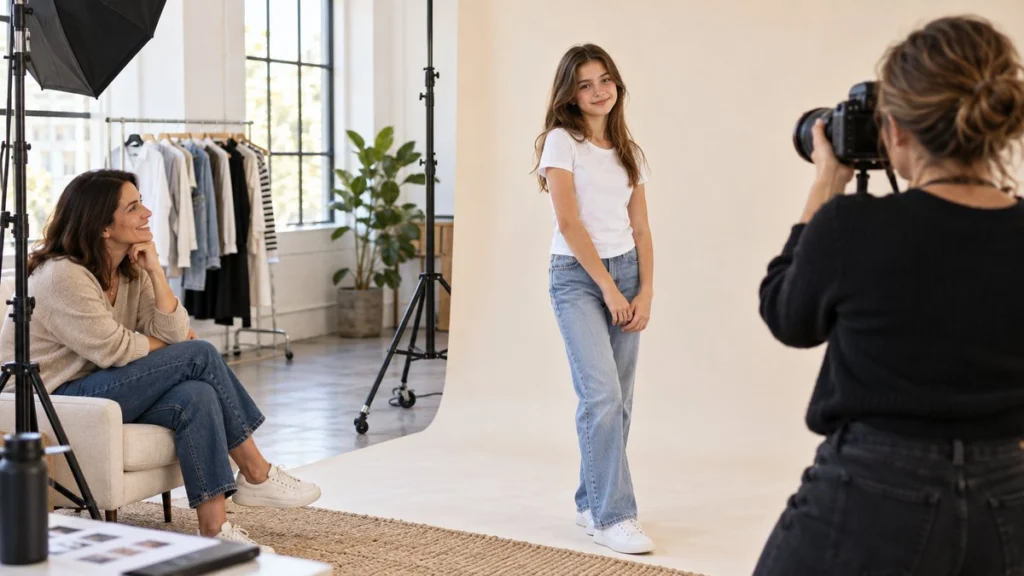
Many top models were scouted in their teens, and social media has made it easier than ever for young people to get noticed. But teen modeling also comes with real risks, from scams to pressure about appearance. This guide covers how teen modeling works, how to get started safely and what parents should know.
How Old Do You Have to Be to Model?
There’s no single minimum age. Babies and children work in commercial and catalog modeling, while high fashion is stricter. The CFDA’s health guidelines in the US advise against booking models under 16 for runway shows, and the LVMH and Kering model welfare charter says the groups won’t hire models under 16 to represent adults. In practice, many fashion models are scouted around 14 to 16 and begin working more seriously at 16 or older.
Types of Modeling for Teens
- Commercial and catalog: clothing brands, retailers and ads. This is the most common work for teens and has the fewest height requirements.
- E-commerce: product photos for online stores.
- Fashion and editorial: magazines and designer brands. Agencies usually look for specific heights and measurements.
- Runway: catwalk shows, generally for models 16 and over.
- Fitness and sports: activewear and sports brands.
- Social media and influencer work: brand collaborations through your own accounts, which should always be managed with a parent.
How to Become a Teen Model
- Talk to your parents or guardian first. In most places you can’t sign a contract without them, and they should be part of every step.
- Take simple, natural photos. You don’t need an expensive shoot to start. Agencies usually want clear snapshots: a smiling and a neutral headshot, a profile shot and a full-length photo, with little or no makeup, in plain, fitted clothes and good natural light.
- Research legitimate agencies. Look for agencies with a real office, a roster of working models and good reviews. In the US, check whether the agency is licensed where your state requires it.
- Submit online or attend open calls. Most agencies accept submissions through their websites. Go to open calls with a parent.
- Read every contract carefully. Check the commission, contract length, exclusivity and who pays for what before signing. Have a parent, and ideally a lawyer, review it.
- Keep school first. Bookings should fit around your education, and many places limit how many hours minors can work.
How to Avoid Modeling Scams
Scammers often target teens and their parents. Be careful if someone:
- Asks for money upfront to sign you, or makes you pay for their photoshoot or classes before you can join. Legitimate agencies earn a commission when you book work.
- Promises guaranteed jobs or fame.
- Contacts you through social media and asks you to keep it secret from your parents.
- Asks for revealing photos or to meet alone. A real agency or client will never ask a minor for this.
- Pressures you to sign on the spot.
If anything feels wrong, stop contact, tell a parent and report the account to the platform.
Do Teen Models Need a Work Permit?
It depends on where you live. In the US, child labor rules are set by each state, and several states treat young models like child performers. New York, for example, extended child performer protections to models under 18 in 2013, which covers work permits, working hours, education and putting part of a minor’s earnings in a trust account. California has similar rules for minors in entertainment. Check the rules in your state or country before accepting work.
How Much Do Teen Models Earn?
Pay varies widely. Many teens start with small local or e-commerce jobs and earn little at first, while a few book major campaigns. Your agency takes a commission, often around 20 percent, and you may have costs such as travel. Treat early modeling as experience rather than a guaranteed income.
Staying Healthy and Confident
Pressure to look a certain way is one of the biggest risks for young models. No job is worth your physical or mental health. Eat well, get enough sleep, keep up with school and friends, and talk to someone you trust if the industry is affecting how you feel about yourself. Organizations such as the Model Alliance advocate for better protections for models, including young people.
Pros and Cons of Teen Modeling
Pros
- Builds confidence and professional skills.
- A chance to travel and meet creative people.
- Can open doors to acting, fashion or design careers.
Cons
- Lots of rejection, even for successful models.
- Pressure around appearance.
- Time away from school and friends.
- Risk of scams or unsafe situations without proper supervision.
Final Thoughts
Teen modeling can be a fun and rewarding experience when it’s done safely, with a parent involved, a legitimate agency and school still coming first. Take your time, ask questions and never pay to be signed. If you’re interested in the wider industry, read about Black female models who shaped fashion and the famous plus-size models.


