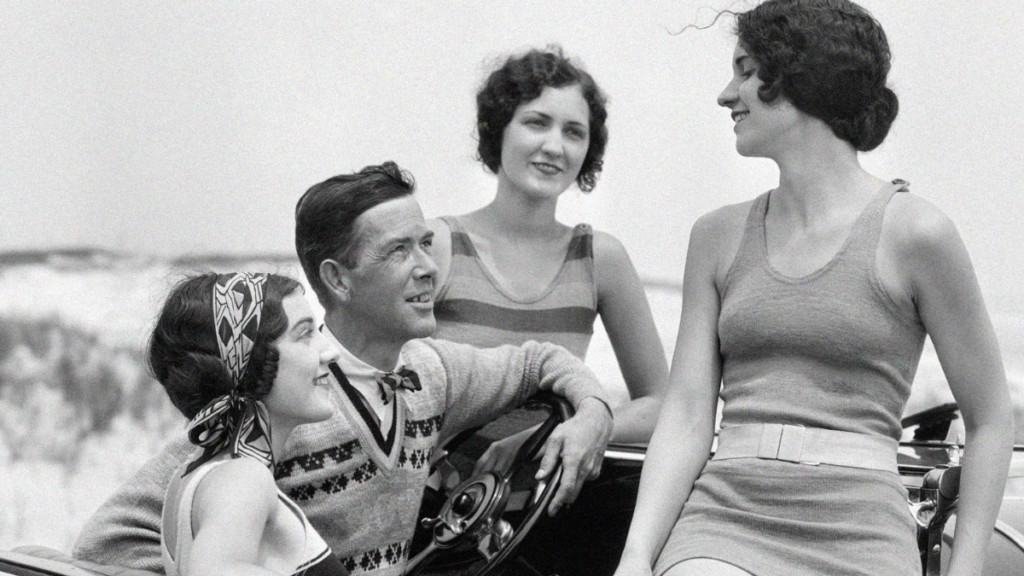
The 1920s changed how people dressed almost overnight. Women traded corsets and floor-length skirts for loose, knee-skimming flapper dresses they could dance the Charleston in. Men kept their suits but cut them looser and added sporty touches like V-neck sweaters and wide trousers. Below is a decade-at-a-glance table, then a closer look at women’s, men’s and children’s fashion, and how to wear the look today.
| Category | Key Features | Example |
| Women | Flapper dresses: Knee-length, loose silhouette | Beading for evening wear |
| Dropped waist | Boyish and modern feel | |
| Affordable fabrics (rayon, jersey) | Accessible to all women | |
| Little black dress (Coco Chanel) | Versatile and stylish staple | |
| Borrowed from menswear (Chanel) | Relaxed, androgynous look | |
| Accessories: costume jewelry, cloche hats, pearls | Added personality and sophistication | |
| Evening Wear | Dresses: sleek, knee-length, straight | Beaded for added glamour |
| Shoes: T-strap heels or Mary Janes | Comfort and style for dancing | |
| Winter Wear | Coats: cocoon fur (luxury) or fringe wraps | Warmth with a touch of flair |
| Accessories: cloche hats, headbands, pearls | Polished look with evening sparkle | |
| At-Home Wear | Dresses: simple cotton, soft hues | Comfort and practicality |
| Details: white collars, stripes, lace trim | Elevated comfort | |
| Work Wear | Uniforms: professional coats/aprons over cotton dresses | Practicality for manual labor/service jobs |
| Retail chic: uniforms/day dresses with white collars | Put-together look for saleswomen | |
| Men | Suits: 3-piece, stripes/plaids/tweeds/wools | High-waisted pants for a defined silhouette |
| Shirts: white/striped formal or check work shirts | Detachable collars for versatility | |
| Outerwear: long coats with wide lapels or short plaid vests | Dramatic or jaunty vibes | |
| Accessories: hats (fedora, derby, panama), shoes (oxfords) | Must-have for a complete look | |
| Finishing touches: collar pins, cufflinks, pocket watches | Polished and sophisticated details | |
| Athletic Influence | V-neck sweaters inspired by sports attire | Relaxed styles for everyday wear |
| Wider, looser trousers (Oxford bags) in lighter colors | A younger, more relaxed look | |
| Kids | Babies and toddlers: simple white gowns for boys and girls | Easy to wash and move in |
| Girls | Baby doll dresses, sailor-style frocks, drop-waist dresses | Adorable and trendy styles |
| Boys | Short pants with matching jackets/shirts or overalls | Dapper and practical for playtime |
| Long pants, button-down shirts, knickers (older boys) | Mimicking men’s fashion |
1920s Women’s Fashion
After World War I, women had more independence than ever, and their clothes showed it. Restrictive corsets went out, and a new, straighter silhouette came in: the flapper.
Hemlines rose from the ankle to just below the knee, a daring change from the floor-length gowns of earlier decades. Shorter skirts weren’t only about showing some leg; they let women move freely, ride in cars, play sports and dance all night.
The other signature detail was the dropped waist. Instead of nipping in at the natural waist, dresses sat low on the hips, creating a straight, rectangular shape with a boyish, modern feel.
Looking fashionable also became more affordable. Designers such as Coco Chanel championed jersey, and new fabrics like rayon (often sold as “artificial silk”) made stylish dresses available well beyond the wealthy.
Coco Chanel’s Role in 1920s Fashion
Coco Chanel was one of the decade’s biggest trendsetters. Three of her ideas still shape how women dress:
- The little black dress: Chanel’s simple black dress, featured in American Vogue in 1926, turned black from a mourning color into everyday chic. It remains a wardrobe staple.
- Borrowing from menswear: She adapted jersey, cardigans and relaxed tailoring from men’s clothing, giving women a comfortable, slightly androgynous look that broke with the corseted styles of the past.
- Costume jewelry: Chanel made faux pearls and statement costume jewelry fashionable, so a long rope of pearls or a cloche hat could finish an outfit without a fortune.
How the Flapper Look Evolved
The flapper style didn’t stay the same for the whole decade:
- Hemlines: Early-1920s dresses still reached the calf, as in the illustration below. Hemlines rose to their shortest, just below the knee, around 1926–1927, then began to drop again as the decade ended.
- Waistlines: The waist sat low on the hips for most of the decade and moved back toward the natural waist by about 1929–1930.
 Save
Fun Facts About 1920s Fashion
- Nobody knows for sure where the word “flapper” came from. One popular theory links it to young women who wore their galoshes unbuckled, so they flapped as they walked.
- Short bobbed haircuts became the defining hairstyle of the decade, often styled with sleek finger waves. See our flapper hairstyles for modern versions.
- Makeup went mainstream: dark, defined eyes, rosy cheeks and a small “cupid’s bow” red lip were the classic flapper face.
1920s Women’s Fashion for Every Occasion
The flapper dress is the decade’s best-known image, but women dressed very differently depending on where they were going.
Evening Wear
Dresses: Sleek, straight, knee-length dresses in silk, chiffon or velvet. Beading and fringe caught the light and moved on the dance floor.
Shoes: T-strap heels and Mary Janes stayed on the foot, so women could dance the Charleston all night.
Winter Wear
Coats: Wrap-style cocoon coats, often trimmed with fur collars and cuffs, were the height of luxury, while fringed shawls added flair over evening dresses.
Accessories: Close-fitting cloche hats suited the new short hairstyles. Headbands, plain or decorated with feathers or beads, added evening sparkle, along with long pearl necklaces and small beaded purses.
At-Home Wear
Dresses: Simple cotton house dresses in soft colors and prints, worn with stockings and low-heeled shoes.
Details: White collars, stripes, embroidery and lace trim made these practical dresses look neat.
Work Wear
Uniforms: Women in factory, domestic or service jobs often wore aprons or work coats over sturdy cotton dresses.
Shop and office: Saleswomen and office workers wore simple day dresses or skirts with crisp white-collared blouses. Many working women followed the latest trends too, thanks to affordable ready-to-wear clothing.
Gangster Glam
Reality check: Women connected to the era’s bootleggers dressed much like other fashionable women of the time.
Costume version: The “gangster moll” look, a pinstripe suit or wide-leg trousers with a fedora, owes more to Hollywood than history. It’s still a fun choice for a 1920s party.
1920s Men’s Fashion
The 1920s brought sharp suits, dapper accessories and a new casual streak to menswear. Men moved away from the stiff formality of the previous era toward a look that was classic, relaxed and a little playful.
 Save
The suit was still essential, but it changed over the decade. The narrow, high-buttoned suits of the early 1920s gave way to roomier cuts with wider lapels and fuller trousers.
Suits: Three-piece suits in pinstripes, plaids, tweeds and wool flannel, worn with high-waisted trousers.
Shirts: White or narrow-striped dress shirts, often with detachable collars, for the office. Check-patterned work shirts with two pockets were common for manual jobs.
Trousers: Very wide-legged “Oxford bags,” a fad from British university students, spread to young men on both sides of the Atlantic in the mid-1920s, sometimes in light colors such as gray, sand or lavender.
Outerwear: Long overcoats with wide lapels for winter, and patterned knitted vests for a more casual look.
1920s Men’s Accessories
Accessories were how men showed their personality:
- Hats: No man went out bareheaded. Fedoras and derbies for everyday wear, straw boaters and Panamas in summer, and flat caps for work and sport.
- Shoes: Cap-toe Oxfords worked for both office and evening; two-tone spectator shoes were a sportier choice.
- Finishing touches: Collar pins and tie bars kept things tidy, while cufflinks, pocket watches, canes, gloves and spats (fabric covers worn over shoes) completed the look.
1920s Athletic Influence
The 1920s were also a decade of leisure and sport, and that changed everyday menswear. Clothing from tennis and golf crossed into casual dress: V-neck sweaters, cable-knit cricket and tennis sweaters, knitted vests and baggy golf “plus fours.”
These preppy pieces never really went away. Cable knits, V-necks and pleated trousers still show up in modern men’s collections.
1920s Children’s Fashion
Children’s clothes in the 1920s were practical, with plenty of charm:
Babies and toddlers: Boys and girls both wore simple white gowns or dresses that were easy to wash and move in.
Girls: As girls grew, they wore loose smock and baby-doll dresses, sailor-style dresses and drop-waist dresses that copied their mothers’ silhouettes, often with a short bob.
Boys: Younger boys wore short pants with matching jackets or shirts, or overalls for play. Older boys dressed more like men, in button-down shirts and knickers, before moving into long trousers in their teens.
 Save
How to Wear 1920s Style Today
- For women: Choose a loose drop-waist or slip dress, add a long pearl necklace and T-strap or Mary Jane heels. For a party, go for beading or fringe with a feathered headband.
- Hair and makeup: A sleek bob or faux bob with soft waves and a deep berry lip gives an instant 1920s feel.
- For men: A three-piece suit or a vest with high-waisted, pleated trousers, a flat cap or fedora and two-tone shoes. Our gentlemen costume ideas include several Roaring Twenties looks.
- Keep it modern: Mix one or two 1920s pieces with everyday clothes rather than wearing a full costume.
FAQs About 1920s Fashion
What did women wear in the 1920s?
Loose, straight dresses with dropped waists and knee-length hems, cloche hats, long pearls, stockings and T-strap or Mary Jane shoes. Evening dresses added beading and fringe.
What did men wear in the 1920s?
Three-piece suits with high-waisted trousers, detachable-collar shirts, hats such as fedoras and boaters, and Oxford shoes. Casual wear included V-neck sweaters, plus fours and wide Oxford bags.
Why did 1920s fashion change so much?
Women’s growing independence after World War I, new dances like the Charleston, cheaper fabrics such as rayon, and ready-to-wear clothing all pushed fashion toward shorter, looser and more practical styles.
Final Thoughts
The 1920s set the template for modern dress: shorter skirts, relaxed tailoring, the little black dress and sportswear in daily life. Want to see how style kept changing? Read about 1950s summer fashion or the evolution of women’s swimwear.