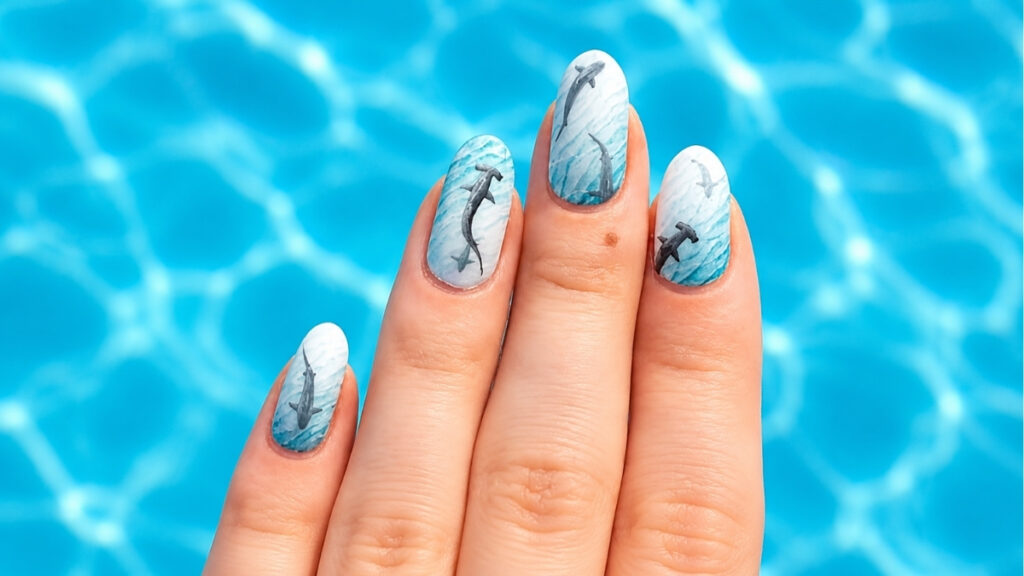
Search shark nails and you will scroll through forty images of the same thing: a grey triangle on a blue background, repeated until the ideas run out.
The fix is specificity. There are hundreds of shark species and they look nothing alike. A whale shark is covered in pale spots. A hammerhead has a silhouette you could identify from a hundred metres. A great white is not actually white. Naming the animal gives each nail somewhere specific to land rather than a vague ocean gesture, and it is the single difference between a manicure that looks designed and one that looks like a clip-art fin.
The designs below are sorted by how hard they are to execute, from things you can do at home in twenty minutes to sets that need a salon appointment.
Start With the Base Colour
Three bases carry almost everything in this category.
Stormy grey is the most versatile. It works underneath a fin, a bite pattern, or a full silhouette, and it photographs well against both pale and deep skin tones.
Deep ocean blue does the opposite job, setting a moodier and more dramatic tone. It suits the species-specific designs particularly well because it echoes actual open water.
Soft sand or pale nude is the subtle option, and the one to choose if you want the theme readable but not loud.
One more decision worth making early: scary or cute. Shark nail art splits cleanly between the two, and mixing them tends to produce a set that reads as indecisive rather than playful.
Easy: Doable at Home
1. Single Fin Accent
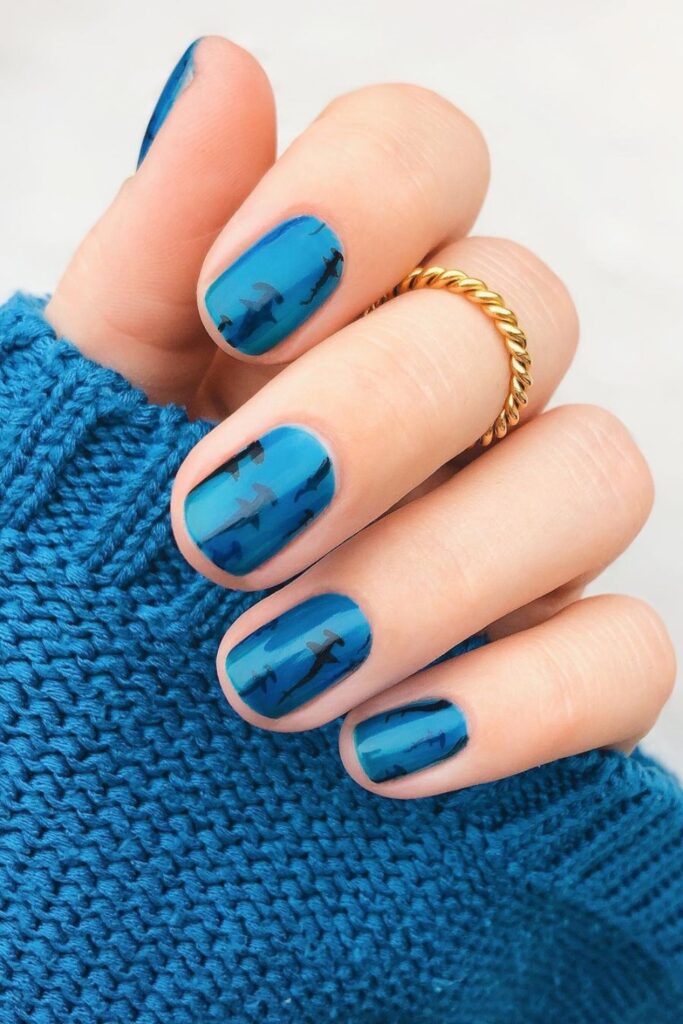
A sea blue base across all nails with one accent nail carrying a grey or black triangular fin at the tip.
The minimalist entry point and genuinely chic rather than a compromise. One triangle, painted at the free edge so the nail itself becomes the water line.
If you can paint a straight-sided triangle, you can do this. Nothing else on this list is easier.
 Save
2. Fin Through a French Tip
A classic French manicure with a small fin breaking the smile line on one or two nails.
The fin interrupting an otherwise formal French is what makes this work. It reads as a joke you are in on rather than as a themed manicure.
Also the most office-appropriate design here, if that matters.
 Save
3. Ocean Gradient
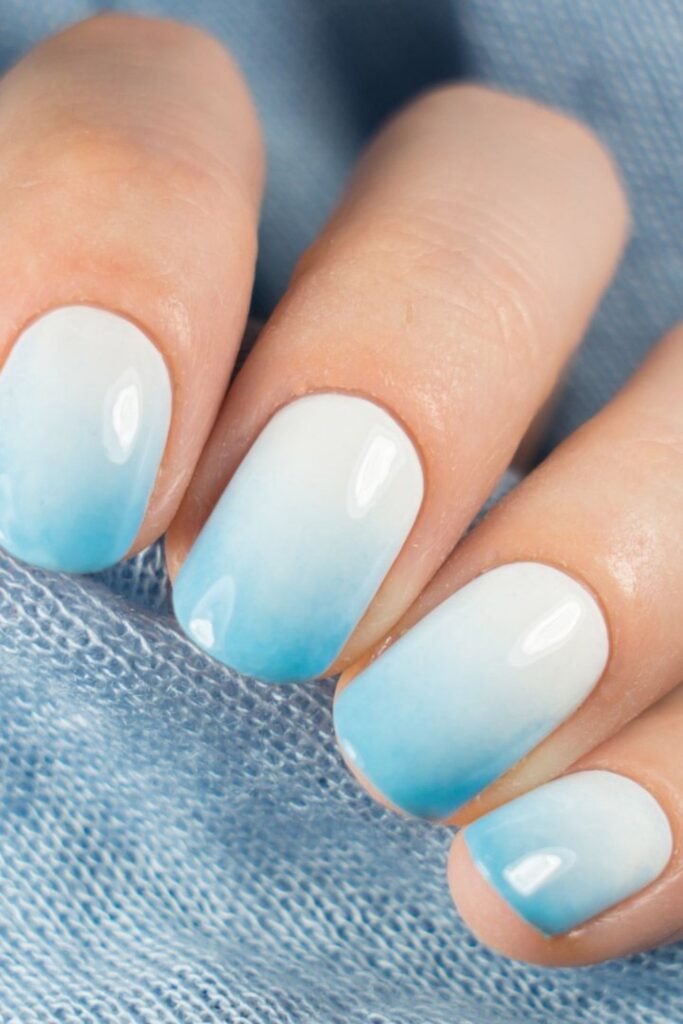
A blue-to-white sponged gradient across every nail with no shark imagery at all.
Worth including because not every ocean set needs a creature. A gradient from deep blue at the cuticle to pale at the tip suggests water depth, and it is a far more forgiving technique than any freehand element.
Sponge while the polish is still tacky and build in thin layers. Rushing this is what creates visible patchiness.
 Save
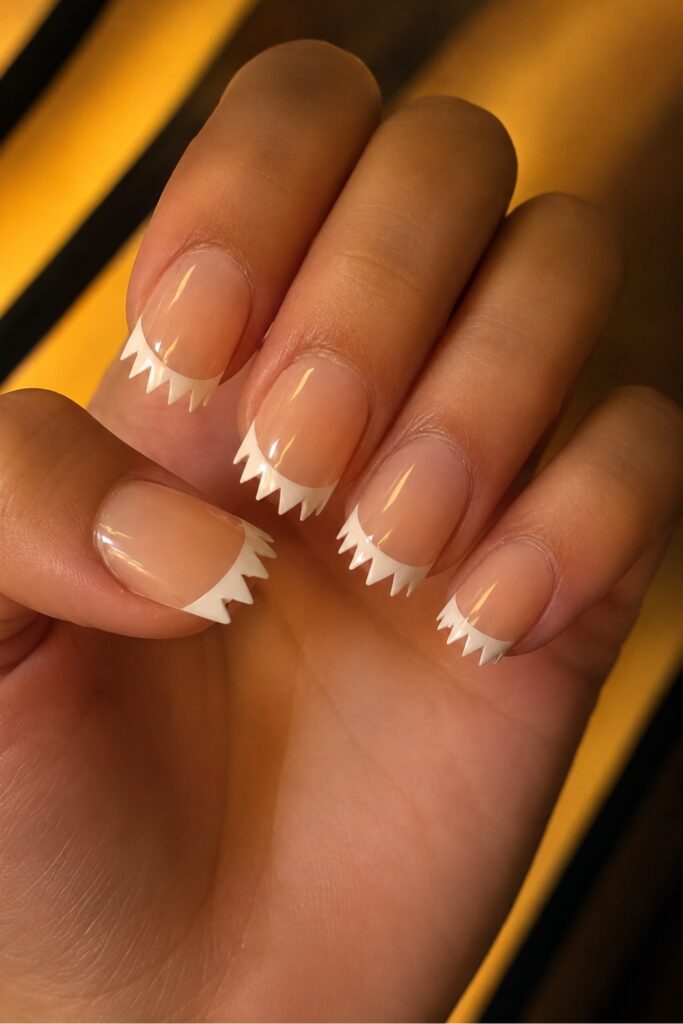
4. Shark Tooth Tips
Sharp white triangles along the free edge instead of a straight French tip.
A tooth line is just a jagged French, which makes it considerably more achievable than it looks. Use tape or a fine brush and keep the triangles irregular, since real teeth are not uniform.
The most graphic design on this list relative to the effort required.
 Save
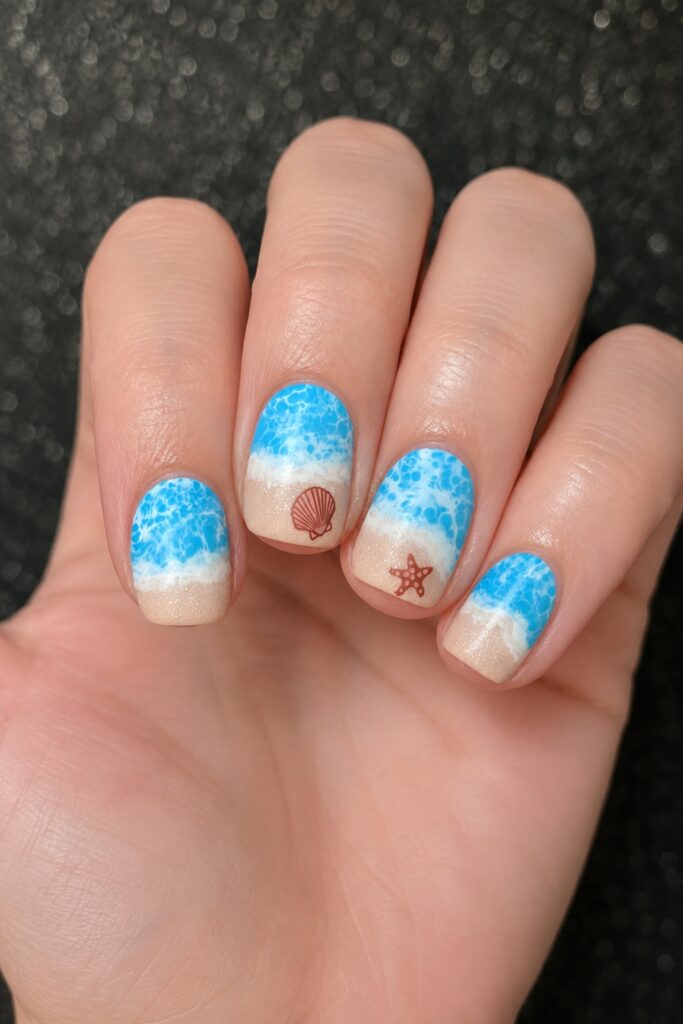
5. Sand and Water Split
Each nail split diagonally between soft sand and blue, mimicking a shoreline.
No creature, no detail work, and it still reads as an ocean set. The diagonal is what makes it look deliberate rather than like an unfinished manicure.
Good for very short nails, where detailed art has nowhere to sit.
 Save
Moderate: Stamping and Stickers
6. Stamped Shark Silhouettes
Shark shapes applied with a stamping plate rather than painted freehand.
Stamping is the most underused shortcut in themed nail art. It produces crisp, clean sea creatures with no painting skill required, which puts detailed designs within reach of anyone.
Buy the plate before you commit to the design. Plate quality varies enormously and a poor one will not transfer cleanly.
 Save
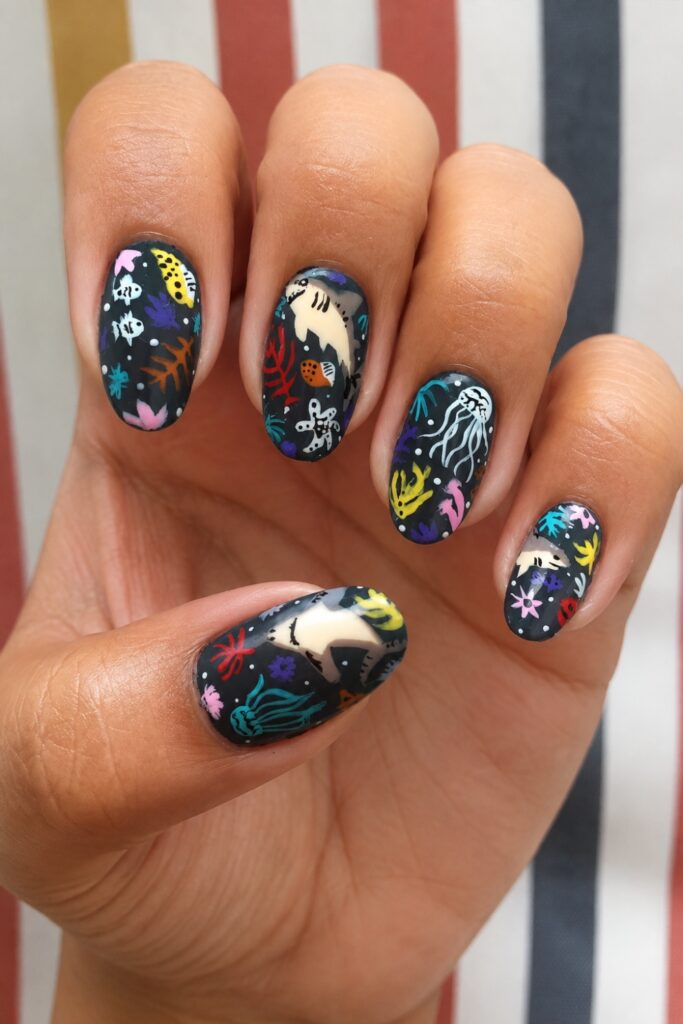
7. Shark With Other Sea Life
Sharks combined with fish, turtles, jellyfish, or rays across a set.
Mixing species turns a themed manicure into a scene, and it also solves the repetition problem: ten nails of the same shark is monotonous, while a shark among other creatures reads as an ecosystem.
Keep one nail busy and the rest quiet. A full ten-nail scene is visually exhausting.
 Save
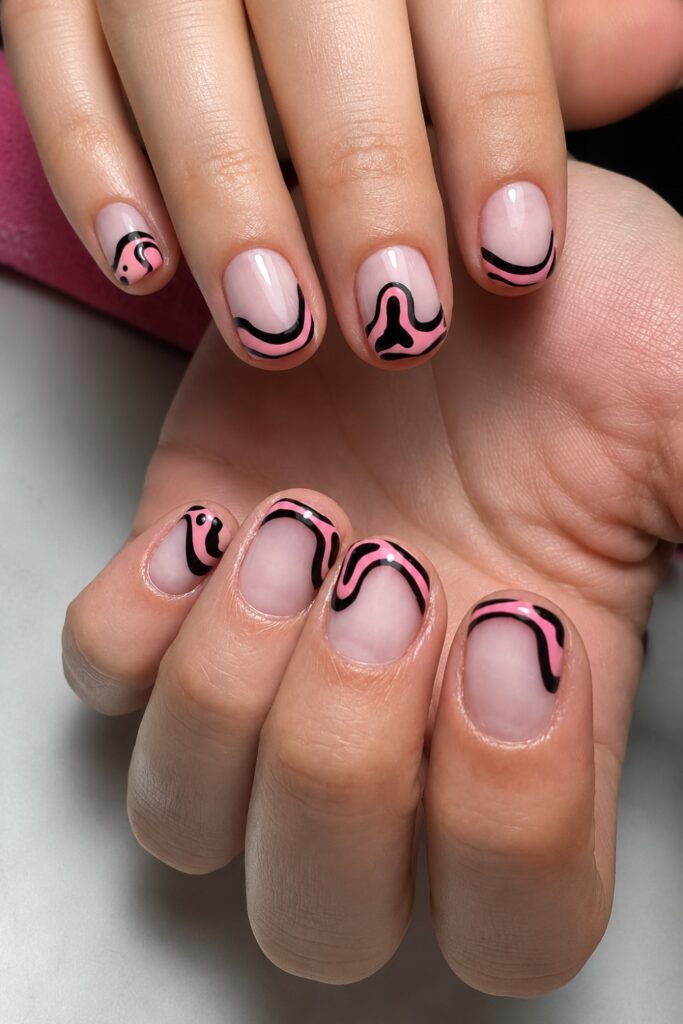
8. Bite Mark Nails
A curved bite pattern taken out of a solid colour, revealing a contrasting layer beneath.
Sticker or stencil work rather than freehand. The bite reads instantly and works particularly well on a red or coral base, though that is a decision about how gory you want to go.
The clearest example of the scary-versus-cute fork. This one is squarely in scary.
 Save
9. Cartoon Sharks
Round-eyed, friendly cartoon sharks in bright or pastel colours.
The opposite register entirely, and the right choice for anyone who finds the horror-movie approach uninviting. Cartoon versions also suit shorter nails, since simplified shapes scale down where realistic ones do not.
Bright tropical colours suit this better than moody blues, which fight the cheerfulness.
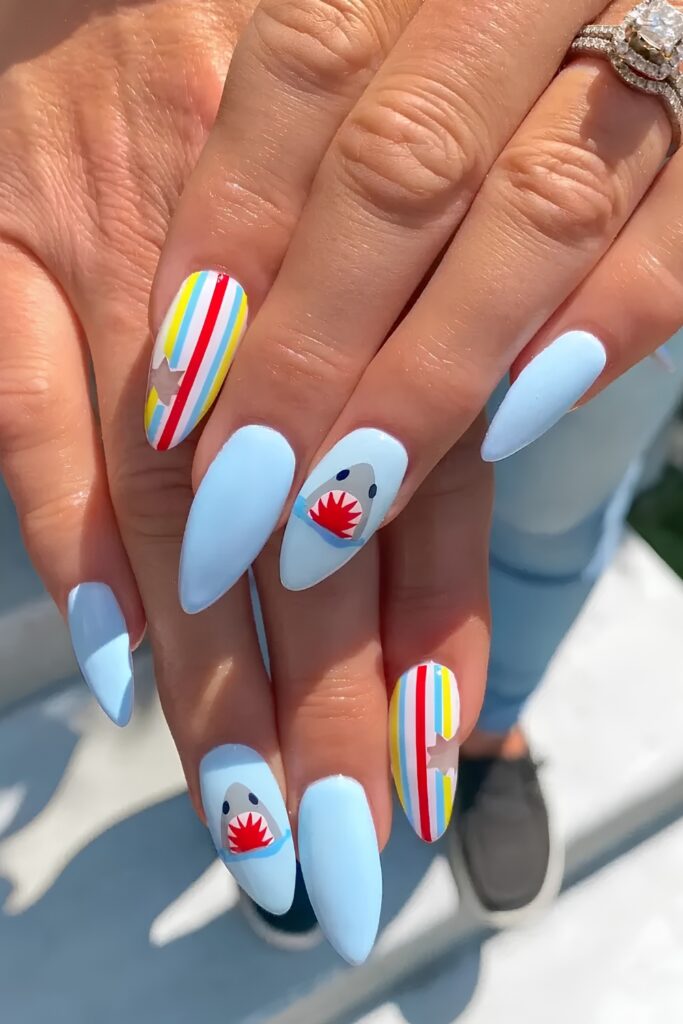 Save
Species-Specific: The Ones That Look Designed
10. Whale Shark
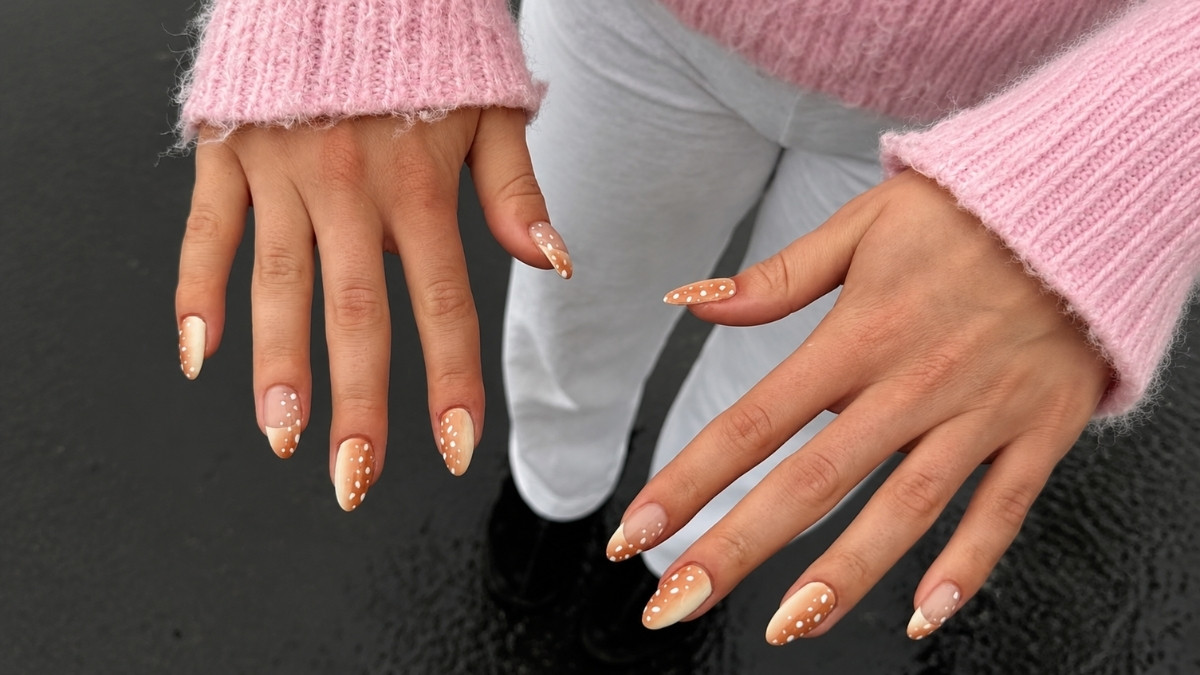
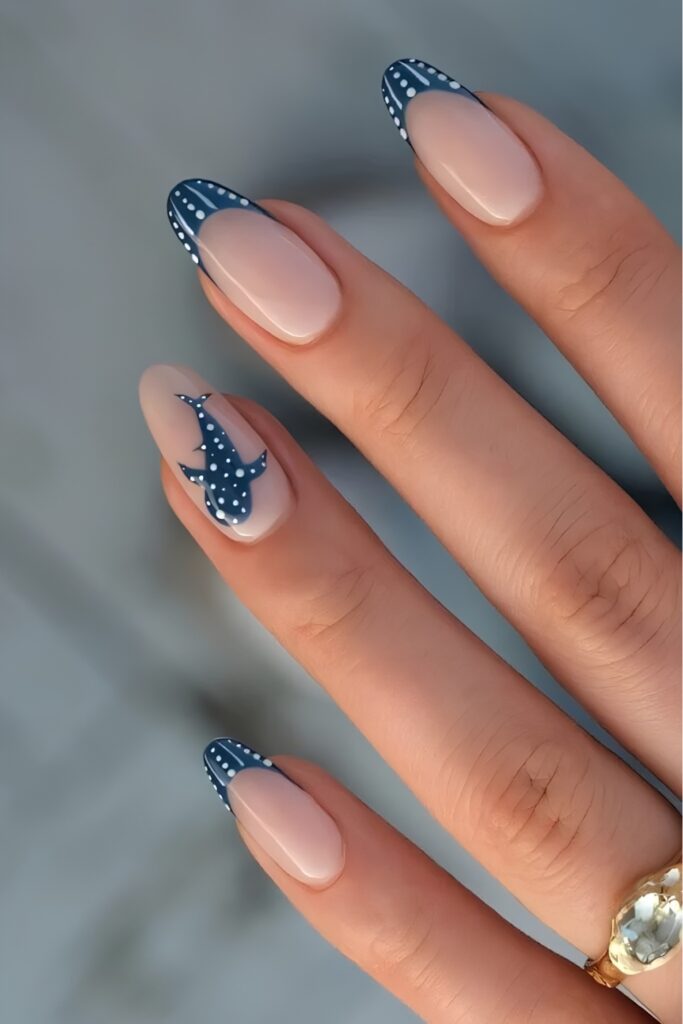
A deep navy or charcoal base scattered with small white or pale yellow dots in an irregular grid.
This is the design that best demonstrates the whole principle. Whale sharks have genuinely distinctive markings, and reproducing them gives you something recognisable without needing to paint a shark at all.
Keep the grid irregular. Evenly spaced dots read as polka dots rather than as an animal.
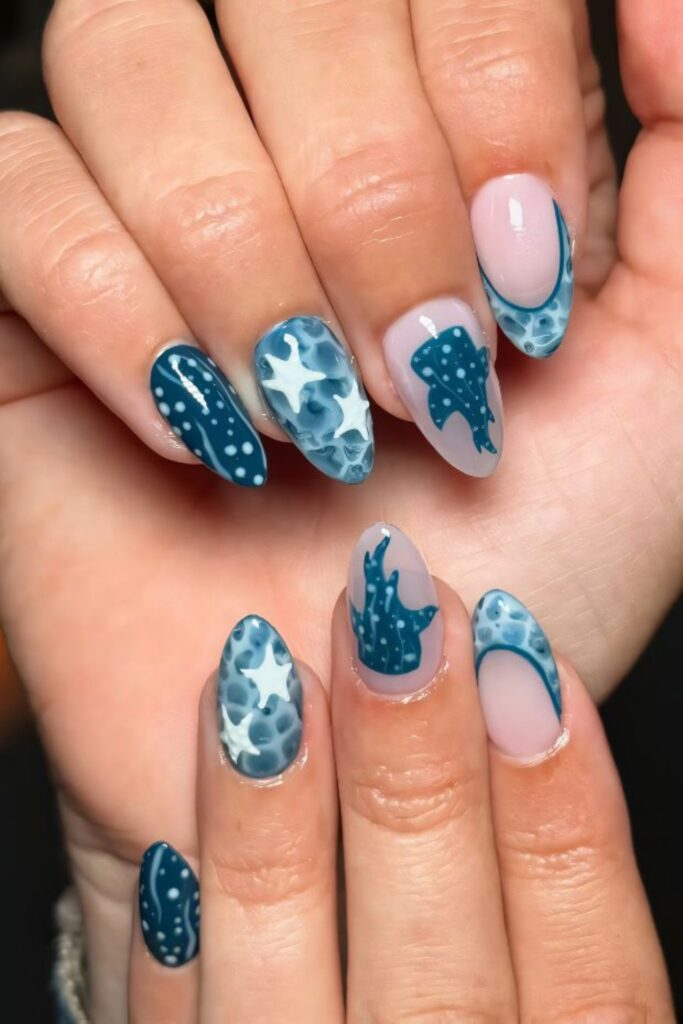 Save
11. Hammerhead Silhouette
The hammerhead’s head shape in solid silhouette against a lighter base.
The most identifiable shark outline in existence, and it works precisely because it is unmistakable. You do not need detail, shading, or an eye. The shape does everything.
Best on a single accent nail. Repeated across ten nails the silhouette loses its impact.
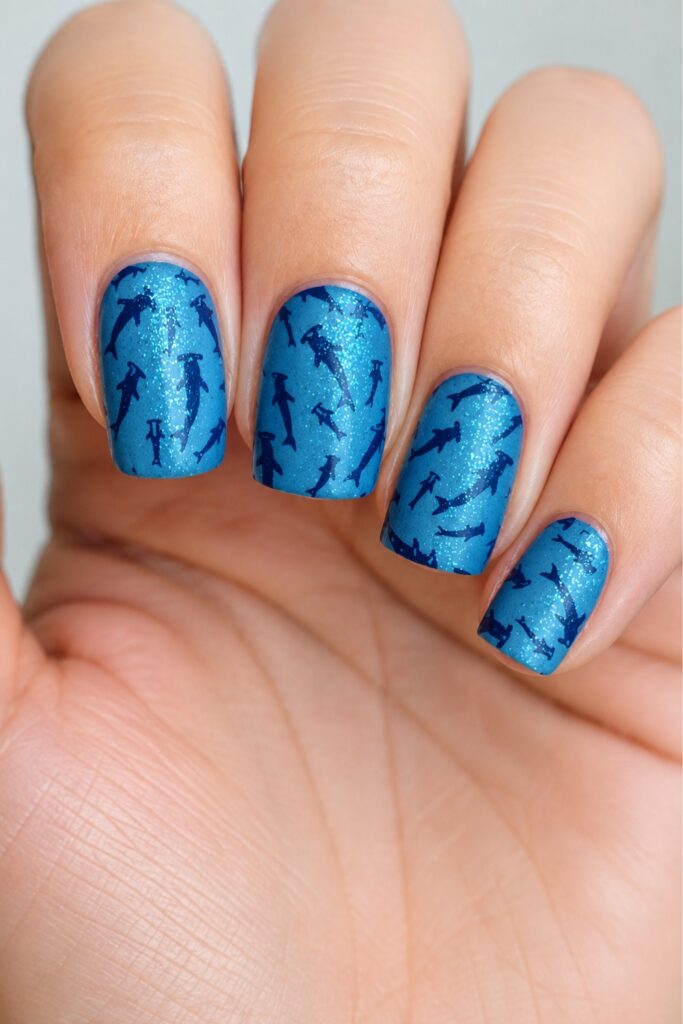 Save
12. Great White Two-Tone
A grey upper body against a white underside, which is the actual colouring of the animal.
Countershading is what real sharks look like, and reproducing it makes a painted shark read as an animal rather than as a grey blob. Dark on top, pale below, with a clean line between.
The detail that most improves an amateur painted shark, and it costs nothing.
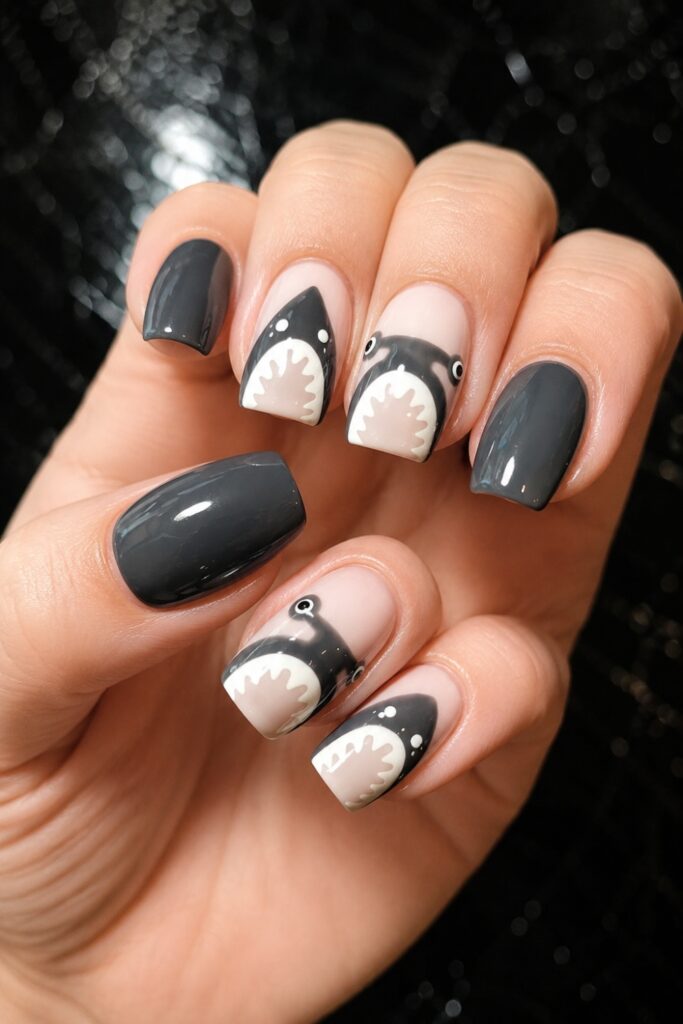 Save
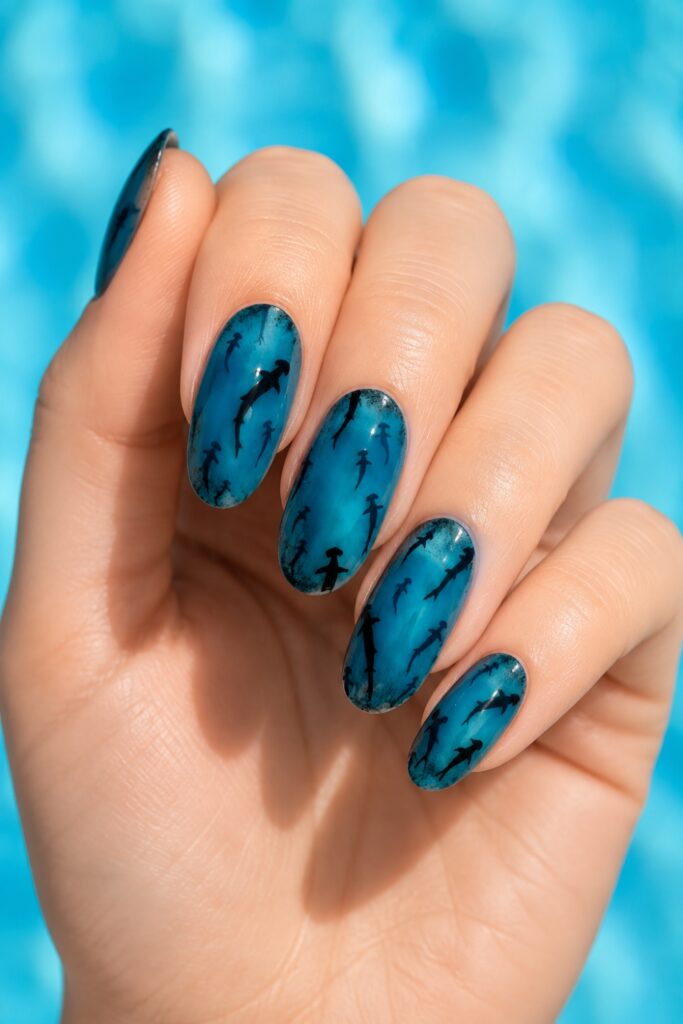
13. Reef Shark on Turquoise
A slim shark silhouette against bright turquoise rather than deep blue.
Reef sharks live in shallow tropical water, and matching the base colour to the habitat is the same specificity principle applied to the background rather than the animal.
The brightest species design here and the most summery.
 Save
Advanced: Salon Territory
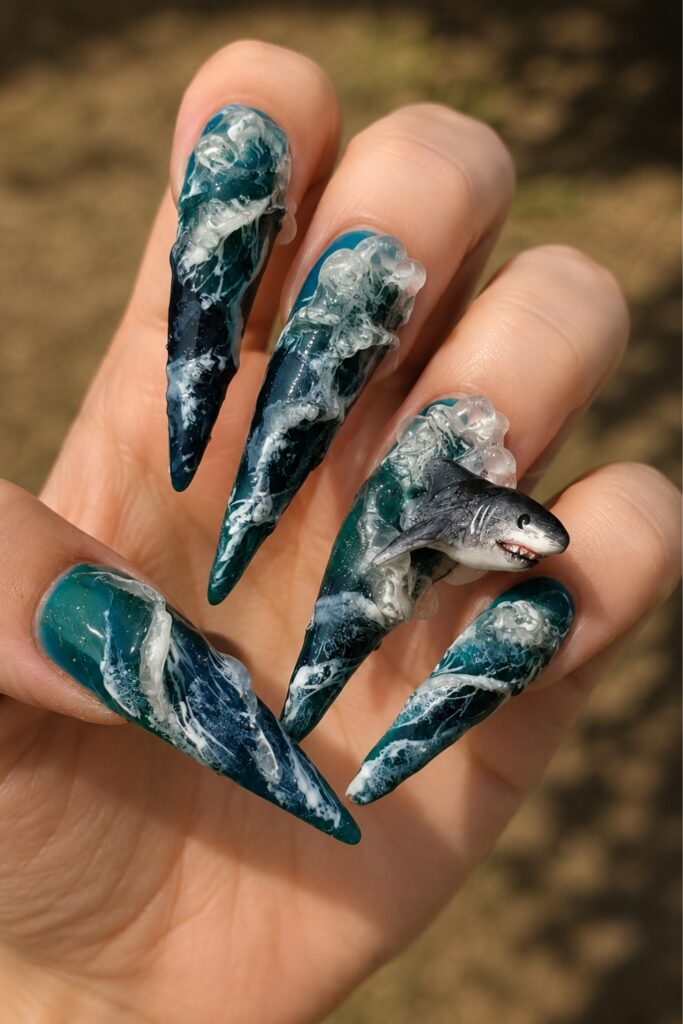
14. 3D Sculpted Fin
A fin built up in acrylic or polygel, rising directly off the nail bed.
This is where the trend goes from painted on to built up, and no amount of flat polish work replicates it. A sculpted fin has genuine dimension and casts a real shadow.
Realistically a salon job. The payoff is durability as much as looks: 3D acrylic or polygel sets typically last two to four weeks with proper care and application, so this survives well past the week itself.
 Save
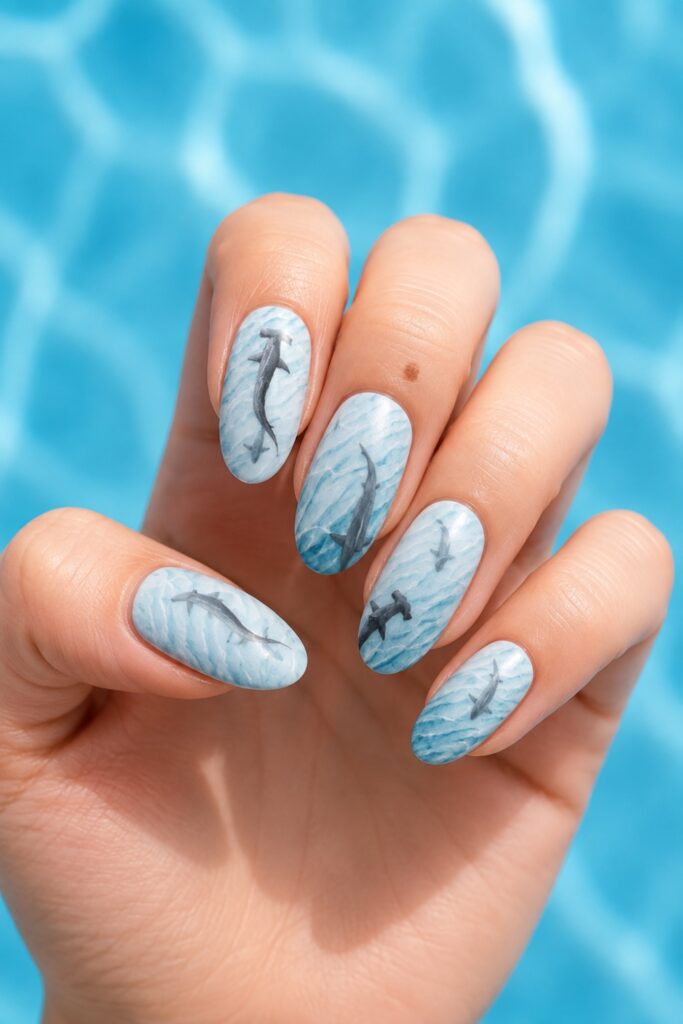
15. Full Underwater Scene
A hand-painted scene across multiple nails, with light rays, depth, and a shark in the middle distance.
The most ambitious design here and the one that genuinely requires an artist. It is also the one worth photographing.
Book it in advance. This is a long appointment and it needs a technician who does freehand art rather than applied designs, which is a different skill set worth asking about specifically.
 Save
Making It Last
Themed nail art has a short natural window, so durability matters more than it does for a plain colour.
Gel or a gel top coat over regular polish will hold detailed art considerably longer than a standard top coat, which chips at the edges of painted elements first.
Press-ons are a legitimate option for something this specific. A stamped or sculpted set on press-ons means you can prepare it well in advance and wear it only for the week, which is more practical than committing your natural nails to a design with a seven-day relevance.
If you want the theme without the commitment, take it to your toes instead. Our guide to French toe nail designs covers the nautical navy variations that pair naturally with a beach week.
Short Nails and Other Practicalities
Detailed shark art needs space, and short nails do not have it. The designs that scale down are the single fin accent, the tooth tips, the sand and water split, and the cartoon sharks. Full scenes and countershaded great whites do not.
For 3D and novelty techniques generally, our duck nail designs guide covers sculpted embellishments and mismatched sets, and the same logic applies to a sculpted fin.
One last thing worth saying, briefly. Sharks are among the most ecologically threatened animals in the ocean, which is worth remembering while wearing them as a joke about teeth. Several of the designs here work better as tribute than as horror, and the whale shark is a filter feeder that has never bitten anyone.
Common Questions
What are the best base colours for shark nails?
Stormy grey, deep ocean blue, and soft sand. Stormy grey is the most versatile, works under a fin, bite pattern, or full silhouette, and photographs well against both pale and deep skin tones. Deep ocean blue is moodier and suits species-specific designs because it echoes open water. Soft sand is the subtle option.
How do I get shark nails without being able to paint?
Stamping. A stamping plate produces crisp, clean sea creatures with no freehand skill required, and it is the single biggest shortcut available in themed nail art. Stickers and press-ons are the other route, and a pre-made set lets you prepare well in advance.
How long do 3D shark nails last?
Two to four weeks with proper care and application, the same as any sculpted acrylic or polygel set. That durability is part of the argument for the extra salon time, since the design outlasts the week it was made for.
What works on short nails?
Single fin accents, tooth tips along the free edge, diagonal sand-and-water splits, and simplified cartoon sharks. Detailed scenes and realistic species designs need surface area that short nails do not have, and cramming them in makes the art unreadable rather than small.
Should I go scary or cute?
Pick one and commit. Shark nail art splits cleanly between the gory end, meaning bite marks and open jaws, and the playful end, meaning round-eyed cartoons in bright colours. Both work. A set that mixes them tends to read as indecisive rather than as range.
Final Thoughts
The reason most shark manicures look the same is that most of them are the same: a grey triangle on blue.
Name the species instead. A whale shark’s spots, a hammerhead’s outline, a great white’s countershading. Each one gives the design something specific to be, and specific is what separates a good manicure from a generic one.