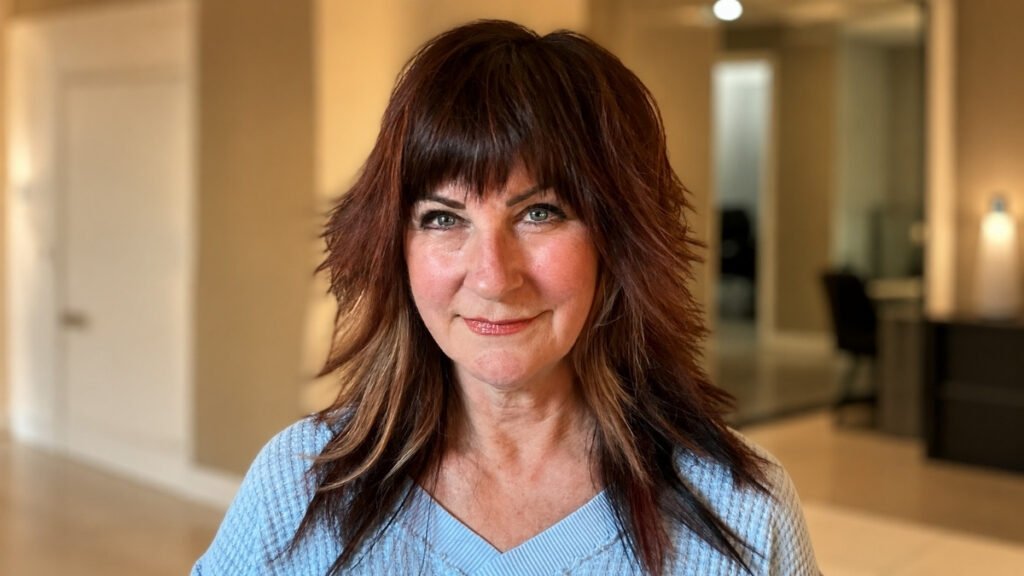
The shag is not a length. It is a layer pattern, which is why you will find it on a cropped pixie and on hair past the shoulders and it looks like the same haircut in both places.
The pattern is short layers concentrated at the crown, longer layers through the perimeter, and a feathered finish at the edges. That distribution lifts the top of the head and thins the outline, which is precisely the combination most useful on hair that has lost density.
New York hairstylist Paul McGregor cut the original on Jane Fonda around 1969, and it went everywhere after the 1971 film Klute. He had called it “the Funky.” Nearly sixty years on, the shape has outlived the name and most of the trends that came after it.
What the Layering Actually Does
Two things, and they work against each other in a useful way.
The short crown layers create height. Because they carry less weight than the sections beneath them, they sit up rather than lying flat, which addresses the crown collapse that finer hair develops first.
The feathered perimeter removes bulk from the outline. On thick hair this stops the shape turning into a triangle. On fine hair, it needs a lighter touch, since taking too much from already-sparse ends leaves the cut looking wispy rather than textured.
That tension is the whole craft of a good shag. Ask your stylist how much weight she plans to take out of your ends before she starts, not after.
Cropped and Pixie Lengths
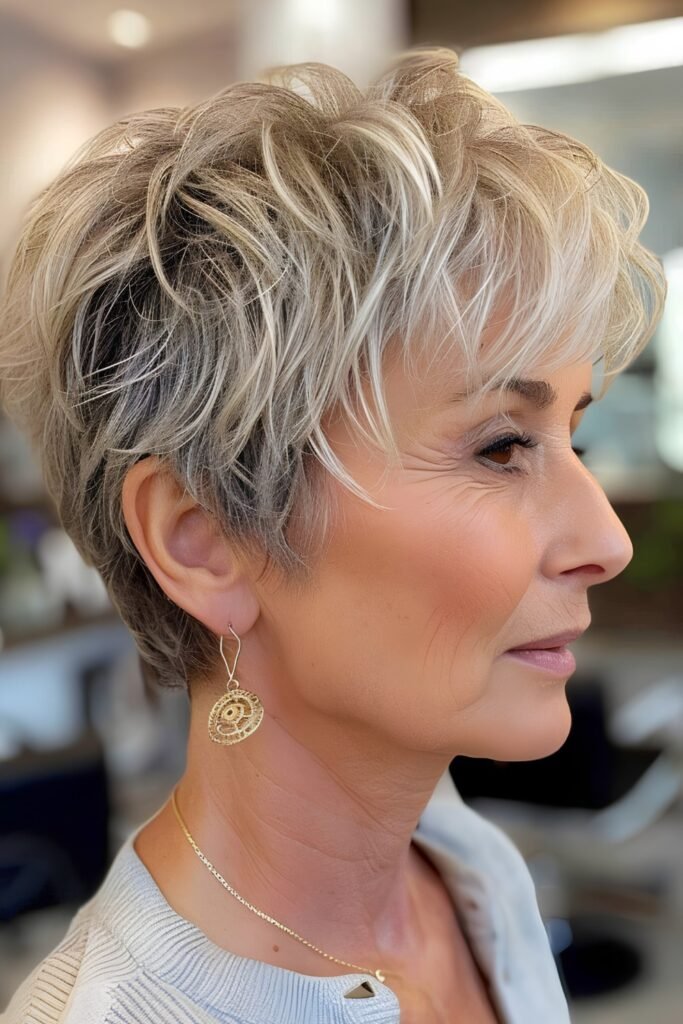
1. Pixie Shag With Concentrated Crown Layering
Layering deliberately concentrated at the crown, where volume tends to drop first, with the cut wrapping around the ears and opening at the neck.
The opening at the nape does something worth knowing about: it elongates the line of the neck and torso rather than closing the shape off at the collar. On fine hair this works particularly well, since the cut stays light rather than turning bulky.
Trims every four to five weeks. Past that the crown layers grow level with the sections below them and the lift disappears.
 Save
Save2. Cropped Shag With a Bold Choppy Fringe
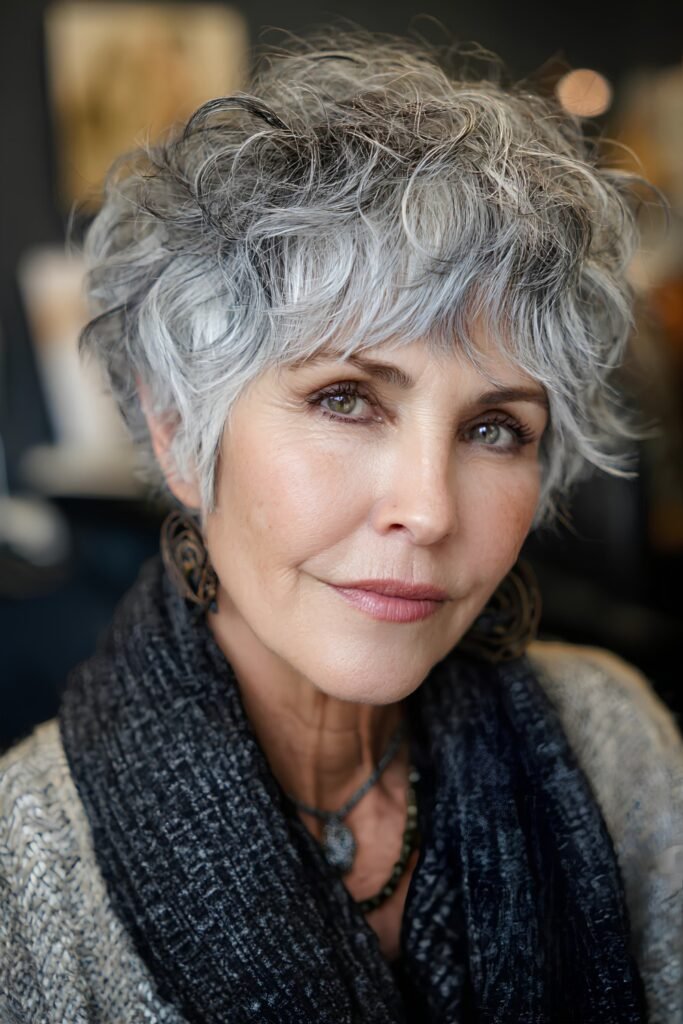
Short all over with a heavy, deliberately uneven fringe as the focal point. Salt-and-pepper suits this one especially well.
The fringe is doing most of the work. It draws the eye upward, covers the forehead, and gives an otherwise simple crop a point of interest that a plain short cut lacks.
Fair warning about choppy fringes: they need cutting more often than the rest of the shape. Budget for a fringe trim between full appointments.
 Save
Save3. Tapered Shag in Natural White
Tapered through the sides and nape with the layering kept in the crown, worn in natural white or bright silver.
Tapering is what stops a short shag looking untidy. The clean line at the sides gives the textured top something to sit against, so the whole thing reads as designed rather than grown out.
White and silver hair benefits from a clear or pearl gloss every couple of months. Unpigmented hair loses shine faster than it loses colour.
 Save
SaveBob Lengths
4. Shaggy Bob
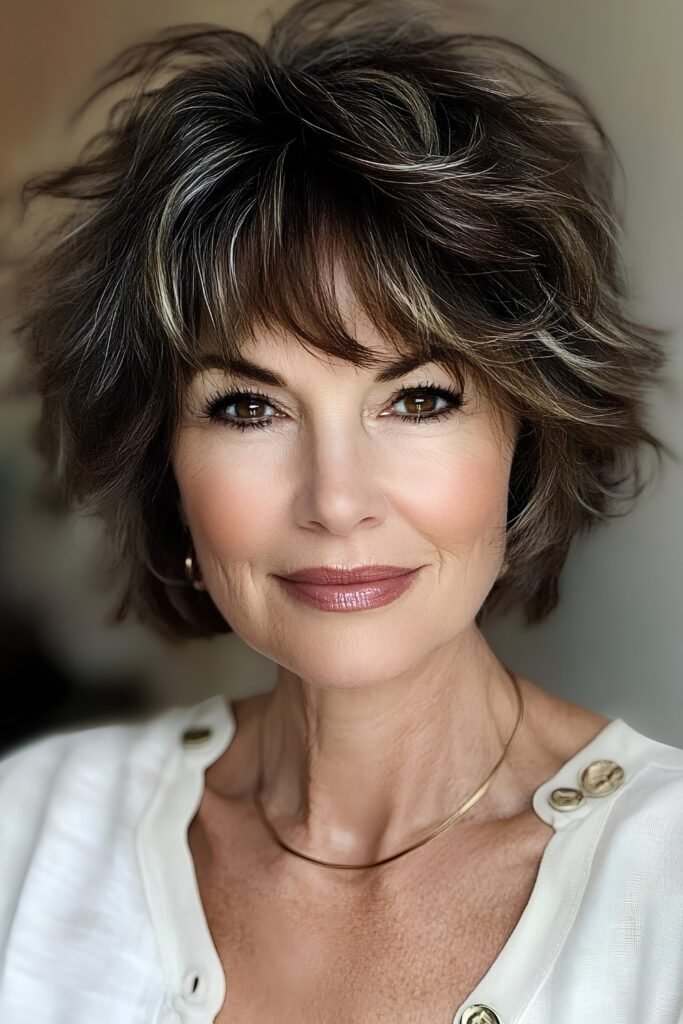
Bob length with shag layering through it rather than the single-length or graduated structure a standard bob uses.
The difference matters. A graduated bob builds weight at the back; a shaggy bob removes weight throughout and puts the volume at the crown instead. Both add fullness, by opposite methods.
If bob length appeals but you would rather have the cleaner bob structure, our guide to chin-length bob haircuts covers twelve variations of that shape.
 Save
Save5. Rounded Shag Bob
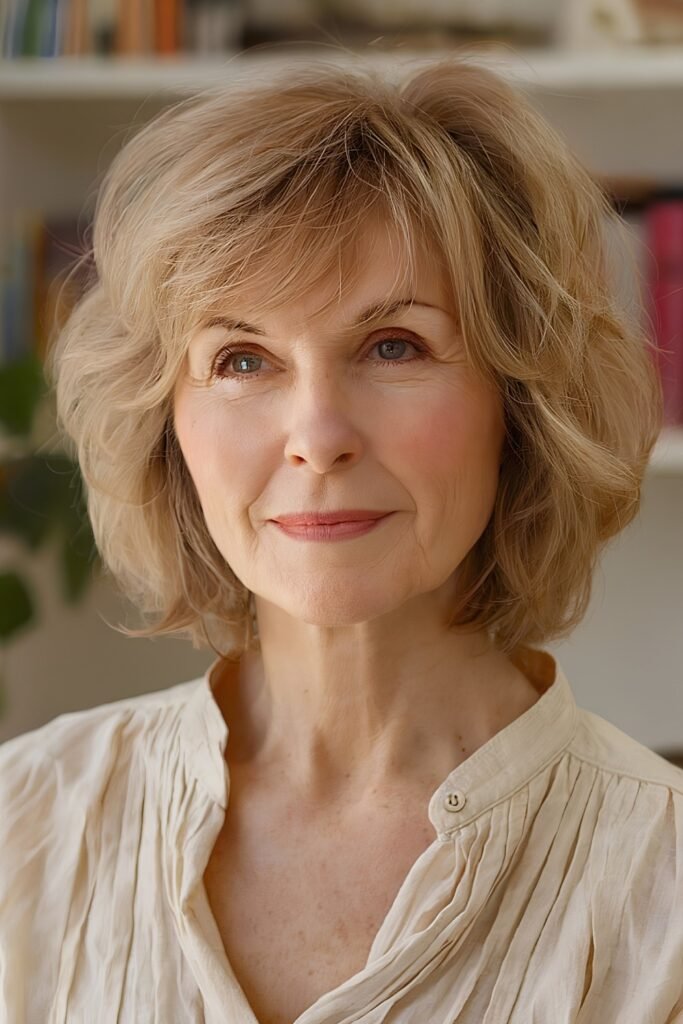
A softened, curved outline with messy choppy layers inside it. Warm blondes and honey tones suit the shape.
The rounded silhouette is a good corrective if a previous short cut felt too sharp. Angular shapes can harden features that have naturally softened; a curved outline works with them instead.
Choppy layers inside a rounded shape is the balance to aim for. All roundness and no texture reads as dated; all texture and no shape reads as unfinished.
 Save
Save6. Razor Shag With Piecey Separation
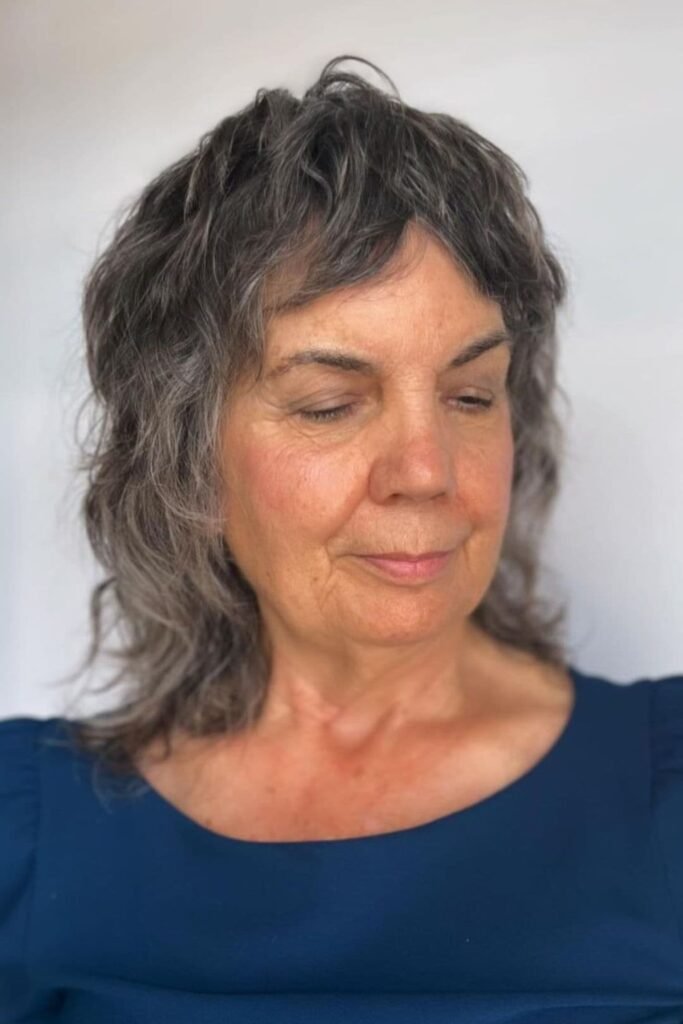
Cut with a razor rather than scissors, producing sharp separation between pieces. Steel grey and cool metallic tones sharpen it further.
The separation between sections is what creates apparent fullness. Gaps read as volume in a way that a solid mass does not, which is counterintuitive but reliable.
Razor cutting on very fine or fragile hair can leave the ends looking frayed rather than piecey. Ask whether your texture will hold it before committing.
 Save
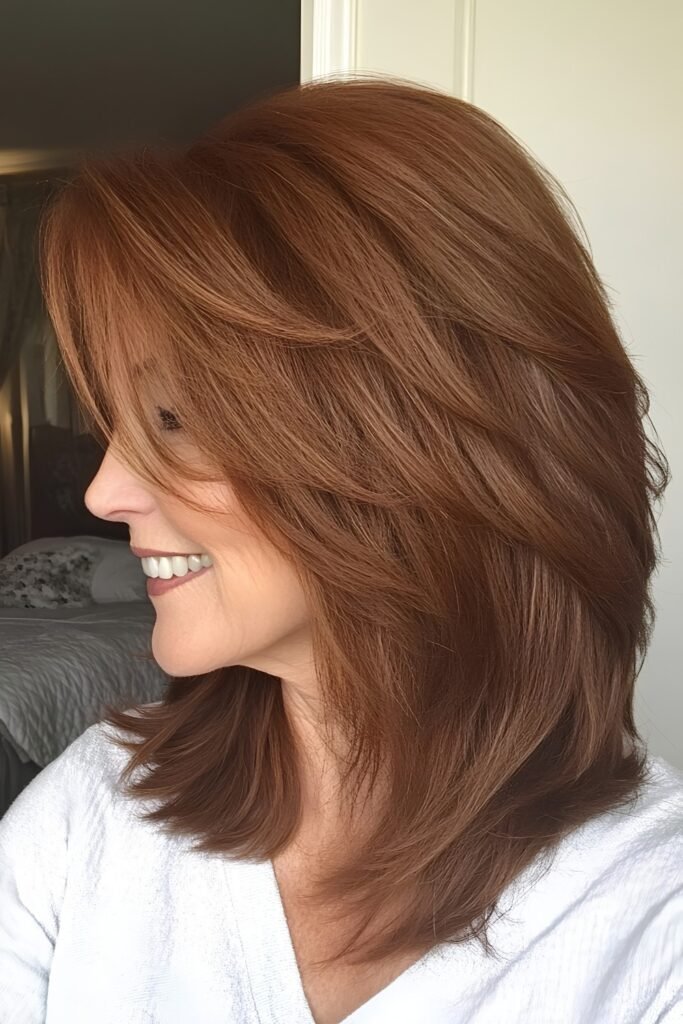
Save7. Feathered Shag With Face-Framing Layers
Light, wispy layers throughout with the shortest pieces cut to frame the face and soften around the jawline.
Face-framing layers on a shag land somewhere useful: they draw attention to the eyes and cheekbones and drape softly around the face rather than hanging straight past it.
Warm chestnut and soft copper tones show off feathering well, since the layered ends catch light differently from the lengths above them.
 Save
SaveMid Lengths
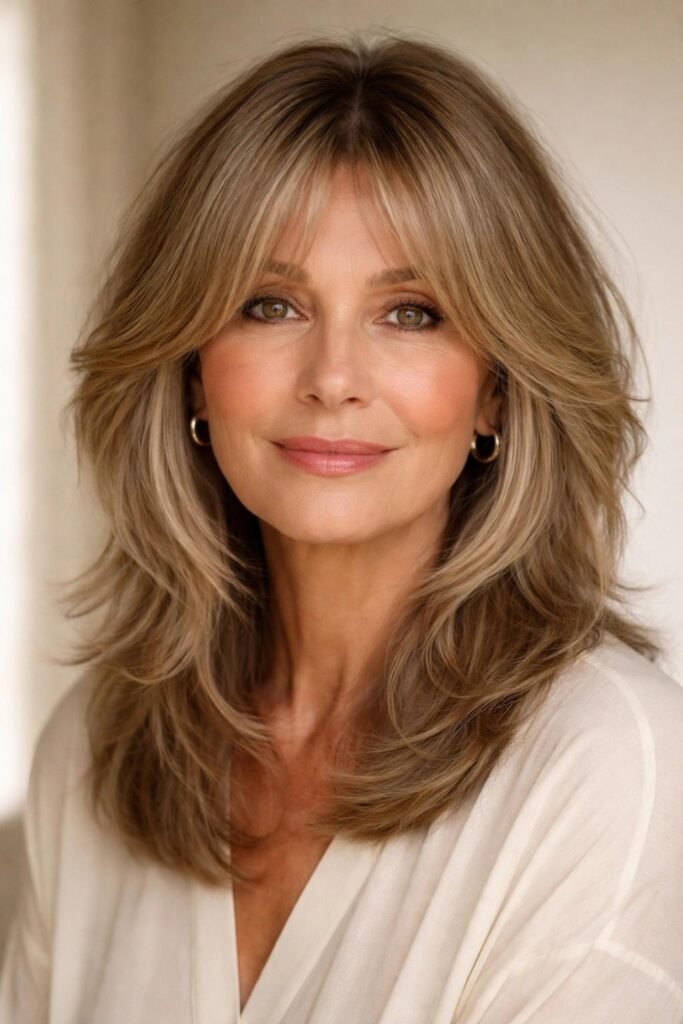
8. Mid-Length Shag With Curtain Bangs
Shoulder-skimming with layers building from the cheekbones down, and a centre-parted fringe falling on both sides of the face.
Curtain bangs and shag layers are natural partners, because the fringe simply becomes the shortest of the face-framing layers rather than sitting as a separate element. Nothing has to be blended into anything.
The most forgiving fringe on this list. It looks acceptable at every stage of growing out, which the choppier options do not.
Mid-length shags sit at the top of what most readers consider short. Anything past this and you are into medium hair proper, which our medium hairstyles for women over 60 selection covers separately.
 Save
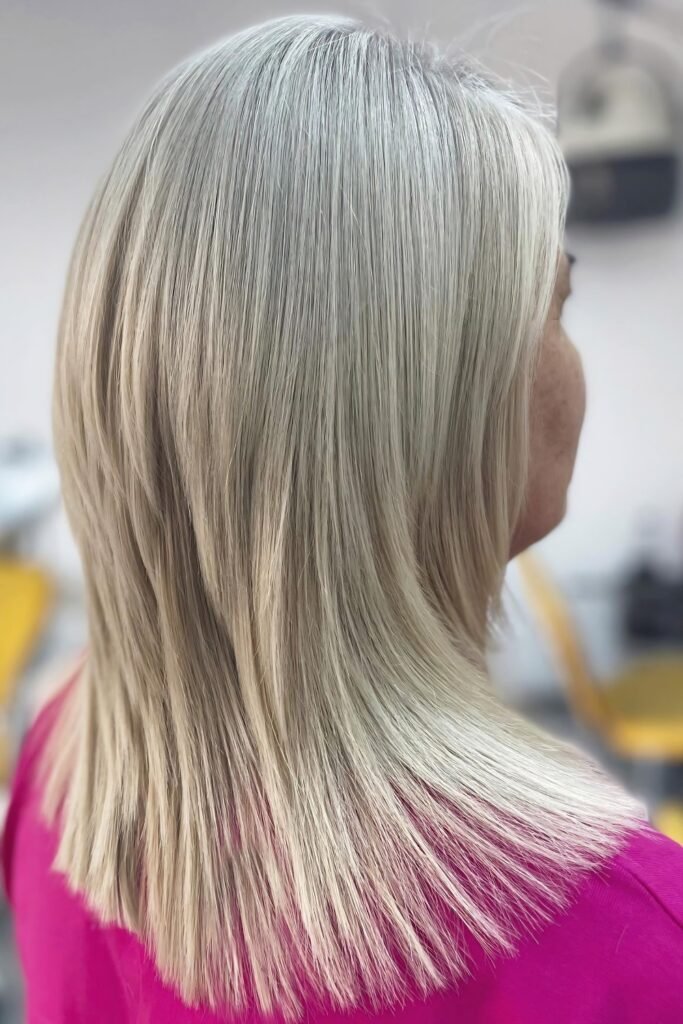
Save9. Precision Shag With Blunt Ends
The most graphic version here. Blunt, solid ends for fullness at the perimeter, with internal layers doing the movement work invisibly.
This is the answer for anyone who loves the shape of a shag but has fine hair and cannot afford to lose weight from the ends. All the texture is built inside the cut; the outline stays intact.
Champagne blonde and other light tones suit the sharper outline, since the blunt hemline gives the colour a clean edge to sit against.
 Save
Save10. Shag With Bottleneck Bangs
A fringe narrow at the centre and widening toward the cheekbones, blending into the shag layers on both sides.
Bottleneck bangs solve the problem most fringes create for mature faces: they cover the centre of the forehead without the heaviness of a full fringe or the width that makes the face look shorter.
Honey bronde, sitting between blonde and brunette with some warmth in it, is the tone most often paired with this fringe and brightens without going harsh.
 Save
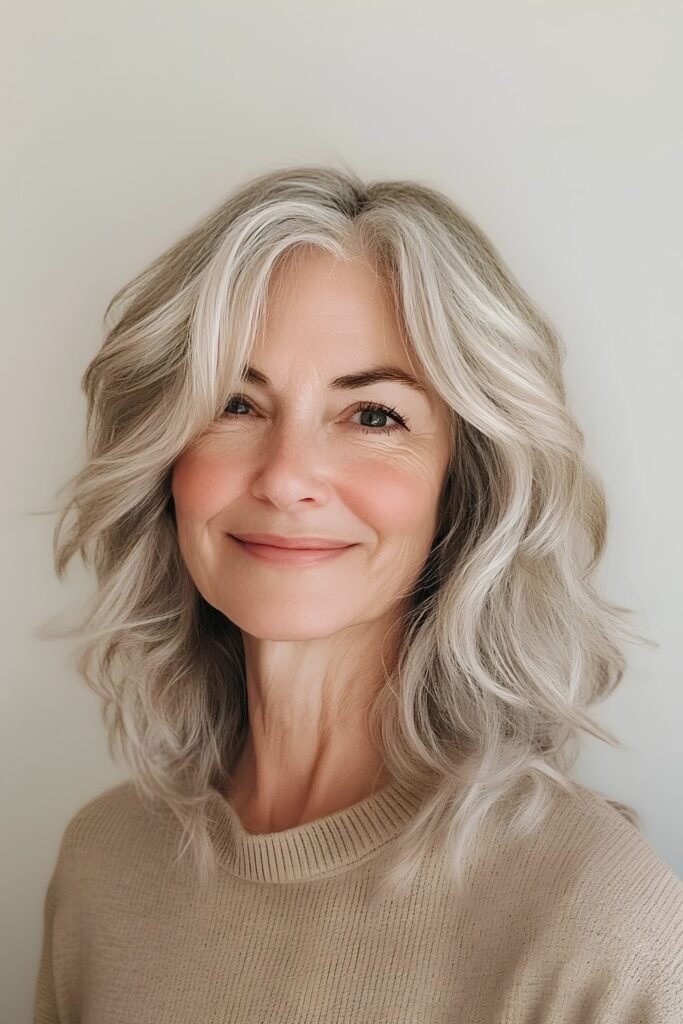
Save11. Wavy Mid-Length Shag
Cut to work with natural wave rather than against it, with layers positioned to let the bend fall where it wants to.
Wave and shag layering compound each other. Each layer creates its own bend, and the resulting movement produces volume that neither the wave nor the layering would achieve alone.
Realistically the lowest-effort cut on this list if your hair waves naturally. Product on damp hair, air dry, leave it.
 Save
SaveLong Lengths
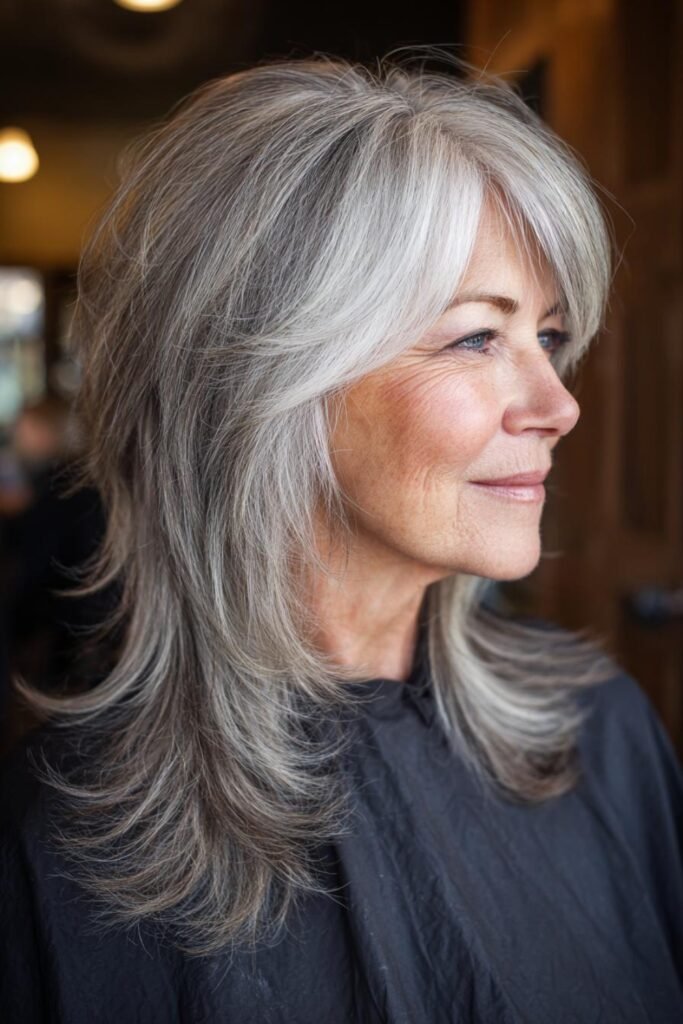
12. Long Shag With a Curtain Fringe
Length kept past the shoulders with layers starting under the cheekbones and a soft centre-parted fringe. Silvery grey suits it particularly well.
The appeal of a long shag is having it both ways. You get the texture and face-framing of a shag while keeping enough length to tie back when you want it off your neck.
Regular trims matter more here than at any other length. A long shag without maintenance stops reading as layered and starts reading as overgrown.
 Save
Save13. Long Shag for Fine Hair
Layers kept light and mostly in the top half, with the ends left as full as possible.
The mistake with long shags on fine hair is layering the full length. That leaves the ends thin and stringy. Concentrating the layers higher up creates movement while the lower length keeps its weight.
Round brush at the crown while blow-drying gives the layers the lift they need. Ten minutes, and only at the top.
 Save
Save14. Curly Long Shag
Cut dry on natural curl, with layers placed to lift the curls at the crown and let each one form at its own diameter.
Curly hair benefits from shag layering more than most textures, because the layers remove the weight that pulls curls into a flat, triangular shape. The result is bouncier and more defined without any additional product.
Grey curls often coarsen as pigment goes. A cut sized for the hair you had a decade ago will not spring the way you expect, so ask for a dry cut.
 Save
SaveThe Statement Option
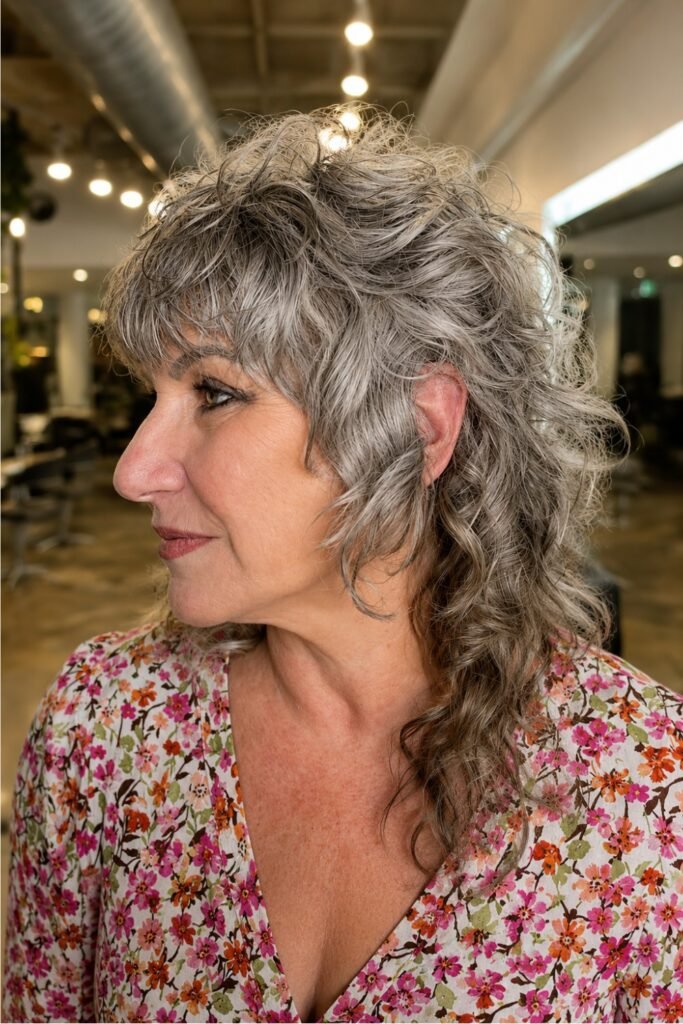
15. The Shullet
A shag and a mullet combined. Shorter and heavily textured through the top and sides, with deliberate length kept at the back.
Not for everyone, and that is rather the point. The shullet is the option for readers who have wanted something with genuine attitude and have been quietly waiting for permission they do not actually need.
It also grows out more gracefully than most bold cuts, since the back length softens the transition as the shorter sections catch up.
 Save
SaveWhich Length to Choose
If your hair is fine and you want maximum apparent fullness, the precision shag with blunt ends and the long shag with concentrated upper layers are the two that protect your outline while still giving you texture.
If your hair is thick or coarse, the razor shag and the feathered variations will do the most for you, since both are designed to remove bulk rather than create it.
If you want the shortest possible routine, the wavy mid-length shag and the pixie shag both largely style themselves, though the pixie needs the salon more often.
And if you have been circling the idea of a fringe, the curtain and bottleneck versions are the two that forgive a missed appointment.
Common Questions
Is the shag too young a haircut after 60?
No. The shape is defined by layer distribution rather than by any age association, and the layering does its most useful work on hair that has thinned or lost volume. The versions that read as young are the very choppy, very short ones; the feathered, curtain-fringed, and long variations read as considered rather than youthful.
Will a shag work on fine or thinning hair?
Yes, with one caution. The crown layering is genuinely helpful because it creates lift where fine hair collapses. The risk is over-thinning at the ends, which leaves the outline wispy. Ask your stylist to keep the perimeter weight and put the layering higher up.
How often does a shag need trimming?
Every four to five weeks for pixie and cropped lengths, since the crown layers lose their height relationship quickly. Bob and mid-lengths hold for around six weeks. Long shags can stretch to eight, though they lose definition noticeably past that.
What fringe works best with a shag?
Curtain bangs, because they function as the shortest face-framing layer rather than as a separate element, which means nothing needs blending. Bottleneck bangs are the next most wearable. Blunt and heavily choppy fringes look excellent but need attention between full appointments.
Can I get a shag with curly hair?
Curly hair suits the shag particularly well, because the layers release the weight that flattens curls into a triangular shape. The cut should be done dry so the stylist can see where each curl actually falls, especially if your curl pattern has changed as your hair greyed.
Final Thoughts
The shag has lasted since 1969 because the layer pattern solves a real problem. Height where hair goes flat, lightness where it goes heavy, and a shape that looks deliberate without a daily blow-dry.
Choose your length first, then talk to your stylist about crown height and perimeter weight in those exact terms. Those two variables determine whether the cut works on your hair, and they are the two most reference photos cannot communicate on their own.