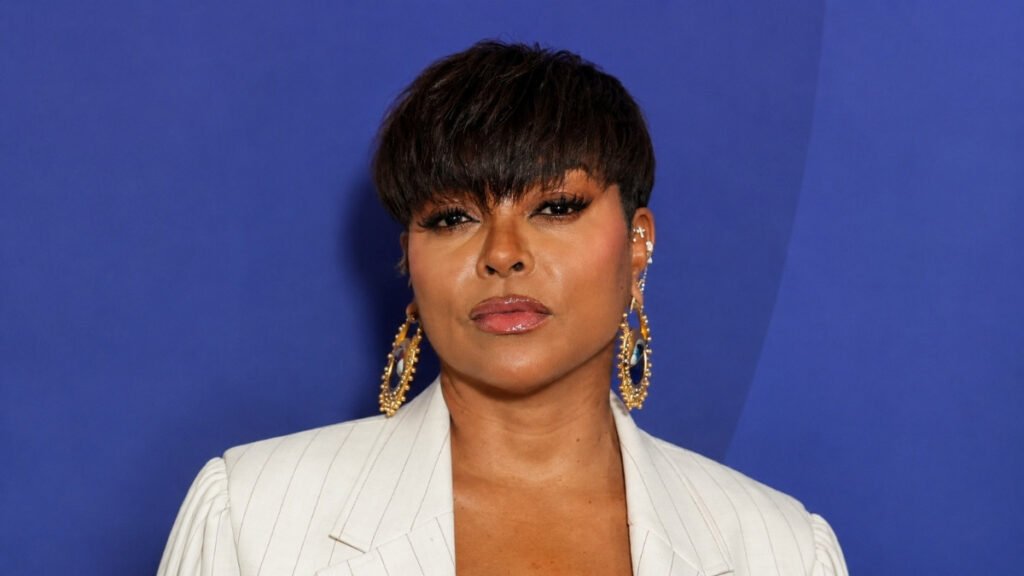
Every pixie gallery online works the same way. Fifty photographs, fifty captions, and no explanation of why one of them would suit you and another would not.
Here is what is actually being decided when you sit in the chair. How long the crown stays. How high the taper goes at the sides and nape. How much length is kept at the front. Change any one of those three and you have a different haircut, which is why pixies that look nothing alike are all called the same thing.
Audrey Hepburn made the cut mainstream in Roman Holiday in 1953. As hair historian Rachael Gibson puts it, Hepburn “went a long way to making short hair mainstream and got a lot of credit for popularizing the pixie cut.” Seventy years later the three variables have not changed.
Before You Book: One Honest Caution
Not every pixie suits every head of hair, and the galleries rarely say so.
If you are thinning at the front hairline or across the top, the pixies that depend on length at the front are a poor choice. There simply is not enough hair there to create the shape, and the cut will expose the thinning rather than disguise it. The versions that work in that situation keep the crown fuller and the front shorter.
There is also a product reality worth knowing. Volume on top does not happen by itself. Without mousse or a root lifting spray on damp hair, a pixie with crown height will collapse by lunchtime. If you would genuinely rather not use product, choose a version whose shape holds without it.
Crown-Led: Pixies Built for Volume on Top
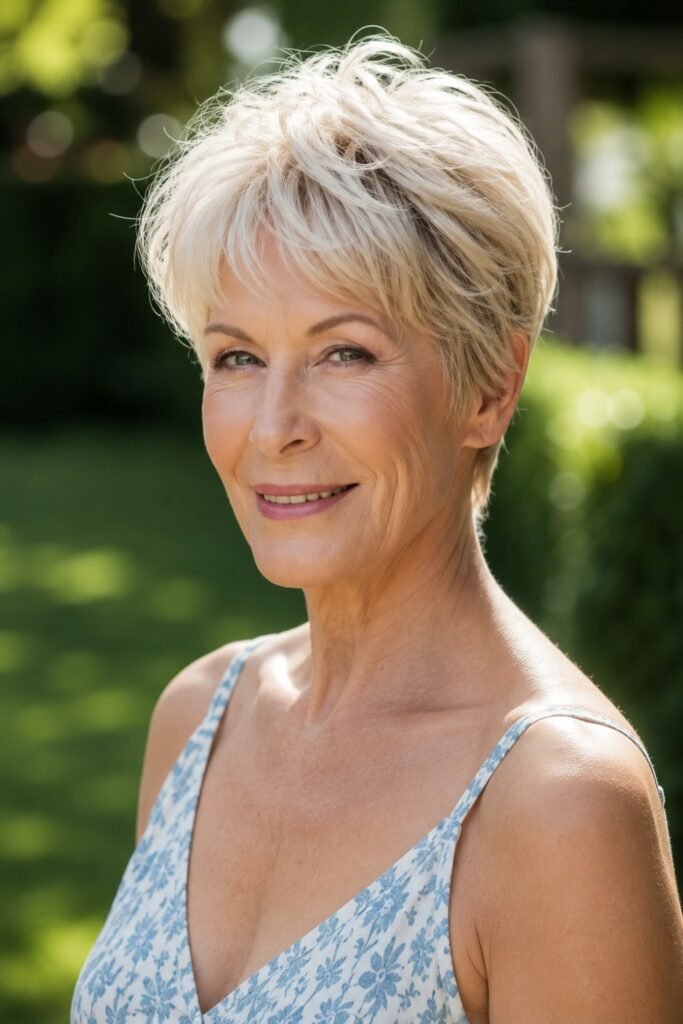
1. Classic Rounded Layered Pixie
Layers cut in a rounded shape to build height and fullness through the crown, with the sides kept neat.
The lift at the crown does something specific and useful: it balances the proportions of the head and softens a jawline that has lost definition. It also works across any hair density, which is unusual for a cut this short.
This is the version to ask for if you are going short for the first time and want something universally flattering rather than distinctive.
 Save
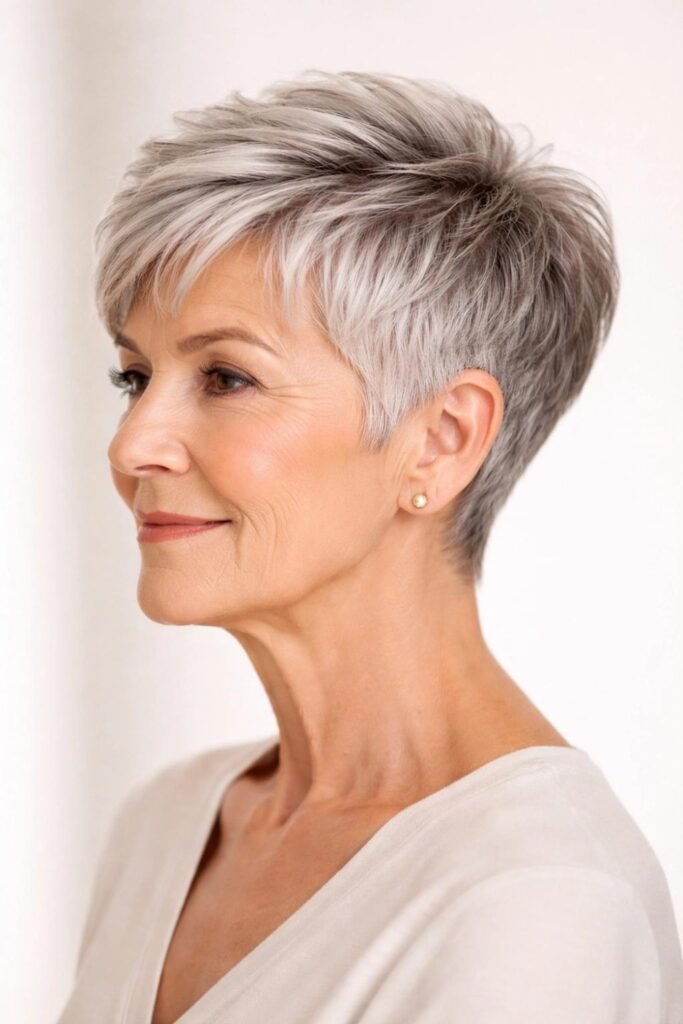
Save2. Tapered Pixie With Crown Height
Sides and back tapered close, with all the length and volume concentrated at the top.
Tapering the back is the technique that creates the height. By removing bulk everywhere else, it focuses the eye and the volume at the crown rather than letting the shape spread outward.
Mousse or root lift on damp hair, then a quick blow-dry with your fingers. Under five minutes, but not zero minutes.
 Save
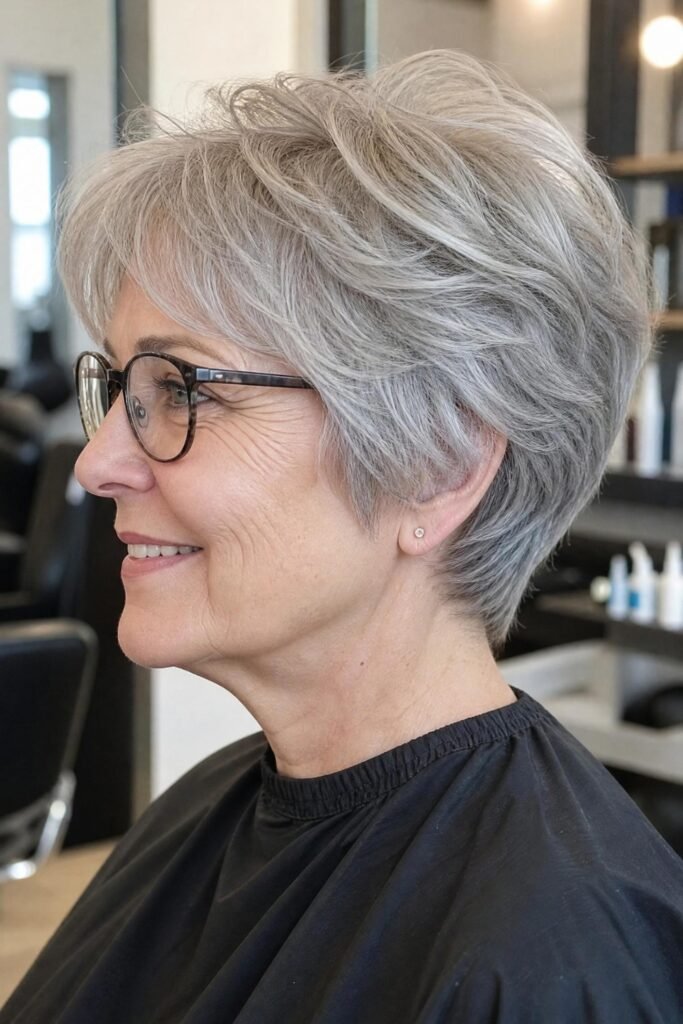
Save3. Feathered Pixie
Soft feathered layers throughout, adding volume and movement without weight.
Feathering suits fine hair better than heavy layering because it creates texture at the ends of each section rather than removing bulk from the middle. The hair looks fuller rather than thinner.
Pairs particularly well with natural grey, since the feathered ends catch light at different angles and give unpigmented hair the dimension it can otherwise lack.
 Save
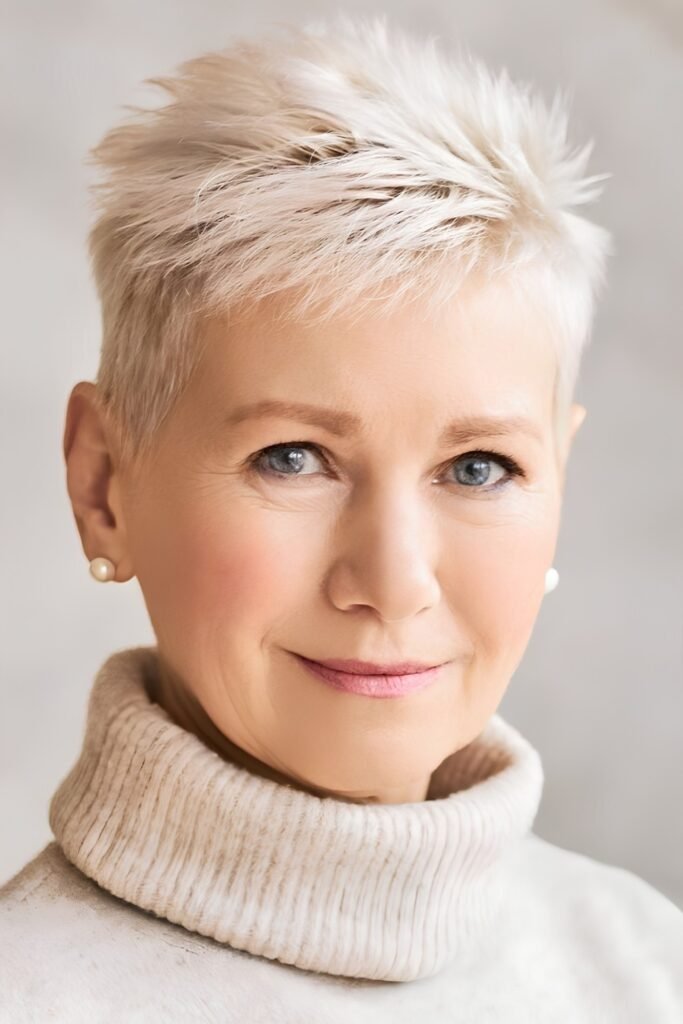
Save4. Super Short Crop With Feathered Layers
The shortest version here. Cropped close all over with just enough feathering to create texture, often worn in bright white or silver.
Counterintuitively, this is one of the most flattering options for very fine hair, because it stops trying to create volume that is not there and puts the focus on bone structure instead.
Texturising spray and thirty seconds. That is the entire routine.
 Save
SaveFront-Led: Pixies With Length at the Face
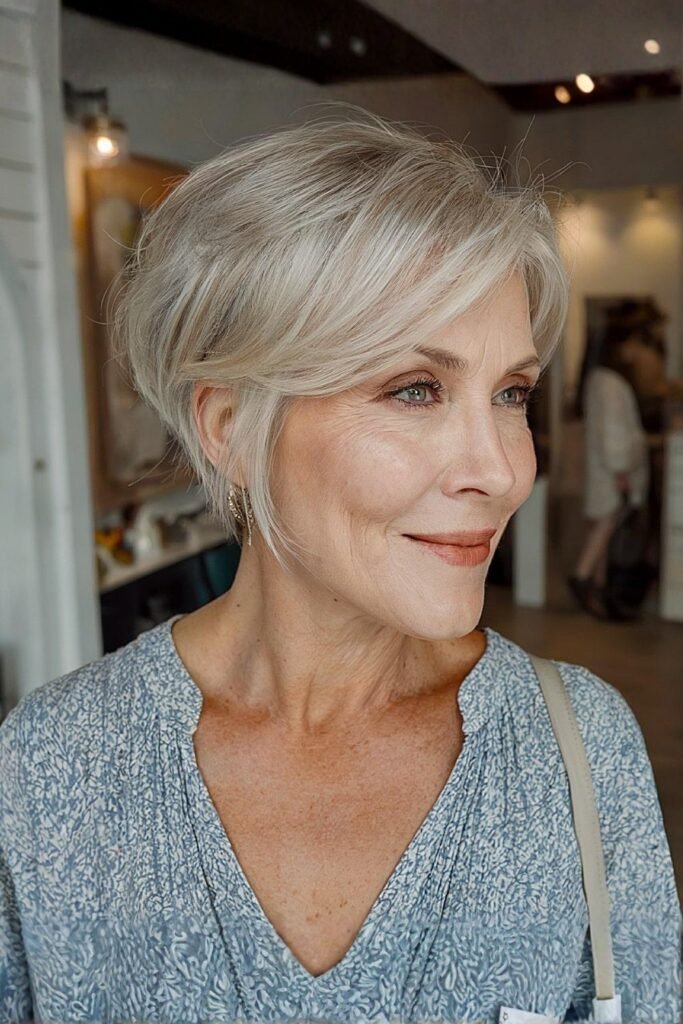
5. Long Pixie With a Deep Side Part
Longer than a classic pixie, with a deep side part sweeping the weight to one side and the opposite side tucked behind the ear.
Pushing hair to one side is a reliable volume illusion for fine hair. The same amount of hair concentrated on one side reads as considerably fuller than the same hair split evenly.
Elegant rather than edgy, and one of the easiest pixies to live with day to day.
 Save
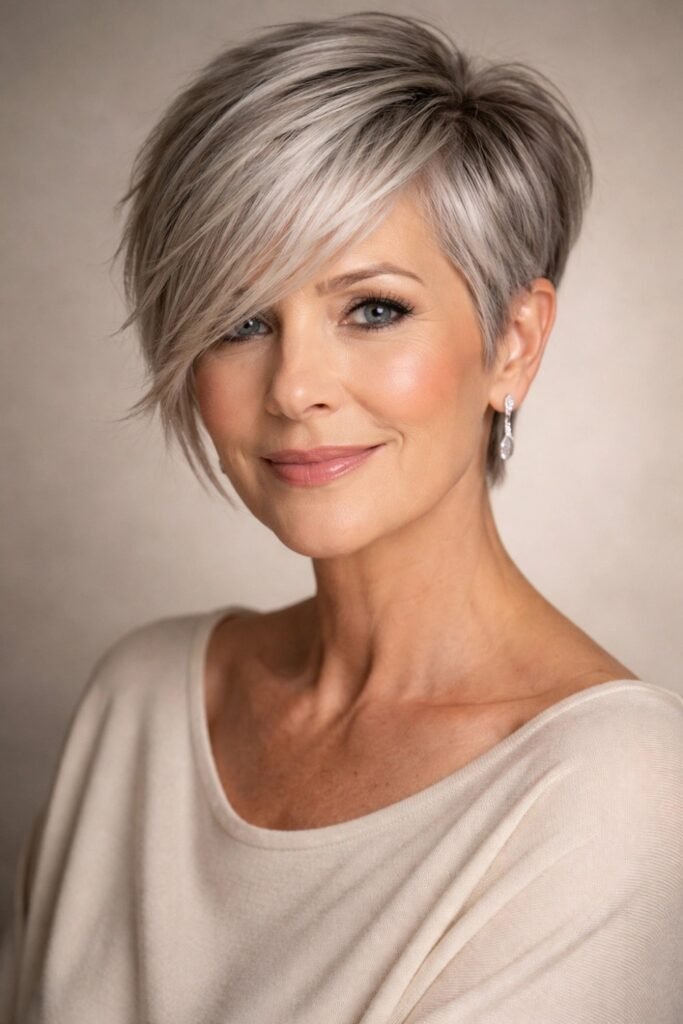
Save6. Pixie With Longer Front Layers
Short through the back and sides with noticeably longer pieces kept at the front, falling toward or past the cheekbone.
This is the sensible option if a longer cut has started to feel heavy but you are not ready for very short hair. It reads as a pixie from behind and as something softer from the front.
The caution above applies here specifically. This shape needs hair at the front hairline to work.
 Save
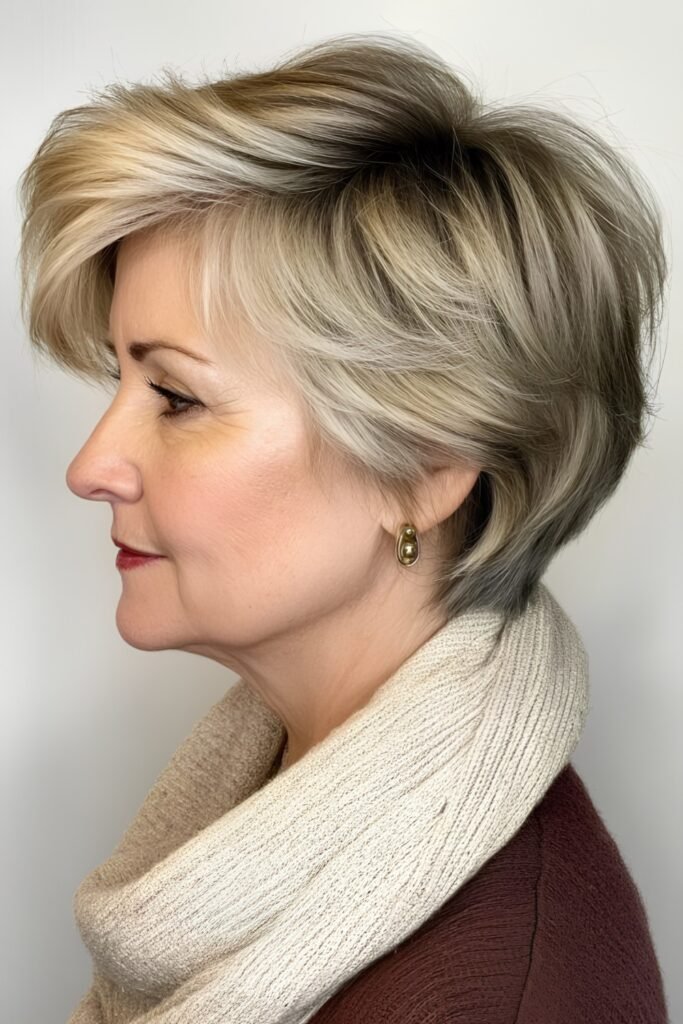
Save7. Pixie With Side-Swept Bangs
A fringe cut on a diagonal and swept across the forehead, softening the whole shape.
Side-swept bangs are the most forgiving fringe on a short cut. They soften what can otherwise be a sharp outline, particularly on curly or textured hair, and they grow out without an awkward stage.
Also the right choice if you wear bold or oversized glasses, since the diagonal line stops the frames and the fringe competing.
 Save
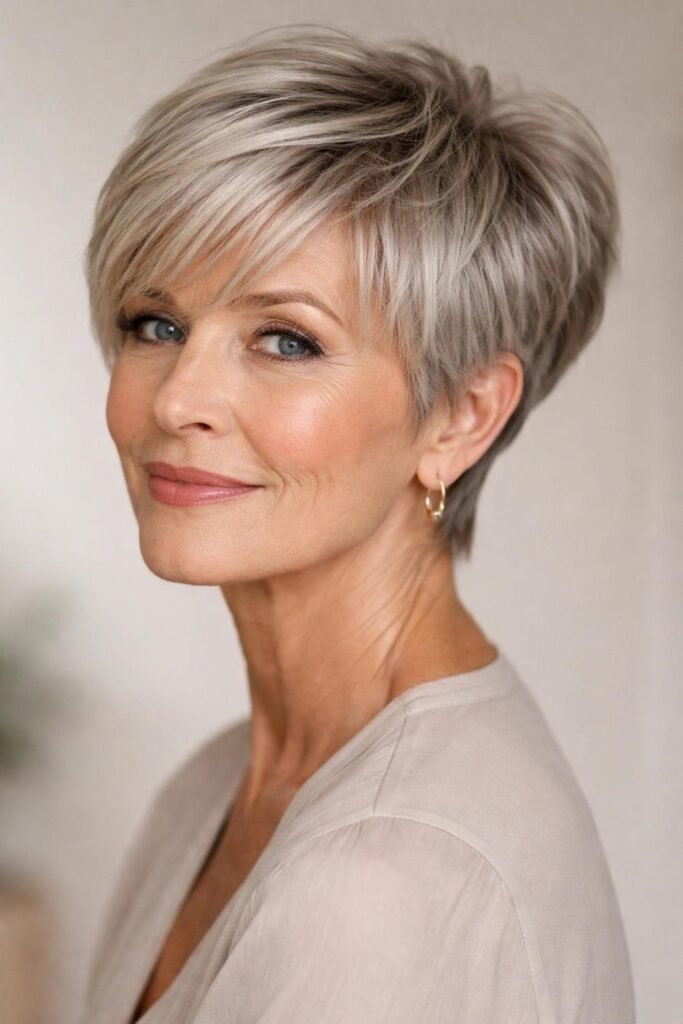
Save8. Choppy Pixie With Long Bangs
Choppy layering with a deliberately long fringe that can be swept sideways, combed over, or spiked up depending on the day.
Better suited to thick hair than fine, since choppy cutting removes weight and thick hair has weight to spare. On fine hair the same technique can leave the shape sparse.
The versatility of the long fringe is the selling point. Three quite different looks from one appointment.
 Save
SaveTexture-Led: Pixies Defined by the Finish
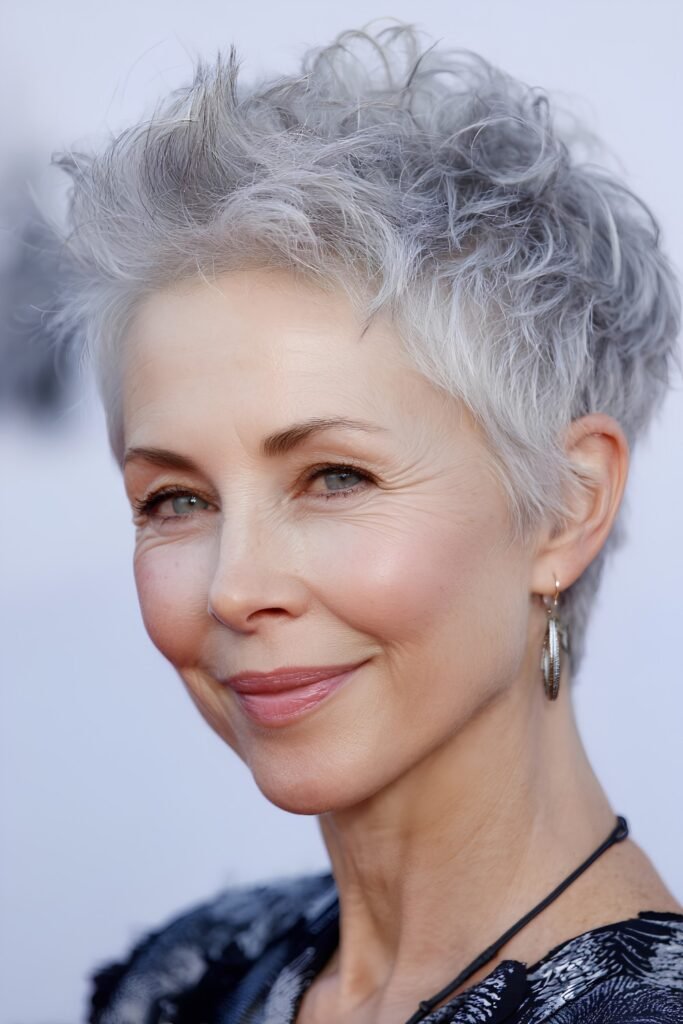
9. Choppy Grey Pixie With Soft Structure
Layered to add body and direction on naturally wavy or slightly textured hair, without stiffness.
Grey hair reflects light in a way pigmented hair does not, and a layered shape gives that reflection more surfaces to work with. The result reads as dimensional rather than flat.
A light mousse or texturising cream keeps this airy rather than set. Heavy product will kill it.
 Save
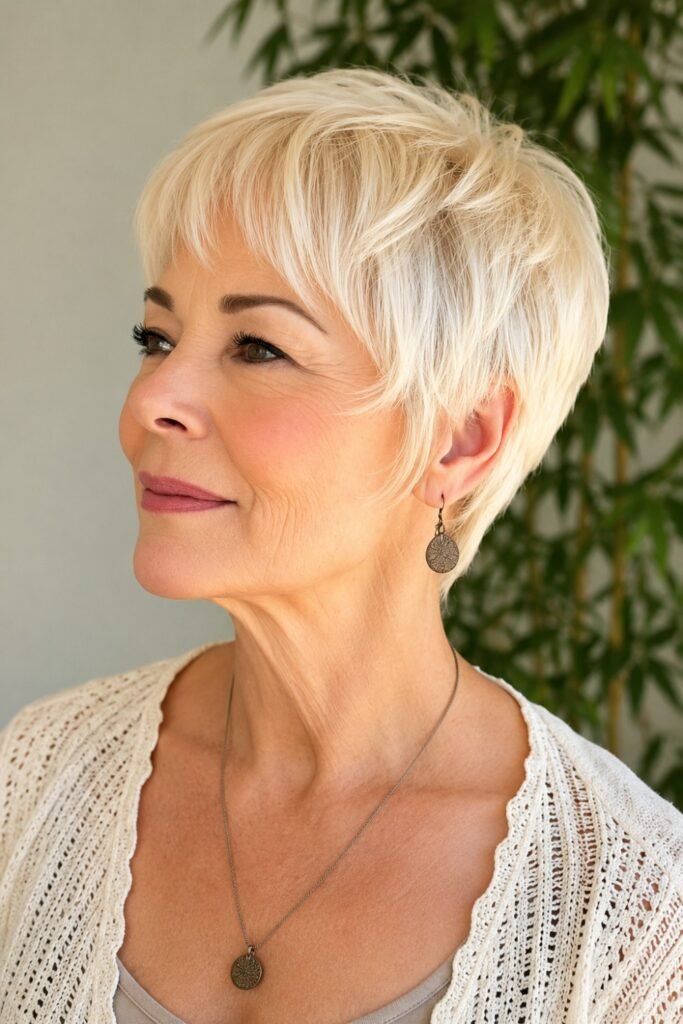
Save10. Wispy Pixie
Soft, fine-textured layers with barely-there ends. The gentlest option on this list.
Wispy pixies suit anyone who wants short hair without any hard edges. On white or silver hair particularly, the softness at the ends stops the cut looking severe.
Frequent trims, every three to four weeks, since the shape depends on precision at the ends. Purple shampoo if your hair is white, to keep it bright rather than yellowing.
 Save
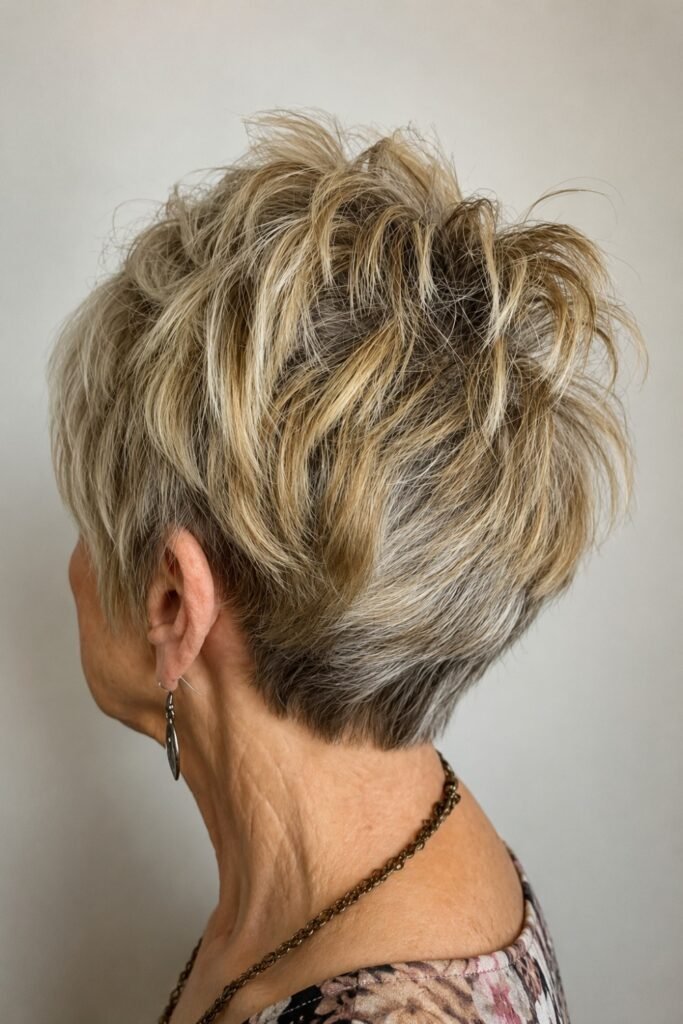
Save11. Spiky Pixie
Textured and deliberately spiked, usually with a number two guard around the nape and occipital bone and the back and sides blended with texturising shears.
The most energetic cut here, and one that genuinely surprises people. It suits an active personality and a face that can carry a strong shape.
Needs product every day, and the clipper work needs refreshing every three to four weeks to stay sharp.
 Save
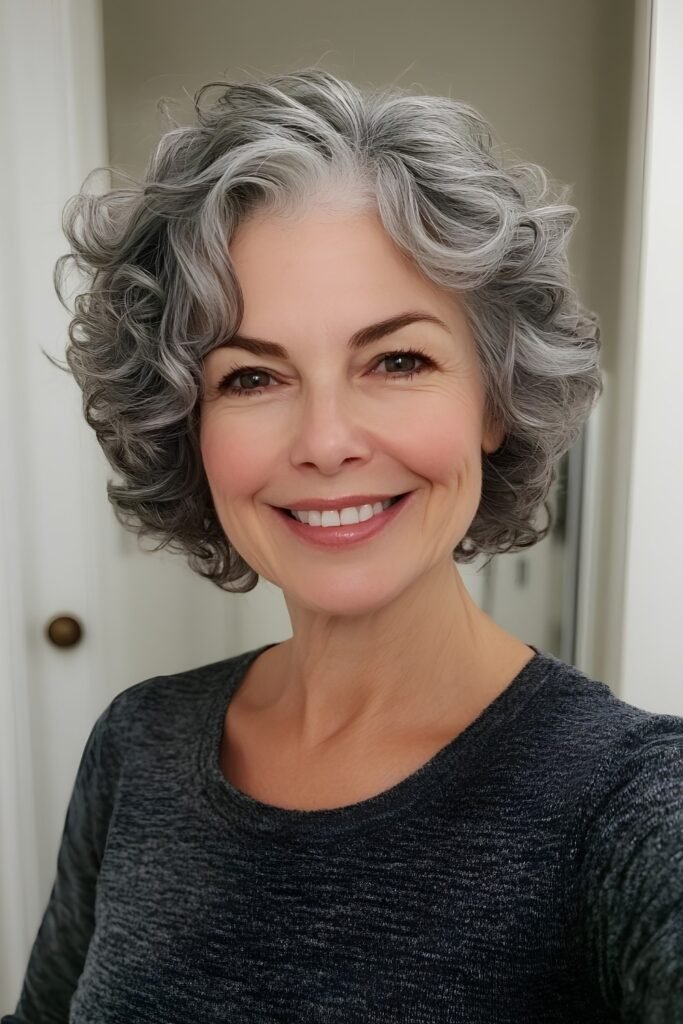
Save12. Curly Pixie With Softening Bangs
Cut for natural curl with side-swept bangs to soften what can otherwise be a sharp outline on short curly hair.
Short curly hair has a tendency toward the shapeless, and the temptation is to over-control it. The more relaxed the styling, the better this reads. Let the curls do what they want and use product for definition rather than restraint.
Cut dry, so the stylist can see where each curl actually falls.
 Save
SaveColour-Led: Pixies Where the Tone Is the Point
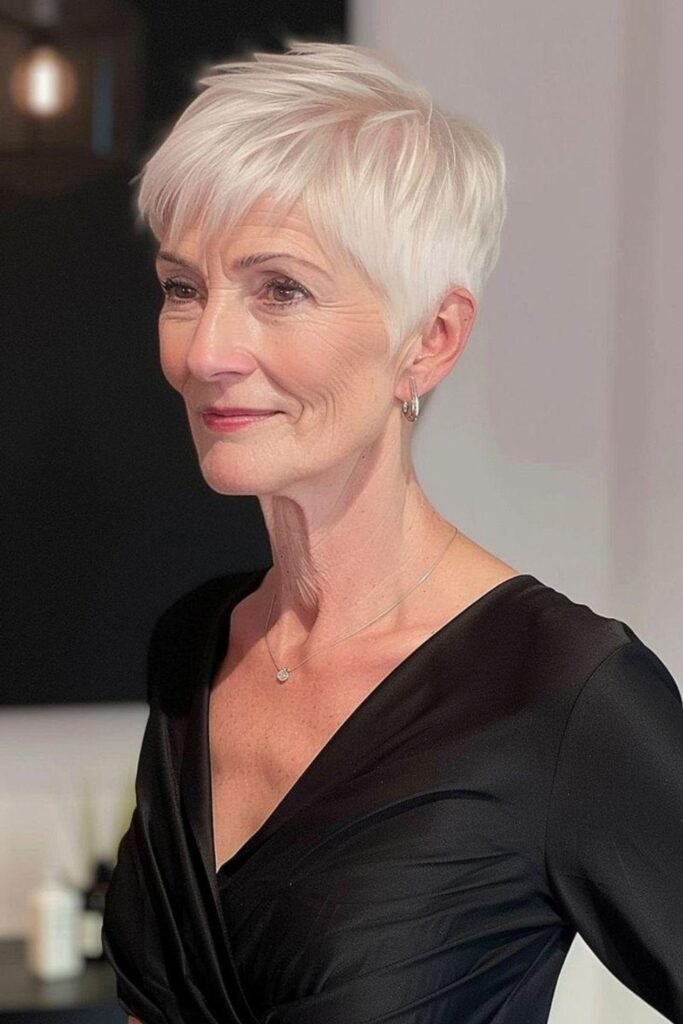
13. Platinum Blonde Pixie
Natural grey taken to a full platinum. Bright, high-contrast, and unmistakably deliberate.
Going platinum from grey is easier than going platinum from pigmented hair, since much of the work is already done. That makes it one of the more accessible bold colours after 60.
Weekly toning shampoo. Without it, platinum drifts yellow faster than most people expect.
 Save
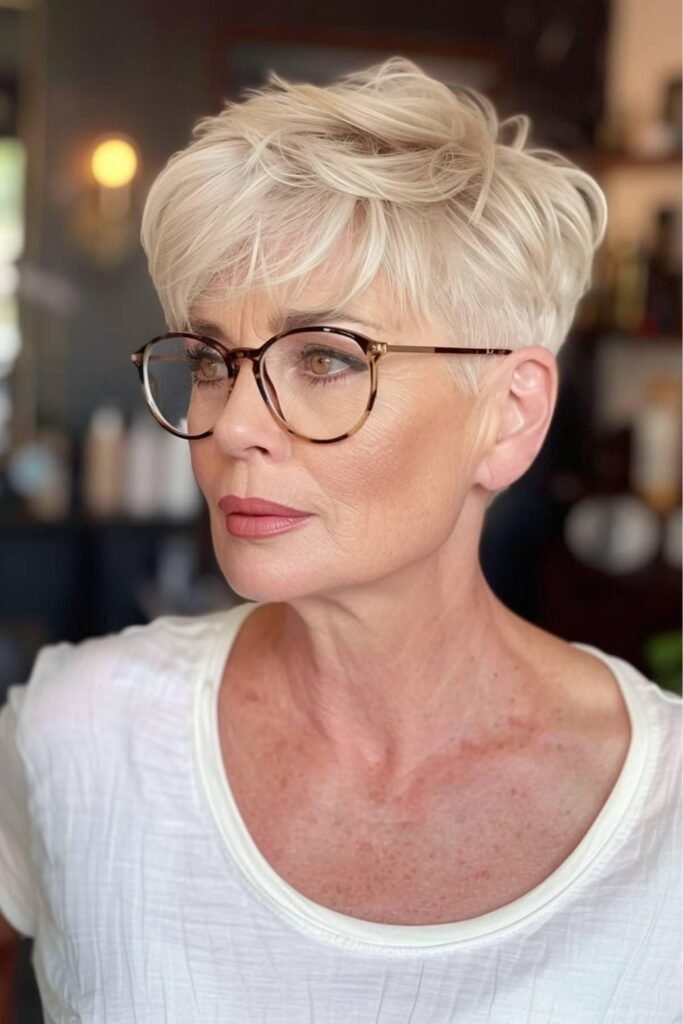
Save14. Pearl Blonde Pixie With Tapered Layers
A softer, cooler blonde than platinum, with tapered layers framing the face. Particularly good with glasses.
Pearl tones sit between blonde and silver and are more forgiving against mature skin than a bright platinum, which can wash out fair complexions.
The tapered layers at the front are what make this work alongside frames. They frame the face without crowding the glasses.
 Save
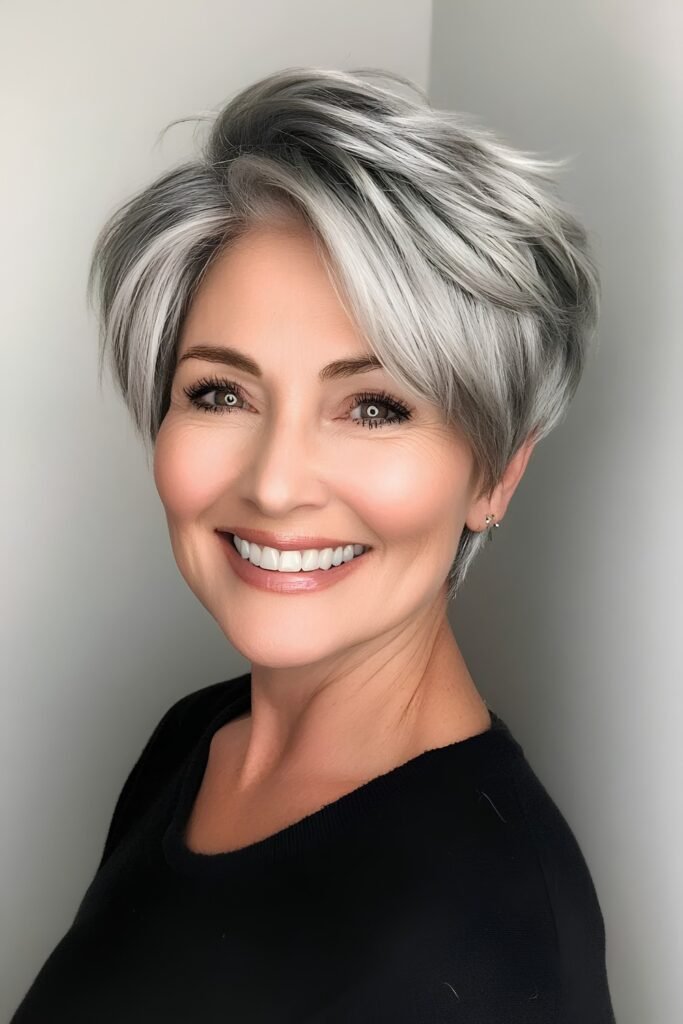
Save15. Dimensional Silver Pixie
Natural silver with subtle lighter and darker pieces worked through it, adding depth without an obvious colour change.
Flat silver can look dull. Dimensional silver, where some strands are brighter than others, keeps the eye moving through the shape and stops a short cut reading as one solid block.
Low maintenance for a coloured option, since there is no strong regrowth line to chase.
 Save
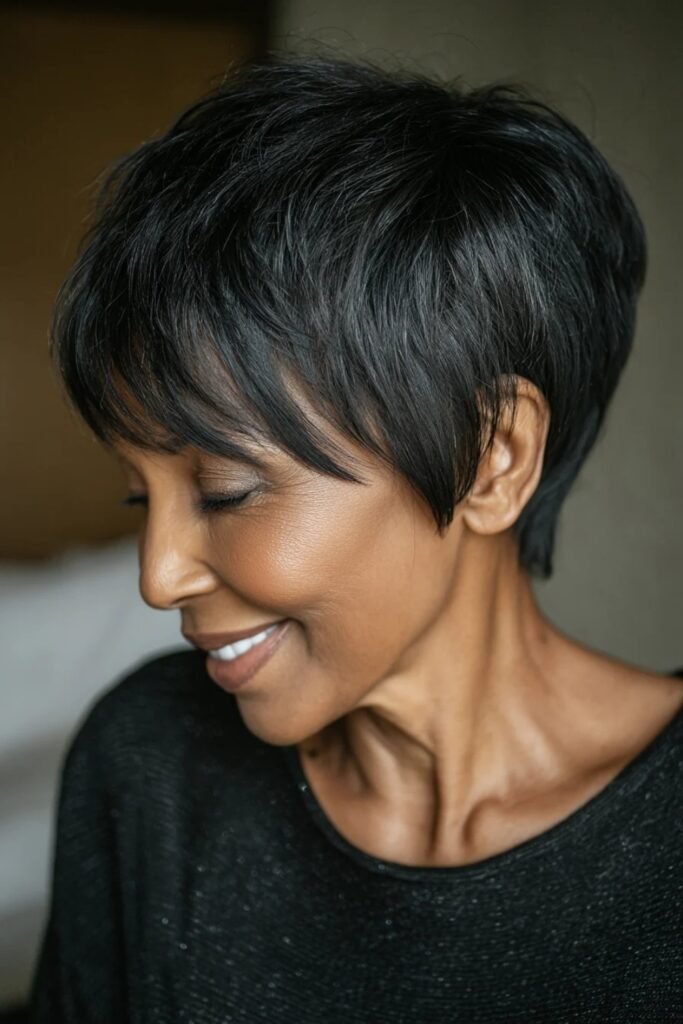
Save16. Rich Dark Pixie With a Clean Shape
A darker tone on a clean, precisely cut shape. Suits coarse or wavy hair particularly well.
Darker colour adds visible shine to hair that has coarsened, and the clean shape stops the depth of tone reading as heavy. All you need to style it is a smoothing pomade.
Worth knowing: darker colour on a short cut shows regrowth faster than lighter tones, so factor in the colour appointments alongside the trims.
 Save
SaveHow Short Should You Actually Go?
If your hair is thinning at the front hairline or across the top, choose from the crown-led group. Those four keep the volume where you have hair and do not depend on front length.
If you are moving down from a bob and unsure, the long pixie with a deep side part and the pixie with longer front layers are the two least drastic steps. Both still read as a pixie without exposing much.
If your priority is the shortest possible routine, the super short crop and the wispy pixie need the least daily work, though both need the salon more often.
And if you are not ready for this length at all, that is a legitimate answer. Our chin-length bob haircuts guide covers the next step up, and the medium hairstyles for women over 60 selection goes further still.
Common Questions
Does a pixie suit thinning hair?
Some versions, yes. Crown-led pixies with layering concentrated on top work well, because the shape creates height where the hair still has density. Pixies that depend on length at the front are a poor choice if your hairline is thinning there, since the cut will expose it rather than disguise it. Discuss where your thinning actually is before choosing a shape.
How often does a pixie need cutting?
Every three to four weeks for most versions, and that is not negotiable in the way it is with longer hair. A pixie’s shape is its entire effect, and once the proportions between crown, sides, and front shift, the cut stops working. Spiky and closely cropped versions are at the shorter end of that range.
Will I need to use product?
For any version with volume on top, yes. Crown height does not happen on its own, and without mousse or a root lifting spray the shape will drop within a few hours. The super short crop and the wispy pixie are the two that hold without much help.
What if I have glasses?
Short cuts generally work well with frames, particularly bold ones, because there is no length competing for space. Side-swept bangs and tapered face-framing layers are the two details that sit most comfortably alongside glasses. Bring your frames to the consultation.
Is a pixie hard to grow out?
It takes patience, roughly six to twelve months to reach a bob, and there is an awkward stage in the middle. The way through it is regular shaping appointments rather than simply letting it grow. A stylist can keep the shape wearable at each stage rather than leaving you with a cut that is neither one thing nor the other.
Final Thoughts
The reason so many women describe their pixie as the best haircut they ever had is that it is a genuinely designed shape. Nothing about it is accidental.
Work out which of the three variables matters most for your hair. If it is density at the crown, go crown-led. If it is softness at the face, go front-led. Then take a photograph to your stylist and talk about those numbers rather than about the picture. That is the conversation that produces a pixie built for your head.