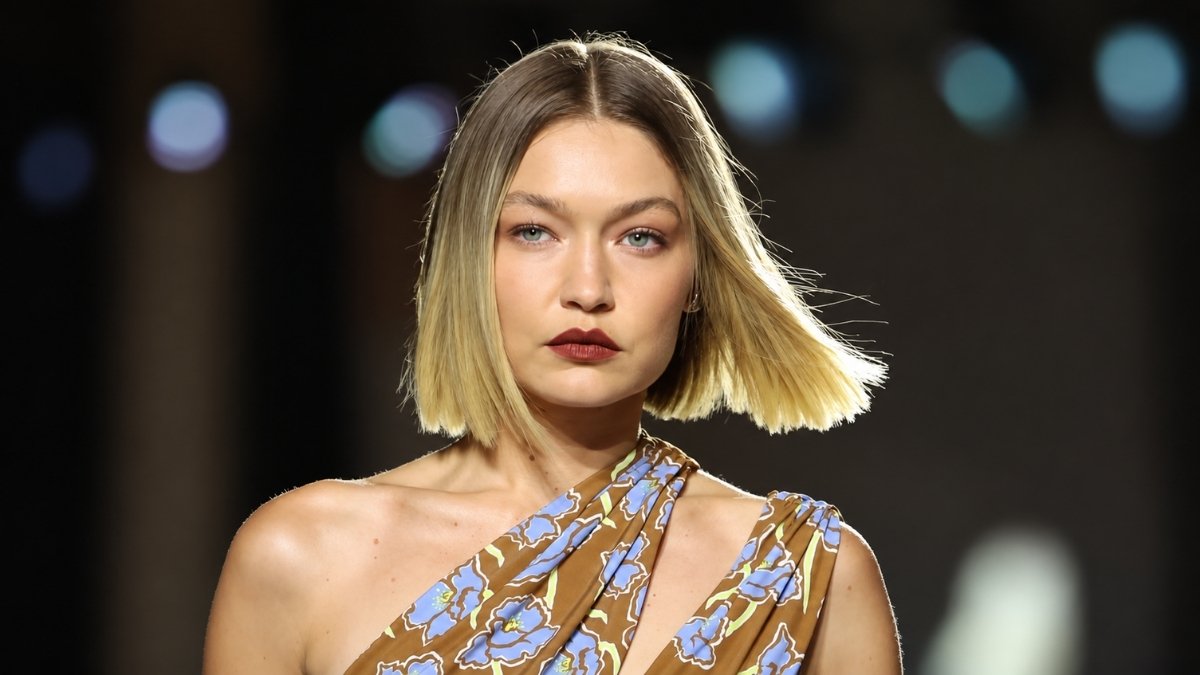
A sleek blunt lob is almost aggressively simple: one strong perimeter, enough length to reach the shoulder or collarbone zone, and a finish smooth enough that the line is impossible to miss. That simplicity is exactly why weak cutting shows immediately.
The blunt lob remains one of the cleanest shapes you can ask for: a long, even edge around the top of the shoulders or the collarbone, sometimes with a very slight A-line shift for structure.
Below, the blunt perimeter and sleek finish stay constant while the part, exact length, angle, fringe, density, tuck and color change. For lobs of every kind, see our long bob hairstyles.
15 Sleek Blunt Lob Styles
1. Classic Center-Part Blunt Lob
Keep the perimeter at the collarbone or just above it and cut it as one clean line. A center part exposes the precision equally on both sides.
Best for: straight hair, medium density, minimalist styling.
2. Collarbone Glass Lob
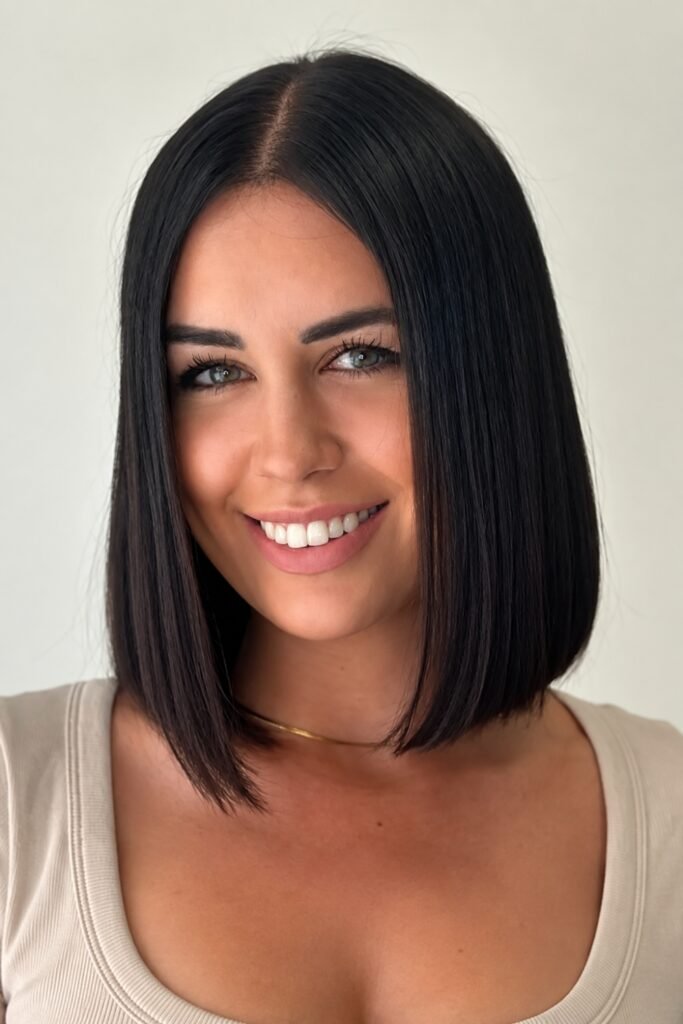
Place the blunt edge at the collarbone and style the surface smooth enough to reflect light while still moving naturally.
Best for: straight medium/thick hair, editorial polish.
3. Deep Side-Part Blunt Lob
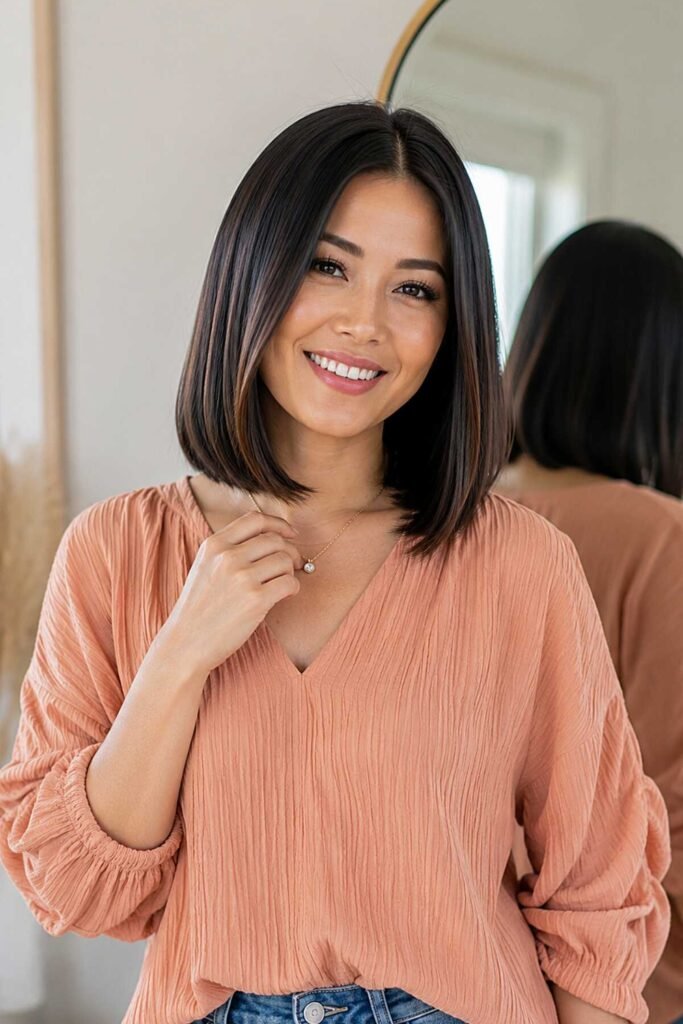
Keep the lob one length and move the part deeply to one side. The heavier section creates asymmetry and root lift without adding layers.
Best for: straight hair, flatter roots, soft asymmetry.
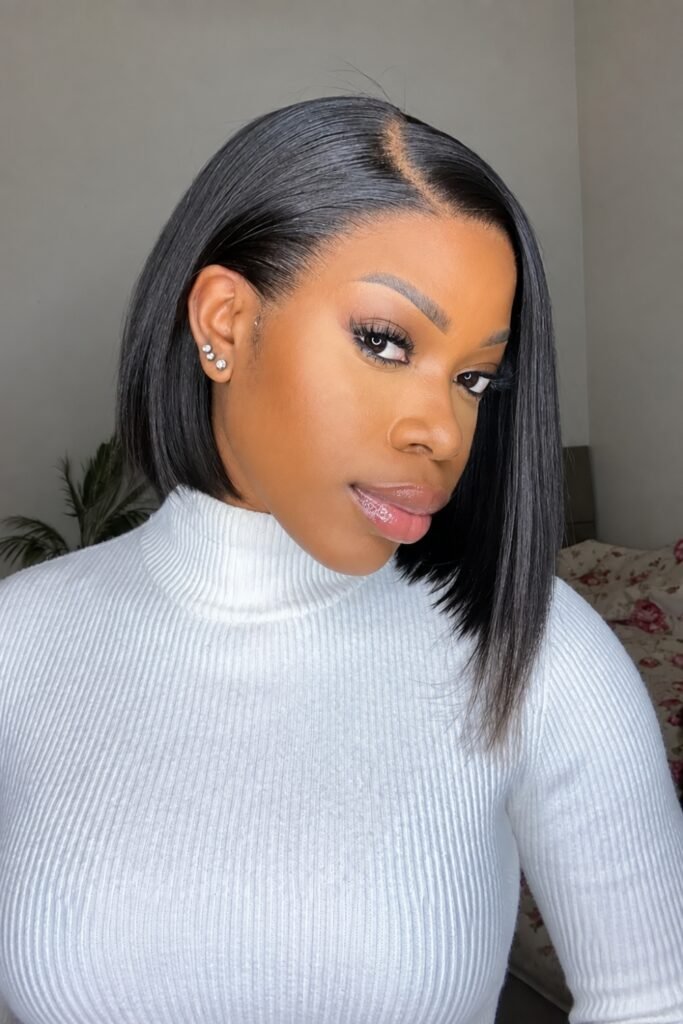
4. Subtle A-Line Blunt Lob
Cut the back slightly shorter and let the front extend gradually toward the collarbone. Keep the shift subtle enough to remain lob territory.
For steeper angles, see our angled bob hairstyles.
Best for: straight hair, sharper front lines.
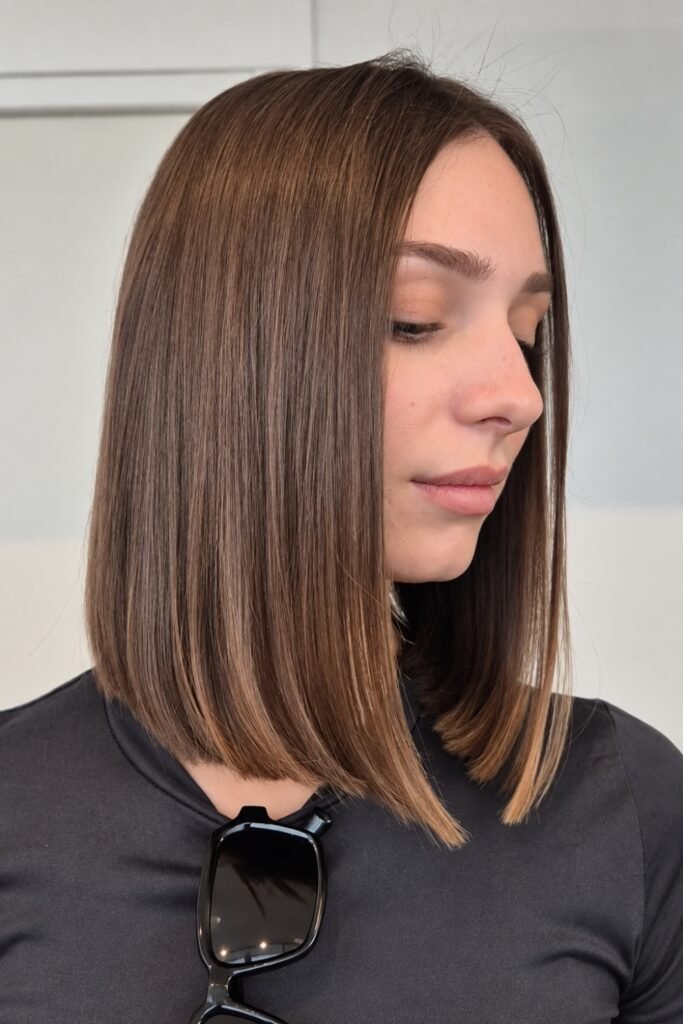
5. Shoulder-Skimming Blunt Lob
Land the perimeter just above or at the shoulder so the line stays crisp instead of flipping randomly against clothing.
Shorter? Compare our medium-length bob haircuts.
Best for: shorter lobs, fine/medium straight hair.
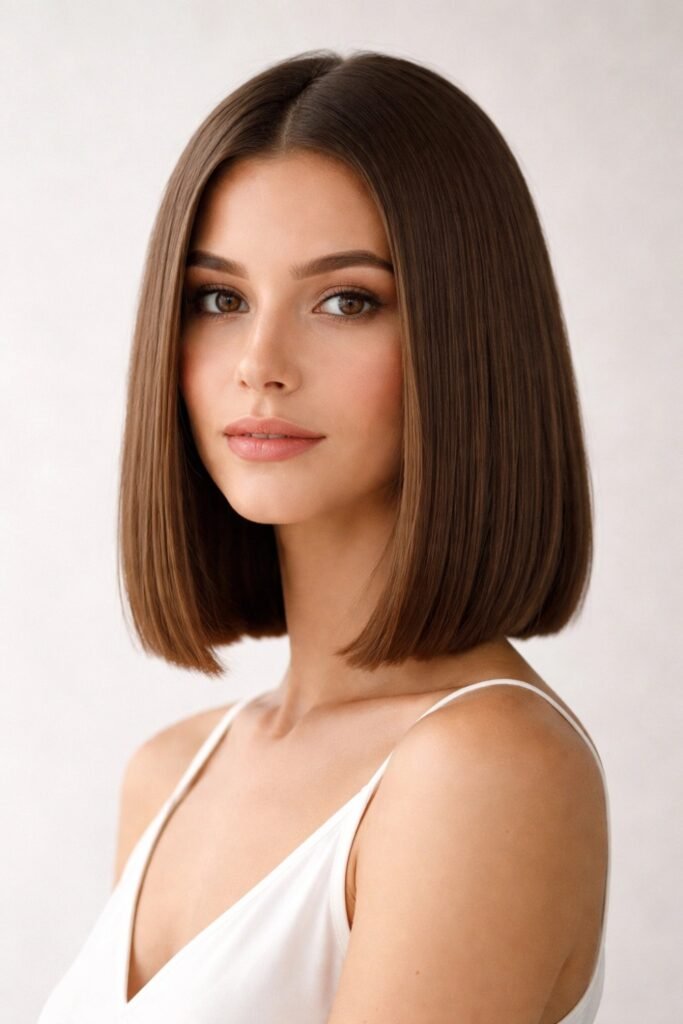
6. Long Collarbone Blunt Lob
Let the lob graze the collarbones while maintaining one dense baseline. The extra inches add tie-back flexibility without losing the blunt idea.
Best for: women growing out a bob.
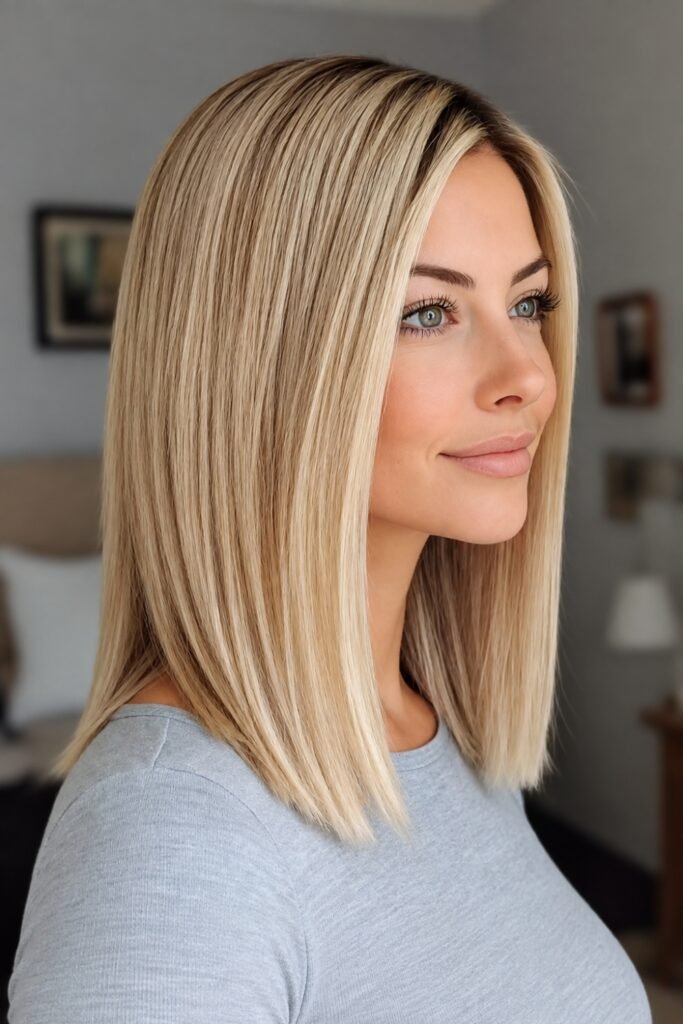
7. Fine-Hair Full-Edge Lob
Fine hair often benefits from a blunt perimeter because more strands terminate at the same visual line. Keep internal removal minimal.
More options are in our long bob hairstyles for thin hair.
Best for: fine straight hair, sparse-looking ends.
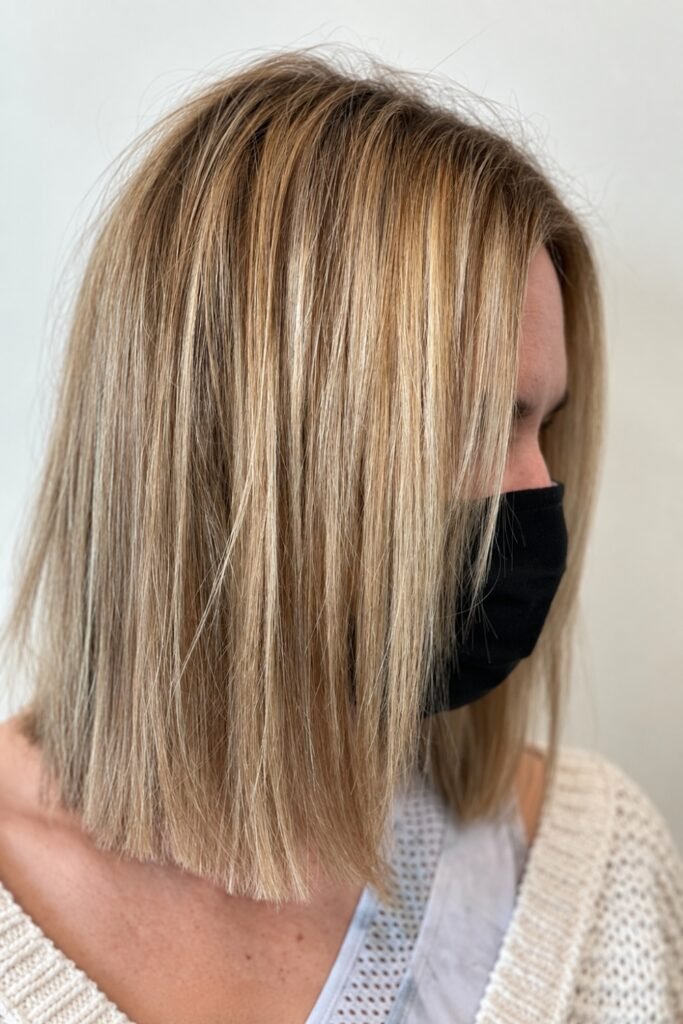
8. Thick-Hair Hidden-Weight Lob
Very dense hair can keep a blunt outer line while limited hidden weight is removed underneath. The surface should still read as one polished shape.
Best for: thick straight hair, dense ends.
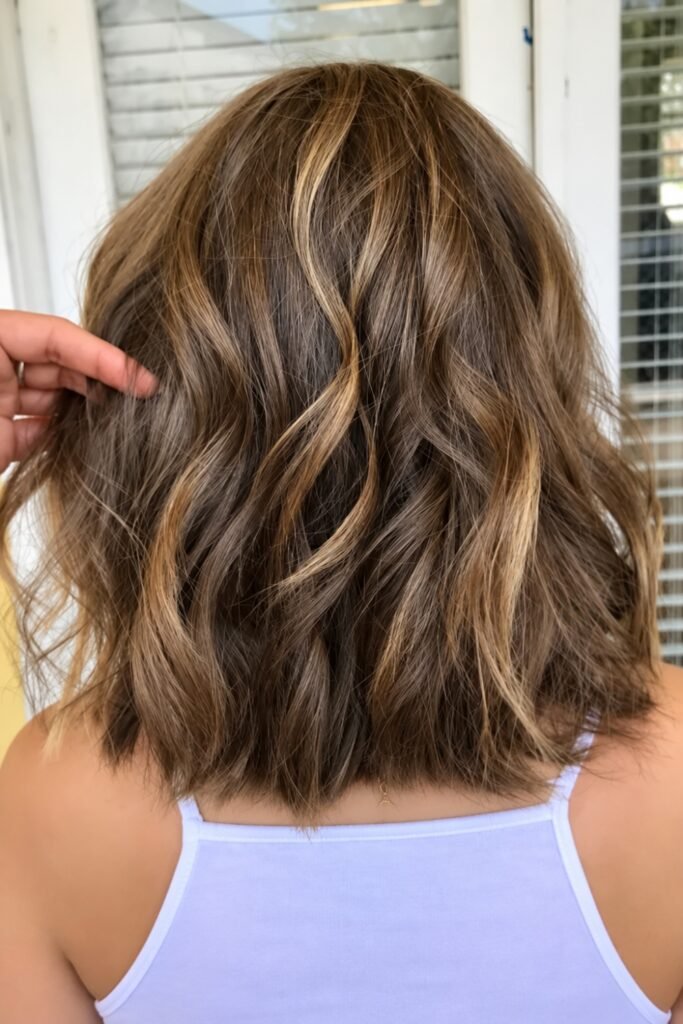
9. Blunt Lob With Full Fringe
Pair the one-length lob with straight eyebrow-skimming bangs. The horizontal fringe and blunt perimeter create deliberate architecture.
Best for: straight hair, statement bangs.
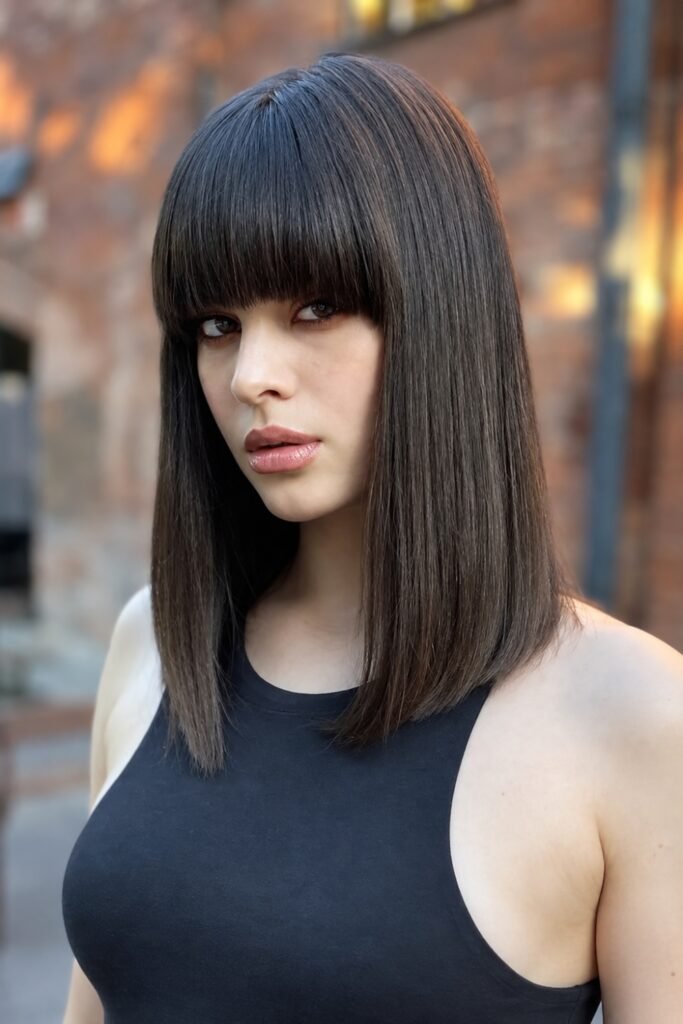
10. Blunt Lob With Wispy Fringe
Keep the lob dense and one length, then add a light separated fringe. The softness stays near the face rather than spreading through the ends.
Best for: fine/medium hair, softer framing.
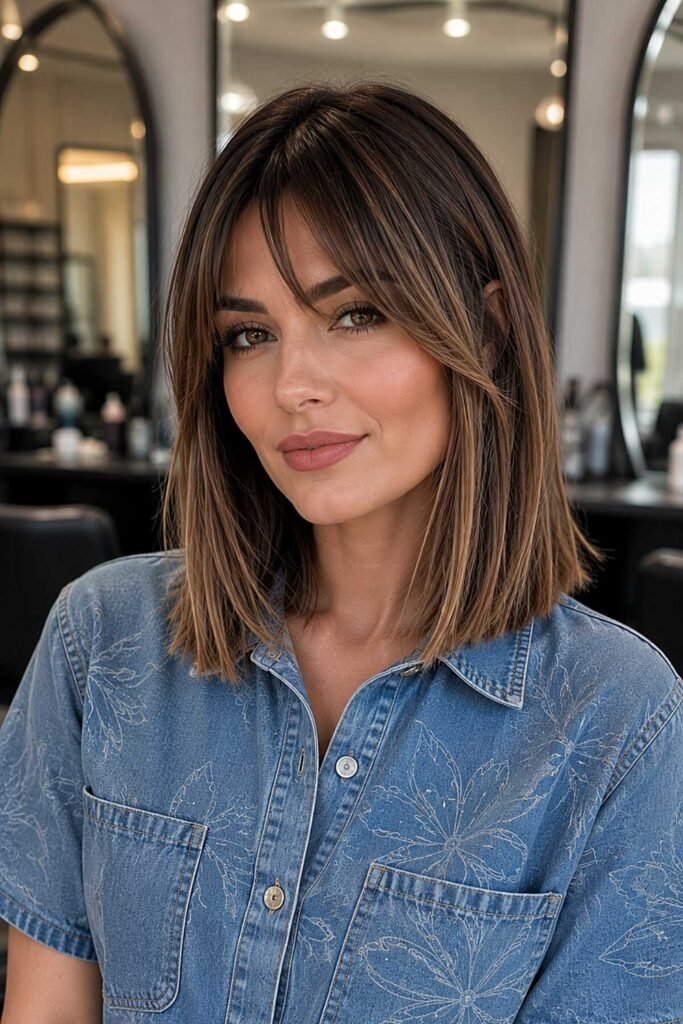
11. Ear-Tucked Blunt Lob
Tuck one or both sides behind the ears so the jawline, earrings, and exact perimeter become more visible.
Best for: office styling, jewelry-focused looks.
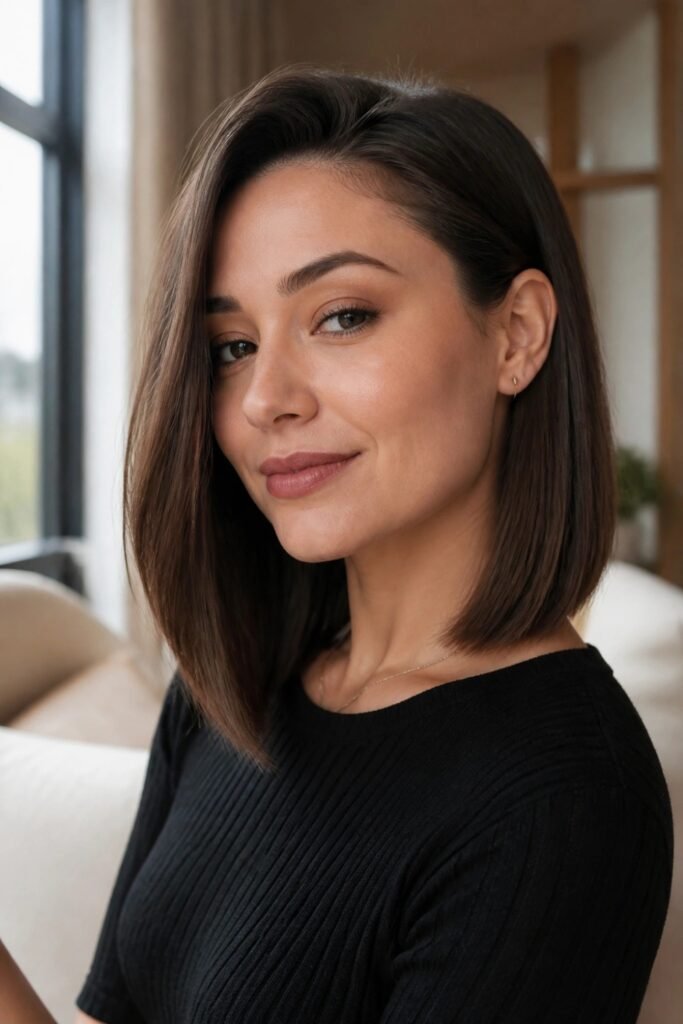
12. Asymmetric Blunt Lob
Let one side finish slightly longer while both remain blunt. Keep the difference subtle enough that the cut does not become a dramatic angled bob.
Best for: straight hair, minimalist edge.
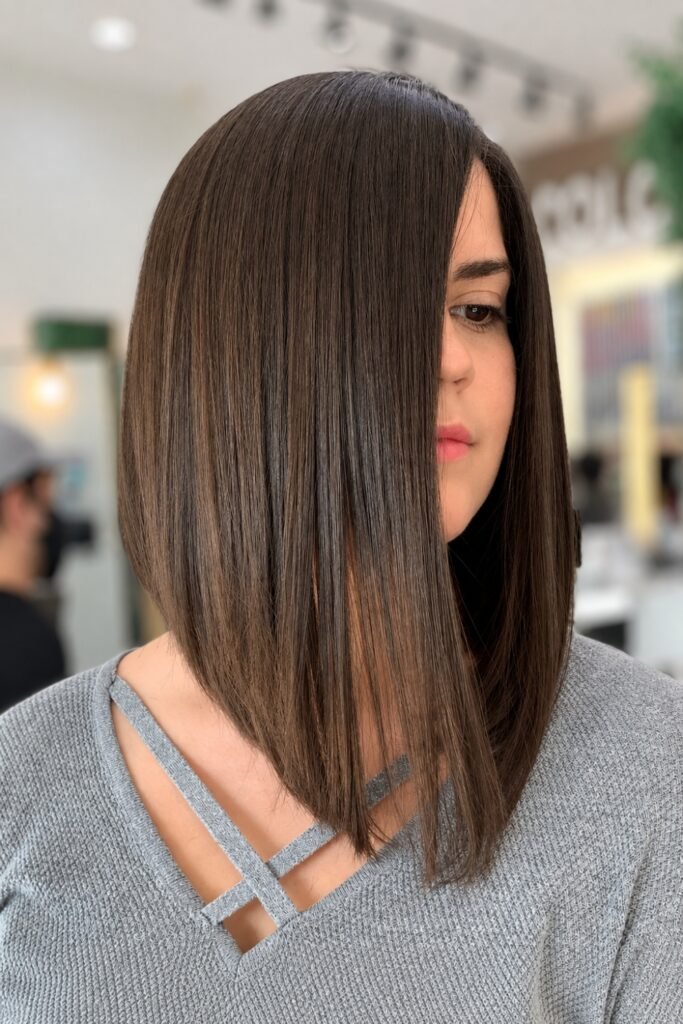
13. Espresso Gloss Blunt Lob
Deep espresso or brunette color with high shine emphasizes the continuous perimeter. Healthy ends matter because gloss reveals both precision and damage.
Best for: brunettes, understated color.
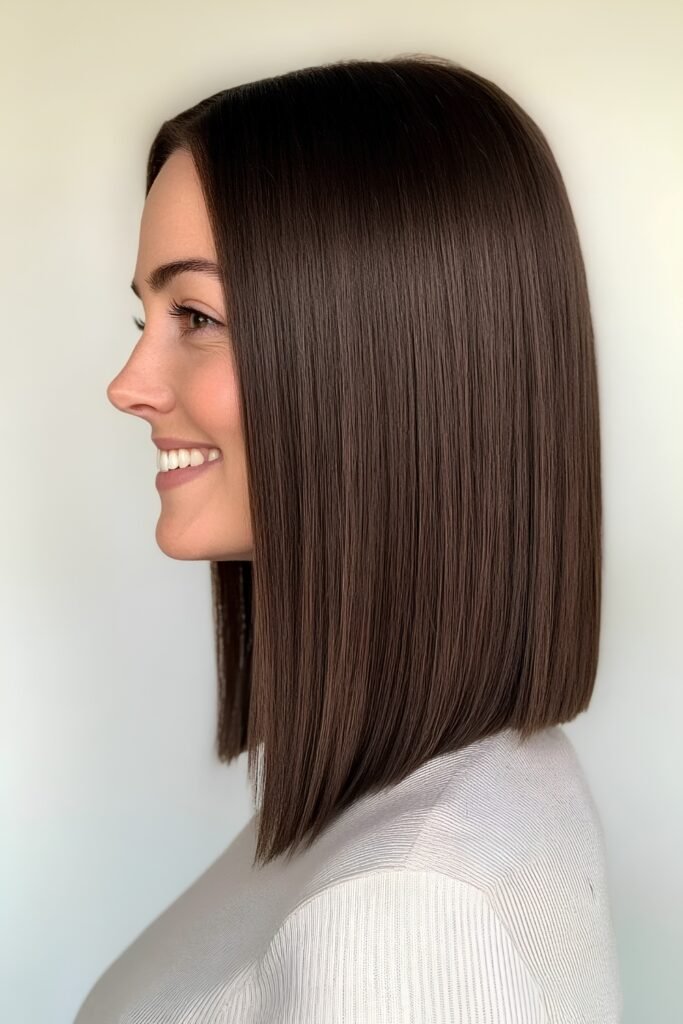
14. Platinum Blunt Lob
Pair icy blonde with a sharp blunt lob. Light color makes the outline striking but also exposes frayed or compromised ends.
Best for: cool blondes, salon-maintained hair.
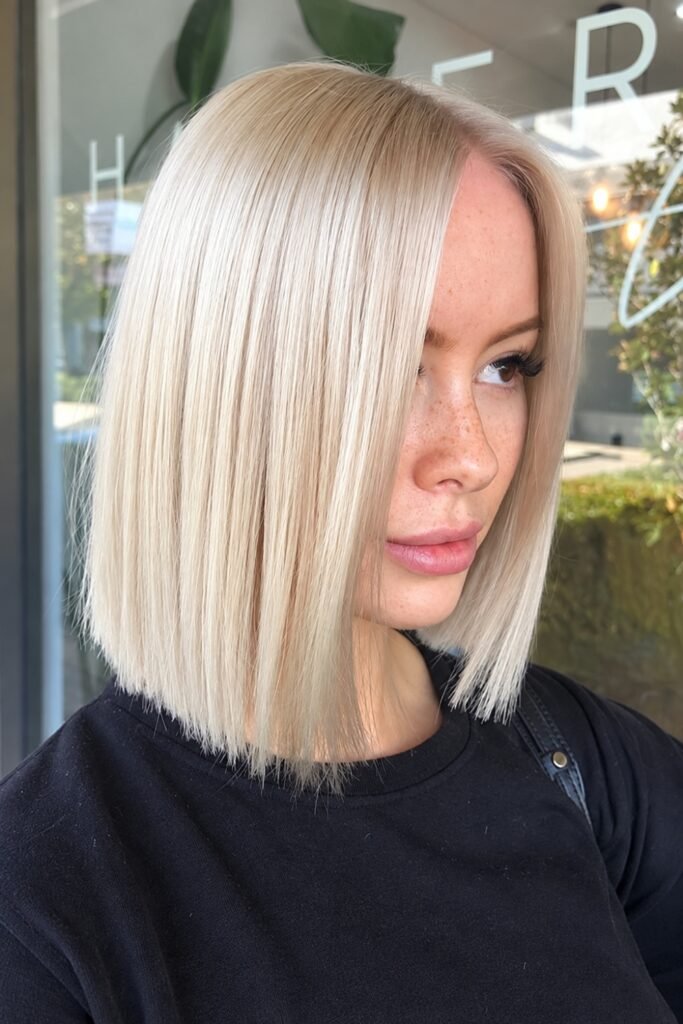
15. Soft-Bevel Blunt Lob
Style straight and curve only the final half-inch inward. The bevel controls shoulder flips without turning the haircut into a rounded bob.
The 90s lob takes that bend further.
Best for: shoulder/collarbone lobs, everyday polish.
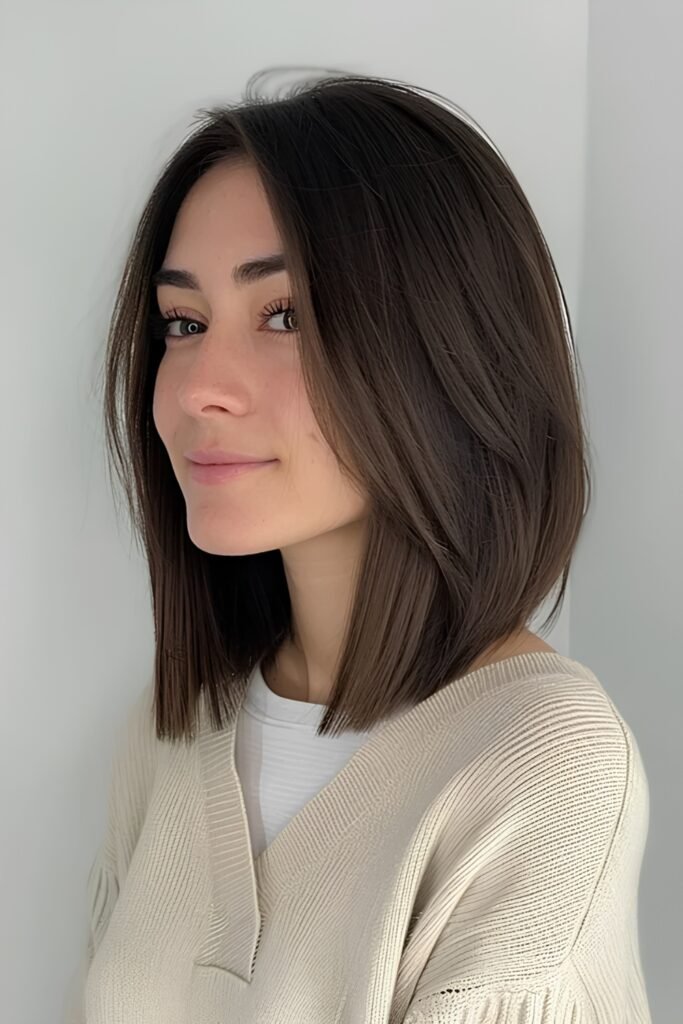
Quick Guide: Choose Your Sleek Blunt Lob
| Hair / goal | Strong choices | Priority | Avoid |
| Fine hair | Full-edge, shoulder-skimming | Preserve baseline density | Thinning ends |
| Thick hair | Hidden-weight, long collarbone | Control internal bulk | Visible layers |
| Maximum polish | Center-part, glass, espresso | Precise perimeter + smooth surface | Heavy oily finish |
| Softer face | Wispy fringe, side part | Softness near face only | Texturizing whole lob |
| More edge | A-line, asymmetric, full fringe | Controlled geometry | Stacked-bob drift |
| Easy everyday | Ear-tucked, soft bevel | Clean line + manageable finish | Shoulder flips |
What Makes a Lob Blunt?
A blunt lob keeps most or all of the visible perimeter at one strong length rather than using obvious graduation or layers through the ends. It usually sits around the shoulder-to-collarbone zone.
Very dense hair can sometimes have limited hidden weight removed without changing the visible blunt outline.
Why the Sleek Finish Matters
Sleek styling aligns the strands so the baseline reads as one continuous edge rather than being broken by bends.
It also exposes heat damage, uneven ends, and excess product quickly. Sleek is a finish, not a requirement to flatten the hair until it stops moving.
Fine Hair vs. Thick Hair
Fine hair usually needs the blunt edge left intact because the shared endpoint makes the perimeter look denser. Thick hair may need subtle hidden weight removal so it falls vertically rather than expanding outward.
Do not give both densities the same texturizing treatment.
What to Tell Your Stylist
Specify the finished length first: above shoulder, shoulder-skimming, or collarbone. Then ask for a strong blunt perimeter with little or no visible layering.
If your hair is dense, ask whether limited internal weight removal is needed without changing the outside line.
How to Style a Sleek Blunt Lob
Use heat protectant, dry the roots and lengths in the intended part, then smooth in small sections. Finish with a light anti-frizz or shine product through the mid-lengths and ends.
For a soft bevel, turn only the final section inward and avoid repeated high-heat passes over the ends.
Frequently Asked Questions
What is a sleek blunt lob?
A sleek blunt lob is a long bob around shoulder or collarbone length with a strong one-length perimeter and a smooth polished finish. Visible layering is kept minimal or absent.
Are blunt lobs still in style in 2026?
Yes. Blunt lobs are still widely worn in 2026, especially collarbone-length, center-parted, subtly angled and polished straight versions.
Is a blunt lob good for fine hair?
Yes. A blunt perimeter can make fine hair appear fuller at the ends because more strands finish at the same visual line. Avoid aggressive thinning through the baseline.
Can thick hair wear a blunt lob?
Yes. Dense hair may need limited hidden or internal weight removal so the shape falls cleanly, while the visible outer perimeter remains blunt.
What length is a blunt lob?
Most lobs sit between a classic bob and longer hair, commonly around the shoulder or collarbone. The exact stopping point should account for neck length, shoulders, and natural hair behavior.
Does a blunt lob need to be straight?
No. A blunt lob can be worn wavy, but sleek straight styling makes the clean perimeter most visible. This article specifically focuses on that polished version.
Can a blunt lob have bangs?
Yes. Full blunt bangs create a graphic look, while wispy fringe softens the forehead. Keep the lob perimeter strong if you want the haircut to remain recognizably blunt.
How do I keep a sleek lob from looking flat?
Choose the right part, preserve root movement, avoid heavy oils near the scalp, and make sure the cut suits your density. A side part can add lift without adding layers.
The One-Line Test
Style the lob straight, let it settle naturally, and look at the perimeter from the front, side, and back. Can you still read one deliberate line without waves, curls, or texture spray creating the shape?
If yes, the haircut is doing the work. A sleek blunt lob should look finished before the styling tricks arrive.