Wavy hair is where the butterfly cut can stop depending on the blow-dryer. The natural S-pattern already separates shorter face layers from longer lengths, so the cut can show movement even when it is air-dried.
Wavy hair needs the least intervention of any texture for this cut. The layers add shape, bounce and dimension to what the wave already does. The important part is cutting for the wave you actually have, and not for a smooth reference photo that was curled afterward.
This guide covers 2A, 2B and 2C behavior, air-drying, diffusing, fine versus thick density, spring-up, crown weight and how much layering natural waves can carry. For every texture, see our butterfly layered haircuts.
15 Butterfly Haircuts for Wavy Hair
1. Classic Long Wavy Butterfly
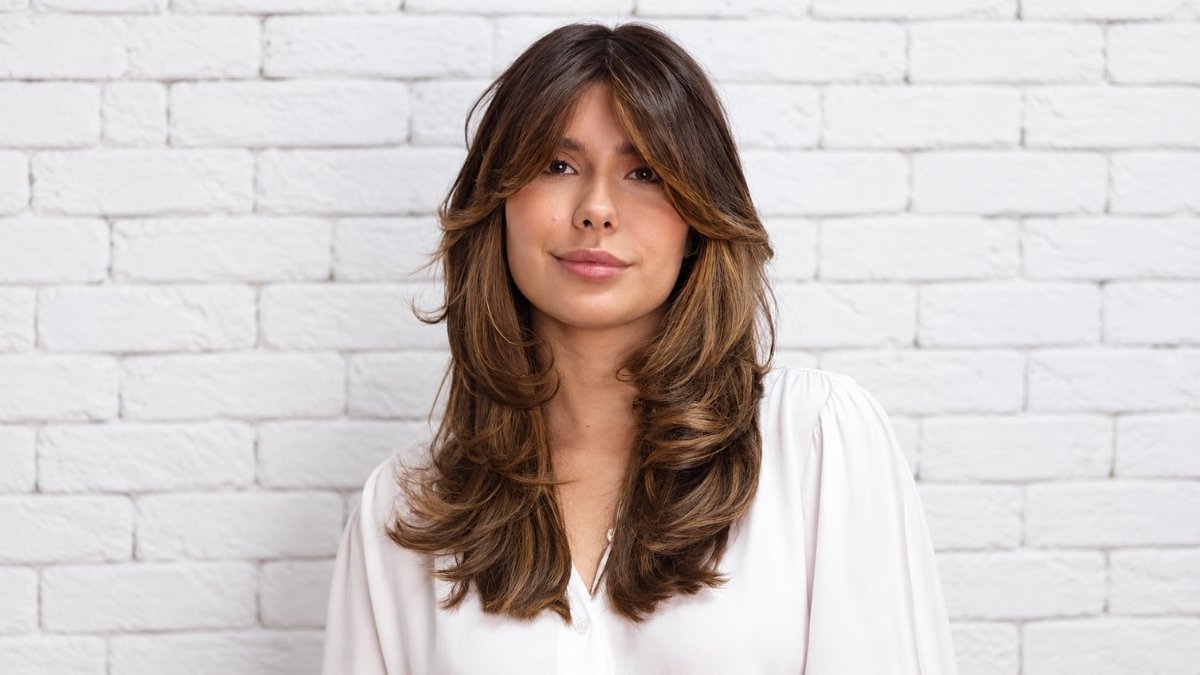
Keep the longest hair past the shoulders and begin face framing around the chin. Natural waves create separation between short and long sections without round-brushing every layer.
Best for: long 2A–2B waves, medium density, length preservation.
2. 2A Soft-Wave Butterfly
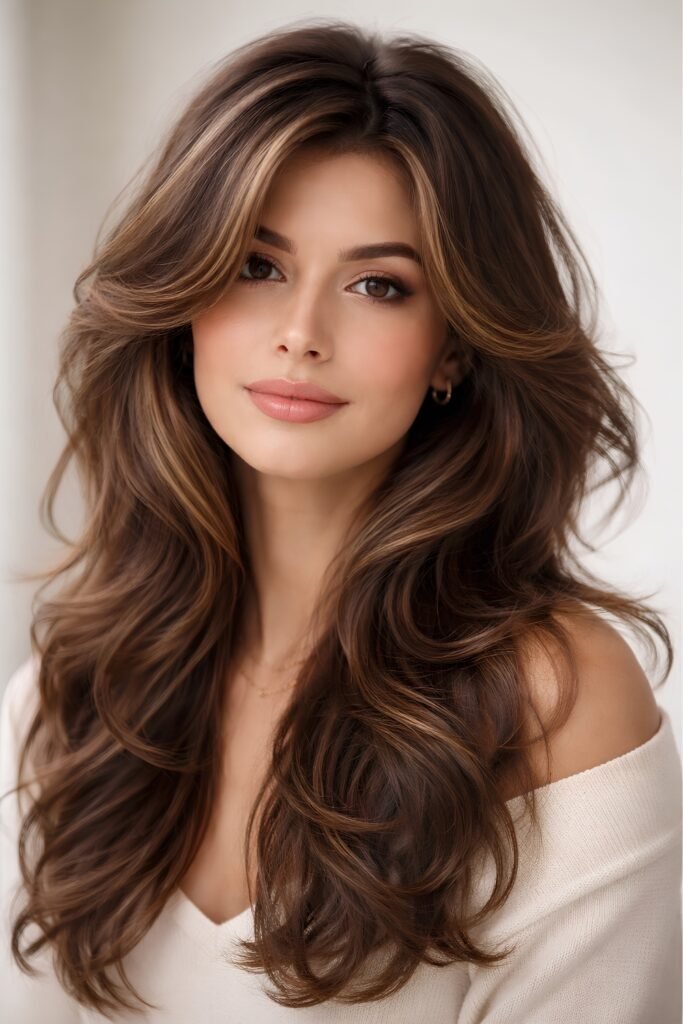
Loose 2A waves can flatten if too much weight is removed. Keep the structure long and subtle with jaw/chin framing and a dense perimeter.
Best for: loose 2A waves, fine-to-medium density, low styling time.
3. 2B Curtain-Bang Butterfly
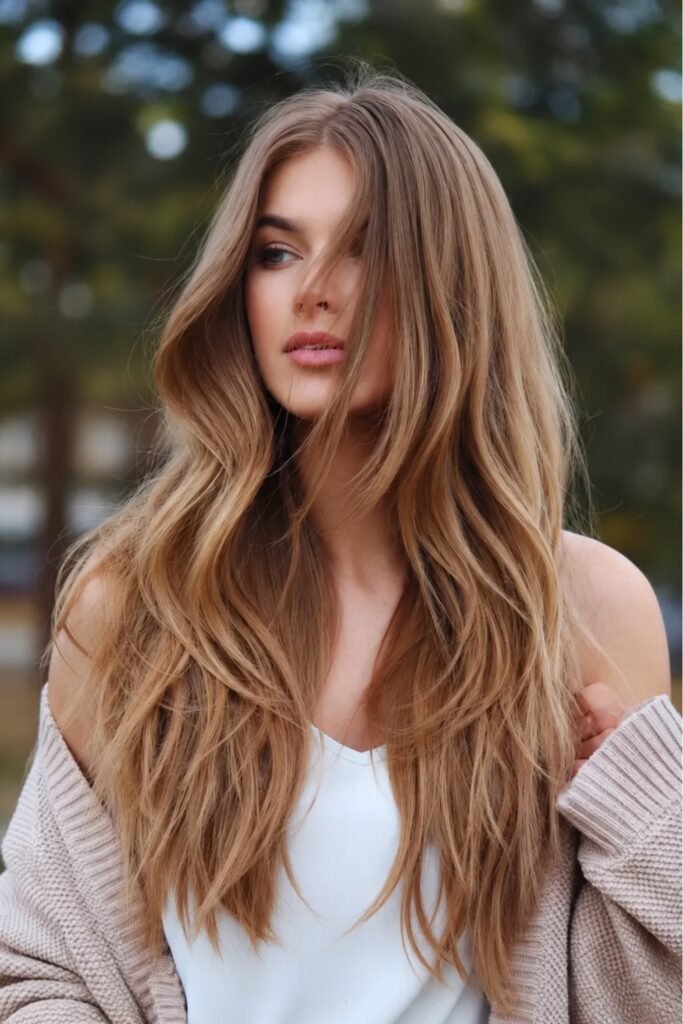
Let curtain bangs split around the cheekbones and connect into defined 2B waves. Keep the fringe long enough to bend naturally instead of requiring daily curling.
Compare fringe shapes in our curtain bangs guide.
Best for: 2B waves, center parts, medium/long hair.
4. 2C Voluminous Butterfly
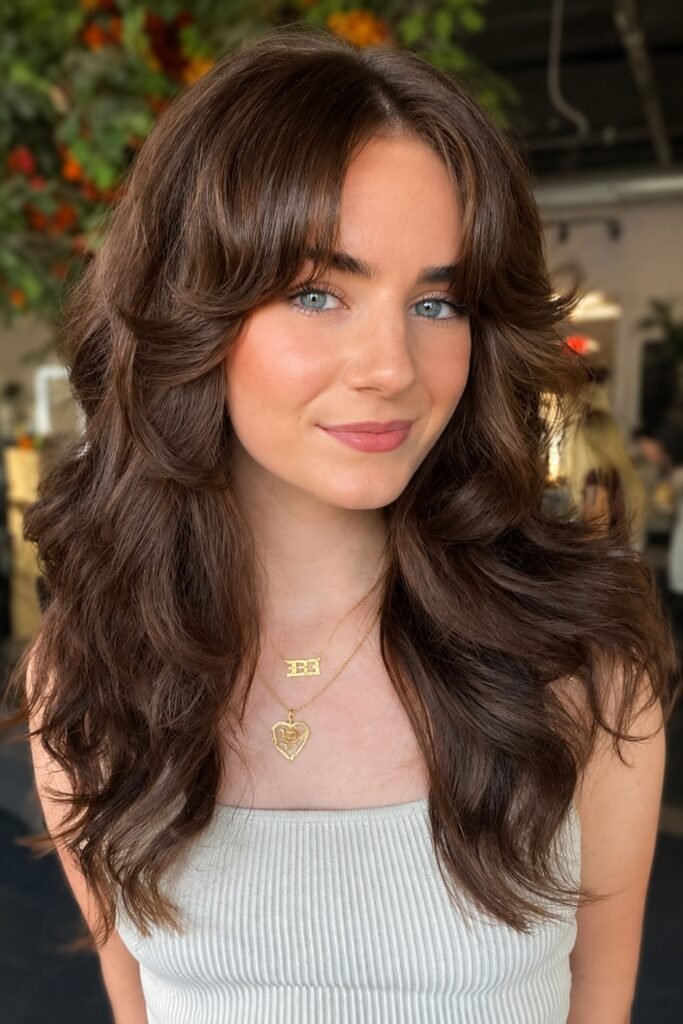
Begin the shortest layer longer than the finished photo suggests because stronger waves can spring upward dry. Use internal weight removal instead of stripping density from the ends.
Best for: 2C waves, thick density, natural volume.
5. Shoulder-Grazing Wavy Butterfly
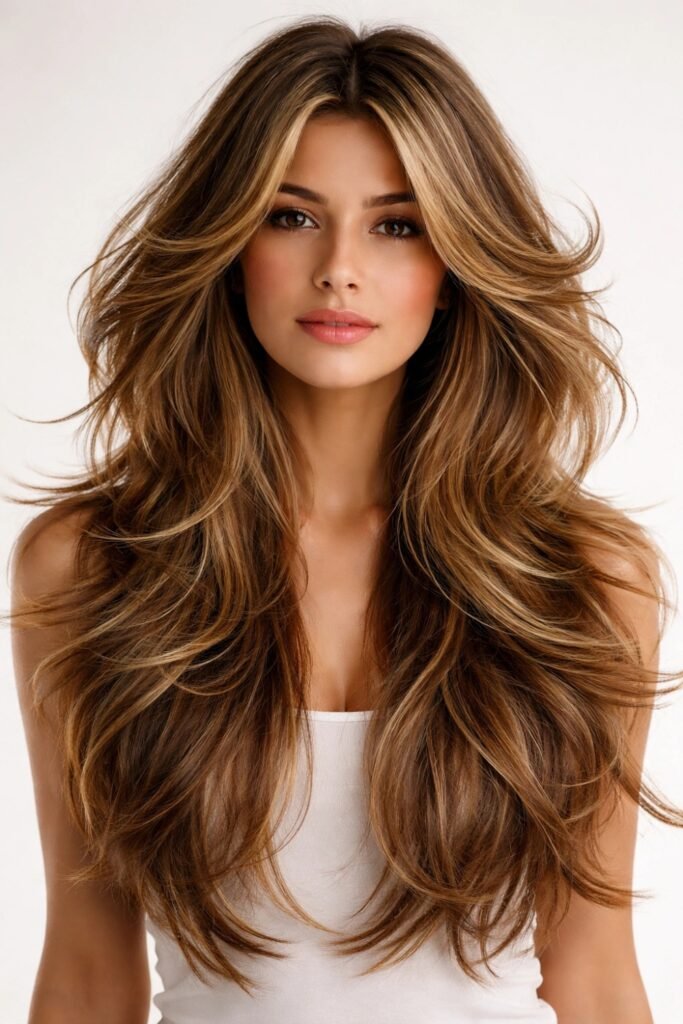
Use face framing plus carefully released interior weight so the sides do not pile above a heavy baseline. Keep enough perimeter density for wave clumps.
Best for: shoulder-length 2A–2C waves, medium density.
6. Collarbone Butterfly With Curtain Fringe
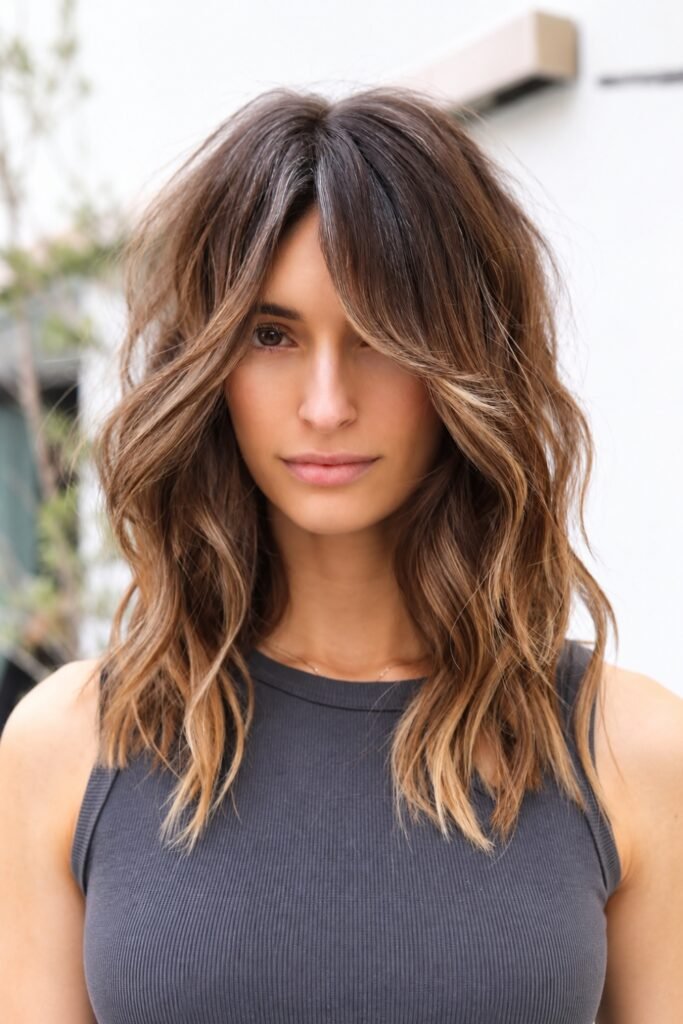
Keep the longest section near the collarbone and blend a cheekbone curtain fringe into the side layers. There is enough length for the silhouette without very long hair pulling the crown flat.
Best for: 2A–2B waves, medium density, easier maintenance.
7. Fine Wavy Butterfly With Full Ends
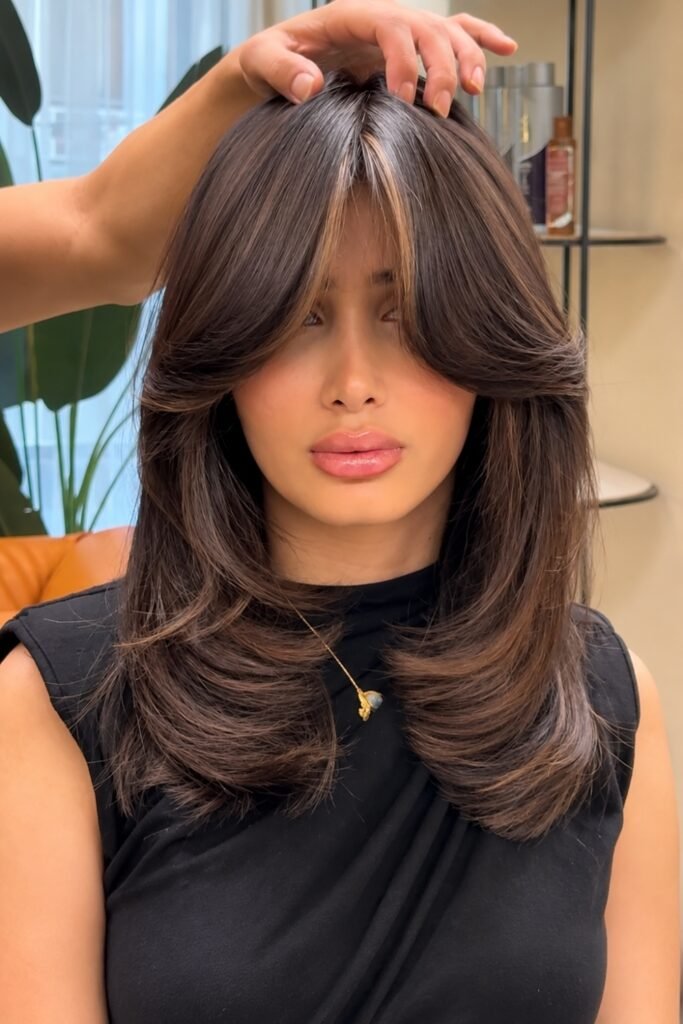
Fine waves need restrained layering and a strong baseline. Keep the shortest pieces around the jaw or chin and avoid aggressive razoring or thinning.
See also our butterfly haircuts for medium-thin hair.
Best for: fine 2A/2B waves, soft volume, women wary of layers.
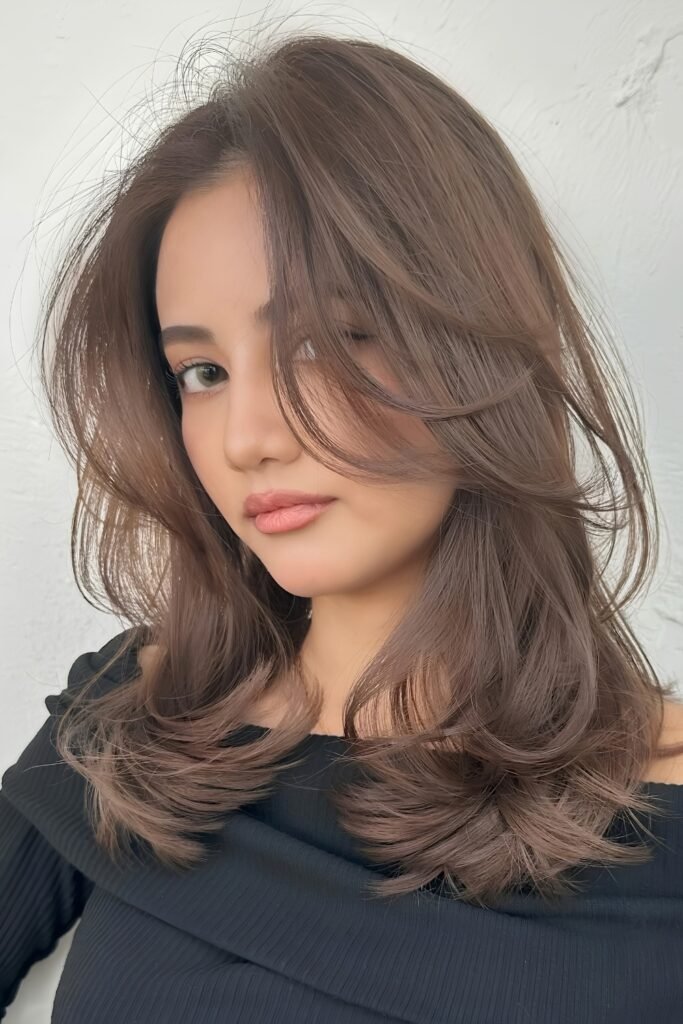
8. Thick Wavy Internal-Layer Butterfly
Dense wavy hair can carry more layering, but hidden weight removal through the interior is cleaner than shredding the visible surface. Keep the outer wave pattern substantial.
Best for: thick 2B/2C waves, heavy sides, dense long hair.
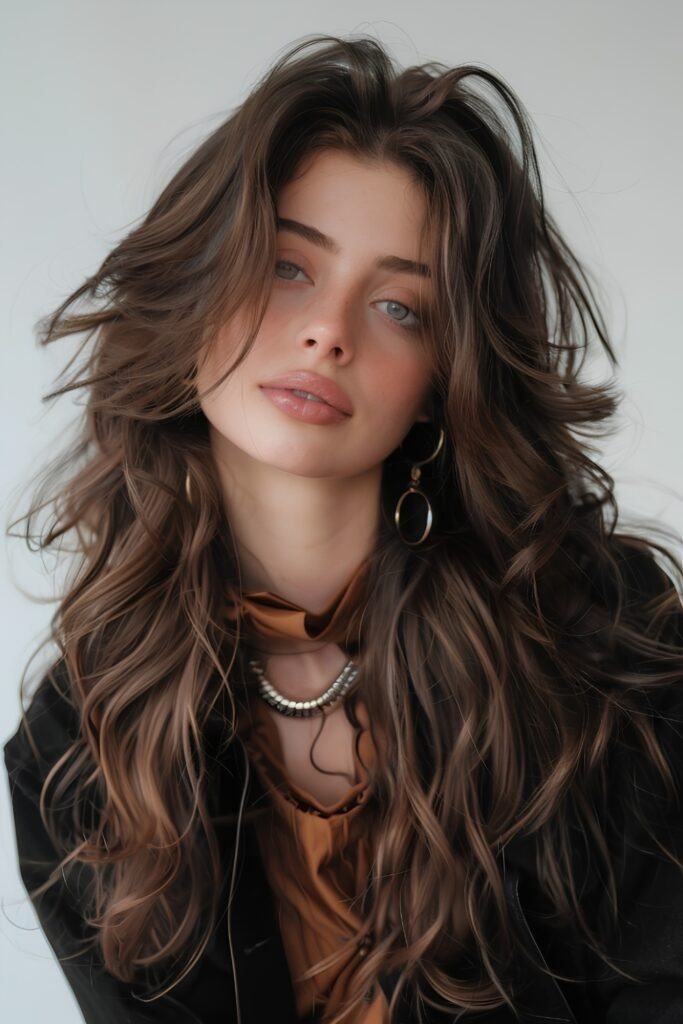
9. Side-Part Wavy Butterfly
Use a soft side part where the hair naturally wants to split, then let the heavier side sweep through the face-framing layers. Natural waves often hold the asymmetry with little product.
More ideas are in our butterfly haircuts with a side part.
Best for: 2A–2C waves, cowlicks, asymmetric framing.
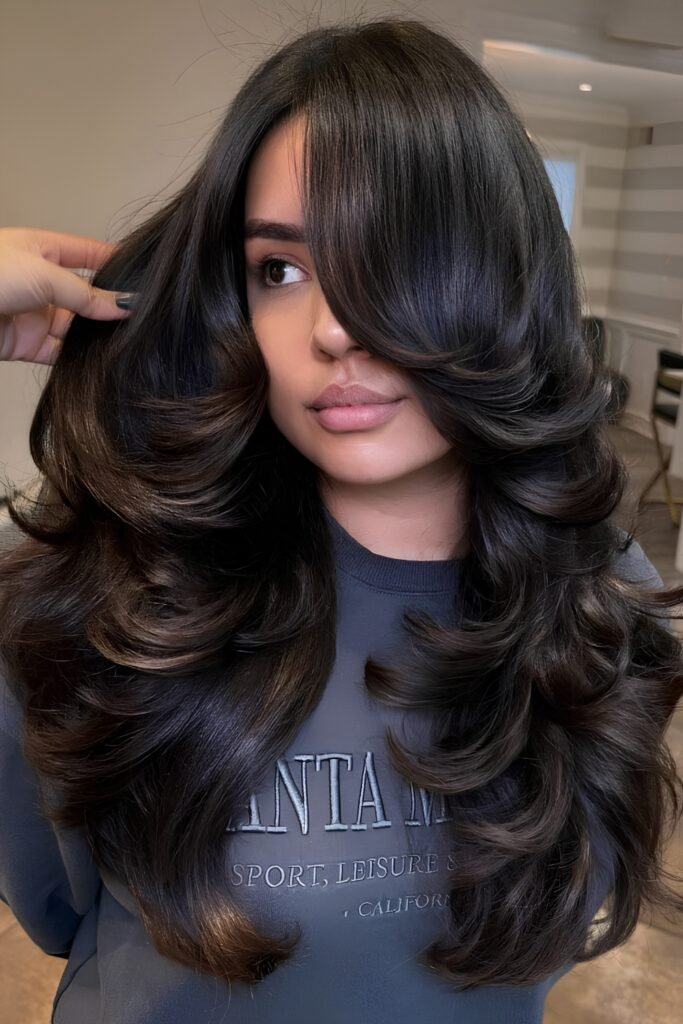
10. Wispy-Bang Wavy Butterfly
Use a thin separated fringe with longer temple pieces that disappear into the butterfly layers. The fringe can dry with a slight bend while the rest keeps its wave.
Best for: medium-density waves, fringe lovers, softer forehead framing.
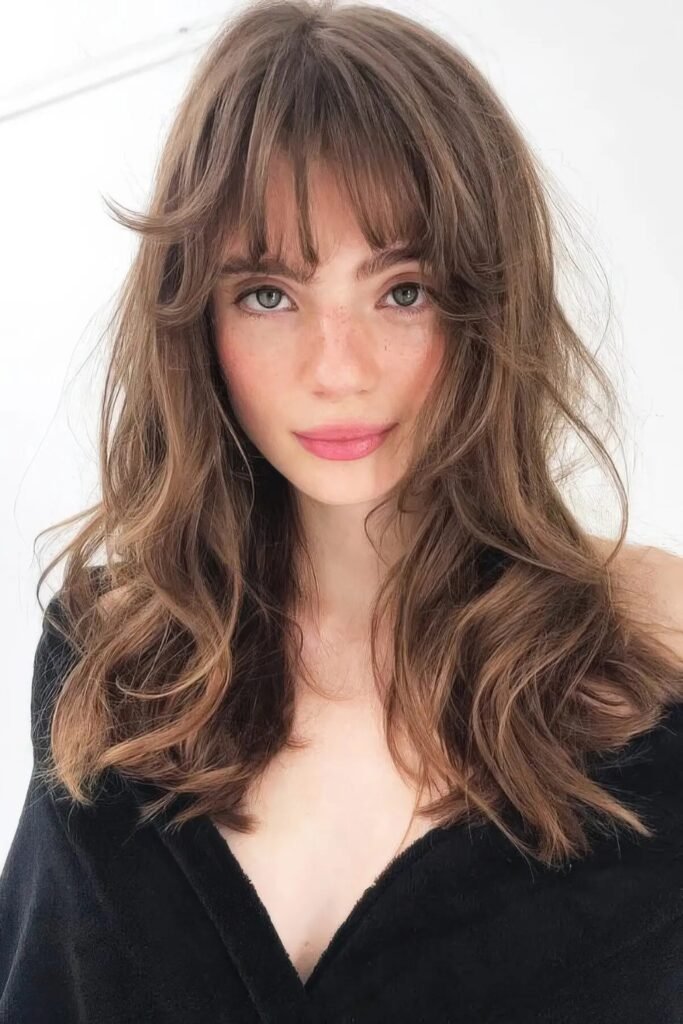
11. Air-Dried Butterfly
Use longer front pieces, fewer short crown layers, and a perimeter with enough weight to settle naturally. Apply wave product, scrunch, and let the pattern reveal the cut.
Best for: 2B/2C waves, low-maintenance routines, minimal heat.
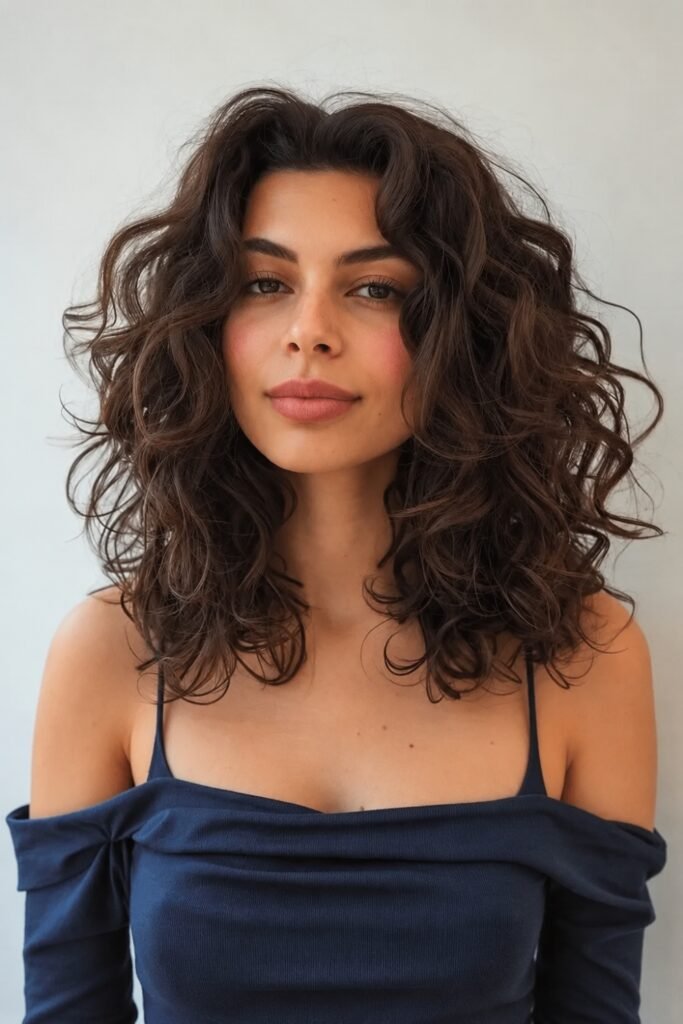
12. Diffused Voluminous Butterfly
Diffuse rather than blow-drying smooth. Root lift separates the shorter upper layers while the diffuser preserves the S-pattern through the lengths.
Best for: defined 2B/2C waves, volume lovers, humid climates.
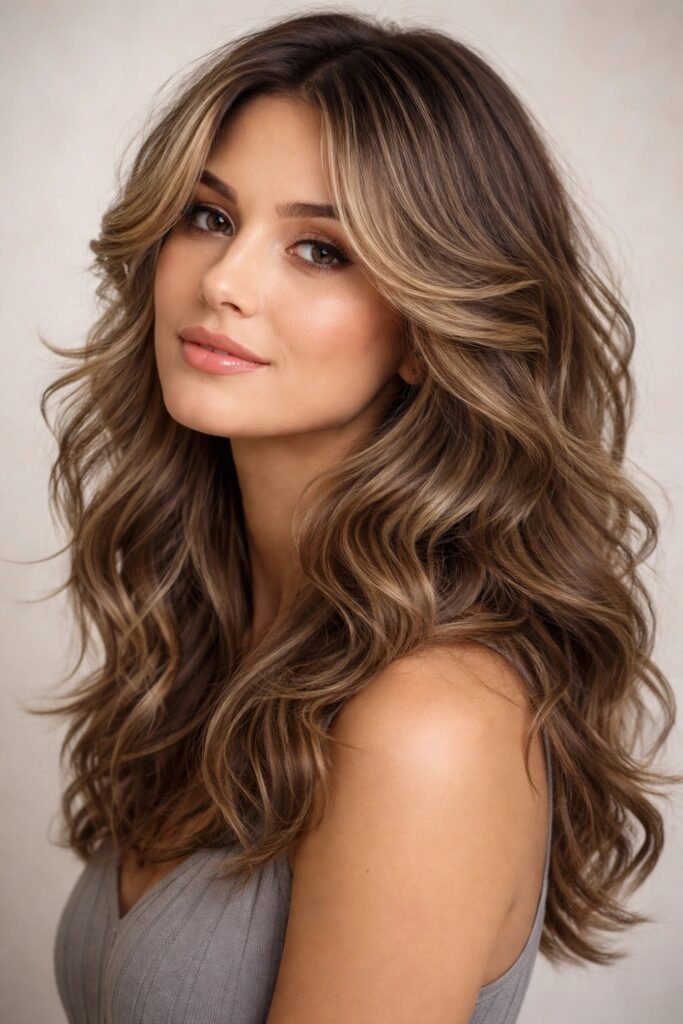
13. Butterfly Shag
Shorten selected crown layers and use a piecey curtain fringe, but keep side and back lengths connected. Stop before the crown becomes so short that the soft butterfly graduation disappears.
Best for: thick 2B waves, alternative style, lived-in texture.
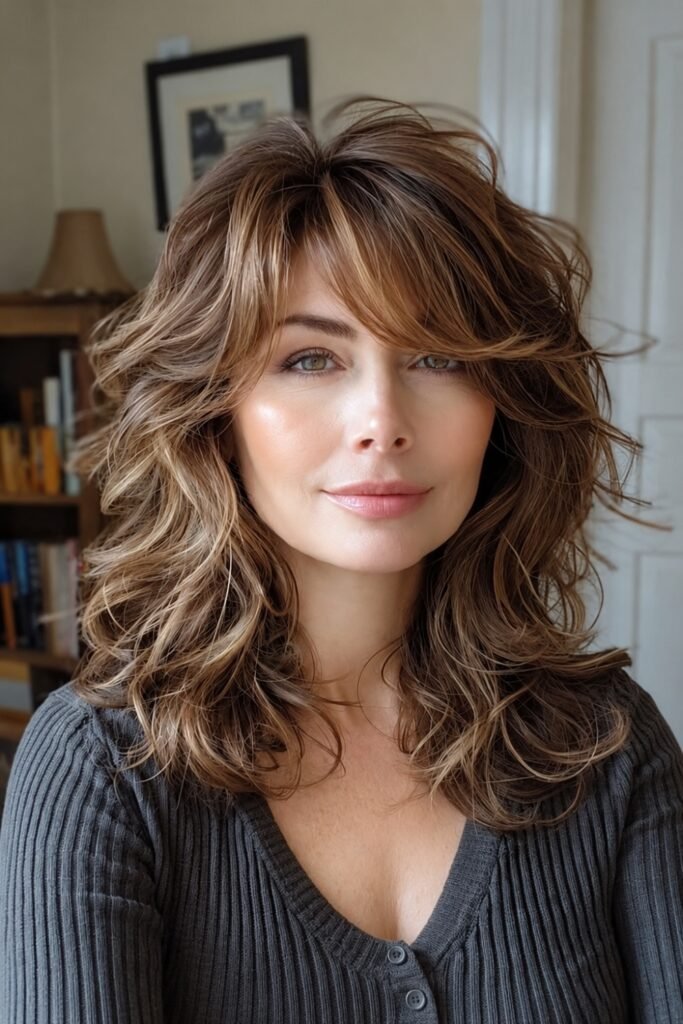
14. Long Butterfly With Cheekbone Layers
Begin the shortest front layer around the cheekbone, then step through jaw and collarbone lengths while keeping the deepest section long and full. Account for dry spring-up first.
Best for: long 2A–2B waves, medium/thick density, dramatic framing.
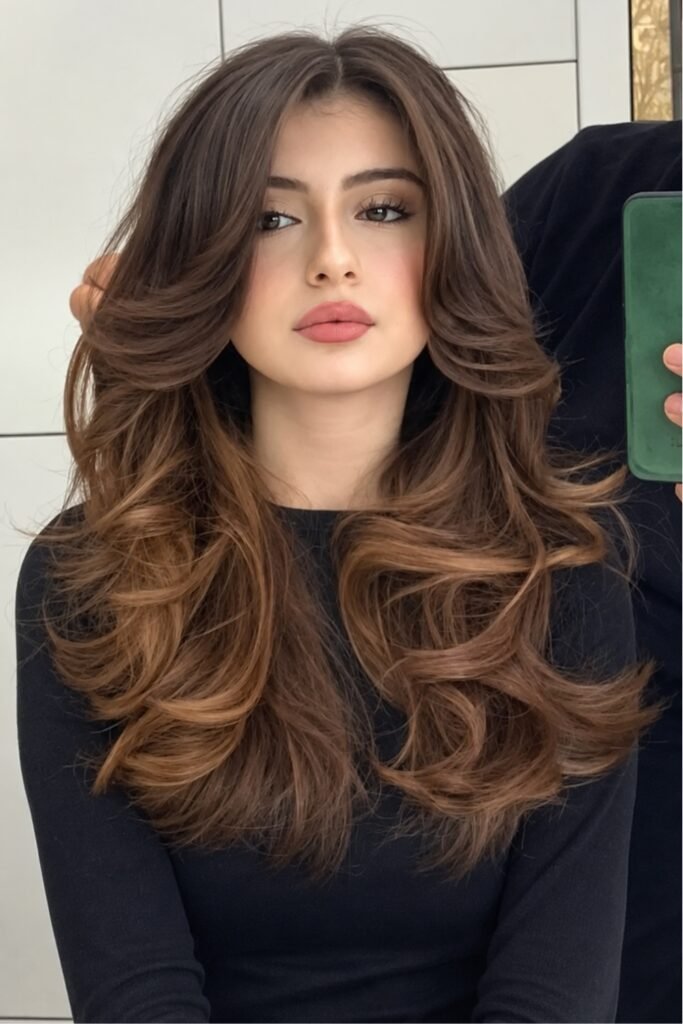
15. Soft Grown-Out Butterfly
Allow curtain pieces and upper layers to grow longer while maintaining the perimeter. On wavy hair, softened transitions can still look intentional because the S-pattern supplies separation.
Best for: low trim frequency, long waves, softer face framing.
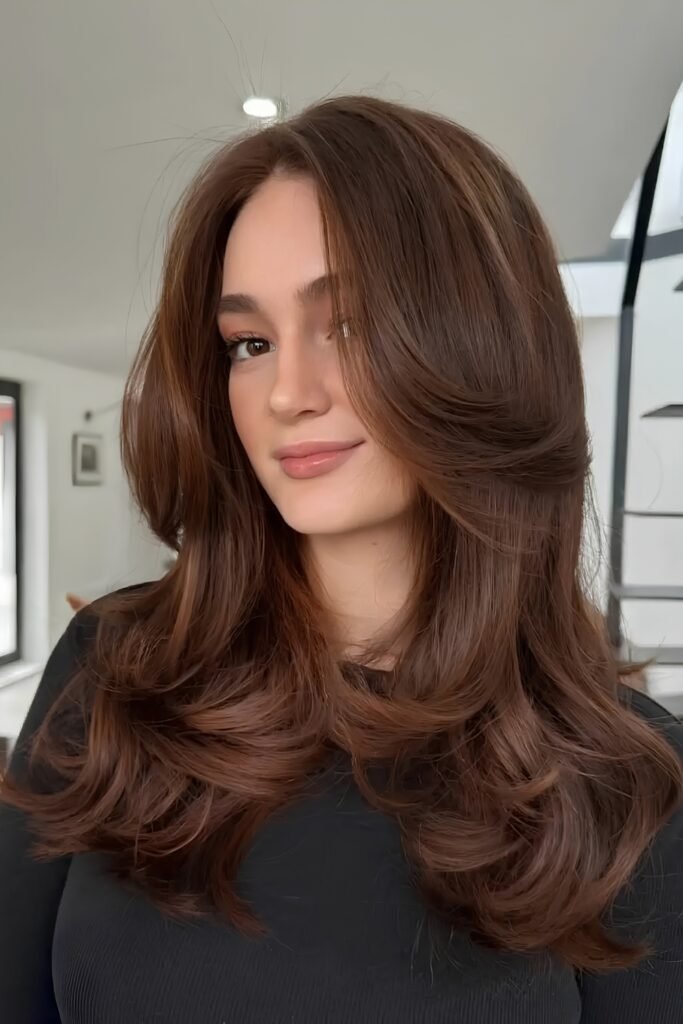
Quick Guide: Match the Butterfly Cut to Your Wave Pattern
| Wave / density | Strong choices | Cutting priority | Avoid |
| 2A + fine | Soft-wave, fine-hair | Full perimeter + long layers | Short crown layers |
| 2A + medium | Classic, collarbone | Release movement gently | Over-texturizing |
| 2B + medium | Curtain, air-dried | Connected layers + clumping | Heavy sides |
| 2B + thick | Internal-layer, shag | Remove hidden bulk | Shredded ends |
| 2C + medium/thick | 2C volume, diffused | Allow for spring-up | Cutting only wet |
| Growing it out | Soft grown-out | Maintain perimeter | Re-cutting short layers too often |
Why Wavy Hair Is Such a Good Match for a Butterfly Cut
Waves already bend in different directions through the mid-lengths, so butterfly layers have natural separation. Wavy hair is the closest thing to a low-maintenance butterfly because it can air-dry into a softer version of the shape.
Too few layers can leave the sides bottom-heavy; too many can break wave clumps and make the ends look thin.
2A vs. 2B vs. 2C: Why One Layer Map Does Not Fit All
Loose 2A waves generally need longer, lighter layering because their bend can disappear when too much weight is removed. More defined 2B waves can support stronger face framing and curtain bangs. Dense 2C waves usually need more attention to spring-up and internal bulk.
These labels are useful shorthand, not rigid diagnoses. Many heads contain more than one pattern, so the stylist should cut for what the hair actually does dry.
Fine Wavy Hair vs. Thick Wavy Hair
Fine wavy hair needs perimeter density; over-thinning can separate the ends into strings. Thick wavy hair often needs internal weight removal so upper layers lift instead of expanding sideways.
Ask for less texturizing when the ends are already fine, and more strategic interior work when the sides are dense.
What to Tell Your Stylist
Say how you normally wear the hair: air-dried, diffused, or blown out. Choose the shortest face layer based on the dry wave position, not only wet length.
Ask for layers that fan away from the face while preserving enough perimeter for wave clumps. If your waves spring noticeably, ask the stylist to assess the shape dry before finalizing the front.
How to Air-Dry or Diffuse Butterfly Layers
For air-drying, apply lightweight wave cream or mousse to damp hair, scrunch upward, set the part, and leave it alone while it dries. Break any cast only after dry.
For finished looks, browse our butterfly hairstyles.
For more volume, diffuse with low airflow and lift at the roots. Shape the curtain fringe separately if needed; you do not have to round-brush the entire haircut.
Frequently Asked Questions
Is a butterfly haircut good for wavy hair?
Yes. Natural waves provide movement and separation between butterfly layers, so wavy hair can often wear the cut air-dried or diffused with less styling than straight hair.
What butterfly cut is best for 2A wavy hair?
Use longer, restrained layers with a full perimeter and soft face framing. Loose 2A waves can flatten or lose definition if the crown and ends are over-layered.
What butterfly cut works for 2B hair?
2B waves usually handle classic butterfly layers, curtain bangs, collarbone versions, and air-dried cuts well because the S-pattern already creates visible movement.
What butterfly cut works for 2C hair?
Use longer first layers to account for spring-up and strategic internal weight removal if the hair is dense. Judge the front and overall width in the dry state.
Is a butterfly haircut good for fine wavy hair?
Yes, if the layers are restrained and the perimeter stays full. Avoid aggressive thinning or short crown layers that can leave fine wavy ends looking sparse.
Does thick wavy hair need thinning for a butterfly cut?
It may benefit from internal weight removal, but that is different from aggressively thinning the visible ends. The goal is to reduce hidden bulk while preserving wave clumps and perimeter density.
Can I air-dry a wavy butterfly haircut?
Yes. Wavy hair is one of the best textures for an air-dried butterfly. Use a light wave product, scrunch, set the part, and avoid disturbing the hair until it is dry.
Do wavy butterfly layers need curtain bangs?
No. Curtain bangs blend naturally with the cut, but side parts, wispy fringe, cheekbone layers, chin layers, or no fringe can all work depending on your wave pattern and routine.
The Air-Dry Test
Wash the hair, use your normal wave product, and let it dry without forcing it into a blowout. Can you see the shorter layers separating from the longer lengths while the ends still form healthy wave clumps?
If yes, the cut is working with your texture. A good wavy butterfly can become bigger and more polished when styled, but it should not need a round brush to prove that the haircut exists.