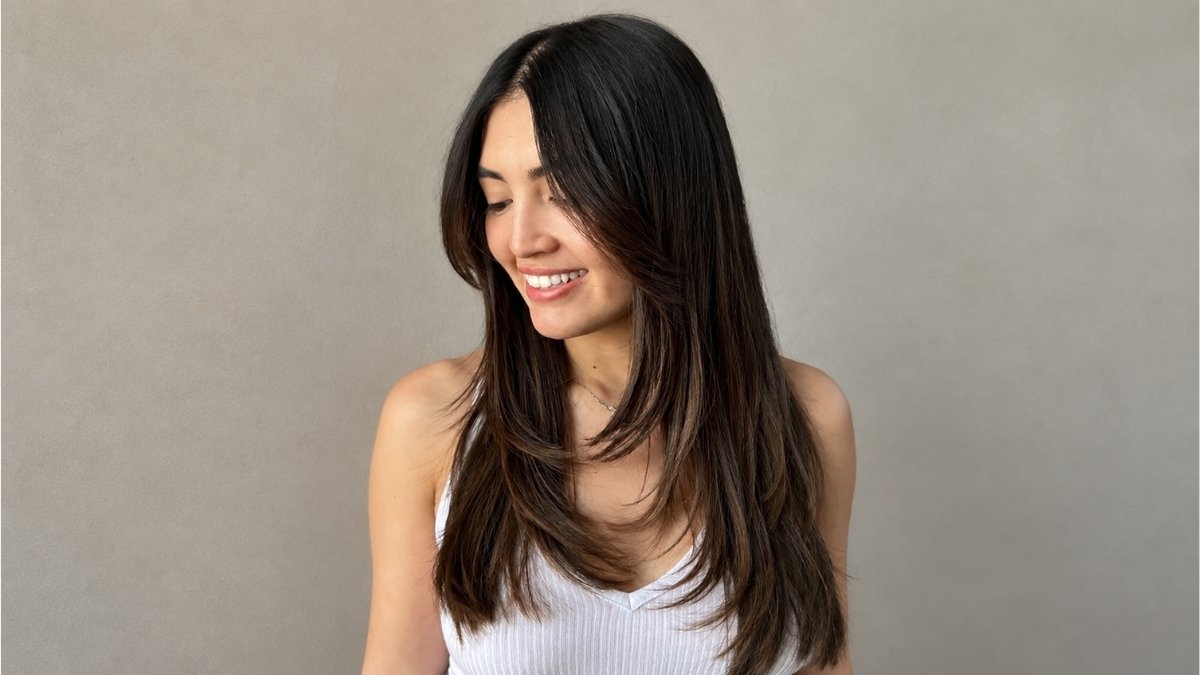
Straight hair is the most honest test a butterfly cut will ever face. Waves hide a rough transition. Straight strands show exactly where each layer starts, where weight came out, and whether your stylist left enough at the ends.
That is why butterfly haircuts for straight hair need a different plan than the bouncy, curled versions all over Pinterest. You want shorter layers around the face, longer ones behind, and a bottom line that still looks thick when you skip the round brush.
Our broader guide to butterfly layered haircuts covers every texture. These 15 are for straight hair only, sorted by what decides the result: layer placement, density, fringe and length.
15 Butterfly Haircuts for Straight Hair
1. Classic Long Butterfly
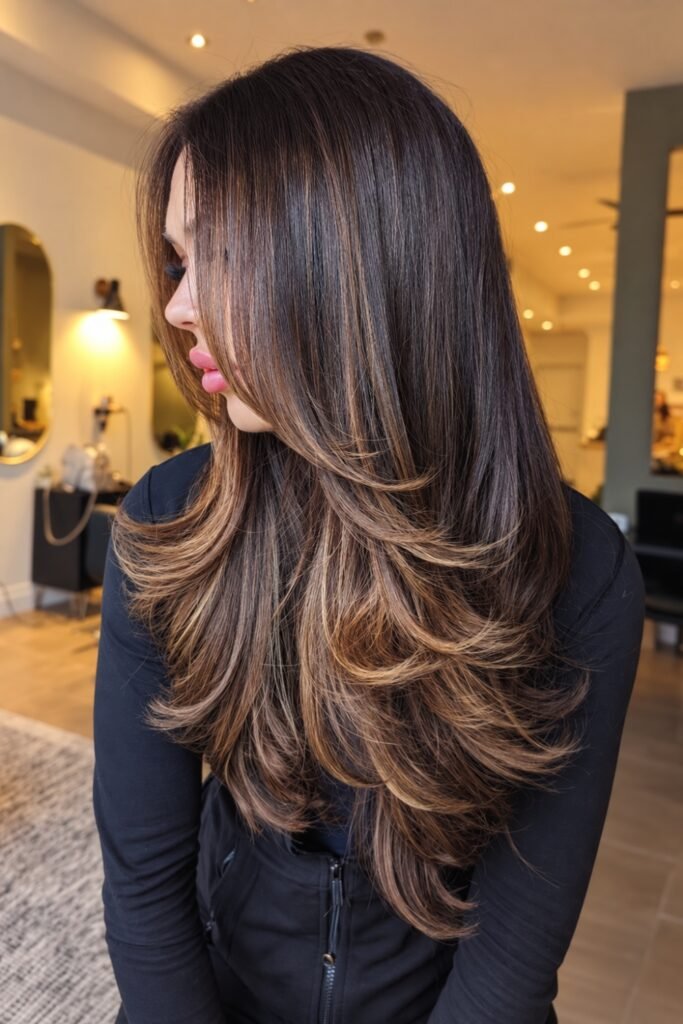
Start here if you have never had the cut. Length stays past the shoulders, face framing begins around the chin, and each layer graduates into the next one down.
Ask your stylist to connect the layers. On straight hair, a jump from short crown pieces to one long bottom section looks like two haircuts stacked on top of each other.
Oval and heart-shaped faces carry the chin-level start easily. Expect a trim every 8 to 12 weeks to keep the steps clean.
Best for: long straight hair, medium density.
2. Barely-There Butterfly
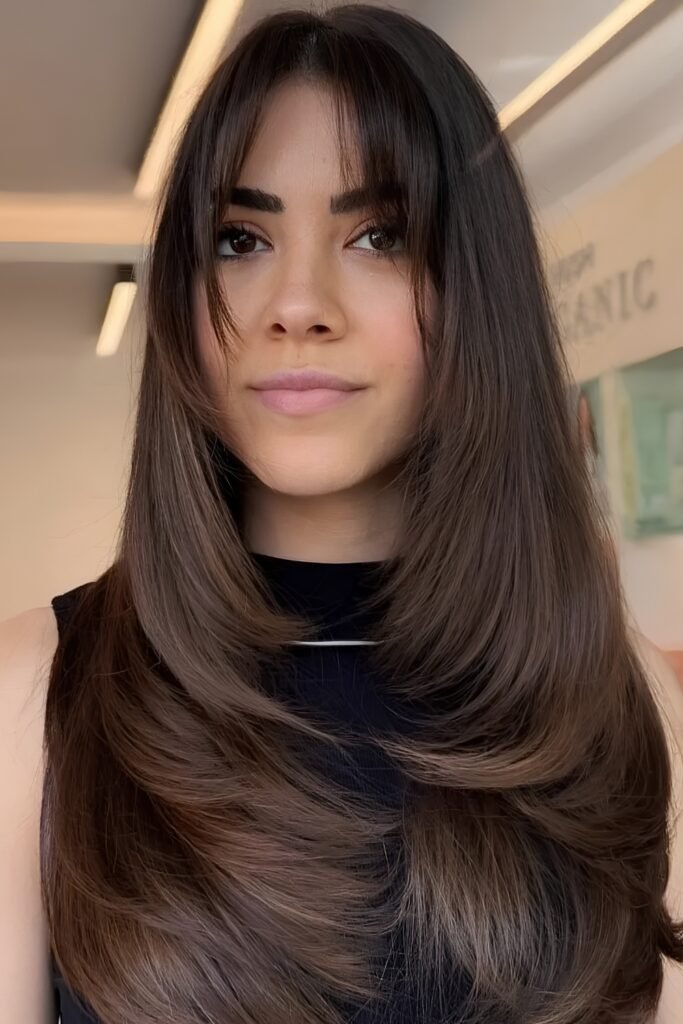
You air-dry. You own one brush. Meet your version.
Layers stay subtle and sit in the lower third, with a few light pieces around the face. Worn naturally straight, the result is long hair with a clear shape, and nobody will mistake it for a blowout that fell flat.
Best for: low styling time, fine-to-medium density.
3. Long Curtain-Bang Butterfly
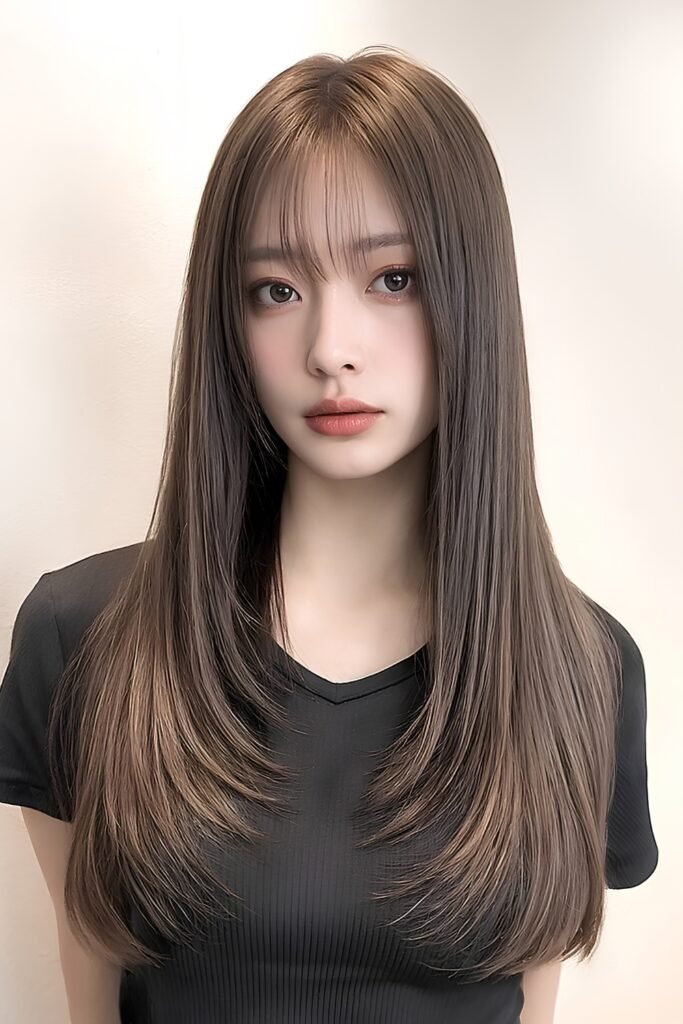
Cut the curtain bangs long enough to split at the cheekbones and melt straight into the first layer. A hard step between bang and layer is the first thing straight hair gives away.
A center part suits this one best, and the cheek-level split breaks up the length on longer face shapes. Budget for a fringe trim every 4 to 6 weeks.
Best for: center parts, medium-to-long hair.
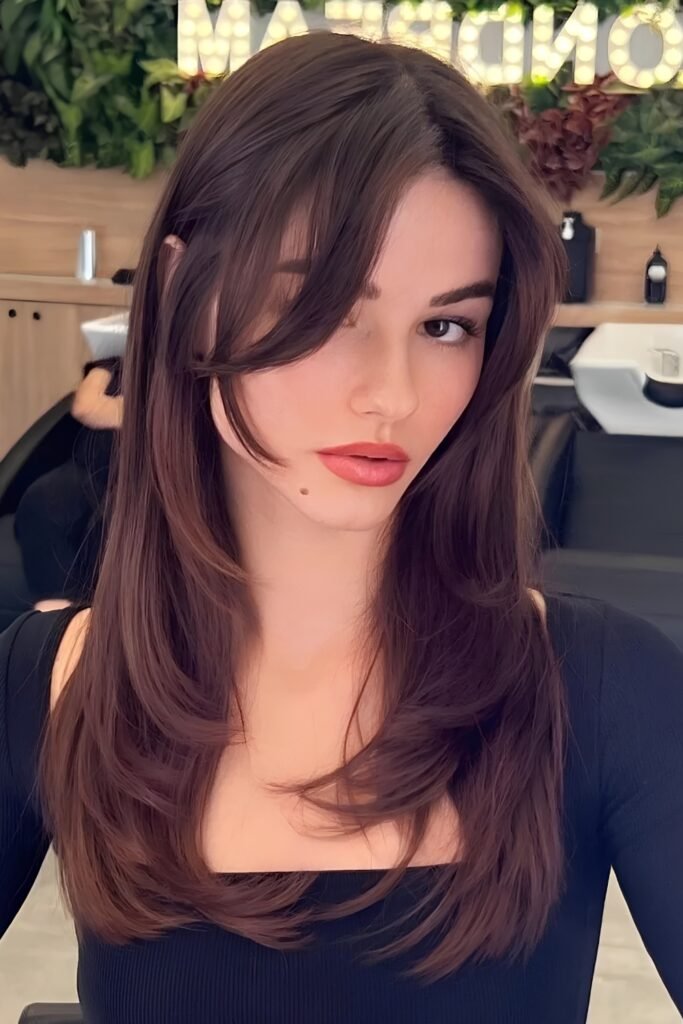
4. Chin-Layer Butterfly
The shortest major layer lands at the chin, then everything graduates downward while the bottom stays substantial.
If your face is round, ask for that first layer to fall just below the chin so the curve does not add width at the jaw.
Best for: long straight hair, clear face framing.
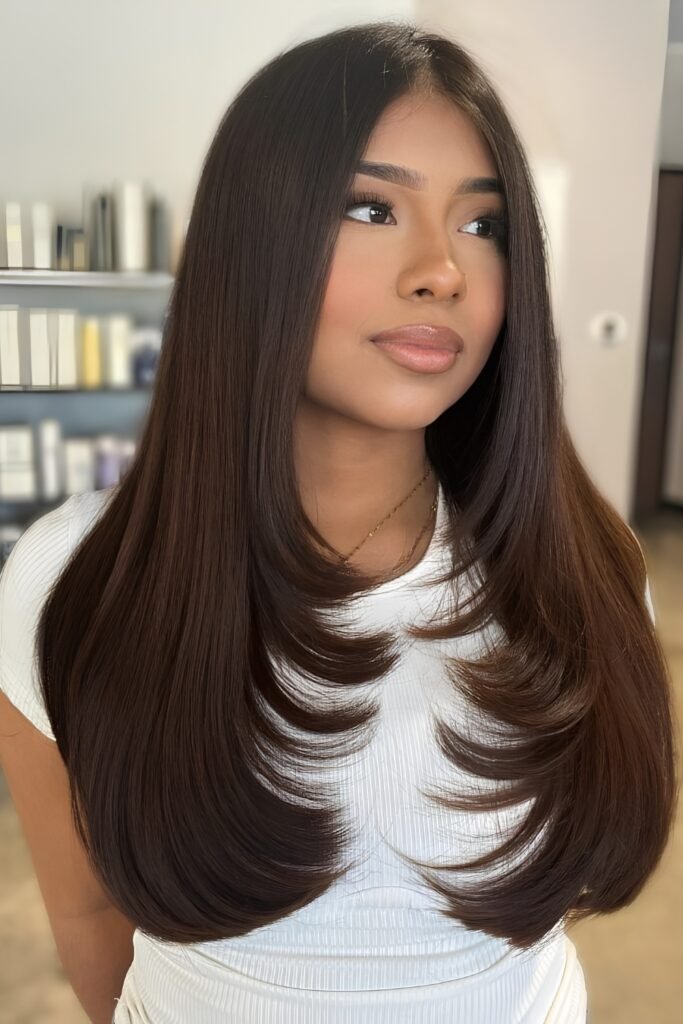
5. Collarbone Butterfly
Less length means less distance between the short and long layers, so every transition has to be softer. Get it right and you gain lift, because there is less weight dragging the roots down.
A solid pick if long hair has started to feel like a chore. Blow-dry time drops with it.
Best for: medium straight hair, easier blowouts.
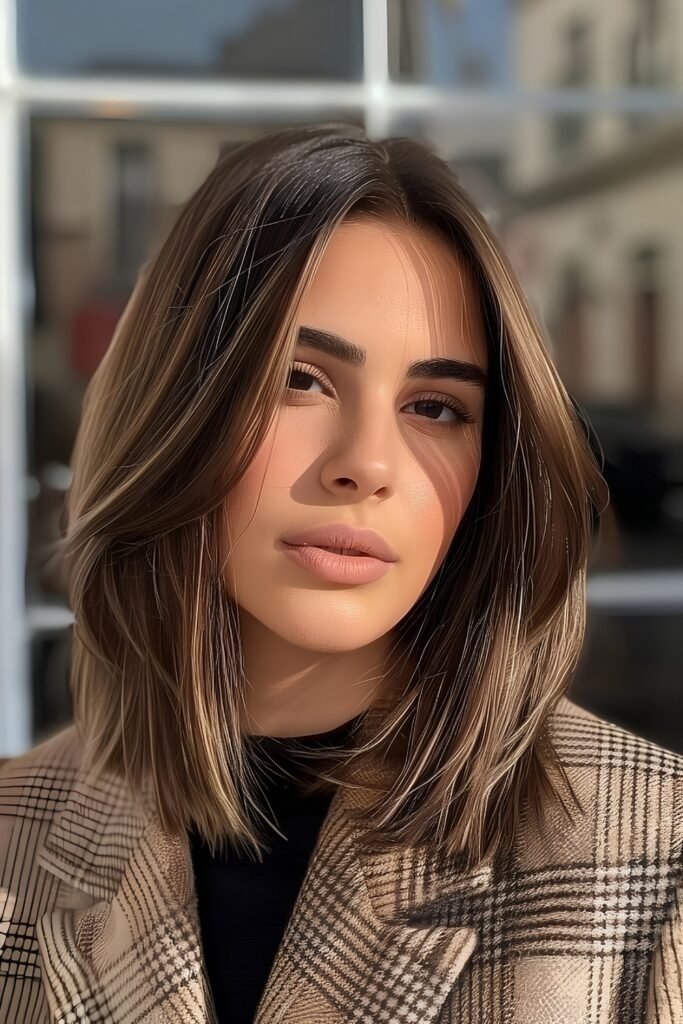
6. Blunt-Perimeter Butterfly
Movement goes through the face and the interior. The baseline stays blunt, or softly blunt if you want less edge.
Skip any version of this cut that thins the last two inches. Sparse ends are obvious on straight hair, and no styling product hides them.
Fine hair gets the most out of this approach because the solid bottom line makes the whole head look thicker than it is.
Best for: fine-to-medium hair, fullness lovers.
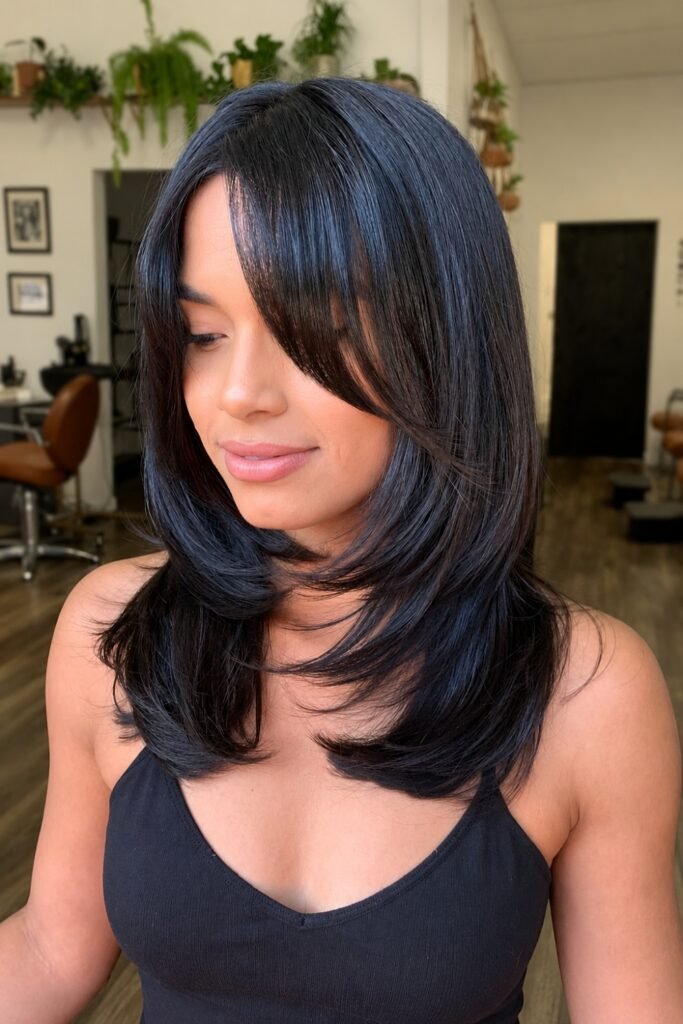
7. Fine-Hair Lightweight Butterfly
Placement does the work here, and thinning shears should stay in the drawer. Keep the layers few, blended and long, and leave the ends dense.
Refuse heavy razoring, aggressive texturizing and a stack of short crown layers. Each one takes away hair you cannot spare.
A light mist of Living Proof Full Dry Volume & Texture Spray at the roots gives a flat crown the lift it needs. We have more options in our guide to butterfly haircuts for medium-thin hair.
Best for: fine straight hair, flat roots.
8. Thick-Hair Internal-Layer Butterfly
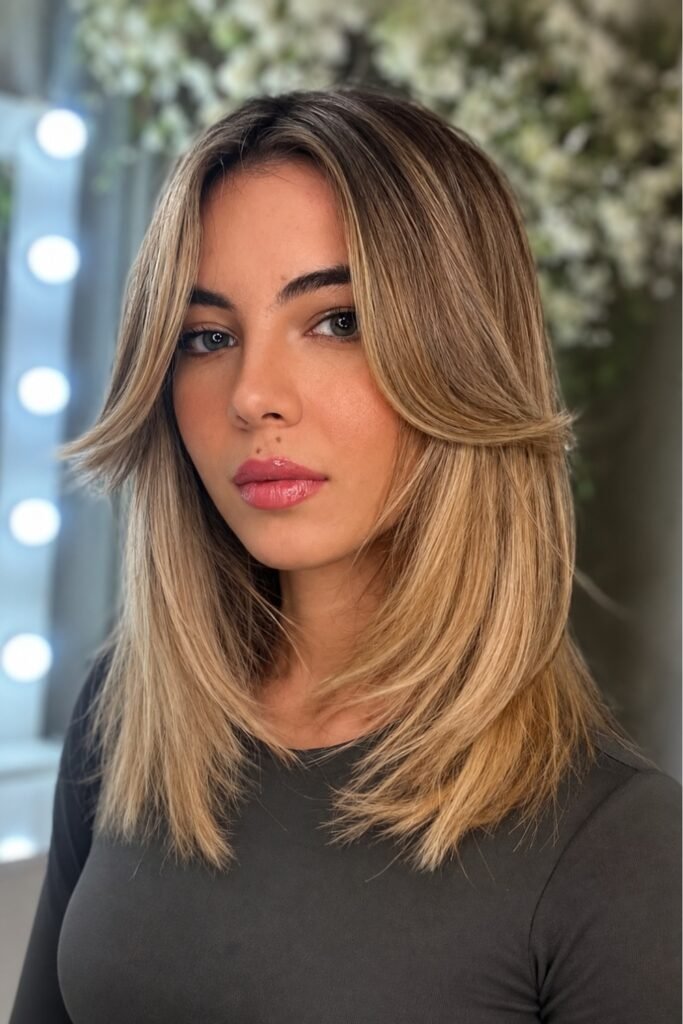
Dense straight hair can lose a lot of weight from the inside without anyone seeing where it went. Your stylist removes bulk through the mid-lengths and leaves the outer perimeter alone.
The risk is a shelf. If the upper layers are not connected to what sits below, the top section rests on the bottom like a lid.
Heavy sides that puff out at the jaw are the clearest sign you need this version.
Best for: thick straight hair, heavy sides.
9. Side-Part Butterfly
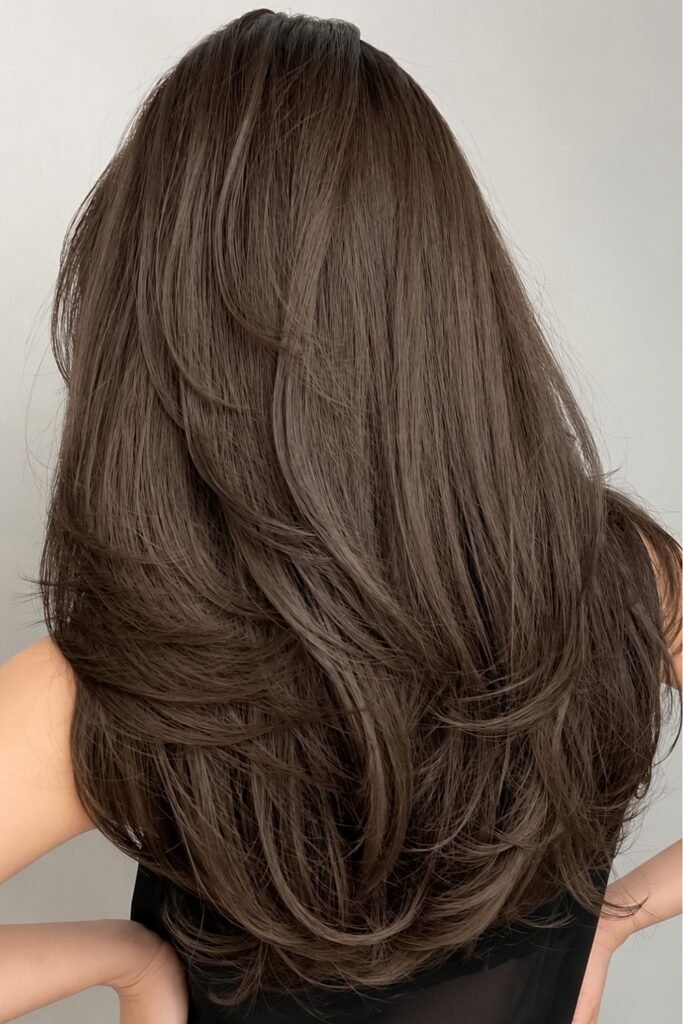
Move the part to one side and the heavier front section sweeps outward on its own. Straight texture keeps that asymmetry clean and graphic.
Round and square faces benefit most, since the diagonal line cuts across the widest point. See more in our butterfly haircuts with a side part gallery.
Best for: side-part wearers, polished styling.
10. Off-Center Cheekbone Butterfly
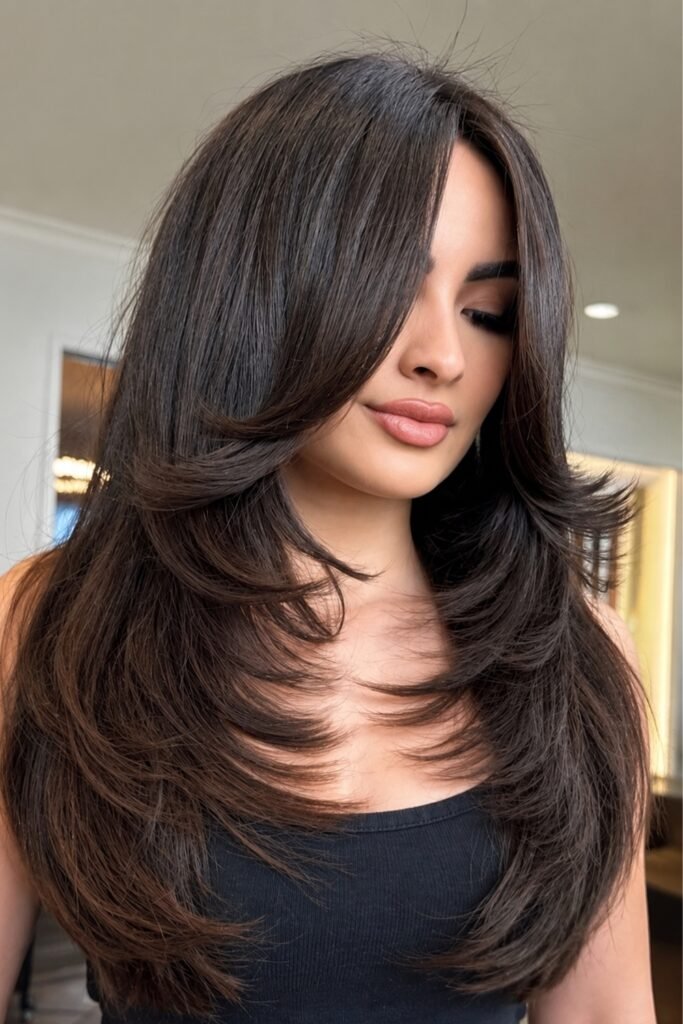
Some hairlines refuse a true center part. Stop fighting yours. Set the part slightly off-center and begin the face layers at the cheekbones.
You get softer framing than a strict middle part, and the hair stays where you put it.
Best for: natural off-center growth, soft framing.
11. Wispy-Fringe Butterfly
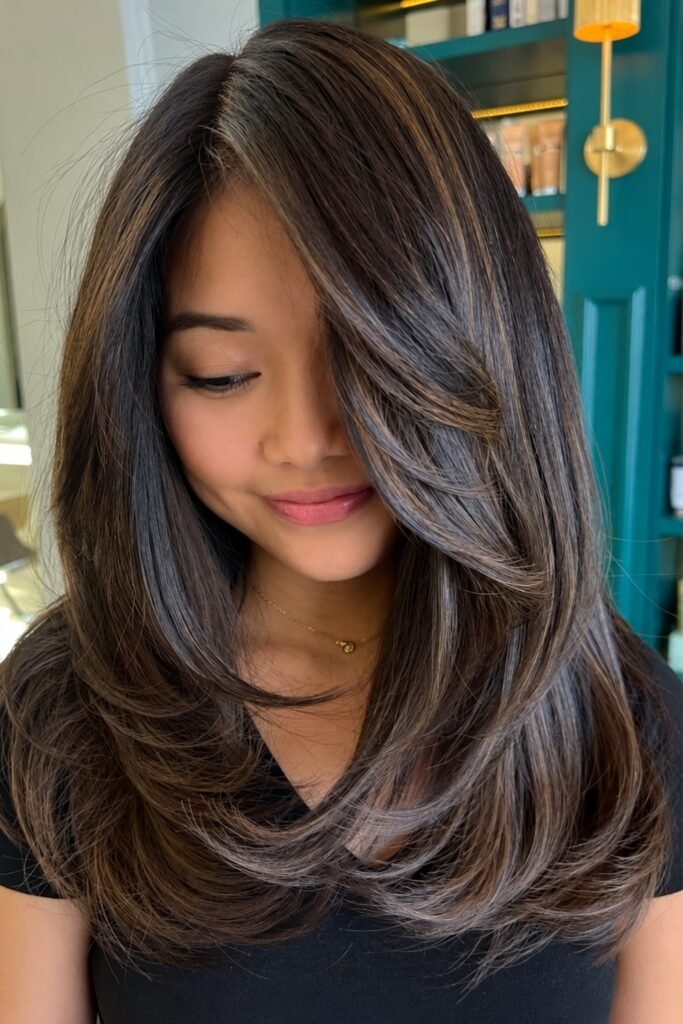
A thin, separated fringe leaves some forehead visible and blends into longer pieces at the temples. Lighter than curtain bangs, and far less commitment.
Wispy fringe goes oily faster than the rest of your hair, so plan on rinsing just the front between washes.
Best for: fine-to-medium density, fringe lovers.
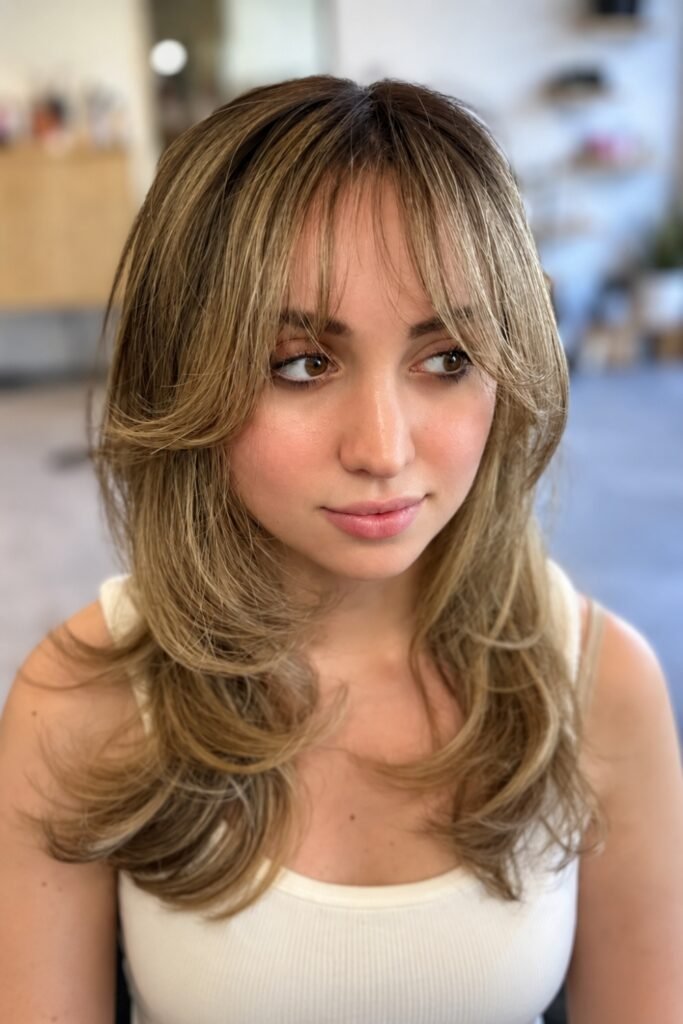
12. Sleek Glass Butterfly
No bend and no volume. Worn pin-straight and glossy, the layer lines become the entire design, so the cutting has to be precise.
Book this with a stylist who cuts straight hair often. Any uneven boundary will show.
For the finish, Color Wow Dream Coat Supernatural Spray on damp hair before blow-drying gives that glassy surface and keeps humidity out.
Best for: thick straight hair, glossy finishes.
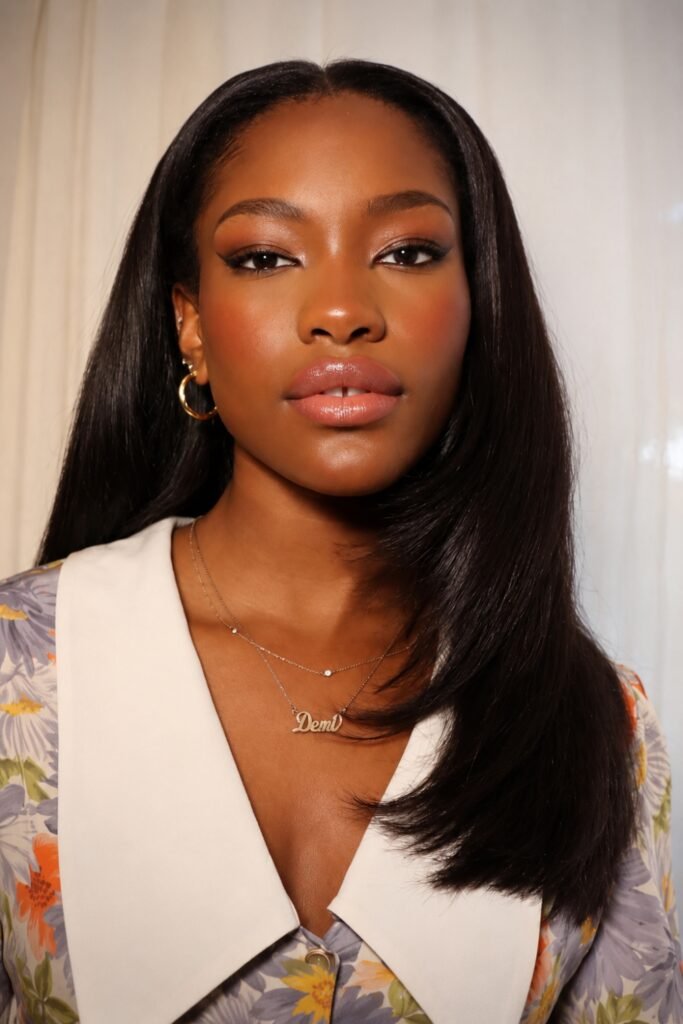
13. Feathered-End Butterfly
Keep most of the hair straight and bend only the last inch or two of each layer outward. A large round brush does it in minutes.
The flipped ends have a retro edge, and they give straight hair direction without a single curl.
Best for: round-brush styling, retro influence.
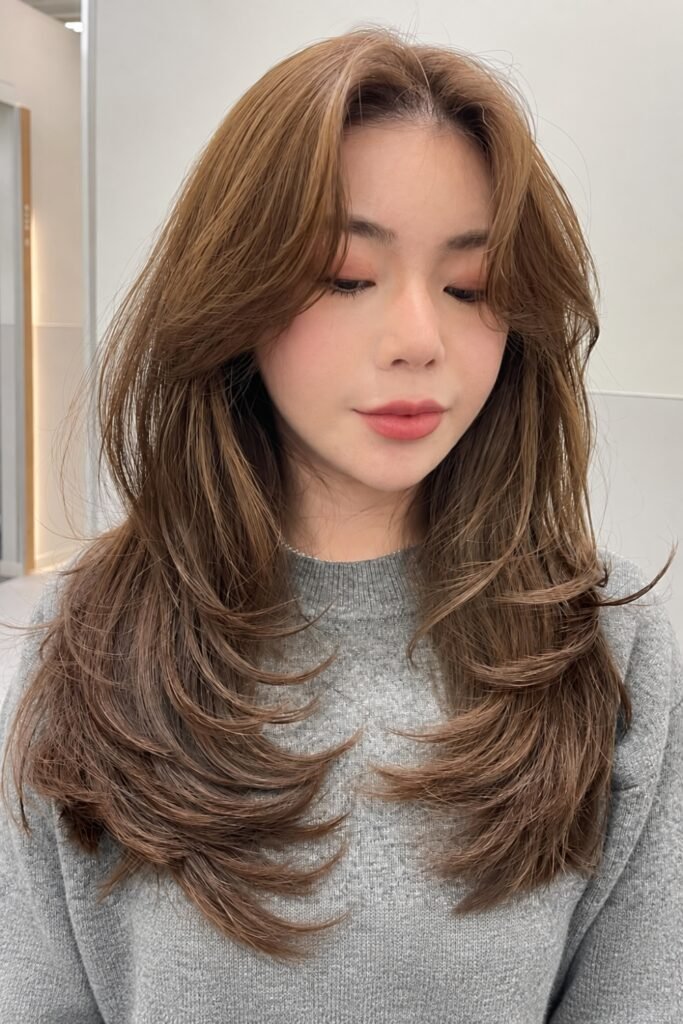
14. Shoulder-Grazing Butterfly
The longest section stops at the shoulders, with airy layers and a tapered curtain fringe on top. Shorter hair weighs less, so straight roots hold lift longer.
Of the 15, this is the fastest to style. For more cuts at this length, see our shoulder length haircuts.
Best for: fine-to-medium density, shorter routines.
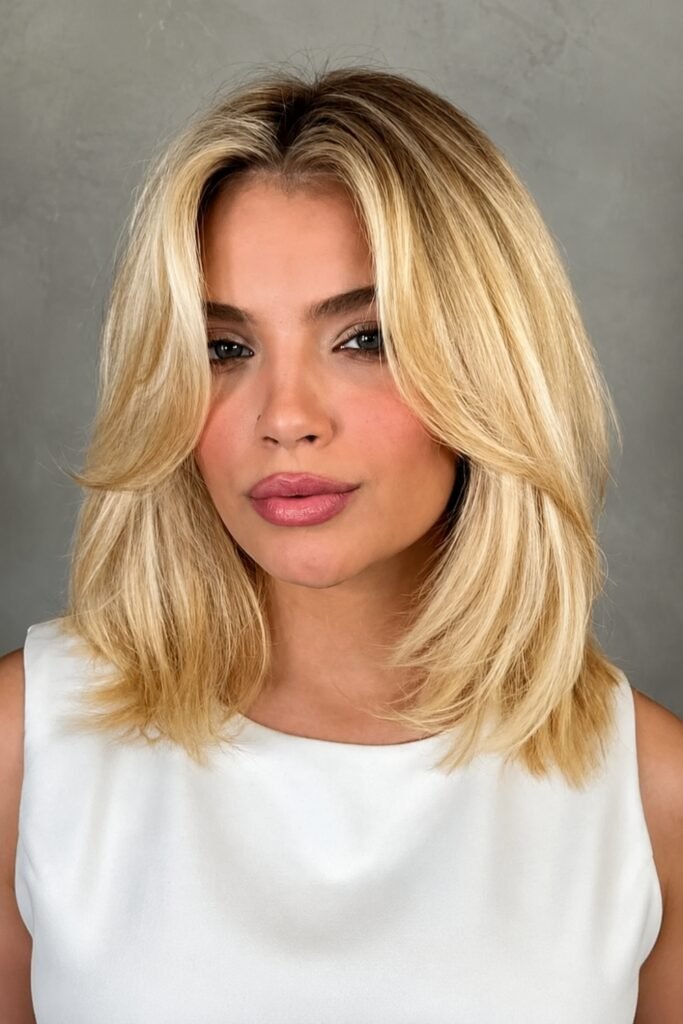
15. Long Butterfly With Full Bottom
You spent years growing it. Keep it. Dramatic shorter layers sit on top while the deepest bottom section stays long, thick and barely layered.
That contrast between short upper layers and a long lower section is the signature of the butterfly cut. On chest-to-waist hair, it also gives the biggest payoff from a blowout.
Best for: chest-to-waist hair, dramatic blowouts.
Quick Guide: Choose by Density and Length
Match your hair to a row, then take the style names to your appointment.
| Hair situation | Strong choices | Priority | Avoid |
| Fine + long | Barely-there, blunt perimeter | Preserve end density | Aggressive thinning |
| Fine + medium | Shoulder-grazing, curtain | Light lift + full baseline | Too many crown layers |
| Thick + long | Internal-layer, full-bottom | Remove hidden bulk | Shelf transitions |
| Medium density | Classic, chin-layer | Connected graduation | Disconnected layers |
| Low styling time | Barely-there, blunt perimeter | Air-dried shape | Curl-dependent cut |
| Polished styling | Sleek glass, side-part | Precision + shine | Uneven boundaries |
Why the Butterfly Cut Works on Straight Hair
Long straight hair goes flat because its own weight pulls it down. Butterfly layering breaks up that weight with shorter sections at the front and top, while the longer hair underneath keeps your length.
You get shape and lift from one cut. The tradeoff is precision, since straight strands put every line on display.
Fine vs. Thick Straight Hair
Fine straight hair needs fewer, softer layers and a stronger perimeter. Thick straight hair can take more internal layering, as long as the blending stops the top section from sitting like a shelf.
Bring a reference photo with density close to your own. Identical layer maps behave differently on fine and dense hair.
What to Tell Your Stylist
Decide the shortest layer first: cheekbone, jaw or chin. Then ask for connected layers that fan away from your face while the bottom stays full.
With fine hair, say you want the perimeter kept dense. With thick hair, ask about internal weight removal and smooth blending between the top and bottom sections.
Does It Need a Blowout?
No. The winged bounce you see in most photos is a styled finish, though. Air-dried straight hair shows the layers as clean lines, and a round brush turns them into outward wings.
Rarely heat-style? Pick a subtler version that still looks deliberate when worn straight. For the full bounce, follow our steps for a salon-quality blowout at home.
How to Style a Butterfly Haircut on Straight Hair
Apply heat protectant first. Then use a round brush to direct the front and upper layers away from your face, and aim for a soft outward bend instead of a curl in every section.
Prefer a sleek finish? Use moderate heat and a lightweight smoothing product. One drop of Olaplex No. 7 Bonding Oil through the ends adds shine and leaves the movement alone.
Our long voluminous straight hairstyle looks show how far the same layers can go with more lift.
Frequently Asked Questions
Is a butterfly haircut good for straight hair?
Yes. It adds visible shape and movement while keeping your length. Straight texture makes the layer structure very clear, so precise blending matters.
What is best for fine straight hair?
A subtle butterfly with light face framing and a full perimeter. Avoid heavy thinning, which leaves the ends sparse.
What suits thick straight hair?
Connected upper layers with internal weight removal through the dense mid-lengths. You want movement with no shelf between the crown layers and the long bottom.
Does a butterfly haircut make straight hair look fuller?
It creates more visible shape and lift around the face and crown. Your actual hair density stays the same.
Can I wear a butterfly cut pin-straight?
Yes. A sleek finish shows the layers clearly. The cut still needs connected face framing and enough weight at the bottom to look deliberate without curls.
Do I need curtain bangs?
No. Curtain bangs blend naturally into butterfly layers, but chin layers, cheekbone framing, a wispy fringe, a side part or no bangs at all are options too.
How short should the first layer be?
Cheekbone, jaw and chin are the common starting points. Choose based on how much face framing you want and whether the front pieces need to tuck behind your ears.
How often should I trim it?
Most stylists suggest every 8 to 12 weeks for the layers. Curtain or wispy fringe usually needs a tidy-up sooner, around every 4 to 6 weeks.
The Straight-Hair Test
Wash your hair and let it dry in its normal straight state before you judge the cut. Can you still see the face framing, connected movement and a full enough bottom line without curling the ends?
If yes, the haircut is doing the work. A good butterfly cut on straight hair gets more dramatic with a blowout, and it should never depend on one to make sense.