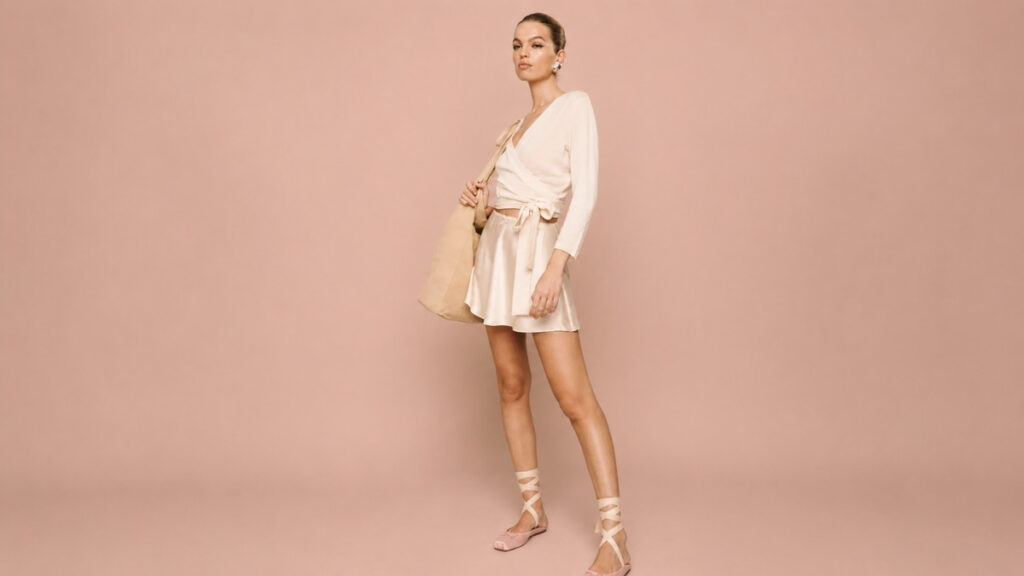
Most balletcore outfits that do not work fail for one reason. Everything in them is soft.
A tulle skirt with a wrap cardigan, ballet flats, sheer tights, a hair ribbon and pearls all at once looks like a costume. The modern version puts one romantic piece against something structured or plainly neutral and lets the contrast do the work.
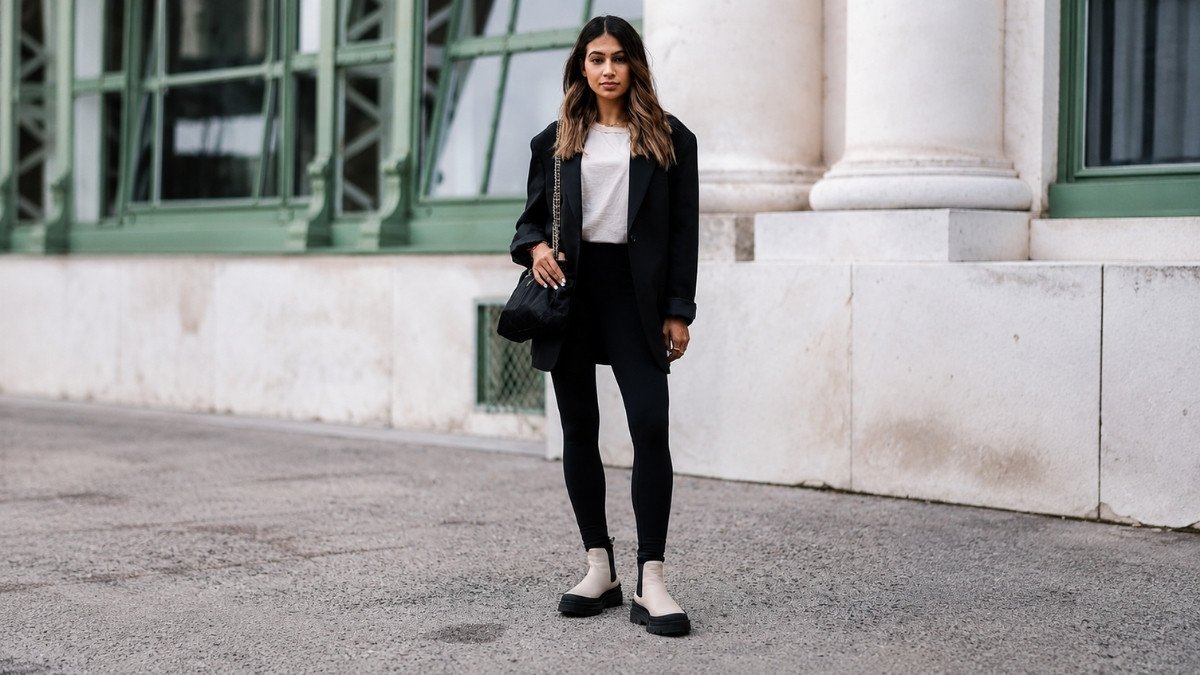
That is the whole formula. A lace camisole under a relaxed blazer. Repetto flats with straight-leg trousers. A tulle skirt with a sweatshirt. The friction between the two registers is what keeps the look modern and stops it tipping into precious.
Where Balletcore Actually Comes From
The visual language is older than the hashtag by nearly two centuries.
In the 1830s, during the Romantic ballet era, the dancer Marie Taglioni performed en pointe in a gauzy white tulle skirt and established the ethereal silhouette that still defines ballet imagery. A century later, Coco Chanel designed tulle gowns inspired by the Cotillion Ballet, moving that language off the stage and into couture.
Balletcore as a named aesthetic is much newer. It emerged on TikTok in the early 2020s and reached mainstream attention in late 2022, sharing territory with Coquette and growing out of the hyper-feminine aesthetics that gained ground during the pandemic. It also spread quickly in South Korea and beyond.
What separates balletcore from other internet aesthetics is that it draws on two distinct wardrobes. Performance costume gives it satin, lace, and tulle. Rehearsal wear gives it wrap cardigans, leg warmers, bodysuits, and leggings. The rehearsal half is the more wearable one, and it is where most good balletcore outfits live.
The Six Pieces That Do Most of the Work
Before the outfits, the shortlist. A bodysuit, a wrap sweater, ballet flats, a slip dress, leggings, and a cardigan will generate most of what this aesthetic needs. Everything else is variation.
Three principles worth keeping alongside them.
Proportion over coverage. Fitted with flowing, never all tight or all loose. This matters more than any individual garment choice.
Restraint reads as confidence. One feature piece per outfit. If the skirt is the moment, everything else stays quiet.
Footwear grounds the fantasy. Ballet flats are the reality check on the whole thing, which is why they anchor so many of the outfits below.
Register One: Wearable Balletcore
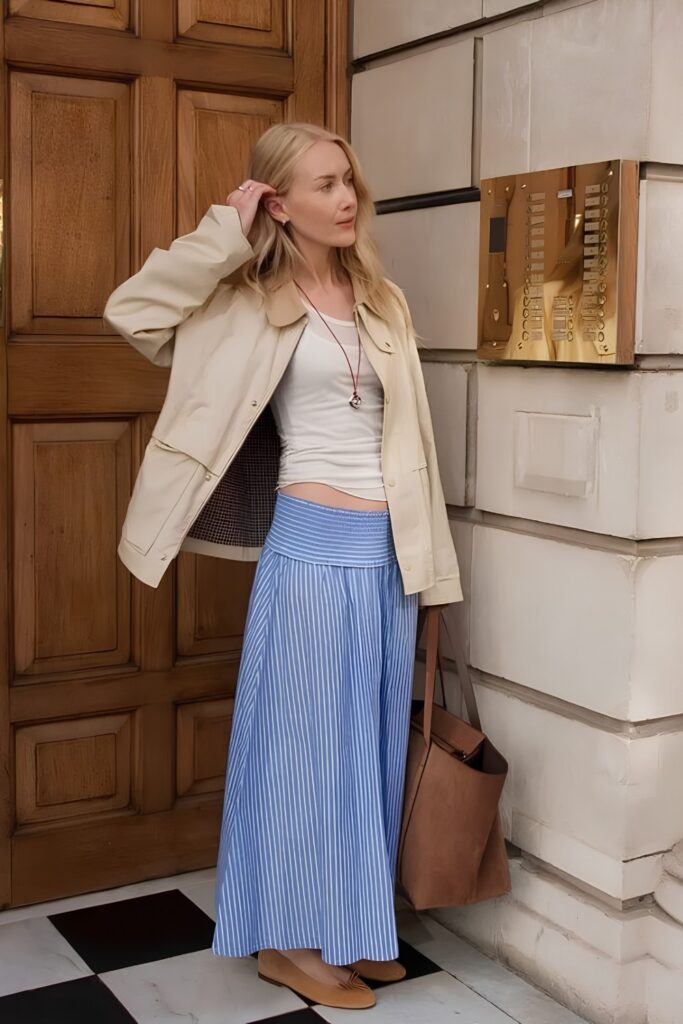
1. Ballet Flats With Straight-Leg Trousers
Repetto-style flats or a plain leather pair with straight-leg trousers and a simple knit.
This is the most reproducible balletcore outfit in existence and the one most likely to work on a Tuesday. The flats carry the entire reference; the trousers make it clothing rather than dressing up.
Choose flats with some structure at the toe. Very flexible, slipper-like pairs read as indoor shoes rather than as a deliberate choice.
 Save
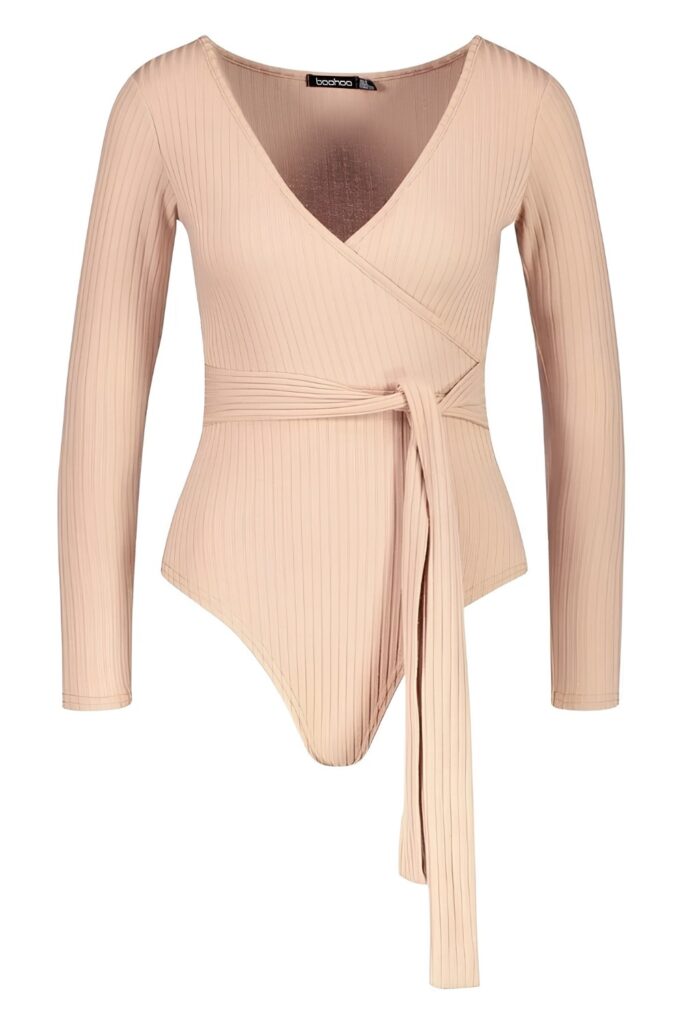
2. Wrap Cardigan Over a Fitted Bodysuit
A wrap-front cardigan tied at the waist over a plain bodysuit, with trousers or a straight skirt.
Straight from rehearsal wear, and the wrap is the detail doing the work. The crossover front creates a defined waist without a belt and gives the top half shape, which the fitted-with-flowing principle requires.
A fine-gauge knit works better here than a chunky one. Bulk at the crossover ruins the line.
 Save
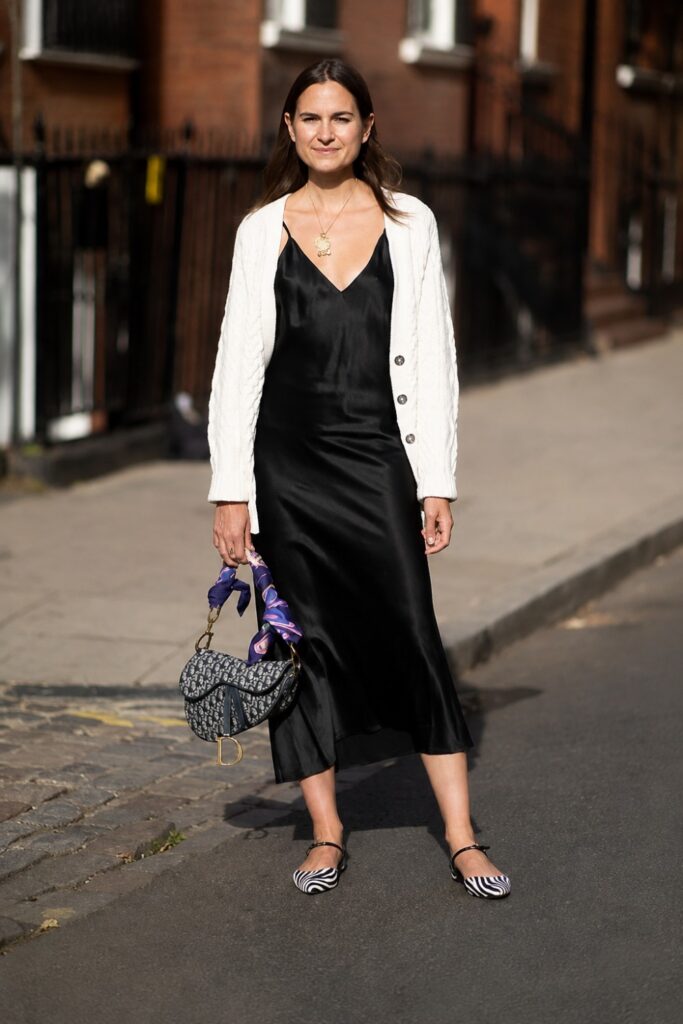
3. Slip Dress With a Knit Layer
A bias-cut satin or silk slip dress with a fine sweater or cardigan over the top.
The slip supplies the romance, the knit supplies the practicality, and the combination reads as considered rather than as underwear worn out. It also handles a wide temperature range, which few balletcore outfits do.
Layer the knit over the slip rather than under it. Over reads as intentional; under looks like a solution to a problem.
 Save
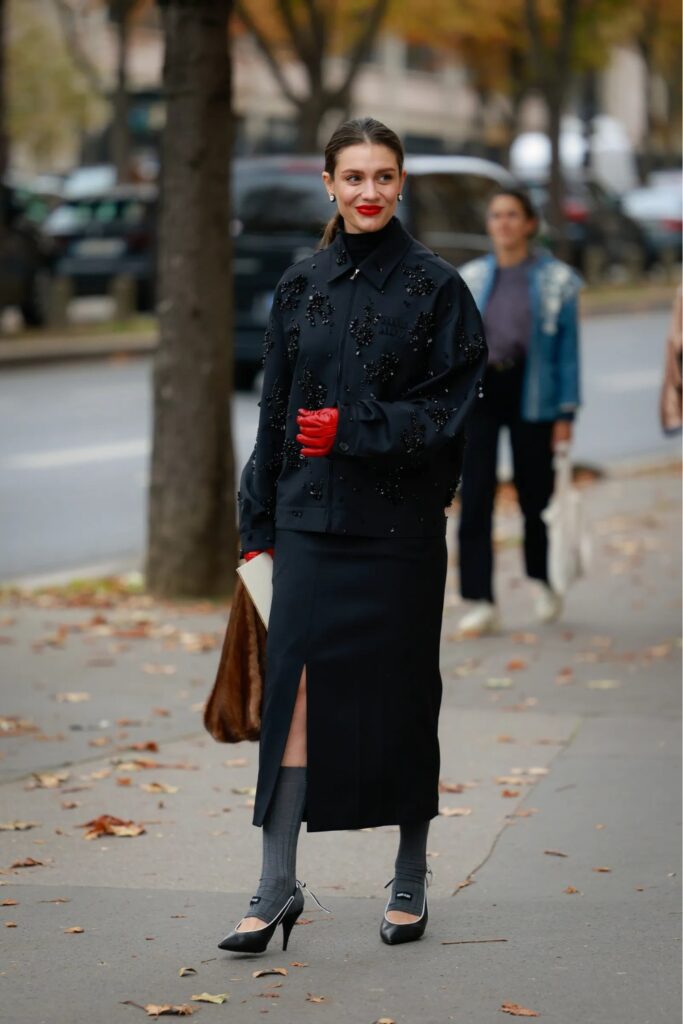
4. Leg Warmers With a Midi Skirt
Ribbed leg warmers over tights, worn with a midi skirt and flats or low boots.
Leg warmers are the most literal rehearsal-wear reference and the easiest to overdo. Kept to one pair, in a neutral, with everything else plain, they work. Paired with tulle and a ribbon they do not.
Scrunched at the ankle rather than pulled up to the knee is the more current proportion.
 Save
Register Two: The Contrast Formula
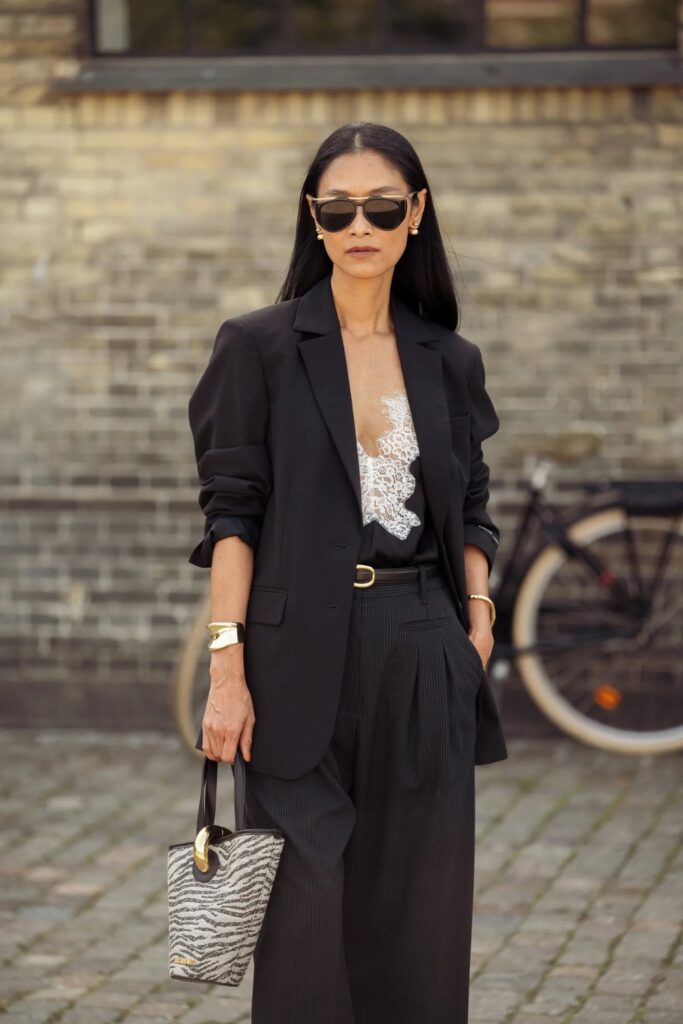
5. Lace Camisole Under a Relaxed Blazer
A delicate lace or satin camisole worn under an oversized or relaxed-shoulder blazer, with trousers.
This is the formula in its clearest form and it is why balletcore made it into offices. The blazer’s structure legitimises the camisole; the camisole stops the blazer looking corporate.
Keep the blazer relaxed. A sharply tailored one creates a different look entirely, closer to power dressing than to this.
 Save
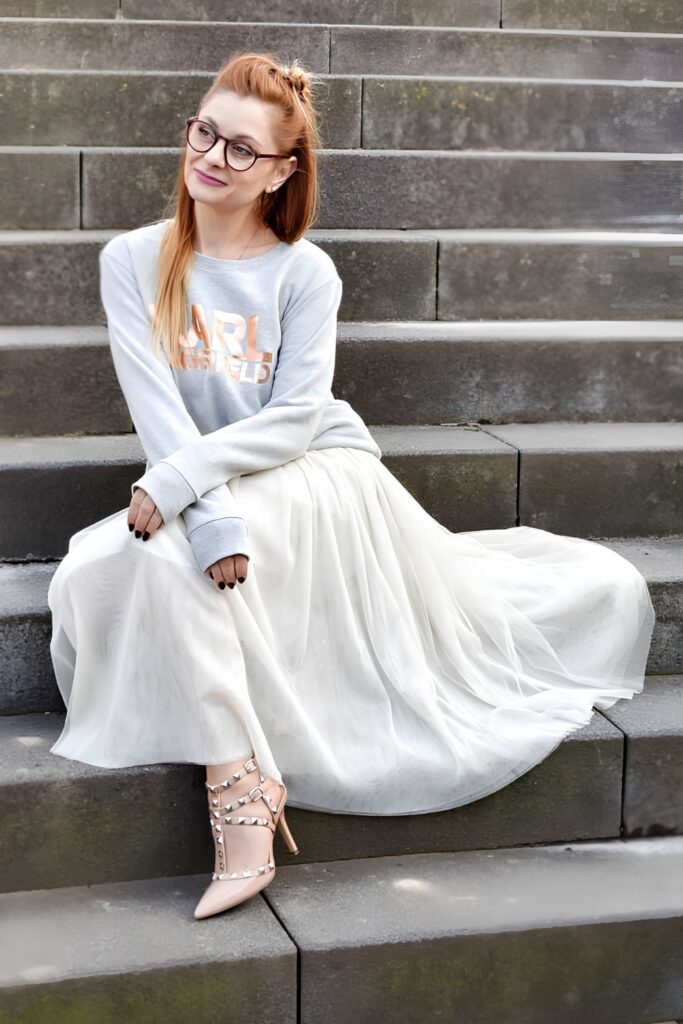
6. Tulle Midi Skirt With a Sweatshirt
A full tulle midi skirt with a plain sweatshirt or heavy jersey top, and flats or trainers.
The most quoted balletcore combination and the reason the aesthetic escaped the studio. Jenna Ortega has been photographed in a version of this with a Reformation tulle skirt, and the appeal is obvious: the sweatshirt removes all the fragility from the tulle.
Tuck the sweatshirt loosely at the front only. A full tuck formalises it; no tuck loses the waist entirely.
 Save
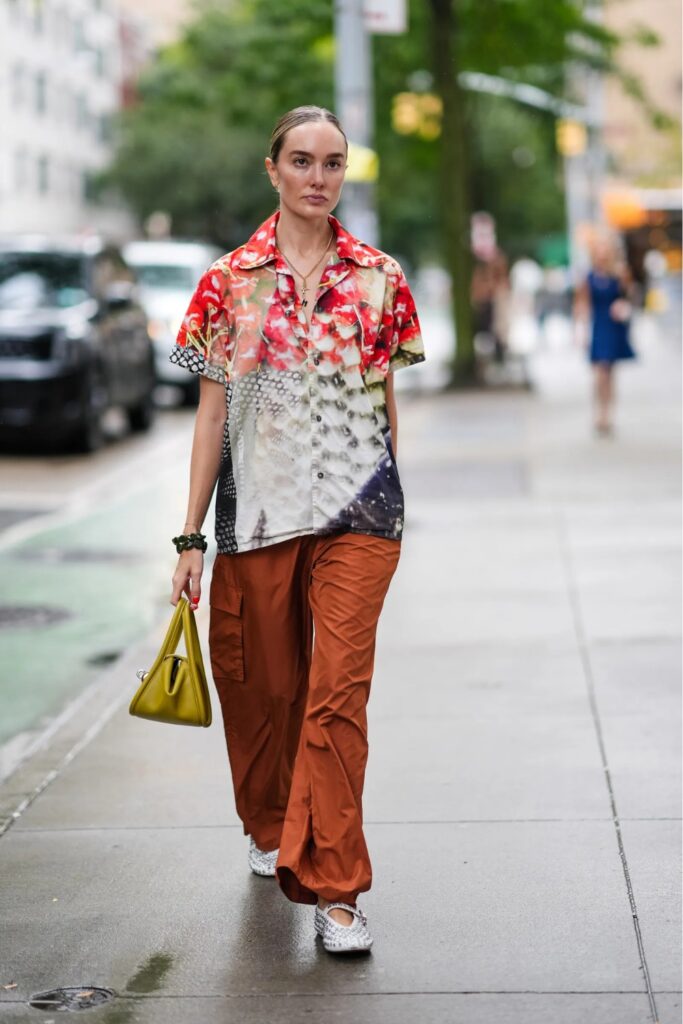
7. Satin Flats With Cargo Trousers
Satin or embellished flats with utility cargo trousers and a simple top.
The sharpest contrast on this list. Cargo trousers are the least romantic garment available, which is precisely why satin flats look deliberate against them rather than accidental.
This is the outfit for anyone who likes the shoe but not the softness. It requires no other balletcore element to read.
 Save
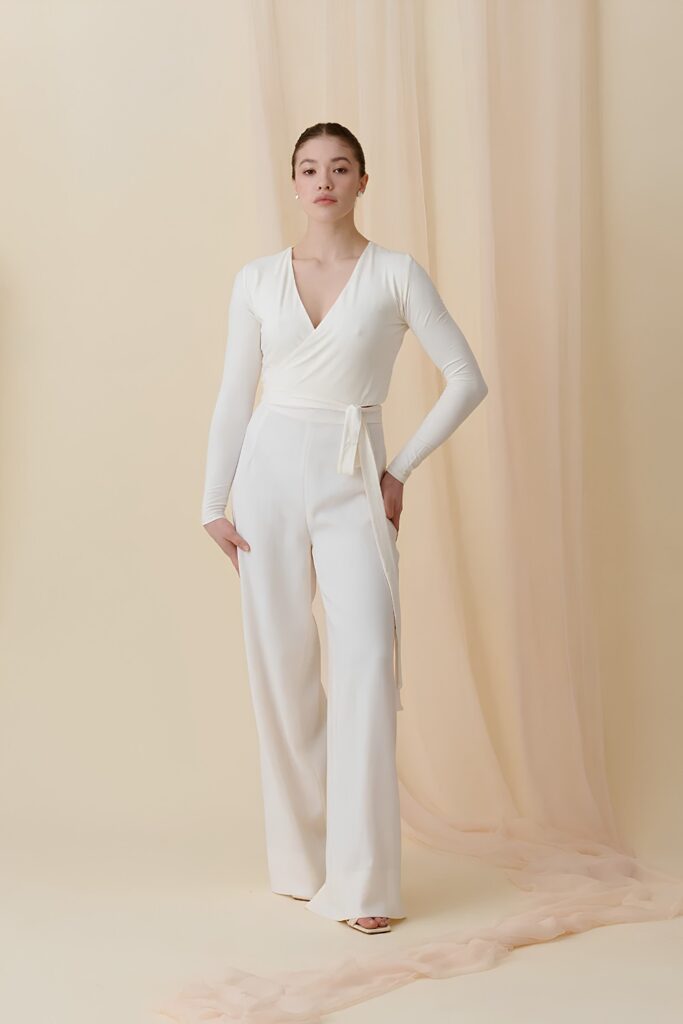
8. Wrap Top With Tailored Trousers
A ballet-style wrap top with properly tailored trousers and a low heel or flat.
Slightly dressier than the cardigan version and better suited to an evening. The wrap neckline is the feature; the tailoring keeps it from reading as dancewear.
Have the trousers hemmed to the shoe you plan to wear. This look depends on a clean line at the ankle.
 Save
Register Three: Literal Balletcore
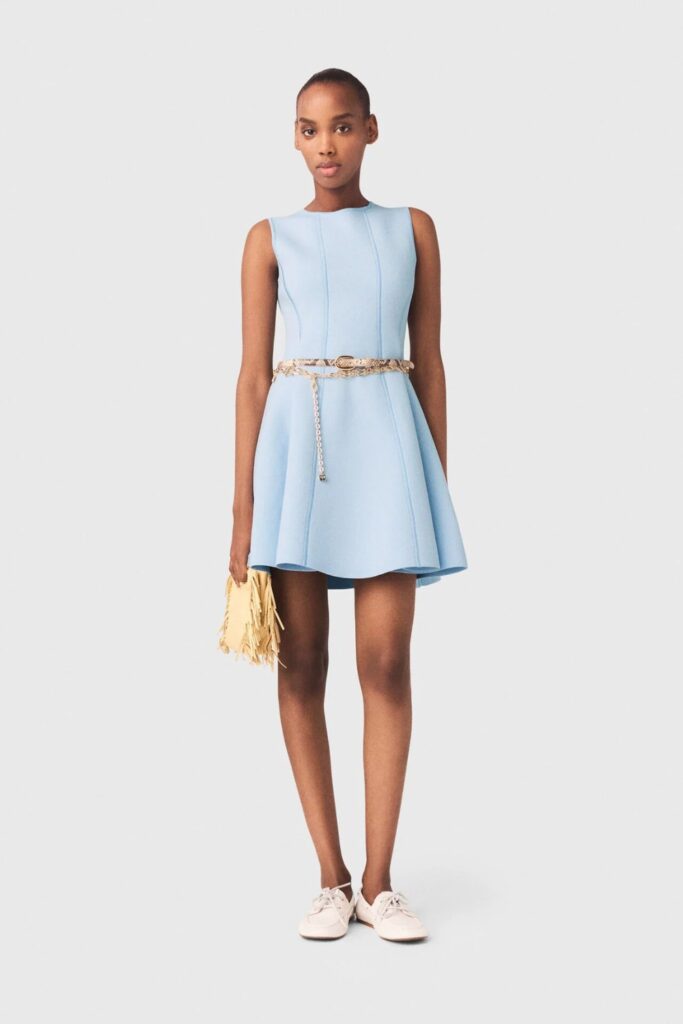
9. Full Tulle Skirt With a Fitted Bodice
A voluminous tulle skirt with a fitted bodice or bodysuit, and flats.
The most literal version, and the one closest to costume. It works when the bodice is plain and fitted, which is the fitted-with-flowing rule at its most extreme.
Best kept for occasions rather than daytime. This is an evening or event outfit, not a Wednesday.
 Save
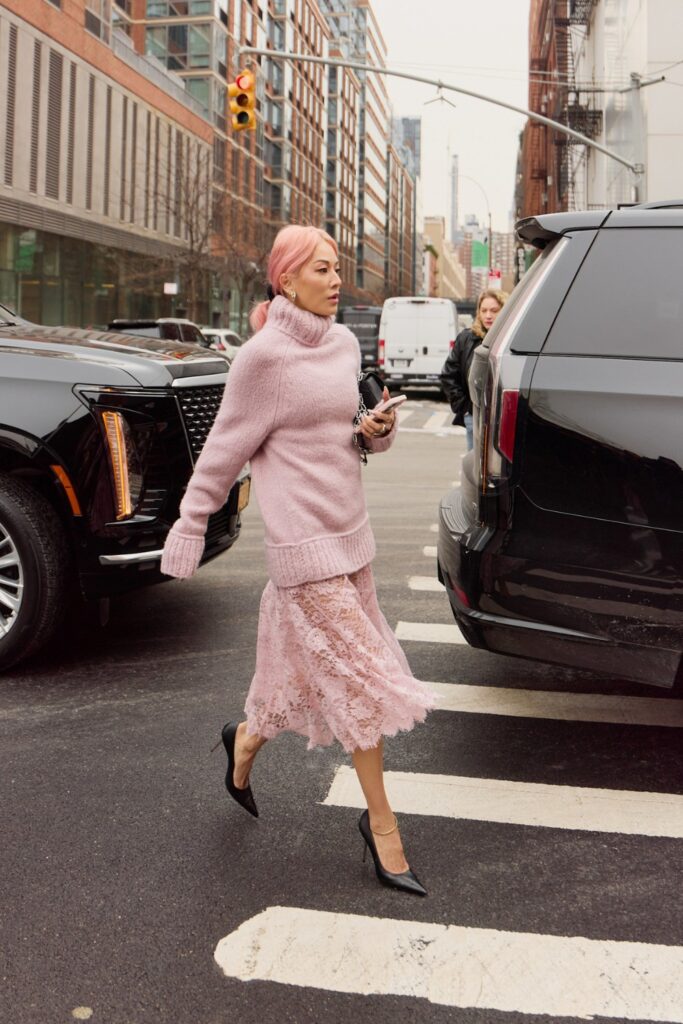
10. Monochrome Pale Pink
Head to toe in the same soft pink, in varying shades and textures.
Pale pink is the signature colour of the aesthetic and monochrome is the most sophisticated way to use it. Slightly different shades of the same tone read as considered; identical shades read flat.
Mix a matte texture with a satin one. Without texture variation this can go bland quickly.
 Save
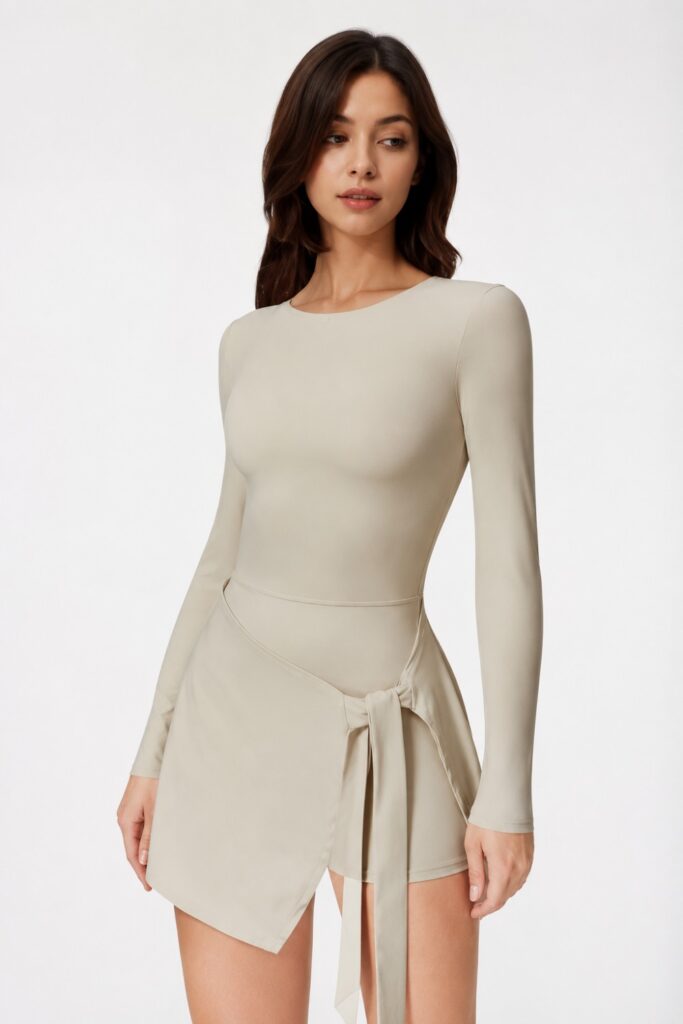
11. Bodysuit With a Wrap Skirt
A plain bodysuit with a wrap or ballet-style skirt tied at the waist, and flats.
Pure rehearsal wear, worn out. The wrap skirt is an underused piece and the tie closure gives the waist definition that a plain skirt does not.
comfortable, which is unusual in this register. Also easy to adjust through a long day.
 Save
Register Four: Dark Balletcore
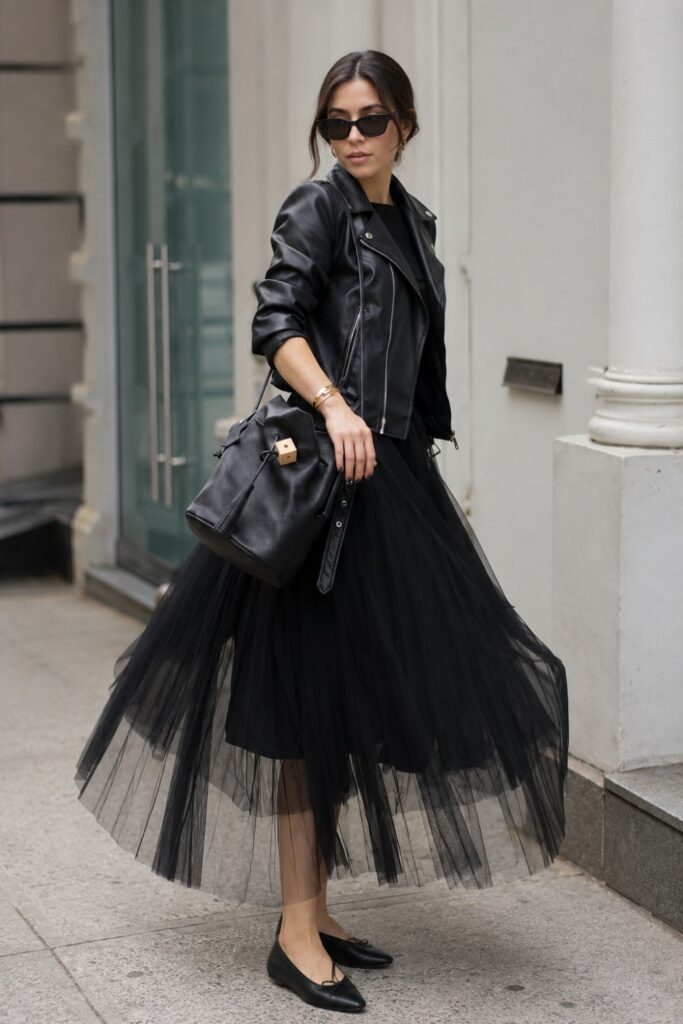
12. Black Tulle With a Leather Jacket
A black tulle skirt with a leather biker jacket and boots or flats.
Dark balletcore borrows from ballet’s stage mythology rather than its prettiness, and this is its most accessible outfit. The leather does the same job the sweatshirt does in the lighter version, only with more edge.
Black tulle photographs very differently from pale tulle. It reads architectural rather than sweet.
 Save
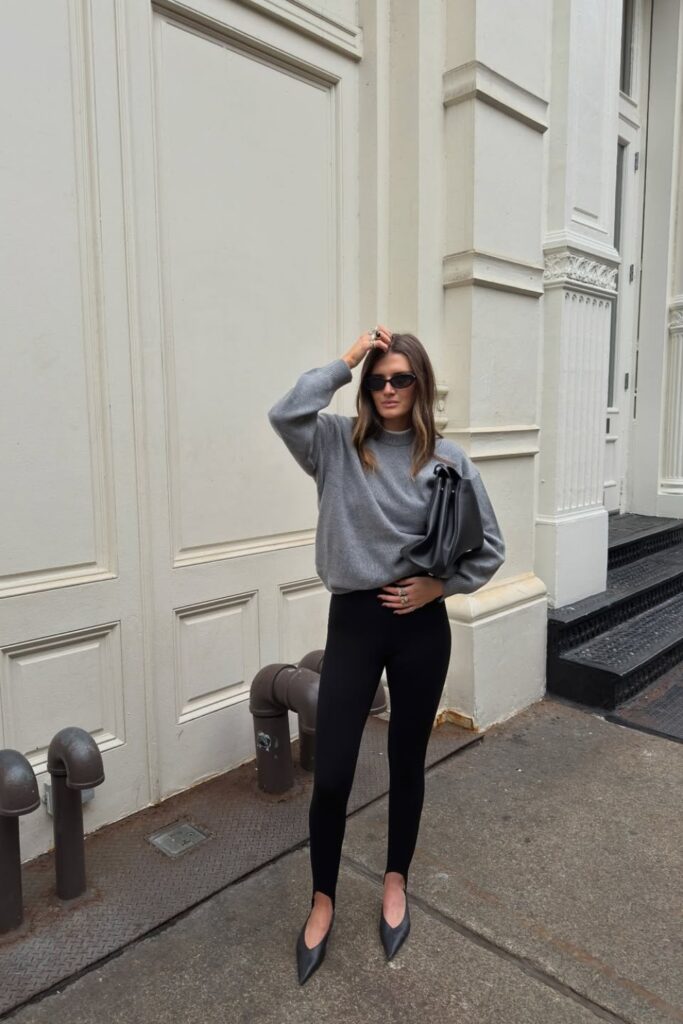
13. Charcoal Knit Over a Black Bodysuit
An oversized charcoal or grey knit over a black bodysuit, with leggings or slim trousers.
The quietest outfit on this list and possibly the most wearable. It keeps the layering and the proportion logic while removing colour entirely.
Ideal for anyone drawn to the shapes of balletcore but not the pastels.
 Save
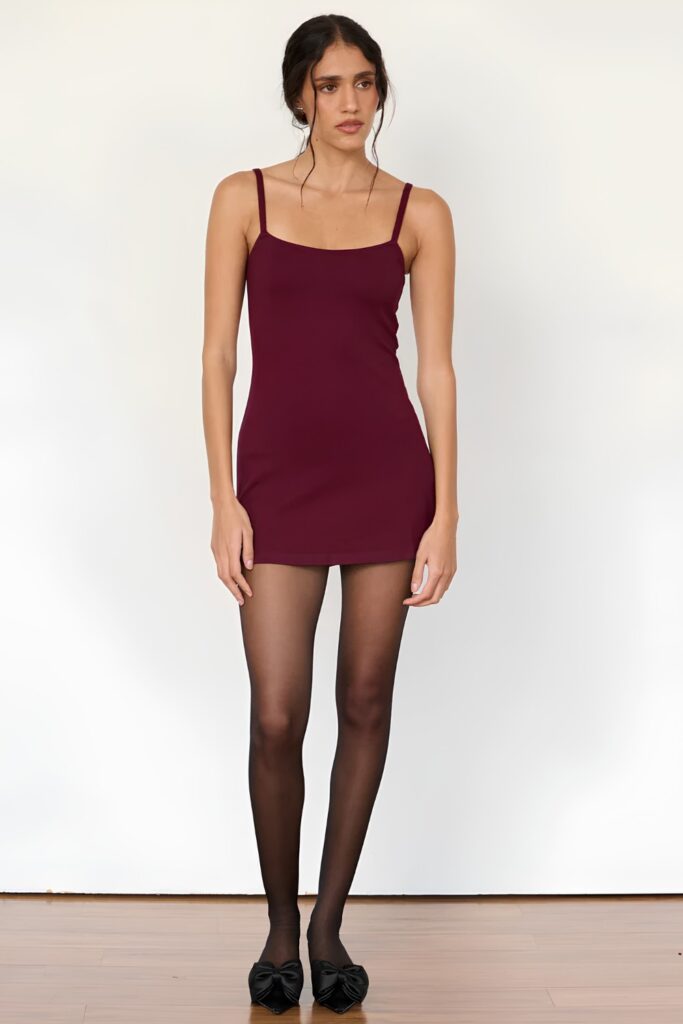
14. Deep Burgundy Slip With Sheer Tights
A burgundy, oxblood, or deep plum slip dress with sheer black tights and flats or low boots.
Jewel tones are the middle ground between pale balletcore and full dark, and burgundy is the most flattering of them against most skin tones. The sheer tights are what keep it in the aesthetic rather than reading as a plain evening dress.
Add a fine knit or a jacket for daytime. On its own it is an evening look.
 Save
The Details That Signal the Aesthetic
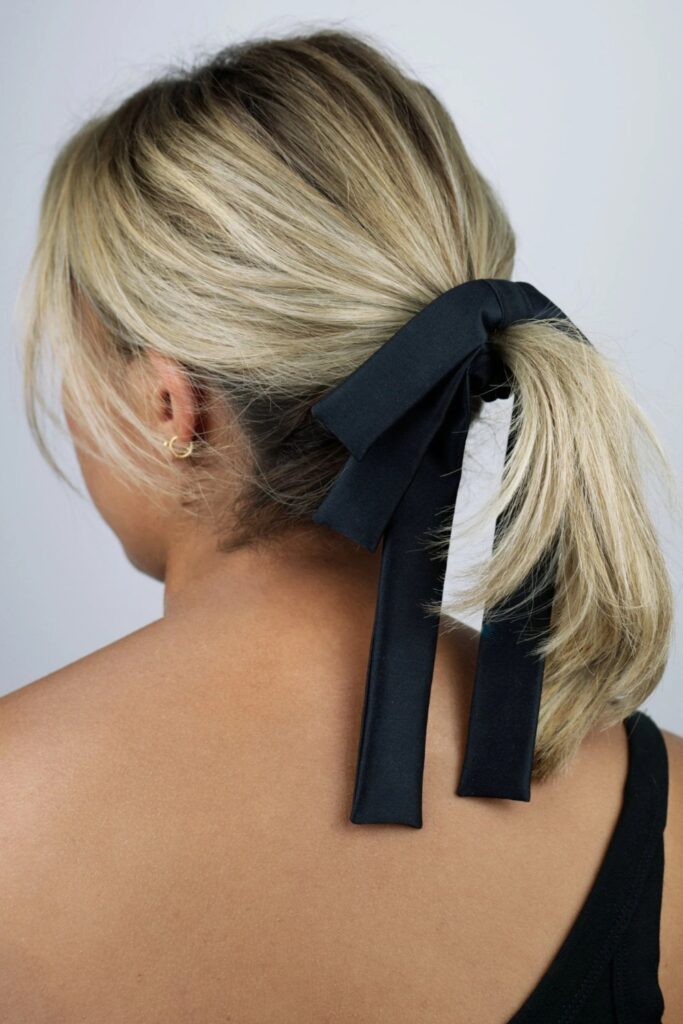
15. Silk Hair Ribbon
A silk ribbon tied at the base of a low ponytail, a bun, or a half-up section.
The single cheapest way into the aesthetic and often the only one needed. A ribbon over an otherwise plain outfit reads as a deliberate reference; a ribbon plus tulle plus flats plus leg warmers reads as a themed party.
Satin ribbon in a colour close to your hair looks more expensive than a contrasting one.
 Save
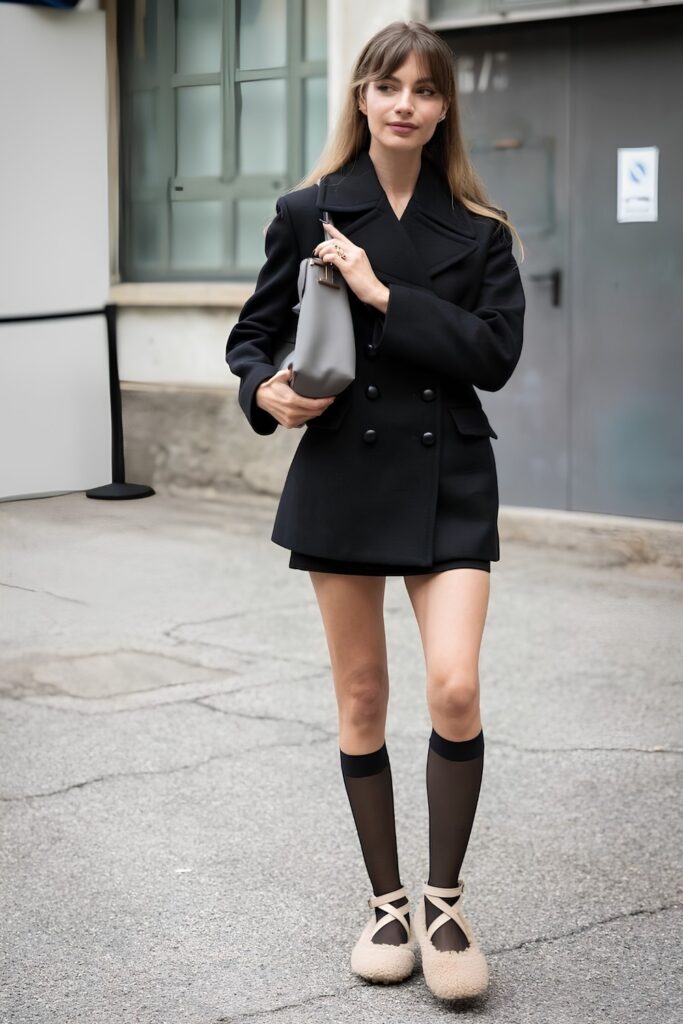
16. Sheer Tights
Fine sheer tights in nude, black, or a soft blush, worn with skirts and dresses.
Tights are the most overlooked element here and one of the most defining. They finish the leg in a way bare skin does not and connect the shoe to the skirt visually.
Denier matters. Very fine tights read as delicate; heavy opaques read as a different aesthetic altogether.
 Save
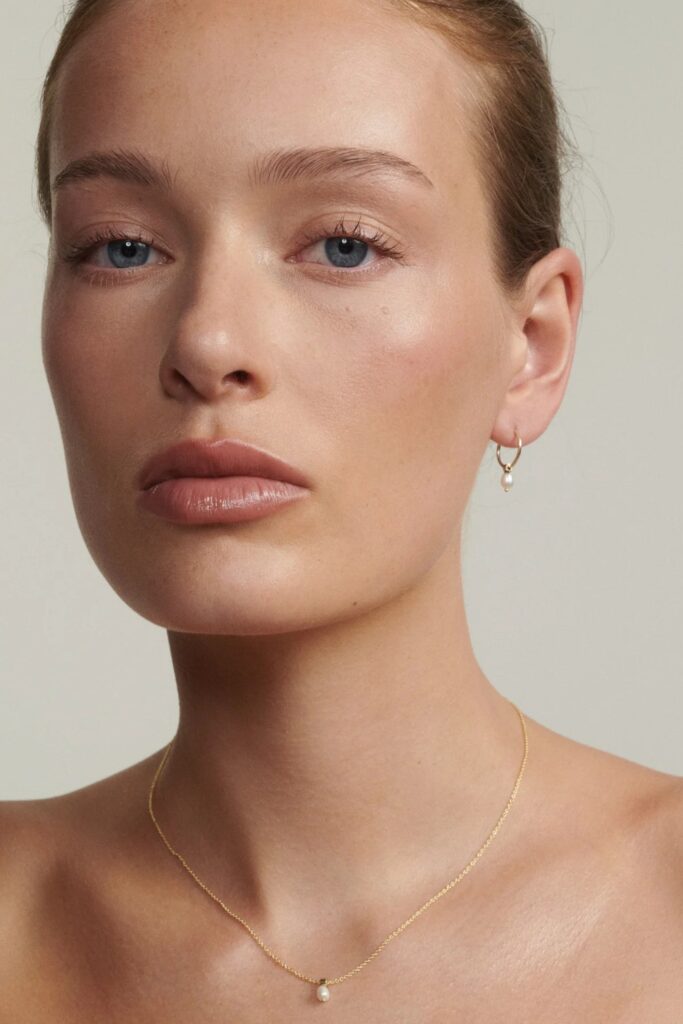
17. Pearls and Dainty Jewellery
Small pearl earrings, a fine chain, or a delicate bracelet. Nothing large.
Balletcore jewellery is deliberately understated, which follows from the restraint principle. One small pearl earring does more here than any statement piece.
If you are wearing a feature garment, keep the jewellery almost invisible. If the outfit is plain, this is where the interest can go.
 Save
Getting the Proportions Right
Nearly all of this comes back to one thing: something fitted with something flowing. A tulle skirt needs a close top. A slip dress needs a defined layer. An oversized knit needs a slim leg.
Which balance suits you best depends on your own frame, and it is worth understanding rather than guessing at. Our outfit guides by body shape work through how volume and fit sit differently on different figures, which is directly applicable here.
Full tulle skirts follow the same rules as maxi dressing. Our maxi outfit ideas show how to handle length without losing the waist.
Frequently Asked Questions
What exactly is balletcore?
A fashion aesthetic drawing on both ballet performance costume and rehearsal wear. From the stage it takes satin, lace, and tulle; from the studio it takes wrap cardigans, leg warmers, bodysuits, and leggings. It emerged on TikTok in the early 2020s and reached mainstream attention in late 2022, sharing territory with the Coquette aesthetic.
How do I wear balletcore without looking like I am in costume?
Use the contrast formula. One romantic piece against something structured or neutral: a lace camisole under a relaxed blazer, a tulle skirt with a sweatshirt, satin flats with cargo trousers. If every element in the outfit is soft, it reads as fancy dress. If one element is plain or sharp, it reads as clothing.
What should I buy first?
Ballet flats. They carry the whole reference on their own, they work with clothes you already own, and they need no other balletcore element to make sense. A wrap cardigan is the sensible second purchase, since it works over almost anything.
Do I need to wear pink?
No. Pale pink is the signature colour but the aesthetic is defined by silhouette and fabric rather than palette. Charcoal, black, cream, and jewel tones all work, and the darker registers are often more wearable day to day.
Is balletcore only for younger women?
No. The rehearsal-wear half of the aesthetic, meaning wrap cardigans, slip dresses, fine knits, ballet flats, and tailored trousers, is age-agnostic and closer to classic French dressing than to a trend. The more literal tulle-and-ribbon looks skew younger, but nothing in the formula requires them.
Final Thoughts
Balletcore has lasted longer than most internet aesthetics because its more useful half was never really a trend. Wrap cardigans, slip dresses, fine knits, and flat shoes have been in wardrobes for decades.
What the aesthetic added was a way of combining them. Something fitted with something flowing, one feature piece, and a flat shoe to keep it honest. Start with the flats and a single romantic piece, put something plain against it, and stop there.