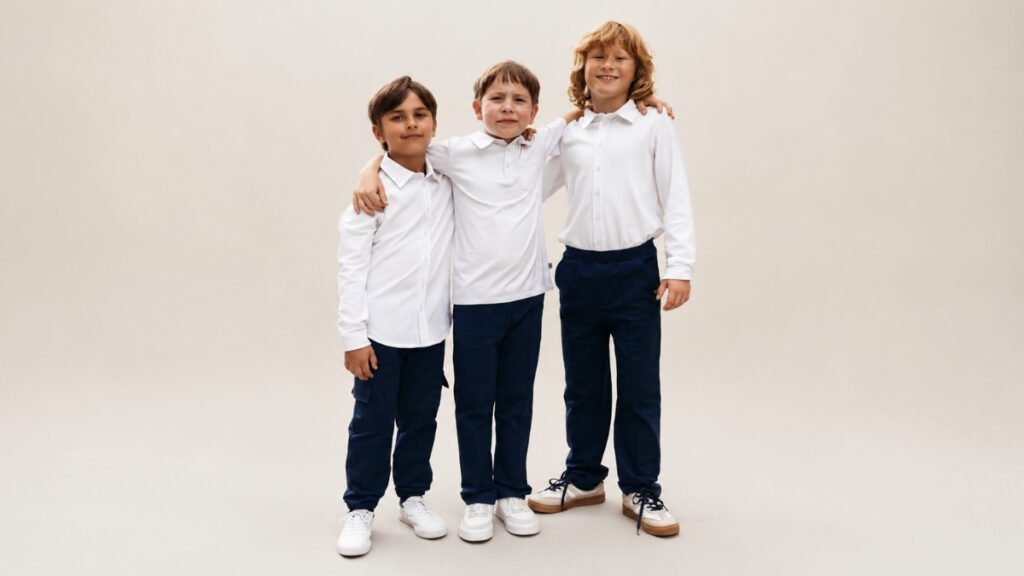
The mistake most back-to-school shopping makes is buying outfits rather than a wardrobe.
A drawer full of one-off looks produces fewer wearable combinations than a handful of pieces chosen to work together. Five to seven mix-and-match outfits genuinely covers a school week, and the trick is that they are not seven separate purchases. They are a smaller number of coordinating tops and bottoms that recombine.
The second mistake is spending evenly. Boys grow out of clothes faster than they wear them out, which means some items justify real money and others absolutely do not. Getting that split right matters more than anything on this list.
What Actually Makes School Clothes Last
Four features, and they are worth looking for by name on the label.
Adjustable waistbands. The single most useful feature in children’s clothing. They extend the wearable life of trousers by months rather than weeks, which on a growing child is the whole ballgame.
Reinforced knees. Trousers fail at the knee first, almost without exception. Reinforcement is the difference between a term and a year.
Stretch in the fabric. Children sit cross-legged on floors, hang upside down at break, and climb things. Rigid fabric restricts them and tears; stretch does neither.
Machine washable, and darker. Everything will be washed constantly. Navy, grey, black, olive, khaki and burgundy hide marks far better than pale shades while still looking smart, which is why school ranges lean that way.
One sizing note worth knowing: slim and husky fits are standard options in most children’s ranges, not special orders. If standard sizing has never fitted your son properly, ask for them by name.
Uniform Basics
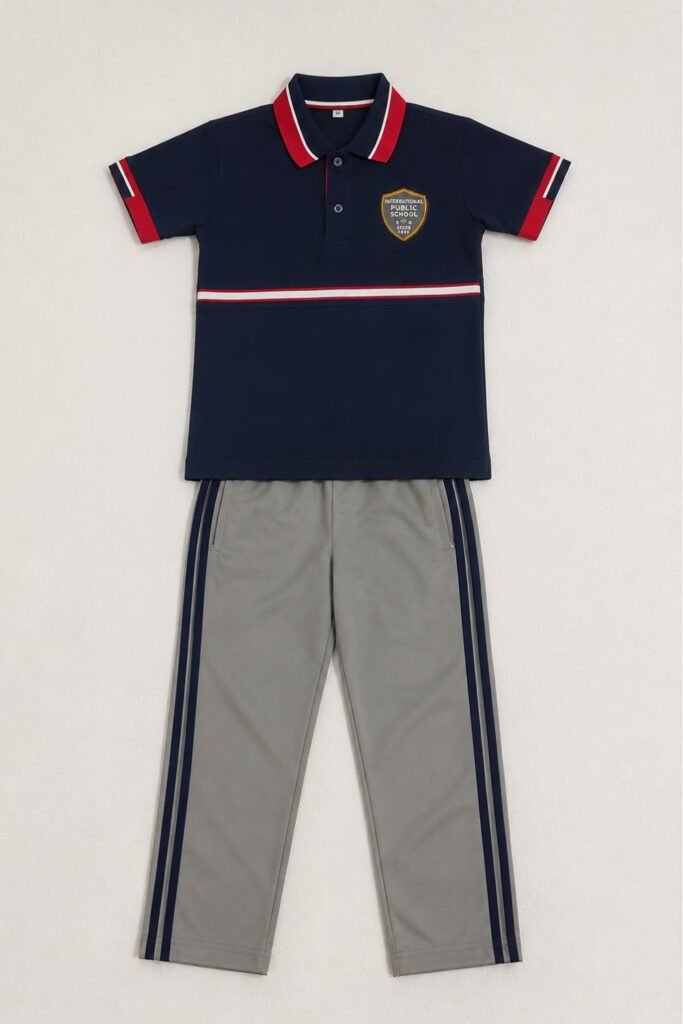
1. Polo Shirt and Uniform Trousers
The core school outfit and the one most boys wear most days.
If one piece deserves a permanent place in the rotation, it is a decent polo. It works whether the school has a strict dress code or a relaxed one, and it looks put together without any effort.
Buy in navy, white, light blue and red. Those four mix with essentially any bottoms already in the drawer, which is what makes a rotation work.
 Save
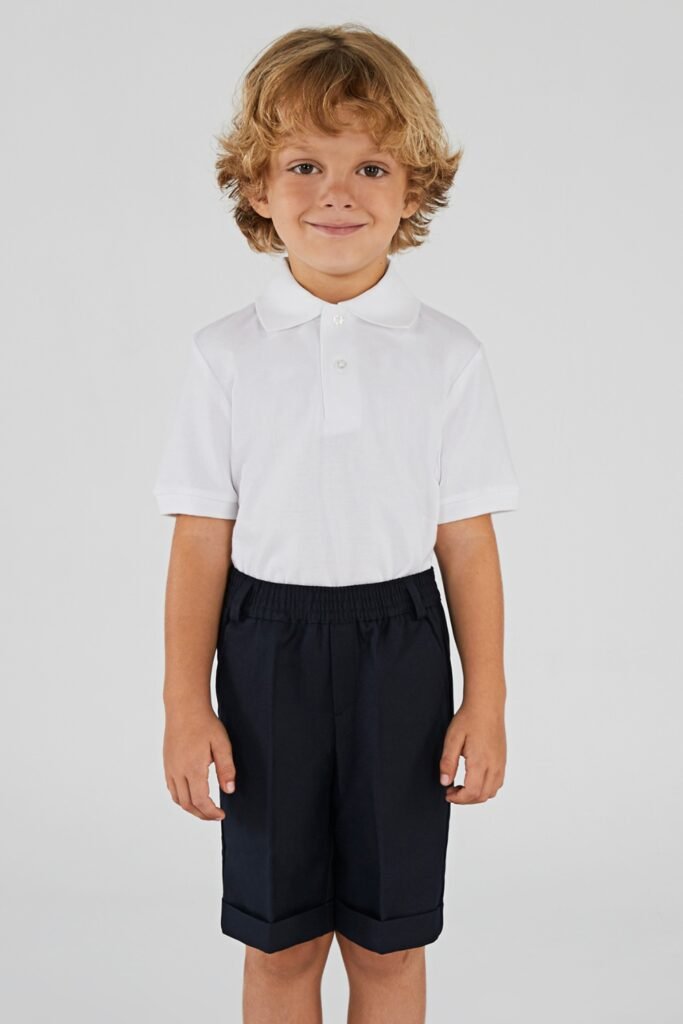
Save2. Polo Shirt and Uniform Shorts
The same top half with shorts, for warmer terms.
Cotton twill with a bit of stretch is the standard for a reason: it holds a smart shape, survives washing, and does not restrict movement.
Buy shorts and trousers in the same colour family so tops work with both. That halves the coordination problem.
 Save
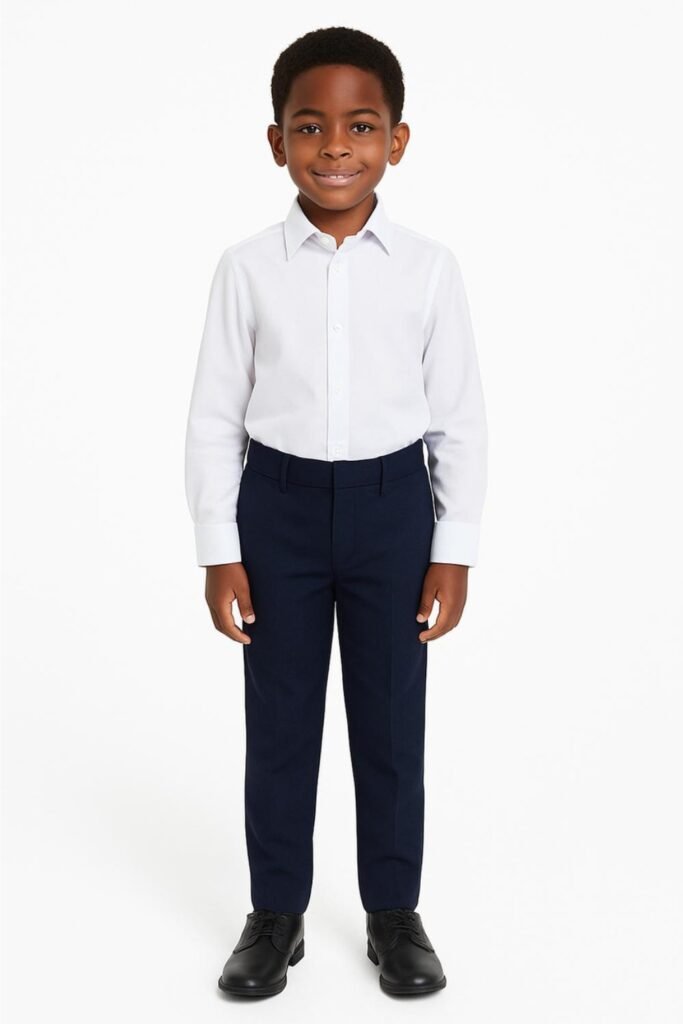
Save3. Button-Down Shirt and Trousers
A white or light blue button-down for schools with a formal dress code.
More formal and less forgiving than a polo, since button-downs crease and stain more visibly. Two or three is usually enough even where they are required daily, provided you are washing midweek.
Look for stain-resistant finishes if they exist in your budget. On a white shirt worn by a nine-year-old, it earns its keep.
 Save
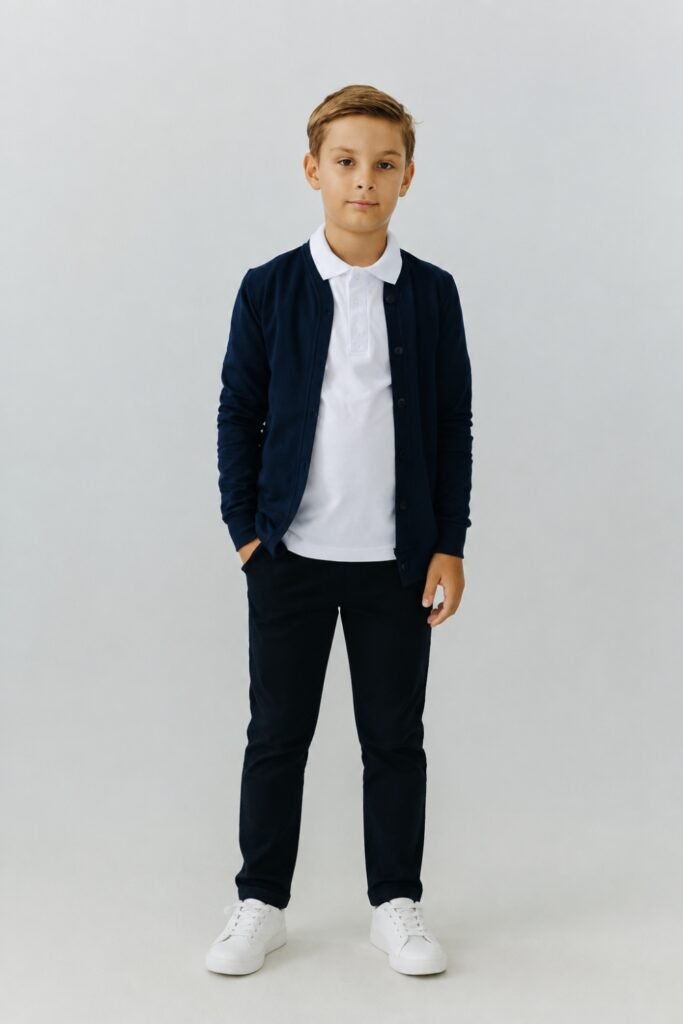
Save4. Uniform Sweater or Cardigan Layer
A knit layer over the polo or shirt, in the school’s colour.
Classrooms and playgrounds are different temperatures, and a layer that comes off easily is worth more than a warmer top that does not.
This is a spend-more item. Sweaters get worn daily, washed constantly, and are usually the piece parents replace mid-year when a cheap one pills.
 Save
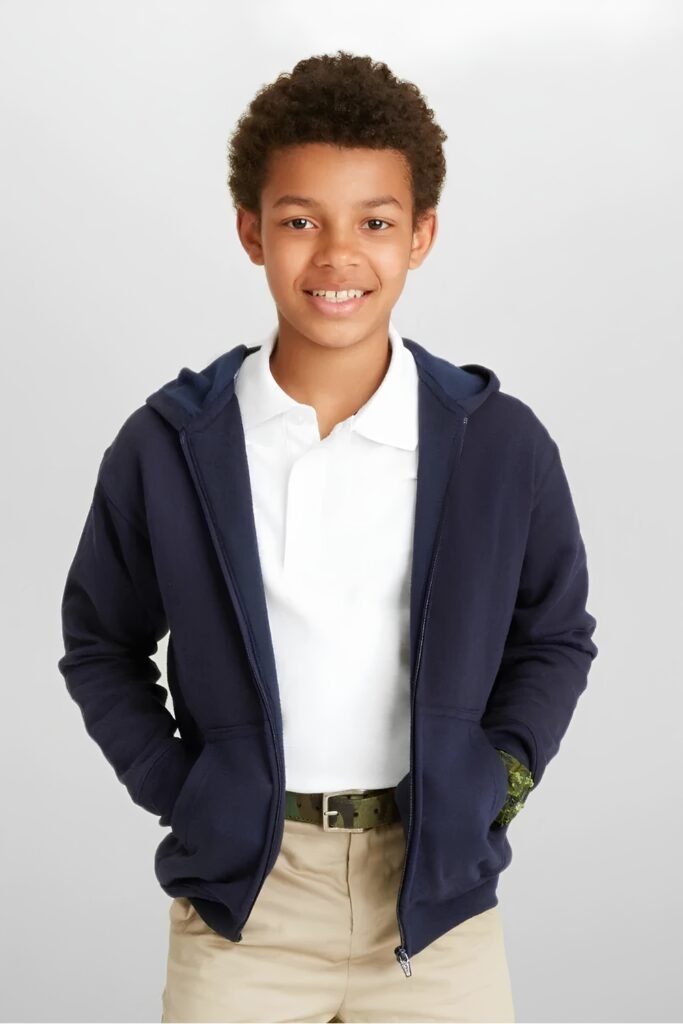
Save5. Uniform With a Zip-Up Hoodie
Where the dress code allows it, a zip hoodie instead of a sweater.
Zips beat pullovers for school-age children by a wide margin: they come off without disturbing hair or the shirt underneath, and they go on one-handed.
Check the policy before buying. Plenty of schools permit hoodies and plenty do not.
 Save
SaveEveryday and Relaxed Dress Code
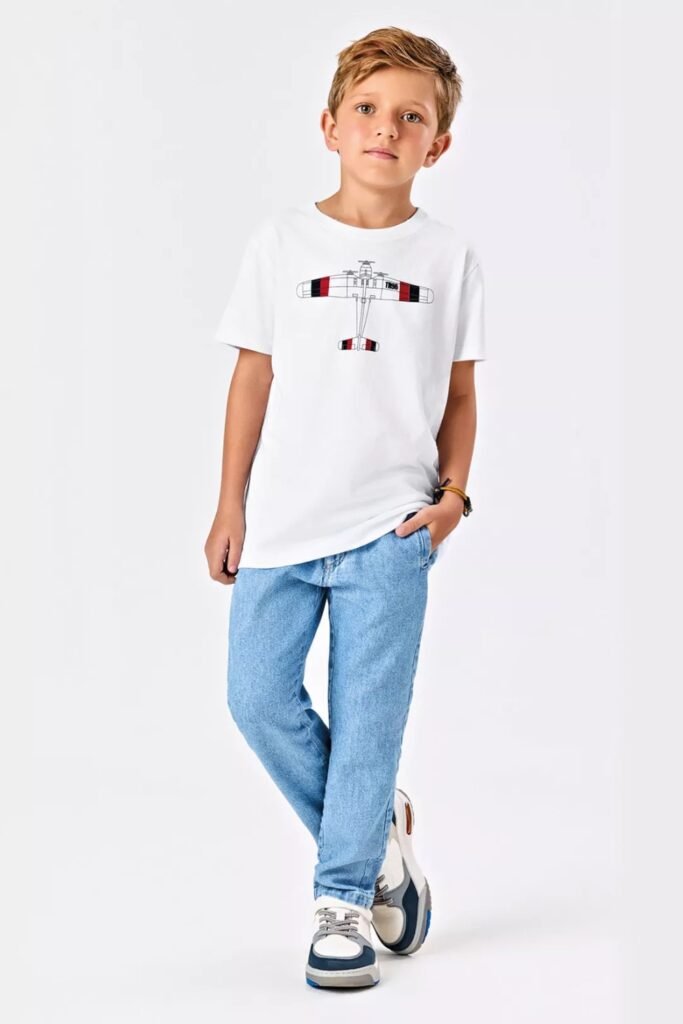
6. T-Shirt, Jeans and Trainers
The default and, honestly, the outfit most boys would choose every day.
Nothing wrong with it. Cotton tee, durable jeans, comfortable trainers, and it works for classroom, break and after school without changing.
Jeans with stretch and an adjustable waist are the version that lasts. Rigid denim in a fixed size on a growing child is a short-term purchase.
 Save
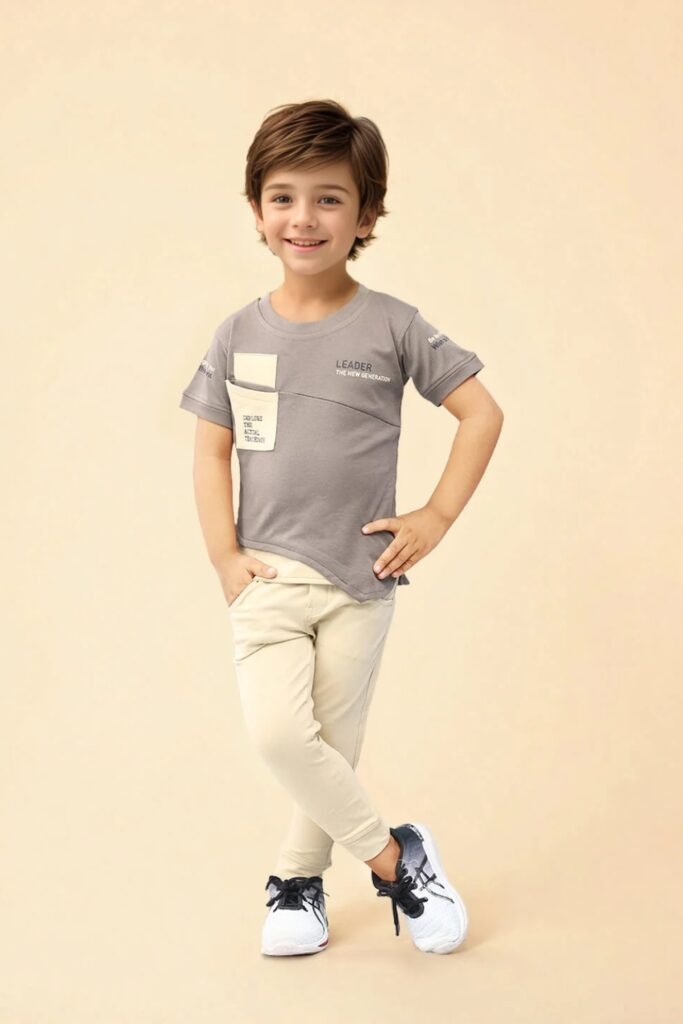
Save7. Graphic Tee With Plain Bottoms
A tee with a print he actually likes, paired with simple jeans or joggers.
Balance is the rule here. A bold graphic works best against plain bottoms, and a bright hoodie works best over neutral trousers. Two loud pieces at once is where outfits stop working.
This is where personality goes. Let him pick the graphics and keep the rest of the wardrobe neutral, and everything still coordinates.
 Save
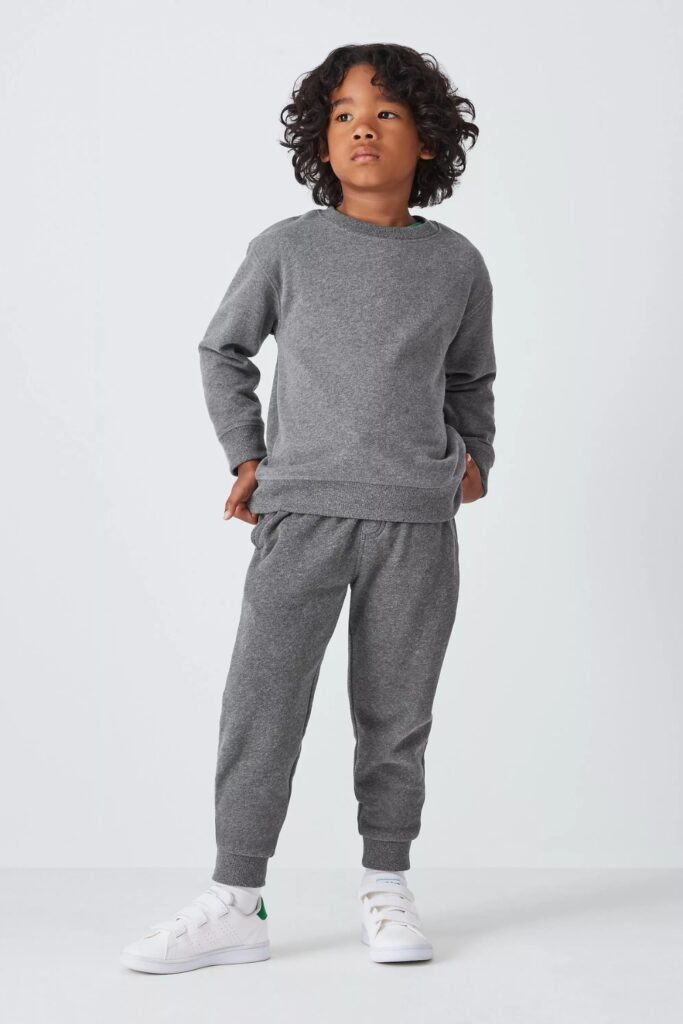
Save8. Joggers and a Sweatshirt
Soft, flexible, and genuinely comfortable for a long day.
Joggers are entirely reasonable school wear where the dress code allows, and they suit active children better than most alternatives. They also survive the wash indefinitely.
Choose a cuffed ankle over an open hem. It stays out of the mud and looks more deliberate.
 Save
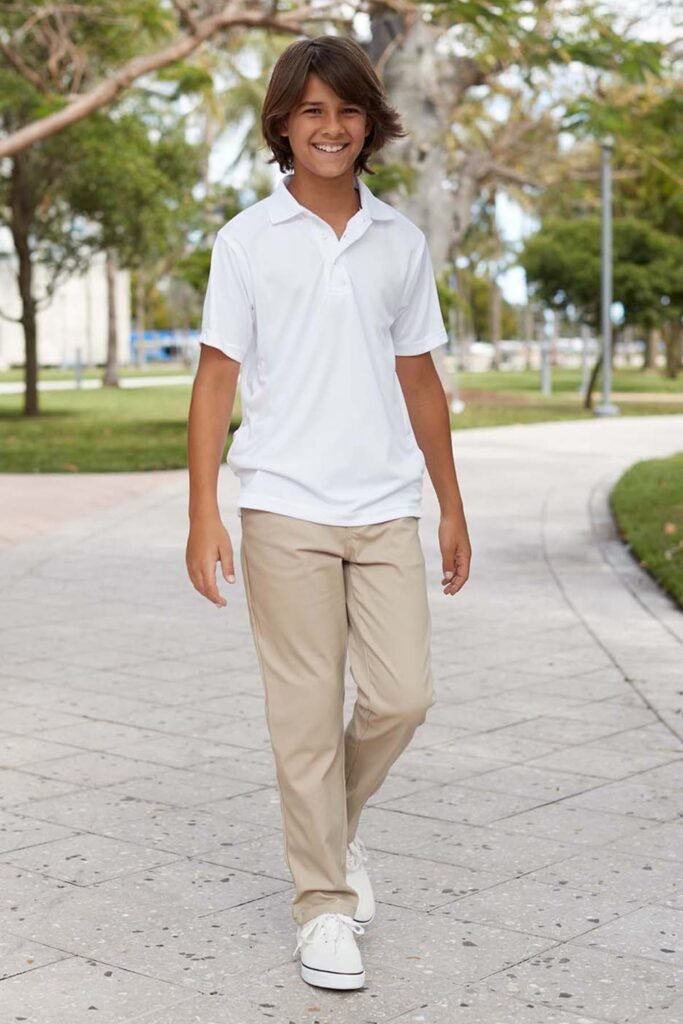
Save9. Polo and Chinos
The smart-casual middle ground for schools with a dress code but no uniform.
Chinos read tidier than jeans without being uncomfortable, and a stretchy chino is functionally as easy to wear as a jogger.
The most useful outfit here for occasions that sit between everyday and formal, which schools produce more of than anyone expects.
 Save
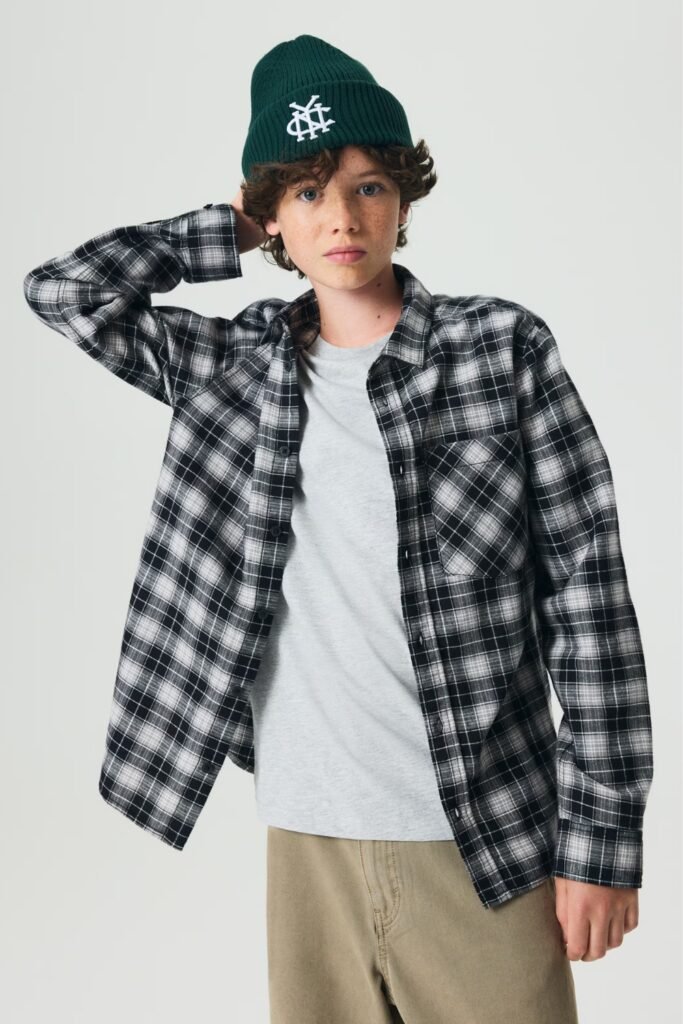
Save10. Layered Tee Under a Flannel or Overshirt
A plain tee with an open shirt layered over it.
The layer is doing real work rather than decoration. Mornings are cold and afternoons are not, and an open shirt handles the difference without a coat.
Also the outfit most likely to please an older boy who has started having opinions about clothes.
 Save
SaveWeather and Season
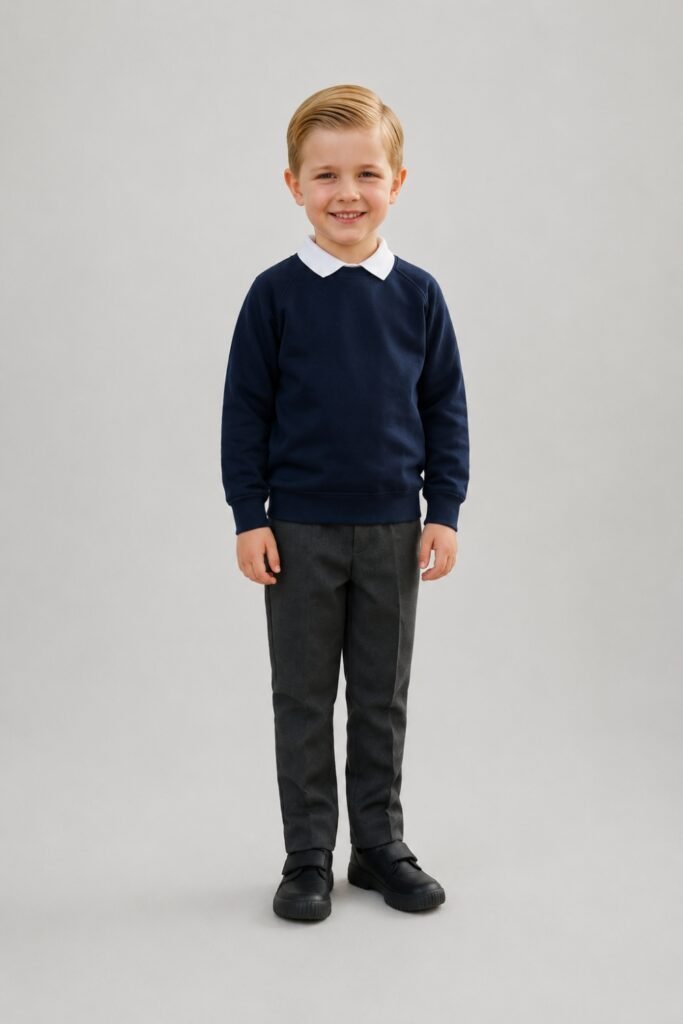
11. Long-Sleeve Tee and Trousers
The simplest cold-weather adjustment: same outfit, longer sleeves.
A mix of short and long-sleeve tops is what makes a wardrobe work year-round, and it is cheaper than a separate winter wardrobe.
Buy long-sleeve versions of the tops that already work rather than new outfits.
 Save
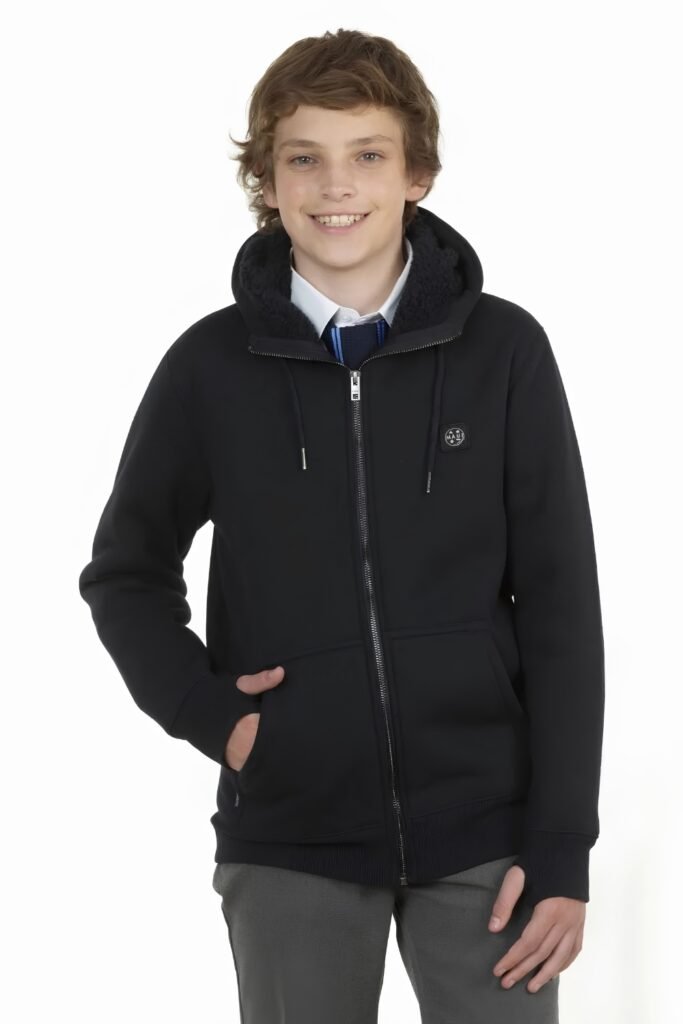
Save12. Fleece-Lined Hoodie Over Uniform
An insulated layer for genuinely cold mornings, worn over whatever the dress code requires.
Warmer than a knit without being a coat, which matters for the walk in and out when a coat is too much.
Check whether it needs to come off in class. If so, keep the layer underneath presentable.
 Save
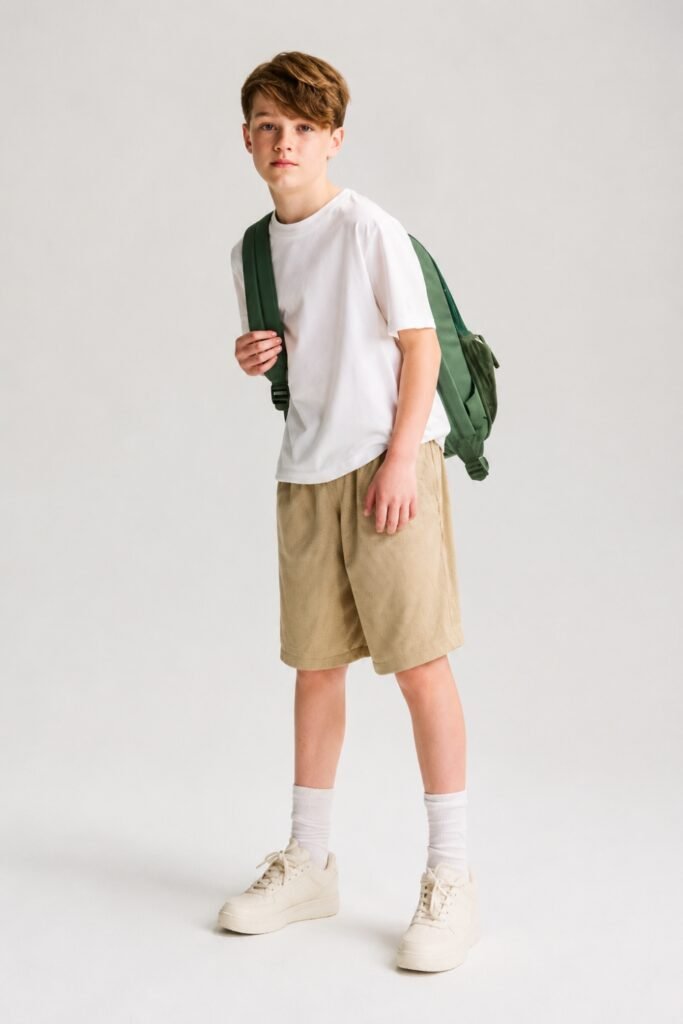
Save13. Shorts and a T-Shirt for Warm Terms
The hot weather version, in breathable cotton.
Elastic waistbands are the useful feature here, since shorts are usually the first thing pulled on in a hurry.
Athletic shorts for PE and casual shorts for everyday are genuinely different purchases. One pair does not do both well.
 Save
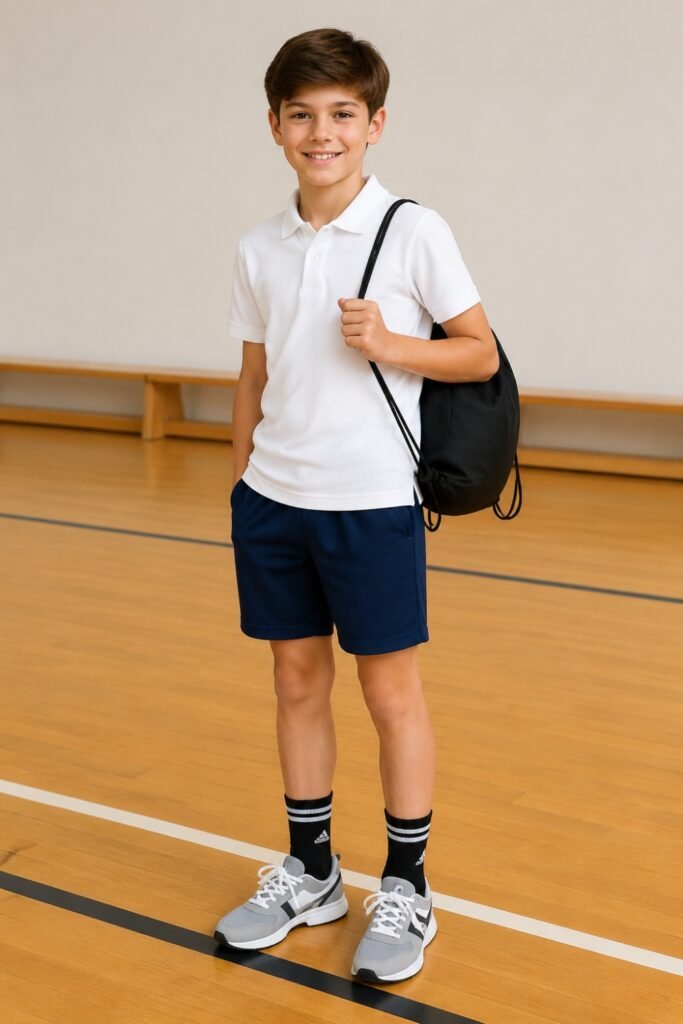
Save14. PE and Sports Kit
Whatever the school requires, plus trainers that can actually be run in.
Worth its own entry because it is routinely forgotten until the night before. Moisture-wicking fabric is a real improvement over cotton for anything active.
Check the requirements list rather than assuming. PE kit specifications vary enormously between schools.
 Save
SaveOccasions and Footwear
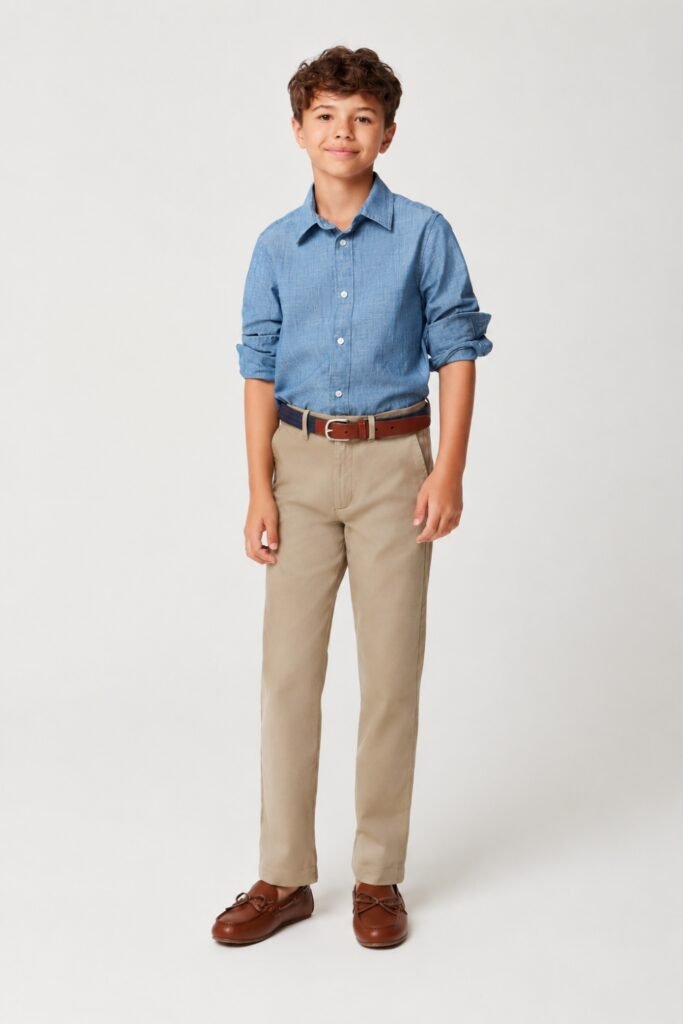
15. First Day and Picture Day Outfit
One good outfit kept back for the days that get photographed.
This is the one place where a single special look beats coordinating basics. Save it, and let the everyday rotation be simple.
A button-down, chinos and clean shoes covers almost every school occasion that calls for it.
 Save
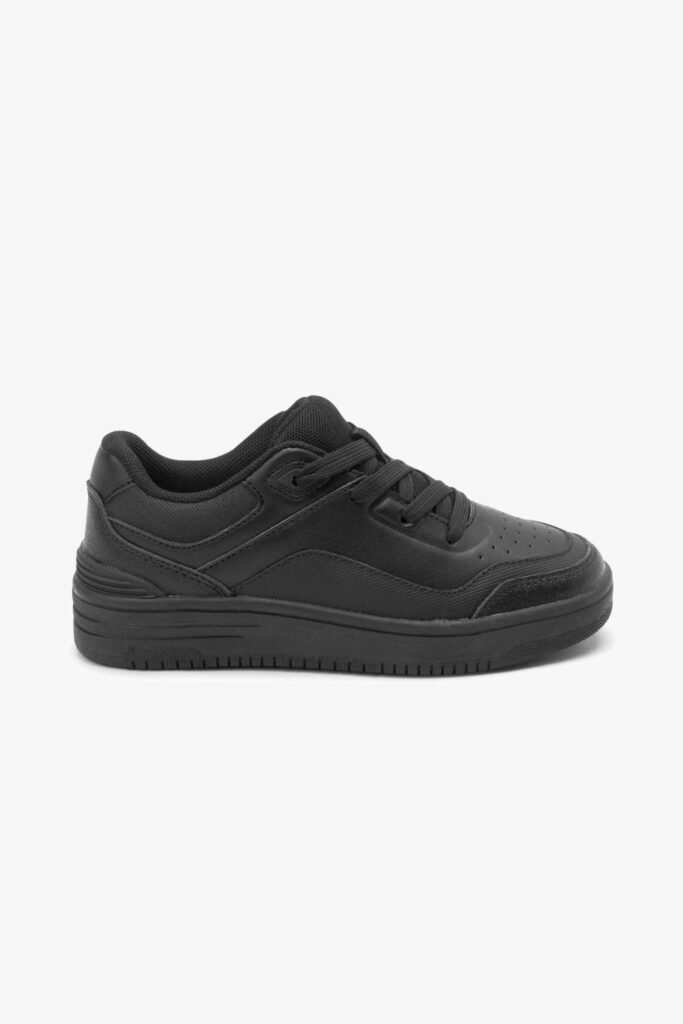
Save16. Everyday Trainers
The pair worn most days, chosen for comfort and durability over appearance.
Shoes are firmly in the buy-new category. Fit matters for growing feet in a way it does not for a jacket, and secondhand shoes have moulded to someone else’s foot.
Two pairs, alternated, last considerably longer than one pair worn daily. If the budget allows, that is where it goes.
 Save
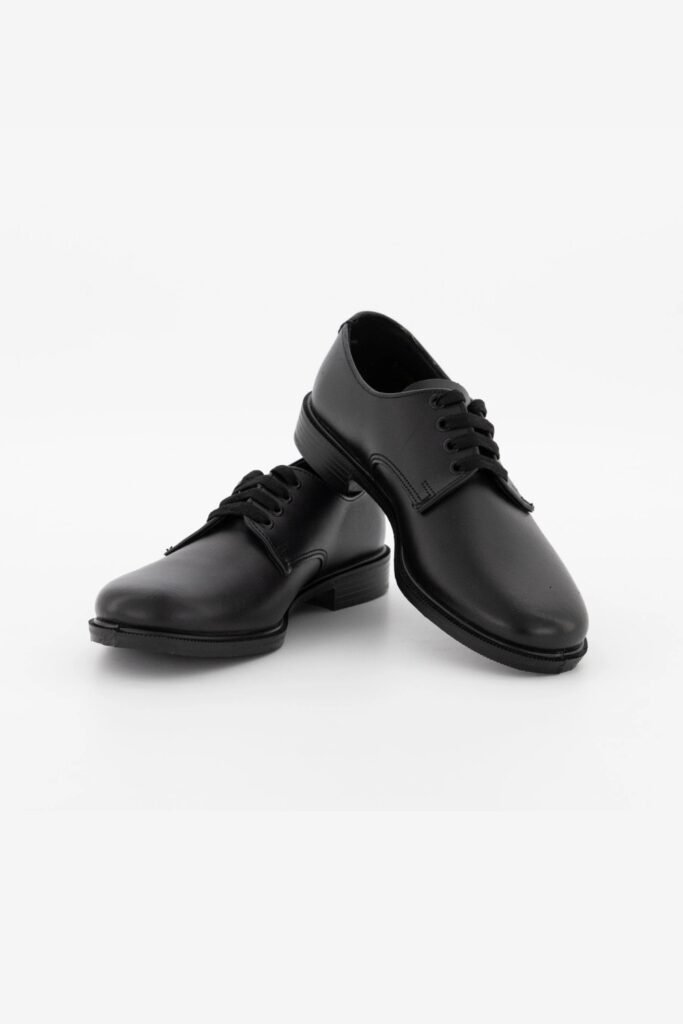
Save17. Smarter Shoes for Formal Days
A tidier pair for assemblies, photographs and formal occasions.
Worn rarely, which means they can be a lower-priority purchase and are one of the more sensible things to buy secondhand or hand down.
Check them before each term rather than the morning of. Feet grow over holidays.
 Save
SaveWhere the Money Should Go
This is the part worth getting right, because boys grow out of clothes faster than they wear them out.
Buy new: shoes, uniform basics, and the everyday items worn several times a week. Fit is genuinely important for footwear, and the pieces in constant rotation are where cheap construction shows fastest.
Buy secondhand or hand down: coats, jackets, sports and spirit wear, formal shoes, and anything worn occasionally. A coat worn for one term of one year is an obvious candidate.
Buy with room: clothing with a little extra space lasts longer on a growing child. Adjustable waistbands and slightly generous tops buy months.
Do not buy seven outfits. Buy four or five tops and three or four bottoms in coordinating colours, and you have a week with combinations left over. It costs less and produces more.
Common Questions
How many outfits does a boy need for school?
Around five to seven mix-and-match outfits covers a week, but those should come from a smaller number of coordinating pieces rather than seven separate purchases. Four or five tops and three or four bottoms in colours that work together produce a full week with combinations to spare.
What should I look for to make school clothes last?
Adjustable waistbands, reinforced knees, stretch in the fabric, and machine-washable materials. Darker colours including navy, grey, olive and khaki hide marks better than pale shades. Slim and husky sizing is standard in most ranges if regular fits have never worked.
What is worth buying new versus secondhand?
Buy new for shoes, uniform basics, and anything worn several times a week, since fit matters most for footwear and cheap construction shows fastest on items in constant rotation. Jackets, sports and spirit wear, and occasional-use items are sensible secondhand or hand-down purchases.
Are joggers acceptable for school?
Where the dress code allows, yes. They are comfortable, flexible, and suit active children, and they pair with tees, polos and sweatshirts equally well. Check your school’s policy, since some permit them and some do not.
How do I let him express himself in a uniform?
Through the details the policy allows. Graphic tees where permitted, colour choices, sneakers, a backpack, socks, or a cap for outdoor days. Within a strict uniform, small variations like a textured fabric, contrast stitching or a slightly relaxed cut make a standard piece feel less plain without breaking any rules.
Final Thoughts
Buy fewer pieces that work together, in colours that hide marks, with adjustable waists and reinforced knees. Save the money for shoes, where fit genuinely matters, and let the coat be a hand-me-down.
Then keep one good outfit back for the first day and picture day, and let the rest of the week be simple. That is a wardrobe that gets to summer term intact.