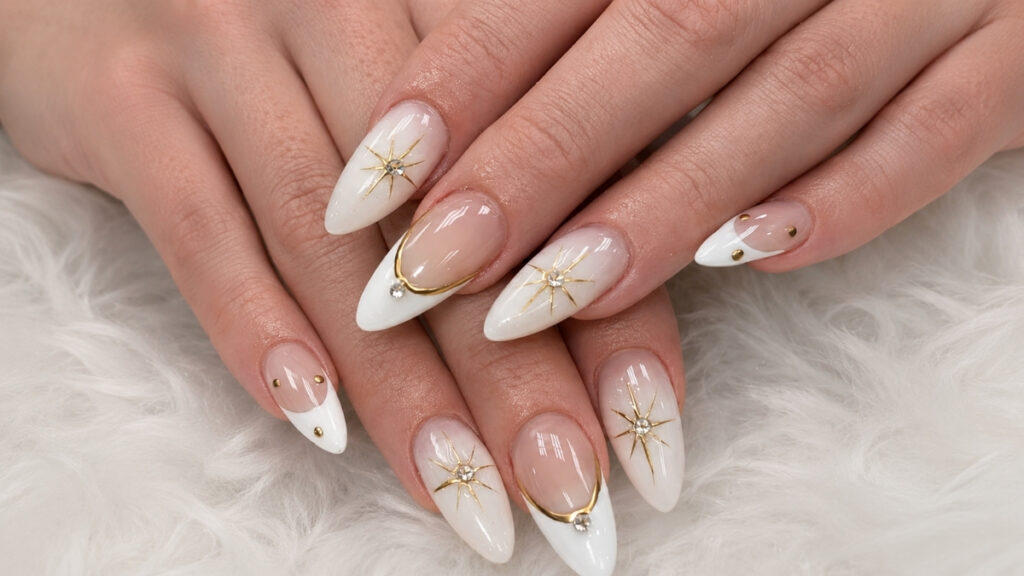
If your white polish comes out streaky, patchy or looking like correction fluid, it is worth knowing that this is not a skill problem in the way you think.
White reflects light. Dark shades absorb it. When light hits a white surface with any tiny ridge or variation in thickness, those areas bounce it back at slightly different angles and your eye picks up the difference instantly. The same unevenness in a black polish is invisible, because there is no reflection to disturb.
White simply reveals imperfections faster than other shades. Streaking is usually a prep problem, because white has nowhere to hide uneven layers.
Once your base is right, our micro French nails and white tip nails show more ways to wear it.
Which leads to the fix, and it is counterintuitive: the way to better white nails is usually to make them less white. Less opaque, specifically. That is why this list is sorted by opacity, from the sheerest finishes to full stark white.
Prep Is Most of It
Use a ridge-filling base coat, not a standard one. This is the single most effective thing you can do before white polish touches your nail. It creates a smooth surface, and smooth is what white needs.
Float the polish, do not press it. Load more onto the brush and use fewer strokes. Manicurists describe it as floating the colour down the nail rather than pressing it, and a lighter touch leaves fewer brush marks. Hold the brush at about 45 degrees rather than flat, and use three strokes per nail: centre, then left, then right.
Thin coats, and expect the first one to look bad. A patchy, sheer first layer is normal and not a sign to add more. Most milky whites need three to four ultra-thin layers to reach even coverage, and thin layers beat one thick pass every time.
Roll the bottle between your palms first. It redistributes the pigment and warms the polish, which makes it more fluid and considerably easier to lay down evenly. Do not shake it, which introduces bubbles.
If you want more depth, add nude rather than another coat. Mixing a drop of nude into a sheer white gives you body without the thickness that causes streaks.
Sheer and Milky
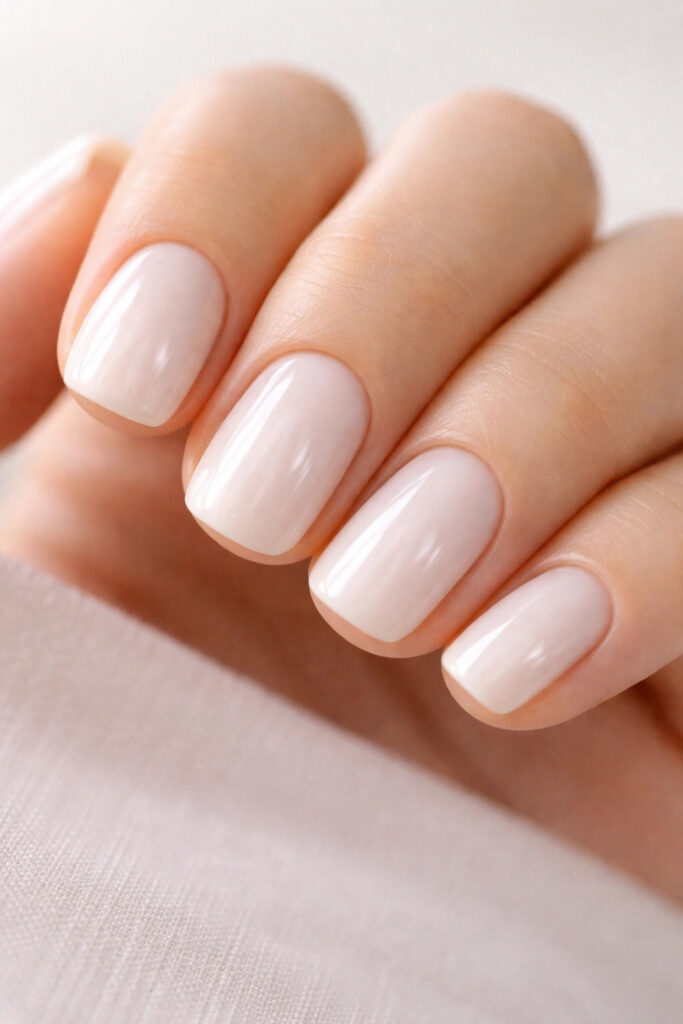
1. The Milky White
A semi-sheer, off-white wash that lets a diffused hint of the natural nail show through. Frosted glass rather than paint.
This is the version most people actually want when they say white nails, and the one quietly displacing the French manicure. It is also the most forgiving, since the translucency conceals unevenness rather than exposing it.
It flatters short nails particularly. Opaque colours visually cut the finger and make the nail bed look smaller, while a translucent milky blends into the fingertip and reads as a smooth extension.
 Save
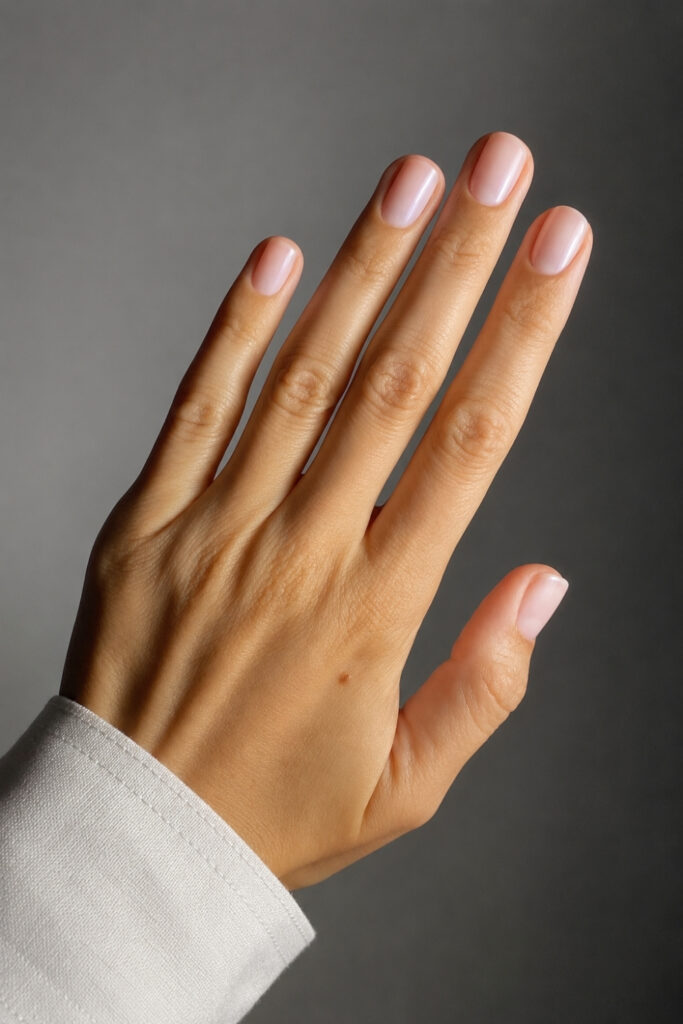
2. The Sheer White Veil
Lighter still, closer to a tint than a colour. A wash of white that brightens without covering.
The your-nails-but-better finish. One coat, maybe two, and the natural nail is clearly visible underneath.
The lowest-risk white there is and the fastest to apply. Also the least visible when it chips, which is worth something.
 Save
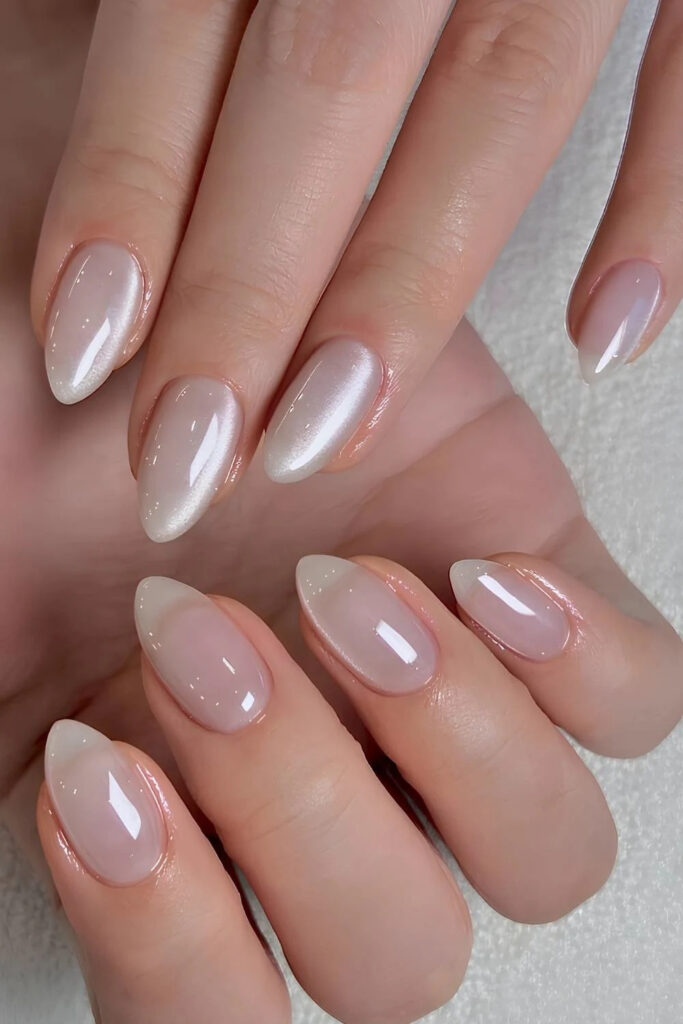
3. Jelly White
Translucent with visible depth, built in thin layers and sealed under a high-gloss top coat.
The gloss is doing structural work here. The glassy finish creates an illusion of depth that makes the nail look healthy and lit from within rather than painted.
Build slowly. Jelly finishes look best with several sheer layers rather than two solid ones.
 Save
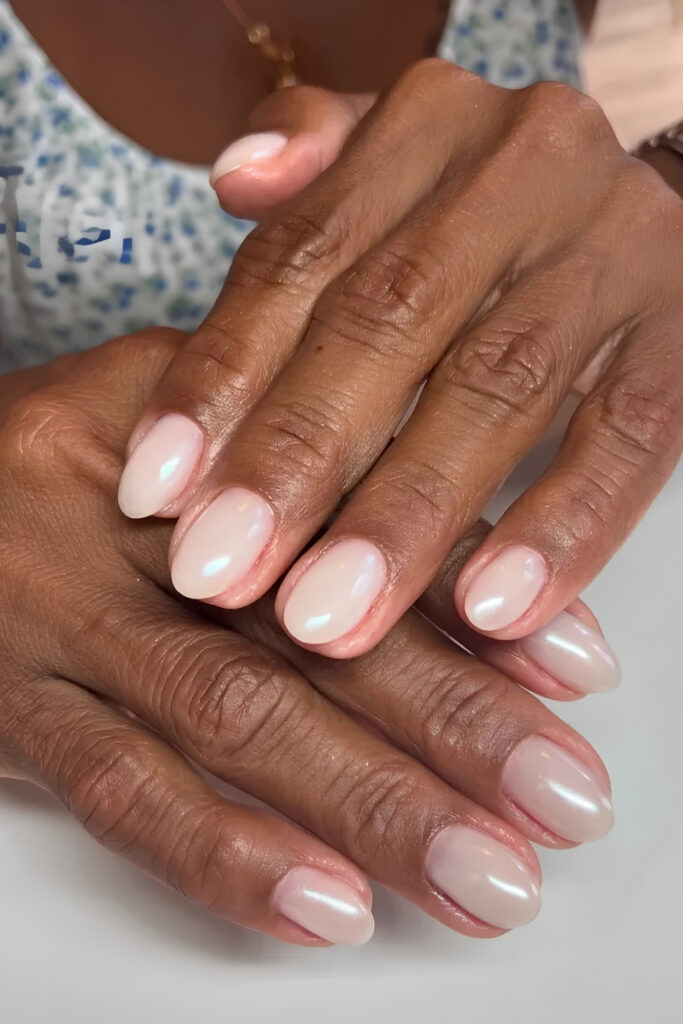
4. Milky White Over a Nude Base
A sheer white floated over a nude rather than applied to the bare nail.
The single most useful adjustment for warmer and deeper complexions. Building from a nude base rather than a stark white is what produces the lit-from-within effect, and it avoids the ashy cast that a pure white can leave.
More on skin tone below, because it deserves a proper section rather than a line.
 Save
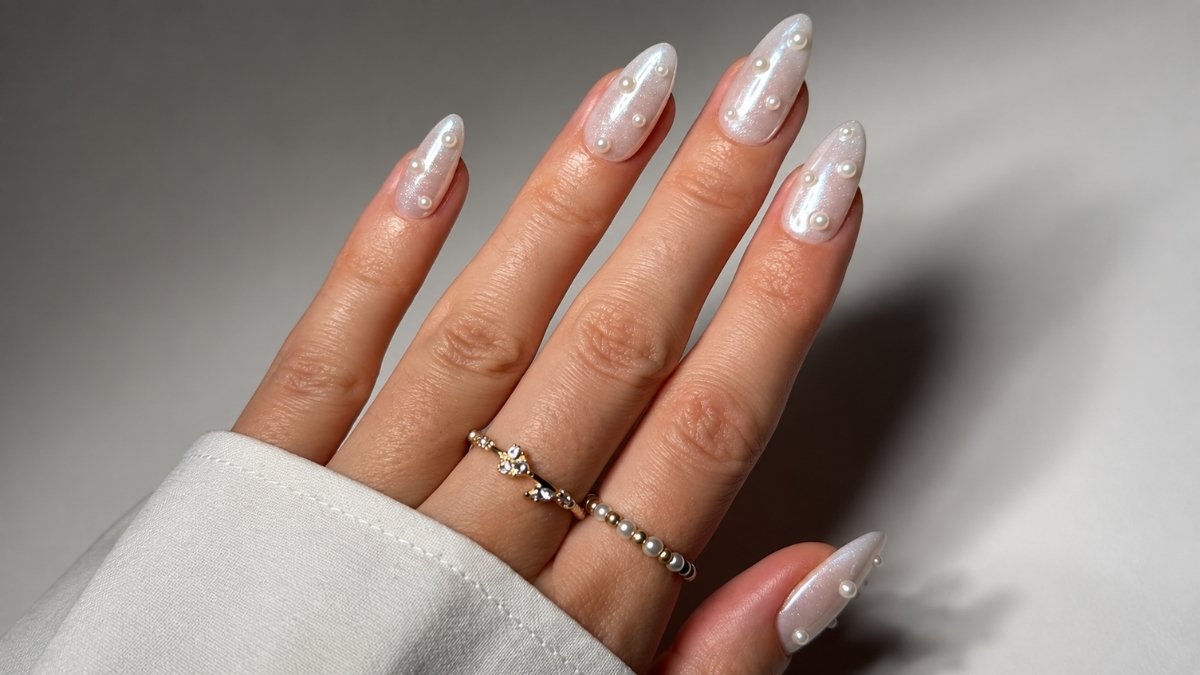
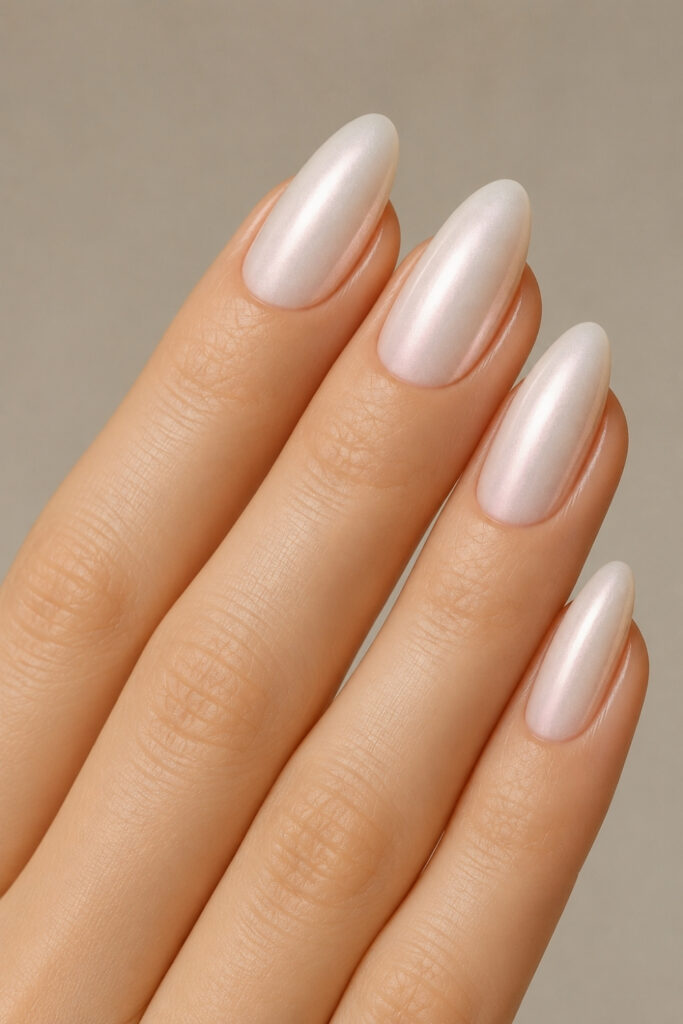
5. Glazed Milky
A milky base with pearl or chrome powder swept over the top.
Quiet shimmer with disproportionate impact. The pearl catches light without adding colour, which keeps it neutral while stopping it looking flat.
The most photogenic finish here by some margin.
 Save
Classic and Opaque
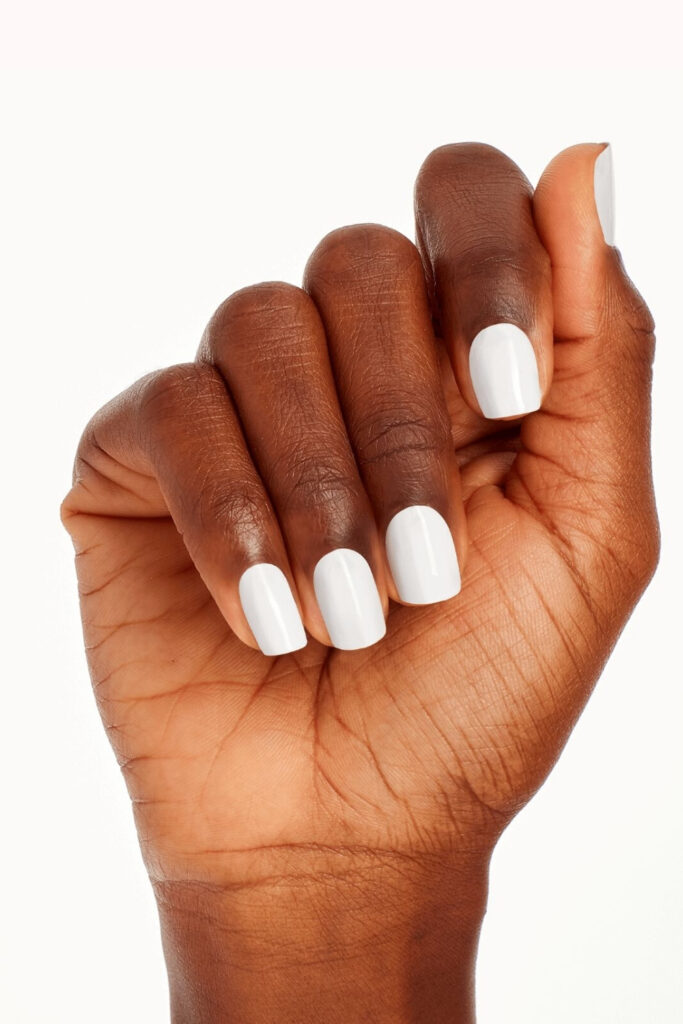
6. Solid Stark White
Full-coverage, unapologetic bright white.
The hardest to execute and the most striking when it is right. On a short nail, two coats deliver a paint-like finish that photographs in high contrast, and it looks stunning against deeper skin tones.
It is also the version that looks chalky and flat when applied unevenly or without a proper base coat. If you want this one, the ridge-filling base coat is not optional.
 Save
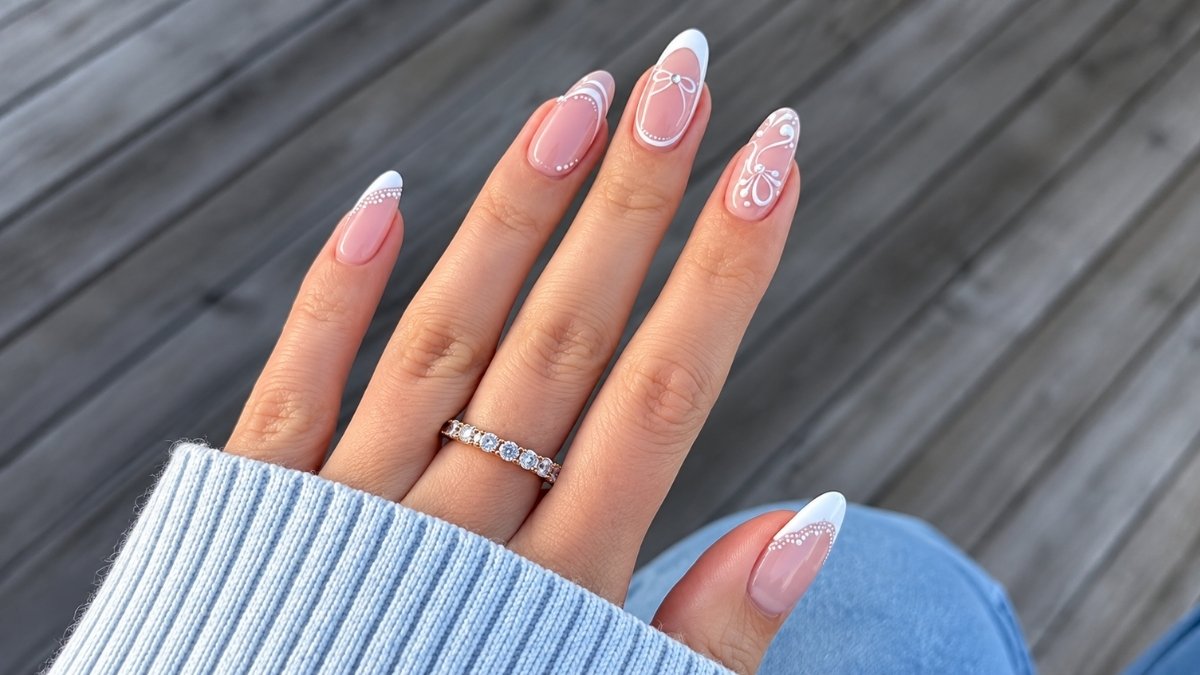
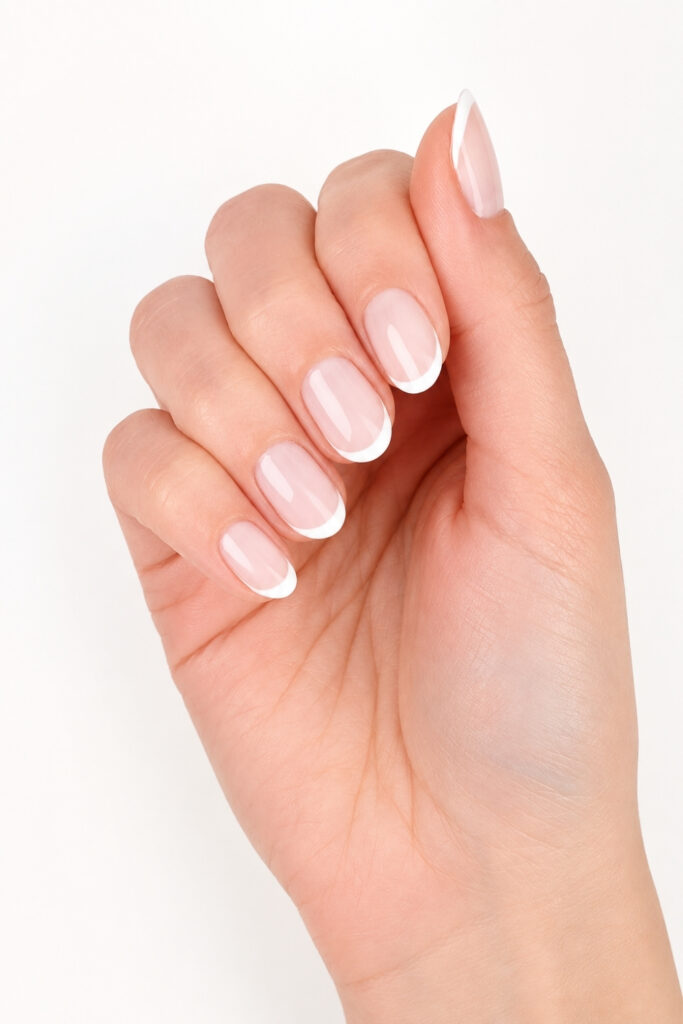
7. The Classic French Tip
Sheer or nude base with a solid white tip.
Still the most recognisable use of white polish there is, and the tip is a small enough area that streaking is far less of a risk than a full nail.
If you want the same look on your toes, our guide to French toe nail designs covers the variations that suit a pedicure.
 Save
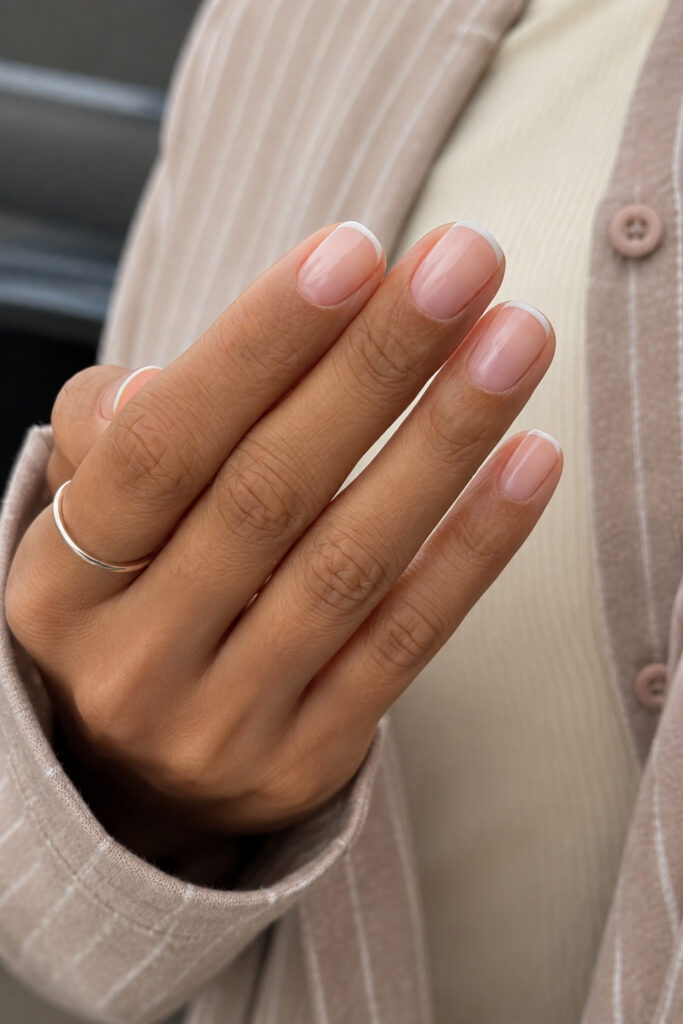
8. The Micro French
A very thin white tip line rather than a full block.
More modern than a classic French and considerably more forgiving, since a thin line hides imprecision that a wide tip would show.
Needs a striping brush or a steady hand, but only along one edge.
 Save
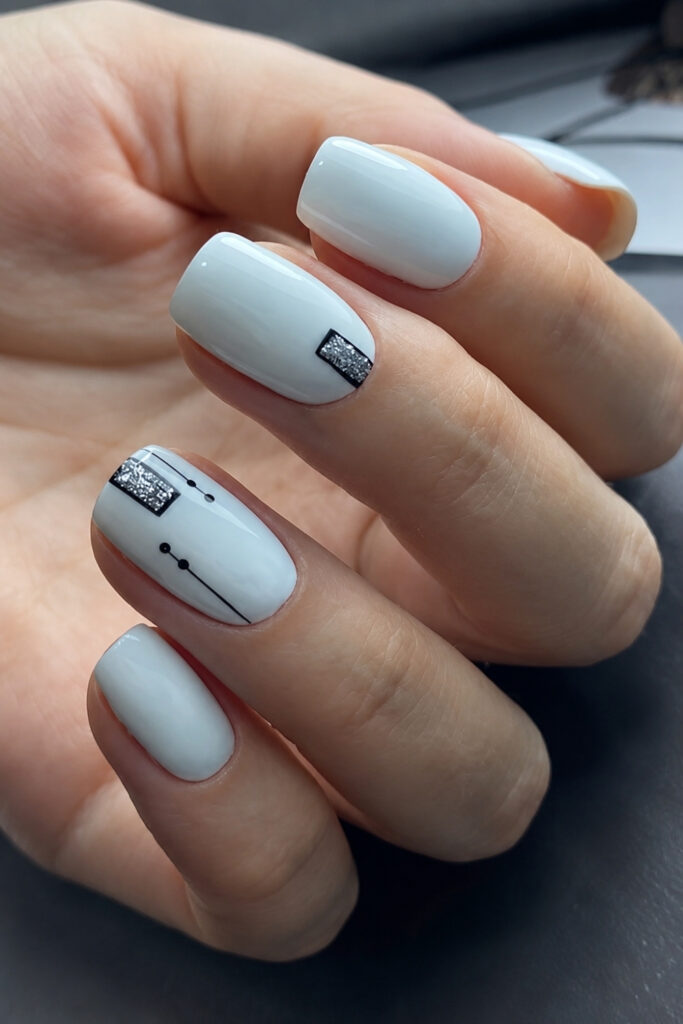
9. Stark White on Short Square
Full-coverage white on a deliberately short, square shape.
Worth its own entry because the combination is specific. The high contrast against the skin is the point, and the square shape gives the white a clean geometric block to sit in.
The most graphic manicure in this article and the one that reads as a decision rather than a default.
 Save
White Plus a Finish
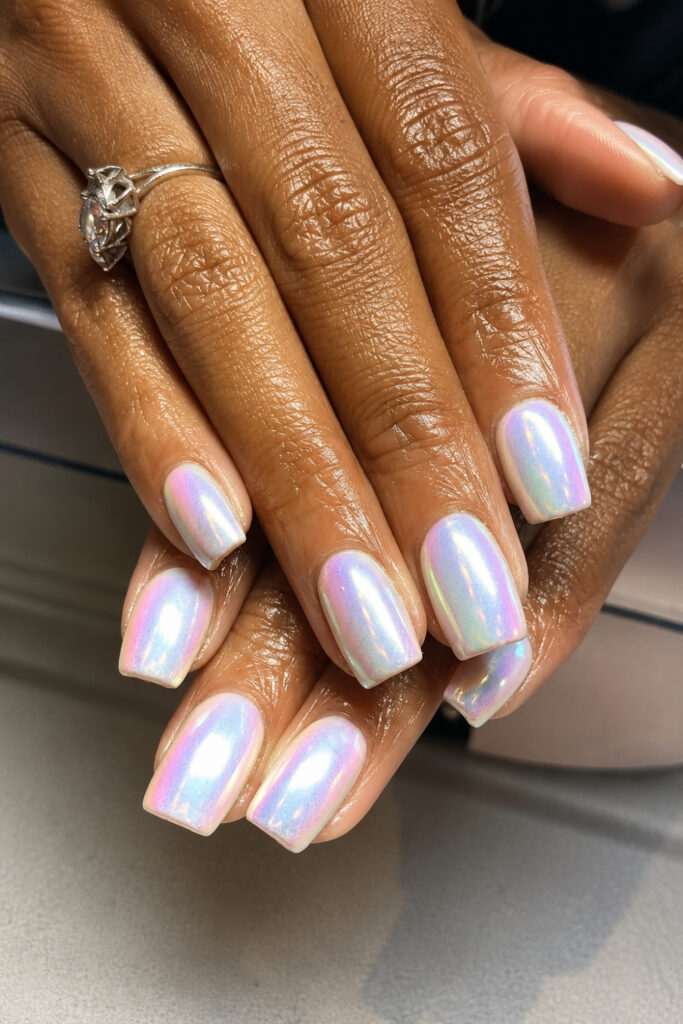
10. Chrome Over White
Chrome or pearl powder buffed over a white base for a mirrored, iridescent shift.
White is the ideal base for chrome because it reflects rather than absorbs, which means the chrome sits brighter than it would over any darker shade.
The finish does the work, so the white underneath does not need to be perfect. Useful if your application is not confident.
 Save
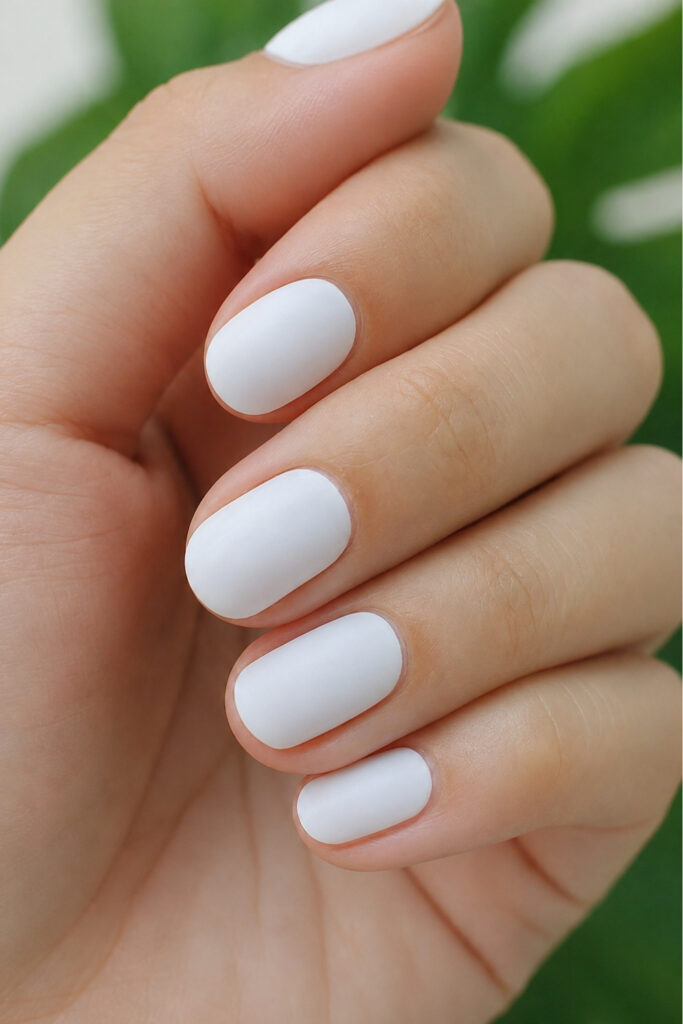
11. Matte White
Full-coverage white sealed with a matte top coat.
Honest warning: matte is the least forgiving finish for white. Gloss smooths over minor unevenness and matte highlights every bit of it.
Only attempt this if your base coat work is good. When it is right it looks like porcelain.
 Save
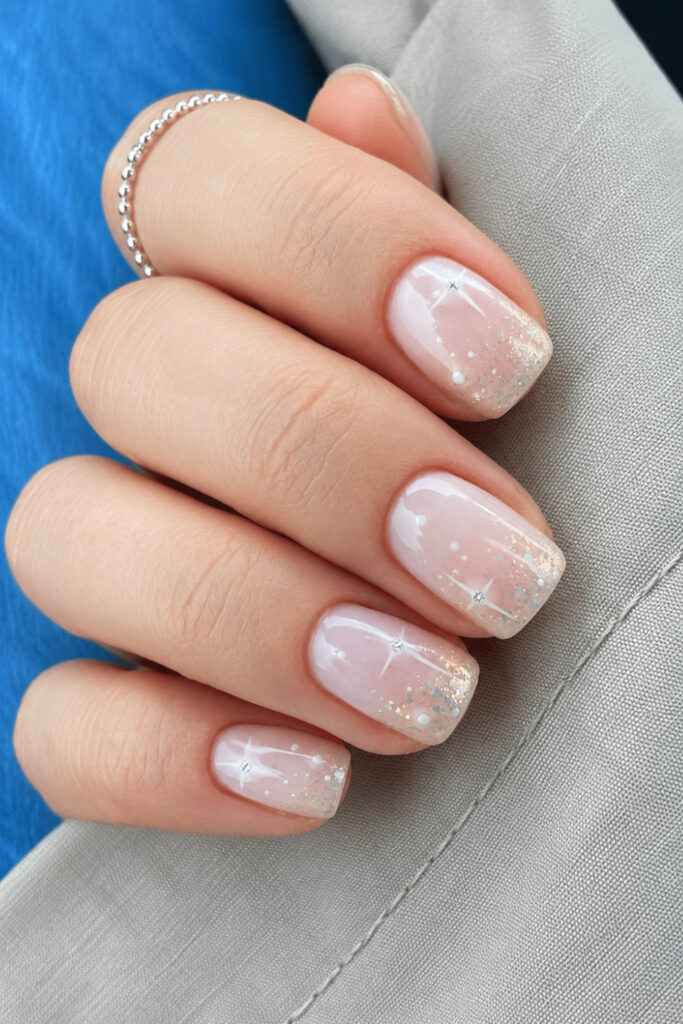
12. White With Glitter or Stars
Solid white with fine glitter, small stars or scattered specks.
The glitter breaks up the surface, which conceals streaking, which makes this considerably easier than plain white despite looking more elaborate.
Keep the glitter fine. Chunky glitter over white reads as busy rather than subtle.
 Save
White as a Canvas
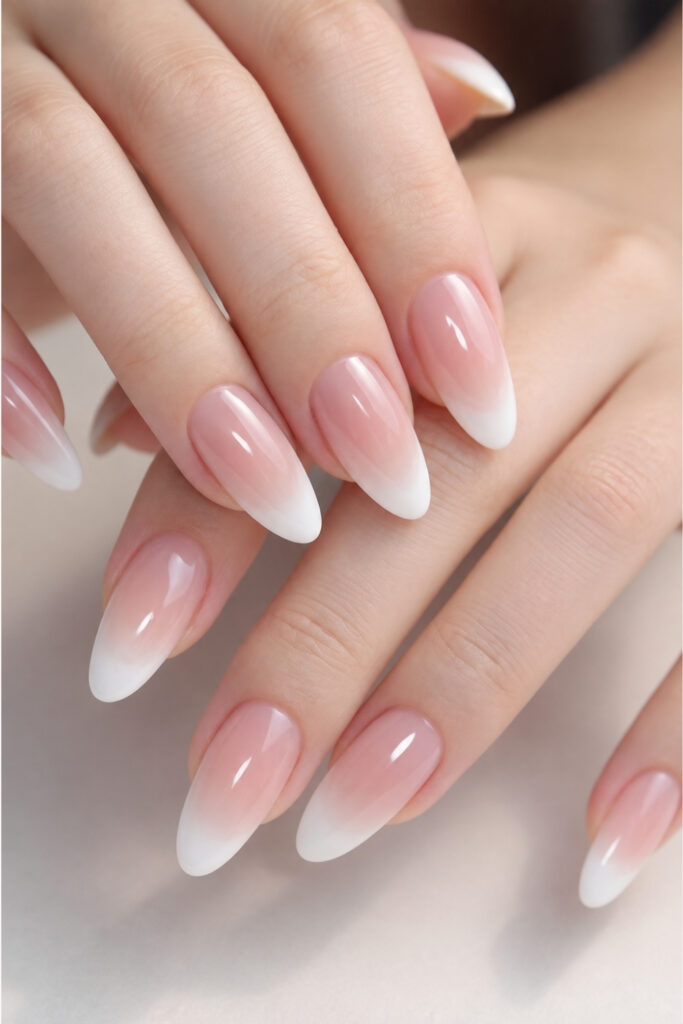
13. White Ombré or Aura
A white gradient fading into a pale base, or a soft airbrushed halo of white on each nail.
Easier to DIY than it looks. Dab a sponge coated in white polish over an equally pale base for a soft gradient. Airbrushing is the salon version.
The sponge method also forgives imprecision, since the whole point is a diffused edge.
 Save
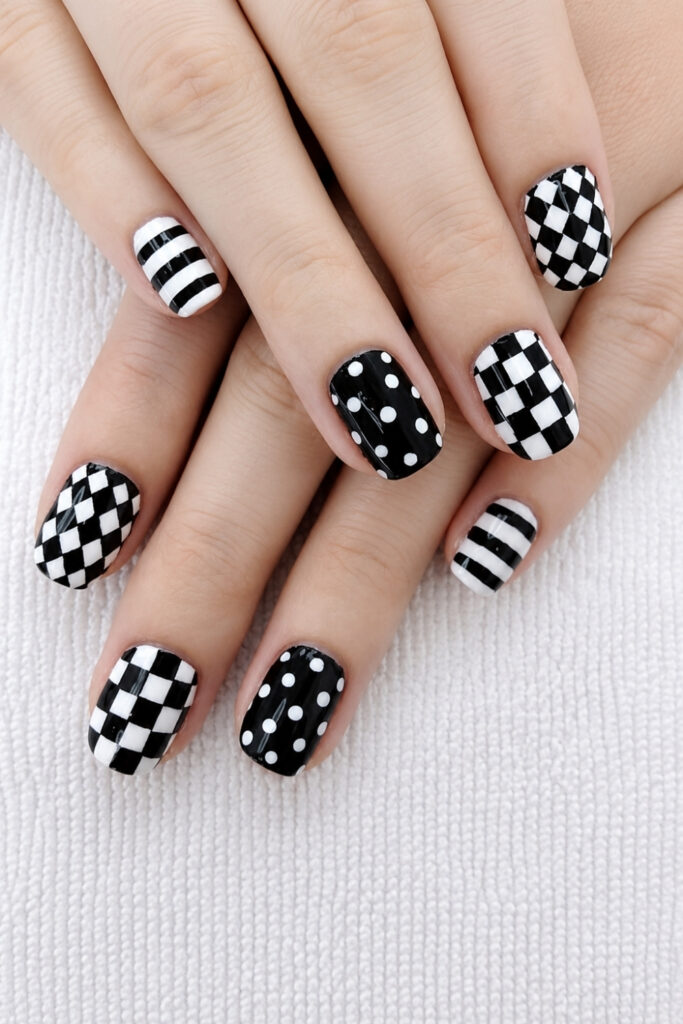
14. Black and White Graphic
White with black linework: checkerboard, stripes, dots, mismatched patterns.
Because white is so stark, it is a perfect ground for graphic lines and polka dots, and the black provides the contrast that makes the design read. This is where an opaque white earns its difficulty.
Also the most durable design here visually, since the pattern distracts from any chips.
 Save
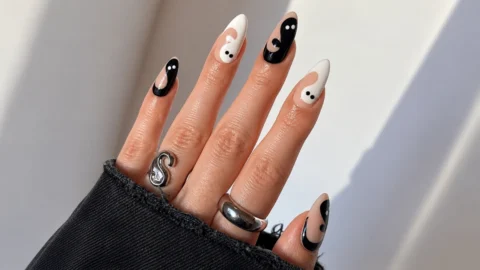
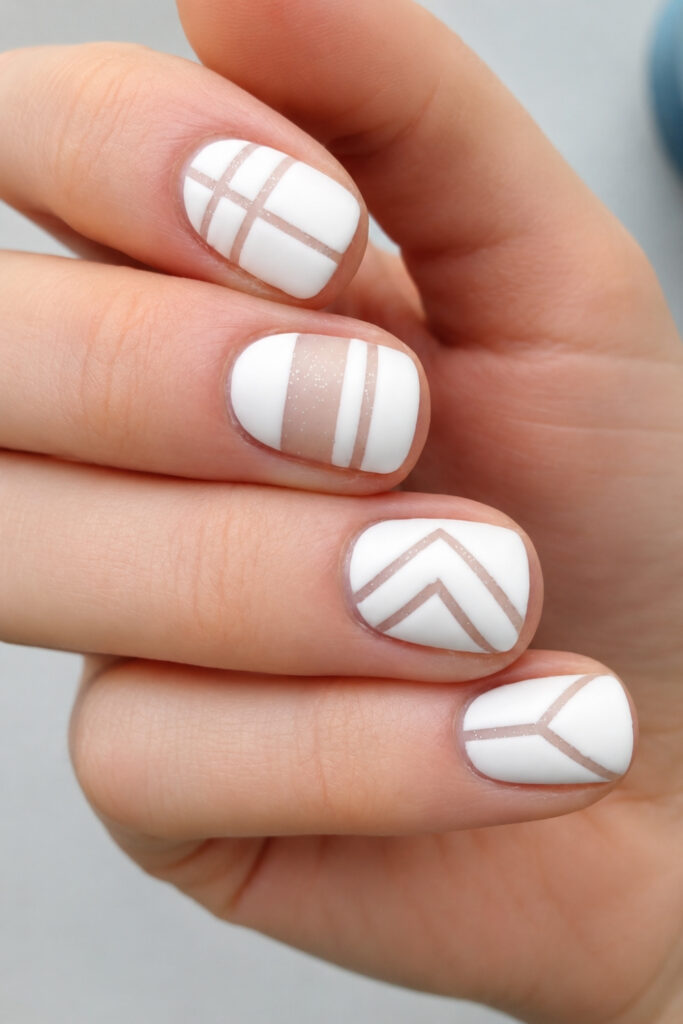
15. Negative Space White
White used alongside deliberate bare nail, with the natural nail forming part of the design.
Modern, minimal, and clever, since less painted surface means less opportunity for streaking. Yin-yangs, half-moons and geometric cutouts all work.
It also grows out gracefully, because the bare sections have nothing to grow out.
 Save
Choosing Your White for Your Skin Tone
This is where most white nail advice falls down, because it assumes a single white flatters everyone. It does not, and the undertone matters more than the shade name.
Fair skin generally suits a pale white with a pink undertone. Cool complexions carry a true milky white particularly well, and a cool white reads crisp and wintery.
Medium and olive skin suits a warmer white with a beige undertone. A cool blue-white can look harsh here, where a warm one reads cozy and elegant.
Deep skin suits a milky white with a peachy undertone, and building over a nude base rather than the bare nail is what produces the richest result.
And a genuine nuance worth stating. Crisp, true white is not off-limits on deeper skin. Applied properly on a short nail, the high contrast is exactly what makes it striking, and it photographs beautifully. What ruins it is uneven application, not the shade itself. The rule about softening opacity is about forgiveness, not about who is allowed to wear what.
One more note: the idea that white nails are only for brides has no practical basis. A milky or cream white at a wedding reads elegant rather than presumptuous, and a sheer or cream finish is less formal than a crisp pure white if you want to be certain.
Frequently Asked Questions
Why does my white nail polish always look streaky?
Because white reflects light while darker shades absorb it, so any tiny ridge or variation in thickness shows up instantly. The same imperfection in a black polish would be invisible. It is a preparation problem rather than a skill problem, and the single most effective fix is a ridge-filling base coat rather than a standard one.
How do I get white polish to cover evenly?
Thin coats and patience. Expect the first layer to look patchy, which is normal, and build up. Most milky whites need three to four ultra-thin layers. Load more polish onto the brush and use fewer strokes, floating it down the nail rather than pressing, and hold the brush at about 45 degrees rather than flat.
Which white suits my skin tone?
Generally, a pink undertone for fair skin, a beige undertone for medium and olive, and a peachy undertone for deep skin. On warmer and deeper complexions, floating a sheer white over a nude base produces a richer result than applying it to the bare nail. A crisp true white also looks striking on deeper skin when applied evenly.
Is milky white easier than stark white?
Considerably. The translucency conceals unevenness rather than exposing it, and it softens the transition between skin and nail. It is also the more flattering choice on short nails, since opaque colours visually cut the finger while a milky finish reads as a smooth extension.
Can I wear white nails to a wedding if I am a guest?
Yes. The idea that white is reserved for brides has no practical basis, and a milky or cream white reads as elegant rather than as a statement. If you want to be certain, a sheer or cream finish reads less formal than a crisp pure white.
Final Thoughts
If white has defeated you before, the problem was almost certainly the surface underneath rather than your hand. A ridge-filling base coat and three thin coats will fix more than a new bottle will.
And if you want the easiest route to white nails that look expensive, go sheerer than you think. Milky beats stark for most people, most of the time.