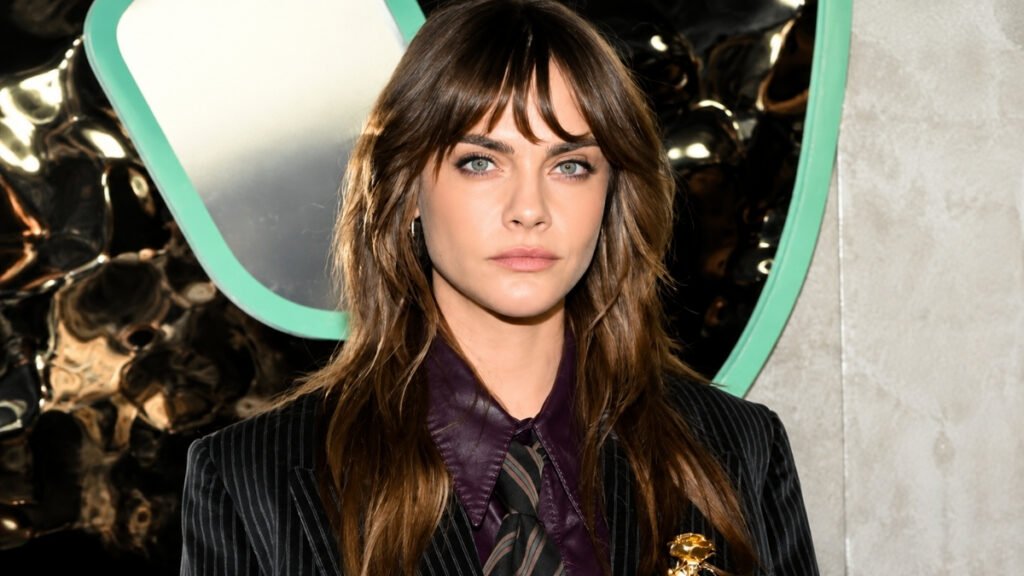
The wolf cut has a hidden assumption baked into it, and straight hair is where the assumption breaks.
The cut works by layering hair so that volume collects at the crown and the lengths fall in separated, moving pieces. On wavy and curly hair, the texture does that for free. The bend in each strand creates the separation, and the layers simply direct volume that already exists.
Straight hair provides none of it. Every strand lies flat against the one beside it, so the layers that were supposed to create movement instead create a shape that hangs. That is why so many people leave the salon with a technically correct wolf cut that looks nothing like the photograph.
There is a real upside on the other side of that, though. Straight hair produces the sharpest, most graphic version of this cut, where the layers read as deliberate architecture rather than as shag. You just have to supply the movement yourself.
Two Things to Get Right Before You Book
Do not over-layer. This is the single most consequential warning for straight hair and it matters most if your hair is fine. Over-layering makes the ends look thin and sparse, and on straight hair there is no texture to disguise it. The recommended approach for fine straight hair is a softer version of the cut: still movement and shape, but with more density preserved through the lengths.
Ask for volume at the crown specifically. A wolf cut on straight hair needs added crown volume to prevent a flat silhouette, and that has to be built into the cut rather than added afterwards with product. If the layers at the crown are not short enough to lift, no amount of mousse will fix it.
One more thing worth knowing before the gallery. This cut genuinely looks better on the second or third day, when natural oils add weight and definition. If you wash daily, that is working against you.
Softer Versions for Fine Straight Hair
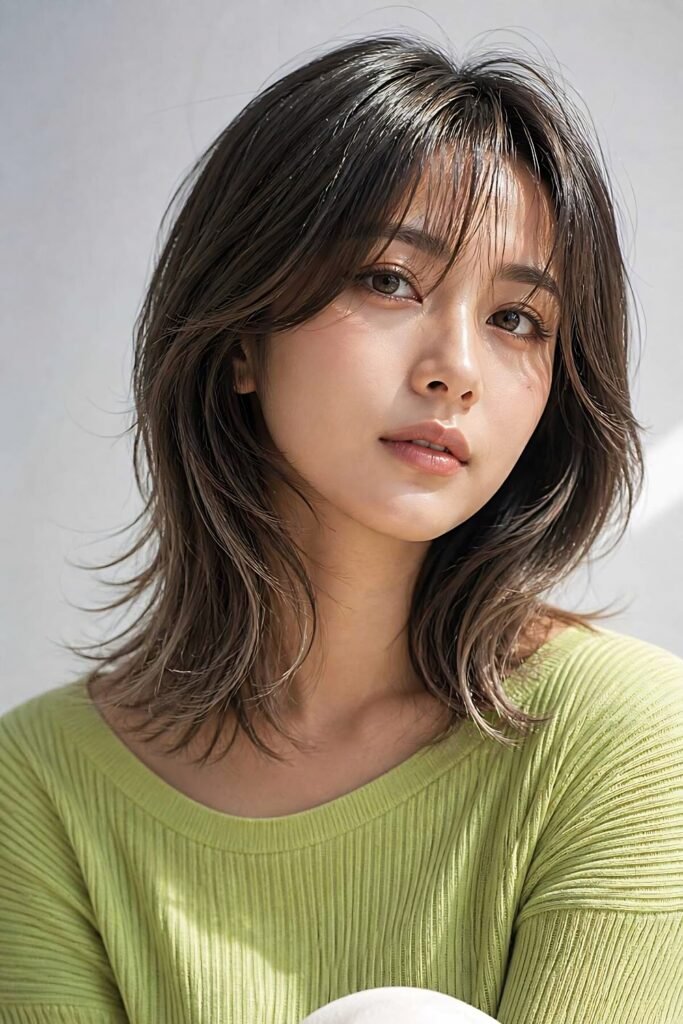
1. Soft Wolf Cut
The standard shape with fewer, gentler layers and more density preserved through the lengths.
This is the version to ask for if your hair is fine, and it is not a compromise. You still get the crown volume and the face-framing movement; you simply keep the weight at the ends that stops the cut looking sparse.
Say the words softer version and preserve density at the consultation. A stylist working from a reference photo alone will default to the standard layering.
 Save
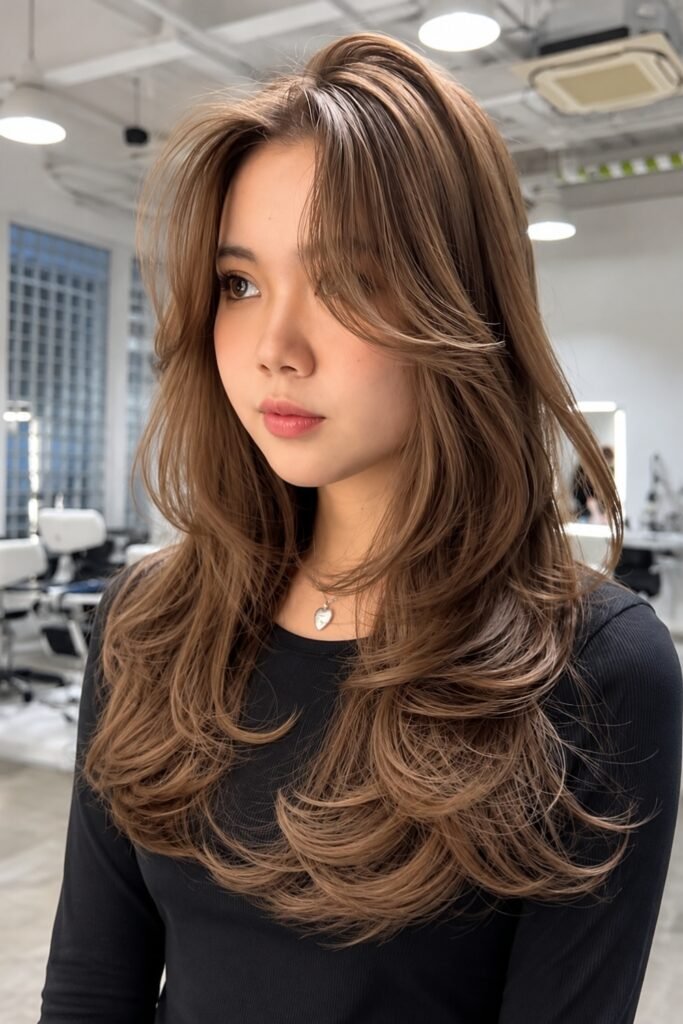
Save2. Wolf Cut With Long Layers
Layers kept longer and more gradual, with the shortest pieces still reaching past the ears.
Long layers on straight hair fall as a continuous shape rather than as separated tiers, which reads as movement without exposing the sparseness that short layers can create on fine hair.
The lowest-risk wolf cut on this list and the easiest to grow out if you change your mind.
 Save
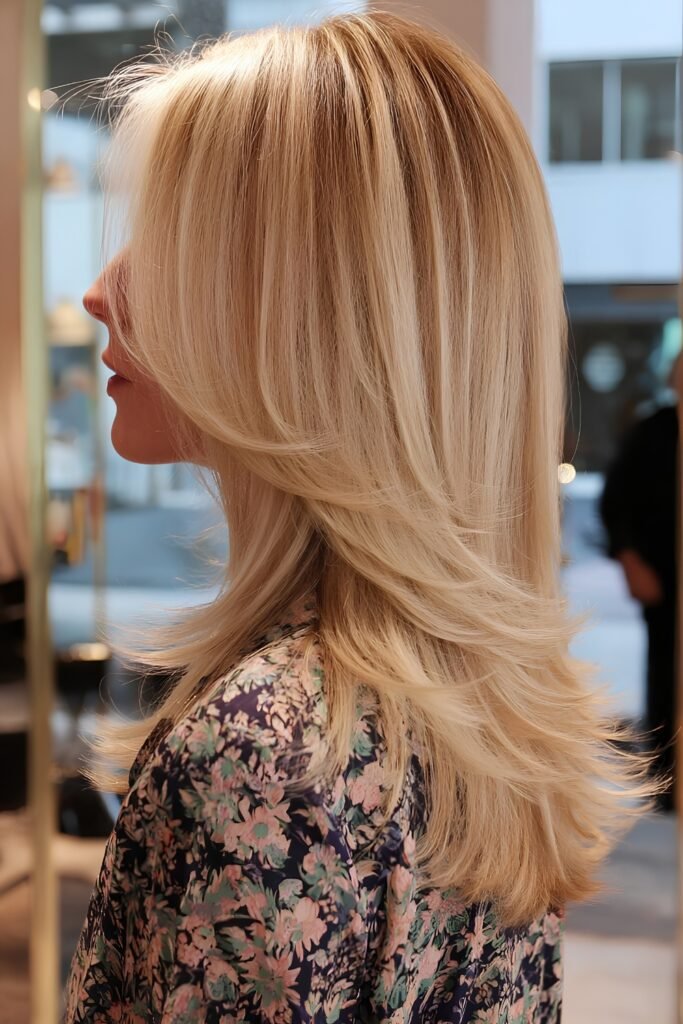
Save3. Crown-Only Layering
Layering concentrated at the crown with the lengths left largely intact.
The minimum viable wolf cut. It delivers the one thing straight hair genuinely needs, which is lift at the top, without cutting into the density lower down.
Worth considering as a first step. You can always add more layers at the next appointment; you cannot put them back.
 Save
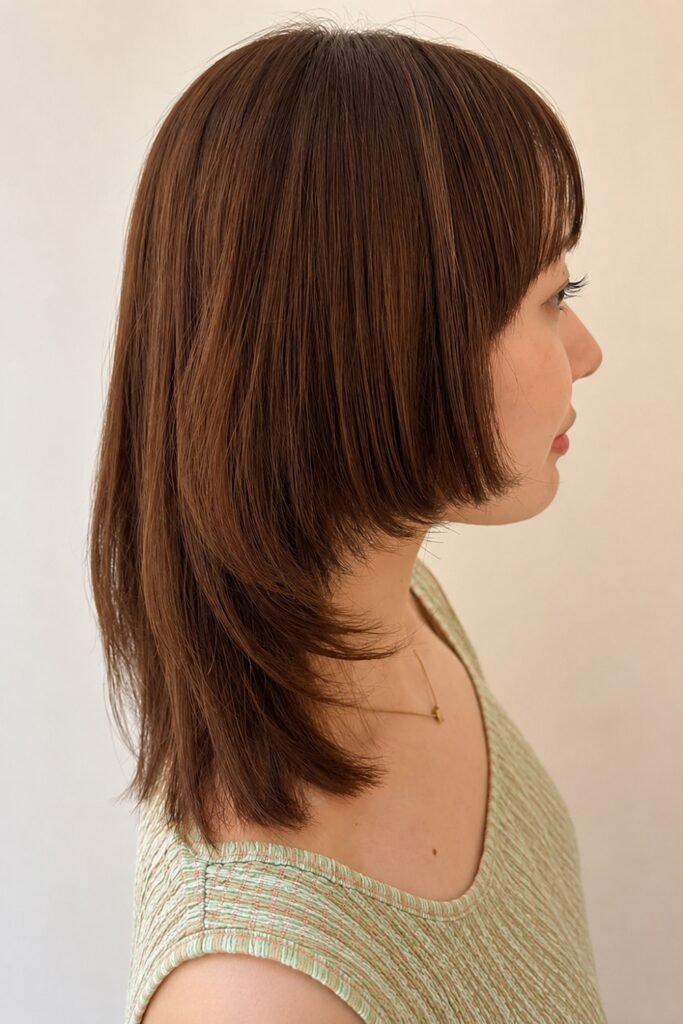
Save4. Wolf Cut With Blunt Ends
Layered through the interior with the perimeter kept blunt and solid.
The technique that solves the fine-straight-hair problem most directly. All the movement is built inside the cut and the outline stays intact, so the ends read as full rather than wispy.
The visual density of a blunt hemline is doing real work here, which is the same principle behind a blunt bob.
 Save
SaveStandard Wolf Cuts
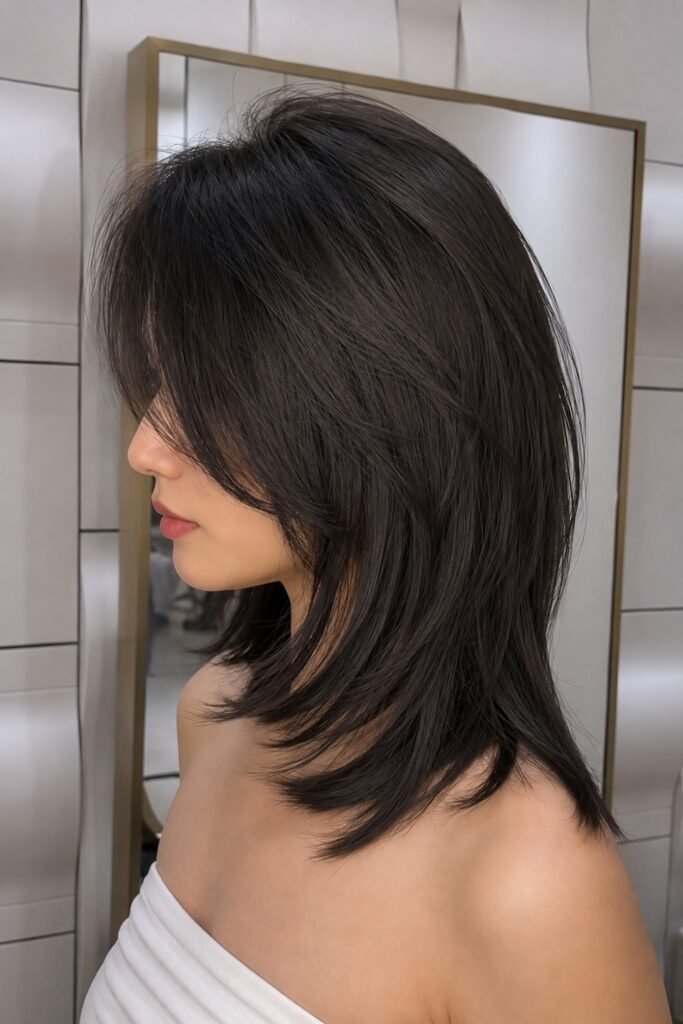
5. Classic Shoulder-Length Wolf Cut
The archetypal version, with volume at the crown and layers falling to around the shoulders.
Medium length is the most common wolf cut length for good reason: it is long enough for the layers to move and short enough to build volume. On straight hair the shoulder length also means the ends have somewhere to flick rather than hanging straight down.
The default starting point for anyone with medium or thick straight hair.
 Save
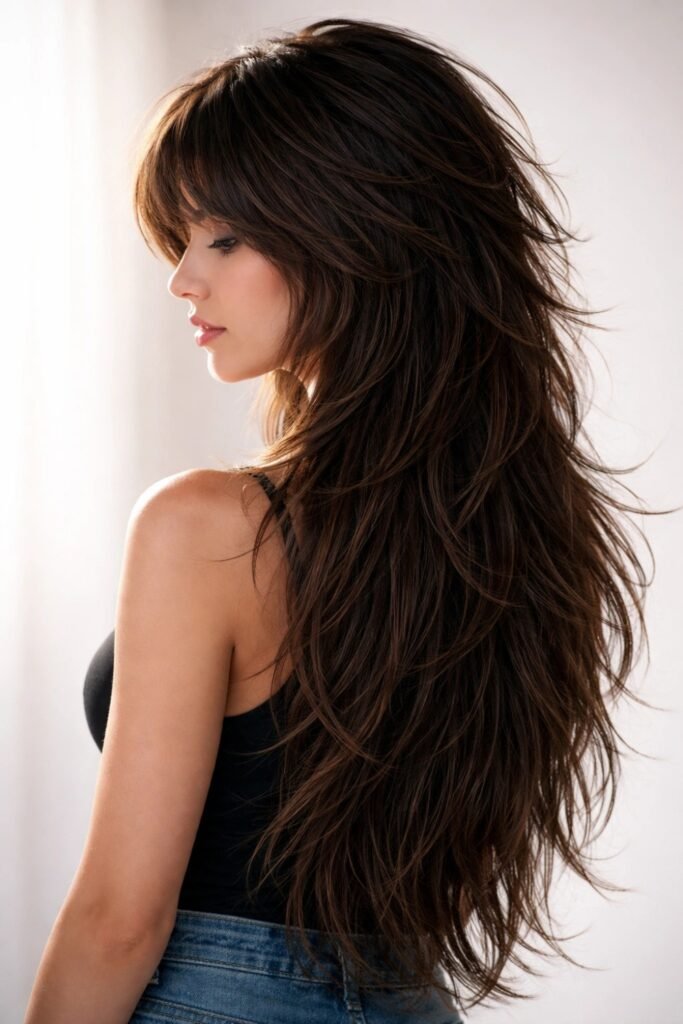
Save6. Long Wolf Cut
Heavy layering through length kept past the shoulders.
Long hair gains structure and lightness from this cut without sacrificing length, which is its main appeal. On straight hair, the extra length also gives the layers more distance to separate over.
The weight of longer straight hair works against crown volume, so this version depends more on styling than any other here.
 Save
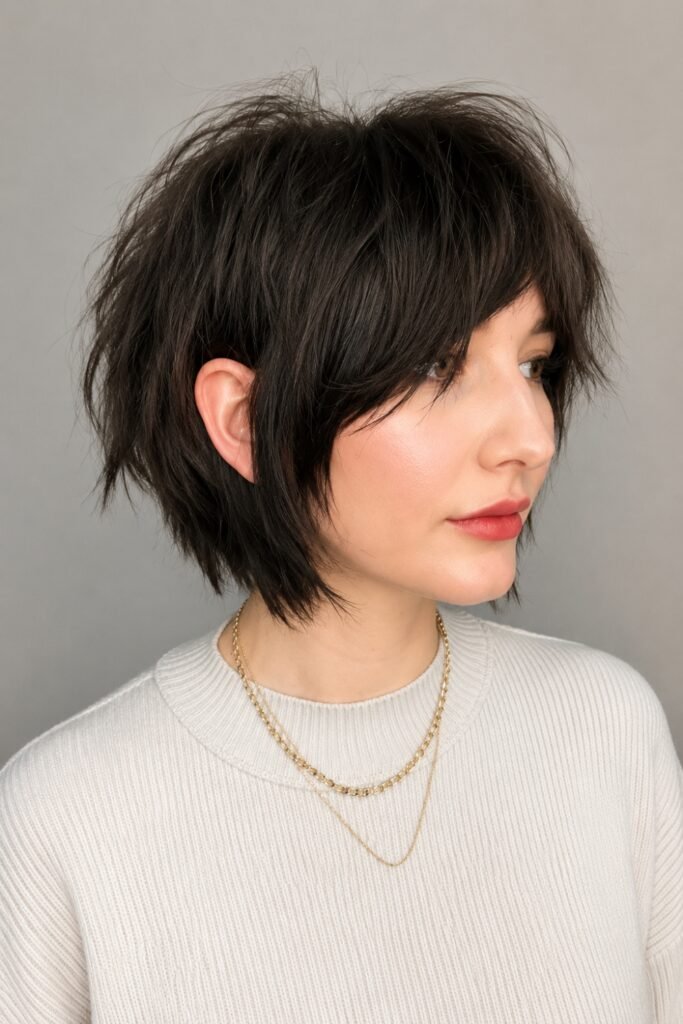
Save7. Short Wolf Cut
The shape taken to a shorter overall length, sitting around the jaw or just below.
Shorter straight hair holds volume more easily, since there is less weight pulling it down. This is the version where straight hair is arguably at an advantage rather than a disadvantage.
It sits close to bob territory. If you want the shape without the shag, our guide to short graduated bob haircuts covers graduation, which builds back volume through cutting rather than through layering.
 Save
Save8. Choppy Wolf Cut
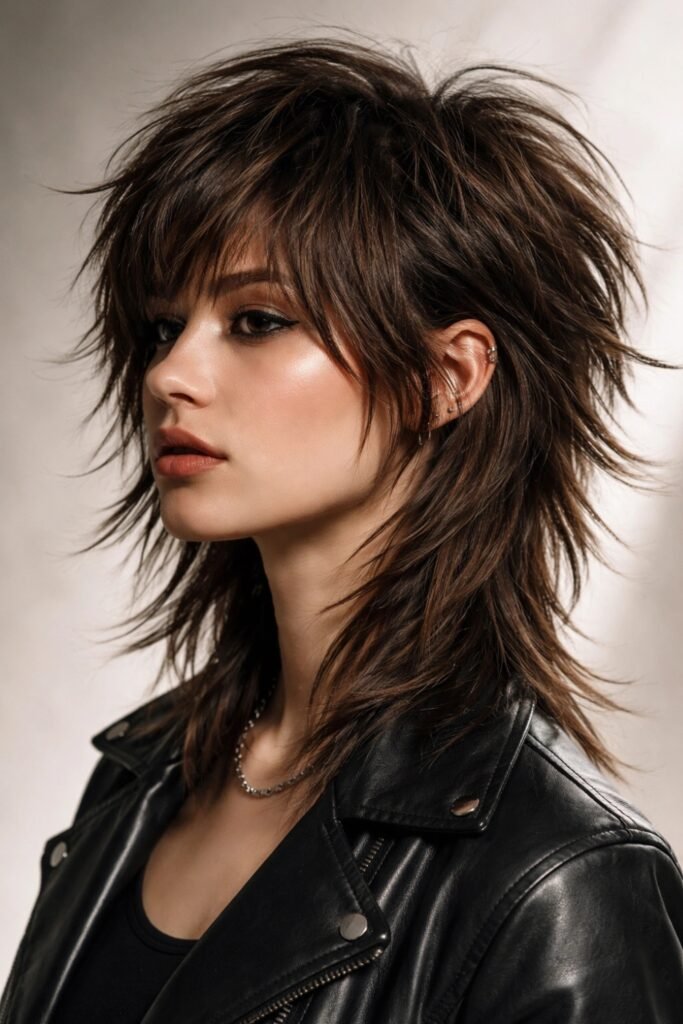
Aggressively textured layers with visible separation between pieces.
The most graphic version and the one that makes the most of straight hair’s precision. Every choppy end is visible, which is a problem on a bad cut and an asset on a good one.
Better on thick straight hair. On fine hair, choppy cutting removes weight you cannot spare.
 Save
SaveFringe Variations
9. Wolf Cut With Curtain Bangs
The standard pairing, with a centre-parted fringe blending into the face-framing layers.
Curtain bangs and wolf cut layers are natural partners, because the fringe simply becomes the shortest face-framing layer rather than sitting as a separate element. Nothing has to be blended into anything.
On straight hair, the curtain fringe also breaks up the flatness at the front, which is where a straight-hair wolf cut most often falls short.
 Save
Save10. Wolf Cut With Wispy Bangs
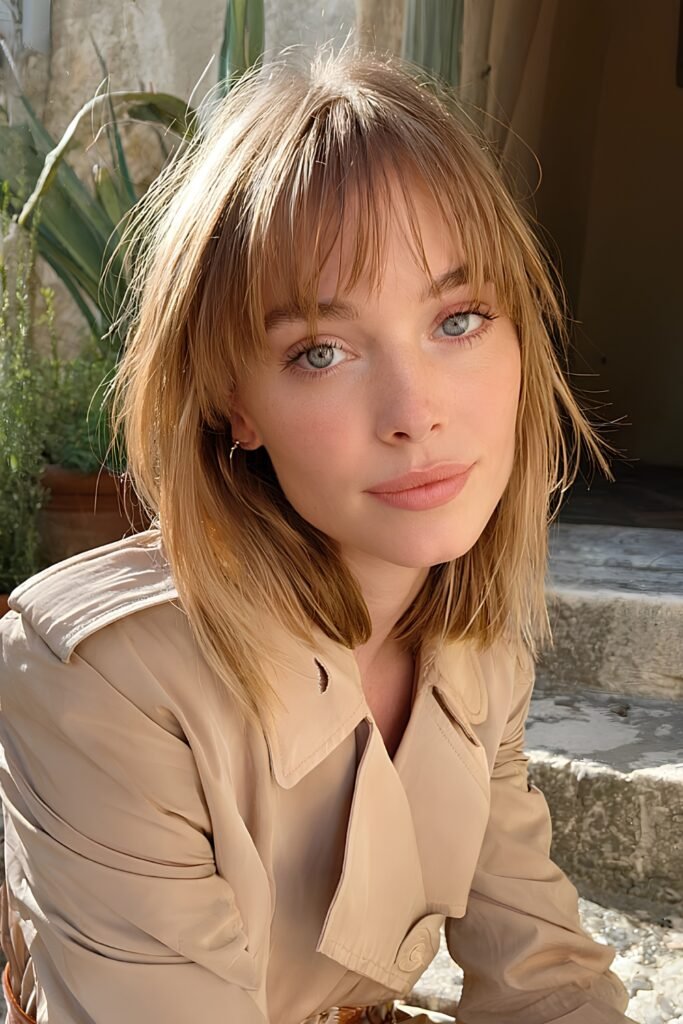
A light, feathered fringe rather than a full curtain.
Wispy bangs suit fine straight hair better than a heavier fringe, because a dense fringe on fine hair takes density from the rest of the cut where you need it.
Also the most forgiving fringe to grow out, since it lengthens into a face-framing piece rather than reaching an awkward stage.
 Save
Save11. Wolf Cut With Blunt Bangs
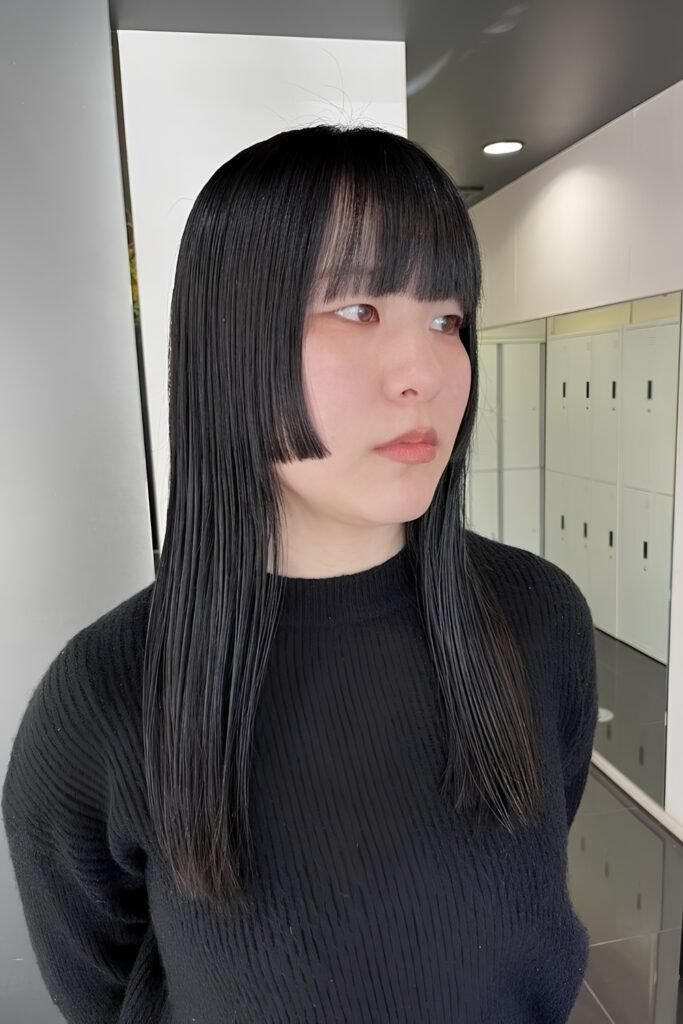
A straight-across fringe against the layered shape.
The strongest contrast on this list, and one that only really works on straight hair, since a blunt line requires hair that will hold it. That makes it a genuine straight-hair advantage rather than a workaround.
High maintenance. A blunt fringe changes character within about four weeks.
 Save
Save12. Wolf Cut With Side-Swept Fringe
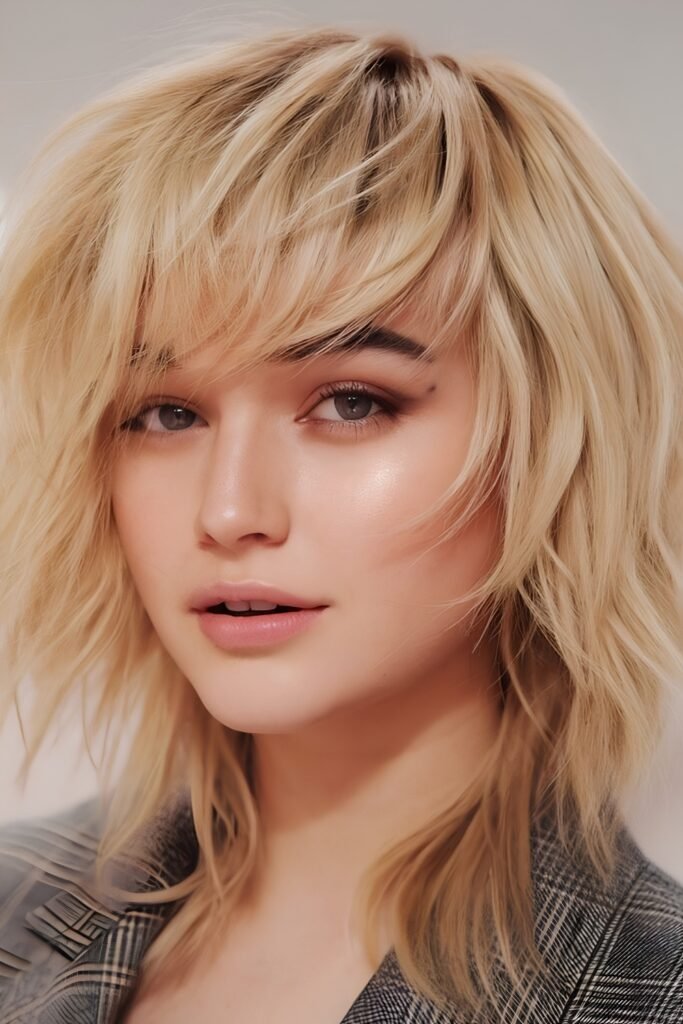
A diagonal fringe swept across the forehead from a deep side part.
The deep part is doing extra work here beyond the fringe, since shifting the parting away from the centre creates root lift on straight hair that a centre part cannot.
Vary which side you part on. Changing the parting creates different volume patterns at the root, which is one of the few free ways to add lift.
 Save
SaveStyled Finishes
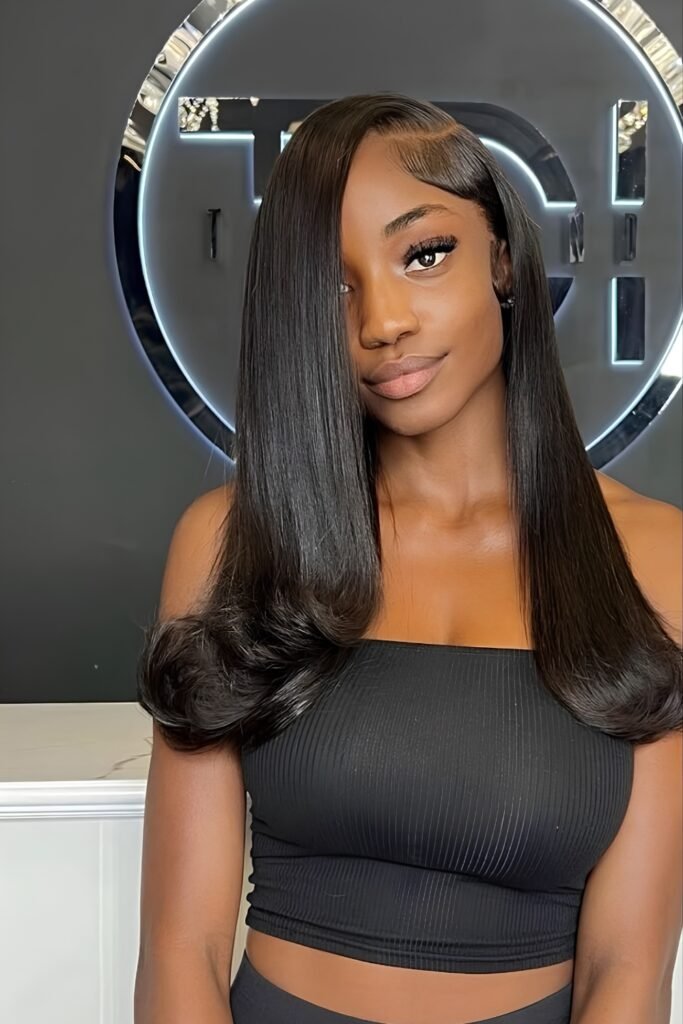
13. Straightened Sleek Wolf Cut
The layers worn smooth and polished rather than textured.
Worth including because it is what many people with straight hair actually want. It reads as architectural rather than shaggy, and it shows the cut’s structure completely.
One honest caveat, and it comes from a professional stylist. Alex Morgan, a hairstylist with over eight years of experience, advises never styling a wolf cut fully straight if the layers are uneven, because texture hides flaws and smoothness exposes them. This finish requires a cut you trust.
 Save
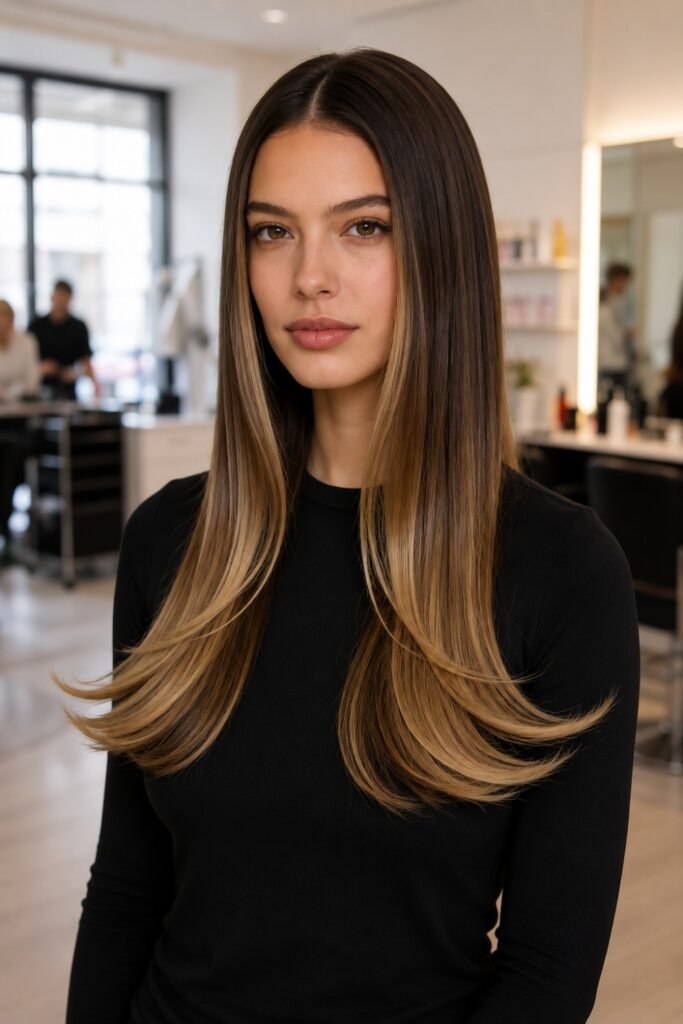
Save14. Wolf Cut With Flicked-Out Ends
The lengths straightened with the ends deliberately turned outward.
The simplest way to introduce movement into straight hair without waving it. Flicking the ends out gives the layers somewhere to go and stops the shape hanging.
A flat iron rotated outward at the last inch, or a round brush at the ends of a blow-dry. Twenty seconds per section.
 Save
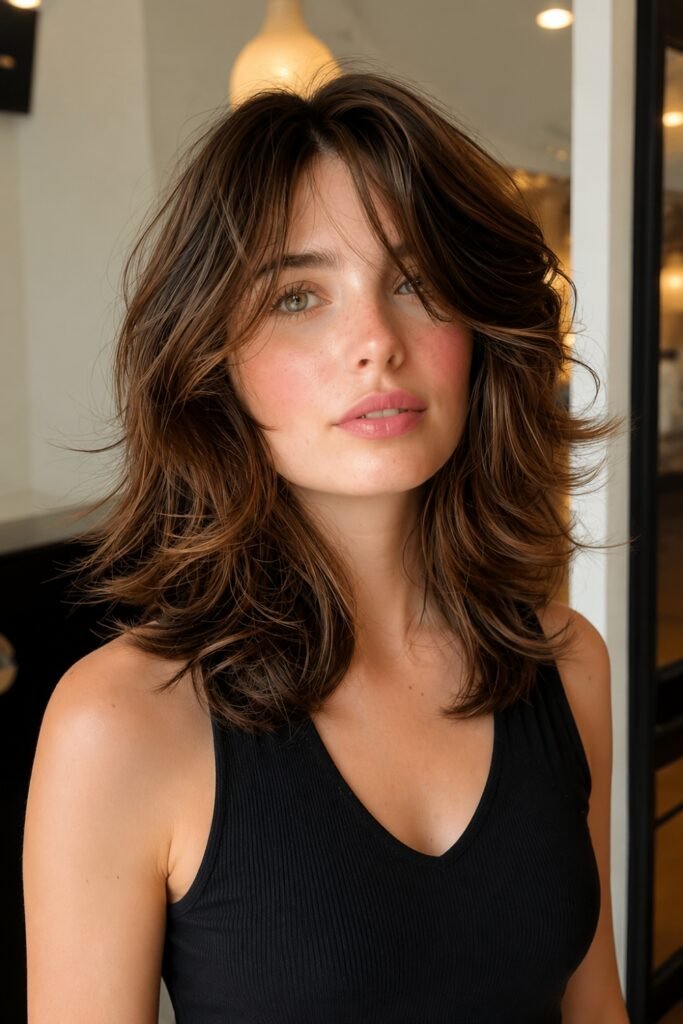
Save15. Wolf Cut With Soft Waves
Loose waves added through the mid-lengths to supply the texture the cut assumes.
The most direct fix for the central problem. Waves give straight hair the separation that wavy hair has naturally, and the layers immediately start behaving the way the reference photo suggested.
Do not wave the roots. Crown volume comes from lift at the root, and curling that section flattens it against the head.
 Save
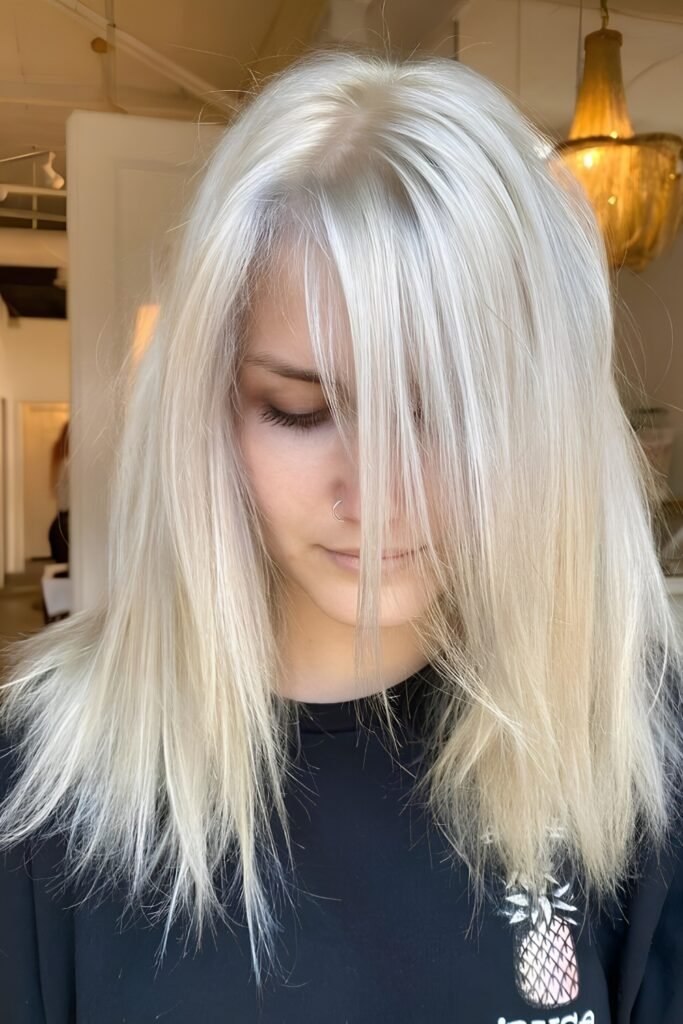
Save16. Air-Dried Textured Wolf Cut
Sea salt spray or texture spray on damp hair, scrunched, left to dry.
The lowest-effort approach and the one closest to the cut’s intended character. On straight hair it will not produce waves, but it will produce separation between the layers, which is most of what is needed.
Do not over-style. Too much smoothing or perfection contradicts the character of the cut, and the wolf cut is meant to look slightly undone.
 Save
SaveActually Styling It on Straight Hair
Two steps do most of the work, and both happen while the hair is damp.
Mousse at the roots, then diffuse. For straight textures the recommended method is mousse applied to damp hair and dried with a diffuser. The mousse gives the roots something to hold onto and the diffuser lifts rather than flattens.
Tilt your head while drying. Drying the crown with your head tilted forward or to the side changes how the layers fall and builds volume at the root that upright drying does not.
After that, texture spray through the lengths for separation, and dry shampoo at the roots between washes. Straight hair needs both more than any other texture, because it has no natural grit to work with.
And remember the second-day rule. The cut often looks better on day two or three when the hair has some natural weight in it, so a wash-day wolf cut on straight hair is the cut at its most difficult.
If It Is Not Working
If the layers look uneven, style with texture rather than straightening. Smooth hair exposes an uneven cut; waves and separation hide it.
If the crown falls flat by midday, the layers there are probably too long to lift. That is a cut problem rather than a product problem, and a stylist can shorten the crown section without touching the rest.
If the ends look thin and sparse, the cut has been over-layered. Growing it out is the only real fix, which takes three to six months, but blunting the perimeter at the next appointment will improve the appearance considerably in the meantime.
If you decide the wolf cut is not for you, a shorter and more defined shape may suit straight hair better. Our guide to chin-length bob haircuts covers the most versatile short length and its variations.
Common Questions
Does a wolf cut work on straight hair?
Yes, but it takes more styling effort than on wavy or curly hair. The cut relies on layered volume, and straight hair does not supply texture on its own, so you have to add it with mousse, a diffuser, and texture spray. The compensating advantage is that straight hair produces the sharpest, most defined version of the cut.
Can I get a wolf cut with fine straight hair?
Yes, with a specific adjustment. Ask for a softer version with fewer layers and more density preserved through the lengths, and consider keeping the perimeter blunt. The biggest mistake with fine hair is over-layering, which makes the ends look thin and sparse, and straight hair has no texture to disguise it.
Why does my wolf cut fall flat?
Usually because the crown layers are too long to lift, or because you are styling on freshly washed hair. Crown volume has to be built into the cut. If it is there and still falling, mousse at the roots and diffusing with your head tilted will help, and the cut generally holds better on the second or third day when natural oils add weight.
What is the difference between a wolf cut and a mullet?
A wolf cut is a heavier layered shape combining shag and mullet influences, usually with more overall length and volume through the top. A mullet keeps a short, defined back length as its central feature. The distinction matters at the consultation, since asking for one and showing a photo of the other is how people end up with a cut they did not want.
How do I fix an uneven wolf cut?
Style it with texture rather than straightening it, since smooth hair exposes uneven layers and waves hide them. Curling the ends outward, adding loose waves, or wearing it half-up all disguise blunt or mismatched transitions. For a permanent fix, a stylist can rebalance the layers without starting the cut over.
Final Thoughts
The wolf cut was designed around hair that moves on its own. Straight hair does not, which means the cut is asking you to do a job that other textures get for free.
That is worth knowing before you book rather than after. If you are willing to spend five minutes with mousse and a diffuser, straight hair gives you the most precise version of this cut there is. If you are not, ask for the softer version with blunt ends, which needs the least help of anything here.