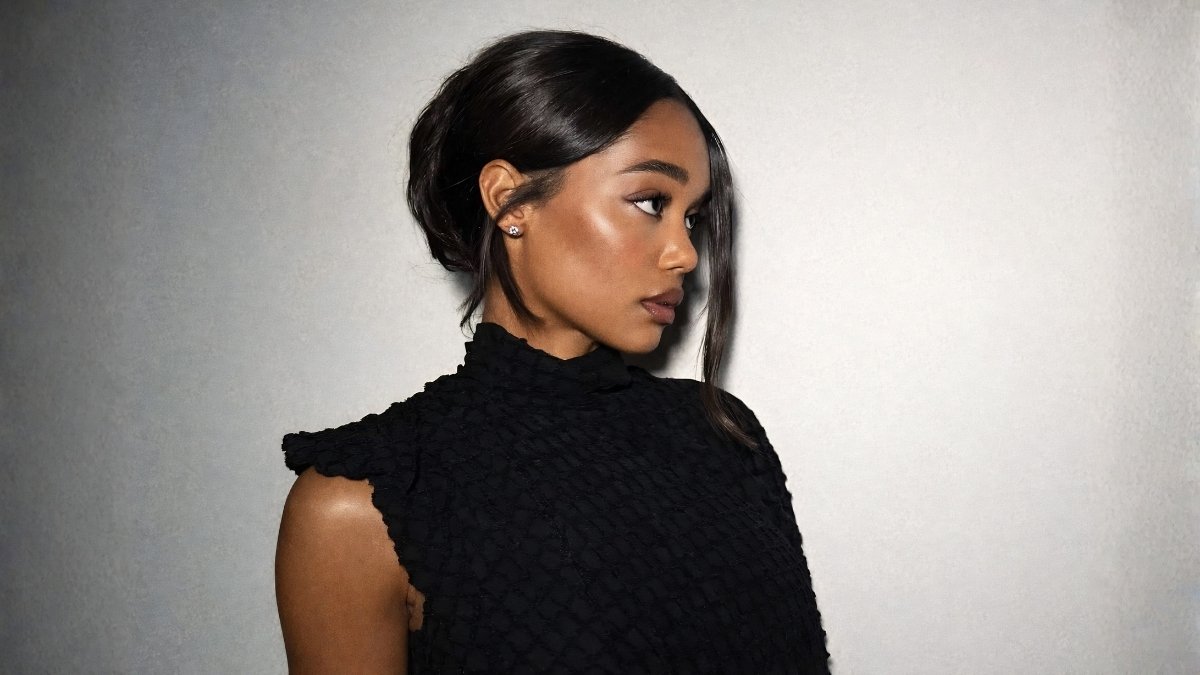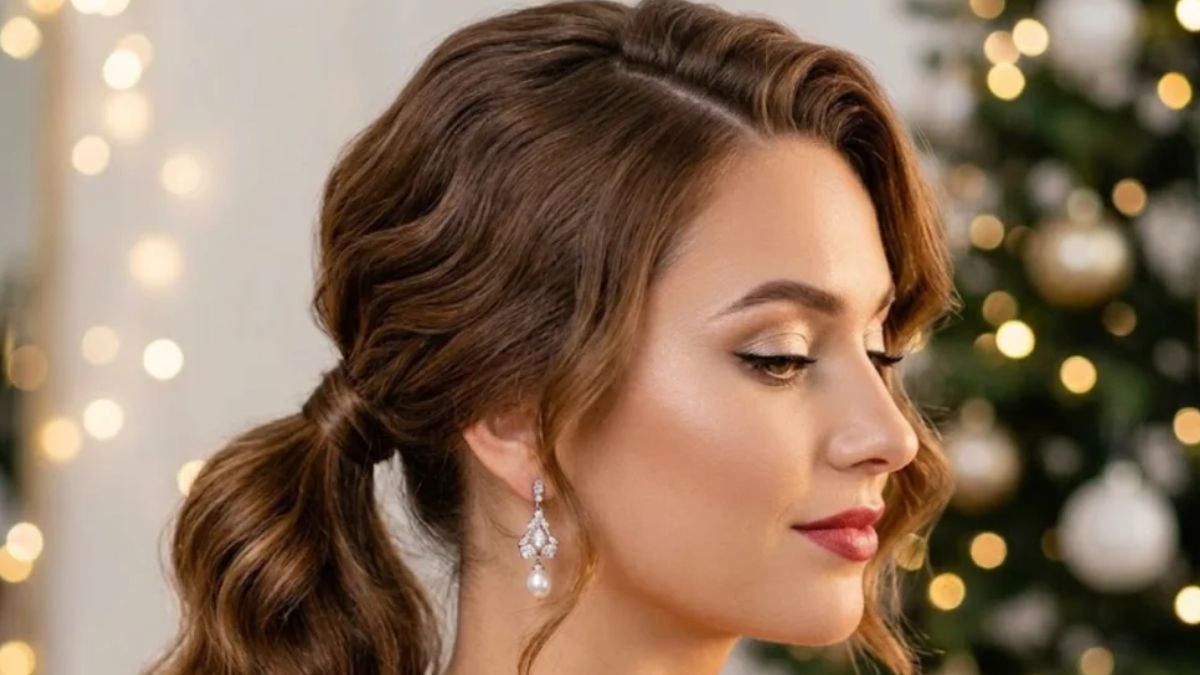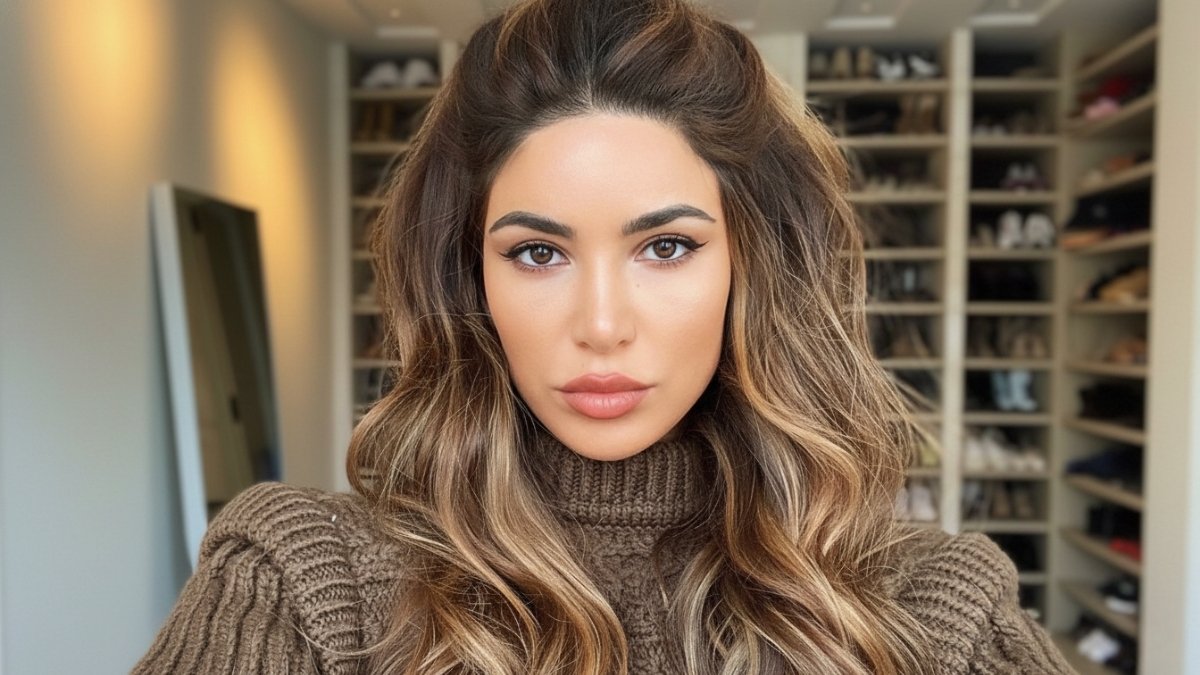
Egypt’s most significant hair trend is not ancient. It started around 2018, and the detail that captures it best is this: in a country where the majority of women have curly hair, the first salon specialising in curly hair opened that year.
Before that, the options were straightening or keratin. Egyptian women describe growing up having their curls pulled into tight ponytails, then moving on to metal tongs and weekly oil treatments, always, as one put it, running from untamed curls and trying not to look messy.
What changed is worth knowing, because every style below exists because of it.
What Actually Happened
In 2018 The Curly Studio opened in an affluent suburb of Cairo, run by Rola Amer and Sara Safwat, both of whom had spent years straightening their own hair. Amer describes the before: if she ever left her hair curly, she would feel shaggy, like she was not taking care of herself.
The shift did not come from nowhere. Reporting by AFP traces a direct line from the Black American natural hair movement, noting that many of the biggest brands built by Black women eventually found their way onto the shelves of Cairo’s curly salons. That lineage is worth stating plainly rather than leaving implied.
There were local turning points too. In 2012 the actress Dina el-Sherbiny wore her chestnut curls on screen in the series Hekayat Banat, one of the first to do so. Doaa Gawish founded The Hair Addict, a Facebook community where Egyptian women shared advice on their own hair and on the local products that worked. Hadear Kandil, who founded the Arab curls community m’laulau, has linked the shift to the 2011 revolution.
And there is one small moment that says the most. Eman El-Deeb left Egypt for Spain in 2016, tired of comments about her hair. Visiting in April 2017, a taxi driver told her that her hair was very nice. She assumed he was being sarcastic, then realised he meant it. It was, she told the BBC, the first positive comment about her hair she had ever heard in Egypt.
Before the Styles, Two Honest Notes
This is not universal. Reporting from January 2025 notes that while curly hair has become a trend in affluent Cairene neighbourhoods and among some people in Alexandria and the Delta, most Egyptian women still live under the grip of expensive keratin treatment. The movement is real and it is also uneven.
Straightening is a choice too. Nothing in this article suggests otherwise. The point of the movement, as the women in it describe it, is having the option rather than being told which one is acceptable. A woman who prefers her hair straight is not failing anything.
Wash-and-Go Styles
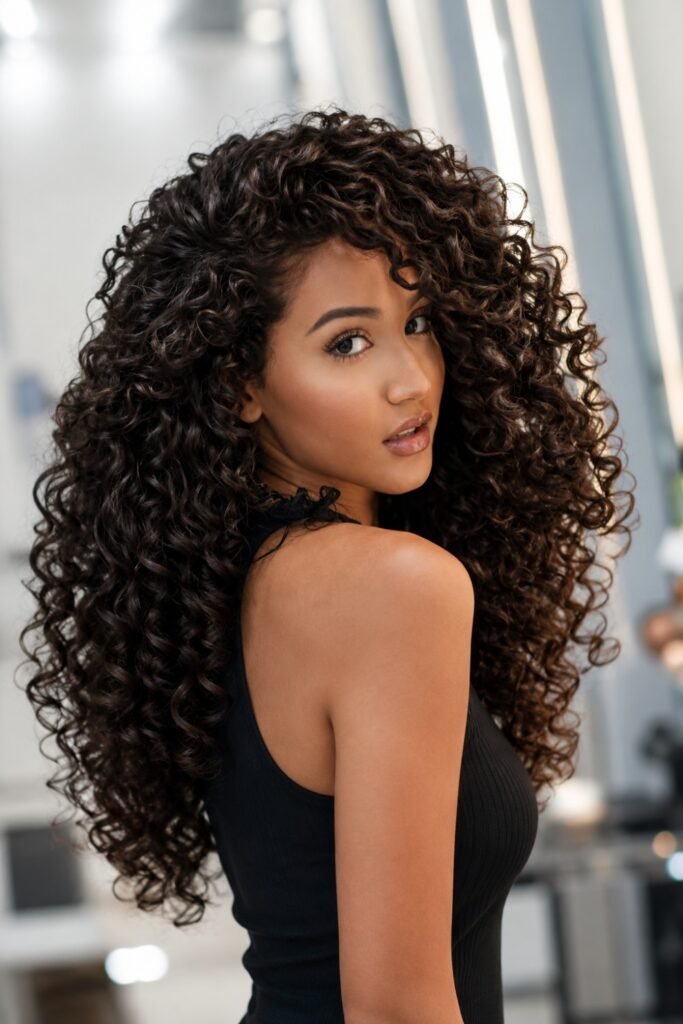
1. The Wash and Go
Curls washed, conditioned, product applied to soaking wet hair, and then left alone to dry.
The simplest expression of the whole shift and the one that most directly replaces a straightening routine. There is no heat, no tools, and no hours in front of a mirror.
The technique that matters is applying product while the hair is genuinely wet rather than damp, and then not touching it while it dries. Touching wet curls as they dry is the single most common cause of frizz.
 Save
Save2. Diffused Curls With Volume
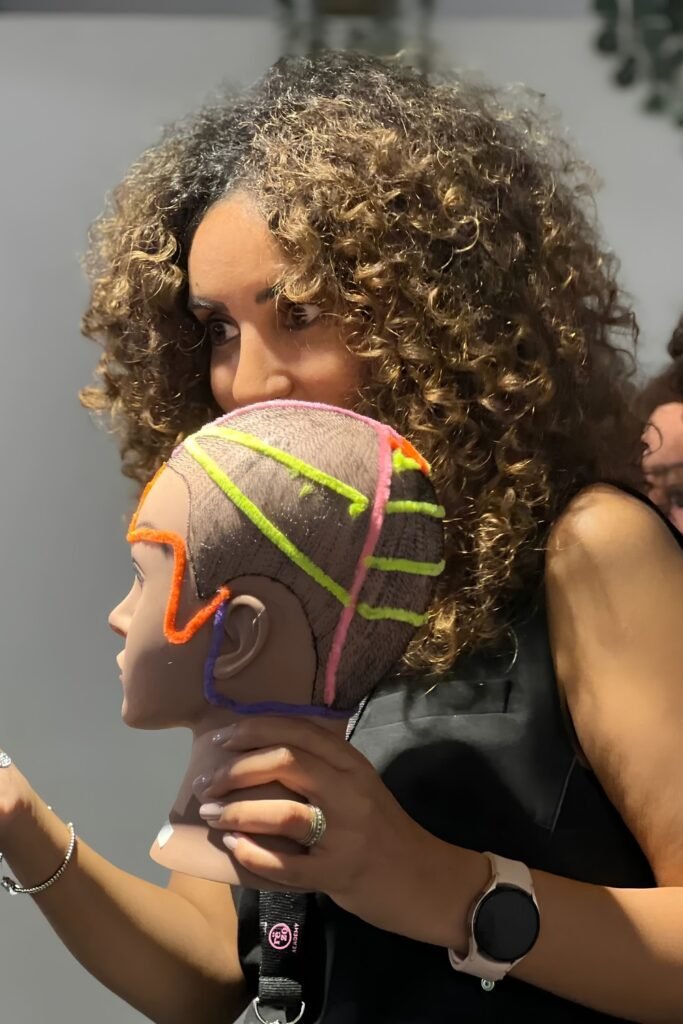
The same base, dried with a diffuser on low heat and low speed rather than air-dried.
A diffuser cuts drying time substantially, which matters in practice, and it adds root volume that air-drying does not. Cup the curls upward into the diffuser rather than blowing air at them.
Low heat and low speed. High settings on either produce frizz and undo the definition you just built.
 Save
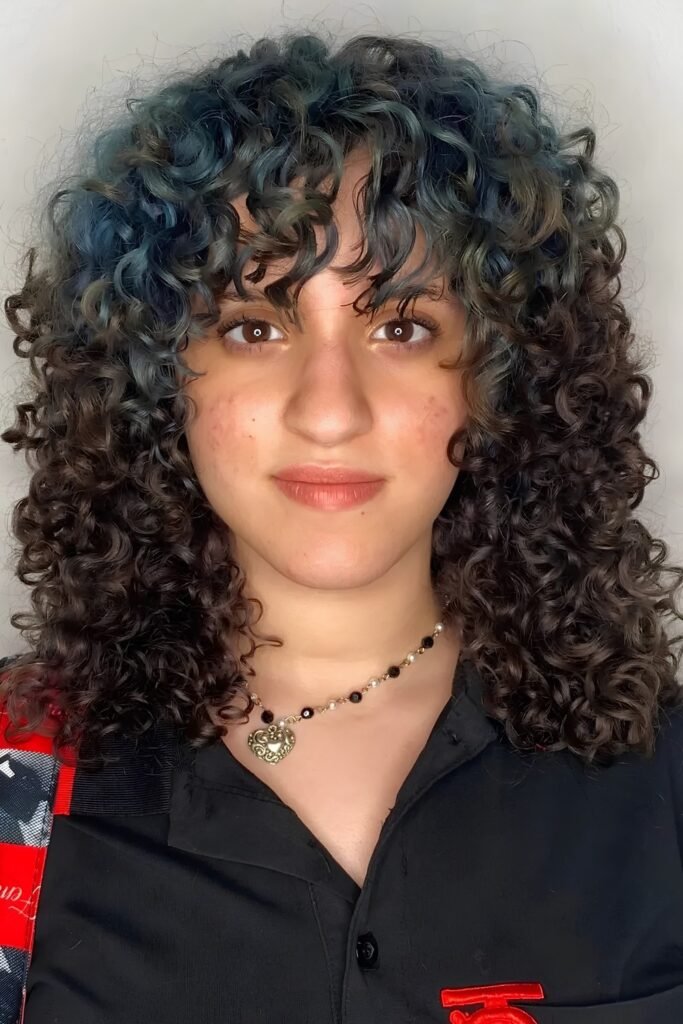
Save3. Curls With Defined Layers
A curly cut with layers placed to let each curl form at its own diameter rather than compress under the weight above.
Amer makes a point that anyone who has sat through a proper curly cut will recognise: curly hair takes a lot longer to cut than straight hair. Three hours is not unusual, and the reason is that the cut is being built curl by curl.
Cut dry, so the stylist can see where each curl actually falls. A curly cut done wet springs up shorter than intended.
 Save
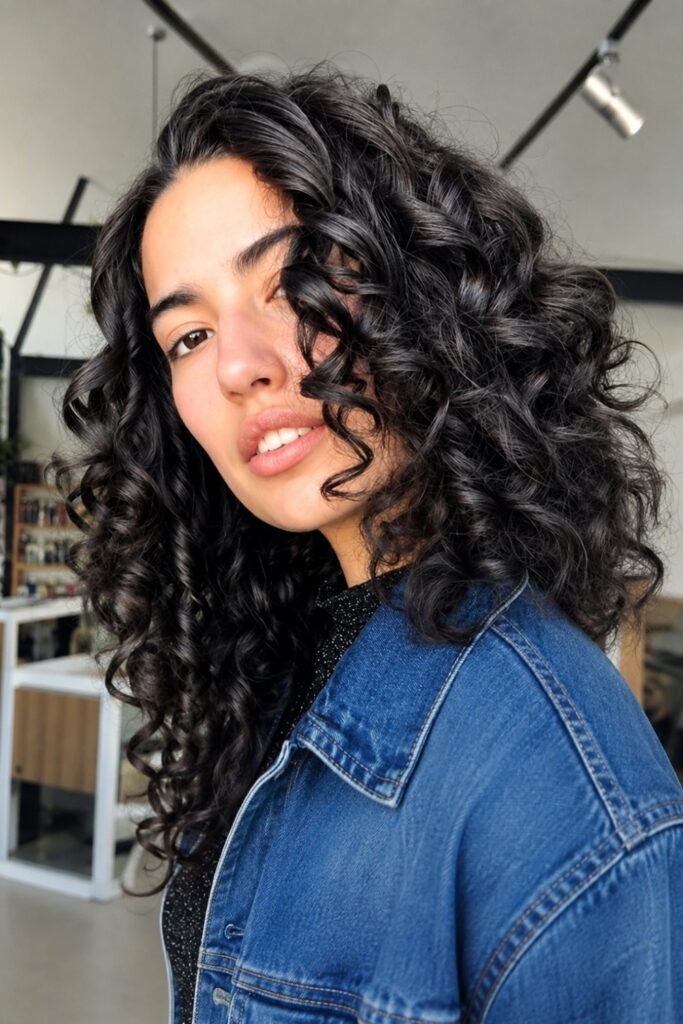
Save4. The Curly Bob
Curls cut to chin or jaw length with the shape built around the curl pattern rather than imposed on it.
Shorter lengths remove weight, which lets tighter curl patterns spring properly. For anyone whose curls have been flattened by length, this is often a bigger improvement than any product.
If you want the length itself explored in more depth, our guide to chin-length bob haircuts covers the variations within it.
 Save
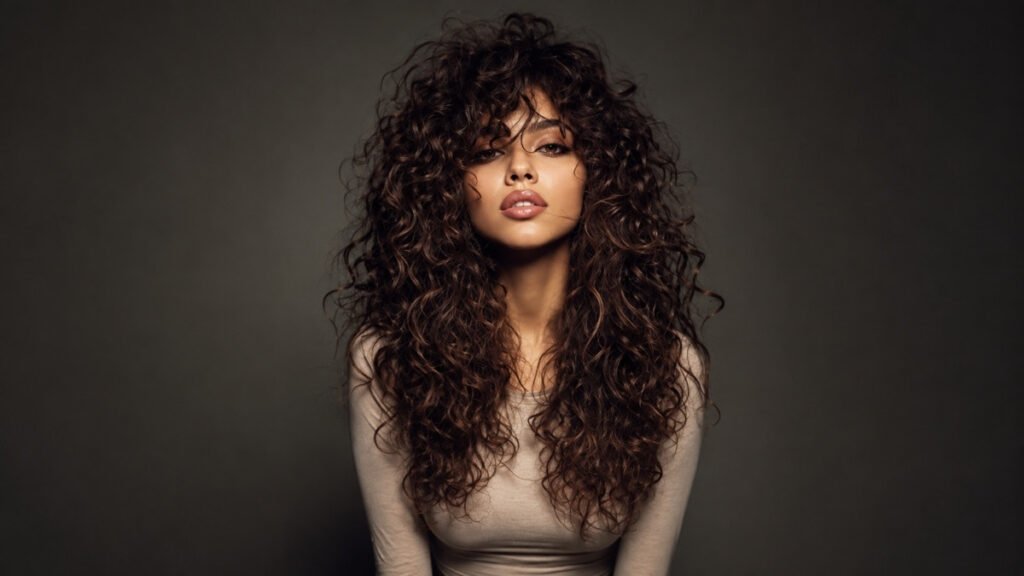
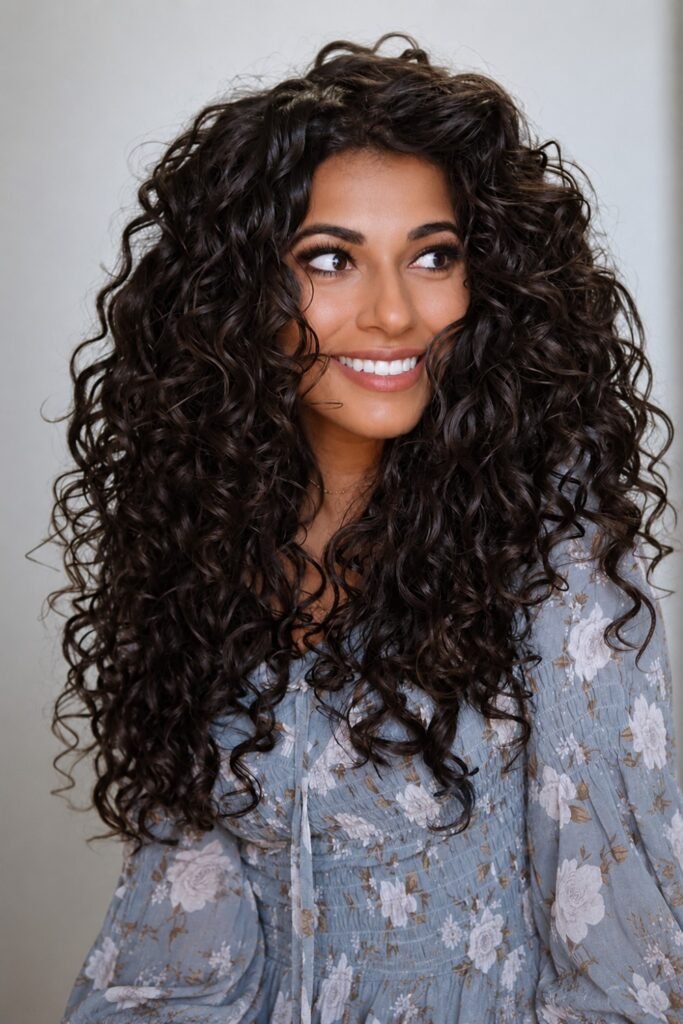
Save5. Long Curls With Face-Framing Shape
Length kept, with layers concentrated around the face rather than throughout.
The option for anyone unwilling to lose length, which is a common and reasonable position. Face-framing layers give the shape somewhere to start without removing the length that took years to grow.
Ends need attention. Long curly hair shows damage first at the ends, and the movement’s whole premise is visible health.
 Save
SaveDefinition and Texture
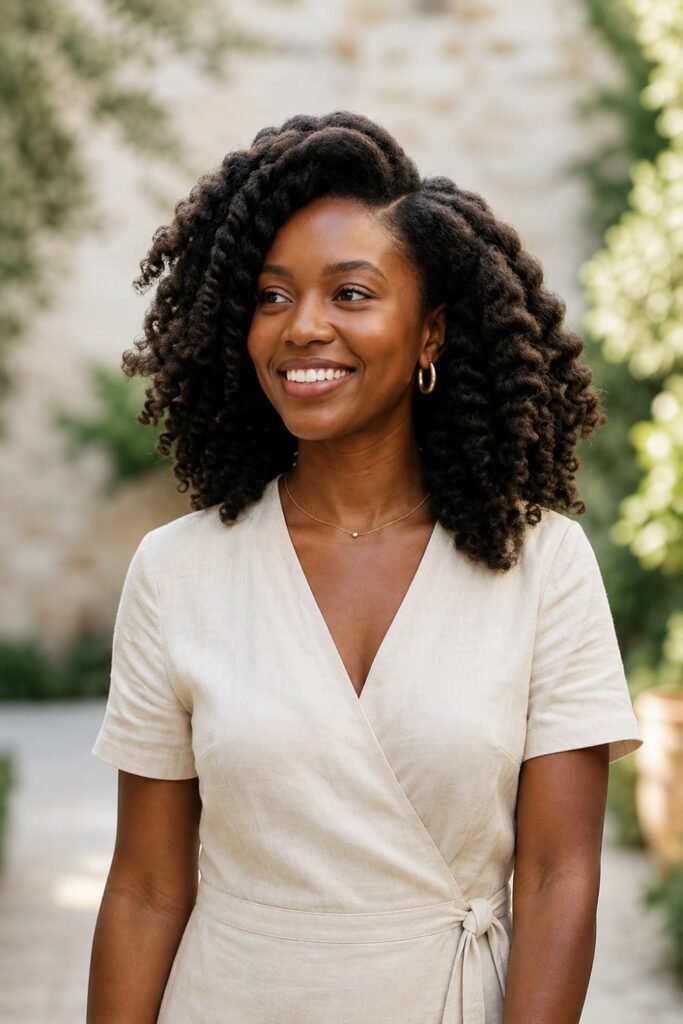
6. Twist-Out
Hair twisted in sections while damp, left to dry, then unravelled.
Produces a stretched, defined curl pattern with more length than a wash and go, and it does the work overnight rather than in the morning.
Unravel when completely dry. Unravelling damp twists produces frizz and the definition collapses within an hour.
 Save
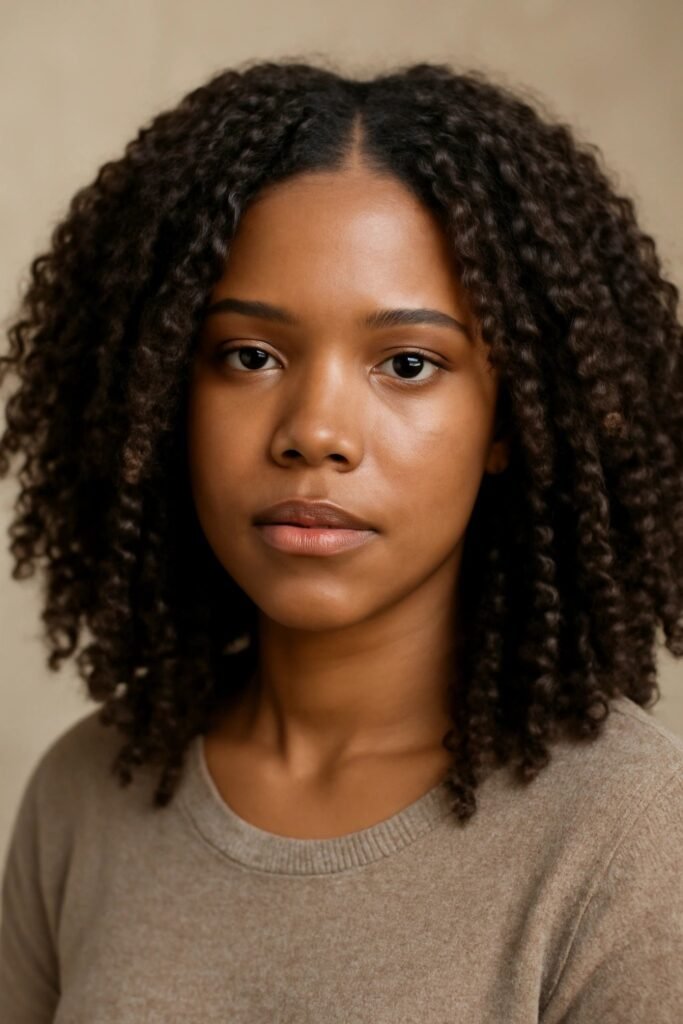
Save7. Braid-Out
The same principle using braids rather than twists, giving a looser, more wave-like result.
A braid-out stretches the curl more than a twist-out, so it suits anyone wanting length and movement rather than definition. It also suits looser curl patterns better.
Larger braids produce looser waves; smaller braids produce more defined ones. That is the only variable worth adjusting.
 Save
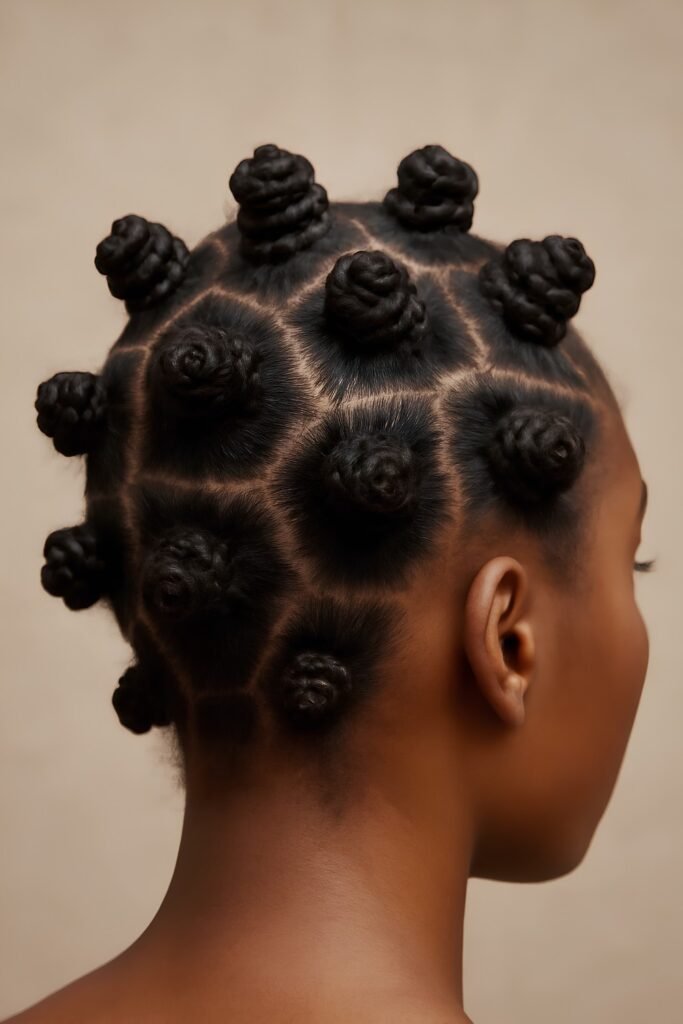
Save8. Bantu Knots and the Knot-Out
Sections coiled into small knots against the scalp, worn as a style or unravelled for defined curls.
Genuinely two styles in one. The knots themselves are a look, and unravelling them the next day produces a spiral pattern that no other method replicates.
Secure them properly. Loose knots unravel overnight and you wake up with neither style.
 Save
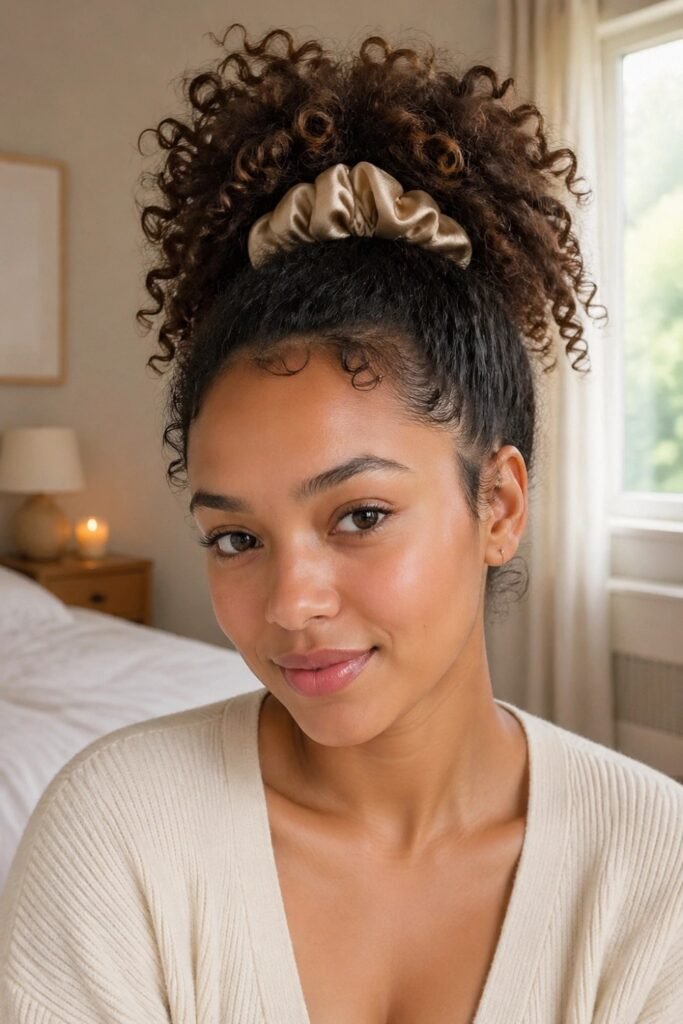
Save9. The Pineapple
Curls gathered loosely at the very crown so they sit up rather than being compressed.
The overnight preservation method, and the reason a wash and go can last three days rather than one. Because the curls sit above the head, nothing flattens against a pillow.
A loose scrunchie rather than a tight elastic. The point is to avoid a dent exactly where the volume matters.
 Save
SaveProtective and Secured
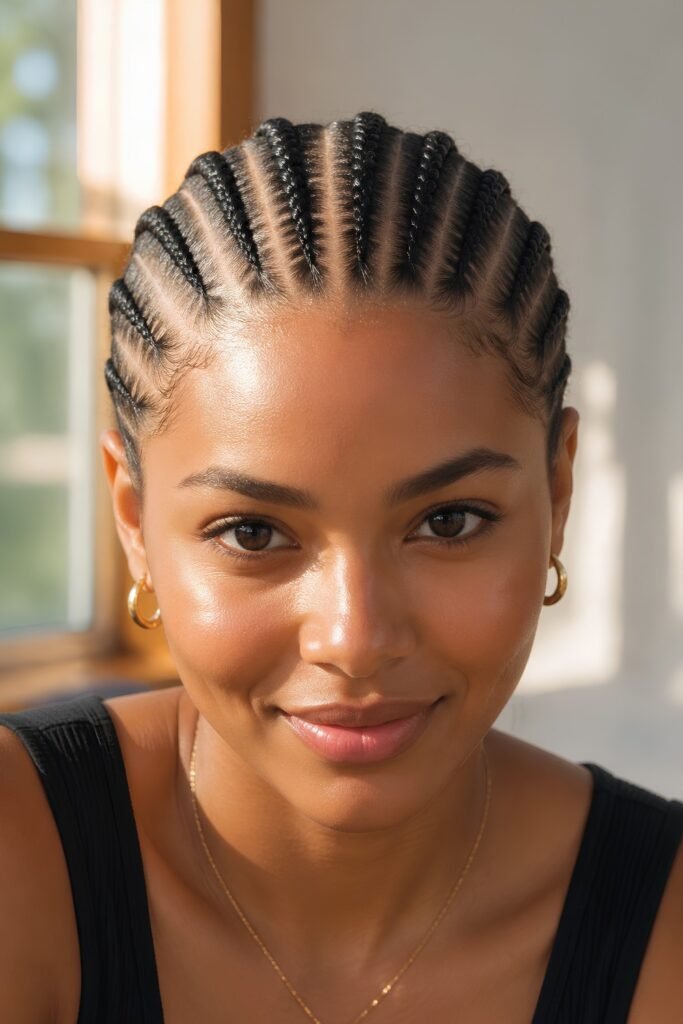
10. Cornrows
Braids worked flat to the scalp, worn for days or weeks.
Protective styling gives curls a break from daily manipulation, which matters more for hair that has been through years of heat or chemical treatment. It also removes the daily styling question entirely.
Tension is the thing to watch. Braids installed too tightly cause traction alopecia, and that is preventable by speaking up during installation. Our guide to protective styles for Black hair covers the options and the wash and moisturise routine, and much of it applies directly here given the documented shared lineage.
 Save
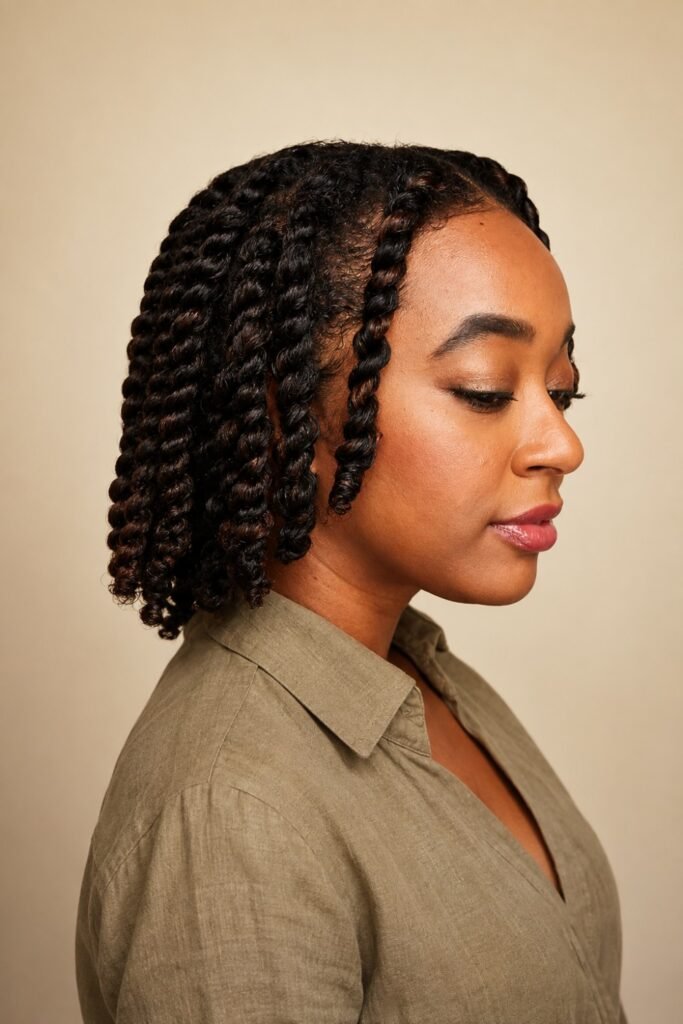
Save11. Two-Strand Twists
Sections twisted and worn as the style rather than unravelled.
Lower manipulation than braids, faster to install, and gentler on the hairline. They also come out quickly when you want them out.
A practical middle ground for anyone who wants a break from daily styling without committing to weeks.
 Save
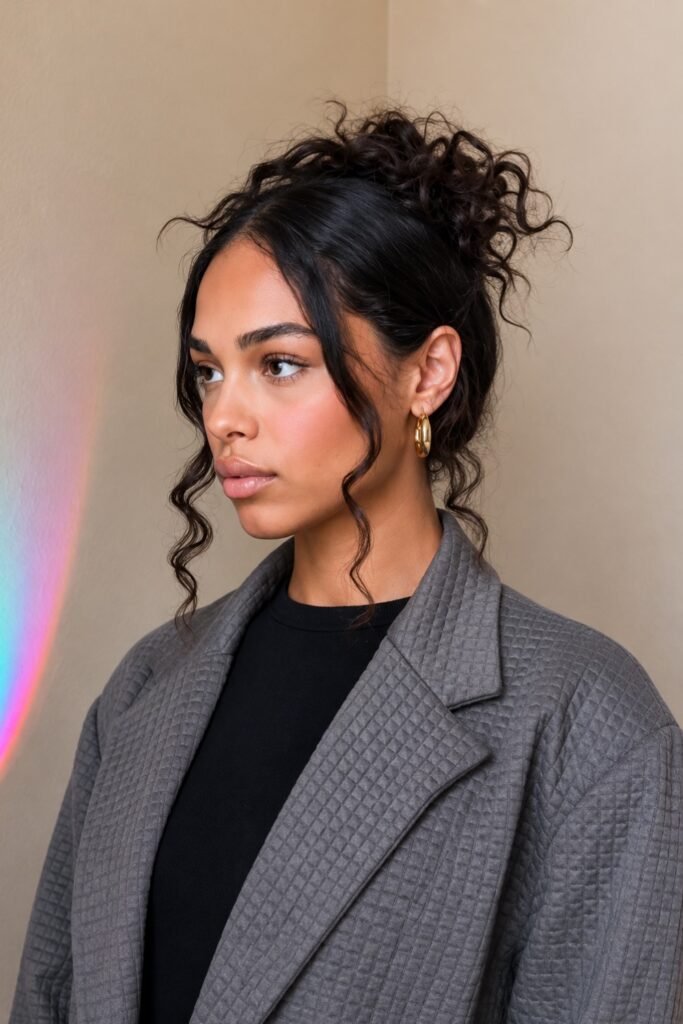
Save12. Low Bun With Curls Left Out
Hair gathered low with a few curls deliberately left loose at the front.
The everyday option for work or anywhere a full curl set feels like too much. It reads as tidy while keeping the texture visible, which is precisely the compromise many women describe wanting.
Gather loosely. Pulling curly hair tight into a bun stretches the pattern and it will not recover until the next wash.
 Save
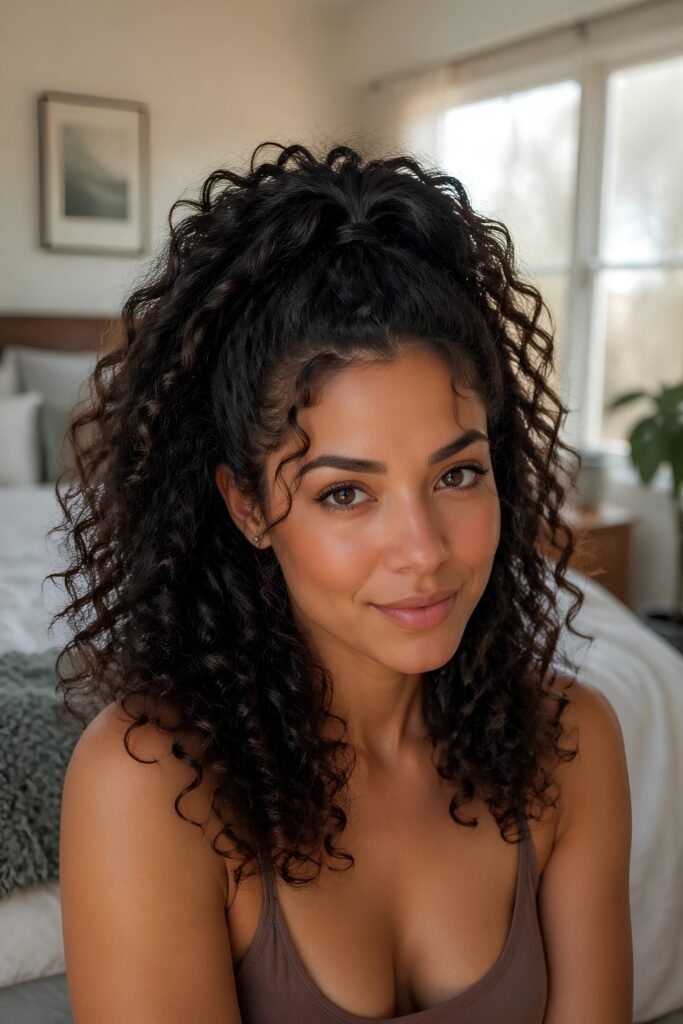
Save13. Half-Up With Volume
Top section secured with the length left down.
Keeps hair off the face while showing the full curl pattern below. It also lifts the crown, which is where curly hair most often falls flat by the afternoon.
The most photograph-friendly of the everyday options, for whatever that is worth.
 Save
SaveCovered and Accessorised
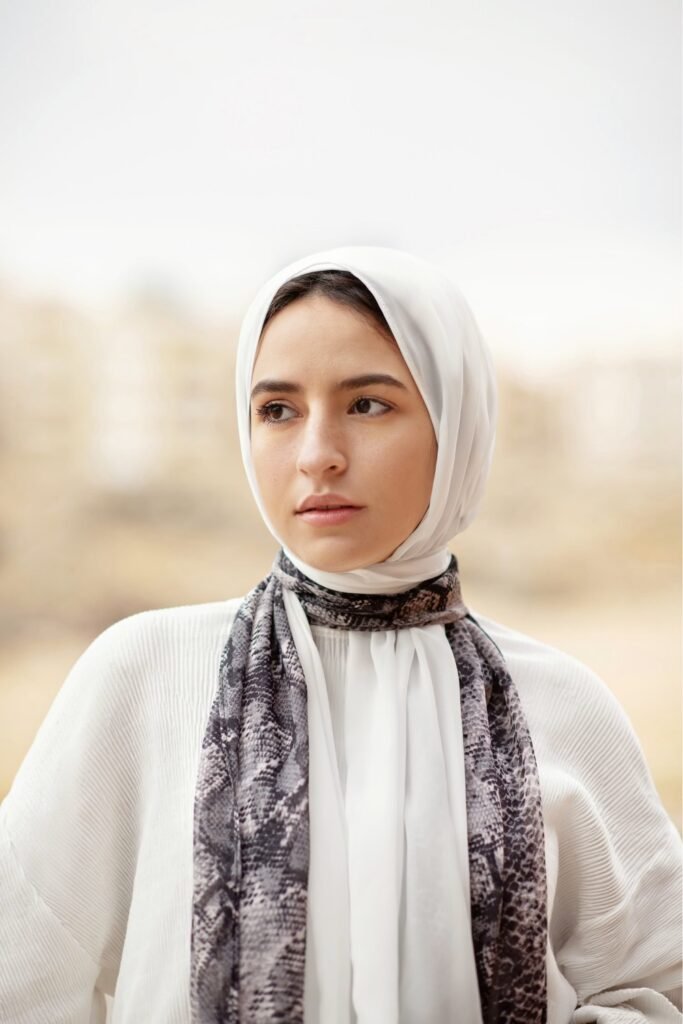
14. Curls Under a Headscarf or Hijab
Curls prepared to sit well under a covering, with the pattern protected rather than crushed.
Worth its own entry because a large proportion of this readership covers, and most curly hair content ignores it entirely. The principles are the same as anywhere else: satin or silk against the hair rather than cotton, since friction is what causes frizz and breakage.
A satin undercap under a cotton scarf solves most of it. Twists or a loose pineapple underneath keep the pattern intact for when the scarf comes off.
 Save
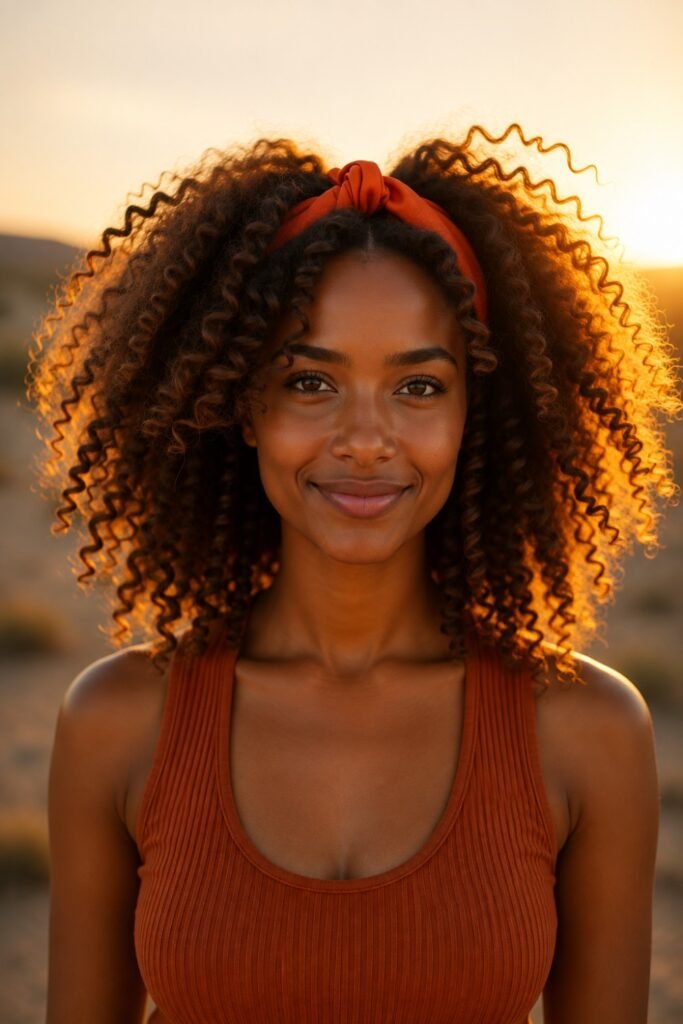
Save15. Curls With a Single Accessory
Defined curls finished with one clip, headband, or scarf tied at the crown.
Restraint is the rule that makes accessories work on curly hair. The curl pattern is already the visual interest, and competing accessories flatten the effect rather than adding to it.
One item. Placed where it does not crush the pattern, which usually means at the crown or the side rather than across the top.
 Save
SaveA Note on Ancient Egyptian Styles
If you arrived here looking for Cleopatra bobs, gold-beaded braids, and blunt fringes, that is a different thing and worth naming clearly.
Ancient Egyptian styling is a genuine historical subject, and wigs, braids and beading were real elements of it, often signifying status. What circulates online under that heading is usually a costume aesthetic rather than a historical one, and it has very little to do with how Egyptian women wear their hair now.
Both are legitimate interests. They are just not the same article, and conflating them is how a living culture ends up represented by a wig.
Common Questions
What is the current hair trend among Egyptian women?
The natural curl movement. Egypt’s first curly hair salon opened in Cairo in 2018, and since then curly styling has moved into mainstream visibility through salons, social media communities like The Hair Addict, and appearances in television and advertising. Reporting notes the trend is strongest in affluent Cairo neighbourhoods, while keratin treatments remain widespread more broadly.
Why did curly hair need a movement in a majority-curly country?
Because straight hair was the standard. Egyptian women describe workplace pressure to straighten, including one told during a university job interview that she would have to do something about her hair. Advertising in the 1990s routinely framed curls as the “before” and straightened hair as the “after”. The movement is a response to that rather than to the hair itself.
How do I keep a wash and go for more than one day?
The pineapple. Gather the curls loosely at the very crown before sleeping so they sit above the head rather than being compressed against a pillow, and use a satin or silk pillowcase or bonnet. Refresh with water and a little conditioner rather than reapplying product, and avoid brushing between washes.
Can I do these styles if I wear hijab?
Yes, and the same principles apply. The key adjustment is satin or silk against the hair rather than cotton, since friction causes frizz and breakage. A satin undercap under a scarf, with twists or a loose pineapple underneath, keeps the curl pattern intact.
Is it wrong to straighten curly hair?
No. The women who built this movement describe it as being about having a choice rather than replacing one obligation with another. Heat and chemical straightening carry real damage risks worth understanding, but the decision belongs to the person whose hair it is.
Final Thoughts
The styles in this article are not complicated. Wash, product on soaking wet hair, leave it alone, protect it overnight. The technique has never been the difficult part.
What changed in Egypt was permission, and it changed because women opened salons, started communities, and put their curls on television. That is a better story than any wig, and it is the actual answer to what Egyptian women are doing with their hair.