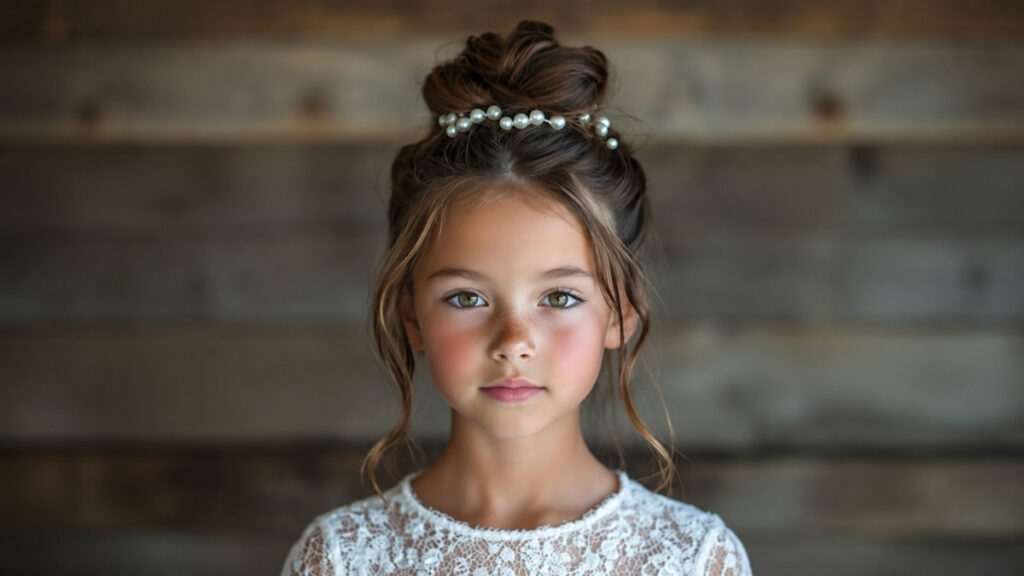
A dance recital hairstyle needs to do one thing above everything else: stay in place from warm-up through the final bow. Lindens Dancewear dance educator Angel P. confirmed in December 2025 that a dancer’s hairstyle is part of the discipline of dance itself. Clean, secure styles keep hair out of the face, allow teachers and audiences to see your daughter’s expressions and alignment, and let her focus on performing rather than worrying about her hair.
Broadway Arts Center confirms for their 2026-27 season that stage lights cast shadows over the face when hair is not pulled back properly. Every hairstyle on this list serves that purpose first. The style choices come second.
These 17 dance recital hairstyles cover every hair length, dance style, and skill level for little girls, from the quickest five-minute solutions through to the most polished stage-ready looks, with the exact tools, products, and steps you need on recital day.
Before You Start: The Non-Negotiable Prep Steps
Always start with tangle-free hair. Angel P. at Lindens Dancewear confirms preparation is key: use a wide-tooth comb, start at the ends and work upward, and use a spray conditioner for stubborn tangles. A knot left in the hair before styling produces bumps and flyaways in the finished look that no amount of gel or spray will fully resolve.
Dampen the hair lightly before styling. Chester Valley Dance Academy confirms wet or dampened hair is easiest to smooth and control, particularly for ballet buns where a sleek surface is required. Use a spray bottle of water rather than washing the hair on recital morning, which adds unnecessary time and makes the hair harder to manage.
Comfort matters. Angel P. confirms that pins should not poke the scalp, and the style should be tight enough to hold but not uncomfortable. A little girl who is physically uncomfortable during a performance will reach for her hair. Test the style the week before recital day, not the morning of.
Classic Ballet Bun Styles
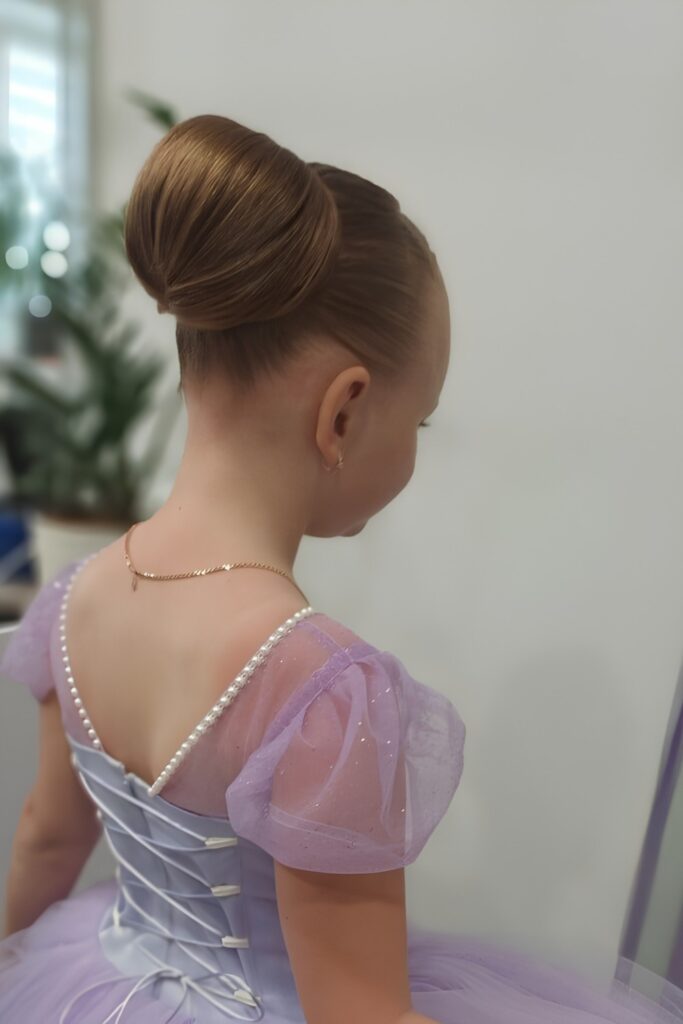
Classic High Ballet Bun
A sleek ponytail pulled to the crown of the head, divided into two sections and wrapped around itself like a cinnamon roll, secured with bobby pins, and covered with a matching hairnet. Broadway Arts Center confirms the bun should sit medium to high on the head so stage lighting does not cast shadows over the face.
Apply a kid-friendly gel at the hairline and the nape before pulling the hair up to smooth flyaways before they are inside the ponytail. Use a boar bristle or smoothie brush rather than a plastic bristle brush, which creates separation in the hair instead of smoothness. Chester Valley Dance Academy specifically names the smoothie brush as the tool that makes the difference between a bumpy ponytail and a sleek one.
Wrap the hairnet over the completed bun and pin it at the base. The Dance Factory recommends doing a gentle head shake test after pinning: if the bun moves, add more pins. Use larger bobby pins for younger dancers who may have quick hair changes between dances.
 Save
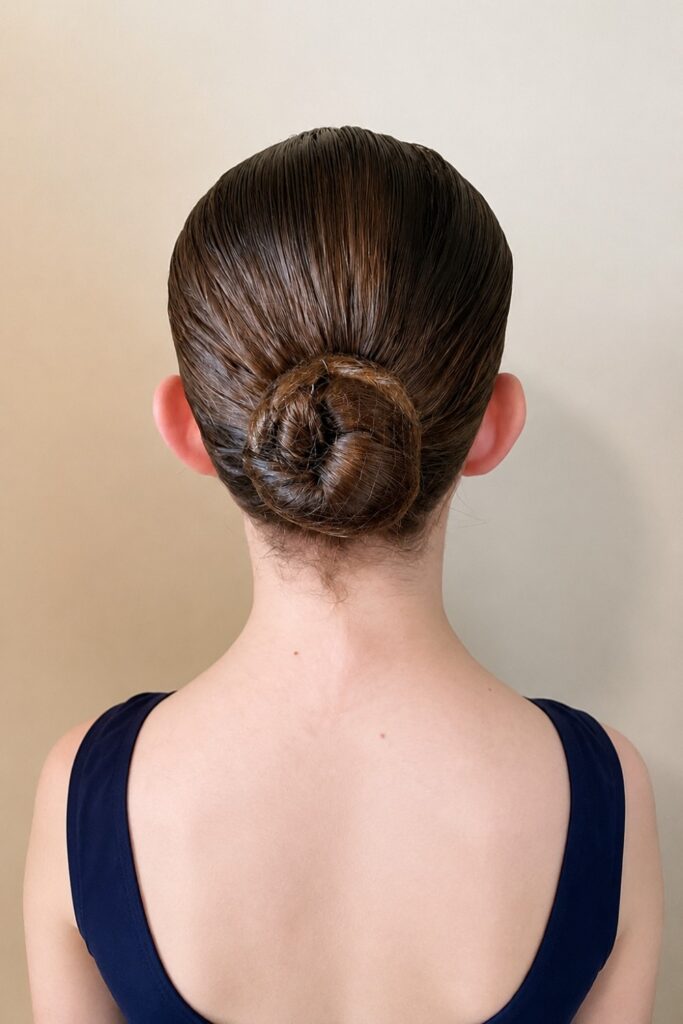
Low Ballerina Bun at the Nape
The same wrapped bun technique as the classic high bun but with the ponytail pulled to the nape rather than the crown. Angel P. at Lindens Dancewear confirms the low bun as best for classical ballet roles, ballroom, and formal recitals where the studio requires a specific placement.
Mom Trends confirms the bun placement should align with the ears for a standard ballerina bun. A nape bun sits below that point and works best when instructed by the dance teacher rather than chosen independently. Always check your studio’s specific placement requirement before recital day.
Use a colour-matched hairnet and colour-matched pins. San Elijo Dance Academy confirms that pins and nets matching the child’s hair colour produce a seamless result on stage under bright lighting. Black pins on blonde hair and blonde pins on dark hair both read as visible accessories rather than invisible supports.
 Save
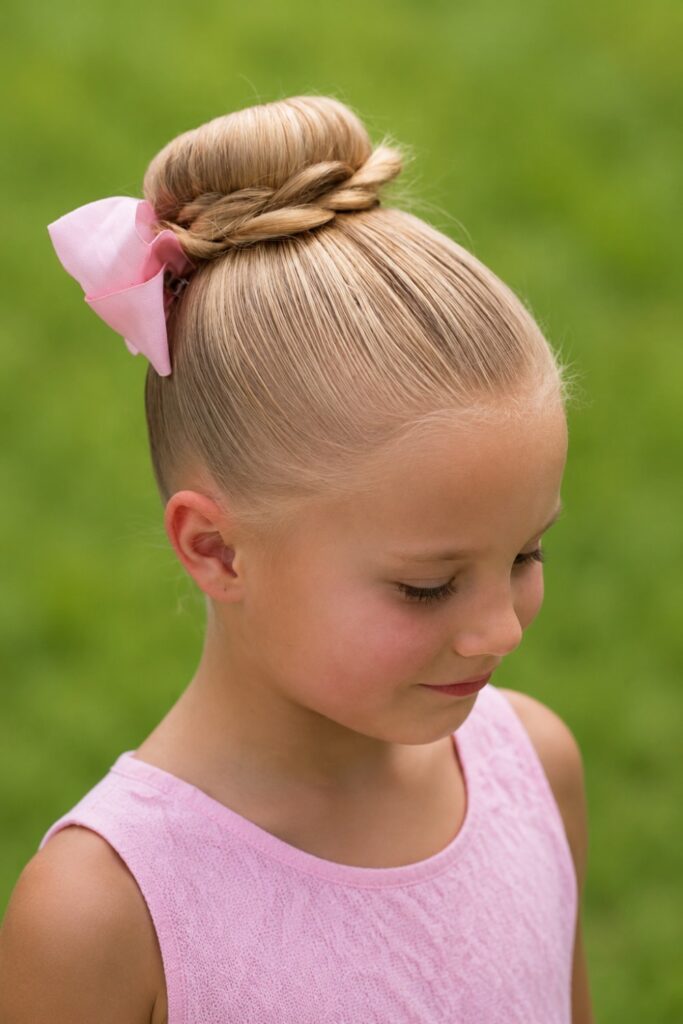
Bun with a Bow or Ribbon
A standard high or mid ballet bun with a satin or velvet ribbon tied around the bun base in a bow, the ribbon colour matched to the costume. Jazz, musical theatre, and tap recitals where the costume includes a matching ribbon or hair accessory.
Tie the ribbon directly over the elastic at the ponytail base before wrapping the hair into the bun. The ribbon then wraps with the hair and the bow sits naturally at the surface of the completed bun rather than sitting on top of it as an afterthought. A pre-tied ribbon bow clipped over the bun after the fact shifts during performance. A ribbon tied into the bun structure stays put.
 Save
Donut Bun
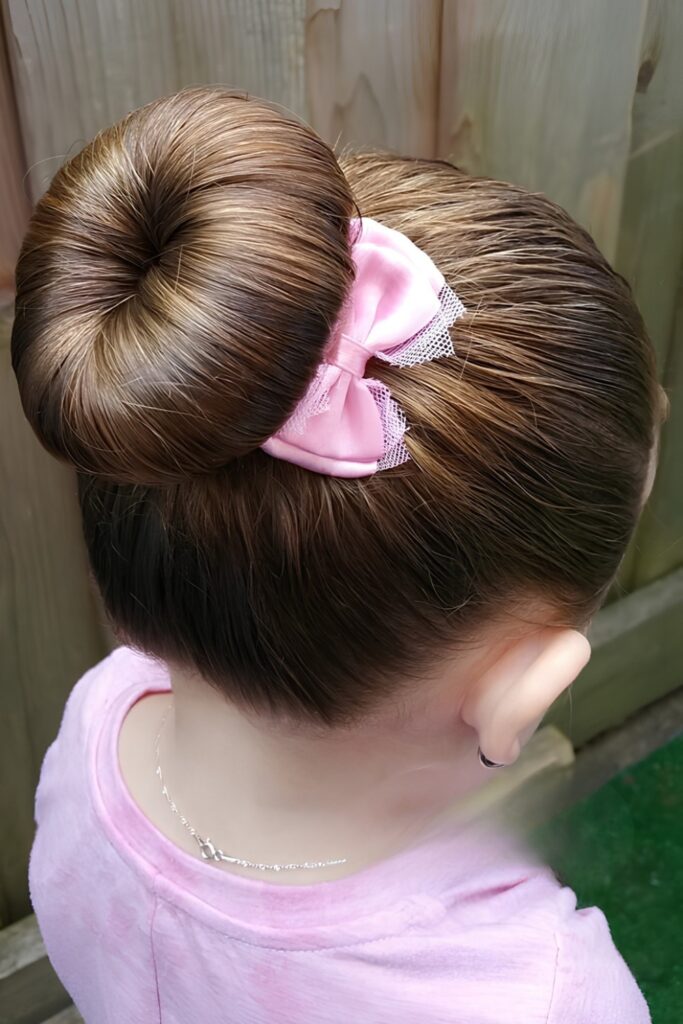
A high ponytail threaded through a foam donut form, the hair spread evenly over the donut surface and tucked under at the base, producing a perfectly round, full bun in under five minutes regardless of hair thickness. The fastest path to a stage-ready bun for most hair types and lengths.
Secure the ponytail through the donut hole. Spread the hair evenly over the donut surface from all directions. Fold the ends under the donut and secure with pins as you go around. The foam form does the shaping work. Your job is distributing the hair evenly over the surface so no patches of foam show through on shorter or thinner hair. A hairnet over the finished donut bun catches any loose ends and keeps the shape stable throughout the performance.
 Save
Braided Dance Recital Hairstyles
French Braid into a Bun
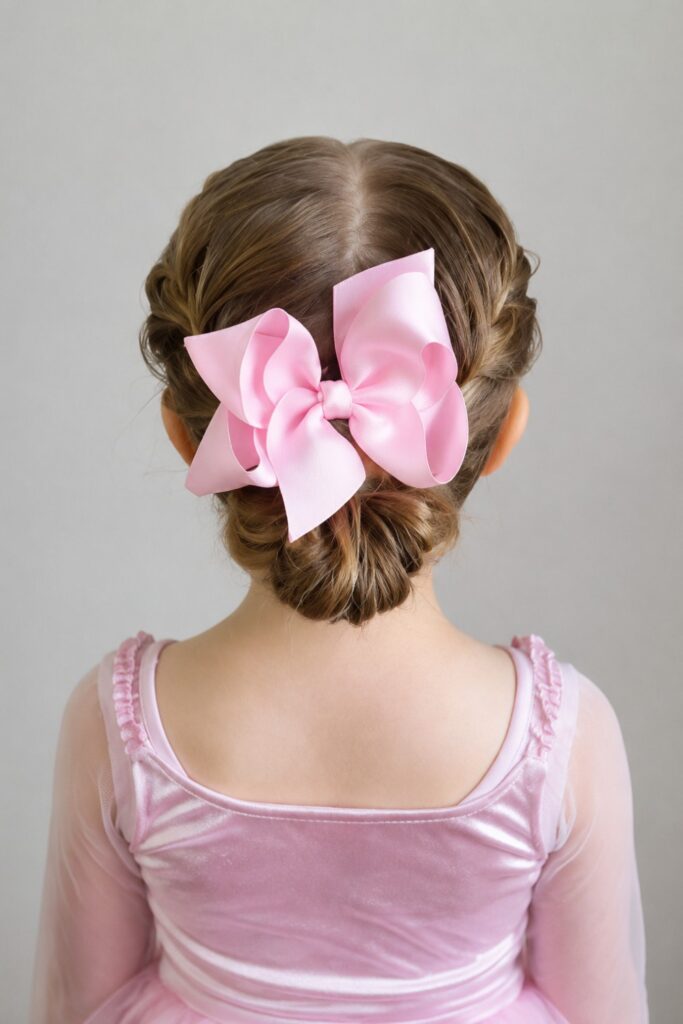
A French braid starting at the forehead hairline and braided back to the crown, where the remaining length is twisted into a bun and pinned. The braid keeps every front section securely off the face for the full duration of the performance while adding a polished stage-appropriate detail.
Begin the French braid at the very front of the hairline above the forehead so no loose front sections remain outside the braid. Add sections from both sides as you braid back toward the crown. Once the braid reaches the crown and there are no more sections to add, braid the remaining length into a standard three-strand plait, secure with an elastic, and wrap into a bun. The French braid keeps everything flat and controlled above the bun in a way that a slicked ponytail cannot achieve on finer or shorter front sections.
For the French braid and athletic braid techniques that provide the most secure and polished result for a dance recital hairstyle on any hair texture, the braided sporty hairstyles guide covers the braid types, sectioning approaches, and hold techniques that keep hair securely off the face through any physical performance.
 Save
Dutch Braid Ponytail
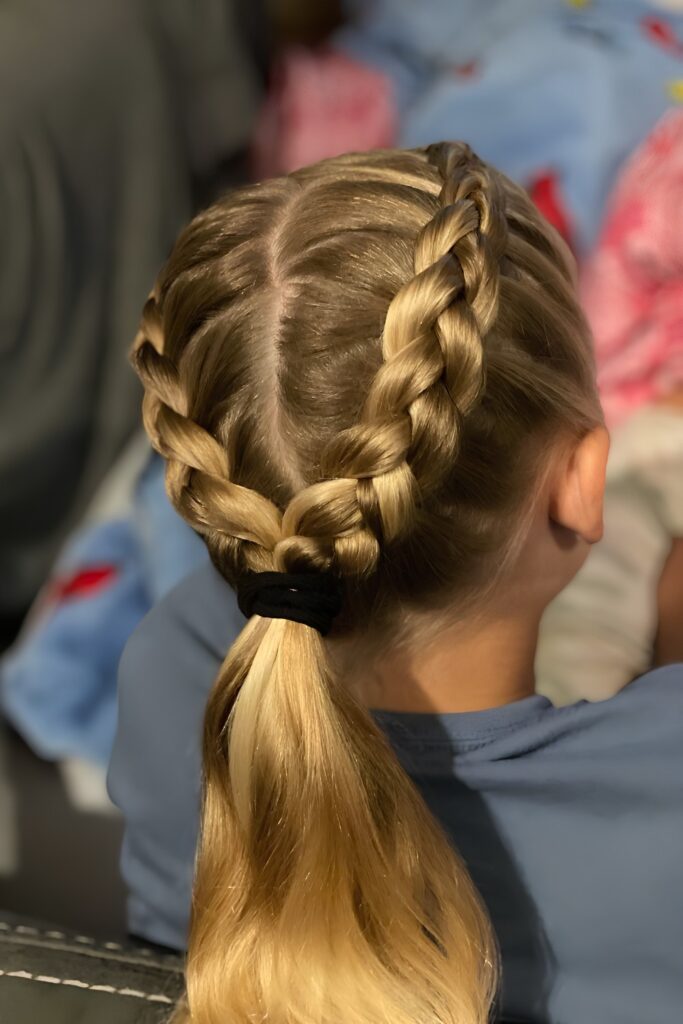
A Dutch or inside-out braid starting at the crown and braided down to the mid-back or lower, finished with an elastic and left as a braided ponytail rather than wrapped into a bun. Best for jazz, contemporary, and tap recitals where the studio does not require a bun.
A Dutch braid sits raised above the head surface rather than flat against it, which gives it a three-dimensional quality that photographs and reads from a distance on stage better than a standard flat French braid. Add a matching coloured elastic at the end and leave the braid to swing freely, or add a bow at the elastic for a costume-coordinated finish.
 Save
Two-Braid Pigtail Buns
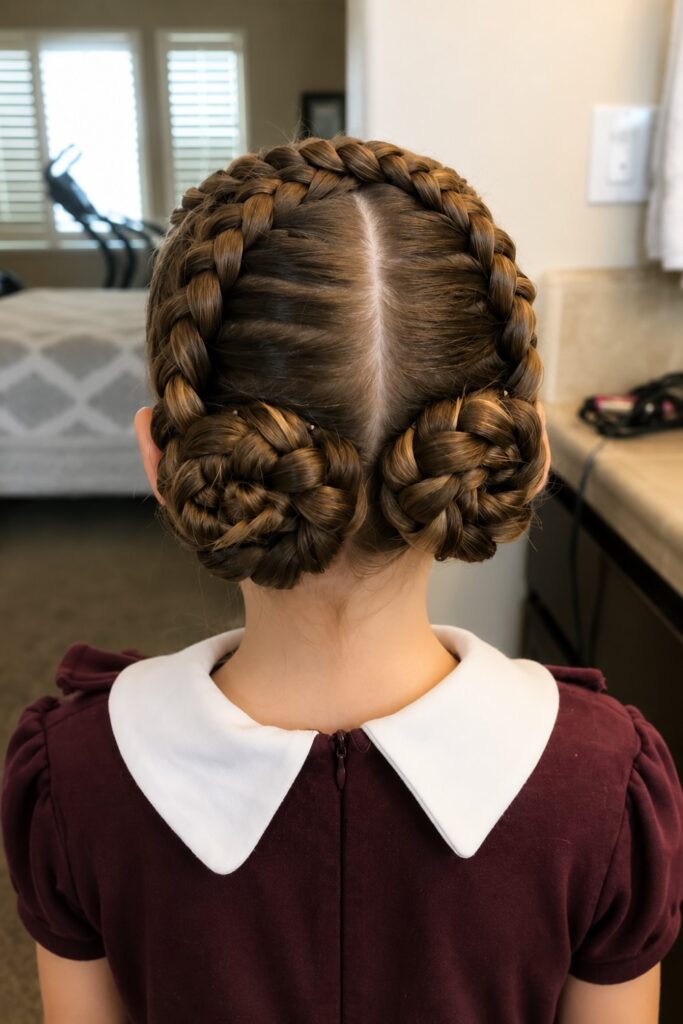
The hair divided into two equal sections, each Dutch or French braided from the hairline back to a mid-crown point, and each braid then wrapped into a small bun on each side. A playful, secure style for younger girls in jazz or acro dance performances.
Divide the hair cleanly down the centre back before starting either braid so the finished buns sit symmetrically. A crooked centre part becomes much more visible once the hair is up in buns on each side than it does in a down style. Use a tail comb to draw a clean centre line from the front hairline to the back nape before picking up either side.
 Save
Ponytail Dance Recital Hairstyles
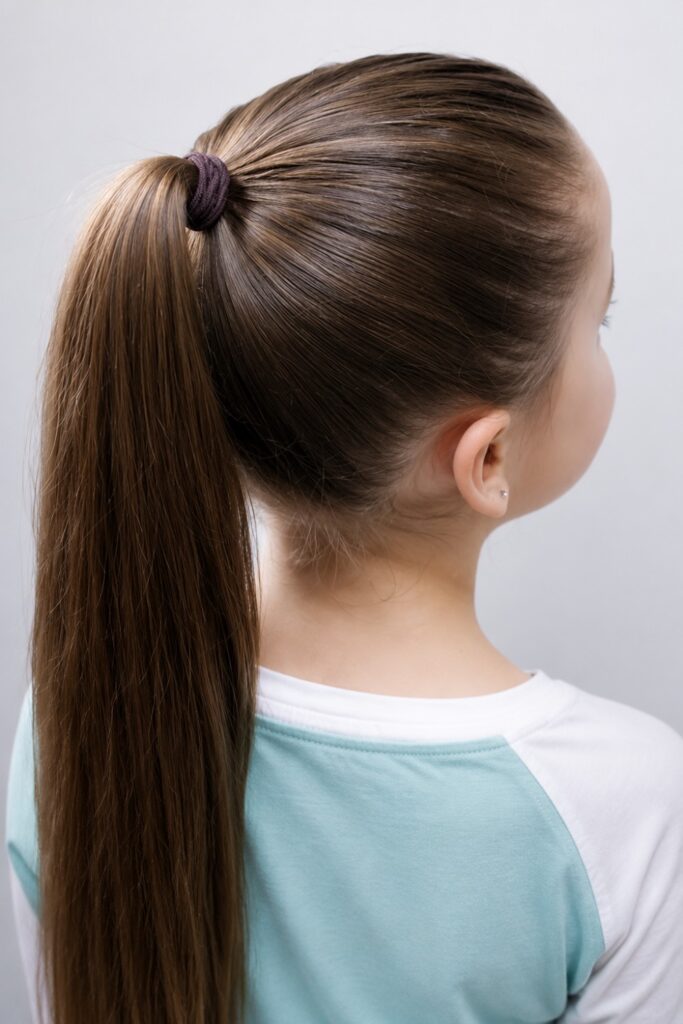
Sleek High Ponytail
All hair pulled into a high ponytail at the crown, smoothed flat from the hairline with a boar bristle brush and gel, and secured with an elastic. Best for jazz, hip hop, and contemporary recitals where the studio permits a ponytail rather than requiring a bun.
Apply gel along the hairline before pulling the hair up, not after. Gel applied to the hairline after the ponytail is in place sits on the surface of the already-placed hair rather than smoothing it. Gel applied before the pull smooths the hair as it is being gathered. Use a second application of gel on any sections that spring up after the elastic is in place and smooth down with the brush before the gel dries.
 Save
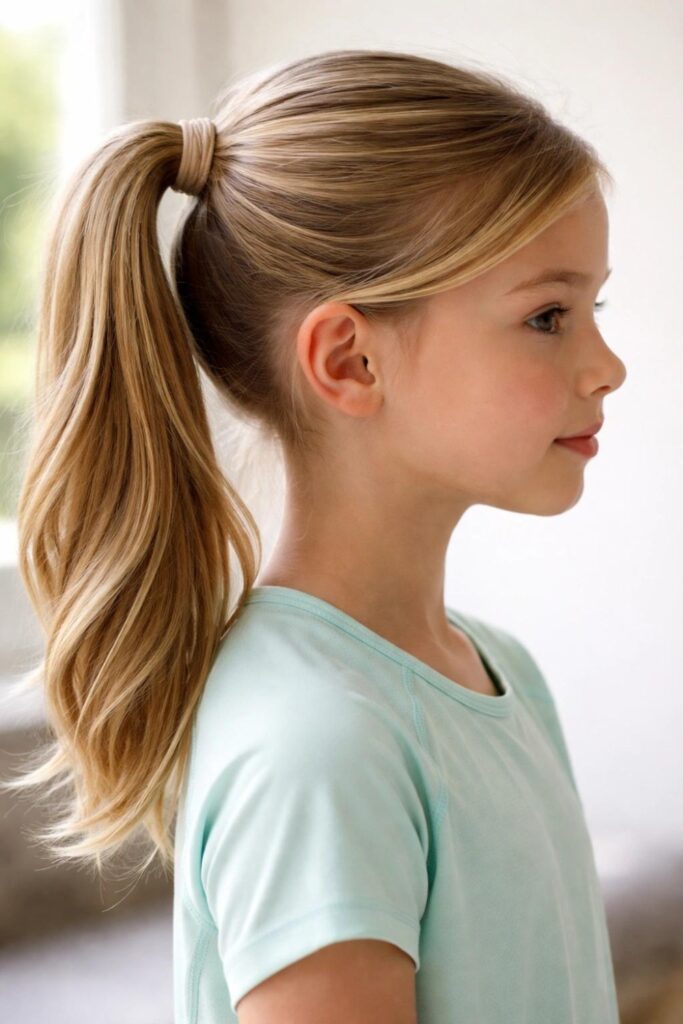
Ponytail with Wrapped Hair Tie
A sleek high ponytail with one strand of hair from the ponytail length wrapped around the elastic base and pinned under to hide the elastic, the finished look showing a smooth hair wrap rather than a visible band.
Take a thin section from the underside of the ponytail before securing the full ponytail with the elastic. Once the ponytail is in, wrap the saved section tightly around the elastic base twice and pin the end underneath. The wrapped section is pulled from the ponytail itself so the total volume of the ponytail stays the same but the elastic disappears. Hairspray over the wrapped section sets it in place.
 Save
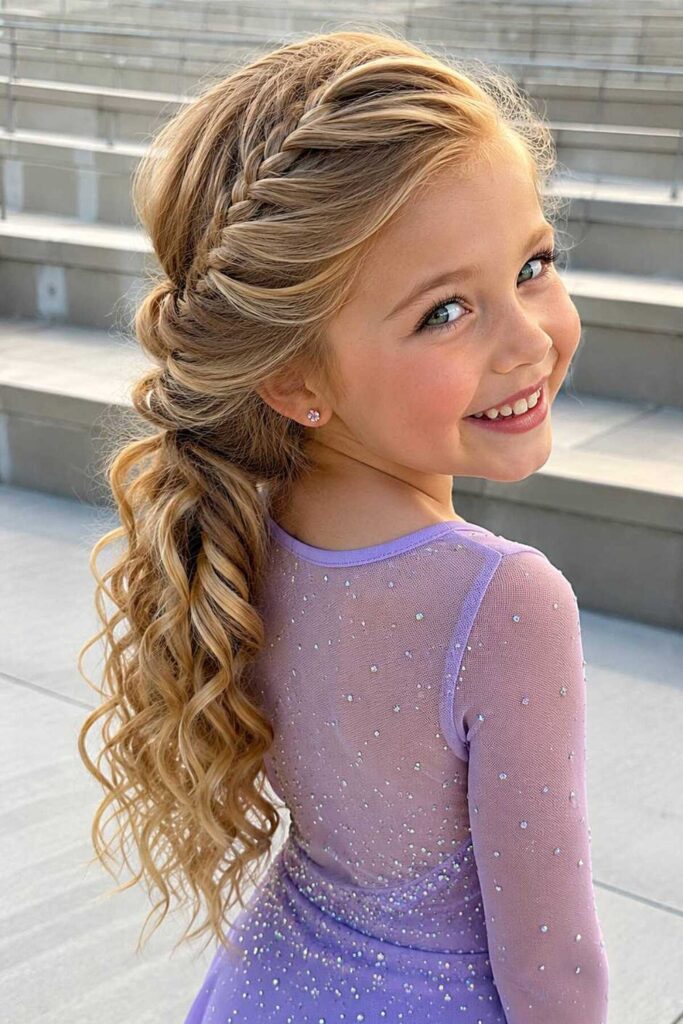
Side Ponytail with Braid
A sleek side ponytail with a thin braid taken from the front section and wrapped around the ponytail base before the elastic is tied, the braid replacing the wrapped strand for a more detailed finish.
Take a thin section from one side of the front hairline. Braid it in a standard three-strand braid all the way to the end and secure with a small clear elastic. Pull all remaining hair into a side ponytail and then wrap the prepared braid around the ponytail base twice before tucking the end underneath the elastic. The braid adds visual interest from the front where the braid origin pulls away from the hairline.
 Save
Down and Half-Up Dance Styles for Specific Dance Types
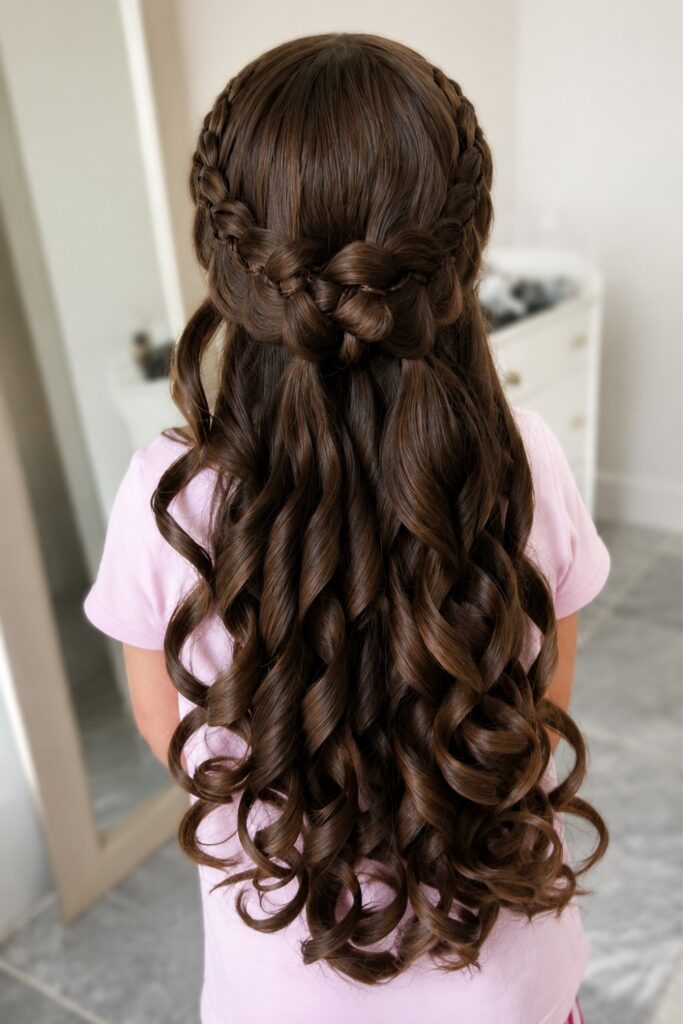
Half-Up Crown with Curled Length
The top half of the hair pulled into a small bun or a twist at the crown, with the lower half curled with a small barrel and left down. Best for musical theatre or lyrical dance recitals where flowing hair is choreographed into the performance.
Curl the lower length before securing the top half. The curl direction should move away from the face on both sides for the most stage-visible result. Once the curls are set, gather the top section and secure at the crown with pins rather than an elastic for a cleaner result at the crown where a bump from an elastic would be visible. Use a light-hold hairspray over the curls to keep them from dropping through a full performance.
 Save
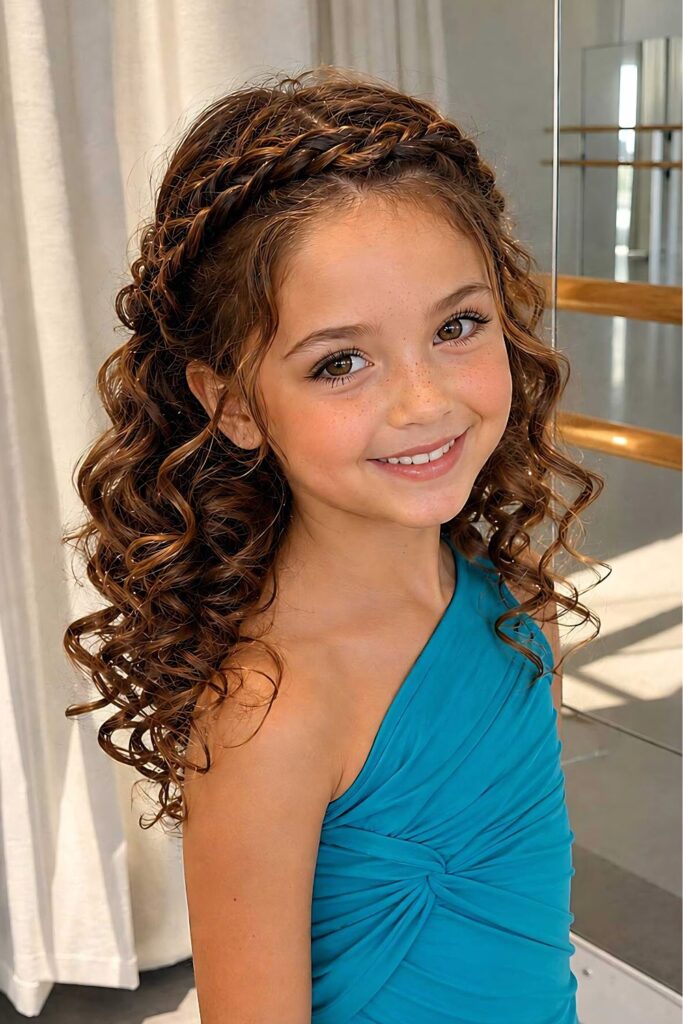
Natural Curls Defined and Pinned Back
Natural curl texture defined with a curl cream on damp hair, diffused on the lowest heat setting, and then pinned back from the face on both sides with decorative or matching pins so the full curl volume is visible but the face is clear. Best for performances where the studio permits down styles.
Apply curl cream while the hair is soaking wet and section through it with fingers rather than a brush or comb, which separates the natural curl clusters. Diffuse on the lowest heat setting until approximately 90 percent dry and leave to finish air drying. Once fully dry, pull two sections from the front hairline on each side back behind the ears and pin securely. The curls behind those two sections spring forward with the natural shape around the face.
 Save
Short Hair Dance Recital Solutions
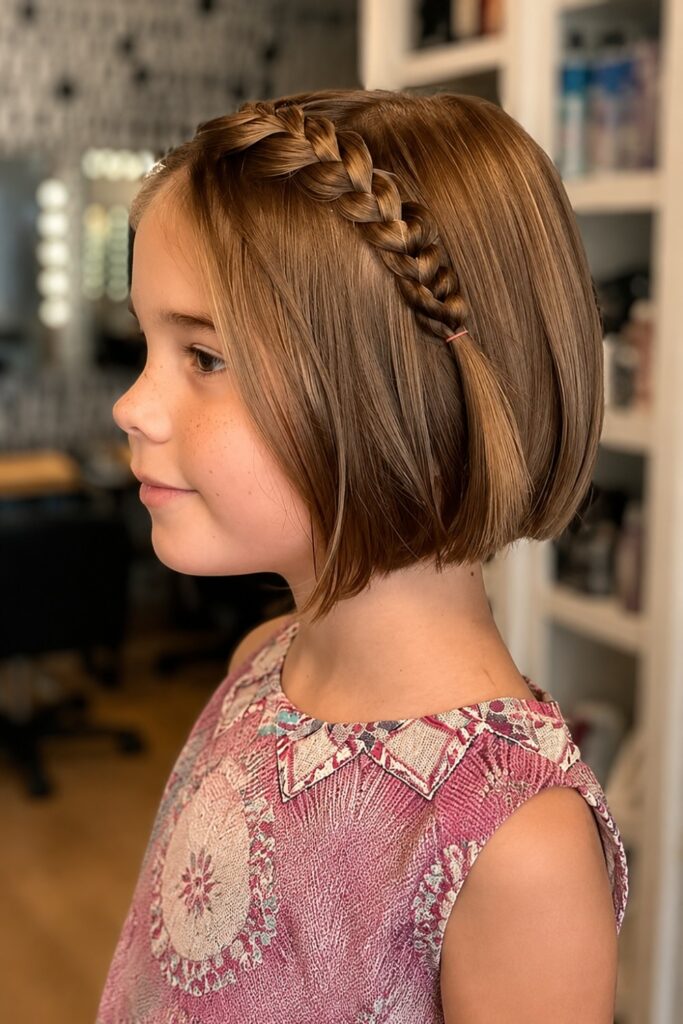
Short Hair Ballet Bun with a Hairpiece
For hair too short to wrap into a full bun independently, attach a hairpiece or bun pad that matches the child’s hair colour, wrap the available length over and around it, and secure with pins and a net. Broadway Arts Center and Angel P. at Lindens Dancewear both confirm that just about every hair length can make a beautiful bun for the stage with the right tools.
A foam bun pad in a matching colour provides the structure the short hair wraps around. Secure the pad at the crown with a pin before starting. Pull the short hair upward over the pad, spread it evenly around the surface, and pin each section as it goes over. The pad fills the centre where the short hair cannot reach and the child’s own hair covers the surface. Finish with a matching net and hairspray.
 Save
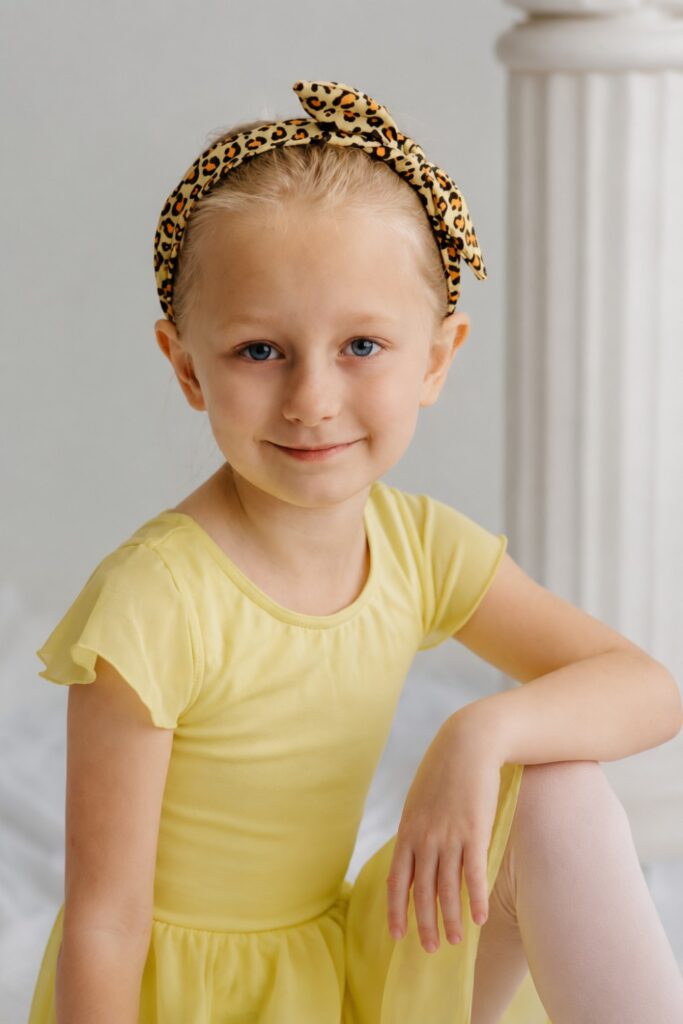
Short Hair Slicked Back with Gel and Headband
Hair too short for a bun slicked flat against the head with gel and a coordinating headband placed firmly at the hairline to keep all front pieces back from the face. The hairband must be wide enough and tight enough to stay in place through movement.
Apply gel to the full length of the hair and smooth backward with a boar bristle brush. Place the headband at the hairline and press each section down over it before the gel dries. Once the gel is set the headband is anchored between the gel-stiffened hair and the scalp. A headband that sits on top of unstyled hair shifts during a performance. One that is placed onto gel-wet hair and smoothed over locks in position.
 Save
Decorative and Style-Specific Dance Hairstyles
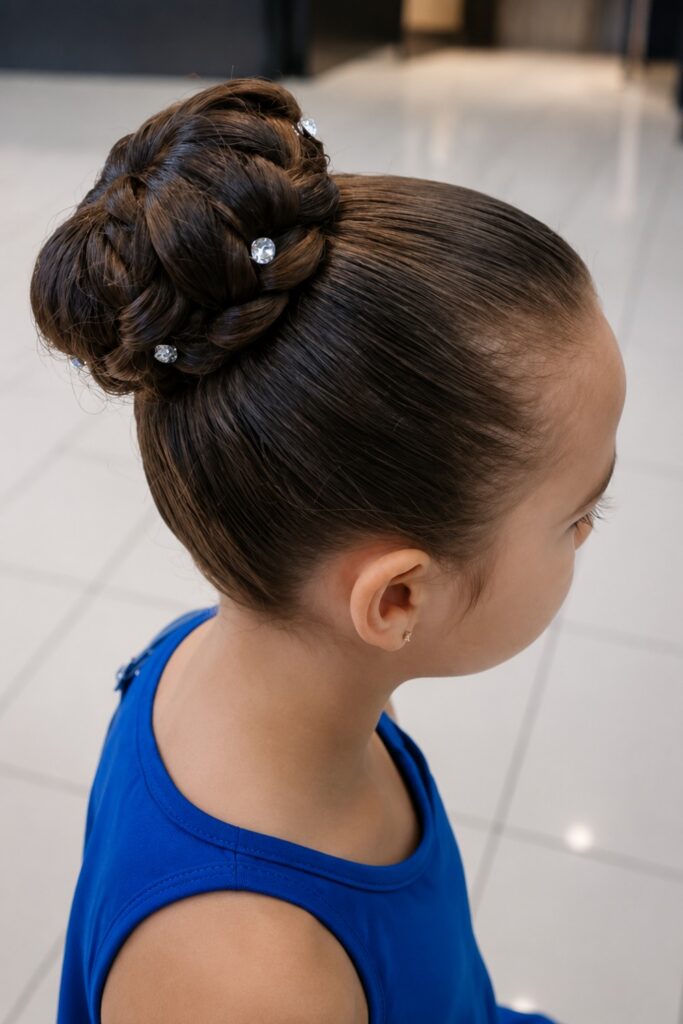
Heart or Butterfly Pin Accent Bun
A standard high bun with decorative heart-shaped, butterfly, or star pins pressed into the bun surface for the accent. Each pin is pressed flat into the bun at consistent angles and does not protrude forward from the bun surface where it could scratch or snag a costume.
Press each pin at a downward angle into the bun so the pin tip goes into the hair structure rather than sitting proud of the surface. A pin that sits at ninety degrees to the bun surface catches on costumes during quick changes and can poke the dancer during floor work. The decorative head of the pin should be visible from the front while the full pin length disappears into the bun.
For the sporty half-up and ponytail hairstyles that share the same secure, face-clearing principles as dance recital styles and work across gym floor and stage equally, the cute volleyball hairstyles guide covers the high ponytail, braid, and headband techniques that keep hair securely off the face and neck through any physical performance or sport.
 Save
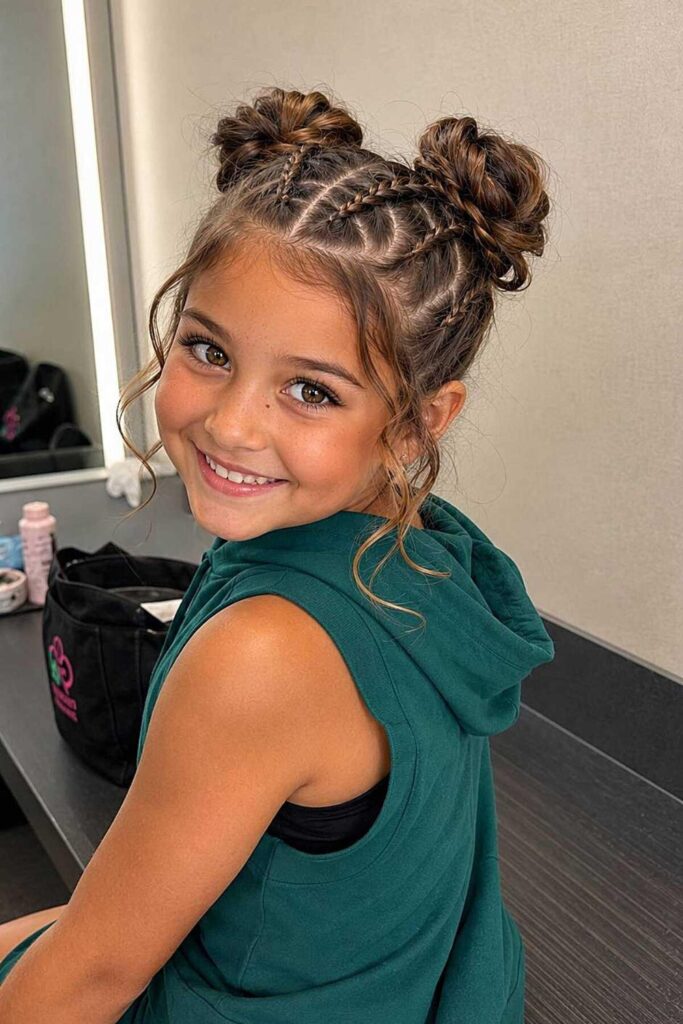
Two-Section High Bun (Double Bun)
The hair divided into two sections, each gathered into a ponytail at the upper crown and each wrapped into a small bun side by side. Best for hip hop, jazz, and acro performances where a playful, energetic stage look is appropriate.
Divide the hair cleanly at the centre and secure each side with an elastic before shaping either bun. Matching the two bun sizes is the challenge in this style. Take the same amount of time and the same number of pins on each side rather than finishing one and then adjusting the other. Once both are pinned, hairspray the full surface to set any loose ends and check that both buns are the same height above the head from the front view.
 Save
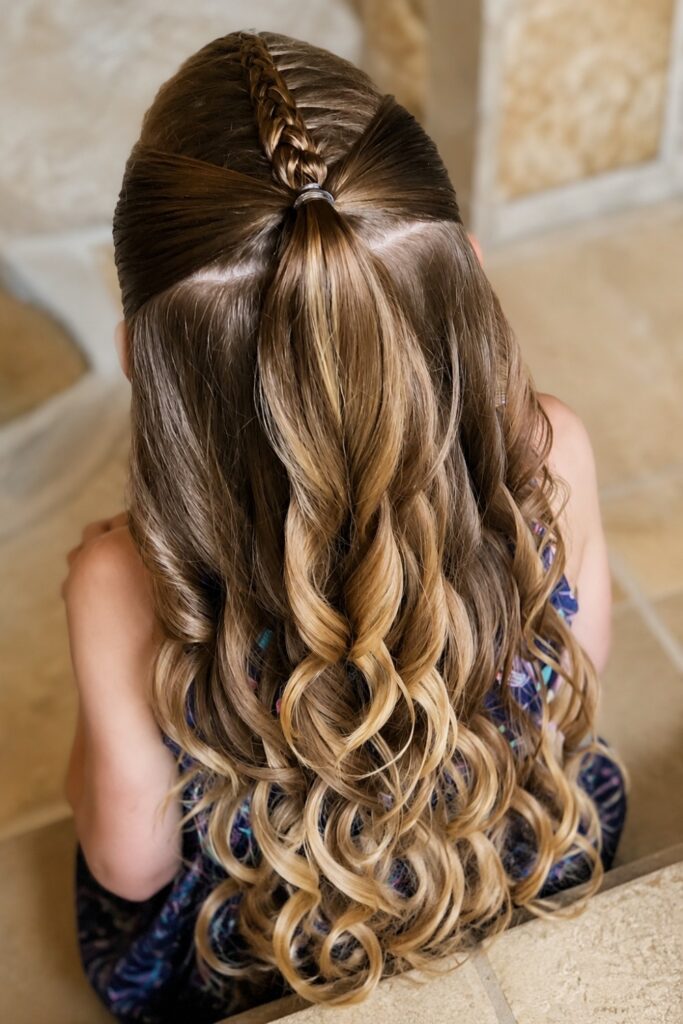
Braided Half-Up with Curled Ponytail
Two small braids taken from the front hairline on each side, joined at the back of the crown and secured with an elastic, with the remaining length curled with a small barrel and left loose. A detailed stage style that suits lyrical, jazz, or musical theatre performances and photographs beautifully.
Braid from the very front hairline on each side to capture every front section before they become loose during movement. Join both braids at the crown with a small clear elastic. Curl the loose length below in small barrel curls away from the face and spray lightly. The two braids from the front provide the security the face-clearing structure needs, while the curled length below adds the soft, feminine quality that reads beautifully from a stage distance.
For the braid and athletic ponytail techniques used across performance sports and dance that require the same secure, long-lasting hold as a dance recital hairstyle, the hairstyles for softball players guide covers the helmet-safe braid and ponytail approaches that keep hair fully secured through any physical activity, applicable directly to the braided styles that work across both sport and dance contexts.
 Save
Recital Day Hair Products and Tools
Kid-friendly gel is the most important product for any slicked or smooth dance hairstyle. Apply it to the hairline and any sections before they go into the ponytail or bun, not after. A boar bristle or smoothie brush produces a smooth surface finish that a plastic bristle brush cannot. A wide-tooth comb removes tangles before styling and prevents unnecessary breakage on fine child hair.
Bobby pins in a colour matching your daughter’s hair colour are non-negotiable for a polished stage result. Buy a full pack for recital day rather than using the four mixed pins at the bottom of a drawer. Large bobby pins provide a stronger hold with fewer pins for thick hair. Standard bobby pins work well for fine hair where they can be pressed close together without adding visible bulk.
Hairnets in a matching colour are required for any ballet bun. A net that is too dark or too light against the hair reads as a visible accessory on stage under bright lighting. Hairspray in a light to medium hold applied as a final step over the completed style catches any remaining flyaways and sets the full shape. Spray from twenty centimetres away to avoid stiffening the surface.
Frequently Asked Questions
What hairstyles are required for a dance recital?
Broadway Arts Center confirms for their 2026-27 season that all dance classes require a bun placed medium to high on the head for recital performances, with stage lighting as the primary reason: bright lights cast shadows over the face when hair is not pulled back properly. Most dance studios require a bun for ballet specifically. Jazz, tap, hip hop, and contemporary studios vary in their requirements. Always confirm with your daughter’s dance teacher before recital week rather than assuming any hairstyle is permitted.
How do you make a ballet bun for a little girl?
Dampen the hair lightly with a spray bottle and brush through completely with a boar bristle brush. Pull the hair into a high ponytail at the crown, aligned with the ears. Divide the ponytail into two sections, wrap each around the base of the other like a cinnamon roll, and pin with bobby pins around the full circumference. Wrap a matching hairnet over the bun and pin at the base. Chester Valley Dance Academy confirms applying gel at the hairline before pulling the ponytail up is the step that separates a smooth bun from one with flyaways.
What do you do if your daughter has short hair for a dance recital?
Both Broadway Arts Center and Angel P. at Lindens Dancewear confirm that just about every hair length can make a beautiful bun with the right technique and tools. For hair too short to wrap into a bun independently, a foam bun pad or a hairpiece in a matching colour provides the structure the short hair can wrap around. For hair too short even for this, slicking the hair flat with gel and securing a coordinating headband at the hairline keeps every section away from the face and presents a clean stage look.
How do you keep a dance recital hairstyle in place all day?
Angel P. at Lindens Dancewear confirms preparation is the key: practise the hairstyle at home before recital week, not on the morning of the performance. Use kid-friendly gel at the hairline before pulling the hair up, a boar bristle brush for smoothness, matching colour pins and nets, and hairspray as the final step over the completed style. The Dance Factory recommends the gentle head shake test: after pinning the bun, have your daughter shake her head gently. If the bun moves, add more pins. If it does not, it is stage ready.
Can little girls wear their hair down for a dance recital?
This depends entirely on the dance style and the studio requirement. Musical theatre, lyrical, and some contemporary recitals permit down or half-up styles when flowing hair is part of the choreography. Ballet, jazz, tap, and acro almost always require hair fully off the face and secured. Always confirm the specific requirement with the dance teacher. When in doubt, a bun is the safest option because it keeps the face fully visible from every seat in the venue under stage lighting.
Final Thoughts
Dance recital hairstyles for little girls succeed on three principles Angel P. at Lindens Dancewear and every dance studio confirm: face fully clear, style completely secure, and the child comfortable enough to perform without thinking about her hair.
Practice the style the week before rather than the morning of. Buy the right tools, matching pins, matching nets, a boar bristle brush, and kid-friendly gel. Do the head shake test before your daughter steps on stage. The rest takes care of itself.