Anyone who has worn copper with a curtain fringe will recognise this. Six weeks in, the lengths still look rich, and the fringe has gone pale and slightly brassy. It looks like a bad highlight rather than a colour choice.
There is a straightforward reason. Curtain bangs sit on your forehead, which produces oil, so they get washed more often than the rest of your hair. They need shaping every day to sit correctly, so they take more heat. And they sit at the very front of your head, so they catch the most direct sun. Copper is already the fastest-fading colour family there is, holding around four to eight weeks with good care and as little as three to five weeks in the most vivid shades.
Put the fastest-fading colour on the highest-exposure section and the fringe simply runs out first.
The good news is that the fringe is also where copper earns its money. The colour is unusually reflective, and a textured fringe catches light directly at the face, which creates dimension without a single highlight.
Choosing Your Copper
Three broad directions, and the choice affects maintenance more than anything else you decide.
Vivid copper. Bright, orange-leaning, the most striking option. Also the fastest to fade, at roughly three to five weeks, and the version most likely to produce a visible two-tone fringe.
Golden copper. Warmer and softer, sitting between copper and blonde. The lower-maintenance choice for anyone who wants warmth without the upkeep, and the fade is far less obvious because there is less distance to fall.
Deep copper and auburn-leaning. The darkest of the three and the longest-lasting, since darker shades in this family hold better than bright ones.
If you are new to the colour, go deeper than you think you want. It buys you weeks.
The Fringe Itself
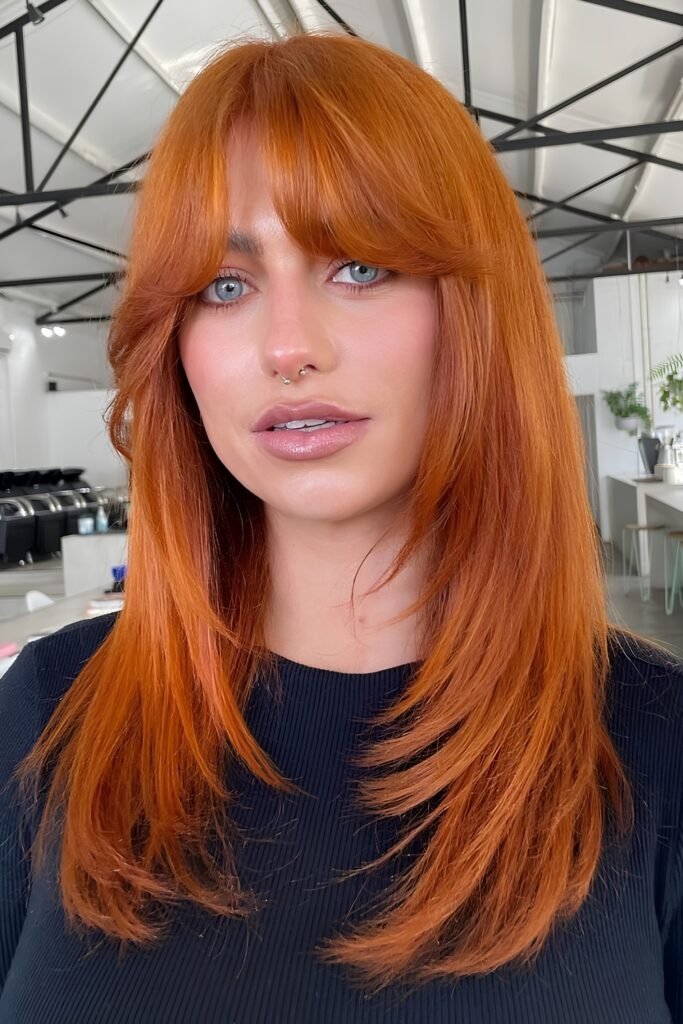
1. Classic Copper Curtain Bangs
The standard version: a centre-parted fringe falling to around the cheekbones on both sides, blending into face-framing layers.
The reason this shape has lasted is that it suits almost every face shape, and it is particularly good on round and square faces because the two falling sides create vertical lines that lengthen the face.
Blend into the layers behind. A curtain fringe that sits as a separate block reads as a fringe with hair behind it rather than as one continuous shape.
 Save
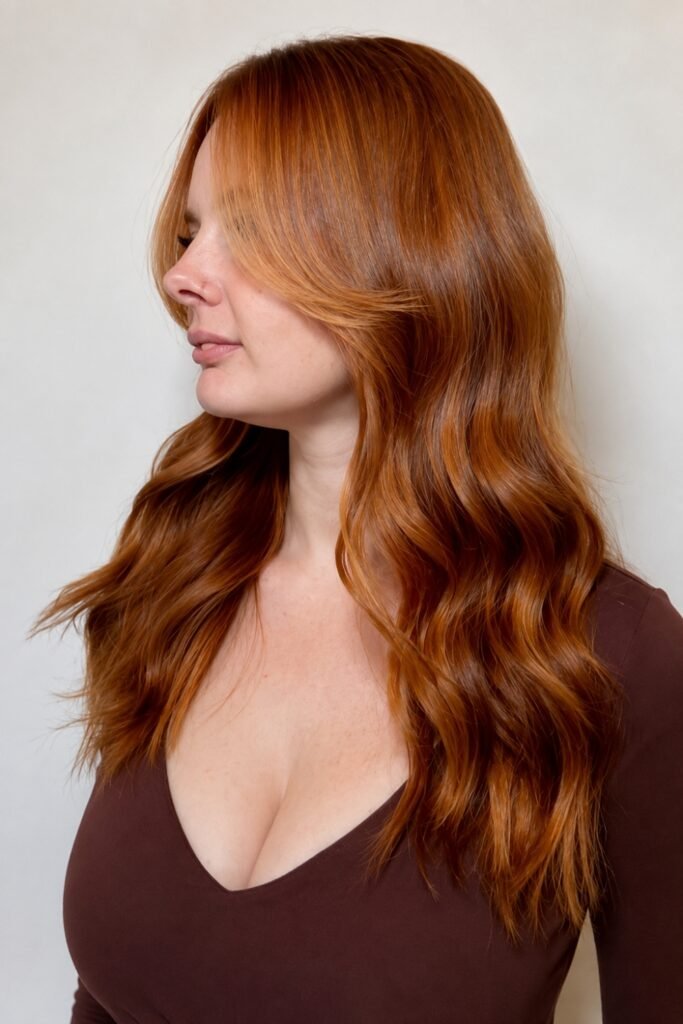
Save2. Long Copper Curtain Bangs
The same shape cut longer, reaching the jaw rather than the cheekbones.
The most forgiving version and the best starting point if you are not sure. It requires less daily shaping, which on copper means less heat and therefore less fade at exactly the section that fades fastest.
Also the easiest to grow out, since a long curtain fringe simply becomes a face-framing layer.
 Save
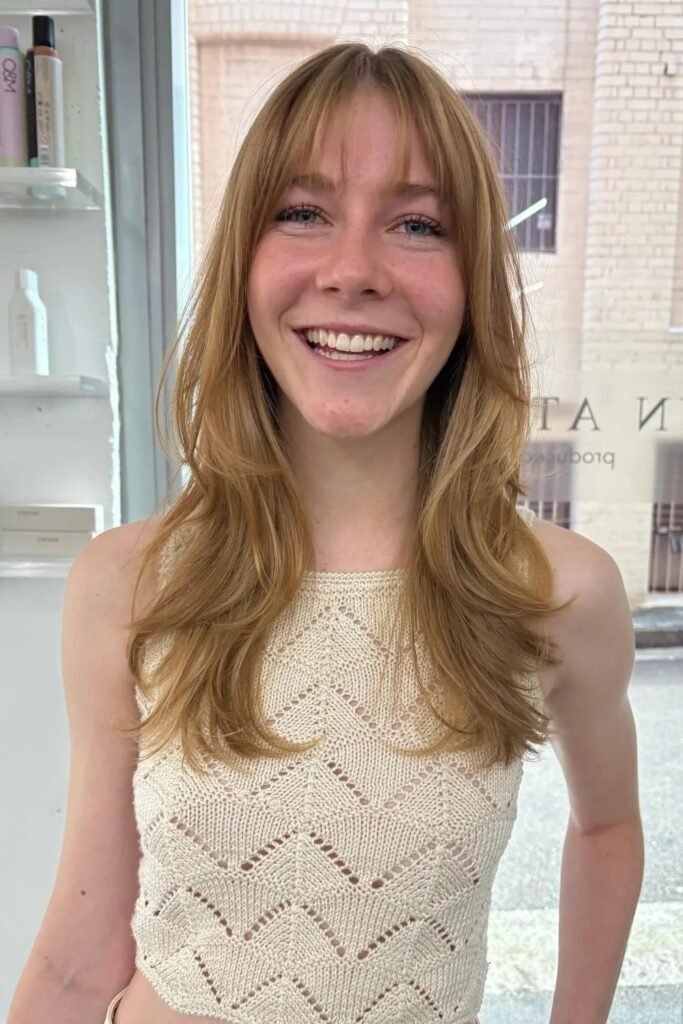
Save3. Wispy Copper Curtain Bangs
A lighter, thinner fringe with visible gaps, sitting softly rather than as a solid section.
Wispy suits fine hair better than a full curtain, since taking a dense fringe from fine hair removes density you need elsewhere. It also dries faster, which is a small but genuine advantage.
The lightest-touch option in terms of both styling and colour exposure.
 Save
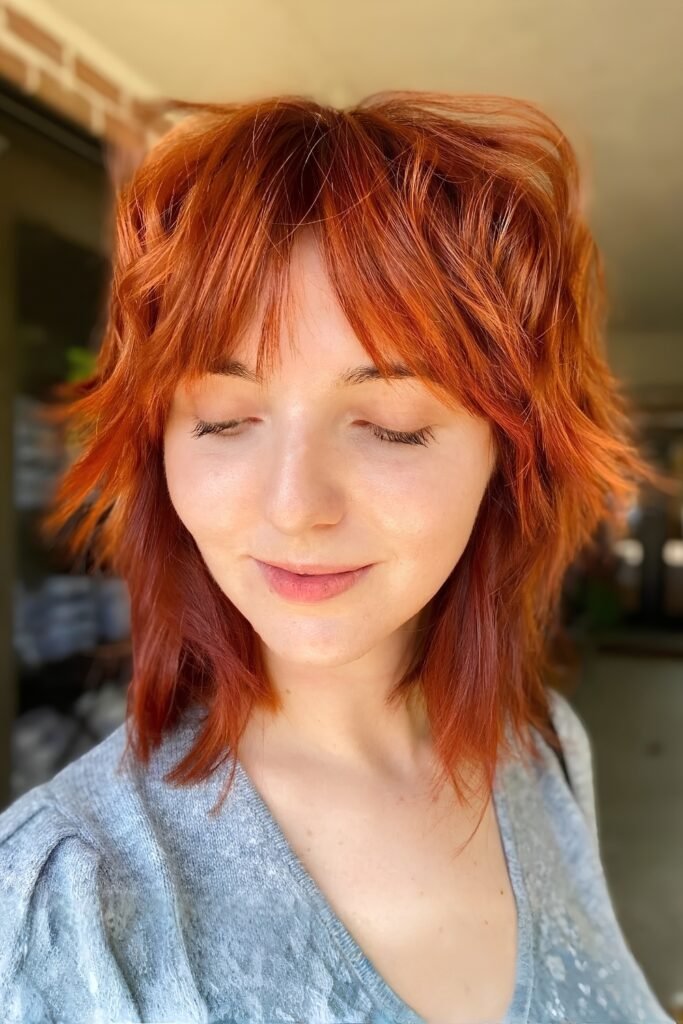
Save4. Choppy Copper Curtain Bangs
A textured, point-cut fringe with visible separation between the pieces.
This is where copper’s reflectivity does the most work. Choppy pieces catch light at different angles, which adds real dimension to the fringe without any highlight touch-up.
Best on medium to thick hair. On fine hair, choppy cutting removes weight from the section that can least spare it.
 Save
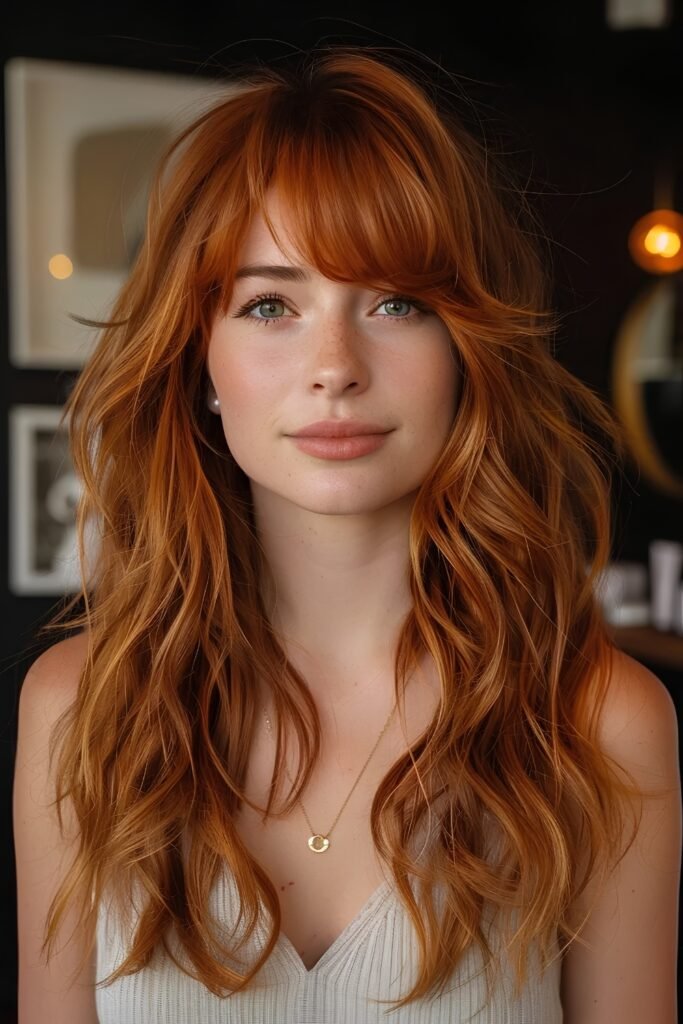
Save5. Tousled Copper Curtain Bangs
A fringe cut to work with natural texture rather than against it, falling in slightly undone pieces.
The practical choice for anyone whose hair does not blow-dry into obedience. Rather than fighting frizz with hot tools every morning, this version lets the natural texture do the work, and it always looks intentional.
Less daily heat on the fringe means noticeably slower fade. This is the lowest-maintenance entry here for a copper head.
 Save
SaveBy Length
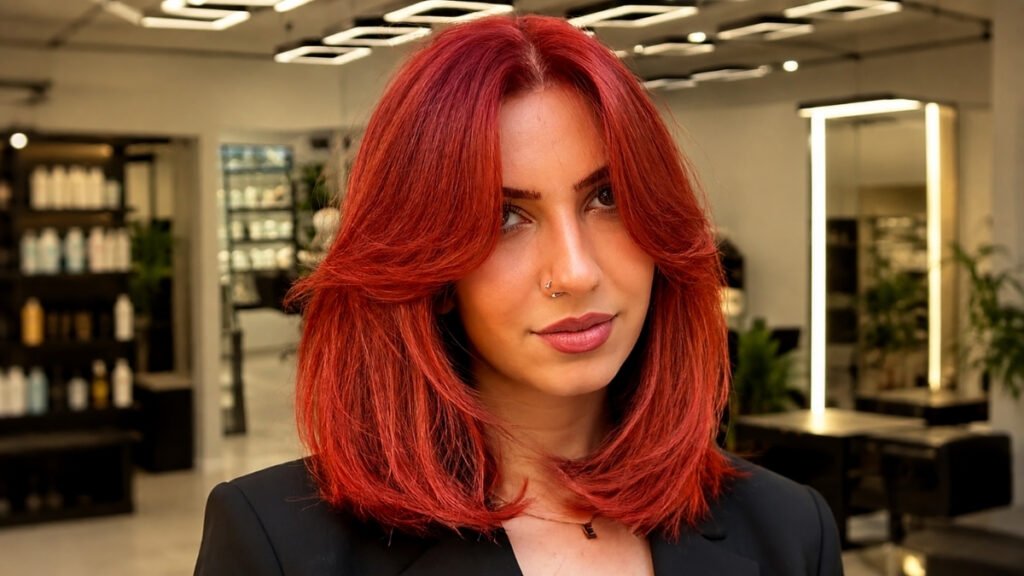
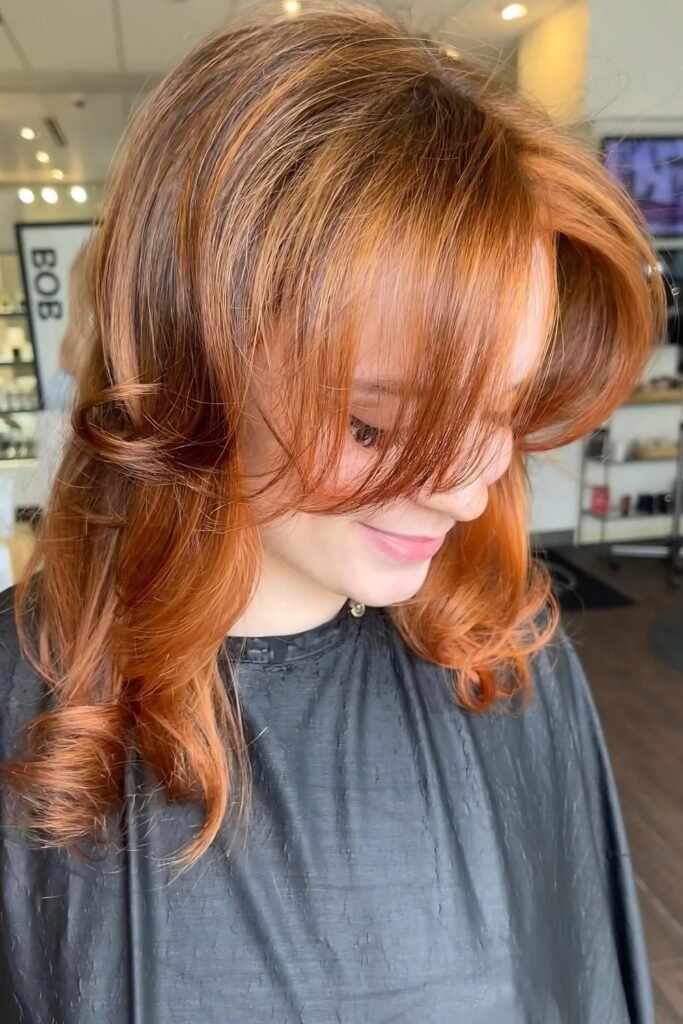
6. Copper Lob With Curtain Bangs
Shoulder-length with soft face-framing layers and an airy fringe.
The most requested combination in this category and a genuinely balanced one. The length frames the jawline, which suits oval, round and heart shapes, and the layers give the copper somewhere to move and catch light.
Styled with a smooth blowout and gently flicked ends, the layers enhance the reflective copper tones without needing much else.
 Save
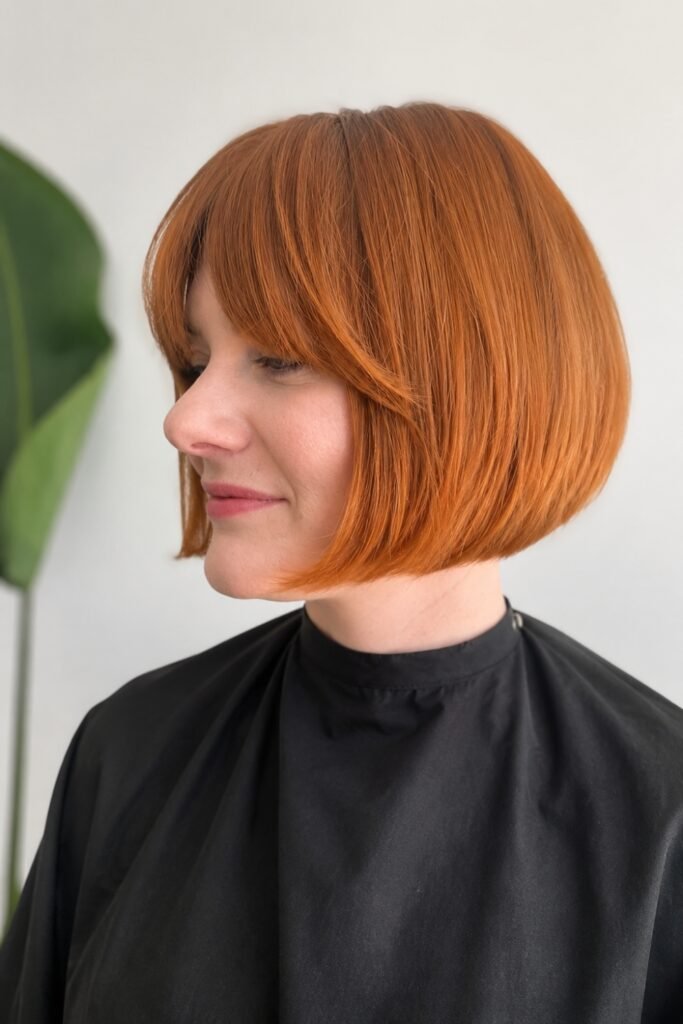
Save7. Copper Bob With Curtain Bangs
A chin-length bob with a fringe framing the face.
Shorter lengths have a quiet colour advantage: you cut off the oldest, most-faded ends more often, so a regular trim schedule doubles as colour maintenance.
For the length itself and its variations, our guide to chin-length bob haircuts covers the shape in more detail.
 Save
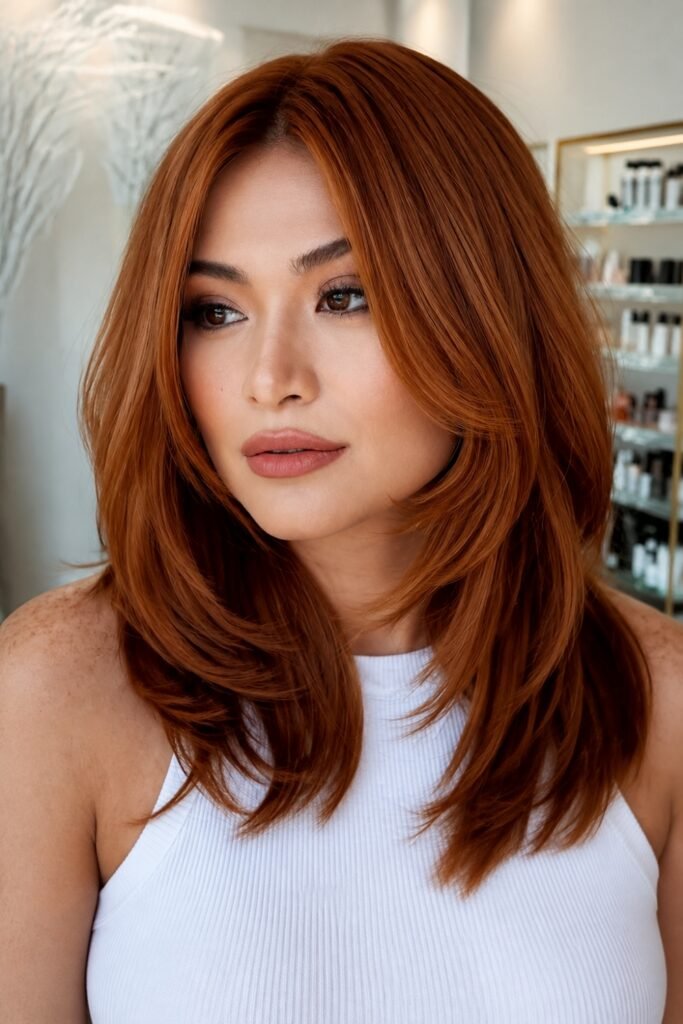
Save8. Medium Layered Copper With Curtain Bangs
Medium length with soft feathered layers sitting just below the shoulders, the fringe sweeping away from the face.
This works especially well on medium to thick hair, since the layers remove weight while keeping the shape bouncy and full. Curtain bangs also take weight out of the front specifically, which stops thick hair overwhelming the face.
A round brush during blow-drying lifts the roots and sweeps the fringe back for the airy, voluminous effect the style is known for.
 Save
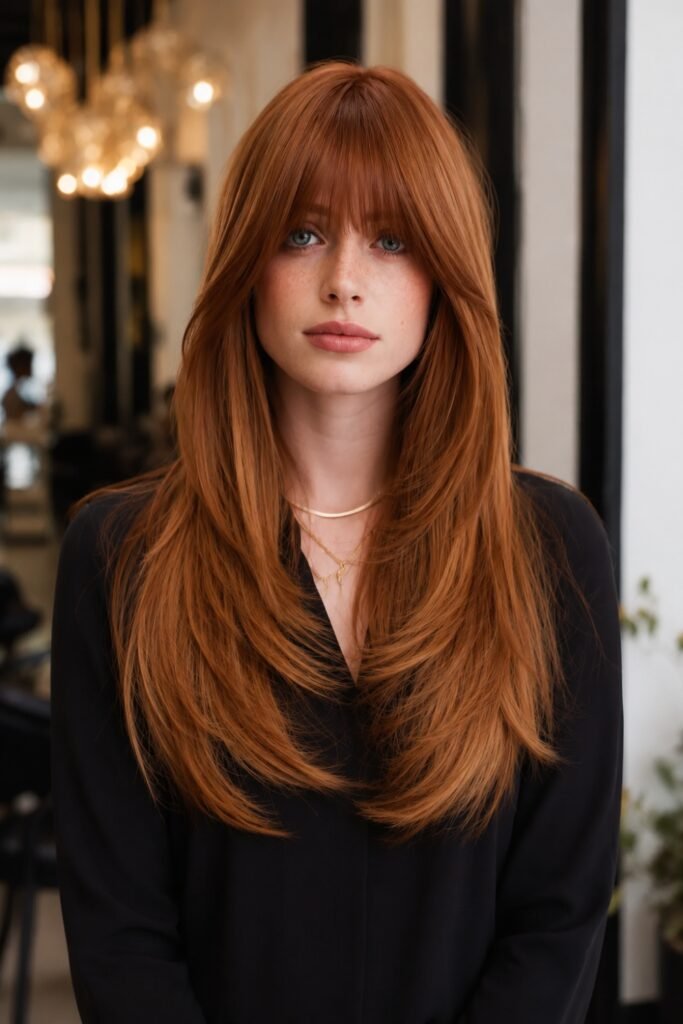
Save9. Long Copper With Curtain Bangs
Length kept well past the shoulders with the fringe as the only face-framing element.
The fringe is doing a lot of work here. Long copper hair without a fringe reads as one heavy block of colour, and a curtain fringe breaks it up at exactly the point where the eye lands.
Ends need to be in good condition. Long copper shows fade most at the ends, where the hair is oldest.
 Save
Save10. Copper Shag With Curtain Bangs
Choppy layers throughout with a long, textured fringe blending into them.
Equal parts rocker and romantic, and the version where the fringe and the cut are genuinely one thing rather than two. The fringe drapes past the cheekbones and disappears into the razored layers below.
The reflectivity point applies across the whole cut here, not just the fringe. Every choppy piece is a surface catching light.
 Save
SaveColour Placement
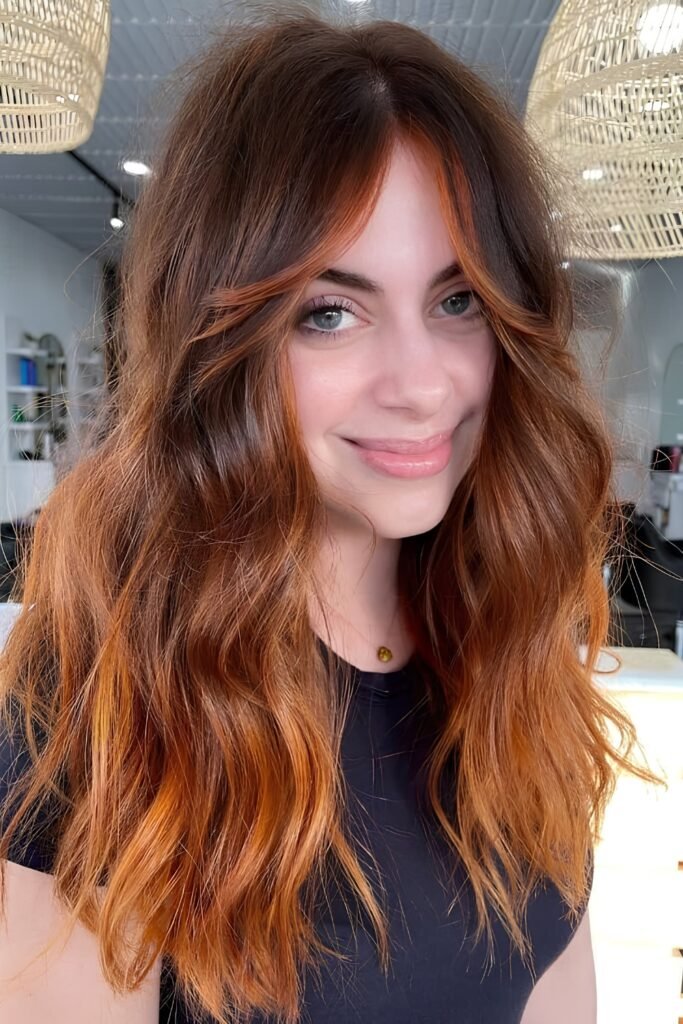
11. Copper Balayage With Curtain Bangs
Copper painted through the mid-lengths and ends with a deeper natural base at the root.
Balayage grows out gracefully and avoids the hard regrowth line, which matters enormously in a colour family that needs refreshing this often.
Ask for the fringe to be treated as its own section. Because it fades faster, a fringe coloured identically to the lengths will drift out of match within weeks.
 Save
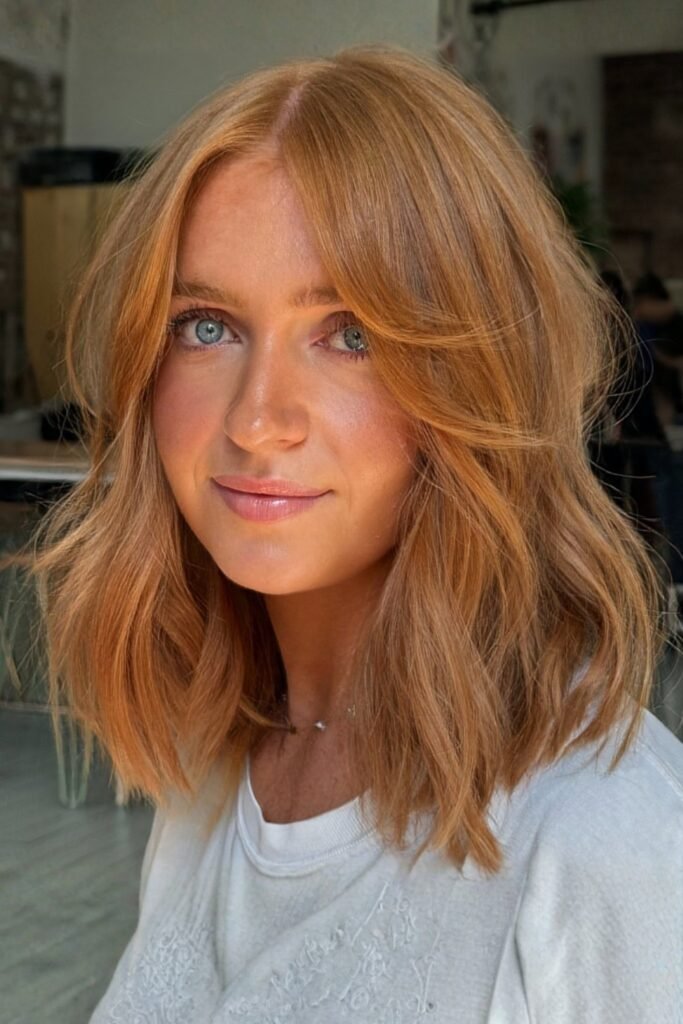
Save12. Golden Copper With Soft Curtain Bangs
A warm golden copper on a lob with soft face-framing layers and an airy fringe.
This is the answer for anyone who wants red without the maintenance. Golden copper delivers radiant warmth with a softer, lower-maintenance finish, and the fade is far less visible because the destination shade is closer to the starting point.
The most wearable and most forgiving colour on this list.
 Save
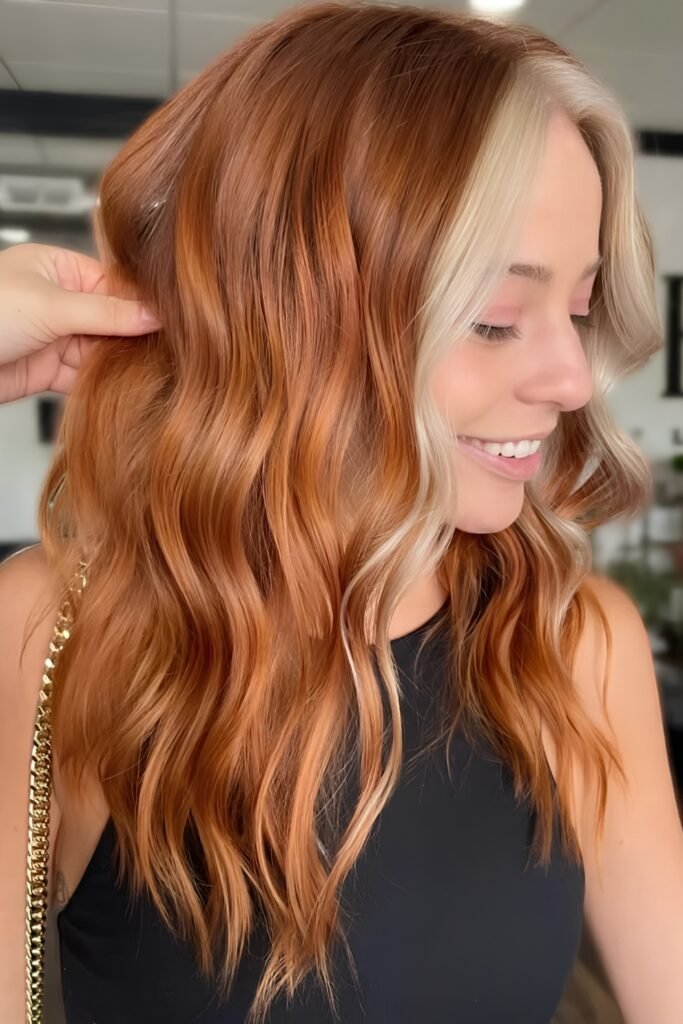
Save13. Copper With Blonde Curtain Bangs
The fringe deliberately lifted lighter than the rest, turning the fade problem into a design decision.
If your fringe is going to lighten anyway, this is the clever response: plan for it. A deliberately blonder fringe against copper lengths reads as an intentional contrast rather than as a colour that has gone wrong.
Requires more lightening at the most fragile section, so condition matters. Discuss whether your fringe can take it.
 Save
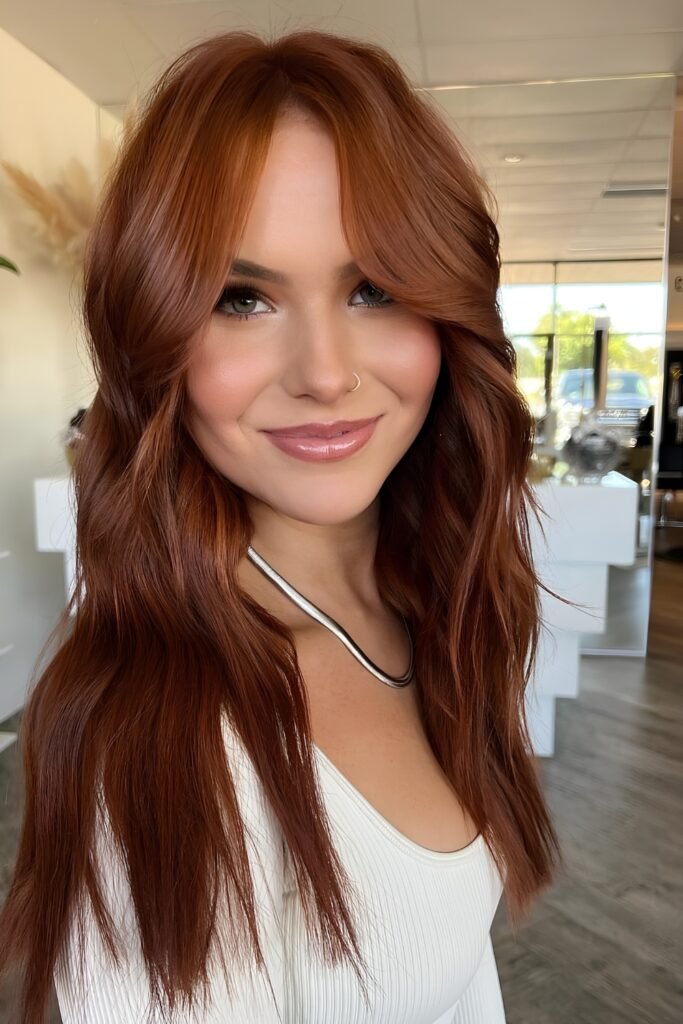
Save14. Deep Copper With a Darker Root
Rich copper through the lengths with a deliberately deeper root shadow.
The lowest-maintenance colour structure here. A shadowed root removes the regrowth deadline entirely, and deep copper holds longer than bright.
For the fringe specifically, a slightly deeper tone than the lengths compensates in advance for the faster fade, so the two match after a few weeks rather than before.
 Save
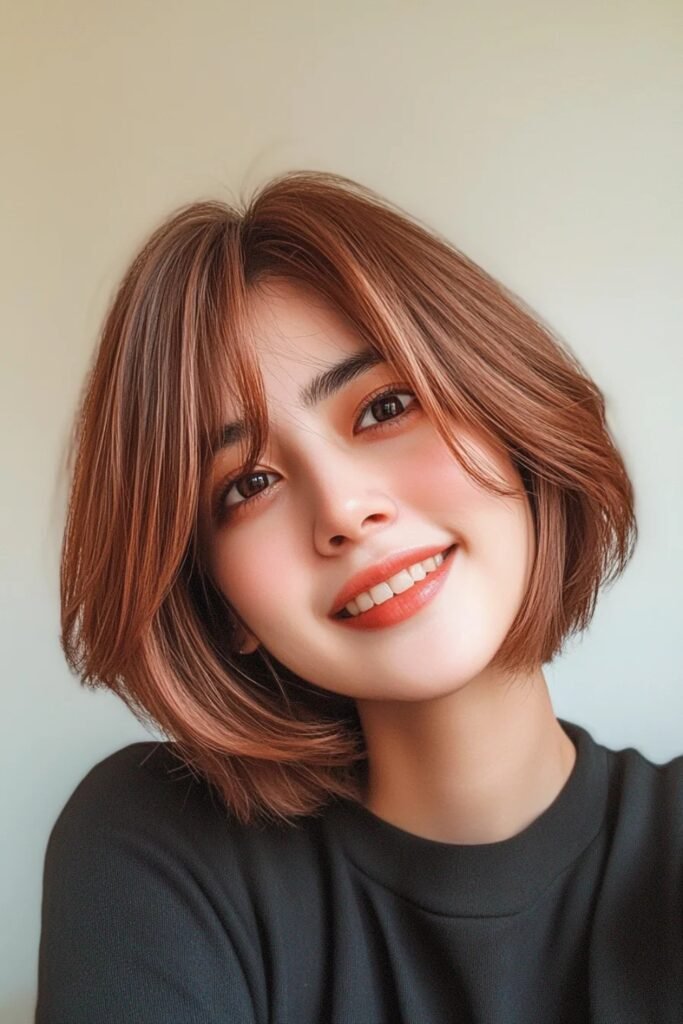
Save15. Copper Curtain Bangs on Short Hair
A cropped or short layered cut with a fringe long enough to sweep.
Short copper is the most colour-efficient version of this look, since frequent trims continually remove faded ends. The fringe stays the longest section and remains the focal point.
Our guide to short graduated bob haircuts covers the graduated shapes that pair well with a longer sweeping fringe.
 Save
SaveKeeping the Fringe Matched to the Lengths
This is the practical section and the reason the article exists.
Wash the fringe separately.
You almost certainly need to wash your fringe more often than the rest of your hair, because that is where the oil is. Rinsing just the fringe at the sink, rather than washing your whole head, is the single most effective thing you can do to slow the mismatch.
Reduce the heat on the fringe specifically. It is the section that gets styled daily. Air-drying it and shaping with your fingers, or using a cool shot, protects the section that needs protecting most.
Ask for the fringe to be coloured slightly deeper. A colourist who knows the fringe will fade faster can go a shade deeper there, so the two sections converge over the following weeks rather than diverging.
Use a colour-depositing conditioner, not purple shampoo. Purple neutralises yellow and does nothing for a fading copper. You need a copper or red depositing product that puts pigment back.
Protect from the sun. The fringe takes the most direct sun of any section on your head. A hat is unglamorous and extremely effective.
Common Questions
Why does my copper fringe fade faster than the rest of my hair?
Because it is the highest-exposure section. Curtain bangs sit on the forehead where oil accumulates, so they are washed more often. They need shaping daily, so they take more heat. And they sit at the front of the head, so they get the most direct sun. Copper is already the fastest-fading colour family, so the combination shows quickly.
How long does copper hair colour last?
Roughly four to eight weeks with a good care routine. Vivid, bright coppers fade sooner, at around three to five weeks, while darker auburn-leaning shades hold longer. Your fringe will typically reach the faded stage before your lengths do.
Do curtain bangs suit my face shape?
Almost certainly. Curtain bangs suit nearly every face shape, and they are particularly flattering on round and square faces, where the two falling sides create vertical lines that lengthen and soften the features. The variable worth adjusting is length rather than whether to have them at all.
What is the lowest-maintenance version of this look?
Golden copper on a lob with a long, tousled curtain fringe. Golden copper fades less visibly than vivid copper, a longer fringe needs less daily shaping and therefore less heat, and a tousled cut works with natural texture rather than requiring a blow-dry. A shadowed root removes the regrowth deadline as well.
Can I get copper curtain bangs if my hair is fine?
Yes, with a wispy rather than a full or choppy fringe. Taking a dense fringe from fine hair removes density from the front, where you can least afford it. Wispy bangs give you the shape without that cost, and they dry faster, which means less heat on the fastest-fading section.
Final Thoughts
Copper curtain bangs are one of the most flattering colour and cut combinations available, and the reflectivity of the colour at the face is genuinely the reason.
Just plan for the fringe. Wash it separately, keep the heat off it, and ask your colourist to go slightly deeper there than on the lengths. Those three habits are the difference between a colour that looks deliberate at week six and one that looks like it is halfway through growing out.