Here is the thing about highlighting long hair that no gallery mentions. A single strand of your hair is not one uniform material.
The hair at your waist may be three or four years old. It has been through several hundred washes, several summers of sun, and however much heat styling you have done in that time. Your roots are weeks old and essentially virgin. Colourists account for this explicitly, because the same lightener applied to both will behave completely differently: ends that have been processed before are more porous than the mid-lengths, so they grab faster and lift further.
That is why long-hair highlights go patchy. The placement is usually fine; one formula simply met three different hair conditions on the same head.
For more shade ideas, see our balayage hair color ideas and fall hair color ideas.
Before You Choose a Style
Two tests tell you more than any inspiration photo, and a good colourist will do both at consultation.
The water drop test. A drop of water on clean dry hair. If it absorbs immediately, your hair is high porosity, usually from damage or previous processing. If it beads and rolls off, it is low porosity. High porosity hair grabs colour unevenly and needs babylights or very strategic balayage with lower developer volumes and shorter processing. Low porosity can handle traditional foils but needs longer.
The elasticity test. Healthy hair stretches roughly fifty percent of its length when wet and returns. Hair that snaps immediately signals that a gentler approach is needed, meaning babylights rather than full highlights. Hair that stretches without returning indicates protein damage that needs assessing before any chemical service.
One more thing worth knowing. If you have had foil highlights for years, your hair has established highways of porosity where the old bleach sat. A colourist can work with those patterns, but switching techniques may require correction rather than a simple new service.
And if your hair is significantly compromised, the right answer may be to strengthen and restore it first. A colourist who says that is doing their job. On hair that took four years to grow, that is advice worth taking.
Painted Techniques
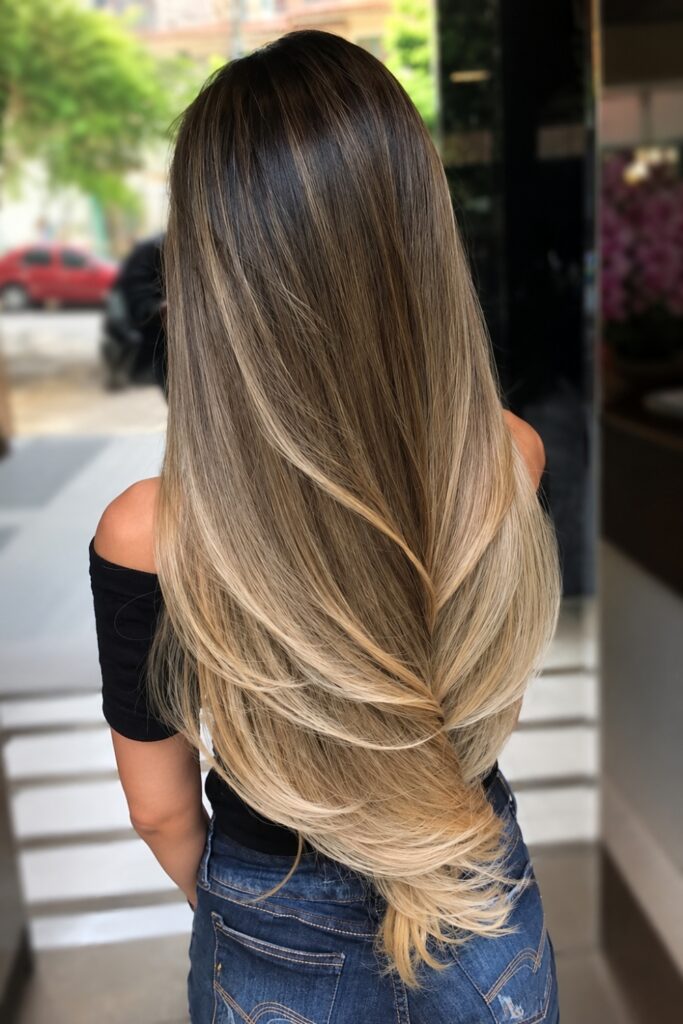
1. Classic Balayage
Lightener hand-painted onto the surface of the hair, starting mid-shaft and concentrating toward the ends.
The default for long hair and for good reason. Because the lightening starts away from the roots, the regrowth line is gradual rather than a hard demarcation, and it lasts three to six months between appointments rather than six to eight weeks.
It will not give you root-to-tip brightness or a dramatic change in one visit. If that is the goal, this is the wrong technique rather than a slow version of the right one.
 Save
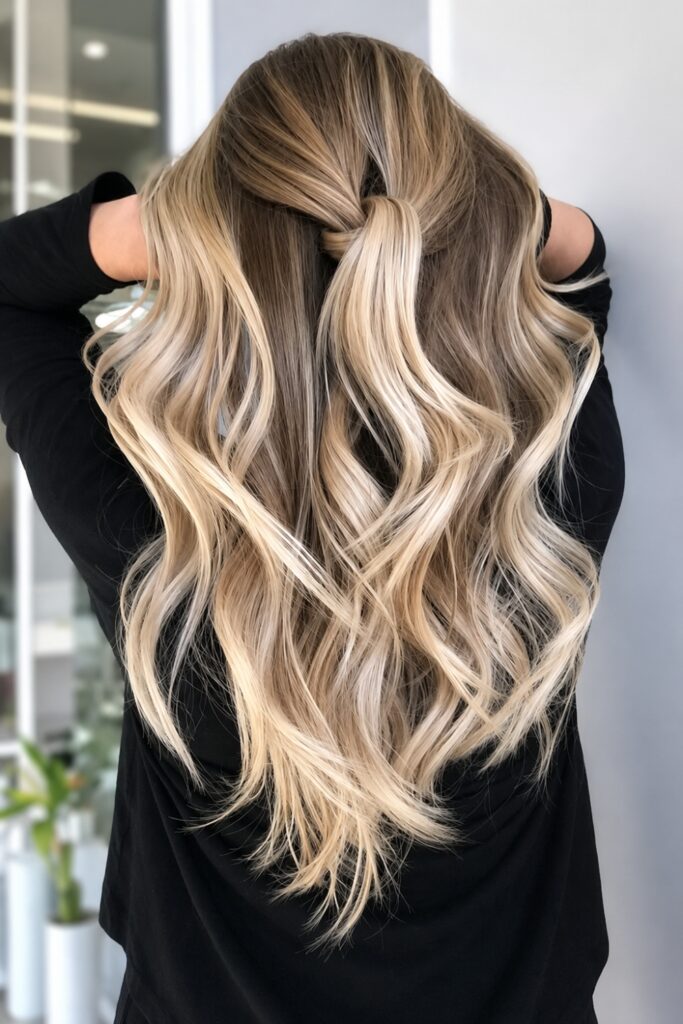
2. Foilyage
Painted placement wrapped in foil to intensify the lift.
The best of both approaches. You keep the diffused, low-maintenance grow-out of balayage while getting the brighter lift that foil heat provides.
The sensible choice for anyone who wants light ends on dark hair but does not want a hard regrowth line. Ask for it by name; not every colourist offers it unprompted.
 Save
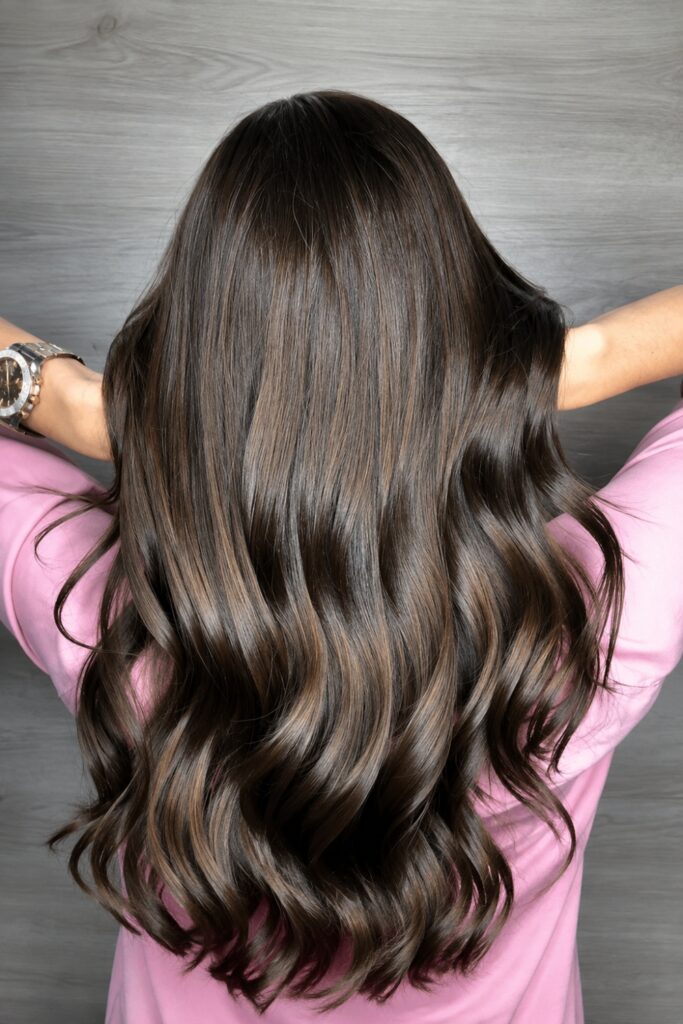
3. Babylights
Very fine, delicately woven highlights that mimic the natural lightness of children’s hair.
The gentlest lightening option available, and the correct answer for high-porosity or fragile hair where traditional foils would be too aggressive. Fine sections mean less lightener on any one piece.
Also the most natural-looking result on long hair, because the fineness of the sections means no individual highlight reads as a stripe.
 Save
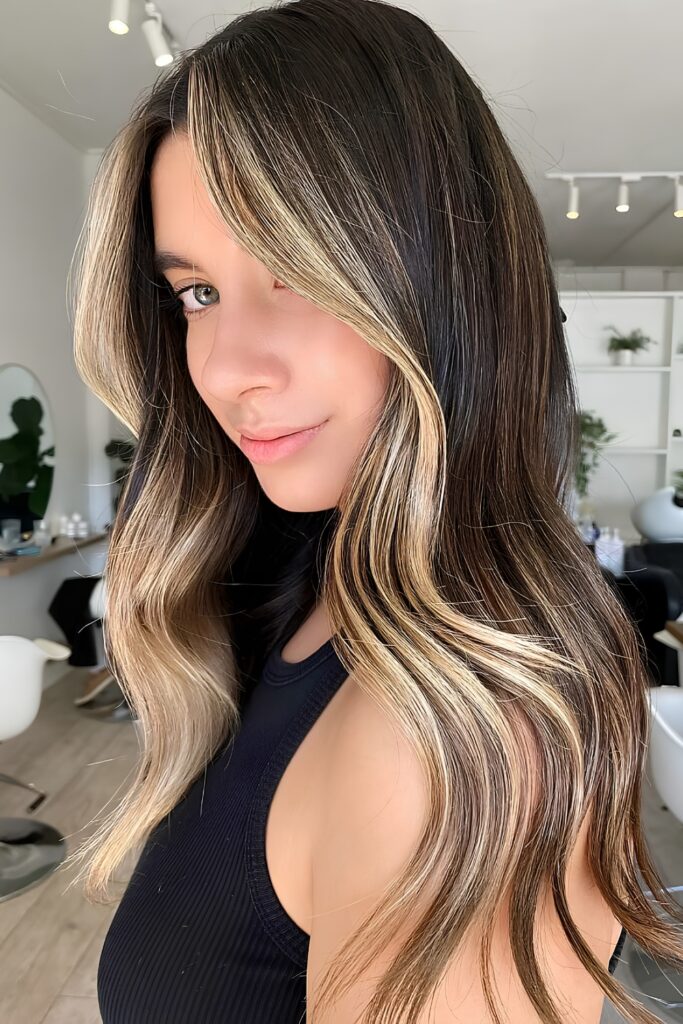
4. Money Piece
Two bright face-framing sections at the front, lighter than the rest.
The highest-impact-per-appointment option here. Because it sits at the face, a money piece changes how your colour reads without touching the rest of your head.
Good entry point if you have never lightened before. It commits very little hair and grows out without correction.
 Save
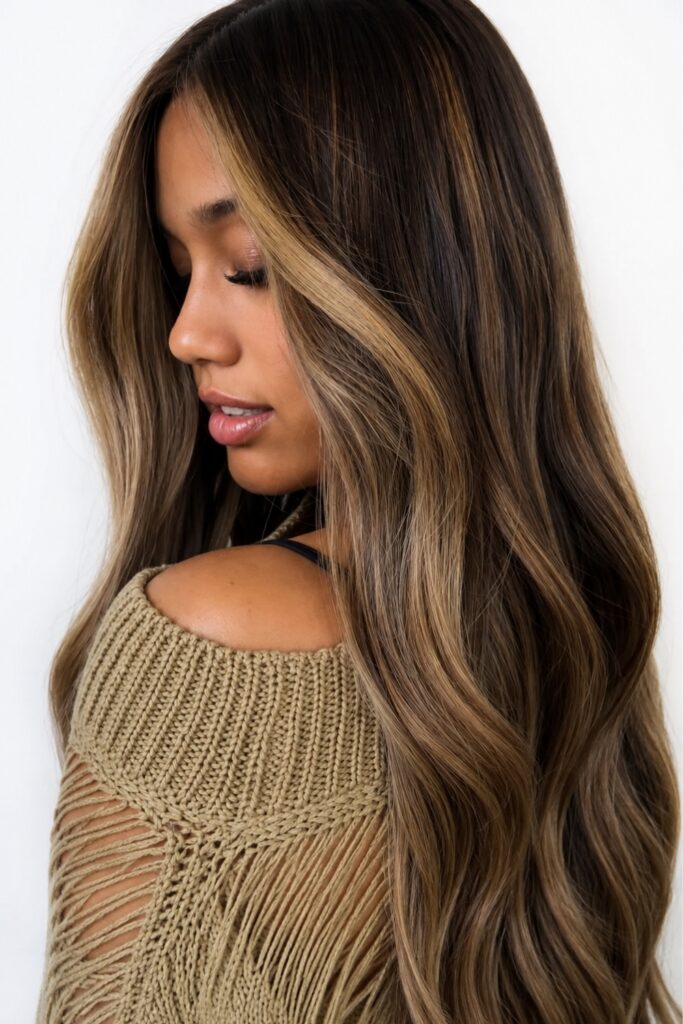
5. Face-Framing Highlights
Brightness concentrated around the face and softening back into the length.
Broader than a money piece and softer. The lift is where the eye lands, which is the most efficient placement on long hair, since a highlight at your waist is doing far less work.
Worth stating: on long hair, placement matters more than volume. Highlights positioned badly on a lot of hair achieve less than a few positioned well.
 Save
Foil Techniques
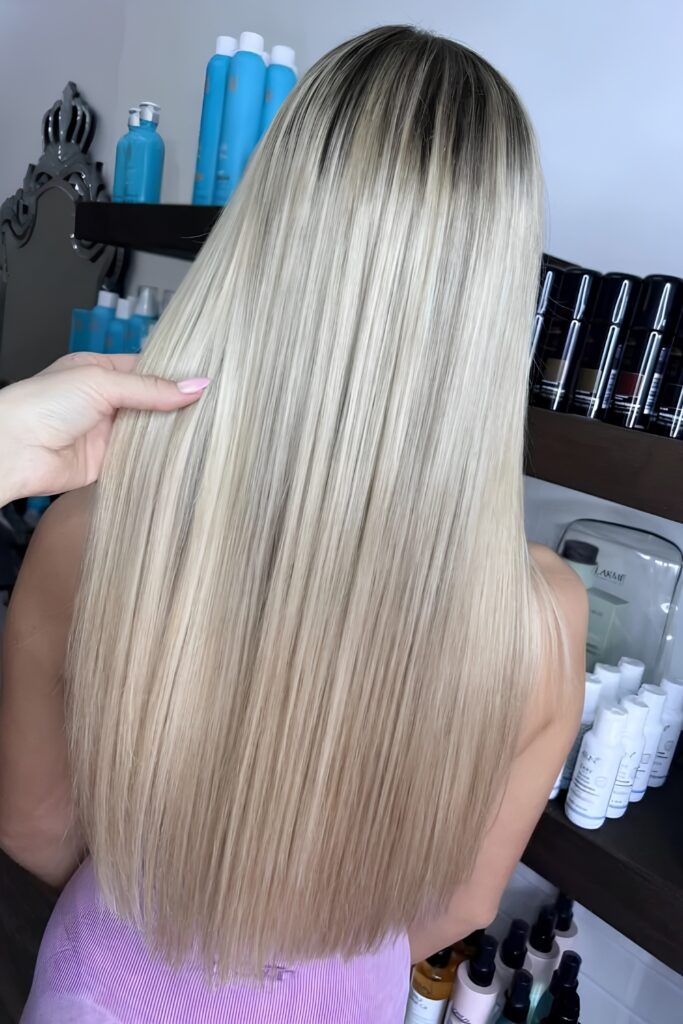
6. Full Foil Highlights
Fine sections lifted from root to end and sealed in foil, applied throughout the head.
The technique for uniform, consistent brightness from roots to ends. Foil traps heat, which speeds processing and delivers higher contrast than any painted method.
The trade is maintenance. Regrowth becomes visible at around six to eight weeks and returning on that schedule is the commitment.
 Save
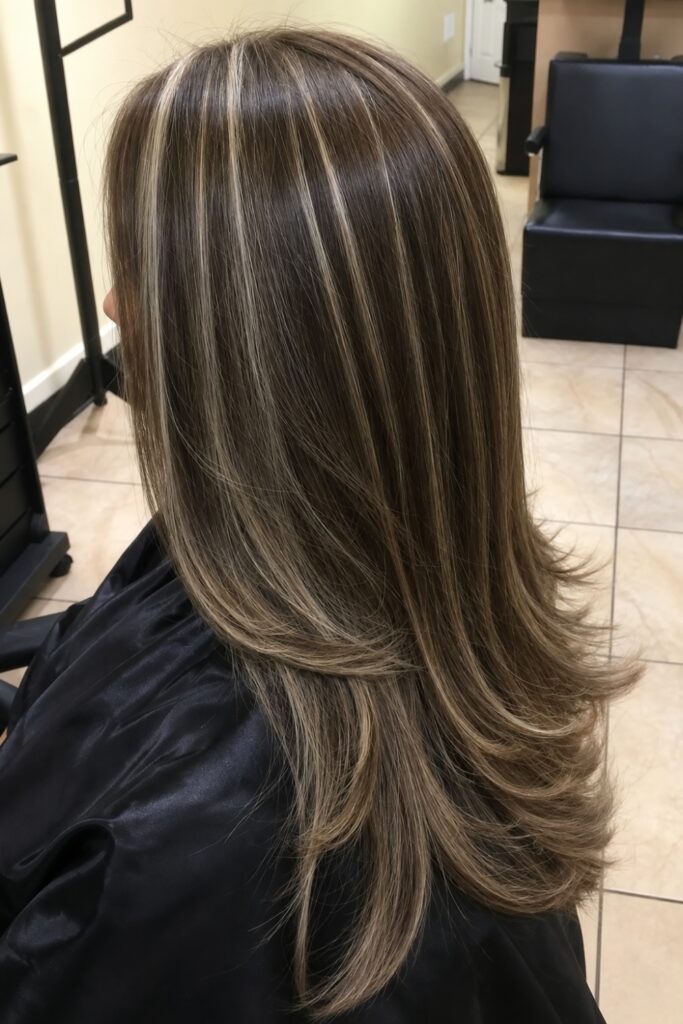
7. Partial Foil Highlights
Foils confined to the top layers and around the face, leaving the under-sections untouched.
More efficient than a full head for most long hair, since the lower layers are largely hidden anyway. Less lightener overall, which also means less cumulative processing.
For heavily highlighted hair, this is the sensible way to refresh without adding more bleach to hair that has already had plenty.
 Save
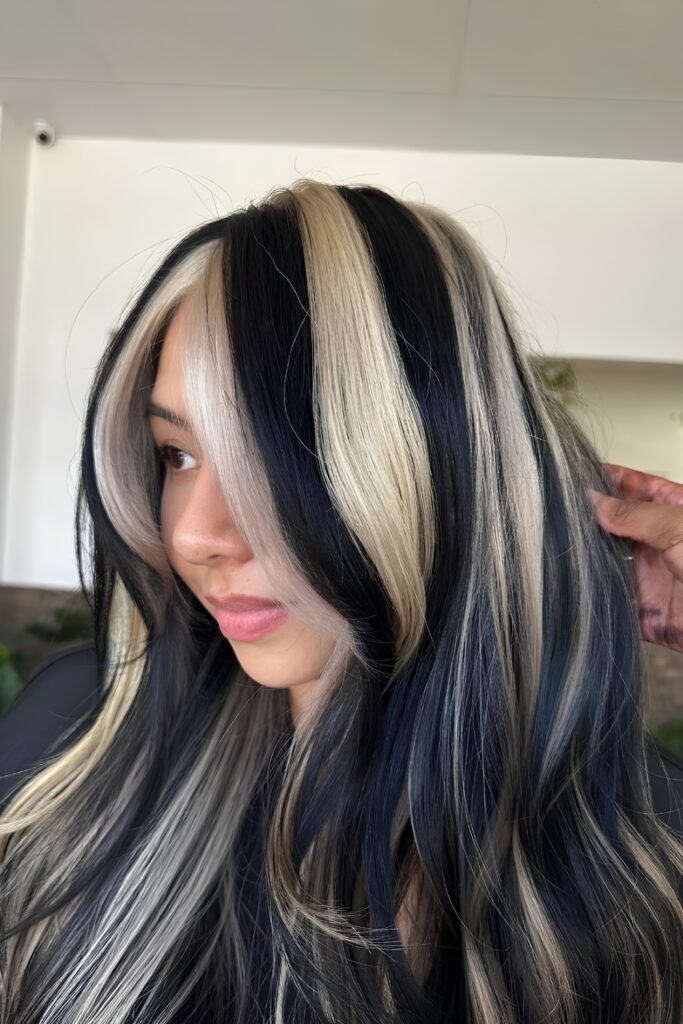
8. High-Contrast Chunky Highlights
Wider, more defined sections with a strong gap between the highlight and the base.
The 90s-referencing bold option, and it is having a moment again. It reads as deliberate rather than sun-kissed, which is the point.
One caution: bulky, uneven highlights on fine hair can make it look sparse. This one wants density behind it.
 Save
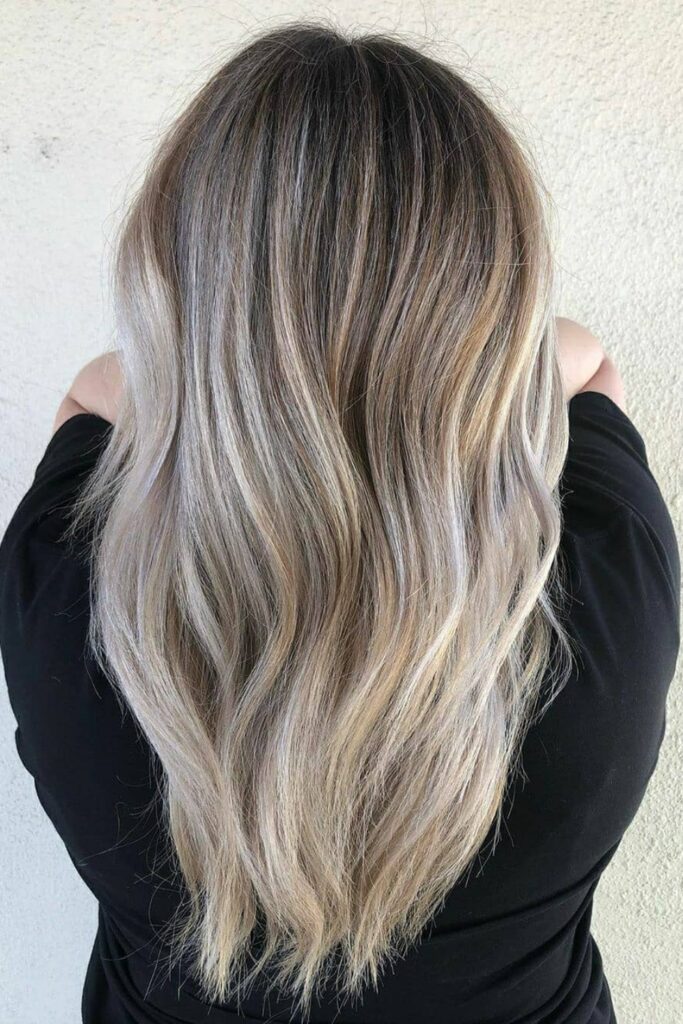
9. Root Shadow With Highlights
Highlights applied and then the root deliberately deepened, blurring the line where colour meets natural hair.
The single most effective way to extend the time between appointments. A shadowed root removes the regrowth deadline entirely, since there is no sharp line to grow out.
Ask for a root melt at the end of the service. It refines the transition and harmonises the whole result.
 Save
Colour Directions
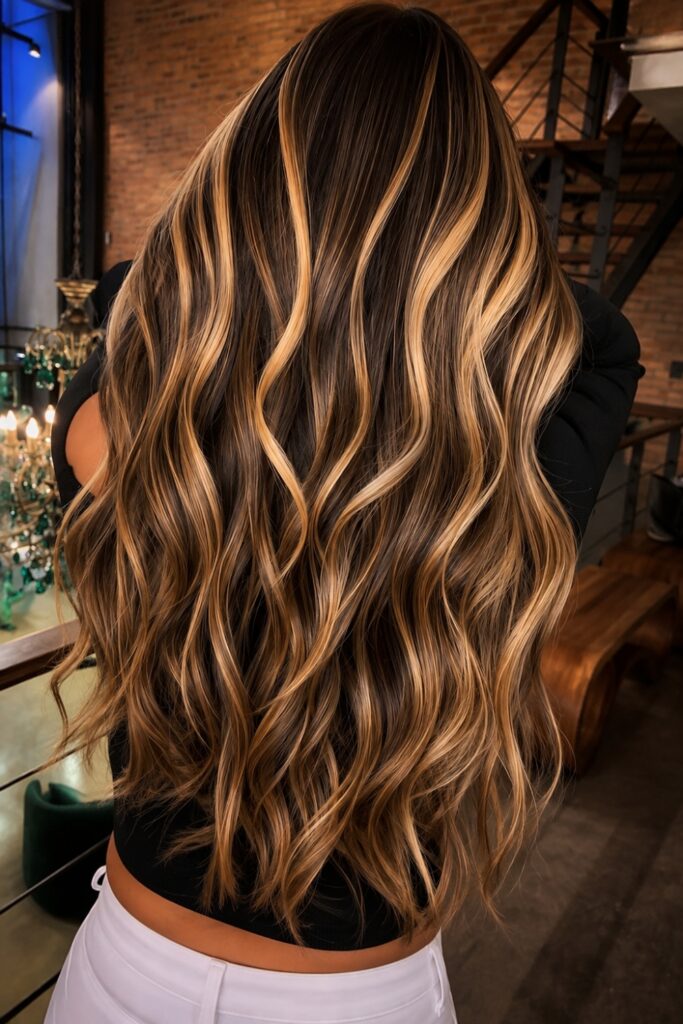
10. Golden Blonde Highlights on Brown
Warm golden pieces a few levels lighter than a brown base.
The most universally flattering combination in this category and the one most people mean by highlights. Warm tones on a warm base blend rather than contrast.
Two to three levels lighter than your base is the guideline for a natural result. Beyond four and you are into a different look entirely.
 Save
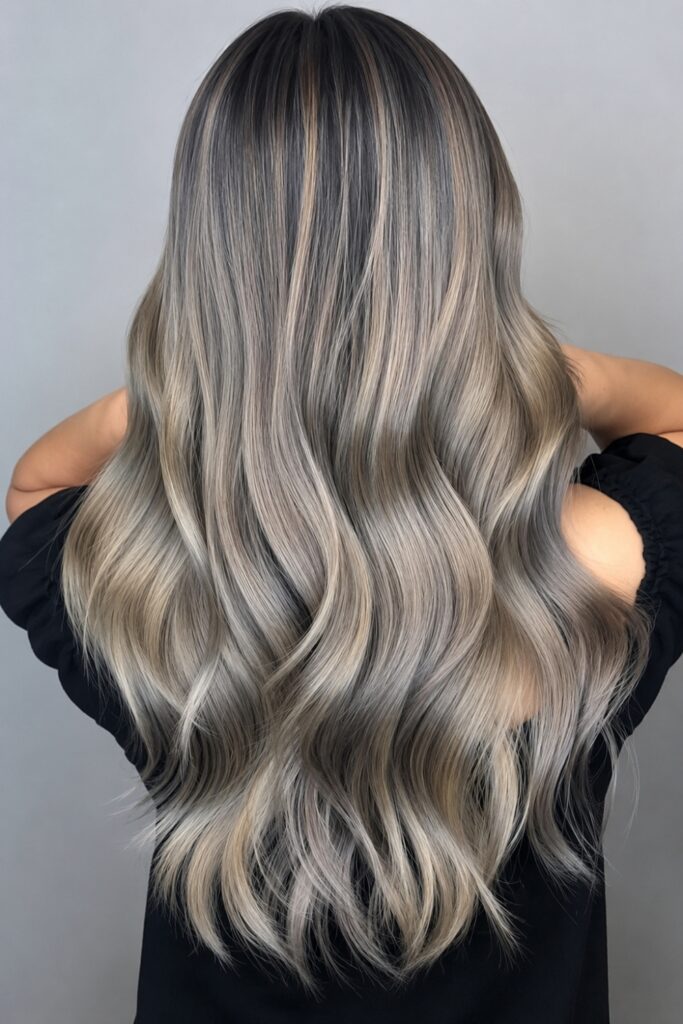
11. Ash and Cool-Toned Highlights
Cooler, less golden lift, avoiding warmth in the lightened sections.
Cool tones suit cool skin undertones and read more modern than golden on some bases. They also require more maintenance, because lifted dark hair exposes underlying warmth that must be toned out.
Budget for a toner or gloss every few months. Without one, cool highlights drift warm.
 Save
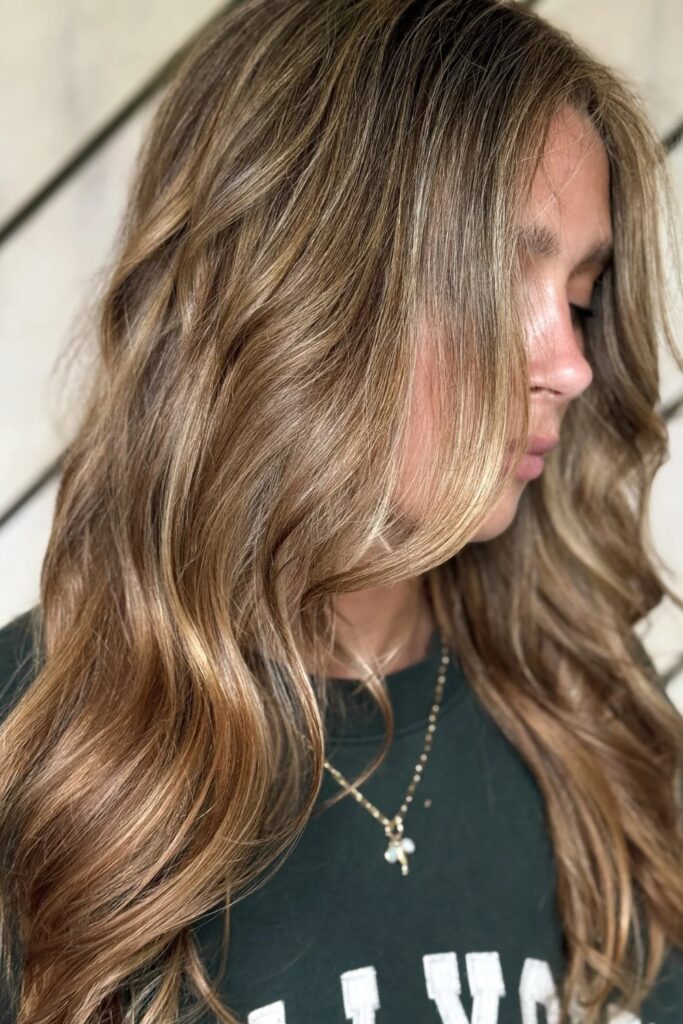
12. Caramel and Bronde
Mid-tone warm highlights that sit between brown and blonde.
The lowest-maintenance colour direction on this list. Because the highlight and the base are close in level, regrowth is barely visible and fading is barely visible.
The right choice if you want dimension rather than lightness.
 Save
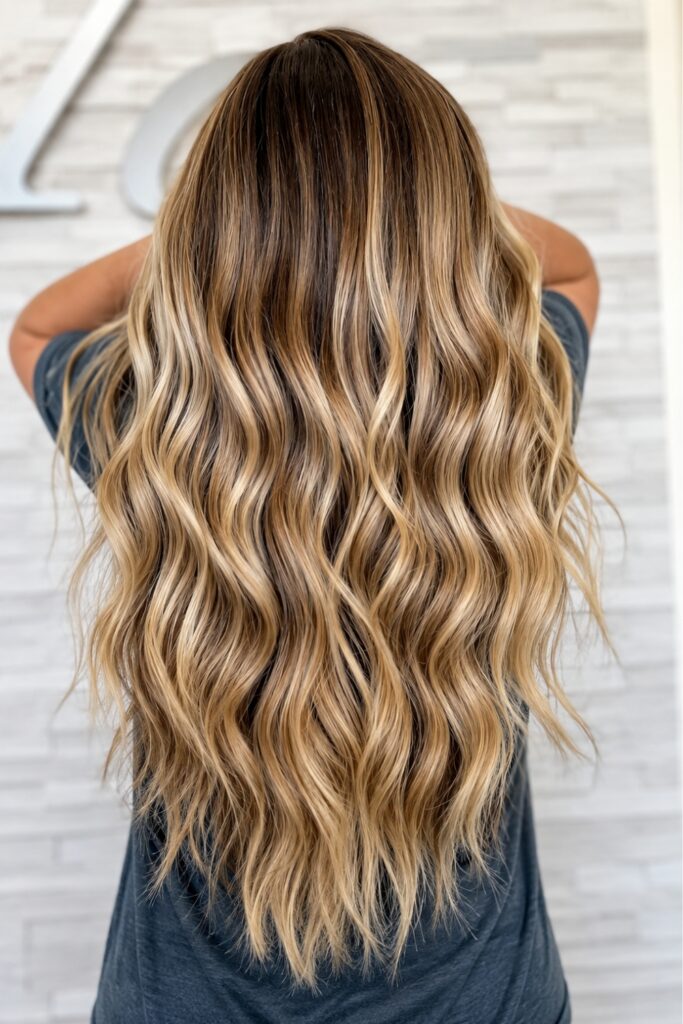
13. Reverse Balayage
Deeper tones added back into over-lightened hair to restore depth and contrast.
Worth including because a lot of long-haired readers do not need more lightening, they need less. Years of highlighting leaves ends pale and flat, and adding depth back sharpens the contrast far more effectively than adding more brightness.
Also the gentler service, since depositing colour is less damaging than lifting it.
 Save
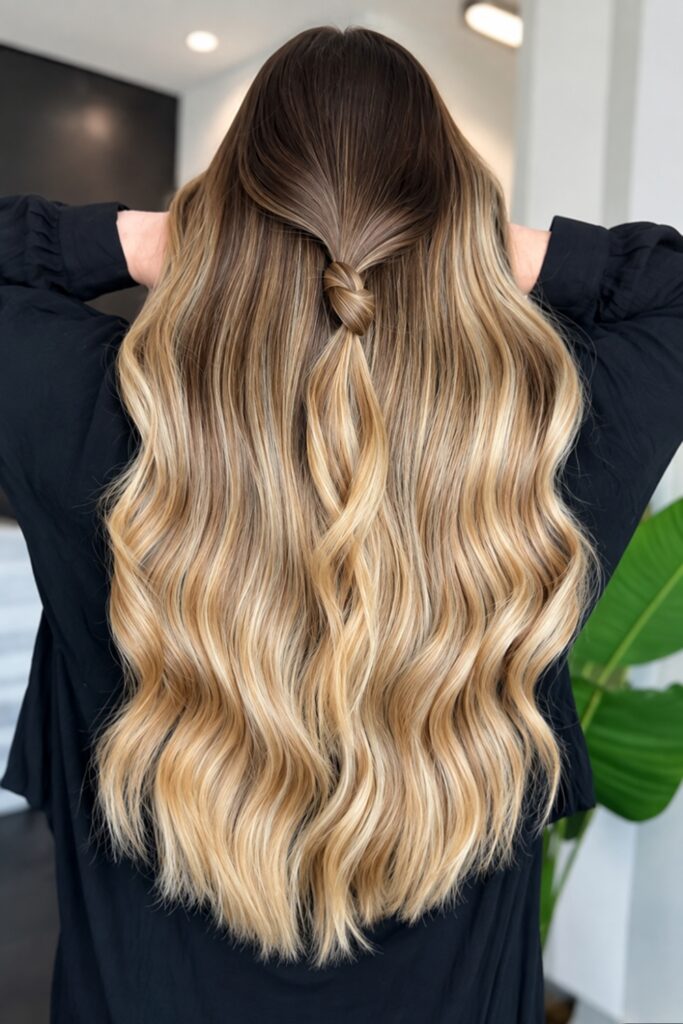
14. Lived-In Colour
A deliberately softened root with dimension through the mids and ends, designed never to look freshly applied.
The philosophy rather than a specific technique. By keeping the root diffused and concentrating brightness through the lengths, the colour looks as though it has grown out beautifully from the moment you leave.
The most practical approach for long hair, since long hair is the length people are least willing to sit in a salon for every six weeks.
 Save
Placement for Long Hair Specifically
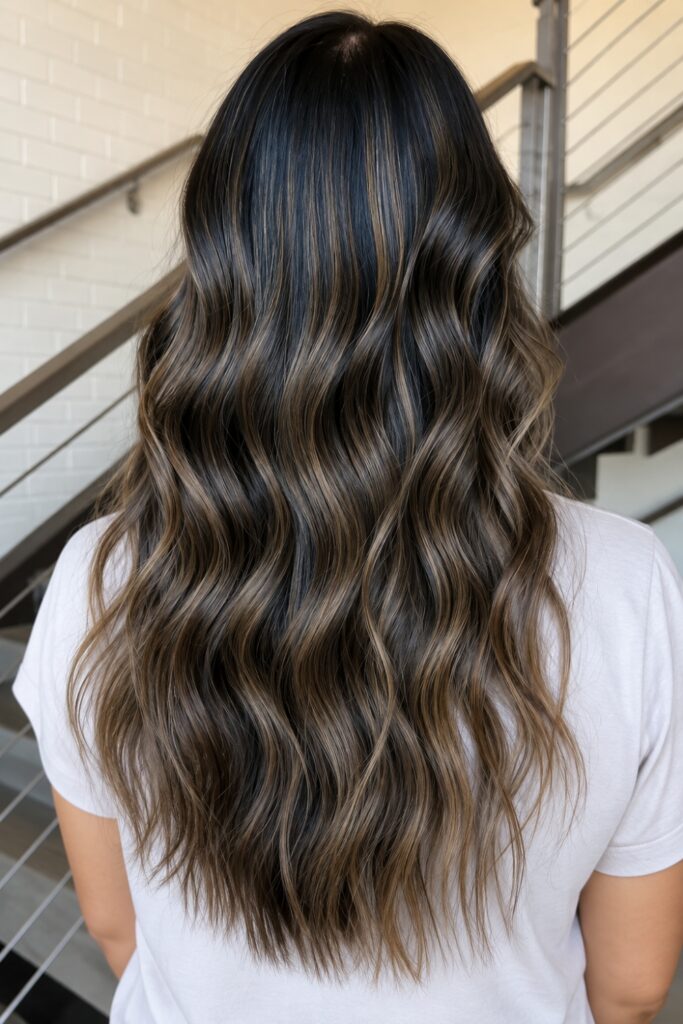
15. Highlights Through the Mid-Lengths Only
Brightness concentrated between the shoulder and the mid-back, with roots and ends left alone.
An unusual placement and a smart one for anyone whose ends are already porous. It puts the lift where the hair is strong enough to take it and avoids adding more processing to the oldest, most fragile section.
Discuss it explicitly. Most colourists default to lightening toward the ends.
 Save
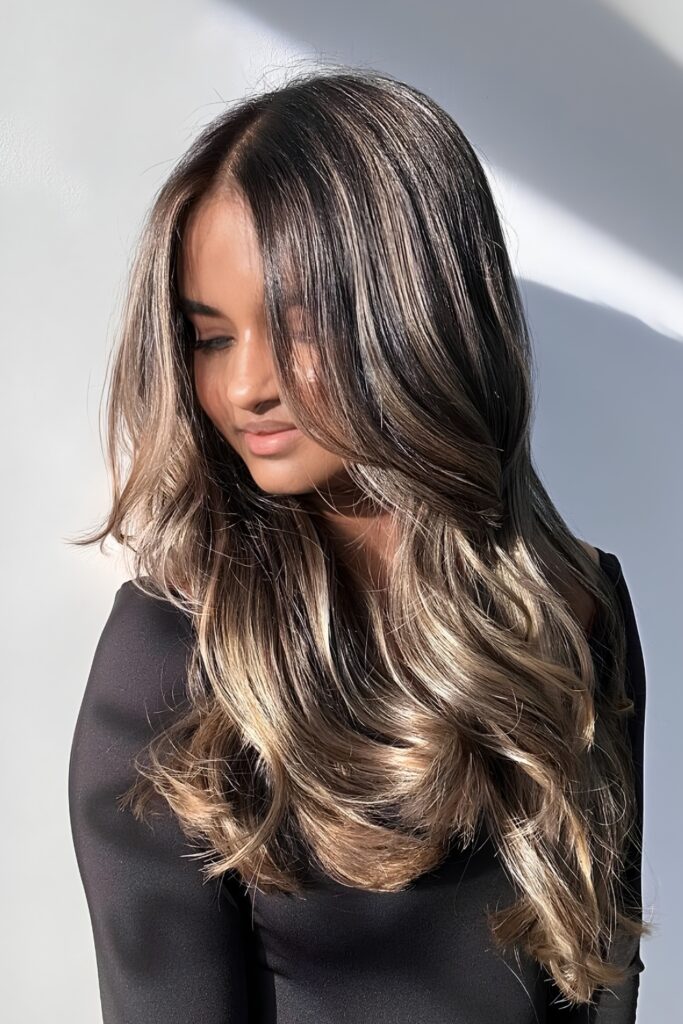
16. Highlights on Layered Long Hair
Placement calibrated to the layers so the lighter pieces surface where the layers fall.
On layered hair, highlights and cut work together. Lift placed without reference to the layers can disappear underneath them, and lift placed to catch the layer edges creates dimension that neither achieves alone.
Bring your cut to the colour appointment, or book the colour after the cut rather than before.
 Save
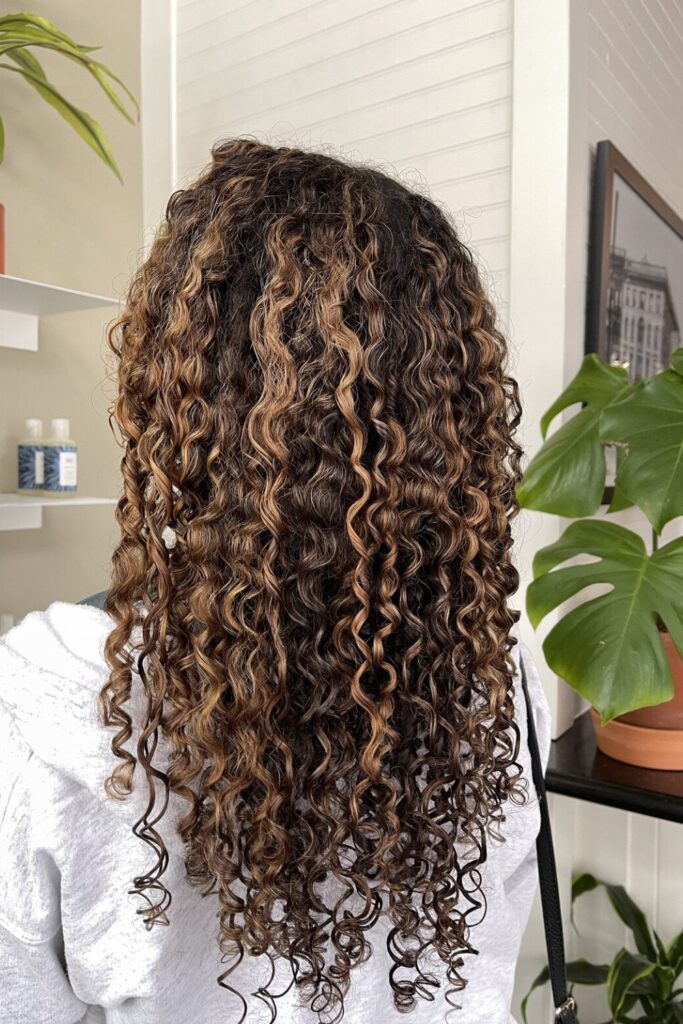
17. Highlights on Textured and Curly Long Hair
Placement following the curl pattern so the brightness lands on the outside of the curl where light hits it.
Curly hair is generally more porous than straight hair, which means it lifts faster and needs gentler processing. It also means highlights placed for straight hair will vanish into the curl.
Post-colour care matters more here. Lightened textured hair needs consistent moisture, and protective styling gives it a break from daily manipulation while it recovers. Our guide to protective styles for Black hair covers the options and the wash and moisturise routine that suits colour-treated textured hair.
 Save
Making Them Last on Long Hair
Long hair has a specific disadvantage: the ends are the oldest and most exposed section, and they are also where the brightness usually sits.
Wash less and cooler. UV exposure, frequent washing and hard water are the main causes of fading. Cooler water keeps the cuticle flatter, which holds pigment better.
Gloss or tone every few months. This is the difference between highlights that stay the colour you paid for and highlights that drift brassy. It is a shorter and cheaper appointment than a full service.
Trim the ends on schedule. On long hair this feels counterproductive, but the oldest ends are the most porous and the most faded. Removing them improves the colour more than any product.
Protect from sun. The ends of long hair get the most cumulative UV of any section, because they have been out in it for years rather than months.
Frequently Asked Questions
Why do my highlights look patchy on long hair?
Usually because the hair along a single strand is not uniform. Ends that have been processed before are more porous than the mid-lengths and grab colour faster, so the same lightener produces different results in different zones. An experienced colourist adjusts formula and timing by section rather than applying one mix throughout.
Balayage or foils for long hair?
Balayage if you want soft, low-maintenance colour with a gradual grow-out, lasting three to six months between appointments. Foils if you want uniform brightness from roots to ends and higher contrast, accepting a visible regrowth line at six to eight weeks. Foilyage sits between the two: painted placement wrapped in foil for extra lift with a soft grow-out.
Can I get highlights if my ends are damaged?
Possibly, but not necessarily the ones you want. High-porosity or fragile hair generally needs babylights or very strategic balayage with lower developer volumes and shorter processing, since traditional foils can be too aggressive. If your hair snaps rather than stretching when wet, a colourist may recommend strengthening it before any lightening. That is sound advice on hair that took years to grow.
How much lighter than my natural colour should I go?
Two to three levels lighter than your base gives a natural, blended result. Four or more levels creates deliberate contrast, which is a valid choice but a different look and more maintenance. On long hair, going very light also means processing your oldest and most fragile hair the hardest.
How do I make highlights last longer?
Wash less often and in cooler water, since frequent washing and hard water are among the biggest causes of fading. Add a gloss or toner every few months to counteract brassiness. Keep your ends trimmed, since the oldest ends hold colour worst. And protect from sun, which affects long hair’s ends more than any other section.
Final Thoughts
The most useful thing you can do before a highlighting appointment on long hair is stop looking at photographs and start thinking about your own hair’s condition.
Ask your colourist to assess porosity and elasticity, and listen to the answer. A technique matched to hair that has been growing for four years will look better than a technique matched to a picture of someone whose hair had not.