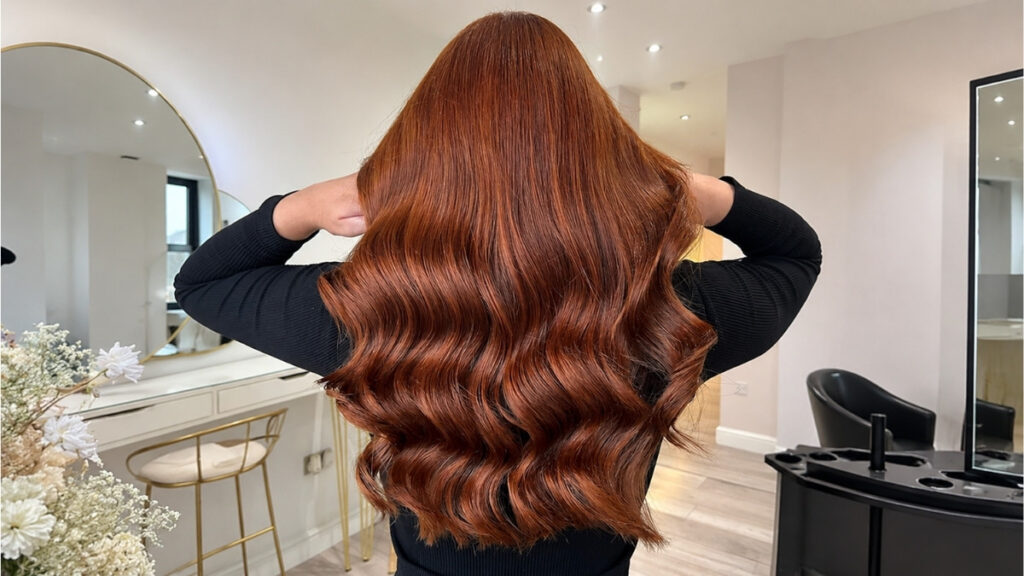
There is a conflict at the centre of this look that most articles skip past entirely.
Waves usually require heat. Heat opens the hair cuticle. And red pigment, more than any other colour, escapes through an open cuticle. Red dye molecules are larger than the ones used in brunette and blonde shades, which means they cannot penetrate as deeply into the hair and instead sit closer to the surface. Every hot shower, every curling iron pass, and every hour in direct sun releases some of them.
That is why heatless waves matter so much on auburn hair. They are the technique that protects the colour you paid for.
More warm shades are in our fall hair color ideas.
What Actually Happens to Auburn
It does not simply get lighter. It changes character, and knowing how helps you catch it early.
The usual path is toward pinky-brown, as the deeper red pigments wash out and the lighter tones remain. On darker or naturally warm bases, the more common outcome is brassiness, where the fading dye combines with your hair’s own underlying warmth.
Timelines are worth being honest about. With a disciplined routine, expect six to twelve weeks between significant refreshes. Without one, auburn often looks noticeably faded within four to six weeks.
Two things make it fade faster still. Fine hair loses pigment more quickly than coarse hair, because coarser hair’s lower porosity holds colour longer. And any hair that has been pre-lightened before the auburn went on will release it faster.
Heatless Waves
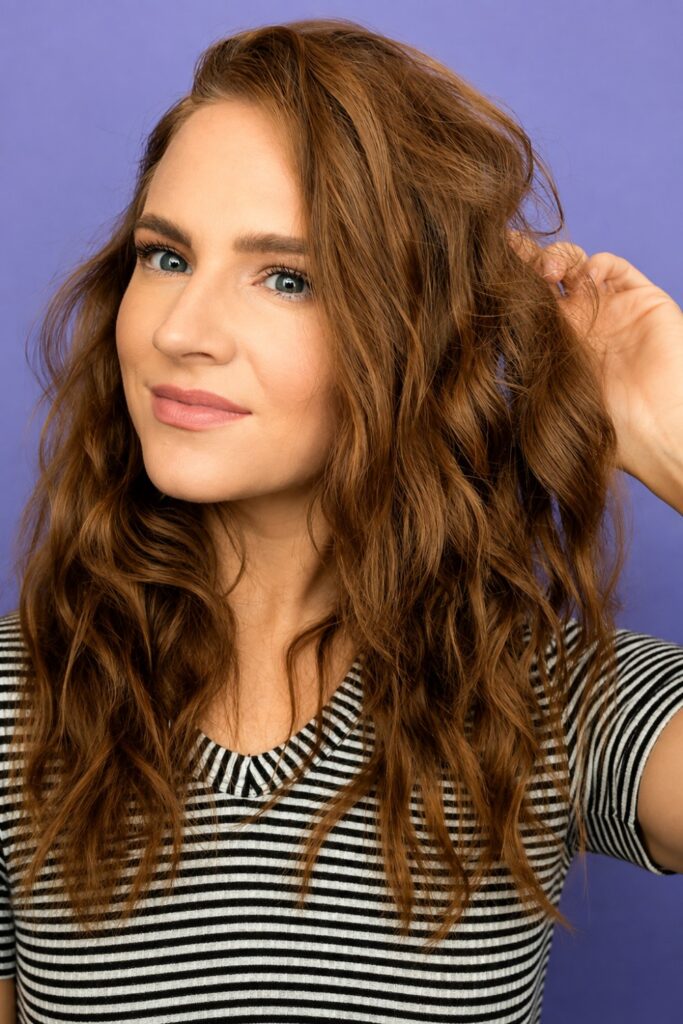
1. Overnight Braid Waves
Hair braided damp and left to dry overnight, then unravelled.
The simplest heatless method and the one that costs nothing. Two loose braids produce soft S-waves; more braids produce tighter, more defined ones.
Braid damp rather than wet. Soaking wet hair will not dry fully overnight, and unravelling damp braids produces frizz rather than waves.
 Save
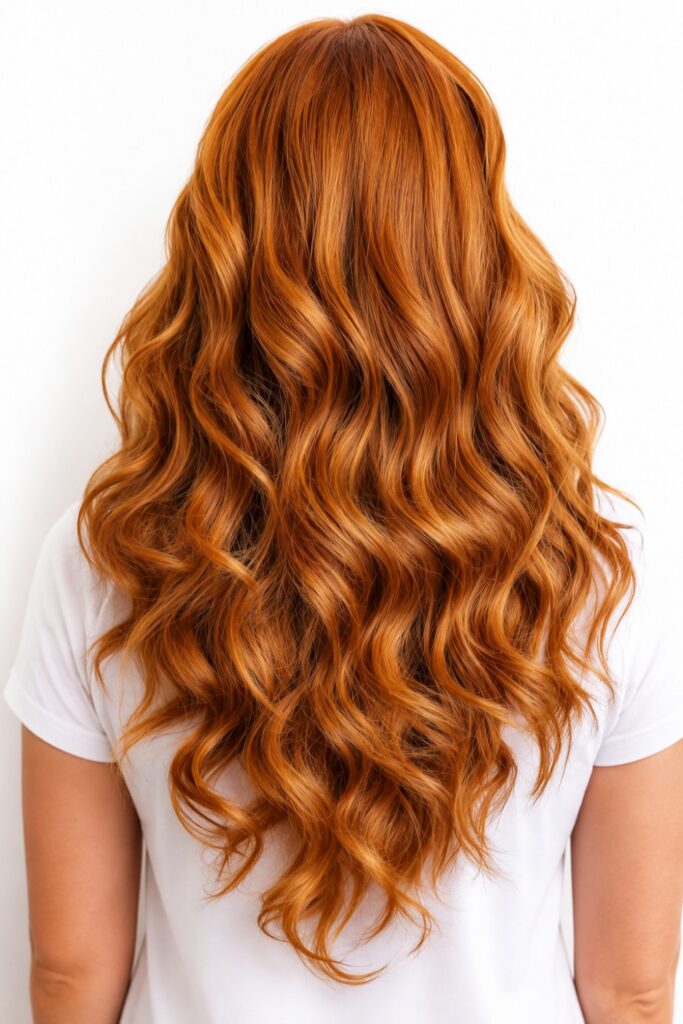
2. Heatless Curling Rod
A soft fabric rod placed along the crown with hair wrapped around it and secured overnight.
The method that produces the most uniform, blow-dry-like result without any heat at all. It also takes about five minutes.
Wrap in sections rather than gathering everything at once. Bunched hair dries unevenly and the wave collapses on one side.
 Save
3. Twin Bun Waves
Hair split into two sections and coiled into buns overnight.
Faster than braiding and produces a looser, more natural bend. It suits anyone who finds a full braid too defined.
Secure with fabric scrunchies rather than elastics. Elastics leave a dent exactly where the wave should be smoothest.
 Save
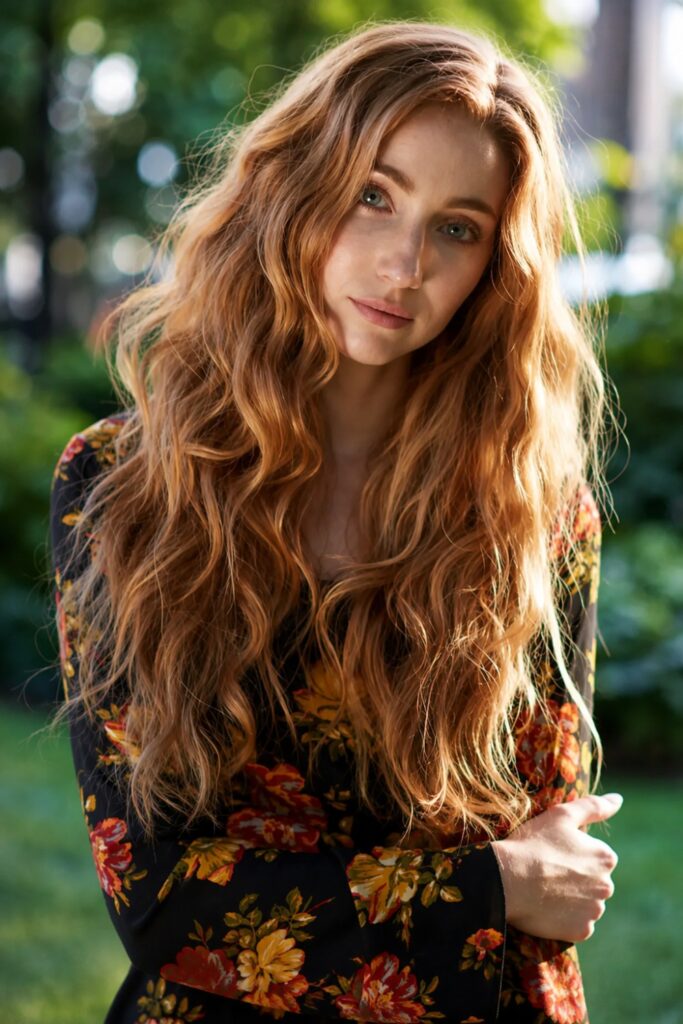
4. Damp Air-Dried Waves
Natural texture encouraged with a cream on damp hair and left entirely alone.
If your hair waves at all on its own, this is both the least damaging option and often the most convincing. Nothing produces a more natural pattern than the one your hair already makes.
Hands off while it dries. Touching is what turns a wave into frizz.
 Save
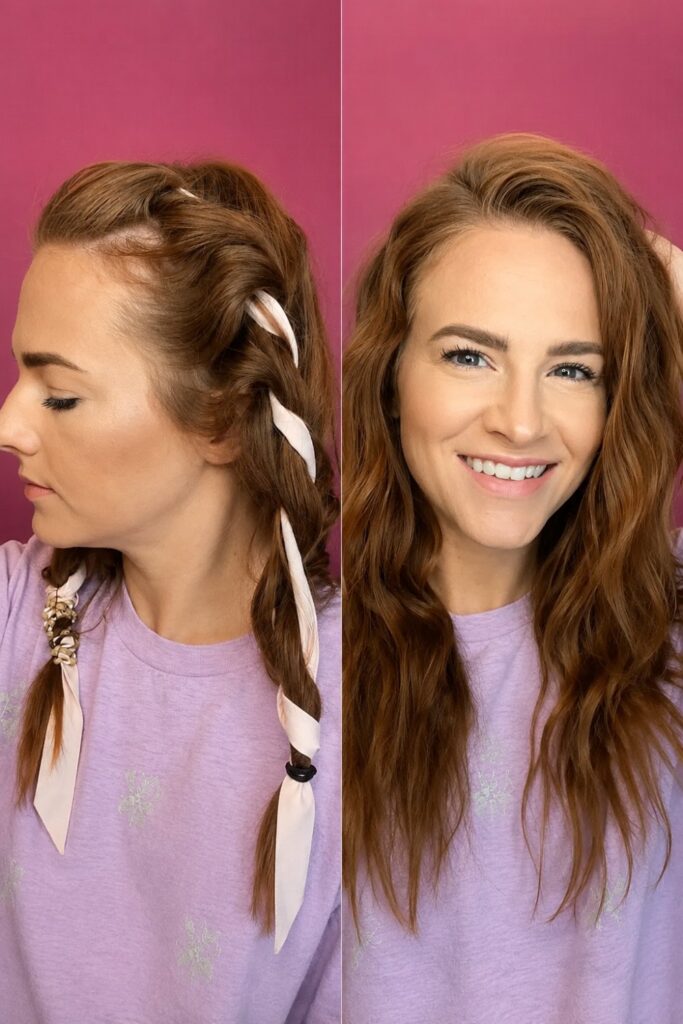
5. Sock or Ribbon Waves
Hair wrapped around a soft ribbon, sock, or fabric strip and secured.
The improvised version of the heatless rod, using something you already own. The result is nearly identical.
Any soft, non-absorbent fabric works. Avoid anything that will hold moisture against the hair overnight.
 Save
Low-Heat and Occasional
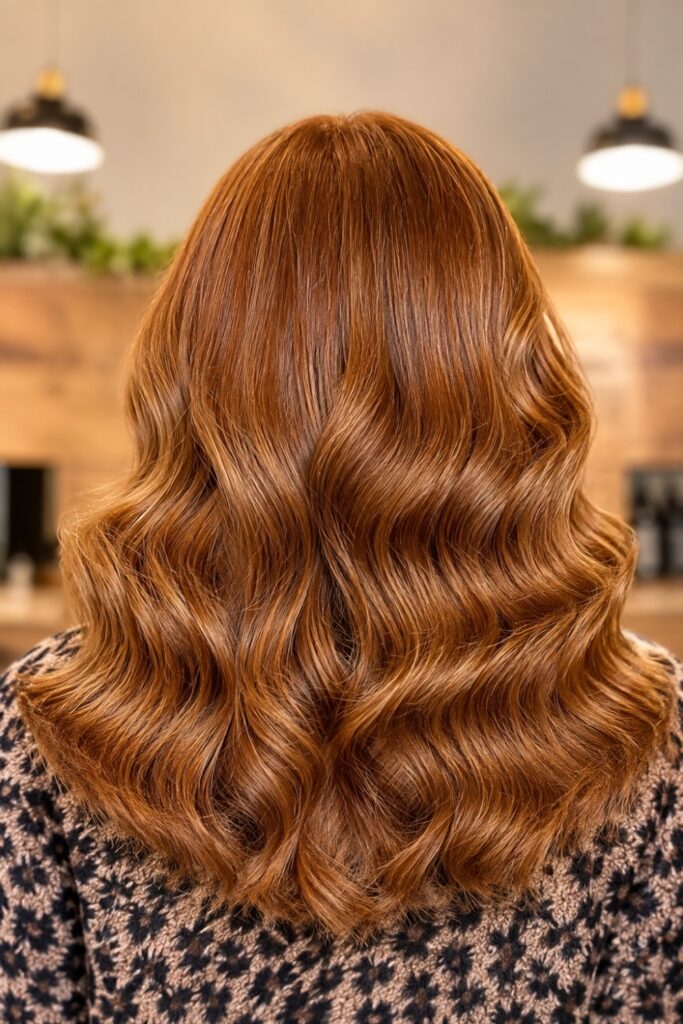
6. Cool-Shot Blow-Dry Waves
Hair rough-dried on a low setting and shaped with the cool button rather than heat.
The compromise for anyone who cannot commit to overnight methods. Cool air sets a shape without opening the cuticle the way hot air does.
Finish on cool even when you have used warm air earlier. The last thirty seconds do a disproportionate amount of the sealing.
 Save
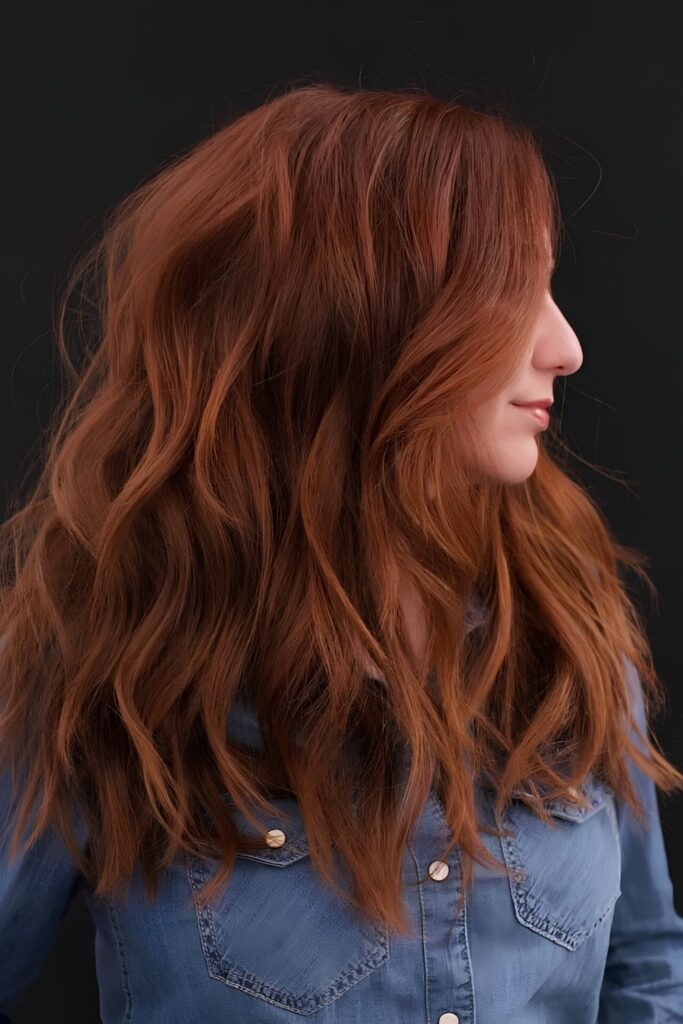
7. Diffused Natural Wave
Natural texture dried with a diffuser on the lowest heat and speed.
Faster than air-drying and gentler than a blow-dry. For anyone with existing wave who wants it dry before leaving the house, this is the least damaging accelerant.
Low on both settings. High heat undoes the entire point.
 Save
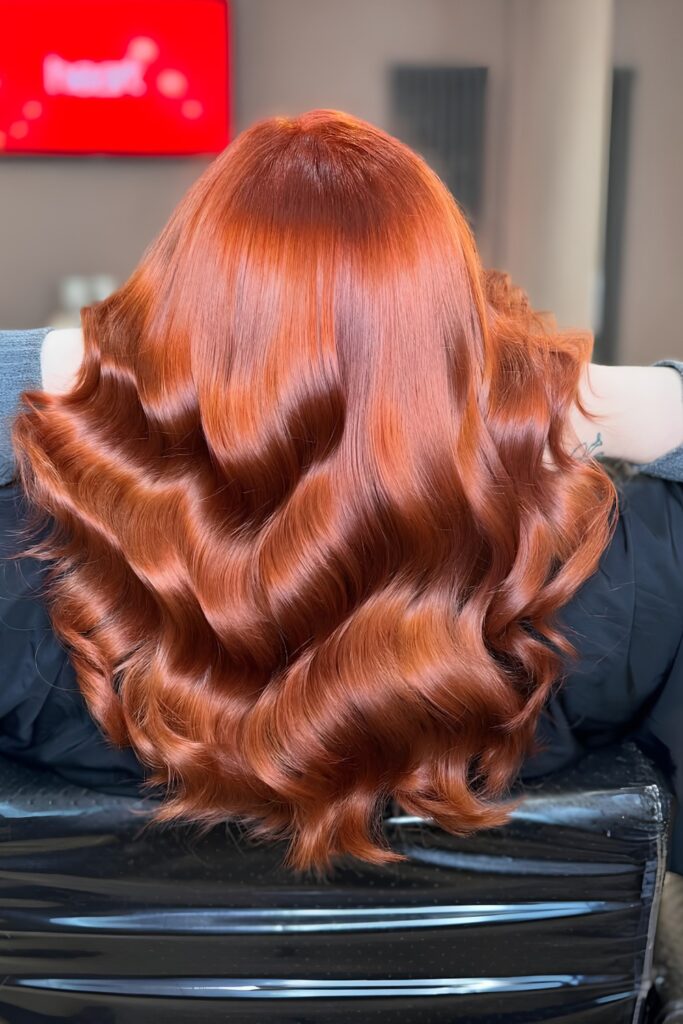
8. Occasional Wand Waves
A curling wand used deliberately rather than routinely, with heat protection.
Not every wave has to be heatless. The realistic position is that occasional heat is fine and daily heat is what costs you the colour.
Use the lowest temperature that holds a wave in your hair, which is usually lower than the default setting.
 Save
Auburn Shades
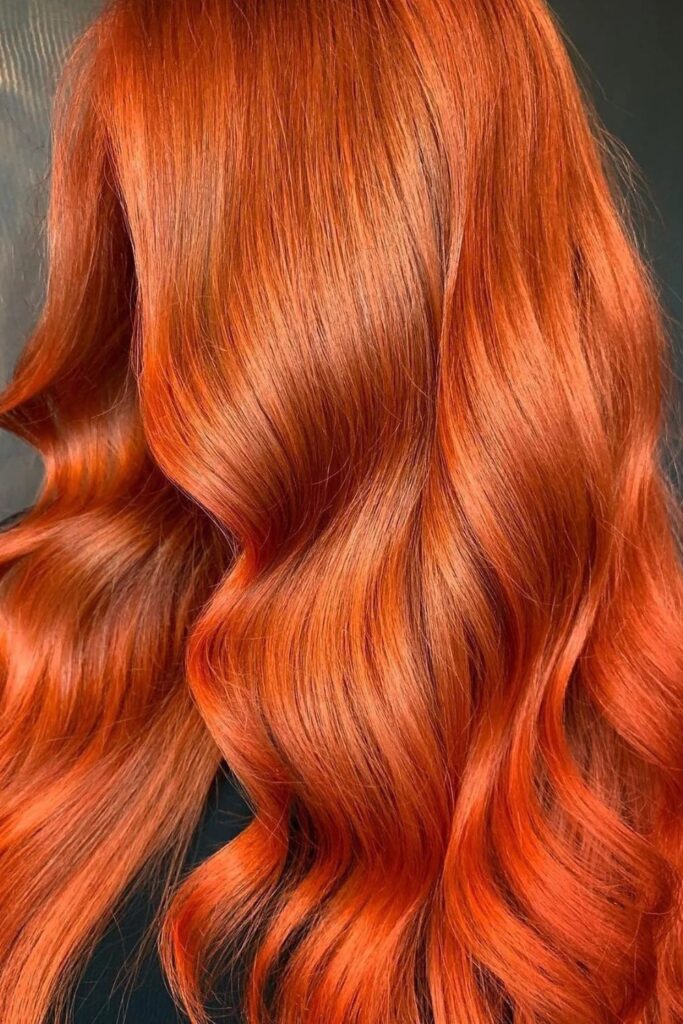
9. Copper Auburn Waves
The brightest end of the auburn range, leaning orange.
The most striking option and the highest maintenance. Bright orange and red tones are known to fade faster than deeper auburns, and the fade is more visible because there is further to fall.
Consider whether you want the shade or the upkeep. Both are legitimate answers.
 Save
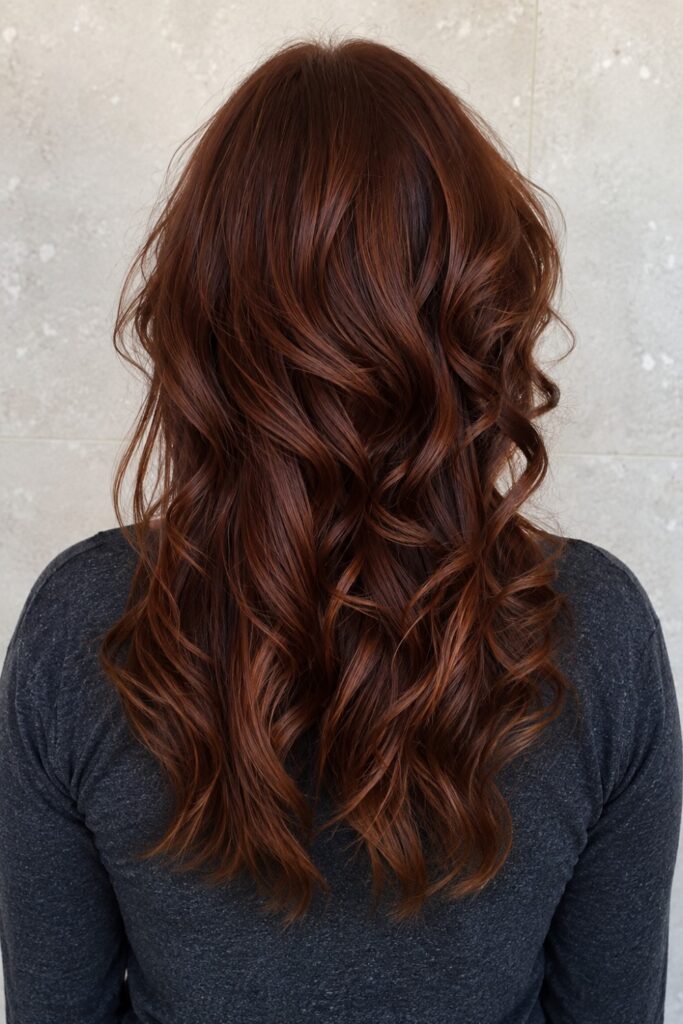
10. Dark Auburn Waves
Rich brown with warm orange and red running through it.
Best on naturally darker bases, and the most sustainable auburn for anyone unwilling to be in the salon constantly. Because the base is dark, the fade is less obvious.
Waves matter more here than in brighter shades. Dark auburn can read as plain brunette when the hair is flat, and it is the movement that reveals the red.
 Save
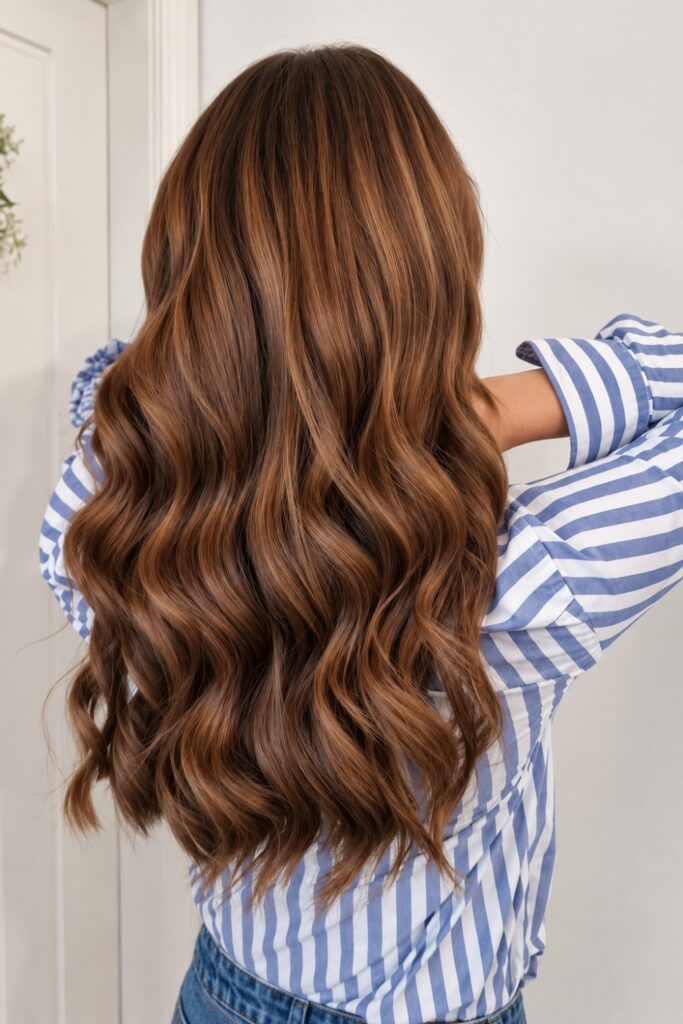
11. Cinnamon Waves
A warm mid-tone auburn with more brown than red.
One of the most natural-looking reds because it closely mimics real red hair rather than sitting above it. That also makes it more forgiving as it fades.
The sensible starting point for a first auburn, since a soft fade from cinnamon looks like a colour rather than like a mistake.
 Save
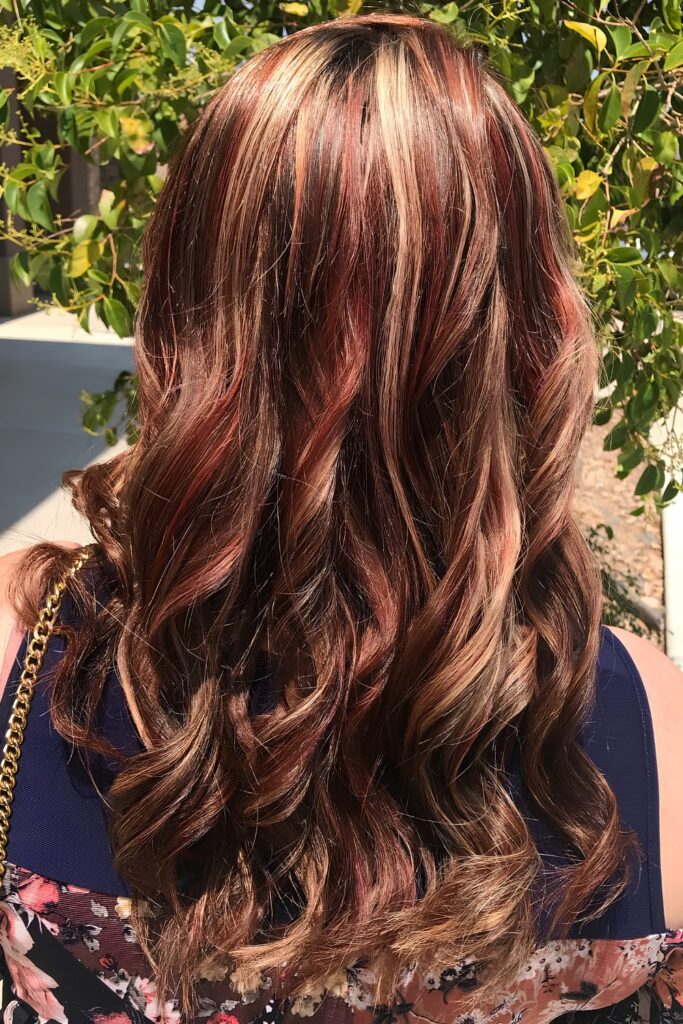
12. Chestnut Auburn Waves
Deep brown with a subtle red cast visible mainly in light.
The most understated entry here and the closest to a natural brunette. The red reveals itself in sunlight and in movement rather than announcing itself.
Lowest maintenance auburn on the list, because there is very little distance between the coloured result and the natural base.
 Save
Placement and Technique
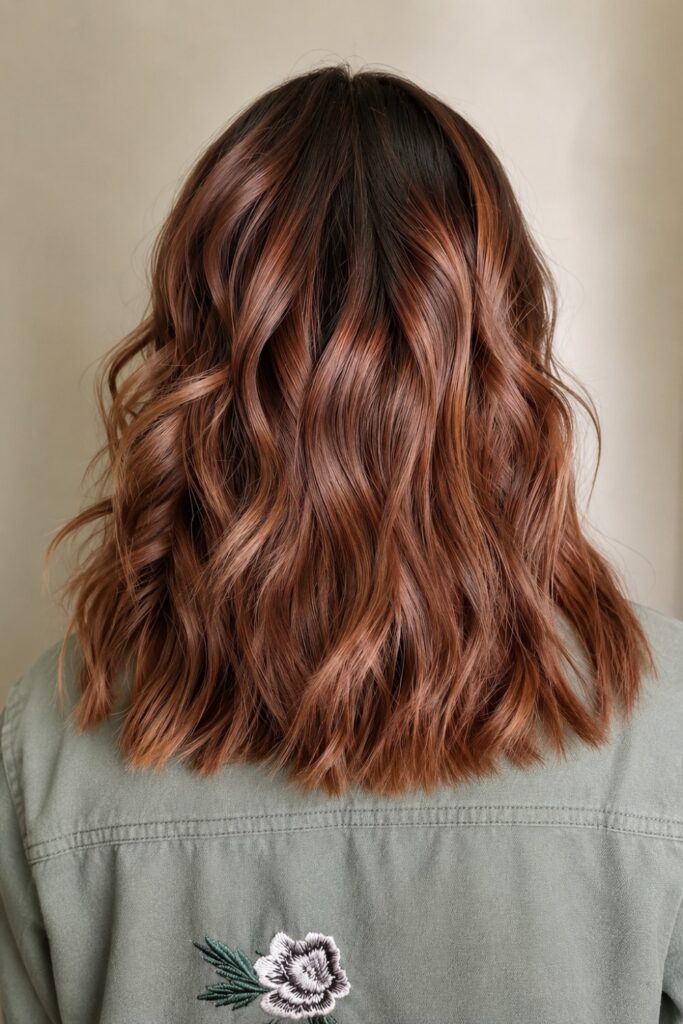
13. Auburn Balayage on Waves
Auburn painted through the mid-lengths and ends with the natural base kept at the root.
Worth knowing that partial colouring lasts longer than all-over colour, because the natural root is preserved and there is no hard regrowth line to chase. For a colour that fades this fast, that is a genuine practical advantage.
Waves show balayage better than straight hair does, since the bends put the painted sections at different angles to the light.
 Save
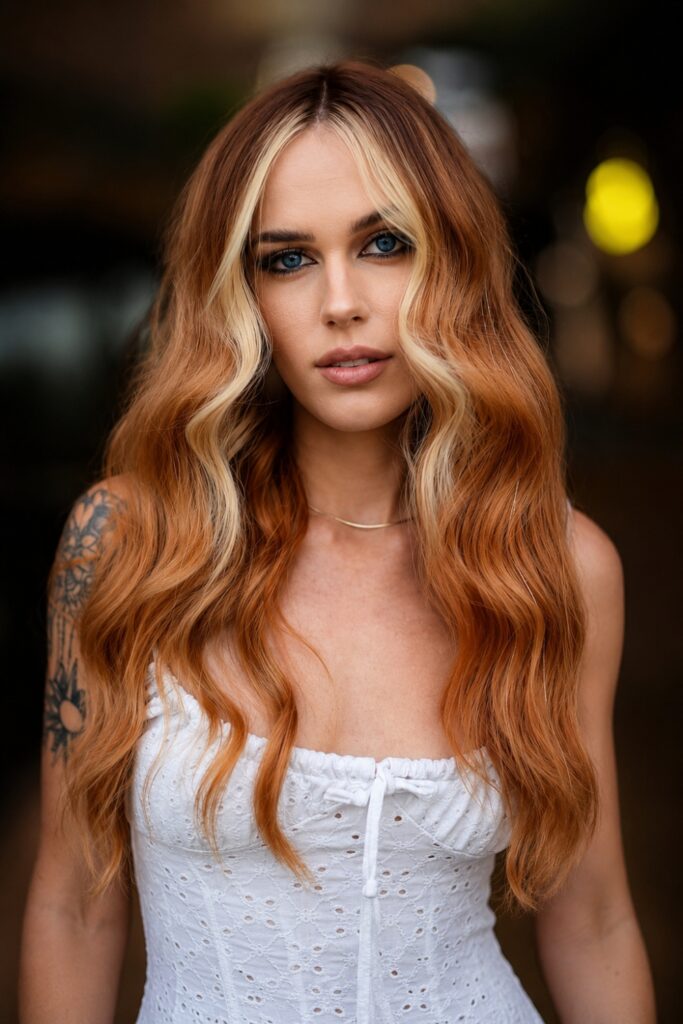
14. Auburn Face-Framing Pieces
Auburn concentrated in the sections around the face with the rest kept natural.
The lowest-commitment way to try the colour, and the highest-impact placement, since the face-framing pieces are what everyone sees first.
If auburn turns out not to suit you, this grows out without a correction appointment.
 Save
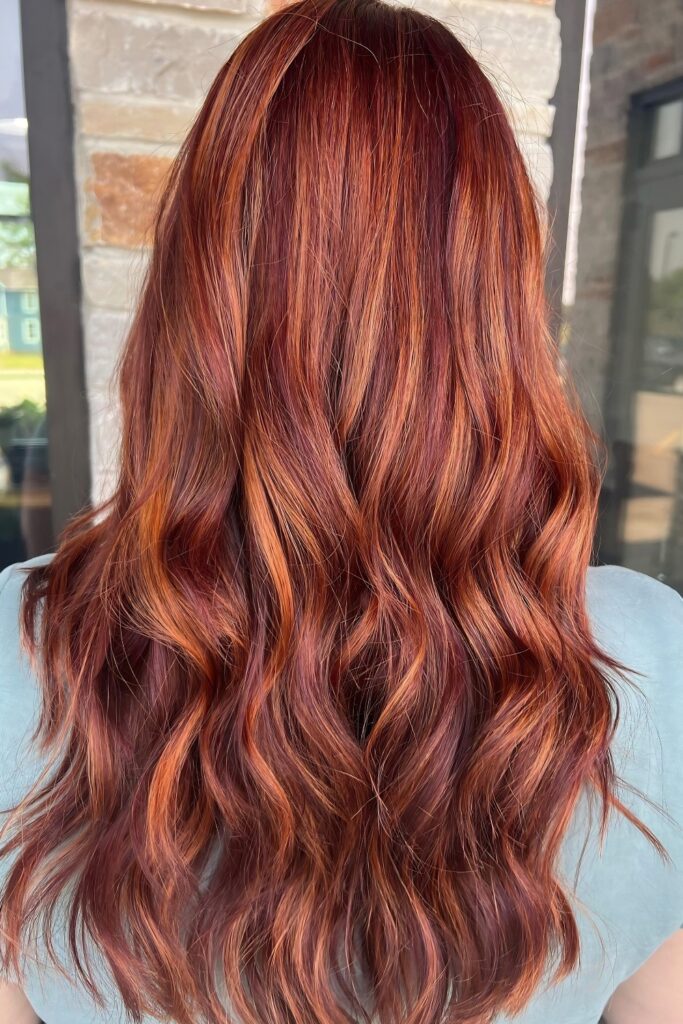
15. Multi-Tonal Auburn Waves
Several auburn tones woven through rather than a single flat shade.
Auburn’s appeal is its reflectivity. The colour contains brown, orange, and red in varying proportions, and it shifts in vividness depending on the light. Multiple tones amplify that, and waves multiply it again by creating more surfaces for light to hit.
The single best pairing of colour and texture on this list, and the reason auburn and waves are so often shown together.
 Save
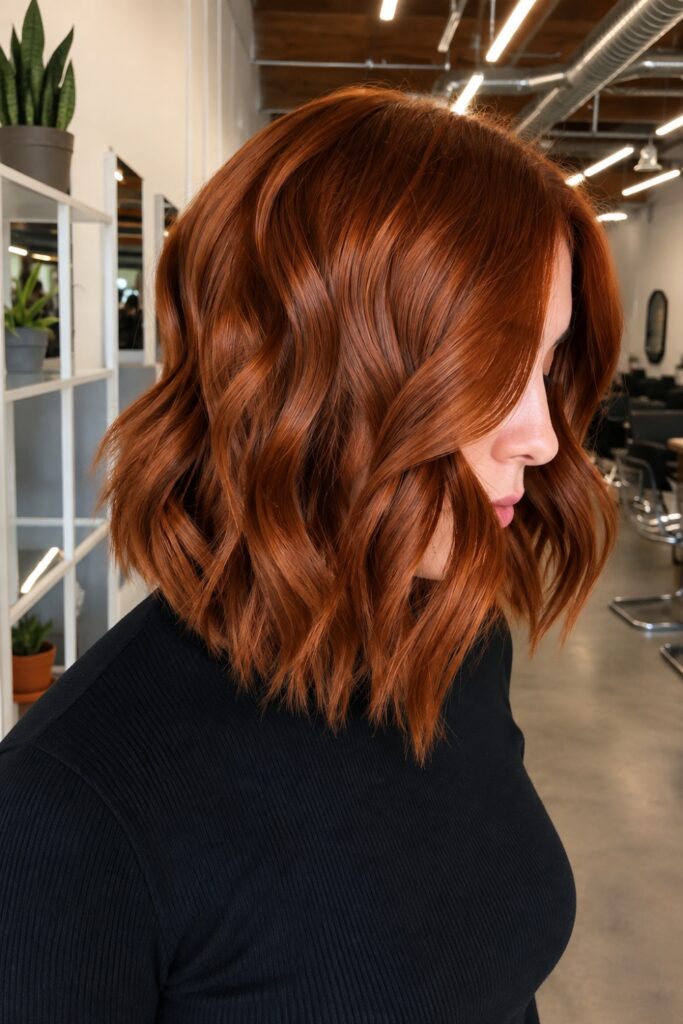
16. Auburn on Shorter Waves
The colour worn on a bob or lob with wave through the length.
Shorter hair fades less visibly, because you are cutting off the oldest, most-faded ends more often. A regular trim schedule is quietly one of the better colour maintenance tools.
Our guide to chin-length bob haircuts covers the length itself, and short graduated bob haircuts covers the shape if you want structure at the back rather than a single length.
 Save
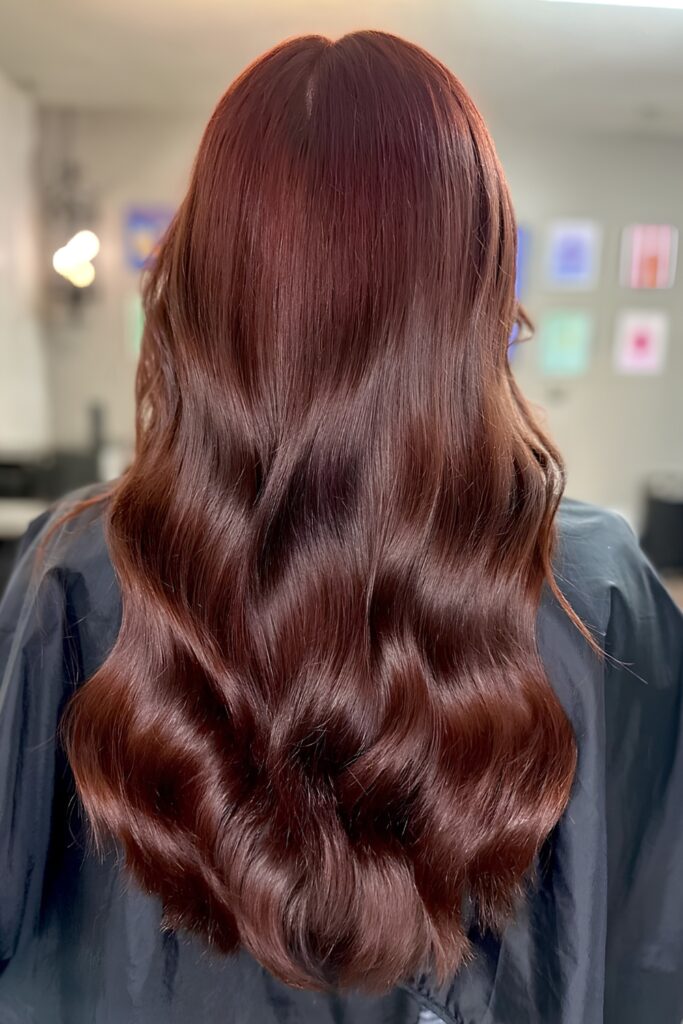
17. Natural Auburn, Enhanced
Existing natural red or auburn maintained rather than coloured, with a gloss to restore vibrancy.
Natural redheads face fading too, though for different reasons. Sun exposure dulls natural pigment, and later in life the follicles gradually stop producing it, which lightens the overall tone toward copper or warm blonde.
A gloss rather than a full colour is usually the right intervention. It adds shine and depth without committing you to a regrowth line.
 Save
Making It Last
Turn the water down. Cool water helps close and seal the cuticle, trapping pigment inside. Hot water opens it and lets colour out. This is free and it is the single most effective change available.
Wash less. One to three times a week is the recommended range for auburn. Dry shampoo or an updo covers the gap.
Use a colour-depositing product in the right colour. This is where people go wrong. Purple shampoo neutralises yellow, not red, and will do nothing for a fading auburn. You need a red or auburn depositing conditioner or mask, which puts pigment back rather than cancelling tones out.
Protect from sun, salt, and chlorine. All three strip colour, and sun protection specifically slows fade. A hat is the simplest version.
Choose a deeper shade than you think you want. Starting richer gives you a buffer, since it takes longer to fade to the pinkish stage. It is the one decision made at the appointment that affects everything afterwards.
Frequently Asked Questions
Why does auburn fade so much faster than brown?
Because red dye molecules are physically larger than those used in brunette and blonde shades. They cannot penetrate as deeply into the hair, so they sit closer to the cuticle and wash out more easily. Every wash, every heat exposure, and every hour of UV releases some of the surface pigment. It is a structural property of the dye rather than a failure of the product.
How long will auburn actually last?
With a disciplined routine, meaning cool water, washing one to three times a week, colour-depositing products, and sun protection, expect six to twelve weeks before a significant refresh. Without that routine, auburn often looks noticeably faded within four to six weeks. Fine hair and pre-lightened hair fade faster than coarse or virgin hair.
Can I use purple shampoo on auburn?
No, and it is a common and understandable mistake. Purple shampoo neutralises yellow tones, which is why it works on blonde. Red fading is a different problem, and the answer is a red or auburn colour-depositing conditioner or mask that adds pigment back rather than cancelling anything out.
Do I have to give up heat styling?
No, but the frequency matters. Heat opens the cuticle and releases pigment, so daily heat styling is what costs you the colour. Occasional heat with a protectant is a reasonable trade. If you want waves most days, the heatless methods in this article will extend the life of your colour by weeks.
Which auburn is easiest to maintain?
Chestnut or dark auburn on a naturally dark base. The closer your coloured result sits to your natural colour, the less visible the fade and the less obvious the regrowth. Bright copper auburn on light or pre-lightened hair is the most demanding combination available.
Final Thoughts
Auburn is a high-maintenance colour and there is no version of this article that honestly says otherwise. What is worth knowing is that most of the maintenance is not expensive: cooler water, fewer washes, a depositing conditioner, and a hat.
The waves are the part where you have real leverage. Every heatless set is pigment you keep, and on this colour that adds up to weeks rather than days.