

Hair loss can be frustrating for men, and watching your hair thin over time can feel discouraging. But as a male, you have options to slow the process and protect your hair before it gets worse.
In this article, you will discover the top ways men can prevent hair loss, from proven medical treatments to lifestyle habits that strengthen your follicles and support healthy growth.
You’ll learn how to spot early warning signs, which therapies work best for men, and when it’s time to see a specialist. By the end, you’ll have clear, practical strategies to maintain your hair and confidence.
What Causes Hair Loss in Men?
Male hair loss starts when your hair follicles are genetically sensitive to DHT. This hormone binds to the follicle, shortens the hair growth cycle, and leads to hair follicle miniaturization. This process defines androgenetic alopecia.
You often notice this change gradually. The follicles produce thinner hairs with each cycle until growth stops. Genetics determines how strongly DHT affects you, which explains why hair loss often runs in families.
The process usually begins between your 20s and 50s and progresses over time. The next section explains how this biological change disrupts the normal hair growth cycle.
When Should Men Start Hair Loss Prevention?
Hair loss prevention works best before you see clear thinning because dormant hair follicles cannot regenerate. When you act early, you protect active follicles from DHT-related damage.
You should watch for early warning signs such as increased shedding, a widening part, or a receding hairline. Family history also matters. If male relatives experienced androgenetic alopecia, your risk increases.
Prevention focuses on slowing follicle miniaturization, while restoration tries to recover lost density. Preventive care preserves existing hair more reliably. The next section explains which treatments you can use to actively protect your hair.
Here are the top 5 hair loss prevention treatments for men:
Minoxidil (Topical Treatment)
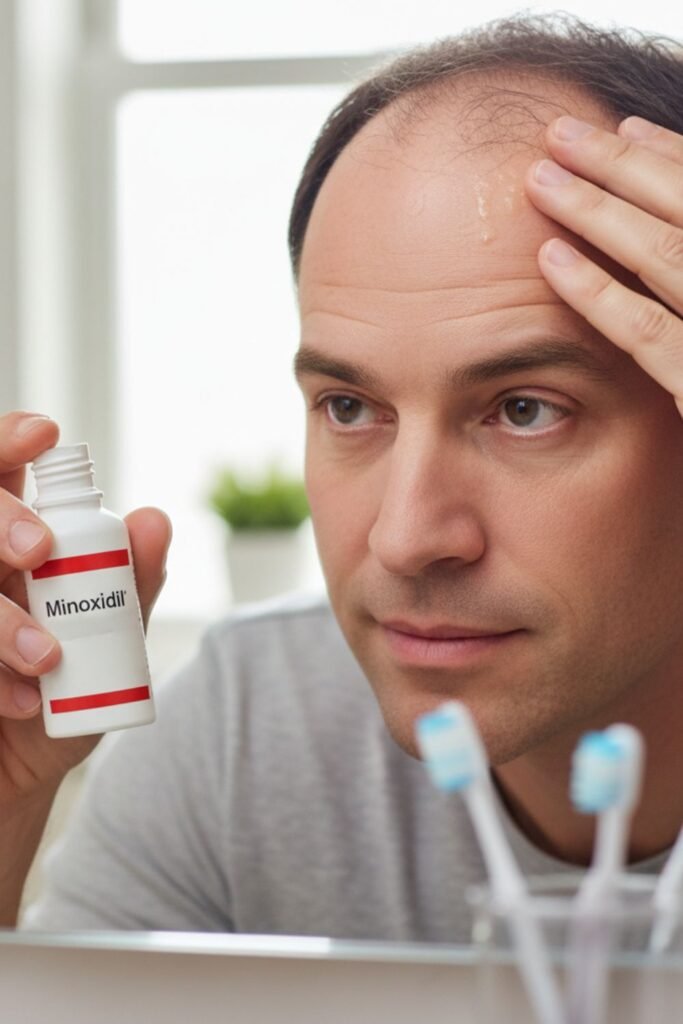
Minoxidil prevents hair loss by extending the anagen phase of the hair growth cycle. You apply it directly to your scalp, usually twice daily. Minoxidil improves scalp blood flow, which increases oxygen and nutrient delivery to hair follicles.
This action slows hair follicle miniaturization caused by androgenetic alopecia. You often see reduced shedding within three months, while visible thickening takes six months or longer.
Consistent use is essential because stopping treatment reverses results. Minoxidil works best when you start early, while follicles are still active.
Finasteride (Oral Medication)
Finasteride prevents hair loss by reducing DHT levels in your scalp. It blocks the 5 alpha reductase enzyme that converts testosterone into DHT. Lower DHT levels protect hair follicles from progressive shrinkage.
You take finasteride once daily as a prescription medication. Clinical studies show it slows hair loss in most men with androgenetic alopecia.
Results usually appear after three to six months. Finasteride focuses on prevention, not regrowth. You maintain results only with continuous use under medical guidance.
Combination Therapy (Minoxidil + Finasteride)
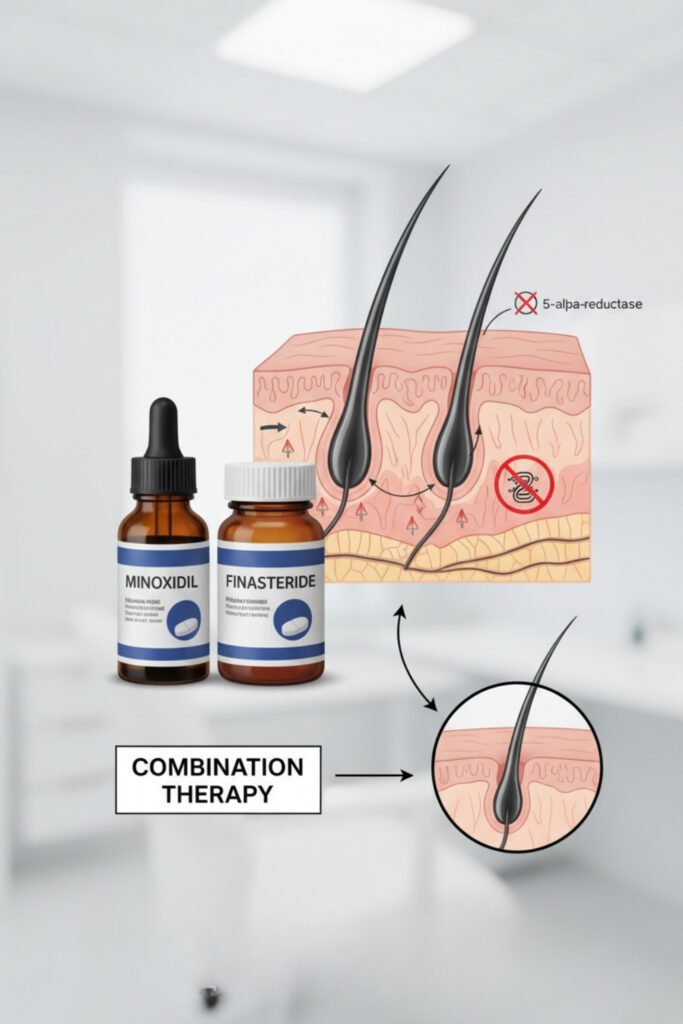
Combination therapy prevents hair loss more effectively than using one treatment alone. Finasteride lowers DHT production, while minoxidil improves follicle activity and growth cycle length.
You target two causes at the same time, hormonal damage and reduced follicle stimulation. This approach helps stabilize hair density and reduces shedding faster.
Many dermatologists recommend combination therapy for men with early to moderate hair loss. You must follow a consistent routine to maintain benefits. Combination therapy works best before visible thinning becomes advanced.
Low Level Laser Therapy (LLLT)
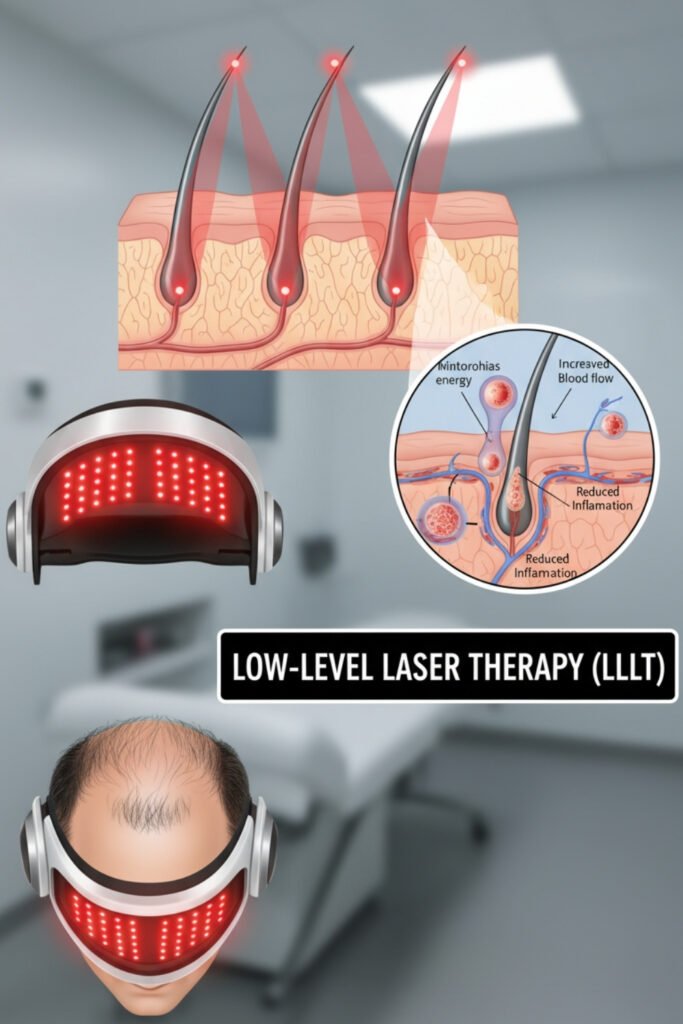
Low level laser therapy prevents hair loss by stimulating cellular activity in hair follicles. You use laser caps or combs several times per week. The light energy increases scalp circulation and supports follicle metabolism.
LLLT does not block DHT, but it helps slow follicle miniaturization. You often combine it with medical treatments for better results. Studies show modest improvements in hair density with regular use. This option suits men who want a non-drug supportive treatment.
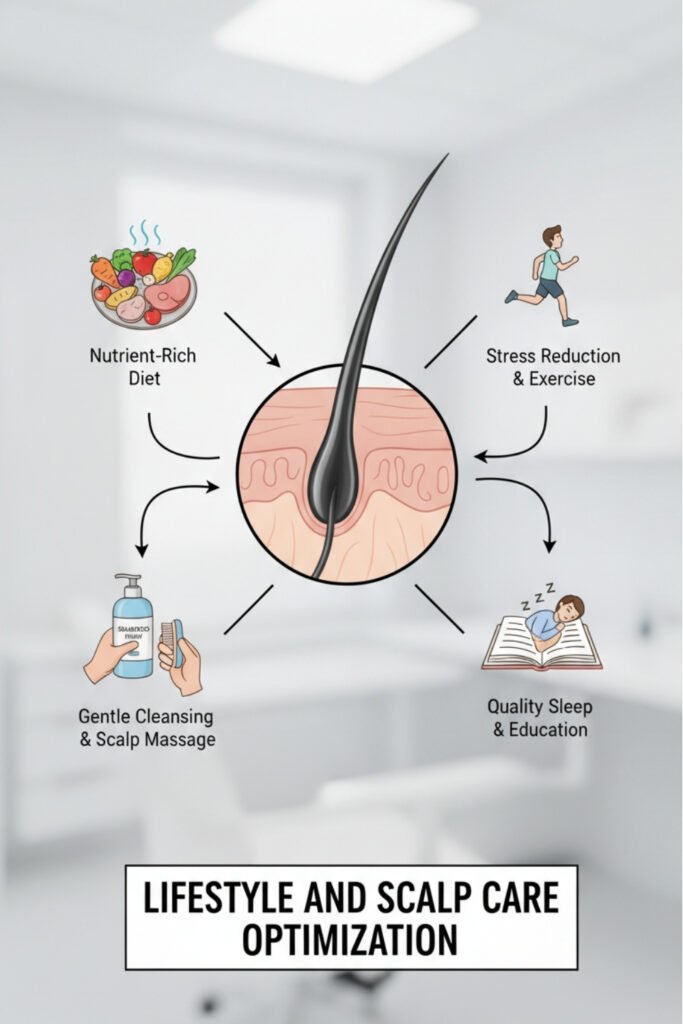
Lifestyle and Scalp Care Optimization
Lifestyle optimization supports hair loss prevention by reducing inflammation and nutrient deficiency. You protect hair follicles by improving sleep quality, managing stress, and eating enough protein, iron, and zinc.
Scalp care also matters. Regular cleansing removes sebum buildup that restricts follicle oxygen flow. Smoking increases oxidative stress, which accelerates hair loss.
These changes do not reverse androgenetic alopecia, but they improve treatment response. Lifestyle support works best when combined with proven medical therapies.
Which Natural Methods Support Hair Loss Prevention?
Lifestyle changes support hair retention by lowering inflammation and improving hair follicle nutrition. You strengthen follicles when you eat enough protein, iron, and zinc, which support keratin production.
Omega-3 fatty acids help regulate scalp inflammation and blood flow. Chronic stress raises cortisol levels, which disrupts the hair growth cycle and increases shedding. You also need adequate sleep because follicles repair during rest.
Biotin supports hair structure, but deficiency is rare and excess does not boost growth. Scalp massage provides mechanical stimulation that improves local circulation. The next section focuses on scalp health in detail.
When Should Men See a Specialist?
You should see a dermatologist when hair loss progresses rapidly or appears patchy. Sudden shedding, scalp redness, or uneven hair loss can signal conditions beyond androgenetic alopecia.
A dermatologist examines your scalp and hair follicles to identify the cause. Blood tests may check iron levels, thyroid function, or hormonal imbalance. This step supports an accurate differential diagnosis and prevents incorrect treatment.
You benefit from early medical input because some hair loss types are reversible when treated on time. The next section explains which advanced treatments specialists may recommend.
Conclusion
You control hair loss best when you act early and stay consistent. Targeting DHT, protecting active hair follicles, and supporting scalp health slows progression.
Medical treatments, lifestyle habits, and timely specialist care help you maintain density and manage androgenetic alopecia more effectively over time.
Frequently Asked Questions
What is the best preventative hair loss treatment for men?
The best preventative treatment for men is finasteride, often combined with minoxidil. Finasteride reduces DHT, while minoxidil supports the hair growth cycle and follicle activity.
What is the honestly best way for hair loss in men?
The most effective approach combines early diagnosis, DHT reduction, topical stimulation, and lifestyle support. Consistent treatment slows androgenetic alopecia more reliably than any single method.
Can you regrow lost hair as a male?
You can regrow some hair if follicles remain active. Once follicles are fully miniaturized or dormant, regrowth becomes unlikely and prevention becomes the primary goal.
Is losing 700 hairs a day normal?
No. Normal daily shedding ranges from 50 to 100 hairs. Losing 700 hairs may indicate telogen effluvium, hormonal imbalance, or progressing androgenetic alopecia.